AD #4260 - Crossovers Have Highest Fatality Rates; GM Could Lose U.S. Sales Crown to Toyota; GM Testing Next-Gen Super Cruise
About this episode
Europe’s sales tick up slightly, led by a handful of automakers and strong growth in EVs and hybrids, while gas and diesel keep losing share. Renault’s new budget EV, the TwinGo, signals how cheaper EVs may help the region. Toyota is doubling down on the U.S. with major capacity investments and more hybrids/EVs, while Smart’s China push with bigger models stalls and forces discounting. GM tests next-gen Super Cruise toward Level 3, and supply-chain news highlights rising cobalt/lithium prices as African export curbs drive local refining. A safety roundup finds crossover models with the biggest fatal-accident rate increases.
BEVs
"Pevsquare the fastest growing segment, up a strong thirty three percent, BEVs were up almost sixteen percent, and hybrid's up ten percent."
BEV means a fully electric car. It runs on a battery and doesn’t use gasoline.
BEV stands for Battery Electric Vehicle. It refers to cars that run only on electricity stored in a battery pack, with no gasoline engine.
Peugeot the fastest growing segment
"Scic Byd and Tesla also posted strong gains, but everyone else was down. Pevsquare the fastest growing segment, up a strong thirty three percent, BEVs were up almost sixteen percent..."
They’re talking about which type of car is growing fastest in Europe. That trend affects what automakers build next.
The transcript is describing the fastest-growing vehicle segment in Europe—EVs—using growth-rate figures. This matters because automakers’ product planning and supply chains follow where demand is rising fastest.

Renault Twingo
"...urope needs. Renault is now launching the all new TwinGo with a starting price under twenty thousand euro ..."
The Renault Twingo is a small car made for city driving. It’s meant to be easy to park and drive in tight spaces. The podcast says Renault is launching a new one with a starting price under 20,000 euros.
The Renault Twingo is a small city car designed for easy maneuvering and affordability. The episode notes Renault launching an all-new Twingo with a starting price under 20,000 euros, which makes it relevant to discussions about accessible vehicles in Europe. It’s mentioned as part of the broader “new models” and pricing conversation.
LFP battery pack
"Highlights include a twenty seven point five kilowad hour LFP battery pack that returns two hundred and sixty three kilometers or about one hundred and sixty miles of range on the WLTP test cycle, and a roughly eighty horse power electric motor."
LFP is a type of EV battery. It’s generally considered safer and can last a long time, and it’s commonly used in more affordable electric cars.
LFP refers to lithium iron phosphate, a battery chemistry known for good safety and long cycle life. It’s often used in lower-cost EVs and can be a key factor in cost and longevity.
WLTP test cycle
"Highlights include a twenty seven point five kilowad hour LFP battery pack that returns two hundred and sixty three kilometers or about one hundred and sixty miles of range on the WLTP test cycle, and a roughly eighty horse power electric motor."
WLTP is a standardized test used in Europe to estimate how far a car can go. Your real range may be different depending on how you drive.
WLTP (Worldwide Harmonized Light Vehicles Test Procedure) is the standardized testing method used in Europe to estimate fuel economy and electric range. Real-world range can differ due to weather, speed, and driving habits.
electric motor
"Highlights include a twenty seven point five kilowad hour LFP battery pack... and a roughly eighty horse power electric motor."
An electric motor is what actually moves the car using electricity from the battery. More motor power usually means stronger performance.
An electric motor converts electrical energy from the battery into motion. In EVs, motor output (often discussed in horsepower or kilowatts) strongly influences acceleration feel and grade-climbing ability.

Toyota Grand Highlander
"...d Indiana so it can make more cameras, rab fours, Grand Highlanders. Speaker 2: And new evs."
The Toyota Grand Highlander is a bigger SUV with three rows of seats. It’s made for families or anyone who needs more passenger space. The podcast mentions it while discussing production and upcoming vehicles.
The Toyota Grand Highlander is a larger, three-row version of the Highlander designed to carry more passengers and provide extra space. It’s significant in market talk because it targets families who want an SUV with room for multiple rows. The episode references it in the context of production and new model activity.
Tata AutoCOM Systems
"Bosch and the Tata Group's auto components business, Tata AutoCOM Systems, are forming a fifty to fifty joint venture that will focus on electromobility."
Tata AutoCOM Systems is Tata’s parts business for cars. In this episode, it’s partnering with Bosch to build EV-related components.
Tata AutoCOM Systems is Tata’s automotive components business. The transcript says it’s forming a joint venture with Bosch to engineer and manufacture electric-drive components for the Indian market.
Bosch
"Bosch and the Tata Group's auto components business, Tata AutoCOM Systems, are forming a fifty to fifty joint venture that will focus on electromobility."
Bosch is a big car-parts company. Here, they’re teaming up to help build electric-drive components for EVs.
Bosch is a major automotive supplier that makes components for powertrains and electronics. In this segment, Bosch is partnering on electrification-focused hardware like e-axles and electric motors.
50-50 joint venture
"Bosch and the Tata Group's auto components business, Tata AutoCOM Systems, are forming a fifty to fifty joint venture that will focus on electromobility."
A 50-50 joint venture means two companies split the project evenly. They team up to build and produce new technology more efficiently.
A 50-50 joint venture is a partnership where two companies share ownership and control equally. For suppliers, this often helps pool engineering capability and manufacturing scale for new technology like EV drivetrains.
e axles
"Specifically, the two companies will engineer and manufacture e axles and electric motors for the Indian market."
An e-axle is a packaged electric drivetrain unit for the car’s wheels. Instead of many separate parts, it’s built as one integrated system.
An e-axle is an integrated electric drive unit that combines key drivetrain functions (motor and reduction gearing) into a single assembly. It simplifies packaging and can reduce cost compared with building the electric drivetrain from many separate parts.
Intrepid
"At Intrepid, we produce network hardware and software solutions enabling vehicle manufacturers to innovate and design the next generation of modern mobility. Delivering scalable next generation solutions requires thorough testing and validation of vehicle platforms."
Intrepid is a company that makes tech for vehicle connectivity and testing. As cars become more software- and network-heavy, this kind of testing gets more important.
Intrepid is referenced as producing network hardware and software solutions for vehicle manufacturers. The segment connects this to testing and validation of vehicle platforms, which is increasingly important as cars add more connected and software-defined systems.
testing and validation of vehicle platforms
"Delivering scalable next generation solutions requires thorough testing and validation of vehicle platforms. Intrepid specializes in network interfacing,"
Testing and validation are how automakers confirm a new car design is reliable and safe. It helps catch problems before the cars go on sale.
Testing and validation are processes used to prove that a vehicle platform works correctly and safely before mass production. This includes verifying software behavior, network communication, and overall system performance under real-world conditions.
fifty to fifty joint venture between Mercedes and Jili
"...The brand, which is now a fifty to fifty joint venture between Mercedes and Jili, sold just under thirty thousand vehicles in China..."
A 50/50 joint venture means Smart is co-owned and co-managed by two parent companies, which can influence product planning, manufacturing, and market strategy. In this case, the segment ties Smart’s China sales performance to the broader corporate structure behind the brand.
liquidated through used car channels
"As a result, the bigger models are now being liquidated through used car channels at big discounts."
This means the brand is trying to get rid of unsold cars by pushing them into the used market. Big discounts usually happen when new-car demand isn’t strong enough.
“Liquidated through used car channels” means the manufacturer/brand is effectively moving inventory into the pre-owned market, often because new sales are slow. Large discounts in used channels can be a sign of demand mismatch or an overhang of unsold inventory.
Level two
"...but are currently using a version of the system that's limited to Level two. However, GM will use what it learns from the test to expand Supercrus's capabilities."
Level 2 means the car can help with things like steering and speed, but you still have to watch the road and be ready to take over immediately. It’s not true self-driving.
“Level 2” refers to a driver-assistance capability where the car can handle certain tasks (like steering and speed) but the driver must remain actively responsible and ready to take over at any time. It’s not fully hands-off driving.
Level three
"It plans to launch a level three system so hands off in Eyes Off, as an option on the twenty twenty eight Cadillac Escalate IQ..."
Level 3 is closer to self-driving: the car can handle the driving for a while, and you don’t have to constantly watch like you do in Level 2. Still, the car will ask you to take over when it needs to.
“Level 3” is a higher automation tier where the system can perform the driving task under certain conditions, and the driver may not need to continuously monitor the road. The car will request takeover when needed, but responsibility shifts more to the vehicle than Level 2.
hands off in Eyes Off
"It plans to launch a level three system so hands off in Eyes Off, as an option on the twenty twenty eight Cadillac Escalate IQ..."
“Eyes Off” means you’re not expected to keep your eyes on the road the whole time while the system is handling the driving. But you still have to be ready to take over when the car asks.
“Eyes Off” is a marketing/feature description meaning the driver doesn’t have to keep their eyes on the road continuously while the system is engaged. In practice, Level 3 systems still require the car to monitor conditions and request takeover when necessary.

Cadillac Escalate
"...Eyes Off, as an option on the twenty twenty eight Cadillac Escalate IQ, which will also debut the company's new centr..."
The Cadillac Escalade is a large luxury SUV. In this episode, they mention a new version where a feature called “Eyes Off” is offered as an option, which relates to driver-assistance technology. The discussion is about what’s coming on the next Escalade model.
The Cadillac Escalade is a full-size luxury SUV known for high-end features and a flagship role in Cadillac’s lineup. The episode specifically references an “Eyes Off” option tied to the 2028 Escalade IQ, indicating a focus on advanced driver-assistance technology. That’s why it’s likely discussed in a segment about new tech and upcoming model details.
cobalt exports
"...several countries have recently curbed exports of metals used for EVY batteries. The Democratic Republic of the Congo is cutting back on cobalt exports..."
Some countries are limiting how much cobalt they ship out to force more refining to happen locally. When supply tightens, the price of battery materials can rise.
Cobalt exports are being restricted by countries to encourage local processing and capture more value in-country. That affects global supply for EV batteries and can push cobalt prices higher when exports are cut.
lithium shipments
"...and Zimbabwe ban shipments of lithium, and because of those moves, cobalt and lithium prices are currently at or near multi year highs."
If a country bans lithium shipments, it reduces the amount of battery material getting to the global market. Less supply can make lithium more expensive.
The segment mentions Zimbabwe banning lithium shipments, which is another supply-side restriction for EV battery materials. Reduced shipments can tighten availability and contribute to higher lithium prices.
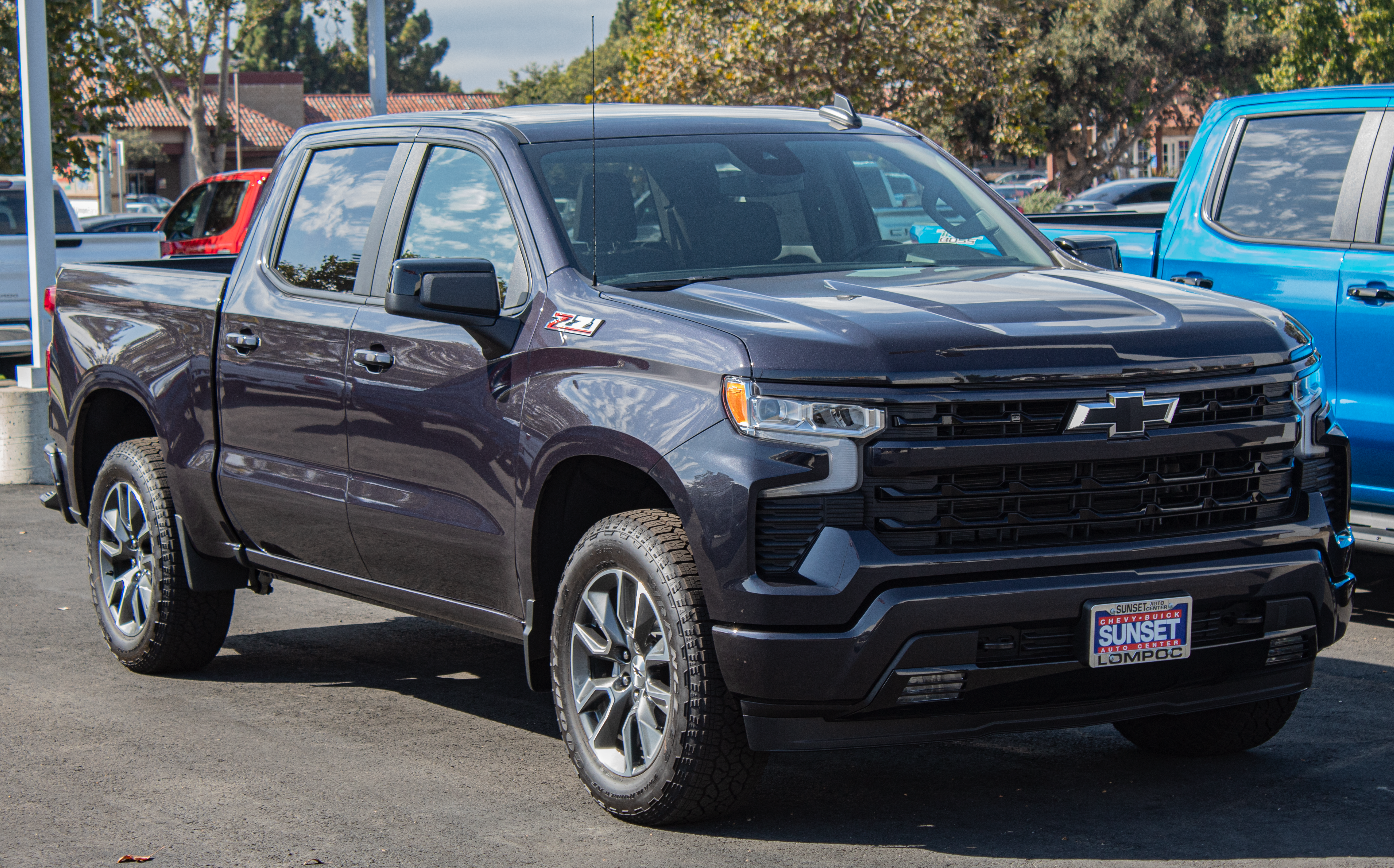
Chevrolet Silverado
"...published a list of the vehicles that showed the greatest increase in fatal accidents in the US from twenty nineteen to twenty twenty three, and not surprisingly, the Chevrolet Silverado..."
The Silverado is one of the trucks that saw a big rise in fatal crashes over a recent few-year span. The episode later explains that they also looked at crashes relative to how many of each model are out there.
The Chevrolet Silverado is called out as one of the vehicles showing the biggest increases in fatal accidents in the U.S. over the 2019–2023 period. It’s later contrasted with a different ranking that normalizes by how common each model is on the road.
fatal accidents as a percentage of models on the road
"So we asked Mason Law to run the numbers again, but to look at fatal accidents as a percentage of models on the road. And here's what they came up with..."
They didn’t just count crashes—they adjusted for how many of each car model are out there. That way, a very common car doesn’t automatically look worse just because it’s everywhere.
This is a normalization method: instead of ranking by raw fatal-crash counts, they compare fatal accidents relative to how many of each model are present on the road. That helps reduce bias toward popular vehicles and makes the comparison more about risk per vehicle.

Chevrolet Equinox
"...Nissan Rogue, Ford Edge, Chevrolet Equinox, and Honda Pilot to name the top five..."
The Equinox is listed among the top five when fatal crashes are adjusted for how many are on the road. The episode’s big point is that crossovers show up a lot in the worst rankings.
The Chevrolet Equinox is included in the top five of the fatal-accident-per-on-road-model ranking. The episode uses this to argue that crossover SUVs are showing higher fatality rates than other vehicle types.

Ford Edge
"...followed by the Nissan Rogue, Ford Edge, Chevrolet Equinox, and Honda Pilot to name the top five..."
The Edge is one of the vehicles that shows up in the top five when they compare fatal crashes relative to how many of each car are on the road. The show says crossovers are overrepresented in these results.
The Ford Edge appears in the top five of the rate-based fatal-accident list. It reinforces the episode’s theme that crossovers dominate the highest fatality-rate rankings when normalized by model prevalence.

Nissan Rogue
"...the Toyota Rev four tops the list, followed by the Nissan Rogue, Ford Edge, Chevrolet Equinox, and Honda Pilot to name the top five..."
The Rogue ranks near the top when fatal crashes are adjusted for how many are on the road. The episode points out that many of the worst-ranked vehicles are crossovers.
The Nissan Rogue is named as the second-highest model in the rate-based fatal-accident ranking. The segment’s takeaway is that the top performers in this list are all crossovers, suggesting a broader safety pattern by vehicle type.

Honda Pilot
"...Ford Edge, Chevrolet Equinox, and Honda Pilot to name the top five, and the data that jumps off the page for us is that they're all crossovers."
The Pilot is one of the top five vehicles in the adjusted fatal-crash ranking. The episode says crossovers tend to show up more often in these high-risk lists.
The Honda Pilot rounds out the top five in the rate-based ranking of fatal accidents. It supports the episode’s conclusion that crossovers are overrepresented among vehicles with the highest fatality rates when adjusted for how common they are.
Over the Air Engineering
"When it really matters CSP, the Composites Solution Partner, Intrepid Control Systems, Over the Air Engineering boost your game and thanks to the following YouTube and Patreon members."
Over-the-air engineering is about updating a car’s software remotely. Instead of going to a shop, the car can receive updates wirelessly.
Over the Air Engineering is referenced as a partner related to “over-the-air” updates. In vehicles, over-the-air (OTA) updates let manufacturers improve or modify software without needing a dealer visit.
CSP, the Composites Solution Partner
"When it really matters CSP, the Composites Solution Partner, Intrepid Control Systems, Over the Air Engineering boost your game and thanks to the following YouTube and Patreon members."
CSP is a company that helps with composite materials. Composite materials can help cars be lighter, which can improve efficiency and sometimes safety.
CSP (Composites Solution Partner) is presented as a composites-focused partner for OEM engineers. Composites are materials used to reduce vehicle weight and improve efficiency and safety.
supply chain reinvention
"The automotive and industrial sectors are undergoing historic transformation electrification, digitalization, supply chain reinvention, regulatory shifts. The pace is accelerating and"
Supply chain reinvention describes how companies redesign sourcing, logistics, and manufacturing networks to handle shortages, new regulations, and changing demand. In recent years, this has been especially important for batteries, semiconductors, and critical materials.
electrification
"The automotive and industrial sectors are undergoing historic transformation electrification, digitalization, supply chain reinvention, regulatory shifts. The pace is accelerating and"
Electrification means moving away from gas engines and toward electric power. It changes how cars are built and how they get charged.
Electrification is the industry shift from gasoline/diesel powertrains toward electric drive systems. For automakers, it affects everything from battery supply chains to vehicle software and charging ecosystems.
digitalization
"The automotive and industrial sectors are undergoing historic transformation electrification, digitalization, supply chain reinvention, regulatory shifts. The pace is accelerating and"
Digitalization means using more software and data in cars and factories. It can lead to features like connected services and updates that improve the car over time.
Digitalization refers to using software, data, and connected systems across the vehicle and manufacturing process. In automotive, it often includes connected services, advanced driver assistance, and more software-driven vehicle architectures.
regulatory shifts
"The automotive and industrial sectors are undergoing historic transformation electrification, digitalization, supply chain reinvention, regulatory shifts. The pace is accelerating and"
Regulatory shifts are new or changing rules from governments. Automakers have to adjust their cars and processes to stay compliant.
Regulatory shifts are changes in laws and rules that affect automakers, such as emissions standards, safety requirements, and data/vehicle software regulations. These changes can force redesigns of powertrains, materials, and compliance processes.
ALEX Partners
"That partner is ALEX Partners when it really matters CSP, the Composites Solution Partner, Intrepid Control Systems, Over the Air Engineering boost your game and thanks to the following YouTube and Patreon members."
ALEX Partners is a business consulting company. The ad is saying they help automakers make big changes and carry out plans quickly.
ALEX Partners is a consulting firm that works with automotive and industrial companies. In the context of the ad, they’re positioned as a partner for strategy and execution during major industry shifts like electrification and digitalization.
Request an Explanation
Heard something you'd like explained? We'll add it to this episode.
Sign in to request explanations for terms you heard.
Want to learn more?
Browse our glossary for plain-English explanations of automotive terms, jargon, and concepts.
Help improve this episode
See something that's not quite right? Our annotations are AI-generated and can sometimes miss the mark. Click the flag icon on any annotation to suggest a correction.