
AD #4307 - Toyota Cancels Next-Gen EV; BYD Takes Responsibility for ADAS Crashes; Mitsubishi Adding Nissan-Based Pickup
About this episode
Toyota has canceled the first vehicle from its next-gen EV platform, the Lexus LF-ZC. BYD is responding to ADAS crash concerns with its “God’s Eye” coverage, saying it will cover accident costs and won’t affect next year’s premiums. Baidu’s Apollo Go robotaxi also faced disruption when “one hundred vehicles suddenly stopped working on roads in Wuhan.” Elsewhere, Mitsubishi plans a US-built mid-size pickup sourced from Nissan, while Honda pauses Ridgeline production for emissions reasons.
BEV Factory
"Three years ago, Toyota announced its own skunk works program called the BEV Factory to develop its next generation of evs. It was going to use things like gigacastings and modular manufacturing that sounded a lot like Tesla's unboxed assembly."
“BEV Factory” is Toyota’s project for building electric cars using a more modern manufacturing approach. The idea is to make EVs cheaper and easier to build by changing how the factory is set up.
“BEV Factory” is Toyota’s internal program name for developing its next-generation battery-electric-vehicle manufacturing approach. The segment highlights specific production ideas like gigacastings and modular manufacturing, which are meant to reduce cost and complexity compared with traditional stamping and assembly.
gigacastings
"It was going to use things like gigacastings and modular manufacturing that sounded a lot like Tesla's unboxed assembly. But then the BEV Factory got rolled into its legacy corporate structure and was renamed b R BEV."
Gigacastings are a manufacturing method where big metal parts are cast in one piece instead of being made from many smaller pieces. That can make the car cheaper and faster to build, but it needs special factory equipment.
Gigacastings are very large die-castings (typically aluminum) used to form big structural parts of a vehicle in fewer pieces. By replacing many smaller stamped parts, they can reduce assembly steps and potentially lower manufacturing cost—though they require specialized equipment and process control.
modular manufacturing
"It was going to use things like gigacastings and modular manufacturing that sounded a lot like Tesla's unboxed assembly. But then the BEV Factory got rolled into its legacy corporate structure and was renamed b R BEV."
Modular manufacturing means building the car in big sections (modules) that can be put together efficiently. It can make production faster and easier to change when designs evolve.
Modular manufacturing is an approach where vehicle systems (or major sub-assemblies) are built as modules that can be assembled together more quickly. In EV contexts, it’s often used to speed up production and make it easier to update designs without retooling the entire factory.

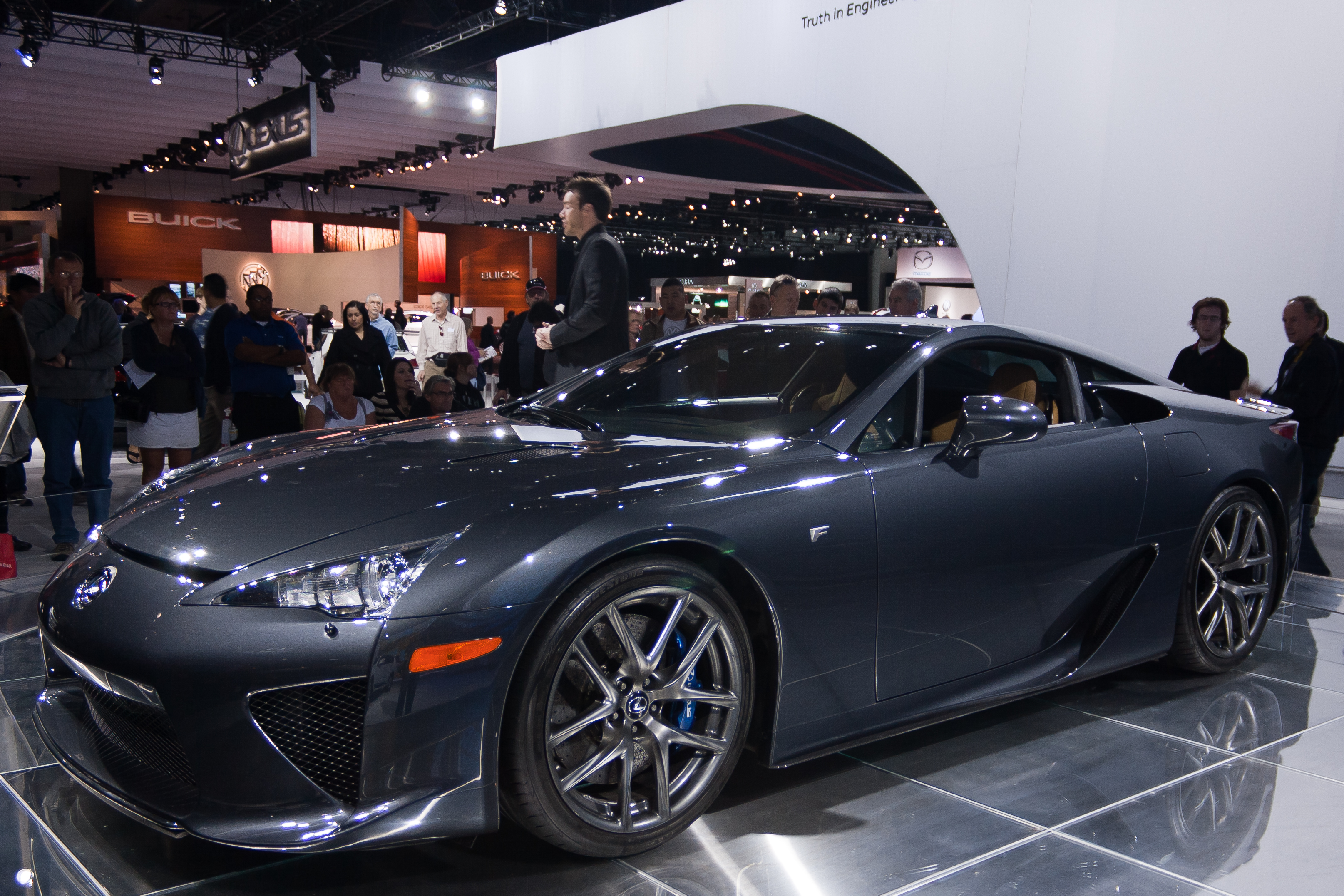
Lexus lf ZC
"Toyota blamed slow sales of electric cars in the United States. Presumably development will resume if and when EV sales pick up again, but it sure is disappointing to hear that a breakthrough process is being put on the back burner. Legacy auto makers would never dream of designing their own microprocessors, but it's becoming quite a common thing with a number of startups. Tesla and Rivian are developing their own semiconductors for autonomous driving."
Lexus is Toyota’s luxury brand. “LF-ZC” is tied to Lexus’s next electric-vehicle plan, and the hosts say Toyota canceled the first vehicle meant to come from that platform.
Lexus is Toyota’s luxury brand, and the “LF-ZC” name refers to a next-generation battery-electric vehicle platform/vehicle concept. In this segment, the key point is that Toyota canceled the first vehicle coming off that next-gen EV platform, so the LF-ZC becomes a concrete example of how Toyota is pausing its BEV push.
L three and L four autonomous driving
"And now we can add BYD to the list. It just unveiled a new chip for L three and L four autonomous driving, which BYD claims has the best energy efficiency in the industry and uses twenty percent less power than similar chips."
“Level 3” and “Level 4” are ways of describing how automated a car is. Level 3 still expects the driver to be ready to help, while Level 4 can drive on its own in certain situations without needing the driver to constantly monitor.
“Level 3” and “Level 4” refer to SAE-style autonomy levels: Level 3 can handle driving tasks in certain conditions but expects the driver to be ready to take over, while Level 4 can perform the driving task without human intervention within defined operational limits (like a geofenced area). The segment says BYD unveiled a chip aimed at these higher autonomy levels.
BYD
"And now we can add BYD to the list. It just unveiled a new chip for L three and L four autonomous driving, which BYD claims has the best energy efficiency in the industry and uses twenty percent less power than similar chips."
BYD is a Chinese car company. Here they’re mentioned because they’re building self-driving-related computer chips and offering a coverage program tied to their driver-assistance system.
BYD is a major Chinese automaker and technology company, and in this segment it’s discussed both for its autonomy chip and for its “God’s Eye” ADAS coverage program. The hosts frame BYD as taking a more direct responsibility stance for ADAS-related accident costs.
God's Eye
"And speaking of BYD, it's taking full responsibility for its eight as technology that it calls God's Eye. As long as the system is being used properly. BYD will cover all costs associated with traffic accidents, including repairs to the owner's vehicle, as well as third party property damage and personal injury."
“God’s Eye” is BYD’s name for its driver-assistance system. The segment also describes it like a bundled safety/coverage program—BYD says it covers accident costs for a year if the system is used correctly.
“God’s Eye” is BYD’s name for an ADAS/driver-assistance technology package (the segment frames it as an “eight as technology”). The important part here is the associated insurance-like coverage: BYD says it will pay accident-related costs when the system is used properly, including repairs and third-party damages.
FSD
"However, it is only a one full year of coverage. BYD's God's Eye package costs eighteen hundred bucks, which seems like a good price compared to Tesla, which charges eight thousand dollars for FSD in China."
FSD is Tesla’s name for its advanced self-driving software package. Here it’s mentioned mainly to compare how much Tesla charges versus BYD’s system.
FSD usually stands for “Full Self-Driving,” a Tesla software package intended to provide advanced driver-assistance and, depending on region, more autonomous driving features. In this segment it’s used as a pricing comparison point versus BYD’s “God’s Eye” package cost in China.
robotaxi
"Back in March, Chinese tech giant Baidu's Apollo Go robotaxi service suffered a big failure when one hundred vehicles suddenly stopped working on roads in Wuhan, causing a massive disruption."
A robotaxi is a self-driving taxi service. Instead of a human driver, the car uses software to drive, and the segment talks about a situation where many robotaxis stopped working and regulators stepped in.
A robotaxi is a ride-hailing service where vehicles operate with autonomous driving systems rather than a human driver. The segment references a failure event where multiple vehicles stopped working, and then describes how regulators responded with increased scrutiny and deployment restrictions.
Apollo Go
"Back in March, Chinese tech giant Baidu's Apollo Go robotaxi service suffered a big failure when one hundred vehicles suddenly stopped working on roads in Wuhan, causing a massive disruption."
Apollo Go is the name of Baidu’s robotaxi/self-driving taxi service. The segment says it had a big problem where many cars stopped working at once.
Apollo Go is Baidu’s robotaxi service name. In this segment, it’s the specific system that experienced a failure event, helping explain why regulators tightened oversight.
Baidu
"Back in March, Chinese tech giant Baidu's Apollo Go robotaxi service suffered a big failure when one hundred vehicles suddenly stopped working on roads in Wuhan, causing a massive disruption."
Baidu is a big Chinese tech company. Here it’s mentioned because its self-driving taxi service had a major failure that affected many vehicles.
Baidu is a Chinese technology company, and in this segment it’s specifically tied to its Apollo Go robotaxi service. The hosts use Baidu’s experience to illustrate how autonomous fleets can fail operationally and draw regulatory response.
Wuhan
"Back in March, Chinese tech giant Baidu's Apollo Go robotaxi service suffered a big failure when one hundred vehicles suddenly stopped working on roads in Wuhan, causing a massive disruption. In response to Chinese government increased scrutiny on robotaxis and began restricting their deployment."
Wuhan is a city in China. The segment says robotaxis had a major problem on roads there, which caused disruption and led to more government oversight.
Wuhan is a major city in China and is used here as the location of Baidu’s Apollo Go robotaxi disruption. The point is that the failure affected real public roads and triggered regulatory attention.
Pony Ai
"But despite the increased government pressure, operators are moving forward with expansion plans. Pony Ai and we Ride revealed they have increased their fleets by a couple hundred units from last year, and Bydu says its ridership is up one hundred and twenty percent from a year ago."
Pony AI is a company working on self-driving technology. In this segment they’re mentioned because they added more robotaxis to their fleet.
Pony AI is an autonomous-driving company referenced here as an operator that increased its robotaxi fleet size. The mention supports the broader point that companies are still expanding despite regulatory pressure.
we Ride
"But despite the increased government pressure, operators are moving forward with expansion plans. Pony Ai and we Ride revealed they have increased their fleets by a couple hundred units from last year, and Bydu says its ridership is up one hundred and twenty percent from a year ago."
WeRide is a self-driving company. The segment says it increased the number of robotaxis it has in operation.
WeRide is an autonomous-driving company mentioned as increasing its robotaxi fleet. It’s used as another example of continued expansion even after government restrictions.
Intrepid
"Speaker 3: Intrepid we produce network hardware and software solutions enabling vehicle manufacturers to innovate and design the next generation of modern mobility. [263.6s] Delivering scalable next generation solutions requires thorough testing and validation of vehicle platforms. Intrepid's Neovi cloud platform helps manufacturers quickly [274.2s] identify diagnostic trouble codes and defects by pinpointing which vehicles have specific software versions."
Intrepid makes software tools for car companies. They help the company check cars during testing by finding error codes and figuring out which cars have the wrong software.
Intrepid is a company that provides vehicle software and cloud tooling to help automakers validate cars before production. In this segment, they describe using their Neovi cloud platform to find diagnostic trouble codes (DTCs) tied to specific software versions so manufacturers can isolate problematic vehicles.
diagnostic trouble codes
"Intrepid's Neovi cloud platform helps manufacturers quickly [274.2s] identify diagnostic trouble codes and defects by pinpointing which vehicles have specific software versions. This allows them to isolate non [283.4s] compliant vehicles in real time using analytics, part numbers, DTCs, and organized secure cloud based data."
Diagnostic trouble codes are like a car’s “check engine” error messages, but more specific. They tell you which system has a problem so you can figure out what to fix.
Diagnostic trouble codes (DTCs) are standardized error identifiers stored by a vehicle’s onboard computers. When a system detects a fault, it logs a DTC, which can then be read by technicians or automated test systems to diagnose what went wrong.
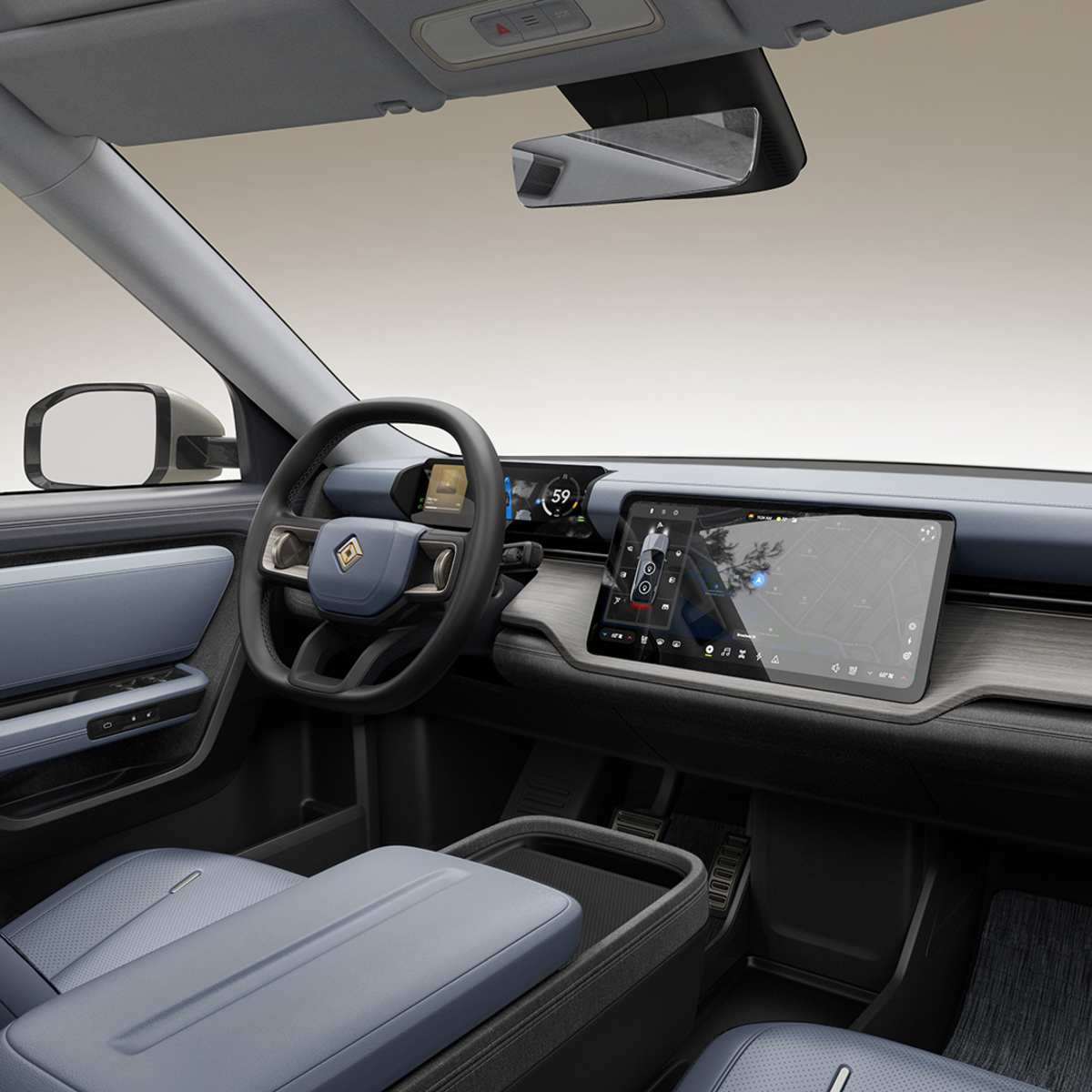
Rivian R2 Performance
"Speaker 1: Looks like all the effort Rivian put into making the new R two as efficient as possible paid off. The [313.4s] EPA published its official ratings for the R two Performance, which is the first version of the suv to hit the market."
The Rivian R2 Performance is an electric SUV, and the hosts are talking about its official EPA efficiency and range. They’re comparing it to a Tesla to show how much energy it uses and how far it can go on a charge.
The Rivian R2 Performance is a battery-electric SUV whose EPA ratings are being compared directly to the Tesla Model Y Performance. The key point is its efficiency and range numbers (including kWh/100 miles and miles of range), and how it stacks up despite being bigger, boxier, and heavier.
kilowat hours per one hundred miles
"The model achieves up to a combined one [323.2s] hundred and five mpg, uses thirty two kilowat hours per one hundred miles, and has three hundred and thirty miles of range electric points out."
This is how much electricity the EV uses to drive 100 miles. Less electricity per 100 miles usually means better efficiency and potentially lower charging cost.
“Kilowatt-hours per 100 miles” (kWh/100 mi) is an EV efficiency measure showing how much electrical energy the car uses to travel 100 miles. Lower numbers mean the car is more efficient (it goes farther on the same amount of electricity).
mpg
"The model achieves up to a combined one [323.2s] hundred and five mpg, uses thirty two kilowat hours per one hundred miles, and has three hundred and thirty miles of range electric points out."
For electric cars, “mpg” is usually a comparison number. It’s not real gasoline—it’s an EPA way to express how efficiently the car uses electricity.
In EV coverage, “mpg” is often shorthand for EPA’s energy-efficiency metric expressed in miles per gallon equivalent (MPGe). It converts electricity consumption into an equivalent fuel-consumption number so EVs can be compared to gas cars using a familiar unit.

Tesla Model Y Performance
"Those first two numbers are [334.7s] the exact same as the Tesla Model Y Performance, despite the R two being bigger, boxier, and nearly eight hundred pounds heavier."
The Tesla Model Y Performance is an electric SUV version of the Model Y. The hosts use it as a comparison point for efficiency and range so you can see how the Rivian stacks up.
The Tesla Model Y Performance is a high-performance variant of Tesla’s Model Y electric SUV. In this segment, it’s used as the benchmark because its efficiency and MPGe figure match the Rivian R2 Performance, even though the Rivian is described as larger and heavier.
Peugeot
"Now let's take a look [370.8s] at what it's doing for its French brands. Pougeot, which [374.7s] is one of the four core retail brands within the company, will get eight new models, including two BEVs in the B segment and one SUV in the C segment."
Peugeot is a French automotive brand within the Stellantis group’s lineup. Here, the segment discusses Peugeot’s product plan: new models, including BEVs (battery-electric vehicles) in the B segment and an SUV in the C segment, plus steer-by-wire on at least one B-segment car.
steer by wire
"At [385.6s] least one of the B segment cars will get steer by wire, reducing wheel turning by a third, which allows it to use a square steering wheel with holes at each corner."
Steer-by-wire means the steering wheel isn’t mechanically connected to the wheels. Instead, sensors and computers control the steering, which can allow a smaller or differently shaped steering wheel.
Steer-by-wire replaces the traditional mechanical linkage between the steering wheel and the wheels with electronic controls. Because there’s no direct physical connection, it can enable design changes like reducing the steering wheel’s turning angle and using alternative steering wheel shapes.
Satroan
"Meanwhile, Satroan, [404.0s] which will become one of the second tier brands, will have seven launches by twenty thirty, including two models that will take it into brand new segments."
The transcript mentions a brand that’s planned to launch several new cars by 2030 and bring back an older model as an electric version. The exact brand name is unclear due to transcription.
Satroan appears to be a mis-transcription of a brand name being discussed as a “second tier” lineup. The segment says it will have multiple launches by 2030 and return a model line in an electric form, but the exact brand identity isn’t clear from the transcript text alone.
Dou Cheveaux
"It's also bringing [414.8s] back the satro In two CV, or the famous dou Cheveaux, but this time as an electric and with a price tag under fifteen thousand euro."
They’re talking about bringing back a famous retro-styled model as an electric car. The name in the transcript sounds garbled, so it may not match the official spelling.
“Dou Cheveaux” is presented as a recognizable retro-futuristic design associated with a specific model name being brought back as an electric vehicle. The transcript appears to be a phonetic/garbled rendering, so the exact official model name can’t be confirmed with high confidence.

Nissan Frontier
"While Mitsubishi didn't provide a lot of details, the truck is expected to be based on the refreshed Frontier, which goes into production at Nissan's plant in Canton, Mississippi, in twenty twenty eight."
The Nissan Frontier is a mid-size pickup truck from Nissan. The hosts say Mitsubishi’s new pickup is likely built on an updated version of the Frontier, and they point to when Nissan plans to start making that refreshed model in the US.
The Nissan Frontier is Nissan’s mid-size pickup, and the segment says Mitsubishi’s upcoming truck is expected to be based on a refreshed Frontier. The hosts also mention it will enter production at Nissan’s Canton, Mississippi plant in 2028, which ties the product plan to a specific manufacturing timeline.

Honda Ridgeline
"Speaking of mid size pickups, Honda is stopping production of the Ridgeline for a surprising reason. It will not make any new models for the next eighteen months because it can't meet emission regulations."
The Honda Ridgeline is Honda’s pickup truck. The hosts say Honda is pausing production because the current version can’t meet new emissions rules, and they expect production to restart in 2028 with a refreshed model.
The Honda Ridgeline is Honda’s mid-size pickup, and the hosts say Honda is stopping production because it can’t meet emission regulations. They also describe a pause until the third quarter of 2028 to resume production of a refreshed Ridgeline at Honda’s Alabama plant.
emission regulations
"It will not make any new models for the next eighteen months because it can't meet emission regulations."
Emission regulations are laws about how clean a car’s exhaust has to be. If a car can’t meet the rules, the manufacturer may have to pause sales or update the vehicle before it can be produced again.
Emission regulations are government rules that limit what a vehicle can release into the air, such as exhaust pollutants. In this segment, the hosts connect Honda Ridgeline production stopping to the inability to meet those rules, implying the current model can’t be sold without changes.
ultra high performance tire
"Bridgestone, which is one of Autoline's great sponsors, is launching a new ultra high performance tire, the Potenza Sport Evo."
An ultra high performance tire is built to help the car grip the road better and respond more quickly when you steer. The hosts mention this tire is designed to work well in wet conditions and also claims lower energy loss while rolling.
An ultra high performance tire is a category of tire designed for better grip and sharper steering response, often on sports-oriented vehicles. The segment describes the Bridgestone Potenza Sport Evo with features aimed at handling and wet traction, plus claims about reduced rolling resistance and lower weight.
Potenza Sport Evo
"Bridgestone, which is one of Autoline's great sponsors, is launching a new ultra high performance tire, the Potenza Sport Evo. It's got wider shoulders for crisper steering response, a new polymer compound to make it last longer, and an optimized rib pattern with special grooves for better wet weather handling."
Potenza Sport Evo is a specific Bridgestone tire model being launched in this segment. The hosts highlight design choices like wider shoulders, a new polymer compound, and an optimized tread pattern to improve steering feel and wet-weather handling.
Request an Explanation
Heard something you'd like explained? We'll add it to this episode.
Sign in to request explanations for terms you heard.
Want to learn more?
Browse our glossary for plain-English explanations of automotive terms, jargon, and concepts.
Help improve this episode
See something that's not quite right? Our annotations are AI-generated and can sometimes miss the mark. Click the flag icon on any annotation to suggest a correction.