FTC is a U.S. government agency that polices unfair or deceptive business practices. Here, they’re focused on whether car dealers are being clear and honest about what buyers are really getting.
Concept
misled or misbait and switch type of practicing on their reviews
They’re talking about dishonest tactics in online reviews. The concern is that dealers might make something sound better than it really is, then the buyer gets a different outcome.
Company
AFIP
AFIP is mentioned as an industry group that’s been involved in discussions about FTC rules for car dealers. The host is saying this isn’t a brand-new issue.
Shannon Robertson is a person the guest references as having talked about these FTC dealer rules for a long time. She’s used as a credibility reference in the conversation.
Person
Thomas Israeno
Thomas Israeno is mentioned as someone involved in earlier conversations about car-dealer business topics. In this segment, he’s mainly a reference point, not the focus.
Person
Kevin Deutsch
Kevin Deutsch is another person mentioned as part of earlier discussions about dealer rules. Here, he’s not the main subject—just part of the background.
Addendums are extra fees or add-ons a dealer adds on top of the car’s advertised price. The concern is that some dealers don’t make them obvious enough, so buyers feel surprised later.
CarMax is a big used-car seller with both stores and online listings. It comes up here as an alternative when buyers don’t like how some dealers add extra fees.
Carvana is a company that sells used cars online, kind of like a direct-to-consumer alternative to traditional dealerships. People mention it when they’re looking for a simpler buying process.
Frank Loebs is mentioned as a dealer-industry voice who thinks stricter enforcement is on the way. The guest is saying he’s not as convinced about how severe it will be right now.
Term
AI
AI is computer software that can look through lots of information and spot patterns. Here, the idea is that regulators could use it to quickly find suspicious or misleading dealer behavior.
Blockchain is a way to store information so it’s hard to tamper with. Here it’s brought up as part of the broader tech tools regulators could use to check what dealers are doing.
Franchise dealers are regular car dealerships that are authorized to sell a specific automaker’s brand. The point here is that there are so many of them that audits could become widespread.
Person
Daniel Gare DG DG
Daniel Gare is mentioned as a person who studied how dealer disclosure rules differ from state to state. The point is that what’s “legal” can vary depending on where the dealership is.
VDP means the page where you see a specific car listing online. The point is that dealers may hide important extra charges in small print on that page.
A pricing stack is the list of all the parts of the final price, like base price plus add-on fees. The concern is that some dealers don’t show those add-ons clearly in the main price breakdown.
Term
FDC
FDC is mentioned as the regulator/enforcement focus for how dealers display extra charges. The takeaway is: don’t hide add-ons in obscure places—show them clearly where buyers look at the price.
This is about which law wins when federal and state rules disagree. The guest is saying dealers may need to adjust because federal rules could override what states previously required.
“Dock fees” are extra charges the dealer adds for moving the car to their location. They’re part of the final price even if they aren’t obvious at first.
“Federal agencies” refers to U.S. government regulators operating at the national level that can enforce rules affecting car sales and advertising. In this context, they’re described as driving investigations and compliance actions that dealers must respond to.
A “fine” is money a company has to pay because regulators believe it broke the rules. The point here is that the penalties are big enough to change behavior.
Brad Wise is a dealer figure the hosts bring up as an example of someone who runs a simpler, more transparent pricing style. It’s used to show that this approach isn’t just theory.
This means the dealer tries to keep the deal simple: no extra surprise add-on charges and no tricky ad-based pricing. The goal is a straightforward “one price” experience.
Furman Chevrolet is a dealership the hosts mention as an example of a simpler pricing style. They’re saying it’s possible to sell cars with fewer surprise charges and less back-and-forth.
Commission salespeople get paid based on how many cars they sell. The discussion is whether newer tools like AI could make that kind of negotiation less necessary.
Best Buy is mentioned as a comparison point: if one store won’t negotiate but others nearby will, customers may still shop around to get a better price. It’s an analogy for dealership pricing behavior.
“One price” means the car has a set price and there’s no haggling. The host says it could change how the market works, but it probably won’t be adopted everywhere at the same time.
General Motors is the big automaker mentioned here. The host is talking about GM ending Saturn, which is an example of how brand strategy can reshape the market.
The Pontiac Firebird is an older-style performance car from Pontiac. It’s known for strong engine options and a sporty look. The podcast mentions it because someone is saying they like it.
Circuit City is mentioned as a retail company that struggled after changing its strategy. The host uses it as an analogy for how changing sales approach and incentives can hurt performance.
A volume bonus pay plan pays salespeople based mostly on how many cars they sell. The host says that can make people care less about profit per car and more about hitting unit numbers.
“Stair step” means pay increases in steps after you reach certain targets. The host is saying some pay plans are designed like that to push salespeople toward specific goals.
“Gross” here means how much profit the dealership makes on a car sale. The host is saying it’s not as simple or transparent as people think because the real numbers depend on internal deals and incentives.
This means customers are getting cars arranged or sold before the dealership even has the car sitting on the lot. If that happens, the dealer has less room to bargain because the car isn’t “available” in the usual way.
MSRP is the price the carmaker puts on the window sticker as the “suggested” retail price. The point here is that some dealers don’t really haggle anymore—they’re basically trying to sell at that sticker price.
Term
packs
“Packs” is slang for extra money-making items or add-ons that get included in a car deal. The host is saying dealers use these, but the salesperson’s slice of it may not be the whole story.
The Opel Sintra is a family-oriented minivan, meant to carry people comfortably. People sometimes talk about it when discussing pricing and value because its cost didn’t always line up with what buyers expected. In the podcast, it’s mentioned while comparing prices in different locations.
Brokers are middlemen who help you buy a car and negotiate the deal. The host is saying AI could do some of that work, which might make brokers less needed.
Car Edge is a company that helps people buy cars, and the host says it already uses AI to negotiate the deal for you. The idea is that you pay a fee and it handles some of the back-and-forth.
“Optimus robot” is a humanoid robot concept meant to do work in factories or warehouses. The hosts are using it to talk about how robots could eventually help at car dealerships, not just in factories.
“Dark factories” means factories that are run mostly by machines, with fewer people working on the floor. The goal is to automate production so it can run with minimal human involvement.
“ICE vehicle” is shorthand for a gas-powered car that uses an engine that burns fuel. They’re contrasting it with electric cars to talk about how service and parts might change.
“Fixed operations” in dealership terms refers to the recurring, non-car-sales side of the business—mainly service, maintenance, and parts. The hosts argue EVs could disrupt this revenue stream because EVs may require different (and potentially less frequent) service and use fewer traditional drivetrain components.
The “charging network” is the system of public and private charging stations that EV drivers rely on to recharge. The hosts point to gaps in the U.S. charging network and electrical infrastructure as a key reason EV adoption hasn’t grown as quickly as expected.
The Tesla Cybertruck is a battery-electric pickup known for its distinctive angular design and for being heavily software-driven. In this segment, the host specifically credits the Cybertruck’s self-driving features with making the vehicle feel more impressive and usable day-to-day.
The Ford F-150 Lightning is an electric pickup truck. Instead of using gasoline, it runs on electricity stored in a battery. The podcast mentions it while talking about what Ford did with the Lightning line.
It means the EV doesn’t need a charger every single day. If you drive a limited distance and can plug in at home, you may only need to charge every couple of days.
Solid state batteries are a newer type of EV battery that uses solid materials instead of a liquid inside the battery. People expect them to charge faster and be safer, but they’re not common everywhere yet.
Charging to 80% is a common benchmark in EV discussions because charging speed often slows as the battery approaches full capacity. Many fast-charging curves are optimized so the biggest time savings happen in the lower-to-mid state of charge range.
The BMW 3 Series is a car made for everyday driving that also feels sporty. It’s a popular model, so people often talk about how safe and practical it is to own. In the podcast, it’s brought up in the context of safety and everyday needs for a young driver.
Instead of charging an EV battery, a swap station replaces your battery with a charged one. It can be faster, but it only works well if the batteries are standardized and there’s a network of swap stations.
Lithium is the material that many EV batteries rely on to store energy. If more lithium is found or sourced, it can help support building more batteries.
Self-driving means the car can do more of the driving for you—like steering and controlling speed—without you constantly doing everything. The idea is that it feels more like having a driver or chauffeur.
Nvidia is a tech company known for AI computers and chips. In this discussion, they’re being credited with tools that help cars do self-driving-related AI work.
“Open source” means the underlying software code is made publicly available so other companies can use, modify, and build on it. In the automotive context, that can speed up how quickly different automakers integrate self-driving features.
Parking itself means the car can steer and position itself into a parking spot. It’s a noticeable feature because it takes a lot of the hard, precise work out of parking.
LIVE
Chris J. Martinez: All right, welcome back. This is the automotive informants. Zach couldn't be here with us today. but we have a special guest, Trent Cannon. How you doing, sir? Welcome to the show. looking forward to really kind of going through some of these headlines, but just maybe do like a sixty second highlight of who are and and and what you bring to the table in this conversation today.
Trent Cannon: First of all, I didn't realize I was the replacement guy. You know?
Chris J. Martinez: You're not. You're not. You're not. He would have actually actually Zach would have been here with us. All three of us would've been on this conversation. But he had ⁓ he had some issues at at his home and he had to get those taken care of pretty quickly.
Trent Cannon: Yeah. But th thank you for having me, Chris. I appreciate it. my name is my name is Trent Cannon. lot background in marketing for automotive. Spent the last five years before direct. this is actually the first time in a long time that I've been able to speak about automotive. ⁓ so I appreciate you giving me the the opportunity. It's it's been time. I haven't talked about automotive since like the pandemic.
Chris J. Martinez: the pandemic was quite some time ago. So I'm glad you're you're here, Trent. We do have some some pretty interesting topics and you know I was gonna save the best for last, but they all seem like pretty high-level headlines.
And I'm interested to hear what your opinion is. So there was a a recent article that they just announced on automotive news about the warnings of the FTC. But once I really dug deep into that that article, I'd looked at the reviews.
And so they're basically the the argument is, you know, hey, look, they're not going to just compare prices. They're also going to look at the thousands of reviews that dealers have on their website. And if they can see a pattern of misled or misbait and switch type of practicing on their reviews, then that could cause alarms for more investigations.
Trent Cannon: Well, first of all I'll say Shannon Robertson of AFIP has talking to me this about this topic ad nauseum since since twenty been going through ⁓ with the FTC the guidelines. ⁓ we talked about it in ⁓ all things car business clubhouse with Thomas Israeno and Kevin Deutsch and and them folks.
and there's been a lot of opinions. I I will say this. I think that this time I don't here's my thought. I don't ⁓ I'm very concerned about this ⁓ particular When I'm I'm talking about the Trump administration, being intrusive dealer activity at a level.
That's what seems a little bit f far stretched to me. Though I do think that there is a lot of now, in some states, There is some angst against what these the these addendum pricing and the consumers are at their wits in going outside to places like Carvana and Carmax.
We we know the players because the addendums have gotten in some cases so egregious. So I think there is a political aspect on both sides of the aisle to go ⁓ and dealers on on on this. and there have been some the a li I'm in Texas and I've just like you I've I've been in Texas, most of my automotive career, and I remember when addendums were remember the 200 199 for nitrogen?
You laughing crazy. Remember when 199, you had a little 399 protection package, and ⁓ won't I won't call out some names, but I know dealers that have nine thousand dollar addendums on on ⁓
Chris J. Martinez: Yeah, I remember. ⁓ yeah. ⁓ and it's not a lift kit. Yeah.
Trent Cannon: And it's not a link kid. thousand dollar addendums like on Centris. Yeah, yeah. nine and ⁓ you know, thousand you know, seven thousand dollar addendums on used cars. And I think it got out of hand obviously during the pandemic.
and there there's a and an effort to clamp down on it. So again, I I I I'm I I differ Shannon on the severity of what is happening right now in the moment. I think I've I heard from Frank Loebs you know all the guys out there, you know, this is coming, this is coming, this is coming.
I am I'm more cautious of the others. I don't think you need to change anything dramatically right now. But I do d think you need to begin to get prepared something before the end of the decade that is going to level set this playing field because I don't I don't think the current model of of we're doing with addendums is sustainable.
Chris J. Martinez: Yeah, no, I don't I don't believe the the addendums a thing. I do think if you have a good product and you want to add it, I think that's good, but you have to disclose it. And I think what I think most dealers don't understand, ⁓ and if look at what what this new administration has done with AI and you know, all the different things that they're looking at, the blockchain and stuff like that, those types of Companies are getting incorporated in new administration in our government.
And so you think about, you know, we got 17,000 franchise dealers or sixteen thousand franchise dealers, whatever it is. It's anymore, it's a quick script, a five minute execution of, you know, ⁓ out a a message, and every one of those dealers could be audited ⁓ in five minutes.
Like at the scale of AI and what the things the capabilities that can happen, that's that's something that's real. And I think that if you know the dealers that aren't paying attention to that, they're gonna be in put in a position like this one recent seventy five million dollar fine that happened to a dealer group.
it it's real. And then they they don't just go back, you know, a year, they're gonna go back six years, whatever ⁓ your the records you have still, gonna they're gonna go and audit everything. So I think people aren't taking it as serious as they should.
And I think they really should be looking at, you know, how they're currently pricing, currently, you know, putting their different addendums. And it it's not saying don't put addendums. It's just saying you need to put it on your website.
Trent Cannon: So here's the problem. And it ⁓ d I don't know if you know Daniel Gare DG DG, well known to some some people in this space. we sat in Austin a couple of months ago and he went through, he had gone through state by state all the different doc document laws, and there's weird laws in Georgia and Maryland and all sorts of places with disclosure on document And So in Texas, as you as you well know.
We you we you just have to put in somewhere in the comments and the VDP can be really small print, which a lot of them do. We have we have these dealer accessories, X, Y, and Z. Rarely does anybody actually see it.
and not listed in the pricing stack of of the VD of the VDP, which is is really what the FDC is trying is trying to go f go for. And so you would to really change these laws. Because a lot of these these dealers are compliant with their state law and if you're going to now and this is what kinda gets me about I'm with you but then I'm like, ⁓ so you're going to tell me that the re Republicans who have been very strong proponents of state law for l as long as I can remember, are now going to say that the federal law supersedes the state law, which it does, which I I grant it does, but the FTC's teeth on that thereafter aren't as strong as I think people believe.
I think you really have to change the state laws and get state legislatures which have strong representation from dealerships in inside of them. All right. There are a lot of dealers, a lot of people don't know this, that there are there's a lot of dealer representation inside a state inside the state laws and that's not by accident.
and so think everybody wants a fairer player playing field. ⁓ I I don't think that's not but we have to get understand exactly what it that means and if that means that the VDP needs to show all the applicable pricing online then that's gonna take some time to unwind, especially in in states like Texas.
Chris J. Martinez: Yeah, and you know, I've already seen dealers here in Texas doing that. They're putting the the addendums on their pricing, they're putting their dock fees on the pricing, including it out the door.
And I think why this know, and I agree with you that that they've always been a proponent of let's make the let the states make the decision. However, because they still have these federal agencies, right, like they on a national level, they're they're gonna do their job, right?
And so they're literally ⁓ Now putting in these measures and why they sent those ninety-seven letters to all those dealer groups to let them know, hey, this is what we're doing, and you need to get on board.
And and that's what it sounds like. I I think that $75 million fine was kind of one of those wake-up calls in my mind after I've read what what happened, what they did, how they went about it, and then how far back they went through it.
And when you look at If you look at the list that Automotive News just released yesterday of every one of those dealer groups, there's some big, big dealer group names. I mean, that's some of the the largest in the country that got those letters.
when I think about it, but it it's also because when I think about the next article we're gonna talk about, we looking at these ⁓ a lot of these social media profiles that are online today talking about how egregious some of these ⁓ practices are.
when you look at, you know, how loud some and the kind of audience and following some of these brokers have, it's ⁓ very visible. And it's hard to just have a the government agency kind of like look away when you've got millions of views, people looking at these videos on a daily, and it's getting louder.
You know what I'm saying? So that's that's when it starts being hard to ignore. And I think that's where
Chris J. Martinez: These two stories kind of go hand in hand, you know, and I and believe me, I've been that guy that was like, ⁓ brokers, you know, I'm I'm not a fan. But then I started looking at a lot of these videos and going down that rabbit hole and seeing what these guys are commenting about. And I was just shocked. I'm like, man, there's really a lot of dealers that do some some things that just aren't aren't aren't necessarily the the right way to do business.
Trent Cannon: Yeah, well look Maryland case started in under the Biden administration. and it started at the state level. It was a state auditor that went into a deal dealership. So so first of the all dealers, if you got somebody with the state ⁓
Trent Cannon: Don't don't jack with the state leg you know, don't jack with the state legislator auditor when they're trying to buy a car. ⁓ you know, that that's number one. There there's a great guy, ⁓ one of my favorite guys in in the auto industry, Brad Wise down there in Tampa, Florida.
Furman Chevrolet, who has I mean, if there was a poster child of the no addendum, no ads, Y like if there was a Wikipedia, it would be Brad Wise's face that day. Yeah, like he is he has been he has been on that.
And I agree that their their gun in San Antonio has famously been one price, no no no ads in in Texas and it and it's worked for them. I think that's that's really what this is about, is we're talking about the profitability.
The reason why the dealers have to put put this on there is because there's not a lot of profitabiling cars even at MSRP anymore. That's that's the real honest truth. And so what really becomes, what we're now gonna end up having a discussion on, is do we get is are we seeing the end of commission salespeople inside of dealerships?
And is AI, your point, going to push that? ⁓ And I think that's that's that's actually likely coming. We will probably see And should w and should dealers go to no know how go pricing as well. And I think so too.
I think OEMs can help help help in this by kinda like the minimum pricing standards where you can't go upload invoice or do you just have to keep everything at MSRP and dealers sell basically everything at Sr.
P within reason. And I actually think that's a good thing. I helped I think helps stabilize the market. It helps stabilize some depreciation. I think you should ⁓ use You you should know what the car's worth before you go in there and we should stop a lot of this intercomp interdealer competition, which just ends up costing the OEM and dealers money.
Chris J. Martinez: Yeah, I think I think there's some some merit there. I I do think though that from a consumer standpoint, because of the dealership model, it gives that opportunity to have, you know, a a more competitive where you can actually have you you can get better deals and things like that.
You you think about I'll I'll just give you an example. When I bought my my Tesla, there's no negotiations. There's no nothing. Like you you I just had to buy it or or it is what it is, right? Like so that's that.
whereas ⁓ got these brokers that you know tout they they negotiate three thousand dollars off the MSRP and
Chris J. Martinez: you know, i in a lot of cases that's that's real real real talk, right? Like they they generally can negotiate those prices pretty good. but I don't know. I I do like the idea of walking in and not having to hassle and worry.
You know, believe me, I came from CarMax. I started my career there. I was there for six years. Got to see a lot of growth. you know, it's ⁓ it's interesting to to see it you know how some some models work and some in s in some places and some don't.
You know, I could tell you some OEMs did try that back in the day, haggle in some markets and got crushed. it just wasn't something that was as easy. I'll give you example. Like when Best Buy I've I've read something somewhere when Best Buy went to China and they tried to do this this no haggle pricing.
And so they basically had some other, you know, T V places next door to them that didn't negotiate. And so people would just literally go to Best Buy, look at the stuff and go back and then just negotiate and get a better deal.
And it just crushed Best Buy in that market. So I could see that it it just really depends now. If everybody decided to jump in and say, I'm gonna be, you know, one price and that's it, then that I could see things that way.
But it's more realistically not gonna happen that way. It would have to happen like one makes a decis decision at a time. Look at Saturn. Saturn was no no haggle for their that was their whole model and they didn't make it.
Trent Cannon: Well, I I I think it was a bad idea for General Motors to kill Saturn. Personal opinion, by the way, I'm a big Pontiac fan too. but we we won't go back. No, I don't we don't need to go back to ⁓ nine, Chris. We don't need we just let's stay in the present.
Chris J. Martinez: Yeah. I like Pontiac too, that firebird.
Trent Cannon: But I I it's funny you just mentioned Best Buy because I just wrote an article for Jerry Reynolds CarPro Show out in Dallas. and talked about the Best Buy. but everybody forgets the other company that was involved in that was Circuit City. And what did Circuit City have? Circuit City had high commissioned trained salespeople that we ⁓ Yeah ⁓
Chris J. Martinez: We can go in that whole that that conversation. I'll tell you when I was at CarMax, because Circuit City created CarMax, right? And I'll tell you that the reason why I, in my opinion, why Circuit City went under, because believe me, you ever read the book From Good to Great?
Circuit City was one of those those companies that they mentioned in that book because they were a great company. Then they ⁓ changed their model, went to Hourly, lost their best salespeople. All their best salespeople went to CarMax and started selling cars.
Chris J. Martinez: And guess what happened? CarMax thrived and their their Circuit City went by the wayside 'cause they focused their their business model on CarMax versus their what their bread and butter used to be.
Trent Cannon: There were a couple of things that went wrong with at Circus City. One, getting out of appliances wasn't a great idea either. But the basis was away. They thought they could save, I think it was $130 million.
Ooh, it's kind of crazy how much old business knowledge I know. That they they could save $130 million a year by moving off the salespeople. ⁓ And your point, it chased away some of the best salespeople, and Best Buy blows up.
But Best Buy was already surging at that point. It was something to compete. against the Best Buy model that was already that was already starting to take the countr come ⁓ country I mean Circuit City I think it was 1984 1994 I might have these dates wrong was the largest electronics big box store and then all of a sudden this upstart Best Buy comes out and within six years ends up basically wiping out the ⁓ wiping out the company but ⁓ enough enough that I mean I I I just I know we're gonna talk a little bit more about AI and I think that AI and what we're seeing in margin compression inside dealerships leads me and I've always been a big ⁓ I'm not talking about luxury dealers, I'm not talking about the Mercedes and the BMWs.
I think there's still some gross there. But I'm talking about your Nissan stores, your Hyundai stores, even your your Ford and Chevy stores going to volume bonus pay plans as opposed to high gross pay pay plans, I I think is Mm-hmm.
Chris J. Martinez: You know, I I I think I've it twofold, right? Like w during the pandemic they they talked about, you know, they they love the fact that the dealers were being more profitable because the due to the lack of supply. They talked about not, you know, flooding the market once things got back to normal so they can kind of throttle that and guess what happened? ⁓
Trent Cannon: how long that last? Toyota has still ⁓ kept you know, basically done that. Yeah. But everybody else ⁓
Chris J. Martinez: Yeah, yeah, yeah. To a certain extent. To a certain extent. Yeah, yeah, for sure. Everybody else, they just went back to the same the the old tricks, stair step, the whole they just went back like it would take six months, maybe. ⁓ and and so I you know, I don't know. I I think I think they're know, the volume I I'm always been big on volume, you know, my background we've grown, you know, pretty decent number of of large stores.
Chris J. Martinez: And always, you know, focused on volume, but gross was was still a big part of the the equation. so, you know, I I don't see any reason why you couldn't move to those types of models, but I do think that you should still have that that in there to try to get some of that margin.
'Cause the the worst thing that happens is when you just focus on on volume or those types of pay plans, man, they're just ⁓ the You can see the difference in the sales salesmanship there. And some of those salespeople ⁓ conscious ⁓ when it's a gross ⁓ volume hybrid type pay they're very conscious of that gross because they want that extra.
But the minute you just go strictly to volume, they don't care. They're just literally, hey, I don't care if what you take five grand off the car. I just want to get my commission. So ⁓
Trent Cannon: Well Chris Chris, I know you didn't want to you didn't want to go we won't make this a play paying conversation, but let me just say something I always say, said it for many years. There's no such thing as gross.
It's a completely made-up, fictitious thing. You you don't know the the pack, the dealer pack is. You don't know if the the salesperson's paid on hold back. You don't know the stair step money and you know some of the back end agreements I won't even get into that can happen between OEM and a dealer group or or new new dealer, how many units that you're getting because you built a new point, A XYZ.
You you know these things, Chris. We don't have to bore everybody with this. But it it's gross, it's fictitious. It's it's just based upon what somebody says, you know, ⁓ here's percentage. You know, I I get there's people always, ⁓ I get thirty percent of the front.
You know, I get to yeah, yeah, but you don't even know what that is. the dependent on what somebody has calculated should be your front end, whether or not you have an addendum, whether or not you're selling over.
So in in let's talk about Austin. I love Austin. There's one deal there was basically one dealer in North Austin for many, many years. And Austin was a populace that was growing at a rate. It was hard for any dealer, you know, in the past twenty years to not be successful and grow volume in in Austin.
One the legislature didn't want more dealerships. you you ⁓ know yeah you could sell a thousand cars or or five hundred cars at a lot of Austin stores and and and I so what I'm saying as the OEM or as the dealer if everything is one price in that area you're still gonna say sell basically the same amount of cars.
Right? If every if every Camry is thirty thousand every Ultima is 25,000. And people know that they're not going, you know, out of state or wherever to purchase a car ⁓ on typical basis. So if you if you just come to agreement that say this is what we're gonna sell our car for, especially inside OEM ⁓ on its and you've got a great brand, look at Toyota.
Toyota is selling cars before they hit the lot, Chris. Before they hit the lot. And if you if you're putting together a gr a a great brand, forget it, they're not even negotiating MSRP. They're just hoping they get a car.
And if you put a g together a great brand with the with the right amount of cars, so you're not flooding the market, you can you can be a lot like a Toyota.
Chris J. Martinez: you know, I'll ⁓ I'll I agree that some do have that value, but I'd also believe it's you know s is depending on the operator and the sales team that you have, because I'll tell you when I was in Oklahoma, that that city was there was no growth, there was negative decline, right? And I took the group Tulsa, Tulsa. Yeah two thousand
Trent Cannon: Okay. What what city? What city in Oklahoma? Well well, okay. What w wait, what years?
Chris J. Martinez: Nineteen through two thousand twenty-three.
Trent Cannon: Okay, well this is the this is what they call the weed boom. I know some folks in in in Tulsa. So you were there at the right time.
Chris J. Martinez: Yeah. So two thousand nineteen and and and this is, you know, and this is the argument. I've been in automotive since two thousand three. And everywhere I've gone, you know, you can call two thousand three another boom, right? So two thousand three, you know, two thousand five I ended up moving. We were in l ⁓ Las Vegas, two thousand three. Those stores, new points, grew grew those to big numbers.
Chris J. Martinez: Two thousand five, moved to San Antonio. The CarMax location there at the time was doing a want to say it was like four hundred cars a month, went to seven hundred used cars a month. ⁓ Universal when we were there, they were doing three thirty, got to almost six sixty, I think it was that the number. and then from there went to Austin, went from one fifty to over a thousand a month. Coincidentally,
Chris J. Martinez: you know, other stores in that market and grew big numbers too. But, you know, my buddy moved to Chevy. He he grew his store pretty strong too. did well. And then when I went to Tulsa, it's you know, I just I every year I'm in the car business, it's been really good timing, right? So when I was in Tulsa, we went from three hundred and fifty cars a month to almost seven hundred cars. and then when I moved back to San Antonio, you know, that was perfect timing again, right?
Chris J. Martinez: They were doing ninety cars. We went to a hundred and eighty cars within twelve months. So, you know, it in the last twenty three years if I've been in business, it's been like perfect timing, right? Like everywhere I go, like we just blow up the numbers and you know, good spots, right? So I do think that if you got good operators, good sales teams, you can I I would argue that you you can do good volume.
Chris J. Martinez: Good growth. Because at the end of the day, some of it, yes, I know there's packs. I every dealer has them. They range from anywhere from 500 to $3,000. So margin that salespeople might see maybe, you know, marginal compared what they're packing.
but at the end of the day, the bottom line is the bottom line, right? The net profit is still there. And ⁓ and so on you look it, I think that. you know, dealers should be, you know, focused on on both, right?
Like it's it's cool to sell a lot of cars, don't get me wrong, but at the end of the day you wanna at the bottom line, that's what w that's really the the measuring stick, right? How how profitable are you and what does that look like?
Trent Cannon: Yeah, b just you know, and I you know I love you. You know I love you on the structure. But you look you talk about the last twenty years, you said Las Vegas, San Antonio, Austin, Oklahoma. Some of biggest growth growth ⁓ metroplexes in in in the country. Austin I was was number one at at one point. I'm talking about talk about doubling the numbers in Youngstown, Ohio. Or Muncie, Indiana.
Chris J. Martinez: Yeah. I I'm convinced I convin I'm convinced you can send me anywhere and I can do it.
Chris J. Martinez: Could do I could do it 100%. Promise. I could. Promise. Promise.
Trent Cannon: You know what I mean? Like like there's there's some places that don't have the population growth, right? You've been in the spots that have the population.
Chris J. Martinez: No, you could see look at look Tulsa. Google it. Negative population growth. Yeah. Now in the our outskirts, on the outskirts of those the of Tulsa, you could see there was some growth in Big Spee. ⁓ what's the other there's another town, I forget the name of it, but but the Tulsa proper, like the main area, negative growth year over year for last ten years.
Trent Cannon: Yeah. Yeah. Yeah, I think the the well to so what talking about is the dealer profitability and across entire United States, right? And I'm I'm just talking about the volume with a good OEM is going to be there.
So why should why should a Nissan Sintra be cost a different price in San Francisco than it does in in Mobile, Alabama? Right? It shouldn't. You're you're the the Tesla didn't. The Tesla didn't. They're doing they've they've you know they've seen explosive growth over the last ten years, right?
Chris J. Martinez: I don't disagree. Yeah, no, I don't disagree. I think the prices should be the same. Yeah.
Trent Cannon: Same price, all the same, same, same place. And that's just what I'm saying. If you're building the right amount of cars, if you're putting, if you've got a good product, and you're treating people the right way, they're gonna come back to you and buy cars. It should be based upon that, not necessarily what somebody can negotiate now, you know, whether they have Claude or or or negotiating the deal for them. ⁓
Chris J. Martinez: Well that's that's That's real too though, right? Like that the the AI, I mean, that's negotiating. I mean, that's what that was my argument. Like, man, the brokers, they they do have a job today.
For how long though? I don't know that it that's a long term thing with AI, because Car Edge is already proving that because they they provide a service that's has that broker like the they'll have the AI negotiate the deal for you for a small fee.
So, like, that's a real thing. You know what I'm saying? So I don't
Chris J. Martinez: Yeah, I think we're, you know, I think you're right though. I think there's a lot of things today that are gonna look different in ten years, a hundred percent. I don't know that we had this conversation last week with ⁓ Zach and I and talking about even technicians, right?
You know, this Optimus robot comes out. There's a lot of dark factories in China today that operate at near a hundred percent robotics. you know, that comes into US, know, I know unions are big, you know, manufacturing, those are there.
You got technicians, ⁓ you some stores that already have robots that do parts delivery at some dealer groups today. D do they get the Optimus robot to turn wrenches? ⁓ I there's a lot of there's a lot of things that are gonna be transformed next ten years for sure.
Trent Cannon: Yep. Yeah, it it they will. the the answer is i I I do. I don't think it's in in the immediate first of all, ⁓ the way the car is constructed constructed right now, this is what I've been told by some people who know. it's not advantageous a robot to do. Like ⁓ are too small. Like it's too It's too hard a robot to do it. But you could construct a car, especially an E V. ⁓ Yeah. Yeah.
Chris J. Martinez: The E V that's where the E that's the argument. That's why the b you know, some of the push has been for these E Vs, not only because, you know, from a you know, environment standpoint, but from a mechanical standpoint, they only have a hundred and yeah.
Trent Cannon: Yeah. From a mechanical standpoint, it l I I can tell I can tell you this now. E V takes about third somewhere bet between a third ⁓ to two thirds of the work workforce to build. Right in in manufactur manufacturing. The cost at scale is much lower than ice ice vehicle. that is one reason why the fear of and I don't wanna get ahead of your topics 'cause I know we we were we were gonna talk about EVs, so ⁓
Chris J. Martinez: ⁓ yeah. No, no, this is a good segue. I think know, jumping into that, like you think an ice vehicle has, you know, how many thousands of moving parts ⁓ the ⁓ EV only has a hundred and fifty moving parts?
So when you look at that, there's there's big reason to say, hey, look, you you may got you may want to look at you know manufacturing EVs. The the problem is from a parts perspective, how much does that cost?
you know, a f negatively impact the the profitability of the OEM too, because now you're reducing the the profit on ⁓ because now they can't sell parts as plentiful ⁓ they they can today if they move a hundred percent to E V.
Trent Cannon: For the d for the dealer it is a it's a major concern. and we I've I've explored this. because you do. You take out you don't have a transmission, you don't have just don't have a lot of the parts to service once once get to to with EVs and it would completely change the way and the profitability for those that don't know.
Most of the profit in dealerships is made not off the the sale of the car, it's actually made in fixed operations and servicing the servicing the vehicles. And EVs would completely change that on on top of its head on top of its head.
so it's it's a it's a major concern. I d I just can tell you it's a it's a major concern. I have been a strong ⁓ and I ⁓ of the belief that EVs are ⁓ EVs better vehicles. than ice now. I don't I don't even know that's if you ask somebody in engineering, I don't even know they're gonna question that.
The technology of EVs, especially with solid state batteries. are better than ice vehicles. They they will last longer, they are faster now, they can get six to seven hundred miles on on a charge now environmentally not as not as the That's a little bit overblown.
It's still on the carbon footprint and they're they're still they're still pretty close because if you know, you gotta get the lithium or whatever they're using in order to to to to create them. But when you get the solid state batteries at scale and as you sell it, then it really tips towards the EV.
the problem we're we're we have in the United States is is the charging network and our and our electrical infrastructure. That's why they haven't they haven't come they haven't, you know, fully grown to what they should be right now.
about twenty percent of the US. but as far as the vehicle themselves, the vehicle itself is a better car than the than the internal combustion commit engine.
Chris J. Martinez: Yes, I I do that especially after ⁓ if me if my Tesla Cybertruck did not have self driving, I wouldn't be impressed with it at all. Because of the self driving, I think that makes the whole car.
Right, like without that self driving, it's just not as cool. I think the self driving, I'm I'm not a fan of driving to be quite frank, but I love the fact I can jump in there, hit start, and it just drives me wherever I want.
but I can tell you why ⁓ the have bleeding and losing money pulling out of EV, not only because of the administration, but because
Chris J. Martinez: Partly it's the ⁓ administration. The second part is just they're so expensive. You know, Toyota's pulling this this ⁓ this kind of jumps into this next article. Toyota pulls the plug on the Lexus EV. ⁓ this is another, you know, Toyota was probably the smartest in my mind, going into this because they didn't rush to jump into EV. They because they've been doing such a great job with their hybrids.
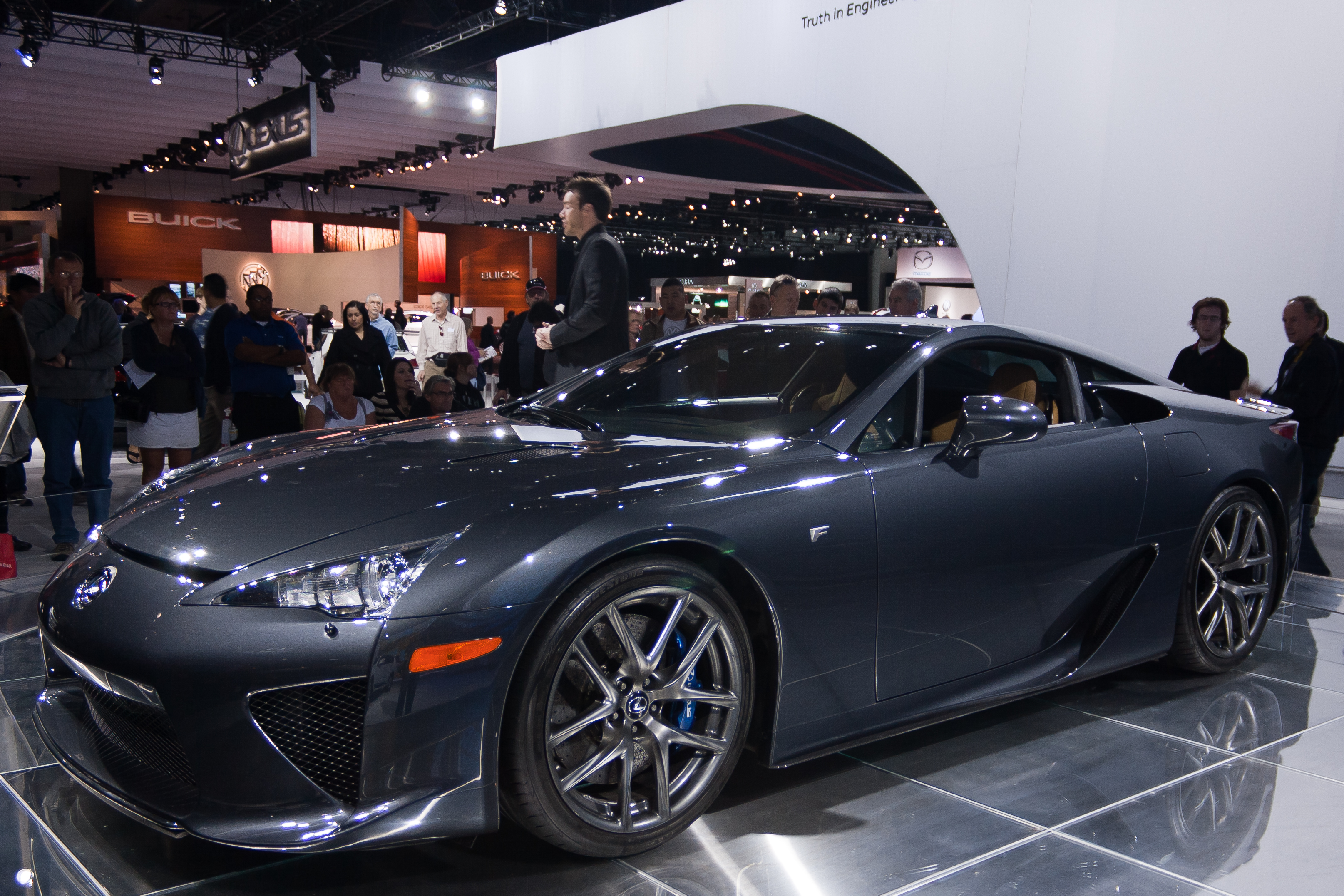
Chris J. Martinez: And they kind of just waited, then they were gonna, you know, bring out this or they were gonna do this EV Lexus and they just decided to just pull it. What do you think about do do you think is that the end for this LF Lexus ⁓ or Was is this more to come?
Are there any more models and OEMs that will be pulling out of EVs? Like they already have. Like Ford got out of their their Lightning. Mercedes did away with their their EQ models. Honda just that they're they're they're pulling out of some of their EVs.
Now Lexis, Toyota pulling out. What what are your thoughts?
Trent Cannon: I had this this conversation with Wood and Bruce Titus and and Ford up in ⁓ Seattle and Brian Kramer with cars dot com. We we we had this conversation probably about a year ago. And they were why aren't the EVs you know, Shane's up there in Seattle, which is like should be EV Capital.
and like, Well, why aren't they, you know, taking off ⁓ like know, expected, like And really for me, I said, the the problem is we've been ⁓ had seventy-five ⁓ of more seventy-five, really a hundred years, but really hardcore seventy-five years of marketing.
Big engines, that's that's what makes a car. You know, the the truck, that's what makes you you know. Now, ⁓ invariably of the problems that we talked about with charging and charge times and you know, locations, th is there is a definite factor in in in that.
and the government, I if I could be critical of of the previous administration, the deployment of chargers where they were supposed to build a half million chargers across the nation and in the infrastructure bill and then they built like eight the and ineffectiveness of the of the government it helped did not help the this case.
But for me it is more for for the most part when you really look at it, because I've looked at a lot of the data sixty percent of the populace, know, drives within f a forty mile radius on a on a round trip can have an EV with no problem and be be charging every other day at at their home.
⁓ some problems, you know, of course, as you get to younger folks that live in apartments, that's a that's an issue, you know, the and so there are issues ⁓ it to where where the adoption would be.
I I th I don't think that the OEMs though are are done. I think they will all come back in. So it's it's today is June fourth of twenty twenty six. make another prediction. I think they're all back in within the next forty eight months.
Chris J. Martinez: You know, I don't disagree. I I look at look at what's going on with China, right? Like they're selling those EVs like eight, twelve grand. And yes, I know people will argue, ⁓ what they're heavily subsidized.
Well, even if they brought ⁓ into the US at twenty grand, you you think they're gonna people are gonna buck at a twenty thousand dollar new car? I think that, yeah, like right now today, the average new car price, fifty thousand dollars.
There's a lot to do with EVs. ⁓ anxiety is real, right? ⁓ people just wanna have that.
Chris J. Martinez: pers they they people want to have that perception that they're they got the freedom to just drive cross country, right? ⁓ they wanna be able to charge their vehicle in two minutes or five minutes, just similar to how you would pump your gas. They don't want to wait an hour or thirty minutes. know what I'm saying?
Trent Cannon: Ruh. And you can. But but but you can't. I mean that we just don't have the technology in the United States.
Chris J. Martinez: Not today. Yeah, we don't have that technology today in the US at all. It's in China. China does have it. Yeah, China doesn't yeah.
Trent Cannon: But yes, you can charge Yeah, you can charge to eighty percent within ninety percent within now nine minutes with I'm gonna say the name of the car wrong. the the the the there are multiple Chinese vehicles. It's yeah, there's a VYD that does it, the way I can't I don't the I don't wanna get my Chinese vehicles wrong. But yes, you can now charge solid state batteries
Trent Cannon: to 90% within nine in nine minutes. You could you can look it up. It is that we just don't have that technology here. to your point, if you had a $25,000 car that could charge the 90% in nine in nine minutes, and like you said, has all the features can ⁓ and you know all the features that come with an electric car and it's a $25,000 car. And the
Trent Cannon: Just like we have gas stations, if every place you had a gas station, there were electrical charging chargers that worked, Eevees would explode.
Chris J. Martinez: Hundred percent. And and here's the thing too, even the the Tesla superchargers, I I I go there all the time. they don't have like at least a vending machine. You know, I'd be I'd I'd be happy if they had a vending machine because sometimes you gotta sit there for 30 minutes.
Luckily I've got my phone and I can work on my my, you know, business that we need to do. I've got my laptop, but I mean, can you can you have a s a vending machine? You know what I'm saying? Like there's there's a lot of nuances to it.
you d I've got the charger in the house where you can just plug it in at the end of the day and you got a full charge the next day. Now it's i I do like the fact that I don't have to go to some of the gas stations in town where people are panhandling and know, it it it can get a little sketchy sometimes depending on the t ⁓ time of day or time of night, right?
Like there I like the fact that, you know, you don't necessarily have to go to some of those service stations. You know what I'm saying? No.
Trent Cannon: That is one of the things that I said from the get-go. This is and years ago, is that you'd have to expand the waiting areas and they would need to be safer. I got a sixteen-year-old daughter, who really wants to go to UT. Last thing that I want is her to be off Fifth Street. You know what I'm talking about. ⁓ On Street at eleven at night.
Trent Cannon: waiting forty five minutes to charge her car. You know what I mean? And it's it's a true safety for a for a to twenty five year old female, e 30 year old It's it's it's a true concern. Even male. All You know, I there are just th that that that's one difference. That's the one dip big difference about China. We don't talk about Chris. We won't talk about that. They don't have the they don't have the
Chris J. Martinez: ⁓ yeah. They don't have a problem. That that's not a problem. Yeah.
Trent Cannon: They don't have the crime, yeah. They don't have the crime element that we have in the United States. That's why they can have they have battery swaps stations, right? That'll take out the battery, put it in, put it in a new one. You don't even have to stop, right? does in like five minutes, it swaps out the battery bat. We can't have that here. That's they steal the copper.
Trent Cannon: Out the out out the side of the out the side of your air condition. You know what I mean? you imagine that there were five thousand dollars dollar batteries ⁓ ⁓ around and you what what would happen there? Yeah, and so that that is an element that is an element of this that we have to take into consideration. But again, but but back to the if you look at it and I think but I think we'll solve all that. We typically will solve all that. When you look at where the technology
Trent Cannon: solid state batteries are. And they don't all use lithium. By the way, we've discovered a bunch of lithium. We discovered lithium in Texarkana, ⁓ bunch of lithium there. There's a bunch of lithium in Nevada, in between, I think, ⁓ Nevada and There's a huge I mean, I'm talking about hundreds of millions of tons of lithium that that that they've they found.
So now we found out we've got the resources, plus Some of these batteries can use salt, some of these batteries can use other cheap cheaper materials that we're now now that we're looking for them, we're starting to find them.
China doesn't have as of a foot foot foothold as we prove. I think now I'm not gonna say that it's that EVs are going to be ninety percent of of the of the driving population in the neck next decade. I don't think that will.
But I I it it's somewhere around 30% in the next decade, absolutely.
Chris J. Martinez: I agree. I think it's gonna get there. I I do I do believe it, especially now everybody's moving towards self driving. Nvidia, you know, when they they re opened up open source their technology for self driving, so now any OEM can start adding that, which they are. You you look at Hyundai, you look at Lexus, or General Motors is really they're talking they're gonna have their first self drive full self driving by twenty twenty eight.
Chris J. Martinez: I think that's that's really the market shift. I think once people really understand self-driving, like I you know, I I've heard about self-driving for years. I've driven some Teslas, but never self driving the way I'm driving it today. And I've been driving it like this for the last seven, eight actually nine months now. ⁓ would yeah, I feel like I'm everyone else is driving a BlackBerry and I'm driving the iPhone right now. Like that's truly how I feel. ⁓
Chris J. Martinez: And until everybody understands that that feeling of it parking itself and driving you wherever you want like a chauffeur, it's it eye opening. So, but Trent, hey, it's it's been great.
I I love the the the these conversations we've had today. I I look forward to ⁓ having you on again, because this this has been fun, man. I I love the fact that We're not always agreeing on things. I love hearing your opinion.
gonna continue to keep growing in automotive and and gr gratefully just be lucky my whole career. it's been it's been pretty amazing. and I I'm I'm looking forward to the next chapter ⁓ and seeing you do and and ⁓ your growth and you for coming on.
Trent Cannon: Yeah, I need to figure out where you're going next. 'Cause apparently trying to tell y'all if Chris Martinez moves to d D'Aberville, Mississippi, you should pack your bags. ⁓
Trent Cannon: ⁓ the man seems to like be in the right spots at the right time and there's something to no thank you for the kind words, Mr. Martinez. Some of the things that you're doing in AI, I I'll say I seen a little bit.
Frank Lopes called me and got to see a little preview of what you're doing. And I was like, Wow. And I and I'll just say this, I've seen a lot of things in the past five years and it's hard to w wow me and was like wow so I I know if this is a plug for you but I'll just say it.
If you haven't looked at what the man has to offer, I don't care where you are what dealer where you're ⁓ at, I it's worth worth the thirty minute demo. I'll say that.
Chris J. Martinez: I appreciate it, man. Thank you so much. Trent man Thank you for your your kind words and ⁓ I look forward to having many discussions and having you on again. know, I I think this format works in automotive simply because I don't see it enough.
I think this things like this really help dealers today. And when you look at, you know, try to go through all these headlines, man. I think whether you're in a down market or an up market, the best always figure it out and ⁓ find a way.
⁓ And so I think these types of discussions kind of push that that conversation forward and helping dealers. So thank you for being on and being honest. And until next time. Thank you. All right. Take care, man.
About this episode
Dealers are facing a new compliance reality: FTC scrutiny of addendum pricing and online disclosures, with regulators potentially using AI to spot misleading patterns fast. The conversation connects transparency pressure to shifting dealership economics—less emphasis on “gross,” more on volume bonus pay plans—and asks whether AI will reduce negotiation and commission roles. EVs add another disruption layer: dealership profit leans on fixed operations, while charging infrastructure and battery tech shape adoption. Self-driving momentum is also framed as an AI-driven timeline shift.
The conversation covers a range of topics related to the automotive industry, including FTC warnings, addendum pricing, dealership practices, AI, and sales strategies. The discussion also delves into the impact of federal and state laws, the role of social media, and the future of commission salespeople. The conversation covers a wide range of topics related to the automotive industry, including the impact of EVs, self-driving technology, and the challenges and opportunities for dealerships. The discussion also delves into the future of automotive manufacturing and the role of AI in the industry.
Takeaways
FTC warnings and addendum pricing
Impact of federal and state laws on dealership practices
The role of social media in influencing consumer behavior
The future of commission salespeople and sales strategies EVs and self-driving technology are driving significant changes in the automotive industry.
The role of dealerships and the impact of AI on the automotive industry are key areas of focus.
Chapters
00:00 FTC Warnings and Addendum Pricing
06:03 The Role of Social Media in Influencing Consumer Behavior
25:56 The Impact of EVs and Self-Driving Technology