Addendums, AI, EVs, and FTC Warnings: The New Reality for Automotive Dealers
About this episode
Dealers are facing a new compliance reality: FTC scrutiny of addendum pricing and online disclosures, with regulators potentially using AI to spot misleading patterns fast. The conversation connects transparency pressure to shifting dealership economics—less emphasis on “gross,” more on volume bonus pay plans—and asks whether AI will reduce negotiation and commission roles. EVs add another disruption layer: dealership profit leans on fixed operations, while charging infrastructure and battery tech shape adoption. Self-driving momentum is also framed as an AI-driven timeline shift.
The conversation covers a range of topics related to the automotive industry, including FTC warnings, addendum pricing, dealership practices, AI, and sales strategies. The discussion also delves into the impact of federal and state laws, the role of social media, and the future of commission salespeople. The conversation covers a wide range of topics related to the automotive industry, including the impact of EVs, self-driving technology, and the challenges and opportunities for dealerships. The discussion also delves into the future of automotive manufacturing and the role of AI in the industry.
Takeaways
- FTC warnings and addendum pricing
- Impact of federal and state laws on dealership practices
- The role of social media in influencing consumer behavior
- The future of commission salespeople and sales strategies EVs and self-driving technology are driving significant changes in the automotive industry.
- The role of dealerships and the impact of AI on the automotive industry are key areas of focus.
Chapters
- 00:00 FTC Warnings and Addendum Pricing
- 06:03 The Role of Social Media in Influencing Consumer Behavior
- 25:56 The Impact of EVs and Self-Driving Technology
- 35:01 The Role of AI in the Automotive Industry
FTC
"So there was a a recent article that they just announced on automotive news about the warnings of the FTC."
FTC is a U.S. government agency that polices unfair or deceptive business practices. Here, they’re focused on whether car dealers are being clear and honest about what buyers are really getting.
FTC stands for the U.S. Federal Trade Commission. In this context, the FTC is warning about how dealers present pricing and disclosures online, including whether review content or pricing practices could be misleading.
misled or misbait and switch type of practicing on their reviews
"And if they can see a pattern of misled or misbait and switch type of practicing on their reviews, then that could cause alarms for more investigations."
They’re talking about dishonest tactics in online reviews. The concern is that dealers might make something sound better than it really is, then the buyer gets a different outcome.
The segment is describing deceptive review practices—using reviews in a way that misleads shoppers, or “bait-and-switch” tactics where the advertised reality doesn’t match what buyers experience. The FTC warning is framed around detecting patterns in dealer-generated or dealer-influenced reviews.
AFIP
"Well, first of all I'll say Shannon Robertson of AFIP has talking to me this about this topic ad nauseum since since twenty been going through..."
AFIP is mentioned as an industry group that’s been involved in discussions about FTC rules for car dealers. The host is saying this isn’t a brand-new issue.
AFIP is referenced as a group/person involved in ongoing discussions about FTC guidelines for the car business. In this segment, it’s used to establish that the topic has been debated for years among industry stakeholders.
Shannon Robertson
"Well, first of all I'll say Shannon Robertson of AFIP has talking to me this about this topic ad nauseum since since twenty been going through..."
Shannon Robertson is a person the guest references as having talked about these FTC dealer rules for a long time. She’s used as a credibility reference in the conversation.
Shannon Robertson is mentioned as being involved in repeated discussions about FTC guidelines for the automotive industry. The host uses her as a reference point for how long this compliance topic has been circulating in dealer circles.
Thomas Israeno
"we talked about it in ⁓ all things car business clubhouse with Thomas Israeno and Kevin Deutsch and and them folks."
Thomas Israeno is mentioned as someone involved in earlier conversations about car-dealer business topics. In this segment, he’s mainly a reference point, not the focus.
Thomas Israeno is named as part of a prior discussion group/podcast context (“all things car business clubhouse”). He’s not explained technically here, but he’s part of the network of dealer-industry voices discussing FTC-related guidance.
Kevin Deutsch
"we talked about it in ⁓ all things car business clubhouse with Thomas Israeno and Kevin Deutsch and and them folks."
Kevin Deutsch is another person mentioned as part of earlier discussions about dealer rules. Here, he’s not the main subject—just part of the background.
Kevin Deutsch is mentioned alongside Thomas Israeno as a participant in earlier discussions about FTC guidelines and dealer compliance. The segment uses him as part of the broader industry conversation rather than providing new technical details.
addendums
"That's what seems a little bit f far stretched to me. Though I do think that there is a lot of now, in some states, There is some angst against what these the these addendum pricing..."
Addendums are extra fees or add-ons a dealer adds on top of the car’s advertised price. The concern is that some dealers don’t make them obvious enough, so buyers feel surprised later.
In dealer pricing, “addendums” are extra charges or add-on items added to a vehicle’s advertised price—often things like dealer-installed accessories or protection packages. The hosts are discussing how addendums can be used in ways that may mislead shoppers if they’re not clearly disclosed online and in the pricing stack.
Carmax
"and the consumers are at their wits in going outside to places like Carvana and Carmax."
CarMax is a big used-car seller with both stores and online listings. It comes up here as an alternative when buyers don’t like how some dealers add extra fees.
CarMax is a large used-car retailer that operates through physical stores and an online shopping experience. In this episode, it’s mentioned as another option shoppers consider when dealer addendums and pricing disclosures become frustrating.
Carvana
"and the consumers are at their wits in going outside to places like Carvana and Carmax."
Carvana is a company that sells used cars online, kind of like a direct-to-consumer alternative to traditional dealerships. People mention it when they’re looking for a simpler buying process.
Carvana is an online used-car retailer that sells vehicles directly to consumers, typically with a more standardized, transparent buying experience than traditional dealer lots. The discussion uses Carvana as an example of where consumers go when dealer addendum pricing feels unfair.
nitrogen
"and I remember when addendums were remember the 200 199 for nitrogen?"
They’re talking about putting nitrogen in the tires instead of normal air. It’s an example of the extra add-on fees dealers have charged for.
“Nitrogen” here refers to filling a car’s tires with nitrogen gas instead of regular air. It’s used as an example of the kinds of add-on “protection” items dealers have historically bundled into addendum pricing.
Frank Loebs
"I think I've I heard from Frank Loebs you know all the guys out there, you know, this is coming, this is coming, this is coming."
Frank Loebs is mentioned as a dealer-industry voice who thinks stricter enforcement is on the way. The guest is saying he’s not as convinced about how severe it will be right now.
Frank Loebs is referenced as someone who believes the FTC/enforcement pressure is “coming.” The guest contrasts that viewpoint with his own more cautious assessment of how intrusive enforcement will be in the near term.
AI
"if look at what what this new administration has done with AI and you know, all the different things that they're looking at..."
AI is computer software that can look through lots of information and spot patterns. Here, the idea is that regulators could use it to quickly find suspicious or misleading dealer behavior.
AI (artificial intelligence) refers to software that can analyze patterns in data and make predictions or classifications. The hosts are arguing that AI could be used to scan thousands of dealer reviews and website content to detect misleading or deceptive patterns.
blockchain
"if look at what what this new administration has done with AI and you know, all the different things that they're looking at, the blockchain and stuff like that..."
Blockchain is a way to store information so it’s hard to tamper with. Here it’s brought up as part of the broader tech tools regulators could use to check what dealers are doing.
Blockchain is a digital record-keeping technology where data is stored in linked blocks across a network. In this episode, it’s mentioned as one of the AI/data technologies that could be used to audit or analyze dealer practices at scale.
franchise dealers
"you think about, you know, we got 17,000 franchise dealers or sixteen thousand franchise dealers, whatever it is."
Franchise dealers are regular car dealerships that are authorized to sell a specific automaker’s brand. The point here is that there are so many of them that audits could become widespread.
Franchise dealers are dealership businesses that sell vehicles under an automaker’s brand franchise agreement. The hosts use the large number of franchise dealers to argue that regulators could audit many dealers quickly if they use AI-driven review and website analysis.
Daniel Gare DG DG
"So here's the problem. And it ⁓ d I don't know if you know Daniel Gare DG DG, well known to some some people in this space. we sat in Austin a couple of months ago and he went through, he had gone through state by state..."
Daniel Gare is mentioned as a person who studied how dealer disclosure rules differ from state to state. The point is that what’s “legal” can vary depending on where the dealership is.
Daniel Gare is mentioned as someone the hosts met in Austin who reviewed state-by-state dealer disclosure laws. The segment uses him to highlight that disclosure requirements can vary by state and that dealers may comply locally while still facing federal scrutiny.
Austin
"we sat in Austin a couple of months ago and he went through, he had gone through state by state all the different doc document laws..."
Austin is the city where they met for this discussion. It’s mentioned as the backdrop for talking about dealer rules in different states.
Austin is referenced as the location where the hosts met Daniel Gare. It’s relevant mainly as the setting for a discussion about state-by-state dealer disclosure laws.
VDP
"We you we you just have to put in somewhere in the comments and the VDP can be really small print..."
VDP means the page where you see a specific car listing online. The point is that dealers may hide important extra charges in small print on that page.
VDP typically means “vehicle detail page,” the webpage where a specific car listing is shown. The hosts argue that dealers may bury required disclosures in small print or not show add-on items clearly on the VDP, which is where the FTC’s scrutiny is aimed.
pricing stack
"not listed in the pricing stack of of the VD of the VDP, which is is really what the FDC is trying is trying to go f go for."
A pricing stack is the list of all the parts of the final price, like base price plus add-on fees. The concern is that some dealers don’t show those add-ons clearly in the main price breakdown.
A “pricing stack” is the structured breakdown of a vehicle’s total price—base price plus line-item add-ons and fees. The hosts argue that regulators want addendum items to appear in this stack on the listing, so shoppers can see the true out-the-door total rather than discovering extras later.
FDC
"not listed in the pricing stack of of the VD of the VDP, which is is really what the FDC is trying is trying to go f go for."
FDC is mentioned as the regulator/enforcement focus for how dealers display extra charges. The takeaway is: don’t hide add-ons in obscure places—show them clearly where buyers look at the price.
FDC is referenced as the enforcement target related to how dealers present add-ons in the “pricing stack” on the vehicle detail page. In this segment, the key idea is that regulators want the add-ons to be visible in the main pricing presentation, not hidden in comments or tiny-print disclosures.
federal law supersedes the state law
"so you're going to tell me that the re Republicans who have been very strong proponents of state law for l as long as I can remember, are now going to say that the federal law supersedes the state law..."
This is about which law wins when federal and state rules disagree. The guest is saying dealers may need to adjust because federal rules could override what states previously required.
This refers to the legal principle of federal preemption: when federal law conflicts with state law, federal law can override state rules. The guest argues that this shift could change how dealers handle disclosures, even if they were previously compliant with state requirements.
out the door
"Yeah, and you know, I've already seen dealers here in Texas doing that. They're putting the the addendums on their pricing, they're putting their dock fees on the pricing, including it out the door."
“Out the door” price means the total final cost—what you’d actually pay to get the car. It includes taxes and fees, not just the base price.
“Out the door” (OTD) pricing is the total amount you pay to drive the car home, typically including the vehicle price plus taxes, registration, and dealer fees. It’s used to compare offers apples-to-apples because it includes the stuff that usually gets added later.
dock fees
"Yeah, and you know, I've already seen dealers here in Texas doing that. They're putting the the addendums on their pricing, they're putting their dock fees on the pricing, including it out the door."
“Dock fees” are extra charges the dealer adds for moving the car to their location. They’re part of the final price even if they aren’t obvious at first.
“Dock fees” are dealer charges tied to getting the vehicle from the manufacturer to the dealership (often described as transportation/handling). They’re commonly added to the deal and can materially change the final price.
federal agencies
"And I think why this know, and I agree with you that that they've always been a proponent of let's make the let the states make the decision. However, because they still have these federal agencies, right, like they on a national level, they're they're gonna do their job, right?"
“Federal agencies” refers to U.S. government regulators operating at the national level that can enforce rules affecting car sales and advertising. In this context, they’re described as driving investigations and compliance actions that dealers must respond to.
fines
"And and that's what it sounds like. I I think that $75 million fine was kind of one of those wake-up calls in my mind after I've read what what happened, what they did, how they went about it, and then how far back they went through it."
A “fine” is money a company has to pay because regulators believe it broke the rules. The point here is that the penalties are big enough to change behavior.
The discussion references “fines” as enforcement penalties used to deter unlawful or misleading dealership practices. The host frames a specific $75 million fine as a “wake-up call,” implying regulators escalated consequences.
Brad Wise
"There's a great guy, ⁓ one of my favorite guys in in the auto industry, Brad Wise down there in Tampa, Florida. Furman Chevrolet, who has I mean, if there was a poster child of the no addendum, no ads, Y like if there was a Wikipedia, it would be Brad Wise's face that day."
Brad Wise is a dealer figure the hosts bring up as an example of someone who runs a simpler, more transparent pricing style. It’s used to show that this approach isn’t just theory.
Brad Wise is highlighted as a notable figure in the auto retail space, associated with a “no addendum, no ads” approach at Furman Chevrolet. The host uses him as a real-world example of how a one-price strategy can work in practice.
no addendum, no ads
"Furman Chevrolet, who has I mean, if there was a poster child of the no addendum, no ads, Y like if there was a Wikipedia, it would be Brad Wise's face that day."
This means the dealer tries to keep the deal simple: no extra surprise add-on charges and no tricky ad-based pricing. The goal is a straightforward “one price” experience.
“No addendum, no ads” describes a dealership pricing philosophy where the dealer avoids extra add-on paperwork charges and avoids advertising-style markups or bait-and-switch tactics. The host uses it as an example of a “one price” model that aims to reduce buyer confusion and negotiation games.
Furman Chevrolet
"There's a great guy, ⁓ one of my favorite guys in in the auto industry, Brad Wise down there in Tampa, Florida. Furman Chevrolet, who has I mean, if there was a poster child of the no addendum, no ads, Y like if there was a Wikipedia, it would be Brad Wise's face that day."
Furman Chevrolet is a dealership the hosts mention as an example of a simpler pricing style. They’re saying it’s possible to sell cars with fewer surprise charges and less back-and-forth.
Furman Chevrolet is used in the episode as an example of a dealership that practices “one price” selling in Texas—specifically avoiding addendums and ads. The point is less about the specific store and more about how that pricing approach can build trust and reduce negotiation friction.
commission salespeople
"And so what really becomes, what we're now gonna end up having a discussion on, is do we get is are we seeing the end of commission salespeople inside of dealerships? And is AI, your point, going to push that?"
Commission salespeople get paid based on how many cars they sell. The discussion is whether newer tools like AI could make that kind of negotiation less necessary.
“Commission salespeople” are sales staff whose pay is tied to selling cars, which can influence how they negotiate pricing and structure deals. The hosts discuss whether AI and pricing transparency could reduce the need for that sales model inside dealerships.
no negotiations
"You you think about I'll I'll just give you an example. When I bought my my Tesla, there's no negotiations. There's no nothing. Like you you I just had to buy it or or it is what it is, right?"
“No negotiations” means the price is fixed, and you don’t haggle. The host is comparing that to the usual dealership back-and-forth.
“No negotiations” refers to a sales model where the buyer can’t bargain the price—offers are set and standardized. The host contrasts this with traditional dealership negotiation and uses it to discuss how pricing transparency affects consumer experience.
Tesla
"When I bought my my Tesla, there's no negotiations. There's no nothing. Like you you I just had to buy it or or it is what it is, right?"
Tesla is mentioned as an example of buying an EV without haggling. The point is that the buying process can be simpler when the price is set.
Tesla is referenced as an example of a direct-to-consumer EV purchase experience with “no negotiations.” The host uses it to illustrate how a fixed-price model can reduce hassle compared with traditional dealership bargaining.
Best Buy
"I'll give you example. Like when Best Buy I've I've read something somewhere when Best Buy went to China and they tried to do this this no haggle pricing."
Best Buy is mentioned as a comparison point: if one store won’t negotiate but others nearby will, customers may still shop around to get a better price. It’s an analogy for dealership pricing behavior.
Best Buy is used as an analogy for how “no-haggle” pricing can fail if nearby competitors still negotiate. The host claims shoppers can buy at Best Buy to browse, then go elsewhere to negotiate a better deal.
one price
"And it just crushed Best Buy in that market. So I could see that it it just really depends now. If everybody decided to jump in and say, I'm gonna be, you know, one price and that's it, then that I could see things that way."
“One price” means the car has a set price and there’s no haggling. The host says it could change how the market works, but it probably won’t be adopted everywhere at the same time.
“One price” is a dealership pricing approach where the vehicle price is presented as a fixed number rather than being negotiated. The host argues that if everyone adopted it, market outcomes could shift, but it likely wouldn’t happen all at once.
General Motors
"Trent Cannon: Well, I I I think it was a bad idea for General Motors to kill Saturn. Personal opinion, by the way, I'm a big Pontiac fan too."
General Motors is the big automaker mentioned here. The host is talking about GM ending Saturn, which is an example of how brand strategy can reshape the market.
General Motors is mentioned in connection with the decision to end the Saturn brand. In dealer-industry discussions, brand closures can affect dealer networks, product mix, and long-term pricing power.
Pontiac
"Trent Cannon: Well, I I I think it was a bad idea for General Motors to kill Saturn. Personal opinion, by the way, I'm a big Pontiac fan too. but we we won't go back."
Pontiac is a former American car brand the host says they like. They bring it up because it’s part of their personal history with certain models.
Pontiac is referenced as a brand the host likes, specifically mentioning the Firebird. Pontiac’s legacy matters in dealer discussions because discontinued brands often leave behind enthusiast demand but also create long-term service and parts considerations.

Pontiac Firebird
"...Chris J. Martinez: Yeah. I like Pontiac too, that firebird. Trent Cannon: But I I it's funny you just mentio..."
The Pontiac Firebird is an older-style performance car from Pontiac. It’s known for strong engine options and a sporty look. The podcast mentions it because someone is saying they like it.
The Pontiac Firebird is a classic American muscle car, best known for its performance-focused styling and V8-powered lineup in many years. It’s frequently discussed by enthusiasts because it represents a specific era of affordable, fun-to-drive performance cars. In this podcast, it’s mentioned as something the host likes, which is typical of conversations about favorite models and driving character.
Circuit City
"Trent Cannon: ...everybody forgets the other company that was involved in that was Circuit City. And what did Circuit City have? Circuit City had high commissioned trained salespeople..."
Circuit City is mentioned as a retail company that struggled after changing its strategy. The host uses it as an analogy for how changing sales approach and incentives can hurt performance.
Circuit City is used as a case study in retail strategy—moving away from its core strengths and losing key sales talent. The hosts connect that to dealership compensation and staffing decisions, arguing those choices can determine whether a company thrives or fades.
margin compression
"But I'm talking about your Nissan stores, your Hyundai stores, even your your Ford and Chevy stores going to volume bonus pay plans as opposed to high gross pay pay plans, I I think is Mm-hmm. [1255.0s] But Best Buy was already surging at that point... enough that I mean I I I just I know we're gonna talk a little bit more about AI and I think that AI and what we're seeing in margin compression inside dealerships leads me..."
Margin compression means dealers make less profit per car than they used to. The episode connects that to new technology and pricing pressure.
Margin compression is when the difference between what a dealership earns and what it costs to sell cars shrinks. In this episode, it’s tied to AI and changing dealership economics, implying dealers have less profit cushion per vehicle.
volume bonus pay plans
"I think there's still some gross there. But I'm talking about your Nissan stores, your Hyundai stores, even your your Ford and Chevy stores going to volume bonus pay plans as opposed to high gross pay pay plans, I I think is Mm-hmm."
A volume bonus pay plan pays salespeople based mostly on how many cars they sell. The host says that can make people care less about profit per car and more about hitting unit numbers.
A volume bonus pay plan is a compensation structure where salespeople earn more based primarily on the number of vehicles sold. The host contrasts it with “high gross” plans, arguing volume-only incentives can change sales behavior and reduce negotiation discipline.
stair step
"Everybody else, they just went back to the same the the old tricks, stair step, the whole they just went back like it would take six months, maybe. ⁓ and and so I you know, I I don't know."
“Stair step” means pay increases in steps after you reach certain targets. The host is saying some pay plans are designed like that to push salespeople toward specific goals.
“Stair step” refers to tiered dealership or sales compensation thresholds—salespeople earn different pay rates once they hit certain unit or profit levels. The host mentions it as part of how pay plans can be structured to influence behavior.
gross
"And always, you know, focused on volume, but gross was was still a big part of the the the equation. so, you know, I I don't see any reason why you couldn't move to those types of models, but I do think that you should still have that that in there to try to get some of that margin."
“Gross” here means how much profit the dealership makes on a car sale. The host is saying it’s not as simple or transparent as people think because the real numbers depend on internal deals and incentives.
In dealership talk, “gross” usually means gross profit dollars or gross profit margin on a vehicle sale. The hosts debate it, with one arguing that “gross” is not a single transparent number because dealer pay structures and back-end agreements aren’t fully visible to customers.
OEM
"One the legislature didn't want more dealerships. you you ⁓ you could sell a thousand cars or or five hundred cars at a lot of Austin stores and and and I so what I'm saying as the OEM or as the dealer if everything is one price in that area you're still gonna say sell basically the same amount of cars."
OEM means the carmaker itself—the company that builds the vehicles. Dealers often follow the rules and incentives set by the OEM.
OEM stands for “original equipment manufacturer,” meaning the automaker that builds the vehicles. In dealer discussions, OEM policies and incentives strongly influence pricing, inventory, and how dealers structure sales compensation.
selling cars before they hit the lot
"Toyota is selling cars before they hit the lot, Chris. Before they hit the lot."
This means customers are getting cars arranged or sold before the dealership even has the car sitting on the lot. If that happens, the dealer has less room to bargain because the car isn’t “available” in the usual way.
This describes a retail flow where cars are effectively pre-sold or allocated to customers before they physically arrive at the dealer’s inventory. It changes dealer economics because there’s less ability to use inventory scarcity (or negotiation) as leverage once the car is already spoken for.
MSRP
"Toyota is selling cars before they hit the lot, Chris. Before they hit the lot. And if you if you're putting together a gr a a great brand, forget it, they're not even negotiating MSRP."
MSRP is the price the carmaker puts on the window sticker as the “suggested” retail price. The point here is that some dealers don’t really haggle anymore—they’re basically trying to sell at that sticker price.
MSRP (Manufacturer’s Suggested Retail Price) is the sticker price automakers recommend dealers sell a car for. In the segment, the host argues some brands sell “before they hit the lot” and don’t even negotiate off MSRP, meaning the dealer’s pricing leverage is reduced.
packs
"Because at the end of the day, some of it, yes, I know there's packs. I every dealer has them. They range from anywhere from 500 to $3,000."
“Packs” is slang for extra money-making items or add-ons that get included in a car deal. The host is saying dealers use these, but the salesperson’s slice of it may not be the whole story.
“Packs” is dealer slang for deal add-ons or profit opportunities bundled into the transaction (often tied to finance, accessories, or other structured items). The speaker says every dealer has them and that salesperson take-home can be “marginal” compared with the overall pack structure.

Opel Sintra
"...ng to be there. So why should why should a Nissan Sintra be cost a different price in San Francisco than i..."
The Opel Sintra is a family-oriented minivan, meant to carry people comfortably. People sometimes talk about it when discussing pricing and value because its cost didn’t always line up with what buyers expected. In the podcast, it’s mentioned while comparing prices in different locations.
The Opel Sintra is a minivan-style vehicle that was sold under the Opel name, designed to carry families and passengers. It’s often brought up in pricing and value discussions because it didn’t always match what buyers expected for cost versus features. In this podcast context, it’s used as an example in a conversation about why a “Sintra” might cost different money in different places.
brokers
"Like, man, the brokers, they they do have a job today. For how long though? I don't know that it that's a long term thing with AI..."
Brokers are middlemen who help you buy a car and negotiate the deal. The host is saying AI could do some of that work, which might make brokers less needed.
In this context, “brokers” refers to intermediaries who negotiate or facilitate a car purchase for a customer, often charging a fee for their service. The speaker argues AI negotiation could reduce how necessary those brokers are over time.
Car Edge
"For how long though? I don't know that it that's a long term thing with AI, because Car Edge is already proving that because they they provide a service that's has that broker like the they'll have the AI negotiate the deal for you for a small fee."
Car Edge is a company that helps people buy cars, and the host says it already uses AI to negotiate the deal for you. The idea is that you pay a fee and it handles some of the back-and-forth.
Car Edge is referenced as a service that already uses AI to negotiate car deals for customers. In the segment, it’s used as evidence that broker-style negotiation can be automated for a small fee.
Optimus robot
"You know, this Optimus robot comes out. There's a lot of dark factories in China today that operate at near a hundred percent robotics. you know, that comes into US, know, I know unions are big, you know, manufacturing, those are there."
“Optimus robot” is a humanoid robot concept meant to do work in factories or warehouses. The hosts are using it to talk about how robots could eventually help at car dealerships, not just in factories.
“Optimus” refers to Tesla’s humanoid robot concept aimed at automating tasks in warehouses and factories. In this segment, it’s used as an example of how robotics could change dealer and service operations (like parts delivery and eventually more hands-on work).
dark factories
"You know, this Optimus robot comes out. There's a lot of dark factories in China today that operate at near a hundred percent robotics."
“Dark factories” means factories that are run mostly by machines, with fewer people working on the floor. The goal is to automate production so it can run with minimal human involvement.
“Dark factories” are manufacturing facilities that run with minimal human presence, relying heavily on automation and robotics. The idea is that production can continue with little or no lighting and fewer workers because machines handle most tasks.
EV
"But you could construct a car, especially an E V. … The E V that's where the b you know, some of the push has been for these E Vs…"
“EV” means electric vehicle. It’s a car that runs on electricity stored in a battery, not gasoline, and that changes how it’s built and serviced.
“EV” means electric vehicle—cars powered primarily by electric motors and a battery pack instead of an internal combustion engine. In this segment, EVs are discussed in terms of manufacturing differences, fewer moving parts, and how that could change dealership service and parts demand.
ice vehicle
"…the cost at scale is much lower than ice ice vehicle. that is one reason why the fear of…"
“ICE vehicle” is shorthand for a gas-powered car that uses an engine that burns fuel. They’re contrasting it with electric cars to talk about how service and parts might change.
“ICE vehicle” means an internal combustion engine vehicle—cars that burn fuel (like gasoline or diesel) to produce power. The hosts compare ICE vehicles to EVs to argue how moving parts, service needs, and parts sales could shift.
fixed operations
"Most of the profit in dealerships is made not off the sale of the car, it's actually made in fixed operations and servicing the servicing the vehicles."
“Fixed operations” in dealership terms refers to the recurring, non-car-sales side of the business—mainly service, maintenance, and parts. The hosts argue EVs could disrupt this revenue stream because EVs may require different (and potentially less frequent) service and use fewer traditional drivetrain components.
charging network
"the problem we're we're we have in the United States is the charging network and our and our electrical infrastructure."
The “charging network” is the system of public and private charging stations that EV drivers rely on to recharge. The hosts point to gaps in the U.S. charging network and electrical infrastructure as a key reason EV adoption hasn’t grown as quickly as expected.

Tesla Cybertruck
"Yes, I do that especially after — if me if my Tesla Cybertruck did not have self driving, I wouldn't be impressed with it at all."
The Tesla Cybertruck is a battery-electric pickup known for its distinctive angular design and for being heavily software-driven. In this segment, the host specifically credits the Cybertruck’s self-driving features with making the vehicle feel more impressive and usable day-to-day.
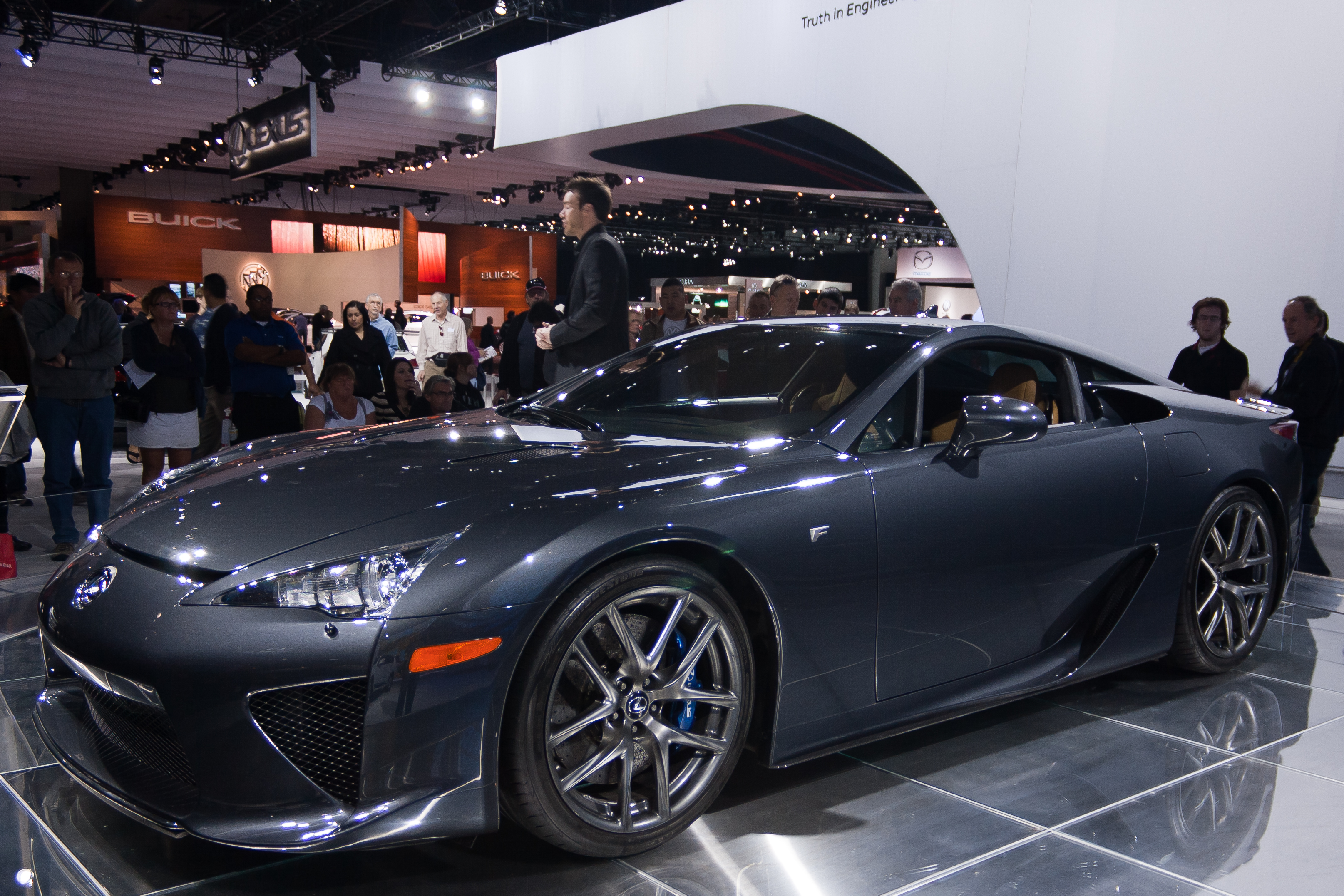
Lexus Lf Lexus
"...nk about do do you think is that the end for this LF Lexus ⁓ or Was is this more to come? Are there any more..."

Ford F-150 Lightning
"...ey already have. Like Ford got out of their their Lightning. Mercedes did away with their their EQ models. Ho..."
The Ford F-150 Lightning is an electric pickup truck. Instead of using gasoline, it runs on electricity stored in a battery. The podcast mentions it while talking about what Ford did with the Lightning line.
The Ford F-150 Lightning is an all-electric version of the F-150 pickup truck, combining the familiar truck shape with an electric powertrain. It’s significant because it represents Ford’s push into mainstream electric trucks, and it often comes up in conversations about how manufacturers are changing their EV strategies. In this podcast context, it’s mentioned as “Ford got out of their Lightning,” which ties directly to discussions about the model’s status and availability.
EQ models
"Mercedes did away with their their EQ models."
“EQ” is Mercedes’ name for its electric cars. The host is saying Mercedes stopped or reduced some of those EV models.
“EQ” is Mercedes-Benz’s sub-brand for electric vehicles. In this segment, “EQ models” is used to mean Mercedes’s EV lineup that the host says was discontinued or scaled back.
Mercedes
"Mercedes did away with their their EQ models."
Mercedes is the automaker mentioned as dropping some of its EV plans. The point is that even luxury brands are adjusting their electric strategies.
Mercedes is referenced as having discontinued its EQ electric-vehicle lineup. The host uses it as another example of automakers pulling back when EV demand or economics don’t match early expectations.
Honda
"Honda just that they're they're pulling out of some of their EVs."
Honda is the automaker mentioned as scaling back some EV plans. The host is using it to show that EV rollouts are being reconsidered by many brands.
Honda is mentioned as another automaker pulling back on EVs. The host’s broader argument is that multiple OEMs are adjusting EV roadmaps rather than committing fully across the board.
charging every other day
"But for me it is more for for the most part when you really look at it, because I've looked at a lot of the data sixty percent of the populace, know, drives within f a forty mile radius on a on a round trip can have an EV with no problem and be be charging every other day at at their home."
It means the EV doesn’t need a charger every single day. If you drive a limited distance and can plug in at home, you may only need to charge every couple of days.
This is a real-world EV usage pattern: instead of charging daily, the driver charges on alternate days based on how far they drive. It matters because home charging availability largely determines whether an EV fits into normal routines.
solid state batteries
"But yes, you can charge Yeah, you can charge to eighty percent within ninety percent within now nine minutes with I'm gonna say the name of the car wrong... But yes, you can now charge solid state batteries to 90% within nine in nine minutes."
Solid state batteries are a newer type of EV battery that uses solid materials instead of a liquid inside the battery. People expect them to charge faster and be safer, but they’re not common everywhere yet.
Solid state batteries are an EV battery design that replaces the liquid electrolyte found in many current lithium-ion packs with a solid material. The goal is faster charging and improved safety, though widespread availability depends on manufacturing maturity.
charge to eighty percent
"But yes, you can charge Yeah, you can charge to eighty percent within ninety percent within now nine minutes..."
Charging to 80% is a common benchmark in EV discussions because charging speed often slows as the battery approaches full capacity. Many fast-charging curves are optimized so the biggest time savings happen in the lower-to-mid state of charge range.

BMW E30
"Trent Cannon: That is one of the things that I said from the get-go. This is and years ago, is that you'd have to expand the waiting areas and they would need to be safer. I got a sixteen-year-old daughter, who really wants to go to UT. Last thing that I want is her to be off Fifth Street. You know what I'm talking about. ⁓ On Street at eleven at night. Trent Cannon: waiting forty five minutes to charge her car. You know what I mean? And it's it's a true safety for a for a to twenty five year old female, e 30 year old It's it's it's a true concern. Even male. All You know, I there are just th that that that's one difference. That's the one dip big difference about China. We don't talk about Chris. We won't talk about that. They don't have the they don't have the Chris J. Martinez: ⁓ yeah. They don't have a problem. That that's not a problem. Yeah."
The BMW 3 Series is a car made for everyday driving that also feels sporty. It’s a popular model, so people often talk about how safe and practical it is to own. In the podcast, it’s brought up in the context of safety and everyday needs for a young driver.
The BMW 3 Series is a compact luxury sedan (and sometimes wagon) known for balancing everyday comfort with sporty driving. It often comes up in discussions because it’s a common, long-running model line with many model years on the road, making it a frequent topic for ownership and safety conversations. In this podcast context, it’s mentioned alongside concerns about waiting areas and safety for a teenager, which fits the idea of choosing a dependable, practical daily driver.
battery swaps stations
"They don't have the crime element that we have in the United States. That's why they can have they have battery swaps stations, right? That'll take out the battery, put it in, put it in a new one. You don't even have to stop, right?"
Instead of charging an EV battery, a swap station replaces your battery with a charged one. It can be faster, but it only works well if the batteries are standardized and there’s a network of swap stations.
Battery swap stations are EV charging alternatives where a depleted battery pack is removed and replaced with a fully charged one. This can reduce wait times compared with charging, but it requires standardized battery designs and a network to manage inventory.
lithium
"When you look at where the technology solid state batteries are. And they don't all use lithium. By the way, we've discovered a bunch of lithium... There's a huge I mean, I'm talking about hundreds of millions of tons of lithium that that that they've they found."
Lithium is the material that many EV batteries rely on to store energy. If more lithium is found or sourced, it can help support building more batteries.
Lithium is a key element used in many EV battery chemistries, especially common lithium-ion designs. The discussion ties lithium availability to EV production scale and future battery options.
self driving
"Chris J. Martinez: I agree. I think it's gonna get there. I I do I do believe it, especially now everybody's moving towards self driving. Nvidia, you know, when they they re opened up open source their technology for self driving..."
Self-driving means the car can do more of the driving for you—like steering and controlling speed—without you constantly doing everything. The idea is that it feels more like having a driver or chauffeur.
“Self-driving” refers to driver-assistance systems that can control steering, acceleration, and braking with minimal human input. In practice, most systems are still “driver-supervised,” but the goal is to let the car handle driving tasks like a chauffeur.
Nvidia
"Chris J. Martinez: ...especially now everybody's moving towards self driving. Nvidia, you know, when they they re opened up open source their technology for self driving..."
Nvidia is a tech company known for AI computers and chips. In this discussion, they’re being credited with tools that help cars do self-driving-related AI work.
Nvidia is a major computing and AI hardware/software company whose chips and platforms are widely used for AI workloads, including parts of self-driving stacks. The point here is that Nvidia’s self-driving technology ecosystem can be reused by multiple automakers.
open source
"Chris J. Martinez: ...when they they re opened up open source their technology for self driving, so now any OEM can start adding that..."
“Open source” means the underlying software code is made publicly available so other companies can use, modify, and build on it. In the automotive context, that can speed up how quickly different automakers integrate self-driving features.
Hyundai
"Chris J. Martinez: ...so now any OEM can start adding that, which they are. You you look at Hyundai, you look at Lexus, or General Motors..."
Hyundai is a car brand mentioned as one of the companies working on self-driving technology.
Hyundai is referenced as one of the automakers moving toward self-driving capabilities. In this segment, it’s used as an example of how multiple OEMs are adopting similar AI/self-driving approaches.
parking itself
"Chris J. Martinez: ...once people really understand self-driving, like I you know, I I've heard about self-driving for years... And until everybody understands that that feeling of it parking itself and driving you wherever you want..."
Parking itself means the car can steer and position itself into a parking spot. It’s a noticeable feature because it takes a lot of the hard, precise work out of parking.
“Parking itself” refers to automated parking features that can steer the vehicle into a space using sensors and control algorithms. It’s often one of the first driver-assistance tasks people notice because it reduces the need for manual steering and precise positioning.
Request an Explanation
Heard something you'd like explained? We'll add it to this episode.
Sign in to request explanations for terms you heard.
Want to learn more?
Browse our glossary for plain-English explanations of automotive terms, jargon, and concepts.
Help improve this episode
See something that's not quite right? Our annotations are AI-generated and can sometimes miss the mark. Click the flag icon on any annotation to suggest a correction.