
The Automotive Revolution: AI, Robotics, China, FTC Compliance, and What's Next for Dealerships
About this episode
Hyundai’s push toward FSD-like automation and robotics is weighed against real-world safety concerns, while Chinese EV competition and charging constraints pressure U.S. automakers. Battery supply chains, solid-state hopes, and hydrogen’s cost/hype gaps set the tech backdrop. The conversation then turns to dealership reality: thin margins, rising floor-plan pressure, and FTC scrutiny of marketing—especially employee social posts. Leasing economics, mandated buybacks, and AI implementation strategies (plus vendor concentration risk) shape what’s next for dealers.
The conversation covers a range of topics including the diversification of automotive OEMs into robotics and automation, the impact of the Chinese auto industry on global competition, the development of hydrogen and alternative fuel technologies, and the challenges of FTC compliance and social media marketing for dealerships. The conversation covers the impact of social media on dealership liability, the industry's overhaul and technological advancements, affordability and market trends, AI implementation in dealership operations, and the use of specialized tools for dealership growth.
Takeaways
- Automotive OEMs are diversifying into robotics and automation.
- The impact of Chinese auto industry on global competition. Impact of social media on dealership liability
- Industry overhaul and technological advancements
- Affordability and market trends
- AI implementation and dealership operations
- Specialized tools for dealership growth
Chapters
- 00:00 Automotive OEMs Diversification
- 03:02 Chinese Auto Industry Impact
- 15:58 Hydrogen and Alternative Fuel Technologies
- 24:04 FTC Compliance and Social Media Marketing
- 28:42 Social Media Liability
- 30:23 Industry Overhaul and Technological Advancements
- 32:36 Affordability and Market Trends
- 41:02 AI Implementation and Dealership Operations
- 53:08 Specialized Tools for Dealership Growth
FSD
"Some of us don't, but Tesla. It's not even has to do anything about Tesla. All it has to do about Hyundai Hyundai is going all in on FSD. They're going to. I mean, they've already been testing it, seen some viral videos, basically kind of mirroring what Tesla's done with their FSD."
FSD stands for “Full Self-Driving.” It’s software that tries to help the car drive more on its own, like staying in the lane and handling parts of the route. Even with FSD, the driver usually still has to pay attention and be ready to take over.
FSD (Full Self-Driving) is Tesla’s umbrella term for driver-assistance software that aims to automate more of the driving task. It typically relies on cameras and other sensors to handle functions like lane keeping and navigation, but it’s still not the same as a fully autonomous system that can operate without driver supervision.

Hyundai Palisade
"However, ⁓ If I'm correct, a few months ago wasn't there a case out of California where a two-year-old girl got crushed to death from the power folding seat on a Hyundai Palisade? So they can't even make a seat correctly, but they're gonna go all in on this."
The Hyundai Palisade is a family SUV with three rows of seats. The hosts mention it because there was a reported accident involving a power-folding seat, which raises safety questions about how that feature works in real life.
The Hyundai Palisade is a midsize three-row SUV from Hyundai, known for family-focused features like power-adjustable seats. In this segment, it’s referenced in connection with a reported fatal incident involving a power-folding seat, which is a safety and product-quality concern.
power folding seat
"However, ⁓ If I'm correct, a few months ago wasn't there a case out of California where a two-year-old girl got crushed to death from the power folding seat on a Hyundai Palisade? So they can't even make a seat correctly, but they're gonna go all in on this."
A power folding seat is a seat that folds or changes position using an electric motor and control system rather than manual hinges. Because it moves automatically, it depends on correct sensing, control logic, and safety interlocks to prevent pinch/crush hazards.
connected car type platform
"Toyota, you know, all the different Japanese manufacturers to have some kind of connected car type, you know, platform don't you know, they can, you know, engineer other things, but like, the things that don't need to be, you know, batteries, things like that to be engineered."
A connected-car platform is the system inside a car that lets it communicate with apps, networks, or services. The idea is that companies can share that “tech base” so they can focus on other parts of the car.
A connected-car platform is a shared software/hardware foundation that enables vehicles to communicate (for example with other cars, the cloud, or services). The segment frames it as a way for automakers to collaborate on non-battery engineering while still competing on the rest of the vehicle.
Bosch
"Yeah. So if we look at it and we look at some, let's just take Bosch for example, Bosch supplies huge amount of percentage of parts to the automotive industry ⁓ right across brands, right across brands."
Bosch is a company that supplies parts to many car brands. The host is saying that because the industry is changing, suppliers may need to merge or team up to survive.
Bosch is a global automotive supplier that makes components used across many different car brands. The speaker uses Bosch as an example of why suppliers may need consolidation to remain profitable as the industry reorganizes.
Chinese auto industry competition and U.S. threat
"Yeah, you know, think, know, there's a lot that you can expand on this conversation specifically, because the minute you start going into the Chinese conversation, you know, they're, you know, as you know, moving into Canada, they, you ⁓ based on current that they have, they could be a real threat here in US. [620.9s] Peter Smith - Lion Partnership: He Well, good, good question there."
They discuss whether Chinese car companies could become a major threat in the U.S. and what that would mean for prices and EV adoption. They also talk about how charging and infrastructure affect whether people buy EVs.
This segment focuses on how Chinese automakers could expand and pressure the U.S. market, including arguments about cost advantages, infrastructure, and policy responses like tariffs. It also connects those pressures to EV adoption realities such as charging availability.
OEM legacies
"pushed back against People don't understand the actual Chinese auto industry and what they're doing and why they're doing it. ⁓ it's, ⁓ it's it's global economic play to wipe out the, the legacies. [653.4s] Look at what's happening in Germany."
OEM legacies means the long-time big car companies and how they’ve traditionally operated. The point is that newer competitors can squeeze them on price and costs.
OEM legacies refers to established original equipment manufacturers (automakers) and their long-standing business models. The speaker argues that newer Chinese competition can pressure these incumbents on cost and pricing.
battery plants
"Look all the battery plants are closing right across North America and because over leverage, can't fund. Geely, or not Geely, just had a massive scare."
Battery plants are factories that make EV batteries. The host is saying some of these factories are shutting down, which affects how quickly EV supply can grow.
Battery plants are factories that produce lithium-ion batteries or battery modules for EVs. The segment claims many are closing across North America, linking it to financial overextension and competitive pressure.
over leverage
"Look all the battery plants are closing right across North America and because over leverage, can't fund. Geely, or not Geely, just had a massive scare."
Over leverage means companies borrowed or committed to too much financial risk. If sales or funding don’t go as planned, they can’t keep paying for big projects.
Over leverage means taking on too much debt or financial exposure relative to the ability to pay it back. The speaker ties it to automakers’ inability to fund battery-related investments when conditions worsen.
Geely
"Look all the battery plants are closing right across North America and because over leverage, can't fund. Geely, or not Geely, just had a massive scare. Their prices dropped over 55 % in an hour because someone said they were going bankrupt"
Geely is a big Chinese car company. The host mentions it to show how quickly problems or rumors can affect EV prices and the market.
Geely is a major Chinese automaker group that competes globally and invests heavily in EVs and related supply chains. The segment references Geely’s reported financial scare to illustrate how fast EV pricing and sentiment can shift.
range anxiety
"Yeah, you know, I'll think my only argument to that is you still run into what every dealer had problems with is the range anxiety. They don't have the infrastructure that yes, they could try to plug into Tesla. [766.5s] But, you know, when was the last time you went to a Tesla charger? I always see those things packed."
Range anxiety means worrying your electric car won’t have enough charge to get where you’re going. If chargers are hard to find or busy, that worry gets worse.
Range anxiety is the fear that an EV won’t have enough battery charge to reach the destination or a charger. It’s closely tied to charging-station availability, charging speed, and how predictable your route’s energy use is.
EV sector
"Zach Fritz: even think it's the EV sector, right? So I don't know if you've seen it, but REO, right, the old truck manufacturer, somebody, don't know if it's the same owners or if they got bought up or whatever the case is."
The EV sector is the part of the auto industry focused on electric cars. The point being made is that EVs can change how many service workers are needed and what they work on.
The EV sector is the market segment focused on electric vehicles, including automakers, suppliers, and charging infrastructure. The discussion uses it to frame how EV adoption affects labor needs and parts complexity for service technicians.
REO
"even think it's the EV sector, right? So I don't know if you've seen it, but REO, right, the old truck manufacturer, somebody, don't know if it's the same owners or if they got bought up or whatever the case is."
REO is mentioned as a truck company that’s making a new modular vehicle concept. The transcript doesn’t clearly identify which real-world brand it is, so it’s hard to pin down.
REO is referenced as an “old truck manufacturer” in the segment, tied to a modular small gas truck/SUV concept. The name appears to be a transcription of a specific company, but the exact identity isn’t clear from this excerpt.
tariffs
"If the Chinese start doing that, it's game over. However, I'll play the devil's advocate here. We talk about, well, all these cars coming in from China and the tariffs, it's gonna drive the price up, and that's how we remain competitive from a lobbyist perspective, whatever."
Tariffs are taxes a government places on imported goods. In the segment, tariffs are discussed as a policy lever that could raise the price of Chinese vehicles, affecting how competitive they are versus domestic automakers.
lithium-ion battery
"And those graphite is the number one component for a lithium lithium ion battery. It's 11 parts graphite to one part lithium."
A lithium-ion battery is a rechargeable power pack. It stores energy using tiny charged particles (lithium ions) that move back and forth when you charge and use the battery.
A lithium-ion battery is the common rechargeable battery chemistry used in most modern EVs and many consumer electronics. It stores energy by moving lithium ions between electrodes during charge and discharge.
graphite
"And those graphite is the number one component for a lithium lithium ion battery. It's 11 parts graphite to one part lithium."
Graphite is a material inside many lithium-ion batteries. It helps store lithium when the battery charges, which is why getting enough graphite matters.
Graphite is a key battery material because it’s commonly used as the anode (the electrode that lithium ions move into during charging) in many lithium-ion designs. The speaker claims a ratio of graphite to lithium, emphasizing graphite’s supply-chain importance.
solid state
"The only hope for us is solid state solid state will be a game changer if it can be produced at scale."
Solid-state batteries are a newer type of battery that uses a solid material instead of a liquid inside. People think it could be safer and hold more energy, but it’s hard to make cheaply in large quantities.
Solid-state batteries replace the liquid electrolyte in conventional lithium-ion packs with a solid electrolyte. The promise is higher energy density and improved safety, but the big challenge is producing them at scale and at low enough cost.
hydrogen
"They also for the longest time have been talking about hydrogen, hydrosyn cell type driving... It's emitting water vapor. great. Yeah the the holy grail."
Hydrogen can be used as a fuel to make electricity in the car. In many hydrogen systems, the main exhaust product is water vapor, but the hard part is making it affordable and widely available.
Hydrogen fuel-cell vehicles use hydrogen to generate electricity onboard, typically producing water vapor as the exhaust. The debate here is whether hydrogen can overcome cost, infrastructure, and real-world performance hurdles to become a practical alternative to EVs.
hydrosyn cell
"They also for the longest time have been talking about hydrogen, hydrosyn cell type driving."
This sounds like “hydrogen fuel cell,” which is a device that turns hydrogen into electricity. That electricity can then power the car’s electric motor.
“Hydrosyn cell” appears to be a mis-transcription of “hydrogen fuel cell,” a technology that converts hydrogen into electricity using an electrochemical reaction. Fuel cells are often discussed as the core of hydrogen-powered vehicles.
EV incentives
"The only way we sold them is with ⁓ incentives. And as a dealer, we had to take big losses to move the inventory."
EV incentives are government or manufacturer programs that reduce the effective purchase cost of electric vehicles. The speaker describes how incentives were necessary to move inventory, implying demand can be highly sensitive to pricing support.
quality standards
"there's so many different quality standards that we've put on these that don't allow them to make a really inexpensive vehicle"
Quality standards are formal requirements that products must meet before they can be sold or put into service. In the transcript, they’re framed as constraints that can raise costs and slow down how quickly cheaper vehicle technologies reach the market.
robot waiter
"It's like the restaurants that have the little robot waiter that brings your food. It's like, is that really saving time..."
A robot waiter is a robot that brings things to customers instead of a person. The point here is whether that kind of automation really saves time enough to justify the expense.
A “robot waiter” is a service robot used to deliver food or items in a facility. The speaker uses it as an analogy for dealership parts-department robots, questioning whether the automation is worth the cost compared with the actual workflow needs.
robot cleaning the floors
"now you just see this robot all the time, just kind of going through the whole facility, just cleaning the... Can we have something running around our businesses cleaning up?"
These are cleaning robots that drive around and clean floors by themselves. The discussion is about whether they meaningfully improve day-to-day operations in real businesses.
Robot floor-cleaning systems are autonomous cleaning robots that navigate a store or facility to perform janitorial tasks. The transcript highlights how these robots can change staff movement and operations, and compares that to robots delivering parts in a dealership service operation.
remote control
"Instead of the lines on the floor, they can just follow the Waymo model and have a bunch of people in Indio just remote control the thing"
“Remote control” means someone drives or operates the robot from far away instead of letting it do everything by itself. The idea being discussed is using people to take over when the robot gets confused.
“Remote control” here describes operating a robot or vehicle from a distance rather than fully autonomous navigation. The speaker proposes a model where people remotely control a parts robot, implying a human-in-the-loop approach to handling obstacles and edge cases.
Waymo
"Instead of the lines on the floor, they can just follow the Waymo model and have a bunch of people in Indio just remote control the thing"
Waymo is a company that works on self-driving cars. In this segment, it’s used as an example of how you might manage a robot with remote help when it can’t handle something on its own.
Waymo is a self-driving technology company known for developing autonomous driving systems and operating robotaxi-style services. The speaker references “the Waymo model” as an example of how a robot could be handled with remote support rather than relying only on floor lines.
Indio
"Instead of the lines on the floor, they can just follow the Waymo model and have a bunch of people in Indio just remote control the thing"
Indio is a place in California mentioned as where the remote operators would sit and control the robot.
Indio is a city in California referenced as the location where remote operators would control the robot. It’s included here only as a geographic detail for the proposed workflow.
FTC
"So the FTC has been a hot topic recently. it's a big one. A lot people, lot of auto groups have been getting sued, lot of scrutiny."
FTC means a U.S. government agency that polices unfair or misleading business practices. The hosts are saying car dealers have to follow these rules, especially in advertising online and on social media.
FTC stands for the Federal Trade Commission, a U.S. government agency that enforces consumer-protection and advertising rules. In this segment, it’s discussed as the body dealers and auto groups must comply with when marketing practices (including online/social) are potentially misleading.
automotive news
"So this article that Automotive News just came out with, basically said that TikTok, Instagram, do dealers need to worry about that"
Automotive News is a car-industry news outlet mentioned as the source of the story they’re discussing.
Automotive News is an automotive industry publication referenced as the source of an article about FTC-related dealer compliance concerns. The mention is about reporting, not a technical automotive component.
CFPB
"Like apparently we didn't really need CFPB because we already had some laws that we could reinforce or enforce."
CFPB is the Consumer Financial Protection Bureau, another U.S. agency focused on consumer financial products and related advertising/servicing. The speaker argues that even without CFPB, existing laws can still be enforced—here, by the FTC—against dealer marketing and related practices.
social media
"TikTok, Instagram, do dealers need to worry about that since that's if you get employees running around doing these types of ads or these little self-promotions to get customers and they'd last on their social media for years"
Here, “social media” means posts on platforms like Instagram or TikTok. The hosts are saying even normal, unpaid posts can still count as advertising and can get dealers in trouble if they’re misleading.
In this segment, “social media” is treated as a regulated advertising channel where dealership employees’ posts can create compliance risk. The discussion emphasizes that organic posts (not just paid ads) can still be scrutinized for accuracy and timeliness under FTC rules.
identifiers
"The, the challenge, the massive challenge here is identifiers. Soon as you put identifiers in, in your, your social media, you're liable."
Here “identifiers” means things like tags, names, or labels that connect a social post to a dealership or salesperson. The claim is that once you make it clearly tied to the dealership, the dealership can be held responsible for the post.
In this context, “identifiers” refers to labeling or tagging that makes a social-media post clearly attributable to a dealership, employee, or specific offer. The speaker’s point is that once those identifiers are present, the dealer can be held responsible for what’s posted and not removed.
Peter Smith
"Peter Smith - Lion Partnership: Well, I will say 100 % exposure knowing what, the actuality of it is... Peter Smith - Lion Partnership: ...they're going to have to employ a lot AI, new people, bring in whole department of compliance."
Peter Smith is the guest on the show. He’s explaining how car dealers can get in trouble with the FTC over things like social media posts and pricing accuracy.
Peter Smith is the guest (Lion Partnership) offering practical dealer compliance perspectives, including how social media identifiers, inventory changes, and pricing accuracy can create FTC liability. His comments are used to illustrate what dealer groups are doing operationally (moratoriums, social media managers, compliance departments).
Lion Partnership
"Peter Smith - Lion Partnership: Well, I will say 100 % exposure knowing what, the actuality of it is."
Lion Partnership is the organization the guest says he works with. It’s mentioned to give context on where his advice is coming from.
Lion Partnership is referenced as the affiliation of the guest providing dealer compliance and marketing guidance. In this segment, it functions as a credibility/role marker rather than a technical subject.
misleading pricing
"and ⁓ that every instance of a ghost car of misleading pricing anything that's not kosher as the FTC says, you're in a position of a $53,000 fine plus."
“Misleading pricing” means showing a car price in a way that isn’t really what the customer will end up dealing with. The hosts are saying this can trigger FTC trouble and big penalties for dealers.
“Misleading pricing” refers to advertising or presenting vehicle prices in a way that’s inaccurate, incomplete, or likely to confuse consumers. The speaker links this to FTC enforcement exposure, including large fines, when pricing shown online or offline doesn’t match compliant terms.
ghost cars
"and ⁓ that every instance of a ghost car of misleading pricing anything that's not kosher as the FTC says, you're in a position of a $53,000 fine plus."
A “ghost car” is basically a car listing that looks real online but isn’t actually available the way the ad suggests. The point here is that this kind of listing can get dealers into legal trouble.
A “ghost car” is an advertised vehicle that appears to be available (often online) but isn’t actually in stock or isn’t truly for sale as presented. The speaker groups it with misleading pricing and other non-compliant marketing, implying it can create FTC liability for dealers.
compliance standards
"Do you think that the dealer needs to have a playbook so that salespeople have a way to market, similar to how the gives these compliance standards for their marketing departments?"
“Compliance standards” are the rules a business follows to stay within the law. The idea here is that dealers may need a clear guide for employees so posts and promotions don’t accidentally break the rules.
“Compliance standards” refers to internal rules and processes organizations use to ensure marketing and business conduct meet legal requirements. The speaker frames the need for dealers to create a “playbook” so salespeople market within those standards, similar to how marketing teams follow guidelines.
liability exposure
"they're going to have to employ a lot AI, new people, bring in whole department of compliance. training is gonna be immense everybody coming on board... because they're gonna have to understand is expose dealership to liability, what those liability costs are."
“Liability exposure” means how likely it is that a business could get blamed or sued because of something it did (or something its employees posted). The hosts are saying the risk grows quickly when many people post many times.
“Liability exposure” is the risk that a dealership could be held legally responsible for employee actions or marketing content. The speaker quantifies it as posts multiplying across many employees and vehicles, arguing that each non-compliant post increases potential penalties.
floor plan
"IgniteUps.ai: Well, I've already heard, you know, from friends of mine, independents that have already been pushed out just because of the, the high costs of floor plans. mean, that those, those numbers are just astronomical."
A floor plan is a loan dealers use to buy cars for their lot. They pay interest while the cars are waiting to be sold, so if sales slow down or interest rates rise, it gets expensive fast.
A floor plan is the financing arrangement dealers use to pay for vehicles before they’re sold. The dealer typically pays interest while the car sits in inventory, so high rates or slow sales can quickly strain cash flow.
inventory
"Peter Smith - Lion Partnership: ⁓ yeah. Well, think about it. Think about it any way we look at it. We have to be ultra efficient. If we're not ultra efficient in our floor plan, we're not ultra efficient in our inventories, we're not ultra efficient in our used car operations, we're not ultra efficient selling inventory in our ops, be it either in service or in parts, that's still inventory."
In dealership operations, inventory refers to vehicles and parts sitting on hand that tie up money. The discussion frames inventory efficiency as critical because holding too much (or moving it too slowly) hurts margins.
NADA margin
"Peter Smith - Lion Partnership: If we're not ultra efficient, That is going to eat away at the 2.2 % margin that we hold typically as per the NADA. It's going to crush us. We can't afford it."
NADA margin refers to profit-margin benchmarks published by NADA (National Automobile Dealers Association). The host uses it to argue that inefficiency can quickly erase thin dealership margins.
interest rate
"Peter Smith - Lion Partnership: And this interest rate boom that is going on right now, meaning that the average interest rate to a consumer is over 10%."
The interest rate is the cost of borrowing money, and in this context it affects consumer auto loans and dealer financing costs. Higher rates raise monthly payments, which can reduce demand and stress dealership cash flow.
right to repair
"Zach Fritz: They're either held and being maintained and kept on the road by these independent shops and that's how they're making their money since right to repair is kind of keeping them out of all these OEM, ADAS stuff and newer stuff."
Right to repair is the idea that independent mechanics should be allowed to fix cars using the same kinds of information and parts that dealerships use. It can keep older cars running longer.
Right to repair is the policy idea that independent shops and owners should be able to access the tools, parts, and information needed to service vehicles. The discussion ties it to how older cars get maintained and repaired outside of OEM dealer networks.
ADAS
"Zach Fritz: They're either held and being maintained and kept on the road by these independent shops and that's how they're making their money since right to repair is kind of keeping them out of all these OEM, ADAS stuff and newer stuff."
ADAS are the car’s driver-assist features—systems that help with things like staying in the lane or controlling speed. Newer cars have more of these systems.
ADAS (Advanced Driver-Assistance Systems) are safety and convenience technologies like adaptive cruise control and lane-keeping. The transcript suggests right-to-repair and independent shops are more involved with older, less ADAS-heavy cars.
kill switches
"Zach Fritz: But then you look at these cars, they're all flooding the used market as these people age out and people are leaning towards these less complicated cars. I mean the big social media trend this week is the kill switches being installed."
A kill switch is an anti-theft device that stops a car from starting or running if someone tries to steal it. The speaker is saying it’s becoming a popular trend.
Kill switches are anti-theft devices that disable a vehicle’s operation (or critical functions) to prevent unauthorized starting or driving. The transcript frames them as a current social-media trend, implying growing attention to theft prevention.
capitalized cost
"We look at the magic number and we're always looking at the magic number of capitalized costs."
When you lease a car, the payment is based on a “starting price” number. That number is called the capitalized cost, and it’s what the lease company uses to figure out your monthly payment.
In auto leasing, capitalized cost (often called “cap cost”) is the starting price used to calculate your monthly lease payments. It’s similar to the vehicle price, but it can be adjusted by discounts, trade-ins, and fees before the lease math is done.

Honda Civic
"But look at a $10,000 car that that still running and a 15 or 18 year old Honda Civic, but that's what you're paying for."
The Honda Civic is a very common, long-lasting car. Here it’s being used as an example of an older car that can still be a good deal because it keeps running and doesn’t necessarily cost as much to maintain as people expect.
The Honda Civic is a long-running compact car line known for strong reliability and high parts availability, which is why it’s often used as a “cheap to keep” benchmark. In this discussion, it’s specifically referenced as an example of a 15–18-year-old car that still runs, highlighting how maintenance and depreciation can differ from buying a brand-new $10,000 vehicle.
depreciation
"if you look at depreciation on a new car versus, you know, that $10,000 Honda Civic, that $10,000 Honda Civic, it's kind of already at its floor."
Depreciation is how much a car loses value as it gets older. The point here is that an older, cheaper car may not lose much more value, while a new car can drop a lot early on.
Depreciation is how much a vehicle’s value drops over time. Here it’s used to compare a new car’s depreciation versus an older $10,000 Honda Civic that’s already near its “floor,” meaning the remaining value loss may be smaller than people expect.

Ford F150
"Peter Smith - Lion Partnership: My niece who's 20, I think she's 26 or 27 years old, just bought her first home, $1.1 million. And that is the average in Ontario. It's ridiculous. I bought my first home 20, 25 years ago and it was a custom build and it was only $350,000. an acre lot in the same area. it and hers is is a 70 year old house war home at that needs a million dollars worth of renovation. Zach Fritz: And I think the crazy part because then my question becomes even in a rental situation or a lease situation, what happens to that F-150 when you're done with it? It hits those used car lots. It hits that secondary market. Now, the other, I issue that we have is, you know, if you look at depreciation on a new car versus, you know, that $10,000 Honda Civic, that $10,000 Honda Civic, it's kind of already at its floor."
The Ford F-150 is a large pickup truck. It’s designed to carry cargo and tow things, but it can also be used like a regular vehicle for daily driving. The podcast is likely bringing it up as an example of a vehicle people buy when they’re thinking about major life expenses.
The Ford F-150 is a full-size pickup truck built for hauling, towing, and everyday driving. In the podcast context, it’s mentioned alongside the idea of big financial milestones and what people can afford, which is often where trucks like the F-150 come up. It’s a common choice because it’s versatile and widely supported with parts and service.
manufacturer buyback
"you are mandated by the manufacturer through their financial wing to buy a certain percentage of those vehicles back and it can be anywhere from 30 to 60 %"
A manufacturer buyback is when the car company requires the dealer to take certain returned cars back. The dealer then has to resell them, often at prices influenced by that guaranteed return deal.
Manufacturer buyback is a program where the dealer must repurchase a portion of leased or financed vehicles at a pre-set price when they’re returned. This shifts risk and pricing power away from the dealer and can also affect used-car supply and resale values.
subvented rates
"In a leasing and I know in to run subvented rates with the dealership, you are mandated by the manufacturer through their financial wing to buy a certain percentage of those vehicles back"
A subvented rate is a discounted loan/lease interest rate that the car company helps pay for. It can make monthly payments lower than they otherwise would be.
Subvented rates are interest rates that are “subsidized” by the manufacturer (through its financing arm) to make financing or leasing cheaper for customers. This can change dealer economics and inventory strategy because the manufacturer is effectively lowering the cost of capital.

BMW Series Bmw
"...ns I have to buy it for, say I'm buying a three C series BMW. I'm buying it at $45,000, even though that the m..."
residuals
"Well, you know, I'll tell you, I don't know how they do it. But when I look at some of these lease buybacks, those residuals are astronomical."
When you lease a car, the contract usually guesses what the car will be worth at the end. If that guessed value is high, your monthly lease payment can be lower. That’s what they mean by “residuals.”
In a car lease, the residual value is the predicted value of the vehicle at the end of the lease term. “Residuals” being high makes the lease payment lower because the lender expects the car to hold more value. That’s why the host is talking about “astronomical” residuals and how they can make lease buybacks work out.
money factor
"In addition to that, you know, some of these money factors, know, some of these, you know, Mercedes was always pretty high lease penetration."
A lease has a financing cost, kind of like interest on a loan. “Money factor” is the way leases express that cost, and it changes how expensive the monthly payment is.
A “money factor” is the lease’s interest rate expressed in a lease-specific format (often a small decimal). It affects the finance portion of the monthly payment, similar to how an interest rate affects financing. The discussion links money factors to why lease payments can change dramatically with incentives.
lease penetration
"In addition to that, you know, some of these money factors, know, some of these, you know, Mercedes was always pretty high lease penetration."
Lease penetration just means how often people choose leasing instead of buying for a certain brand. If a brand has high lease penetration, more shoppers are leasing those cars.
Lease penetration is the share of sales for a brand or model that are done via leasing rather than buying. Higher lease penetration often means the brand’s pricing and incentives are structured to make leasing attractive. The host uses it to characterize Mercedes’ leasing strategy.

Mercedes S class
"And they were telling me about Mercedes right now in the States running He said 14 month leases on S classes. And it was the price that you told me you could get an S class for on a 14 month lease was just insane."
The Mercedes-Benz S-Class is Mercedes’ top luxury car. They’re talking about how, in the U.S., you could lease one for a surprisingly low monthly cost for a short lease period.
The Mercedes-Benz S-Class is the brand’s flagship luxury sedan, known for high-end comfort and advanced tech. In this segment, it’s used as an example of unusually aggressive lease terms (including very short lease durations) that can make the monthly payment look “insane.”
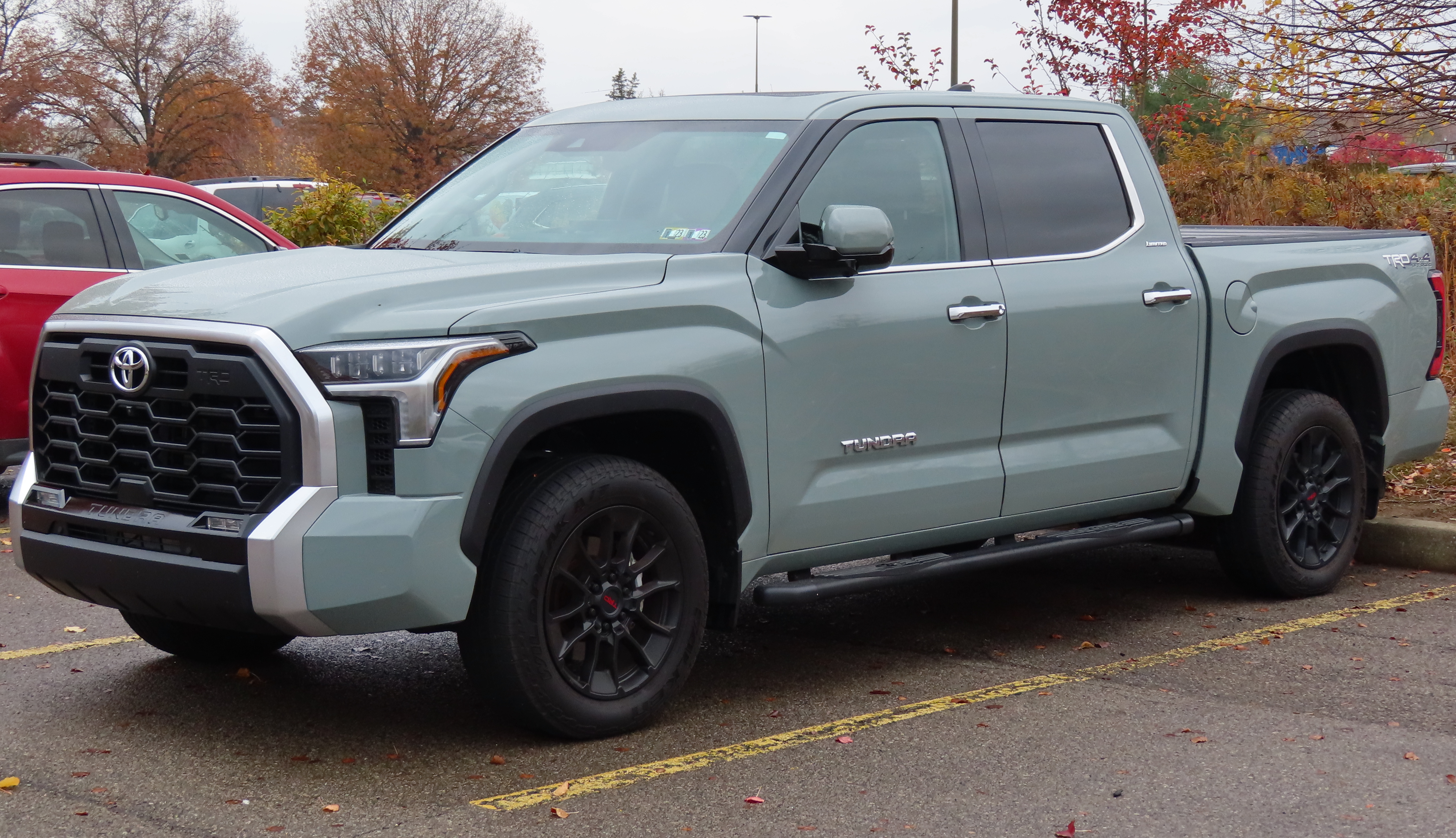
Toyota Tundras
"Yeah, every now and then you get those pretty exceptional leases. know Toyota, when I was there, we had some pretty amazing leases on the Tundras."
The Toyota Tundra is Toyota’s big pickup truck. They’re using it as an example of a time when lease deals on trucks were unusually good.
The Toyota Tundra is Toyota’s full-size pickup truck, and it’s a common target for lease and incentive programs because trucks often have strong demand. Here, the host mentions “amazing leases” on Tundras to illustrate that exceptional lease deals can pop up from time to time.
AI fatigue
"So I think definitely a champion or somebody ⁓ drive your forward right now in this industry and all the turmoil and drama going on is a key thing. And if you know how to do that, then Follow the Automotive Informants podcast or reach out to my friend Peter here."
“AI fatigue” means people get tired of AI tools that don’t feel helpful or that produce annoying, low-quality results. The point is that AI needs to be set up well so people actually want to use it.
“AI fatigue” refers to user and staff burnout or frustration from dealing with AI tools that feel repetitive, low-quality, or overly intrusive. In dealership workflows, it’s a warning that simply adding AI doesn’t guarantee adoption or results. The host contrasts this with doing implementation correctly.
one throat to choke
"just add on to that because I find it comical. Everywhere go, they say one throat to choke. Well, look back to June of 2024 with CDK and what happened when we had one throat to choke."
They’re talking about a risk where too much of a dealership’s work depends on one main computer system or vendor. If that vendor has problems, the whole dealership can get stuck.
This references the “one throat to choke” idea—concentrating critical operations on a single vendor or system. The host ties it to an event in June 2024 involving CDK, implying that when one provider has an issue, dealerships can be heavily impacted. It’s a cautionary topic about vendor concentration risk.
Request an Explanation
Heard something you'd like explained? We'll add it to this episode.
Sign in to request explanations for terms you heard.
Want to learn more?
Browse our glossary for plain-English explanations of automotive terms, jargon, and concepts.
Help improve this episode
See something that's not quite right? Our annotations are AI-generated and can sometimes miss the mark. Click the flag icon on any annotation to suggest a correction.