Air-Cooled & Amplified Scott Sain’s VW Journey Ep65
About this episode
Scott Sain (DJ Insane) and the hosts trace how Volkswagen culture blends cars, music, and community. Scott explains his start with two 70 Beetles in 1986, then moving from drag racing into street builds, including a 1775 with a bigger cam and the lesson that cooling matters on air-cooled engines. The show also covers event vibes—“It’s a party that we happen to have a drag race at.”—plus how VW scenes change as parts get scarce, and how giveaway cars and ticketing help fund future shows.
Episode 65 of DubLife Diaries brings on longtime Volkswagen enthusiast, drag racer, event promoter, and professional DJ (Insane) Scott Sain for an unforgettable conversation packed with classic VW culture, racing history, music, and community. From buying his first Bugs for just $70 in the 1980s to building some of the most recognizable grassroots VW events in the Southeast, Scott shares the journey that turned a passion into a lifestyle.
We dive into the evolution of the Volkswagen scene, Scott’s drag racing roots, his boutique-style events like VW Drag Knight and German Air Drag Day, and the incredible stories behind his custom car giveaways that help fund the community while giving back. Scott also talks about transforming a restored split-window bus into a fully functional mobile DJ booth, his career performing over 300 events a year, and why the VW world continues to feel like family after all these years.
This episode is full of nostalgia, inspiration, hilarious stories, and genuine passion for the air-cooled community. Whether you're into vintage Volkswagens, event culture, racing, music, or entrepreneurship, this one delivers.
🎙️ Hosted by Joe Person
🚗 Air-cooled culture, drag racing, music, community, and unforgettable stories
🔥 Featuring: Scott Sain
#DubLifeDiaries #Volkswagen #VWLife #AirCooled #VWDragRacing #ClassicVW #SplitWindowBus #VWCommunity #BeetleLife #KarmannGhia #Podcast
Support this podcast at — https://redcircle.com/dublife-diaries-the-vw-lifestyle-podcast/donations

Volkswagen Carmen Gias
"[SPEAKER_01]: Yeah, you get down to that one too. [SPEAKER_01]: So I might want to send one of my Carmen Gia's to Alan to freshen up my interior. [SPEAKER_00]: Oh, yeah."
The Volkswagen Karmann Ghia is a classic Volkswagen sports car. People often restore them, including updating the interior. The podcast mentions sending one to get the interior refreshed.
The Volkswagen Karmann Ghia is a classic Volkswagen sports coupe known for its distinctive styling and a strong collector presence. In the podcast, it’s brought up in the context of refreshing the interior, which is a common restoration goal for these cars. That kind of discussion usually signals that the car is being maintained or restored rather than just driven daily.
auto stick
"So one of them was an auto stick and the dark blue one was the one I eventually made two cars out of"
“Auto stick” means the car can shift automatically, but you can also choose gears yourself. It’s like a manual feel without needing a clutch pedal.
“Auto stick” refers to an automatic-transmission setup that still lets the driver manually select gears (often via a shift lever), rather than fully automatic shifting. On classic VWs, it’s a popular middle ground between a true manual and a conventional automatic.
drag racing
"I started drag racing it all the Farmington events up in North Carolina and have been going to those since 86... So it was fun street racing and getting into the drag racing scene"
Drag racing is racing in a straight line to see which car accelerates fastest. It’s usually about quick launches and strong power to the wheels.
Drag racing is a straight-line motorsport where cars compete over a short, measured distance (typically a quarter-mile). It strongly rewards acceleration and traction, which is why the speaker talks about building an engine/transmission and then racing at local events.
engine and transmission
"And, you know, we built a cool engine and transmission was built."
The engine makes the power, and the transmission helps send that power to the wheels. In this story, they built those parts to make the car quicker.
In car-building terms, “engine and transmission” are the powerplant and the gearbox system that delivers that power to the wheels. The speaker’s point is that their local shop helped them build a setup they believed was the fastest at the time.
street racing
"So it was fun street racing and getting into the drag racing scene and that's when it started for me."
Street racing means racing on regular roads instead of a track. It’s usually about who can go faster, but it can be dangerous.
Street racing is informal racing on public roads rather than sanctioned tracks. It’s often tied to car culture because it pushes owners to modify cars for acceleration and top-end speed, even though it’s risky and illegal in many places.

Ford Mustang
"... to buy cars, flip them. [SPEAKER_01]: And we had Mustang, he's in Granadas and fair lanes, whatever he bou..."
The Ford Mustang is a sporty car made by Ford. People like it because it’s popular and there are many parts and upgrades available. In the podcast, it’s mentioned as something someone bought and moved on to the next car.
The Ford Mustang is a classic American sports coupe/convertible known for its long-running popularity and strong aftermarket support. In a “buy, flip, and resell” conversation, it often comes up because it’s a recognizable platform with lots of parts and buyer interest. It’s also frequently discussed in the context of wheels, styling, and how owners personalize them.

Ford Granada
"...p them. [SPEAKER_01]: And we had Mustang, he's in Granadas and fair lanes, whatever he bought. [SPEAKER_01]:..."
The Ford Granada is a mid-size car made by Ford. It’s generally more of a normal, everyday type of vehicle than a sports car. The podcast mentions it because it was part of someone’s car buying and trading history.
The Ford Granada is a mid-size Ford model that was produced in multiple generations and is often remembered as a practical, everyday car rather than a sports icon. In the podcast context, it’s grouped with other cars someone bought and flipped, suggesting it may have been used as a project or a resale vehicle. It also appears in the conversation as part of a personal car history.

Ford Fiesta
"...f. [SPEAKER_01]: and then that got traded in on a Ford Fiesta, right? [SPEAKER_01]: That was the square box he ..."
The Ford Fiesta Active is a small Ford car with extra styling and features meant to look a bit more rugged. It’s still a compact car, not a large SUV. In the podcast, it’s mentioned because it replaced another car as part of a trade-in.
The Ford Fiesta Active is a Fiesta-based model that’s styled and equipped to feel more rugged and crossover-like, while still being a small car. It’s mentioned as a trade-in in the podcast, which highlights how owners move between different compact models over time. The “Active” name typically points to added appearance and convenience features rather than a major change in size.

Volkswagen Rabbit
"... That was the square box he went in with like the rabbit. [SPEAKER_01]: So I could make a pop, I can make ..."
The Volkswagen Rabbit is a small Volkswagen car. It’s known for its boxy, square shape. The podcast mentions it because someone is describing that style and the car they went into.
The Volkswagen Rabbit is a compact car that’s closely associated with the early Volkswagen “square” design era and has a dedicated enthusiast following. In the podcast, it’s referenced as a “square box” style car, which connects to how people recognize and build these platforms. It’s also a common starting point for personalization because the look is distinctive and parts are widely available.
cam
"It was a 1775 with a [SPEAKER_01]: with a bigger cam and I built a cool car me again."
The camshaft controls the engine’s valves. A bigger cam usually helps the engine make more power at higher speeds, but it can make it feel less responsive at low speeds.
In an engine, the cam (camshaft) controls when the valves open and close. A “bigger cam” typically means more aggressive valve timing/lift, which can improve power at higher RPM but may reduce low-end drivability.
drag cars
"And then when I realized, wait a minute, these street cars are faster than the full long drag cars."
Drag cars are built mainly to go fast in a straight line over a short distance. They’re usually set up for acceleration and grip, not for driving around like a normal car.
“Drag cars” are purpose-built or heavily modified cars optimized for straight-line acceleration over a set distance. They often prioritize traction, gearing, and engine output for short bursts rather than everyday handling or road manners.
street cars
"That's when I stopped building drag cars and I built street cars ever since then, and just."
Street cars are cars meant to be driven on regular roads. Even if they’re modified, they’re typically set up to be more usable day-to-day than cars built only for racing.
“Street cars” are cars set up to drive on public roads (or at least behave like they can), even if they’re modified. In enthusiast circles, the term often implies a balance of performance with drivability—unlike cars that are only optimized for drag racing.
eighth mile
"back when I was 16 to whether they are now, like just this past weekend, Brad in our class ran a 5.79 and a 120 or something in the eighth mile, five seven and luckily I was the one in the finals with him."
In drag racing, the “eighth mile” is a shorter race distance—about 660 feet. People use it because it’s a common, easy-to-compare way to measure how fast a car accelerates.
The “eighth mile” is a drag-racing distance equal to 1/8 of a mile (about 660 feet). It’s commonly used for bracket racing and many local drag strips because it’s shorter than the quarter-mile, so times can be quicker to repeat and compare.
fly cut my head
"He fly cut my head before me gave me a little more compression."
Fly cutting is when a machinist removes a small amount of metal from the engine’s cylinder head. That can make the engine squeeze the mixture more, which often boosts power.
“Fly cutting” the cylinder head means machining material off the combustion-chamber surface. That reduces chamber volume, which typically increases compression ratio and can change how the engine makes power.
compression
"He fly cut my head before me gave me a little more compression."
Compression is how tightly the engine squeezes the fuel/air mixture before it ignites. More squeeze can make more power, but it has to be matched with the right fuel and tuning so it doesn’t cause problems.
In an engine build, compression refers to how much the air-fuel mixture is squeezed in the cylinder before ignition. Higher compression can improve efficiency and power, but it can also increase the risk of knock if the fuel and tuning aren’t right.
80 horsepower
"You know, probably make an 80 horsepower and I thought it was insane, but it was, you know, almost double what it had had."
They’re talking about how much power the engine made after the modifications. In VW engine builds, tuning parts like the head and carburetors can change the power a lot.
The speaker is describing an output target/estimate after the engine changes. In air-cooled VW builds, small changes like head work and carb setup can noticeably affect how much power the engine produces.
geared to close third and fourth
"But we had the transmission was geared to close third and fourth, it just made it so quick."
Close gearing means the transmission’s gear ratios are spaced closer together. That helps the engine keep pulling after each shift, so acceleration feels stronger.
“Close” gearing between gears (here, 3rd and 4th) means the ratio steps are smaller, so the engine stays closer to its power band when you shift. That can make the car feel quicker because you spend less time dropping RPM between gears.
Weber DC and F carburetors
"I think I had 42 Weber DC and F carburetors that, you know, they were for a type three."
Weber DCNF carburetors are performance carburetors used on classic air-cooled VWs and other engines. The “DC” and “F” designations refer to specific carb models/jets and throttle setups that affect fuel delivery and throttle response.
tin off
"I had the fans round all the, you know, just like we did, we took all the tin off and didn't know we were cooking the engines, but we were."
On air-cooled engines, the sheet-metal “tin” helps guide cooling air over the engine. Taking it off can make the engine run hotter than it should.
On air-cooled VWs, the “tin” refers to the sheet-metal engine shrouds that direct airflow over the cylinders and heads. Removing it can reduce cooling efficiency, which is why the speaker mentions “we were cooking the engines” even though the car still ran.
fans
"I had, I had the fans round all the, you know, just like we did, we took all the tin off..."
Air-cooled VWs rely on a fan to blow air over the engine to keep it from overheating. Without good airflow, the engine can get too hot.
In an air-cooled VW, the engine-driven cooling fan(s) move air through the shrouds (“tin”) to remove heat from the cylinders and heads. Fan cooling is critical because there’s no liquid radiator to manage temperatures.
flywheel
"So we got all the parts. We got a crank and flywheel and stuff from Jose out of DPR Iran, got us a clutch."
A flywheel is a heavy spinning part connected to the engine. It helps the engine run smoothly by storing energy as the engine turns.
A flywheel is a heavy rotating component attached to the crankshaft. It stores rotational energy and helps smooth out engine speed between power pulses.
clutch
"We got a crank and flywheel and stuff from Jose out of DPR Iran, got us a clutch. And I got the JPM heads out of where he is."
A clutch is what lets you smoothly connect and disconnect the engine’s power when shifting gears. It’s especially important on manual transmissions.
A clutch is the mechanical connection between the engine and the transmission. It lets you disengage power to change gears smoothly and re-engage it without grinding.
bore
"So it's a four inch bore, you know, big, huge engine 2.6 liter, and I haven't used it yet."
Bore means how wide each cylinder is inside the engine. Bigger cylinders can help the engine make more power because there’s more space for the fuel-air mix.
In an engine, the bore is the cylinder’s diameter. A larger bore lets the engine displace more volume (more fuel/air potential), which often supports higher power when paired with the right parts.
2.6 liter
"So it's a four inch bore, you know, big, huge engine 2.6 liter, and I haven't used it yet."
“2.6 liter” is the engine’s size—how much total space the cylinders move through. Bigger engines can often make more power, especially if the rest of the setup supports it.
“2.6 liter” refers to engine displacement, the total volume swept by all cylinders. Higher displacement generally provides more potential for power, assuming the engine’s breathing (intake/exhaust) and internal parts are matched.
400 horsepower
"I want to use it for a project, but I mean, it could be 400 horsepower just on a light tune."
Horsepower is a number that describes how strong the engine is. They’re saying this setup could be capable of around 400 hp without needing a huge, extreme build.
Horsepower is a measure of how much work an engine can do over time—essentially its power output. The speaker is suggesting the engine could reach that level with a “light tune,” meaning relatively modest calibration changes.
light tune
"I want to use it for a project, but I mean, it could be 400 horsepower just on a light tune."
A “light tune” means making smaller adjustments to how the engine is controlled, not doing a full-on extreme setup. The goal is to get extra power while keeping things fairly mild.
A “light tune” usually means relatively small changes to engine calibration (fuel/ignition timing, boost if applicable, and related settings) rather than a full race-level setup. It’s often used to describe extracting more performance from an already-built engine.
giveaway cars
"And the giveaway cars that I do, that's the only way I can do it. That is what makes your events different now."
They mean raffle-style car giveaways where someone wins a car. It’s a way to support events and get people involved.
“Giveaway cars” refers to raffle-style events where a car is awarded to participants rather than sold normally. In the VW scene, these are often used to fund events and build community while showcasing builds.

65 red bug on BRMs
"So 65 red bug on BRMs, running driving, just a perfect driver, not a perfect paint job."
They’re talking about a classic Volkswagen Beetle (“red bug”). They also mention BRM-style wheels, which are a popular vintage wheel choice that changes how the car looks.
“Red bug” is a VW Beetle (commonly the air-cooled era), and the speaker is describing a 1965-style Beetle build. “BRMs” refers to BRM-style wheels, which are a classic look on vintage VWs and can change the car’s stance and overall vibe.
aftermarket rack
"Just a good looking red car, had an aftermarket rack top. I had a roof rack here, I threw it on there."
They added a roof rack that wasn’t installed by the factory. It’s used to carry things and it also changes the car’s appearance.
An aftermarket roof rack is a non-factory accessory mounted to the roof for carrying gear. On a vintage VW, it’s a functional add-on that also affects the car’s “lifestyle” look.
repop bumpers
"It had some rusty repop bumpers on it. I didn't like those."
“Repop” means the bumpers were made as copies of the original. The host didn’t like how those copies looked, so they swapped them out.
“Repop” bumpers are reproduction parts made to look like the original equipment. The speaker didn’t like the fit/finish or look of those repop bumpers and replaced them with a different style.
Vietnamese stainless bumpers
"I took those off and got the Vietnamese stainless on it. Just the perfect touch to a patina car with perfect stainless bumpers."
They replaced the bumpers with stainless-steel ones made by a Vietnamese supplier. Stainless tends to resist rust better and usually looks nicer on older cars.
The speaker is referring to stainless-steel replacement bumpers sourced from a Vietnamese supplier/brand. Stainless bumpers are popular on vintage VWs because they resist corrosion better than many cheaper reproduction parts and can give a cleaner “show” look.
patina car
"Just the perfect touch to a patina car with perfect stainless bumpers."
A “patina car” is an older car that keeps its natural wear and character instead of being restored to look brand new. In this case, they’re pairing that worn look with nicer stainless bumpers.
A “patina car” is intentionally kept with visible age-related wear—like faded paint, surface rust, and other signs of history—rather than being fully restored to a brand-new finish. The idea is to preserve character while still upgrading certain details.
European blades
"I did the European blades. I'll lower the front a little bit more."
“European blades” sounds like a style of exterior trim piece they added. It’s mainly about changing how the front of the VW looks.
“European blades” likely refers to a specific style of exterior trim or grille/bumper blade inserts used on some European-market VW looks. It’s a visual modification that changes the car’s front-end appearance.
lower the front
"I'll lower the front a little bit more. And..."
They’re talking about making the car sit lower at the front. People do this to change the look and sometimes the driving feel.
“Lowering the front” means reducing ride height so the car sits closer to the ground. On vintage VWs, this is usually done with suspension changes (like lowering springs or adjustability) to improve stance and handling feel.
MP5 spokes
"I mean, I'll have to show you why it was on, it's on MP5 spokes..."
“MP5 spokes” refers to a specific wheel style/fitment—spoke wheels commonly used in VW and classic-car builds. The speaker is highlighting the look of the wheels on the car they’re describing.
Beetle Super Beetle
"...it didn't have cool wheels, and then I built a 72 Super Beetle in 14 that I found in a field, original paint. [S..."
The Volkswagen Beetle is a classic Volkswagen with a very recognizable shape. The podcast talks about a 1972 “Super Beetle,” which is a specific older version people often restore. It’s mentioned because someone found one and built it up.
The Volkswagen Beetle is an iconic air-cooled-era compact car known for its rounded shape and massive global following. The podcast specifically mentions building a “72 Super Beetle,” which points to a classic generation that many enthusiasts restore or customize. Beetles are often discussed because they’re straightforward to work on and have a strong parts and community ecosystem.
satin clear
"...we're sanded it, cleared it with a satin clear, and I replaced everything else..."
A “satin clear” is a clear-coat finish that’s not fully glossy—satin sits between matte and gloss. In bodywork, choosing satin clear affects how the paint reflects light and can help preserve an “original-looking” vibe.
weather stripping
"...I replaced everything else, headliner or seats, carpet, all the weather stripping and everything brand new..."
Weather stripping is the rubber or trim seals around doors, windows, and other openings that keep water and wind out. Replacing it is a common restoration step because worn seals can cause leaks and rattles.
carpet
"...headliner or seats, carpet, all the weather stripping..."
Automotive carpet is the floor covering that affects comfort, sound insulation, and overall interior appearance. In restorations, replacing carpet is often done alongside seats and trim to make the cabin feel “new.”
heater channels
"So it needed heater channels, right?... So we go out there and look at it... eat heater channels... So Jason says... Let's cut the heater channels out."
Heater channels are metal parts that run along the car and help get heat into the cabin. They’re also important for the car’s structure, so removing them is a big deal.
Heater channels are the long structural panels on a Volkswagen Beetle/Type 2 that also route heat from the engine area into the cabin. Because they’re both structural and part of the heat system, cutting or replacing them is a major modification that affects strength and how the car can be heated.
narrow transmission
"we built that car in 64 days, pan off, raised the narrow transmission, everything, 64 days."
A narrow transmission is a gearbox that’s physically slimmer. People choose it to make the drivetrain fit better when they’re modifying the car a lot.
A narrow transmission refers to using a transmission variant with a reduced overall width compared with other options. On air-cooled VWs, choosing a narrower gearbox can help with fitment, clearance, and packaging when doing custom builds like lowering, raising, or changing the drivetrain layout.
pan off
"we built that car in 64 days, pan off, raised the narrow transmission, everything, 64 days."
“Pan off” means taking the body off the bottom pan/chassis. It’s a big job usually done when you need to do serious work underneath the car.
“Pan off” describes a major teardown where the body is removed from the floor pan/chassis base. It’s typically done for deep rust repair, structural work, or extensive custom fabrication because it exposes the underlying structure.
body drop
"Let's cut the heater channels out. And nobody on the, because we had worked on... So we did it. So we body dropped it, build a role cage."
A body drop means lowering the car’s body closer to the ground. It’s how people get that super-low look, but it can require lots of setup so everything still fits and works.
A body drop is a suspension/body modification where the body is lowered relative to the chassis to achieve an ultra-low stance. It typically requires careful work to maintain driveline angles, steering/suspension clearance, and overall structural integrity.
role cage
"So we body dropped it, build a role cage. A guy had bought a car from me with this unbelievable cage built in it..."
A roll cage is a metal safety frame inside the car. It helps protect you in a crash—especially if the car flips—and it’s often used in race cars.
A roll cage is a reinforced metal framework installed inside the cabin to protect occupants during a rollover or hard impact. It’s common in serious track/drag builds because it adds rigidity and provides mounting points for harnesses.
roll cage
"And I sold it to my friend and he cut the cage out of the car and shortened it, you know, to cut it out of the car, he had to cut the bottoms off, right, ruined it. Anyway, we put a cage in it."
A roll cage is a safety frame inside the car. It’s there to protect you if the car flips or gets hit hard, and it can also make the car feel more stable.
A roll cage is a welded safety structure inside the vehicle, designed to protect the driver and passengers during rollovers or hard impacts. In performance builds, it also increases chassis rigidity, which can improve handling consistency.
air-cooled
"Podcast: DubLife Diaries The VW Lifestyle Podcast Episode: Air-Cooled & Amplified Scott Sain’s VW Journey Ep65"
“Air-cooled” means the engine is cooled by air flowing over it, not by coolant. Classic VWs are famous for this design.
“Air-cooled” describes engines that rely on airflow over fins to remove heat instead of using a liquid coolant system. It’s a defining trait of classic Volkswagen models like the Beetle and Type 2, and it strongly influences how they’re maintained and modified.
turbo
"So it's turbo hidden behind the package tray, slam, do you can't, you can't understand why it looks so low with the deleted heat, your channels."
A “turbo” is a device that pushes extra air into the engine. More air usually means more power, but it has to be set up correctly.
A turbocharger (“turbo”) forces more air into the engine than atmospheric pressure alone can provide. That extra air lets the engine make more power, but it also changes how the car needs to be built and tuned to handle boost.
package tray
"So it's turbo hidden behind the package tray, slam, do you can't, you can't understand why it looks so low with the deleted heat, your channels."
The package tray is the shelf behind the back seat. In this case, the speaker means the turbo setup is tucked in that rear area.
The package tray is the rear shelf behind the back seat in many cars, especially in classic VWs. Saying the turbo is “hidden behind the package tray” implies the setup is tucked into the rear area to keep the engine bay looking cleaner.
slam
"So it's turbo hidden behind the package tray, slam, do you can't, you can't understand why it looks so low with the deleted heat, your channels."
“Slam” means the car sits extremely low. That look is popular, but it can make everyday driving harder because you scrape more easily.
“Slam” is slang for a slammed suspension setup—very low ride height. In the VW scene it’s often paired with body modifications to achieve a specific stance, but it can reduce ground clearance and affect drivability.
deleted heat
"So it's turbo hidden behind the package tray, slam, do you can't, you can't understand why it looks so low with the deleted heat, your channels."
“Deleted heat” refers to removing or disabling the factory heat system—commonly the heat exchangers/heat ducts used for cabin and engine bay heat on air-cooled VWs. Enthusiasts sometimes do this for weight, simplicity, or aesthetics, but it can affect defrost and cabin comfort.

65 bus
"He had the 65 bus. He had a 64 son roof bug and a 68."
A “65 bus” is a 1965 Volkswagen bus. People love these because they’re iconic and a big part of the classic VW community.
“65 bus” refers to a 1965 Volkswagen Type 2 (often called a VW bus/Transporter). It’s a classic air-cooled platform that’s especially popular in the VW scene for restoration and customization.
rust
"He's like, well, there's some rust here. And then, well, there's some rust here. So it needed like the lower six inches replace"
Rust is when metal starts to corrode and weaken over time. They’re saying the car had rust in important body areas, so it needed metal replacement and repair.
Rust is corrosion of metal, and on older cars it often shows up in structural areas and floor pans. The host mentions rust that required replacing the lower section and redoing parts of the front floor area.
forepan
"So it needed like the lower six inches replace, you know, the inside forepan was needed to be redone at the forepan, you know, right now."
The “forepan” is basically the front floor metal. If it’s rusted, you have to replace it because it’s part of the car’s structure, not just a cosmetic panel.
A “forepan” (front floor pan) is a structural sheet-metal section that forms part of the vehicle’s floor at the front. Replacing or redoing it is a significant body repair because it affects rigidity and how the car’s interior mounts.
lower six inches
"So it needed like the lower six inches replace, you know, the inside forepan was needed to be redone"
They’re describing a repair where they cut out and replace the bottom part of the metal where rust usually starts. It’s a targeted fix instead of replacing everything.
“Lower six inches” refers to a common rust-repair approach where only the bottom portion of a body section is cut out and replaced. It’s a practical way to remove corrosion while keeping the rest of the panel intact.
purists
"So a lot of purists were not very happy with me that I took the SO 42 stuff out of the camper."
“Purists” are people who want a car to stay as original as possible. Here, they’re upset because the host removed original camper-related parts.
“Purists” in the car world are enthusiasts who prefer keeping a vehicle close to how it left the factory or how it was originally configured. In this segment, the host says purists weren’t happy because they removed parts from the camper setup.
Grumpy's
"And he told me, well, Grumpy's makes an exact replica for it. He goes, it would be awesome."
“Grumpy's” is the name they give for a maker that sells replica parts. In this case, it’s for a rack/dump-style accessory they were considering.
“Grumpy's” is mentioned as a company that makes an exact replica rack/dump setup for the referenced camper configuration. That matters because replica parts are a big part of keeping older builds looking period-correct.
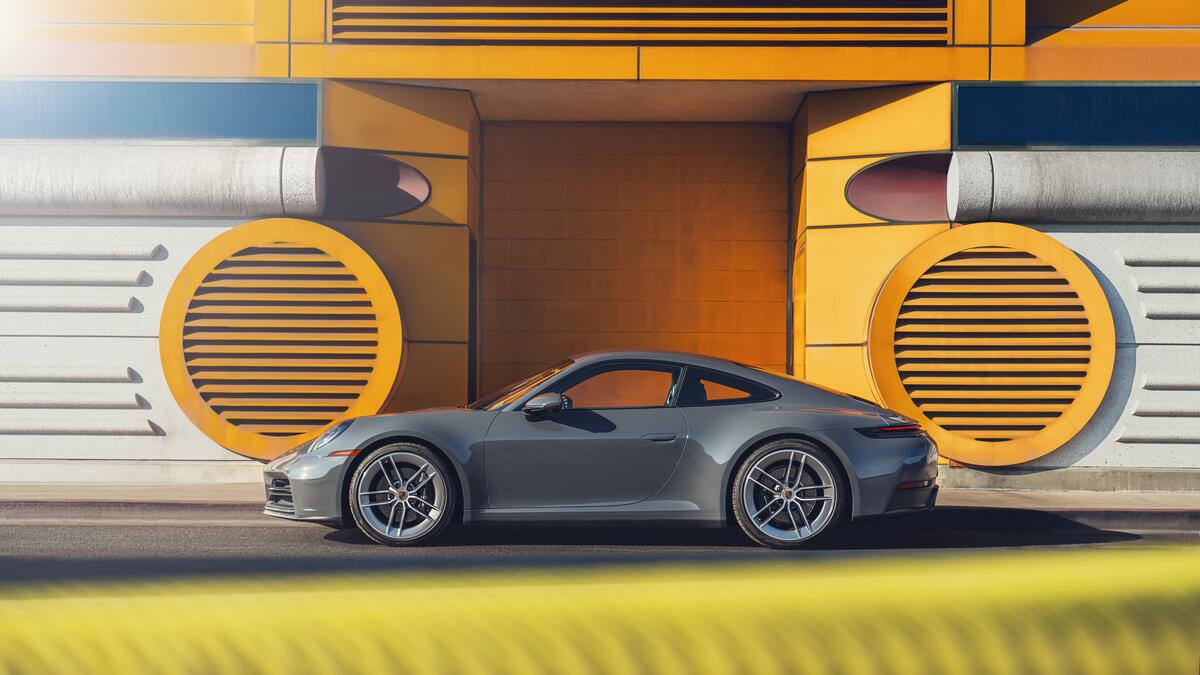
Porsche 911
"...01]: And he goes, [SPEAKER_01]: Are those Porsche 911 wheels and I went wait a minute you're 15. [SPEAK..."
The Porsche 911 is a sports car made by Porsche. It’s known for being expensive and for having a very recognizable design. The podcast mentions it because the wheels or details looked like they belonged to a 911.
The Porsche 911 is a long-running German sports car famous for its distinctive shape and rear-engine layout. It’s often mentioned in conversations about car culture because it’s instantly recognizable and has a huge enthusiast community. In this podcast context, it comes up as a notable, high-interest car—especially when someone notices 911-specific wheels.
rag top
"Mine's a rag top and I said yeah, I want that."
“Rag top” just means a convertible with a fabric roof. They’re saying their car is the open-top version.
“Rag top” is enthusiast slang for a convertible with a fabric soft top. The speaker uses it to clarify that their Volkswagen Beetle is the open-top version.
lift
"So I'm at a gig working and I start getting these picture after picture from Bob and it's on the lift and it's underneath and it's under the fender and the engine."
A “lift” is a garage hoist that raises the car off the ground. It lets you see and work on the bottom of the car.
A “lift” is a vehicle hoist used to raise a car so the underside can be inspected and worked on. The speaker mentions pictures of the car on the lift, including work “under the fender” and “under the…engine,” implying underneath-focused work.
full restoration
"She built a full restoration convertible bug and never done what he said she took it out drove around the neighborhood got stuck on a speed bug because she had four girls in the car."
A “full restoration” means someone went through the car and fixed it up completely, not just a small refresh. In this story, the car was restored but then didn’t get much real use.
A “full restoration” means the car was brought back to a much like-new condition, typically involving extensive work across the body, interior, and mechanical systems. The speaker contrasts that with the fact the car was never really driven after the restoration.
square tires
"The tires were square from sitting on the tires for 14 years."
“Square tires” means the tire tread got flat spots because the car sat for a long time. It can make the car feel bumpy or shake when you drive.
“Square tires” describes tires that have developed flat spots from sitting unused for a long time. The speaker says the tires were square after 14 years, which can cause vibration until the tires are replaced or reshaped.
stick shit
"You don't want it to be a stick shit."
“Stick” means the car has a manual transmission. You shift gears yourself instead of the car doing it for you.
“Stick” is slang for a manual transmission, where the driver uses a clutch and gear lever to select gears. The phrase here is about whether the buyer wants a manual or an easier automatic-style setup.
barn find
"We drove up to a barn."
A “barn find” is an old car that’s been sitting in storage for a long time and gets found later. It can be a great deal, but it may need work after sitting.
A “barn find” is a vehicle discovered after being stored for a long time, often in a barn or similar outbuilding. These cars can be exciting because they may have low mileage and preserved condition, but they also can need significant recommissioning after storage.
original mile
"I found a one-owner with 46,000 original mile on the gas."
They’re saying the car has low, original mileage—meaning it hasn’t been driven much. For older cars, that can mean less wear.
“Original miles” refers to the vehicle’s odometer reading being low and believed to be unaltered. In classic-car buying, low original mileage is often treated as a sign of reduced wear—especially when paired with “stock everything.”
one-owner
"I found a one-owner with 46,000 original mile on the gas."
A “one-owner” car is a vehicle that has had only a single registered owner since new. Enthusiasts often value this because it can correlate with more consistent maintenance and fewer unknown modifications.
stock everything
"It's so quiet, you know, it's stock everything."
“Stock everything” means the car is mostly as it came from the factory, not heavily modified. People like that because it keeps the original character.
“Stock everything” means the car is largely unmodified from the factory—original parts and configuration. For classic Volkswagens, staying stock is often prized because it preserves the intended driving feel, fitment, and authenticity.
ballast
"[4964.7s] [SPEAKER_01]: I've never owned a ballast until I got this 65. [4966.9s] [SPEAKER_01]: So in my first one is a split, very lucky, but I love, I love the look..."
Here, “ballast” likely means a device used to power certain types of lights. It’s a specific part that helps the light system work.
In VW bus audio/lighting culture, “ballast” usually refers to a ballast used to run certain aftermarket lighting (commonly HID/Xenon-style setups). It’s a specific hardware component, not the everyday meaning of ballast as weight.
manual
"Oh, definitely manual. Lared on a manual was a kid. My granddad had a 84 ranger."
A manual car is one where you shift gears yourself. You also use a clutch pedal, and that takes practice—particularly when you’re starting uphill.
A manual transmission requires the driver to use a clutch pedal and shift gears by hand. It’s more demanding for beginners because you have to coordinate clutch release with engine speed, especially when starting on hills.

1984 Ford Ranger
"My granddad had a 84 ranger. Of course, today you're pretty easy to draw out. That 84 Ranger was nearly impossible to drive."
This is a 1984 Ford Ranger pickup. The speaker says it was their early experience learning to drive, and it was challenging because they were practicing on hills with a manual-style driving situation.
The Ford Ranger is a compact pickup truck line, and the 1984 model is an older, simpler truck compared with modern Rangers. In the segment, it’s notable because the speaker describes it as nearly impossible to drive—especially learning to manage a manual on an uphill.

1984 Volvo 240BL
"So I learned how to drive on a Honda Civic, but my first stick shift that I owned was a 1984 Volvo 240BL. Yeah, I learned it was a coupe, and I learned how to get it out of first gear."
This is a Volvo 240 from 1984. It’s a simple, old-school car layout, and the speaker learned to drive a manual transmission in it—especially how to use the clutch when starting on an incline.
The Volvo 240 is a classic, boxy rear-wheel-drive sedan/coupe platform from Volvo, known for being mechanically straightforward and durable. In this story, the 1984 Volvo 240BL is significant because it’s the speaker’s first owned stick-shift car, teaching clutch control in real traffic conditions.

Honda Civic
"So I learned how to drive on a Honda Civic, but my first stick shift that I owned was a 1984 Volvo 240BL."
A Honda Civic is a very common, practical compact car. In this episode, it’s mentioned because the speaker learned to drive on it before learning a manual transmission.
The Honda Civic is a long-running compact car line known for being easy to live with and generally approachable for new drivers. Here it matters because the speaker learned basic driving skills on a Civic before moving to a manual car.
stall
"I'd stall it. People behind me beeping."
A stall is when the engine turns off while you’re driving or trying to start. On a manual car, it often happens when you release the clutch too fast.
A “stall” happens when the engine loses enough RPM that it shuts off. With a manual transmission, stalling commonly occurs when the clutch is released too quickly or the engine isn’t kept in the right rev range during takeoff.
e-break
"I can use the e-break and just fan that clutch. So yeah, I learned that pretty pretty quick as a 16 year old kid, but maybe 17 actually at that time."
The e-break is the parking brake. It can hold the car still on a hill while you learn how to start smoothly with a manual transmission.
The “e-break” is the emergency brake, typically a parking brake used to hold the car in place. The speaker mentions using it to help manage a manual launch on an incline—so the car doesn’t roll while they coordinate clutch release.

Chevrolet Nova
"...earlier for the party. [SPEAKER_01]: I love those Nova walkie. [SPEAKER_01]: I can't remember the the th..."
The Chevrolet Nova is a car made by Chevrolet. It’s known for being a classic model that people sometimes customize. The podcast is referencing it as something memorable from the past.
The Chevrolet Nova is an American compact/midsize car that became especially popular in earlier decades and later developed a strong collector and customization following. In a podcast about car lifestyles, it’s the kind of model people remember for its look and for being a common base for builds. The mention suggests nostalgia and recognition of the Nova’s style.
Fuchs
"The dark blue, the fuchs, it's got a 2110, a little 10 to 1 compression."
“Fuchs” is a type of wheel design with a classic, recognizable look. VW owners use them to make the car look more like the classic European sports-car style.
“Fuchs” refers to Fuchs-style wheels—most famously associated with Porsche—characterized by their distinctive machined spokes. In VW builds, people often run Fuchs-style wheels to get that classic, lightweight look and a period-correct vibe.
Request an Explanation
Heard something you'd like explained? We'll add it to this episode.
Sign in to request explanations for terms you heard.
Want to learn more?
Browse our glossary for plain-English explanations of automotive terms, jargon, and concepts.
Help improve this episode
See something that's not quite right? Our annotations are AI-generated and can sometimes miss the mark. Click the flag icon on any annotation to suggest a correction.