
Air-Cooled Porsche Masterclass: Buying & Ownership Secrets with Adrian Crawford
About this episode
Adrian Crawford joins 9WERKS Radio for an air-cooled Porsche masterclass focused on buying and living with classic 911s. The discussion moves from what makes Luft cars feel special—direct feedback, “quarter window” drama, and enjoying them “at any pace”—to the real ownership risks: the body, corrosion, and unpredictable costs. Practical guidance covers warm-up habits, tire choice and aging, and how to grade cars for daily use vs preservation. Market talk includes Brexit sourcing, 930 scarcity, and long-bonnet hype.
Thinking about taking the plunge into air-cooled Porsche ownership, or looking to keep your classic flat-six in pristine health?
In this special seminar edition of 9WERKS Radio, Lee Sibley and Andy Brookes host an absolute masterclass dedicated entirely to the legendary air-cooled era. To guide us through the minefield of buying, inspecting, and maintaining these icons, we are joined by a true industry titan: Adrian Crawford, founder of independent Porsche specialists Williams Crawford.
With over 35 years of hands-on experience dealing with everything from early 356s to the final air-cooled 993s, Adrian pulls back the curtain on what it really takes to own a classic Porsche. This isn't just a discussion about appreciation curves; it's a deep-dive technical seminar designed to arm you with expert knowledge and save you thousands in the workshop.
In this seminar, we break down:
The Inspection Checklist:
- The critical, hidden trouble-spots people miss when viewing a classic 911 (and what to never ignore).
Restoration Realities:
- When does a "minor project" cross the line into a full-scale financial nightmare?
The Market Alignment:
- Where is the smart money moving? Adrian shares his thoughts on current value sweet-spots.
Bespoke vs. Pure: The shifting trends between factory-original preservation and custom, backdated modifications.
Whether you're a seasoned air-cooled purist or a modern water-cooled driver dreaming of that analog ignition, this episode is your definitive playbook.
9WERKS RADIO PARTNERS:
Heritage Parts Centre: Proud sponsors of 9WERKS Radio. Sourcing components for an air-cooled classic shouldn't be a headache. From engine gasket kits to hard-to-find trim pieces, Heritage Parts Centre has the stock and expertise to keep your icon on the road. Get 10% off your next order with code '9WERKS10' at the checkout! Shop now: https://www.heritagepartscentre.com 9WERKS Marketplace: Looking for an air-cooled classic or ready to trade up? Find verified community and specialist listings here: https://9werks.co.uk/porschemarketplace/
JOIN THE 9WERKS COLLECTIVE:
Access our dedicated discussion forum, member events, and get exclusive benefits here: https://9werks.co.uk/join
Follow us:
- Instagram: @9.werks
- Website: https://9werks.co.uk
- Lee Sibley: @9werks_lee
- Andy Brookes: @993andy

981 GT4
"So yeah, I was in my relatively new to me 981 GT4. So I've had it a couple of months now... But for me, it's a gearbox. It's just lovely rowing up and down the gears."
This is a Porsche GT4 model (a Cayman) that’s built to feel sharp and fun in corners. The host says it’s especially enjoyable because it’s balanced in the middle and the shifting feels great.
The Porsche 981 GT4 is a track-focused Cayman/Boxster-family variant built around a mid-engine layout, giving it a very responsive feel in corners. In this segment, the host highlights how the car’s gearbox and mid-engine balance make it engaging to drive on twisty roads.
gearbox
"But for me, it's a gearbox. It's just lovely rowing up and down the gears. It's zipped around. It makes a fantastic noise."
A gearbox is the part of the car that changes gears so the engine can make the right amount of power. The host is saying this one feels really satisfying to shift.
In this context, “gearbox” refers to the transmission and how the car’s ratios and shift feel let the driver keep the engine in the right power band. The host describes it as “lovely rowing up and down the gears,” emphasizing driver engagement rather than just getting from point A to B.
mid-engine
"It's mid-engine. So I've had a 911 before a 996 four years ago and that drove quite differently."
“Mid-engine” means the engine sits closer to the middle of the car. The host is saying that this helps the car feel more balanced and easier to steer into turns.
“Mid-engine” means the engine is mounted near the center of the car, typically behind the driver and ahead of the rear axle. That layout helps balance weight front-to-rear, often making turn-in feel sharper and the car feel more “pointable” through corners.
turning bite
"So the kind of front end turning bite on the GT4 is something else really good fun."
“Turning bite” means how well the car grips when you start turning into a corner. The host is saying the GT4 grabs in a really satisfying way.
“Turning bite” is an enthusiast term for how strongly a car grips and responds when you turn the steering wheel into a corner. The host says the GT4’s front-end turning bite is especially fun, implying confident front grip and predictable turn-in behavior.
steering feel
"So for me, it was about getting my confidence up and just getting to enjoy the steering feel of that 996. [364.4s] It was great for me. [365.6s] And there was really a kind of a variety of bases of people."
“Steering feel” is how the steering wheel talks to you—how heavy or light it feels and how clearly it shows what the tires are doing. They’re saying the Porsche made that feedback enjoyable.
“Steering feel” is the subjective feedback a driver gets through the steering wheel—how much effort, vibration, and response the car communicates. Here it’s tied to the Porsche 911 (996-generation) and how the speaker can “feel” the road’s undulations through the wheel.
quite planted
"What did you learn about the car? [377.9s] That it's quite planted. [379.9s] Yeah. [380.0s] It's quite planted."
“Planted” means the car feels stuck to the road instead of shaky or loose. They’re saying the Porsche felt stable and confidence-inspiring.
“Quite planted” is enthusiast shorthand for a car that feels stable and well-supported at speed and through corners, with minimal wandering or float. In this context, it’s used to describe how the Porsche 911 (996-generation) inspires confidence.

Porsche 924
"Well, my very first Porsche would have been in 1978, 924, but before that, my dad crashed a few, 911, so sort of like, you know, lived through those cars."
The Porsche 924 is an older Porsche model that’s often considered a gateway into the classic air-cooled era. Here, it’s mentioned as the first Porsche Adrian owned back in 1978.
The Porsche 924 is an early entry point into the air-cooled Porsche world, and it’s notable for being a front-engine, rear-drive model that helped broaden Porsche’s lineup. In this episode, Adrian uses it as the starting point of his ownership history beginning in 1978.
Luft Porsches
"But I guess, Adrian, for people like myself that are perhaps curious about Luft Porsches, what is like the greatest thing about air-cooled ownership in your experience?"
“Luft Porsches” is enthusiast shorthand for air-cooled Porsches. It means the engine is cooled by air, not by a liquid cooling system.
“Luft Porsches” refers to air-cooled Porsches—cars with engines cooled by air rather than liquid coolant. The term is used by enthusiasts to distinguish the classic air-cooled era from later water-cooled 911s.
air-cooled
"And for me, all the, and this goes through all the air-cooled cars."
“Air-cooled” means the engine is cooled mainly by air flowing over it, not by circulating liquid coolant. With classic Porsches, that can change how the car feels and responds compared with newer cars.
“Air-cooled” describes an engine cooling system that relies on airflow over the engine rather than a liquid coolant loop. For Porsche 911s, this layout is a big part of the driving feel people associate with the classic era—more direct mechanical feedback and a different character than modern water-cooled cars.
rev counter
"And it's like a side shot looking through that beautiful quarter window at the driver with a big rev counter."
A rev counter is the gauge that tells you how fast the engine is spinning (RPM). It helps you drive by listening and watching the engine speed.
A rev counter (tachometer) shows engine speed in revolutions per minute (RPM). On classic cars like air-cooled 911s, it’s especially important because the engine’s character and sound are closely tied to RPM.
Molsan Strait
"And that to me is always the image that I've got, whether it's like at Le Mans going down the Molsan Strait, it's that quarter window with the big rev counter."
This sounds like a specific straight on the Le Mans track. The point is that it’s a long, fast section where you really notice the engine speed and the classic driver view.
“Molsan Strait” appears to be a mis-transcription of a section of the Le Mans circuit (a straight). The key idea is that the speaker is picturing a long, fast run where the rev counter and quarter-window view are especially vivid.
Le Mans
"And that to me is always the image that I've got, whether it's like at Le Mans going down the Molsan Strait, it's that quarter window with the big rev counter."
Le Mans is a legendary race in France known for endurance racing—cars run for hours and hours. Bringing it up is a nod to racing history and the kind of driving people associate with these cars.
Le Mans is the famous French endurance race (and circuit area) where manufacturers and drivers test cars over long stints. Mentioning it here connects the speaker’s air-cooled Porsche imagery to motorsport heritage and long-distance racing culture.
open B road
"You just get a nice open B road, get some kerf spot together."
An “open B road” is a quieter, smaller road with curves. It’s the kind of road where you can enjoy driving without needing high speeds.
An “open B road” refers to a lightly trafficked, twisty secondary road where visibility and spacing make it possible to drive smoothly and confidently. It’s a context where older cars—especially air-cooled Porsches—can feel especially engaging at lower speeds.
kerf spot together
"You just get a nice open B road, get some kerf spot together."
This sounds like a misheard phrase about setting up and connecting corners smoothly. The point is enjoying a good sequence of turns.
“Kerf spot together” is likely a transcription error for a phrase meaning lining up or stringing together corners smoothly. The intended idea is building a sequence of turns in a way that feels rewarding and precise.

Ferrari Dino
"If you look at Ferrari's going back to Dino's in the early 70s and through the sort of pretty awful cars they produced in the 80s"
Ferrari Dino refers to a Ferrari model line from the early 1970s. The speaker brings it up to compare how both Ferrari and Porsche have recognizable “family” traits that show up across different generations.
The Ferrari Dino is a mid-engine Ferrari line from the early 1970s, named after Enzo Ferrari’s son Dino. In this segment, it’s used as a comparison point to show that Ferrari also has a recognizable lineage and design continuity across eras.

Porsche Carrera T
"...re. And they try and revive it in things like the Carrera T, the Clubs Bors and various models. But that esse..."
Arctic Circle
"And like, you know, PP with your 930 driving to basically the Arctic Circle a couple of years ago in a half a century old car... I literally just took it to Scotty at Barnsport, gave it once over, mopped the Arctic Circle, actually picked him's jaw up off the floor."
The Arctic Circle is far up in the world near the North Pole. The host uses it to show that an old Porsche can still handle a very tough trip.
The Arctic Circle is a geographic region used here to emphasize how demanding the conditions are for a vintage car. It’s part of the episode’s argument that air-cooled Porsches can still be driven reliably on extreme long-distance trips.
Barnsport
"I literally just took it to Scotty at Barnsport, gave it once over, mopped the Arctic Circle, actually picked him's jaw up off the floor."
Barnsport is where the host took the car for a check. It’s basically a workshop/service stop mentioned to support the ownership point.
Barnsport is mentioned as the place where the host had the car checked (“Scotty at Barnsport”). It functions as a real-world service reference in the ownership discussion, not a technical concept.
A post
"And, you know, we've seen, I keep probably 10 years ago, I saw my first 993 that I could put my hand through the bottom of the A post. Wow."
The “A-pillar” is the metal support at the front of the car, next to the windshield. If it’s rusted through at the bottom, it can be a big structural problem—not just cosmetic.
The “A-pillar” (spoken here as “A post”) is the front vertical support structure of the car’s body, near the windshield. Corrosion at the base of the A-pillar can be a serious structural issue and is a common “hidden rust” area on older cars.
salt
"And how they've been used, treated the running it in salt and one thing another is is a big deal. And it's part of the joy of some of us here will have had left hand drives from nicer climates."
Here, “salt” means winter road salt. It gets on the car and can cause rust faster, so a car that lived in salty conditions often needs more corrosion work.
In this context, “salt” refers to road salt used in winter, which accelerates corrosion on the car’s body and underbody. For older Porsches, salt exposure history is a major clue to how much rust you might be dealing with later.
left hand drives
"And it's part of the joy of some of us here will have had left hand drives from nicer climates. And then you've got an original body and you can look after it and, you know, treat it with care."
“Left-hand drive” just means the steering wheel is on the left side. The hosts are using it as a clue about where the car lived, since some regions are harsher and can lead to more rust.
“Left-hand drive” describes cars where the steering wheel is on the left side, which is typical for the UK and many other countries. The hosts connect it to “nicer climates” as a proxy for less corrosion risk versus cars that spent time in harsher, saltier regions.
panels
"But like, even like bodywork, for example, if you're if you're buying panels for cars that need it, getting that panel to fit onto an existing frame, right? That's 50 years old."
“Panels” are the car’s body pieces you replace after damage or rust. On a very old car, getting new panels to line up perfectly with the original frame can be hard because the car may have shifted or been repaired before.
“Panels” here means body panels used in repair—like outer skins and structural-adjacent sheet metal. The key point is that fitting replacement panels to an existing, 50-year-old frame can be difficult because of age-related distortion, prior repairs, and corrosion.
frame
"But like, even like bodywork, for example, if you're if you're buying panels for cars that need it, getting that panel to fit onto an existing frame, right? That's 50 years old."
“Frame” is the main structure the body parts bolt and weld to. If it’s old and has rust or prior repairs, new body panels may not fit correctly, making repairs more expensive.
“Frame” refers to the car’s underlying body structure that panels attach to. When the frame is decades old, corrosion and previous accident repairs can make panel alignment and fitment much harder, which drives up bodywork cost and complexity.
25% of their life left
"“So you're taking things that are maybe 25% of their life left in them and you're trying to replace it with 100% life on that component.”"
They’re describing how worn a part is—like it has only about a quarter of its useful life remaining. The tricky part is that the cost to fix things later can swing a lot depending on the car’s actual condition.
This is a way of talking about remaining service life on a component—how much usable wear is left before it needs replacement. The point being made is that replacing a partially worn part with a “new” one doesn’t map cleanly to a predictable cost, because condition varies widely between cars.
regular servicing
"“Regular servicing, no problem at all. We all know that here.”"
Regular servicing means following the maintenance schedule—oil changes, inspections, and replacing worn parts before they fail. It helps older cars stay reliable and can prevent costly problems later.
Regular servicing is the scheduled maintenance that keeps an older car’s wear items from degrading faster than expected. For air-cooled Porsches in particular, consistent servicing helps reduce the chance of expensive surprises by catching issues early.

Porsche 986
"If you look at the price of say a 997 in I know we're talking about air cooled here's here but it's worthy of mention 997 986 is 987 things like that."
Porsche 986 is the Boxster model from the late 1990s/early 2000s. The speaker is basically saying that different Porsche models can be priced differently depending on where you’re shopping.
Porsche 986 refers to the first-generation Boxster (986 chassis), which is part of the air-cooled Porsche conversation because it shares the era’s flat-six architecture. Here it’s mentioned alongside 997/987 as another model whose pricing and availability can differ between the UK and mainland Europe.
import duty
"which if you knock 15% off, but then add back 5% because if a car is over 30 years old, it's only a 5% import duty."
An import duty is a tax a country charges when you bring a car in from another country. The host is saying older cars can sometimes get a smaller tax rate, which can make them cheaper to buy after shipping. That changes the total cost of importing a Porsche.
An import duty is a tax charged by a country when you bring a vehicle in from another country. In this segment, it’s used to explain why older cars (over 30 years old) may be cheaper to import into Europe. That directly affects what air-cooled Porsche buyers pay and which cars are worth hunting for.
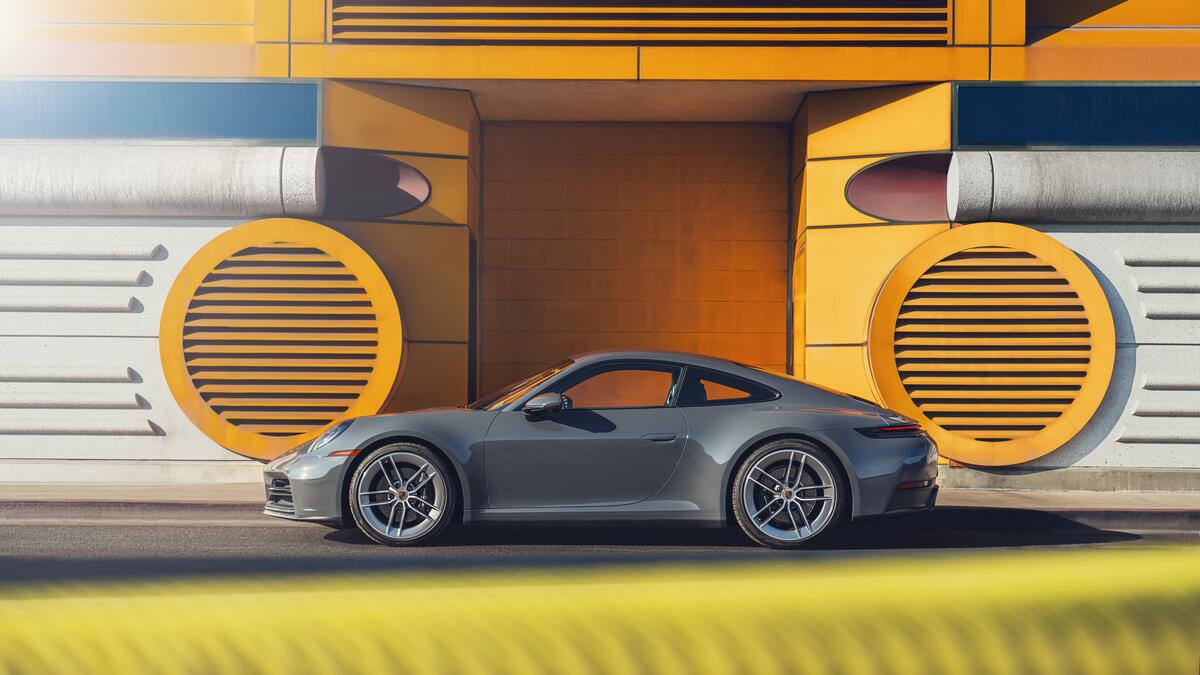
3.2 Carrera
"And if you're looking at the sort of 3.2 Carrera, that kind of era, like 80s, there seems to be a far more plentiful supply kicking around."
“3.2 Carrera” is a Porsche 911 from the 1980s with a 3.2-liter engine. It’s a common target for air-cooled Porsche fans, and the host says there seem to be more of them available for sale. That makes them easier to shop for than some other years.
The “3.2 Carrera” refers to the Porsche 911 Carrera with a 3.2-liter engine, from the 1980s era. This is a key air-cooled 911 milestone because it’s a popular, well-known configuration that many buyers target for long-term ownership. The host is specifically noting that this era has more cars available to buy compared with other periods.
service book
"And I was buying low kilometer, Shekheft service book, unfall free, accident free, and often first original paint."
A service book is the paperwork that shows when the car was serviced. It helps prove the car was maintained instead of neglected. The host is saying he looked for Porsches with good maintenance records.
A service book is the maintenance record booklet (or equivalent documentation) showing scheduled servicing over the car’s life. For older Porsches, a complete service history helps buyers judge how well the car was cared for and can support higher resale value. The host pairs it with “low kilometer” and “accident-free” to describe the kind of cars he used to buy.
unfall free
"So a 3.2 Carrera would have been 10 years old at the very outside. And I was buying low kilometer, Shekheft service book, unfall free, accident free, and often first original paint."
“Unfallfrei” is German for “accident-free.” It means the car is claimed to have never had a crash (at least according to the paperwork). The host is saying he looked for cars with that kind of clean history.
“Unfallfrei” (often spoken as “unfall free”) is German for “accident-free.” In classic-car buying, it’s used to describe a vehicle that has not been in reported crashes. The host is using it as part of a checklist for low-mileage, well-documented Porsche examples.
first original paint
"And I was buying low kilometer, Shekheft service book, unfall free, accident free, and often first original paint. What's that in German?"
“First original paint” means the car still has its factory paint, not a repaint. Many classic-car buyers prefer original paint because it can suggest the car hasn’t been heavily repaired. The host is saying he often looked for that when buying Porsches.
“First original paint” means the car still has its original factory paint rather than being repainted. For classic cars, original paint is often valued because it can indicate fewer body repairs and better preservation of the car’s condition. The host mentions it alongside accident-free and low mileage as part of a desirable acquisition profile.
first original lacquer
"What's that in German? I don't know. First original, I think it was a first original lacquer."
“Lacquer” is the protective paint/clearcoat layer on older cars. “First original lacquer” means it’s the original factory finish, not something that was redone later. Collectors often prefer that because it can mean the car hasn’t been repainted.
“Lacquer” refers to the clear/paint coating system used on many older cars, especially in European production. Saying “first original lacquer” implies the car is still wearing its original factory finish rather than later refinishing. This matters to collectors because original coatings can be easier to verify and often command a premium.
magnesium motor
"I like the sound of the motor being a magnesium motor. I like the delicacy of it."
This means the engine has parts made from magnesium, a lightweight metal. Lighter parts can help the engine feel more responsive and smooth.
A “magnesium motor” means the engine uses magnesium components, which are lighter than many alternatives. Adrian is describing how that contributes to the engine’s feel and “delicacy,” which enthusiasts often associate with quicker response and a more refined character.
1980 SC Coupe
"I've got a 1980 SC Coupe, which is my first Porsche. So I feel like I'm a bit of a newbie still."
This is a 1980 Porsche 911 SC in a coupe body style. Since it’s air-cooled, the owner is asking about the best way to warm it up and whether to let it idle before driving.
A 1980 Porsche 911 SC Coupe is an air-cooled 911 variant known for being a relatively straightforward, durable entry point into the classic air-cooled world. In this segment, it’s the owner’s first Porsche, and the discussion quickly turns to how to warm up and drive an air-cooled car correctly.
water cooled car
"And silly things kind of bother me like the correct way of warming up an air cooled car versus a water cooled car, which you've got a nice temperature gauge totally exactly where you are."
A water-cooled engine uses coolant (liquid) to carry heat away from the engine. The host is comparing how that changes the warm-up process versus an air-cooled engine.
A water-cooled car uses a liquid coolant system to move heat away from the engine, typically through a radiator and thermostat. Adrian contrasts this with air-cooling to highlight why temperature behavior and warm-up routines can feel different between the two designs.
temperature gauge
"which you've got a nice temperature gauge totally exactly where you are. And things like do you run it straight away or do you let it sit an idle?"
This is the dashboard gauge that tells you how hot the engine is. It helps you know when the car is warmed up enough to drive normally.
A temperature gauge indicates the engine’s operating temperature so the driver can judge when it’s warmed up enough for normal driving. In air-cooled cars, temperature management is especially important because heat-up and cooling behavior can differ from water-cooled setups.
idle
"And things like do you run it straight away or do you let it sit an idle? What would be your advice for a man of 2000 in the background?"
Idle means the engine is running while you’re stopped. The listener is asking whether letting it idle helps the engine warm up properly before driving.
Idle refers to running the engine while the car is stationary, typically at low RPM. The question here is about whether idling helps an air-cooled engine reach a safe operating temperature before driving.
oil temperature
"And I wouldn't drive it hard until I got oil temperature on it. But I would just drive it because they're designed to work best whilst they're moving along the road."
Oil temperature is how warm the engine oil is when the car is running. Warm oil lubricates the engine better than cold oil. That’s why you should drive gently until it’s warmed up.
Oil temperature is how hot the engine oil gets while the car is running. For air-cooled engines, getting the oil up to a proper operating temperature helps lubrication and reduces wear. It’s why the host suggests driving until the oil temperature comes up before pushing the car.
running it way too rich
"It's probably at idle where the things are not running at their cleanest. You know, so it might be, you might be running it way too rich."
“Too rich” means the engine is getting too much fuel compared to air. That can make combustion less clean, especially when the car is idling. Driving helps the engine use a more appropriate fuel mixture.
Running “too rich” means the engine is getting more fuel than ideal for the amount of air. That can happen at idle on older setups, leading to less efficient combustion and potentially more soot or deposits. The host links this to why idling can be “not running at their cleanest.”
heater channels
"Don't drive it too much above 3000 revs and have the heater channels open. And once you feel the hot air coming through, it's ready to go."
Heater channels are the ducts that move warm air from the engine area into the cabin. Opening them helps the car warm up and brings heat to the occupants. It’s a practical tip for air-cooled cars.
Heater channels are the air passages/ducting in an air-cooled Porsche that route heated air to the cabin. Opening them lets hot air reach the heater outlets, which is especially important for warming the car in colder weather. The host’s tip is to open them while keeping revs down so the engine warms up properly.
on-off boost
"And yeah, it represents not only is it great to drive, lovely seats, your on-off boost, but that would probably be my choice over and above 3-liter, 74 RS, probably above a 73 RE."
“On-off boost” is how turbo power can feel when you quickly go from no throttle to more throttle. Instead of building smoothly, boost can come in more suddenly. That can make the car feel punchy or a bit abrupt.
“On-off boost” describes the abrupt change in turbo boost as you move from throttle off to throttle on. In some turbocharged setups—especially older ones—this can feel like a noticeable surge or jerk rather than smooth, linear power delivery. The host is using it as a characteristic feel of the car’s turbo behavior.
martini
"and then they're just terrifying cars [2311.9s] and we built a world-class martini that was just a delight. [2319.3s] It was just so nice, you know, it was a real occasion driving it."
“Martini” is a racing-style paint scheme associated with Porsche motorsport. In this context, it’s about the car’s look and vibe, not a performance part.
“Martini” here refers to the classic Martini Racing livery theme—white body with blue/red striping—associated with Porsche motorsport branding. The host is describing a specific car’s presentation and how that makes it feel like a “real occasion” to drive.
brakes
"but it was an absolutely gorgeous thing to drive. [2336.4s] We didn't drive it fast enough to worry about the brakes. [2339.9s] Well, that was the one Ian Harris found in the garden."
They’re talking about the car’s stopping system. The point is that they didn’t drive it aggressively enough to really test how strong the brakes were.
“Brakes” is mentioned in the context of whether the driver needed to worry about stopping power. The host is basically saying the car felt composed enough that they didn’t push it hard enough to stress the braking system.
polybursts
"So, before people rush off and put modified suspension on and polybursts and things like that, when you get an original car or one that's in original spec with a rear-wheel drive,"
It sounds like he means polyurethane bushings. They replace the rubber parts in the suspension to make the car feel tighter, but they can also make the ride a bit harsher.
“Polybursts” is almost certainly a reference to polyurethane bushings. Polyurethane suspension bushings are stiffer than the original rubber, which can sharpen steering feel but may transmit more vibration and harshness into the cabin.
original spec
"when you get an original car or one that's in original spec with a rear-wheel drive, original components on the suspension and it's all in good condition, it's a joy."
“Original spec” means the car is basically as it left the factory. He’s saying that if the original parts are in good condition, it can be more enjoyable and predictable than heavily modifying it.
“Original spec” means the car is kept close to factory configuration—original suspension components and settings rather than aftermarket changes. The idea is that a well-sorted, unmodified setup can deliver predictable handling and a more authentic driving experience.
dampers
"So, you know, dampers, bushes, alignment."
Dampers are the shock absorbers that control how quickly a suspension compresses and rebounds. Upgrading dampers can reduce body motion and improve ride/handling balance, especially when paired with fresh bushes and correct alignment.
bushes
"So, you know, dampers, bushes, alignment."
Bushes are the flexible parts in the suspension that help the wheels move smoothly. When they wear out, the car can feel loose or vague, especially when turning.
Suspension bushes are rubber (or polyurethane) components that allow controlled movement while isolating noise and vibration. Worn bushes can loosen handling and steering feel, so replacing them is a common “refresh” on older cars.
alignment
"So, you know, dampers, bushes, alignment."
Alignment is adjusting the angles of the wheels. If it’s off, the car can pull, feel less precise, and wear tires faster.
Alignment refers to setting the suspension angles—commonly camber, caster, and toe—so the tires track correctly. Proper alignment improves steering response, tire wear, and overall stability, especially after suspension work.
tyres
"And then it would be tires. And then it's all the other stuff that you might want to do."
Tyres are the tire contact patches that ultimately determine grip. He’s pointing out that modern tire compounds and tread designs provide much better traction than older tires, which can noticeably improve everyday drivability.
bigger wheels
"Is there any value in putting bigger wheels on the back of a car to actually make it too grippy, almost, and you lose some of the balance of how it drives?"
“Bigger wheels” usually means using larger wheel sizes and matching tires. That can change grip and handling, but if you don’t choose the right tire and fitment, the car can feel less balanced.
Putting bigger wheels usually means increasing wheel diameter and often changing tire size to match. The goal is often to change how the car grips and how the steering and suspension feel, but it can also upset balance if the tire and wheel setup isn’t right.
grip
"Is there any value in putting bigger wheels on the back of a car to actually make it too grippy, almost, and you lose some of the balance of how it drives?"
Here “grip” means how much traction the tires have. Better grip helps the car stick to the road when turning, braking, or accelerating.
In this context, “grip” means tire traction—how well the tire can transfer acceleration, braking, and cornering forces to the road. It’s strongly influenced by tire compound, tread design (slick vs treaded), and tire width/fitment.
tarmac rallies
"So I compete with one in Europe on tarmac rallies. And I think I can just about grish a 275 slick under the rear arches with a special offset on the tyre."
Tarmac rallies are rally races on paved roads. Tires behave differently on pavement than on gravel, so choosing the right tire is a big deal.
Tarmac rallies are rally events run on paved roads rather than gravel or dirt. Tire choice matters a lot because grip levels, heat buildup, and wear patterns differ from other rally surfaces.
275 slick
"And I think I can just about grish a 275 slick under the rear arches with a special offset on the tyre."
A “275 slick” is a very grippy race-style tire that’s about 275 millimeters wide. Slick tires have almost no tread, so they grip hard on dry pavement.
A “275 slick” refers to a slick tire that’s 275 mm wide. Slicks are built for maximum dry-road grip because they have little to no tread, and the width strongly affects contact patch size and rear traction.
special offset
"And I think I can just about grish a 275 slick under the rear arches with a special offset on the tyre."
“Offset” is how the wheel sits relative to the car—toward the inside or outside. Changing offset can help fit a wider tire under the fenders without it hitting anything.
Wheel offset is how far the wheel mounting surface sits inboard or outboard relative to the wheel’s centerline. A “special offset” is used to fit a wider tire under the arches without rubbing, while keeping the tire positioned correctly for handling.
Pirelli piece sevens
"Scotty at basketball tonight went round about the houses because the original, this was for the nine, a 3.3, they came with the Pirelli piece sevens and they'd be done by the advertising authority now because there are anything but gripping stuff."
Pirelli is a tire brand. The speaker is saying their car originally came with a particular Pirelli tire model, and that it didn’t last or grip as well as they wanted.
Pirelli is a tire brand, and “Pirelli piece sevens” refers to a specific Pirelli tire model the speaker says came on the car. The point is that tire model choice affects grip and longevity, especially in motorsport or spirited use.
Michelin's
"And we put Michelin's on and I forget off the top of my head exactly why that."
Michelin makes tires. The speaker is comparing Michelin tires to the earlier tires and suggesting the Michelin set worked better for grip/performance.
Michelin is a tire brand. The speaker contrasts the original Pirelli tires with Michelin tires, implying the Michelin option provided better grip or performance for their use case.
wet
"I mean, it gave me so much confidence into the corners and particularly in the wet as well, lag accepted."
They’re talking about driving on a rainy road. The tires and how the car flexes can make it feel safer and more predictable when it’s wet.
Here, “wet” refers to how an air-cooled Porsche’s tires and chassis grip when the road surface has water on it. Tire choice and sidewall stiffness can change how quickly the car responds and how confidently it turns in the rain.
compliance
"And I think you want to think about the compliance to the tyre as well, because that's going to affect the way that the car feels and drives and how it communicates with you."
“Compliance” here means how much the tire gives and flexes over bumps and during cornering. That affects whether the steering feels sharp and confident or soft and less precise.
In this context, “compliance” is how much the tire (and its sidewall) flexes and absorbs road forces. More or less compliance changes steering feel, how the car loads up in corners, and how the car “communicates” grip to the driver.
stiff sidewall
"So most people if they're not, you know, an option is a slightly more competition orientated tie in like an advent or something like that, because they got a really stiff sidewall."
A “stiff sidewall” tire doesn’t bend as much when you turn or load it. That usually makes the car feel more responsive and predictable, instead of vague or wobbly.
A “stiff sidewall” means the tire’s sidewall construction resists flexing under load. Less sidewall squirm usually makes steering response sharper and helps the car communicate grip more clearly—especially important on air-cooled Porsches where tire choice strongly affects how the chassis feels.
tire specification
"And that's part of this end rated tire specification. It's it's how stiff the car is on the rear, because the air cools really push that."
“Tire specification” means the exact tire details the car expects, like the tire size and ratings. Using the right ones helps the car handle the way it was designed to, especially on an older air-cooled Porsche.
“Tire specification” is the exact tire setup a car is designed to run—size, load rating, speed rating, and construction details. On air-cooled Porsches, matching the correct specification matters because it changes compliance (how much the tire and sidewall flex) and therefore steering feel and stability.
heat cycles
"But how much trads on them is irrelevant is really how how many heat cycles they've been through and how how much UV they've suffered."
Tires get hot when you drive and then cool down again. The number of times that happens—heat cycles—matters because it ages the rubber and can make the tire less grippy even if it hasn’t been driven much.
A tire’s “heat cycles” are the repeated rounds of heating up and cooling down as you drive. Even if a classic only covers a small number of miles, lots of heat cycles (and the resulting aging) can still reduce grip and make the rubber feel hard or lifeless.
UV
"But how much trads on them is irrelevant is really how how many heat cycles they've been through and how how much UV they've suffered."
Sunlight can slowly break down the rubber in tires. Even if the car doesn’t get driven often, UV exposure can make the tire hard and less safe.
UV (ultraviolet) exposure is sunlight-driven aging of rubber compounds. Tires can degrade from UV even when they’re not being driven much, which is why old tires on classics can feel like “concrete” and lose grip.
911 930S
"They're happy to be honest. So on the subject to 930s, just for anyone else who has got a question to a..."
“911” means the Porsche model line that includes different versions of the same basic sports car. Some versions are more performance-focused than others, and people often talk about those differences. The podcast is likely clarifying which 911 variant someone is asking about.
“911” in this context refers to the Porsche 911 family, including performance variants that enthusiasts compare and discuss. The mention of “930s” suggests the conversation is about specific 911 generations/trim levels and how they relate to the broader 911 lineup. This kind of topic often comes up when answering questions about which 911s are being discussed and what differentiates them.
barn of about 339 turbos
"And I just like to know who's got a barn of about 339 turbos, you know. I think I think a lot of them were bought by sort of quite serious collectors and you"
They’re not talking about an actual barn; they mean a big private stash/collection. The point is that there aren’t many of these cars around, so they’re hard to find.
The host is using “barn” as a metaphor for a large private collection count—here, roughly “339 turbos.” In context, it’s about how few of these cars exist and how that rarity affects who owns them.
cars that have had an awful lot of money chucked at them
"But it does seem to me that cars that have had an awful lot of money chucked at them and bearing in mind the cost of labor, parts and the VAT and everything,"
They mean a car that’s been heavily worked on—repairs, upgrades, or restoration. The idea is that if a previous owner spent a lot to make it right, it can still end up feeling like a good deal.
This refers to heavily invested-in cars—typically meaning extensive restoration, upgrades, or refurbishment. The host connects that spending to why such cars can look like “good value” even after accounting for labor and parts costs.
VAT
"But it does seem to me that cars that have had an awful lot of money chucked at them and bearing in mind the cost of labor, parts and the VAT and everything,"
VAT is a tax that gets added to many purchases and services. In car terms, it can significantly increase the total cost of repairs and parts.
VAT (Value-Added Tax) is a consumption tax added to goods and services, including car purchases and many repair/parts invoices. The host mentions it to explain why the total cost of ownership and refurbishment can be much higher than the sticker price.
donor
"[3116.4s] I don't know what as the price of the base car or the donor and I'm not talking about [3122.6s] a resto mod. [3123.9s] The donor goes up and the price of the works is going up."
In Porsche restoration and modification projects, a donor is the car used as the parts source. The donor’s condition and cost directly affect the total project budget because parts availability and labor both depend on what the donor provides.
resto mod
"[3116.4s] I don't know what as the price of the base car or the donor and I'm not talking about [3122.6s] a resto mod."
A restomod is an older car that gets fixed up and then improved with newer parts or tech. It’s usually meant to make the car easier to drive and more dependable, not just return it to stock.
A restomod is a classic car that’s restored and then modified with modern upgrades (often for drivability, reliability, or safety). In this discussion, the host contrasts it with other kinds of projects where the donor and labor costs rise without necessarily aiming for a full modernized build.
compromised car
"[3152.2s] But one of the challenges with the sales guys there is that they had to learn that there's [3159.9s] a marketplace for what Paul and I would know as a compromised car, a car that we both [3168.1s] criticize really easily."
A compromised car is a car that isn’t perfect—maybe it has damage, rough cosmetics, or past repairs. But it can still be safe to drive and worth improving gradually.
A compromised car is one that isn’t in pristine, concours-level condition—often with cosmetic issues, prior repairs, or incomplete restoration—but is still functional. The host argues that these cars can still be safe and reasonably reliable, and they open the market to buyers who want to improve the car over time.
marketplace
"[3152.2s] But one of the challenges with the sales guys there is that they had to learn that there's [3159.9s] a marketplace for what Paul and I would know as a compromised car, a car that we both [3168.1s] criticize really easily."
In this context, marketplace just means there are buyers and sellers trading these cars. Even if a car isn’t perfect, people still want them and will fix them up.
Here, marketplace refers to the buyer-and-seller ecosystem for imperfect or partially restored cars, not just brand-new vehicles. The point is that demand exists for cars that are “good enough” to drive and improve, which changes how pricing and sales strategies work.
Tuthill
"I was at Merlin at Duke of London had a Tuthill build... It was gone... the Tuthill name now is synonymous with various things that sort of ended the market."
Tuthill is a company known for building and tuning Porsche cars, especially air-cooled projects. The host is using the Tuthill name to show how a branded build can be extremely desirable—and expensive—because people want that specific work.
Tuthill is a well-known Porsche-focused tuner and builder associated with air-cooled-era conversions and performance builds. In this segment, the host mentions a “Tuthill build” to explain why certain branded builds can command very high prices and disappear quickly from the market.
air cool car
"Well, Lee, I mean, just look at where, you know, little Irish is figure is and an air cool car will be the same."
An “air-cooled” engine runs cooler using airflow over the engine parts, not coolant in a radiator. The host is talking about air-cooled Porsche projects where the engine work is a big part of why these cars cost so much.
“Air-cooled” describes an engine design that relies on airflow over the engine to remove heat instead of using liquid coolant. The host is using this to frame the pricing and parts economics of an air-cooled Porsche build, where engine and conversion work can dominate the cost.
residual
"Yeah, if somebody's asking 100 grand, there's set 25 grand to the engine where there's probably 35 grand with the bodywork, where you ain't been getting a donor car for that residual."
“Residual” is about what a car is still worth later, after you buy it. The host is saying that when someone prices a Porsche build at a high number, a lot of that price is really paying for expensive parts (like the engine and bodywork), so you don’t get as much value from buying a cheaper base car.
In car buying, “residual” refers to the remaining value a car is expected to hold after purchase—often discussed as residual value. Here, the host is arguing that if a seller asks around 100 grand, a big chunk of that price is effectively “locked” into the engine and bodywork costs, leaving less room for the buyer to benefit from a cheaper donor car.
WRC
"[3455.9s] And he drove it down to see the WRC in Monte Carlo. [3462.4s] Wow. [3463.3s] So he took it through the Alps and, you know, 100,000 mile 993."
WRC means the World Rally Championship, a major international rally racing series. It’s the kind of event where cars race on twisty roads over different surfaces.
WRC stands for World Rally Championship, the top-level international rally series run on closed public roads and mixed surfaces. The segment references driving the car down to see the WRC in Monte Carlo, tying the car to rally culture and events.
Monte Carlo
"[3455.9s] And he drove it down to see the WRC in Monte Carlo. [3462.4s] Wow. [3463.3s] So he took it through the Alps and, you know, 100,000 mile 993."
Monte Carlo is a well-known place on the French Riviera. It’s also associated with big motorsport events, which is why rally fans mention it.
Monte Carlo is a famous location on the French Riviera, strongly associated with high-profile motorsport events. In this segment, it’s mentioned as the place where the WRC was being seen, linking the story to rally heritage.
Porsche 993
"Wow. [3463.3s] So he took it through the Alps and, you know, 100,000 mile 993. [3467.4s] That doesn't look like it being looked after. [3470.0s] But, you know, cosmetically, very unusual owner, you know, but so we just had that turn off."
The Porsche 993 is a specific generation of the 911 that’s famous because it’s the last air-cooled 911. People really care about it, and the discussion here is about how more buyers are starting to want them.
The Porsche 993 is the last air-cooled generation of the 911, and it’s a big deal for enthusiasts because it represents the end of the classic rear-engine, air-cooled era. In this segment, the hosts discuss how the market spotlight is shifting toward 993s as buyers pay more attention to them.
G series cars
"[3487.8s] I think that the spotlight's definitely gone on to the G series cars, and it's also beginning [3497.5s] to illuminate 993s better."
“G series” is a way enthusiasts refer to an older generation of the Porsche 911. The point here is that people have been focusing more on those earlier cars, but interest in the 993 is growing.
“G series” refers to the Porsche 911 generation built from the early 1970s through the late 1980s (often called the G-body). The host is saying market attention has shifted toward these earlier 911s, while 993s are starting to get more spotlight.
3.2s
"[3506.9s] And we've sold a few 3.2s at a price that just makes my eyes water, but they've sold [3515.3s] at that and they've been really good cars. [3517.7s] So, you know, 70, 80, 90 for 3.2s."
“3.2s” means a Porsche 911 with a 3.2-liter engine. The host is saying people are paying a lot more for them than they used to.
“3.2s” refers to Porsche 911 variants with a 3.2-liter engine displacement, commonly associated with the late 1980s 911 Carrera. The host is discussing how these cars are selling at surprisingly high prices and how that affects buyer interest.
dross becomes correctly priced
"[3536.8s] I think that they need a big price adjustment, many of them. [3541.6s] And I think once that price adjusts and the dross becomes correctly priced, we might all [3550.0s] become more attracted to them once more."
“Dross” just means the worse, lower-quality cars. The host is saying that if the market stops overpricing the bad ones, more people will want the better ones again.
“Dross” here means lower-quality examples—cars that are overpriced relative to their condition or desirability. The host’s point is that once the market re-prices the weaker cars, buyers will feel more confident and interest in the whole category (Longbonnets) can rise again.
hot rods
"[3577.1s] at the moment in my view. [3579.3s] We've got a couple of hot rods coming. [3581.5s] They're longbonnet cars and these hot rods, fantastic, you know. [3586.3s] They got the lurk and, you know, they'll have some benefits to them."
Here, “hot rods” means cars that have been modified instead of kept stock. The host is basically comparing customized cars versus original, unmodified ones.
In this context, “hot rods” means modified cars—typically older models updated with performance and/or styling changes. The host contrasts these with “original” (unmodified) cars, implying different buyer motivations and market values.
longbonnet
"[3579.3s] We've got a couple of hot rods coming. [3581.5s] They're longbonnet cars and these hot rods, fantastic, you know. [3586.3s] They got the lurk and, you know, they'll have some benefits to them. [3594.1s] But original cars, I think there's, or, you know, standard cars, I think there's quite"
“Longbonnet” is a nickname for older Porsche 911s with a longer-looking hood. The idea is that it changes how the car feels and how you experience the driving—more “in the moment” and connected.
“Longbonnet” describes a classic front-end proportion where the hood/bonnet is visually longer, which is strongly associated with older 911 styling. On a longbonnet car, the driver’s perception of balance and steering feel can be more “connected,” and the host links that to the sensation of driving at low speed.
supply and demand
"[3601.0s] You know, 2.2s, you know, if they expected a 2.2s to be like 150 to 200, that's changed [3612.8s] a lot. [3614.6s] It's always supply and demand, isn't it, Lee? [3617.0s] It's, you know, who wants a green 996?"
“Supply and demand” just means prices move based on how many cars are available versus how many people want them. If lots of people want a certain kind of car (or color), it tends to cost more.
“Supply and demand” is the market mechanism that drives pricing: if fewer cars are available and more buyers want a specific variant, color, or condition, prices rise. The host applies it directly to Porsche 911 buying decisions (e.g., who wants a particular color).
rust
"[3624.9s] I love green. [3628.9s] Yeah, it's more rust at the moment, but that's fine. [3632.2s] Yeah, I mean, they are fantastic cars and my big takeaway of a longbonnet is they're [3639.1s] just gorgeous to look at for me."
“Rust” means corrosion—metal getting eaten away over time. On older cars, rust can be a big deal because it can lead to costly repairs, not just a bad look.
“Rust” is a major ownership and buying concern for older cars because it can affect structural parts and bodywork, often turning cosmetic issues into expensive repairs. The host ties green paint preference to the idea that certain cars may show more rust exposure or history.
thin rim
"[3632.2s] Yeah, I mean, they are fantastic cars and my big takeaway of a longbonnet is they're [3639.1s] just gorgeous to look at for me. [3641.2s] It really is art on wheels and there's a real, yes, the same thing can be said of a G-model, [3648.9s] but, you know, you're driving a longbonnet car with a thin rim. [3652.8s] You can feel everything that's going along at 35 miles an hour."
A “thin rim” is a steering wheel that’s slimmer than usual. A slimmer wheel can make the steering feel more direct, and the host says it adds to the overall driving “event.”
“Thin rim” refers to a steering wheel rim with a smaller cross-section, which can change how the driver feels the car’s inputs. The host links this setup to the sensation of driving a longbonnet car at low speed, emphasizing tactile feedback.
G-model
"[3639.1s] just gorgeous to look at for me. [3641.2s] It really is art on wheels and there's a real, yes, the same thing can be said of a G-model, [3648.9s] but, you know, you're driving a longbonnet car with a thin rim. [3652.8s] You can feel everything that's going along at 35 miles an hour."
“G-model” is a nickname for an older Porsche 911 generation. The host is comparing that older 911 feel and look to the longbonnet cars they’re talking about.
“G-model” is shorthand for the Porsche 911 G-Series (roughly the 1970s into early 1980s), known for its classic proportions and long-running air-cooled identity. The host uses it as a comparison point to longbonnet cars, suggesting a similar “feel” and visual character.
impact bumper
"But the impact bumper cars have taken a lot of that limelight at the moment. And, yeah, even, you know, on non-much radio, we're perhaps guilty of it."
An “impact bumper” is a bumper design meant to meet crash-safety rules. It can change how the car looks, and that’s why enthusiasts sometimes debate whether it makes the car less or more desirable.
“Impact bumper” refers to the federally mandated bumper designs used on many cars in the late 1960s through 1970s/early 1980s to improve crash protection. On classic Porsches, these bumpers changed the exterior look, which is why people sometimes talk about them as affecting the “limelight” compared with earlier styling.
C2 coupes
"964s have risen considerably, especially coupes, C2 coupes. It's the beauty of having a Porsche is that if you've got a good car that, for me, a good"
“C2” is Porsche shorthand for the rear-wheel-drive 911. Adrian is talking about the coupe version of that rear-wheel-drive setup, and how those cars are getting more expensive.
“C2” is Porsche shorthand for a 911 with rear-wheel drive (as opposed to the all-wheel-drive “C4” variants). When Adrian says “C2 coupes,” he’s pointing to a specific drivetrain/trim combination within the 964 generation that he believes is seeing strong value growth.
2.2 T
"And if they do that to me and then they work nicely, I don't mind if it's a 130 horse 2.2 T or 400 horse modified 930 or something. It still makes me feel great, you know."
“2.2 T” is a Porsche 911 with a 2.2-liter engine, and “T” is a trim name Porsche used on some classic 911s. Adrian is saying even a smaller/less powerful version can still be great if it’s in good shape.
“2.2 T” refers to a Porsche 911 with a 2.2-liter engine and the “T” trim designation (typically meaning a more performance-oriented, less luxury-focused spec than base models). Adrian uses it as an example of a lower-power classic that can still be satisfying if it looks right and drives well.
hype and pump
"Just on your long bonnets, I think one of the issue I agree with you, I think that there's been a lot of hype and pump on the long bonnets and people selling mediocre cars at inflated prices."
“Hype and pump” means people build excitement to push prices higher. The host is basically saying don’t assume a high price means the car is actually great.
“Hype and pump” describes market behavior where attention and excitement are used to drive prices up, often faster than the underlying quality or value. Here, the host connects it to inflated pricing and warns buyers to be extra careful in that era.
generations coming through
"But you've always got in markets to look at the generations coming through. And I touched on the fact is that the shape of the 911 allows it to go back..."
“Generations coming through” refers to how buyer demographics and tastes shift over time, affecting which Porsche 911 eras become most desirable. The host ties this to long-bonnet cars struggling with newer buyers and suggests later generations are more likely to attract them.
hype is too much
"So I think that there is definitely a bit of a correction coming on those because the hype is too much."
They’re talking about how excitement and hype can push interest (and maybe prices) too far. Then, as people’s tastes change, the market can cool off and “correct.”
The speaker is describing a market cycle where “hype” drives prices or attention beyond what buyers actually want long-term. In this context, they suggest a correction because younger buyers move on to more complex cars as they age.

Porsche 356
"Can we ask you about that amazing 356 whatever build is Ruta build or that you've got?"
The Porsche 356 is one of Porsche’s earliest classic sports cars. It’s a big deal historically because it predates the 911 and helped define the brand. In this segment, someone is asking about a special 356 build that sounds impressive.
The Porsche 356 is the brand’s early sports car, best known as the model that helped establish Porsche’s reputation before the 911 era. Here, it’s referenced as an “amazing 356” build, implying a highly customized or special project.
restored properly
"Of course, it's got enough value in it to have been restored properly, but it took four or five years for restoration. And it's so difficult to get those right, especially the four cams. You know, the motor alone is probably a quarter of a million quid's worth."
“Restored properly” is about returning a classic car to correct, high-quality specifications rather than doing a cosmetic or shortcut rebuild. For collectible air-cooled Porsches, proper restoration details (including engine and valvetrain correctness) strongly affect both drivability and long-term value.
four cams
"Of course, it's got enough value in it to have been restored properly, but it took four or five years for restoration. And it's so difficult to get those right, especially the four cams. You know, the motor alone is probably a quarter of a million quid's worth."
“Four cams” means the engine uses multiple camshafts to control the valves. More camshafts usually means a more complex, more specialized engine setup—so it can be harder and costlier to restore correctly.
“Four cams” refers to a valvetrain layout where there are four camshafts controlling the engine’s valves. In air-cooled Porsche engines, camshaft count and configuration are a big part of how the engine breathes and how specialized (and expensive) the build and restoration can be.
hold a good value
"I mean, I don't want to use it because it's so precious. But yeah, that I think that something like that is always going to have hold a good value. It's so rare."
“Hold a good value” means the car tends to keep its price instead of getting cheaper quickly. The host suggests that rarity and the difficulty of restoring these cars correctly help support that.
“Hold a good value” is a shorthand for strong residual value—how well a car retains its price over time. The host ties this to rarity and the cost/complexity of doing a correct restoration on a classic Porsche.
depreciation
"So concentrate on that and don't go worrying about your depreciation so much. [4195.5s] So buy something that lights up your heart and buy it with as much transparency as you can shine on it."
“Depreciation” means the car’s value going down over time. The host is saying that with a classic Porsche, you shouldn’t let value changes distract you from buying the right car.
“Depreciation” is the loss of a car’s value over time. The host’s advice is that for certain vintage Porsches, the emotional and practical enjoyment can matter more than obsessing over how the market value might move.
transparency
"So concentrate on that and don't go worrying about your depreciation so much. [4195.5s] So buy something that lights up your heart and buy it with as much transparency as you can shine on it."
Here, “transparency” means the seller should be honest and clear about the car’s condition and history. That helps you avoid buying something that has problems you didn’t know about.
In classic-car buying, “transparency” means being fully open about the car’s history, condition, and known issues rather than hiding uncertainties. The host ties it to reducing the risk of paying money without understanding what you’re actually getting.
cosmetics
"Then you can worry about cosmetics later. [4293.5s] Sound advice, Adrian. Sound advice."
“Cosmetics” means how the car looks—paint, interior, and other visible stuff. The advice here is: make sure it runs and works properly before spending time or money on appearance.
In car buying, “cosmetics” refers to the visible condition—paint, trim, interior appearance, and surface-level details. The host’s point is to prioritize mechanical correctness first, then address looks later.
Williams Corford
"Then we did that walk around the showroom at Williams Corford for a toy shop tour and the knowledge that was being summoned from you left me in awe. [4309.0s] So I think you're doing yourself a disservice there personally. You definitely know your stuff."
Williams Corford is a car showroom the host mentions visiting. It’s included here because it’s where they looked at a Porsche in person and discussed what to learn when shopping.
Williams Corford is referenced as a showroom location where the hosts did a walk-around. It’s relevant only as a specific place tied to the episode’s discussion of learning about a classic Porsche’s details in person.
930 turbos
"It's just worth touching on just a quick topic that we mentioned earlier on on the regularity of which we see 930 turbos. Our resident research King Johnny, it would seem, has found that it's approximately 21 to 23,930s were produced between 75 and 89."
Porsche’s “930 Turbo” is the classic 911 Turbo from the 930 generation. People care about it because it’s a famous air-cooled turbo 911, and how many were built affects how rare and collectible it feels.
“930 Turbo” is the Porsche 911 Turbo (930 generation), named for the classic air-cooled 911’s turbocharged era. It’s a highly sought-after model, and production numbers are often used to gauge how common or rare specific years and variants are.
Request an Explanation
Heard something you'd like explained? We'll add it to this episode.
Sign in to request explanations for terms you heard.
Want to learn more?
Browse our glossary for plain-English explanations of automotive terms, jargon, and concepts.
Help improve this episode
See something that's not quite right? Our annotations are AI-generated and can sometimes miss the mark. Click the flag icon on any annotation to suggest a correction.