
Better Than a classic 911? The Ultimate Porsche 356 Deep Dive
About this episode
A road-trip and showroom deep dive into the Porsche 356 turns into a broader debate about what makes early Porsches feel “right.” The hosts compare 356s to 911s (and even Type 3s and Beetles), talk about how setup, alignment, tires, and seat choice change the experience, and describe the 356’s “sweet spot” after 15–20 minutes. Between driving impressions, they also share real-world roadside and ignition troubleshooting, plus club culture and buying/restoration advice.
Is the original Porsche actually the best? In this episode of 9WERKS Radio, Lee Sibley and Andy Brookes embark on a total deep dive into the Porsche 356.
To truly understand the DNA of the brand, we get behind the wheel of both road and race-prepared 356s to see how 70-year-old engineering handles the pace of 2026. Is it a fragile relic, or the most rewarding analog experience money can buy?
In this episode, we explore:
- Track vs. Tarmac: Driving the lightweight race versions vs. the refined road icons.
- The Specialist's View: We sit down with Philip Raby to discuss the current 356 market, what to look for when buying, and why these cars are becoming the "smart money" alternative to early 911s.
- Living the Dream: A member of the Driven Not Hidden Collective gives us the unfiltered owner's perspective on maintenance, reliability, and the joy of long-distance 356 touring.
Whether you're a seasoned 356 aficionado or a 911 purist looking for a new challenge, this is the definitive guide to Porsche’s first sports car.
Find your dream Porsche on the 9WERKS Marketplace: 9werks.co.uk/marketplace
Thanks to our friends heritagepartscentre.com for sponsoring this podcast, get up to 10% off your basket by entering the code ‘9WERKS10’ at the checkout on heritagepartscentre.com
‘9WERKS Radio’ @9werks.radio is your dedicated Porsche and car podcast, taking you closer than ever to the world’s finest sports cars and the culture and history behind them.
The show is brought to you by 9werks.co.uk, the innovative online platform for Porsche enthusiasts. Hosted by Porsche Journalist Lee Sibley @9werks_lee, and 911 owner and engineer Andy Brookes @993andy, with special input from friends and experts around the industry, including you, our valued listeners.
If you enjoy the podcast and would like to support us by joining the 9WERKS Driven Not Hidden Collective you can do so by hitting the link below, your support would be greatly appreciated.
planted
"But yeah, that second one, it did get up and go and felt more planted, didn't it? [106.4s] Yeah."
When someone says a car feels “planted,” they mean it feels steady and confident, like the tires are gripping well. It doesn’t feel loose or wobbly when you drive it.
“Planted” is enthusiast shorthand for a car that feels stable and well-supported at speed—less floaty and less likely to feel like it’s moving around unpredictably. It usually points to suspension tuning, chassis stiffness, and how the tires maintain grip.
steer from the back end
"it sort of felt like it needed a little bit of the back end settled a bit more. [117.4s] It wanted to steer from the back end. [119.6s] One's a looker, one's a goer."
This phrase means the back of the car seems to help you turn. Instead of only the front wheels steering, the rear feels like it’s “participating” in the turn.
“Steer from the back end” describes a handling feel where the rear of the car contributes noticeably to direction changes. That can happen when the rear tires maintain grip and the chassis balance allows the car to rotate slightly, rather than only the front tires doing the work.
CDI unit
"But thankfully, that was an electrical problem [383.2s] with nothing related to what I'd done to the car. [389.3s] Right, okay, yeah, yeah, yeah. [390.7s] I had a spare CDI unit, so I was very lucky to get back on the road straightaway."
A CDI unit is an electronic box that helps your engine make the spark that lights the fuel. If it fails, the engine may not start or may cut out, even if the rest of the car is fine.
A CDI unit (Capacitor Discharge Ignition) is an ignition module that creates the high-voltage spark used to ignite the air-fuel mixture in the engine. It stores electrical energy in a capacitor and then rapidly releases it to the ignition system when the engine needs a spark.
spark
"I was doing a bit of diagnosis and was thinking it was a fuel problem, [422.9s] and then, yeah, found that we didn't have a spark, [425.9s] and then it was like, oh, I think this could be CDI."
“Spark” is the electrical spark that lights the fuel in the engine. If there’s no spark, the engine won’t start because the fuel never ignites.
In an ignition system, “spark” refers to the high-voltage electrical discharge at the spark plug that ignites the air-fuel mixture. When there’s no spark, the engine can’t combust even if fuel delivery is fine.
A-pillar
"No way. I'm looking at an A-pillar that's about as thick as a fag paper."
The A-pillar is the metal post at the front of the car that holds up the windshield. It also helps keep the cabin rigid and safe in a crash.
The A-pillar is the structural support between the windshield and the front side window. It’s a key part of the car’s body structure and affects how stiff the cabin feels, especially in older designs where packaging and materials differ from modern cars.
Zuffenhausen
"Like, you know, when these cars are assembled on the production line at Zuffenhausen, you know, in your case,"
Zuffenhausen is the Porsche factory area in Germany. It’s where Porsche has historically built cars, so it’s part of the brand’s roots.
Zuffenhausen is Porsche’s historic manufacturing area in Stuttgart, Germany. When the hosts mention cars being assembled there, they’re pointing to the brand’s long-standing production heritage and the factory context behind classic Porsche builds.

Buick Century
"when that was being assembled on the production line by hand, you know, were they thinking, yeah, in half a century's time, Andy Brooks is going to be lighting up the M3."
The Buick Century is a mid-size car made by Buick. It was built for everyday driving and comfort, not for racing. The podcast mentions it in connection with how cars were assembled during that period.
The Buick Century is a mid-size American car that was produced for many years, including eras where assembly involved significant manual work on the production line. It’s discussed in automotive history because it represents mainstream, comfort-focused engineering from its time. In the podcast context, it’s brought up as part of a broader conversation about cars and their production era.
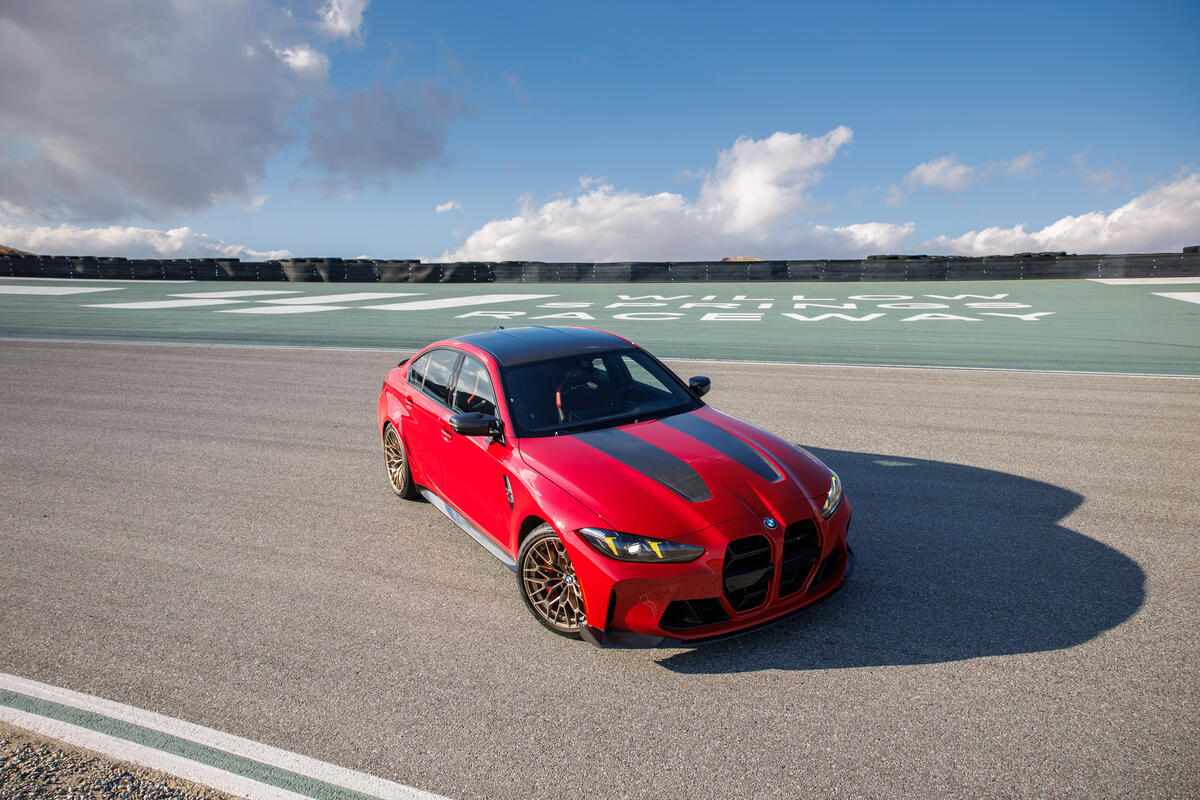
BMW M3
"... time, Andy Brooks is going to be lighting up the M3. And it's, you know, the car was just singing, wa..."
The BMW M3 is a high-performance version of a BMW 3 Series. It’s made to be faster and more fun to drive than a standard model. People talk about it because it’s built for performance, not just everyday commuting.
The BMW M3 is a performance-focused version of the BMW 3 Series, built to deliver strong acceleration, sharp handling, and an engaging driving experience. It’s often discussed in enthusiast circles because it’s designed as a “driver’s car,” and certain generations are especially celebrated. In the podcast context, it’s being highlighted as a car that sounds and performs impressively.
autobahn
"Yeah, the autobahn. Yeah, exactly. It was the autobahn of Peggy Pond."
The autobahn is Germany’s highway system. People talk about it because it’s famous for long-distance fast driving.
The autobahn is Germany’s highway network, known for long stretches where speed limits may not be posted. It’s often used by car enthusiasts as a reference point for high-speed stability, gearing, and engine/drivetrain smoothness.
revvy character
"[973.0s] I still got, it's a little revvy character, [975.8s] you know, that smaller capacity character, [979.4s] which I adore, I think, you know,"
“Revvy character” means the engine feels like it wants to spin up quickly. When you give it throttle, the rpm climbs eagerly and feels fun to drive.
“Revvy character” describes an engine that feels eager to rev and responds quickly as rpm rises. It’s usually associated with how the engine’s power delivery and internal design make it feel lively rather than sluggish.

Porsche Cayman
"my particular love is those 2.5s and 2.7 boxters [987.0s] and Caymans, and I think the 3.4 and the 9.6 [992.3s] has that same little, that little buzzy feel."
The Porsche Cayman is a mid-engine Porsche sports coupe. They’re talking about the smaller-engine versions because the engine feels exciting and “alive” when you rev it.
The Porsche Cayman is a mid-engine sports coupe built on the same general layout philosophy as the Boxster. Here, the discussion highlights the Cayman’s smaller-displacement engines (2.7 mentioned) for a “buzzy” sensation—an enthusiast way of saying the engine feels smooth and energetic as it revs.

Porsche Boxster
"which I adore, I think, you know, [981.7s] my particular love is those 2.5s and 2.7 boxters [987.0s] and Caymans, and I think the 3.4 and the 9.6 [992.3s] has that same little, that little buzzy feel."
The Porsche Boxster is a mid-engine Porsche roadster. They’re praising the smaller engine versions because the car feels lively as you rev it—more fun to drive than engines that only feel strong at low rpm.
The Porsche Boxster is a mid-engine roadster known for its compact size and driver-focused handling. In this segment, the hosts specifically mention the Boxster’s smaller-displacement engines (2.5 and 2.7 liters) for their “revvy” feel—meaning they’re fun because they like to spin up rather than just pull from low rpm.
buzzy feel
"[987.0s] and Caymans, and I think the 3.4 and the 9.6 [992.3s] has that same little, that little buzzy feel. [996.5s] Yeah, fantastic."
“Buzzy feel” means the engine gives you a noticeable vibration or texture as it revs. Some people love it because it makes the car feel more connected and alive.
A “buzzy feel” is an enthusiast description of an engine that transmits noticeable vibration or texture through the rev range. It often comes from how the engine and drivetrain resonate at certain rpm, giving the car a lively, mechanical sensation.
single mass flywheel
"And, you know, obviously, as a single mass flywheel has gone back in, kept the capacity, but, you know, those Carrillo Conrods are lighter than stock."
A flywheel is part of the drivetrain that helps smooth out engine power. A single-mass flywheel usually makes the car respond quicker when you press the gas, but it can feel a bit rougher or more vibrating.
A single-mass flywheel is a one-piece flywheel used in place of a dual-mass setup. Because it has less internal damping, it typically improves throttle response and reduces drivetrain “lag,” but it can also transmit more vibration into the cabin.
Carrillo Conrods
"And, you know, obviously, as a single mass flywheel has gone back in, kept the capacity, but, you know, those Carrillo Conrods are lighter than stock. We know this because we weighed it."
“Conrods” are the metal rods inside the engine that connect the pistons to the crankshaft. The host is saying the Carrillo version is lighter than the original, which can make the engine feel a bit quicker to rev.
Carrillo “conrods” are aftermarket connecting rods (the rods that link the pistons to the crankshaft). In this segment, the host says the Carrillo rods are lighter than the stock rods, which can reduce rotating mass near the crank and help the engine rev more freely.
200 cell cats
"So I've bolted these cheap, equal-length headers and 200 cell cats on them."
A catalytic converter cleans exhaust gases. The “200 cell” part describes how many internal channels it has, which can change how freely exhaust flows and therefore how the car sounds and feels.
“200 cell” refers to the cell density of a catalytic converter substrate (how many small channels it has per unit area). Higher cell counts generally flow better and can reduce exhaust backpressure, but they can also affect how loud or “raspy” the exhaust sounds compared with lower-cell designs.
equal-length headers
"So I've bolted these cheap, equal-length headers and 200 cell cats on them."
Headers are exhaust parts that route gases from the engine. “Equal-length” means the tubes are the same length, which can help the exhaust flow in a more even way and change the sound.
Equal-length headers mean the exhaust pipes feeding the collector are made to the same length. That helps the exhaust pulses arrive more evenly, which can improve scavenging and make the engine sound more consistent (often described as a cleaner, more “tuned” tone).
aftermarket exhaust options
"Not helped by the fact about five years ago, I've got 9996 years, all with different aftermarket exhaust options side by side."
Aftermarket exhaust parts are upgrades you buy instead of the factory exhaust. People choose them mainly to change the sound, and the host is saying it’s a personal preference.
Aftermarket exhaust options are non-factory exhaust systems or components (like headers, mufflers, and catalytic converters) chosen to change sound, weight, and sometimes power. The host is emphasizing that exhaust character is subjective and that they’ve tried multiple setups side-by-side before.
track day
"heading over to France to take part in the [1211.6s] Abbaville track day with Johan and the guys at Nine Level Motorsport, [1215.4s] which was phenomenal, by the way,"
A track day is an event where drivers take their own cars onto a closed circuit for practice and fun, usually with limited or structured on-track sessions. It’s different from racing because the focus is on driving experience, learning the car, and building confidence rather than competing for results.
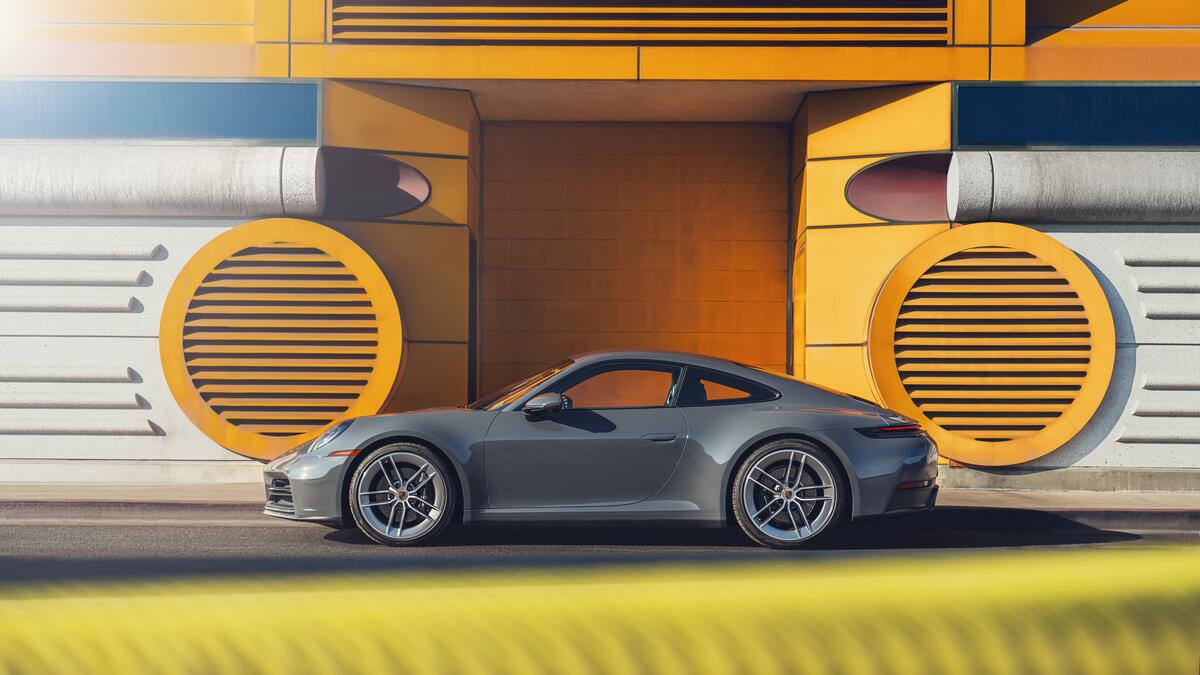
Porsche 911 GT3
"But obviously I took the GT3, [1223.9s] which was my first track outing in the GT3. [1227.2s] And to be honest, I was really glad that it was at Abbaville."
The Porsche 911 GT3 is a 911 made for track days. It’s tuned to be quick and fun on a circuit, and here the host is talking about learning the car on their first track outing.
The Porsche 911 GT3 is a track-focused version of the 911, built around high-performance aerodynamics and chassis tuning for circuit driving. In this segment, the host specifically discusses taking a GT3 to a track day as their first outing, and how the car’s modern drivetrain/shift setup changes the experience on a small circuit.
PDK
"It's a small technical track, [1234.4s] ideally suited to the older stuff or manuals. [1237.0s] A modern PDK RS is a waste of time on that track, in my opinion."
PDK is Porsche’s fast-shifting automatic transmission. It uses two clutches to change gears quickly, and the host is saying that on a small track it can make the driving feel less special than a manual.
PDK (Porsche Doppelkupplung) is Porsche’s dual-clutch automatic transmission. It can shift very quickly and keeps the engine in the right power band, which can make it feel less “involving” on certain small tracks compared with a manual gearbox.
tire pressures
"which took me a good morning to do [1248.5s] just to get tire pressures right and all the rest of it. [1254.1s] But, yeah, queuing up at Folkestone to get on the Euro tunnel."
Tire pressure is how much air is in the tires. On a track day, setting it correctly helps the tires grip better and behave more predictably as they warm up.
Tire pressures are the air pressure settings in the tires, which strongly affect grip, steering feel, and how the tire heats up during driving. On track days, getting pressures right helps the tires reach their best operating temperature and can improve consistency lap-to-lap.

Seagull
"...ight blue beautiful bodywork that it was. Without seagull poo marks. Yeah, exactly that."
A seagull is a bird. In the podcast, it’s mentioned because bird droppings can land on a car and make it look dirty. They’re saying the car’s bodywork is clean and not covered in that mess.
A seagull isn’t a car, but in the podcast context it’s being used as a humorous reference to a real-world problem: bird droppings. The mention is tied to the condition of a car’s paint or bodywork—specifically calling out the absence of seagull mess. It’s likely included to emphasize how clean or well-kept the vehicle looks.

Porsche 356
"Shall we move on to some 356 action? ... We've never covered 356s, per se, before on the podcast ... taking you on our journey ... through the day of driving a 356 for the first time."
The Porsche 356 is an early Porsche sports car. It’s famous for being light and fun to drive, and this episode is basically about why it’s such a big deal.
The Porsche 356 is Porsche’s early sports car, best known for its lightweight, air-cooled design and classic handling feel. This episode frames the 356 as a “deep dive” subject—contrasting it with later Porsche icons like the 911 and focusing on what makes the 356 special to drive and own.
day of driving a 356 for the first time
"We're hoping we're taking you on a journey, taking you on our journey, through the day of driving a 356 for the first time. So, there was a recording en route to Philip Rabie Specialist Cars, who had two 356s ready and waiting for us."
They’re setting up the episode like a guided experience—what it was like to drive a Porsche 356 for the first time. Think of it as the storyline for the rest of the discussion.
This is the episode’s planned structure: the hosts describe a first-time “day of driving” experience with a Porsche 356. It’s a narrative framing device for how they’ll compare impressions and expectations as the story unfolds.
Philip Rabie Specialist Cars
"There was a recording en route to Philip Rabie Specialist Cars, who had two 356s ready and waiting for us. There was a third in the showroom as well, I believe."
They mention Philip Rabie Specialist Cars as the place that had the Porsche 356s available for them to drive. It’s basically the specialist shop involved in the episode.
Philip Rabie Specialist Cars is referenced as the shop/location that arranged multiple Porsche 356s for the hosts to drive. In this context, it functions as the specialist dealer or collector providing the cars for the episode.
London to Sydney rally
"So, we drove a road and a race version, which had done the London to Sydney rally, among others, I think."
The London to Sydney rally refers to a long-distance motorsport event that historically tested cars over extreme distances and conditions. Mentioning that a “race version” Porsche 356 did the rally signals that it was prepared for endurance-style competition, not just showroom driving.
Porsche 911
"there's always been the sixth cylinder thing of the 911s, hasn't there?"
The Porsche 911 is Porsche’s famous sports car. It’s known for having a flat-six engine (six cylinders), which is what they’re hinting at when they say “the sixth cylinder thing.”
Porsche 911 is the brand’s iconic sports car, known for its rear-mounted flat-six engine layout. In this segment, the hosts contrast it with the Porsche 356 by referencing the “sixth cylinder thing,” which points to the 911’s flat-six configuration.
flat-six engine
"there's always been the sixth cylinder thing of the 911s, hasn't there?"
A flat-six is an engine with six cylinders arranged in a special horizontal layout. The Porsche 911 is famous for using this kind of engine, which is why they’re talking about the “sixth cylinder” aspect.
A flat-six is an engine with six cylinders arranged in two banks that lie horizontally in a “boxer” layout. In a Porsche 911, this flat-six is a key part of the car’s identity and helps explain why the hosts keep bringing up the “sixth cylinder thing.”
fully restored
"He's got a 3-5-6 that he's had a few years [1696.9s] that was fully restored by the guys, [1701.0s] not Williams Crawford, but the other guys that are in Devon."
When someone says a classic car was “fully restored,” they mean it wasn’t just serviced—it was rebuilt and repaired in a thorough way. That typically includes fixing the body, refreshing mechanical parts, and restoring the interior.
“Fully restored” in classic-car talk usually means the car was brought back to a high standard—often with extensive bodywork, mechanical rebuilding, and interior refurbishment. It’s more than routine maintenance; it implies the car was returned to a condition that’s close to original specs or a known high-quality standard.
Williams Crawford
"that was fully restored by the guys, [1701.0s] not Williams Crawford, but the other guys that are in Devon. [1704.7s] Is it Broughton Engineering?"
Williams Crawford is mentioned as a restoration company, but the speaker says this particular Porsche 356 wasn’t restored by them. With older cars, who does the work can make a big difference in quality.
Williams Crawford is referenced as a restoration shop or specialist that was not involved in the speaker’s example. In classic Porsche circles, the specific workshop matters because restoration quality can vary widely between independent specialists.
Broughton Engineering
"[1704.7s] Is it Broughton Engineering? [1706.3s] Okay. [1707.0s] They're a real 3-5-6 specialist."
Broughton Engineering is mentioned as a company that specializes in Porsche 356s. The idea is that they know these cars well enough to restore them correctly.
Broughton Engineering is described as a “3-5-6 specialist,” meaning it focuses on Porsche 356 cars specifically. That kind of specialization often correlates with deeper knowledge of the car’s correct parts, common issues, and restoration methods.
3-5-6 specialist
"Okay. [1707.0s] They're a real 3-5-6 specialist. [1709.7s] And I asked him if he could have a little sit in there."
A “3-5-6 specialist” means a shop or person who mainly works on the Porsche 356. That usually helps because they know the car’s specific parts and how it should be put back together.
A “3-5-6 specialist” is an enthusiast shorthand for someone who focuses on the Porsche 356. Specialization matters because early Porsches have unique trim, fitment, and mechanical details that general shops may not handle as accurately.
cocoons around you
"It was like, oh, when you sit in it, [1734.5s] the way it cocoons around you and the smells, [1739.4s] it was just wonderful."
The speaker is describing how the car feels around the driver—like the cabin and seats hold you in place. It’s about the snug, wraparound driving position, not a technical feature.
This is a seat-and-cabin feel description: the Porsche 356’s cockpit is often described as snug and enveloping, with the bodywork and seat shape creating a “wraparound” sensation. It’s a subjective but common enthusiast way to talk about ergonomics and how the car positions you.
out of production
"obviously even from my youngest days, the 3-5-6 had long since kind of been out of production."
“Out of production” means a car model is no longer being manufactured by the factory. In this discussion, it’s used to explain why the Porsche 356 wasn’t on the speaker’s radar during their younger years.
cow look
"And I guess you even, you missed out on the sort of cow look days really, didn't you?... Where cow look, that was bang on trend when I was in my teens."
“Cow look” is a Porsche 356 styling nickname for a period-correct, more aggressive look associated with certain aftermarket or enthusiast modifications—most famously the wider, more “bulky” front-end appearance. In this segment, it’s used as a reference point for what was trendy in the speaker’s teens and what they associate with early Porsche culture.

Volkswagen Type 3
"How about you? [1964.6s] I think my preconception takes me back to a Volkswagen Type 3. [1973.7s] So, which I had when I was 18,"
The Volkswagen Type 3 is an older VW with an air-cooled engine and a rear-engine layout. Here, it’s mentioned because the speaker thinks the Porsche 356 will feel similarly solid and enjoyable to drive.
The Volkswagen Type 3 is an air-cooled, rear-engine Volkswagen from the 1960s and 1970s, known for its more practical “family car” layout compared with the Beetle. In this segment, the host uses it as a reference point for how the Porsche 356 might feel—solid, easy to drive, and not just a Beetle with a different body.

Volkswagen Type
"... you? I think my preconception takes me back to a Volkswagen Type 3. So, which I had when I was 18,"
The Volkswagen Type 2 is a classic van made by Volkswagen. It’s known for its recognizable shape and for being used as a practical vehicle. The podcast mentions it because someone’s past experience with one influences how they think about another car.
The Volkswagen Type 2 is the classic Volkswagen van platform, best known for its distinctive shape and its role in everyday transport and lifestyle use. It’s a popular subject because it has a strong enthusiast following and a wide range of configurations. In the podcast context, it’s mentioned as a personal reference point from the host’s earlier ownership experience.
right-hand drive
"That was an Australian car, so it's right-hand drive."
Right-hand drive means the steering wheel is on the right side of the car. It’s typical for countries where cars drive on the left, like Australia.
Right-hand drive (RHD) means the steering wheel is on the right side of the car, which is common in countries that drive on the left. Here, the host ties the RHD layout to the car being an Australian Porsche 356B.
rally use
"So, it's got a really interesting history with it. And it's been modified for rally use. It's got recaro seats, a roll cage and harnesses,"
“Rally use” means the car is set up for rally racing. Rally cars are modified for rough roads and lots of hard driving, so they often add extra safety gear and changes to the cabin.
“Rally use” means the car has been modified for rally competition, where it’s driven on mixed surfaces and through stages with frequent hard braking, cornering, and bumps. That typically drives changes to safety equipment (like roll cages and harnesses) and other durability/fitment choices.
roll cage
"It's got recaro seats, a roll cage and harnesses, cup holders, all sorts of alterations."
A roll cage is a metal safety frame inside the car. It helps protect you if the car flips or crashes hard, which is why rally cars use them.
A roll cage is a welded metal safety frame installed inside the cabin to protect occupants during rollovers or severe impacts. Rally cars often add one because it increases occupant survival space and provides stronger mounting points for other safety gear.
harnesses
"It's got recaro seats, a roll cage and harnesses, cup holders, all sorts of alterations."
Harnesses are stronger, multi-belt seat belts used in racing. They hold the driver in place better than a regular seat belt during hard driving and crashes.
Harnesses are multi-point seat belts (often 4-, 5-, or 6-point) used in motorsport to keep the driver securely positioned under hard cornering and impacts. Compared with a normal seat belt, they reduce the chance of the driver moving forward or sideways during a crash.
Recaro seats
"It's got recaro seats, a roll cage and harnesses, cup holders, all sorts of alterations."
Recaro seats are sport seats made for driving. They’re designed to hold you more securely in place, which helps when the car is being driven hard.
Recaro seats are aftermarket racing-style seats known for strong lateral support and a fixed seating position. In rally builds, they help keep the driver’s torso stable during aggressive cornering and impacts.
entry-level Porsche
"So, the 356 would have been the entry-level Porsche. It would have been the boxer of his day, I suppose. Yeah, yeah."
“Entry-level Porsche” just means the most affordable Porsche option in that lineup. Here, they’re saying the 356 was the easiest Porsche to buy at the time.
“Entry-level Porsche” is a positioning idea: it means a Porsche model intended to be the most accessible way into the brand, typically via lower price and simpler spec compared with the flagship. In this segment, the Porsche 356 is described as filling that role before later models like the 912.
boxer engine
"So, the 356 would have been the entry-level Porsche. It would have been the boxer of his day, I suppose. Yeah, yeah."
A boxer engine is a type of engine where the cylinders move sideways opposite each other. The hosts are pointing out that the Porsche 356 used this kind of engine layout.
A boxer engine is an engine layout where opposing cylinders move in and out horizontally, like a boxer’s fists. The hosts use it to describe the Porsche 356’s character—an important part of why these early Porsches feel distinct compared with other engine layouts.
fit-and-finish
"But compared to an English Porsche, we got a TR5 sitting out there, which is the doors don't fit properly. It's a bit rattly."
Fit-and-finish is how well the car’s parts line up and how solid everything feels when you close doors and panels. Here it’s being used to say one car feels looser and less precise than the other.
Fit-and-finish describes how well a car’s parts are made and assembled—panel gaps, door alignment, how tightly components close, and overall “tightness.” In this segment, the host uses it to criticize the TR5’s doors and rattling compared with the Porsche 356.
steering feel
"But it's not engineered like a 356. I mean, the 356, it's got this beautiful Porsche steering that you'd expect. It's a nice light steering."
Steering feel is what the steering wheel feels like to use—how responsive it is and how much feedback you get. The speaker is saying the Porsche 356’s steering feels especially good and easy to place on the road.
Steering feel is the subjective feedback you get through the steering wheel—how light or heavy it is, how quickly it responds, and how smoothly it communicates grip. The host praises the Porsche 356’s steering as “light” and “beautiful,” implying a more precise, connected driving experience.
door gaps
"You see an English sports car [2336.4s] and the door gaps are all a bit shoddy, aren't they?"
Door gaps are the small spaces around the door where it meets the rest of the car. If those gaps look uneven or messy, it can be a sign the body panels weren’t aligned as well.
Door gaps are the visible spacing between body panels—like the gap around a door when it’s closed. In car-quality discussions, consistent, tight door gaps often indicate better panel alignment and overall bodywork fit.
body laid over a frame
"It's kind of like a body laid over a big old frame [2344.5s] where they're a very different engineered car, aren't they?"
This phrase means the car’s main structure is a separate frame, and the body is attached on top. The idea is that this can change how solid the car feels and how well the body fits together compared with more modern designs.
“Body laid over a frame” describes a body-on-frame construction, where the car’s structure is a separate ladder-like frame and the body is mounted on top. The speaker contrasts this with a more integrated design, implying it can affect how the car feels in stiffness, refinement, and how well the body panels line up.
supple chassis
"Yeah. [2349.1s] This doesn't have a supple chassis. [2350.5s] So it's a more modern car than a Triumph TR5 or whatever."
A “supple chassis” refers to a suspension and chassis setup that absorbs bumps smoothly and keeps the car composed rather than feeling harsh or rigid. The speaker is using it to argue that the car being discussed doesn’t have that softer, more compliant feel.

Triumph TR5
"So it's a more modern car than a Triumph TR5 or whatever. And yeah, you're right."
The Triumph TR5 is a classic British sports car from the 1960s. Here it’s mentioned to compare how older English cars can feel a bit rougher in build quality and design details versus a Porsche 356.
The Triumph TR5 is a British sports car from the early 1960s, known for its classic roadster styling and period engineering. In this discussion, it’s used as a benchmark for how older English cars can feel less refined in areas like chassis design and body fit compared with a Porsche 356.
torque
"Obviously you've got the 600 engines, you've got more power and torque."
Torque is the force that helps the car pull and accelerate. More torque usually means it feels easier to drive fast, especially when you’re not at the very top of the rev range.
Torque is the engine’s twisting force that helps accelerate the car, especially at lower speeds and during throttle changes. In the segment, the host uses torque (along with power) to explain why the 911 feels stronger and more confidence-inspiring than the 356.
learning curve
"But I want to spend more time in these because I think there is quite a steep learning curve and it would be a lot of fun."
A learning curve just means it takes time to get good at something. They’re saying the Porsche 356 is harder to master than the 911, so you need more seat time.
A learning curve is how quickly (or slowly) someone can get comfortable and skilled with a particular car. Here, the host claims the Porsche 356 has a steep learning curve, implying its driving dynamics demand more practice to drive smoothly and extract the best performance.
Normox marketplace
"How have you found the reception to the car since they've gone live on your website and the Normox marketplace as well?"
They’re talking about Normox as another online place where these cars are advertised. The point is that listings there are bringing in interest.
The Normox marketplace is referenced as a place where the cars are listed for sale, alongside the host’s own website. It’s mentioned in the context of where buyers are finding the cars and how interest is generated after listings go live.
classic Porsche motoring
"That's classic, isn't it? Classic Porsche motoring. What do you reckon then?"
They’re talking about the “classic Porsche” vibe—how older Porsches feel and come across. It’s more about the overall experience than a specific mechanical detail here.
The hosts are framing the experience as “classic Porsche motoring,” meaning the overall feel and character associated with older Porsche models. In this slice, it’s used to describe the vibe and driving impression rather than a specific technical system.

Volkswagen Beetle
"Way better than an equivalent year Beetle. There's a big difference. It's definitely not a Beetle in drag."
The Volkswagen Beetle is a famous classic car. In this discussion, it’s used as the comparison point for how the Porsche feels versus a Beetle.
The Volkswagen Beetle is the iconic classic VW, typically associated with the air-cooled “VW” feel and a simple, durable layout. The speaker contrasts it with the Porsche’s character, saying the Porsche is “way better” than an equivalent-year Beetle and not the same kind of experience.
flat four
"I've apologized earlier on in the video for saying it, but the flat four doesn't do a lot for me. [2823.4s] I enjoyed it."
A “flat four” is a four-cylinder engine laid out horizontally. The host is saying they don’t connect with the car’s personality as much when it’s a four-cylinder instead of a six.
A “flat four” is a boxer engine with four cylinders arranged horizontally in two banks of two. Compared with a flat-six, it typically has a different balance of smoothness, torque delivery, and how it responds to revs—so the host is judging the car’s character based on that engine choice.
long bonnet
"I just wanted a 9-11, a flat six, you know, a long bonnet 9-11 for me. But that's, I think, the emotional attachment for me."
“Long bonnet” just means the car’s hood is longer than on newer designs. It’s a styling detail that helps give the classic 911 its recognizable look.
“Long bonnet” refers to the classic, extended front hood shape on early-style 911s. It’s mostly a visual and packaging cue—listeners will recognize it as part of the traditional 911 look rather than a modern, shorter-hood design.
steers from the rear
"This car, I think, sits a little bit high at the back, [3082.1s] and that equates into when you're driving down the road. [3084.7s] It feels like, you said it earlier, [3086.8s] it kind of steers from the rear rather than from the front."
If a car “steers from the rear,” it means the back tires help the car turn more than you’d expect. That can make the car feel more playful or like it “wants” to rotate as you drive. It’s about how the car grips and balances front vs. rear.
When a car “steers from the rear,” the rear tires are doing a lot of the work in how the car changes direction. That feel often comes from rear-end grip and balance (how the front and rear share traction), which can make the car feel more lively or rotation-prone in corners. It’s a driving-feel description tied to chassis setup and weight distribution.
velocity
"I didn't feel at any point I needed any more velocity than that, whereas this car, certainly rev-wise, it wanted to be revved a bit lower down, a bit more grumpy."
Here, “velocity” just means how fast the car is going. The speaker is saying the car already felt quick enough for them.
In car talk, “velocity” usually means how fast the car is moving, not just acceleration. When the host says they didn’t need more velocity, they’re basically saying the car’s speed/pace felt sufficient for what they wanted.
rev-wise
"whereas this car, certainly rev-wise, it wanted to be revved a bit lower down, a bit more grumpy."
“Rev-wise” means how the engine feels at different engine speeds (RPM). They’re comparing where the engine likes to work—higher or lower in the rev range.
“Rev-wise” is shorthand for how the engine behaves across the rev range (RPM). The speaker is comparing two cars by saying one wants to be revved lower in the RPM band and feels more “grumpy” (less smooth) at that point.
competition setup
"Yeah, it was grumpy, yeah. Typical kind of competition setup, really. You know, once you start,"
“Competition setup” means the car is set up to drive more like a race car. It usually makes the steering and engine response feel more focused and predictable.
A “competition setup” means the car has been configured to behave more like a track or rally car than a stock street car. That often shows up as sharper throttle/engine response, firmer suspension behavior, and steering that feels more direct and predictable at speed.
restoration
"and it's so well done, and it's had so much money clearly chucked at it in terms of restoration."
For old cars, “restoration” means rebuilding and fixing the car so it’s in great shape again. The speaker is saying this one has clearly had a lot of work done to it.
In classic-car context, “restoration” means returning a car to a desired condition—often closer to original specs or at least to a high standard of fit, finish, and mechanical health. The host implies the car has had significant restoration work, which is why it feels “so well done.”
gearbox
"“Yeah, I would want this car with that engine, but this gearbox and for me, that's the perfect thing”"
A gearbox is the set of gears that helps the engine deliver power smoothly. The right gearbox can make the car feel easier to drive and change how it accelerates and shifts.
A gearbox is the transmission system that changes engine speed and torque to match driving conditions. In air-cooled classic Porsches, the gearbox choice can strongly affect how the car accelerates, how it behaves in corners, and how “busy” it feels at different speeds.
set up in a different way
"“It's not just the, this is different because it's a different model. It's because it's been set up in a different way.”"
“Set up” means how the car has been adjusted or configured, not just what model it is. Two cars can both be the same model, but still drive very differently if they were set up differently.
“Set up” refers to how a car has been configured beyond the factory spec—things like drivetrain choices, gearing, suspension tuning, and other details that change the car’s feel. The hosts are using this to explain why two Porsche 356s can be “different” even if they share the same model name.
different stuff done to it
"“It's because it's been set up in a different way. It's been, it's had different stuff done to it.”"
This is basically saying the car has been modified in some way. Those changes can make one car feel and drive differently from another car of the same model.
This phrase points to prior modifications—work that changes how the car performs or feels compared with another example. In classic Porsche discussions, modifications can range from drivetrain swaps to tuning changes, which is why enthusiasts often treat each car as its own “build.”
emotional tether
"and that therefore doesn't give me a tether, [3369.8s] an emotional tether into the car that a 911 does."
An “emotional tether” just means a strong feeling that keeps you connected. In this case, it’s the idea that seeing 911s still driving today makes the car feel more real and personal.
An “emotional tether” is a metaphor for something that keeps you psychologically connected to a person, place, or object. Here, the host says the fact that the Porsche 911 is still on the road creates that ongoing connection.
seat time
"Should we speak to Ben Bailey? He's got a little bit more seat time, I think, I would say."
“Seat time” just means time spent driving the car. The more seat time someone has, the more they can honestly describe how it feels to drive.
“Seat time” means how long someone has actually been driving a car. In car talk, more seat time usually implies better real-world impressions of things like steering feel, visibility, comfort, and how the car behaves over different roads.
1600 standard
"1600 standard, right-hand drive. It was actually a South African car."
“1600” is a way of saying the engine is about 1.6 liters. “Standard” here suggests it’s the more basic version of that setup rather than a special performance variant.
“1600” refers to the engine displacement class (about 1.6 liters) used to describe which 356 engine variant the car has. “Standard” typically indicates a less-specialized trim/engine configuration than higher-performance or more customized variants.
Porsche 356 International
"I've just missed out on the 356 International, but the following years, I've done it every year. So I've been to Portugal, been to Italy, and we're going to France in it this year as well."
Porsche 356 International is a particular version of the Porsche 356. Here, the host is talking about using that exact car for long trips around Europe.
The Porsche 356 International is a specific 356 variant known for its more performance-oriented, enthusiast-focused positioning compared with the earlier “standard” 356s. In this episode, it’s the model the speaker says they’ve been taking on annual trips across Europe.
gear stick
"whether that comes from the steering or just the feel or the engagement or the interaction with the gear stick and the pedals,"
The gear stick is the lever you move to change gears in a manual car. How smooth or precise it feels can make the driving experience feel more connected and satisfying.
A gear stick is the lever used to select gears in a manual-transmission car. The way it feels—its movement, resistance, and engagement—can strongly affect driver feedback and the overall “engagement” of the car.
alignment
"But then I think it's fair to say the other one could definitely do with a suspension adjustment and maybe having the alignment set."
Alignment is how the wheels are set so the tires point the right way. If it’s off, the car can feel weird or nervous when you steer; if it’s right, it tracks smoothly and feels better.
Wheel alignment is the adjustment of how the tires sit relative to the road and each other (angles like camber and toe). Correct alignment can dramatically change steering feel and how predictable the car feels at the wheel.
suspension adjustment
"But then I think it's fair to say the other one could definitely do with a suspension adjustment and maybe having the alignment set."
Suspension adjustment means changing the car’s suspension settings to improve how it rides and how it steers. With the right setup, the car feels more controlled and more enjoyable to drive.
Suspension adjustment refers to tuning the car’s suspension settings (for example ride height, damping, or spring preload) to change ride quality and steering response. On a classic car like the Porsche 356, small setup changes can noticeably affect how “delicate” and precise it feels.
bucket seat
"[4034.6s] where you want a bucket seat in your sports car. [4037.5s] Because you feel what the front wheels are doing through the steering wheel, right? [4041.4s] But then I also feel like you feel what all four tires are doing ... [4060.3s] and you are kind of sat right on the chassis, I guess."
A bucket seat is a snug, supportive seat that keeps you from sliding around. The tighter fit can make the car feel more connected to you—especially what the tires and steering are doing.
A bucket seat is a deeply contoured seat that holds you in place with side bolsters. Because it positions you closer to the chassis, it can make steering and tire feedback feel more direct through your body.
retrofit
"[4050.4s] Now, it was one of the reasons I picked that car, to be honest, [4052.6s] was the previous owner had retrofitted some Speedster bucket seats in it. [4057.6s] So these little seats are very minimal padding"
A retrofit means adding parts to a car after it’s already been built. In this case, the car was modified with different bucket seats.
A retrofit is an aftermarket modification where parts are added or changed on a vehicle after it left the factory. Here, the previous owner retrofitted Speedster bucket seats, meaning the seats were installed as an upgrade rather than being original equipment.
driving at the limit
"[4096.5s] Yeah, but also, I'd say, you know, I feel like a car is at its most fun [4101.7s] when it's at the limit of what it's capable of giving, right? [4106.0s] And this is why I probably do shy away a bit from brand new cars,"
Driving “at the limit” means you’re pushing the car close to the point where it can no longer handle the situation safely. The idea is that the car feels most fun when you’re right on that edge and it communicates clearly.
“At the limit” means pushing the car close to the maximum grip and control it can provide before traction or handling starts to break down. The hosts argue that this is when the car feels most engaging because you can sense the feedback and balance changes.
twisty B road
"So at 60 miles an hour on a twisty B road, you're having the time of your life, you know, because at that kind of speed, you are pushing the car"
A “B road” is a smaller road, usually with lots of turns. “Twisty” just means it’s curvy, so the car’s handling feels more obvious even when you’re not going very fast.
A “B road” is a smaller, secondary road (commonly used in the UK) that often has fewer lanes and more bends than major highways. “Twisty” describes a route with frequent curves, which makes chassis balance and driver feedback more noticeable at moderate speeds.
pushing the car
"because at that kind of speed, you are pushing the car and you're feeling it kind of wriggle around underneath you."
“Pushing the car” means driving it harder than usual, closer to what it can handle. On curvy roads, that’s when you really feel the suspension and tires working.
“Pushing the car” means driving it near the limits of its grip and comfort—accelerating, braking, and turning more aggressively than normal commuting. On a curvy road, that’s when you start to feel the suspension and chassis working, including small movements and changes in balance.

MG MGA
"I'm pretty sure it was an old MGA or something like that."
The MG MGA is a classic British sports car/roadster. Here it’s mentioned as a reference for what the speaker thinks the other car might be like.
The MG MGA is a British roadster from the 1950s–1960s era, often remembered for its simple, classic mechanical layout and easy-to-understand driving feel. In this conversation it’s being used as a comparison point for how “door action” and overall build feel.

Fiat 500
"So I started driving in 1996 and I had a brief flirt with a Fiat 500"
The Fiat 500 is a small Italian car that’s known for being easy to drive. Here it’s mentioned as a comparison for how solid the Porsche feels versus other cars the speaker has driven.
The Fiat 500 is a compact Italian city car that became famous for its small size and simple, easy-to-drive character. The speaker uses it as a benchmark for how “screwed together” (build quality/feel) a modern-ish small car can be compared with the older Porsche 356.

Fiat Uno
"and 1987 Fiat 500, not Fiat 500, sorry, a Fiat Uno."
The Fiat Uno is an older small Italian car. The speaker brings it up to compare how solid it feels versus the Porsche 356.
The Fiat Uno is a late-20th-century Italian small car known for being practical and widely used in Europe. In this segment, the speaker contrasts its feel/build with the Porsche 356, arguing the Porsche feels more tightly assembled.
build quality feel
"And that Fiat Uno probably feels, you know, the Porsche feels more screwed together than from 1959 blows my mind"
“Build quality feel” is how solid and well put together a car seems when you touch and use it—like how the doors close and how everything feels. People use this to compare cars even when they’re from very different eras.
“Build quality feel” is the subjective sense of how tightly a car is assembled—things like panel fit, door/hinge action, and how solid the structure feels when you use it. Enthusiasts often use these cues to judge whether a car feels “more modern” in execution even if it’s older.
adjusting the suspension
"but it was just something that like a four-wheel alignment [4392.5s] and adjusting the suspension would sort right out, right? [4397.1s] But then I think another thing was,"
Suspension adjustment is tuning how the car’s wheels move and how the car rides over bumps and into turns. On older cars, the suspension can be set up in a way that makes the car feel “right” or “off.” The host is saying the right setup can fix the driving feel.
Adjusting the suspension means changing settings that affect ride height, spring/damper behavior, and wheel control. On classic cars, suspension setup can be the difference between a car that feels tight and predictable versus one that feels sloppy or unpredictable. The segment implies that correcting suspension settings (along with alignment) can transform how the car drives.
wider rubber
"So when I first bought my car, there was a big move to kind of get a bigger, wider rubber on these cars to kind of fill out the arches."
It means putting wider tires on the car than it came with. Wider tires can grip more, but they can also make the steering feel heavier or less “quick” if they’re not the right size for the car.
“Wider rubber” means fitting tires with a wider tread width than stock. Wider tires can change steering feel, grip balance, and how the car fills the wheel arches, but they can also make the car feel less nimble if the setup isn’t matched to the chassis.
over-tired
"And so a lot of these cars went through a period where they were kind of over-tired almost"
They’re saying the car had tires that were too big for how it was meant to drive. That can make the steering and handling feel less light and precise, even if the tires have more grip.
“Over-tired” here is enthusiast shorthand for a tire size/setup that’s too large or too wide for the car’s intended balance. The result can be a heavier, less responsive feel—especially noticeable in turn-in and cornering delicacy.
standard size tires
"So that was the first thing I did was go back to the standard size tires that it should have had when it left the factory."
This is going back to the tire size the car was originally designed for. The right size helps the steering and handling feel “as intended,” instead of being altered by oversized tires.
“Standard size tires” means returning to the tire dimensions the car was designed around (the factory-recommended width/aspect ratio). That matters because tire size affects steering geometry feel, ride compliance, and how the car loads the suspension in corners.
rear-steering
"Yeah, like we said in the video, it was almost like rear-steering, wasn't it, Andy?"
They mean the back of the car seems to influence where the car goes more than you’d expect. That can happen when the tires or alignment aren’t right, changing how the car rotates in a turn.
“Rear-steering” is a handling feel where the rear of the car seems to steer the direction of travel, often due to tire size, alignment, or suspension geometry changes. It can make the car feel like it rotates/turns differently than expected—sometimes more “darty” or less predictable.
apex
"where as soon as you're seeing that apex and you put your foot down, the back end should be digging in"
The apex is the closest point to the inside of a corner. Where you hit it affects how the car behaves as you start accelerating out of the turn.
The apex is the point in a turn where the car is closest to the inside of the corner. Hitting the apex well matters because it sets up the car’s balance for what happens next—like acceleration and how much grip the rear has.
digging in
"and you put your foot down, the back end should be digging in and just pushing you around the corner, right?"
“Digging in” means the tires are gripping the road when you accelerate. Instead of the rear sliding around, it stays stuck to the pavement and helps you go through the turn.
“Digging in” is enthusiast shorthand for the rear tires gaining traction under acceleration, so the car’s rear end stays planted instead of sliding. In a rear-engine 911-style setup, that traction is what allows the car to rotate and push through the corner when you apply throttle.
pound per smile
"Because if we did, we'd all be driving 986 boxters, wouldn't we? If it was kind of pound per smile, we'd all be in 986 boxters."
“Pound per smile” is a tongue-in-cheek way to measure value by dividing money spent by how much enjoyment the car delivers. It’s not a technical metric—more of a hobbyist philosophy about whether the experience is worth the price.
values are probably softening
"But yeah, I think the values are probably softening. It's fair to say, you know, as we see a change in demographic of the owners of these cars,"
In car-market talk, “softening” usually means prices are starting to drop or stop climbing as fast. It’s about demand—fewer buyers paying top dollar. They’re saying 356 prices may be easing, but not as much as some other classics.
“Softening” in a classic-car context means prices are easing off rather than rising. It often reflects changes in demand, financing conditions, or how quickly buyers are willing to pay. Here, they’re using it to describe the direction of Porsche 356 pricing.
change in demographic of the owners
"It's fair to say, you know, as we see a change in demographic of the owners of these cars, but maybe it hasn't softened as much as other cars of the period,"
This means the kind of people buying these cars is changing over time. Different buyers can want different things, and that affects how much cars sell for. They’re connecting that shift to how 356 prices are moving.
A “change in demographic” refers to shifts in who’s buying and owning these cars—age, tastes, and buying power. In collectible markets, that can affect demand and therefore pricing. The hosts suggest the Porsche 356 owner base is changing, which may influence how much values soften.

Jaguar Etypes
"if you compare them to like E-types, which have probably come down a huge amount more than 356s over recent years."
The Jaguar E-Type is a famous classic British sports car from the 1960s. It’s often used as a “classic car benchmark” when talking about how prices change. In this discussion, they’re comparing how much E-Types have dropped versus 356s.
The Jaguar E-Type is a landmark British sports car from the 1960s, known for its elegant design and driving feel. In classic-car markets, it’s also a frequent comparison point because its values have moved significantly over time. Here, the hosts contrast E-Type price movement with Porsche 356 pricing.
hot rod or modified movement
"Yeah, yeah, what, how prolific, I guess, [4735.6s] is the, not so much outlaw movement, [4738.8s] but like the hot rod or modified movement on those cars."
It means people take a car and change it from how it came from the factory. Some changes are small and can be undone, while others are bigger.
The “hot rod” or modified movement is the culture of changing a car from its factory configuration—often for looks, sound, or driving feel. In Porsche circles, that can range from reversible bolt-on upgrades to deeper engine and suspension changes.
pristine original
"So you'll have, you will have people who have got their cars [4757.7s] perfectly pristine, exactly how they left the factory, [4761.5s] and there will be people that will be kind of modifying them."
It means keeping the car in essentially factory condition, without changing it. Collectors often prefer this kind of “original” car.
In enthusiast talk, “pristine original” means the car is kept as close as possible to factory specification—no visible changes, and often no non-original parts. It’s the opposite approach of the modified scene, and it matters for how collectors value originality.
easily reversible
"I mean, mine has got a couple of mods, [4783.4s] but they are all easily reversible, [4786.6s] and I think it's probably quite similar"
It means the changes can be taken back out later. So the car can go back to how it was from the factory.
“Easily reversible” describes modifications designed to be undone without permanent damage—like bolt-on changes that can be swapped back to original parts. In collector-minded Porsche circles, this is often used to balance personal taste with preserving long-term originality.
Speedster buckets
"Yeah, so we touched on their Speedster buckets, didn't we? You know, and that's it."
“Speedster buckets” are special racing-style seats. They’re shaped to hold you better in corners and are commonly linked to Speedster-style builds.
“Speedster buckets” refers to bucket-style seats associated with a Speedster configuration—typically lightweight, supportive seats meant for a more driver-focused feel. They’re often discussed in the context of period-correct styling and how the car is set up for spirited driving.
original engine
"I've, you know, whipped off the hubcaps. It was, it's not running its original engine, Mike."
The “original engine” is the engine the car came with from the factory. People care because it can make the car feel more authentic and more like it’s still built the way it was when new.
“Original engine” means the specific engine that the car left the factory with, matching the car’s intended build. In collector circles, whether a car retains its original engine (or has been swapped) can affect authenticity and how “numbers-matching” the car is.
hubcaps
"I've, you know, whipped off the hubcaps. It was, it's not running its original engine, Mike."
Hubcaps are the covers on the center of the wheels. Taking them off can help you see what’s really going on with the wheels underneath.
Hubcaps are the decorative covers mounted over the wheel’s hub area. Removing them is often a quick way to inspect wheel condition, fitment, or details that can matter for authenticity on classic cars.
modified to have a super engine
"Our mine's been, and it left the factory as a normal, ... so 55 horsepower. It's been being kind of modified to have a super engine, so it's making about 70 horsepower"
They’re saying the car’s engine was upgraded to a stronger, higher-performance setup. The goal is usually more power than the factory version.
“Modified to have a super engine” describes upgrading the engine beyond the car’s original specification to increase power output. In classic Porsche discussions, this often means fitting a higher-performance engine setup rather than leaving the car completely stock.
Request an Explanation
Heard something you'd like explained? We'll add it to this episode.
Sign in to request explanations for terms you heard.
Want to learn more?
Browse our glossary for plain-English explanations of automotive terms, jargon, and concepts.
Help improve this episode
See something that's not quite right? Our annotations are AI-generated and can sometimes miss the mark. Click the flag icon on any annotation to suggest a correction.