Hyundai is the company running the rally program being talked about. Their performance in the championship depends on how well the whole team—drivers and engineers—sets up and runs the cars.
Croatia refers to a specific rally event in the season calendar. The hosts use it as a reference point for disappointment and how the team’s momentum (or lack of it) has carried into later rounds.
“Sliding wide” means the car didn’t grip the road the way it should in a turn, so it drifted too far toward the outside. It’s usually a sign that the driver or car setup didn’t match the conditions at that corner.
A “right-hander” is just a right-turn corner. Drivers describe it like this because the car can behave differently in a right turn than in a left turn, especially on loose or slippery surfaces.
The command centre is the team’s control room during the rally. Engineers watch what’s happening and help guide decisions so the driver can keep improving.
Concept
minute in hand
“A minute in hand” means they were ahead by about a minute at that stage of the rally. It sounds safe, but the result can still change if things don’t go to plan afterward.
Rally teams often have people whose job is to test the car between races. They try different setups and learn from data so the car is better prepared for the next event.
Car performance is basically how fast the car is and how well it handles the stages. Even if it doesn’t break, it can still be disappointing if it isn’t quick or consistent.
Reliability just means the car keeps working properly during the rally. The team tries to prevent breakdowns so the driver can focus on driving instead of fixing problems.
Term
road conditions
Road conditions are how the surface feels on the day—like whether it’s dusty, slippery, or loose. That changes how the car grips and how fast the driver can safely go.
Recce is the team’s practice run where they study the route and write down notes. Those notes help the driver remember what’s coming so they can drive quickly during the actual rally.
Pace notes are the written instructions from recce that describe the road ahead in a rally-ready format. They typically include turn severity, distance markers, and caution information so the driver can match speed to grip and visibility.
Concept
convert that hard work into results
It means the team did a lot of preparation, but the rally still has unpredictable moments. They’re hoping the work pays off in real performance and points.
In rallying, the tyre is the car’s main contact with the road, so it strongly influences grip and stability. The transcript’s “how the car works with the tyre” points to how setup and driving balance depend on tire behavior.
Sweden is a rally event where the roads are often snowy or icy. The hosts are comparing how well the team did there versus what they expected.
Topic
Devalloy rally
Devalloy rally is another rally event they’re using as a comparison. They’re saying the cars were very close there, then later the results looked quite different.
The Chevrolet Monte Carlo is a car made by Chevrolet that’s shaped like a sporty two-door coupe. It’s known for having strong engine options and a classic look. People bring it up when talking about older performance cars and how they were used in events.
They basically redesigned the car’s suspension. That matters because suspension controls how the tires stay planted and how the car handles bumps and turns on rough roads.
Homologation is the paperwork/rules step that decides what parts your rally car is allowed to use. After that point, you can’t keep redesigning big parts without breaking the competition rules.
Think of it like a “sweet spot” for the car. If the sweet spot is small, then when the road or weather changes a little, the car doesn’t work as well and the drivers struggle to go fast.
A rally is split into timed sections called stages. The first stage matters a lot—if you lose a big chunk of time immediately, it’s much harder to catch up later.
It means reacting quickly when things don’t go as planned. In rallying, you often have to adjust your plan immediately based on what the road and grip are doing.
This means rallies where the roads are more bumpy and the weather is warmer. That can change how tires grip and how the car handles, so teams tune the car differently.
A permanent test site is a dedicated location where a rally team repeatedly develops and validates car setup and development work. Moving it changes the types of roads and conditions the team can practice on, which can accelerate learning for upcoming events.
An “evolution car” is an updated version of the rally car developed over time during a season. Teams use it to address weaknesses found in earlier specifications—often improving performance, drivability, and how the car behaves on specific surfaces.
“Fast gravel rallies” are gravel events where the stages are designed to be driven at higher average speeds. That puts extra demands on the car’s grip, suspension control, and overall power delivery to stay stable and quick.
“Old specification” refers to the earlier rules-compliant build of the rally car before later upgrades. In this context, it’s contrasted with the newer evolution car, implying the older version lacked the performance needed for certain fast gravel conditions.
Concept
wider window vs narrow window
In rally car development, the “window” is the range of conditions where the car performs well—often tied to tire grip, suspension settings, and how the car responds to throttle and steering. A “wider window” means it’s easier to drive consistently across varying conditions, while a “narrow window” can indicate more sensitivity but potentially higher peak performance.
The speaker is discussing how rally technical regulations are planned over multi-year cycles. Longer cycles change how teams approach development—because you need the car to be competitive from the start and not rely on frequent rule changes to “reset” the playing field.
Rally cars don’t all drive the course under the same conditions. The “on the road” order affects how slippery or clean the road/stage is when each car arrives.
Raw pace is basically how fast you can go at your best, without distractions. Teams can test and prepare, but they still have to see how fast the car really is once the rally starts.
A “permanent test road” is a dedicated route for testing cars over and over. It helps teams compare changes because the surface and conditions are more consistent than normal roads.
“Homologated” means the race organizers have checked and approved the parts for use in the rally. Teams can test those approved parts to see which combination works best.
Here, “mileage” just means how many miles the car is driven during testing. Driving more helps the team check that everything holds up and works as intended.
The “21 days test regulation” is a rule that caps how long teams are allowed to test. Because testing time is limited, teams have to choose where and how they test very strategically.
Portugal is the rally location they’re talking about. Different rallies have different road surfaces and layouts, so what works well in one place may not work as well in another.
A shakedown is like a dress rehearsal before the real race. The team uses it to try out the car and make sure everything feels right before the timed stages begin.
In a rally, the race is broken into timed sections called stages. Your total time across all those sections decides where you finish.
Concept
clear target of what our potential opportunity is
They’re saying they set a specific goal for each rally based on what they think will happen. That way they don’t take unnecessary risks chasing an unrealistic result.
They’re saying the driver seemed to get slower later in the rally. That could be due to tires wearing out, the road getting harder, or the car not working as well as it did earlier.
“Risk level” is how hard the driver is willing to push. Go too hard and you might crash or get stuck; push the right amount and you can still go faster without losing too much time.
Team orders are instructions from a rally team telling drivers how to behave strategically—often to manage risk, protect a points position, or coordinate who should push and who should hold back. They’re especially relevant when multiple cars are competing for the same championship points.
Each rally weekend gives out points for where you finish. If you do well repeatedly, you can move up quickly in the standings.
Car
Rally 2 car
A “Rally 2 car” is a rally race car class that teams use for testing and racing. Here, Hyundai uses it to learn how changes affect grip and handling, then carries that knowledge into their customer racing program.
The chassis is the car’s main structure—the part everything else is attached to. Improving the chassis and its setup helps the car handle better and stay stable in corners and over bumps.
“Crossovers” here is about choosing the right tire option for different conditions. They’re confirming that the tire choices they plan to use will work with the car’s setup.
Tire pressure is how much air is in the tires. Changing it can change how the tire grips and how it feels over rough roads, so they’re testing to find the right settings.
A customer racing programme is when a manufacturer supports private racing teams with cars and engineering help. The goal is to make sure the cars work well in real competition, not just in factory testing.
Sporting regulations are the official rules for how the racing series will work. If those rules aren’t clear yet, teams can’t fully plan what car strategy or development priorities will make sense.
Topic
ARA
ARA is the rally championship/series Lea Block is racing in. They’re saying she’s started well and they’re watching her results closely.
“Single seaters” are race cars where there’s only one driver, like open-wheel racing. They’re saying Lea came from that kind of racing and is now learning rally driving too.
“Rally two car” doesn’t mean a special kind of vehicle. It’s about how the rally event is set up—basically which group/entry the driver is running in for that part of the competition.
“Olympus” is the name of a rally event. They’re saying it’s a tough one—long stages and some very fast sections—so doing well there takes real skill and preparation.
“At pace” means she’s driving fast enough to keep up with the leaders. It’s not just going through the motions—she’s confident and quick on the stages.
“Momentum” here means she’s building confidence and getting better as the season goes on. The idea is that a good start can lead to even better results later.
for the recce is done absolutely to the highest possible standards. We just need a little
bit of good fortune in order to be able to convert that hard work into results.
Yeah. Yeah. Just to focus specifically on Thierry, it has been a particularly difficult
start to the year. And this is why it was especially galling that that one in Croatia
slipped through the net there. I kind of expected him to bounce back with a little bit more pace
in canaries. But like you say, you know, the kind of package was hamstrung really by the way
the car works with the tyre and everything. But what are your feelings about Thierry? You
know, this this guy was world champion just 18 months ago. And he kind of looks all at sea
right now.
Yeah, there's no question. I think on paper, it's the hardest start in his in his career to
champion, you know, and to be honest, from their perspective, that was one of the things that was
most complicated about Croatia was that, you know, that he really needed that to kind of
to get his feet back under the table. But you know, Thierry is the ultimate professional.
And between Thierry and Martana and his support team that's around him, they've done a really
good job of trying to make sure that he can reset and re go. You know, I think it was a real
shame Croatia coming on the back of canaries coming on the back of Croatia was really not
really not what we wanted. What we wanted was to be coming to Portugal on the back of Croatia,
because then you could have really put the gas down and and tried to and tried to get some
some positive back from that process. But we've had to go through the process of Canary to get to
Portugal. And you know, I'm there are there are this is what's difficult about this the start of
this season is that it on paper, really poor. And there's no question about that. But there has
been some really good flashes of performance through there. And you know, I think in Sweden,
Thierry was either fastest or second fastest on 25% of the stages. And that was quite impressive,
you know, and Sweden was an event where the team expected to be quite good from the year before,
but we didn't have that level of performance. And I think some of that is down to the fact that
toad has taken a good step over the winter. And there's no question about that. You know, we went
to Devalloy rally last year, where Adrian and Oliver competed on the stages, nose to nose,
toe to toe. And then three weeks later, four weeks later, we're in Monte Carlo. And suddenly
there's a there's an appreciable gap. And some of that is down to the conditions in Monte Carlo,
which were very difficult. Particularly this year, where we had that mix between it wasn't, it
wasn't wet wet, it wasn't snow, and it wasn't dry. The slush was was more than we were predicting.
But to go from Devalloy nose to nose to Monte Carlo, where Oliver was clearly, you know, in a
very good place was was more than we expected. Yeah. Do you think hindsight's a brilliant thing,
isn't it? You know, we've seen great change to to the car over the last 18 months, you know,
significant, for example, the suspension has been completely reworked. Is has that all gone wrong?
Because you're now at a point in the process where you can't evolve the car further, you know,
you're pretty much out of homologation. And it wouldn't be wise to be spending more and more
budget on a car that's only got 10 rounds, 10 rallies left in its lifespan. Where do you think
it went wrong? Should you should you have made those significant changes all at once? Or should
it have been more gradual? And could you go back? I know it's the homologation process means, perhaps
you can't go back to the old suspension setup, for example. But what can you do to get this car
right? So this was a discussion when I joined the team in October, this was a discussion that was
very active at the time. Because if you remember, I chose to use the old car for Japan. And there
was this active discussion to try and understand whether there was whether the evolution car was
positive or negative. And I think by the by the end of Japan, it was pretty clear and everyone was
fairly, fairly comfortable, that the new car is an advantage. I think this is part of the issue
that we have with this with this car is that the car is fast. You know, the car is fast. Canary
Islands was the first rally of the year that we haven't scored a fastest time. Yeah, some point
through the weekend. The difficulty is and I keep saying it, but the difficulty is the window of
operation is is quite narrow. And whilst the old car had a wider window of operation, you know, I
think we also have to take our hats off to Toyota to say, you know, the level of competition has
come on, you know, now we have five drivers in the Toyota team, all of which have either one or
certainly capable of winning a rally. And that was in the Cape 2024. Yeah. And that's, you know,
that's part of the evolution of the championship that's happened. You know, we've, I think if you
compare Hyundai against Toyota against Ford, you know, we can see which direction we can see which
direction the development has gone. And that's a little bit unfortunate for particularly where
Hyundai is at the moment. But that's that's rallying. That's what happens, you know, if you, when you
make a step forward, you make a step forward. And I think from our perspective, we've made a step
forward, we know that, but not as big a step. That's the challenge that we've got at the start of
this year. Now, Safari, on Safari, we have the speed in the car to win the rally. We lost Safari
on the first stage, the very first stage of the rally, we lost over two minutes with each car, in
conditions that came from what we believe the stage was going to be. And pretty much the stage
that that Oliver got to what stage became. And, you know, we really struggled in that condition.
We really, really struggled. And the drivers did a great job to bring the car to the end of the
stage. It was a proper Safari rally stage. And we started the second stage of the rally, two
minutes and 30 behind the leaders to be to get Adrian back to 27 seconds behind the leader at
the end of the rally was a little bit of good fortune during the event in terms of our competition
struggling a little bit, but also in terms of us being able to think on our feet and get the cars
to the end of the rally, because that was that was not a given that the cars would finish the
rally. But but in Safari, we had to speak to win. So, you know, that's something that we can be
fairly confident with and fairly positive with that. We knew this championship is slightly
different to most of the years that we've had in recent past. In recent past, you've had a mix
of gravel tarmac gravel tarmac from from the end of Japan to the end of the year, we've got a
half a season, just getting faster, rougher, hotter rallies towards the end of the year, which
hopefully gives us an opportunity to be able to to use that pace that we know that's in the car.
Yeah. And I guess I mean, looking towards those rougher, hotter rallies, the decision, the
decision to move your permanent test site from Finland to Fondres en Cousine in the south of
France, which is notoriously or famously a rougher selection of roads, that makes sense. And
that plays to potentially the the strengths that can come from the likes of Portugal, Greece,
Sardinia. You must question. I mean, the team had done four years in Finland. Yeah, as a permanent
test base, and it had been really positive in helping the team. And you know, that's where
primarily the evolution car came from. Because the speed on those fast gravel rallies was the
concern for the old specification car that was always where it struggled. Because ultimately, it
didn't have the performance. And that's the bit that, you know, we do have the performance now. We
had in the past, the car had a wider window, but less performance. Now we've got more performance
and a narrow window, which is the right solution. I honestly don't know, because you want both, you
want a wide window and good performance. But at the moment, we're not able to achieve that with
this with this chassis. And as you say, the the challenge is that, that the regulations are
written currently on a five year cycle, potential on a 10 year cycle, where, you know, you need to
make sure you've got your car operating at the best of its performance from day one.
Yeah, 100%. I guess I mean, as well, you know, looking forward to to Portugal, which is rolling
out this week. It's kind of further complicated, isn't it? You know, just about everything has
gone against you now, when you look at running order for Portugal in that you've got Oliver
Solberg fourth directly ahead of Adrian Formo, you know, the potential for putting your cars in
a really strong place on the road is a little bit undermined by the likes of Oliver and fourth and
Seb in what we think maybe sixth on the road. Yeah, I think we didn't really expect that to be the
case. You know, we expect it after the early races of the after the early rallies of the season
that, you know, it's clear that Seb, Elvin, Oliver, when they're operating at 100%, you know, the
performance is very, very strong, very strong. And we kind of expected that they would probably
be leading the way. But the performance by a Takamoto has been fantastic, unbelievable performance
from Tak at the start of this year. And the same for Sammy, you know, to have what is it now for
four podiums on the bounce is is really, really positive, you know, and it's great for the sport
to see that these drivers are able to be at the head of the championship and fighting for those
positions. Unfortunately, it's not great for us, because normally you would expect to be splitting
those those five Toyotas pretty much down the middle. But it's not that's not necessarily the
case that we're going to have at the moment. So yeah, Portugal is going to be more challenging
than it could have been. I think seven six on the road. If you're a gambling man, that would be
quite a good, quite a good bet. I think I think Oliver in in fourth is also probably, you know,
he's had a tough couple of rallies, but you know, he's going to give him an opportunity there.
Elvin first on the road, you know, there's going to be a bit of rain on the recce.
Hopefully it won't be dry dry before the start of the rally. Hopefully he's got a
slightly better position than the normally. But for our team, you know, going to be starting
fifth and seventh, fifth and seventh. And then Danny, I think will be ninth or possibly
ninth, I think he'll be, which, you know, normally you would say is a is a is a decent advantage,
particularly as we've got 130 kilometers before the, you know, the entries receded for Saturday
morning. But I think we have to go into on the basis that we've got, you know, we've got a lot
more confidence in the performance after the testing that we've done recently. We don't know
what the total raw pace is going to be on those stages. We were surprised in Monte Carlo.
We were a little bit surprised in Sweden. So there could be an opportunity there for it to be
a little bit difficult. But to be honest, you know, we feel
not so bad going into this one. I would say just talk us through a little mix. I know that
as you say that the effort going into this program is is immense from the team. And
the testing that you've done for Portugal, just just talk us through that because you've had the
boys in the car for quite a long time, haven't you? Yeah, I mean, we've tried to focus on,
you know, as I said, the move from from Finland to to the south of France for the permanent test
road was pretty much around the two options. The first of all was was that, you know, we know
we needed to do a little bit of work on tarmac. And we do have a short piece of tarmac in the
middle of that, effectively the public road between the two stages, where there is an opportunity to
do some development work. It's not it's not perfect for setup, because there's too much grip in the
road. And the road is not perfect for any of the tarmac venues, to be honest. But it does give us
development work on tarmac. And the main advantage was that, you know, Fonjonku Shuttle Store is
very well known for being a test venue for being hard, or being difficult in terms of development.
And that's what we needed. You know, one of the issues was to try and make sure we had
reliability in the car. We wanted to make sure we could do the mileage to be able to test all of
the options and all of the permutations of parts that have been homologated over the last five years
to understand which is the best combination of those parts. And so for Portugal, we've done
we've done two development tests on Fonjonku's, both of which were three days across the different
drivers. And then we did an extra two days in Portugal on Portuguese gravel, just before the
start of Canary Islands. Weather wasn't fantastic. The weather was a little bit cooler and wetter
than we probably expect. But this is the problem that you have when you have the 21 days test
regulation. For a three car team, you're only allowed to do 21 days. Traditional testing,
let's say, in a venue close to the event organised, where the event is organised. And then everything
is good. It's hard. It's difficult. It's repeatable. But obviously you would prefer to have a little
bit more opportunity to do more testing at the event, if you could. That's one of the advantages
of having multiple cars in your team, is you can get a little bit more testing. And that does
ultimately help you a little bit in the long run. But
you know, we have to be, we've done everything we possibly can to try and have the best
performance that we can in Portugal. And now it's down to a good recce. And it'll be, you know,
four pretty tough days, I think. Yeah. I mean, the schedule is quite odd, isn't it? You know,
we have a shakedown on Wednesday. And then obviously, like you say, the stages on Thursday
afternoon down towards Coimbra. Looking at the event, Andrew, what, you go there targeting a win?
You go everywhere, I'm sure, targeting win, maybe not canaries, but how real is... No, we don't
have to be careful. We have to be careful what we target, because if you go everywhere expecting to
win, it's difficult. So we go to every event with a clear target of what our potential opportunity is.
What was that targeting canaries then? What did you think? What was the best case scenario?
Best case was fourth, fifth. Best case was... Yeah. And that was...
Sorry, go on ahead. And that was, and that was based on, on what we predicted the performance
would be against previous years, against previous, you know, what we know from previous events.
Yeah. I think it's difficult. It's, you know, it's obviously, at the moment,
Toad is in a position to win every event, but they didn't win every event last year,
and they won't win every event this year. But, you know, we have to go, we have to be
fairly structured in how we present to each event. And we know that there are some events that favor
Thierry. There are some events that favor Adrian. There are some events that, you know, the third
driver in the team this year will be able to have an impact on. And there are some events where
the third driver in the team will be in a supporting role. So, you know, these are,
we try to be, we try to be as much prepared for, for every opportunity as we possibly can.
So, can you win Portugal? And interestingly, what do you think is possible for Sordo this week?
I think it's possible to win Portugal. I don't think it's easy to win Portugal,
because I think you're going to have three drivers. As I said, if we had Oliver, if we had Oliver,
Alvin and Sebb running one, two, three on the road, I think it would be,
that the percentage opportunity would be more. I think having Sebb in six instead of third probably
makes the job a little bit more complicated. But, you know, this is an event where,
where we think podium is very possible. Having two cars on the podium is possible.
The position for Danny, you know, it's going to be a difficult position for Danny. The road
position for him would normally be an advantage. But having his teammates just two cars in front
on the road is, is more complicated for him. You know, and he has got, he has got seven very fast
cars just in front of him. And I think Sammy is desperate for that first win. Adrian is desperate
for the first win. Tak is already one too this year. And you've got Thierry, who's a, who's got a
very good history in, in, in Portugal. And you've got three Toyotas biting at each other's heels.
So it's not going to be easy for Danny, but I think this is an event where what Danny's really
good at and what we saw a little bit of in, in Canary Islands is he jumps into the car
and immediately hits his stride. Yes. And immediately is at a place which is able to be
competitive in every environment. You know, Danny's fastest three stages of Canary Islands
were the first three. Yeah. And that was because he just jumps into the car and immediately he's
at, he's at the level that, that he can produce because there's no messing about, he's straight
into it. Yeah. That was one thing that I kind of hoped a little bit to touch on is the drop,
did he drop off or did everybody catch up? Cause I mean, he talked about the others speeding up,
but his pace did seem to fall off a little bit. And that's not, you know, that's something that
we've seen with, with Danny down the years is first half of the rally strong and then
potentially he can drop off a wee bit in the second half. I think, you know, from my perspective
that he had a really positive start to the event and really positive starts the event. I mean,
what I watched every kilometer of the in car from the first, from the first stages and he was
absolutely smooth as butter, you know, really, really, really, really positive in the car.
And I think that's his carting background coming out there. But for sure, during, during Friday,
everybody's setup changed a little bit. Thierry and Adrian benefited from,
from I think the work that Danny had done. And I think Danny, Danny said to change a little bit
as well. It wasn't perfect for him, the setup changes, it didn't take him in the direction he
particularly wanted. So by Saturday, they were all pretty much of a muchness.
And from my perspective, you know, Danny did a great job of, of, he could have gone faster,
I think. I think he had more in the, more in the tank, but the risk level goes, goes significantly
more. And we knew that from, from effectively Saturday morning, the amount of risk that we
wanted to take on that rally was not, you know, there wasn't a potential benefit. When we looked
at the tyre choices on, on Saturday morning and Sunday morning, there was a more radical option
that we could have taken that potentially could have unlocked a bit more performance,
but it would have been come at a risk. And the question is whether the risk is worth it.
Yeah, no, absolutely. But you know, I think the one thing that it was, it's good for the whole
team to have Danny Sordo back. Yes, you know, we all want the next generation of drivers coming on.
But sometimes in a team, you need somebody to come back and just give you a little bit of a lift
again and Sordo is that kind of guy, isn't he? You know, that he comes in and he's, he's so, you
know, he's very effervescent and he's, he's just got lots of good energy about him.
Absolutely. But we've had a really positive impact from, from Hayden and John this year.
Yes. You know, to see Hayden and John standing on the, on the podium in Croatia, you know,
part of the disappointment of Croatia was that Hayden and John's podium, which they
thoroughly deserved, had to come at the expense of, of the Thierry and Martin's podium. But
Hayden and John did a fantastic job in Croatia, keeping out of trouble. They had a puncture and
lost a minute and a half. But they, you know, they just super professional about the whole thing
and just managed it really well. And I think the same with EP, you know, EP came to us in Sweden
with, which was a difficult rally for the team. And EP also came with, you know, very positive
contribution in, in both, in both Sweden and, in both Sweden and Safari. So, you know, we've had
the experience that's in that third car this year has really helped us in terms of studying,
studying the team. And, you know, the, the fact that the reliability and the little mistakes
are not happening is partly in, because of the, the support that we're getting from that third car,
which has been really good. And that absolutely validates that, that decision,
doesn't it, to go with that experienced hand or those experienced hands? Yeah, we, you know,
there's, there's no question that for the team, the best is to have a potential rally winner in
the third car. There's no question. And that's, you know, the position, but there aren't too many
like 10x of around. And as particularly with experience in rally one, you know, there's lots
of good young drivers coming through the ranks now. And we're seeing them week after week in,
in WRC two, putting in fantastic performances. And the future is exciting. But for 2026 for this
year, for the team at the point at which the team is at, I think with the choices that we had on
the table, I think probably, probably we haven't done so far so bad. Yeah. Yeah. No, definitely
this. And as we said, you know, the first five rounds, it was going to be a challenge for the
team, but we're moving into a, a window now where, where you can expect more success. What,
what do you think is, is still possible from the rest of this season? I think we can be a pest.
Easy. I think we can get under people's, you know, we can start to split up the towoters.
You know, the fact that the tacker is, is second in the championship with two wins under his belt
is not, I think, how towed are expected this year to be playing out. I don't think it's how,
to be honest, how any of us expected this year to be playing out when we saw the
performances in Monte Carlo and Sweden. So I think, you know, it is difficult having five cars
in the team with five potential winners is, is a good position, but it does come with its own stress.
You know, and having five drivers with no team orders also comes with its own stress,
and it's kind of, it's sorted itself out at the end of the year. But I think it will be,
you know, there will, we haven't seen the end of the, of the action this year.
And I think we will have more opportunities for there to be upsets, let's say, you know,
people in there that are potentially going to cause some trouble. And we hope that, you know,
we're right in the front of it. I think in terms of manufacturer's championship, the gap is, is,
is significant. And I think we've only scored outscored towed on one event this year of the five,
which is not enough. We should have been Croatia as well, we would have, would have been in a
decent position there. But we haven't had that opportunity. So I think as we go towards the
second half of the year, our, our best chance is to be as consistent and be as annoying as possible
to the, to the team. Yeah. Is, there's a long way to go. Is that, you know, notice you've not
talked about championships, are they, is either championship still a target?
At the moment, whilst mathematically possible, everything can be, everything's a target.
You know, that's one of the things at the moment is there's a lot of points available
every weekend. And if you're in the rhythm, and you have a weekend like we did in Saudi,
you can really start to gain a lot of points. But it's difficult, you know, it's challenging,
and everything has to be, everything has to be right. And that's where the hard work has gone
at the start of this year in trying to make sure we don't have the little slip-ups that have caused
some issues in the past. And, you know, as I say, the team is fully, fully focused on trying to
make sure we are operating at the highest possible level. And then it's just a question of giving
the drivers the best tools that we possibly can, giving them as much confidence as they can,
as much support as we possibly can, and then let them get on with it.
Yes. Yeah. Yeah. Well, that's obviously very, very focused on this year. Another big question,
Andrew, obviously, is looking forward beyond the end of this season and whatever this year brings.
There's an awful lot of chatter about obviously Toyota is developing its prototype 27 car.
You've stepped up development, Hyundai stepped up development of the Rally 2 car,
which of course is a car that can be very much at the forefront of next year's championship.
Can you tell us any more about plans beyond the end of 26 for Hyundai?
No, no, everything is still working progress at the moment. There's a lot of work being going on
behind the scenes to try and understand, you know, we're very confident that there's some positive
news with the promoter coming. And I think at the moment, we're just waiting. Everybody's in the
same position, I think, just watching and waiting. And then as soon as we know what the potential
opportunities are, we can see where the potential might be for Hyundai to slip in there. For sure,
we've had a lot of positive feedback from the drivers this year. We've been using the Rally
2 car for tyre development effectively. As I said, we don't have a huge number of test days
in the cycle. And at the moment, every kilometre is being used on the development of the chassis.
So we've been using the Rally 2 car just to do the mileage, let's say, that we need on tyres to
understand that we have the right crossovers, the right mixes, the right pressures. And the drivers
have been very, very positive with the feedback from the Rally 2. They thoroughly enjoyed driving
that car. And it's been very useful as we go forward. But that experience directly translates
into the customer racing programme. And the engineers from the customer racing team have
been heavily involved with the WRC drivers in that testing cycle so that they can learn as much as
possible. But at the moment, that's as far as it goes. And we are, as I say, evaluating every
opportunity. And as soon as there is something to report, I'm sure we'll be in a position to report
it. Yeah, is there much more development coming on the Rally 2 car? Yeah, yeah, it never stops.
There's a lot of work going on at the moment in terms of trying to make sure we optimise the
performance of that car. But yeah, there will be some, we need to make some, we need to get a bit
further down the line before there's any commitments on that. Yeah, well, you obviously
worked with the Korean management for a while now. What do you think would be their kind of
reaction? I'm sure you and Cyril Abita all have talked about this as well. To put essentially
the second tier car up against, what would be the WRC 27 car? Would that be of interest?
It's very difficult to understand the way the sporting regulations are going to play out
next year still. But would there be an appetite essentially to be the perception to be taken
a step back but still be in the fight for the championship? I think we have to understand
exactly what the position is going to be next year first before we make, before there's any
any real discussion on what the potential is. We need to understand what it is going to be. So
that's the first step, I think. And then from that, for sure, there'll be an ongoing discussion
as to try and understand how that fits in. Yeah, no, that's a very fair comment. I think, you know,
the sport needs a strong field of competition. It certainly needs Hyundai with us again next year.
But hopefully things will look up in Portugal. And excuse me, Andrew, it's been an absolute
pleasure. It's not the easiest. I do really appreciate you coming on. And if when you win
Portugal, then come back next week and we can talk in a very different vein
about the successes. But for now, as you said, you know, everybody's putting their
heart and soul into this thing. So wishing you absolutely all the best for the week ahead.
Yeah, thank you for that. And I think that's one of the things that's also really,
really supporting the team at the moment is that there is a huge amount of positive energy
everywhere we go in the world. There are Hyundai fans that are able to be cheering the team on.
And I think it's, you know, that is a very positive form of drive and for the drivers
and for the team itself. And hopefully we can start to start to get the results that the team
deserves. Yeah, just one brief aside, obviously, we were in Olympus not so long ago and great to
see Lea Block out there wearing the sport in the Hyundai colors and doing a great job. Season one
in a rally too. I'm not sure if you've seen been across any of Lea's results, but she's made a
strong start to ARA. Oh, yeah, absolutely. I've been following stage by stage. I'm very lucky
that Derek is very good at keeping everybody up to speed with what's going on. But absolutely,
you know, she's jumped into that car after a couple of years in single seaters and really
started to find the pace there. And I think there's a lot more to come from Lea. She's really
got the right attitude. She's got a good team around the team that's running the car in the US
have good experience with the car. And I think she could really surprise a few people as we go
through the year. She was really unlucky at the first round of the championship not to get
not to get the result and the points that the championship would have needed because I think
that would have been a really positive start to the year. But as soon as she jumped into the
the rally two car, she seemed to be feeling at home. And and I know Derek and the team have
done a really good job of making sure she's properly prepared for each of those events.
Olympus is a fantastic event. You know, it's a really long rally. It's a difficult rally.
And in stages of super high speed. But she she really jumped into it and was was immediately
at pace. And I think that that's something that's not easy to do, to be honest. And hopefully,
if she can just keep that momentum, she'll be in a position by the middle of the year to really
start getting the hammer down and getting some results. And if with a bit of a bit of luck,
I mean, how many times do we say it this year with a little bit of luck, she could have split
the totes in half, which would have been a really positive result, as it was getting on the podium
was was was a great, great opportunity to to get the next step forward. But there's more to come
from here, I'm sure. I'm sure there's more. Now, absolutely a new reference there, Derek. Derek
is, of course, Derek Dawn. So the team manager, who's run Mitsubishi teams and worked with Toyota
and been around the world a little bit, obviously with Ken Block as well with you, you've known Derek
a while. Oh, my goodness. Yes, it's the answer to that. I'm trying to think how long, but it's
it's a very long time. Obviously, Derek was highly involved with Ken's program when he stepped over
from Subaru into Ford. And when was that 2007? I think 2007. So yeah. But obviously,
I knew Derek before that when he was when he was with Mitsubishi, but you know, he was constantly
part of that team that took Ken to a lot of success. And I think the the recipe that they
learned there has just really has the opportunity with Leo to really to really go forward, because
this game is about experience. And Leah hasn't had a lot of kilometers in a rally car. She's done
quite a lot of kilometers in different types of competition car. But, you know, in a proper rally
car, which, you know, it's not easy to jump in and be and be immediately that competitive.
But I really think the way that they've prepared her and the way that she's she's mentally approaching
the events, there's more speed to come. And I think, you know, that will be great to see,
to see her putting some pressure on in in in the US championship, that the rally two car
is a great, a great product. And now in the US, there where they've got high speed,
fairly smooth stages, I think it's got a real opportunity to be to be competitive. The engine
and it's really good. And I think they can, they can potentially have a good a really good
opportunity out there. But it's something as I say, watching those rallies through the night
is is a bit more complicated. But the good thing is, I know when the stage is finished,
because I can hear the text beeping or the WhatsApp beeping from from Derek with an update. So
yeah, it's great to it's great to be following that and seeing where the opportunities kind of
come for her. Yeah, absolutely. And Derek, apologies. I know you're a listener to spin the
rally pod and erroneously labelling you as a Toyota team member. That was of course wrong. You were
Mitsubishi all the way through. But yeah, no, great. Andrew, thank you very much for the time.
And look forward to talking to you again soon and seeing you in Portugal later this week.
Yeah, thank you very much and take care.
you
About this episode
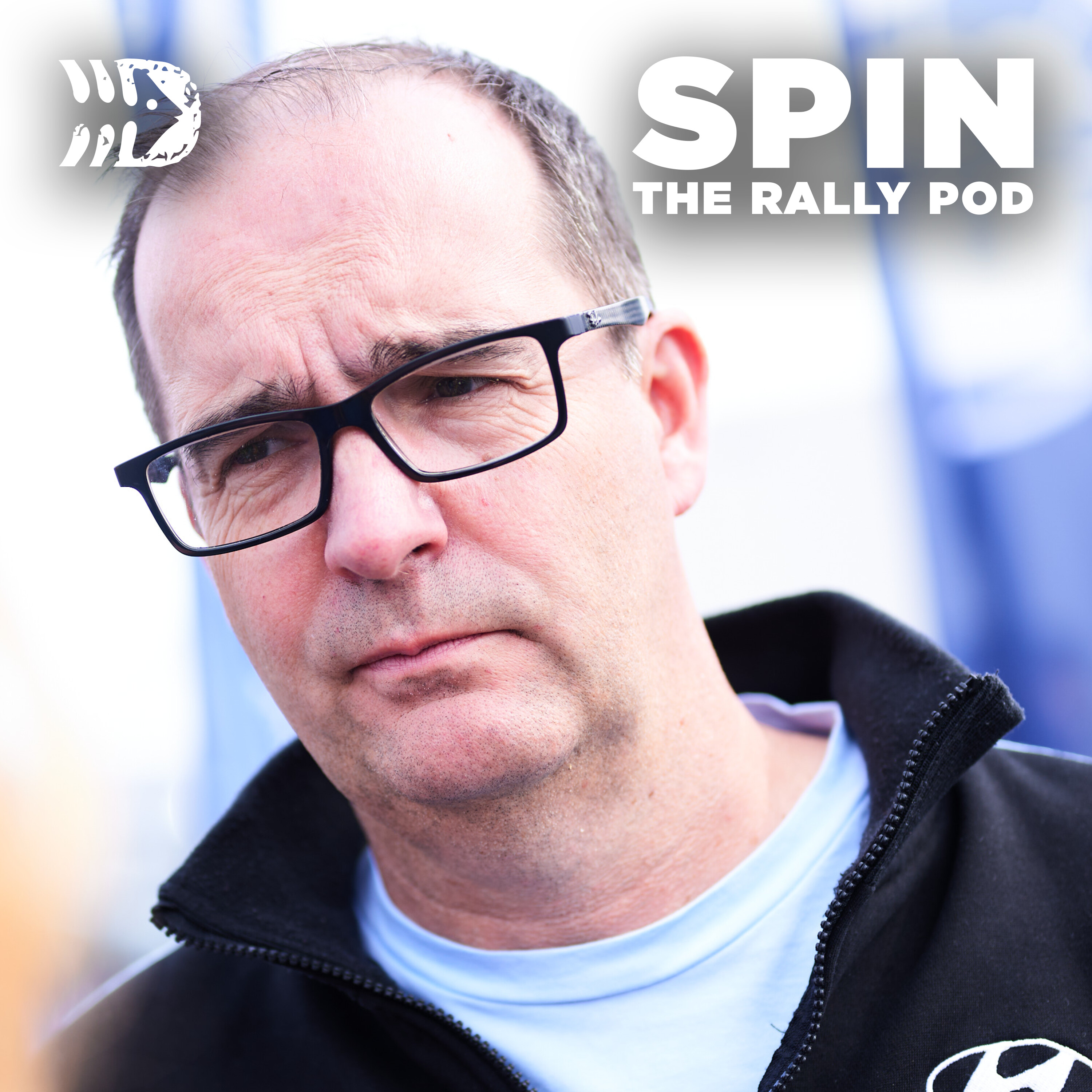
Andrew Wheatley gives a candid update on Hyundai’s rocky start to 2026, from the Croatia disappointment to the huge Safari Rally setback, while stressing that the car still has real pace. He explains the tradeoff between outright speed and a very narrow operating window, and how testing, setup work, and the third car are helping steady the team. The conversation also looks ahead to Portugal, Hyundai’s longer-term planning, and the Rally2 program’s role in development.
Hyundai sporting director Andrew Wheatley joins David Evans on SPIN, The Rally Pod to discuss Hyundai's difficult start to the 2026 World Rally Championship season ahead of this week's Rally Portugal.