Andy Wallace, a legendary racing driver, shares captivating stories from his extensive motorsport career, including his triumphs at Le Mans and the challenges of endurance racing. He discusses the physical toll of high downforce cars, the intricacies of team dynamics, and the evolution of racing technology. With humorous anecdotes about injuries, testing, and memorable moments with fellow drivers, Wallace provides a unique glimpse into the world of professional racing. His experiences highlight the blend of skill, strategy, and camaraderie that define the sport.
In episode 35 of the evo podcast, John Barker and Richard Meaden sit down with Andy Wallace for part one of a two-part special on the life of the racer and test driver. From the beginnings of his motorsport career to the mishaps, highlights and everything in between, we cover all. Join us next week for part two on his iconic speed records and career as a test driver.
"I'm sure most of you will know Andy for his successes in endurance racing. Triple crown winner."
Endurance racing is a type of car racing that lasts a long time, sometimes for many hours. Teams of drivers take turns driving the same car, and they have to make sure the car doesn't break down during the race.
Endurance racing is a form of motorsport where teams compete over long distances or time periods, often lasting several hours or even days. The most famous endurance races include the 24 Hours of Le Mans and the 12 Hours of Sebring, where strategy, reliability, and driver stamina are crucial.
"So Le Mans 88 with Jaguar Daytona 1997 and 1999. Once with Jaguar, then Rylee and Scott."
Le Mans is a famous car race that lasts for 24 hours. Cars race around a track, and the team that covers the most distance in that time wins. It's known for being very challenging for both the cars and the drivers.
Le Mans refers to the 24 Hours of Le Mans, one of the most prestigious endurance races in the world, held annually in France. It tests the durability of both the cars and the drivers, with teams racing for 24 hours straight on a mix of public roads and racetrack.
"And then Sebring. I didn't realise you were this old, but you actually won Sebring twice with Fangio."
Sebring is a well-known car race that lasts for 12 hours. It's held in Florida and is famous for being tough on cars and drivers. Many teams compete to see who can go the farthest in that time.
Sebring refers to the 12 Hours of Sebring, another iconic endurance race held in Florida, USA. It is known for its challenging track and is part of the FIA World Endurance Championship, attracting top teams and drivers from around the world.
"But still, you know, with two of you on the bumpiest... Yeah, Sebring is a rough and tumble track. And in that car too. It's an Eagle Toyota Mark III, according to my research."
The Eagle Toyota Mark III is a type of race car that was designed for speed and performance. It's known for being lightweight and having special features that help it go fast on racetracks.
The Eagle Toyota Mark III is a racing car that was known for its performance in motorsports, particularly in endurance racing. It features advanced aerodynamics and a lightweight design, making it competitive on the track.
"...because it has so much downforce with the ground effects and it has a huge great wing..."
Ground effects are special designs on the bottom of a car that help it stick to the road better. They help the car go faster and stay stable while turning.
Ground effects refer to aerodynamic designs that create downforce by utilizing the shape of the car's underbody. This technology was popularized in the late 1970s and 1980s in racing, allowing cars to achieve higher speeds while maintaining stability.
"...because it has so much downforce with the ground effects and it has a huge great wing, I think double deck wings as well..."
Downforce is what keeps a car glued to the road when it's going fast. It helps the tires grip better, so the car can turn and stop more effectively.
Downforce is the aerodynamic force that pushes a car down towards the road, improving traction and stability at high speeds. It is crucial for performance vehicles, especially in racing, as it helps maintain control during cornering.
"...you've got monster springs like over 3,000 pound per inch springs."
Monster springs are very strong springs used in a car's suspension. They help the car stay stable and handle better, especially when going fast or turning sharply.
Monster springs refer to extremely stiff suspension springs that are designed to handle high loads and provide better handling characteristics in performance vehicles. They help maintain ride height and improve cornering stability.
"But in the middle of this first corner, which is flat out, it's about 190 miles an hour flat out."
When someone says 'flat out', they mean they're driving as fast as the car can go without slowing down. It's like hitting the gas pedal all the way down.
'Flat out' refers to driving a vehicle at maximum speed without any reduction in throttle. It indicates that the driver is pushing the car to its limits, often in a racing context.
When they mention '190 miles an hour', they are talking about how fast the car is going. It's a very high speed, usually seen in racing or high-performance cars.
'190 miles an hour' refers to a high speed that is often associated with performance vehicles or racing. This speed is significant in the context of motorsport, where vehicles are designed to handle such velocities.
"...to your single-seater career, so you won British Formula Three championship in 86,..."
The British Formula Three Championship is a racing series in the UK where drivers compete in small, fast cars without roofs. It's a popular place for drivers to show their skills before moving on to bigger races like Formula 1.
The British Formula Three Championship is a prestigious single-seater racing series in the UK, known for being a stepping stone for drivers aiming for higher levels of motorsport, including Formula 1. It features open-wheel cars and has produced many successful drivers.
"...my first ever Formula Ford 1600 race, contemporary race, because I did pre-74 before that..."
Formula Ford 1600 is a type of car racing that uses small, single-seat cars with 1.6-liter engines. It's often where new drivers start their racing careers.
Formula Ford 1600 is a single-seater racing category that features 1.6-liter Ford engines. It's known for being an entry-level series for aspiring race car drivers, providing a platform to develop racing skills.
"And I won that first race, first Formula Four race I did."
Formula Four is a type of car racing for beginners. It's meant to help young drivers learn and compete without spending too much money on fancy cars.
Formula Four is a category of single-seater racing designed to provide a cost-effective entry point for young drivers aiming to progress to higher levels of motorsport. It typically features cars with a standardized chassis and engine to ensure a level playing field.
"...that was, it was quite early in carbon fibre for Formula Three car, and I don't think everybody knew quite as much about the cars as we do now..."
Carbon fibre is a strong and light material used to make car parts. It helps cars go faster because they weigh less.
Carbon fibre is a lightweight and high-strength material commonly used in automotive and aerospace applications. In racing, it helps reduce the overall weight of the car, improving performance and handling.
"...a pole smashed the monocoque, made a bit of a hole in the monocoque."
A monocoque is a type of car body design that uses the outer shell of the car to provide strength. This means the body itself helps support the car, making it lighter and more efficient.
A monocoque is a structural design where the body of the vehicle is used as a stressed member, providing strength and rigidity without the need for a separate frame. This design is common in modern cars and racing vehicles for weight savings and improved performance.
"But it was also, it was the difference between taking club corner flat out"
A spool is a part in a car that helps the wheels work together, giving better grip when speeding up. However, it can make the car trickier to control, especially when turning.
A spool is a type of differential used in racing and performance vehicles that locks the rear wheels together, providing maximum traction. This setup is beneficial for accelerating out of corners but can make the car harder to handle in certain situations.
"And then the second year I had a lot more experience of Formula 3. And it's quite a jump from Formula 4 or even Formula 4 2000 to F3."
Formula 3 is a type of car racing where drivers compete in fast, open-wheel cars. It's often where new drivers learn and improve before moving to even faster races like Formula 1.
Formula 3 is a class of open-wheel racing that serves as a stepping stone for drivers aspiring to reach higher levels of motorsport, such as Formula 1. The cars are designed to be lightweight and feature powerful engines, providing a competitive environment for young drivers to develop their skills.
"Because you won Macau. In your championship winning year, you also won Macau, didn't you? Which was the halo event."
Macau is a place where a famous car race takes place every year. It's known for being very difficult because the race happens on city streets.
Macau refers to the Macau Grand Prix, a prestigious motorsport event held annually in Macau. It features various racing categories, including Formula 3, and is known for its challenging street circuit.
F1 teams are the groups of people who build and race very fast cars in a series called Formula 1. They compete against each other in different races around the world.
F1 teams refer to the various teams that compete in the Formula 1 racing series, which is the highest class of international auto racing for single-seater formula racing cars. Each team designs and builds its own car and employs drivers to compete in races.
"...That was Arrows and Tyrell. And if you remember, Julian Bailey took the Tyrell drive..."
Tyrrell was another Formula One racing team that had some famous cars and drivers. They were known for trying new ideas in their designs.
Tyrrell was a prominent Formula One team known for its innovative designs, especially the six-wheeled car in the 1970s and 1980s, and had notable success in the sport.
"...That was Arrows and Tyrell. And if you remember, Julian Bailey took the Tyrell drive..."
Arrows was a racing team in Formula One, which is a type of high-speed car racing. They were around for many years but didn't always have the best cars.
Arrows was a Formula One team that competed from 1978 to 2002, known for its innovative designs and sometimes struggling performance.
"...you only get one shot at it in F1, don't you? So, and if you land and it's the wrong car, not only do you not win, that was your time."
Formula 1 is a type of car racing where the fastest cars compete in races around the world. It's very popular and features some of the most advanced cars and technology.
Formula 1 (F1) is the highest class of international auto racing for single-seater formula racing cars. It is known for its high-speed races and advanced technology, with teams competing in a series of races known as Grands Prix.
Wobble means the car is shaking or moving in an unstable way, which can make it hard to drive straight. This can happen if something is wrong with the tires or suspension.
In racing, 'wobble' refers to instability in a vehicle's handling, often caused by factors like tire issues or suspension problems. It can lead to loss of control, especially during high-speed maneuvers.
"...the left rear wheel just touched the white line on the outside..."
The white line is a painted line on the track that shows where the road ends. If a car goes over it, it can lose grip and control.
The 'white line' on a racetrack usually marks the boundary of the track. Crossing this line can affect traction and control, often leading to loss of grip or stability.
"...most people would have just spun and gone in the war..."
A spin is when a car starts to turn around quickly and loses control, which can make it hard to drive straight. It usually happens if the driver goes too fast or hits a slippery spot.
In racing, a 'spin' occurs when a car loses traction and rotates around its vertical axis, often leading to a complete loss of control. Spinning can happen due to oversteering or hitting a slippery surface.
Car
Jaguar XJL9
"...he was racing for Jaguar in the XJL9, the Silk Cup."
The Jaguar XJL9 is a car that Jaguar used in racing. It shows how Jaguar participates in motorsport and builds fast cars.
The Jaguar XJL9 is a model associated with Jaguar's racing history, particularly in events like the Silk Cup. It represents Jaguar's commitment to performance and motorsport.
"...which in those days were around 165 horsepower and all open cars."
Horsepower is a way to measure how strong an engine is. The more horsepower an engine has, the faster and more powerful the car can be.
Horsepower is a unit of measurement for power, commonly used to quantify the output of engines. It indicates how much work an engine can perform over time, with higher horsepower generally translating to better performance.
"... mean, I did a guest Metro race, one and a guest Renault 5 race, I think somewhere. But other than that, it..."
The Renault 5 Turbo is a sporty version of a small car called the Renault 5, made in the 1980s. It has a turbo engine that makes it fast and fun to drive, especially in races. People mention it because it's a cool and unique car from that time.
The Renault 5 Turbo is a performance version of the Renault 5 hatchback, known for its distinctive styling and rally heritage. Introduced in the early 1980s, it featured a turbocharged engine and rear-wheel drive, making it a favorite in motorsport and among enthusiasts. The Renault 5 Turbo is often discussed for its unique character and role in the history of hot hatchbacks.
"...their lap times are really good, but we want to see if you can do a whole hour at the same speed..."
Lap times are how long it takes a car to go around a racetrack. Shorter times mean faster cars or better driving.
Lap times refer to the amount of time it takes for a car to complete a lap on a racetrack. They are crucial for assessing a car's performance and the driver's ability to maintain speed over a given distance.
"But we drove the, We drove to go to the end of the E-Type, yeah. Which I still remember and laugh about your advice."
The Jaguar E-Type is an old sports car that many people think is really beautiful and cool. It was first made in the 1960s and is famous for being fast and stylish. People talk about it because it's a classic car that many car lovers admire.
The Jaguar E-Type is a classic British sports car that debuted in the 1960s, celebrated for its stunning design and impressive performance. Often regarded as one of the most beautiful cars ever made, it became a symbol of the era's automotive innovation. The E-Type is frequently discussed for its historical significance and timeless appeal among car collectors.
"just watch the brakes into the first chicane. With the brakes on a D-Type are the weirdest thing, aren't they? They kind of go too much."
The Jaguar D-Type is a famous race car from the 1950s that was built to win big races like the 24 Hours of Le Mans. It has a unique shape that helps it go fast and is known for being very advanced for its time. People talk about it because it's a classic car with a lot of racing history.
The Jaguar D-Type is a legendary sports car that was developed in the 1950s, primarily for racing at the 24 Hours of Le Mans. Known for its aerodynamic design and advanced engineering, the D-Type achieved significant success in motorsport, winning the Le Mans race multiple times. It is often discussed for its historical importance and as a symbol of Jaguar's racing heritage.
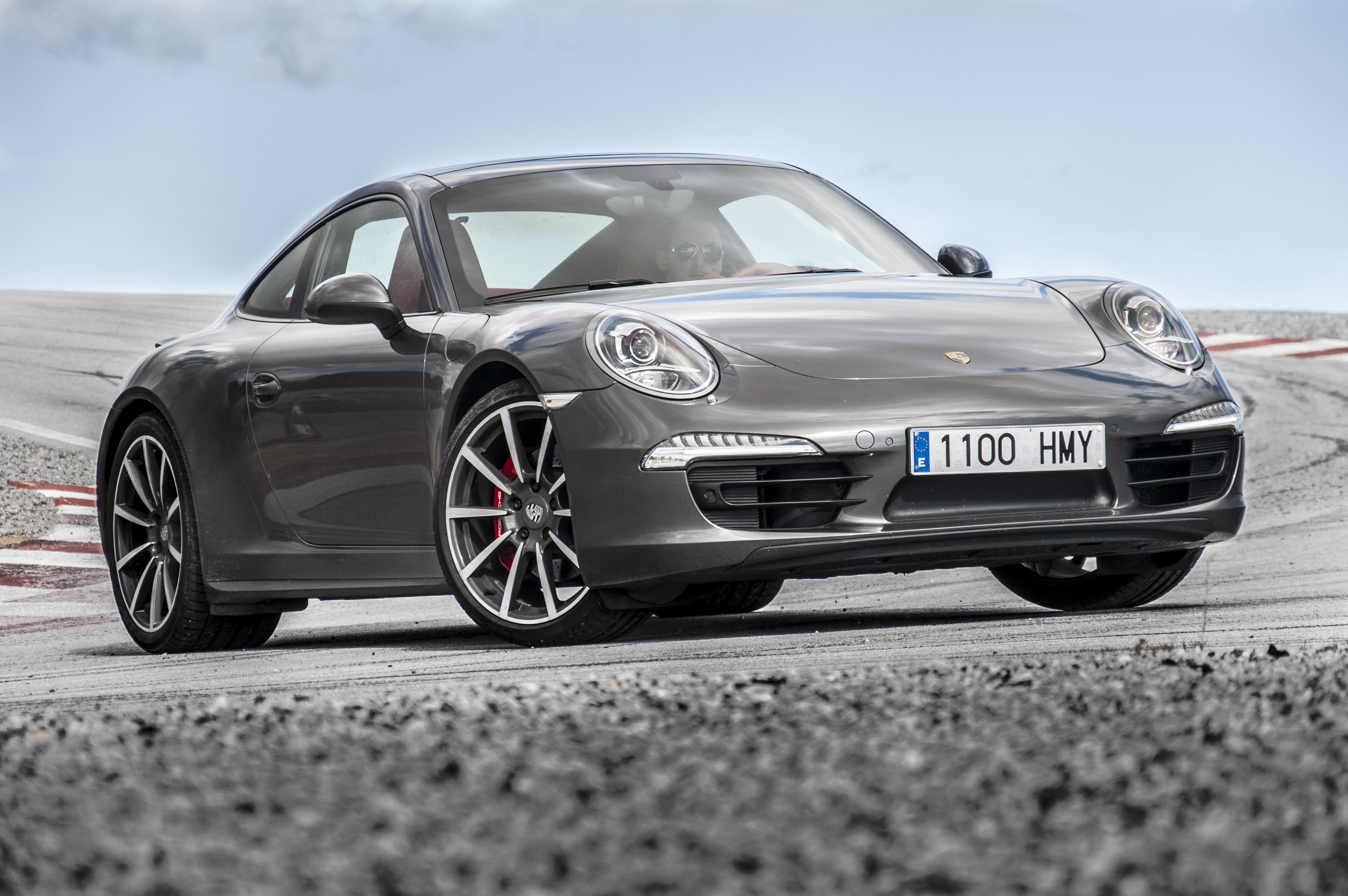
The Porsche 911 GT3 is a super sporty version of the regular Porsche 911, designed for people who love to drive fast and enjoy racing. It has a powerful engine and is built to handle really well on the road or track. People talk about it because it's one of the best cars for driving excitement.
The Porsche 911 GT3 is a high-performance variant of the iconic 911 sports car, known for its track-focused engineering and exceptional handling. It features a naturally aspirated engine and lightweight construction, making it a favorite among driving enthusiasts and on racetracks. The GT3 is often discussed for its thrilling driving experience and motorsport pedigree.
"is probably the Diablo VT in just the four-wheel drive"
The Lamborghini Diablo VT is a super fancy sports car from the 1990s that looks really cool and goes super fast. It has a powerful engine and can drive all four wheels, which helps it handle better on the road. People mention it because it's one of the most famous and exciting cars ever made.
The Lamborghini Diablo VT is a high-performance supercar that was produced in the 1990s, known for its striking design and powerful V12 engine. The 'VT' stands for 'Viscous Traction,' indicating its all-wheel-drive system, which enhances its performance and handling. The Diablo VT is often discussed for its iconic status in the world of exotic cars and its role in Lamborghini's history.
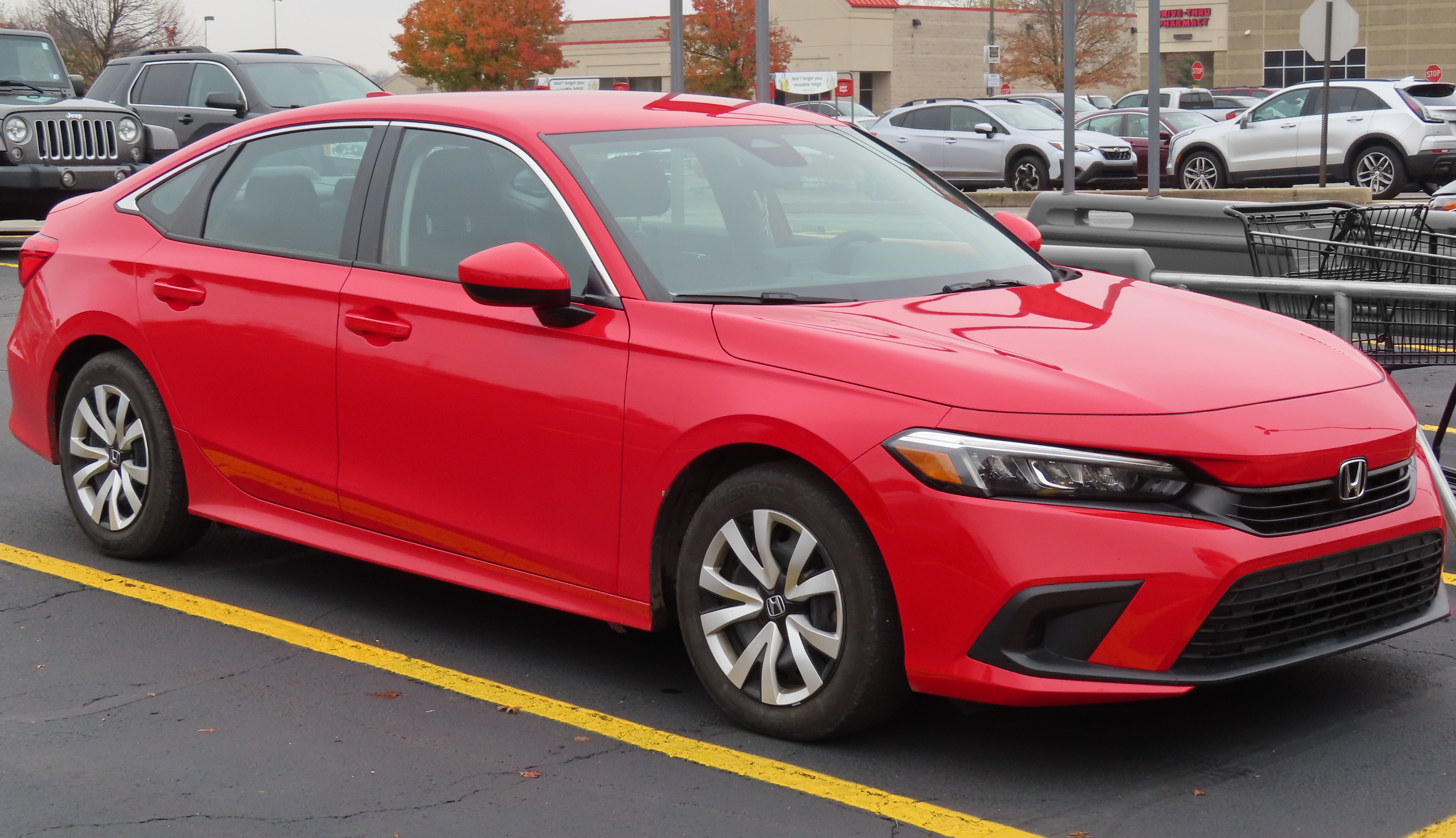
"Montreal so it's a Honda Civic or something like that"
The Honda Civic is a small car that many people use for everyday driving because it's reliable and saves on gas. It's popular among all kinds of drivers, and some versions are even sporty and fun to drive. People mention it because it's a good choice for anyone looking for a dependable car.
The Honda Civic is a compact car that has been a staple in the automotive market for decades, known for its reliability, fuel efficiency, and practicality. It appeals to a wide range of drivers, from commuters to performance enthusiasts, especially with its sporty variants. The Civic is often discussed for its affordability and strong resale value.
Select text to request an explanation
If somebody was coming the other way in the other way, I'd say, okay, I'll tell you what, stop, stop.
When you pass me, don't touch me.
So, welcome to a special edition of the EVO podcast where we're joined by Andy Wallace, racing legend,
test driver extraordinaire and old friend of the magazine, and John Barker is here as my wingman.
Andy, thanks for coming.
Pleasure.
We've been gassing. We should have started this about 10 minutes ago because all the good stuff came out of me,
including wind tunnel testing Andy's head, which we might come back to later, I don't know.
Yeah, we should.
I'm sure most of you will know Andy for his successes in endurance racing.
Triple crown winner.
So Le Mans 88 with Jaguar Daytona 1997 and 1999.
Once with Jaguar, then Rylee and Scott.
Rylee and Scott twice.
And then Sebring.
I didn't realise you were this old, but you actually won Sebring twice with Fangio.
Yes.
Yeah, second.
Fangio the second, yeah.
No.
Actually, bloody good driver he is too.
Well done.
Yeah, really, really good.
It's funny when you're obviously doing some research and looking back at all your extensive results,
some of the names that jump, obviously that one jumped out because I wasn't expecting to see that.
But we only did it with two drivers.
Yeah, that must have been a hell of a...
That's a lot.
Particularly as you probably know, the one in 92 was with Broke and Ribs.
You probably know that one already.
That's kind of been well regurgitated that story.
But still, you know, with two of you on the bumpiest...
Yeah, Sebring is a rough and tumble track.
And in that car too.
It's an Eagle Toyota Mark III, according to my research.
Yeah, so you're looking around 900 kilos, full ground effects,
2.1-litre four-cylinder with about a year of turbo lag.
Almost a year.
Stick shift, presumably.
Yeah, stage.
Yeah.
And then because it has so much downforce with the ground effects and it has a huge great wing,
I think double deck wings as well,
obviously to stop it burying itself into the tarmac on the back straight,
you've got monster springs like over 3,000 pound per inch springs.
And so what I noticed with the Broke and Ribs especially,
when you were driving flat out, yeah, there was a certain pain level,
but when you were following the safety car...
Or it's just jiggling around on the...
Just bouncing on the tyres.
It's absolutely impossible to...
So remind us how you did the ribs.
Oh, you don't want that, do you?
No, I can.
Do as the quick one.
The short one.
OK, OK, right.
So driving for Toyota, 1992,
and they decided right as quite close to Japan
and nice weather that time of year in February,
we went to Eastern Creek in Australia near Sydney.
And we did.
We weren't allowed to run overnight,
so we did a nine day endurance test,
which was Saturday Sunday, the whole weekend Saturday Sunday.
And it was from 9am till 6pm.
And that's a long time, nine days.
Even though you're not running at night.
So there were two cars.
One was doing just performance,
and I got the short straw with...
With...
It was Hitoshi Ogawa and Kenny Atchison, I believe.
Yeah, the two, the three of us in that car.
And we were just running for nine days, this car,
over and over and over and over and over to make sure, obviously.
And what would they do?
Was it just service?
Yes.
And then if you broke anything,
they'd obviously changed that.
That's it, tyres and fuel, mostly.
Yeah, is what it was.
And you can see this clip on YouTube, right?
You've got the cars coming towards you in this one.
And some of the ones I've seen, they cut it off too early.
But in the middle of this first corner, which is flat out,
it's about 190 miles an hour flat out.
And it was just a big horseshoe corner, wasn't it?
Yeah, the first one was, yeah.
And then in the middle, you've got this fairly large couple of dips bumps.
And the cars, you can hear it coming in through there,
and they go,
as it goes over the bumps.
And sort of being a high downforce car, I guess,
when it goes up, it momentarily gets a bit of lateral movement
and then reattaches when you can hear it in the engine note,
because you have wide open.
And that after, and it was on the ninth day,
was enough to bust two ribs.
But then I was replaced by Toshio Gower after this.
He jumped in and an hour into his first stint on that last day,
he broke two as well.
So it was nice.
But this was 29th of February, 1992.
And of course, Sebring is around the 20th of March.
So it was literally,
and it was a Sunday we did this.
So it was, yeah, a couple of weeks, 13 days, actually,
before the race.
But of course, Sebring, or 13 days before you had to be there,
you test all week at Sebring from the Monday all the way through.
So what did you just strap yourself up as much as you could
and put up with it?
No, I went to see the doctor and he said,
yeah, yeah, no, you'd be fine.
You give that about sort of six, seven weeks.
It'd be all right.
And I go, no, no, you don't understand.
I've got six or seven days.
Yeah.
And I said, well, what can you do?
Well, there's nothing you can do.
Yeah, you can, you can wrap yourself up.
You can, you can, and then there was a drawer underneath the desk,
or you could take these.
So I thought, oh, well, it sounds like I should be taking those.
So I, I took a few of those with me.
They were not performance enhancing drugs, were they?
No, no, they were fake killers.
But we can have a side effect.
Well, I guess they, yeah, I guess they could.
And they were performance enhancing because it stopped it hurting.
God, but you're so broken afterwards.
Well, actually the worst one of that was not that was.
So you're in Sydney.
Right.
And so you still got to get back to London first and then that
and then go to Sebring.
So, so it's basically a couple of 12 hour flies, isn't it?
Yeah.
Where they stop in the middle.
So, and I remember, it's like, every time I got up in the plane,
just to go to use the facilities.
If somebody was coming the other way in the other, I'd say, okay,
I'll say, I'll tell you what, stop, stop.
When you pass me, don't touch me.
Really?
And you can, I'm standing like a right lunatic.
Just like, just as awful.
I mean, everybody's broken ribs, right?
They all know what it's like, but it's, it's horrible.
So yeah, you go, sorry, bro, and you pass without touching,
but then the sneezing thing, that was the worst of all, wasn't it?
And you have to learn to spray it all over the wall, don't you?
That's the only way not to, to make it crack again.
You know, laughing.
Oh yeah, laughing.
Yeah, it wasn't so funny in the end, was it?
But anyway, that, that all got sorted.
And then it was brilliant.
And we ended up winning the race.
But gee, that was a difficult car to drive in that state,
I would say.
Some of the others.
God.
So if we rewind to your single-seater career,
so you won British Formula Three championship in 86,
your first, did you, first season in 85?
Five, yeah, I came second.
But I was looking again, looking through the results
and your, your championship winning year,
so there were 18 races, 19 races,
but they canceled the first one,
presumably because it was terrible weather in March,
Silverstone or something.
Did they?
Is that 85?
86.
Oh, 86.
Because 85, I'm not expecting you to remember all this
in my nutrients there.
No, I remember the 85 race,
because my, my first ever Formula Ford 1600 race,
contemporary race,
because I did pre-74 before that,
was the March race at Silverstone,
getting dark last race of the day and pouring rain.
And I won that first race,
first Formula Four race I did.
And the Formula Three in 85 was the same.
I won that very first race
in my arch at Silverstone and pouring rain.
I mean, Wikipedia is never wrong, is it?
No.
Did you say I was wrong then?
No, no, no, no.
It just said that that race in 86 was canceled,
but then the 18, 18 starts.
Yeah.
13 poles.
Wow, yeah.
And eight wins.
What does it,
because we're used to dominant drivers in Formula One now,
what does it feel like to be that on top of your game?
What was the difference between the year you won
and the year you didn't,
or did you not feel any difference in the car or you?
So, it was a rain hour chassis both times.
So, the first year,
that was,
it was quite early in carbon fibre for Formula Three car,
and I don't think everybody knew quite as much about the cars
as we do now,
and we still had catchpence poles.
Yeah.
So, I won a few races in 85 already
and was quite high up in the championship.
And we got to Brands Hatch,
and I had a rear pushrod brake,
right rear, going into Paddock Hill Bend.
So, it dropped down at the back and sent me into the wall,
and a pole smashed the monocoque,
made a bit of a hole in the monocoque.
So, of course, we just...
I didn't patch it.
Polly filler.
Dang, B-A.
Polly filler.
Yeah, put it all back together.
And I just couldn't find my back side with either hand.
I just couldn't drive it.
So, we got...
I think the next race was Silverstone Grand Prix circuit,
and I was always on the front or second row in qualifying.
I think I was 13th to 14th in qualifying.
And we lost, I think, three races before we go,
okay, guys, this isn't working.
And I think Renault very kindly gave us a new chassis.
Bill, then you were back on it.
Yeah, right where we were.
So, it came down to the very last race.
Ritso Guzman, I think, was one point or two points ahead of me
at the last race, Silverstone Grand Prix.
So, it was the old fast stone club corners then.
So, what you did at Silverstone, you ran a spool.
So, no diff.
Yeah.
And all you had to do was get off the line and take the lead.
And it was very hard at Silverstone for anybody to pass.
So, he got pulled.
Because the speeds were so sustained.
Yeah, not much braking yet.
Yeah, exactly.
So, and I guess with the spool, you probably had a bigger chance
of getting the first corner first.
But it was also, it was the difference between taking club corner flat out
and not.
So, it was, with the spool, it was flat.
And you also had Abbey, the really fast Abbey.
So, I'm not sure how many people ran spools or not,
but we always did when we went there.
So, all I had to do was get around cops ahead of him.
And it would have been okay.
So, we came around, he was on pole,
and it was not a staggered like Formula 1.
The two were level.
Side by side.
So, I just lured my car up kind of towards him and awaited.
And then, I think it was even a flag in those days went down
and we shot off and I got a better style than him.
And I went right across to him.
We were up against a pit wall and I missed second gear.
Oh, no.
Absolute plonker.
And then he also got mugged.
No, I managed to get it after I missed it,
but it was enough that he got ahead.
So, he won and I was second.
So, I ended up second in the championship.
And actually, perhaps it did me good because I had it.
And then the second year I had a lot more experience
of Formula 3.
And it's quite a jump from Formula 4
or even Formula 4 2000 to F3.
Was it a much more like set up sensitive cars
and racing obviously more?
Yeah, just I mean everything about it was bigger,
better, faster, more technical as a challenge.
Because you won Macau.
In your championship winning year, you also won Macau,
didn't you?
Which was the halo event.
It still is to a degree, isn't it?
But then I guess it should have been your golden ticket to...
Yeah, it should have.
And I went around all the F1 teams,
knocked on the door and said who I was
and said, yeah, yeah, we know who you are.
We've been following things like right and then.
So, then I was offered a drive at two teams.
But I had come back with $600,000.
Everything else, US dollars in those days.
Which teams?
That was Arrows and Tyrell.
And if you remember, Julian Bailey took the Tyrell drive
and the car didn't turn out to be very good back then.
And he'd sold everything he had and mortgaged everything
and borrowed money from people to pay for that drive.
And you only get one shot at it in F1, don't you?
So, and if you land and it's the wrong car,
not only do you not win, that was your time.
Your time with that brush then, aren't you?
Yeah, well, yeah, but you can't go twice then
because you'd never, I couldn't find the $600,000 anyway.
But as luck would have it,
that Macau race in 86 was what actually gave me my big break
and that was because in those days,
guest drivers would come down from F2, F3,
endurance and the rest of it.
And Jan Lamers was in that race
and you have two heats and put the two together.
And he was leading the first heat
and I was chasing him all around
but it's very, very difficult to pass.
It's set for into the Lisbon corner
at the end of the long bumpy, wide strafe.
I've followed him all the way around and then on the last.
And he's got,
Jan's got probably the best car control of anybody
I've ever met before since.
Wow, really?
He's brilliant.
I can give you some stories of him.
He did some, he's just amazing in a car
because he grew up as a skid school instructor
from age four or something.
So, I'm chasing him on this last lap
but we knew it was the last lap.
He knows that's the only place I can pass him.
I'm all over him like a rash
and he just arrived and he broke so late
and he got a little bit of wobble on the back
and the left rear wheel just touched the white line
on the outside and he kind of lost it.
Most people would have just spun and gone in the war
but he's got it.
I've got it, I've got it.
The only thing is with I've got it,
the apex was a barrier on the inside
and he's got it but he's going to head on into the barrier.
So, I just saw my chance,
went down the inside and managed to
we clip wheels a couple of times and I passed him,
knocked him straight.
Now, I'm in the lead.
And I found this on YouTube
but it's an annoying group of about 60 videos
and it seemed impossible to find it,
but it exists somewhere.
So, yeah, so bam a man, off we go.
That was great.
I won, he was second.
Then the second race,
I guess he would start the second race
where you finished the first one perhaps, yeah.
I cleared off basically
and disappeared off on one.
We were on the podium at the end
and Jan was there and I knew of Jan
but I didn't really know him
but on the podium he was going,
oh, thanks for that.
That was brilliant.
I was getting in that wall and he straightened me out.
But it just, you know, he was racing for Jaguar
in the XJL9, the Silk Cup.
And that was your ticket.
And that got you an intro to test with the theme.
I don't know how he swung it
but eventually I ended up with an invite
to go to Poricard and went down there.
And there were a few drivers they were testing.
And that car must have felt really weird.
Going to tell you.
Going to tell you to see your beta.
How?
Because the engine's about that tall
and right up there behind you.
And yeah, it was the most cold.
Well, that's the thing.
And also having driven a Formula 3
which in those days were around 165 horsepower
and all open cars.
I mean, I did a guest Metro race,
one and a guest Renault 5 race, I think somewhere.
But other than that, it was all open cars.
And then so Yan and Johnny Nelfrice was also,
was there and they took me one side and said,
look, if you want this to go well,
we'll give you a few tips.
You, at first you're not going to,
you're going to be,
you're going to be a bit wary of this thing
because it's going to move on the straight.
Because I was driving the low down forced car
ready for them all on the long straight at Poricard.
It's going to flow, just let it do it
and explaining everything.
Hotter than hell inside.
It was so hot in that car.
It's incredible.
Anyway, it gave me a lot of tips.
Jumped in the car and I pretty much did everything they told me.
And it, it obviously went quite well.
To the point where,
and I'd driven the high down forced car as well,
I was jumping in and out of both cars.
And they, at one point said,
I think it's probably Roger Sillman and the team over here.
Yeah, their lap times are really good,
but we want to see if you can do a whole hour at the same speed,
you know, because it's really hot in there.
And it's a big heavy car, no power steering brakes or anything.
So they, they jammed me in,
put a load of fuel in it, set the tyres,
shut the door, dropped it on the ground.
Had lunch.
Yeah, and off I went.
So I thought, right, I know what I'm going to do.
So I rolled my sleeves up and I went out
and I just pushed and pushed and pushed.
And I absolutely used every last bit of energy
and liquid and everything in me.
Got to the end and it was pretty consistent.
Came in the pits, popped open the door
and then he said, what are you doing?
I was like, well, I just did it.
No, he said, no, no, no.
And put the nozzle bowl, no.
And did a second one and they sent me up.
I was absolutely used up.
I couldn't even drive down the pit lane.
It was that bad.
But I, I obviously, I must have done okay.
So I got an invite to Kidlington where the headquarters was
and sat down in the office with Tom.
This would be what an ATC.
So I've skipped a bit because it's quite boring.
But the first time they called me,
I said, no, you're right.
I don't want to drive that car.
I want to do Formula One.
And as luck would have it,
I got a call a bit later on.
So this was the beginning of 88 or, yeah.
So yeah.
And yeah, sat in his office and the struggle.
All right, I had, sorry, I've got hay fever.
Always have had.
And there's no hay in here, but I still got the figures.
It's the induction.
It's the size of the induction manifold.
That's what it is.
Yeah.
And so yeah, I sat at the table and to get where I was like,
I remember starting being a professional driver, if you like,
it took me eight years before I earned one pound from driving cars.
Wow.
It was forever.
And everybody's telling me, I know you,
you don't want to be doing this.
This is stupid.
You're never going to get anywhere.
And suddenly it started to, you know,
it started to be some money in it, not very much.
And always it was trying to find the sponsorship.
But I was useless at that.
Still am.
So I had a few people helping me who ended up being fantastic friends
and really scraped together and they knew other people.
And it wasn't a lot of money they found,
but it was enough to just keep driving and keep racing.
And then of course you sit down with Tom.
So right.
Okay.
So this is what we want you to do.
This is what will pay you for test days for races.
And I'm like, oh yeah.
Okay then.
Money.
It was great.
No.
I mean, obviously I realized that you, you know,
that you were going to be paid driving for a factory team,
but it's just so nice that you now,
what you got to do is take a huge amount of pressure off
and give you a bit more bandwidth to focus on you.
Yeah.
No.
It does.
But the thing that was really funny.
Well, there's lots of things that were really funny.
But first of all, they didn't really,
it was Le Mans they needed me for.
So to be the third driver in the number two car with,
with the unknown Johnny.
They said, well,
obviously we can't just put you in the car and you go to Le Mans.
Cause that year there were no test day.
They'd resurfaced the straight.
So it was straight in cold turkey.
So they said, okay,
we're going to send you to road Atlanta,
haireth,
and I think it was with road Atlanta with Wattie.
And her rest was,
I think yeah,
John Watson again and John Nielsen.
I think we did that was a 500 car race or something like that.
And then I did quite a bit of testing whenever,
whenever we could.
So I think we were third in road Atlanta.
We were second in her rest.
But during the race,
when I was in the car,
the two fast corners behind the pits before the last one,
a C2 car.
And I never remember the name of the driver.
And I should do.
Cause I know,
but I've forgotten.
Spum going through it.
And there's a wall on the inside.
So you couldn't actually see around the corner.
And it's flat out.
And as I come around the corner,
there is a car spinning in front of me.
And while I'm going to hit him on,
I mean, it's just nothing to do.
Luckily it stopped quite quickly.
And I thought, okay, round the back.
So I could see the whites of his eyes looking at me.
I was about ready to devote him.
And I went round the back of him on the grass and missed him.
But I collected lots and lots of grass in the radiator.
So I had to make a stop to clean it.
And then we were second.
So, and of course I,
I got the feeling from everybody in the team that, you know,
well, if you hadn't been so stupid, we would have won that race.
So we were in the paddock.
Did they think you'd just gone off and collected all the grass?
Were they aware?
I think in the end they, they, they took my version of it.
But I wasn't, I didn't feel like they were saying,
don't worry about it.
They were just like, you go and sit over there.
We'll talk to you when we want to.
So the, the guy, and I really wish I remember what his name was.
We'll have to be able to find it somewhere.
He came up to me in the paddock and he said,
I have no idea you didn't hit me and or kill me.
He said, if you said, look, I really owe you big time.
It was a must for a bit of driving.
And I was thinking, oh, thank you.
If there's anything you can, I can do.
He said, just give me a shout because you're really seriously.
So I said, well, there is one thing you can do.
And it was caravans in those days, not so much big motives.
I said, I missed the walking shores in there.
Could you just like tell him what you just told me?
So, and I just hid round the back of the caravan.
He knocked him the door.
Ah, what do you want, laddie?
I just wanted to tell you that your driver did a,
a must for a bit of driving.
And I don't know how he didn't crash.
And I'm so sorry.
I spun the car.
And actually, I think he had a suspension for it,
which is why he spun.
Yeah.
Excuse me.
And then all the time said, if I was mad with him,
he'd know it by now and then shut the caravan door.
So I came back from behind the camera and I'm like, thank you.
Anyway, I was invited back to the next one.
So it must have been okay.
But then of course you eventually,
we went to Silverstone self-circuit and Jaguar run five cars that,
that day, that year.
And they gave me the job of doing the shakedown and all five cars,
which gave me a bit more experience of changing a few things on the cars.
And then we, of course, we get to Le Mans.
And the first time you go out on the track is no chicanes, no test day.
You set off and there was no speedo in the cars in those days.
So I just looked at the gear chart and I saw that 6,000 RPM was 200 miles an hour.
So the first time I went down the straight,
it was just 200 miles an hour and it felt quite fast, actually.
And then you just, you know, just making sure I knew what was going on
and get a feel for it.
And then a merc and a jag went past me in the middle of the straight
like I was tied to a post.
Then, okay.
Better go flat out next time.
And the kink was easy flat, but it's more of a,
like a spatial awareness stroke timing thing because you arrive at the kink.
The wrong side of 240 miles an hour,
which now with all the experience we've had with road cars and all the rest,
isn't that fast, but it was in those days.
Yeah.
And to go through the kink, it was not so much as turn the wheel.
You just move your elbow and you go around the corner.
So it was quite, quite delicate.
We snuck on to the barrier.
Oh, yeah.
Just after the kink.
It would have been 95, actually.
When you were hammering around in the McLaren.
That was in the McLaren.
Oh, yeah.
Oh, yeah.
It was terrifying.
Well, and of course that was with chicane.
So you're arriving a good bit slower.
Yeah, that's terrifying.
But it's going to feel the energy.
Yeah.
I think Le Mans is such a,
until you've been with all,
well, clearly you've won it.
We've been fortunate enough to do Le Mans classics.
So we've driven a track,
but it's such a particular place, isn't it?
And you can see why the cars evolved in the way they did for the,
for the sort of drive without the,
yeah, without the chicane.
But we drove the,
We drove to go to the end of the E-Type, yeah.
Which I still remember and laugh about your advice.
Yeah.
Brake it.
The brake,
just watch the brakes into the first chicane.
With the brakes on a D-Type are the weirdest thing, aren't they?
They kind of go too much.
Then you back out and you get,
and you get into this weird.
Yeah.
Kind of.
I would say it's,
it's not that the brakes are bad,
because you can stop the wheels really easily.
You just can't stop the car.
Yeah.
And it,
it went on for like,
normally if you outbrake yourself,
it's like, oh shit.
And then you're off, aren't you?
Yeah.
It's like,
don't you want a hug?
I think I've out,
I think I've outbraked myself here.
And then everything's going,
for literally hundreds of meters.
Well, yeah.
To be fair,
you are doing yourself down
because that was a masterful bit of saving.
You,
you had a tank slapper on like,
from the outside,
it would have looked absolutely perfect
because it all kind of gathered itself up
just at the apex of the chicane.
That's,
oh my God,
is this what it's going to be?
Yeah.
Right.
And then fortunately,
the engine had a issue.
Yeah,
it did,
obviously.
Yeah,
But yeah,
it is a bit odd.
And the,
and the kink,
the kink,
once you've done it
and you kind of know what you're doing,
it's fine,
but you,
you quite often catch a car
as you arrive there.
And then to try to do it
by staying in one lane,
that,
you know,
the car just wants to go left.
And if the car in front
is on the left lane,
it's,
yeah,
and you get some interference.
Yeah.
And it's pretty bad,
but it is flat in the wet as well,
but you arrive down there
and your feeling is there is no way
I'm going to do that flat in the wet.
So I was having this conversation
back in the,
in the pits
or in the caravan
and Tony Southgate said,
look,
all you've got to think of
is this car's got so much downforce
at 240 miles an hour.
Just imagine,
and he always used to say,
just imagine having
three Ford Granados
balanced on top of the roof.
It would be fine.
And I'm thinking,
well,
I hope they don't fall off.
And that was how he,
he's in elegy,
he was always great
because he was a wonderful aerodynamicist.
Really amazing.
And sure enough,
it was flat
and wet.
But the,
the aerodynamic thing,
the key to your success
was Jan, wasn't it?
Because he set the car up
slightly differently to...
Yes.
Well, yeah.
What made our car so fast
on the straight.
So on a, on a flat bottom car,
the last thing you need
is the car to go nose up.
Yeah.
It's very easy to take off.
You've seen the results,
like a couple of times.
Been there, done that.
Yeah.
I did a nice one in,
in Mossport,
in an L&P2 car,
but,
and,
yeah, so it's not pleasant,
but in a,
in a ground effect car,
in fact,
if you can get it
just a little bit nose up
or the back,
bit further down than the front,
you,
you basically,
the whole car is a wing.
So you're basically,
you're taking the wing down
and you pick up speed.
You just lose,
lose drag.
So Jan was the one
in the morning warmup,
I think it was.
So normally,
if you do something
in the morning warmup,
it's a big risk
because the conditions aren't the same.
He decided,
he wanted to try
a softer rear spring.
So
he did it.
The car picked up speed.
He said,
it doesn't really
change the balance anyway.
It feels fine.
You know,
at the speed you are in,
well,
it was like a spring
BRS system.
Yeah,
a little bit like that.
So of course,
we,
we were all one team,
so we shared the information,
but most people,
or in fact,
all the other cars
decided not to do it
because it's too big a risk
to go straight into the race.
Having done that,
so,
so that picked up,
picked up speed.
The other thing
I remember about
the race,
which was something that you,
you have to think about all the time was,
we were still using
this cast iron brake discs
in those days.
So you had,
you had to change your brakes,
pads,
discs and things like that
during the race,
but,
but also at the end
of the long straight,
after the kink,
of course,
before you get to Morseine Corner,
there's a real danger
of thermal shock
exploding the disc.
Kind of warm.
Yeah.
So,
yeah,
so as you,
as you're heading towards
going over the hump
before Morseine Corner,
you need to,
to get a bit of heat into the brake.
And then, yeah,
and then just swap feet
to get to the corner.
So,
don't forget that one.
But the other thing too,
another, another thing
that I just thought of,
going over the,
the hump,
I would get oil light
coming on.
So,
and I noticed this in practice
and I got with engine people
and I said,
yeah, this is happening.
No, no, no,
if that happened,
the engine would have blown up by now.
And,
but it was.
It was in Russia.
Yeah.
They all like going on
over the Braves.
I guess they would,
all that kind of stuff,
they would see now,
wouldn't they?
All the engineers would see it,
but you were their eyes
and ears.
That was it.
It was dry sump though, wasn't it?
Yeah, it was dry sump.
I don't know why
the light was coming on,
but it was definitely
coming on.
Just missing a bit of pickup somewhere.
Yeah,
but I'm,
yeah,
or maybe it was
razzing up the sensor
or,
I don't know what it was doing.
I don't know where the sensor was.
Presuming it was in the old tank.
Then,
yeah.
Oh, no.
Why would it be in the tank?
That's not where the pressure is,
but I don't know where it was.
But then,
and then the other thing,
which is about the fourth
or fifth other thing now,
that I just remember now,
we're having this conversation was,
so group C was all about
fuel consumption.
So any engine you want,
car was what,
900 kilos.
I think it was two meters wide,
4.8 long as maximums.
Any engine you want,
and that's that.
So how they limited the,
or try to even up the cars was
55 litres per 100 kilometre
fuel consumption,
and that was it.
So,
we had all of the cars
had a fuel computer,
which counted up
the litres you were using,
but did it in laps.
So in a 1,000 kilometre race,
it was what,
550 litres.
So in Lamar,
I don't know how they did that
because it's a timed race,
but there was a calculation.
so yeah,
if you've done six laps,
you should see 6.0.
If you see 6.1 usage,
and you've only done six laps,
you're over the fuel,
and you need to get that back,
or you won't make the end of the race.
So I drove quite a lot with
John Nielsen in other years,
and he was super, super fast,
but he would do the first 10,
and you jump in,
and you've done 35 laps,
and the computer says,
36.4.
And he wouldn't care,
just get out, and I get in,
and go, right,
well, you've got to bring all that back.
And it's not efficient.
So if you stay on the line,
that's much more efficient
than using a bit too much
and then pulling it back.
So you're going to lose
a lot more lap time
pulling it back.
So what was the trick?
How did you get it back?
Well, yeah,
there was quite a bit of lifting coast
that you tried to do.
You could use a few less RPM
and things like that,
but lifting coast was quite good,
because the cars were pretty slippery,
so you don't lose much at all
just by lifting a bit earlier
and then breaking quite a bit later.
And you try to bring that back.
I've probably warmed your discs
up a little bit.
Yeah, exactly, yeah.
And especially at the Moor,
probably not such an issue
because you're going so fast there.
If you just lift off for one or two seconds,
you grab a lot back.
So yeah, so you had that,
but the point about the computer
was you were always looking at it.
But then, because obviously
we didn't have tire pressure sensors
in those days,
and what would cause you
to have a blowout on the straight,
which was the main reason
that you put your gains in,
was a slow puncture,
which you couldn't feel.
Because it was held up
by the forces, I guess.
By the forces.
And also, when you get a slow puncture,
you get a little bit more movement
in the sidewall,
which generates more temperature.
So the temperature of the tire goes up
and therefore increases the pressure
from the temperature going up
if it's a very slow puncture.
So the first thing you know is
it's gone bang,
and you're upside down
and it's all not very nice.
So they came up with,
it's a very early version of
let's have a look at the tires
while we're driving.
It was infrared cameras
that looked at the tire,
outside, middle and inside,
on all the tires.
And it would just, yeah,
you could read those numbers.
And to read the numbers,
you had to press a button.
And you could read the numbers on there.
But you didn't need to worry
because if one of the tires
was getting hotter than the other ones,
or hotter than it should,
the light button itself would flash.
So you know,
and then you push it,
and then you can read it,
and then you can come back to the pit.
Well, I would always be going down the straight
because you'd be like,
50 odd seconds flat out.
There we go, that button.
I'm looking at it.
Well, there's no lights flashing,
and I'm thinking,
ah, but what if the bulb's broken?
We'll never know.
So I push this one,
you know, left front,
right front,
left rear, right rear.
Okay, it's fine.
And then you're on the straight
for so long.
You know, it is literally,
it's 50 odd seconds of wide open,
with no race car you ever do that.
And then sometimes,
I even was a little bit paranoid.
Okay, well, what if the bulb's broken now?
You're petrified.
Yeah.
Because the year before,
Wind Percy had had a blowout.
Yeah, a massive crash.
Yeah, 235 miles an hour
flying through the air,
and all the rest of it.
So, you know,
yeah,
it's something you should
think about, at least.
Yeah, yeah.
So was it the fastest car?
On the straight,
the big predator,
there was nothing coming past you.
Well, the great thing was,
the Porsche's had more power than us.
The factory cars,
but we had less drag.
So if you came out of tetra Rouge
onto the straight
and you had a Porsche behind you,
he would just tow past you,
pull back in,
and then,
what, two-thirds of the way down the straight,
you just pull out and go back past the dead.
So you got used to that.
And I remember,
each time they went past,
you just give them a little wave,
and they give you a wave back.
And you pass them back.
It was brilliant.
It's the only place,
I mean, I guess you,
it can happen in Monza,
but even now that's not,
no, it doesn't really even happen now,
but a double tow past on the straight.
And there wasn't anything they could do,
because if they decided not to pass you,
they're still behind you at the end of the straight.
So it's your first Le Mans.
So I was going to say,
I can't think of how many other Le Mans
debutants have won.
Yeah.
And it sounds really grand, isn't it?
You went there,
and you won his first Le Mans.
But hang on a second,
you've got an amazing team.
You've got a load of engineers,
and you've also got Jan and Johnny,
who...
Yeah, I guess that's the fundamental difference, isn't it?
You come from single-seaters,
where, yes, you're in the team,
but the whole team is...
Yeah.
...focused on you, aren't they?
And then suddenly you're in an environment
where you're a smaller, you know,
significant, but still a smaller part
of a much bigger...
Yeah, but you're all on the same side.
And this is,
when you have a teammate in single-seaters,
he's your main enemy.
Yeah, you pretend he's not, but he is.
So in this case,
you're getting advice from your teammates.
Hang on a second.
How does this work?
So it takes a while to get that,
but they even...
We even went to the point where
we drove around the track several times.
They only had a bicycle around the track,
and I think it was even a time
when we walked around the track.
This is all before the race.
Yeah.
And they were showing me everything,
like, there's this curb there,
there's a hole there, there's a...
And...
And this is well before simulators.
Yeah, it is.
So it's the only way you would get
any kind of intimate knowledge
of the circuit.
Yeah.
And then the gearbox on all of these cars,
the gearbox was the weak point in those days,
I guess partly because it was a manual shift
and you can make a mistake,
but it was also the amount of torque
that the engines were putting out
and material science wasn't what it is now.
So Jan sat us all down and said,
look, guys,
we're going to lose the race.
Gearbox is going to break.
And then you sort of go,
oh, well, that's bad.
Why are we...
Yeah, why are we even here?
That's massive effort.
Yeah.
And he said,
well, I've got a solution, I think.
So, but we're going to have to make sure
that we all are on the same page.
Yeah.
This is just your team.
Yeah.
It was just the three of us together.
And we went around and we say,
look, there are some corners you need to use
in a certain gear.
And if you try to use a different gear,
you'll lose time.
But there are some,
like the first one that we did was the S's.
Yeah.
Where it used to be so you came fast over
under the Dunlop Bridge, down to the S's.
That was third gear.
But if you took it in fourth,
there was no time loss.
You had to be a bit more careful that you didn't
lose control of the car,
but you just could take it in fourth.
That engine had so much torque.
Yeah.
So, right.
That is the fourth gear corner.
We will use fourth every single time.
The benefit of that,
Tetra Rouge comes up quite quickly.
So if you go down to third,
you've got to go back to fourth
and then down to third again fourth.
So if you leave it in fourth,
you've eliminated quite a bit.
Yeah.
Yeah.
More than corner,
I think it was another one.
We were a gear up.
So you could use first,
but we were in second.
And we did that in a few places.
I think the Porsche curves as well,
because you're on and off the power through there a lot.
Resin up the whole drivetrain,
on and off, on and off.
And the other thing we,
or Jan was saying that we really should do is,
right, if you are going over the curves,
don't go over the curves on fourth throttle.
Yeah.
So you don't,
you don't get some wheel spin.
So I was thinking,
okay, well, we've got the three of us together.
We've got no way of knowing
if we're all going to stick to that.
But we have to trust that we will.
And that's what we did.
And of course, as you know,
what was it an hour before,
or certainly 40 minutes or so before,
we did have the main shaft and the gearbox break.
And the only thing keeping it together was,
was the gear.
Yeah.
So one or two more shifts,
a little bit more aggressive on the pedal
and it would have been,
wouldn't have made it to the end.
No, it's crazy, isn't it?
It is, it's mad.
I was looking at the list.
So again, correct, if, if I'm...
No, but you were right about this 86,
because the 86 race probably was cancer.
It was the 85 race.
That you remember?
So you started with Jaguar.
So absolutely right team,
right time,
the result, wasn't it?
Then you went to McLaren.
Yeah.
Then you went to Panos.
Panos, yeah.
Which has got to be the weird,
one of the weirdest.
It's an interesting car, for sure.
Because it was a front engine prototype.
Front engine prototype, yeah.
What was that like?
Because he was a,
Don Panos was a very particular kind of guy,
wasn't he?
Sort of a...
Yeah.
So he is a super,
super clever guy,
very, very successful.
But as I say,
invented the snow smoking patch.
Plus, I believe the plastic capsule
that goes around some pills that you,
people pop.
He had a royalty from that for a long time.
Smoked like a chimney,
but then managed to quit smoking by using the patch.
Then,
was doing a big business deal in London,
he was telling me,
he was staying in a posh hotel,
and he fancied a little bit of a smoke,
and he thought,
if I get hooked again,
I'll just use the patch again.
So got hooked on smoking again,
used the patch,
and he couldn't use it anymore,
because he had an allergic reaction.
So he smoked like a chimney for the rest of his life.
But anyway,
I digress.
The eye of it.
But he was very famous for saying things like,
I don't know anything about racing,
but,
and then the butt was great.
He said,
well,
why do the prototypes have the engine in the back?
He said,
well,
because that's where it should be.
It's the best place for it.
Well,
what happens if you put it in front,
in the front?
Oh, you can't do that.
It won't work.
Well,
I don't care.
I want it in the front.
So,
and he went to the Renault DRAXI cars,
and they built him a front engine prototype.
And to be honest,
it was pretty good.
It was pretty good.
Yeah,
I think I'm perhaps one of the very few people
that actually drove the road car version.
Oh, yeah.
Very briefly.
Yeah,
it was a brunting thought.
Oh, right.
It was really good.
It was like a huge catering.
Yeah.
It was really quite nicely balanced
and quite approachable.
It was good under braking.
Very good under braking.
There's a lot of vertical movements.
You were sat pretty much on the rear axle.
Yeah.
Really, really noisy,
as well.
Oh,
because you were behind the exhaust,
I suppose.
Yeah,
you were about the other side.
From your rear.
Yeah,
your left ear was there,
and there was one time,
I can't remember this,
97 or 98 with the panels,
but during the driver change,
when I did the belt up,
it pulled the earplug out,
this one.
Oh,
no.
And I felt it.
When it seems I did the thing up,
and then they shut the door,
and I got a double stent.
And it was awful,
you know,
and your brain then associates this
with pain.
Yeah,
every time you go wide open.
I only got that tested afterwards,
because it was still ringing
on the Wednesday after.
Yeah.
They said,
well, you didn't do it any good.
Yeah,
see a bit of that way.
Done that.
Yeah.
So then you went from there
to the Audi R8C.
Was there a coupe?
Yes.
Oh, yeah.
British run car,
wasn't it,
effectively,
or designs in the...
It's like a dry run
for the Germans,
wasn't it really?
Yeah,
and they didn't know
which way to go,
open or close.
So the R8R and the R8C.
I tested the R8R
with the Yoastip
poorer card,
and in the end,
it ended up
was off of the drive
in the R8C.
And the gearbox
in both of the cars
were
not super strong.
So I think
quite late on in the program,
Yoast said,
no,
we're going to put
pedal shift on it,
because it's not going to last otherwise.
And then obviously,
later on with the
newer R8,
they ended up having
a swappable gearbox.
And of course,
it was too late for us to do that.
So we still had the
sequential gearbox.
And unfortunately,
we all
had gearbox problems.
And then you kind of
circled back
to that car.
We went via Cadillac
for a year.
Yeah.
Which is interesting,
isn't it,
with them coming,
big time back into
insurance racing,
but also...
Yeah, that's right.
Formula one.
Was that a factory
centrally run team,
or was it a
private team that was
practically supported
like I remember?
It was.
It was running in Scots.
I had quite a lot of
success with it.
Running in Scots in the U.S.
anyway,
and we'd run Daytona a few times.
And so
they got the contract
to run the Cadillac
that year.
So
I was in with
Bushley Singer
and
was it Eric Landeport?
He was with us in the Bentley.
Frank Lagorse, maybe.
It's a long time ago.
It's a lot of races.
We had
we had a lot of
good times with that car,
but
the budget
for the whole thing
for a factory operation
was so small
and
it was
never going to be possible.
And everything was ramping up
at that point, wasn't it?
Because you then went to
Bentley, which would have been
a big
pretty big effort.
And then Audi
and all the other manufacturers
were coming in again
at that point, weren't they?
So...
Yeah.
That was that.
And I'd
that was 2000, wasn't it?
So in 1999,
I'd driven the Audi.
So
I started off in that program.
We were testing at
Sebring
and the engine department
were there
and they said,
what do you
what do you think about the engine?
I said, well,
it's nicely drivable.
Everything's good,
but it's
probably missing about
30, 40
horsepower
somewhere around that.
And then he said,
no, it's not.
Yeah, it is.
Anyway, no, no, it's not.
And I said, well,
I just was driving the Audi
last year.
No, no, no, look, I'll show you.
And he produced all the
press packs from all the teams.
All the press packs.
Oh, no.
Look, this is what they've got.
I'm like, you're kidding me.
Basically all kidding me.
So
that was a bit of
a rude awakening.
I think
someone on that front,
and they did get it better,
but it was
definitely down.
That's quite naive, isn't it?
I can't believe that.
Honestly, can't believe that.
So you don't trust what you really do
with the press?
Well, I've written some press
packs.
To be fair,
if it's in Evo,
it's happened.
It's really happened.
So
you've driven
many,
many manufacturer teams.
If you could go
back to
an era
and
and drive for a team that you
didn't
race for.
Or are there any that
you wished you had the
opportunity to race for?
I think
it's a tricky one, isn't it?
Especially when you're talking
about such a long
time racing.
I mean,
you make decisions.
Sometimes the decisions made
for you.
It is what it is.
And I
there isn't anything I really,
I didn't drive
that I wished I had.
Maybe the
the Selber
was going to say
or I mean,
Porsche is an obvious
on the CV, isn't it?
Yeah.
Yeah.
And I always remember
the sound of a 9.62
and I did do.
I think it was for motorsport.
I did a
I think at Donnington
where I drive the car
from
and it
it sounded just like
I remember it sounding
when I was racing against it.
And also I hadn't realised
how lazy the engine was.
Yeah.
Boost build up.
So, because it wasn't a frisky
car at all.
It was a
Yeah.
And a key.
Yeah.
A key to turn it on.
Do you think that?
I mean,
I've written it up to
it must make it
you know,
you get into a certain headspace
when you're driving it
and it's not
Yeah.
Do you
do you think there is
something in that
that the car is
is a little bit more
kind of mellow in
how it does
what it does or
Yeah.
No, I think there is
something in that
and at the time
it's a winning endurance race.
That's what you needed.
And it was great
for the era that it was in
and then of course now
they're crazy manic cars
and it was going that way
very quickly all the time.
But I was at the Mon
88 when you went
and the Jags
would scream past
at the straight
and then the
Porsches had come past
and they sounded
so much more calm
and relaxed
and because you only
get one side of the exhaust
as well.
Yes, of course.
Yeah.
And they just seem to have
that calmness
that would take them
all the way.
But they didn't.
Yeah.
And I suppose they
rasped the gearbox up
a bit less as well.
Yeah.
Because it was a nice
smooth ramp in.
But the whole
of the Group C era
was absolutely amazing.
I think it was
fantastic especially
when you look back on it
and it really was something
and I guess you don't realise
when you're in it
at the time.
Yeah.
It's definitely a
high watermark but
the V-Type was great
but we were struggling
and qualifying
because we couldn't
wind the boost up.
So that's when
we decided to go
the V6 route
and that was just incredible.
Initially quite difficult
to drive.
Mapping and electronics
were nothing like
they are now.
So it was basically
they were able to
map it fully on idle,
quarter throttle
and full throttle.
So basically you drive it
as soon as you go past quarter
you're on full switch.
Yeah.
It was really difficult to drive.
Monster amount of horsepower
in qualifying
when there was no fuel restriction
and it was
I mean I remember
you get out of the car
to qualify
and everything's tingling
because they used to wind
that thing up.
It was something like
1100 or maybe even
a bit more horsepower
and it was so
undriveable at that.
It really was.
I mean as soon as
you went past quarter
you'd be spinning the world
even in top gear.
So with all that downfall
so we were
pleading with them
like
could we have a little bit less?
You know
when did the driver ever say that?
So I think we settled
in qualifying
we settled on a 900 horsepower
map
with a button to press
to get the other 200
which you were straight
and we're not going to crash anymore.
So that I remember really well
and the last race of the year
was Mexico City
and because of the altitude
you don't use anywhere near the
fuel
so we were able to run
we had massive horsepower there
because we were
you know
we were not using all the fuel.
And at the end of
I did the
the last stint
and came into the park ferme
at the end and stopped
and you've got all these group C cars there
and that's it
group C is now
changing for 91
we're going to
F1 engines
and I just sat in the car
I didn't even want to get out in park ferme
and I thought this is
so amazing to drive these
all cars
all this downfalls
and then
I joined Toyota
for 91
it wasn't quite so obvious
where Jaguar were going with their
program
and they
didn't have a car for 91
especially in the beginning
so the job was actually to develop the car
but still I
get out of the car
in Mexico City at the end
and partly I mean thinking
well that's
it's never going to be this good again
you know
how is it going to be
so anyway
how wrong was I
that's the most amazing car
even to this day I think
yes or I
it's
further down the
the line
cars do get better and better and better
but that
TSO10
and then of course
the Peugeot 905
which was the thawing our side one
every event
that car was
absolutely unbelievable
pretty sensational things
the look and the sound
and the
yeah
so we'd gone from 900 kilos to 750
but still full ground effect
and then
Formula 1
3.5 litre Formula 1 engine
which meant we lost a lot of power
and a lot of torque
gone
but the car was so
and the
presumably quite a lot more downforce
than we had
with the 900 kilos
only now we're only 750
so the corner is speaking
the G loads in the corners
that
must have changed the nature of the racing
overnight didn't it
yeah it was
it was amazing
of course no fuel limits
so you weren't worried about that anymore
but just you arrive at a corner which
you would think
oh that's
for sure that's a third-tier corner
and you go around third gear
and halfway around you
you need another gear
so you think well maybe it's
fourth-tier corner
and you go around in fourth gear
and the next like
you go around in fourth gear
even faster
and it was
it wasn't
that
downforce cars are really impressive
in high speed corners
this was
that obviously
but this was really impressive
in the medium speed corners
it had so much downforce
and you just
you would end up
after
half a dozen laps
you come in the piss
and they are asking you
what the car's like
and you're like
you just haven't been
breathing enough
your lungs are getting
squashed in the corners
you have to really tell yourself
to keep breathing
it was incredible
when do you think
you were at your
peak
as a
because sometimes result
you got your big early results
but you're obviously still developing
as a
as an endurance
driver
and you're
kind of racing
brain
do you think they coincided
or do you think you were
continuing to get
no I think it was a bit early
just from
not age wise
obviously
I was 27
that year
but
just I hadn't had the experience
of driving this kind of car
so later on
you get a lot more experience
but you don't
then find yourself
in the same
situation
to be able to do
the Le Mans again
I mean there were two
very very close ones
in 90
and 95
yeah
but still
it didn't happen again
but I think
yeah I was
probably driving better
in both those years
yeah
but I mean
that's
that's
the way it goes
but
if you go
if you're back to
TSO 1.0 again
we were quite often
sharing
race tracks with
couple of F1
teams
and actually it would have been
again
Tyrell and Arrows
and an F1
without drive
was 540 kilos
and we were 750
when they filled
those cars up with fuel
and we were testing together
we were quicker than them
because we had a lot less drag
than them
we were
we were full
grown effect
and so
there were tracks
we
I was thinking
Monza and
Paul Riccardo
the ones that stick out in my mind
but
Monza
McLaren had been there
with
Eton Senna
for
couple of days
I think
we did
join them
I think
I think we ended up
with some days on our own
but I think we joined them
where they were there
through one of the days
and our lap times
were almost identical
it was incredible
and I think this is
one of the reasons
Group C had been quite
successful
even before these cars
came out
and I think there was a lot of
fan base
and that's in the end
why it got
squashed
but it was incredible
how quick they were
over a lap
and
the limiting factor
because these things
were so
four carbon-carbon brakes
and only 750 kilos
and all the downforce
we still had
H-Pattern gearboxes
in those days
and that was the
limiting factor
so you arrive at
Monza
the chicane used to go
left right first
but still you needed
to get second gear
so to go
6, 5, 4, 3, 2
the cars already stopped
when you brake
you brake so late
with the carbon brakes
that you just
couldn't get the gear
and it was really
holding it up
so I think if you
could have had paddle shift
on that car
they would have been
even quicker
and you say
why are you going through
all the gears
surely it's better
to miss some out
and it is
especially with the speed
that you're losing
but the
the gates were
very, very close together
and we had a lot of instances
where you went from
say 6 to 4
and got second
or worse still
there were occasions
where you went first
second
and when you went to third
you got first
and believe the thing
to smithereens
so
quite clever
Toyota
they worked
I guess with the
gearbox manufacturer
and they put
a lot of mechanical
lockouts on
so you couldn't get
first from second
so when you came in the pits
down in second
you had to go third
first
and then you couldn't go
6-2
you could only go 6-4
so with those mechanical
lockouts
we were able to not blow
the engine up
but still you got to
pretty knife edge stuff
though isn't it
until the
developed that
and we didn't really
if you've never experienced
pneumatic paddle shift
you don't
know what you're missing
but then
the cars get to such a point
and now you need it
so there was one time
I'll just go back to this
Monza story with
with
you know how you forget
things as you get older
you wouldn't know you're not old
but there are certain things
there are certain things
which you
from your past
like I could tell you
every single gear ratio
in the gearbox
from brand searching
Formula Ford
and then in qualifying
we four speeded it
because you're not taking
the start obviously
so you'd put an 1832
in the place of first gear
which is really a second gear
and I know all those
and similarly
I know that
Senator had done a 26.8
at Monza
and that was his best lap
and I'm out there
doing a stint in the TSO
and I did a 27 flat
and a 269
and then I did
a 268
and I'm thinking that's it
right this is where
it's all going to happen
I'm now
I'm going to go faster than that
but in order to do that
I've got to get it
into second gear
really quickly
because that's what's
holding me up
how late I could brake
so I arrived down there
I hunked on the brake
for all I was worth
I grabbed the gear lever
I managed to smash it
into second gear
so early
I looked at the rear wheels
I spun off and landed in the gravel
and I was looking back
up the straight
and no I never beat him
but it was close
it was close
we've got a couple of days
we've got so much ground
to cover
the one blank I have
in what you did in your career
was tin top racing
I'm never ever associating you
with saloon car, touring car
racing
but you had a brief spell
there was a little bit
yeah I did
one or two races
might have only been one race
in BTCC
which I hadn't
I completely forgotten about that
that was fun
it was a BMW
and actually
I had also done some testing
for Nissan
when they were going from
two-wheel to four-wheel
so they had both
my job was to help develop
the four-wheel drive car
so doing a lot in the four-wheel drive car
and jumping back in the two-wheel
and that was my only experience
really of tin tops
I got this race there
and it was
I'm not going to put any names
into any of this
because it
I'll go on
no I'm not
because it will go badly
I'm sure
but
I wasn't
super fast
because
I don't know anything
it's very specialised
but I was similar speed
to my teammate
and it was a
privateer car
and we were
kind of doing okay
and I had a chat
with some of the
drivers
and I was raining
after each other
I guess at the time
or close by
and nobody seemed to
actually want to
pass on any tips
so I thought
I'll just try
and do it myself
and then so
I think probably qualified
10 or 12
or it wasn't pretty
let's put it that way
but in the race
managed to pass a couple
and my teammate
had qualified in front of me
and I got past him
at one point
this is Alton Park
and then
he was behind me
I could see him in the mirror
behind me and everything
and we get to
is it lodged the last corner
yeah it happened
yeah oh no
yes
yeah lodge yeah
so we look at the elite
and that's it
yeah so
I see where he is
and everything
he's not going to dive on me
or anything like that
so I break
I go down the gears
and then he just goes
and he punts me off
so I bounce down the grass
and everything
and he passes me back
and I thought
okay
this is how it works
into and causes it
right
so carry on
carry on carry on carry on
and I think we were
in the top 10
a pair of us by now
which isn't spectacular
but it's better than a plug
you know
and now the last lap
I'm in front of him again
and I look in and see
and I think
well I'm not that stupid
I know exactly
what's going to happen here
so I went to the inside
and I'm travelling down
on the inside
and I see him
he's coming he's coming
he's going to punt me off
so
I thought
well there's only one way
to fix this
so I just stood on the brake
carry it on
yeah and I beat him
so there you go
are there any
conversations
no
and that folks
didn't happen
didn't happen
there you go
anyway
at the end of your touring
well I only did one race
but I just thought
that was so rude
to punt your teammate off
I guess it happens
but
as you say
the biggest competitor
is your
yeah
it is an art form as well
isn't it
I think
in that type of racing
the physicality
of the driving
there's a line
to cross somewhere
but no one quite
knows
where that line is
I suppose
yeah
well but then
I did in 1994
I did the
DTM didn't you
yeah
and that was fantastic
because
in those days
I mean
before I know
it's still good now
with G3 cars
but in those days
it was spectacular
those races
so
it was a privateer
Audi
Audi
Alfa
for
Schubert team
and they were running
to new ones
so this was a separate class
the new cars
had ABS
the year old cars
didn't
and they were very difficult to drive
four wheel drive
and as soon as you locked
one wheel
you'd get a lot of
diff-rappling
engine would stop
and then you crash
and I found that
out at a hook and eye
and when I got back to the pit
I was going to say it sounds like you speak
from a fixed spirit
the first corner
and they go back
and they said
what happened
I crashed in the race
what happened
I locked a wheel
and then there was this noise
from the diffs
and then the engine stopped
and I crashed
and I went
oh yeah
we meant to tell you about that
but when you hear that noise
you're supposed to lift
the brake off
I'll crash anyway
presumably
so anyway
so that was
that was fine
they didn't have any money
and it was
in the end
it was a mess
and we all went
to Helen
I didn't get paid
and it was
it was a big mess
but it was
quite an interesting
learning curve
and just impressive
watching
how
popular the DTM was
because they were
really high revving
V6s at that point
weren't they
yeah
so the cars
had to be non-turbo
I don't know
if the cylinders were
specified
but yeah
this was a V6
Merck would have been a
I think they were
yeah I think they were
so the
so 2.5 litres
that's the other thing
it was a 2.5 litre
capacity limit
and then
yeah
but they were getting
this monster horsepower
from these things
by spinning them really fast
and I just remember
the Alpha
the TAC went from
0 to 7
and then 7
to 14
well if you're on the
first page
it wasn't going anywhere
it was
it was really weird
and they just wouldn't
pull it on
as soon as you got on
at the second page
it was off
like a robber's dog
and it was
it was absolutely brilliant
so you'd be
you'd be driving this car
anyway
the other thing too
of course with
being 4WD
the Mercks were 2WD
I believe
weren't they
yeah I think they were
so if you
add a little bit of
banging about
and you got knocked on
the grass
and it had been raining
and the grass was all wet
you could just stay
wide open
you didn't even have
the opposite lock on
you could just keep
your wheel where you were
the car would rotate
with all the wheels
still pointing in the right direction
and come back
and it was
it was absolutely brilliant
but the occasion
you walk into the track
there are a number of fans
that were there
and it was
it was
absolutely magic
so would you've done
so Hockenheim
would you
I'm just trying to think of
the circuits you would have
raced on them
were they still on the
Nurburgring
Nordschleife at that point
or have they gone to
again there was not
many ways to learn
the Nurburgring
at that time
so they gave me
this massive bag
of Deutsche Marks
and they gave me a road car
and they said
right go and learn the track
so
put some in
put some Deutsche Marks
in the box
and did some laps
after a couple of laps
of course you get
the oil and brakes
and everything
so hot so I had to stop
and so I did that
a couple of times
still I couldn't
I mean it's just
so many corners
to know where you are
with it
but my
teammate
was he driving
he was sometimes driving
a third
new factory car
Stefano Boutiero
super nice guy
and he said
oh it looks like
you've got your car
quite hot
do you want to come
round in a passenger seat
with me
because I know the track
quite well
that's a bit dangerous
doing that
sitting next to another racing driver
horrible
but I thought
what can I lose
apart from my life
so I sat next to him
in the car
and I watched him
drive round there
and I'm like
if I did a thousand laps
I couldn't do it
as good as you just did
he was
absolutely
perfect
everywhere
I mean he really
knew what he was doing
and he obviously
knew the track really well
I think it's hard to
overstate isn't it
the sort of pre-sim
in how he learned
the circuit
and post-sim
that's the wildest
totally different isn't it
yeah and if you try
and video it
or you try and do anything
it's not the same
when you're in the car
but I had a
massive respect for him
after that
and later on
he did a bit of
prototype racing
but he never had any money
and I was always trying
to help him out
because I thought
this guy's really good
if he had some money
or he got a drive somewhere
he would have won a lot of races
but then
of course this was 94
so then
Imela happened
with Roland
Gretzenberg on
left and centre
and they cancelled the race
and put it on the Grand Prix
circuit
which is just as well
because I still was
nowhere near as fast
as he was
on the track
yeah so that's what we did
but
I had a white car
it was a white car
it was initially
sponsored by FNAC
but they didn't pay
so there was
some dodgy deal going on
and the other one
was the Jagermeister
coloured car
and Michael Bartels
was driving
the Jagermeister car
I was in the white one
and
every race
every race
he was faster than me
I mean
and I could never
ever beat him
and it was really annoying
but I was good friends
with Chris Nissen
he was driving the new one
and who was the other one
driving the new one
don't know
anyway
he was driving the new one
and then he came to me
about sort of
from
halfway through the season
and he said
those two cars
that you got
the white and the orange one
they were the factory cars
last year
the white one was never
as fast as the orange one
oh really?
and we never found out why
he told me that
and I was like
oh that's
okay
I'd feel a little bit better
but still
you really started to doubt yourself
he blew me away
everywhere we went
and it wasn't now
I can't say I didn't have
any touring car experience
because I've driven
a car a lot by now
it was still always quicker than me
then
all the money went out
and he said to me
you can't
we're gonna have to
they hadn't paid me anyway
but we can't run the car
I see you
we've got no money
but
Chris Nissen
sorry
Michael Bartels
can't do
Donnington
as a thank you to you
you're still not gonna get paid
but as a thank you to you
do you want to drive
the Eggermeister
car at Donnington
and I did
and I finished
first in one of the races
and second in the other one
really?
yeah
and it was a private ear class
you know so
but even so
yeah even so
and I was thinking
oh alright
so I'm not
such an idiot after all
because you know
it's very easy to doubt yourself
as a driver
if you get a spell of
not very good results
you think
well I'm doing something wrong
and especially if it's like
week in week out
yeah
so
did you always have a rage in
for fitness
because that
just really pay off
at the levels
that you've been driving
you've got to be
yeah so
the
one of the
big problems in
in group C cars
was it's so hot
in there
seriously
seriously hot
okay now
now with prototypes
you have to have air conditioning
but still
where the
ACA were measuring it
they just put the sensor
right down in the air conditioning
unit which is down by your feet
so down there
it's 32 degrees
I think it's 32
is the maximum temperature
and less ambience higher
there was nothing
in those days
and no power steering
with ground effects
and
it's heavy
so
if you've got yourself
some big muscles
you see that's why
I haven't got any big muscles
I didn't need them
but you've got to feed them
with oxygen
yeah
and so what you need
you need the
cardiovascular to be working
you need some strength
but you
it's the cardiovascular
it's a difficult one
so I
at one point
when I was
some of the hot races
were really difficult
I then
I took an exercise bike
and put it in the sauna
and I used to use that
to try and get that
fitness up really
and
I died three times
but they brought me back
to life a bit
with the machine
but no
that seemed to be the way to go
but places like Daytona
on the banking
the banking's always trying
to straighten the steering out
and you just
you just could not hold
in a 24 hour race
hold the steering
on the banking
so you ended up
jamming your elbow
in the door
that was the only way
just trying to wedge it
then later on
power steering
was adopted by
prototypes
and the original
power steering systems
were so awful
bit like a road system
like this
all they did
was make the steering
really really light
you can tell me now
but I have no idea
where the front wheels are
it's awful
they found you again
yeah
but I mean
I don't know
what you guys think
and I think
you know
EVO being right
on the cutting edge of
performance cars
there was
most people would say
still electric isn't as good
isn't as good
isn't as good
I reckon
it's really
when it's good
it's really really good
but then every now and again
you get back in a car
that had really good
yeah
hydropower steering
and it just has a
it's like
this feels
yeah
it just has a different
kind of like a warmth
and a sound
something
isn't it
it just makes you feel
it's really seedy and vinyl
right
yeah
it's not just the precision
I think
it passes
the precision
and the control
and the consistency
that it has
is great
and they've got some
feel
but a really good
H-Pass system
just
when it gels
with the car
as well
it's authentic
yeah
has a really
something you can't quite
capture
so what we're talking about
Porsche then
and then nobody
has anybody else done it
McLaren
they're still sticking
with H-Pass
McLaren at the moment
those are the colours
that you get to
and it just feels
I think you can just
sense
there's a pressure
and fluid
rather than voltage
and torque
yes
you see
I mean
there's just something in it
it's almost a little
drier isn't it
the E-Pass
yeah
GT3
just driven that again
and that
yeah
but it glows
Dickie says
it's the whole car
because it's all connected
these days
and that everything
works together
oh yeah
no it is
passenger
and active rear steer
and all sorts of things
going on
I think that mud is
the waters a little bit
but
yeah
it is yeah
yeah I suppose
if you're talking about
something really
high performance
yeah
probably that could
still be true
in a
prototype race car
that's just fantastic
to have
to have this
electric power steering
because
when
before the cars had it
and this was even the case
with the hydraulic
electronic
hydraulic systems
we were always limited
on how much
castor angle you could run
because you couldn't turn
the steering wheel
and then suddenly
yeah
you suddenly set up with a car
yeah
and it went from
like 3 degrees or so
as much as you could
cope with with a big slick
tyre and downfalls
and then
that number went to like
14-15
bloody hell
all overnight
and then you get all the
benefits from that
yeah
and power steering
came into supercars
which is the
closest to give me
it was a fairly
minimalistic car
with weight
loads of power
but you couldn't
actually relax into it
because you can't steer
the thing
yeah
so the first one
is probably the
Diablo VT
in just the four-wheel drive
version
then power steering
and suddenly
well
you can drive it now
yeah it is now
more wieldy aren't they
and then you get
paddle shift
you know
and that changes the game
again
so then you get
stability and traction control
and then
anybody can
drive a supercar now
yeah but
at the same time
you've upped
the performance level
to such a level
that the
bits that you
do control as a driver
become much more important
if you say
like anybody can
can drive it
but then still
to get the best from it
I remember you
years ago
telling me
a higher car
story
I think is probably
Jan
Lamas
maybe other
drivers
I think you need to
well you need to
remind me of that
well there were
I mean
and everybody's got
a higher car story
so you could probably
bore everyone to death
with it all
but
and Jan is
definitely the one
with the best car control
which doesn't mean
I didn't know
other people who had
fantastic car control
but he would just
take this to another level
and there were
a couple that I remember
but I do the
one in Portugal first
just because
it was esterill
and we would just
I think
three or four of us
in the car
and we're coming into
the paddock and it's
just a test for
TWR
and all the cars
are all beautifully
lined up
against this little
row of trees
and then there's
one space
for a car
and
Jan would always
say watch this
and after
he said watch this
you do something
really interesting
what's going to happen
so he came in
like absolutely
wide open
flat out into the paddock
I mean it's
a bit irresponsible
and I think back
and then he just
he started it off
with the handbrake
and then that's it
he never touched
that again
and he got into this drift
front wheel drive car
and he had it going round
going round going round
going round
and then I could see
where the space was
I think
there is no way
no way
and he went
and he locked it up
at the last moment
and slid
and he was perfectly
leveled with all the other cars
I'm like
no
that can't
that can't happen
so I stupidly said to him
I'll bet you can't do that again
and he went back out
and this time he came in
even faster and did it
exactly the same again
and we were all
able to open the doors
it was equidistant
so the other
the other car
so after that
he was like okay
I could never do that
ever
so that was one of them
the other one
which I don't know
if it's the one you're thinking about
was Montreal
I think this might be
Montreal
so it's a Honda Civic
or something like that
Canada
so it's an automatic gearbox
and
there's quite a police presence
in that area
and you're not supposed
to mess about
and this is the
the track
where you go on the island
and you come back off
so we're going back to the hotel
which was in Montreal
and so in the car
I'm in the back with
with David Jones
I think it was
and then David Jones
his lawyer was in the car
and Jan
why
why David Jones's lawyer
was in the car
probably handy old man
yeah
well it seemed it was
in the end
I don't know why he was there
but that's the four of us
in the car
so we've got
two-way traffic
and
so we're
on the
on the right side
and then there's a
big truck coming the other way
on the other side
still
in the distance
but he's coming
and Jan says
I'll watch this
so
and I forgot to say
it had been raining
so the road was dry
but there was lots of puddles
and wet patches
and he goes
reverse
and now we're like
on the rev limiter
and reverse
backwards
and this truck's still coming
he's looking a bit in the mirror
he's got it all sorted
and then before the
before we were too close to the truck
back round again
and then we passed the truck
the right way
and we're all like
we were laughing
and joking
and that was really funny
but
in the hedge
was a police car
nose out to the road
and we went past him backwards
so
so we're like
oh god
and then he came out
and all the lights came on
and then Jan's like
oh shit
there's a police car
I don't worry
we'll lose him
so
so
again
this didn't
happen
this is all a cheese dream
just imagine it
this is fiction
so we drive
I'm going to turn it down
slightly now
we drive
rather fast
to try to get away
and we got away quite successfully
I think
until the traffic in Montreal
was quite busy
so
he was coming
and then we're not going to do anything really stupid
so
eventually
oh yeah
pull over the side of the road
window down
car's behind
and
he's got
he's got guns and things
and he's coming
and he walks up to the window
and while he was walking
it seemed like an
an age
while he was walking to the car
and Jan's like
shit what am I going to say
what am I going to say
okay
I've got it
I've got it
so he sits there
and the bloke
he said
what are you doing
and Jan's like
really
I can't lie to you
we're just fucking about
the guy's like
he's like
license
registration
he takes it
and he goes back to the car
and he was there for
I don't know
20 minutes
25 minutes
and we're in the car
and we've got the window back up
and we're up right
we're having a discussion
okay you're a lawyer
what's going to happen there's
so David joins us
and says right
well
if this was the US
well
we're all going to jail
there's no question about that
so
but we're not
we're in Canada
so what's going to happen
probably still jail
well give us
what do you think
and he said
okay I'll give you the whole range
he's going to come back
and tell you off
all we're going to jail
and there's lots of horrible things
in the middle
and we waited
and waited
and waited
and to be honest
I wasn't even driving
and I was
I was really nervous
and he came back
after quite a long time
getting the documents back
and he said
don't you ever
ever
ever do that again
and we drove off
it was fine
thank you so much
but honestly
you know to
to get the picture here
of the skill level
I mean it's a
it's a two-way road
and when he did that
we stayed in our lane
the truck's coming
and then he spun it back
and we were still in the right lane
and everything was fine
apart from the
yeah
it's brilliant
but there are so many
there are so many of those
which
which happened
and I think there's lots of stories
but the one
where I wasn't there
but I heard the story
from several different people
it was Eddie Cheever
and
Jan Nummers
and I think
Eddie was driving
and Jan pulled the handbrake
at the wrong time
and
it went upside down
so they got out
it was on the roof
but it wasn't really damaged
you know sometimes
he went up
I think he went up a bank
and it was upside down
so they
they tipped it back over
onto the wheels
and it still didn't look too bad
and they went to the hotel
and then the next day was
when they went home
and they went back to the airport
and then they said
they were looking around the car
and they said
oh there's some
scratches on the roof
had that happening
and they said
oh
we have no idea
we just came down
after breakfast
went outside and the car
was upside down
I think somebody just
you know turned it over
vandals or something
and that was that
they didn't
they just let it go
anyway
there's some
yeah there's too many others
well on that note
thanks for listening
join us again next week
where we'll be talking with Andy
about his speed record testing
where he set records with
Jaguar, McLaren and Bugatti
you
Request an explanation for:
6 cars
6 cars featured
Request an Explanation
Heard something you'd like explained? We'll add it to this episode.
Sign in to request explanations for terms you heard.
Want to learn more?
Browse our glossary for plain-English explanations of automotive terms, jargon, and concepts.
See something that's not quite right? Our annotations are AI-generated and can sometimes miss the mark.
Click the flag icon on any annotation to suggest a correction.