
April 29, 2026 | BMW’s Sebastian Mackensen; Toyota suppliers face crisis from Iran war
About this episode
Toyota suppliers are warning of urgent shortages tied to the Iran war, with aluminum, resin and NAFTA potentially running short within weeks. The episode also covers foreign automakers pressuring the U.S. to preserve USMCA, Volkswagen’s need to rethink its production footprint, and why Audi could benefit most from more U.S. localization. BMW North America CEO Sebastian Mackensen discusses the Neue Class EV rollout, powertrain flexibility, large sedans, subscriptions, driver-assist tech, and BMW’s approach to native infotainment.
BMW North America CEO Sebastian Mackensen talks about the rollout of the Neue Klasse electric vehicle platform and whether the brand is nervous about the timing as EV markets reset. Toyota suppliers face urgent shortages because of the Iran war. Plus, deep cuts could force Volkswagen to completely rethink its production model.
Neue Class EV platform
"Plus, BMW North America's CEO, Sebastian Mackensen, talks about the rollout of the Neue Class EV platform and whether the brand is nervous about the timing as the EV market resets."
BMW is talking about a new “base” for future electric cars. Think of it like a new EV architecture meant to make building cars cheaper and easier at scale.
BMW’s “Neue Klasse” is its next-generation EV platform strategy. The idea is to standardize key EV components so BMW can build more efficiently and scale EV production faster as the market shifts.
EV market resets
"Plus, BMW North America's CEO, Sebastian Mackensen, talks about the rollout of the Neue Class EV platform and whether the brand is nervous about the timing as the EV market resets."
When they say the EV market is “resetting,” they mean the rules are changing—like fewer people buying EVs than expected, or prices and competition shifting. Automakers then have to adjust their plans.
“EV market resets” refers to a shift in demand, pricing, and competition that changes how quickly automakers can sell and profit from electric vehicles. It often involves recalibrating production plans, incentives, and timelines based on slower-than-expected growth or tougher competition.
Supply chain disruptions
"Supply chain disruptions from the conflict in Iran are starting to hit Toyota's supplier network and the situation's getting urgent. Suppliers are warning that aluminum, resin, and NAFTA could run short within weeks. It only takes one missing part to shut down a production line."
If a factory can’t get one important part, it may have to stop building cars. That’s what supply chain disruption means—things don’t arrive when they’re supposed to.
Supply chain disruptions are when key materials or components can’t be delivered on time, forcing factories to slow down or stop. In auto manufacturing, even one missing part can halt an entire production line.
NAFTA
"Suppliers are warning that aluminum, resin, and NAFTA could run short within weeks. It only takes one missing part to shut down a production line."
NAFTA was the older trade deal between the U.S., Mexico, and Canada. Even though it was replaced, people still use the term when talking about how cross-border parts and cars are handled.
NAFTA is the earlier U.S.-Mexico-Canada trade agreement that USMCA replaced. Mentioning NAFTA in this context likely signals how automakers are thinking about North American trade rules and supply-chain planning.
aluminum
"Suppliers are warning that aluminum, resin, and NAFTA could run short within weeks. It only takes one missing part to shut down a production line."
Aluminum is a common lightweight metal used in cars. If there isn’t enough available, carmakers can’t build parts on schedule.
Aluminum is a lightweight metal widely used in vehicle bodies, closures, and structural components. Shortages can raise costs and delay production because automakers rely on steady deliveries from specialized suppliers.
resin
"Suppliers are warning that aluminum, resin, and NAFTA could run short within weeks. It only takes one missing part to shut down a production line."
Resin is basically a type of plastic used to make car parts. If resin supply tightens, factories may not be able to produce those plastic components in time.
Resin refers to plastic materials used in many automotive components, such as interior parts, housings, and some under-hood applications. Resin shortages can affect molding and assembly schedules across multiple vehicle systems.
production line shutdown
"Suppliers are warning that aluminum, resin, and NAFTA could run short within weeks. It only takes one missing part to shut down a production line."
If one key part doesn’t show up, the whole assembly process can stop. That’s why missing parts can cause big delays.
A production line shutdown happens when a factory can’t keep assembling vehicles because a required component is missing. Automakers design systems to minimize this risk, but shortages can still force temporary stoppages.
Denso
"Denso's already bracing for a 45 billion yen profit hit. And Toyota go say they've penciled in losing about 200,000 vehicles compared to what customers were planning to build."
Denso is a company that supplies parts to carmakers. If parts or materials get disrupted, Denso can lose money because its deliveries and production get affected too.
Denso is a major Japanese automotive supplier that makes components for powertrains and electronics. In the segment, Denso is described as bracing for profit impact due to supply disruptions.
USMCA trade deal
"Meanwhile, foreign automakers are warning the Trump administration, renew the USMCA trade deal, or we might stop selling our cheapest cars here. According to the Wall Street Journal, some automakers say they won't be able to build and sell affordable models in the U.S. if the agreement goes away or gets watered down."
USMCA is a trade agreement between the U.S., Mexico, and Canada. Car companies depend on it because it can change the cost and rules for shipping parts and selling cars.
USMCA is the trade agreement between the U.S., Mexico, and Canada that governs how goods move across borders. For automakers, it affects sourcing rules, tariffs, and whether vehicles and parts can be sold without extra trade costs.
affordable models
"According to the Wall Street Journal, some automakers say they won't be able to build and sell affordable models in the U.S. if the agreement goes away or gets watered down."
Affordable cars are the cheaper models that sell in high volume. If costs rise because of trade rules or missing parts, those cheaper cars can become too expensive to make.
“Affordable models” are the lower-priced vehicles that often rely on tight cost structures and predictable supply-chain economics. Trade uncertainty or tariffs can make it harder to keep these cars profitable, which is why automakers threaten to pull them from certain markets.
Volkswagen's production playbook
"The industry has been pushing hard for an extension. The three countries are supposed to wrap up negotiations by July 1st. And Volkswagen's decades-old playbook, Design Cars in Germany, then ship them worldwide, isn't working anymore."
They’re saying Volkswagen’s old way of doing things (design in one place, ship everywhere) isn’t working as well anymore. The world is getting more complicated for shipping and costs.
The segment contrasts Volkswagen’s traditional strategy—design in Germany, then ship globally—with the current reality of trade and supply-chain volatility. It’s essentially about how automakers may need to change their global production approach.
Localization
"Localization could be a way to do that. What that ends up looking like is kind of too be determined. But it's one of those things that Volkswagen, to be sure, does have North American production already."
Localization is when a company builds more of its cars (or key parts) closer to where they’re sold. For automakers, that can mean fewer shipping problems and better pricing.
Localization means increasing the amount of a vehicle’s production (or parts sourcing) done in the target market—here, the U.S. In automotive, it’s often used to improve competitiveness, reduce trade/tariff exposure, and respond faster to local demand.

Volkswagen Passat
"They started the Chattanooga plant with the Passat, which this is just to sit in. And here we are, they're now making the Atlas and Atlas Crossport."
They’re saying the Chattanooga factory started by making the Volkswagen Passat. Later, the factory shifted to other models, which is common when companies change what they want to sell.
The Volkswagen Passat is referenced as the original model produced at Volkswagen’s Chattanooga plant. This matters because it shows how automakers retool plants over time to build different vehicles as product strategy changes.

Volkswagen Atlas
"And here we are, they're now making the Atlas and Atlas Crossport. So they definitely have shifted things around."
They’re pointing out that Volkswagen now builds the Volkswagen Atlas in Chattanooga. That’s an example of how factories can switch to different models over time.
The Volkswagen Atlas is cited as one of the vehicles Volkswagen shifted to producing in Chattanooga. It’s a key example of how localization can involve changing which nameplates are built in a given factory.
Volkswagen Atlas Cross Sport
"And here we are, they're now making the Atlas and Atlas Crossport. So they definitely have shifted things around."
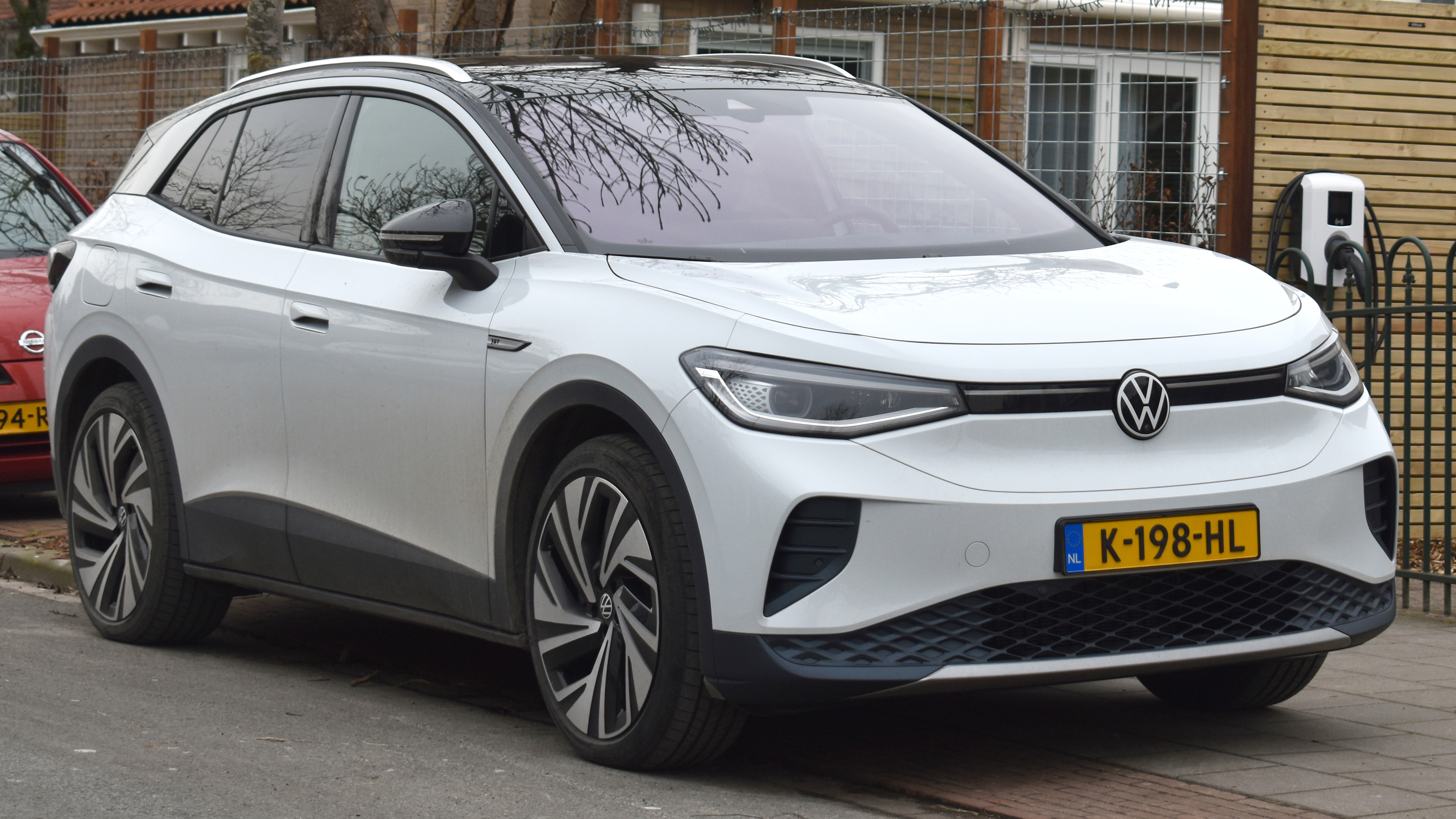
Volkswagen Id4
"They are ending ID4 production as well in Chattanooga. So maybe that plays a role in all this too."
ID.4 is Volkswagen’s electric SUV. They’re saying production of the ID.4 in Chattanooga is ending, which changes what cars that plant will make next.
ID4 refers to the Volkswagen ID.4 electric SUV. The discussion says Volkswagen is ending ID.4 production in Chattanooga, which is a meaningful localization shift because it affects local jobs, supply chains, and future product plans.
Audi
"Well, Jack, which brands could benefit most from shifting production to the US? Yeah, I would say it would be the Audi brand. And it's probably not even close."
Audi is the brand they think would benefit most. The reason is that Audi currently brings in all its cars instead of building them in the U.S., so making them locally could help.
Audi is singled out as the brand that could benefit most from shifting production to the U.S. The host notes Audi currently imports every vehicle it sells, so local production could reduce costs and improve supply flexibility.
Imports vs. local production
"Audi only imports every vehicle it sells. So they don't have anything built in the US in the current environment."
They’re comparing two ways of getting cars to customers: importing them or building them locally. Local building can make things more reliable and sometimes cheaper.
The discussion contrasts importing vehicles versus building them locally in the U.S. This matters because import-only strategies can be more exposed to shipping delays, tariffs, and currency/trade changes, while local production can improve responsiveness to demand.
local US production
"And, you know, if Audi was to get local US production, that's something that dealers have wanted for a very long time. That would be, I think, welcome news."
Local US production means the cars are made in the U.S. instead of shipped in from overseas. That can help dealers get cars faster and can reduce costs for the company.
“Local US production” means building vehicles in the United States rather than importing them. Automakers pursue it to improve supply-chain resilience, reduce shipping costs, and better match regional demand—especially when regulations, tariffs, or EV adoption rates change.

Neue Class
"BMW is set to drop its next gen EV platform. The brand says the Neue Class is a revolutionary tech leap that will bring it into a new era."
Neue Class is BMW’s next big EV “foundation” (platform). It’s basically the new design and engineering base that future BMW electric cars will use, and the timing matters because it has to be ready before deliveries can start.
“Neue Class” is BMW’s next-generation EV platform strategy, positioned as a major technology shift. The discussion ties it to timing and rollout planning—showing how platform readiness drives when new EVs reach customers.
EV demand resets
"But it comes as EV demand resets in many major markets around the globe."
They’re saying EV demand is changing—some places are buying more or less than expected. When that happens, car companies have to rethink timing and planning so they don’t build too many (or too few) cars.
“EV demand resets” refers to changing consumer and market demand for electric vehicles across regions. When demand shifts, automakers adjust production timing, rollout schedules, and investment plans to match the new sales outlook.
active rollout
"This is the first year of the active rollout of the Neue Class. Why now? And do you have any fears about the timing of this transition..."
“Active rollout” means the new technology is no longer just in planning—it’s being put into cars that customers can buy. It usually happens in steps, not all at once.
An “active rollout” means the company is actively moving from development into real-world production and deliveries. In this context, BMW is describing a phased transition where the platform is introduced first, then customer deliveries begin once the supply chain and production ramp are ready.

iX3 (G08)
"... the first time that first Neue Class of Vehicle IX3 back in September 2025. But the first customer de..."
The BMW iX3 (G08) is an electric SUV from BMW. Instead of using gasoline, it runs on electricity from a battery. The podcast is talking about when this electric model was first introduced and when customers started receiving it.
The BMW iX3 (G08) is BMW’s electric version of the X3-sized SUV, using an all-electric powertrain for everyday driving. It’s significant because it’s part of BMW’s broader push to expand its electric lineup, and the podcast references it in connection with the “Neue Klasse” vehicle family timing. It may be mentioned when discussing early customer deliveries or the rollout schedule for this generation.

BMW 7 Series
"So what it is always is a BMW 7 Series from front to end. But the difference is only, quote unquote, what's under the hood, what's the propulsion technology."
The BMW 7 Series is BMW’s top, luxury sedan. BMW sells it with different kinds of power—gas, plug-in hybrid, and electric—so different buyers can get the same overall feel and features, just with different technology under the hood.
The BMW 7 Series is BMW’s flagship sedan, offered with multiple powertrain options. In this segment, the host discusses how BMW sells the same “brand experience” across different propulsion technologies—like combustion, plug-in hybrid, and fully electric—while keeping the overall design and user experience consistent.
plug-in hybrid
"BMW is offering many different variants of the 7 Series, internal combustion engine vehicle, EV, plug-in hybrid,"
A plug-in hybrid is a car that uses both gas and electricity. You can charge it from a plug, and it can still run on gas when the battery runs low.
A plug-in hybrid (PHEV) combines an internal combustion engine with an electric motor and a battery you can recharge by plugging in. This lets drivers use electricity for shorter trips while still having the range flexibility of a gasoline engine.
EV
"BMW is offering many different variants of the 7 Series, internal combustion engine vehicle, EV, plug-in hybrid,"
EV means electric vehicle. It runs on electricity from a battery instead of using a gas engine as the main power source.
EV stands for electric vehicle, meaning the car is powered primarily by an electric motor and a battery. In the segment, BMW is positioning EVs as one of several powertrain choices offered within the same 7 Series “brand promise.”
technology openness
"And then you have technology openness, as we like to call it, where the customer chooses, I want this drivetrain, I want that drivetrain, or I want that drivetrain."
“Technology openness” means customers can pick the type of powertrain they want. The idea is you shouldn’t have to give up the car’s overall feel just because you choose gas, hybrid, or electric.
“Technology openness” here means letting customers choose the drivetrain they want (combustion, plug-in hybrid, or EV) without forcing a single compromise. The speaker argues this approach preserves the same overall vehicle experience while varying only the propulsion technology.
spreading development energy too thin
"Do you have any concerns about spreading development energy too thin across different powertrains? No."
The concern is that making lots of different versions of the same car—gas, hybrid, and electric—might make it harder for engineers to focus. The speaker says they don’t see it as a problem because different countries want different kinds of cars.
This refers to the risk that building multiple powertrain variants (gas, hybrid, EV) can stretch engineering resources and slow progress. The speaker responds that global market differences require multiple drivetrains, so the tradeoff is justified.
EV adoption in the 18-90% range vs 5% range
"You have some countries which have an EV adoption in the 18-90% range, and others in the 5% range,"
They’re saying EV popularity isn’t the same everywhere. Some countries buy lots of electric cars, while others buy very few, so BMW needs different powertrain options to match local demand.
The speaker highlights that EV adoption varies dramatically by country, which affects what automakers must offer to succeed globally. This is used to justify why BMW needs multiple drivetrains available across different markets.

BMW 3 Series
"...But BMW's roots are in the sedan, in the 3 Series, in the 5 Series, since almost 50 years in the 7 Series."
The BMW 3 Series is one of BMW’s most important model lines and is referenced here as part of BMW’s “roots” in sedans. The discussion uses it to frame why BMW still sees a future for large sedans even as SUVs dominate market share.

BMW 5 Series
"...But BMW's roots are in the sedan, in the 3 Series, in the 5 Series, since almost 50 years in the 7 Series."
The BMW 5 Series is a mid-size luxury sedan. It’s mentioned to show that BMW has built a lot of its reputation on sedans for decades.
The BMW 5 Series is another key sedan in BMW’s lineup, mentioned alongside the 3 Series and 7 Series to emphasize BMW’s sedan heritage. It’s part of the argument that sedan demand can persist even as consumer preferences shift toward SUVs.
subscription offerings
"...there's a suite of software offerings that are available for four years included in the vehicle, and then at that four-year point, consumers will have the option to pay for them on a monthly or yearly basis... subscription offerings are a sort of interesting topic in the industry."
A subscription offering means you pay for certain car features over time. In this case, BMW includes the software/service suite for a few years, then you can choose to keep paying to use it.
“Subscription offerings” refers to features and services that are paid for over time rather than included permanently at purchase. Here, BMW’s software/services are bundled for four years and then offered for monthly or yearly payments.
level three
"...My understanding is that there's no level three services offered in the 7 Series, and that BMW is backing away from that. What has been the challenge with deploying level three? We have never had level three in deployment."
“Level three” refers to SAE driving automation levels, where the car can handle driving tasks under certain conditions and the driver may not need to continuously monitor. The speaker says BMW has never had “level three” in deployment, contrasting it with the company’s current assisted-driving capabilities.
Highway Assistant Plus
"...We have great assisted driving features in many of our cars and also in this world. For example, the Highway Assistant Plus. I just drove it... where... I didn't touch anything in the car..."
Highway Assistant Plus is a highway driving help feature from BMW. It’s designed to take over some tasks so you don’t have to constantly interact with the car, but it’s not the same as full automation where you can fully disengage.
Highway Assistant Plus is BMW’s branded driver-assistance feature for highway driving, intended to reduce driver workload. The speaker describes using it on a long highway trip without touching the car for a significant stretch, illustrating how BMW’s current assisted-driving differs from true Level 3 automation.
theater screen
"When we launched the previous 7 Series, we had introduced a thing called the theater screen, which is a use screen folding down in the second row... That feature has been enhanced quite a bit on this 7 Series, and now it has touch screen."
The “theater screen” is a screen for the back seats that folds down like a TV. BMW is saying it’s improved so passengers can use it more easily and connect their own devices.
The “theater screen” is BMW’s rear-seat entertainment display that folds down for passengers. In this segment, BMW says it’s been enhanced with touch controls and easier device integration so rear passengers can watch content more conveniently.
panoramic eyedrive
"The other one is the panoramic eyedrive, what we call it, which is a new display. You have to imagine... there's a screen all the way on the lower part of the windshield... and it is a totally new immersive driving experience."
BMW’s “panoramic iDrive” is a big display that stretches across the front of the car near the windshield. Instead of just one small screen, it shows information in a more immersive way so it’s easier to see while driving.
“Panoramic iDrive” (spoken here as “eyedrive”) refers to BMW’s wide, immersive display concept that spans the lower portion of the windshield. The idea is to present bright, sharp information across a large field of view so the driver gets a more “immersive” experience than with a single small instrument cluster.
CarPlay
"...while also still supporting CarPlay and Android Auto, why are you choosing to support smartphone mirroring while still investing in the native infotainment?"
CarPlay lets you use your iPhone through the car’s screen and controls. It’s one way to get apps like maps and music into the BMW without switching entirely to BMW’s own system.
CarPlay is Apple’s in-car interface that mirrors or integrates an iPhone’s apps and controls into the vehicle’s infotainment system. BMW is discussing why it still supports CarPlay even while investing in more native, car-connected software.
Android Auto
"...while also still supporting CarPlay and Android Auto, why are you choosing to support smartphone mirroring while still investing in the native infotainment?"
Android Auto lets you connect an Android phone to the car so you can use apps on the car’s screen. BMW is saying it still supports this even as it builds its own deeper, car-integrated tech.
Android Auto is Google’s in-car interface for Android phones, providing a similar experience to CarPlay. In this segment, BMW explains that it supports smartphone mirroring/connection while also building native infotainment features that can use vehicle data.
native infotainment
"...while also still supporting CarPlay and Android Auto, why are you choosing to support smartphone mirroring while still investing in the native infotainment? We think that having the knowledge and the insight into the vehicle..."
Native infotainment is the car’s own built-in tech and apps. The advantage is it can use information from the car itself—like battery status—to give better guidance than a phone-only setup.
“Native infotainment” means the car’s own built-in software and services running directly in the vehicle, rather than relying entirely on a phone’s mirrored interface. BMW’s point here is that native systems can access vehicle-specific data (like charging needs) to improve routing and charging guidance.
smartphone mirroring
"...why are you choosing to support smartphone mirroring while still investing in the native infotainment? We think that having the knowledge and the insight into the vehicle..."
Smartphone mirroring is when your phone’s screen/apps show up on the car display. BMW is saying that’s helpful, but their native system can do more because it can “talk” to the car directly.
Smartphone mirroring is when the phone’s interface is projected into the car’s display (often via CarPlay/Android Auto). BMW is weighing this against native infotainment because mirrored apps may not be connected to the car’s internal data streams.
vehicle data streams for EV routing and charging
"...they're not connected to the car. So they don't know, for example, when does my car in an electric car need the next charge? How should I do the routing perfectly?"
For electric cars, the best navigation isn’t just “where to go”—it also needs to know how full the battery is and when you’ll need charging. BMW is arguing that their connected system can use car data to plan charging and routing better.
This segment highlights a key EV software advantage: using the car’s own data (battery state, charging needs, and real-time vehicle information) to improve routing and charging decisions. The host contrasts this with solutions that aren’t connected to the car, which can’t know when the vehicle needs the next charge.
battery preconditioning (warming up the battery before charging)
"For example, warming up the battery before charging, because that makes the charging process much more smooth and quicker."
Before charging, some EVs warm up the battery so it’s ready to take power. That can help the charging go faster and feel more consistent.
Warming up (preconditioning) the battery before charging helps the battery accept energy more efficiently. That can make charging smoother and faster because the battery is in a better temperature range for high-power charging.
charging station
"And then the car looks at the route and the charging station on the way, so you get to your destination with the right level of charging."
A charging station is where you plug your electric car in to add battery energy. The car can plan the trip so you stop at the right place and don’t arrive with too little charge.
A charging station is the public or semi-public place where an electric vehicle (EV) plugs in to recharge. The car’s navigation can factor in station availability and charging speed so you arrive with the right battery level.
Beijing Auto Show
"Come back tomorrow for a look at this week's Beijing Auto Show and what it tells us about how Chinese automakers are building their brands in new and more strategic ways."
The Beijing Auto Show is a major event where automakers and suppliers showcase new models, technologies, and branding strategies. In this segment, it’s used as a lens to discuss how Chinese automakers are positioning themselves.

G-Class Gwagon
"Here's to be, you'd see all of these copies, like a G-Wagon copy or just so many different copies. Now, they feel a lot more confident and they're doing their own designs."
A “G-Wagon copy” means another car tries to look like the Mercedes-Benz G-Class. They’re saying some companies used to copy the style, but now they’re making their own designs.
A “G-Wagon copy” refers to vehicles that imitate the look and vibe of the Mercedes-Benz G-Class (often the boxy, off-road styling). The point in the discussion is that some brands initially relied on copying, but are now moving toward original designs.
Request an Explanation
Heard something you'd like explained? We'll add it to this episode.
Sign in to request explanations for terms you heard.
Want to learn more?
Browse our glossary for plain-English explanations of automotive terms, jargon, and concepts.
Help improve this episode
See something that's not quite right? Our annotations are AI-generated and can sometimes miss the mark. Click the flag icon on any annotation to suggest a correction.
2 community members have helped improve this episode.