
Bedwood Founder Jeff Major
About this episode
Jeff Major from Bedwood talks truck-bed wood restoration and how to replace “bed wood” when it’s “all nasty.” Bedwood’s approach focuses on speed, tight fitment, and durable finishes: pre-finished planks with a waterborne impregnated finish, laser scanning for accuracy, and designs that avoid gaps and rattle. They also cover the no-drill retro liner concept, pricing, and finish options like Phantom and Smoked Stainless. The conversation widens into racing roots and classic GM/El Camino talk.
If yesterday was Tuesday, then today is "Woodsday". Jeff Major from BEDWOOD is in the shop. Stacey and Jeff talk about Jeff's early days growing up in a gearhead family and his father owning a gas station, then getting into stock car racing, demolition derby, and finally tractor pulling. They also talk about how that background and his dissatisfaction with the aftermarket wood truck bed kits available at the time motivated Jeff to start his own company, which is now a global leader in aftermarket wood truck bed kits!
stains
"I try to avoid stains because stains are a pigment and they'll actually fill the grain of the wood."
Stains are colored finishes that soak into wood. They can get into the wood grain, which affects the final color and look.
In wood finishing, stains are pigmented coatings that soak into the wood and can fill the grain. That can change how the surface looks and how well the final color matches the intended design.
pigment
"I try to avoid stains because stains are a pigment and they'll actually fill the grain of the wood."
Pigment is what gives a stain its color. In wood, it can sink into the grain and change how the surface looks.
Pigment is the color-containing material in a stain or paint. In wood finishing, pigment can settle into the grain, which is why the host says stains can alter the wood’s texture and appearance.
dimensional correctness
"Yes, we designed an American flag bed that's dimensionally correct to the flag... Because I've got to maintain the dimensional correctness of the flag."
Dimensional correctness means the design is sized exactly right. In this case, the flag has to match the bed’s shape so it doesn’t look stretched or off-center.
Dimensional correctness means the artwork or inlay is made to exact measurements so it matches the intended proportions. Here, it’s used to keep an American flag design properly scaled to the truck bed’s geometry.
long bed
"And I can't do it in a long bed truck because that would alter the dimensions of the flag."
A long bed is just a pickup truck with a longer cargo area. When you customize the bed, the length changes where things can fit and how accurately designs can be sized.
A long bed is a longer pickup-truck cargo bed length. In custom work, bed length matters because it changes the available mounting area and can affect how accurately a design (like an American flag) can be scaled and positioned.
Fleet side truck
"Fleet side truck, short fleet, we can do it in the center section between the wheel tubs,"
Fleet side is a type of pickup bed shape. It changes the bed’s side contours, which affects where you can put custom graphics and how they line up.
“Fleet side” refers to a pickup bed style with relatively smooth, straight sides (as opposed to beds with pronounced wheel-arch bulges). The side shape affects where you can place artwork and how the design aligns with the wheel tubs.
wheel tubs
"Fleet side truck, short fleet, we can do it in the center section between the wheel tubs,"
Wheel tubs are the raised parts inside the bed area that make room for the tires. They limit where artwork or panels can go.
Wheel tubs are the raised inner structures in a pickup bed that clear the wheels. They create fixed boundaries in the bed, so custom center-section designs must be sized and positioned around them.
step sides
"and then we can do step sides, short step sides with it."
Step sides are pickups where the bed sides bulge out more around the wheel area. That shape affects where custom designs can be placed.
Step sides are a pickup bed style with more pronounced, stepped-out bodywork around the wheel area. That different bed geometry changes the available flat surfaces and can affect how precisely a design can be laid out.
fitment
"It's not cheap, but if that's what you want, and the fitment is so precise,"
Fitment is how well a custom part lines up with the truck. If the fitment is precise, it looks right and installs without a bunch of extra adjustments.
In truck customization, fitment means how precisely an accessory or panel matches the vehicle’s existing dimensions and mounting points. Good fitment reduces gaps, misalignment, and the need for extra trimming or rework.
Bedwood
"But one of the most unique products that you've got and a thing that really gets me going is the retro liner."
Bedwood makes a truck-bed accessory that gives you a wood look. Instead of replacing the whole bed, it’s designed to go on top of what you already have.
Bedwood is the company behind a retrofit product that turns a truck’s bed into a wood-looking setup. In this segment, the host is specifically talking about the “retro liner,” which is designed to sit on top of an existing truck bed rather than replacing the entire bed.
retro liner
"is the retro liner. So let's talk about that a little bit because for those of you that don't know what this is, this is actually a wood bed that goes into your existing bed, sits on top of your existing metal bed"
A “retro liner” is an insert you put into your truck bed to make it look like wood. It sits on top of the metal bed, so you don’t have to replace the whole bed.
The “retro liner” is a retrofit truck-bed insert that creates a wood-bed appearance. The key idea is that it goes into your existing bed, sits on top of the metal bed, and makes it look like real wood without replacing the factory bed.
body warranty
"But here's all these constraints. There's no drilling. We can't do anything to avoid a body warranty and all this laundry list of things."
A “body warranty” is the truck’s coverage for parts of the body. The installer wanted a solution that doesn’t require drilling, because drilling can create problems with warranty coverage.
A “body warranty” is coverage tied to the vehicle’s body components, and modifications that require drilling or structural changes can sometimes be used to deny warranty claims. The host highlights that the Bedwood solution had to avoid drilling to help keep warranty risk low.
no drilling
"But here's all these constraints. There's no drilling. We can't do anything to avoid a body warranty... No drilling required. No drilling."
“No drilling” means you don’t have to drill holes into the truck bed to install the product. That matters because it’s easier to install and remove, and it can help avoid warranty issues.
“No drilling” describes an installation approach that avoids making holes in the truck bed. In this segment, it’s presented as a major requirement because it helps preserve OEM warranty conditions and allows the liner to be removed as a unit.
OEMs
"Yeah, working with the OEMs, absolutely. And so I developed that. And so it goes right across the existing metal floor."
OEMs are the companies that make the truck originally. Here, the point is that the product was designed to work with the truck in a way that doesn’t require drilling and doesn’t mess with the warranty.
OEMs are “original equipment manufacturers,” meaning the companies that build the vehicle in the first place. The segment emphasizes working with OEMs so the retro liner can be installed without drilling and without jeopardizing warranty coverage.
truck beds
"These new trucks seem like the newer they are, the more they vary... But so we built some adjustment into it... And then we began laser scanning these truck beds."
A truck bed is the open box area where you haul things. Here they’re explaining how their wood lining fits inside that box and whether it reduces the usable space.
A truck bed is the cargo box area behind the cab where you load items. In this segment, the speaker is talking about how Bedwood’s wood lining is shaped to match different truck bed designs and how much usable depth is affected.
laser scanning
"And then we began laser scanning these truck beds. And so we're 2026 and back."
Laser scanning is like using a laser to map the truck bed’s shape very precisely. That helps the wood pieces fit the bed better instead of being close-but-not-perfect.
Laser scanning is a measurement technique that uses a laser to capture the exact shape and dimensions of a truck bed. Bedwood uses it to create wood bed products that match the bed’s contours for better fitment and fewer visible gaps.
tailgate
"It's when you open the tailgate, there's a trim board that matches the rest of the wood that you see."
The tailgate is the back door of a pickup bed that you lower to load and unload. They’re saying their wood trim is designed to look right even when the tailgate is down.
The tailgate is the hinged door at the back of a pickup truck bed that swings down for loading and unloading. The speaker describes a matching trim board so that when the tailgate is opened, the wood appearance stays consistent and you don’t see raw board ends.
satin
"You know how the retro look is popular... so are you getting people now that they don't want the gloss, they don't want the satin? ... our satin is really on the low end of satin, but it's not flat."
Satin is a paint finish that isn’t shiny like gloss, but also isn’t completely flat. It makes the truck look more subdued and different in how it catches light.
“Satin” refers to a low-sheen paint or coating finish that sits between high-gloss and flat/matte. On trucks, switching to satin changes how light reflects off the body, so the same color can look more muted and less flashy than gloss.
gloss
"so are you getting people now that they don't want the gloss, they don't want the satin? ... When you instead of putting that high gloss kit in there, when you go to satin, it changes the entire appearance..."
Gloss means the finish is shiny and reflects light a lot. Compared with satin, it usually makes the truck look more flashy.
“Gloss” is a high-sheen paint/coating finish that reflects light strongly, making surfaces look shinier and more visually “deep.” In the segment, the host contrasts gloss with satin to explain how the truck’s overall look changes.
aged wood
"they want kind of like aged wood. Is there anybody doing that?"
“Aged wood” means a finish designed to look like old, weathered wood. Here it’s mentioned as a retro style people want on trucks.
“Aged wood” is a styling finish that imitates the look of weathered, older wood rather than fresh, uniform material. In this context, it’s part of a “retro look” trend for truck finishes.
Phantom
"We've got a finish we came out with about a year ago called our Phantom. And it's a gray finish that kind of gives that look, but it's still in the same durability."
“Phantom” is the name of a particular gray coating/paint finish they offer. The idea is that it looks like a retro/aged style but is still meant to last.
“Phantom” is the name of a specific gray finish the speaker says they introduced about a year earlier. It’s described as giving an aged/retro look while keeping the same durability as their other finishes.

Rolls-Royce Phantom
"...nish we came out with about a year ago called our Phantom. And it's a gray finish that kind of gives that l..."
The Rolls-Royce Phantom is a very high-end luxury car made for comfort and a quiet, smooth ride. People often talk about it because it can be customized, including exterior finishes like the gray color mentioned in your context. It’s designed more for luxury than for sporty driving.
The Rolls-Royce Phantom is the brand’s flagship luxury sedan, known for an extremely high level of comfort and refinement. It’s the kind of car that gets discussed in detail because special editions and presentation choices—like the gray finish referenced in your context—are a big part of how it’s marketed and personalized. The Phantom name also signals the top tier of Rolls-Royce’s lineup.
ranch arrows
"I mean, obviously pickup trucks, but how about El Camino's ranch arrows? ... So are you more of an El Camino guy or a ranch arrow?"
“Ranch arrows” sounds like a named custom style or trim option for an El Camino. The way it’s discussed suggests it’s something enthusiasts recognize as a specific look.
“Ranch arrows” appears to be a specific custom trim/appearance package associated with the El Camino community—likely a branded name for a particular look. The speaker contrasts it with “El Camino” preferences, suggesting it’s a recognizable option or style rather than a generic feature.
SS
"Oh, no, I'm an El Camino guy. I had an 83 SS when I was in college..."
“SS” usually means “Super Sport.” It’s a name brands use for a sportier, higher-spec version of a car, often with better performance and nicer looks.
“SS” is a trim designation that typically stands for “Super Sport,” indicating a more performance- and appearance-focused version of a model. On an El Camino, an SS usually means stronger engine options and sportier styling compared with base trims.
327
"Yeah. And it's a factory 327 was a four speed car, but they put a five speed in it now."
“327” is shorthand for a specific V8 engine size used by Chevrolet. It’s a performance-era engine that people recognize and often seek out in classic cars.
“327” refers to the Chevrolet 327 cubic-inch V8 engine family, a popular small-block used in many 1960s performance cars. It’s a key part of why certain El Caminos are desirable to enthusiasts—because the engine choice affects how the car feels and how it’s valued.
five speed
"And it's a factory 327 was a four speed car, but they put a five speed in it now."
A “five-speed” is a manual transmission with five forward gears. It can make highway driving nicer and can change the car’s acceleration feel.
A “five-speed” manual transmission has five forward gears, which can help the car cruise more efficiently and keep the engine in a better rpm range. Swapping from four-speed to five-speed is a common modification on classic cars.
four speed
"And it's a factory 327 was a four speed car, but they put a five speed in it now."
A “four-speed” refers to a manual transmission with four forward gears. In muscle-era cars, the number of gears matters for how the engine runs at highway speed and how the car accelerates through the gears.
black limba
"I'm using black limba as the wood I'm going to use in it. But no ranch arrows, huh?"
“Black limba” is a wood used for decorative parts inside a vehicle. People pick it because it has a dark color and a nice grain for a classic-style finish.
“Black limba” is a type of wood used for decorative panels or interior trim. It’s chosen for its color and grain, especially in custom retro-style interiors where the goal is a specific vintage look.
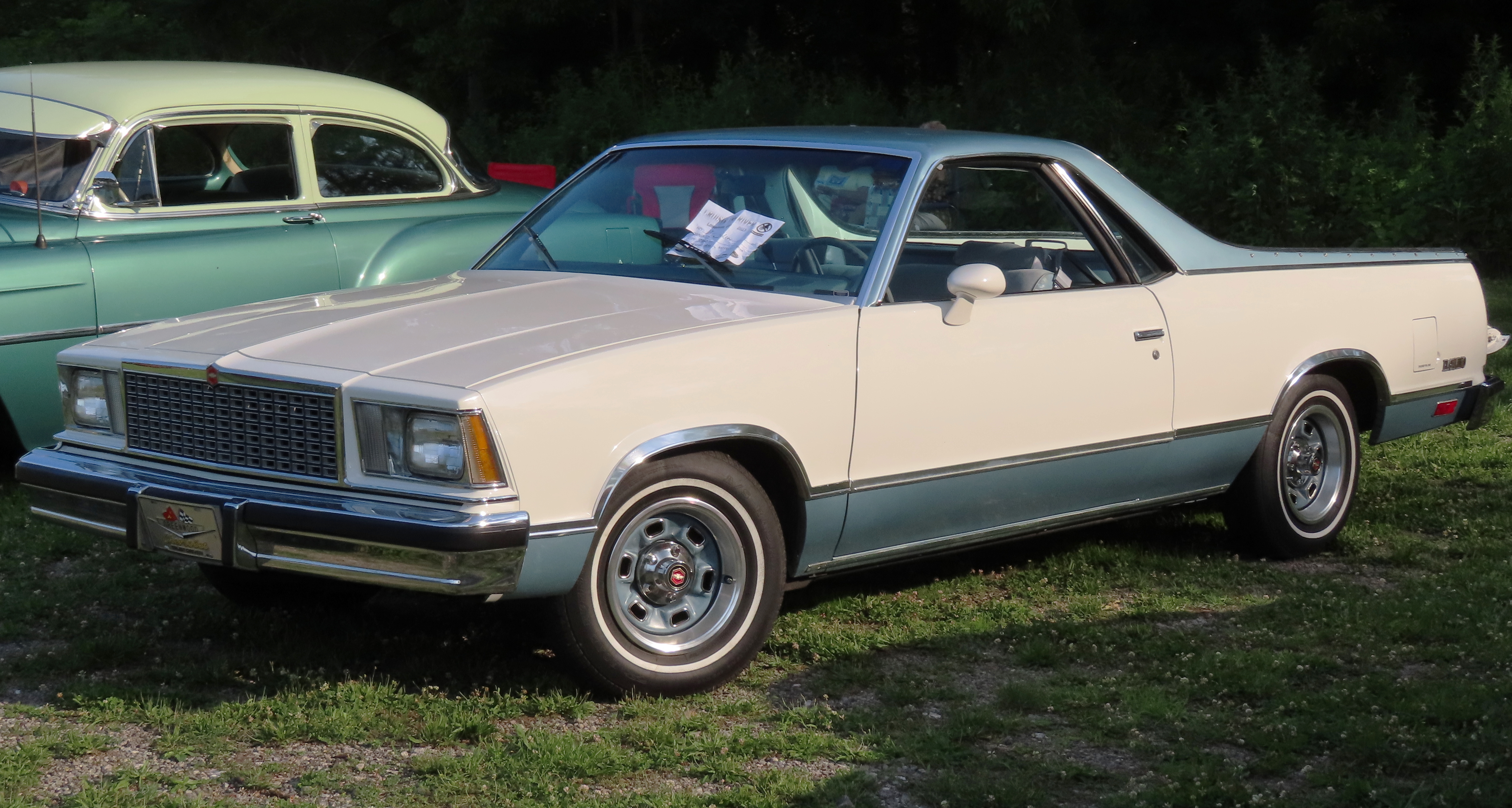
El Camino
"You know, the 59 El Camino to me is the pinnacle of cool. Absolutely."
The Chevrolet El Camino is a classic car that also has a truck bed. It’s known for looking like a cool car, but still being useful like a small truck.
The Chevrolet El Camino is a classic American “car-based pickup” that blends passenger-car styling with a pickup bed. In this segment, the host calls the “59 El Camino” the pinnacle of cool, pointing to the appeal of that late-1950s design era.
hidden headlights
"And then I jump all the way up to the 70 ranch arrow with the hidden headlights. Yes. I like those."
Hidden headlights are headlights that don’t stay visible all the time. They’re covered up when the car is just sitting, and then they come out when you need them.
“Hidden headlights” refers to headlamp designs where the lights are concealed behind the bodywork and then appear when needed (commonly via pop-up mechanisms). It’s an era-specific styling cue that also changes how the front end looks at rest versus when driving at night.

Chevrolet Chevelle
"...est, I'm kind of in and out. You know, I like the Chevelle looking ones. I like some of the 60s ranch arrows..."
The Chevrolet Chevelle is a mid-size car made by Chevrolet, and the 1960s versions are the ones many people talk about. Some of them have a distinctive classic look that stands out, which is why it gets mentioned in car conversations. It’s also a popular choice for people who like older American styling.
The Chevrolet Chevelle is a classic American mid-size car that became especially popular in the 1960s. In podcast discussions, it often comes up because certain 1960s styling—like the “ranch arrow” look mentioned in your context—captures the era’s performance-and-design vibe. It’s a common reference point for enthusiasts who like that period’s body shapes and proportions.
Smoked Stainless
"We came out with our Smoked Stainless Bed Strips. That they're not black, but they're the same color. Stainless is what they call a black or smoked stainless appliances."
“Smoked stainless” means stainless metal that’s been finished to look darker, like a tinted or “smoked” version. It’s mainly about style, not a different metal.
“Smoked stainless” is a finish where stainless steel is tinted darker (often described as “black” or “smoked”) for a subdued, modern look. In this segment, it’s used on Bedwood bed strips, and the host clarifies it’s not actually black—just a darker stainless tone.
bed strip
"Now this Smoked Finish, how durable is it? Because it is a bed strip. You know, people are going to throw something in there."
A bed strip is a trim/protection piece that runs along the edge of a truck bed. It helps protect the bed area and looks better, and the host is talking about how well the finish survives everyday use.
A bed strip is an accessory trim piece installed along the pickup truck bed’s edges to protect surfaces and improve appearance. Here, the host discusses durability concerns because people may throw items into the bed, and they say it holds up under typical use.
brushed stainless
"Instead of polished stainless, we use brushed stainless, which is nice. I love the brushed stainless."
Brushed stainless is stainless that has a textured, “grainy” look instead of a shiny mirror finish. That texture can help it look cleaner for longer because it hides small marks.
Brushed stainless is stainless steel with a directional grain/texture, usually created by sanding or wire-brushing. Compared with a polished surface, it tends to hide fingerprints and minor scratches better, which is why the host prefers it for exposed areas.
hidden fasteners
"And then we also got those in the hidden fasteners as well, and matching angle strips for the stepsides."
Hidden fasteners are how a part is attached without showing the screws or bolts on the outside. It usually looks cleaner and can be less likely to catch or snag.
Hidden fasteners are mounting points designed so the screws/bolts aren’t visibly exposed on the surface. This can improve appearance and reduce snag points, while still allowing the part to be installed and serviced.
VIP All Access System
"One is our VIP All Access System. It's a bed floor tilt system that actually works."
This is a custom truck bed-floor setup that tilts up. It’s meant to make it easier to reach things under the bed, and the host says it’s been designed to work well.
Bedwood’s “VIP All Access System” is a bed-floor tilt system for a pickup truck. The idea is that the truck’s bed floor tilts up to give easier access underneath, and the host emphasizes that it’s engineered to work reliably.
VIP Fuel Access
"And then we also, it's called our VIP Fuel Access, where the board tilts up. And we completely revamped it."
“VIP Fuel Access” is a way to open up part of the truck bed so you can reach the fuel area more easily. They redesigned how it hinges and how it sits so it lifts up smoothly and doesn’t look like an obvious cutout.
“VIP Fuel Access” is a truck bed modification where the access panel/board tilts up for fuel-related service. The host describes a full redesign—changing angles and the hinging system—so the panel lifts cleanly and leaves no visible seam.
Legans Hot Rod Shop
"Is it from like Legans Hot Rod Shop? No, they made the original one."
The host mentions Legans Hot Rod Shop as the shop that made the original version of this kind of truck bed access idea. Bedwood says they didn’t invent it, but they improved it.
Legans Hot Rod Shop is referenced as the original creator of the “style” of fuel-access mechanism that Bedwood later improved. The host distinguishes between inventing the concept and refining it with their own redesign.
four roller motor
"327 and we really built it. It's a four roller motor. Okay."
A “four roller motor” usually means the engine uses roller parts in the valve system. Rollers reduce friction, which can help the engine run smoother and handle higher revs.
A “four roller motor” typically means the engine uses roller valvetrain components (roller lifters/rockers) to reduce friction and help the engine rev more freely. Compared with flat-tappet setups, roller valvetrains are often chosen for higher-performance builds.
three deuces
"And then got three deuces that I'm changing from carburetted fuel injected right now. But you're still keeping the three deuces look. It's going to be the three deuces look."
“Three deuces” means the engine has three carburetors, and each one is the “two-barrel” type. Enthusiasts like it because it can make the engine breathe better and feel more responsive.
“Three deuces” refers to running three two-barrel carburetors on an engine—an enthusiast setup associated with classic muscle-era performance. The idea is to improve airflow and throttle response compared with a single carburetor, while also creating a distinctive look and sound.
carburetted fuel injected
"And then got three deuces that I'm changing from carburetted fuel injected right now. But you're still keeping the three deuces look. It's going to be the three deuces look."
This is about how the engine gets fuel. Carburetors and fuel injection both deliver gasoline, but they do it differently—so changing the system usually changes how the truck drives and how it has to be tuned.
“Carburetted fuel injected” is describing a fuel-delivery setup that blends carburetion with fuel-injection terminology, but the key point is that the speaker is changing how fuel is delivered. Carburetors meter fuel using engine vacuum/airflow, while fuel injection uses electronically controlled injectors; switching systems can change throttle response, drivability, and tuning needs.
Request an Explanation
Heard something you'd like explained? We'll add it to this episode.
Sign in to request explanations for terms you heard.
Want to learn more?
Browse our glossary for plain-English explanations of automotive terms, jargon, and concepts.
Help improve this episode
See something that's not quite right? Our annotations are AI-generated and can sometimes miss the mark. Click the flag icon on any annotation to suggest a correction.