
Talking Interiors with Auto Kustoms
About this episode
Vehicle interiors take center stage as Tales of a Gearhead talks with Auto Kustoms about how interior work goes far beyond reupholstery. The crew explains what inspired them—lowrider magazines and the mini-trucking world—then walks through their process: hand-cutting and hand-shaping foam, sometimes redoing frames, and even cutting seat structures for features like cup holders. They also cover pricing drivers, materials (faux leather, carpet kits), repair work, and why many convertible-top jobs are “tedious.”
We all love it when it's finished and looks great but hate the road we have to travel to get there. Well, to make that journey a bit easier, Stacey is joined by Jonas & Eric from AUTO KUSTOMS out of Harrodsburg, KY. They discuss how they got started, what made them get into interior work, their least favorite vehicles to work on, AND bounce around few ideas for what they & Stacey might do with APACHE project.
reupholster
"a lot of people will look at a seat and go, oh, well, they're just making a new cover for that seat. And of course, you can do that."
Reupholster means putting new fabric or leather on an existing seat. In this discussion, they’re saying that sometimes the work goes beyond that—like cutting the seat and adding new features.
Reupholstering is replacing the interior upholstery material (like fabric or leather) on seats and panels. The hosts contrast it with deeper fabrication, where the seat gets cut and modified to add features, so the result won’t look like the original seat.
bench seat
"But you guys actually will look at, for example, they're getting ready to do the bench seat on my Apache pickup. And they're not just going to reupholster this new seat."
A bench seat is one long seat for multiple people. When shops customize a bench seat, they may rebuild it and add things like cup holders, not just replace the fabric.
A bench seat is a single, wide seat that spans across the cabin instead of separate individual seats. In custom interior work, bench seats often get modified with new frames, different foam shapes, and added features like cup holders.
cup holders
"You know, they're actually going to cut it, put cup holders in it, do whatever you're going to do. It will not come back looking like the same seat."
Cup holders are the built-in places to keep drinks from sliding around. If a shop adds them to a seat, they often have to modify the seat structure and then finish it so it matches the rest of the interior.
Cup holders are built-in storage features designed to secure drink containers while the vehicle is moving. In custom interiors, adding cup holders usually requires cutting/modifying the seat or console structure and then integrating trim so it looks factory.
off the grill
"We take a lot from the vehicle itself, which I'll take, like, some body cues and off the grill, kind of tied into it."
“Off the grill” means they borrow design ideas from the car’s front grille. Those shapes or patterns can show up again in the interior, like in trim or stitching.
“Off the grill” refers to using the vehicle’s grille design as a visual source for interior styling. The grille’s shape and pattern can influence stitching, panel contours, or trim motifs so the cabin reflects the front-end design.
body cues
"We take a lot from the vehicle itself, which I'll take, like, some body cues and off the grill, kind of tied into it."
“Body cues” are styling hints from the outside of the car that designers repeat inside. It’s a way to make the interior match the car’s overall look.
“Body cues” are design details taken from the vehicle’s exterior—like shapes, lines, or styling themes—and echoed inside the cabin. Custom interior shops use them to make the interior look cohesive with the car’s original design language.
full on custom interior
"And another question a lot of people have, they come in and they want this full on custom interior is cost. OK, so let's be realistic about this."
A “full on custom interior” is when the shop changes a lot more than just the seat fabric. It can include rebuilding parts of the cabin and adding features, which is why it usually costs more.
A “full on custom interior” means more than reupholstery—it typically involves redesigning and rebuilding multiple cabin elements (seats, panels, trim, and sometimes integrated features). The episode frames it as a scope-and-cost question because deeper fabrication work costs more than a simple cover replacement.
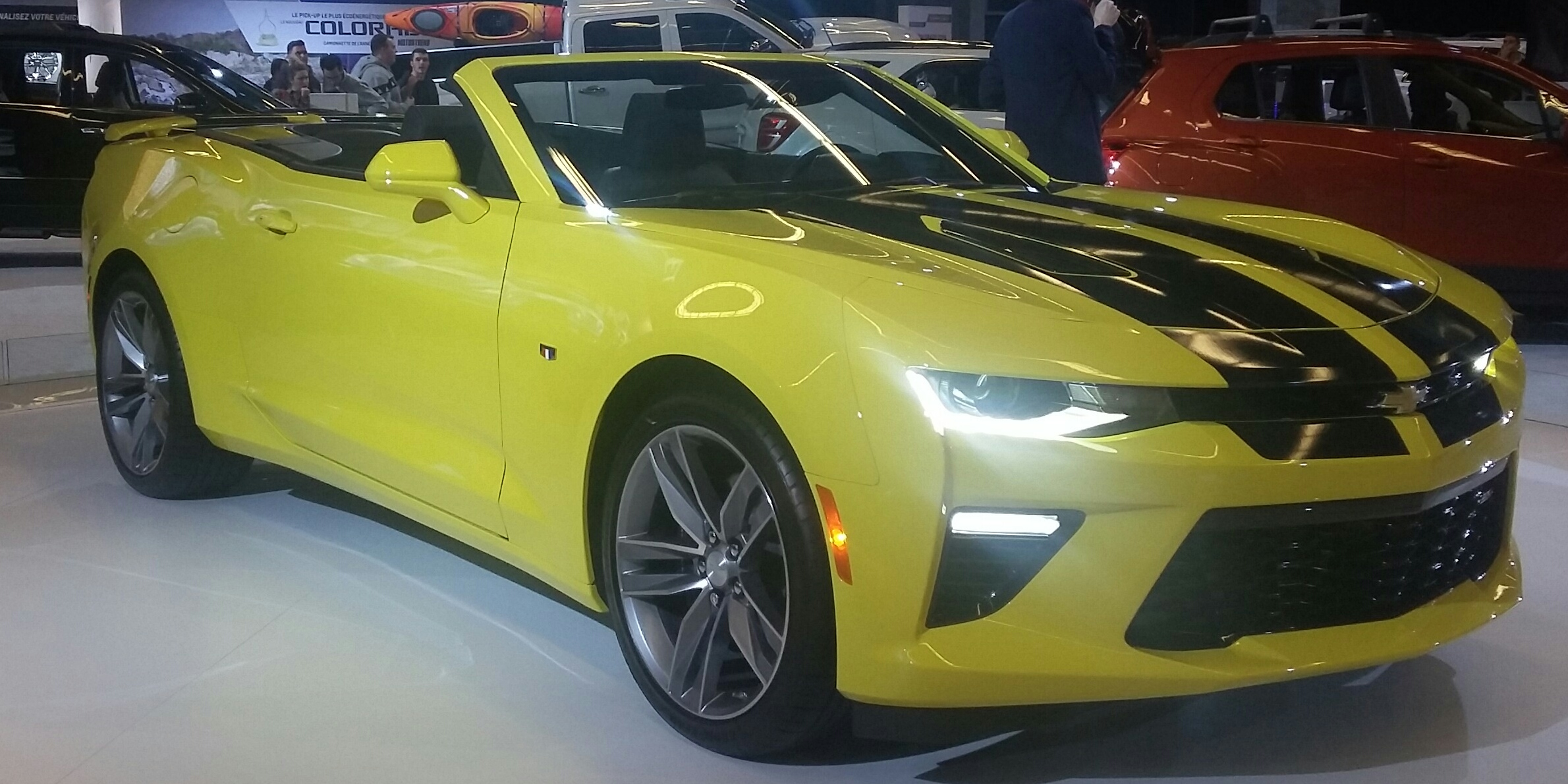
Chevrolet Camaro
"OK, so let's be realistic about this. I mean, you guys are at the top of the game. Say he brings in a 68 Camaro and he wants an interior that's going to wow people."
A “68 Camaro” means a 1968 Chevrolet Camaro. It’s a classic car, and the inside parts and layout are different from other years, so custom upholstery and seat work has to match that specific cabin.
The Chevrolet Camaro is a classic American muscle car, and the “68 Camaro” refers to the 1968 model year. In interior-custom conversations, that year matters because the cabin layout, seat frames, and trim pieces are specific to that generation.
interiors like a kit
"Now, on our square body stuff, we do do square body interiors like a kit. How do we, what do we call that?"
An interior kit is a set of parts and materials meant to upgrade the inside of a car or truck. Instead of building everything from scratch, you install the matching pieces to get a custom look.
An interior kit is a packaged set of trim and upholstery pieces designed to update a vehicle’s cabin without doing a fully custom one-off build. In this segment, Auto Kustoms is describing a “kit-like” approach for square body interiors, including door panel and kick panel work.
door panels
"So basically what you've done is you've come up with your own door panels. You've kind of put with your own kick panels."
Door panels are the inside trim pieces on the doors. They’re the part you rest your arm on and see every time you open the door.
Door panels are the interior trim pieces mounted to the inside of each door, typically including the armrest, speaker openings (on some cars), and the surface you see and touch. Auto Kustoms is describing custom door panel work as part of their square body interior package.
kick panels
"So basically what you've done is you've come up with your own door panels. You've kind of put with your own kick panels."
Kick panels are the small interior trim pieces near the floor by the front doors. People often customize them because they’re easy to see when you’re sitting in the seat.
Kick panels are the trim panels at the lower front area of the cabin near where your feet are (between the door and the dashboard). They’re often customized with upholstery or inserts because they’re visible and help define the interior’s look.

crew cab
"Like there's one right now, a crew cab that was in Adorama, ...that we did and it just looked phenomenal all together, you know, and it's,"
A crew cab is a pickup with two rows of seats and four doors, so there’s room for passengers in the back too. They’re using it as an example of how the interior work turns out.
A crew cab is a pickup-truck cab configuration with two full rows of seats and four full-size doors, offering more rear-seat space than extended-cab layouts. The hosts mention a “crew cab” example they built to show how the interior package can look cohesive across the whole truck.
headliner
"Depends on the truck, you know, like, like your truck over there has a whole headliner and it has all the trim. Yeah."
The headliner is the material on the inside roof of the car. When shops do a full interior, they often redo the headliner because it affects how the whole cabin looks.
The headliner is the interior fabric or panel on the roof of a vehicle. It often includes integrated trim and can be a major part of a full interior refresh because it’s visible and requires careful fitment.
trim
"Depends on the truck, you know, like, like your truck over there has a whole headliner and it has all the trim. Yeah."
“Trim” is the interior finishing pieces—things like panels and decorative surfaces. More trim usually means more parts to customize so everything matches.
In interiors, “trim” refers to the finished surfaces and decorative pieces—like panels, inserts, and coverings—that define the cabin’s look. When a shop says a truck has “all the trim,” it usually means more pieces are present to match in color and material.
custom door bottoms
"And we have add-ons too, like cup holders that bolt to the seat. We can do custom door bottoms. And so people can choose their leather."
The “door bottoms” are the lower parts of the door’s inside panel. Redoing them is a common way to refresh the look because that area gets worn and dirty first.
“Door bottoms” are the lower interior sections of the door panel, often made of vinyl/leather or covered trim. Custom door bottoms let a shop replace or reupholster the most scuffed, high-wear area to match the rest of the interior.
single stitch, double stitch
"You guys do all kinds of stitches, single stitch, double stitch, all kinds of stuff. Yeah, we bought a big CNC sewing machine now."
Single stitch means one line of stitching. Double stitch means two lines, which can look bolder and may hold up better over time.
Single stitch vs. double stitch refers to how many rows of stitching are used to form seams in upholstery. Double stitching typically increases visual emphasis and can improve durability by distributing load across more thread.
CNC
"Yeah, we bought a big CNC sewing machine now. So it opened the doors pretty big. Oh my gosh. Yeah, we have a CNC, which is a lot of them patterns there in that bucket that we wanted to show you."
CNC is a computer-controlled machine. It helps them make the same pattern accurately and repeatedly, which is useful for custom stitching and interior designs.
CNC stands for “computer numerical control,” meaning a machine uses computer instructions to cut or sew with high repeatability. In an upholstery context, it helps produce consistent patterns and stitching layouts.
Porsche
"like this like Porsche logo on repeat, you know, with some stripes in it and it came out really cool."
Porsche is a well-known car brand. Here, they’re talking about using the Porsche logo as a repeated design detail to make the interior look more custom.
Porsche is a German sports-car brand known for distinctive design language, including its crest-style logo. In this segment, the hosts reference using a Porsche logo motif as a repeating interior design element, which is a common customization approach for high-end interiors.
interior upgrades
"that's a nice point because you don't just do old car stuff, correct? So you do interior upgrades on new cars, things like that."
Interior upgrades are changes made inside the car to make it look nicer or feel better. Here, they’re saying they do that not only for older cars, but also for newer ones.
Interior upgrades are aftermarket modifications to improve or personalize a vehicle’s cabin—often including trim, upholstery, and custom branding details. In this segment, the hosts contrast doing classic-car interior work with doing similar upgrades on newer cars.
Lamborghini
"I mean, say if a guy comes to you with a new Lamborghini or Maserati or a."
Lamborghini is a famous supercar brand. They’re using it as an example of an exotic car they can work on for interior customization.
Lamborghini is an Italian supercar brand known for high-end, performance-focused vehicles. The hosts mention it as an example of the kind of exotic car customers might bring in for interior customization work.
Maserati
"I mean, say if a guy comes to you with a new Lamborghini or Maserati or a."
Maserati is a luxury car brand from Italy. They’re saying they can do interior work on cars like this too.
Maserati is an Italian luxury/performance car brand. In this segment, it’s mentioned alongside Lamborghini as an example of an exotic vehicle they would handle for interior upgrades.
convertible tops
"And then we don't, and we don't do all convertible tops, but we do do some of them."
A convertible top is the roof that can go up or down. They’re saying they don’t work on every convertible roof job, but they do some of them.
A convertible top is the roof mechanism that can fold down to open the cabin to the air. The hosts say they don’t do all convertible tops, but they do some—implying certain top types or jobs are more specialized or limited.
scissor arm
"I like the old 70's scissor arm ones. [556.9s] Those are dangerous to work on."
“Scissor arm” refers to the linkage design used in some convertible roof mechanisms, where paired arms pivot like scissors to raise and lower the top. This geometry can make the system more complex to service and can create pinch/crush hazards during repair.

Ford Mustang
"I'll say we do a lot of Mustangs actually. [569.7s] Yeah. [570.0s] And Miatas."
The Ford Mustang is a popular American car, and a lot of people customize them. The hosts are basically saying they see many Mustangs come in for interior work.
Ford Mustang is a long-running American pony car line known for strong aftermarket support, which is why interior and top-related custom work is common. In this context, the hosts are saying they do a lot of Mustang work, implying high demand for interior solutions.

Mazda Miatas
"And Miatas. [570.3s] We do a lot of Mustangs and Miatas. [571.8s] Yeah."
The Mazda Miata is a small, fun roadster that many people modify. The hosts are saying they work on a lot of Miatas for interior-related jobs.
Mazda Miata is a lightweight, enthusiast-focused roadster that’s often targeted for interior and top-related upgrades because many owners keep them for a long time. The hosts mention doing a lot of Miatas, suggesting these cars are frequent candidates for interior customization.

Vets
"And Vets. [573.0s] Yeah. [573.9s] Mustangs, Miatas, Vets, and we've done some Sebrings and Solaros."
“Vets” is a nickname for the Chevrolet Corvette. The hosts are saying they also do interior work on those cars.
“Vets” is shorthand for Chevrolet Corvette, a performance sports car line with a strong enthusiast community. The hosts’ mention implies they frequently handle interior work on Corvettes as well.
BMW
"You do any Mercedes stuff or BMW? [582.0s] A little bit of Mercedes stuff. [583.6s] It depends on what Mercedes."
BMW is a well-known German car brand. The hosts are saying they do some BMW-related work, but it depends on the model.
BMW is a German luxury/performance brand, and the hosts are being asked whether they do interior work on BMWs. Their answer suggests they only take certain BMW models depending on what’s involved.
Mercedes
"You do any Mercedes stuff or BMW? [582.0s] A little bit of Mercedes stuff. [583.6s] It depends on what Mercedes."
Mercedes is a luxury car brand. The hosts are basically saying they do some Mercedes work, but it depends on the specific model.
Mercedes-Benz is a luxury car brand, and the hosts are asking whether they do work on Mercedes vehicles. They respond that it depends on which Mercedes model, implying some models are easier or more common for their shop.
faux leathers
"And probably you may not even use leather as much. There's a lot of these faux leathers that are sometimes are better material."
Faux leather is a fake leather material used in car seats and panels. It’s made to look like leather, but it’s not the real thing.
“Faux leathers” are upholstery materials made to look like leather but are not real animal hide. In car interiors, they’re often chosen because they can be cheaper, more consistent in color/texture, and easier to source in bulk.
vinyl
"Vinyl, a lot of the vinyls are just as good too. Yeah."
Vinyl is a man-made plastic used for car interior coverings. It’s often used because it’s tough and easy to wipe clean.
Vinyl is a synthetic plastic material commonly used for interior trim and upholstery. It’s popular because it’s durable, relatively easy to clean, and can be produced in many textures and colors.
German square weave qualities
"But the carpets changed a lot in the last 10 years. The German square weave qualities."
“Square weave” refers to a specific carpet fabric construction pattern where fibers are woven in a tight, grid-like structure. The speaker attributes “German square weave qualities” to a higher-end carpet feel or appearance associated with certain European-style materials.
carpet kits
"Do you guys make your own carpet? Make our own carpet kits. Yeah."
A carpet kit is a set of carpet pieces made to fit a specific car interior. It’s easier to install because the pieces are cut to match the car.
A “carpet kit” is a set of pre-cut carpet pieces (and often padding/fasteners) designed to replace or refit the interior carpeting. Kits help installers get a more accurate fit than using generic carpet rolls.
bucket seats
"You went and got bucket seats out of a tee bird or whatever. [709.4s] And if they needed a poultry, you just bought an poultry kit for the seat."
Bucket seats are the kind of seats that wrap around you, instead of a wide bench seat. People choose them for a sportier, more supportive feel—especially in custom builds.
Bucket seats are individual, contoured seats that hold you in place more than a flat bench. They’re commonly used in custom interiors and performance builds because they improve support and feel during driving.
patina game
"Nobody was really doing that. [719.4s] And the patina game changed all that. [721.5s] Absolutely."
“Patina” is the natural wear and aging on a car’s paint and surfaces. The “patina game” means people like that worn look and try to keep it, then spend money on other things like the interior.
“Patina game” refers to the culture of keeping a vehicle’s existing worn, aged finish (patina) instead of restoring it to a brand-new look. In practice, it often goes along with doing interior upgrades or selective cosmetic work while leaving the exterior character intact.
fuel injection
"They want those creature comforts. [745.5s] You know, they want their fuel injection, their cupholders, and their nice interior. [747.1s] You know, they want their fuel injection, their cupholders, and their nice interior."
Fuel injection is how a car delivers gas to the engine using controlled valves and sensors. It’s usually considered an upgrade because it helps the engine run more smoothly and respond better.
Fuel injection is a modern engine system that delivers gasoline to the engine using electronically controlled injectors. Compared with older carburetors, it typically improves throttle response and makes tuning and drivability easier—one reason it’s treated as a desirable “upgrade” in custom builds.
tools
"You know, I got a question for you out there. [769.5s] If you're working in your shop, what kind of tools are you using? [773.9s] Now, you're probably going to go, well, you know, whatever I got, cheap, man."
They’re asking what tools you use when working in your garage or shop. It’s about the practical gear people use to do the work, not a specific car part.
In this context, “tools” refers to the workshop equipment used to build or modify car interiors. The episode is shifting from interior parts to the practical question of what kind of tools people rely on in their shop.

Buick Regal
"I'm fixing to build a 86 Regal low rider. So that's why we were telling like, what should I do?"
“86 Regal” likely means a 1986 Buick Regal. They’re talking about turning it into a low-rider, which usually means lots of custom styling inside and out.
A “Regal” is the Buick Regal, and the “86” strongly suggests a 1986 model. In low-rider builds, the car’s body and interior are often customized for a show look—so the hosts are talking about a classic American platform being reworked for a modern low-rider style.
low rider
"I'm fixing to build a 86 Regal low rider. So that's why we were telling like, what should I do?"
A low rider is a customized car style where the car sits low and often gets special suspension and styling. People build them to look flashy and to stand out at shows.
A low rider is a car culture style focused on customizing a vehicle’s stance and appearance—often with hydraulics or other suspension setups to get very low and to “bounce” or “float” the car. The conversation also ties low riders to specific interior and exterior visual themes that cycle in and out of fashion.
West Coast
"Should we go full blown, you know, West Coast, well, I guess it'll be like 80s, 90s, injured with the coffin pleats and the mirror tiles and all that, you know,"
“West Coast” here means a particular style of low-rider look that people associate with the western U.S. They’re comparing a more extreme, showy build to something that’s easier to drive.
In low-rider circles, “West Coast” refers to a regional style associated with classic West Coast low-rider aesthetics—often including bold interior trim and showy details. Here, it’s used as shorthand for a particular look they’re debating: more extreme, show-focused customization versus keeping it drivable.
coffin pleats
"Should we go full blown, you know, West Coast, well, I guess it'll be like 80s, 90s, injured with the coffin pleats and the mirror tiles and all that, you know,"
“Coffin pleats” are a type of fancy seat/trim stitching pattern. In this context, they’re talking about a classic low-rider interior style from the 80s and 90s.
“Coffin pleats” are a distinctive upholstery pattern used in some low-rider interiors, typically featuring sharp, coffin-like pleating lines. The hosts mention them as part of an 80s/90s West Coast look, alongside other decorative interior elements.
mirror tiles
"injured with the coffin pleats and the mirror tiles and all that, you know, or kind of keep it, you know, drivable."
“Mirror tiles” are little shiny mirrored decorations. They’re used to make the interior look flashy and reflective, like a classic show car.
“Mirror tiles” are decorative pieces—often small mirrored panels—used to create a flashy, reflective interior or trim look. In low-rider builds, they’re commonly paired with other bold upholstery and trim patterns to create a show-car aesthetic.
big flake
"You're going to put the big flake on it. Oh, yeah. You've got to have that flake and patterns and, you know, and the candy and all that."
“Big flake” is a type of paint that has bigger shiny particles in it. It makes the car look like it sparkles a lot, especially in bright light.
“Big flake” refers to a metallic paint style that uses large metallic flakes in the clearcoat to create strong sparkle and a dramatic look under light. It’s a common low-rider paint aesthetic, and the hosts connect it to candy colors and patterns.
candy
"You've got to have that flake and patterns and, you know, and the candy and all that. It'll have all that stuff."
“Candy” paint is a layered paint that looks deep and bright, almost like it’s glowing. In custom car culture, it’s a popular look for showy builds.
“Candy” in custom paint usually means candy-color paint, which uses transparent or semi-transparent layers over a base (often metallic) to achieve deep, luminous color. The hosts mention it alongside “flake” and patterns as part of the classic low-rider show look.
repair work on existing vehicles
"But something you guys do is you do repair work on existing vehicles. Talk about that a little bit because that makes you really unique. [1176.5s] Most custom shops won't mess with that."
They’re talking about fixing the interior you already have, not replacing everything. That can be helpful when the original seats are hard to replace or you want to keep the factory look.
Instead of replacing an entire interior, the shop focuses on repairing and restoring what’s already there. That approach is different from full reupholstery because it can involve localized fixes to damaged upholstery while preserving original structure and fitment.
seat upholstery
"So if a guy comes in, say he's got a 65 Mustang and he's got some damage on his seat upholstery or whatever, or he's got a, you know, an 85, you know, Camaro,"
Seat upholstery is the material on the seat—like fabric or leather. If it gets torn or damaged, the shop can often repair just the broken section instead of redoing the whole seat.
Seat upholstery is the fabric or leather covering on a seat, including the stitched panels and sometimes the foam-backed layers. When it’s damaged, repair shops may cut out only the affected section and replace that panel to restore the original look and seams.
cut it apart and just replace that panel
"Yeah, we can do like the cutting. We cut it apart and just replace that panel."
They cut out the damaged part of the seat covering and replace only that section. That way, the repair can blend in better and you don’t have to redo the entire seat.
This describes a “panel replacement” repair method: the shop cuts the damaged upholstery section out and swaps in a new matching panel. It’s a common restoration technique because it can preserve surrounding original material, stitching alignment, and the seat’s overall shape.
perforated
"So I, I even ordered the leather like perforated, you know, already."
Perforated means the leather has small holes in it. Those holes help air move through the seat, and using the same style of perforation helps the repair match the original look.
Perforated leather (or perforated upholstery) has small holes to improve airflow and reduce heat buildup. Ordering “perforated” material matters because the hole pattern and texture need to match the original seat cover for a clean repair.
boxing and bolster
"So we just had to do a boxing and bolster and insert a thing or something like that."
“Bolster” is the padded, curved outer part of the seat. “Boxing” is the stitched side/edge section around it, and upholstery repairs often need to rebuild those shapes so the cover fits and looks right.
In seat upholstery, “boxing” and “bolster” refer to specific stitched areas of the seat cover. Boxing is typically the side panel/edge section, while the bolster is the thicker, contoured outer section—both are common places where repairs require careful panel matching and stitching.
airbag
"Like if it gets in a wreck and airbag deploys, people bring us a seat, we'll replace the airbag, put a new cover on it."
An airbag is a safety cushion that pops out in a crash to protect you. If it goes off, the car needs to be repaired so the airbag can work again, and the seat cover often has to be replaced too.
An airbag is a safety device in the steering wheel, dashboard, or—on some cars—in the seats. When an airbag deploys, the system must be repaired so it can work correctly next time, which is why upholstery shops may replace the airbag module and then refit the seat cover.
re-stitch
"We won't re-stitch it though. Yeah, we won't just factory replacement. That's a liability issue."
Re-stitching means sewing the seat cover back together. If the seat has an airbag, the cover has to open the right way in a crash, so re-sewing it can be risky—hence the preference for proper replacement.
Re-stitching is sewing a seat cover back together or adding new seams. For seats with integrated airbags, re-stitching can be unsafe because the airbag cover is engineered to tear/open in a specific way during deployment, so shops may refuse to re-stitch and instead use factory-style replacement parts.
slimy orange foam
"With that slimy orange foam, it turns into some kind of goo. But a lot of the new dodges too, like the dashes or leather and they start bubbling up from the sun."
They’re describing foam inside the interior that breaks down. Instead of staying firm, it turns into a sticky, messy residue that makes the trim fail.
That “slimy orange foam” sounds like degraded interior foam used behind trim or on the underside of coverings. Over time—especially with heat and age—the foam can break down and turn into a sticky residue, which then ruins the panel’s backing.
bubbling up
"But a lot of the new dodges too, like the dashes or leather and they start bubbling up from the sun. Yeah."
They mean the interior surface gets damaged by heat from the sun. The material can start to lift and form bubbles instead of staying smooth.
“Bubbling up” refers to heat damage where dashboard or leather-like interior surfaces swell and separate from their backing. The hosts attribute it to sun exposure, which is a common cause of interior-cover delamination and foam breakdown.

Hummer H2
"What was it? [1357.7s] The Hummer. [1358.6s] We did that Hummer headliner. [1361.9s] We don't want to do big H2 Hummer."
The Hummer H2 is a big SUV. They’re saying the headliner job in that specific Hummer was a pain, likely because the interior is large and awkward to work on.
The Hummer H2 is a large, body-on-frame SUV known for its big interior and rugged styling. In this segment, Auto Kustoms is talking about doing a headliner install in a Hummer H2, which can be especially difficult because of the vehicle’s size and interior shape.

Volkswagen Beetle
"I always, you know, early on I did a beetle headliner and you know how they tuck in and [1371.9s] around the window. [1372.8s] What a pain in the back."
The Volkswagen Beetle is an iconic compact car with a distinctive interior layout. Here, the hosts mention doing a Beetle headliner, specifically calling out how the material “tucks in” around the window openings—an installation detail that makes the job harder.
staple
"You gotta staple into that window and then put the window. [1392.0s] And it's, it's a pain. [1393.2s] So the reason why I personally don't do tops is because I, back in 1998, I did a Miata top at"
When installing a convertible roof, the fabric often gets attached with staples. If you staple it in the wrong place or with the material twisted, it can tear or not fit correctly.
In convertible-top work, stapling is a common method for fastening the fabric/vinyl material to the underlying structure. The host’s point is that stapling into the window area is a delicate step—if the material is positioned wrong, it can tear or create fit problems.
sunriffs
"I used to put sunriffs in. Yeah. After market. Boy, that was a big thing for a long time."
They’re talking about adding a sunroof to a car after it’s built. If the install isn’t sealed well, water can get in and cause leaks.
“Sunriffs” is being used here to mean aftermarket sunroofs/sunroof installs. These are popular add-ons that replace or modify the factory roof panel to add a glass opening, but they can be prone to leaks if the sealing and drainage aren’t done correctly.
sunroof
"Yeah, the sunroof. Now we're going back and fixing all those roofs, putting metal back in."
A sunroof is a glass opening in the roof that lets in light and sometimes fresh air. If it’s installed or maintained poorly, it can leak water into the cabin.
A sunroof is a roof opening—often with a glass panel—that can slide open or tilt for ventilation. In older or poorly installed aftermarket setups, the seals and drainage can fail, leading to water leaks and interior damage.
pop top
"Pop top in them. Yeah."
A “pop top” is a roof piece that can lift up. When it lifts, there are extra seals and joints, and those can let water in over time.
A “pop top” refers to a roof section that can be raised up—commonly seen on convertibles or camper-style vehicles. Because it adds moving joints and seals, it can be more vulnerable to leaks if the weatherstripping and drainage aren’t maintained.
they all leak
"It's like, and they all leak. Oh yeah."
They’re saying those roof modifications tend to let water in. When water gets in, it can rust metal and ruin the inside of the car.
The hosts are pointing out a common failure mode: water leaks from roof modifications like sunroofs/pop-tops. Leaks typically come from worn seals, incorrect installation, or clogged drainage paths, and they can accelerate rust and interior deterioration.
rusted
"It's one of the cars that are all rusted. I love the sliding rags that they put on like mini trucks or rotters, but."
They’re talking about corrosion from water getting into the car. If water keeps getting trapped around the roof area, it can rust the metal and cause big repair bills.
“Rusted” here is describing corrosion that’s worsened by chronic water intrusion from roof openings. When water repeatedly gets trapped around roof seams and drains, it can attack the metal structure and make the car much harder (and more expensive) to restore.
sliding rags
"I love the sliding rags that they put on like mini trucks or rotters, but. They don't last. They don't last, they leak."
They’re likely talking about a fabric roof (like a convertible) that moves. Fabric roofs can wear out and start leaking if the seals or material get old.
“Sliding rags” appears to be a colloquial reference to soft-top/convertible fabric roof systems or fabric roof covers that slide or fold. Soft tops rely on fabric and seals, so they can wear out and leak if the material or drainage isn’t kept in good condition.
soft top
"The raffle tops. The soft top one, right? I remember that."
A soft top is a convertible roof made from fabric (often with a frame), as opposed to a hard roof. Because it depends on fabric condition, tension, and sealing, soft tops are commonly associated with leaks when components age or are poorly maintained.

Ford Ranger
"If you can find them, there's no, try to find an S10 or a Ranger."
The Ranger is a small pickup truck made by Ford. The point is that it’s a common platform people can rebuild to get that older mini-truck look.
The Ford Ranger is a compact pickup that’s often used as a base for custom “mini truck” builds. Here, the hosts suggest looking for a Ranger if you’re trying to recreate that 1980s/early-1990s style.
GT bubble vent visors
"Or try to find those big old GT bubble vent visors. Remember them things?"
“Vent visors” are aftermarket pieces mounted above the windows to help with rain protection and airflow when the windows are cracked. The “bubble” style refers to a more rounded, protruding shape that was common on older custom trucks and cars.
headlight covers
"Like try to find instead of those or the headlight covers or any of that stuff."
Headlight covers are add-on pieces that go in front of your headlights. People use them to change the appearance (and sometimes protect the lights), especially on older custom builds.
Headlight covers are aftermarket clear or tinted pieces placed over the headlights, often to change the look or provide a degree of protection. In custom scenes, they’re part of the “period-correct” styling details people try to replicate.
double blade wiper blades
"The double blade wiper blades."
Double-blade wiper blades are windshield wipers that have two rubber wiping strips working together. The hosts are listing them as part of the older “mini truck” look.
Double-blade wiper blades use two wiping elements instead of a single strip, which can help maintain contact across the windshield. They’re mentioned as another visual/period detail associated with older custom truck styling.
Request an Explanation
Heard something you'd like explained? We'll add it to this episode.
Sign in to request explanations for terms you heard.
Want to learn more?
Browse our glossary for plain-English explanations of automotive terms, jargon, and concepts.
Help improve this episode
See something that's not quite right? Our annotations are AI-generated and can sometimes miss the mark. Click the flag icon on any annotation to suggest a correction.