
National Museum of Military Vehicles Founder Dan Starks
About this episode
Dan Starks, founder of the National Museum of Military Vehicles in Dubois, Wyoming, shares how his passion for military history turned into a hands-on restoration mission. He recalls buying a derelict WWII Sherman tank in 2011 and explains why the museum’s credibility, immersive storytelling, and in-house fabrication matter—especially for Vietnam veterans and their families. The museum runs on major personal investment, with a restoration shop built for tracks, engines, and parts preservation, plus multimedia exhibits designed to feel alive.
Stacey is on the road this week, traveling all the way out to DuBois, Wyoming to sit down with Dan Starks, the founder of the National Museum of Military Vehicles. The museum is a massive 160,000 sq/ft facility that houses over 500 military vehicles, weapons, and other artifacts used in this nation's conflicts going all the way back to the Revolutionary War up to Iraq and Afghanistan. Stacey and Dan discuss Dan's passion for celebrating the veterans and their sacrifices for the country, Dan investing over ONE HUNDRED MILLION dollars of his own money to bring the museum to life, and his veterans outreach programs like The Wilderness Healing Project.

World War II Sherman tank
"It was 2011, I got a chance to buy a 30-ton paperweight derelict World War II Sherman tank for $50,000."
The Sherman tank is a famous World War II tank from the U.S. In this episode, the person bought one that didn’t work anymore—more like a rusting relic than a vehicle you could drive. The point is that it was historically important, even though it wasn’t running.
The “Sherman” is a World War II-era U.S. tank design (commonly called the M4 Sherman). In this story, the host describes buying a derelict, non-running Sherman that was essentially a static display piece at first. It’s notable because it’s one of the most widely used Allied tanks of the war, so it carries a lot of historical weight even when it’s not operational.
paperweight
"Okay, and when you say paperweight, it wasn't running. It wasn't, oh, it didn't have an engine, didn't have a transmission."
In this context, “paperweight” means the tank was basically useless—it was too broken to run. The host says it didn’t have the parts you’d need to drive it. So it was more like a heavy object to look at than a working vehicle.
“Paperweight” here means the tank was so far gone that it wasn’t functional—basically just heavy and decorative. The host clarifies it lacked key running components like an engine and transmission. In other words, it was an incomplete vehicle intended for restoration or display, not immediate driving.
engine
"It wasn't, oh, it didn't have an engine, didn't have a transmission."
An engine is the part that makes the vehicle move by producing power. The host says this tank didn’t have one, so it couldn’t run. That’s why it was only good for looks at first.
An engine is the power unit that generates the mechanical energy needed to move a vehicle. The host mentions the tank didn’t have an engine, which is why it couldn’t be started or driven. In restoration projects, missing an engine is a major “can it run?” problem.
transmission
"It wasn't, oh, it didn't have an engine, didn't have a transmission."
A transmission is what helps power get from the engine to the moving parts. The host says this tank didn’t have one, so it couldn’t drive properly. It’s one of the key parts needed to make a vehicle actually move.
A transmission is the drivetrain component that transfers engine power to the wheels/tracks and allows different gear ratios. The host says the tank didn’t have a transmission, meaning even if it had power, it still couldn’t properly move. For armored vehicles, the transmission is essential for controlling speed and torque delivery.
tracks
"Didn't have tracks? Yeah, oh my gosh. It had been a target on a firing range."
Tracks are the “belt” that a tank uses to grip the ground and move. The host is surprised because tracks are what let a tank travel over rough surfaces. Without tracks, it’s basically stuck.
Tracks are the continuous belt-like traction system used by tanks instead of tires. The host reacts to the idea of whether it had tracks, because tracks are fundamental to how a tank moves and handles terrain. If tracks are missing or destroyed, the vehicle can’t be driven even if other components are restored.
Fourth of July parade
"Goals to get it running, to drive it in the local Fourth of July parade. Okay. And that was all I was planning to do."
The Fourth of July parade is a public celebration event for American Independence Day. The host wanted to get the tank running so they could drive it in that parade. It shows the goal was to make it move, not just own it.
The Fourth of July parade is the specific civic event the host wanted to use the tank for. It frames the tank as a fun, public-facing restoration goal rather than a purely private project. This is a narrative “why it mattered” moment in the episode.
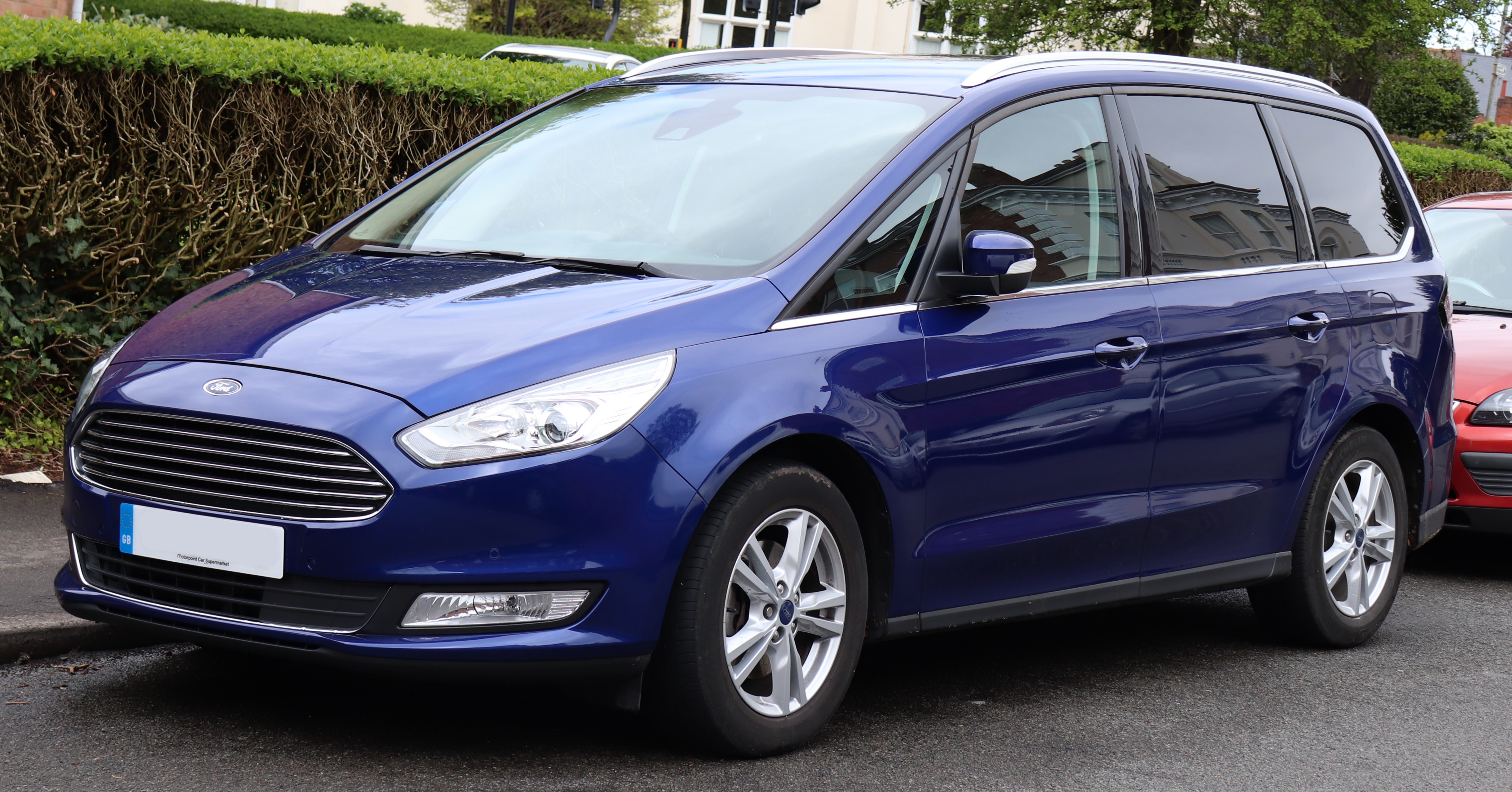
Ford Galaxy 500
"But I remember Galaxy 500 was the first car I had, Ford Galaxy 500. [202.6s] You had 390 in it? [203.4s] Yeah, so I couldn't even tell you that."
The Ford Galaxy 500 is an older Ford “big car” from the muscle-car era. Dan says it was the first car he owned, before he got more interested in military history and vehicles.
The Ford Galaxy 500 is a full-size Ford from the 1960s, known for its big-car comfort and V8 muscle-era styling. In this segment, Dan Starks mentions his first car as a Ford Galaxy 500, tying it to his early driving experience before he focused more on military vehicles.
390
"[202.6s] You had 390 in it? [203.4s] Yeah, so I couldn't even tell you that. [205.7s] And then along the way, Ford Bronco, you know, back in the 70s, I believe."
“390” is a shorthand for the engine size (how big the engine is) in cubic inches. In this case, it’s the V8 engine that was in his Ford Galaxy 500.
In the context of a Ford Galaxy 500, “390” refers to the engine displacement—390 cubic inches—used in many Ford V8s. It’s a quick shorthand enthusiasts use to identify which V8 a car has.

Ford Bronco
"[205.7s] And then along the way, Ford Bronco, you know, back in the 70s, I believe. [212.8s] So, yeah, I didn't have a lot of car background. [215.3s] It was mostly the military stuff, wasn't it?"
The Ford Bronco is a rugged SUV that’s known for off-road capability. Dan mentions it as one of the cars he remembers from his earlier life, even though he wasn’t really a “car guy” yet.
The Ford Bronco is Ford’s classic off-road SUV line, originally built with rugged, trail-capable roots. Here, Dan Starks mentions the Ford Bronco from the 1970s as part of his car background, contrasting it with his stronger interest in military vehicles.

Challenger Hellcat
"... to know the combat history, but we've got an M18 Hellcat. I've got an M18 Hellcat, for example, in our Bat..."
The Challenger is a type of car (the Dodge Challenger) that’s built for strong acceleration and a sporty, muscular style. In your podcast excerpt, the conversation seems focused on military vehicles, so the word “Challenger” may be coming up because of overlapping names. The exact meaning depends on what the speaker is referring to.
“Challenger” most commonly refers to the Dodge Challenger muscle car, a long-running model known for powerful engines and a classic American performance look. In the podcast context you provided, it appears the host is talking about military vehicles (like an M18 Hellcat), so “Challenger” may be part of a name mix-up rather than a direct car discussion. Either way, it’s a term that can point to a car or a vehicle depending on context.

M18 Hellcat
"but we've got an M18 Hellcat. [443.7s] I've got an M18 Hellcat, for example, in our Battle of the Bulge display."
The M18 Hellcat is a military vehicle from World War II. It was built to fight enemy tanks, usually by finding good positions and using a big anti-tank gun. Here, the host is talking about a specific one in the museum’s Battle of the Bulge exhibit.
The M18 Hellcat is a U.S. World War II tank destroyer, not a passenger car. It’s known for being relatively fast and for its purpose-built role: using a large anti-tank gun to engage enemy armor from advantageous positions. In this segment, it’s specifically tied to the Battle of the Bulge display at the museum.
Battle of the Bulge
"I've got an M18 Hellcat, for example, in our Battle of the Bulge display. [447.9s] I have a DVD of the American who was the commander of that particular unit."
The Battle of the Bulge was a huge World War II battle where Germany tried to push back the Allies. It happened in late 1944 and early 1945. In this segment, it’s the historical event connected to the M18 Hellcat and the commander’s memories.
The Battle of the Bulge was a major World War II battle in late 1944 and early 1945, when German forces launched a large counteroffensive in the Ardennes region. It’s often referenced in U.S. military history because of the intense fighting and the eventual Allied pushback. Here, the museum exhibit and the veteran’s personal story are centered on that campaign.

Jeep Commander
"...display. I have a DVD of the American who was the commander of that particular unit. He came to a World War I..."
The Jeep Commander is a larger SUV made by Jeep. It’s meant to carry people and gear comfortably, and it can be equipped for light off-road driving. In your podcast excerpt, “commander” might be mentioned in a military sense, so the speaker could be using the word in two different ways.
The Jeep Commander is a midsize SUV from Jeep, built for family-friendly seating and practical everyday use with available off-road capability. It’s the kind of vehicle that might come up in a podcast when discussing American vehicles more broadly, especially if the episode is mixing general vehicle history with specific examples. If the host is referencing a “commander” in a military context, the name similarity could also be part of the confusion.
National Museum of Military Vehicles
"So if you get a chance to put together a vacation for the family, [844.6s] check out the National Museum of Military Vehicles. [850.6s] It's in Dubois, Wyoming, small place right out of Jackson Hole."
It’s a museum that focuses on military vehicles, like tanks. The host says it’s set up in an interactive way, so it’s more engaging than a typical museum.
The National Museum of Military Vehicles is a museum focused on military hardware, especially vehicles like tanks. In this episode, the host emphasizes that it’s interactive and that many vehicles are presented in a way that helps visitors understand historical conflicts.
Dubois, Wyoming
"It's in Dubois, Wyoming, small place right out of Jackson Hole. [858.2s] But do not speed from Jackson Hole to Dubois because they will nail you."
Dubois is the town in Wyoming where the museum is located. The host mentions it’s near Jackson Hole, so it’s part of a common travel route.
Dubois, Wyoming is the town where the National Museum of Military Vehicles is located, making it a regional destination for visitors traveling through western Wyoming. The host also frames it as being near Jackson Hole, which affects how people plan road trips to get there.
Jackson Hole
"It's in Dubois, Wyoming, small place right out of Jackson Hole. [858.2s] But do not speed from Jackson Hole to Dubois because they will nail you."
Jackson Hole is a popular area in Wyoming. The host is using it as a starting point for a drive to Dubois and warns not to speed on the way.
Jackson Hole refers to the well-known region in western Wyoming, commonly associated with tourism and access to the Grand Teton/Yellowstone area. Here it’s used as a reference point for driving to Dubois, with the host warning about speed enforcement on that route.
predecessor
"And that is the predecessor to the M3 Stuart light tank."
A “predecessor” just means an earlier version that came before the one people talk about more. Think of it like the earlier model in a family of vehicles. The host is saying the tank he wants is the earlier step before the M3 Stuart.
A “predecessor” is an earlier model that comes before a later, more well-known design. In vehicle history, it often means the earlier tank shares some design ideas or components, but may differ in key specs. Here, the speaker is pointing to an earlier WWII vehicle that leads into the M3 Stuart line.
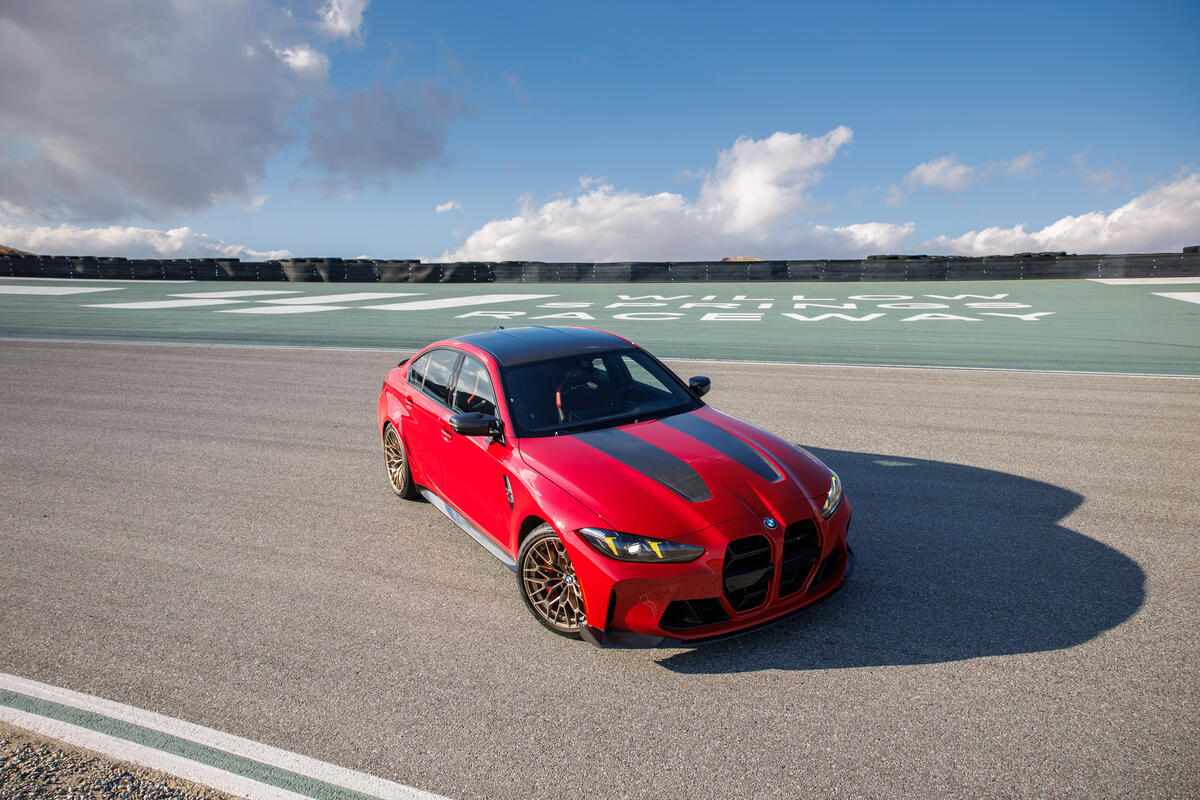
BMW M3
"... I don't have. And that is the predecessor to the M3 Stuart light tank. It's the M2A4 light tank."
The BMW M3 is a sports car made by BMW. It’s designed to be faster and handle more aggressively than a regular BMW 3 Series. In your podcast, “M3” may be mentioned because the same label can also be used for military equipment.
The BMW M3 is a performance version of the 3 Series, known for its sporty handling and strong engine output. In a podcast context, it’s likely being mentioned because the name “M3” can also refer to military vehicles, so the discussion may be clarifying that the “M3” being referenced isn’t a car. That makes it a notable point when the conversation shifts between automotive and military history.

M2A4 light tank
"It's the M2A4 light tank. [1346.9s] I know there's one over in the Solomon's on Guadalcanal"
The M2A4 is an older U.S. tank from World War II. The speaker is talking about trying to find one for his collection, but he hasn’t been able to yet.
The M2A4 is a World War II-era U.S. light tank, known for its relatively small size and role as a reconnaissance/early-war armored vehicle. The host says there’s one he wants to get his hands on, but hasn’t been able to, which is why it stands out in the conversation.

Abrams Tank
"The, but modern stuff that's still being used. [1367.9s] I don't have access to yet. [1369.3s] So Abrams Tank, Bradley, Striker, things like that."
The Abrams is a big, heavily armored tank used by the U.S. military. The host is saying it’s one of the modern vehicles Dan wants to get for his collection.
The M1 Abrams is a modern U.S. main battle tank known for its heavy armor, powerful turbine engine, and advanced fire-control systems. In the context of the episode, it’s mentioned as part of the “modern stuff” Dan Starks wants to add to his collection.

Bradley
"So Abrams Tank, Bradley, Striker, things like that. [1372.9s] So that's where my, that's where my collection will expand in the future."
The Bradley is a tracked armored vehicle that helps move soldiers and also provides weapons support. The episode mentions it as one of the vehicles Dan wants to add to his collection.
The M2 Bradley is a U.S. infantry fighting vehicle (tracked armored vehicle) designed to carry troops into combat while providing fire support. It’s mentioned alongside other modern armored platforms as part of the collection Dan Starks hopes to expand.

Striker
"So Abrams Tank, Bradley, Striker, things like that. [1372.9s] So that's where my, that's where my collection will expand in the future."
The Stryker is a military armored vehicle that uses wheels (not tracks) and is used to move troops and equipment. The host is listing it as a modern vehicle Dan wants to get.
“Striker” refers to the Stryker, a family of U.S. armored vehicles built on an 8x8 wheeled chassis. It’s brought up as another modern platform Dan Starks wants access to for his collection.
Request an Explanation
Heard something you'd like explained? We'll add it to this episode.
Sign in to request explanations for terms you heard.
Want to learn more?
Browse our glossary for plain-English explanations of automotive terms, jargon, and concepts.
Help improve this episode
See something that's not quite right? Our annotations are AI-generated and can sometimes miss the mark. Click the flag icon on any annotation to suggest a correction.