
Power Wagons with Matt Tisdale of Tisdale Coachworks
About this episode
Matt Tisdale of Tisdale Coachworks traces how a lifelong love of Power Wagons turned into a 23-year sheet-metal business in Winslow, Arizona. He started reproducing hard-to-find bed sides after hunting trucks across the West Coast, then expanded into full cab bodies and four-door conversions built to fit modern Ram chassis. The conversation covers pricing, tooling scale, and craftsmanship details like thick gauge metal and period-correct wiring/fender forming. Tisdale also shares business lessons—stay enthusiastic, reinvest, watch your numbers—and practical project upgrades like modern wiring harnesses and stronger aftermarket steering columns.
Matt Tisdale, owner of Tisdale Coachworks out of Winslow, Indiana, is in the shop today. He and Stacey dig into one the most American trucks ever produced - the Dodge Power Wagon. Matt describes how his love for these WW2 classics motivated him to mortgage his house to start his own company reproducing all-metal Power Wagon cabs and beds.
Tisdale Coachworks
"His name is Matt Tisdale. And he owns Tisdale Coachworks."
Tisdale Coachworks is Matt Tisdale’s shop. The episode is about the kinds of Power Wagon parts he makes and restores there.
Tisdale Coachworks is the shop Matt Tisdale owns. In this episode, they’re specifically tied to restoring and reproducing parts for Power Wagons, so it’s the brand identity of the business behind the work.
Winslow, Arizona
"And he's in Winslow, Arizona. He's done all eagle songs."
Winslow, Arizona is where Matt’s shop is based. The host mentions another Winslow to make sure they’re talking about the right one.
Winslow, Arizona is the location where Matt Tisdale’s shop operates. The host contrasts it with Winslow, Indiana, highlighting that the conversation is about a specific real-world place tied to the business.
power wagon parts
"But the big thing that you focus on is power wagon parts, which is near and dear to my heart."
“Power Wagon parts” means parts made for Dodge Power Wagons. Here, they’re talking about body and metal pieces needed to repair worn-out trucks.
“Power Wagon parts” refers to replacement or restoration components for the Dodge Power Wagon line. In this context, it’s about sourcing or reproducing hard-to-find body and sheet-metal pieces so these trucks can be brought back to shape.
sheet metal
"the beds were all beat up. And we needed sheet metal."
Sheet metal is the thin metal used for car truck body panels. If the bed is damaged, you often need new sheet metal to fix it.
Sheet metal is thin metal formed into panels used for vehicle bodywork. When Power Wagons’ beds are “beat up,” sheet metal is often what’s damaged—so reproducing it is key to restoring the truck’s structure and appearance.
bed sides
"So I decided to reproduce the bed sides because I had 25 of them lined up on a tennis court"
“Bed sides” are the panels on the left and right of a pickup’s cargo box. If those are dented or rusted, the truck looks and functions worse, so replacing them helps restore the bed.
“Bed sides” are the vertical side panels of a pickup truck’s cargo bed. Reproducing bed sides matters because they’re visible, structural to the bed’s shape, and commonly rust or get damaged on older trucks.
reproduction beds
"And now you guys not only do a reproduction beds [170.6s] and fenders for power wagons, [172.4s] you also do complete cabs, correct?"
A “reproduction bed” is a brand-new truck bed made to look like the original one from an older truck. It’s often used when the original bed is too damaged to save.
A “reproduction bed” is a newly manufactured truck bed designed to match an older model’s original dimensions and appearance. In restorations, reproduction parts help owners keep the truck looking period-correct without hunting down rare original panels.
four door conversion
"[172.4s] you also do complete cabs, correct? [174.4s] Yeah, we do the four door conversion. [176.2s] We do a complete stamped new sheet metal body"
A “four door conversion” means turning a truck that originally had two doors into one with four doors. That usually takes a lot of metalwork so the doors line up and open/close properly.
A “four door conversion” is a body modification that changes a truck from a two-door cab to a four-door layout. It typically requires major sheet-metal work and careful alignment so the doors, pillars, and cab structure fit correctly.
modern chassis
"[183.4s] or a nine inch wider cab that fits on modern chassis. [186.8s] So when you see somebody that's got like a four door power wagon, [188.9s] that's probably your body on there."
A “modern chassis” means they put the classic-style body onto a newer truck frame. That can make the truck drive better and be safer than using the original old frame.
A “modern chassis” is a newer truck frame used as the base for an older-style body. Builders do this to get updated structural design, suspension geometry, and drivability while keeping the classic Power Wagon look.
body on there
"So when you see somebody that's got like a four door power wagon, [188.9s] that's probably your body on there. [191.3s] It typically is, yes."
Here, he’s basically saying that the “body” is what gives away which kind of four-door conversion it is. If it looks like their work, it probably uses their cab/body parts.
“Body on there” in this context means the truck’s cab/body shell is the key part that identifies the specific conversion. Matt is implying that when you see a four-door Power Wagon, it’s likely using their body components rather than a one-off custom build.
married them together
"There's still some guys that did what I did way back [196.2s] and took two cabs and married them together [198.3s] and you can usually tell."
He’s talking about an old-school custom method where someone combines parts from two different cabs to make one truck. You can often tell because the fit and proportions don’t look like a purpose-built conversion.
“Married them together” describes a custom fabrication approach where two donor cabs are combined into one. The key idea is that older DIY builders would splice or graft cab sections, and the result can be visually identifiable.
crew cab
"I wonder if that's his crew cab or his bed sides or running boards or fenders or something."
A crew cab is a pickup with four doors, so passengers can get into the back seat more easily. It’s the “bigger cab” style compared to two-door versions.
A crew cab is a pickup cab configuration with four full-size doors, allowing easier access to both front and rear seating. Compared with smaller-cab layouts, it usually means a longer wheelbase and more interior space.
running boards
"I wonder if that's his crew cab or his bed sides or running boards or fenders or something."
Running boards are the steps along the side of the truck. They make it easier to get in and out, and on classic trucks they’re also part of the look.
Running boards (also called side steps) are exterior steps mounted along the rocker area to help people climb into the cab or bed. On older trucks, they’re often both functional and part of the classic styling.
fenders
"I wonder if that's his crew cab or his bed sides or running boards or fenders or something."
Fenders are the panels above the wheels. They protect the truck and help keep dirt and water off the road, and they can get damaged or rust.
Fenders are the body panels over the wheel openings that help direct airflow and protect the tires and occupants from road spray and debris. They’re also a common restoration target because they can rust or get bent in minor impacts.
re-body
"and start offering bodies so guys could re-body them and put the power wagon cab on a late model chassis."
“Re-body” means changing the truck’s body—usually to keep the original style but make it work with newer parts. Think of it like using the classic look, but building it on a more modern foundation.
“Re-body” means taking an existing vehicle and replacing or swapping its body panels/structure. In classic truck circles, it’s often done to keep a desirable cab or exterior alive while updating the chassis and drivetrain compatibility.

Power Wagon cab
"and put the power wagon cab on a late model chassis. Talk about how that came about"
A “Power Wagon cab” is the front part of a Dodge Power Wagon—the part with the seats and dashboard. Here, they’re putting that classic cab onto a newer truck frame so it still looks like the old Power Wagon but can be built on newer hardware.
The “Power Wagon cab” refers to the distinctive cab used on the Dodge Ram Power Wagon. In this context, the cab is being swapped onto a newer chassis so the truck can keep using modern underpinnings while retaining the classic look.
late model chassis
"and put the power wagon cab on a late model chassis. Talk about how that came about"
A “late model chassis” is the newer truck frame they build on. It helps the project work better because newer frames are easier to integrate with modern parts and systems.
A “late model chassis” means a newer vehicle’s frame used as the foundation for a conversion. Builders use it to improve fitment, safety, and parts availability compared with trying to keep an older truck’s original frame and mounting points.

TRX
"make it to where we can fit it on a modern Ram chassis, a TRX, whatever, and keep it alive"
“TRX” is the performance Ram pickup. In this build idea, they’re using that kind of modern, strong platform under the classic Power Wagon cab so the finished truck can still drive well.
“TRX” refers to the Ram TRX, a high-performance version of the Ram pickup. Using a TRX as the donor chassis implies the builder is pairing the classic Power Wagon cab with a modern, performance-oriented platform to keep the truck usable and exciting.
bear kit
"You know, a bear kit can be anywhere from $13,000 to $20,000."
A “bear kit” is the big kit package they sell. It’s the kind of kit that costs a lot because it’s meant to do a major conversion.
A “bear kit” is the host’s term for the full cab kit package they sell, priced roughly between $13,000 and $20,000. It implies a substantial, engineered kit rather than a small bolt-on accessory.
laser weld
"then we do kits where I'll assemble a cab and we laser weld them all together, which I absolutely love."
A “laser weld” is a welding method that uses a laser to join metal parts very precisely. They’re saying they use this process to assemble the cab pieces.
A “laser weld” uses a focused laser beam to melt and fuse metal with high precision. The host says they laser-weld the cab pieces together, which typically helps produce consistent, tight seams for a kit-built cab assembly.
wheel base versions
"and, yeah, and then we do different wheel base versions."
“Wheelbase versions” means the truck can be built in different lengths. The kit needs to match the truck’s axle spacing so everything lines up.
“Wheel base versions” means different lengths between the front and rear axles. Offering multiple wheelbase options lets the cab kit fit different truck configurations and maintain correct proportions and fitment.
component car
"because that takes it into what would be called a component car or a kit car kind of thing."
A “component car” is basically a vehicle assembled from big parts or a kit, not just bought as a complete factory car. The host is saying their setup can be treated like that kind of build.
A “component car” is a vehicle built from major parts supplied as a kit, rather than a complete factory-built car. The host is using it to describe how these cab conversions can fall into kit-car-style territory depending on how they’re assembled and registered.
kit car
"because that takes it into what would be called a component car or a kit car kind of thing."
A “kit car” is a car you build from a set of parts. They’re saying the cab conversion can end up being treated like a kit-car style project.
A “kit car” is a vehicle assembled from a kit of parts, often requiring significant work to complete. Here, the host is framing the cab kit as something that can move the project into kit-car classification depending on the scope of the build.
Dynacorn
"And see, with that price point that you just said, that puts you right in what a guy would spend on a Cobra or what he would spend on doing a Dynacorn body."
Dynacorn makes replacement body parts for classic cars. In this conversation, it’s mentioned because buying reproduction body panels can cost a lot—similar to the price point they’re discussing.
Dynacorn is known for producing reproduction body panels—especially for classic Mustang-era style builds. The host mentions it as a cost benchmark, implying that Dynacorn bodywork is a common route for restorers who want correct-looking sheet metal.
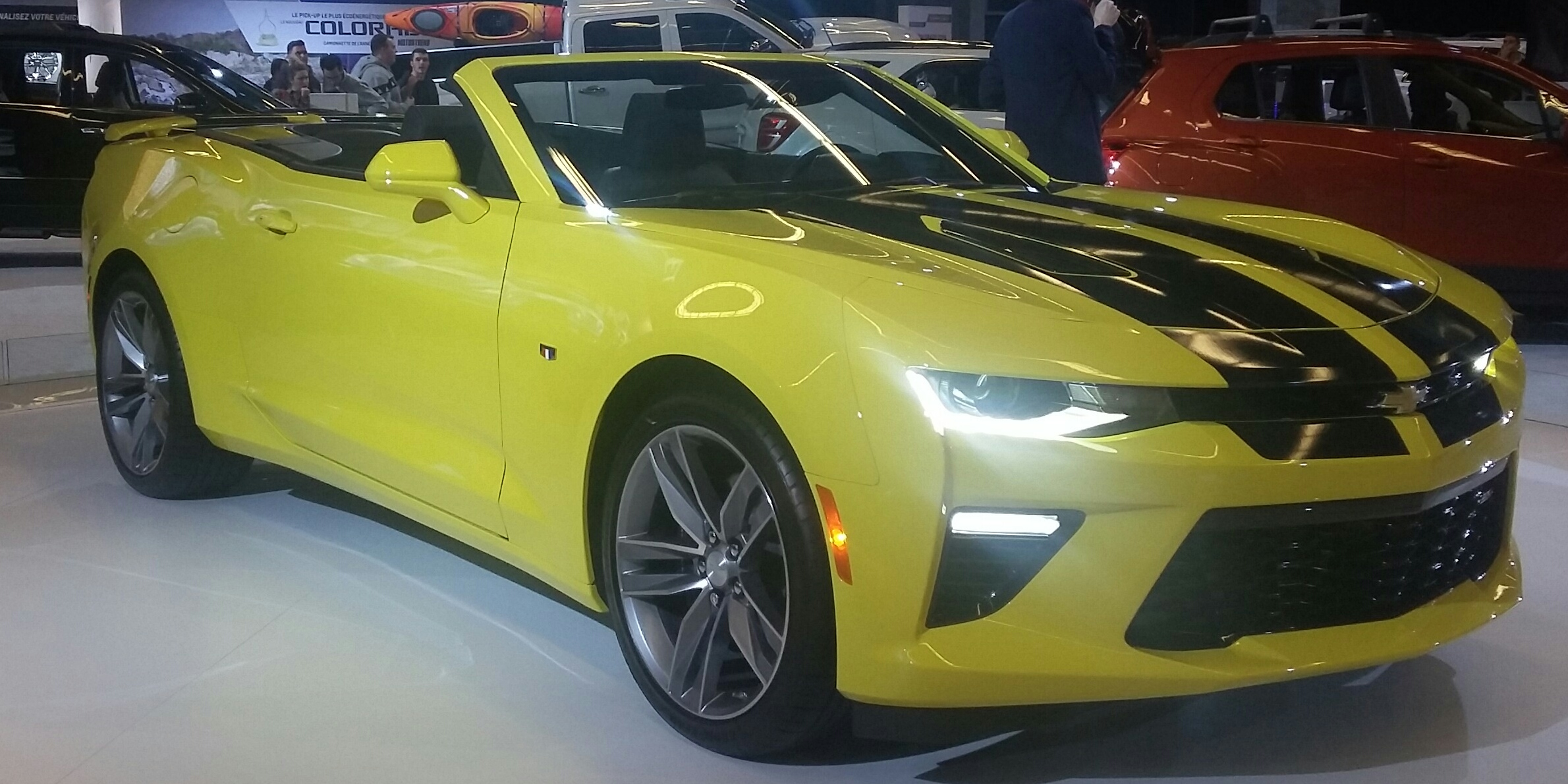
Chevrolet Camaro
"Right. On a Camaro or something like that. So, you're not out of line on that."
A Camaro is a classic Chevrolet muscle car. They’re using it as another example of the kind of car people spend money on for restoration or custom bodywork.
The Camaro is Chevrolet’s iconic muscle car, often used as a reference point for classic American performance builds. Here it’s mentioned as another example of a car someone might spend money on when doing reproduction-style work.
regular gauge metal
"but anybody that's ever messed with a power wagon, they didn't use just regular gauge metal. Right. Super thick."
“Gauge” here means how thick the sheet metal is. They’re saying the original-style builds used thicker metal than what you’d find in typical, everyday replacement panels.
“Gauge” is a measure of sheet metal thickness. The host is saying that for a “power wagon” application, builders didn’t use thin, everyday sheet metal—they used thicker material to match the original construction and durability.
16 gauge
"Let's talk about your front fenders and the wiring that you use in the front. 16 gauge, just like original. And it has the McGee wire edge machine."
16 gauge is a way to specify how thick the metal is. The host is saying they’re using the same thickness as the original parts, not a thinner substitute.
16 gauge is a specific sheet-metal thickness standard (higher gauge number generally means thinner metal). The host is emphasizing that the front fender/wiring-related work uses the same thickness as the original equipment.
McGee wire edge machine
"16 gauge, just like original. And it has the McGee wire edge machine. The wire ran through with the same little knurls like Henry Ford and all of them had back in the day."
This sounds like a specific shop tool used to create a “wire edge” detail on metal panels. The host is saying it’s the same kind of technique used back in the day, so the result looks and fits more like the original.
The “McGee wire edge machine” is a specialized fabrication tool used to form a wire edge detail in sheet metal. The host connects it to period-correct construction methods, describing how the wire is run with the same kind of knurled finish used historically.
knurls
"The wire ran through with the same little knurls like Henry Ford and all of them had back in the day. Yeah. And that machine is designed to run,"
Knurls are a textured pattern on metal. In this case, they’re describing the look/finish of the wire-edge detail so it matches older factory-style work.
Knurling refers to a textured pattern (often made with a knurled wheel or roller) used to create grip or a distinctive finish. Here, the host uses it to describe the period-correct texture on the wire-edge detail.
laser straight
"So, I want the body line to be laser straight whereas you see that the doors drop down a quarter of an inch on this truck."
It means the truck’s body panels are lined up perfectly, with no crooked lines or wavy surfaces. A good shop measures and adjusts the panels so the gaps and shapes look straight to your eye.
“Laser straight” is a bodywork quality goal meaning the vehicle’s body panels and body lines are aligned perfectly with no visible waviness or misalignment. In practice, shops use measuring tools and careful panel fitting to get straight, even gaps and consistent contours.
fit and finish
"And most people now have gotten used to expecting a little bit of fit and finish."
“Fit and finish” is how well the car is put together and how nice it looks—like even panel gaps and straight lines. If the gaps are off or the surfaces look rough, people notice it.
“Fit and finish” describes how well a vehicle’s parts are assembled and how cleanly everything looks—panel gaps, alignment, surface quality, and overall refinement. It’s a key part of perceived quality, especially on restorations or custom builds.
patina'd
"You know, unless the truck is completely patina'd like this and kind of falling apart, that becomes acceptable."
“Patina’d” means the vehicle has an older, worn-in look on purpose—like natural fading and surface wear. People often accept small flaws on a patina-style build, but they expect perfection after a new paint job.
“Patina’d” refers to an intentionally aged look—surface wear, fading, and minor imperfections that develop over time. In the context of restorations, it can make small misalignments or roughness feel “authentic,” whereas a freshly painted truck is expected to look perfectly aligned.
door gaps
"I expect perfect door gaps and all of that. And knowing what it's supposed to look like"
Door gaps are the thin lines of space around the door where it meets the body. If they’re even all the way around, the truck looks more precise and “put together.”
“Door gaps” are the visible spacing between a vehicle’s door and the surrounding body panels. In high-quality builds, those gaps are even and consistent, which helps the truck look well-finished and can also indicate careful panel alignment.
Vintage Dream Machine
"Is that the place down in Lewisburg? Vintage Dream Machine. Yeah. Awesome guys, good to work with."
Vintage Dream Machine is a shop/company that takes a kit and turns it into a finished truck. In other words, they do the real build work after the parts are supplied.
Vintage Dream Machine is referenced as a Nashville-area company that takes “kits” and turns them into finished trucks. The discussion frames them as a specialist shop that performs the build work after the kit stage.
desert power wagons
"And the other, you know, it's desert power wagons. Yes. They buy a lot."
“Desert power wagons” are Power Wagon-style trucks built for driving hard in desert terrain. They’re usually set up to handle bumps and loose ground better than a stock truck.
“Desert power wagons” refers to Power Wagon builds tailored for off-road desert use—typically emphasizing durability, traction, and suspension travel over showroom fitment. The phrase implies a specific prep style aimed at long, rough off-road runs.
legacy power wagon
"And of course, going back to the roots, legacy power wagon. Yeah."
“Legacy Power Wagon” means the classic, traditional Power Wagon spirit—what people associate with the original off-road truck. It’s basically the history and reputation that today’s builds are trying to honor.
“Legacy power wagon” points to the original Power Wagon heritage—an older, iconic Dodge off-road truck identity that enthusiasts try to preserve or recreate. In this context, it’s used as a roots/lineage reference for the builds being discussed.
steering column
"One is a wiring harness and one is a steering column. Now, you might be thinking wiring harness, that's obvious, but what's a steering column thing? ... the problem with old steering columns is that they break."
The steering column is the part that connects your steering wheel to the rest of the steering system. If it’s old or damaged, it can break, and it may not work well with newer aftermarket parts you want to install.
The steering column is the shaft and housing that connects the steering wheel to the steering mechanism. In older builds, steering columns can fail mechanically and may not be compatible with modern aftermarket wiring, switches, and steering-related components.
wiring harness
"There's two for sure. One is a wiring harness and one is a steering column."
A wiring harness is basically the car’s electrical “wire bundle” that connects everything together. If you’re building or restoring a project car, upgrading it can prevent weird electrical problems and makes it simpler to add modern parts.
A wiring harness is the bundled set of wires and connectors that distributes power and signals to all the vehicle’s electrical components. In a project build, replacing or upgrading the wiring harness helps prevent intermittent electrical issues and makes it easier to integrate aftermarket electronics.
aftermarket wiring
"They're not compatible with most of the aftermarket wiring and components that you're going to be using."
Aftermarket wiring refers to non-factory electrical wiring solutions used when you add or replace components outside the original manufacturer setup. Compatibility matters because older steering columns and wiring layouts may not integrate cleanly with aftermarket electronics and connectors.
street rod world
"Now, they started in the street rod world, but don't make the mistake of thinking that their applications are just street rod, hot rod, that kind of thing."
The street rod world is the hobby and subculture focused on modifying older vehicles for street use, often with extensive fabrication and electrical integration. It’s relevant here because builders who cut their teeth in street rods may have the experience needed for complex project-car upgrades.
direct bolt-in columns
"They also have direct bolt-in columns for muscle cars. [742.2s] They've got them for four-wheel drive vehicles."
This means the steering column is made to fit your car’s mounting points with normal bolts. So you don’t have to cut and weld as much to install it.
A direct bolt-in steering column is a replacement part designed to mount to the existing steering column mounting points using the factory-style bolt pattern. That means less fabrication and wiring adaptation than a custom column swap.
universal columns
"[744.5s] They've got universal columns that you can shorten. [747.2s] That's what I put in Sergeant Rock."
A universal steering column is an aftermarket part meant to work in many different cars. It can be modified (like shortened) so it fits your specific project.
Universal steering columns are aftermarket columns intended to fit a range of vehicles, often with adjustable features. In this context, the host mentions shortening them, which is a common way to make one column work in different chassis or swap setups.
turn signals
"It's what controls a lot of your wiring, [761.6s] your turn signals, whatever you've got it set up for."
Turn signals are the lights that blink to show you’re turning or changing lanes. When you change the steering column, you may also be changing how those signals are wired and controlled.
Turn signals are the exterior lights used to indicate a driver’s intended direction of travel. In steering-column upgrades, the turn-signal switch and its wiring are often integrated into the column assembly, which is why column choice affects the electrical setup.
tilt column
"And it's nice to be able to put a tilt column into an old vehicle. [770.2s] If you're upgrading your vehicle,"
A tilt column means the steering wheel can move up/down or forward/back a bit. That helps you sit comfortably and reach the wheel better—especially in older cars.
A tilt steering column lets the steering wheel angle adjust, improving driver comfort and reach. In older vehicles, adding a tilt column is a common upgrade because it can also simplify integrating modern wiring for turn signals and related controls.
World War II WC
"Yeah, it's a spinoff from the World War II WC. Yeah, I mean, yeah, it's the straight DNA from it."
The “World War II WC” refers to a type of military truck used during WWII. The speaker is saying the later Power Wagon design traces its roots back to that original wartime truck.
“World War II WC” is shorthand for the U.S. military’s WWII-era WC-series trucks, which influenced later civilian truck designs. The host is pointing out that the Power Wagon’s “DNA” traces back to that wartime platform and engineering approach.
46 to 68 body style
"You even said it different, the power wagon. [987.1s] 46 to 68, that body style. [989.7s] Yeah. [989.9s] It stayed exactly the same."
“46 to 68 body style” means the truck’s outside shape stayed basically the same from the mid-1940s through the late 1960s. The speaker is highlighting how unusual that is for a vehicle line.
“46 to 68 body style” refers to a long production span where the Power Wagon’s exterior body design remained essentially the same. That kind of long-lived body style is notable because most trucks update styling and sheet metal more frequently.
synchronized tranny
"You know, synchronized tranny, [995.3s] which you got the crash box in this bad boy."
A synchronized transmission helps the gears match speeds before they lock together. That makes shifting easier and smoother than older transmissions that could grind if you weren’t careful.
A synchronized transmission (often shortened to “sync”) uses synchronizer rings to match gear speeds before engagement. That makes shifting smoother and helps prevent grinding compared with older non-synchronized gearboxes.
crash box
"You know, synchronized tranny, [995.3s] which you got the crash box in this bad boy."
A crash box is a transmission without synchronizers, so the gears don’t automatically match speeds. You usually have to use careful shifting (often double-clutching) to make the shift go in cleanly.
A “crash box” is a non-synchronized transmission where gears engage without synchronizers. Drivers typically use techniques like double-clutching to match engine and gear speeds before the shift.
slamming bands
"You know, slamming bands and double clutch [999.6s] and going down the road."
“Slamming bands” refers to harsh, rapid engagement of band-type clutches/brakes inside some transmissions. It’s a technique associated with quick, forceful gear changes—often discussed in the context of older or heavy-duty gearboxes.
double clutch
"You know, slamming bands and double clutch [1000.8s] and going down the road."
Double-clutching is a shifting technique where you use the clutch twice to help the gears match speed. It makes it easier to get into the next gear without grinding, especially on older transmissions.
Double-clutching is a manual-shifting technique used to match speeds between the engine and the transmission. The driver shifts to neutral, releases the clutch, then shifts again to engage the target gear smoothly—especially helpful with non-synchronized (“crash box”) setups.
crank the windshield out
"But it's, you know, you crank the windshield out [1002.8s] and you run into a big hive of bees [1006.1s] or something and you get to swat them out."
It sounds like the truck’s windshield can be opened or tilted outward. That’s a cool old-truck feature that helps with airflow and gives the cab a more open feel.
This describes a truck cab feature where the windshield can be opened/tilted outward for ventilation or access. It’s a distinctive “period” design detail that enthusiasts notice on older trucks.

Dodge power wagon
"You know, they don't go, [1018.6s] oh man, what a cool Dodge power wagon. [1020.8s] They leave the Dodge part out. [1022.2s] They're like, man, that power wagon is so cool."
The Dodge Power Wagon is a tough, old-school Dodge truck that people love for its rugged off-road and work-ready vibe. At car shows and rallies, people often talk about the truck itself more than the brand name.
The Dodge Power Wagon is a classic Dodge truck line known for heavy-duty, off-road-focused hardware and a rugged, utilitarian reputation. In enthusiast circles, it’s often discussed as a “work truck” that still looks and feels special at rallies.

Unimog
"the only other vehicle I can think of that's kind of like that is a Unimog. Yeah. And it's funny because they were kind of competitors."
A Unimog is a super-capable off-road truck made by Mercedes-Benz. People compare it to other tough “work truck” machines because it’s designed to handle rough terrain and heavy jobs.
The Unimog is a Mercedes-Benz off-road truck platform known for extreme versatility—used for everything from firefighting to heavy-duty farm work. It’s often compared to other “tractor-truck” style vehicles because it’s built to go where normal trucks can’t, with rugged bodywork and utility-focused features.
winch
"But they're not quite as macho as these things. That big old winch hanging off the front. The sheet metal on a Unimog is nowhere near comparable to this."
A winch is a motorized cable that can pull a vehicle out of trouble. It’s commonly used when a truck gets stuck off-road.
A winch is a powered cable-reeling device used to pull a vehicle out of mud, snow, or other stuck situations. On off-road trucks, it’s typically mounted at the front or rear and used for recovery and controlled towing.
front doors
"We do the original size front doors. Yeah. And then the four doors for the crew cab"
Front doors are the main doors on the cab of the truck. Restoration shops often make replacement door parts so the truck looks right and seals properly.
Front doors are the primary side doors on the cab of a truck. In restoration and coachwork, door skins and complete door assemblies are often reproduced to restore fit, alignment, and weather sealing for a specific model.
front windshield surround
"and then the four doors for the crew cab and the front windshield surround"
The windshield surround is the metal/trim area that holds and frames the windshield. If it’s rusted or damaged, replacing it helps keep the cab sealed and looking correct.
The windshield surround is the trim and sheet-metal frame area around the windshield opening. It’s important for sealing against water and wind, and it’s often replaced when doing full body restoration work.
narrow body
"And we do a narrow body cab back. You know, I've told you about the wide body. Being able to fit on a modern chassis and all that... So we also do the narrow also."
A "narrow body" build keeps the truck’s body closer to the original width. It’s often chosen when you want a more stock look or when the wider setup isn’t necessary.
A "narrow body" cab/clip configuration keeps the truck’s bodywork closer to the original width, which can make it easier to fit within tighter packaging constraints. In this context, it’s contrasted with a wide-body build to show different tradeoffs in fitment and cooling space.
wide body
"And we do a narrow body cab back. You know, I've told you about the wide body. Being able to fit on a modern chassis and all that."
A "wide body" means the truck’s body panels are made wider than stock. People do it to make room for bigger parts or to help the truck’s cooling system work better.
In truck/coachbuilding, a "wide body" is a bodywork configuration that adds width to key exterior panels (often the cab and front clip) to create more clearance. It’s commonly used to fit larger components or improve airflow and cooling packaging.
nine inch wider front nose
"oh, you know, I got to have the old needle nose, you know, because our new wide body is at a nine inch wider front nose and stuff to accommodate all the cooling,"
A "nine inch wider front nose" describes a specific front-clip width increase used to create extra space for cooling-related hardware. More front-end width can allow larger radiators and better airflow paths, which matters when packaging a modern chassis or upgraded cooling system.
cooling
"because our new wide body is at a nine inch wider front nose and stuff to accommodate all the cooling, HAC, condenser and all that stuff."
In a custom truck build, "cooling" refers to the system that removes heat from the engine and other components. When the host mentions cooling packaging, they’re pointing to how radiator and airflow space is planned to prevent overheating under load.
condenser
"and stuff to accommodate all the cooling, HAC, condenser and all that stuff."
In car A/C, the "condenser" is a part that helps dump heat outside the car. That’s what allows the air-conditioning system to keep working and actually cool the cabin.
A "condenser" in automotive context is the heat-exchanger component of the air-conditioning system. It rejects heat from the refrigerant so the A/C can cool the cabin effectively.
HAC
"and stuff to accommodate all the cooling, HAC, condenser and all that stuff."
"HAC" here sounds like an abbreviation for a heating/air-conditioning-related part. It’s mentioned with the condenser, which is part of the A/C system, so it’s likely related to how the truck manages cabin heat and cooling.
In this transcript, "HAC" is used alongside "condenser" and "cooling," indicating it’s an HVAC-related component or system abbreviation. The exact expansion isn’t provided in the segment, but it’s clearly part of the truck’s climate/heat management packaging.
50 semi
"But if that motor ever goes down, the only other thing I'll put in it is a 50 semi. Either a little red ram, which would fit better or a Chrysler, but it needs to be a 50 semi."
A "50 semi" sounds like the builder’s preferred replacement engine option. They’re saying that if the current engine ever fails, they’d swap in that specific kind of engine.
A "50 semi" appears to be shorthand for a 50-series engine or a specific engine swap target, likely referencing a larger displacement or a particular engine family used in these builds. The segment doesn’t define it, but it’s clearly the only alternative powerplant the host would install if the current engine fails.
Dodge Ram
"... I'll put in it is a 50 semi. Either a little red ram, which would fit better or a Chrysler, but it nee..."
The Dodge Ram is a large pickup truck made for work like towing and hauling. People talk about it because different versions can be set up for different jobs. In the podcast, it sounds like they’re referring to a specific Ram style or model.
The Dodge Ram is a full-size pickup truck line from Stellantis’ Dodge brand, known for hauling, towing, and everyday work use. In a podcast context, it may come up when discussing classic or period-correct parts and how different Ram models were built for specific jobs. The mention of “little red ram” suggests a particular Ram variant or nickname that fits the story being told.
little red ram
"Either a little red ram, which would fit better or a Chrysler, but it needs to be a 50 semi."
"Little red ram" is a nickname for a Chrysler/Mopar engine. The host is saying that, if they had to replace the engine, that particular engine would fit better in the truck.
"Little red ram" is a nickname for a Mopar/Chrysler-era engine family (commonly associated with the "Ram" branding). In this context, it’s being discussed as a candidate engine swap that would fit better in the truck’s packaging.
Chrysler
"Either a little red ram, which would fit better or a Chrysler, but it needs to be a 50 semi."
Chrysler is the carmaker. In this segment, they’re talking about using a Chrysler engine as an alternative replacement if the current motor ever fails.
Chrysler is the automaker whose engine families are being referenced as an alternative swap option. Here, the host is comparing two Chrysler-related engine choices for fitment, while still keeping the same general "50 semi" requirement.
remote start
"the guys who just want to remote start their truck out in Montana or Ranch or something and take off and head for the coffee shop"
Remote start is a feature that lets you start the engine from a distance using a key fob or app. The speaker is framing the build around buyers who want convenience—starting the truck before driving off to places like a coffee shop.
heated cooled seats
"Navigation, heated cooled seats, everything. The whole thing is completely loaded."
Heated and cooled seats let you warm up or cool down your seat. It’s a comfort feature that many newer trucks include as part of a fully equipped package.
Heated and cooled seats are climate-controlled seat systems that warm or actively cool the occupants. They’re part of the “completely loaded” comfort-and-convenience package the speaker says the target buyers expect.
bead
"you eventually can just flip your hood up and look at the guy next to you and still lay the same bead if you'd have been paying attention."
A “bead” is the weld’s finished line of melted metal along the joint. The speaker is saying that with practice, you can keep that weld looking consistent.
In welding, a “bead” is the continuous bead of molten metal laid down along a seam. The speaker is describing how, after welding a lot of material, you can maintain the same bead quality even while distracted.

Jeep Willys
"Just get off your couch. And I was in the Willys trucks and station wagons, never really into the ..."
The Jeep Wrangler is a small SUV designed for off-road driving. It’s built to handle dirt roads and rough terrain better than many regular cars. The podcast mentions it as part of the speaker’s past interests in different types of vehicles.
The Jeep Wrangler is a compact off-road-focused SUV known for its rugged, trail-capable design and long-running popularity. In the podcast, it’s mentioned in the context of what the speaker was (and wasn’t) into, contrasting Wrangler-style Jeeps with other vehicles like station wagons and trucks. That makes it relevant as part of the host’s vehicle preferences and history.
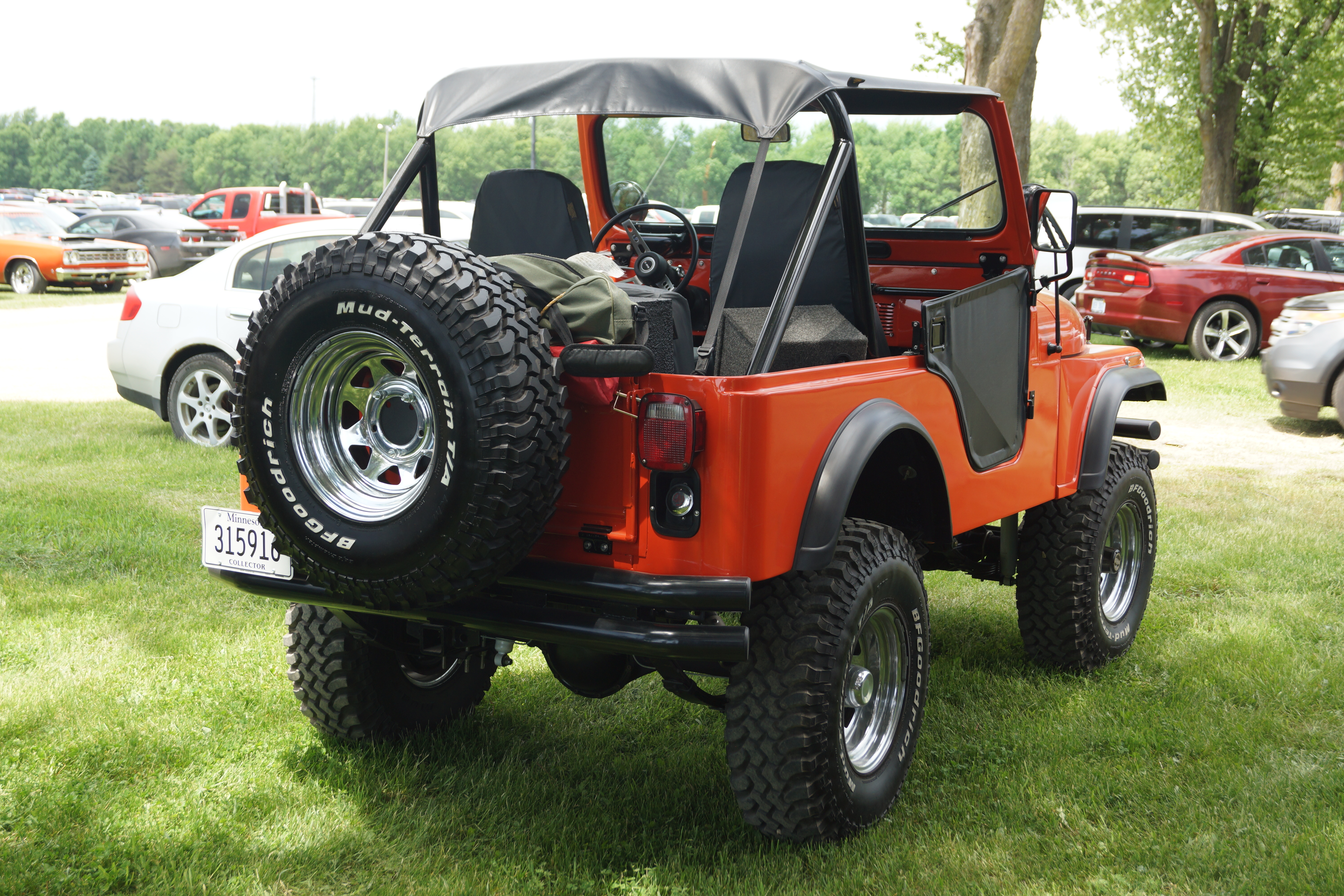
Jeep Cj Jeeps
"... and station wagons, never really into the little CJ Jeeps, all these wagons and trucks."
The Jeep CJ is an older Jeep model that was made for off-road use. The podcast is saying the speaker didn’t like the smaller CJ-style Jeeps compared with other vehicles they preferred. It’s mentioned mainly to explain what they were interested in at the time.
The Jeep CJ is a classic, older-generation Jeep model that’s closely associated with early civilian off-road driving. In the podcast context, the speaker says they weren’t really into the “little CJ Jeeps,” which frames the CJ as a smaller Jeep compared with the trucks and station wagons they preferred. That’s why it comes up—it's part of the speaker’s personal vehicle history and taste.
Winslow, Indiana
"You know, we live in a little small town, Winslow, Indiana. There's nobody home."
Winslow, Indiana is the small town where the speaker grew up. He says it was so small that certain trucks he later became interested in weren’t around.
Winslow, Indiana is the small-town setting the speaker mentions as the reason certain trucks—like the Power Wagon—weren’t common there. It provides context for his early exposure to vehicles and why he learned about them later.
six-volt
"because they're not familiar with old six-volt and carburetors and all that."
That means the truck’s electrical system runs on 6 volts instead of the more common 12 volts today. It can make the truck harder to keep running with modern parts unless you convert or source the right vintage components.
“Six-volt” refers to the vehicle’s electrical system voltage. Older trucks and cars often used 6V batteries and wiring, which affects how modern parts (like alternators, batteries, and some electronics) are compatible.
carburetors
"because they're not familiar with old six-volt and carburetors and all that."
Carburetors are older-style parts that feed fuel into the engine by mixing fuel and air. They can be harder to tune and keep running than today’s fuel-injection systems.
Carburetors are fuel-delivery devices that mix air and fuel mechanically before it enters the engine. They were common on older vehicles, and they can be finicky compared with modern fuel injection, especially after long storage.
4BT
"you can put a 4BT in it or something to make it usable for you without chopping it all up."
“4BT” is a specific kind of diesel engine (a small turbo diesel) that people often swap into older trucks. The idea is to make the truck easier to drive and more dependable without destroying the original body.
“4BT” is a shorthand for the Cummins 4-cylinder B-series turbo diesel engine. Swapping a 4BT into an older truck is a common way to make it more practical because it provides modern diesel torque and easier drivability than many vintage gasoline setups.
carry-all
"Okay. Which is the carry-all. Yeah. I was going to ask you about the carry-all."
“Carry-all” just means the vehicle is meant to carry stuff—cargo and sometimes people. Here, they’re talking about a classic military utility Jeep/Willys built for hauling rather than everyday commuting.
“Carry-all” is a military/utility designation meaning a vehicle intended to haul people and cargo. In the context of the WC-53, it describes the WC-53’s role as a general-purpose transport platform rather than a dedicated passenger car.
stamp
"and then stamp because tooling is very high. Yeah. You know, it's sometimes it takes years to recapture your investment on the tooling."
“Stamp” means pressing sheet metal into shape using a die. It’s a way to make panels consistently, especially after you’ve paid for the custom pressing tools.
“Stamp” refers to stamping sheet metal using dies to produce consistent body panels at scale. Coachbuilders often choose stamping when they’ve invested in tooling, because it improves repeatability versus one-off fabrication.
tooling
"and then stamp because tooling is very high. Yeah. You know, it's sometimes it takes years to recapture your investment on the tooling."
Here, “tooling” means the custom machines/dies used to press and shape metal parts. It costs a lot at the start, so it can take years before the project pays back that initial cost.
“Tooling” in this context refers to the specialized equipment and dies used to stamp or form body panels. It’s expensive upfront, which is why the host talks about needing years to recoup the investment.
barn doors
"Probably putting barn doors on the back of it. Yeah. Because it had a clamshell."
Barn doors are rear doors that open in two halves, like the doors on a barn. They can make it easier to load and unload things from the back of a truck or van.
Barn doors are a two-piece rear door design that opens outward like doors on a barn, typically splitting the opening into left and right halves. On a truck or van, they’re often used to make loading easier and to improve access to the cargo area—especially on custom builds.
clamshell
"Because it had a clamshell. Yeah. Yeah."
A clamshell is a rear hatch/door that opens upward like a clam. It’s another way to access the cargo area, different from doors that swing open sideways.
A clamshell is a hinged rear door that opens like a “clam,” usually lifting upward as one piece (or two pieces that open together). It’s a common alternative to barn doors on cargo-focused vehicles because it can provide a wide opening while keeping the rear shape clean.
Request an Explanation
Heard something you'd like explained? We'll add it to this episode.
Sign in to request explanations for terms you heard.
Want to learn more?
Browse our glossary for plain-English explanations of automotive terms, jargon, and concepts.
Help improve this episode
See something that's not quite right? Our annotations are AI-generated and can sometimes miss the mark. Click the flag icon on any annotation to suggest a correction.