
About this episode
The hosts bounce from movie trivia to the real meat: a week of back-to-back press-car testing. They compare the Toyota Land Cruiser against the Lexus GX, then talk three-row comfort, parking visibility, and off-road practicality versus creature comforts. The conversation widens into dealer experience, rental-car logistics, and even Jeep Wrangler “death wobble” checks. Later, they shift to manual-transmission dreams, Porsche Sondervanche exclusivity, and EV impressions—ending with what they’ll be thinking about in their Lucid and Ford truck drives.
Tonight on That Car Show, Lindsey falls hard for a Land Cruiser, Dan falls into yet another U-Haul and Ryan falls in love with an underpowered Acura. Also… beyond Sonderwunsch, the perfect Turo car, and how to make friends and influence people at the car rental counter, Always check the hands, friends, and make sure you rate, review and subscribe. It’s That Car Show.
@e470tollway
e470.com
press cars
"Lindsay, it sounds like you are overdosing on press cars right now. I am. Well, I think you put it very aptly last week and said that I'm our very own Clarkson, which as I told you, that's a comparison I will always gladly accept."
“Press cars” are vehicles provided to journalists or reviewers by manufacturers for evaluation and media coverage. They’re often loaned for a short period so the media can test the car and publish impressions.
Clarkson
"I am. Well, I think you put it very aptly last week and said that I'm our very own Clarkson, which as I told you, that's a comparison I will always gladly accept. Yes, I found myself with two press cars in hand..."
They’re referencing Jeremy Clarkson, a famous TV host who talks about cars. The speaker is joking that they feel like they’ve “made it” like a big-name car reviewer.
“Clarkson” is a reference to Jeremy Clarkson, the well-known British automotive presenter and journalist. The host is using his name as shorthand for a confident, car-reviewing persona.

2026 Toyota Land Cruiser
"So I spent last week and I gave it back on Friday with a 2026 Toyota Land Cruiser and then swapped that out on Friday for a Lucid Air Touring."
The Toyota Land Cruiser is a tough SUV built for rough roads and off-road trips. It’s the kind of car people buy when they want something that can handle a lot and last a long time.
The Toyota Land Cruiser is a body-on-frame, off-road-focused SUV known for durability and low-range capability. In 2026, it’s still positioned as a rugged, expedition-ready vehicle, which is why it’s a common choice for press fleets and long-term testing.

Lucid Air Touring
"and then swapped that out on Friday for a Lucid Air Touring. And then just so that I could give everyone my full attention, the car that was also potentially coming on Friday will be coming next week."
The Lucid Air is an all-electric luxury car. “Touring” is a specific version/trim that’s meant to be a step up in features and typically range and comfort.
The Lucid Air is an electric luxury sedan, and the “Touring” trim is one of its higher-spec versions aimed at longer-range and comfort. It’s notable because Lucid focuses on EV efficiency and performance rather than traditional gas-engine character.

GX
"Now that I've experienced the Land Cruiser, I'm like, all right, I want to drive the GX so that I can compare. I mean, I don't have a bad word to say about the Land Cruiser."
The Lexus GX is a more upscale version of the Toyota Land Cruiser. In this discussion, they’re planning to drive it to compare how it feels and whether it’s “better” for their needs.
The Lexus GX is the Land Cruiser’s luxury sibling, built on a similar core concept but tuned for comfort and refinement. The host is setting up a direct comparison to see whether the GX’s different engine choice changes the driving feel for everyday use and family hauling.
option it
"So you can seat up to seven, depending on how you option it. But yeah, I mean, it was just infinitely usable."
“Option it” means the car can be ordered with different factory features. In this case, the number of seats depends on the configuration you choose.
In car-buying terms, “option it” means choosing factory options/packages that change how the vehicle is equipped. The host uses it to explain that seating capacity (up to seven) depends on how the SUV was configured.

4Runner Forerunner
"...akeaway. Well, I liked it a lot more than the new forerunner for the things I do with the car. Right. Yeah."
six cylinder
"And yeah, wait till you drive the Lexus because that's that's got the six cylinder. And that really just kind of makes it perfect, right?"
A “six cylinder” engine has six combustion chambers. The idea is that it usually runs smoothly and can feel easier to drive day to day, which is why they think it improves the GX.
“Six cylinder” refers to an engine with six cylinders, which typically means smoother power delivery and often better low-to-midrange drivability than smaller engines. Here, the host says the Lexus GX’s six-cylinder helps make it “perfect,” tying engine character to the overall driving experience.

Ford Edge
"...right? I feel like that probably tips it over the edge. Yeah, I mean, I just like I just kept marveling,..."
The Ford Edge is a mid-size SUV/crossover for everyday driving. It’s designed to be comfortable and easy to live with. The podcast mentions it because it’s being weighed as a good choice.
The Ford Edge is a mid-size crossover SUV aimed at buyers who want a comfortable, practical vehicle with modern styling. In the podcast, it’s part of a discussion about tipping “over the edge,” suggesting it’s being considered as a strong option. It comes up because it’s used as a benchmark for what makes a crossover appealing.
blind spot
"the size, but just like the steering is so precise and especially with all the cameras and the tech, I felt like I never had a blind spot. It was complete visibility, complete confidence, super precise steering,"
A blind spot is a part of the road around your car that you can’t see from the driver’s seat. Cameras and tech can help show you what’s there so you feel safer changing lanes or parking.
A blind spot is an area around the car that the driver can’t see directly from the mirrors or windows. The host is saying the SUV’s camera/tech setup helps eliminate or reduce blind spots, improving confidence when maneuvering.
cameras
"the size, but just like the steering is so precise and especially with all the cameras and the tech, I felt like I never had a blind spot. It was complete visibility, complete confidence, super precise steering,"
The cameras are the little video views around the car that help you park and see what’s near you. In this case, they’re making the driver feel more confident because it’s easier to see around the SUV.
In modern SUVs, “cameras” typically refers to driver-assist views like rear/360-degree surround cameras that help with parking and low-speed maneuvering. The host links these camera views to better situational awareness and fewer visibility concerns.
speed bumps
"One thing my daughter and I kept talking about was how comfortable it was going over speed bumps like and it was there was no vagueness. So it really is a testament to the engineering because you felt the speed bump,"
Speed bumps are those raised bumps in the road that force you to slow down. The host is saying this SUV rides over them smoothly and doesn’t feel sloppy or unclear.
Speed bumps are raised strips designed to slow traffic, and how a suspension handles them reveals ride quality and damping behavior. The host’s point is that the SUV stays composed—no “vagueness”—so the ride is comfortable while still giving the driver clear feedback.
vagueness
"One thing my daughter and I kept talking about was how comfortable it was going over speed bumps like and it was there was no vagueness. So it really is a testament to the engineering because you felt the speed bump,"
“Vagueness” here means the car feels unclear—like you can’t tell what’s happening under the wheels. The host says this SUV avoids that and still feels informative but comfortable.
“Vagueness” is enthusiast shorthand for a suspension/steering feel that doesn’t clearly communicate what the tires are doing. The host contrasts vagueness with “elevated feedback,” meaning the car transmits road information without becoming harsh.
elevated feedback
"So it really is a testament to the engineering because you felt the speed bump, but there was no vagueness, but it was 100 percent comfortable. It was like very elevated feedback because you knew there was constant feedback from the road, but it never took away from the driving experience."
“Feedback” is how much the car tells you through the steering and ride what the road is doing. The host is saying it feels connected to the road, but it still stays comfortable.
“Feedback” is the steering/suspension sensation that tells the driver what the tires are doing—how much grip, how the car is loading up, and how bumps affect the chassis. “Elevated feedback” here means the SUV communicates the road clearly while maintaining comfort, rather than isolating the driver completely.

Ford Expedition
"Defender. Yeah. Defender, the expedition, I would think, because it's you can get a third row."
The Ford Expedition is a big family SUV. It’s often compared because you can get a third row of seats for more passengers.
The Ford Expedition is a large, family-focused SUV that’s commonly chosen for its roomy cabin and available third-row seating. Here it’s brought up as a competitor because it can match the “tall vehicle / big SUV” practicality while still being an SUV you can live with day to day.

Toyota Sequoia
"Um, they, I mean, the Sequoia is a different version. That also comes with a third row, but that's another Toyota product."
The Toyota Sequoia is a big SUV from Toyota that can seat three rows of passengers. The hosts are using it as an example of a Toyota that also has that third-row layout.
The Toyota Sequoia is a full-size three-row SUV built for family hauling, with a body-on-frame style layout that’s common in large off-road-capable vehicles. In this segment, it’s mentioned as another Toyota option that also offers a third row.

Nissan Armada
"I would guess they not the Nissan Armada, because that's probably more in line with the Sequoia. Yeah."
The Nissan Armada is a large SUV that can carry people in three rows. The host is basically saying it’s the Nissan version of the same kind of big, third-row SUV idea.
The Nissan Armada is a full-size three-row SUV that competes directly with other large family/off-road-oriented models. Here, the host suggests it’s “more in line” with the Sequoia because both are in the same broad class of big, third-row SUVs.
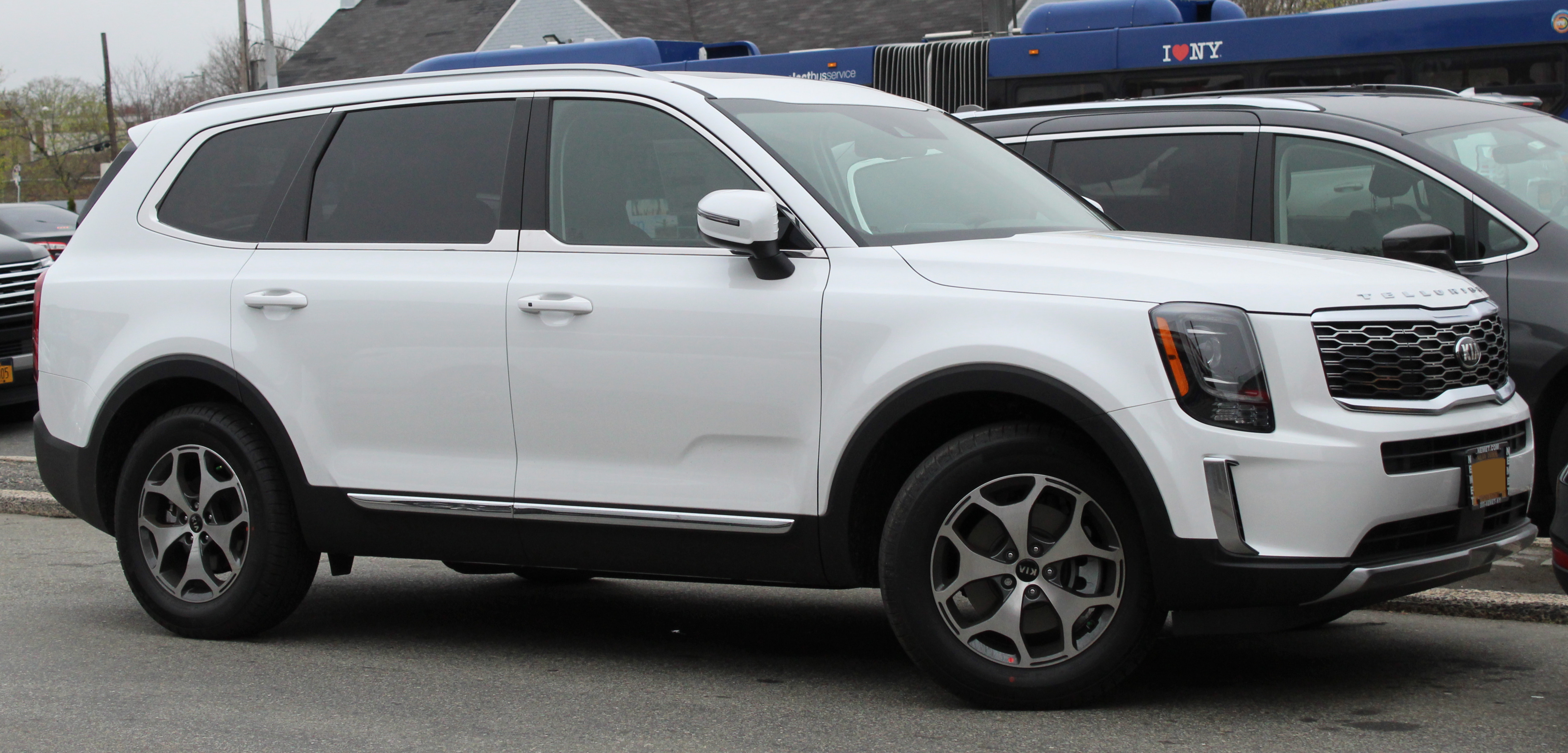
Kia Telluride
"But I think like the Telluride. That's another third row. But you know what?"
The Kia Telluride is a family SUV with three rows of seats. The host is comparing it to other three-row SUVs and talking about how it stacks up.
The Kia Telluride is a midsize three-row SUV known for strong value and comfort, often competing with other family-focused SUVs. The host calls out that it also has a third row and later contrasts it with other choices.

Prado / Meru
"...and then obviously it's known as the Land Cruiser Prado outside the US. And so they brought that here."
The Prado (and Meru in some places) is a Land Cruiser model sold outside the U.S. It’s meant to be a capable SUV for driving in different conditions. The podcast brings it up because the name changes depending on where it’s sold.
The Prado (and Meru in some markets) is the Land Cruiser Prado, a version of Toyota’s Land Cruiser line sold outside the U.S. The podcast notes that it’s known as the Land Cruiser Prado internationally and that it was brought to the market being discussed. It’s mentioned because it’s a region-specific nameplate that affects how buyers recognize the vehicle.
Lexus
"And so they brought that here. You can still get that old one as the Lexus, of course."
Lexus is Toyota’s luxury car brand. The host is saying that even though the Land Cruiser name changed in the US, you can still buy that kind of SUV through Lexus.
Lexus is Toyota’s luxury brand, and it’s used for certain Toyota models that are sold with a more premium positioning. Here, the host says you can still get the “old one” as a Lexus, tying the Land Cruiser/Prado continuation to the Lexus lineup.
four cylinder turbo hybrid
"you definitely hear the engine because it's a four cylinder turbo hybrid. You definitely hear the engine working, but it's super responsive."
This describes a car with a small 4-cylinder engine plus a turbo, and it also has an electric assist. The electric part helps the car feel quick right away, instead of waiting for the engine to build power. That’s what makes the driving feel smoother and more responsive.
A four-cylinder turbo hybrid combines a small 4-cylinder engine with a turbocharger and an electric hybrid system. The turbo helps the engine make boost quickly, while the electric assist fills in the moment before the turbo and engine deliver full power. That’s why the host says it feels responsive and that the hybrid “smooths things out.”
drive train options
"But of course, you get, you know, a wider range of drive train options in the Defender, right?"
“Drivetrain options” refers to the different ways power is sent from the engine (and/or electric motors) to the wheels. That can include choices like hybrid vs non-hybrid, different transmission setups, and different traction layouts. The host implies that the Defender offers more variety here than the Toyota they’re discussing.
third row
"The one that I had was priced at 70. But again, that one didn't have the third row."
A third row means extra seats in the back for more passengers. Adding it usually takes up space, so it can affect cargo room. The host is saying their specific Defender didn’t have those extra seats.
A third row is an additional set of seats behind the second row, allowing an SUV to carry more passengers. It affects packaging and can change cargo space and how the vehicle is configured. In this segment, the host notes that the specific Defender they had did not include the third row.
sunroof
"But again, that one didn't have the third row. Did have a sunroof, which was lovely."
A sunroof is a panel in the roof that lets in light and sometimes fresh air. It’s a comfort feature people often like. Here, the host mentions it as a positive on the car they had.
A sunroof is a glass or fabric panel in the roof that can open for fresh air and sunlight. It’s a common convenience feature on SUVs and can be a selling point. The host says the car had a sunroof and calls it “lovely.”
heated seats
"all the creature comforts, it had heated seats, didn't have a heated steering wheel, but that's not standard."
Heated seats warm you up while you’re driving, using built-in electric heaters. They’re most helpful in winter. The host is saying their car had this feature.
Heated seats use electric heating elements to warm the seat cushions and sometimes the seatbacks. They’re especially useful in cold weather and are typically offered as an option or part of a comfort package. The host lists heated seats as part of the car’s equipment.
heated steering wheel
"it had heated seats, didn't have a heated steering wheel, but that's not standard. You know, that's more of a surprise when you do have a car with that."
A heated steering wheel warms the part you hold onto, which is great in cold weather. It’s usually an optional feature rather than standard. The host is pointing out that not having it was noticeable.
A heated steering wheel adds electric heating to the steering wheel rim so it warms up in cold weather. It’s often not included on base trims, so it can feel like a “surprise” when present. The host notes their car didn’t have it and emphasizes that it isn’t standard.
Prado
"The expedition, they added two doors. Same thing with the Prado and the Land Cruiser gives you two more doors."
The Prado is a Toyota SUV that can handle rough roads, but it’s also meant to be comfortable enough for everyday life. Here, they’re talking about how it’s more usable than a smaller, two-door version because it has more doors.
Toyota Land Cruiser Prado (often shortened to “Prado”) is a mid-size SUV built for off-road use while still being practical for daily driving. In this segment, it’s compared to the Land Cruiser as another step that adds two more doors to improve usability.
driver fatigue
"So yeah, I mean, it's like and there was no driver fatigue, like a long drives. And just it was just delightful."
Driver fatigue is what happens when you feel tired from driving—like your body and attention start to wear out. They’re saying the car made long drives feel easier.
Driver fatigue refers to how worn out a driver feels after long periods behind the wheel, often due to vibration, noise, awkward seating, or tiring steering/controls. The host is saying the vehicle felt easy to live with on long drives, with no fatigue building up.
off road
"And it's truly capable off road, but you give a very little round town, which is really kind of the sweet spot for most of us, I think."
Off-road means driving on rough ground like dirt trails or uneven surfaces. They’re saying the SUV can handle that, but it still works well for everyday city use.
“Off road” describes driving on unpaved or uneven terrain where traction and suspension travel matter more than on-road comfort. The host says the vehicle is truly capable off road, but they also highlight that most people’s real-world use is closer to normal town driving.
sweet spot
"but you give a very little round town, which is really kind of the sweet spot for most of us, I think. So yeah, and they dropped it off."
A “sweet spot” is the best match between what you need and what the car is good at. They’re saying most people don’t do extreme off-roading every day, but they want the capability when they need it.
“Sweet spot” is the idea of an optimal use case where a vehicle’s strengths match the owner’s actual driving. Here, the host suggests that for most people, the best fit is a mix of light town driving while still having the option for real off-road capability.

defender
"How do you decide between that and the defender then? ... The defender is going to have more creature comforts."
The Land Rover Defender is an off-road SUV that also feels more comfortable inside than some other tough 4x4s. In this conversation, they’re saying it’s a bit better for off-road use and day-to-day comfort.
The Land Rover Defender is a rugged SUV, but it’s often chosen for a more comfortable, “everyday” cabin than many purely utilitarian off-roaders. In this discussion, they frame it as having more creature comforts and slightly more off-road “capability” (their broader performance envelope).
utilitarian
"It's just a matter of like the Land Cruiser is more utilitarian. The defender is going to have more creature comforts."
“Utilitarian” basically means “made for practical use.” In this context, they’re saying one SUV feels more built for function and tough use, while the other feels more comfortable.
“Utilitarian” describes a vehicle’s design focus on practical function over luxury—think durability, straightforward controls, and usefulness in rough conditions. Here it’s used to characterize the Land Cruiser versus the Defender’s more comfort-oriented approach.
creature comforts
"The defender is going to have more creature comforts. I think the defender, I felt had a little more capability off-road, right?"
“Creature comforts” means the nice, comfortable features that make a car feel pleasant—like comfort inside and convenience stuff. They’re saying the Defender has more of that than the Land Cruiser.
“Creature comforts” refers to convenience and comfort features—things like nicer seats, climate control, infotainment, and quieter ride quality. The host uses it to explain why the Defender feels more pleasant day-to-day than the more utilitarian Land Cruiser.
dealer experience
"So does that come into it at all in terms of, you know, the dealer experience? ... They charge for a, you know, a courtesy car, for example."
“Dealer experience” is how the dealership treats you as an owner—things like how helpful they are and whether they charge extra for things like a loaner car. They’re saying that can matter as much as the car itself.
“Dealer experience” refers to the ownership process handled by the dealership—how they treat you, how quickly they respond, and what they charge for services or loaner vehicles. The host ties it to whether reliability and resale value matter if the service process is frustrating.
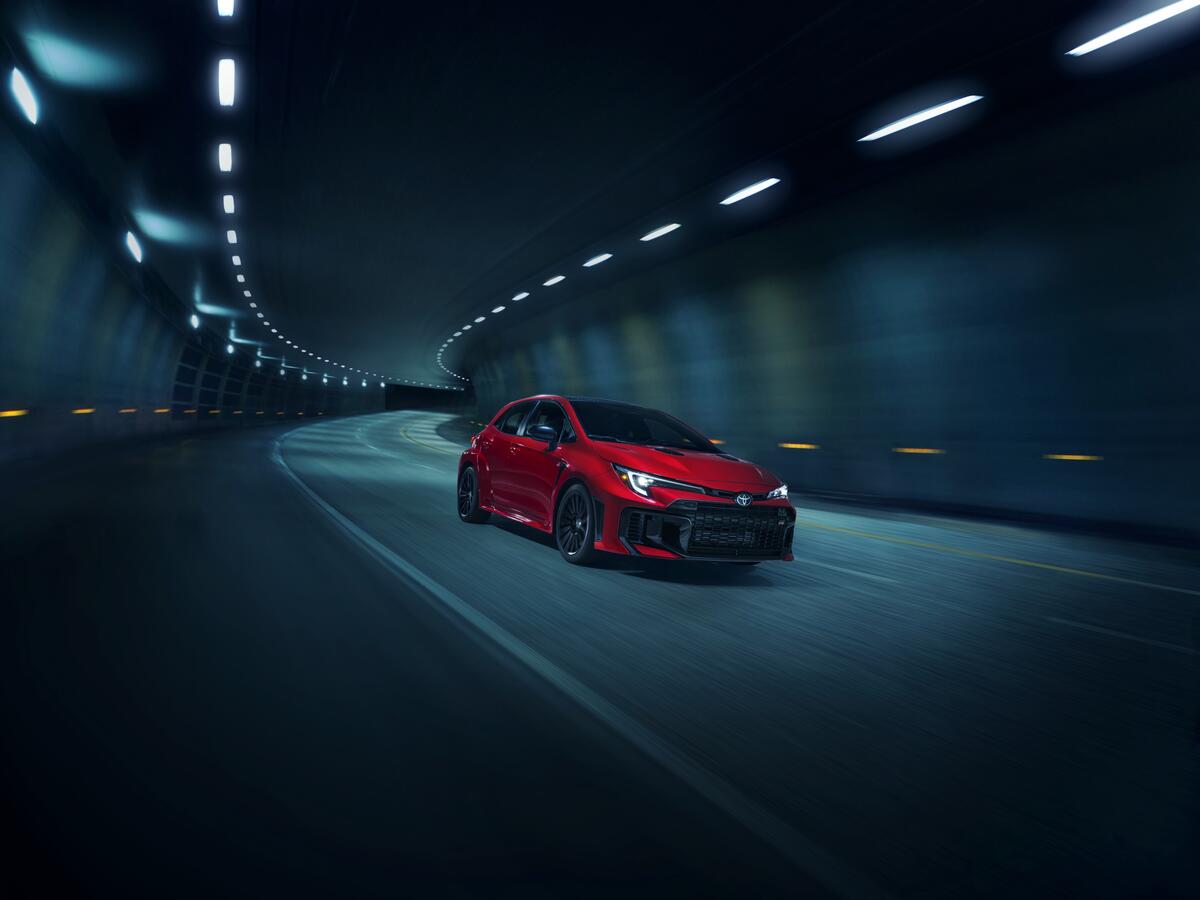
GR Corolla
"... but I also had a pretty poor experience with Toyota in Seattle when I had my GR Corolla. That's right, right."
The Toyota GR Corolla is a sporty Toyota hatchback made for driving enthusiasts. In this segment it’s mainly used to explain that the host had a not-great experience with Toyota’s dealer service in Seattle.
The Toyota GR Corolla is a performance-focused hot hatch built by Toyota’s Gazoo Racing (GR) program, aimed at enthusiasts who want rally-inspired driving dynamics. Here it’s mentioned as the host’s prior Toyota ownership experience, which shaped their opinion of dealer service.
courtesy car
"They charge for a, you know, a courtesy car, for example. So does that come into it at all in terms of, you know, the dealer experience?"
A “courtesy car” is a loaner vehicle a dealership gives you while your car is in the shop. Here they’re saying some dealers charge for that, which makes the experience worse.
A “courtesy car” is a temporary loaner vehicle provided by a dealership while your car is being serviced or repaired. The host mentions it because some dealers charge for it, which affects the overall ownership experience.
death wobble
"Yeah. Did you get the death wobble? No, I tried. I think they made the best effort to dial that out."
“Death wobble” is when a car starts shaking violently through the steering wheel and front end. It usually happens at certain speeds and is often caused by worn or loose parts in the front suspension or steering.
“Death wobble” is a severe steering/suspension vibration that can shake a vehicle violently at certain speeds, often linked to worn or loose components in the front suspension and steering. It’s a well-known (and feared) issue on some off-road-capable trucks/SUVs, especially when driving over rough surfaces.
hard top
"You know, this was just a base, you know, car, but black on black with a hard top. I got a lot of looks in this car, though."
A hard top is the rigid, solid roof on a car or SUV. It usually feels quieter and more weather-protected than a soft, fabric roof.
A hard top is a fixed, rigid roof panel (as opposed to a soft top fabric roof). On vehicles like the Jeep Wrangler, choosing a hard top changes noise, insulation, and weather protection compared with a soft top.
Turo
"“I was doing some research the other week around Turo businesses.” ... “the perfect Turo car is a Wrangler.”"
Turo is a website/app where people rent cars from other people. They’re talking about what kinds of cars do well there.
Turo is a peer-to-peer car rental marketplace where owners rent out their own vehicles to other drivers. The hosts are discussing which kinds of cars perform best on Turo, using the Wrangler as an example.

Wrangler
"“Our research department and the perfect Turo car is a Wrangler.” ... “You don't have to worry about, you know, speed bumps, potholes so much.”"
The Jeep Wrangler is a tough SUV that’s built for rough roads. Here they’re saying it works well for renting because it can handle bumps and potholes better than many other cars, and people know what they’re getting.
The Jeep Wrangler is a rugged, off-road-focused SUV known for its simple, durable design and strong aftermarket support. In this segment, the hosts are talking about it as a “Turo car” because it’s generally tolerant of rough day-to-day use (potholes, speed bumps) and is easy to keep on the road.
ROI
"“But the ROI on the Wranglers is up there in terms of great Turo cars.”"
ROI means “did the money you put in pay off?” Here they’re saying the Wrangler tends to make more sense financially for renting on Turo.
ROI (return on investment) is a business metric that compares the profit you get back to what you spent to get it. In the context of Turo, they’re using ROI to argue that certain cars (like the Wrangler) tend to earn more relative to their costs.
dings and scratches
"“A few dings and scratches.” ... “I mean, don't really.”"
“Dings and scratches” are common cosmetic damage types—small dents (“dings”) and surface marks (“scratches”). The hosts are implying that minor cosmetic wear is acceptable for a rental car, especially if the vehicle is otherwise mechanically dependable.
beach mobile
"like the fact that you can take off the roof or the doors or whatever and turn it [972.0s] into like a beach mobile, but you can go off roading and you can get a manual. [975.9s] Yeah, I get a manual and you can put everything back on and it's an enclosed car."
“Beach mobile” just means a car you can drive around with an open-air feel. In this case, it’s made possible by taking the roof and doors off.
“Beach mobile” is a casual way to describe an open-air driving setup—typically achieved by removing the roof and doors. The host uses it to explain how modular body design can turn an off-road vehicle into something that feels like a cruiser for casual outings.
manual
"like the fact that you can take off the roof or the doors or whatever and turn it [972.0s] into like a beach mobile, but you can go off roading and you can get a manual. [975.9s] Yeah, I get a manual and you can put everything back on..."
“Manual” means the car has a stick shift. You choose the gears yourself using a clutch pedal and the gear lever.
“Manual” here means a manual transmission, where the driver selects gears with a clutch and gear lever rather than using an automatic gearbox. The host is highlighting that the vehicle can be configured for off-roading while still being available with a driver-controlled gearbox.

Ford Bronco
"But yeah, I mean, it did lead on to the like [1013.2s] now you've got an alternative, which is the Bronco. [1016.0s] Yeah, and I think two weeks ago we talked about the Filson Bronco..."
The Ford Bronco is another rugged off-road SUV, similar in spirit to the Jeep Wrangler. It’s designed for going off-road and for that open-air, outdoorsy vibe.
The Ford Bronco is an off-road SUV built to compete with the Jeep Wrangler, with a strong emphasis on trail capability and removable/open-air styling. Here, it’s discussed as an “alternative” to the Wrangler, and the segment also references a specific Bronco-related package/brand collaboration.
Filson
"Yeah, and I think two weeks ago we talked about the Filson Bronco and Lindsey, [1020.2s] you brought that up and they materialized. [1023.5s] I know."
Filson is a brand that makes outdoor clothing and gear. Here, it’s being used as part of a “Filson Bronco” special edition idea—basically a Bronco styled for outdoors people.
Filson is a heritage outdoor brand known for rugged clothing and gear. In this segment, “Filson Bronco” refers to a Bronco-themed collaboration/edition that’s styled and equipped to match Filson’s outdoorsy identity.
chopped look
"I can't get past sort of the chopped visibility, right? The chopped look out of a Bronco."
They mean the Bronco’s roof shape and design make the view out the windows feel more blocked. It’s basically about how the car’s shape changes your sightlines when you’re driving.
“Chopped look” here is describing a styling/roofline choice that affects how much you can see out of the vehicle. On SUVs with removable roof sections or distinctive pillar/roof geometry, that can translate into more obstructed sightlines in normal driving.
consideration in city traffic
"But to me, that's that's a consideration in city traffic. And so you'd go Jeep over Bronco."
They’re saying that what matters in the city isn’t just off-road ability—it’s how easy the car is to drive day to day. Things like visibility and how it feels in traffic matter a lot.
“Consideration in city traffic” is about how an SUV’s day-to-day usability matters more than pure off-road capability. In this context, visibility and day-to-day driving feel (like ease of maneuvering and sightlines) become the deciding factors.

F-150 Raptor
"...se it's going to have the the engine from the the Raptor, but reduced. So it's almost gunning for gunning ..."
The Ford F-150 is a large pickup truck. The podcast is talking about what kind of engine it might use and how that could affect performance. It comes up because engine options are a big part of what makes the truck appealing.
The Ford F-150 is a full-size pickup truck and one of the most widely known trucks in its class. The podcast mentions it potentially using an engine approach similar to the Raptor but reduced, framing it as aiming for strong performance. It’s discussed because engine choices and performance tuning are major reasons people pay attention to the F-150.
horsepower
"So less horsepower, like less highly revved, right? But but you're getting a like a better engine in the two points."
Horsepower is a number that roughly tells you how strong an engine is. Higher horsepower usually means more potential acceleration, but it doesn’t tell the whole story by itself.
Horsepower is a measure of engine output power—how much work the engine can do over time. The hosts contrast “less horsepower” with a different engine setup, implying a tradeoff between peak power and how the engine delivers it (including how high it revs).
Rivians
"Maybe that's your next card, and that's maybe I've been looking at Rivians today. Well, how about that?"
Rivian is an electric-vehicle company. They’re especially known for making EVs that fit outdoor lifestyles, like camping and road trips.
Rivian is the EV brand known for building electric vehicles aimed at outdoor and adventure use. In this segment, the hosts connect Rivian’s brand identity to why the R2 is appealing to them.
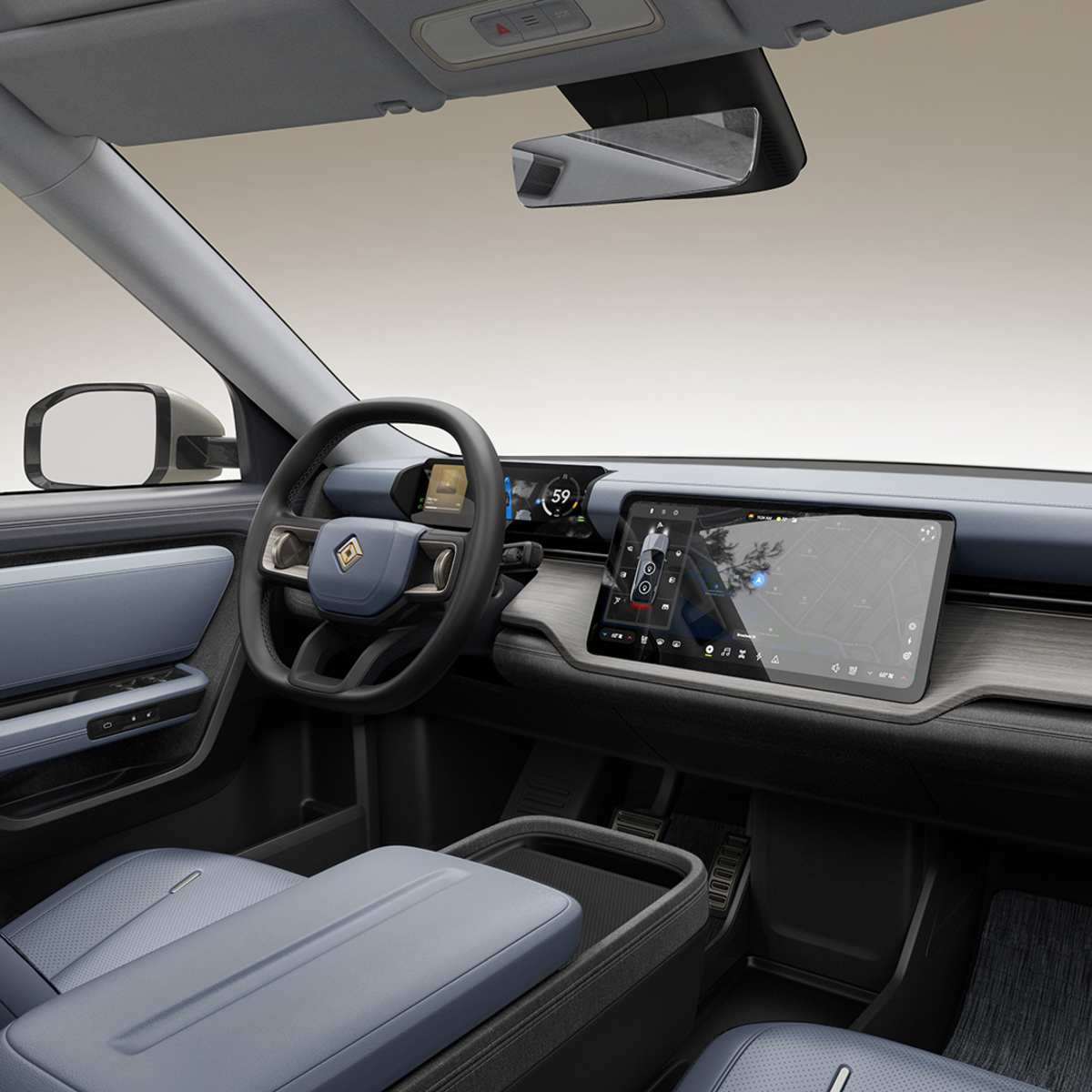
Rivian R2
"So the they've just released the R2. Is that one that's mixed up with the numbers?"
The Rivian R2 is an all-electric SUV. The hosts are talking about its price and how far it can go on a charge, which is what most people care about with an EV.
Rivian R2 is an upcoming/announced electric SUV from Rivian, positioned as a more affordable, mainstream step compared with the brand’s larger models. In this segment, the hosts discuss it in the context of pricing and how much electric range it offers for everyday use and outdoor trips.
range
"What's the range on that?"
For an electric car, “range” is how many miles (or kilometers) you can drive before the battery runs low. It’s the key number people look for when deciding if an EV works for their routine.
In EV talk, range means how far the vehicle can drive on a full battery charge before it needs recharging. The host asks about the Rivian R2’s range because it’s one of the biggest practical factors for whether an EV fits someone’s daily driving and road-trip plans.

Acura Integra
"And I, as I mentioned on the last episode with Steve, I was absolutely blown away by one car and that's the the accurate Integra. They had an A-spec, which is the the lower horsepower, sort of middle of the road,"
The Acura Integra is a small, sporty Honda-family car. Here, the host is saying the version they drove (A-spec) was especially great with the manual transmission and overall driving feel.
The Acura Integra is a modern revival of the Integra nameplate, built around a compact, driver-focused layout. In this segment, the host highlights the Integra’s A-spec version and praises its manual gearbox feel, suggesting it’s one of the best “everyday” enthusiast cars they’ve driven.
clutch and shifter
"Not the quickest thing in the world, the 200 horsepower, but just the lightest, sweetest, you know, clutch and shifter."
In a manual car, the clutch is what you press to change gears, and the shifter is the lever you move into each gear. The host is saying this car’s clutch and shifter feel especially smooth and easy to control.
The clutch is the pedal and mechanism that disconnects the engine from the transmission so you can change gears. The shifter is the gear lever; together, their feel (smoothness, engagement, and precision) heavily affects how “sweet” and controllable a manual car feels.

new Prelude
"But the other car that really, that people really loved was the new Prelude... It's gotten some grief because it's expensive. It's not super powerful... Again, about 200 horsepower... What a delightful thing to drive for me."
The Honda Prelude is a Honda model that’s trying to bring back the fun, stylish vibe of older Preludes. Here, they’re basically saying it’s enjoyable to drive and looks great, but it’s pricey and not a super-strong power monster.
The Honda Prelude is a modern throwback coupe/hatch-style Honda that’s meant to feel fun and stylish while still being usable day-to-day. In this segment, the hosts discuss its character (including a claimed ~200 horsepower) and how it drives, even though they note it’s expensive and not “super powerful.”
PDK transmission
"It felt like a PDK transmission. I don't know what the transmission actually is. And I meant to look that up before we got on."
PDK is a type of automatic transmission used by Porsche that can change gears very fast. The host is saying the Honda Prelude’s driving feel reminded them of that quick-shifting character.
PDK is Porsche’s dual-clutch transmission system, designed to shift quickly by using two clutches to pre-select the next gear. When the host says the Prelude “felt like a PDK transmission,” they’re describing the shift feel—quick, smooth, and responsive—even though they aren’t sure of the Prelude’s exact gearbox.

Alpine A110
"It looks like an Alpine A110 for many angles, right? And they're relatively new."
The Alpine A110 is a small, sporty French car that’s famous for being light and fun to drive. They’re comparing the Prelude’s looks to the A110 from several angles.
The Alpine A110 is a lightweight, mid-engine sports car known for its compact size and agile handling. The host uses it as a visual reference, saying the Prelude “looks like an Alpine A110 for many angles,” which points to a similar coupe silhouette and proportions.

Honda CRX
"...ike who was the like the Honda Del Sol for or the CRX, right? I mean, it fits in that in that sort of c..."
The Honda CRX is a small, sporty Honda. It’s the kind of car people choose for a fun driving feel rather than lots of space. The podcast mentions it by comparing it to another similar Honda model.
The Honda CRX is a compact, sporty Honda model known for its lightweight feel and driver-focused character. The podcast compares it to the Honda Del Sol and describes it as fitting into that same general category. It’s mentioned because it’s a recognizable name for a small, fun-to-drive Honda.

Honda Del Sol
"It's kind of like who was the like the Honda Del Sol for or the CRX, right?"
The Honda Del Sol was a Honda from the 1990s/2000s that people associated with a youthful, fun driving experience. They’re saying the Prelude might be aimed at a similar kind of buyer.
The Honda Del Sol is a late-1990s/early-2000s Honda that’s remembered for its fun, youthful vibe and practical everyday usability. The host compares the new Prelude’s target audience to the Del Sol—suggesting a similar “fun but practical” buyer profile.

Subaru Trailseeker
"I was really impressed with the Subaru, the new Subaru EV [1500.6s] called the Trailseeker. [1503.7s] Yeah, the Trailseeker, the 2026 Subaru Trailseeker. [1507.2s] It's about 380 horsepower, full EV."
The Subaru Trailseeker is an all-electric Subaru meant to feel like a rugged, outdoorsy wagon/crossover. They’re saying it drives really well and has a lot of electric power.
The Subaru Trailseeker is a new, fully electric Subaru crossover concept aimed at buyers who want an Outback-like lifestyle but with EV power. In this segment, they highlight it as a full EV with about 380 horsepower and strong ride quality.

Subaru Outback
"It's kind of like if you had an outback that was an EV. [1514.0s] Yeah, the ride was incredible, rode so much better than the either the outback [1518.4s] or the Forester that they had on hand."
The Subaru Outback is a popular Subaru model people buy for road trips and rougher roads. In this segment, they’re using it as a reference point for what the Trailseeker is trying to feel like.
The Subaru Outback is Subaru’s outdoors-oriented wagon/crossover that’s commonly used as a benchmark for “adventure” practicality. Here, the host compares the Trailseeker’s mission to an Outback, but with electric power.

Subaru Forester
"Yeah, the ride was incredible, rode so much better than the either the outback [1518.4s] or the Forester that they had on hand. [1521.0s] And, you know, obviously, you don't have to worry about a CVT transmission."
The Subaru Forester is a common Subaru crossover people choose for everyday comfort and practicality. They’re saying the Trailseeker rides better than the Forester they had available.
The Subaru Forester is Subaru’s compact crossover known for a comfortable ride and practical packaging. The host contrasts its ride quality with the Trailseeker, implying the EV version feels smoother.
CVT transmission
"Yeah, the ride was incredible, rode so much better than the either the outback [1518.4s] or the Forester that they had on hand. [1521.0s] And, you know, obviously, you don't have to worry about a CVT transmission."
A CVT is a type of automatic transmission that changes ratios smoothly instead of using distinct gears. The host is saying that because this is a full EV, you don’t have to deal with a CVT at all.
A CVT (continuously variable transmission) is a gearbox that can smoothly change gear ratios without fixed steps. The host brings it up because many non-EV Subarus use CVTs, and they’re saying the Trailseeker being fully electric avoids that particular drivetrain.
squircle steering wheel
"But the one thing that cursed the damn car and this is something that was in [1532.3s] at least a third of the cars there was the squircle steering wheel. [1536.6s] And I just so you get the squared off circle."
A squircle steering wheel is a steering wheel that’s not perfectly round—it’s more like a rounded square. The host thinks it looks and feels awkward compared with a normal steering wheel.
A “squircle” steering wheel is a steering wheel whose shape is a rounded square-like form rather than a traditional circular rim. The host is criticizing it as awkward to use, describing it as “squared off” and making the driver feel “goofy” holding it.

Lexus ES 500
"And I think that's also around 44000 [1561.6s] But you can spend 6000 dollars more, Dan, you can get the Lexus [1564.9s] ES 500, which is a full EV and it's like a Rolls Royce. [1569.0s] It's fantastic."
The Lexus ES 500 is a Lexus luxury sedan positioned as a full electric alternative in this comparison. The host frames it as a more premium, “Rolls Royce”-like experience and says you can spend extra to get it as a full EV.

Crosstrek Cross Tracks
"you know, a lot of the outbacks and the cross tracks traditionally [1579.8s] would like the college cars, right?"
The Subaru Crosstrek is a smaller Subaru SUV/crossover. In the conversation, it’s mentioned as another model that tends to be popular with younger buyers.
The Subaru Crosstrek (Crosstrek) is a compact crossover/SUV that’s positioned as a smaller, more urban alternative to the Outback. Here it’s grouped with the Outback as another Subaru model that historically attracted college-age buyers.

Model Tesla Plaid
"So Ryan, did they have so at Mudfest, we had one of the Trailseeker's [1598.3s] and then we had one of the Uncharted's, which is the other new EV."
The Trailseeker is an electric vehicle the hosts talked about at an event. They’re saying it was enjoyable to drive and felt capable off-road or on rougher terrain.
The Trailseeker is an EV model the hosts discuss in the context of Mudfest, emphasizing that it felt both fun and capable. They also compare it to another EV called the Uncharted, suggesting these are part of the same new lineup and share similar “feel” elements like the steering setup.
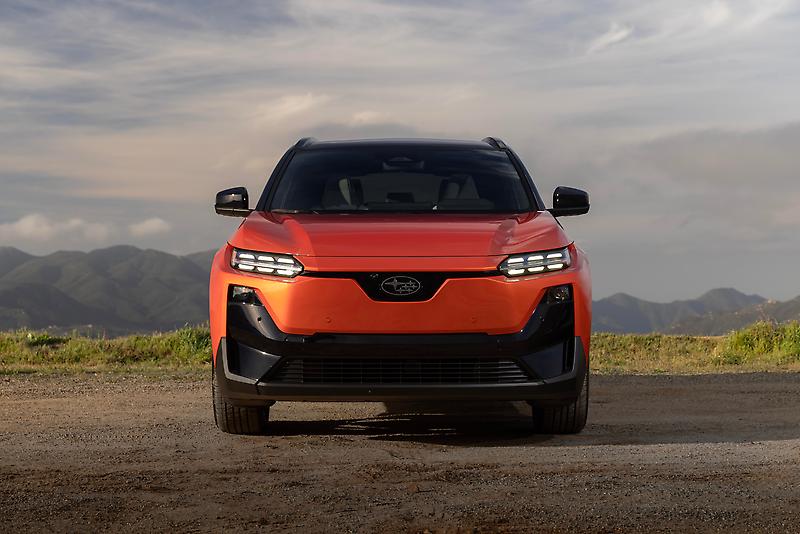
Subaru Uncharted
"So Ryan, did they have so at Mudfest, we had one of the Trailseeker's and then we had one of the Uncharted's, which is the other new EV. Did you guys have one of those?"
The Subaru Uncharted is an electric vehicle (EV). The podcast mentions it at an event where they had multiple new EVs to drive. It’s brought up because it’s one of Subaru’s newer electric models.
The Subaru Uncharted is an EV model mentioned alongside the Trailseeker at Mudfest, described as “the other new EV.” The podcast context suggests it’s part of a new lineup of electric vehicles meant for adventure-oriented use. It’s discussed because it represents Subaru’s expansion into EVs with a similar outdoor focus.
X6 silhouette
"it's kind of like an X6 silhouette. [1614.2s] Like swoop, you know, swooping, sloping roof, not wagon."
They’re describing the car’s shape. “X6 silhouette” means it looks like a sportier SUV with a sloping roofline, not a boxy wagon shape.
An “X6 silhouette” is a shorthand for the BMW X6’s distinctive fastback-like proportions: a coupe-like roofline on an SUV body. In this segment, it’s used to describe the Uncharted’s sloping roof shape and overall body profile.

Dodge Charger
"“Doesn't look nearly as silly though as the charger four door that also has steering wheel like that…”"
The “Charger” is a Dodge model. They’re comparing how the same kind of steering-wheel/visual design looks on a bigger four-door Charger versus a smaller-looking Subaru.
The “Charger” refers to the Dodge Charger, a full-size American sedan/coupe-style model known for big engines and a muscular design. The host is specifically calling out the four-door Charger’s steering-wheel look and how its size makes that design element seem more exaggerated than on the Subaru.
Stalantis
"“Yeah, poor Stalantis. Stalantis, if I may, everyone loved the Pacifica.”"
They’re talking about Stellantis, the big company that owns multiple car brands. The point here is that the host thinks people liked one of its cars (the Pacifica) even if the company gets criticized.
“Stalantis” is a misspoken reference to Stellantis, the multinational automaker formed from the merger of Fiat Chrysler Automobiles and PSA Group. In this segment, the host uses it as the parent company behind brands like Chrysler.
rental fleet
"Unless you get the base model, like the rental fleet, and that still looks like the old one, the others have all been facelifted."
A rental fleet is the set of vehicles a rental company keeps in service, often with standardized trims and older spec choices to control cost. Here, the host uses it to explain why some cars still look “old” while others have been updated with facelifts.
facelifted
"Unless you get the base model, like the rental fleet, and that still looks like the old one, the others have all been facelifted."
A facelift is when a car gets updated styling (and sometimes features) partway through its life. It’s not a brand-new model, just a refresh.
A “facelift” is a mid-cycle refresh where a car gets styling and sometimes equipment/tech updates without becoming a completely new generation. The host contrasts rental/base models that haven’t been updated with versions that have been facelifted.

Jeep Cherokee
"...now, that was universally more loved than the new Cherokee, which I think most of us were kind of disappoint..."
The Jeep Cherokee is a mid-size SUV. The podcast is saying that an older version was liked more than a newer one. That’s why it comes up—people were disappointed with the newer direction.
The Jeep Cherokee is a mid-size SUV that’s been offered in multiple generations and configurations. The podcast contrasts it with an older model, saying the previous Cherokee was “universally more loved” than the newer one, which disappointed some listeners. It’s discussed because the change in the newer Cherokee affected how people felt about the vehicle.
one point, four cylinder turbo
"It's got a one point, four cylinder turbo just didn't do anything for me."
This means a small 1.4-liter engine with a turbocharger. A turbo can add power, but the host is saying this particular setup didn’t feel impressive to them.
“1.4L turbo” refers to a 1.4-liter engine that uses a turbocharger to increase air intake and boost power. The host’s point is that this smaller turbo setup didn’t feel like it delivered meaningful performance or excitement compared with expectations.
under-engined
"But yeah, the new Cherokee, it just was under-engined. [1786.5s] It felt heavy. [1787.6s] It just it just wasn't the car for me."
“Under-engined” means the engine doesn’t feel strong enough for the car. The result is usually slower acceleration or the engine working harder than you’d expect.
“Under-engined” is a descriptive way to say an engine feels too small or too weak for the vehicle’s weight and gearing. In practice, it often shows up as sluggish acceleration, needing more throttle to maintain speed, or feeling like the engine can’t keep the car moving confidently.
Mudfest
"I think the Trinity rally was happening while I was at Mudfest [1799.8s] because I was talking to the Stellantis guys who were there. [1804.4s] And they were really excited and they they've worked with Sarah over the years."
Mudfest sounds like an event the host went to. They mention it in the same breath as a rally, suggesting it’s where people were talking about cars and driving them.
Mudfest is referenced as an event the host attended while a rally (“the Trinity rally”) was happening. The context suggests it’s a gathering where automakers and media can connect around vehicles and driving experiences.
Trinity rally
"I think the Trinity rally was happening while I was at Mudfest [1799.8s] because I was talking to the Stellantis guys who were there. [1804.4s] And they were really excited and they they've worked with Sarah over the years."
The “Trinity rally” sounds like a driving event. The host is using it to explain why certain car people were excited and involved at the same time.
The “Trinity rally” is mentioned as an ongoing event happening while the host was at Mudfest. The context suggests it’s a motorsport or driving event where automakers want their vehicles to be seen and driven.
Stellantis
"I think the Trinity rally was happening while I was at Mudfest [1799.8s] because I was talking to the Stellantis guys who were there. [1804.4s] And they were really excited and they they've worked with Sarah over the years."
Stellantis is a big car company. Here, the host is saying they talked with Stellantis representatives who were excited about bringing a car to the rally.
Stellantis is an automaker formed from the merger of Fiat Chrysler Automobiles and PSA Group. In this segment, the host talks to “the Stellantis guys,” indicating the company’s involvement in rally-related promotion and vehicle participation.

Pacifica
"Well, Sarah is awesome. [1813.0s] She's great. And apparently the Pacifica was too. [1816.2s] But, you know, you just don't get to drive everything."
The Chrysler Pacifica is a minivan meant for families. The host is saying it was also part of the rally lineup, but they didn’t personally get to drive it.
The Chrysler Pacifica is a minivan (not an SUV) that’s designed around passenger space and family practicality. The host mentions “the Pacifica was too,” implying it was among the vehicles available for the rally experience, even though they personally didn’t get to drive it.
EV
"but you don't necessarily know how the EV is going to do."
EV means electric vehicle. The host is saying electric cars might not behave the same off-road as gas cars, so you can’t assume they’ll be great without seeing it.
EV stands for electric vehicle. The host’s point is that while some non-EV vehicles (like the Subaru referenced) are expected to do well off-road, you can’t automatically assume an EV will perform the same way in muddy or uneven conditions.
twisties
"In that Telluride was actually pretty great in the twisties. They took it out on a twisty road with their buddy, Jason Mishnik, who you both know."
“Twisties” just means a curvy road with lots of turns. The host is saying the SUV handled the turns in a way that felt better than expected.
“Twisties” is enthusiast slang for a road with lots of curves and changing direction. When the host says the Telluride was “pretty great in the twisties,” they mean it felt composed and predictable through corners, even if it’s not a car you’d normally pick specifically for aggressive canyon driving.
Jason Mishnik
"They took it out on a twisty road with their buddy, Jason Mishnik, who you both know."
Jason Mishnik is a friend mentioned as being along for the drive on a curvy road. He’s part of the story about how the car behaved.
Jason Mishnik is named as the host’s buddy who took part in the driving test on a twisty road. In this segment, he functions as a real-world participant in the on-road evaluation rather than a technical authority.
Macintosh stereo
"So the Jeep Grand Cherokee, which is an interesting one, [1964.3s] really beautiful interior has a Macintosh stereo."
Macintosh is a brand name for a higher-end car audio system. The host is saying this one sounds different than what they expected from that brand.
“Macintosh” here refers to a premium audio brand used in some vehicles, marketed as delivering high-fidelity sound. The host argues that this system doesn’t sound like other Macintosh stereos they’ve heard, suggesting the tuning/implementation in this car may be off.

Jeep Grand Cherokee
"So the Jeep Grand Cherokee, which is an interesting one, [1964.3s] really beautiful interior has a Macintosh stereo."
The Jeep Grand Cherokee is a popular SUV. The host is talking about its sound system and saying it didn’t live up to what they expected from a premium setup.
The Jeep Grand Cherokee is a midsize SUV known for combining off-road capability with a more upscale cabin. Here, it’s specifically called out for having a premium audio system (a Macintosh stereo), which the host says doesn’t sound as good as expected.

Acura MDX
"...me. That's right. It's the same thing for the the MDX had a or I'm sorry, the 80X, the Acura had a Bang..."
The Acura MDX is a luxury SUV that can seat more people, often with three rows. It’s meant to be comfortable for everyday driving and family trips. The podcast mentions it while talking about how it compares to another Acura.
The Acura MDX is a three-row luxury SUV designed for family use with a more upscale interior and comfort-focused driving. The podcast references the MDX in a discussion about features and compares it to another Acura model. It’s brought up because it’s a well-known choice in the luxury SUV category.
Bang & Olufsen
"Meanwhile, the Integra had a [2000.7s] I'm going to have to check the check the brand again. [2002.6s] It wasn't ADS, but it was another brand and it was exceptional, right?"
Bang & Olufsen is a well-known premium audio brand. The host is saying that in some cars, the sound controls are complicated and it’s hard to get the audio to sound right.
Bang & Olufsen (often abbreviated B&O) is a luxury audio brand known for premium speaker and amplifier systems. The host claims B&O installations in multiple brands can suffer from overly complex sound controls, making it hard to dial in a satisfying balance.
Bayo sound circle
"Where instead of simple bass and treble controls, [1993.1s] you've got this Bayo sound circle that you can never get the sound quite right."
The “sound circle” is a screen control for adjusting the audio. The host is saying it’s not intuitive, so it’s hard to get the sound exactly how you want it.
A “sound circle” is a graphical equalizer-style control interface that lets you adjust audio characteristics around a dial or ring. The host’s point is that this kind of interface can be difficult to use precisely, so you can’t easily reach the “right” sound.
sharing platforms
"So right. It's interesting, I wonder if it's something to do with sharing platforms, because I don't know whether the ADX is shared across the Honda range or obviously the Integra is is shared with the Civic, isn't it?"
“Sharing platforms” means different cars are built using the same basic design underneath. The host is saying that even if the cars share that foundation, the final driving experience can still be very different.
“Sharing platforms” means multiple car models use the same core engineering architecture—like the same basic chassis layout and hardpoints—so they can be built more efficiently. In this segment, the host suggests that shared underpinnings can lead to one model feeling exceptional while another feels compromised.

Honda Civic
"So right. It's interesting, I wonder if it's something to do with sharing platforms, because I don't know whether the ADX is shared across the Honda range or obviously the Integra is is shared with the Civic, isn't it? Yeah, I'm wondering if the ADX is the same as is the HRV, the really small Honda crossover, because it didn't."
The Honda Civic is a very common compact car. Here it’s mentioned because the host thinks the Acura Integra shares the same underlying platform, which can affect how different the cars feel.
The Honda Civic is a mainstream compact car that the host uses as a reference point for platform sharing with the Acura Integra. The idea is that when a luxury or performance model shares architecture with a mass-market model, the “exceptional” feel depends on how much is actually tuned beyond the shared basics.
betrayed by its underpinnings
"Yeah, I'm wondering if the ADX is the same as is the HRV, the really small Honda crossover, because it didn't. I think it was betrayed by its underpinnings, honestly. It just it just was not."
The host means the car’s basic design underneath didn’t live up to expectations. Even if the outside looks different, the core engineering can make the driving experience feel less special.
This is a critique of how a vehicle’s “underpinnings”—its fundamental architecture and engineering—can limit how good the car feels, even if the body and branding are different. The host is arguing that the ADX/HR-V-style foundation didn’t translate into the same level of driving satisfaction as the Integra.
front wheel drive
"I don't think so only because it's front wheel drive only. And yeah, being here in Colorado, all wheel drive is really, really nice."
Front-wheel drive means the front wheels do the work of both steering and pulling the car forward. That affects how the car handles, especially when roads are slippery.
Front-wheel drive (FWD) means the engine’s power is sent to the front wheels, which handle both steering and traction. It can make packaging and driving in rain/snow easier, but it also changes how the car feels compared with rear- or all-wheel drive.
all wheel drive
"And yeah, being here in Colorado, all wheel drive is really, really nice. But guess who's moving to California?"
All-wheel drive powers all four wheels, which helps the car grip the road better. That can be especially helpful in snowy or icy conditions.
All-wheel drive (AWD) sends power to all four wheels, improving traction when grip is limited. In places like Colorado, AWD can make daily driving and mountain roads more confident because it helps the car accelerate and stay stable on snow, ice, or wet pavement.
Long Beach pace car
"And did about 600 miles in one. Really? And it was the official Long Beach pace car. So. Oh, that's right."
A pace car is a car used to lead the field at an event, often setting the speed during certain laps. Saying it was the Long Beach pace car means the car was featured for that event.
A pace car is used to lead or set the speed for an event’s cars, typically during starts, safety periods, or parade laps. Mentioning the “Long Beach pace car” ties the vehicle to a specific motorsport event tradition in Long Beach.

Integra
"but you want the full experience, you want the the Integra. [2181.5s] Yeah. And good cars."
The Honda Integra is a Honda compact that’s meant to feel more fun to drive than a typical everyday small car. They’re basically saying the Integra is the better pick if you want the more exciting experience.
The Honda Integra is a compact, driver-focused model known for blending everyday usability with a more engaging feel than many mainstream compacts. In this segment, the hosts prefer it over the Civic for the “full experience,” implying a more enthusiast-oriented driving character.
strobe lights
"All these strobe lights on the roof. [2199.6s] The only thing is it had it only done like over a thousand miles,"
Strobe lights are lights that flash on and off very quickly. In this story, they’re talking about the flashing roof lights on the car.
Strobe lights are high-intensity, rapidly flashing lights. Here, they’re describing the car’s roof-mounted flashing lights, which are typically used for attention-grabbing signaling (often seen on event or safety/official vehicles).
track miles
"The only thing is it had it only done like over a thousand miles, [2202.4s] but it had done a thousand track miles. [2204.4s] So the brakes were so squeaky."
“Track miles” means the car was driven on a race track. Track driving is tougher on the car, especially the brakes, so they can start squeaking or wearing out faster than normal road driving.
“Track miles” means the car has been driven on a racetrack rather than just on public roads. Track use is harder on components—especially brakes—because repeated hard stops and high temperatures can make brake wear and noise show up sooner.
brakes were so squeaky
"So the brakes were so squeaky. [2206.7s] Oh, yeah, it's like their track breaks, everyone. [2209.7s] They're supposed to sound that way."
Squeaky brakes usually mean the brake pads and rotors aren’t interacting quietly—often due to pad material, heat, or wear. After track use, brakes can squeak more because they get much hotter than normal driving.
Squeaky brakes are a common symptom of brake pad material and operating conditions. On track-driven cars, brake noise can be more noticeable because pads and rotors run hotter and can develop surface deposits or wear patterns that make them squeal.
Pike's Peak
"I should do it before Pike's Peak, because once the hill climb comes to town, [2219.7s] then all the Acura's in the local fleet are given out as courtesy vehicles."
Pike’s Peak is a well-known mountain hill-climb event where cars race up a steep road. They’re saying you should take the car before the event starts because the local cars get used for it.
Pike’s Peak is a famous hill climb in Colorado, where cars race up a steep mountain road to the summit. The segment mentions timing a courtesy-car week around the event, because local fleets are reassigned for the hill climb.
Request an Explanation
Heard something you'd like explained? We'll add it to this episode.
Sign in to request explanations for terms you heard.
Want to learn more?
Browse our glossary for plain-English explanations of automotive terms, jargon, and concepts.
Help improve this episode
See something that's not quite right? Our annotations are AI-generated and can sometimes miss the mark. Click the flag icon on any annotation to suggest a correction.