Renault's Chief Marketing Officer, Arnaud Belloni, discusses the brand's innovative approach to urban retail with the launch of the new R< concept store in London. He emphasizes the importance of reconnecting with city dwellers and adapting to the evolving automotive landscape, particularly with electric vehicles. Belloni shares insights on Renault's transformation into a more fashionable and premium brand while maintaining its mainstream appeal. He also reflects on the significance of storytelling in marketing and how Renault aims to attract new customers while nurturing brand loyalty.
Topics:urban retail strategyelectric vehiclesbrand storytellingmarket positioningcustomer loyaltyconcept store launchglobal strategyiconic car designmerchandising strategy
Step inside Renault’s bold reinvention with this episode of the Autocar Meets podcast. Deputy editor Felix Page rides through London with Renault’s Chief Marketing Officer, Arnaud Belloni, to uncover how the brand is reshaping its identity for a new era.
From the launch of Renault’s striking new concept stores – including a new Battersea site – to the revival of legends like the 4, 5, and Twingo, Belloni explains why Renault is leaning into storytelling, design, and emotion to connect with customers. He reveals how the brand is returning to city centres with smaller, lifestyle-focused showrooms, merging cars with cafés, lounges, and curated merchandise to build a brand 'touchpoint' that serves as far more than mere a sales channel.
Belloni also reflects on Renault’s evolution since the ‘80s when it was a 'nobody brand', the unique bond the brand has with UK buyers, and why authenticity drives respect in today’s market. And in a fascinating discussion on merchandise, he shares why Renault is following the lead of global lifestyle brands, turning icons like the Renault 5 into not just cars, but experiences you can wear, play, and live with - including £4000 table football sets.
"...ll the collection to arrive Panamera. He has the 911. He has the icon."
Select text to request an explanation
This episode is brought to you by Progressive Insurance.
Do you ever think about switching insurance companies to see if you could save some cash?
Progressive makes it easy to see if you could save when you bundle your home and auto policies.
Try it at Progressive.com.
Progressive Casualty Insurance Company and Affiliates.
Potential savings will vary, not available in all states.
This is a message from sponsor Intuit TurboTax.
You've sent so many emails to your tax pro and nothing.
It feels like you're chasing updates, but now your taxes are done for you by a TurboTax expert.
So you actually know what's happening.
You can match with an expert and just hand off all your tax stuff to them right in the app.
So instead of guessing, you can feel confident in your TurboTax experts on it.
Now this is taxes.
Intuit TurboTax.
Visit TurboTax.com to learn more.
Only available with TurboTax experts.
Real-time updates only in iOS mobile app.
Hello and welcome to AutoCar Meets, the bonus podcast from AutoCar.
This podcast is brought to you in association with Anderson EV, a British firm that makes and supplies home EV chargers.
All of its chargers have a seven-year warranty.
They're rated excellent on TrustPilot and at the moment they have an offer in partnership with Octopus Energy that brings 5,000 free miles of charging.
For more, see Anderson-EV.com.
Hello and welcome to the latest episode of the AutoCar Meets podcast series.
My name is Felix Page, I'm the editor of AutoCar.
And you join me in the back of a van at St. Pancras Station.
I'm on my way to Battersea in South London with Arnold Belloni, who is the Chief Marketing Officer of Renault.
Thank you so much for joining us today. How are you?
I'm doing very well and I'm so proud to be here. Thank you so much.
We have literally just picked you off the euro stuff, but you're fresh from Paris.
Why don't you tell us a little bit about why you're in London?
I'm in London because for two reasons.
One is a professional one and the second one is a non-professional one.
So the professional one is that tomorrow, today, today, today, today, this is the ground opening of the R< in London, Battersea.
So I was just explaining to my team that I'm waiting that since nearly four years.
So that's the city store concept of London, of Renault now in London.
So I'm in London for that reason just two weeks before Copenhagen.
We will open the same Copenhagen.
We've got 44 of these now all around the world, in the biggest cities in the world.
And even in smaller cities like Mendoza in Argentina, we are in London, Paris, Milan, Berlin.
We are in Brazil. We are in Seoul, Korea. We are mainly everywhere where Renault is.
And I'll come back to that and we can talk about that a little bit more.
But what's the non-professional reason you're in London?
Oh, my daughter is entering King's College.
Oh, fantastic.
So I am so proud of her.
Two big moments this week.
Yeah, that's cool.
So tell us a little bit about, I'm going to say in English if that's okay, R< is the new brand concept store.
Tell us a little bit about the thinking behind it.
Why are you rolling these out?
No, it's a fair question.
I am in this industry since now, more than 35 years.
I understood very quickly that there was more and more disconnection between people living in cities like London or Paris or people living in Seoul and the car industry.
The reason is very simple because they don't see any more dealership in the city centers.
And this is our thought in reality.
So since now, 10 years in my previous life and now I am thinking about the way to shift that problem.
The only way to do it is to come back in city centers.
And it was easier with Renault because Renault had a plan for cities because we decided five years ago to launch all our iconic cars like the four, the Twingo, even the Megan, which is quite short and the scenic.
So I've decided to think about a retail concept which could be the right one to display in city centers.
The problem in city centers is that the price per square meter is unbelievable in London, Paris, like in New York.
No business model works more particularly if you take the schemes of the old times, which for example was a lot of square meters, three floors in the middle of the city, it's impossible.
So what we've done is that we made 10, 15 years ago, we made the hub strategy.
Out of the city, you put the workshop, the paint shop, the body shop, and then you keep your dealership in the city.
But the problem is that our dealership were very old and very expensive.
So we closed a lot.
And then we had only the body shop, the paint shop and the workshop, but nothing in the city.
Exactly.
So I've said, okay, you know what, we've got the infrastructure now.
So this is cool.
This is the easiest way.
So now we need to come back again, open smaller formats, and then it will work because it will create a network like a star of small shops, small showrooms.
And we did that.
So the format is generally around the 250 square meter showroom.
You've got two, three, four cars max.
You have generally a merchandising shop.
You've got a launch.
Launch can be a coffee shop or a vinyl bar.
That's the new format I wanted for UJ.
And so for sure, it's not an image point, as people say.
It's obviously the aim of this is obviously to sell cars.
But in a fancy way, not in a fast and furious way.
Many brands are not really understanding their job properly because they think that when you show a car, you must sell it.
In fact, it takes time.
More particularly with electric cars, EVs.
You don't sell an EV in 10 minutes like you sell in a nice car because people are used to buy ICE cars since 100 years.
But EV cars, people are not used to.
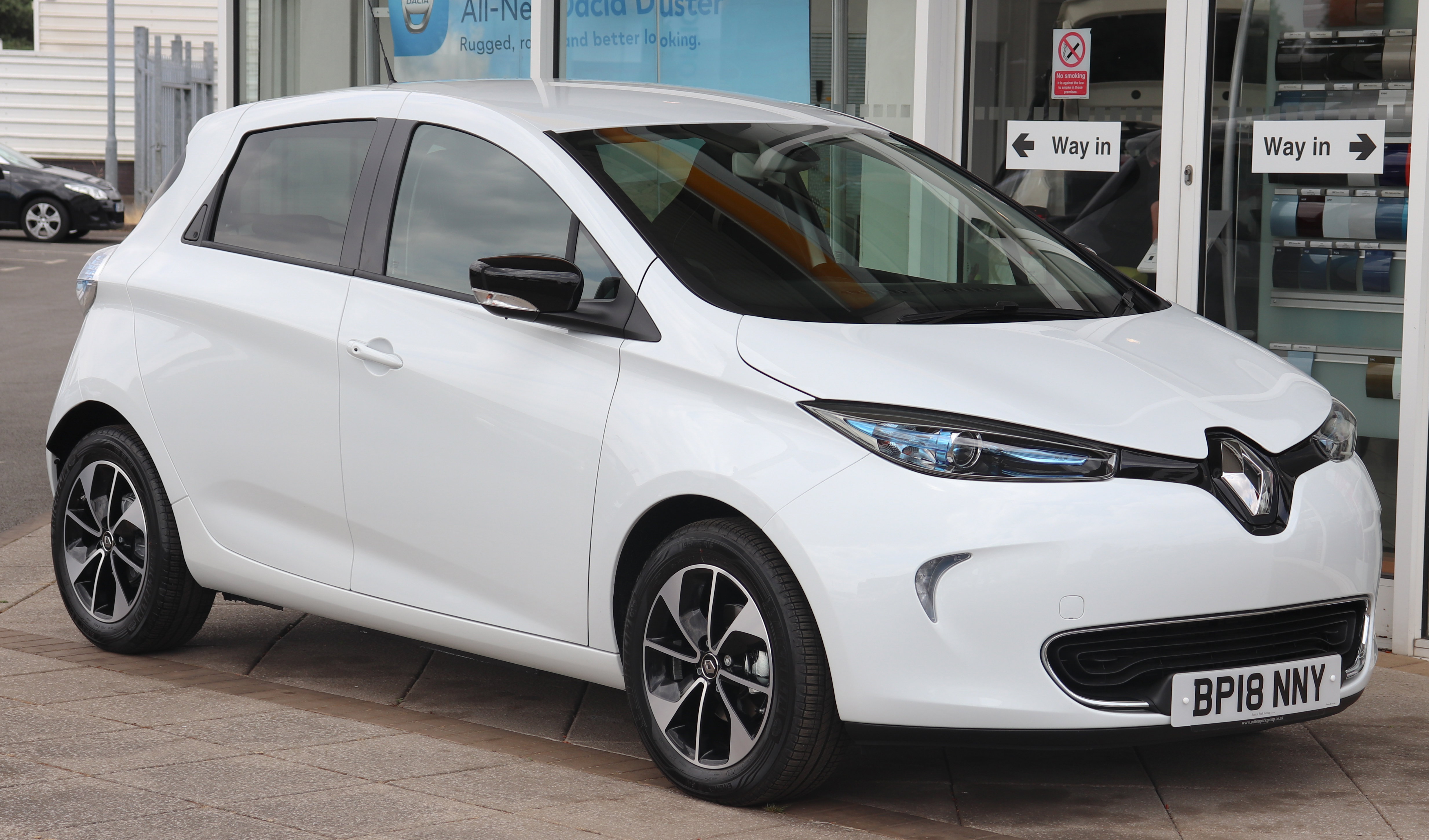
Renault is better than the others because Renault had launched the Zoe and acquired a lot of experience.
But we know that it takes basically the double of time to sell an EV rather than an ICE car because you have to break a lot of constraints that people are thinking about.
For example, do we have the right number of plug-in infrastructure?
The warranty of my car is the same.
Is it reliable? A lot of things.
It takes time.
So that's the story behind a short format.
City centers, we sell cars, we display cars, we sell merchandising.
People can wait and work.
That's more or less the format.
It's not just about selling cars.
It's about selling the new Renault, I suppose, because Renault has been so heavily reinvented as a brand in the last three, four years under the revolution.
Is this in part because you want to show people what the new Renault is about with the 5x4, the Scenic and the McGann.
You know, these are radically different cars.
Yeah, it's your right.
In fact, I am old enough and experienced enough to know that when people are not buying an ICE car, it's not always the case.
When people are really buying for love, something, they are not buying a product.
They are not even buying a brand.
They are buying a story.
It's exactly the right place to buy a story.
We tell a story.
It's the same for in Paris, which is a totally different concept.
In fact, we are telling a story.
If you later opened yesterday...
Yesterday night, that's why my voice is broken.
That's why I didn't see too much.
So this is Renault's big Paris flagship on a similar concept, much bigger, with a huge help to scale the ramp.
Roche, in fact, which looks fantastic.
I'm glad you talked about buying a story, because I think what stands out most to me about the new concept store, about the cars that Renault is launching,
it seems to me like you're more of an enthusiast brand than at any point in the last 25 to 30 years.
Are you leaning into that?
Are you buying into that new positioning in the market?
Yes, I am absolutely sincere and I'm not my cavalique when I'm telling you that people are not buying only a product or a brand.
They buy a story.
I know that because I am a professional buyer.
I buy ribbons, I buy pair of jeans, I buy many things, Apple.
When I thought about what I was buying and how I was buying,
I immediately understood that I was buying a complete story, in fact.
That's why these very powerful brands like Apple, Levi's, Rebans, or Chanel, or Vuitton,
not always luxury, even Swatch, they are doing well because they create a perfect environment in which they explain everything.
Generally, there is over-branding.
Generally, there is over-craftmanship.
Generally, there is a level of design.
There is a lot of research and development around anything.
It can be the texture, it can be the technology, it can be a lot of things.
They are very strong in marketing.
They think that it's more important to tell a story or to show a beautiful story rather than to show a price.
For me, price is not in any way a mean to sell something.
It's the vision.
You see what I mean?
Price is the vision.
It's not a way to sell.
That's why I hate discounting.
Because if you put, for example, the right price, which could be high, some people will say,
no, I'm not in, but some people say, yeah, I respect that.
You understand?
It's difficult to translate that, but you understand what I mean?
No, I understand completely what you mean.
I think people maybe judge a brand based on price, and I think the Renault has become quite a fashionable premium brand,
but still managed to maintain that low price.
Yes, of course.
And you get it because the easiest trap to what I'm saying is that people understand that Renault is becoming luxury, which is totally wrong.
Renault is still completely a mainstream pop culture brand.
Renault deserve respect, and customers of Renault deserve respect.
So that's why we are mainstream.
What would be really interesting to hear?
You've been at Renault for quite a long time, but it's your second stint.
Yes, 10 plus 5.
10 plus 5?
10 in the last century, 5 in the modern age.
Okay, so tell me a little bit about, but you did a similar role in your previous life at Renault.
Yes.
No, no, when I was at Renault in the last century, I was really a young man, so I started like an apprentice.
I started like a trainer, for real.
I entered Renault after school, and I stayed ten years, and I did a lot of jobs.
I learned every single part of my job today in many different ways.
But that's why I can smell and clearly understand what it means.
It's like for a journalist, you start like an apprentice.
You go on emergency topics at 2am because nobody wants to go.
And then you learn the job, then you see what I mean.
And then one day you become the boss, and you know all the jobs.
So nobody's cheating you.
You see what I mean?
It's nice to hear some appreciation for the hardships of my job.
Yeah, but because your job is the same as mine.
You do something different, but the trajectory is the same.
So how, in the previous century then, in the 1990s, how has Renault changed from that time?
I mean, I'm thinking back to the Laguna and the, you know, Nicole and Papa and the first Gen Clio.
How is it a different brand in terms of positioning, in terms of marketing?
Well, I think this is completely different.
We cannot really compare.
Where you're right is that nothing changed really.
I would say that it was much more European and much more French.
Franco-French.
And sometimes a lightness, a flur, a jabberness, it's not Nicole in one market.
For example, UK.
Now Renault is much more international.
If you take the top 10 markets of Renault, you've got five out of Europe.
Turkey, Brazil, Turkey, Brazil.
You've got India.
So this is different.
And now it's much stronger in Europe, it used to be.
So it's a different brand.
But the philosophy is the same.
Renault has always been very warm, very human, very militant, quite modern, sometimes too much.
And I think we had a bit of excellence, very strong in designing small cars.
When we did the Quillo, and we did the Twingo, and we did the R5, R4, all these cars.
We are very good at that.
We are known for that.
The difference is that now we are able to design Australia.
And we are very technology leaders.
We were, except the turbo and except Formula One, we were not really able to deliver an engine over 200 hp,
which was always very criticized by the Brits and the Germans.
And now it's not anymore the case.
When you see Megane 220, when you see a moment 300 hp, or when you see a Shambu 3E 5.5 hp.
Things are changing a lot.
We feel very lucky today because the look of customers in the markets where we were not rock stars in the past
are now much more.
You will translate that, Jim, for sure.
But they look at us with a kind of curiosity.
Yeah, respect, but not given respect.
You know, respect and curiosity, the respect of the one who fought, who has better fights.
Who earned respect, don't you?
And that's the best one.
This is the one I prefer.
Yeah, okay.
The earned respect.
Well, as we cruise through central, I mean, that's very appropriate.
We're going past Madam Tussaud as we speak.
Tell us a little bit about how Renault is perceived in the UK then, specifically.
How have you catered to the UK in developing the Battersea Store?
Well, first, Renault has a very specific story in the UK.
And Renault has always been good in the UK when Renault was not trying to be able to be like a non-French brand.
In fact, I have studied in London.
I was in London when Renault was not very good.
And there was nobody brand when I was in London in the early 80s.
But after with you and Papain Nicole, Bavavou, Thierry Henry,
and even those French players in Arsenal or Manchester, Contona, all these guys,
they have changed completely the...
Because, you know, everything is mixed in life.
And the bridge you are the best for that, you totally get that.
It's called soft power.
So, you know that people love UK?
Do you know that?
I don't say UK, I say Angleterre.
You know that people loving...
Yeah.
Many hate, but a lot, lot.
You know why?
Because of soft power.
The Union Jack, the Queen, the King, James Bond, Bavavou, Range Rover.
I think we used to call this Brit Pop.
Brit Pop.
So, out of UK, we call that soft power.
Cool Britannia.
It helps you a lot.
It helps massively British brands.
And when you look at the opening ceremony of the Olympics in London, it was totally that.
And French have just copied it for the grand opening of the Olympics ceremony in France.
It was also soft power of all the French pop culture.
For me, Renault was good in UK when Renault was playing the pop culture.
Papa and Nicole, Bavavou, Thierry Henry, these was the good times.
But it's funny because it's mainly advertising and marketing.
So, we will be strong when we will be able to combine great products and great marketing.
And I think that's the moment.
That's the moment because when I saw...
And I am an old guy.
I'm 58.
I am nearly at the end of my professional life so I can be more tranquill when I explain this.
I think that's the right moment.
And that's the momentum for Renault because you've got the icons.
EV.
This market is massively turning EV.
For good reason.
We've got icons.
We've got the five.
Massively well-welcome by the press.
When I saw the Carl Jeyer votes, I was nearly crying on stage.
When I saw that for R4.
Well, for the tape, I should just say that Arnault is holding up the latest edition of Ford's farm magazine.
Yeah, I discovered it.
In which the Ford beats its competitors.
Yeah, and I am so honored and proud of that because we know it's not a given.
I mean, we've lost so much that when we win, we know what it means.
You see what I mean?
So, we've got the icons.
The Twingo is coming.
The Clio is coming.
And the R5 Turbo 3 is coming.
So, these cars are super sex symbol, in fact.
But not superficial.
So, that if you add that, if you add to that great marketing, that's the right point.
But how do you, I mean, you talked about Renault becoming more of a globalized brand than it's ever been.
How do you regionalize the messaging?
How do you cater to different markets?
I mean, the UK, you say yourself Renault as a special place in the UK in positioning terms.
Do you approach the UK with a different campaign to other markets?
I'm going to be super straight.
Since five years, we have a global strategy to have a more strong Renault or a more stronger Renault, more coherent Renault.
But for the UK markets, what we do is that it's in the same campaign, but I have authorized the team in UK to change the wording
because the English language, the pure English from England or even the one from Scotland or Ireland, they are very specific.
The sophistication of the wording and the literature can change completely the meaning and give it a total sharp insight that we cannot do internationally.
But we don't need to change the movie, we can change the words and it works.
It's very efficient car, for which I've said since day one that I will do a specific movie for a specific campaign for UK history because of Papain.
It's own UK campaign?
That's the only one.
We cannot afford it anymore.
You know, when I entered five years ago, I discovered that for the launch of the Clio No. 5, there was basically 10 campaigns in the world.
Most of them were completely crap, by the way.
In this time, it has cost Renault a fortune for no reason.
When I came five years ago, I've made only one and that one was good.
But I do think that Renault has the maturity and I have mature enough and professional enough to accept one exception for Clio, for sure.
And that's just because it has such a cachet?
Because there is a cachet, because there is legacy, because Clio is part of the pop culture.
Clio could be English, by the way.
That car could be English.
If we had a factory in UK, it could have been enormous, you see what I mean?
Well, I won't get too specific, but you know, you've got an Alliance partner in the UK to build cars, but we can talk about that another time.
So when will we see that specific Clio messaging?
When we launch the car.
I'm interested to see how...
That's a good answer, this.
I'm interested to see how you sell the British car.
I will start to work on it with Adam and David 26 next year.
I will start to work on it.
Fantastic.
But I think I see things tomorrow, no?
So perhaps I have some price to hold.
Fantastic, maybe I'll get a sneak peek.
I think what I'm really interested to hear is this has been a very busy period for Renault.
Lots of new products, lots of very important products, complete renewal of the lineup led, I think, in public perception terms by the four and the five.
How on earth do you keep that brand perception momentum going?
You know, the four and five are in the market now.
By next year, they'll be a year, two years old.
How do you keep people talking about Renault?
But the Renault five is, you know, it happens once or twice in a lifetime.
When I entered Volkswagen in 2000, they were launching the Beetle and the phenomenon was really strong at the beginning.
Then I came at...
Then I worked for Fiat and launched the 500, which was enormous, except that the problem of Fiat is that there was only 500.
We learned a lot from that because we were all coming from Fiat originally.
When we launched the five, we do understand that we need absolutely to have an entire ecosystem around the five.
That's why there is five, four, twingo.
And that's the full electric, but we absolutely need it to keep very strongly the ice, full hybrid leg.
So we've got two legs.
Clio, Captur, full hybrid, first step to electrification.
And we've got a second leg with all the electric icons.
Twingo, R4, R5, Omega, and Scenic.
So I do think that there is no glass ceiling.
I don't have the figures for Europe this month, but I just can tell you something.
In France, this month, we are going probably to sell 5,000 R5.
It's the best-selling retail even in France?
Yeah, already, still a moment, but it's enormous.
It's nearly very close to Clio.
It means that it's one-to-one, one-for-one, sorry, one-for-one.
It means that we do not lose one sale of Clio and we now go with the same number of sales for R5.
R5 is booming in many markets.
In France, in UK, in Germany.
In Germany, Renault was nowhere.
In Belgium, nobody was, you know, the Belgium market is structured.
People, they have company cars.
They all have Audi, BMW, Mercedes.
R5 is booming there.
In Switzerland, we are selling R5.
In Turkey, they called me two weeks ago saying, we need 1,000 more.
Okay, guys, that's incredible.
So there is no glass ceiling.
The car is booming.
And I do think sincerely, perhaps I'm wrong, but I'm not so sure that we will do one-for-one with Clio very quickly.
I know this is an absolutely terrible radio, but I must remark on the coincidence
that we were going past Grove in a house, as you were telling me all that,
which was where the Renault 5 was named a car of the year earlier this year.
So there's a nice bit of symbolism there.
But one of the main things that sticks out to me about the Renault 5 is that
84% conquest rate in the UK, so 84% of Renault 5 buyers in the UK have never bought a Renault before.
What does that mean for you to be attracting such a new demographic to the brand?
How do you keep them in the ecosystem when their families grow?
I don't like to be the guy saying that it's not the problem, but I'm going to say...
In fact, the thing is that I am a pure car guy and I love cars sincerely.
And I've worked on many brands.
So I've got one...
Personally, I've got one LP, A110, I've got 105 that I bought myself, always my money.
I've got a company car, which is a Rafale, and I have a Jeep one.
I have a Jeep one.
Why do I have a Jeep one?
Because I love it.
Do you think the problem is, are they going to sell me another one?
Or another Jeep?
Never.
I want the one.
That's it.
And before the one that I had...
Very different cars.
Yes.
Because they are what I call them.
Right.
I think that the Brits guy bought a Rafale.
They bought it because they love the car and it's a Rafale.
I think our job is to prepare the next generation of Rafale to sell them another Rafale.
If they want to buy a Rafale, they will, but this is very stereotypical.
Very difficult to say.
Theoretical.
Yeah.
I think that the conquest on a car, like that is an icon,
you can keep them if you renew the icon.
Very careful.
I have a lot of friends.
They have bought 5 million in France.
4 million in France.
And sometimes I am asking them, do you want the million in a country?
Never.
I don't want.
I want this one.
Okay, cool.
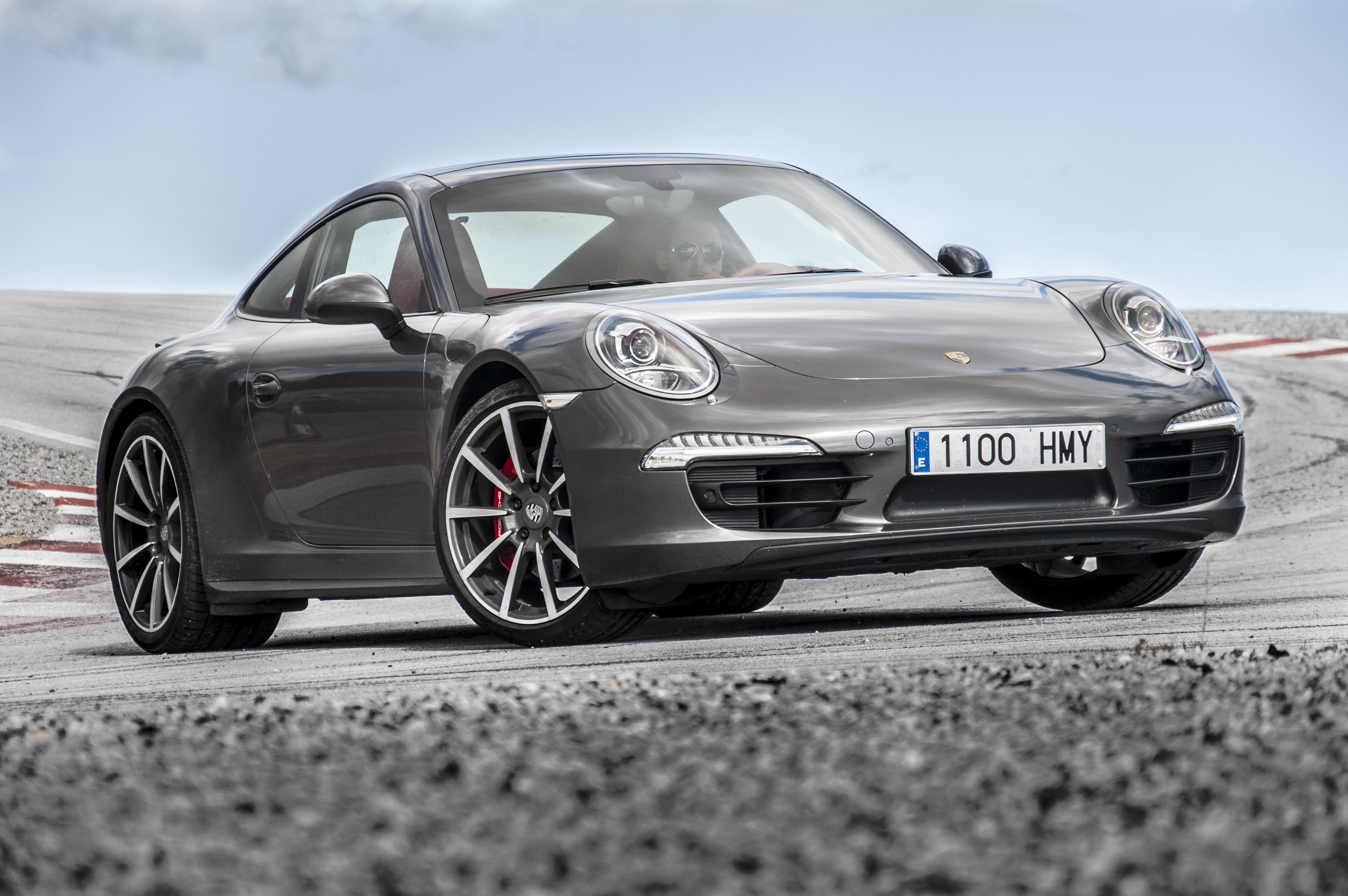
And you know, a guy buying a 911.
A 911.
I don't think he has all the collection to arrive Panamera.
He has the 911.
He has the icon.
The job we are doing with Air 5 is fantastic because as you said, we are convincing people
who were not looking at Renault 10 years ago, 5 years ago, 3 years ago.
Now they are in the family and I think the best way to keep them in the family is to
be very smart with them, to serve them properly, to be elegant with them and to renew them
in 5 years with the next change of Air 5.
The biggest mistake would be not to renew Air 5.
That would be a massive mistake.
Well, the traffic is being kind to us and there are lots I still want to talk to you about.
No, please, please.
But just quickly.
How do you do the second generation of an icon?
How do you take a car that has been so acclaimed and make a new one and say that it is as good
as the previous one?
First, it will not be the second.
It will be the fourth because there was Air 5, Super 5, Air 5.
No, I think it's important to, first, the topic is completely science fiction.
For the moment, we are just launching this one.
So I was not at all working on the next generation.
But I think you need to do soft evolutions.
Soft evolutions because you are talking about an icon.
An icon is totally different from a saga.
This is what I try to explain to people sometimes they don't make the difference.
Clio is not an icon.
Clio is a saga.
An icon, it can be, it is a car that has very strong element in design that everybody can
recognize in two minutes.
So the famous trap is difficult to say that in English, but the trap is shaped.
There is a particularly profile, very specific on the eyes.
You know, the wheels of the corners, there are a lot of things.
And if you look the same for the Twingo, the new Twingo is the sister of Twingo 1.
But in the middle is not the Twingo.
So that's why it's very...
And so, for example, looking at the Clio, the Clio is an enormous success.
17 million sold around the world.
But it's not an icon.
It's a saga.
It's very different because when you look Clio 1, Clio 2, Clio 3, Clio 4, Clio 5, Clio 6,
you cannot say right is really a Clio.
Except the size of the name and the color.
It's more revolution than evolution, I think.
Each time is different.
More or less, more or less.
An R5, no?
Well, of course.
Imagine we've given a name to R5 on a car that does not think R5 could have been an enormous failure.
Well, we've seen some manufacturers do that.
You know that, exactly.
Of course.
When you use that name, you must be loyal to the legacy.
Faithful to the design.
That's clear.
A bit more philosophically.
Talk to me about the challenges of selling people cars in 2025.
The economy is not strong.
Electric vehicle uptake is not as quick as industry had forecasted several years ago.
So what's the retail environment like?
How are you talking to maybe reticent car buyers?
In fact, when the market is tough, when you are crossing a crisis, the best are winning.
Always.
The best design, the best brands, the best shape, the most reliable, and the more recent ones.
It's always the same.
I have more than 35 years of experience.
I have crossed many storms in my business life.
Each time a brand has been tough during a tough period, successful during a tough period,
each time it was the same recipe.
Great design, new cars, audacity, and good marketing.
All of which is especially important when confronted with a wave of new rivals,
particularly from China.
A lot of these brands are playing in the same space as Renault.
You've got BYD, for example, has a lineup that sort of quite closely matches Renault.
So how do you view them?
Do you view them as a viable competitor?
Do you look at them for lessons even?
Yes, everybody.
The moment you are doing this job, you always learn a lot from competition,
but I don't spend too much time looking at the competition.
Otherwise, you are blind, afraid.
But I want to tell you something.
When I started my job 35 years ago, the Japanese were super strong.
Honestly, they were supposed to kill us.
Then we even bought some.
Then came the Koreans, brilliant, super strong, a lot of money, performing incredible.
And they were supposed to kill us.
We are still there.
Then now the Chinese are there, and probably the Indians will come,
and probably the Nigerians.
So I'm not doing philosophy, but what I'm telling you is that the best way to survive
is to be creative, to have a strict strategy, to have a great plan,
to make no mistake, to be reliable, and to do great marketing.
So you sound optimistic.
We're in the next stage of Renault's reinvention now.
We've moved on to Futurama, which I think is the next chapter of the revolution.
Will it be all change again, or is this a period of consolidation?
Is this a period of building on what you've established?
I'm not the CEO of Renault, and I'm not the president of Renault,
but what I know is that many brands are not able to succeed with one range.
Some brands are able to succeed with a full range.
Very few are able to renew successfully a full range.
So the stake for us is to renew successfully a full range,
because each car in the range has met success.
You can put nuance on that, but basically all, and even the LCDs.
So the moment, so the stake is being serious enough, focused enough
to start the next chapter, chapter two of the revolution,
called Futurama, if you want a name, and to do it successfully,
which means replacing a Clio 5 by a Clio 6 fantastically,
replacing a Captur by X1, replacing an Austral by range, replacing a F5 by range.
That's the story. That's it. That's the stake.
But you know, that's the philosophy, the general view,
and after you've got power trends.
The strategy of Renault was very interesting because when we created
E-Tech Label, which said electrified technology,
we understood that there was two ways to go towards electrification.
100% electric, which is the radical way, but also it takes full hybrid,
which is intermediate way.
And that strategy is successful, obviously.
When you look at the volume we make, I think,
oh, we are very close to 70% electrified cells for one, nearly, nearly.
And in France, for example, because I know they are the figures,
because I watch them every morning.
This weekend, it was open the weekend in France.
We were 31, 32% free electric cells, which is big.
That's right ahead of the UK average.
Yeah, yeah, yeah.
But we are there for it.
They only launch now.
When do you launch?
Now, we launch before someone.
So we are a bit in advance.
But yeah, but it's working.
It's working well.
So you need the body strategy, the design strategy,
but you need the power trans strategy.
The customers are very clear.
They go where it's the best.
Yeah, yeah, very wise.
That's the way.
As we bear down on Battersea Bridge and bring this to a close,
important question to ask.
I've been looking at the Renault Originals merchandise on the website.
Some very cool clothes, lots of models of cars I'd like to have on display in my bedroom.
What's the thinking behind this merchandise strategy?
I remember seeing back at the Renault 5 reveal,
and there were snowmobiles and table football tables and this sort of thing.
What's the thinking behind that?
The thinking.
There are many thinking, but basically I told you,
you're not buying a car.
You're not even buying your brand.
You're buying your story.
The story behind Renault 5 is that Renault 5 is a brand in the brand.
It's an icon.
It's a number like a Chanel 5 or a Chanel 4.
But it means that people are buying an environment.
The story was that all these products were built in France.
That was the story.
So I learned that strategy and story when I was working for Jeep.
Jeep was selling more shoes and t-shirts than cars.
Is that true?
Yeah.
In Malaysia, we were not even selling any cars,
and we were selling massively shoes and t-shirts.
And one day, they might ask me,
well, no, what is happening here?
I said we should sell cars now.
People are ready.
They were doing fantastic because Jeep was selling the American dream,
the American way of life, freedom, et cetera, et cetera.
So when I entered Citroen, I did the same,
but when I entered Renault, I had really full power.
So I have a higher level designer,
and we started working on a complete collection for each launch.
We did an anniversary collection for R5, R4, Twingo.
And then we started to launch the collection for the icons,
Twingo, Clio, sorry, R5, R4, now Twingo and Clio.
Now we are building 14 million euros and something like 40% margin.
It's super efficient, and people, it gives love to people,
and some people, it's not only for kids,
it's many adults are buying the thing.
People are being, how do you say baby food?
Table football.
Table football.
Yeah.
Many people are buying table football.
It costs 4,000 euros.
4,000 euros.
Yeah, because it's handmade.
It's handmade in France, close to Paris.
It's enormous.
We do that very seriously.
We sell online.
We sell through dealers.
We sell on motor shows.
In Munich, in Munich, we were selling on the Clio stand.
It was really, really efficient.
It's creating the phenomenon.
This is contributing.
It is nurturing the phenomenon of the love brand.
You know, when you buy an iPhone,
they were giving you a sticker,
and you were putting the apple on your car.
I remember.
It's part of the game.
I mean, it's nothing, and it's big.
At Renault, we don't do that.
We don't do stickers,
but we decided to seriously work on the merchandising
and the licensing.
And because this is contributing
to the coolness of the brand.
We don't call that giveaway.
We don't call that goodies.
The price is not always cheap.
Because what has a price, has a value,
what has a value is respected.
What is respected is loved,
and what is loved is successful.
Fantastic.
What I know to end on is,
the Towers of Battersea Power Station come into view.
I'm going to try and see how much merchandise
I can sneak into my bag
while you're showing me around the...
Do you have an merchandiser?
Oh, great.
I'm very excited to see that.
I'll know.
Thank you very much for coming on the podcast.
I have been very vocal,
and I hope I didn't say stupid things,
and my English was not too crap,
but I'm so glad to be with you.
Shaking hands in the van,
and not too much traffic in the back rail.
No, it was okay.
London has been very good to us.
We've got a good driver and a good car.
Exactly.
We're in a Renault traffic for the record,
so I think that needs to be said.
Thank you very much,
and thank you for listening.
We'll see you next time.
Thank you.
See you!
Steve Cropley and Matt Brier will be back next week
with the regular My Week in Cars podcast.
This episode is brought to you by Progressive Insurance.
We all have bad days, and sometimes bad weeks,
and maybe even bad years.
But the good news is,
we don't have to figure out life all alone.
I'm comedian Chris Duffy,
host of Ted's How to Be a Better Human podcast.
And our show is about the little ways
that you can improve your life,
actual practical tips that you can put into place
that will make you a better person.
Whether it is setting boundaries at work
or rethinking how you clean your house,
each episode has conversations with experts
who share tips on how to navigate life's ups and downs.
Find how to be a better human wherever you're listening to this.
Request an explanation for:
11 cars
Scroll for more
11 cars featured
Request an Explanation
Heard something you'd like explained? We'll add it to this episode.
Sign in to request explanations for terms you heard.
Want to learn more?
Browse our glossary for plain-English explanations of automotive terms, jargon, and concepts.
See something that's not quite right? Our annotations are AI-generated and can sometimes miss the mark.
Click the flag icon on any annotation to suggest a correction.