Bonus: Steve and Matt have your letters
About this episode
Steve and Matt field listener letters on everything from guilt over buying Chinese cars to the ethics of car ownership, arguing consumers should choose what fits their needs while governments and brands compete fairly. They also tackle ADAS and insurance—whether turning off driver-assist features affects coverage—plus driving-instructor training and proposed learning-time rules. Nostalgia gets a spotlight via a Renault 14 comeback story, and the “performance bargains” segment sparks debate over cars like the Kia Stinger, Alfa Stelvio Quadrifoglio, and even used Taycan options.
On this week’s bonus episode of the autocar podcast Steve Cropley and Matt Prior have your letters. There are questions on the morality of choosing locally produced cars, turning off ADAS, chunky KitKats and more besides.
For more on Autocar, including access to the full digital archive, check out our magazine offer here: https://www.themagazineshop.com/ACD/PODCAST/
Hosted on Acast. See acast.com/privacy for more information.
Anderson
"A couple of quick things to say to you is that our sponsor is Anderson, the sort of premium design-led EV charging company. If you visit Anderson-EV.com, search Anderson, they've got a concierge service..."
Anderson is a company that helps you set up home EV charging. They also try to match the charger look to your car and even your home.
Anderson is described as a premium, design-led EV charging company. The segment focuses on their concierge-style service and matching the charger to the customer’s car and home aesthetics.

Dodge Charger
"...ith some manufacturers where they will match the charger to the color of your car, they can match it to th..."
The Dodge Charger is a big American car that’s built to feel powerful. People talk about it because it can be customized in different ways, including matching certain looks to your car. It’s usually chosen by drivers who want a sporty, standout appearance.
The Dodge Charger is a large American four-door muscle car known for strong straight-line performance and a bold, traditional design. It often comes up in conversations about personalization and how manufacturers can tailor details to a buyer’s preferences. In a podcast, it’s a good example of a car that’s as much about style and identity as it is about speed.

Peugeot 205
"...a rather big list of things that he's owned such as, or run his company car history, such as a Metro Peugeot 205, Peugeot 305..."
The Peugeot 205 is an older Peugeot model the writer previously had. It’s a well-known French car from the past.
The Peugeot 205 is referenced as part of the writer’s past company-car history. It’s a classic French small car, often remembered for its character and broad range of trims and engines.

Ford Cmax
"a rather big list of things that he's owned such as, or run his company car history, such as a Metro Peugeot 205, Peugeot 305, Vauxhall Cavalier, Ford Sierra, Peugeot 307, Ford C-Max, a couple of Skoda's, and is now on a BYD Seal U DMI. He says, I still feel ashamed for letting down the European"
The Ford C-Max is a family-oriented car with more space than a typical hatchback. It’s mentioned because it was part of someone’s company-car history. It’s the kind of vehicle people use when they need practical room for passengers and stuff.
The Ford C-Max is a compact MPV (multi-purpose vehicle) designed for families and people who need extra seats and flexible space. It’s included in the episode’s list of company cars, which suggests it was a common, practical choice in fleet use. In that setting, it represents the “use it every day” side of motoring.

Peugeot 307
"...205, Peugeot 305, Vauxhall Cavalier, Ford Sierra, Peugeot 307, Ford C-Max, a couple of Skoda's, and is now on ..."
The Peugeot 307 Sedan is a four-door version of the Peugeot 307. It’s mentioned because it was one of the cars in a list of vehicles someone used for work. It’s a practical, everyday type of car rather than a performance model.
The Peugeot 307 is a mid-size model, and the “Sedan” version refers to the four-door body style. It’s mentioned in the same company-car history list as several other older vehicles, which frames it as a familiar, mainstream choice from that era. In a podcast, it’s often used to illustrate the variety of cars people have lived with over time.
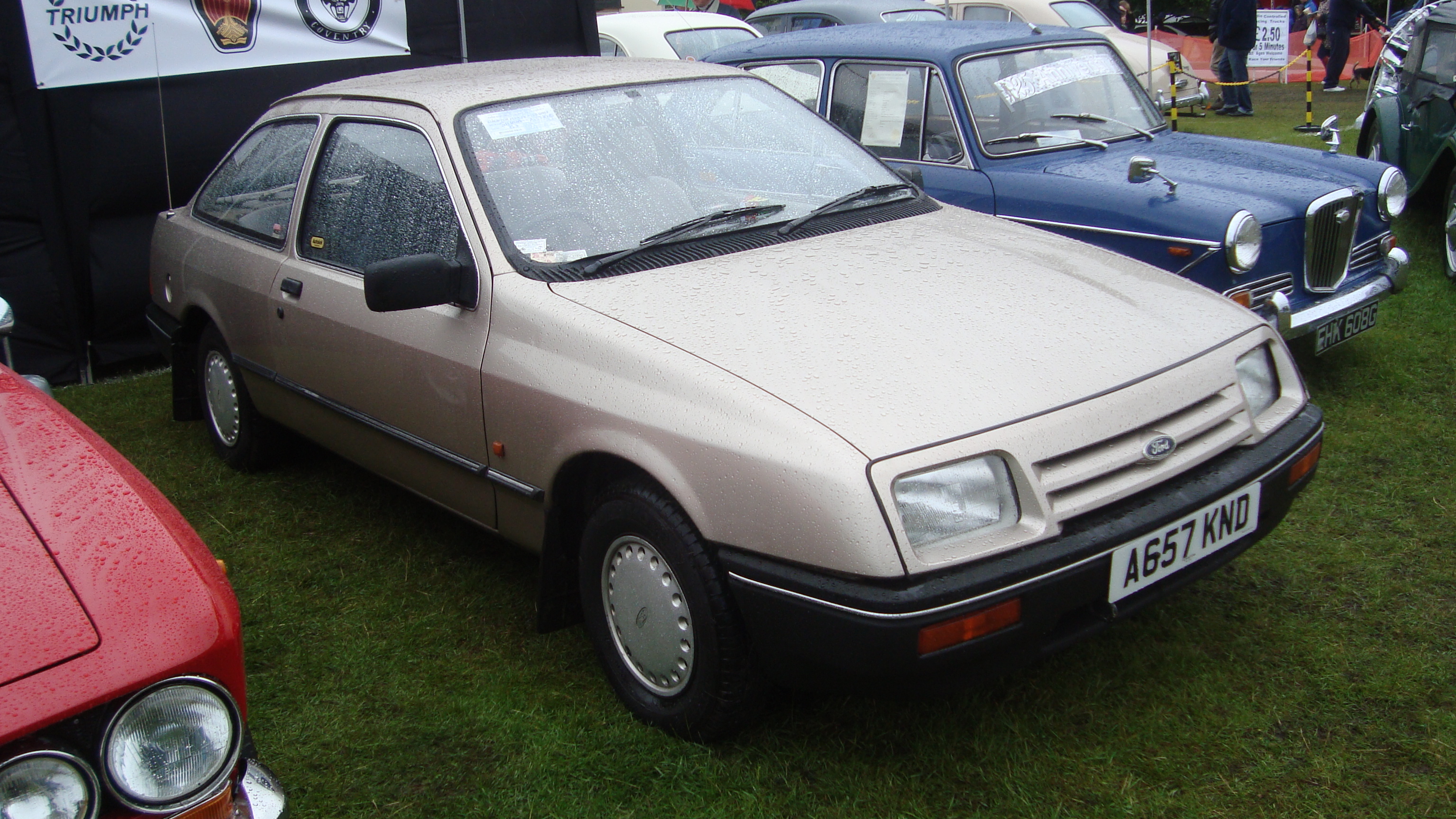
Ford Sierra
"...etro Peugeot 205, Peugeot 305, Vauxhall Cavalier, Ford Sierra, Peugeot 307, Ford C-Max, a couple of Skoda's, a..."
The Ford Sierra is an older Ford car from the late 20th century. The “3 Doors” version means it has three doors instead of four. It’s mentioned because it was a real, common car people used in the past.
The Ford Sierra is a classic Ford model from the 1980s and early 1990s, and the “3 Doors” version refers to the shorter, more compact body style. It’s mentioned in a list of company cars and older vehicles, which points to its role as a common, memorable choice in past fleets. In a podcast, it often represents the era and variety of cars people have owned or used.

Byd Seal
"... C-Max, a couple of Skoda's, and is now on a BYD Seal U DMI. He says, I still feel ashamed for letting ..."
The BYD Seal is an electric sedan, meaning it runs on electricity. The podcast mentions it as the speaker’s current car. It’s brought up in the context of how the car fits into their real life and responsibilities.
The BYD Seal is an electric car from BYD, positioned as a modern alternative to conventional sedans. In the episode, it’s mentioned as the current car in the speaker’s lineup, with the speaker expressing embarrassment about letting someone down. That makes it relevant to the discussion as a real-world ownership experience with a newer electric model.

VW ID3
"Well, I've been talking, talking about buying a China, buying a, [343.7s] an EV for a while, and there are four cars that appeal to me. VW ID3, because I just think it's a better car than most people say it is."
The VW ID.3 is an electric Volkswagen hatchback. The speaker is saying it’s a good EV choice compared with what some people claim.
The Volkswagen ID.3 is an all-electric hatchback in VW’s ID electric lineup. In this segment, it’s mentioned as one of the EVs the speaker would consider, with the claim that it’s a better car than many people think.

MG4
"Polestar, Swedish, or Chinese, and MG4, Chinese. [364.6s] In fact, Chinese government. [371.7s] Yes, yeah. I just don't, I haven't got enough room in my brain to bother about those things, so I'm just going to choose the one I like best."
The MG4 is an electric car from MG. The speaker is saying it’s one of the EVs they like, even though it’s tied to Chinese ownership.
The MG4 is an all-electric compact hatchback from MG (a Chinese-owned brand). The speaker includes it among the EVs that appeal to them, framing it as part of the broader wave of Chinese-market EVs entering other regions.

Austin 7
"I regularly see a few Austin 7s. I think there's a club which seemed to be around all year, as your Cornish Rose and"
The Austin 7 is a famous pre-war British small car that became an icon of early motoring and is still enthusiast-supported today. The segment notes seeing Austin 7s regularly and references a club, which is typical of how these older cars remain active in local communities.
ADAS systems
"regarding ADAS systems on cars nowadays. That is Advanced Driver Assistance Systems."
ADAS are safety tech features in modern cars. They help you drive by watching the road and sometimes stepping in to prevent mistakes.
ADAS stands for Advanced Driver Assistance Systems. These are safety features that use sensors and cameras to help with tasks like staying in the lane or warning you when a collision is likely.
ABS
"if you would have removed the fuse that turned off the ABS and then you crashed because you didn't brake properly, that I could see why an insurer would go, well, I'm not paying for that,"
ABS helps stop your wheels from locking up when you brake hard. That usually means you can steer while braking.
ABS is Anti-lock Braking System. It prevents the wheels from locking during hard braking, helping you maintain steering control while slowing down.
minimum time you have to learn over
"Yeah, in these upcoming changes to some of the driving regulations, have you seen the stuff that says there may be a minimum time you have to learn over? You can't do your test on your 17th birthday, for example, you have to spend a certain amount of time learning?"
They’re talking about rules that could require you to practice for a minimum amount of time before you’re allowed to take your driving test. Instead of just showing you can do it, you’d also have to prove you practiced enough.
The discussion is about proposed driving-regulation changes that may require learners to spend a minimum amount of time training before taking a test. It’s essentially a “time-in-training” rule rather than purely proving competence on the day.
red tape
"It's just another piece of red tape, isn't it? Yeah, and I don't know if there's, well,"
“Red tape” means extra bureaucracy—rules and steps that can slow things down. Here, they’re saying the new requirements feel like unnecessary extra hassle.
“Red tape” is a common phrase for bureaucracy—extra rules, paperwork, or mandated steps that can make processes slower or more complicated. In this context, it’s used to criticize additional training/qualification requirements.
potholes
"...the congestion in this place and the narrowness of streets and the potholes everywhere..."
Potholes are holes or broken spots in the road. They can make the ride bouncy and make driving harder, especially in tight streets.
Potholes are damaged sections of road that can upset suspension geometry and reduce traction. They’re especially relevant when discussing ride comfort and handling in older or congested urban areas.
rusted terribly
"Last month, you discussed the mostly forgotten Renault 14... The 14 was my first car, 350 pounds in 1989. And while I remember it did roll a bit and rusted terribly..."
“Rusted terribly” points to corrosion as a major issue for older cars, affecting body structure, floor pans, and mounting points. It’s a common reason classic cars can be unreliable or expensive to restore.
DVLA
"...I bought it on the spot and spent six months transporting it to the UK and getting it registered. The DVLA kindly gave me a registration number..."
DVLA is a UK government office that handles vehicle registration. The writer is saying they got help registering the car so it could be legally driven.
The DVLA is the UK’s Driver and Vehicle Licensing Agency, responsible for vehicle registration and licensing. Here, it’s mentioned in the context of registering the imported Renault 14 in the UK.
supple ride
"...But I think my memory is that it had this fantastically supple ride. I mean, it didn't ride very flat and bounced a bit..."
A “supple” ride means the suspension moves smoothly and comfortably over bumps rather than feeling harsh. The writer later contrasts it with bouncing/roll, tying the feel to soft suspension and seating.
understeer
"It had this kind of strolling, but a bit of understeer, I must say. If you arrive at a corner too fast..."
Understeer is when you turn the steering wheel but the car doesn’t rotate into the corner as much as you want. It can feel like the car “pushes” wide.
Understeer is when the car turns less than the driver expects—often because the front tires lose grip first. The writer says the Renault 14 tends to not respond immediately if you enter a corner too fast and turn the wheel.
3.3 liter V6
"“The model that makes the most, that takes my fancy the most is the 3.3 liter V6 KIA Stinger GTS.”"
That phrase tells you the engine size and layout: it’s a V6 with 3.3 liters total displacement. Bigger displacement often helps with stronger low- and mid-range pull.
“3.3 liter V6” describes an engine displacement of 3.3 liters with a V-shaped six-cylinder layout. Displacement and cylinder configuration are key factors in how an engine makes power and torque, especially in performance trims.
KIA's seven year warranty
"“Well, later examples are still covered by KIA's seven year warranty.”"
A seven-year warranty means Kia will cover certain repairs for a long time. If you buy a newer used one, it may still be covered, which helps protect you from expensive surprises.
A “seven year warranty” is a long factory-backed coverage period that can reduce ownership risk, especially for used-car buyers. In this context, the hosts are saying later Stingers are still covered, which makes them easier to buy confidently.
3.3 litre V6
"because, I mean, being a 3.3 litre V6 or a 2 litre turbo, it was high on the CO2 emissions here, wasn't it?"
That means the car has a V6 engine with a 3.3-liter size. They’re using it to explain why the car might have higher CO2 emissions.
A 3.3-liter V6 is an engine configuration where six cylinders are arranged in a “V” shape and the total displacement is 3.3 liters. The hosts mention it to connect engine choice with emissions/CO2.
four-wheel drive
"...177 mile an hour top speed, so Stuart Gray, four-wheel drive, room for five adults..."
Four-wheel drive (4WD) sends power to both the front and rear axles, improving traction and stability—especially in low-grip conditions. The hosts list it as part of what makes the car practical and capable.

Alfa Romeo Stelvio Quadrifoglio
"...the Alfa Romeo Stelvio Quadrifoglio should have been in your 25 performance car bargains, although I may be biased as I've had my 2019 QV for four months..."
The Alfa Romeo Stelvio Quadrifoglio is the high-performance version of the Stelvio SUV. The host says owning a 2019 model has been exciting and memorable.
The Alfa Romeo Stelvio Quadrifoglio is the performance version of the Stelvio SUV, built to deliver sports-car-like power and handling. In the segment, the host mentions owning a 2019 QV and frames it as an “experience” car with good long-term owner sentiment.
V10
"I've always been a little bit obsessed with the V10. Have you? Kind of mad. I know it's, you know, sort of 18 miles per gallon or whatever it is, but yeah, I think that's the least of the problems, isn't it?"
A V10 is an engine with ten cylinders. It usually means a very characterful, high-revving engine, but it can come with downsides like fuel use and potential reliability headaches.
A V10 is an engine configuration with ten cylinders arranged in a “V” shape. In BMW’s M5 context, the V10 is known for high-revving character, and the speakers connect it to fuel economy and reliability trade-offs.

Alfa Giulia Quadrifoglio
"but starting to get a bit big, but maybe an Alfa Giulia Quadrifoglio. Well, I tell you what I was thinking the other day,"
The Alfa Romeo Giulia Quadrifoglio is Alfa Romeo’s performance version of the Giulia. It’s known for being fun to drive, not just fast.
The Alfa Romeo Giulia Quadrifoglio is the Giulia’s high-performance model, famous for its strong engine output and engaging driving feel. The speaker brings it up as another candidate for a single-car “do everything” setup.
0 to 60 in under seven seconds
"His question was, find a car that can do 40 plus miles to the gallon, 0 to 60 in under seven seconds and has space for a dog."
“0 to 60” means how fast a car can go from standing still to 60 mph. Lower time usually means the car feels quicker when you press the accelerator.
“0 to 60” is a common performance metric that measures how quickly a car accelerates from a standstill to 60 mph. It’s often used as a shorthand for how responsive and quick a car feels in everyday driving.
long range
"I'm thinking a top value Taycan. I'm going to find the best long range I can find... So the long range is the slightly lower powered rear drive one, isn't it? Is that right? Got a bigger battery."
“Long range” means the EV is set up to go farther on a charge. They’re saying the long-range version uses a bigger battery and changes the drivetrain.
“Long range” refers to EV configurations optimized for maximum driving distance, typically via a larger battery pack and/or efficiency-focused powertrain tuning. In this segment, it’s tied to choosing a Taycan variant with a bigger battery and different drive layout.
electric car charger
"...if you're going to buy an electric car charger, get it from Anderson, Anderson-EV.com, our sponsors."
An electric car charger is what you use to charge your EV at home. The charger’s power and installation affect how fast you can charge. A good charger makes everyday charging easier and more reliable.
A home electric car charger is the device used to replenish an EV’s battery, typically at residential locations. Charger capability (power level), installation requirements, and reliability all influence how convenient daily charging is. Choosing a quality charger and ensuring correct installation can prevent slow charging or operational issues.
Request an Explanation
Heard something you'd like explained? We'll add it to this episode.
Sign in to request explanations for terms you heard.
Want to learn more?
Browse our glossary for plain-English explanations of automotive terms, jargon, and concepts.
Help improve this episode
See something that's not quite right? Our annotations are AI-generated and can sometimes miss the mark. Click the flag icon on any annotation to suggest a correction.