
Bracket Breakdown: IGNITOR D6 Opener
About this episode
Wind and format changes drive a Boise-area drag-racing recap, with the Igniter event leaning heavily into nitro spectacle. Hosts compare bracket/class racing to pro nitro exhibition style, then break down how eighth-mile switches, index targets, and “comp eliminator” staggered starts reshape who wins. Close timing, staging/timing confusion, and last-minute mechanical fixes (including a Friday engine swap) all factor into class results, payouts, and winter-circle/Wally talk.
The NorthWest Division 6 kicks off their season at Firebird Raceway in Boise, Idaho. Results, stories and news!
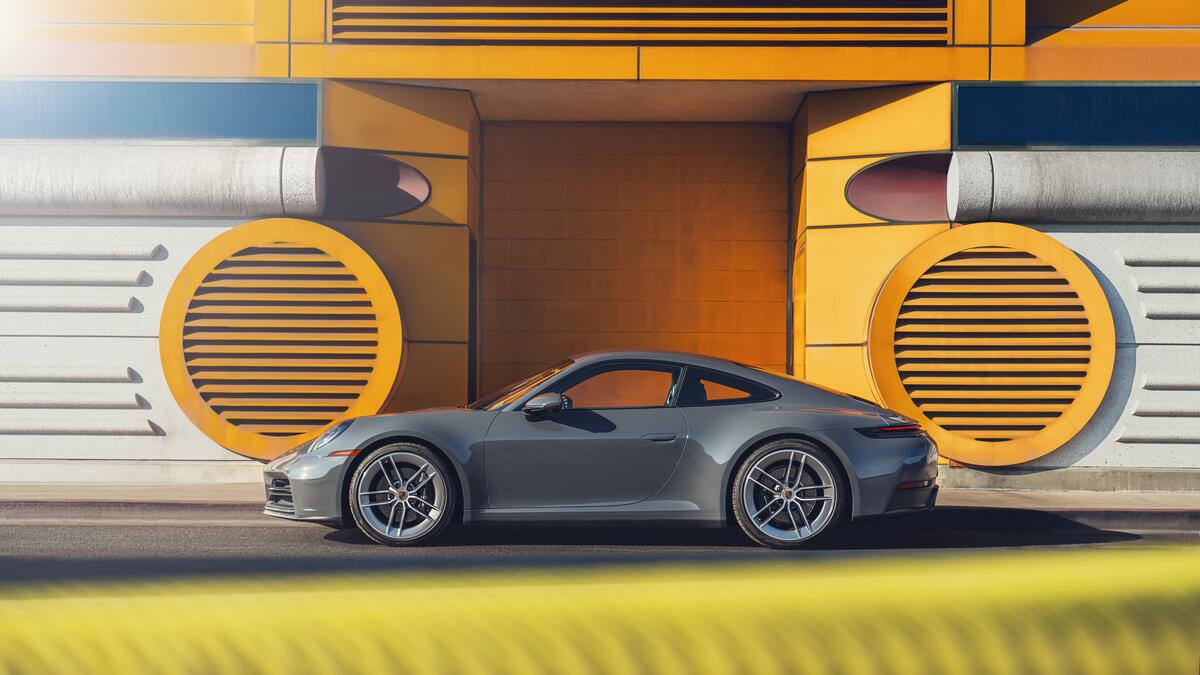
Porsche 911
"...ddle of this podcast, you probably know why. Call 911. Somebody call this man's homeowner's insurance r..."
The Porsche 911 is a sports car made by Porsche. It’s known for being fast and for having a unique design that many people recognize. It comes up a lot because it’s a popular choice for driving enthusiasts and racing events.
The Porsche 911 is a long-running sports car known for its distinctive shape and rear-engine layout. It’s often discussed because it has a huge enthusiast following and a wide range of performance and driving styles across model years. In a podcast context, it’s likely mentioned as a recognizable performance benchmark or a standout car in a competitive setting.

Pontiac Firebird
"...at track. So that's never, never in question. The Firebird crew always does a great job prepping and all tha..."
The Pontiac Firebird is a performance car made by Pontiac. It’s the kind of car people often bring to tracks and events because it can be set up for racing. The podcast mentions the Firebird team doing good prep work, which usually means the car is being maintained and prepared carefully for competition.
The Pontiac Firebird is a performance coupe from Pontiac, best known as a sibling to other popular muscle-era models and for its track and street presence. It’s often discussed because many Firebirds were built for strong performance and because enthusiasts value them for their styling and driving character. In the podcast, the Firebird crew is mentioned as doing a great job prepping the car, which highlights its use in organized racing.
eighth mile racing
"And so on Sunday, the Division 6 crew made the decision that everybody was going to go eighth mile racing. Thanks a lot, Eames."
They’re racing over a shorter drag-race distance—about 660 feet. Because it’s shorter, getting off the line and hooking up quickly is especially important.
“Eighth mile racing” is drag racing over an eighth-mile (about 660 feet) distance. It’s a shorter format than a quarter-mile, so reaction time and traction matter a lot, and cars can feel more “snappy” over the run.
Igniter
"Igniter was always a big one. But I guess maybe my memory fails me. Is the igniter always a divisional or is that just how it lined?"
“Igniter” is the name of a big racing event they’re talking about. They’re explaining how it fits into the schedule and how the event’s classes/divisions work.
In this episode, “Igniter” is treated as a major drag-racing event with its own class/divisional structure. The hosts discuss how it’s organized and why it’s important on the calendar, including how it relates to other big races.
nitro cars
"I know during COVID, the igniter was just a big money race. And they had nitro cars. I think the igniter is just mostly a nitro."
“Nitro cars” are drag cars that use nitromethane fuel. That fuel helps them make a lot of power for racing, which is why you hear it a lot in drag racing.
“Nitro cars” refers to drag cars running on nitromethane fuel (often called “nitro”). Nitro changes how the engine makes power—typically allowing very high fuel energy and aggressive tuning compared with gasoline.
Nightfire Nationals
"Obviously, that's one of their key races of the year, along with the Nightfire Nationals, which also bring in lots of fans. They got nostalgia tractors and funny cars with that one usually."
“Nightfire Nationals” is another big event on their racing calendar. They mention it because it brings in lots of fans and usually features special categories of cars.
“Nightfire Nationals” is mentioned as another key event alongside Igniter. The hosts connect it to the kind of crowd it draws and the types of vehicles that typically show up.
funny cars
"They got nostalgia tractors and funny cars with that one usually. But the igniter"
“Funny cars” are a drag-racing class known for short wheelbases and very large rear tires, with a body that resembles a production car but is purpose-built for racing. They’re typically associated with high power and quick acceleration over drag-race distances.
bracket racing
"when you when you add class racing or bracket racing over the top of a major program, sometimes you can't help but feel like field, you know, field filler."
Bracket racing is a drag-race style where you’re trying to hit a specific time, not just go as fast as possible. It rewards consistency—timing your start and run so you land close to your target.
Bracket racing is a drag-racing format where competitors try to match a target elapsed time rather than simply run the fastest pass. Because the goal is consistency, drivers often manage reaction time and throttle timing to stay within their “bracket.”
class racing
"when you when you add class racing or bracket racing over the top of a major program, sometimes you can't help but feel like field, you know, field filler."
Class racing means cars are grouped by rules so they’re competing against similar cars. That way, the race is more about how well you drive and tune within that group.
Class racing groups cars by rules like engine setup, weight, or performance potential, so competitors race against others with similar capabilities. This helps make matchups more about driving and setup within the class rather than raw horsepower alone.
nitro classes
"I think it's kind of cool that they hype up us more than typical. And it really goes to show... I love pro racing, right? I love the nitro classes. But I mean, they're exhibition classes that have a winner, right?"
Nitro classes are drag races that use nitromethane fuel. It makes the cars produce huge power, and those events can be more about the spectacle than just racing for points.
“Nitro classes” refers to drag-racing categories that use nitromethane fuel, which allows very high power output compared with gasoline. These classes are often run as exhibition-style events where the emphasis can be on the show and spectacle as much as the final winner.
blower pop
"it's like the candles hang on to this rocket ship... and hopefully you turn on the windlight and people are there as much to see the spectacle of it, to hear it, to watch a blower pop as they are to see who wins."
A “blower pop” is the sharp, loud sound you hear from a supercharged drag car. It usually happens when the boost comes on and the engine starts pulling hard.
A “blower pop” is the loud, sudden sound associated with supercharged drag cars—typically when the supercharger is engaged and the intake system pressurizes. It’s a signature noise fans associate with boosted engines in pro drag racing.
windlight
"it's like the candles hang on to this rocket ship, get it to the finish line and hopefully you turn on the windlight and people are there as much to see the spectacle of it..."
“Windlight” is what drag racers call the starting light system. It’s the moment the lights change and the race really begins.
“Windlight” is a drag-racing timing-light system (the tree) that signals when the race starts and when the car is allowed to launch. In conversation, it often refers to the moment the lights come on and the driver reacts.
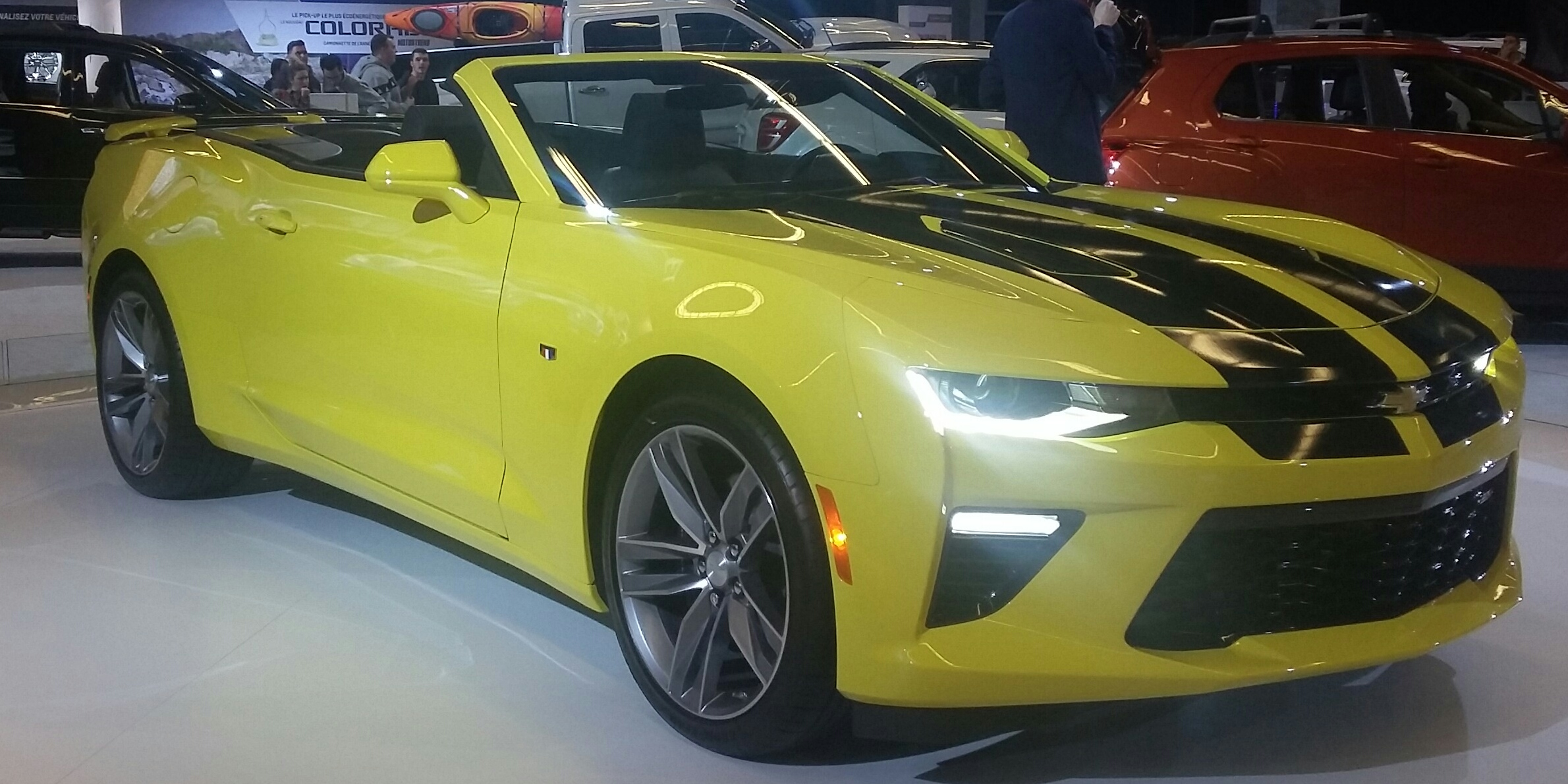
Chevrolet Camaro
"Those same people want to see, you know, couple hammy cooties or, you know, couple first gen Camaro's standing them on the back bumper."
A first-generation Camaro is an early version of the Chevrolet Camaro from the classic muscle-car years. The hosts are saying fans like seeing those older cars because it brings back memories.
The first-generation Chevrolet Camaro is a classic American muscle car era, known for its long-running popularity in drag racing and hot-rod culture. In this segment, it’s referenced as the kind of nostalgia-driven car people want to see at events.
clutch
"This is Mr. West King putting on a show. He put the clutch in his car."
A clutch is the pedal-operated device that disconnects the engine from the transmission so you can shift gears smoothly. In drag-racing talk, “put the clutch in” usually means getting the car launched correctly and engaging the drivetrain at the right moment.
Doug Nash
"West King out there just jamming gears on the Doug Nash and the Chevy too."
Doug Nash is a transmission brand that shows up in racing cars. The host is saying the driver is shifting that racing gearbox hard.
Doug Nash is a brand name commonly associated with racing transmissions, especially in drag-racing applications. When the host says “jamming gears on the Doug Nash,” they’re pointing to the transmission hardware used to shift quickly under load.
jamming gears
"West King out there just jamming gears on the Doug Nash and the Chevy too."
“Jamming gears” means shifting fast and hard to keep the engine pulling strong. It’s a drag-racing style of driving to get the car moving as quickly as possible.
“Jamming gears” is slang for aggressively and quickly shifting through the transmission to keep the engine in its power band. In drag racing, that’s often about maximizing acceleration and maintaining momentum between shifts.
cylinder heads
"And also he is a cylinder head magician. So if you need your cylinder heads worked on, West has all the experience."
Cylinder heads are part of the engine that control how the fuel and air get burned. Getting them worked on usually means fixing and improving the surfaces and airflow so the engine runs better.
Cylinder heads are the top castings of an engine that house the combustion chambers and valve gear. Having “cylinder heads worked on” typically means machining/refreshing them for better airflow and sealing—especially important for older “old iron” engines.
old iron heads
"I got some West King heads on top of the old Ken Lee Camaro and the coolest part about them ... they run like absolute machines for old iron heads."
“Old iron heads” means older engine cylinder heads made from cast iron. The host is saying they run really well once they’ve been properly rebuilt.
“Old iron heads” refers to older cast-iron cylinder heads, which are common on many classic V8s and other vintage engines. The host is praising how these heads perform after being worked on, implying good results from proper machining and setup.
class eliminations
"Lots of action. We had class eliminations for stock and super stock. So lots of rounds for us in those categories."
“Class eliminations” means the race is organized into categories, and cars race against others in the same category. The winners move on through rounds.
Class eliminations are drag-racing rounds where cars compete within specific categories (classes) based on rules like engine setup and vehicle modifications. The host mentions stock and super stock classes, meaning the event is structured around those rule-based groupings.
stock and super stock
"We had class eliminations for stock and super stock. So lots of rounds for us in those categories."
“Stock” and “super stock” are race categories with different rules about how modified the cars can be. Super Stock usually allows more changes than Stock.
“Stock” and “super stock” are drag-racing categories that limit how much you can modify the car and engine. Super Stock typically allows more modification than Stock, so the host is signaling how strict the rules were for their rounds.
combo class
"So in super stock, they usually have like a combo class. If there's one car or less, they take all the one cars and they run them up."
A combo class is when race organizers combine multiple categories into one group. It’s often done so there are enough cars to run the bracket, but it can also change who ends up racing who.
A combo class is when drag-racing organizers merge two or more classes into one bracket, usually to ensure there are enough cars to run eliminations. The transcript explains that this can change the competitive matchups and even lead to “odd” outcomes when a car is the only entry in its class.
eighth mile vs quarter mile
"What's kind of odd to think about is different combos. So the whole race got switched to eighth mile and class eliminations was tested quarter mile, eighth mile. Some cars pull harder at the end. Some cars have a better front half."
Drag races can be run over different distances. A shorter race (like an eighth-mile) rewards quick acceleration early, while a longer race (like a quarter-mile) gives the engine more time to build speed. Changing the distance can make different cars come out on top.
In drag racing, the race distance changes how cars are evaluated and tuned. An eighth-mile run emphasizes the car’s early acceleration (“front half”), while a quarter-mile run gives more time for top-end power to matter. That’s why switching the event format can change which car/combination looks fastest and wins.
350 combo
"A hundred percent, right? I mean, Joe's been rocking that 350 combo in there. That's going to pull the quick numbers early on."
In drag racing, a “combo” usually means a particular engine setup and supporting parts working together. The host is saying Joe’s setup is especially strong early in the run.
A “350 combo” refers to a specific engine-and-setup combination commonly discussed in drag racing (often tied to a Chevrolet 350 small-block-based package). The host argues that this combo helps Joe pull quick early, which matters most when the race format emphasizes the front half.
455
"I think Diane's got a 455 or something in that hog."
“455” refers to an engine size measured in cubic inches. The host is saying Diane’s car uses a 455-style engine, which can influence how hard it pulls during different parts of the run.
“455” is shorthand for a 455 cubic-inch engine displacement (commonly associated with Pontiac’s 455 V8). The host suggests Diane’s car has a 455-based setup, implying it may have stronger mid-to-late pull depending on how the race distance is run.
rolling coal
"That's a big end car rolling coal at the big end and probably just wasn't able to build enough steam"
“Rolling coal” is when a diesel truck makes a big cloud of black smoke when you mash the gas. It’s basically unburned fuel/soot showing up because the engine is getting too much fuel too quickly.
“Rolling coal” describes a diesel engine producing an unusually heavy puff of black smoke under hard acceleration. It usually happens when extra fuel is injected faster than the engine can fully burn it, creating visible soot.
first 600 feet
"Whereas Joe's making all of his money in the first 600 feet of that track and then cruising it from there on out."
The “first 600 feet” is the early stretch of a drag race. If a car gets up to speed quickly there, it often doesn’t need to work as hard later in the run.
In drag racing, “first 600 feet” refers to the early part of the run where acceleration and traction matter most. A car that gains time early can “cruise” later because it already has a big speed advantage.
pro gambler
"So Friday, [955.1s] they did have a pro gambler and a super pro gambler. There was an on track incident in pro."
“Pro gambler” sounds like a special race class/format at that event. It’s basically a bracket-style competition where drivers can win money.
“Pro gambler” appears to be a specific drag-racing class/format used at the event. The term suggests a bracketed competition where drivers race for payouts rather than just points.
purse
"So they called the race a little early. They split up the purse between all the remaining drivers."
The “purse” is the total prize money for the race. If the event ends early, they split that money among the drivers still in the results.
In racing, the “purse” is the total prize money paid out to competitors. When a race is called early, the purse may be split among the remaining drivers.
entry fee
"So I think they all left with double or triple their entry fee, which is cool."
An “entry fee” is the amount you pay to race in the event. They’re saying the prize money was big enough that people made several times what it cost to enter.
An “entry fee” is what drivers pay to participate in a race event. The hosts note that payouts were high enough that many competitors effectively earned multiple times their entry fee.
diesel fuel
"no winner there, but people made some money, help with that diesel fuel and travel costs."
“Diesel fuel” is the fuel used by diesel engines. They’re mentioning it because it’s one of the costs drivers have when they travel and race.
“Diesel fuel” is the fuel used in diesel engines, common in certain drag classes. The hosts mention it as part of the travel/operating costs that the payouts help offset.
time slip
"And I'm not sure if you saw the time slip on that one. It came down to triple 01 at the finish line, one 10th thousandth of a second."
A time slip is the official record of your run. It shows how fast you went, so you can see exactly who was quicker.
A time slip is the printed (or digital) race result sheet from a drag strip that records each run’s elapsed time and often the speed and reaction time. It’s how racers verify how close they were to their target or index.
no time runs
"We got a thing going out here on the West coast with no time runs, blind squirrel, nationals, individuals, eighth mile racing, and I'm here for it, buddy."
“No time runs” means you don’t get practice runs to see your exact times first. So you have to guess and adjust faster during the actual racing.
“No time runs” means competitors don’t get normal practice passes where they can see their elapsed time before the competition. That forces racers to rely on prior data and quick adjustments because they’re effectively going in blind.
blind squirrel
"We got a thing going out here on the West coast with no time runs, blind squirrel, nationals, individuals, eighth mile racing, and I'm here for it, buddy."
“Blind squirrel” is a joking way to say the race is kind of a guess. You don’t have all the usual practice info, so you’re relying on your setup and instincts.
“Blind squirrel” is a slang phrase used to describe a race format where outcomes depend on making the best guess without full information—similar to “blind luck.” In this segment, it’s paired with “no time runs,” implying limited practice data.
index
"So super class racing, they're all their index changed for eighth mile. And so they gave them all one time run right at the beginning of the day. ... the index changed to 585. So he's got to speed that thing up almost a half a second."
The index is the target time racers are trying to hit. You want your run to be very close to that number, not just as fast as possible.
In index-based drag racing, each class has a target elapsed time (“index”) that competitors try to match. If you’re too fast you can lose (or get penalized), so racers “dial in” the car to land as close as possible to the index.
dialing those things
"I was like, golly, you guys are just smart. Like, you guys were just smart. ... shout out to all the super class racers. Very impressive with how you guys were dialing those things and being as close to their indexes."
“Dialing it in” means making the car’s setup and tune match what you’re trying to achieve. In this context, it’s about hitting the target race time.
“Dialing” in a drag car means adjusting setup and tune so the car hits the class target (index) consistently. That can involve changes to launch behavior, fueling, boost, and shifting strategy so the elapsed time lands where the racer wants.
super street
"I was talking to Dustin Ward a little bit today about, you know, super street and and, you know, 705 was the index I think out there in super street and like, man, that sounds pretty fun."
“Super Street” is the name of a racing class. Cars in that class are expected to run to a target time, not just the quickest possible run.
“Super Street” is a drag racing class name used by some events/series to group cars by rules and performance targets. In this segment, it’s discussed in terms of an index (e.g., “705 was the index”), meaning cars are tuned to hit a specific elapsed-time goal rather than just go fastest.
horsepower
"but, you know, having 8900 horsepower and having to slow her down to seven seconds sounds like a lot of fun."
Horsepower is a way to describe how much power the engine makes. More power can help you go quicker, but in index racing you might still need to control how fast you run.
Horsepower is a measure of engine power output, commonly used to describe how strongly a car can accelerate. In drag racing, high horsepower can help you reach the target elapsed time, but index rules may require slowing down to avoid running too fast.
comp
"…Cody Lane, man, chalking one up in, in comp, four sixties, running four sixties to the eighth and comp… So obviously 50 under is kind of where they're shooting for… in the eighth mile."
“Comp” is a drag-racing category where you’re not just racing for the fastest time—you’re trying to hit a target time. If you go too far under or over, you can get penalized.
In drag racing, “comp” refers to a class/ruleset where cars try to run a target based on an index, and the winner is determined by how closely they hit that target (often with “under” or “over” rules). The hosts discuss comp qualifying at the quarter mile and then racing at the eighth mile, plus how penalties work relative to the index.
qualifier
"And, and Don Bevers also number one qualifier, I believe, but just didn't quite make the run that he would want it to in the final round."
Qualifying is where drivers set their starting position for the bracket. Being “number one qualifier” means you were top-seeded based on your qualifying run.
A “qualifier” is the racer’s position based on qualifying runs, which determines seeding in the bracket. Here, Don Bevers is described as the number one qualifier but didn’t make the run he wanted in the final round.
ladders
"…You wonder what that, what the field would have looked like, what the ladders would have looked like…"
In bracket racing, the “ladder” is basically the bracket chart that shows the matchups and who faces who next. Changing qualifying results can change that chart.
In bracket drag racing, “ladders” are the structured matchups showing who advances to face whom in each round. The segment explains that qualifying at the quarter mile versus the eighth mile can change the bracket structure, producing a different ladder at the end.
50 under
"…So obviously 50 under is kind of where they're shooting for. And then, and then they get personal and permanent index off of that in the eighth mile."
In this racing format, teams often aim to be a certain amount faster than their target time. “50 under” means they’re trying to beat the target by about half a second, and the rules say when that becomes a penalty.
“50 under” is a comp-racing strategy meaning the car aims to run 0.50 seconds faster (under) than its assigned index/target. The segment questions whether the “50 under” threshold stays the same at the eighth mile or if the penalty increments change by distance/rules.
shootout
"So listening to the, to the shootout races, I think she put up five total one of the runs. Yeah. And, and I might have missed more, but pretty impressive by Sandy this weekend."
In drag racing, a “shootout” is a competition where drivers make a series of runs to see who advances. It’s usually more intense and condensed than a long season format.
A “shootout” in drag racing usually refers to a short, high-intensity competition format where drivers run multiple rounds to advance. The hosts mention “shootout races” and total runs, implying a bracket-like event where performance across runs matters.
super gas
"And it's kind of, you got to teach Paul a thing or two though. You hear that, Paul? Take notes, buddy. They work together as a team. And I know Paul is really proud. And it's a really kind of a full circle moment in super gas because the Bracey's like those, that's OG pro gas, right?"
Super Gas is a specific drag-racing class with rules about what kinds of cars and setups can compete. In this segment, they’re talking about it like a long-running, important part of the racing scene.
Super Gas is a drag racing class defined by specific rules for vehicle setup and performance. The hosts also frame it as a historically important category (“OG pro gas”), suggesting it has deep roots and a dedicated community.

Chevrolet Corvette
"...l moment for Sandy to, uh, to get the win. Couple Corvette Roadsters in the final looking sharp. I told Paul..."
The Chevrolet Corvette is a sports car made by Chevrolet. It’s designed for performance and is popular with people who like fast driving. The podcast mentions it in a race or competition context, where it’s showing up as a strong contender.
The Chevrolet Corvette is a performance sports car from Chevrolet, known for combining strong power with a driver-focused layout. It’s frequently mentioned because it has a long history and a big presence in racing and enthusiast circles. In the podcast excerpt, it appears tied to a competitive moment and a “final” lineup, suggesting it’s being highlighted for track readiness and performance.
pro tree
"And, um, and he's like, man, I really like racing on the stop. And this pro tree is a lot of fun."
In drag racing, the “tree” is the set of lights that starts the race. A “pro tree” is a more advanced version with tighter timing, so you have to time your launch more accurately.
A “pro tree” is a drag-racing starting light system with more precise timing than a basic tree. It can reward better reaction timing and consistency because the staging and light intervals are more demanding.
dragster
"dragster. I believe this is Brandon's first win. Um, what's crazy is I think art and Brandon, both in the final at Phoenix divisional earlier this year."
A dragster is a race car built for drag racing—going as fast as possible in a straight line over a short distance. The hosts are talking about drag-racing results and storylines.
A dragster is a purpose-built race car designed specifically for straight-line drag racing, typically with a lightweight, aerodynamic body and a focus on acceleration over top speed. The mention here frames the event as drag racing rather than road racing or general motorsport.
Phoenix divisional
"Um, what's crazy is I think art and Brandon, both in the final at Phoenix divisional earlier this year. So they almost had a double, double, double up animal style, baby."
This refers to a regional race event near Phoenix. The hosts are saying Brandon and Art both reached the final there earlier this year.
“Phoenix divisional” refers to a regional divisional event at Phoenix, which is part of how drag racing series organize competition by geography. These events feed into larger brackets/finals, so doing well at a divisional can set up a driver for a bigger run later.
top back shirt
"And, uh, to see him, um, jump from super straight into top back shirt and just start tearing it up is, is pretty cool for him."
This sounds like a misheard drag-racing label for a higher round/class. The point is that Brandon moved up quickly after his earlier success.
“Top back shirt” appears to be a mis-transcription of a drag-racing class/round name, where a driver moves from one bracket/class into a higher round. In drag racing, these labels matter because they determine who you race next and what rules apply.
Firebird Raceway
"in D six out at the real Firebird Raceway. Um, as you mentioned, Brandon Hoover, um, and Jessica Jewel, ... matched up in the final."
Firebird Raceway is the drag strip where this weekend’s races happened. The hosts are using it to anchor where Brandon Hoover and others competed.
Firebird Raceway is a drag racing venue where eliminations and bracket racing take place. The segment ties the weekend’s results to “D six out at the real Firebird Raceway,” indicating the track is central to the competition.
D six
"it’s like, wow, this was a pretty special, pretty special weekend in D six out at the real Firebird Raceway."
“D six” sounds like the race class or bracket they were competing in. It helps determine which cars are eligible to race each other.
“D six” is a class/bracket designation used in drag racing to group cars by rules (often based on performance index or vehicle category). It’s mentioned as the specific category where the weekend’s standout results occurred.
fast door truck
"I love his Corvette. This time he did it in the truck, in the fast door truck. So pretty cool."
This sounds like a drag-racing category for trucks. The hosts are saying Chad Riley’s truck competed in that class and performed well.
“Fast door truck” is likely a drag-racing class name for a pickup/truck category (often “doorslammer” style vehicles). The host is emphasizing that Chad Riley’s truck competed in that category and looked extremely clean.
004 dead on four
"He, uh, he laid down a lap that looked just as good as his car in the final 004 dead on four. That's tough to be."
This sounds like a very precise drag-racing time/target result. The host is basically saying the run was right on the number.
“004 dead on four” appears to be drag-racing timing/ET shorthand (elapsed time) or a dial-in/consistency reference, where “dead on” means the car hit the target very precisely. The host uses it to praise how well the run matched expectations.

Ford Mustang
"...he's called. He's a Sandman. Um, and he's in that Mustang. He's been driving that thing a long time. He's p..."
The Ford Mustang is a sports car made by Ford. It’s known for being powerful and for having a lot of different versions over the years. In the podcast, it’s mentioned as a car that someone has been driving for a long time, suggesting it’s a well-used, familiar choice.
The Ford Mustang is a classic American muscle car that’s been produced for decades, with many generations and performance variations. It’s significant because it’s widely recognized, easy to find in enthusiast communities, and often used in racing and track events. In the podcast, it’s specifically referenced as a car someone has been driving for a long time, which points to its role as a dependable, familiar platform for competition.
winter circle
"He's parked in the winter circle a lot of times. He's no slouch and top sportsman."
In drag racing, the “winter circle” is where winners go after they finish. It’s basically the celebration area for the race results.
In drag racing, the “winter circle” is the winner’s area where the top finisher(s) are recognized after the race. It’s a key part of the event’s ceremony and bragging rights, since multiple classes can have their own winners.
sportsman motorcycle
"Jesse May and, uh, Liz Micheletti, Jesse coming out on top in sportsman motorcycle."
That phrase means a motorcycle drag racing class. It’s a bracket/category for bikes, not cars.
“Sportsman motorcycle” refers to a motorcycle competition class within NHRA-style drag racing. It indicates the event is using a bracket/class system that separates motorcycle racers from car categories and from higher pro tiers.
002
"Yeah. Jesse, I'm sorry. I don't know your gender, but 002 on a bike, that is crushing."
“002” is a race number tied to the bike’s dial-in/target for the run. The host is saying landing that target is a big deal.
“002” is used here as a specific bracket identifier or index number for a bike’s performance target (common in drag racing where racers dial in to a time or index). The host implies hitting that number is extremely difficult and therefore impressive.
NHRA
"but one of the coolest things I think in NHRA racing is what we do out here in D six."
NHRA is the main organization that runs and organizes drag racing events in the U.S. They set up the classes and rules for races.
NHRA stands for the National Hot Rod Association, the major U.S. organization that sanctions drag racing events and class competitions. The segment references NHRA-style class structure and race-day matchups.
pro and super pro
"we let pro and super pro put it on the line for a Wally."
“Pro” and “Super Pro” are higher-level drag racing classes. They’re basically different competition tiers that race for trophies.
In NHRA drag racing, “Pro” and “Super Pro” are competition categories that group cars/drivers by performance level and rules. The host says these classes are allowed to “put it on the line” for a trophy (“Wally”), meaning they race for class honors.
Wally
"we let pro and super pro put it on the line for a Wally."
A “Wally” is the trophy drag racers get for winning an NHRA event. The show is talking about who races for that winner’s hardware.
“Wally” is the common nickname for the NHRA trophy awarded to event winners in various categories. The host’s wording ties it to Pro/Super Pro racing for the win.
stock eliminator
"And that brings us back around to stock eliminator, my guy, taking all the diamonds home, got the class win. Let's talk about class eliminations a little bit."
Stock Eliminator is a drag-racing category. The cars have to follow rules that keep them more “stock-like,” and drivers race head-to-head in rounds to see who advances.
Stock Eliminator is a drag-racing class where cars are grouped and raced based on rules intended to keep them closer to stock than open classes. Winners advance through rounds, and performance is judged by elapsed time and how far the car goes under the class’s format.
grenade a transmission
"line it up there, let go on the bottom and, uh, grenade a transmission, like just first gear is gone. And I'm like, man, did I like bump into neutral or something?"
“Grenade a transmission” means the gearbox failed badly. The car can’t use the gears correctly—here, it sounds like first gear stopped working and the car wouldn’t move.
“Grenade a transmission” is racing slang for catastrophic transmission failure—something inside breaks so badly that the car can’t properly move. In this context, the speaker says first gear is gone and the car won’t go, which is consistent with a major internal failure.

Plymouth Barracuda
"...t know if you're aware, but the, the 69 film with barracuda is not made for a big block and I don't know how ..."
The Plymouth Barracuda is a muscle car from the late 1960s. It came with different engine choices depending on the version. The podcast is talking about whether a specific Barracuda setup matches what you’d expect for a big-engine version.
The Plymouth Barracuda is a muscle car from the late 1960s era, known for different engine options and a strong enthusiast following. In the podcast context, it’s specifically brought up in relation to whether a particular setup (a big-block configuration) is appropriate for a given application or film reference. That kind of discussion usually matters because engine choices can affect how a car performs and how it’s represented.
big block
"And I don't know if you're aware, but the, the 69 film with barracuda is not made for a big block and I don't know how they fit those big honking hammies in the 68."
“Big block” means a large, heavy-duty V8 engine. The speaker is saying those engines don’t fit easily in certain older muscle-car engine bays and are a pain to work on.
A “big block” refers to a physically larger, higher-displacement V8 engine family (commonly in American muscle cars). In drag-racing and hot-rodding, big-block swaps are often limited by engine-bay space, steering/suspension clearance, and how hard it is to service the drivetrain.
stagger start
"So it's like comp eliminator where stagger start based on indexes and and whoever can go further under and, and get the light is, is, is pretty cool."
A stagger start means the cars leave at slightly different times. It’s used so faster and slower cars can still race fairly using the target time rules.
A stagger start is a handicap start where cars don’t leave at the exact same time. In bracket-style racing, the delay is set so cars with different expected performance can still compete fairly against the index.
shift light
"Um, because you're not looking, you're looking for your shift light or, or you're shoving the clutch in and, and trying to look up, I don't know how I'd do it if, if I was racing six."
A shift light is a light on the dash that tells you when it’s time to change gears. It helps you shift at the right moment without taking your eyes off what’s happening ahead.
A “shift light” is an illuminated indicator used in drag racing to tell the driver when to shift. It helps the driver keep eyes on the track while hitting the engine’s ideal RPM range.
pre-stage
"So as he was staged, I was pre-stage and they shut him off, timed me out."
“Pre-stage” is the first step in the starting process at a drag strip. It means the car is positioned and detected, but the race hasn’t started counting down yet.
In drag racing, “pre-stage” is the first beam/position on the starting tree where the car is staged but not yet fully ready to launch. It’s part of the timing system that determines when the run is officially started.
two step down
"I ended up chipping it down, um, the two step down. So, um, I would turn that seven red into a 003 green if I hit it."
A “two step” is a launch-control strategy that holds the engine at a set RPM for consistent starts, then releases it when you’re ready to go. “Two step down” suggests reducing that launch RPM (or stepping down the control) to better match traction and timing.
launch RPM
"I did the, the no, no, I, I adjusted my launch RPM and then I mentally slowed myself down too."
Launch RPM is how fast the engine is spinning when you start moving from the line. Getting it right helps the car accelerate hard without slipping or losing momentum.
“Launch RPM” is the engine speed at which the car is released from the start line. In drag racing, choosing the right launch RPM helps balance acceleration, traction, and avoiding wheelspin or bogging.
starting line
"And Pete, man, that guy has my number when it comes to, to starting line. The last two times I had raised him, he was trip zip and 001."
The starting line is where the race begins. How well you stage and launch can make or break your chances, even if you’re strong after that.
The “starting line” is the launch area where a drag race begins, and it’s where reaction time, staging accuracy, and launch control determine early advantage. Small mistakes here can cost the run even if the car is fast later.
trip zip and 001
"The last two times I had raised him, he was trip zip and 001."
This sounds like the numbers from the drag strip timing system. The “001” part likely means a very tiny timing difference that can decide who wins.
“Trip zip and 001” appears to reference drag-racing timing/tree results (reaction time and/or elapsed-time digits). The “001” style suggests an extremely small measured timing value, which would be notable in a close race.

Dodge Challenger
"Aaron McCoy, he's got a beautiful challenger. Um, that dark blue, man, it's just a beautiful car. Super nice car."
The Dodge Challenger is a muscle car from Dodge. Here it’s being used in a drag race, where cars accelerate down a short track to see who’s fastest.
The Dodge Challenger is a classic American muscle car known for its big V8 power and drag-racing-friendly layout. In this segment, it’s specifically referenced as a dark blue car that’s competing in an eighth-mile drag race.
low gear
"again, uh, mechanical failures for Cal, he said that his car would not go into low gear. Um, before he stage, he, he tried to get it into low gear, but, um, he had to lead in, in second"
“Low gear” is the gear used at the start to help the car get moving strongly. If the car can’t get into that gear, it can’t launch as well and the race gets harder.
“Low gear” in a drag-racing context usually means the first gear(s) used to launch and control acceleration. If a car won’t shift into low gear, it can hurt launch performance and overall elapsed time.
mechanical failures
"again, uh, mechanical failures for Cal, he said that his car would not go into low gear. Um, before he stage, he, he tried to get it into low gear"
“Mechanical failures” means something on the car breaks or doesn’t work right. In a drag race, that can stop the car from shifting or accelerating the way it should.
“Mechanical failures” here refers to parts or systems that stop the car from performing as intended during the event. In drag racing, even a single issue—like a car not shifting into the right gear—can derail the run and force workaround strategies.
swap transmissions
"And you weren't immune from those issues, right? They happened at the right time for you, but, but you had to swap transmissions, right?"
A “transmission swap” means changing the car’s gearbox. If it breaks or won’t shift correctly, they may have to replace it so the car can race again.
A “transmission swap” means replacing the transmission assembly—often because of a failure or damage. In drag racing, transmission issues can force a team to change parts between rounds to keep the car running.
red light
"And it's like, that's the game and, and you don't want to win with a red light. You don't want to win with a broken car, but that ain't got nothing to do with you."
A “red light” in drag racing means you started too early. If you win after a red light, it’s not as legit because you didn’t follow the proper start timing.
A “red light” is a false start in drag racing—when a driver reacts too early to the starting signal. Winning with a red light is considered invalid or unsatisfying because the race wasn’t started correctly.
hold numbers
"I didn't really think about or hadn't had to do is, is hold numbers in the eighth mile. You're just going slower and there's just less momentum."
“Hold numbers” means keep your performance consistent during the whole run. Instead of doing great at the start and then slowing down or losing traction, you keep the car working well the entire way.
In drag racing, “hold numbers” means maintaining consistent performance (like reaction/elapsed time and speed) across a run rather than fading after the launch. It’s about keeping the car in its effective power and traction window for the whole distance.
eighth mile versus quarter mile racing
"I didn't really think about or hadn't had to do is, is hold numbers in the eighth mile. You're just going slower and there's just less momentum. So the typical drop or rip is just worth so much more. Um, eighth mile versus quarter mile racing"
These are two drag-racing distances. The quarter-mile is longer, so the car has more time to build speed, while the eighth-mile is shorter and emphasizes getting off the line and accelerating early.
Eighth-mile and quarter-mile races are drag-racing formats that differ in distance, which changes how the car accelerates and how much speed it builds. In the eighth-mile, you spend less time building momentum, so small differences in launch and early acceleration can matter more than top-end speed.
points leader
"Brother, that'll put you at 414 points. The current points leader who's none of these other guys have been updated either. The current points leader only has 382"
A “points leader” is the person currently winning the overall standings based on accumulated results. Better finishes earn more points, so the leader can change depending on who wins what.
A “points leader” is the competitor with the most accumulated championship points at that stage of the season. The hosts are discussing how race results (like winning divisions or stock-eliminated runs) translate into points totals and standings.
stock eliminated run
"Well, what the, the, the crazy part is, is I probably won't make another stock eliminated run until September."
This is a type of drag-racing category where the cars are supposed to be mostly stock, and you get knocked out as you lose rounds. They’re saying they won’t run that class again until later in the season.
A “stock eliminated run” refers to a bracketed drag-racing class where cars are expected to be close to factory configuration, and competitors are eliminated through head-to-head rounds. The speaker is timing when they’ll next compete in that specific class format.
race gas
"and, um, you know, smell some race gas while I'm still waiting for some parts and some things for my car."
Race gas is a special kind of gasoline used in racing. It’s designed to handle harder driving without the engine “pinging” or knocking, especially when the car is tuned for more power.
Race gas is a higher-performance fuel formulated for motorsport use, typically with a higher octane rating than regular pump gasoline. Higher octane helps resist knock under high boost or high compression, letting the engine make more aggressive ignition timing safely.
top bulb and bottom bulb
"They still have entries available in top bulb and bottom bulb."
“Top bulb” and “bottom bulb” are the two lanes’ starting-light positions in a drag race. Which lane you’re in can affect how you stage and how consistent your runs are.
“Top bulb” and “bottom bulb” refer to lane-side staging/starting positions in drag racing, where the starting lights (“bulbs”) are associated with each lane. In bracket racing, these lane assignments can matter for consistency and strategy across rounds.
capped field 72 cars
"it's capped field 72 cars and super pro 48 car fields in pro and heck dude,"
A “capped field” means the race only allows a set maximum number of cars. That changes the schedule and how many races each car can realistically get in.
A “capped field” means the event limits the number of entries to a fixed maximum. In drag racing terms, that affects how many qualifying/race rounds you can run and how the schedule fits into a multi-day or multi-round format.
double the trans amp
"Oh, we're locked in baby. Me and Tanner are going to double the trans amp. He'll run top, I'll run bottom."
“Trans amp” sounds like a specific racing category related to the transmission setup. “Double” here likely means they’re planning to enter two runs/entries in that category.
“Trans amp” appears to be shorthand for a transmission-related class or event category in this racing context. “Double the trans amp” suggests entering two separate runs/entries in that category, likely with different cars or lane assignments.
triple enter one car
"Uh, it's going to be hard to kind of triple enter one car, but, uh, if we're allowed to, I'm sure we will just keep the fan on all the time."
“Triple enter one car” means trying to have the same car compete in three different entries/classes at the same event. It’s hard because the races can overlap on the schedule.
“Triple enter one car” refers to attempting to register the same vehicle for three separate bracket/class entries within the event. Multi-entry rules vary by track, and doing so can be difficult because of scheduling conflicts between rounds.
fan on all the time
"I'm sure we will just keep the fan on all the time. Just let it rip, buddy."
“Keep the fan on” means the car’s cooling fan stays running to help control engine temperature. That’s useful when you’re doing lots of runs back-to-back.
In drag racing, “keep the fan on” typically means running an engine cooling fan continuously to manage heat during repeated runs or long staging/wait times. Sustained cooling helps prevent overheating and keeps performance consistent.
alcohol
"That's what we built the car for. It's on alcohol, so it should run all day."
“Alcohol” here means the car is running on an alcohol-based fuel instead of regular gas. Racing fuels like this are used because they can support big power and repeatable runs.
In drag racing, “alcohol” usually refers to alcohol-based fuel (commonly methanol or similar blends) used instead of gasoline. Alcohol fuels can support very high power and are often paired with specific engine setups and fuel systems, and they can help with consistent performance over multiple runs.
steel, sharp and steel
"especially in the, in the stock ranks now and, and, um, you know, steel, sharp and steel."
This is a saying meaning experienced people get better by competing with other skilled people. In racing, it’s used to highlight that veterans often have an edge.
“Steel sharp and steel” is a proverb used here to emphasize that experienced competitors improve through competition. In racing, it frames veterans as having an advantage because they’ve seen more scenarios and learned how to manage rounds and conditions.
Request an Explanation
Heard something you'd like explained? We'll add it to this episode.
Sign in to request explanations for terms you heard.
Want to learn more?
Browse our glossary for plain-English explanations of automotive terms, jargon, and concepts.
Help improve this episode
See something that's not quite right? Our annotations are AI-generated and can sometimes miss the mark. Click the flag icon on any annotation to suggest a correction.