
BRIEFLY: EV Interest, US Sales and VW Fixes Past Mistakes | 13 Apr 2026
About this episode
Capital One’s “Chat Concierge” shows how multi-agentic AI is already being used to simplify EV shopping—helping users find cars, schedule test drives, estimate trade-in value, and get financing pre-approval via live API checks. US EV sales dipped year-over-year in Q1, with market share shifting after the end of the federal tax credit. Volkswagen plans to relaunch familiar names with the ID.3 “NEO,” plus a more combustion-like design direction for future EVs. Cybertruck sales hit a low, while Slate Auto raises funding and Polestar posts strong UK rental growth.
It's EV News Briefly for Monday 13 April 2026, everything you need to know in less than 5 minutes if you haven't got time for the full show.
Patreon supporters fund this show, get the episodes ad free, as soon as they're ready and are part of the EV News Daily Community. You can be like them by clicking here: https://www.patreon.com/EVNewsDaily
EV ENQUIRIES JUMP AS FUEL PRICES SPIKE https://evne.ws/4sy2vtL
US EV SALES DROP 27% IN Q1 https://evne.ws/3Q5K0iJ
VOLKSWAGEN ADMITS ITS EVS LOST THE PLOT https://evne.ws/4ckUm5B
VOLKSWAGEN Q1 DELIVERIES FALL 4% https://evne.ws/41yNOeT
CYBERTRUCK US SALES HIT NEW LOW https://evne.ws/4tGywAF
SLATE AUTO RAISES $650 MILLION https://evne.ws/4eennCI
SÁNCHEZ COURTS XIAOMI AS SPAIN EYES EV ROLE https://evne.ws/4c8b7SR
GERMANY SEEKS SOFTER EU EMISSIONS RULES https://evne.ws/4tJ05cy
GERMANY PUSHES TO WEAKEN EU CO₂ RULES https://evne.ws/4t8nSTl
KIA PASSES 100,000 UK EV SALES https://evne.ws/4cs0IAx
POLESTAR POSTS BEST-EVER FIRST QUARTER https://evne.ws/41rJuhB
EUROPCAR UK EV RENTALS JUMP 93% https://evne.ws/4moeFnk
car shopping
"It's called Chat Concierge and it's simplifying car shopping. Using self-reflection and layered reasoning with live API checks, it doesn't just help buyers find a car they love."
They’re talking about using AI to make buying a car easier. Instead of doing everything yourself, the system helps you find cars and then set up the next steps.
The segment describes AI being used to streamline the car-shopping journey—helping shoppers narrow down options and move toward next steps. In practice, this kind of system can combine vehicle discovery with dealership or financing workflows.
Chat Concierge
"It's called Chat Concierge and it's simplifying car shopping. Using self-reflection and layered reasoning with live API checks, it doesn't just help buyers find a car they love."
Chat Concierge is an AI assistant that helps people shop for cars. It’s designed to guide you from choosing a car to setting up a test drive and financing.
Chat Concierge is the named AI product being discussed, positioned as an assistant for car shoppers. It’s described as using reasoning plus live API checks to support actions like scheduling and financing.
US EV sales were down year on year in Q1
"US EV sales were down year on year in Q1, but that's expected. No federal tax credit anymore."
They’re saying EV sales in the first three months of the year were lower than last year. “Year on year” just means compared to the same time period last year.
“Down year on year in Q1” means EV sales in the first quarter were lower than the same quarter the previous year. This is a common way to track demand trends while accounting for seasonal effects.
federal tax credit
"US EV sales were down year on year in Q1, but that's expected. No federal tax credit anymore."
A federal tax credit is money the government can take off your taxes for buying an eligible EV. If it’s no longer available, EVs can cost more upfront, which can affect sales.
The federal tax credit is a government incentive that can reduce the effective purchase price of eligible EVs. Removing or reducing it can shift demand and make pricing more sensitive to incentives and eligibility rules.
market share
"The market share has gone from a 10.8 share to a 10.6 share to a 5.8 share, now of new vehicle registrations in the United States."
Market share is how big a slice of all car sales EVs represent. If it drops, EVs are selling a smaller portion of the total.
Market share is the percentage of total vehicle registrations (here, new vehicle registrations) that are EVs. Changes in market share can indicate whether EVs are gaining or losing ground relative to the overall auto market.

Alpine A106
"No federal tax credit anymore. The market share has gone from a 10.8 share to a 10.6 share to a 5.8 share, now of new vehicle registrations in the United States."
The Alpine A106 is an older sports car model from the Alpine brand. The podcast mentions it in the context of vehicle registration and tax credit changes, which can influence how many cars get sold. Even though it’s not an EV-specific topic, those market factors can still affect interest and registrations for different vehicles.
The Alpine A106 is a classic-era small sports car associated with the Alpine brand. In an EV-focused news podcast, it’s likely being referenced because the discussion includes broader market and registration trends rather than the car’s modern EV technology. That kind of mention can come up when talking about how incentives or policy changes affect overall vehicle demand and registrations.

Volkswagen Id3
"... Volkswagen says they're about to launch the new ID3, the so-called NEO. They got it wrong the first ..."
The Volkswagen ID.3 is an electric hatchback, so it uses a battery instead of gasoline. The podcast is saying Volkswagen plans a new version and that the first version had problems. That’s important because it shows the company is trying to improve the car for buyers.
The Volkswagen ID.3 is an all-electric compact hatchback and one of Volkswagen’s earlier entries in the ID EV lineup. The podcast context suggests Volkswagen is preparing a new version or successor (referred to as a “NEO”) and that the company believes the first attempt didn’t go as planned. That makes it a notable topic because it reflects how EV products are iterated based on real-world feedback.
return to names like Golf and Polo and Tiguan and Cross
"[188.1s] We shouldn't have thrown away names like Golf and Polo and Tiguan and Cross, so they're [193.6s] bringing them back."
The speaker is talking about Volkswagen reusing well-known car model names. That can make it easier for buyers to recognize the type of car, even if it’s electric.
This refers to Volkswagen’s strategy of bringing back familiar model nameplates (like Golf, Polo, Tiguan, and Cross) for EVs. Nameplate reuse can help consumers quickly understand what a vehicle “is,” even when the underlying platform and powertrain are electric.

Volkswagen Tiguan
"...n't have thrown away names like Golf and Polo and Tiguan and Cross, so they're bringing them back."
The Volkswagen Tiguan is a small-to-midsize SUV made by Volkswagen. It’s brought up because it’s a recognizable model name. When a podcast says Volkswagen is “bringing back” names, it means they plan to use those familiar labels for newer vehicles.
The Volkswagen Tiguan is a compact SUV that’s been a key volume model for Volkswagen. It’s mentioned in the context of Volkswagen reusing well-known model names, which signals how the company plans to structure future lineups. In a podcast about EV news, that kind of naming strategy matters because it affects how new electrified models are positioned and sold.
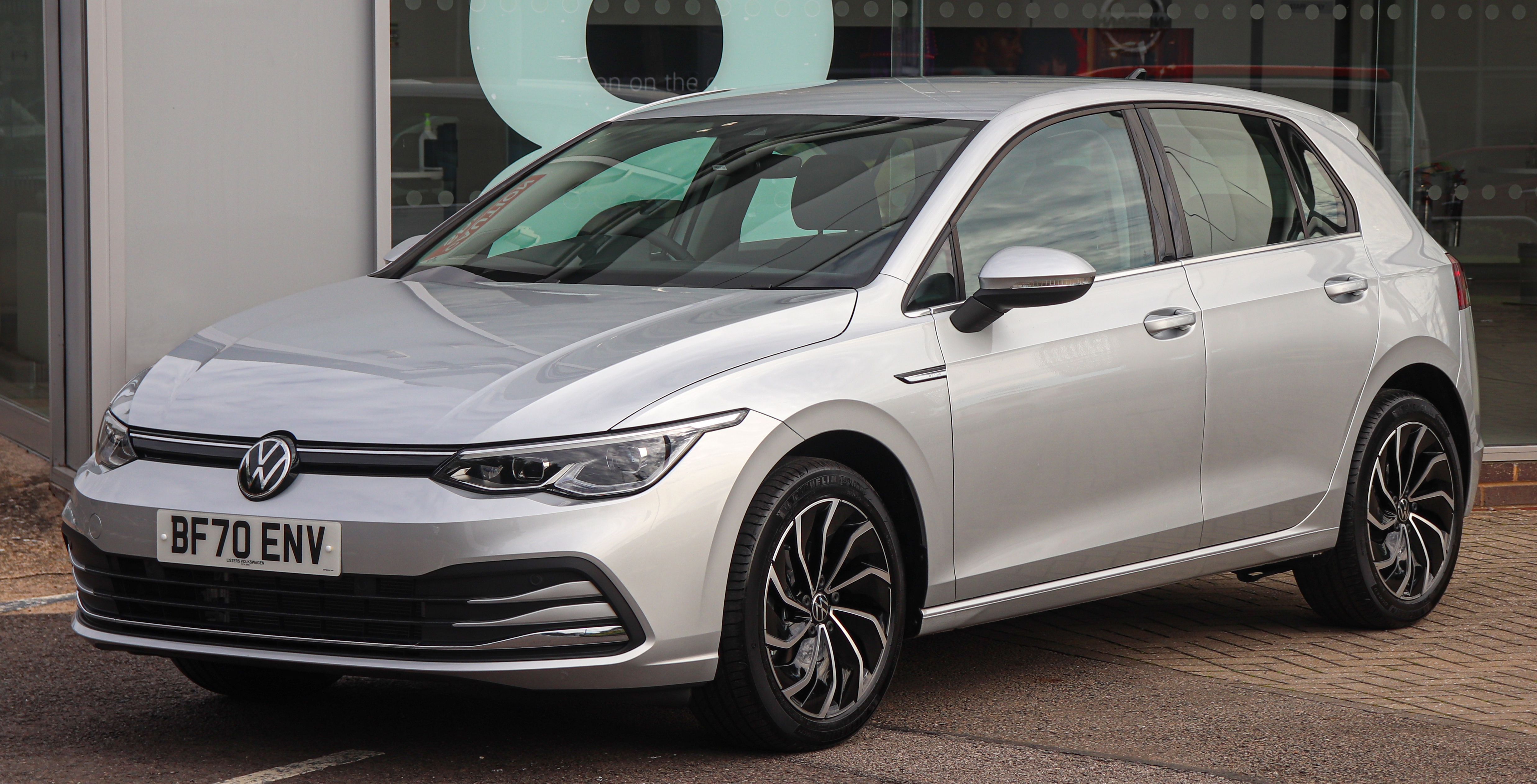
Volkswagen Golf
"...y said. We shouldn't have thrown away names like Golf and Polo and Tiguan and Cross, so they're bringi..."
The Volkswagen Golf is a small car (a hatchback) that Volkswagen has been making for many years. It’s often mentioned because the name “Golf” is a well-known model line. When people talk about bringing back names, they mean using that familiar model identity again for newer cars.
The Volkswagen Golf is a long-running compact hatchback that’s known for being practical and widely available. In EV news discussions, it often comes up because nameplates like Golf and Polo are tied to Volkswagen’s brand identity and product strategy. Bringing back or preserving familiar model names can be a big part of how automakers market new generations, including electrified versions.
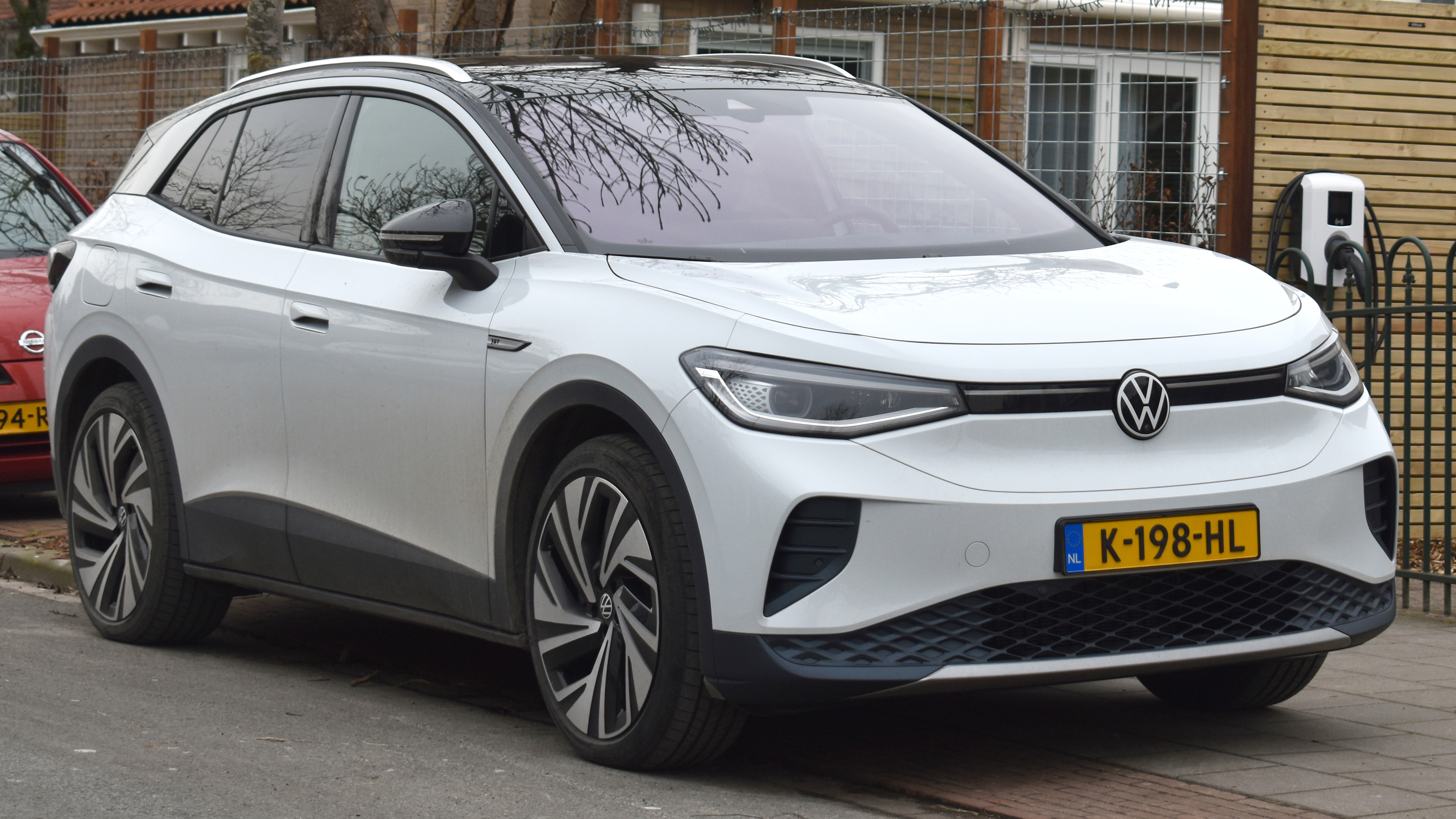
ID4
"[206.4s] The next one's going to be the ID4, which becomes the IDTIG1, and they're redesigning [212.1s] their vehicles to look like their combustion cars..."
The ID.4 is Volkswagen’s electric SUV. The speaker is saying Volkswagen wants it to look more like their regular gas cars, but it stays electric.
The ID.4 is Volkswagen’s mainstream electric SUV in its ID family. The segment suggests Volkswagen may rename or rebrand the next iteration (the speaker says “IDTIG1”) and redesign it to resemble their combustion models while keeping an electric powertrain.
all-time low in the first three months of this year
"[218.9s] Cybertruck US sales have hit an all-time low in the first three months of this year. [224.6s] They sold just 3,500 Cybertruck..."
This is about sales trends. The speaker is saying the Cybertruck’s recent early-year sales were the worst they’ve ever been for that time period.
This is a sales-trend concept: comparing a brand/model’s quarterly performance to its historical baseline. For EVs, these dips often reflect demand shifts, pricing changes, production constraints, and competition.

Tesla Cybertruck
"[218.9s] Cybertruck US sales have hit an all-time low in the first three months of this year. [224.6s] They sold just 3,500 Cybertruck..."
The Cybertruck is Tesla’s electric pickup. The speaker says sales in the US have been very low recently, and a cheaper version could help sales later.
The Tesla Cybertruck is discussed in terms of US sales volume and recent delivery trends. The segment claims sales hit an all-time low in the first three months, and that a cheaper variant may increase deliveries later in the summer.
cheaper one that did go on sale recently
"[237.8s] There is a new cheaper one that did go on sale recently, and so that will bump some [244.1s] numbers up when it begins deliveries in the summer probably."
The speaker says there’s a cheaper version of the Cybertruck now. Lower prices usually help more people buy, so deliveries can rise.
The segment references a lower-priced Cybertruck variant entering the market. In EV markets, introducing a cheaper trim can materially change demand and delivery volumes, especially when prior pricing limited buyers.
Slate Auto
"[256.5s] Right, Slate Auto has raised $650 million in a new funding round, that says it's the [262.4s] money they need to carry on building the factory..."
Slate Auto is an EV company mentioned in the news. They’re raising money so they can build their factory and start delivering their trucks at a targeted price.
Slate Auto is referenced as an EV company raising capital to build a factory and deliver its trucks. The segment also ties the funding to a target price point, which is important for understanding whether the product can compete in the mass market.
funding round of $650 million
"[256.5s] Right, Slate Auto has raised $650 million in a new funding round, that says it's the [262.4s] money they need to carry on building the factory..."
This is about money a company raised to keep building and producing vehicles. For new EV makers, that cash is usually needed for factories and getting cars into customers’ hands.
This is a company-financing concept: a large capital raise intended to fund production and ramp-up. For EV startups, funding rounds are often tied to building factories, securing supply chains, and covering working capital until vehicles reach meaningful sales.
mid-20,000 dollar price point
"...still targeting a mid-20,000 dollar price point. [272.1s] Spain's Prime Minister, Pedro Sanchez..."
This is about how much the EV is supposed to cost—around the mid-$20,000 range. The idea is to make it affordable enough for more buyers.
A “mid-20,000 dollar price point” is a pricing strategy aimed at affordability. For EVs, reaching that kind of MSRP (or effective selling price) typically depends on battery cost reductions, manufacturing scale, and simplified features to keep margins viable.

Xiaomi SU7
"...he headquarters in Beijing, presented with a red SU7, that's the newly updated one, the original car. ..."
The Xiaomi SU7 is an electric car made by Xiaomi. The podcast mentions a newly updated version of it, shown in red. That matters because updates can change what the car includes and how it performs.
The Xiaomi SU7 is an electric car introduced by Xiaomi, with the podcast referencing an updated version shown in red. It’s discussed in EV news because Xiaomi is a new entrant using a tech-focused approach to product development and marketing. Updates like this are important to track since they can change features, performance, or packaging for buyers.
90% reduction in emissions by 2035
"...which have already been weakened no longer 100%, but 90% reduction in emissions by 2035. Germany wants to go even further now, they say."
It’s a goal for how much pollution needs to be reduced by 2035. If the target changes, car companies may adjust their plans and product timelines.
This describes a policy target for cutting emissions by a specific percentage by the year 2035. It’s the kind of compliance milestone that can change what technologies automakers prioritize and how quickly they transition to lower-emission vehicles.

Kia EV3
"...t of production, but that's sensible because the EV3 is, well, the new Nero. Polestar had its best ev..."
The Kia EV3 is an electric car from Kia that’s planned to go into production. The podcast is talking about timing and how it fits into Kia’s newer EV lineup. That’s important because it affects when you can buy one.
The Kia EV3 is an upcoming electric vehicle positioned as a newer, more accessible EV offering for Kia. The podcast context suggests it’s being compared or discussed alongside other EV lineup updates, and it notes production timing. That makes it relevant in EV news because launch schedules and market availability strongly influence when buyers can actually get these cars.
EV rental days
"So they logged 500,000 EV rental days last year in the UK, up almost 100% on the previous year, as they add more Hyundai's BYDs and Polestar's to their fleet, and that's briefly."
They’re using a rental metric: how many days electric cars were rented. It’s a way to measure how much people are actually using EVs.
“EV rental days” is a fleet metric that counts how many days EVs are rented out, used to track demand and utilization. It’s especially relevant for EV adoption because rentals expose more drivers to EVs than private ownership alone.
BYD
"...as they add more Hyundai's BYDs and Polestar's to their fleet, and that's briefly."
BYD is a company that builds electric cars and batteries. Seeing BYD in rental fleets suggests more people are getting access to its EVs.
BYD is a Chinese EV and battery manufacturer, often associated with high-volume EV production. Mentioning BYD in a UK rental fleet highlights how quickly BYD-branded vehicles are entering mainstream EV usage.
Hyundai
"...as they add more Hyundai's BYDs and Polestar's to their fleet, and that's briefly."
Hyundai is a car brand they’re talking about in relation to EVs. If Hyundai adds more EVs, more people can try them through rentals.
Hyundai is referenced in the context of adding more vehicles to a rental fleet. As a major global automaker, Hyundai’s EV strategy and model availability strongly influence EV market share and rental penetration.
multi-agentic AI
"Capital One's tech team isn't just talking about multi-agentic AI, they already deployed one."
Multi-agentic AI means the AI is made of multiple parts working together. Instead of one chatbot doing everything, different parts handle different steps of the process.
“Multi-agentic AI” refers to systems where multiple AI “agents” collaborate to complete tasks. In car shopping, that can mean splitting responsibilities like comparing cars, checking availability, and guiding financing steps.
Capital One
"Capital One's tech team isn't just talking about multi-agentic AI, they already deployed one. It's called Chat Concierge, and it's simplifying car shopping."
Capital One is a company that provides financial products. Here, they’re using AI to help people shop for cars and handle steps like scheduling and financing.
Capital One is a financial services company that’s using AI tooling to streamline parts of the car-buying journey. In this segment, they’re positioning their “Chat Concierge” system as a buyer-assistance platform.
pre-approved for financing
"it helps schedule a test drive, get pre-approved for financing, an estimate trading value, advanced, intuitive, and deployed."
Pre-approval means a bank or lender checks you first and tells you what kind of loan you might qualify for. It can make buying smoother because you know your financing options ahead of time.
Pre-approval for financing means a lender reviews your credit and income and offers you a loan range before you pick a specific car. This can make dealer negotiations easier because you’re shopping with a known budget.
test drive
"it helps schedule a test drive, get pre-approved for financing, an estimate trading value, advanced, intuitive, and deployed."
A test drive is the in-person driving evaluation that helps buyers confirm fit, comfort, and real-world drivability. Many shopping tools now automate scheduling so you can move faster from research to evaluation.
trading value
"get pre-approved for financing, an estimate trading value, advanced, intuitive, and deployed. That's how they stack."
“Trading value” refers to the estimated value of your current vehicle if you trade it in. Online tools typically use market data and vehicle details to estimate what you might receive, which affects your out-the-door cost.
Progressive
"Visit progressive.com. Find a rate that works for you with the Name Your Price tool. Progressive casualty insurance company and affiliates."
Progressive is an insurance company. They’re advertising a website tool that helps you find an insurance rate and coverage that fits your budget.
Progressive is an insurance company mentioned here as the source of an interactive rate/coverage tool. For EV buyers, insurance cost can be a major part of total ownership cost, so tools like this can help estimate affordability.
Name Your Price tool
"Visit progressive.com. Find a rate that works for you with the Name Your Price tool. Progressive casualty insurance company and affiliates."
The “Name Your Price” tool is a way to pick a price you want for insurance and see options that match it. It helps you compare coverage without starting from scratch every time.
Progressive’s “Name Your Price” is an insurance pricing tool that lets you choose a target price and coverage level. It’s an example of how pricing/coverage selection is being guided by interactive software rather than manual quoting.
Request an Explanation
Heard something you'd like explained? We'll add it to this episode.
Sign in to request explanations for terms you heard.
Want to learn more?
Browse our glossary for plain-English explanations of automotive terms, jargon, and concepts.
Help improve this episode
See something that's not quite right? Our annotations are AI-generated and can sometimes miss the mark. Click the flag icon on any annotation to suggest a correction.