
Building Technicians From the Ground Up
About this episode
Leadership and mentorship are at the center of Beyond the Wrench’s conversation on building technicians “from the ground up.” Todd Ainsworth and the guest trace a path from early shop exposure and a four-year apprenticeship to 25 years as a professional tech and eventually shop ownership. The hosts connect technician development to profitability, training structure, and shop culture—arguing that modern work is highly technical, safety-critical, and requires proper documentation and inspections.
Todd Ainsworth, Shop Owner at Swedish Automotive, Inc. and President-Elect of the Northwest Auto Care Alliance (NWACA), joins us to talk about developing the next generation of technicians and why most shops are leaving that opportunity on the table. During the episode, Todd covers his journey from technician to shop owner, gives a closer look at NWACA's apprenticeship program and what makes it work, and why it's easier to grow a technician from scratch than to fix someone else's bad habits.
Watch the video recording
About the Episode
- Host: Jay Goninen, WrenchWay, [email protected]
- Guest: Todd Ainsworth, Shop Owner at Swedish Automotive, Inc. & President-Elect of the Northwest Auto Care Alliance (NWACA), [email protected]
Links & Resources
- Get notified of new episodes --> Join our email list
- Register for the Building the Northwest’s Next Generation of Technicians Webinar
Join the ASE Connects Community
ASE Connects brings shops, dealerships, and schools together in one structured network to strengthen the technician pipeline. By making it easier to connect, collaborate, and support students through job shadows, internships, and classroom engagement, ASE Connects helps schools build stronger programs and helps shops develop a more consistent, local source of future technicians. Learn more:
Connect with us on social:
ASE
ASE is a well-known automotive certification program. It’s a way to show a mechanic has proven knowledge on certain types of car repairs.
ASE stands for the National Institute for Automotive Service Excellence, which offers certification programs for mechanics and related automotive roles. In the industry, ASE credentials are often used as a signal that someone has passed standardized tests for specific repair skills.
fuel injection
"and when you were coming in fuel injection was all the rage, right? And you're you're trying you're kind of transitioning from carburetor to fuel injection."
Fuel injection is how a car sends gas into the engine. Instead of using a carburetor, it uses computer-controlled parts to deliver the right amount of fuel.
Fuel injection is a modern way of delivering gasoline to an engine using electronically controlled injectors instead of a carburetor. It’s tightly managed by engine computers, which is why technicians need more electronics and diagnostics knowledge as cars evolve.
carburetor
"And you're you're trying you're kind of transitioning from carburetor to fuel injection. And now, I mean, we're driving advanced computers like"
A carburetor is an older system that mixes gas and air for the engine. Many cars moved away from it because newer systems are controlled by computers.
A carburetor is an older fuel-delivery device that mixes air and fuel before it enters the engine. The shift from carburetors to fuel injection is a big reason modern repair work often involves computer diagnostics rather than purely mechanical adjustments.
advanced computers
"And now, I mean, we're driving advanced computers like there's so much that has changed in that period of time."
In modern vehicles, “advanced computers” refers to the engine control units and other electronic modules that manage engine operation. As cars become more software-driven, technicians increasingly need scan tools and diagnostic skills to interpret sensor data and control strategies.
can bus network problems
"It's not, we're, we're, we're looking at can bus network problems and very technical things."
Modern cars have computers that need to “talk” to each other. CAN bus is that communication system, and problems with it can make the car act strangely or throw confusing warning lights.
A CAN bus (Controller Area Network) is the car’s internal communication network that lets modules like the engine computer, body electronics, and sensors talk to each other. When there are “CAN bus network problems,” it usually means one or more modules can’t reliably communicate, which can cause weird, hard-to-diagnose electrical and warning-light issues.
exhaust manifolds
"…busting our knuckles and burning our fingers on exhaust manifolds…"
Exhaust manifolds are parts near the engine that collect exhaust gases. They get very hot, so working around them can be painful if you touch the wrong spot.
Exhaust manifolds are the engine’s exhaust collection components that route gases from multiple cylinders into the exhaust system. They can be extremely hot during operation, which is why technicians often mention “burning fingers” when working around them.
hoist
"This lady brings her car in and they put it on the hoist."
A hoist is the shop lift that raises the car. It lets the mechanic look at the underside and suspension parts safely.
A hoist is the lift used in a shop to raise a car so technicians can inspect and work underneath. It’s commonly used for suspension diagnostics because components like control arms and ball joints are easiest to check with the wheels off the ground.
ball joint
"The ball joint was completely out of the lower control arm, like completely fell out and it looked brand new."
A ball joint is a small joint in the suspension that helps the wheel move and steer smoothly. If it breaks or comes apart, the wheel can wobble or shift, which can make the car shake a lot and drive poorly.
A ball joint is a suspension component that lets the wheel move up and down while also allowing steering angles. When a ball joint fails or separates, it can cause severe vibration and poor handling because the wheel’s alignment and motion are no longer controlled.
lower control arm
"The ball joint was completely out of the lower control arm, like completely fell out and it looked brand new."
The lower control arm is a suspension link that holds the wheel in the right position. It connects to other parts like the ball joint—if that connection fails, the wheel can move incorrectly and the car can shake or feel unsafe.
The lower control arm is part of the front suspension that locates the wheel and controls its movement relative to the chassis. Ball joints and bushings connect the control arm to the steering knuckle and frame, so if the ball joint comes out of the lower control arm, the wheel can lose its proper geometry.
vehicle inspections
"We're trying to help keep you safe. We're trying to make sure your vehicle is reliable. That's why we do inspections."
A vehicle inspection is when a mechanic checks the car for problems that could be unsafe. The goal is to catch issues early so they don’t turn into bigger failures later.
Vehicle inspections are structured checks performed by technicians to find worn, damaged, or unsafe components before they cause a failure. In this context, the host frames inspections as a safety process that helps prevent dangerous parts from staying on the road.
shop ownership
"another thing that comes with shop ownership and needing to be profitable is you need to hire the people who will take the time to do it, right?"
Shop ownership here means the repair business is accountable for the work it does on customers’ cars. If something is done incorrectly, the shop can be held responsible—because it affects safety.
In an automotive context, shop ownership means the business is responsible for the work performed on customer vehicles. That responsibility includes ensuring repairs are done correctly and safely, since mistakes can lead to real-world harm.
liability
"But we have a liability. Oh, when we take the shop, the car into our shop, we're accepting liability and we literally sometimes have people's lives in our hands."
Liability means responsibility for what happens because of the work done. If a safety-critical part is installed poorly and someone gets hurt, the shop can be held responsible.
Liability is the legal responsibility a shop takes on when it performs work on a customer’s vehicle. The hosts connect it to safety-critical repairs—like suspension work—where an installation error can create dangerous failure modes.
safety-critical repair
"they don't need to think about whether their car is going to fall fall apart and that's going to be our job. But it's not, it's not any, any laughing matter when we talk about safety because as we are responsible for our clients safety"
A safety-critical repair is work where mistakes can directly affect vehicle safety, such as steering and suspension components. The segment emphasizes that technicians and shops must ensure correct installation so customers don’t have to worry about the car failing while driving.

1972 Pontiac Le Mans
"What was your first car? [3263.4s] First car was a 1972 Pontiac Le Mans. [3267.8s] Really? [3269.0s] Which I still own."
A 1972 Pontiac Le Mans is an older American car from the muscle-car era. The host mentions it because it was the guest’s first car and they’ve owned it for a long time.
The Pontiac Le Mans is a classic American muscle-era car, and the 1972 model is from the early 1970s when Pontiac offered big V8 power. In this episode, it matters because the guest still owns it and has kept it in decent shape for decades.
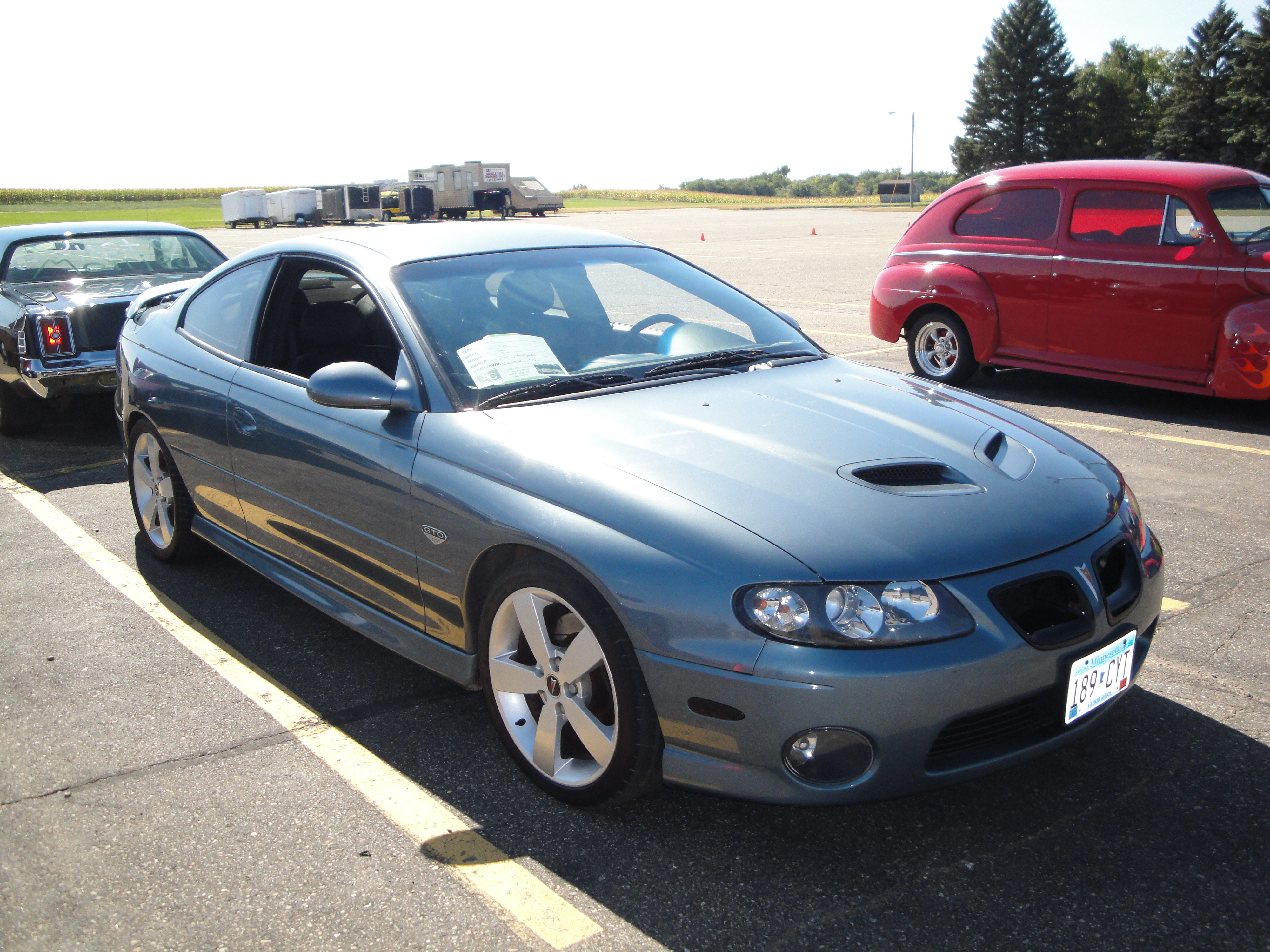
68 GTO 400
"and so, you know, I built a took your original engine out of [3289.5s] it and put a and I built a 68 GTO 400 for it with with a bunch [3296.2s] of modifications and a different cam."
A “GTO 400” is a Pontiac muscle-car V8 engine (the 400) that people often swap into other cars. In the story, the guest replaced their original engine with a stronger, modified version and changed the camshaft.
The “GTO 400” refers to a Pontiac GTO equipped with a 400 cubic-inch V8, a common muscle-car engine swap in the late 1960s. Here, the guest describes taking the original engine out of their Pontiac Le Mans and installing a built 400 with modifications and a different cam, which is a classic enthusiast upgrade path.
cam
"I built a 68 GTO 400 for it with with a bunch [3296.2s] of modifications and a different cam. [3298.0s] You know, back in those days, I thought I was going to be a"
A cam (camshaft) controls when the engine’s valves open and close, which strongly affects power and how the engine feels across the RPM range. Changing the cam is a common modification when building a muscle-car engine for different performance characteristics.
hot rods
"I thought I was going to be building hot rods as a work you [3304.1s] but that's not that's not eventually what happened though."
Hot rodding is when people modify older cars to improve performance or style. The guest is saying they thought they’d end up building cars like that as a career.
Hot rodding is the hobby of modifying cars—often older ones—to make them faster, sound better, or handle differently. In the episode, it’s used to describe the guest’s early dream of working on cars and building something more performance-oriented.
dirt circle tracks
"I thought I'd be racing cars coming out of high school and I [3317.3s] did in high school race on like dirt circle tracks and over [3324.5s] time, you know, you just kind of run out of time and and and"
Dirt circle tracks are race tracks where cars go around in an oval on dirt instead of pavement. The speaker is using it to describe the kind of racing they did early on.
Dirt circle tracks are oval racing circuits where cars race on dirt or clay surfaces, typically requiring different setups than paved tracks. The guest mentions racing on these tracks in high school to explain their early motorsports background.
Request an Explanation
Heard something you'd like explained? We'll add it to this episode.
Sign in to request explanations for terms you heard.
Want to learn more?
Browse our glossary for plain-English explanations of automotive terms, jargon, and concepts.
Help improve this episode
See something that's not quite right? Our annotations are AI-generated and can sometimes miss the mark. Click the flag icon on any annotation to suggest a correction.