
Still on the Floor. Still Building the Industry.
About this episode
Anthony Calhoun, an ASC master technician with 25+ years in a high-volume GM dealership, traces his path from vocational training into GM’s ASAP program. The conversation digs into why technicians leave—shrinking school pipelines, “Nobody wanted tohelpyou” early culture, and fear-driven, time-pressured diagnosis that turns into part swapping. Hosts connect confidence to OEM flowcharts, psychological safety, and repeatable inspection processes, then discuss tools, standards, and staffing ideas to keep the industry growing.
Anthony Calhoun is an ASE Master Technician with 25+ years in the industry, CEO of A.W.C. Consulting LLC, and author of “Why Techs Leave and How to Keep Them.” In this episode, Anthony walks through what each role has taught him about where the industry is falling short. He covers the mindset that helped him grow as a young tech, the advice he gives to those coming up now, and what pushed him to write a book and build Apex Tech Nation.
About the Episode
- Host: Jay Goninen, WrenchWay, [email protected]
- Guest: Anthony Calhoun, A.W.C. Consulting LLC, [email protected]
Links & Resources
- Get notified of new episodes --> Join our email list
- APEX Tech Nation
- Why Technicians Are Leaving and How to Keep Them
Join the ASE Connects Community
ASE Connects brings shops, dealerships, and schools together in one structured network to strengthen the technician pipeline. By making it easier to connect, collaborate, and support students through job shadows, internships, and classroom engagement, ASE Connects helps schools build stronger programs and helps shops develop a more consistent, local source of future technicians. Learn more:
Connect with us on social:
General Motors program
"Butthattypeofprogram,whenyou'rewhenespeciallywhenyou'rewhenyou'remakespecific,right? [575.0s] You'reyou'regoingtothatGeneralMotorsprogram,you'reyou'relearninghowtoworkonthatstuff,right?"
They’re talking about a training program from General Motors. It teaches technicians how to work on GM systems the way the manufacturer expects.
This refers to a manufacturer training program tied to General Motors vehicles and systems. The point is that technicians learn the specific diagnostic and repair procedures for that automaker’s technology, not just general troubleshooting skills.
diagnostic flowchart
"Andyouknow,reallylikewhenyoulet'ssayyougetaflowchart,youknow,diagnosticflowchart,ititwilloverwhelmyouifyoudon'tknowyouknowthebasicjustbasictesting."
A diagnostic flowchart is like a troubleshooting checklist. It tells you what tests to do first, then what to do next depending on what you find.
A diagnostic flowchart is a step-by-step decision guide technicians use to narrow down a fault. It typically starts with basic checks and branches based on test results until you reach the most likely cause.
OEM
"Becauseyouknow,OEM,theymayhaveaflowchartthat's12stepslong,butit'sgotfivestepsinbetweeneachstep."
OEM means the carmaker itself. When they publish diagnostic steps, those are the official instructions for fixing that exact vehicle system.
OEM stands for Original Equipment Manufacturer, meaning the automaker that designed and built the vehicle. In diagnostics, OEM flowcharts and test procedures are the factory-approved steps for specific systems.
short the ground test
"Andonceyouunderstandhoweverythingworks,youknowwhatashortthegroundtestis,shortthevoltagetestis,youcanskimthatflowchartandjustprocessitandsay,okay,itwantsmetogodoashorttheground,shortthevoltagetestonthesecircuits."
This is a troubleshooting test where you deliberately connect a wire to the car’s ground to see how the system reacts. If it doesn’t react the way the test expects, it points to a problem in that circuit.
A “short the ground” test is a diagnostic method where a technician intentionally connects a circuit point to ground to verify wiring, sensors, or control-module behavior. The goal is to see whether the system responds correctly when the circuit is forced into a known state.
short the voltage test
"Andonceyouunderstandhoweverythingworks,youknowwhatashortthegroundtestis,shortthevoltagetestis,youcanskimthatflowchartandjustprocessitandsay,okay,itwantsmetogodoashorttheground,shortthevoltagetestonthesecircuits."
This is another troubleshooting test where you force a circuit to a known voltage so you can check if the car responds correctly. If it doesn’t, the fault is likely in that circuit or component.
A “short the voltage” test is a diagnostic procedure where a circuit is forced to a known voltage condition to confirm whether the vehicle’s electronics respond properly. It’s used to validate components and wiring by checking for expected behavior under controlled electrical states.
body control module
"likebackthenyouhadaremotecontroldoorlockreceiver,akeyfob,andayouknow,bodycontrolmodule."
The body control module is one of the car’s computers that runs lots of convenience features like locks and lights. It helps coordinate what the car does when the key fob sends a signal.
The body control module (BCM) is an electronic control unit that manages many body functions such as door locks, lighting, and other convenience features. In keyless and body electronics, the BCM is often central to how signals from the key fob and sensors are interpreted.
keyless entry system
"Imean,ifyouthinkaboutlikejustakeylessentrysystem,likebackthenyouhadaremotecontroldoorlockreceiver,akeyfob,andayouknow,bodycontrolmodule."
A keyless entry system is what lets you unlock the car without putting a key in the door. It uses the key fob and antennas, and newer cars have more of that tech.
A keyless entry system lets you unlock and often start the vehicle without inserting a key, typically using a key fob and antennas. Modern versions add multiple antennas and more electronic modules, which increases diagnostic complexity.
serial data
"Andyouknow,IrememberIyouknow,I'vewatchedawholethingoflikeserialdatajustgrowandgrow,youknow,andit'sIremembereverytimeitchanged,we'relike,ohman,ohman,andit'sit'sonlygottenmorecomplex."
Serial data is the electronic “messages” cars send between computers. More features means more messages, so it can be harder to figure out what’s wrong.
Serial data is the digital communication stream cars use to exchange information between modules (like sensors, body systems, and engine controls). As vehicles add more electronic features, the amount and complexity of serial data increases, making diagnostics more challenging.
ECM
"[772.1s] Well,you're talking about the advancement into technology and the computers. [775.9s] I remember back then being like, if I fry an ECM, I am Im might be fired right?"
ECM is the car’s engine computer. It reads sensor data and tells the engine what to do. If you “mess with the ECM” during diagnosis, it can be expensive and scary because it may not be the real cause.
ECM stands for Engine Control Module. It’s the car’s main computer that monitors sensors and controls engine functions like fuel and ignition. When someone says “try an ECM,” they’re usually talking about diagnosing or replacing that specific control unit.
process of elimination
"[862.9s] Well, when you got to price one out or send one up for warranty, you know, you're because it's really just a process of elimination, and you're you know, you do everything you can up until that point."
Process of elimination means you don’t guess—you check the most likely causes first, then cross them off. You keep narrowing it down until you find what’s actually wrong. That helps prevent costly replacement mistakes.
A “process of elimination” is a diagnostic approach where a technician rules out likely causes one by one until the remaining option explains the symptoms. It’s common in electrical and computer-related repairs because there are many possible inputs (sensors, wiring, software, modules). The goal is to avoid replacing expensive parts without proof.
warranty
"[862.9s] Well, when you got to price one out or send one up for warranty, you know, you're because it's really just a process of elimination, and you're you know, you do everything you can up until that point."
Warranty is the coverage that can pay for repairs if the car’s problem is considered a defect. If a technician wants the company to pay, they usually have to show what went wrong and why. That can make diagnosis feel stressful.
In this context, warranty refers to the manufacturer’s coverage that pays for certain repairs when a part is deemed defective. Technicians may need to document and prove the failure before a control module replacement is approved. That administrative and technical burden is part of why diagnostics can feel high-stakes.
diagnose a vehicle
"[873.5s] And when I started, GM paid 0.3 [875.8s] to diagnose a vehicle."
Diagnosing a vehicle means figuring out what’s actually causing the problem. Instead of swapping parts randomly, you test and confirm the cause. It’s the step that determines whether the repair will fix the issue.
“Diagnose a vehicle” means systematically finding the root cause of a problem using symptoms, scan tools, and tests—not just replacing parts. In modern cars, diagnosis often involves reading fault codes and checking sensor and wiring behavior. The speaker’s point is that diagnosis time is billable and critical to getting it right.
psychological safety
"Well, for shop leaders that are listening to this, that is such a key thing to understand. Is just we had an author named Dan Bradison... and he wrote a book called Seeds of Culture, and one of the chapters talks about psychological safety..."
Psychological safety means people feel comfortable being honest at work. If someone makes a mistake, they can admit it and learn instead of being scared or ashamed.
Psychological safety is a workplace culture where people feel safe to speak up, ask questions, and admit mistakes without fear of humiliation or punishment. In a shop setting, it matters because technicians will be more likely to report problems early and follow repeatable processes instead of hiding errors.
digital inspections
"And you know, we talked about I was talking to somebody about digital inspections sum and video inspections... and they talk about how important it was in their brain to have kind of that process..."
Digital inspections are car checks done using a tablet or app instead of paper. They help make sure the same things get looked at every time and that nothing important gets missed.
Digital inspections are inspection workflows done with digital tools (often tablets/apps) rather than paper checklists. In automotive service, they help standardize what gets checked, make findings easier to document, and reduce missed steps that can lead to comebacks or safety issues.
video inspections
"And you know, we talked about I was talking to somebody about digital inspections sum and video inspections... and they talk about how important it was in their brain to have kind of that process in which they got through a car..."
Video inspections mean the technician records the car condition on video during the check. It can make it easier to show the customer what’s going on and keep better records.
Video inspections are service inspections where the technician records what they see (damage, wear, leaks, or other concerns) as part of the documentation. This can improve communication with the customer and create a repeatable record that supports consistent diagnosis and repair decisions.
torque the lug nuts
"You're gonnahavetothink through did I do this? Did I did I orquethelugnuts? Did I put oil back in the car?"
This means tightening the wheel bolts to the right tightness using a tool that measures force. Doing it correctly helps keep the wheel secure and prevents damage.
“Torque the lug nuts” refers to tightening wheel fasteners to a specified torque value using a torque wrench. Correct torque helps prevent wheels from loosening and reduces the risk of rotor or hub damage from under- or over-tightening.
oil back in the car
"Did I did I orquethelugnuts? Did I put oil back in the car? Did I do, you know, all of those things that could result in something really bad happening."
This is about making sure the engine has oil again after a service. If you forget, the engine can be damaged very quickly because it needs oil to stay lubricated.
“Put oil back in the car” highlights the importance of completing service steps that affect engine lubrication. Forgetting oil after draining or servicing can quickly lead to severe engine damage due to lack of lubrication.
proper supervision and training
"Anddon'tgetmewrong,youtheyshouldhavetheroperortheproperumsupervisionandandtraining,butatthesametime,ififyou'reyouknowbeatingthemdowneverymistaketheymake,they'reyouknow,they'regonnalockupandnotwannanotwanttomakeanydecisions,whichyoulikeIsaid,Icameupwhereyouhad18minutestomakeadecision."
“Proper supervision and training” is the idea that technicians—especially newer ones—should be guided through diagnostic steps and best practices. In repair shops, this reduces mistakes and helps prevent guesswork like unnecessary part swapping.
part swapping
"That's that'sdoyouthinkthatledtosomeofthepartswappingthatwesawkindofforawhile? Idon'tknowifit'sasbadnowasitusedtobe,buttherethereweretimeswhereyouwouldsee,like,okay,uhratherthandieethisproperly,I'mgoingtothrowpartsatitbecauseI'mjustnotgoing,youknow,ifI'mnotgoingtogetpaidforit,likeI'mI'mgonnamakethisdecisionquickwithouttrulyvalidatingthekindofyourdiag."
“Part swapping” is when a shop tries replacing parts to see if the problem disappears. It can be faster than deep testing, but it often leads to unnecessary parts if the real cause isn’t confirmed.
“Part swapping” is a troubleshooting approach where a technician replaces suspected components with known-good ones to see if the problem goes away. It can work in some cases, but it’s risky because it can turn diagnosis into guesswork and waste time and money.
power ground
"Yeah,Imean,IsomostoftheguysIknowtakeprideintheirworkandtheyknowhere,youmayput10blowermotorsinthissameyearmakingmodelvehicle,butthatoneyoudon'tdothebasictest,youknow,checkyourpowergroundistheonethat'sgonnabiteyou."
“Ground” is the car’s electrical connection path back to the battery. If a ground connection is loose or corroded, the car can act up in weird ways.
“Power ground” refers to the electrical reference points in a vehicle—especially the ground connections that complete circuits. Bad grounds can cause sensors and actuators to behave incorrectly, leading to confusing symptoms that look like other failures.
mass airflowsensor
"Asfaraslikepartswapping,Iknowsometimes,youknow,let'ssayyouhaveanissue,youthinkit'samassairflowsensor,youmayswapitoffanothervehiclerealquickandgodriveit,youknow,toseeifitclearsitup."
The mass air flow sensor tells the engine how much air is coming in. If it’s wrong, the car may run poorly because it can’t mix fuel and air correctly.
A mass air flow sensor (MAF sensor) measures how much air the engine is drawing in. If it’s faulty or contaminated, the engine control unit can calculate the wrong fuel/air mixture, causing drivability issues and triggering diagnostic trouble codes.
basic electrical test
"ButImean,thebigthingislikeIsaid,ititdon'ttakelongtodoayouknowyourbasicelectricaltest."
A basic electrical test is a quick check of the car’s wiring and connections. It helps confirm whether power and ground are correct so you don’t replace parts unnecessarily.
A “basic electrical test” refers to simple checks of wiring, power, ground, and signals using tools like a multimeter or test light. These tests can quickly reveal common causes like bad grounds or supply voltage problems before replacing parts.
resistance and load testing
"at least spend a weekend learning what a short the ground is, what a short the voltage is, what you know resistance and load testing is, and how to perform those tests..."
These are electrical tests. Resistance checks if current can flow properly, and load testing checks if something still works when you stress it.
Resistance testing measures how much electrical opposition a circuit has, which can reveal open circuits or bad connections. Load testing applies a controlled load to see whether a component or circuit performs correctly under real operating conditions.
flatrate perspective
"They're none of them's even written by you know a flatrate perspective. ...if OEM would actually start writing these things from a flatrate perspective..."
Flat-rate is how many shops bill jobs based on set time allowances. The point here is that the instructions should be written to help a tech get to the answer quickly.
A flat-rate perspective refers to diagnostic and repair guidance written around time allowances (labor times) used for billing. The speaker argues that OEM documentation should be structured to help technicians make decisions quickly within those time constraints.
HVAC control head
"But the flowchart was to remove the HVAC control head to do testing from there. Well, to do that, I got to remove the radio, I got to remove part of the dash..."
That’s the part on the dashboard you use to control heat and A/C. When a tech removes it, they can get to the wiring behind it to run tests.
The HVAC control head is the dashboard module that lets you control the car’s heating, ventilation, and air conditioning settings. In diagnostics, removing it can expose wiring and connectors so a technician can test related circuits.
BCM
"there's testing being done at the BCM. So I look at that. I got quick access to the BCM connector."
BCM means Body Control Module. It’s a computer in the car that controls a lot of the “body” electronics, and technicians often test it through its connector.
BCM stands for Body Control Module, the car’s electronics hub for many body functions like lighting, locks, and various convenience features. Diagnostic procedures often target the BCM connector because it provides access to multiple circuits in one place.
schematics
"I start looking at the schematics in a flowchart, and there's testing being done at the BCM. So I look at that."
Schematics are wiring diagrams. They show how parts are connected so a technician can figure out where to test.
Schematics are wiring diagrams that show how components connect electrically across the vehicle. They’re essential for diagnostics because they let a technician trace signals and find the easiest test points.
hands-on training
"when you got to hands-on training like 4GM, a lot of the instructors will eventually tell you the best thing you can do is be able to understand this stuff..."
Hands-on training means learning by doing. Instead of just reading about it, you practice the steps so your brain learns how to approach problems.
Hands-on training is practical instruction where technicians learn by performing real diagnostic steps rather than only studying theory. The speaker connects it to faster understanding because it builds pattern recognition from repeated real tasks.
point of least resistance
"Where in that exact scenario, rather than tear everything apart, you went to that point of least resistance, which is finding finding a connection that you can really easily access..."
It means finding the easiest place to test that still tells you what you need to know. You don’t want to take apart more than necessary.
In diagnostics, “point of least resistance” means choosing the easiest accessible test location that still answers the question. It’s about minimizing unnecessary disassembly while still isolating the fault correctly.
ball joint
"Well,wehadatechthrow ituponthehoist,andtheballjointliterallywasnotconnectedtothecontrolarm. Itfellout."
A ball joint is a small but critical part in the suspension that helps the wheel move and steer correctly. If it’s not connected or installed right, the wheel can shift or even fall out of alignment, which is dangerous.
A ball joint is a suspension component that connects the steering knuckle to the control arm, allowing the wheel to move up/down while still steering. If a ball joint is disconnected or not properly installed, the wheel assembly can come loose, causing severe drivability and safety issues.
control arm
"Well,wehadatechthrow ituponthehoist,andtheballjointliterallywasnotconnectedtothecontrolarm. Itfellout."
The control arm is one of the main suspension pieces that holds the wheel in the right position. If the ball joint isn’t attached to it, the wheel can behave unpredictably or come loose.
The control arm (often called an A-arm) is a suspension link that locates the wheel and helps control its motion. In the transcript, the ball joint wasn’t connected to the control arm, which is a classic “wrong installation” failure mode that can let the wheel assembly separate.
unskilled or uneducated person did a job
"Andsoyoulookatthat,andthat'saprimeexampleofonewhereanunskilledoruneducatedpersondidajobthatmaybetheywatchedtheYouTubevideoonandtheyoh,IcanIcandothis,IIcanIcandothis. Andit'ssoscarythattherearevehiclesontheroadlikethat."
The point here is that car repairs aren’t just about swapping parts—you need the right know-how. If someone isn’t trained, they can make a mistake that turns into a real safety problem on the road.
The host is describing a risk concept: when someone without training or proper knowledge performs a repair, mistakes can lead to dangerous failures. The example is a ball joint that wasn’t connected, showing how “DIY from videos” can bypass critical steps and safety checks.
ASE
"Yeah,that'showIalwaystookASC. It'sjustuhandthis,youknow,it'stheindustrystandard. IfyouwanttoshowcasethatyoucanpassASEs,whichyoushould,thatshouldbeagoalasatechnician."
ASE is a well-known certification program for auto mechanics. The idea is that if you pass ASE tests, you’ve proven you know how to work on cars to a certain standard.
ASE stands for the National Institute for Automotive Service Excellence, which offers certification tests for technicians. In the episode, the host argues that passing ASE certifications should be an industry goal, implying it’s a recognized standard for competence.
brake job
"[2053.4s] Butgoingbacktoyourpointaboutnoteventhecertificationpieceororanythingalongthoselines,butuhthat'sanotherpiecewithyoungpeoplethatIthinkisimportanttotore-emphasize. [2064.7s] Andeventobehonest,someofourexperiencetechsofit'snotjustabrakejob,right?"
A “brake job” means fixing or replacing parts in the braking system. If it’s done wrong, the car might not stop as well, which can be dangerous.
A “brake job” is service work on a car’s braking system, typically involving parts like brake pads and rotors. In the episode, the host emphasizes that brake work isn’t trivial—mistakes can directly affect stopping ability and safety.
pads and rotors
"[2074.6s] AndIIwhenIwasinashop,that'sallIvieweditaswasit'sI'mjustslappingyouknowpadsandrotorsonthiscar,andyouyoukindofgetintothatmodewhereyoubecomenumbtowhattherealityisifthatweretogowrong,right? [2089.3s] LikeIjustthinkthere'sthereuhwetakethatforgrantedattimes,andIthinkthat'swhenitcansneakuponyouandbiteyouasififuhifmaybeyoutakeitforforgrantedtoomuch."
Brake pads and rotors are the main parts that make the car slow down. The pads squeeze the spinning rotor to create stopping power—wrong installation can make the brakes unsafe.
Brake pads and rotors are the core wear-and-contact components of a disc brake system. The pads clamp against the rotor to create friction that slows the car; if they’re installed incorrectly, braking performance can fail.
tire rotation
"[2100.0s] Yeah,andjustjustthesimplestuffofatirerotation,youknow,it'sanditusuallywhenthathappens,soI'velookedupstoriestoshowothertechnicians. [2109.3s] AndwhenIstartedintheindustry,wehadabulletinboardaboveoururinal,likealittlephoneboard."
Tire rotation means moving tires to different wheel spots so they wear more evenly. Even though it sounds routine, doing it wrong can create safety problems.
Tire rotation is the scheduled moving of tires from one wheel position to another to even out wear patterns. The episode frames it as a safety-critical task because mistakes during wheel service can lead to serious consequences.
wheel does fly off
"[2124.9s] Andusuallywhenawheel does fly off,itusuallyjustkillssomeotherfamily,youknowwhatImean? [2131.3s] Likeitityeah,it'sit'scrazy."
If a wheel comes off, it’s usually because the wheel wasn’t secured correctly. That can happen if lug nuts aren’t tightened properly, and it’s extremely dangerous.
A wheel coming off usually points to a serious fastening failure—most commonly lug nuts not being properly tightened or secured. The episode uses this as a cautionary example to show how wheel service errors can harm other people.
lugnuts almost all the way down
"[2149.7s] I'veI'veseenguysdoit,andthey'lllikewhentheyputwhentheydoatirerotationandputawheelon,they'llrunthelugnutsalmostallthewaydown. [2157.6s] AndIalwaystellthem,dude,putthelugnutsontwoorthreethreads."
It means someone tightens the wheel fast but not correctly. The host is warning that “almost tight” can still be unsafe, so you need to tighten and verify properly.
The phrase describes a common mistake during wheel installation: running lug nuts down without ensuring proper seating and tightness. The episode contrasts this with a safer habit—tighten correctly so you can detect a loose wheel before leaving.
wheel on
"[2149.7s] I'veI'veseenguysdoit,andthey'lllikewhentheyputwhentheydoatirerotationandputawheelon,they'llrunthelugnutsalmostallthewaydown. [2157.6s] AndIalwaystellthem,dude,putthelugnutsontwoorthreethreads."
“Wheel on” means the wheel is mounted on the car. The danger is if it’s not secured correctly right after it’s put on.
“Wheel on” is shop shorthand for the moment the wheel is installed on the hub and secured with lug nuts. The episode uses it to highlight that the risk window is right after installation if the fasteners aren’t properly tightened.
threads
"[2157.6s] AndIalwaystellthem,dude,putthelugnutsontwoorthreethreads. [2160.9s] Thatway,bythetimeififyouleaveawheelloose,you'regonnaknowitbeforeyougetoutoftheshop."
“Threads” are the ridges on the bolt that screw into place. The host is using thread count as a simple way to tell if the lug nuts are tight enough to be safe.
In this context, “threads” refers to the spiral ridges on a lug nut/bolt that engage with the wheel stud. The host’s “two or three threads” comment is a quick visual check that the lug nuts are seated and not dangerously under-tightened.
flat rates system
"I've heard from a lot of folks that are you know a-level technicians, that master diagnostician that doesn't feel the flat rates system benefitsthem..."
A flat rate system means mechanics get paid a fixed amount of time for a repair, even if it takes them more (or less) time than expected. If the job is tricky and takes longer, the mechanic may feel like they’re not getting paid fairly for the extra work.
A flat rate system is a pay structure where technicians are paid a preset number of hours for specific repair jobs, regardless of how long the job actually takes. The idea is to standardize billing and pay, but it can discourage technicians from taking the hardest diagnostics if those jobs routinely take longer than the allotted time.
master diagnostician
"I've heard from a lot of folks that are you know a-level technicians, that master diagnostician that doesn't feel the flat rates system..."
A master diagnostician is the “problem-solver” mechanic who figures out what’s actually wrong with a car, especially when the issue is hard to pin down. They usually spend more time testing and confirming the cause before fixing it.
A master diagnostician is a highly skilled technician who specializes in diagnosing complex vehicle problems—often electrical, drivability, or intermittent issues—using systematic testing rather than just replacing parts. In the transcript, it’s contrasted with how pay systems can fail to reward the time and difficulty of top-level diagnostics.
hardest todiagnose jobs
"...because ofent times they get the hardest jobs, the hardest to diagnose jobs, the ones that take the most time..."
“Hardest to diagnose jobs” refers to repairs where the root cause isn’t obvious and may require deeper troubleshooting—like intermittent faults, multiple contributing systems, or issues that only show up under certain conditions. These cases often take longer than typical repair-time estimates, which is why pay structures like flat-rate can feel unfair to top diagnosticians.
customer pay
"...whether it's through warranty or customer pay."
Customer pay is when the customer (the car owner) pays for the repair out of pocket. The shop usually charges labor based on what they think the job will take.
Customer pay means the vehicle owner directly pays for the repair, typically based on the shop’s estimate and the billed labor time. The transcript contrasts this with warranty work, implying that pay structure and job complexity can change how technicians feel about compensation.
assistant
"Well,having an assistant would probably help alot."
An assistant is a helper in the shop who takes care of the “support” tasks so the main mechanic can focus on the hard troubleshooting. It can make the job go faster and reduce stress.
An assistant in a dealership or shop context is a support role that helps the main technician by handling tasks like fetching parts, performing simpler checks, or preparing the vehicle for diagnosis and repair. The transcript suggests that having an assistant can reduce the time burden on experienced technicians, making their specialist work easier.
dealership environment
"I'm just like, uh maybe you know, me leaving is for the best,but well,and you look at that compared, especially in a dealership environment..."
A dealership environment is how a car dealership’s service department works day to day, including how people are paid and managed. The speaker is saying the culture there can influence whether technicians want to stay.
A dealership environment refers to the specific operational setup of a franchised car dealer, including service department staffing, pay plans, and customer-facing processes. The speaker uses it to contrast how dealerships may treat long-tenured best salespeople versus technicians, implying workplace culture affects retention.
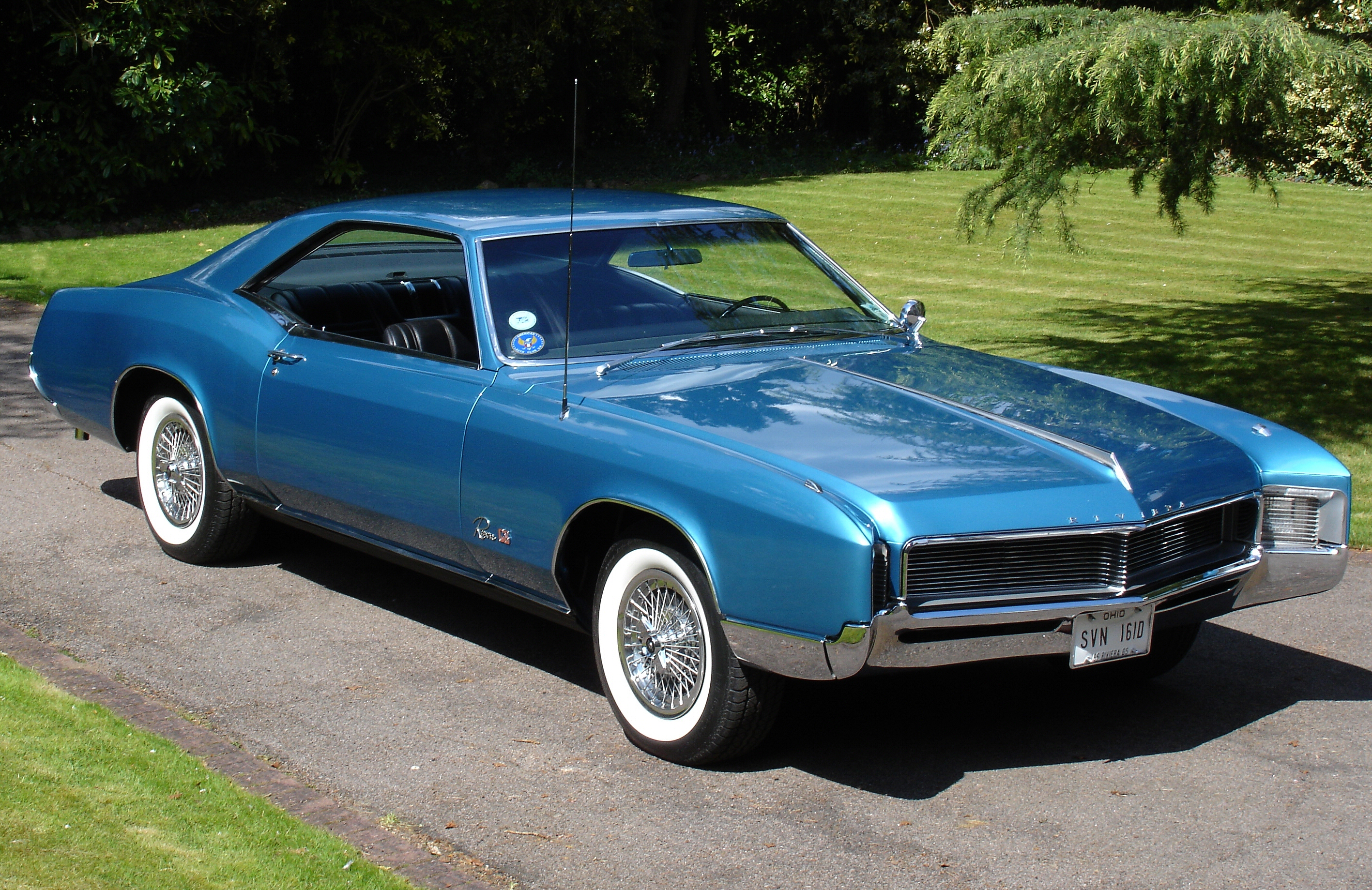
Buick Riviera
"Okay,sofirstcarIboughtwasaBuickRiviera. [3821.7s] Likethatwasandthatwastwelvehundredbucks."
A Buick Riviera is a classic Buick model—basically a comfortable, stylish car. Here it’s being talked about as the person’s first car, bought used for a relatively low amount of money.
The Buick Riviera is a personal-luxury coupe from Buick, known for its big, comfortable ride and classic styling. In this segment, it’s mentioned as the speaker’s first car they bought for about $1,200, which gives context for how older used cars can become entry points into car ownership.
Request an Explanation
Heard something you'd like explained? We'll add it to this episode.
Sign in to request explanations for terms you heard.
Want to learn more?
Browse our glossary for plain-English explanations of automotive terms, jargon, and concepts.
Help improve this episode
See something that's not quite right? Our annotations are AI-generated and can sometimes miss the mark. Click the flag icon on any annotation to suggest a correction.