SkillsUSA’s real-world impact shows up through students, instructors, and industry leaders. Christian Spell talks about SkillsUSA leadership and why it shapes “the next generation of the automotive and diesel industries.” Others describe CTE pathways, from SP2 safety modules to lift-safety training and hands-on chemical/fluids work. The show also highlights career readiness: resume requirements, interview processes, and communication skills that affect promotions. SkillsUSA is framed as closing the skilled-trades gap—backed by hiring preferences and a workforce need of “about 400,000 skilled trades employees.”
Christian Spell, a recent high school graduate and SkillsUSA National Officer, joins Jay to share how a serious injury redirected his path—straight into automotive class and SkillsUSA. He opens up about competing, leading, and developing the professional skills most techs never learn in a shop.
ASE Connects brings shops, dealerships, and schools together in one structured network to strengthen the technician pipeline. By making it easier to connect, collaborate, and support students through job shadows, internships, and classroom engagement, ASE Connects helps schools build stronger programs and helps shops develop a more consistent, local source of future technicians. Learn more:
"Yes, sir. My granddad was the founder and CEO of Warren Oil Company.
[173.7s] We were based out of Dunn, North Carolina, which is about 20 minutes from my house."
Warren Oil Company is the oil business the guest’s granddad started and ran. The episode brings it up to explain the family’s connection to car-related products like engine oil.
Warren Oil Company is mentioned as the employer/business founded by the guest’s granddad, with the guest describing it as a founder-and-CEO story. The episode uses it to connect the family’s oil-industry background to automotive suppliers and lubricants used in cars.
"and actually the very first Mazda RX-7 had Warnold in it.
[188.4s] The very first RX-7 had Warnold in it, and I have one of the promotional posters from Japan"
The Mazda RX-7 is a well-known sports car from Japan. It’s especially famous because it uses a rotary engine, and this story says the earliest RX-7s used a specific oil brand (Warnold).
The Mazda RX-7 is a famous Japanese sports car known for its rotary engine, which spins rather than using the usual piston-and-crank design. In this episode, the host mentions that the very first RX-7 used Warnold oil, which is a neat example of how supplier relationships can show up in early production details.
"We were meeting with Exxon, Chevron, Mobile One, Napa.
[236.7s] We used to make the private label for Napa's oil."
NAPA is an automotive brand that sells parts and also motor oil. The guest says their family helped make NAPA-branded oil under a private-label arrangement.
NAPA is referenced as a major automotive parts and distribution brand that sells products including motor oil. The episode specifically mentions NAPA’s oil being private-labeled by the guest’s family business, illustrating how automotive retail brands can source fluids from upstream manufacturers.
"We were meeting with Exxon, Chevron, Mobile One, Napa.
[236.7s] We used to make the private label for Napa's oil."
Exxon is a large oil company. The guest mentions meeting with companies like Exxon as part of their oil business and how they worked with big industry players.
Exxon is referenced as one of the major oil companies the family met with while selling and producing lubricants. In automotive terms, these kinds of suppliers often provide base oils and branding relationships that can influence what ends up in vehicles and retail products.
"We used
[236.7s] to make the private label for Napa's oil. Wow. How cool is that? I was never really around for
[242.7s] that. AutoZone as well. I'm not sure if we made the private label for AutoZone."
Private label means one company makes a product, but it’s sold under a different brand name. In this story, the family’s oil company made oil that other stores or brands sold as their own.
Private label means a product is manufactured by one company but sold under another company’s brand name. Here, the guest says their oil company produced private-label oil for brands like Napa (and possibly AutoZone), which is a common supply-chain model in automotive fluids.
"that. AutoZone as well. I'm not sure if we made the private label for AutoZone. I know we made
[246.8s] the private label for Family Dollar."
AutoZone is a big store that sells car parts and car supplies. The guest says they sold a lot of oil to AutoZone and might have made some of the store’s own-brand oil too.
AutoZone is mentioned as a large automotive retailer the family sold oil to, and the guest wonders whether they also produced AutoZone’s private-label oil. For listeners, it’s a real-world example of how automotive fluids move through retail supply chains.
"both of you were having security
[276.8s] line issues trying to get through with some of the TSA complications that we've had lately.
[282.1s] It sounds like your dad's still traveling quite a bit."
TSA is the U.S. agency that handles airport security screening. The guest mentions TSA-related issues while trying to get through at the airport.
TSA (Transportation Security Administration) is referenced in the context of airport security lines and complications. While not an automotive technology, it’s part of the episode’s story about travel and timing, not car mechanics.
"he was very big in NASCAR. We had a car in NASCAR that was branded with our family logo, I think."
NASCAR is a popular U.S. racing league where teams race cars built for stock-car competition. It’s a big part of American motorsports culture.
NASCAR is a stock-car racing series in the U.S., known for oval-track racing and teams that build and prepare cars specifically for that format. When the speaker says their family connection was “big in NASCAR,” it frames the person’s motorsports background.
"I'm not sure if the car was Cup Series or I know he was big with NHRA. John Force, I know John Force was one of his good friends and they talk a lot and everything."
NHRA is a major U.S. organization for drag racing. It’s where cars compete in straight-line acceleration races.
NHRA stands for the National Hot Rod Association, which runs drag racing events in the U.S. The speaker’s mention suggests the person’s racing connections weren’t just oval-track NASCAR, but also drag-racing culture.
"I'm not sure if the car was Cup Series or I know he was big with NHRA. John Force, I know John Force was one of his good friends and they talk a lot and everything."
In NASCAR, the “Cup Series” is the main, top-level championship. The speaker is wondering if their car was competing at that highest level.
“Cup Series” refers to NASCAR’s top national touring series (the premier NASCAR championship level). The speaker is unsure whether the car they had was in that top NASCAR tier or another NASCAR category.
"John Force, I know John Force was one of his good friends and they talk a lot and everything. Yep. And the race where his daughter, where John Force's daughter outraced him that day,"
John Force is a well-known drag racer in the NHRA. The host is saying he was friends with the person they’re talking about and that his family was involved in a notable race.
John Force is a famous NHRA drag racer known for long-term success and a high-profile presence in American drag racing. The speaker connects him to their family’s racing circle and to a specific race story involving Force’s daughter.
"...ould become interested in it, but I wrote in that Mustang that day and I was like, yep. And over the years,..."
The Ford Mustang is a sports car made by Ford. It’s known for being fun to drive and has been made for many years in different versions. People talk about it a lot because it’s a well-known car model with a big fan base.
The Ford Mustang is a long-running American sports coupe/convertible known for its performance-focused styling and broad range of engine options. It comes up often in automotive discussions because it’s a mainstream “entry point” into muscle-car history and has had many different generations over the years. In a podcast, it’s likely mentioned as a familiar, widely recognized platform that people connect with through ownership or driving experience.
Term
tuned it up
"And over the years, he got it, he tuned it up and everything, put some cool parts on it. And well, he didn't do it himself."
“Tuned it up” means they made the car run better, usually by adjusting things so it performs the way they want. It’s often part of car modification, not just basic upkeep.
“Tuned it up” refers to adjusting a car’s setup—often engine calibration and/or performance parts—to improve how it runs. In enthusiast contexts, it usually means more than routine maintenance; it’s about dialing in performance.
Term
SP2
"So when we started, we didn't start off in the automotive shop. We started with, are you familiar with SP2? Yeah. Oh, yeah. Yeah. We did a two week SP2 safety course online, all the virtual modules and everything before we got started into the actual getting into engine bay"
SP2 sounds like a safety training course you take before you start working on cars. In this episode, it’s described as online modules that teach you how to work safely before you get into the shop.
SP2 here refers to a safety course track the speaker took before working in an automotive shop. It’s presented as an online, two-week set of virtual modules meant to prepare students for hands-on work safely.
"...tive shop. We started with, are you familiar with SP2? Yeah. Oh, yeah. Yeah. We did a two week SP2 safe..."
The Ferrari SP2 is a rare, high-performance sports car made by Ferrari. Because it’s a special model, it can require specific knowledge and careful procedures when working on it. That’s why a podcast might mention it in a shop or safety-training discussion.
The Ferrari SP2 is a special, limited-production Ferrari model built around the brand’s performance and bespoke design approach. It’s significant enough that shops and owners often discuss it in terms of specialized service and safety procedures, which is why it may come up in a workshop or training context. The mention of an “SP2 safe” process suggests specific handling, procedures, or precautions tied to that model.
"all the virtual modules and everything before we got started into the actual getting into engine bay and working on the cars and everything."
The engine bay is the space under the hood where the engine and car fluids/components are located. It’s where you work when you’re doing repairs.
The engine bay is the compartment under the hood where the engine and many related components live. The speaker contrasts online safety modules with later hands-on work “in the engine bay.”
"there was another section was about chemicals and everything and talk about the different viscosities. And I was like, okay, yep, yep, I'm riding home in this classroom right here. And I finished before everybody else with the viscosity stuff."
Viscosity is a fluid’s resistance to flowing, and in cars it matters because different fluids (like oils and some chemicals) need the right flow behavior for temperature and engine/vehicle design. The speaker treats “viscosity stuff” as a key early lesson in an automotive safety/skills curriculum.
"he was like, well, what was that second module about? It was all handling chemicals and mixtures with antifreeze and all and everything."
Antifreeze is a liquid mixed into a car’s cooling system. It helps keep the engine from freezing in winter and from overheating in hot weather.
Antifreeze is a coolant additive used in a car’s cooling system to prevent the engine coolant from freezing in cold weather and to help protect against overheating. It’s typically mixed with water and circulates through the radiator and engine to manage temperature.
"we didn't just produce just oils, hydraulic fluids, any kind of oil fluid you can think of, you know, we had it."
Hydraulic fluid is the special oil used in parts of a car that use fluid pressure to move things. If the right fluid isn’t used or it gets dirty, those systems can start working poorly.
Hydraulic fluids are specialized liquids used in hydraulic systems to transfer force and power. In automotive contexts, they’re found in systems like power steering and braking (depending on the design), where the fluid’s viscosity and cleanliness affect how well the system works.
Term
oil fluid
"we didn't just produce just oils, hydraulic fluids, any kind of oil fluid you can think of, you know, we had it."
When they say “oil fluid,” they mean the different kinds of fluids a car uses to keep parts moving smoothly. Different fluids do different jobs, so using the wrong one can cause problems.
“Oil fluid” here refers to the broader category of lubricants and related fluids used to reduce friction and wear in mechanical systems. Automotive programs often cover different fluid types because each one (engine oil, gear oil, hydraulic fluid, etc.) is formulated for a specific job and operating temperature range.
Concept
application side of it
"And I'm sure as you're kind of taking this class, you're starting to learn really kind of maybe the application side of it then too, right?"
They’re talking about learning how to use what you studied in class when you’re actually working on cars. It’s the difference between knowing facts and being able to apply them to real problems.
This phrase points to applying classroom knowledge to real-world automotive work—turning theory about fluids and chemicals into practical diagnosis and service. In training programs, the “application” focus is what connects safety modules to hands-on tasks like troubleshooting and fixing issues.
"those transmission jacks are very flimsy and everything. So we had the transmission on"
A transmission jack is a tool mechanics use to hold a car’s transmission while they take it out or put it back in. It helps you move the heavy part without dropping it.
A transmission jack is a specialized shop tool used to support and position a transmission during removal or installation. It’s designed to hold the transmission safely while you maneuver it into place, and the speaker’s point is that their jack setup felt unstable.
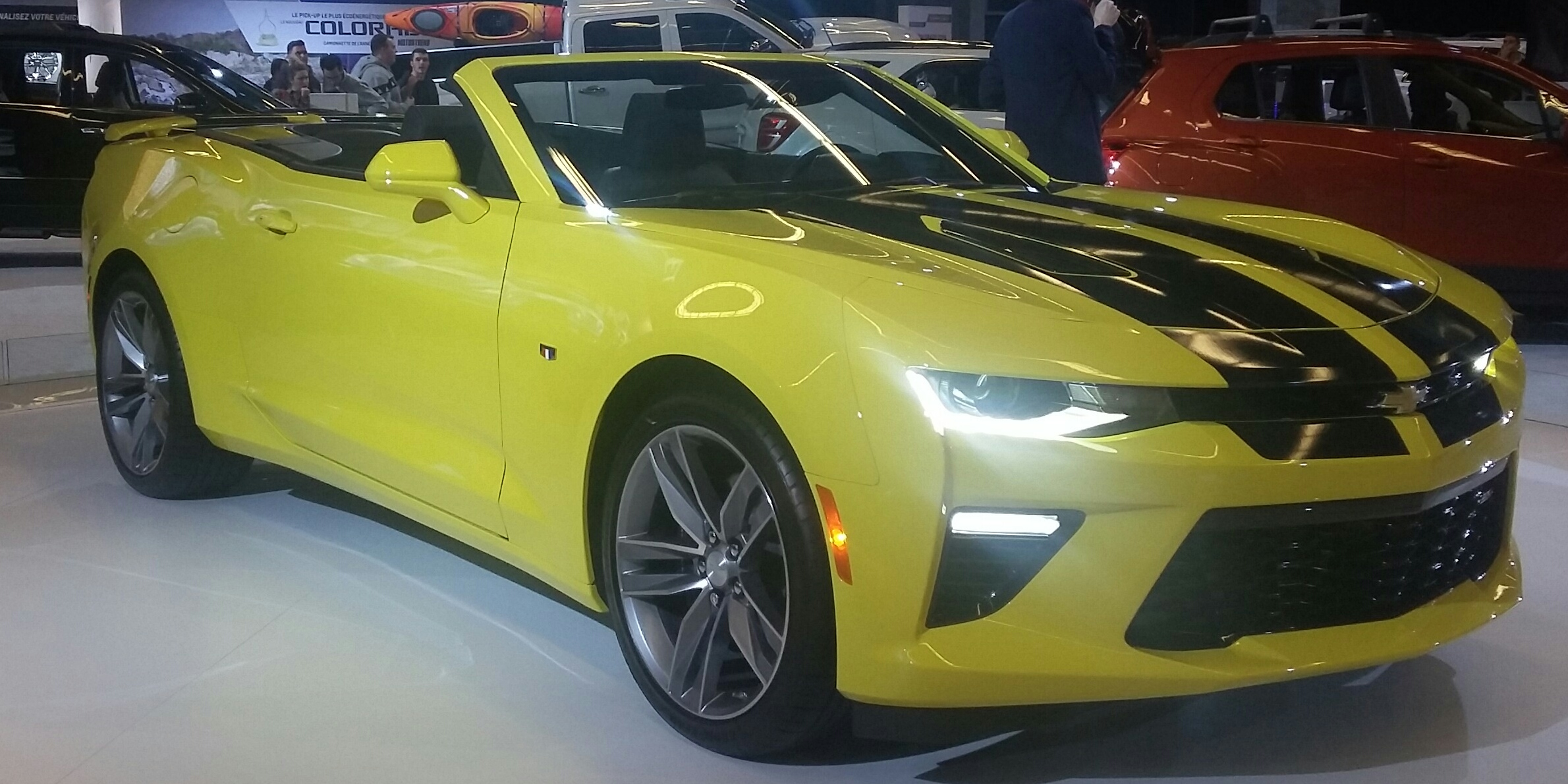
"So it's parked outside in the driveway right now. I have a, I have a 2010 Camaro. It's a SS with the,"
A 2010 Camaro is a classic American muscle car. In this case, the speaker says it’s an SS, meaning it’s the sportier, higher-performance trim. They’ve modified it a lot and even had it tuned on a dyno.
The Chevrolet Camaro is a long-running American muscle car, and this speaker’s 2010 Camaro is specifically an SS. They also mention it has an “2S upgraded package,” which ties into a performance-focused special build. The rest of their description (headers, cat deletes, supercharger-related wheel choice, and dyno tuning) shows they’re treating it like a project car rather than a stock daily.
"I've got a long tube headers with cat deletes that runs to an X pipe and it just runs straight out of the back."
“Cat deletes” means removing the catalytic converters. Those parts help clean up exhaust, and removing them usually makes the car louder and can change how it runs. It may also make the car fail emissions testing depending on where you live.
“Cat deletes” means removing catalytic converters, which are emissions-control devices that reduce pollutants in the exhaust. Removing them typically makes the car louder and can change exhaust flow, often increasing power potential but also affecting emissions compliance. The speaker pairs this with headers and an X-pipe, which is why they describe the car as “super loud.”
"I've got a long tube headers with cat deletes that runs to an X pipe and it just runs straight out of the back."
Long-tube headers are aftermarket exhaust parts that help the engine push exhaust out more efficiently. They can add power, especially when you rev higher. This speaker is using them as part of a bigger exhaust upgrade.
Long-tube headers are exhaust manifolds with longer primary pipes that help improve exhaust flow and can increase power, especially at higher RPM. They’re a common modification on V8 muscle cars when the goal is better breathing. In this build, they’re paired with other exhaust changes (cat deletes and an X-pipe) to reduce restriction.
"I've got a long tube headers with cat deletes that runs to an X pipe and it just runs straight out of the back."
An X-pipe is a specific shape in the exhaust that helps the exhaust pulses work together. It can improve flow and often changes the sound. The speaker is using it as part of their louder, freer-flowing exhaust system.
An X-pipe is an exhaust crossover design that merges exhaust streams in an “X” shape, which can improve scavenging and help the exhaust system sound and flow better. It’s often used on V8s to tune both performance and the characteristic exhaust note. Here it’s part of the speaker’s header + cat-delete setup feeding a straight-through exhaust.
"I have a dyno tuned. I have the dyno sheet sitting over there from when I took it to a place to get it tuned and it's just, I just got it tuned on 93 pump gas."
“Dyno tuned” means the car was tested on a machine that measures power while it’s running. Then the tune is adjusted so it runs correctly with the mods you installed. The goal is usually better performance and smoother operation.
“Dyno tuned” means the car was calibrated on a dynamometer (dyno), which measures power and torque under controlled load. A proper dyno tune adjusts engine parameters so the air-fuel mixture and ignition timing match the modifications. The speaker later mentions dialing in the air-fuel ratio for 93 pump gas, which is exactly the kind of dyno tuning they’re describing.
"I have a dyno sheet sitting over there from when I took it to a place to get it tuned and it's just, I just got it tuned on 93 pump gas."
“93 pump gas” is a higher-octane gasoline. Higher octane helps prevent knocking noises in the engine when you’re tuned for more power. The speaker tuned the car using this exact fuel so it would run right.
“93 pump gas” refers to gasoline with a 93 octane rating, which resists engine knock (premature combustion). Higher-octane fuel is often used on performance tunes, especially when modifications increase cylinder pressures or the tune is optimized for more aggressive ignition timing. The speaker says the dyno tune was done specifically on this fuel, and that affects how the air-fuel mixture is calibrated.
"With the, with the headers and the cat deletes, it changed how much air was getting out of the motor and there wasn't no fuel getting in there. So I just got that fuel mixture, the air fuel ratio dialed in"
The air-fuel ratio is how the engine balances air and gasoline. If you change the exhaust, the engine may need a new balance to run smoothly and make power. The speaker tuned it so the mixture was correct for their setup.
The air-fuel ratio is the balance between how much air and how much fuel the engine burns. When exhaust changes (like headers and cat deletes) alter flow, the engine may need a revised tune so the mixture stays in the right range. The speaker says they “dialed in” the air-fuel ratio, which is a core part of making a modified car run correctly on the dyno.
"But you know, it's not super fast. I'm making about 400 horsepower to the crank or to the wheels."
Horsepower is a way to describe how much power the engine makes. The speaker says their car is around 400 horsepower, which is the headline number for their build. They also mention the number can be measured either at the engine or at the wheels.
Horsepower is a measure of engine output, and the speaker specifies they’re making about 400 horsepower. They also clarify it’s “to the crank or to the wheels,” which matters because dyno results can be reported at different points in the drivetrain. This is a key performance takeaway from the modifications and tune they described.
"The only thing I'm not happy with right now is the miles per gallon. Gas is very expensive right now."
Miles per gallon (MPG) tells you how efficiently a car uses gasoline. Higher MPG means you go farther on the same amount of gas, so it costs less to drive.
Miles per gallon (MPG) is a fuel-economy measure that tells you how far a vehicle can travel on one gallon of gasoline. Lower MPG means you’ll spend more on fuel for the same distance, which is why it matters when gas prices are high.
Term
gas pump
"I'm looking about 450 per usual, about 450 something for gas. And I'm at the gas pump twice a week."
The gas pump is where you fill up your car with gasoline. If you’re using it a lot, it usually means your car isn’t getting great fuel economy.
The gas pump is the fueling station dispenser used to add gasoline to the vehicle’s tank. When someone says they’re at the gas pump twice a week, it’s a practical indicator of how expensive their current fuel economy is.
"But I'm doing everything my power not to sell that car. You got to get that daily driver old car that you can like beat her."
A daily driver is the car you use every day for normal stuff like school, work, and errands. People usually pick one that’s practical and doesn’t cost a fortune to run.
A daily driver is the car someone uses for everyday commuting and errands. Enthusiasts often choose a daily driver that’s reliable and economical, because it’s the car they rely on most often.
"That's the only thing stopping me from ordering that cam kit. If I get that cam, it's gas mileage is going down."
A cam kit typically refers to aftermarket camshafts (and related hardware) used to change engine timing and airflow characteristics. In practice, cam changes can improve power but often reduce fuel economy, especially if the engine spends more time in higher-RPM operation.
Select text to request an explanation
As a national officer, I've not only seen the impact of SkillsUSA and the impact of
career and technical education and the skill trades, not only just in North Carolina,
but I've seen how much of a positive impact this had on so many different students and even teachers
that are working with these students across the nation.
Beyond the Wrench with Jay Ganinen from Wrenchway
Welcome back to Beyond the Wrench. My name is Jay Ganinen and I am your host.
Today I'm joined by Christian Spell, a high school senior and SkillsUSA officer who's already making
a big impact in the world of skilled trades. We're going to talk about his experience with
SkillsUSA leadership, competition, and why organizations like this are helping shape
the next generation of the automotive and diesel industries. Looking forward to this
conversation today, Christian, how are you? I'm doing great. How are you?
Good. I will say in our conversation leading up to this, or we had a couple of conversations
leading up to this. I've been blown away by your energy and just how positive of a person you are.
It feels like just a great person going into kind of the end of high school, right? You're
getting close to graduating. Yes, sir. I had my last day of high school yesterday.
Oh, wow. Congratulations. How are you feeling? It felt a little bit surreal. I spent the last
four years going, waking up, doing not necessarily the same thing, but same general concept every
single day. It's all about the change. For lack of better terms, big wrench thrown into everything
that I'm used to. It'll be a new experience, but I'm very, very excited for what's to come.
Well, cool. Tell us a little bit about where you're from, what high school you're at,
and kind of what part of the country you're in. I live in a small town in North Carolina
known as Austriaville. I'm about 30 minutes outside of Fayetteville and an hour or so outside of Raleigh.
I go to a school called Midway High School. It's a very small area. My graduating class is 171,
so it's not quite as small as yours, but it's smaller compared to some, a lot more areas within
North Carolina and outside of North Carolina. But growing up where I have, I've been led to the
automotive industry. A lot of people that I know are very involved in automotive with whether that's
working on tractors, working on trucks, everything like that. I'm a sports car guy myself, so
automotive has always been one of those things that I've just loved and been very interested in.
It was a part of your kind of family history, right? You've had family involvement in this
world for a long time. Yes, sir. My granddad was the founder and CEO of Warren Oil Company.
We were based out of Dunn, North Carolina, which is about 20 minutes from my house.
We've had different plants all throughout the United States, and we've sold oil in all countries,
and actually the very first Mazda RX-7 had Warnold in it.
The very first RX-7 had Warnold in it, and I have one of the promotional posters from Japan
when it first started. Oh my gosh. That's one of those little facts I like to sprinkle in there.
Did you get that framed, the poster? That seems like a really cool keepsake.
Yes, sir. Oh, how cool is that? In the oil world,
I mean, were you able to go see some of the different places and kind of travel a little
bit to kind of see some of the business? Not really, so we sold the oil company in 2016,
so I wasn't around for a lot of the traveling stuff. When I was younger, that was mainly my
dad that was traveling around. We were meeting with Exxon, Chevron, Mobile One, Napa. We used
to make the private label for Napa's oil. Wow. How cool is that? I was never really around for
that. AutoZone as well. I'm not sure if we made the private label for AutoZone. I know we made
the private label for Family Dollar. They were one of our largest customers, and we sold a lot
to AutoZone. That's insane. We learned a lot about this just from listening to my dad talk.
He gets on his high horse, starts rambling on about all the stuff that he's done, so
very cool to hear about. As we were talking, you were mentioning your father and that you
inadvertently ran into him at the Dallas airport, and both of you were having security
line issues trying to get through with some of the TSA complications that we've had lately.
It sounds like your dad's still traveling quite a bit.
Yes, sir. He's working for a company based out of Ohio right now, known as Pro Fluids LLC. He's
an outside broker for the company, and the company is more so just a distributor of the
oil rather than actually doing the refinery and making the bottles and private labels and everything.
I was in the Dallas airport. I had to lay over from a San Diego trip where I traveled with
SkillsUSA for some training. I was in the airport, and I was walking past the security line. I saw
my dad standing there. He was there meeting with AIOD, which is the Association of Independent
Old Dealers. He had a meeting with him in Dallas, and I seen him in the line. I was like, dad,
and he looked up, and then he finally got through the line, and he said,
where are you going? I'm coming home. I've been to San Diego. Where are you going? He said,
oh, I'm flying to Houston, and then I'm going home. But as we were talking about earlier,
he's very picky about which flights he gets on, and I was flying American home, and he's not the
Houston to RDU just so he could get on a Southwest flight.
Oh, man. I had told you before, I think your dad and I have a lot in common. I've gotten
somewhat picky over the years, probably a little too snobby at times for my wife's liking, but I
definitely feel his pain. And I think when you travel a lot, you have those little things that
can make your experience really good or really bad. And when it's really bad, it's really,
really bad. So it's very, very interesting. So awesome that you've had that kind of background
growing up, and then that kind of parlayed once you got into school and kind of maybe taking some
classes, right? Yep. So with our involvement in the whole industry and everything, and
when I was younger, so my granddad, he was diagnosed with back cancer when he was, I'm not sure his
exact age, but it was around 2016, 2017. And he had never really splurged on himself for anything
like that. But the day that he got diagnosed with cancer, he went to a car dealership and he bought
a brand new Mustang GT500 in the five or six speed manual. Yep. And he would drive me around in that
thing and he would drive a little bit recklessly. But that was very, very exciting for a very young
me. And I'm not sure how happy it would have been that with my car selection, I'm more of a
Chevrolet guy myself. I have an Enfamero SS. Yep. And so the reason I think he would like it was
he was very big in NASCAR. We had a car in NASCAR that was branded with our family logo, I think.
I'd have to double check that. Oh, that's cool. I need you to, I'm a big NASCAR fan. So if you find
a photo of this, I want you to send it to me because I geek out over any kind of racing,
but that having that history, it'd be so cool to see a picture of it.
I'm not sure if the car was Cup Series or I know he was big with NHRA.
John Force, I know John Force was one of his good friends and they talk a lot and everything. Yep.
And the race where his daughter, where John Force's daughter outraced him that day,
my granddad was at that race. No way. Yep. So that was very interesting for us.
That is so cool. What an amazing, I guess, entry into the industry too, just that exposure
to a lot of really, really cool things and then being able to not only take that exposure, but
then as you are starting to actually learn about cars and how they work and maybe how to fix them,
did that kind of, I mean, the mechanical side, did it come somewhat natural to you and just
wanting to kind of work on things? Definitely the urge to want to work on something definitely came
with being across everything because I love my dad to death, but he's not a mechanic by any means.
And every time he has to fix something, he says, I'm not a mechanic. He says, I sell the stuff
for people to put on the car. I don't put it on the car myself. So growing up around that,
I never really thought that I would become interested in it, but I wrote in that Mustang
that day and I was like, yep. And over the years, he got it, he tuned it up and everything,
put some cool parts on it. And well, he didn't do it himself. We had people working for him that
would go and do it for him. And I was like, yep, that, yep, I love watching this and very interested
in this. This is something that I could definitely see myself being a part of. So that was when I
kind of knew that automotive and the automotive industry was where I wanted to go. Oh man. So
then when you do get into school, you mentioned maybe being a little bit of a smaller school.
Do you have an automotive program? Do you have maybe avenues to be able to really kind of dive
in and learn this stuff? So our automotive program, we're the number one CTE program in the county,
meaning that our, my school's automotive program, we produce the most career-ready employees
out of any CTE program in our county. We have a very nice automotive program. And a fun fact about
that was my automotive teacher, his dad worked for my granddad and worked on all of our equipment.
The 18 wheelers used to ship all and everything. And my automotive teacher, his name is Mr. Vernon
Blackman, he would work on some of my granddad's vehicles and everything and knew my granddad kind
of on a personal level. But he didn't, he didn't recognize me when we first met. So I signed up
for the automotive class when we were registering before my freshman year. So I got into school,
I started taking the class and I was telling him a lot of stuff about oil. And he's sitting there,
he said, he just kind of looked at me funny. He was like, how do you know all of this? He's like,
you know, you're, you're a young kid. I don't, I don't understand how you know all of this stuff.
And he was like, oh, my, my granddad was Irvin Warren, you know, and he was like, Irvin Warren,
he's like, well, Warren all in done. I was like, yes sir. And then he went down this rabbit hole,
tell me all these crazy stories of stuff he'd worked on and him helping his dad work on my
granddad's stuff and everything. And I was like, wow, this is a very full circle right here.
Isn't that cool though? Like kind of connect the dots and see, you know, one, what type of impact
your grandfather had in being able to supply jobs to people and then to have that person, your teacher,
turn kind of that passion into educating others, you know, that, that kind of
that echo effect or the, the ability, the ripple effect to, to be able to impact others.
You know, you look at kind of the layers of maybe a foundation that your grandfather set
and how cool that is that the impact has really gone far beyond him, right? You're starting to
see that extension in a lot of places. So, uh, war and all, we were the largest
private old company in America at one point. So knowing that, like that, that was already
crazy enough, but they were also very involved in the local community. You know, my granddad was
on the city board and my mom, she owned a lot. She owned a couple of restaurants and some music
joints up and around everything. So him knowing my granddad was not a shock to me because it feels
like everywhere I get, everybody did. Is your mom and Wendy Warren or is your granddad Irvin Warren?
And so I was very used to people recognizing me based off of my mom and my granddad and
everything. And my dad more so in this area, but my mom, she doesn't even go to done anymore.
And she says, Oh, too many people recognize me. I'm like, mom, I'm like, you're not a celebrity.
I said, there's no way people are recognizing you. So we had a, I had an award ceremony coming up for
my sophomore year, just recognizing academic achievements and everything. And we go to done,
we go to the local belt and we're in there and I'm trying to just give me some nice clothes to wear
for this thing. And we were in that store for two hours because of different people coming up and
talking to my mom reminiscing on the good old days. And yeah, I remember my mom, she had a,
she had a beach music club. It was called Club Faces. And I'm not sure if you know a lot about
the Carolina shag industry and everything is a, let's call it beach music. And it's a very specific
kind of, it was a very popular dance in the 80s, 90s, early 2000s, still popular to this day. It's
very popular in the around Myrtle Beach, South Carolina, that area. And so a lot of people,
you know, would go to my mom's club, we had live music, Percy Sledge played in there,
Leonard Skinnerd. So what was left of the band after the plane crash? They performed at my mom's
nightclub and I have signatures from all the original band members from Leonard Skinnerd after
the plane crash. That is awesome. So we were, so we were in that belt for two and a half hours.
And I'm standing there, I'm leaned over the shop and car, I'm about half asleep. And I was like,
yeah, we're now I'm not bringing her back to done with me ever again. Yeah, I want to go home.
I thought we were in and out just here to get our clothes. But not the case. We got back to the car.
I was like, you know, mom, you might be a celebrity. Maybe my judgment was wrong.
Oh my goodness, is that funny?
If you're an automotive diesel or collision instructor, or an educator helping students
explore these careers, this is for you. Building relationships with local shops takes time
and knowing who's willing to help isn't always clear. ASC Connects in partnership with Wrenchway
brings schools and industry together on one easy online platform at no cost for schools.
At the heart of ASC Connects is School Assist, the online resource that lets you post exactly
what your program needs. From guest speakers, shop tours, tools, advisory committee members,
career fair participants, and even student job opportunities, shops can see your requests and
respond directly to you. You'll also get access to instructor focused resources, webinars,
and templates designed to save time and strengthen industry partnerships. Even if your school doesn't
have a formal auto or diesel program, you can still participate to help connect
interested students with real world opportunities. ASC Connects is free for schools. Get started
at wrenchway.com slash solutions slash schools or use the link in the show notes.
So talk to me more about the class itself when you're in school and you get kicked off in these
classes. You obviously had that interest and you're starting to learn about some of the basics.
And I'm assuming that's around kind of repair, just general, maybe safety around the cars and
making sure that you're doing it right. Did that part click right away when you're starting to
kind of get your hands dirty a little bit? And like, this is actually pretty cool.
So when we started, we didn't start off in the automotive shop. We started with,
are you familiar with SP2? Yeah. Oh, yeah. Yeah. We did a two week SP2 safety course online,
all the virtual modules and everything before we got started into the actual getting into
engine bay and working on the cars and everything. So we did this one lesson the very first week was
about lift safety, you know, proper lifting points on vehicles, making sure everybody's
clear the lift before you let it down. It's just common sense stuff. So we got through that and
I was like, yep, okay, this, yeah, this makes sense. And then we had, there was another section
was about chemicals and everything and talk about the different viscosities. And I was like, okay,
yep, yep, I'm riding home in this classroom right here. And I finished before everybody
else with the viscosity stuff. And I told my teacher, I'd hope, I'd hope so. If you didn't,
if you didn't, I'd be concerned. Nope. And I, you know, I went up to my teacher, I said,
hey, I'm finished with the safety stuff. And then he was like, well, what was that second
module about? It was all handling chemicals and mixtures with antifreeze and all and everything.
He was like, okay, yeah, that makes sense. But we, uh, we weren't all we didn't just produce just
oils, hydraulic fluids, any kind of oil fluid you can think of, you know, we had it.
So I was very familiar with a lot more stuff than most people, you know, I was very lucky to
be around what I was around when I was growing up. And that whole side of everything just came
very naturally to me. I can imagine growing up in that world can't help but be familiar with it.
And I'm sure as you're kind of taking this class, you're starting to learn
really kind of maybe the application side of it then too, right? Where you've probably heard a
lot of stories from your family about the oil side of it. But then as you're diving more and more
into maybe the technical side of the car, maybe that you're kind of piecing stuff together, right?
Because you're, you're okay. I've heard about this stuff before. I know about this stuff.
And then it probably helps you kind of lead into, to more success as you're going through the program
even further. So I mean, coming alongside with that has been drilled in my head since I was a
little kid that all is what makes the world go around. And I've always had that basic understanding
of oh, everything needs old. But as I started in these automotive classes and I started traveling
with SkillsUSA and I'm really starting to see the applications of everything. It really,
I'm not saying that I didn't understand how important oil was and everything, but it's just
seeing how it applied to everything and more specifically the automotive industry with my
classroom and traveling around and working on stuff with everybody. It really made me understand
how important, not necessarily just, you know, understanding how important this is, but understanding
how these things work and how to fix these things when problems arise.
It's funny that you bring that up because I had a similar experience, not in the oil world,
but grew up in a shop. And I kind of maybe took it for granted at some level of that.
I almost, almost assume like everybody's got these tools, everybody's got this, you know,
a hoist to work on a car. And you don't, I don't know, I think when it's what you've been surrounded
by your entire life, you don't really, you don't really put much thought into it. And you maybe
think or make assumptions that everybody else is kind of like you or that they have some of the
resources that you do in terms of tooling or, you know, whatever it might be. But then in reality,
you kind of, and for me over time, it's been a long time since I've been in your situation, right?
It's been, you know, graduated a long time ago. But looking back, you know, and then I moved away
from home for a long time from my hometown. And then I was the one experiencing the, well, I don't,
I don't have this stuff. And it was really nice when I did have this stuff. And now I feel the
pain of it. So it is a little bit of, you almost become numb to it because you're around it so long
that you assume kind of everybody has that same knowledge base or those same experiences. But
then once you get out into the world, you kind of see not everybody has some of this stuff and
being able to have those resources to use is really, really helpful. Yeah. And that was one
of the, that's one of the big parts of SkillsUSA that I appreciated so much because while I'm very
well versed in certain areas, you know, there's a lot of areas that I'm not very familiar with.
So one of my, one of my good friends from SkillsUSA, he's another national officer. He's very big in
the culinary industry. That's his CTE pathway. And I, you know, I've never put much thought into
how important some of these things are. But then, you know, you meet them and then you work with him
and it's just like, wow, like there's, there's so much more that I don't know that I'm very interested
in learning about. And I work with so many well versed people in their own specific areas.
And that's something that I appreciate a lot about SkillsUSA is while we're a little there on
one common term of, you know, the skilled trades are very important. All of our skilled trades are
very different. So coming from North Carolina's SkillsUSA program, masonry is our biggest thing.
We have the largest masonry competition in the nation. Wow. So meeting these people who work in
the masonry industry and are competing in the masonry industry with SkillsUSA. And I listen
to them talk about everything that they're so well versed in and everything that they feel
is so important to them. And what they think is common knowledge. I'm just like, wow, I'm
a little bit more out of touch than I thought. So that was a great eye opener that I needed. And
I feel like everybody kind of needs to see that, you know, you're not, you don't know everything.
You know, you're not going to know everything is, and it's very important to meet these people from
all these different areas and industries and learn how to work with them and, you know,
see what impact you can create together with these skillsets that you have.
Let's talk more about SkillsUSA. I have mentioned to a lot within a lot of people within SkillsUSA
of how important it's been in my life. And I've been really involved with it for probably
almost 20 years now. And I'm not as actively involved as I was a couple years ago. But for
several years, I was the technical chair for the state of Wisconsin's diesel competition. And
always took a lot of pride in that. Always thought it was so exciting. The competition
itself was exciting. It's a lot of work to kind of get it up and running. But when you do kind of
reward from the industry side that you get out of it was always just incredible, right? The amount
of talented young people you get to talk to, the amount of nerves the day of, when you're talking
to the students and trying to go through that competition, it really is a cool competition.
And I think anybody that's not been to a competition, at least to check it out, right? Like
you can walk through and kind of see everything. You're doing yourself a disservice because it
is just an event. It is really, really cool. So SkillsUSA, we are the number one workforce
development organization for students. So 52% of Gen Z is not looking to enter a four-year
university or going to get a degree from college and entering these more not, well, I can't think
of the word, not manufacturing, but these more sales jobs, marketing jobs, things like that.
A lot of people are looking to totally skip over college and university and everything along those
lines. And they're looking to do hands-on work and fill these jobs that we need. So with the
skilled trades gap, we are looking for about 400,000 skilled trades employees for the future.
Because we have a lot of these jobs that aren't being filled because for so long it was
filled into everybody's minds that the way to live is you go to college, you get a four-year
degree, you go and work here nine to five, and that's where you go from there. So that has caused
this large gap in skilled trade workers that we are needing. And with SkillsUSA, we're giving
students the opportunities to learn these skills, showcase these skills, and receive job opportunities,
job offers, and internship opportunities from competing in these areas and working in these
fields. So SkillsUSA is so important to me because with this background that I've had,
I've seen how important it is to not only have these people that can sell the oil and travel
around and go do and all this stuff, but without the people there to apply these things, then we
have nothing. The world stops spinning if people stop working. So there's a lot of older people
that are more involved in these hands-on jobs, but a lot of younger people for the longest time
were not very interested in entering these fields. So with SkillsUSA, we're creating excitement and
building energy around these jobs and showing, hey, there's been this negative stigma around not
going to college and going to a community college or a technical school. And we're here to break
that stigma and show these students say, hey, these jobs are very important, arguably more
important than some of these jobs that you can go to college and get a four-year degree for.
Let's get you in this field. Let's give you the right skills and the right preparation to build
you up in this industry and to show you the ropes and teach you everything. With SkillsUSA,
we're not only here teaching these hands-on skills, we have the SkillsUSA framework, which
was developed by a lot of large industries that are the soft, not soft skills, but the personal
skills that employers are looking for. So like your communication, teamwork, leadership, skills
along those lines, working in a shop, you can get all the hands-on skills that you need. But with
SkillsUSA, we're not only giving you opportunities to learn all these hands-on skills, but we're
teaching you these employability skills that businesses and industries are looking for to
make you a more suitable candidate for the workforce. Even as you're talking, as polished
as you are going through this, I have to imagine SkillsUSA has really helped you kind of polish
up some of this stuff, right? I mentioned to you earlier that I used to, and I haven't lately,
but you have an annual leadership conference, and I don't know if I'm saying that correctly in
terms of what it is, but I was always a part of a round table where we would talk in front of a
group of students and they would ask us questions about industry and just hearing every single one
of them and how polished they were in their approach. And honestly, mature beyond their years,
in most cases, similar to you in having this conversation and feels like you're mature beyond
your years, how much has SkillsUSA helped you in that regard to kind of polish up some of those
professional skills as a whole? Well, along the speaking skills and the networking skills and
everything, I would give 100% of the abilities that I've learned to SkillsUSA. SkillsUSA has
completely changed my life. It has totally polished these skills that I'm looking for
to become employable and to make industries look for me and look for students like me,
and just being able to represent what SkillsUSA can do for a student with what I know and what
SkillsUSA has taught me is so important to me. But that's the great part about SkillsUSA is because
at these competitions and at these events where you're competing and you're doing your hands on
works, so let's go, you know, we're automotive here, let's go with our automotive maintenance light
repair competition, for example. In this competition, before you're even allowed to compete, you have
to build a professional resume that you have to submit before you're allowed to compete.
And there's an interview process while you're competing or after you're competing.
So not only are you there, are you working on the car and you're learning different things about
working on a car and you're showing off your skills to industry leaders about working on cars,
but you're also learning how to present yourself to people in this industry and you're learning
how to present yourself to others and how to connect with people, how to ask the right questions,
and just to build that interest around entering the industry. And SkillsUSA, you're so connected
with so many people that have been in the industry and are industry and business leaders
that has given students the opportunity to show off these skills.
Absolutely. And I helped, I ran an interview station one year at our local Wisconsin
SkillsUSA competition. And I was blown away. I actually, this competition that I'm referring
to, I actually had to help out in a different area because I got a last minute call, I was supposed
to be traveling and then I wasn't traveling. So they asked me to come judge the interview station
and you get the resume up front and then you're interviewing them similar to what I would do
if I were interviewing somebody for one of my businesses. And so you're sitting there and
you're talking to the person. And that was where it really, I don't know why it clicked with me,
but that the professional skill level that so many young people were coming to me with
through that competition. And some of them, you could tell we're nervous, right? They're nervous,
the student is nervous coming to talk to you, but they still fought through it anyway, right?
And I think that's very similar to real life where you're going out to an interview,
oftentimes an interview is a very awkward thing to do for everybody, right? For the interviewer,
for the interviewee, but kind of fighting through those nerves and kind of learning
that personal skill is something you just can't fake, right? You have to go through it. And
that gives these students such an opportunity to kind of break through that barrier of,
okay, this isn't so bad. Like this is, I can talk to these people, they're normal people,
they're regular people that are running these businesses. And I think it, from a student's
perspective, has to help you out a little bit just to have those conversations with really
experienced folks. And that's why I think SkillsUSA goes so hand in hand with career and technical
education. Because with career and technical education, you're learning the skills that you
would need to go and get one of these jobs. But with SkillsUSA, you're not only getting to showcase
these skills that you know, but you're getting the opportunity to learn more skills that are more
about yourself rather than what you can do. If you can present yourself,
anything. And SkillsUSA definitely teaches you how to present yourself, how to communicate with
people in this industry, and how to communicate with people just in a regular conversational
setting, but hold yourself in a professional manner. And that's a problem that a lot of
younger people and some older people have is they know they can tell you everything about an engine,
or they can tell you everything about lay and break. But their conversational skills and their
interview professional setting skills aren't where they need to be. And with SkillsUSA,
we're not only teaching you these skills that you can do with your hands, but we're also teaching
you how to explain and how to present yourself with these skills. Oh, I, I hope we can clip what
you just said there, because I think that that is such an important piece. And over my time in my
entire life has been spent in shops, right? And so when I look at it, and the amount of times that
I've seen a really good technician almost hamstring their career, because they're not good at
communicating, they're really, really good at their job, but they really struggle with communication.
And if they're frustrated with something, they struggle to communicate that properly. Or if
they're, you know, if maybe their personality is hard, like maybe they're not being the best
teammate to the people that are around them. There are so many avenues or so many things
where I've seen over the years that technicians have struggled with technicians specifically
to get along with others. And I shouldn't just pick on technicians, because I've seen this
in a number of different industries, a number of different positions. But
if you're a technician that's listening out there, or a student that happens to listen to Christian talk
here, there's such a huge importance with that over the course of your career. And you could be as
good as anybody else at your job. But if the perception is that you don't know how to communicate,
and it's a struggle to communicate with you, you're not going to go as far as you could. And so
everything that you're talking about there, I think is not only a good thing for students to
listen to, I think that's good for any professional to listen to, because you're absolutely right.
It is such a vital part to a successful career. And really making sure that you have that line.
SkillsUSA has prepared you to do that as you go out into your life. Can't overemphasize how
big of a deal that is, a great, great point, Christian.
And just for example, if you're a technician, and you're looking to move up within your dealership,
or within your local shop, or maybe you work for a franchise shop, if you're looking to
progress through the company, or you're looking to get a promotion,
that you could be as good of a technician, you can have your ASC Master of Tech certifications,
you can have all the certifications in the world. But if you're a bad teammate, and there's a negative
stigma around working with you, you're not the person they're going to go looking for for the
promotion. If I was running my own shop, and I had two technicians, and they were my final two
candidates for a promotion, one of them could tear an engine down in and out with his eyes closed,
and the other one might not have been that skilled with his hands, he's a good leader within the
shop, he's a good teammate, he's easy to work with, he's easy to get along with, I'm going to give
the promotion to the guy that's easy to get along with. And I've seen so many good technicians
coming up, and I see them fail within growing and progressing through their company, because they
don't have these proper communication skills, because they weren't involved with SkillsUSA,
or they weren't involved with anything that allowed them to learn and grow with their
personal communication skills. Are you sure you're not out of high school yet? That sounds
like you've been in the industry for 25 years saying that, that's impressive.
Well, so one of the things with me is I'm a lot closer with a lot more people that are
way above my age range. I find it a lot easier to talk to people that are way older than me and
way advanced in years. So when I was a freshman, I spent most of my time hanging out with seniors
in my class and seniors in my school, and you know, if I was on the weekends and we were out,
we were in one of the shops working on something, you know, everybody there was like 17, 18,
19, I was 14 years old.
Something tells me you probably got along with those. You could get along with about anybody,
I think, but that maturity level is super, super impressive.
This week's episode of Beyond the Wrenches brought to us by Jasper Engines and Transmissions.
Okay, your customer's engine or transmission has failed, but now is not the time for them to
trade their vehicle, not without a working engine or transmission. Besides, would they have kept
their vehicle another three to five years if their engine or transmission had not let them down?
If you answered yes, then Jasper Engines and Transmissions is your choice to give your customer's
vehicle new life and many thousands of miles of enjoyable driving performance. When considering
the high cost of a new or newer used vehicle, there's a pretty good case to be made for replacing
a drivetrain component that has failed or is delivering poor performance. Rather than trading
their car, truck, van or SUV, install a quality remanufactured Jasper product for less than your
customer would have to invest in a new vehicle or a newer used vehicle. Check out their website
at JasperEngines.com to learn more about the money saving value of Jasper.
You've been in skills all four years, right? You started off as a freshman. What was the
hook for you? When you were looking at this and it's going to take you some time, it's going to
take you some over and above type of activities to do this, what was it that really captured your
attention? My involvement story with SkillsUSA is a lot different than what you would assume.
Most people when they hear that I'm involved with SkillsUSA, they'll think, oh, I was taking
automotive classes, I liked it and I just progressed through SkillsUSA from there.
But before I started in SkillsUSA, I was an athlete. I was a football player and then I was
on, I was out there on the lake with some of my friends and my mom was pulling me on a giant hot
dog tube. It was a giant inflatable hot dog tube and we were tubing and then there was a
giant wave coming from one of those wake surf boats that started the giant waves and the hot
dog really jumped out of the air and it folded up in half and I hit this part of my head right here
on the back of my body. I was four millimeters away from dying on impact. I had a skull fracture,
multiple brain bleeds, nasty concussion to go along with everything and I was airlifted from
local ER to a pediatric neurotrauma center in Greenville, North Carolina with East Carolina
University. When I was there, I was talking to them and they told me, I said, yeah, you don't need
to do any of these physical contact activities anymore because you're at such a high risk to get
re-injured and if I get hit in that right spot again, that's it for me. I came back to school
and I was still having really bad headaches from everything and I was very upset because a lot of
the stuff that I was so used to doing, I had to stay away from and I was talking to my automotive
teacher. I was like, yeah, like this. I don't know what I'm going to do with my time anymore.
I dedicated so much time and doing everything that and it was all taken away from me like that.
Everything that I thought that I had going for me was just wiped away immediately and he said,
you're a pretty strong student. I think you're a good technician. You ever heard of SkillsUSA?
I was like, no, sir, I haven't. He brought me into SkillsUSA. My first competition was Automotive
Tool ID because we had a lot of our upperclassmen that were competing in the MLRs and stuff like
that. So I did Automotive Tool ID my first year and I went to a regional competition and I competed
and I fell in love with it from there. I met so many awesome people. Even the judges talking
to the judges of the different competitions and everything was just so great and I was like,
yep, this is where I need to be. So I got more involved in it and then my sophomore year I was
a chapter officer and then we were getting ready to head out to our national leadership and skills
conference and we were doing a totally unrelated to automotive competition. It was called opening
and closing ceremonies. It has nothing to do with automotive. I don't know how our school
got started in it. I'm not really familiar with all that but I was competing in that. I was a
fill-in because one of the team members couldn't go to nationals. So I had to learn everything
about that competition and then we were having a meeting about fundraising to go because it was
about $10,000 for the seven of us to go. So we were in a meeting about that and right before
one of the boys on our team said, hey, I got to pull the transmission out of my truck.
So I said, okay, yeah, I can help you out before the meeting starts. So we have the transmission,
we have the truck on the lift and we're pulling the transmission out and you know,
those transmission jacks are very flimsy and everything. So we had the transmission on
and the transmission fell off of the stand and it caught my hand in between the concrete floor
and I had 14 stitches in my middle finger. They thought I had broken my hand but I didn't.
I had scratches all the way up my arm from right. It slid down my arm and you know,
it was in 94, you know, 1500 pickup truck. It was not a little transmission at all
and that sucked. It was pretty bad but so we did that and then I was like,
I can't go to nationals this year. I don't know what I'm going to do but I fought through it and
I worked through it and I attended NLSC with 14 stitches in my finger and competed in a competition
so we have part of the skills you say emblem. So I competed in a competition where we had
to hold this piece of the emblem up so I'm holding it like this, oh you can't see my hand,
I'm holding it like this and I had a giant wrap around my finger from that so my finger was like
hanging off to the side like that and it was digging into the side of the poster and everything and
so I and then I thought to myself there after we competed I said, well if I can work
through this, you know, I have no mobility in my finger at all right now, if I can work through
that I feel like I can work through about everything. So after that, you know, I was very
interested in leadership positions and everything so I applied to become a state officer which was
just a representative of North Carolina's skills you say program and I gave a speech on stage,
I was absolutely terrified, believe it or not, you know, I'm talking a lot right now. It's good for
absolutely terrified and I had a script wrote down, I was going to follow my script but I get
on stage and I start digging around in my pockets and everything and I'm like, oh my script was
sitting in my hotel room so I get up on learning really fast that way. So I improvised something,
I started talking about all these different, you know, these injuries and these goggles and everything
and I started talking about that and I did a couple on stage questions and I, you know, I won,
I was shocked when they told me how I won, I was like there's no way I'm just pulled that off,
I didn't even know what I was talking about, I was just up there running my mouth and somehow I got it
and I had access to so many different professional development workshops through being a state officer
and as my year as a state officer was coming to a close I was like, I'm not ready to hang it up yet,
I feel like I still have so much more to learn, so much more to do so I applied for the national
officer position and I can't talk too much about that right now because we have upcoming national
officer candidates so I don't want to, to give them too much insight, you know,
I think the program was very beneficial in learning as you go so I don't want to
get too much into that but it was a very lengthy process. I started in January of 2025 and I didn't
finish until the middle of May 2025, very lengthy peculiar process and I went to NLSC again that
year and I campaigned and I, you know, sold myself to everybody pretty much and then I won that
and that was another improv speech, I didn't forget the script that time but I was reading the script
I was like, I don't know if I like what I wrote down because I'm very impulsive, I changed my mind
about everything in the last minute I was like, well, you know, if I can do it again and I must
not have done too bad so I won that but now, you know, as a national officer I've not only seen
the impact of SkillsUSA and the impact of career and technical education and the skill trades not
only just in North Carolina but I've seen how much of a positive impact this had on so many
different students and even teachers that are working with these students across the nation.
You know, one of the most beneficial conversations that I've had, I was talking to an advisor
at one of our training or not one of our trainings at one of our conferences
and this advisor was talking to me and he said, I've learned more from these students
and seeing what they have done through SkillsUSA than I have learned from any of the time that I
spent in the industry. I think they were either in marine technology or aviation, it was one of those
two. Pretty cool though. They said, you know, I've been in the industry 20 plus years. I've
learned so much more from these students than I ever did in the industry and that just seeing
that impact the SkillsUSA can have on everybody not just students was really, you know, I knew
I had made the right choice. Well, I want to go back and pick something out of your story here
just briefly that I want to give you a huge compliment because I think when you had sports
taken away from you, which can be really devastating, right? Especially at that age that you kind of
eat, sleep, breathe sports and all your friends are in it and you're, you know, you're just kind of
when you get that taken away from you, I have to imagine that's a really hard time in your life.
And I think it would have been really easy to just go, Hey, I'm going to go chill out on the
PlayStation for the next, you know, four years and not apply myself. But for you to look for
things to kind of occupy your time that are productive and really something that's going
to help you long term, I give you a lot of credit for that because I think at that stage, that's a
really easy time to just say, I'm just going to chill out now that kind of I got screwed over there.
I don't want to do that anymore. I'm just going to I'm going to have fun. You're having fun. You're
doing it a different way than a lot of people do. And I think that's a big, big compliment to you.
Yeah. Well, that also comes with my background and my family and everything. So being around people
that one of the best quotes that I've ever heard is leaders, they don't wait for the
right moment to come. They make the moment for themselves. And I knew when I had that taken
away with there, there's never going to be a right time to find something different. There's
never going to be a good time to try something different. You know, it's now or never when
it comes to creating something for yourself. So I searched around and I looked through many
opportunities and different things. I was working full time for I was I was training. I don't know
if you're familiar with duck hunting. I'm maybe little, but a lot of people who duck hunt, they
like to run the dogs and they'll get the dogs to go and retrieve the birds and everything. I was
working full time with the company that was training those dogs to chase birds and everything
like that. And that'd be cool. And it sounds fun until you got 40 of them and they're sitting
there barking at you waiting to get fed. It sounds fun until it isn't. But I was doing that and
you know, not only was I working full time and I was coming home from the day and I was tired,
but I was also after I'd get off at work, you know, I'd go and I would work on my skills,
you say stuff and work on my speech for the state officer that I left conveniently in the hotel
room. But you know, I knew that there was so many opportunities out there that I couldn't just
sit around and wait for something to pop up and I had to make this moment for myself. And that's
what I hope people see when they see me doing podcasts like this or public speaking at events,
you know, our event in Atlanta, Georgia, National Leadership and Skills Conference,
there's going to be projected over 20,000 people attending. So I hope that there's students out
there in the audience that maybe feel a little bit lost or maybe something's happened and they're
not really sure where to go or what they need to do. But I hope that they can see this and you
know, hear my story about everything and say, hey, you know, he didn't wait for something to pop up.
He went and he found something he made the moment out of it. And that's a problem with a lot of
rural areas like this is so many people just feel trapped in doing whatever their father done or
whatever the people around them are doing. And that's why a lot of people around me get in the
automotive industry is because it's what their dad did or it's what their granddad did. And you
know, they feel kind of locked in to doing the same thing and just repeating history. But I want
people to realize that there's so many great opportunities out there and to just look and
search and find. And when you get the opportunity, you can't let it go. You know, you got to put
however hard you think you're working, you got to work on it. So much good there in everything
you just said, again, want to pull something else out of what you just said, where a good life habit
that you probably unknowingly created when you talked about going home and working on your skills
USA stuff is that you did it after a long day of work. And I think so many people that are
professionals that have been in this industry or any industry for a long time where they fail to
recognize is kind of going that extra mile, right? It's yes, it's can be really tiring to work your
nine to five job. But that extra work that you put in at night and the things that you're doing to
progress your career are the things that ultimately end up making you stand out from the crowd,
right? And I think just hearing that you were putting in that extra time, you're doing those
extra things at night and things that you signed up to do it wasn't like it was forced upon you,
you signed up and you wanted to do those things. To me, that does such a has such a big impact on
creating a work ethic and and creating, you know, a mindset that you're you're just constantly
trying to get better. And man, that's refreshing to hear that is so cool. And I'm so proud of you
for doing that. That is that is awesome. My some of my mom, she's always been very interested in
marine biology. She never worked anything related to us, just one of her little hobbies or whatever.
And she told me one time that a shark that, you know, they stop breathing when they're not moving.
And she said that she thinks I'm more comparable to a shark than anything, because if I'm not moving
and I'm not doing anything that apparently I've created that mindset that I'll die if I'm not
doing something or I'm not moving all the time. That's a good way to be. That's a I feel like
that's a good mindset to have, especially so young, because not necessarily for some people,
but for, you know, where I come from, everybody in my family has done such huge things and they've
done so many different things. And I'm not the kind to want to live in somebody else's shadow,
you know, I want to be in my own spotlight. So, you know, coming home from school
and then going straight to work after school and then work until about 89 o'clock
with everybody. And then coming home from then and then getting home and, you know, just having
that that feeling of man, I'm so tired, you know, I just want to lay down and go to sleep.
But, you know, almost working through that was because of the dedication I had to do something
for myself. Oh, that'll do you really, really well in your life. Just that point alone where
you're tired and rather than laying down, you just kind of push through it. That is a huge,
huge thing. So a lot of credit there. Now, as you look forward with your skills, USA involvement,
this has obviously had a big impact on you. What do you see for your future involvement with it?
Obviously, you're a senior in high school. How do you kind of parlay this into more?
I would love to see this organization grow beyond what we're already at. We're not a small
organization by any means. You know, we represent over 444,000 people across the nations and
three territories as well. You know, we're such a big organization, but when you compare that
444,000 to the 8 billion people that are in the world, you know, those other people, you know,
there, I want them to all have the same opportunity to go and connect with people and meet people and
learn these skills that all of our current members are already learning and already picking up on.
Just seeing this organization grow and just having more people become involved with it and
learning these skills and growing in their industry and hiring people through Skills USA
because of the impact that it's had on them, that's something big for me. Because one of the
greatest things that I hear from a lot of, you know, industry leaders that we have from there is
we, you know, if we're hiring, if we're looking at candidates to hire and we see Skills USA on
that resume, we're going with Skills USA every single time. That is one of the most refreshing
things to hear because I know deep down that, you know, the work that this organization puts in
to progress and help all of these members grow across the nation, you know, is very refreshing
to hear that people in the industry are, you know, seeing this growth that Skills USA is providing.
And with my goal after I graduate, and I'm no longer a national officer anymore,
is I want to still be involved with this organization and still help it grow and kind
of be one of those success stories that comes for it. So, hey, you know, I had, you know,
what I thought was my entire life stripped for me at such a young age and then I found Skills USA
and it's helped me get here. You know, I want people to hear that story and just
feel inspired and moved by that and then take that same action and then them go way further than I've
gone. I don't want people to grow to my level. I want people to grow past my level. That's the
goal there. That is awesome. And I do think the more Skills USA kind of keeps compounding and
keeps adding more folks like you that are, you know, similar minds that want to get better
and want to work on some skills as they go through their high school journeys, you know,
I've seen over time so many success stories that have come as a result of it. And even some of
those kids that, as you mentioned earlier, might not have that direct path in life to know what
is next for them or what they should be doing. Just getting that exposure to the professional
world and seeing what you like, maybe what you don't like, right? Just because you look at an
industry and think it's cool, doesn't necessarily mean you're going to like working in it. So like
just getting that first hand exposure to the people, to the industry as a whole. I don't think
there's a better way than that, right? Like especially for a young person to make the right
choice for them and what their future is going to be. And that's why Skills USA is such a good
thing because, you know, I'm very automotive centered, love automotive, love it with everything in me.
But, you know, a lot of people don't think like that. And a lot of people don't feel that same
way. But with Skills USA, you know, we're representative of every career cluster in the
world. If there is a career, Skills USA has something for you. And just, you know, based off
of that, it gives students thousands on of different opportunities to try
different industries and grow in different areas. And maybe you compete in something in four years
and you know that you're not going to enter that industry. You know, Skills USA is also providing
you with other skills that can apply in every single other area, you know, your leadership,
your teamwork, your communication skills. Those skills are not only important just for that
specific industry that you're competing in, but they're specific for every industry. Any industry,
Skills USA has something for you. Let's talk about your next steps. You're off to college soon.
Yeah. So I'm a very, I'm a very strong advocate for college is not the only way to go. College is
not necessarily the best way to go. And a lot of people feel that way. And I completely understand
that I have so much more respect for people that are going into just going straight to work or going
to community college or going to a career tech. But with what I want to do and the, you know,
the things that I feel are in my best interest with public speaking and meeting with people and
traveling and everything like that, you know, I feel, I feel four year university is the way to
go for me. So I'll be attending NC State in the fall for marketing. And I want to get into the
automotive industry yet again, more not necessarily on the application side, but selling these
products and selling these services that are so important for people to apply into their daily
lives. Well, I think similar to me, right? I did go to a tech school, but then found out afterwards
that the technical side wasn't where I was supposed to be at. I just wasn't strong at it.
And probably similar to your dad in that regard too, where it was, I was good at talking to people,
but not necessarily the actual application of it, of working on a vehicle. The beauty in this
industry is that there are avenues for everybody, right? There are different ways that you can go,
different routes you can go. And I'm really happy to hear that you're going that route. And that's
the best route for you. Wolfpack in general, it's a great school. And I'm sure you're excited
to get a role in there. So that's another one of the things that's really funny about everybody
thinking that a four year university is a universal fit is that most of the people that attend a
four year university, they don't apply their degrees into their daily lives at all. My dad,
he has an associate's degree from NC State and turf management. He wanted to go and do grass
for golf courses. And my mom heard she got a degree from East Carolina University in education.
And she has run restaurants and music joints and stuff like that. They don't very often use
their four year degrees in their daily applications. So I feel like four year university being a
universal fit for everybody is definitely not true at all. And attending somewhere like a
career tech or a community college, that that has a better chance of allowing students to succeed
because they're studying something they're actually interested in. So I have a buddy of mine,
his parents pushed and for him to go to a four year university.
But that's just not what he's interested in. And he's at our local community college,
he's getting his associate's degree in welding. And he's going to go right now,
he's doing an internship with a sign company, and he's welding large signs for businesses
and things like that. And he's doing that and he's learning about the industry and he's
progressing through the industry. He was also a SkillsUSA competitor. There was 20 people applying
for the job that he has right now or the internship that he has right now. And he was a SkillsUSA
alumni because he graduated in December. So everything that he learned from SkillsUSA,
he told me that he applied that into his interview and he was the one that walked away with the job.
And now while he's still in school, he might not have been the best welder
that was one of the candidates. You know, he seemed the most professional, he seemed like the
easiest to get along with, and he seemed like the best to work with. And that is why I think
that he got the job over everybody else. Couldn't agree more. I think all of those skills are
incredibly valuable, obviously, but then just having the polish and having the professionalism
and everything that goes along with it. I do hope if you're a student that's out there listening
that you take this seriously and that you look at SkillsUSA as a way to kind of give you an
advanced path into the professional world, because I don't know that there's a better way to do that
in terms of really kind of preparing yourself for that next step in your life. And you've done
a phenomenal job with that, Christian. I do have a few fun questions here as we end the episode
and more of a kind of get to know you sense. But the, okay, so first question, let's do this.
What's your favorite food or type of food? So, you know, I'm from the south. Do you know what
chicken pastry is? I don't know if I know what chicken pastry is. It's a very southern home style
food. You know, a lot of chicken pastry is something that my mom's always cooked when I was growing
up. But I think the most general food that I like, I really enjoy eating like Japanese food.
We have, I'm not sure what it's called everywhere. But you know, our local Japanese restaurant,
there's this thing that's called a jumping roll. You know, it's got this fried on,
it's a sushi roll. It's fried on the outside. It's got crabs, spicy mayo, and all that good
stuff inside of it. Japanese food. I'm hungry right now. That sounds good. Yeah, I'm gonna say,
I'm probably gonna go get me something to eat after this. But you know, just from where I'm from
and everything, chicken pastry is my go-to. I like, good to know. Good to know. Are you a night owl
or a morning person? Night owl. You know, if you couldn't tell from the,
you know, getting home at about nine o'clock and then staying up later working on everything,
you know, I wake up in the morning, I feel like a zombie. Because that's probably because I stayed
up all night doing everything that I was supposed to do during the day that I didn't get time to get
to. But you know, I just find it so much easier to work on everything at night.
Yeah, I have a little, a little bit of that myself. This is probably easier for you than
most guests that we have. But what was your first car?
So it's parked outside in the driveway right now. I have a, I have a 2010 Camaro. It's a SS with the,
you know, the 2S upgraded package on it. It was a paced car for the ND500. There was no way.
299 of them made ever. On the headrest of the car, the Indianapolis 500 logo stitched into it.
And underneath the, you know, the Camaro logo on the side, I have the Indianapolis 500 emblem on
there. But I've got, I've got it pretty tuned up and everything. I've got a long tube headers with
cat deletes that runs to an X pipe and it just runs straight out of the back. So it's super loud.
I put a sound system in it. I've got a pretty nice setup of wheels on there that I bought over the
summer. Cause I was working for a hog farm, totally unrelated automotive, but I was working
for a hog farm. That was awful. That was more power to everybody that can do that is not for
me at all. But I, you know, saved up all summer. I bought myself a nice set of the ZL1 replica
wheels, the Camaro's with the supercharger on it. I bought a set of the ZL1 replica wheels and
I've got a cam kit and a total full engine top-end rebuild kit at the top of my list for
things I want to buy for it. I have a dyno tuned. I have the dyno sheet sitting over there from
when I took it to a place to get it tuned and it's just, I just got it tuned on 93 pump gas.
With the, with the headers and the cat deletes, it changed how much air was getting out of the
motor and there wasn't no fuel getting in there. So I just got that fuel mixture, the air fuel
ratio dialed in on that and got it tuned on that 93 pump gas. But it's pretty quick and
you know, it's not super fast. I'm making about 400 horsepower to the crank or to the wheels.
But you know, not bad at all for how much I have put in.
No, not bad at all. And it's cool. I would, I think one regret that a lot of people have
over time is they sell their stuff off. If you get a chance to be able to keep it. I think you'll,
you'll, you'll really be happy about that decision in 20 or 30 years if, if you're able to hang onto
it. The only thing I'm not happy with right now is the miles per gallon. Gas is very expensive
right now. And I'm running on 93 is four to $5 depending on what gas station I go to. And the
town that I lived so close to was right off the interstate 95. So gas is expensive out there.
I'm looking about 450 per usual, about 450 something for gas. And I'm at the gas pump twice a week.
Uh, not, not fun right now, but you know, if I could, if I could find something for a good deal
that gets maybe some better gas mileage, I'll definitely hold on to that. But I'm doing everything
my power not to sell that car. You got to get that daily driver old car that you can like
beat her. Yeah. Yeah. That gets the good gas mileage. That's the only thing stopping me from
ordering that cam kit. If I get that cam, it's gas mileage is going down. I'm already getting
like 10 to 12 right now. That cam kit would probably put me a seven to eight depending on how
they do it. I can't afford seven to eight miles per gallon right now. Being in high school still
and traveling around and everything that limits how much time I get to put in at work. So gas
is a struggle, but you know, we're working on it. I get by paying for it. So I can tell the
passion in your voice. Something tells me there's maybe going to be, even though you're going to
school for marketing, a little technical sprinkled into your life as you move forward. And I hope
it's in the automotive industry. I really do because you're such a bright spot in this can be a
bright spot in this industry. And just what a joy to talk to. I've really enjoyed our hour that we
have got together here and wish you nothing but the best of luck in graduation and in college.
And don't be a stranger. We'll have to have you back on after a few years and kind of see how
life's going for you. Absolutely. Thank you so much for the opportunity to be here. I really
appreciate it. That wraps up another episode of Beyond the Wrench. If you like this episode,
please show your support by rating and following the podcast. You can also watch the video
interviews on Wrenchway's YouTube channel. Speaking of Wrenchway, Beyond the Wrench is
managed and produced by the Wrenchway team. Wrenchway is dedicated to promoting and improving
careers in the automotive, diesel and collision industries. In partnership with ASC, we run
the ASC Connects community which empowers shops and dealerships with reliable data,
school connections and industry insights while helping grow the future technician workforce.
You can learn more by visiting wrenchway.com. Thank you so much for listening. We'll see you next week.
Request an explanation for:
4 cars
4 cars featured
Request an Explanation
Heard something you'd like explained? We'll add it to this episode.
Sign in to request explanations for terms you heard.
Want to learn more?
Browse our glossary for plain-English explanations of automotive terms, jargon, and concepts.
See something that's not quite right? Our annotations are AI-generated and can sometimes miss the mark.
Click the flag icon on any annotation to suggest a correction.