Cabin Filter Facts, Rear Camera Repair, Maintenance After Mouse Damage
About this episode
Nick, an ASE-certified tech at Lloyd’s Automotive, fields listener questions on common springtime issues. He explains what cabin air filters do, why pollen and dirt roads shorten replacement intervals, and how to choose OE-quality filters so they seal properly. DIY tips get cautioned: forcing clips can cause dash rattles, and “washable” filters only work if you’ll actually maintain them. The show also covers rear camera failures (often wiring or the camera/control unit), removing mouse odors and nests, and preventing critter damage. Other topics include intermittent ABS feel, diagnosing oil spots, transmission torque-converter shutter symptoms, and whether to change oil viscosity while staying within manufacturer specs.
OEM
"But it seems to be the better fit when you when I least when I go to OEM [244.5s] Yeah, there there are a lot of parts houses around town"
OEM parts are the same kind of parts your car was originally built with. Using that quality helps the part fit correctly so it works the way it’s supposed to.
OEM means Original Equipment Manufacturer—parts made to the same specifications as what the car came with from the factory. In the context of cabin filters, OEM-quality parts are more likely to match fitment and sealing so air doesn’t bypass the filter.
value line or economy line
"Also, there's a value line or economy line [251.5s] Sometimes those value economy line parts and filters don't quite fit the same"
Value/economy parts are cheaper replacements. Sometimes they don’t fit as perfectly, which can reduce how well they filter air.
“Value line” or “economy line” parts are typically lower-cost aftermarket options. They may be manufactured to similar specs, but fitment and sealing can be less consistent—especially for cabin filters where exact fit matters.
cabin filter
"And so kind of defeats the purpose [269.0s] So I would say, you know, if you're replacing the cabin filter"
A cabin filter is a small filter that cleans the air inside your car before it blows out of the vents. If the new one doesn’t sit right, air can sneak around it and you don’t get the full benefit.
A cabin filter (often called a pollen filter) cleans the air coming into the vehicle’s HVAC system so passengers breathe cleaner air. If the replacement doesn’t fit correctly, unfiltered air can bypass the filter and the cabin air quality benefit is reduced.
unfiltered air
"if it doesn't fit exactly right that might allow for some of that unfiltered air to make its way by [266.6s] And so kind of defeats the purpose"
Unfiltered air means air is getting around the filter instead of through it. That can let dust and pollen into the cabin.
Unfiltered air refers to airflow that bypasses the cabin filter due to poor fit or gaps. When that happens, the HVAC system can pull in dust, pollen, and other contaminants even though a new filter is installed.
do it yourself
"You know, could the the do it yourself or do it or in some cases is it pretty difficult? [318.4s] All over the board"
DIY means doing the work yourself instead of taking it to a mechanic. Some cars make cabin filter changes easy, while others are more annoying to reach.
DIY refers to installing or servicing the vehicle yourself rather than paying a shop. The speaker notes that cabin filter replacement can be straightforward on some cars but varies widely depending on access and fasteners.
right tools
"Finding them can be the trick and then having the right tools, you know [333.3s] But the cabin filter a lot of times there's clips and"
Having the right tools matters for interior trim and fasteners because cabin filter housings often use clips and grommets. Using improper tools can break clips or damage surrounding panels, leading to poor reassembly or rattles.
clips and grommets
"But the cabin filter a lot of times there's clips and [336.4s] Grommets that need to be removed and if you don't have the right tool to pop that free"
Clips and grommets are the little fasteners that hold the cabin filter cover in place. They usually need to be popped out carefully so you don’t break them.
Clips and grommets are common fasteners used to secure cabin filter covers and related trim. The speaker emphasizes that they often must be removed carefully, and the correct removal method/tool is important to avoid damage.
aftermarket product
"You know, that's another Aftermarket product out there that they there's researchers and engineers that stand behind those products and believe that they're better than the original equipment"
Aftermarket just means it’s not the original part that came with the car. It’s a different brand that makes a replacement or upgrade part.
An aftermarket product is made by a company other than the vehicle’s original manufacturer. In this context, it refers to non-OE cabin filters that may claim better performance or different maintenance requirements.
original equipment
"...believe that they're better than the original equipment"
Original equipment means the factory-made part for your car. The speaker is comparing aftermarket filters to the standard ones your car came with.
Original equipment (often abbreviated OE) refers to parts made to the vehicle manufacturer’s specifications, typically installed at the factory. The discussion contrasts washable aftermarket filters with OE cabin filters.
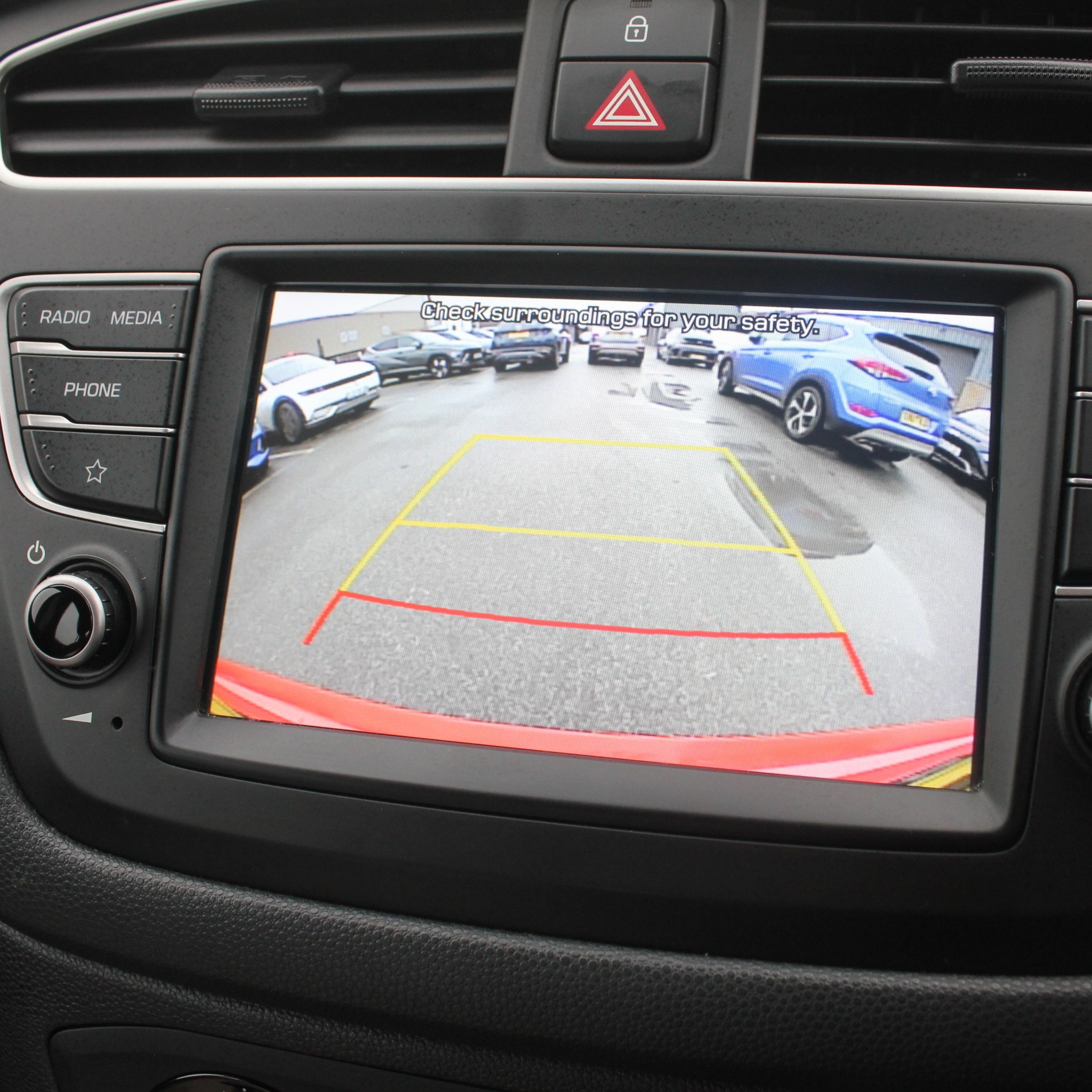
rear camera
"Texture wants to know how can I get my rear camera to work again? You guys do that at Lloyd's you have to repair any of these… backup camera stuff"
A rear camera is the little camera that shows you what’s behind your car on the screen. If it goes out, it can be the camera, the wires, or the box that connects it to the screen.
A rear camera (backup camera) is part of a driver-assist system that displays what’s behind the vehicle on the infotainment screen. When it stops working, the cause is often either the camera itself, wiring, or the control module that feeds the screen.
control unit
"Sometimes there's a wiring issue Or it's the the control unit where the Screen is so there's not a whole lot of repair."
The control unit (module) for a rear-camera system processes the camera’s signal and routes it to the vehicle’s screen. If the module fails, repair may be limited, and replacement of the module is often required.
continuity
"But if we have good continuity and good wiring We can prove that the the camera whether or not having any output at that place"
Continuity testing is a way to confirm the wires are “connected” end-to-end. If the wiring checks out, the problem is more likely the camera or the control box.
Continuity testing checks whether an electrical path is complete from one point to another in the wiring harness. If continuity is good, it helps rule out broken or shorted wires and points the diagnosis toward the camera or module.
fuel pressure bleeding down
"[644.6s] It's a fuel pump bleeding down and when you cycle the key, it'll run for a few moments to prime itself"
This means the fuel pressure drops after you shut the car off. When that happens, the engine may not start right away until the fuel system builds pressure again.
Fuel pressure bleeding down means the fuel system loses pressure after the engine is off. This can cause hard/no-starts until the pump runs again to restore pressure during the next key cycle.
fault codes
"That'd be something we would check obviously we'd see if there's any kind of fault codes"
Fault codes are error messages your car’s computer saves when it notices something wrong. A scan tool can read them to help figure out what system is causing the issue.
Fault codes are diagnostic trouble codes (DTCs) stored by a vehicle’s onboard computer when it detects a problem. The host says they’d check for fault codes because the symptoms could relate to the fuel system or ignition timing.
fuel system
"Something ignition wise timing wise, but my first thoughts is something related to the fuel system"
The fuel system is everything that gets gas from the tank to the engine. If starting behavior changes after key cycles, it can point to a fuel delivery problem.
The fuel system includes components that store, pump, filter, and deliver fuel to the engine. The host suggests the issue may be related to the fuel system because of how fuel pressure changes across key cycles.
shop vac
"Get the cabin filter out [691.5s] If there's any with the cabin filter removed anything you can clean with a shop vac or handheld vac do that"
A shop vac is a stronger vacuum than a regular one. It can help suck out loose debris you can reach after removing the cabin filter.
A shop vac is a heavy-duty vacuum used for cleaning debris. For HVAC contamination, it can help remove loose particles from accessible areas like around the cabin filter housing before deeper disassembly is needed.
intake
"There's also some products that you can spray on the intake and the intake is typically at the base of the windshield on that cowling"
The intake is the opening where outside air gets pulled into your car’s heating and air system. If that area is contaminated, treating it can help remove odors.
The HVAC intake is where outside air enters the heating/AC system and is then routed through the filter and ductwork. The host mentions spraying products on the intake area, which is typically near the base of the windshield cowling.
recirculating
"And you can follow the instructions typically put on recirculating or open fresh air [721.6s] And it draws that air through and kind of runs it through the duct work to kind of clean things out"
Recirculating means the car reuses the air already inside the cabin. That can help a smell-fighting product work through the HVAC system more effectively.
Recirculating mode routes cabin air back through the HVAC system instead of pulling in outside air. The transcript suggests using recirculating (or open fresh air) depending on the product instructions to ensure the odor treatment is drawn through the ductwork.
firewall
"...off to the side along the firewall away from the Uh the engine itself, but keep in mind that a lot of times these Critters are making nests or looking for the warmth."
The firewall is a wall between the engine area and the inside of the car. It’s a common “safe zone” when you’re trying to keep things away from the engine.
The firewall is the barrier between the engine bay and the cabin area. It’s often mentioned as a safer location for certain deterrents because it’s away from moving parts and direct airflow into the engine systems.
garage attractants (food sources)
"...it really starts with trying to keep anything out of your garage or you park your vehicle That draws those critters in because all you do is attracting them once they have a food source"
Rodents are drawn to garages when there are food sources and nesting opportunities. The speaker’s point is that removing attractants (like pet food or spilled feed) reduces the likelihood of mice entering and then moving into the vehicle.
wheel sensors
"The the re-lector ring which is rotating with the wheel the sensors reading that and if there's any debris or dirt Caught up in there"
Wheel sensors tell the car how fast each wheel is spinning. If one sensor is reading wrong, the car may think there’s a braking/traction problem and respond as if ABS should engage.
Wheel-speed sensors measure how fast each wheel is rotating and send that data to the ABS module. If one sensor reads incorrectly (for example due to debris), the ABS can interpret it as a traction or slip event and activate briefly.
test drive
"and try to have them take it for a test drive and duplicate that to see if they can Feel that they could also, you know, take a scan tool along for the drive"
A test drive is used to reproduce intermittent drivability or braking complaints under real-world conditions. For ABS concerns, the technician may drive at the same speed/road type and observe whether the ABS activation or pedal feel occurs.
antifreeze
"Oh, it's oil. It's antifreeze, you know, it's transmission fluid. It's you know, whatever But don't do that."
Antifreeze is the fluid that keeps the engine from overheating. If it’s leaking, the engine can run hot and get damaged, so it should be checked.
Antifreeze (coolant) leaks can come from hoses, a radiator, the water pump, or the cooling system connections. Coolant loss can cause overheating, so it’s important to confirm the fluid type before assuming it’s “just a small leak.”
small droplet will spread
"But you gotta be careful and also keep in mind a small droplet will spread and look like a huge mess"
One tiny leak can make a big-looking puddle. The spot size can be misleading, so the car still needs to be checked even if it doesn’t look “catastrophic.”
A small leak can look much bigger because fluids spread out on concrete. The size of the spot doesn’t always correlate with how much fluid is actually leaking or how urgent it is.
transmission torque converter
"Another text says this and they give your transmission torque converter is going out. What are the symptoms?"
In an automatic transmission, the torque converter uses fluid to transfer power from the engine to the transmission. When it starts failing, the car can feel like it’s shuddering or jerking, especially when you’re driving faster.
A torque converter is a fluid coupling between the engine and an automatic transmission. It can “lock up” at certain speeds to improve efficiency, and when it’s failing you may feel shuddering or vibration.
cycling in and out of lock up
"...you're trying to get out of that lock up... If you're if it's cycling in and out of that lock up or disengaging and you feel a little bit of a shutter..."
“Cycling” means the lock-up clutch repeatedly engages and disengages instead of staying smoothly locked. That behavior can create intermittent shudder or shake, which is a common diagnostic clue for torque converter/lock-up control issues.
viscosity
"What would you think about changing viscosity there? I'm gonna say yep. Uh, no, I don't uh, my my answer is and we get this question from time to time"
Viscosity is basically how thick the oil is. Different thicknesses can change how well the engine protects itself and how efficiently it runs.
Viscosity is how thick (or thin) an oil is, which affects lubrication under different temperatures and engine loads. Changing viscosity from what the manufacturer specifies can alter performance, fuel economy, and emissions-system behavior.
fuel economy
"Uh, the five thirty is a little bit heavier. Is it going to be a little bit quieter? Maybe uh, but could affect fuel economy some emission systems"
Fuel economy is how many miles you get per gallon. Oil that’s thicker than recommended can make the engine work a bit harder, which can lower mileage.
Fuel economy is how efficiently the vehicle uses fuel, often influenced by engine friction and oil viscosity. The discussion suggests that using a heavier oil grade can reduce fuel economy.
owner's manual
"So do your research follow the owner's manual if it's under warranty absolutely do what the manufacturer tells you do not want to risk Affecting that warranty coverage if you have a problem."
Your car’s owner’s manual tells you what maintenance to do and when. It’s the safest way to make sure you’re doing things the way the manufacturer expects.
The owner’s manual is the manufacturer’s guide for maintenance intervals, approved fluids, and correct procedures. Following it helps keep systems operating as designed and reduces the risk of voiding warranty coverage.
heavier oil
"Yeah, in that situation, you know, you try a little bit heavier oil You know, because a lot of wear and tear a lot of valve train stuff is had seen but younger years and the younger miles"
Heavier oil is thicker oil. Some high-mileage engines benefit from thicker oil, but you shouldn’t jump too far without checking what your car allows.
“Heavier oil” usually means a higher-viscosity engine oil (for example, moving to a thicker grade) to help maintain lubrication when an engine has high mileage or wear. The goal is to reduce oil-related wear, but going too thick can cause other issues.
mice
"Talking about mice and critters in vehicles that Texter says how does the mouse get into a car climbs the tires? Menards and other stores Have a tire spray to repel them from getting into"
Mice sometimes get into cars and chew things up. That can cause electrical problems and may require repairs.
Mice can enter vehicles and cause damage, often by chewing on wiring insulation and nesting in engine bays or interior cavities. This can lead to electrical faults and costly repairs.
pressure washer
"I said garden hose not pressure washer only use a garden hose... You're trying to carefully rinse something out. You're not trying to Rearrange what's gone under the hood. So no pressure washer a garden hose"
A pressure washer uses high-pressure water that can force moisture and debris into places they don’t belong. Under-hood electronics and seals may not be designed for that kind of direct blasting. Using a gentler garden hose reduces the risk of water intrusion and corrosion.
electronics
"Try to avoid the electronics as much as you can obviously there's somewhat water resistant waterproof because it's under the hood"
Under-hood electronics include sensors, wiring connectors, and control modules that can be damaged by direct water intrusion. Even if components are water-resistant, they’re typically not designed to be hosed down aggressively. Avoiding the electronics reduces the risk of intermittent faults or corrosion.
Request an Explanation
Heard something you'd like explained? We'll add it to this episode.
Sign in to request explanations for terms you heard.
Want to learn more?
Browse our glossary for plain-English explanations of automotive terms, jargon, and concepts.
Help improve this episode
See something that's not quite right? Our annotations are AI-generated and can sometimes miss the mark. Click the flag icon on any annotation to suggest a correction.