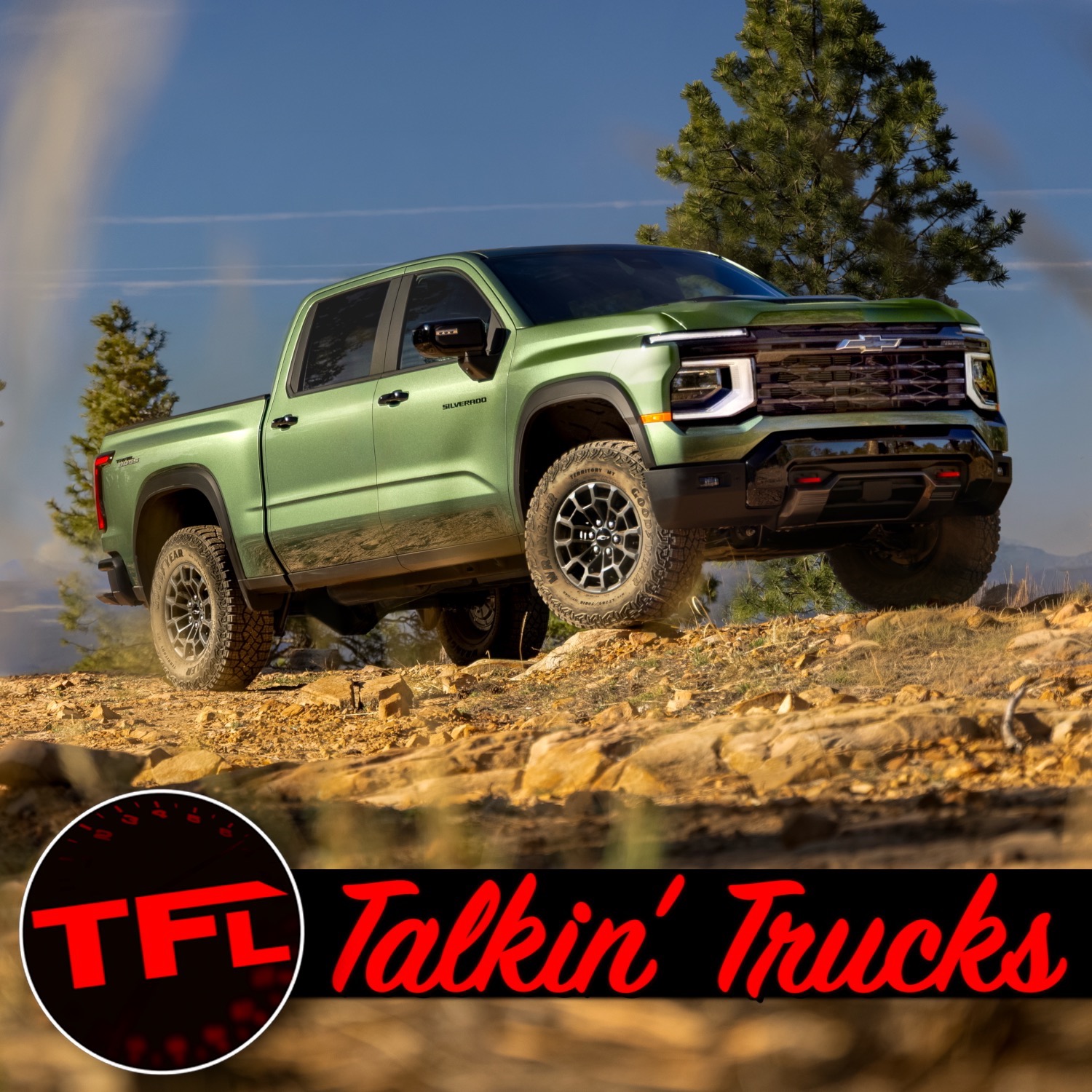
Can The New 2027 Chevy Silverado 1500 Beat Ford And Ram? | Ep. 336
About this episode
Chevy’s newly revealed 2027 Silverado 1500 takes center stage as TFL Talkin’ Trucks weighs whether it can beat Ford and Ram in the full-size fight. The hosts dig into what’s truly “all-new” (cab/bed sizes stay, and payload/towing aren’t pushed higher), then shift to off-road trims like ZR2 and Trail Boss—35s, beadlock-capable wheels, locking diffs, and green hero color. Powertrain talk turns to TurboMax 2.7, rumored V8s tied to Corvette, a 10-speed swap, and diesel/hybrid comparisons.
( https://www.alltfl.com/ ) Check out our new spot to find ALL our content, from news to videos and our podcasts! In this episode of TFL Talkin' Trucks, Andre and Kase break down the massive news shaking up the truck world: the official reveal of the 2027 Chevy Silverado 1500. Moving past the rumors and internet speculation, the guys dive into real clips, official images, and confirmed data sent directly from General Motors to see if the defending sales champion can hold its crown against Ford, Ram, and Toyota.
While the exterior gets a sharp, evolutionary sheet metal update, the absolute biggest talking points are hiding under the hood. Chevrolet is introducing a heavily overhauled powertrain lineup for 2027, completely replacing their long-standing engine options with a mix of high-tech engineering and classic displacement nods that actually share DNA with the legendary Corvette. Andre and Kase break down what these massive mechanical shifts mean for daily driving and heavy-duty towing, look at a huge transmission upgrade across the board, and weigh the pros and cons of the return of their absolute favorite class-exclusive fuel sipper. From the updated luxury of the High Country to the rugged 35-inch tires on the off-road ZR2 and green Trail Boss, the guys debate whether this mystery-shrouded power lineup is enough to stay on top, or if missing a hybrid option gives Ford the ultimate upper hand.
( http://www.patreon.com/tflcar ) Visit our Patreon page to support the TFL team!
Advertising Inquiries: https://redcircle.com/brands
Privacy & Opt-Out: https://redcircle.com/privacy
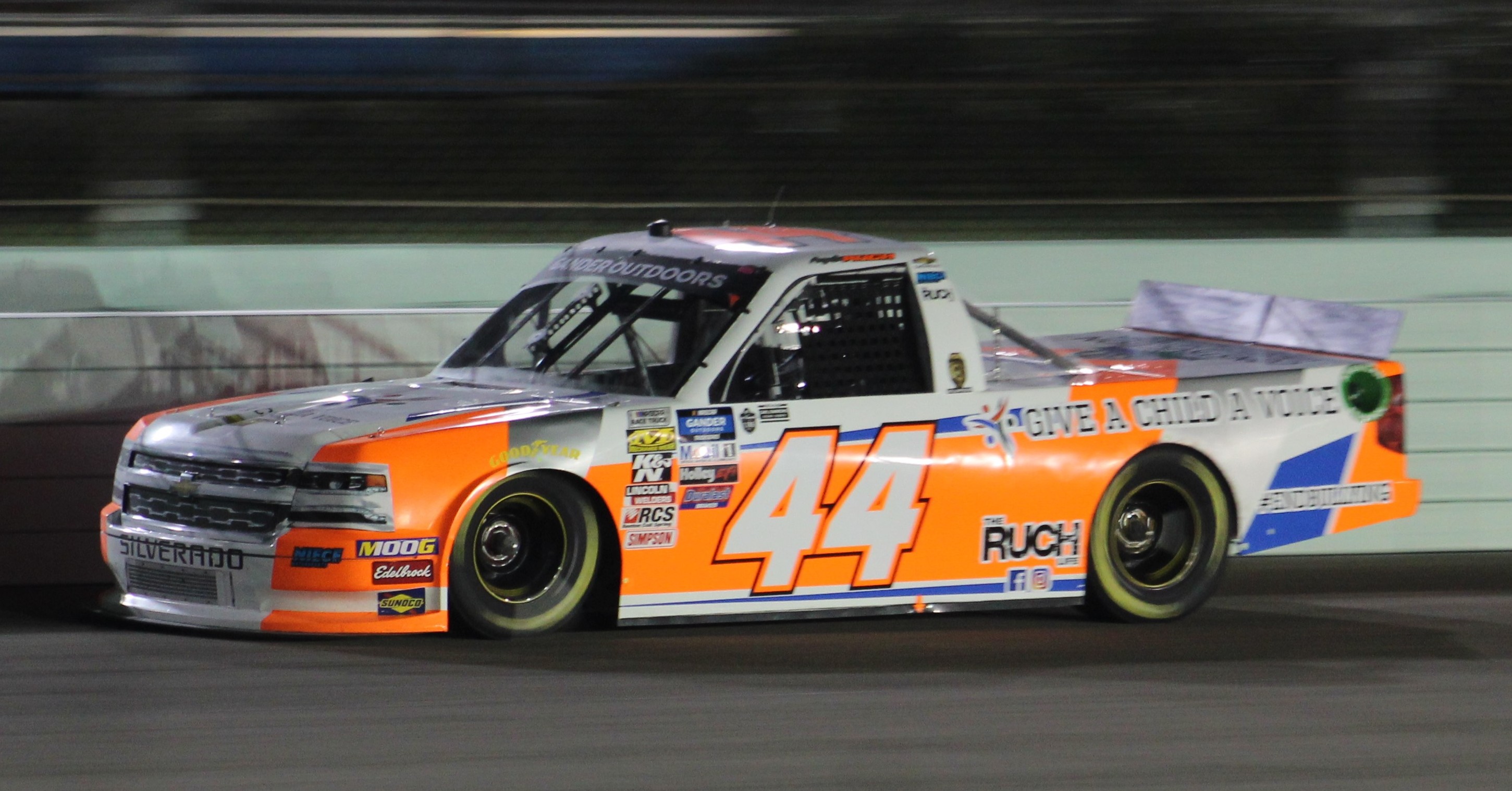
Chevrolet Silverado
"...we've been waiting to find out about with the new Silverado 1500. 2027 model, we have official images, video,..."
The Chevrolet Silverado 1500 is a large pickup truck made for hauling things and everyday use. The podcast is talking about the new 2027 model because they want to see what’s changed and how it will drive. It’s a major truck model people watch closely.
The Chevrolet Silverado 1500 is a full-size pickup truck built for everyday driving and heavy-duty work, and it’s one of the most important vehicles in GM’s lineup. In the podcast, it’s discussed because the show is waiting on details about the new 2027 Silverado 1500 and what changes are coming. That makes it a key topic for anyone following how the truck segment is evolving.

Dodge Ram
"...ves. Of course they're aware that Ford and GM and Ram and also Toyota now, they're very locked in, comp..."
Dodge Ram is the name used for Ram pickup trucks. The podcast mentions it because Ram is competing closely with other truck brands for buyers. It’s part of the same big, competitive truck market.
Dodge Ram refers to Ram-brand pickup trucks, which are a major player in the full-size truck market. The podcast groups Ram with other big-name truck makers, emphasizing how locked-in the competition is. That’s why Ram is mentioned—its sales and product strategy matter in the same fight for top market share.
maximum payload
"And in fitting with that theme, they have said that they're not really tweaking the [229.9s] maximum payload or maximum towing figures, which for some people is maybe a little bit [236.0s] of a letdown because we've kind of been, at this point, led to expect that every time"
Maximum payload is the most weight the truck is rated to carry in the back. If you load more than that, you can overload the truck and create safety and durability problems.
Maximum payload is the highest weight the truck is rated to carry in the bed (people and cargo), typically measured in pounds or kilograms. It’s a key spec for work-focused buyers because it directly affects how much you can haul without exceeding the truck’s design limits.
maximum towing figures
"And in fitting with that theme, they have said that they're not really tweaking the [229.9s] maximum payload or maximum towing figures, which for some people is maybe a little bit [236.0s] of a letdown because we've kind of been, at this point, led to expect that every time"
Maximum towing figures are the most weight the truck is rated to tow with a trailer. It’s important because towing too much can overheat the truck or overwhelm the brakes.
Maximum towing figures are the highest trailer weight the truck is rated to pull under specified conditions. This spec depends on the truck’s drivetrain, cooling capacity, and braking capability, so it’s a practical number for towing boats, trailers, and equipment.
T1 generation
"No, and I agree with you because I think we've reached a happy point because the current [257.5s] Silverado 2026 model, the current generation, the T1 generation of the truck, has what?"
“T1 generation” is the truck’s underlying design platform. Think of it like the truck’s main “foundation,” which influences how the truck is built and what kinds of updates are possible.
“T1” is a platform/generation label the automaker uses to describe the underlying architecture for the truck. When a truck is on a particular platform generation, it can affect everything from dimensions and cab/bed packaging to how powertrains and suspension are engineered.
two-wheel drive
"With certain models for two-wheel drive, some simple trucks have a payload of up to about [269.2s] 2,380 pounds, and some other models configured with the maximum towing packages are just"
Two-wheel drive means the truck only powers one set of wheels. That can change how much weight it can carry or tow, depending on the exact setup.
Two-wheel drive (2WD) means the truck sends power to only one axle—usually the rear axle on pickups. It’s often paired with lighter-duty configurations, which can affect payload and towing ratings compared with four-wheel drive setups.
heavy duty truck
"I think if you increase those numbers higher, you're basically, you need to buy a heavy [283.8s] duty truck. [284.7s] Yeah."
A heavy duty truck is the more rugged, work-focused kind of pickup meant for heavier hauling. The idea here is that if you’re towing or carrying more than a half-ton is really set up for, you should move to an HD truck.
A heavy duty truck is a class of pickup built for sustained, high-load work—typically with stronger frames, axles, and cooling systems than lighter-duty pickups. The speaker’s point is that once payload and towing needs exceed what a half-ton is designed for, you effectively “graduate” to an HD truck.
half ton
"At a certain point, you have to wonder why continue to make a half ton capable past the [293.7s] point of it really being a half ton because eventually I think you'll just end up with [298.6s] half ton truck becoming what an HD truck used to be"
“Half-ton” is a way people categorize pickup trucks by how much they’re built to handle. The point here is that modern half-ton trucks are getting so capable that they’re starting to feel like heavier trucks used to.
“Half-ton” is a traditional pickup classification that roughly corresponds to lighter-duty trucks compared with “three-quarter ton” and “one-ton” models. The speaker argues that if half-ton trucks keep increasing payload and towing, they start to overlap with what HD trucks used to be.

Ford Maverick
"and that's why companies like Ford have something like the Maverick because trucks [309.2s] have gotten bigger towing ratings and payload."
The Ford Maverick is a smaller pickup truck. The host is saying that as bigger trucks get more towing and payload, Ford (and others) still need a smaller option for people who don’t need the heavy-duty numbers.
The Ford Maverick is a compact pickup that was designed to cover the “smaller truck” role as full-size trucks keep getting bigger. In this segment, it’s used as an example of how automakers create a new smaller truck when payload and towing expectations rise for larger pickups.
suspension
"and because every time you up those figures, like on payload, for example, you're [334.7s] creating, you know, the springs have to be stiffer and harder, and now you have to retune [339.6s] the suspension, and your ride might suffer, right?"
Suspension is what helps the truck ride smoothly and stay stable over bumps. If the truck is expected to carry or tow more, the suspension often has to be adjusted, which can make the ride feel firmer.
Suspension is the system of springs, shocks/struts, and linkages that controls ride height, wheel movement, and how the truck handles bumps and load changes. When payload or towing ratings increase, manufacturers often stiffen springs and retune the suspension to keep the truck stable—though that can affect ride comfort.
HD truck
"[375.8s] I think that's part of the point of getting into a half ton anyway, because an HD truck [380.7s] generally and historically in HD truck, its purpose was truck things almost exclusively,"
An “HD truck” is a heavy-duty pickup designed for tougher jobs like heavier towing and hauling. The point here is that most people don’t want that kind of truck as their everyday driver unless they’re using it for work.
“HD truck” means heavy-duty pickup trucks, which are typically built for higher-capacity towing and hauling. The host contrasts that with half-ton trucks, arguing that many owners don’t want to drive an HD truck daily unless they’re actually hauling or towing.
sheet metal
"[442.0s] They've updated the sheet metal, so the styling is different from what it was, but again, [449.1s] incrementally so, nothing about this is a massive departure from what GM trucks looked"
Sheet metal is the stamped metal body panels of the truck—like the hood, doors, fenders, and outer panels. The host says GM updated the sheet metal so the styling looks different, even if it’s not a completely new design.
Chevy Silverado 1500 High Country
"Cole, can you pull up like a work truck maybe, because we looked a little bit at the styling of the High Country, which is their premium truck, but they also let us in on at least at least one image here with the work truck, which has a similar front end design, the headlight signature is identical basically, it's just that some of the other components, maybe the bumper covers and the grilles are different."
The High Country is the nicer, more upscale version of the Chevrolet Silverado 1500. Here, they’re saying the front lighting design looks the same as the work truck, but other parts like the grille and bumper are different.
The Chevrolet Silverado 1500 High Country is the Silverado’s premium trim, positioned above the mainstream work and LT-style trims. In this segment, they’re comparing its front-end design cues (like the headlight signature) to a work-truck variant.
headlight signature
"at least one image here with the work truck, which has a similar front end design, the headlight signature is identical basically, it's just that some of the other components, maybe the bumper covers and the grilles are different."
A headlight signature is the recognizable shape/pattern of a vehicle’s headlights and related lighting elements. Automakers use it as a design “fingerprint,” and the hosts say the Silverado’s work-truck front end shares the same headlight signature as the High Country.
LED running lights
"Which it is kind of funny to see the very basic wheels, but still with LED running lights, because in a way it looks more sophisticated and modern and upscale, and then you get those tiny little basic wheels. Yeah, which is okay, I mean steelies, there is nothing wrong with steelies."
LED running lights are the daytime lights on the front of the truck. They help the truck stand out and be easier to see in daylight, even if the truck has simpler wheels.
LED running lights are daytime lights that use light-emitting diodes (LEDs) to improve visibility and make the truck’s front end look distinctive. Here, the hosts point out that even a more basic work-truck wheel setup can still look “upscale” because the LED daytime running light signature is present.
steelies
"Yeah, which is okay, I mean steelies, there is nothing wrong with steelies. Nothing wrong with steelies, it's just funny to see them next to what looks like a premium daytime running light."
“Steelies” are basic steel wheels. They’re not automatically worse—often they’re tough and practical—but they can look out of place on a truck that otherwise has premium styling cues.
“Steelies” is slang for steel wheels, typically the simpler, more durable wheel option found on work trucks. The hosts are noting that steel wheels aren’t “bad,” but they look funny next to the more premium lighting design.
35s
"This truck is on 35s, which I like. I'm happy about that. Little bit of amber lighting in the grille, not really in the raptor sense."
“35s” means the truck is running 35-inch tires. Larger tires usually help off-road by giving more clearance and more tire “cushion” over bumps.
“35s” is shorthand for 35-inch tires. Bigger tires increase ground clearance and provide more sidewall, which can improve ride comfort and traction on uneven terrain.

F-150 Raptor
"...f amber lighting in the grille, not really in the raptor sense. Not like a three kind of a raptor style."
The F-150 is a large pickup truck. In the podcast, they’re talking about the look of the front lights and grille area. It’s basically describing how the truck’s front-end styling is set up.
The Ford F-150 is a full-size pickup truck, and the podcast mentions it specifically in relation to lighting details in the grille area. That kind of styling talk is common when discussing model updates, because front-end design cues can signal changes in trim or appearance. It’s also relevant when comparing how different trucks present themselves visually.
daytime running light signatures
"Yeah, which is good. Kind of in between the two daytime running light signatures. I'm trying to paint a picture for people that might be listening to this as an audio podcast."
That phrase means the daytime running lights have a particular shape or pattern. It’s basically the truck’s “face” lighting design that helps it stand out.
A “daytime running light signature” is the specific shape/pattern of the DRLs that gives a vehicle its recognizable front-end look. Hosts often compare these patterns across trims or competitors to describe styling differences.
beadlock capable wheels
"Also, beadlock capable wheels are available in the ZR2 so you can air down. You can have a lot of sidewall, traction."
Beadlock-capable wheels are made so the tire can stay firmly attached to the rim even when you lower tire pressure. That helps off-road traction when you “air down.”
Beadlock-capable wheels are designed to clamp the tire bead to the rim more securely. That allows you to run lower tire pressures (“air down”) for better contact and traction without the tire slipping on the wheel.
air down
"Also, beadlock capable wheels are available in the ZR2 so you can air down. You can have a lot of sidewall, traction."
“Air down” means letting some air out of the tires for off-road use. It helps the tire grip better and feel less harsh over bumps.
“Air down” means reducing tire pressure for off-road driving. Lower pressure increases the tire’s contact patch and sidewall compliance, improving traction and ride over rocks and ruts.
front and rear locking differentials
"ZR2, of course, has front and rear locking differentials like it used to. So it's a lot of functional, but also stylistic help."
A locking differential helps both wheels on an axle turn together instead of letting one spin. With locking diffs in the front and rear, the truck can keep moving even if one wheel is slipping.
Locking differentials force the left and right wheels on an axle to rotate together. Having both front and rear locking differentials helps the truck maintain traction when one wheel loses grip, which is especially useful in deep mud, sand, or snow.
AEV
"Yeah, and they've said that they're also going to continue to work with AEV to have versions of the truck with all kinds of extra underbody protection, special wheels and all"
AEV is an off-road parts company that makes truck upgrades. In this segment, they’re talking about AEV helping create off-road packages with added protection and wheels.
AEV (American Expedition Vehicles) is a well-known aftermarket off-road company that partners with truck makers to develop packages. Here, the host says they’ll keep working with AEV for versions with extra underbody protection and special wheels.
quad exhaust tips
"And I really like on this truck, quad exhaust tips, which is cool. [675.9s] I like that much better than the HDMI ports. [678.6s] Yeah, the outlets, the dual outlets that look like HDMI."
Quad exhaust tips means you can see four exhaust openings at the back of the truck. It’s mostly a visual “performance” look, and sometimes it goes along with a more aggressive exhaust system.
“Quad exhaust tips” means there are four visible exhaust outlets at the rear of the truck. It’s usually a styling cue that also often corresponds to a higher-output exhaust setup or a more performance-oriented trim package.
dual outlets that look like HDMI
"I like that much better than the HDMI ports. [678.6s] Yeah, the outlets, the dual outlets that look like HDMI. [682.9s] Yeah, yeah, so that's gone."
They’re pointing out some rear ports that look like HDMI connectors. In a truck, these are usually for powering or connecting accessories for passengers or the cargo area.
The hosts are describing rear “outlets” that resemble HDMI ports in shape. In trucks, these are typically power or accessory outlets (like 12V/USB-style ports) integrated into the rear fascia for passengers or cargo use.
Trail boss
"Trail boss, should we? [699.0s] Yeah, let's take a look because they're featuring the hero color that I was surprised [703.3s] by. [704.1s] The hero color on the trail boss is green."
“Trail Boss” is a trim level/package name used on Chevrolet trucks, aimed at off-road capability and appearance. It commonly includes upgrades like more aggressive tires, towing hardware, and styling cues intended to make the truck look and function more rugged.
red tow hooks
"and then the trail boss, which is a little bit [738.1s] more premium and yeah, still red tow hooks, larger tires, 35s and the wheel design I like."
Tow hooks are the strong points on the truck where you can attach a strap or rope to pull or recover the vehicle. The red color is just how they’re styled.
“Tow hooks” are recovery points on the front or rear of a vehicle used to attach a tow strap or recovery rope. The “red” part is a visual styling choice, but the hooks themselves are functional for towing or off-road recovery.
wide body
"If they had a wide body Raptor or TRX competitor, I think people have been wanting that and asking that for such a long time."
“Wide body” means the truck’s fenders are widened. That usually helps fit bigger tires and gives the truck more clearance for rough terrain.
A “wide body” package widens the truck’s fenders and bodywork to fit larger tires and improve off-road stance. It’s often associated with more aggressive styling and clearance for suspension travel.

Toyota RAV4
"...rking for them. So it's kind of like when the new RAV4 came out, Toyota didn't do anything dramatic with..."
The Toyota RAV4 is a compact SUV that many people buy. The podcast says that when the newer RAV4 arrived, Toyota didn’t change everything in a big way. It sounds like the update was more of a gradual improvement.
The Toyota RAV4 is a compact crossover SUV that’s often a top seller in its segment. The podcast notes that when the new RAV4 came out, Toyota didn’t make changes that were “dramatic,” suggesting a more evolutionary approach to updates. That’s why it’s mentioned—buyers often care whether a refresh is major or incremental.

Honda Crvs
"It's like a number one in the segment, yeah. Even though CRV's been doing well, but the RAV4 and CRV don't need to be a focus in this podcast."
The Honda CR-V is a small-to-midsize SUV that many people choose for daily driving. In the podcast, it’s mentioned because it’s been doing well and is a top seller in its category. They’re not focusing on it heavily, but it’s still an important benchmark.
The Honda CR-V is a compact crossover SUV known for being practical and widely appealing in the mainstream SUV market. The podcast calls it a top performer in its segment, even while noting that other models like the RAV4 and CR-V aren’t the focus of that particular discussion. That context highlights how established the CR-V is compared with newer or more debated alternatives.
lowered, slammed
"And as well, they're not doing any lowered, slammed, high-power street truck."
“Lowered” or “slammed” means the truck sits closer to the ground. It’s more of a street style choice and can make off-roading harder because you lose clearance.
“Lowered” or “slammed” describes a truck set up with reduced ride height, usually via suspension changes. It’s typically a street-focused look that can reduce ground clearance and off-road practicality.
high-power street truck
"And as well, they're not doing any lowered, slammed, high-power street truck."
A “high-power street truck” is a pickup built to be fast and exciting on regular roads. Here they’re saying GM isn’t making a truck that’s focused on that kind of street performance.
A “high-power street truck” is a performance-oriented pickup tuned primarily for on-road acceleration and power rather than off-road capability. In this context, the host is contrasting GM’s approach with the kind of extreme, performance-leaning trucks people might expect.

Ford Lobo
"...s about anything like a Rumblebee competitor or a Lobo competitor, for example, from Ford here in the ne..."
The podcast mentions a Ford “Lobo” as a comparison point. The context suggests they’re talking about a Ford model name in the same category as other trucks. The exact vehicle details aren’t clear from the snippet alone.
The Ford Lobo appears in the podcast as a reference point for a “competitor” style name, implying it’s being compared to other models in the same conversation. However, the name “Lobo” isn’t clearly tied to a specific, widely recognized Ford model in the way the other vehicles are. Because the transcript context is limited, it’s best treated as a mention of a Ford model name being used for comparison.

Sierra 1500
"We still don't know, we haven't seen official images of the new Sierra 1500. [847.1s] So I guess I'm a little bit hopeful."
The GMC Sierra 1500 is GMC’s full-size pickup sibling to the Chevrolet Silverado 1500. Here, the hosts say they haven’t seen official images of the new Sierra 1500 yet, and they’re hoping GMC might bring more exciting “Sierra space” content than what they’re seeing from Chevrolet.
powertrain
"So before we kind of put it in more context with competitors, we have to talk about powertrain, [900.2s] right?"
Powertrain is the parts that create motion in the truck. It usually includes the engine and the gearbox, plus the drivetrain parts that send power to the wheels.
A powertrain is the set of components that makes the truck move—typically the engine (or motors), transmission, driveshaft, and differential. When the hosts say they have to “talk about powertrain,” they mean the engine/transmission choices and how they affect capability and competitiveness.
5.7
"Yeah, now we already knew from the rumors pretty confidently that it was going to be a 5.7 and a 6.6 as the two updated small block Chevy V8 options."
Here, “5.7” means the engine is about 5.7 liters in size. Bigger displacement generally means the engine can move more air/fuel per cycle, which can affect power and torque.
In this context, “5.7” is shorthand for a 5.7-liter V8 displacement, meaning the engine’s total cylinder volume is 5.7 liters. The hosts use it as one of the two updated V8 sizes being discussed for the Silverado’s lineup.
6.6
"Yeah, now we already knew from the rumors pretty confidently that it was going to be a 5.7 and a 6.6 as the two updated small block Chevy V8 options."
Here, “6.6” means the engine is about 6.6 liters in size. It’s the larger engine option the hosts are comparing against the smaller 5.7.
“6.6” refers to a 6.6-liter V8 displacement, again describing the engine’s total cylinder volume. In this segment, it’s the larger of the two updated V8 options being rumored/confirmed for the truck application.
small block Chevy V8
"Yeah, now we already knew from the rumors pretty confidently that it was going to be a 5.7 and a 6.6 as the two updated small block Chevy V8 options. And that is true. Those are the displacements of the two new V8s."
“Small block Chevy V8” is a name for a Chevrolet V8 engine family. It matters here because the hosts are talking about which new engine sizes Chevy is putting into the truck.
“Small block Chevy V8” refers to Chevrolet’s compact V8 engine family (the classic Gen I/II/modern descendants are often grouped under this label). It’s a common engine architecture in everything from trucks to performance cars, and here it’s important because the hosts are discussing updated displacements for the Silverado’s V8 options.

Chevrolet Corvette
"Yeah, now we already knew from the rumors pretty confidently that it was going to be a 5.7 and a 6.6 as the two updated small block Chevy V8 options. ... So there was a little doubt in my mind when the new Grand Sport Corvette came out a few months back with a 6.7 liter new engine and I was like, wait a minute, does that mean our information was incorrect?"
The Grand Sport Corvette is a sportier version of the Chevrolet Corvette. It’s brought up here because it recently got a new bigger engine, and that made the hosts double-check other engine rumors.
The Grand Sport Corvette is a performance-focused variant of the Chevrolet Corvette, known for track-oriented tuning and a more aggressive setup than the standard model. In this segment, it’s used as a reference point because it introduced a new 6.7-liter engine, which raised questions about whether the Silverado’s reported engine sizes were accurate.
350 cubic inch
"But no, Chevrolet confirms, like you said, so 5.7 liter, they're calling it the 350 cubic inch. Yes. 350 Chevy."
“350 cubic inch” is another way to describe engine size, just using cubic inches instead of liters. It’s the same engine displacement, expressed in the units Americans traditionally use.
“350 cubic inch” is the displacement measured in cubic inches, a traditional U.S. way of describing engine size. The hosts connect it to the 5.7-liter figure by noting Chevy is “calling it the 350 cubic inch,” which is the same displacement expressed in different units.

Chevrolet No Chevrolet
"You know, is it really a 6.7? But no, Chevrolet confirms, like you said, so 5.7 liter, they're calling it the 350 cubic inch."
400 cubic inch
"And also they're calling it a 6.6, a 400 cubic inch bigger displacement engine. ... They did not, however, I wish they did, they didn't talk about horsepower numbers."
“400 cubic inch” is just another unit for engine size. It’s how Chevy is naming the bigger engine displacement in the traditional U.S. way.
“400 cubic inch” is the displacement expressed in cubic inches for the larger V8 option. The hosts say Chevy is calling the 6.6-liter engine a “400 cubic inch bigger displacement engine,” translating between liters and the traditional U.S. cubic-inch naming.
torque
"[987.3s] So that one's 535 horsepower, 520 pound-feet of torque. [991.8s] It's not going to be those kind of figures in the pickup truck with the 6.6."
Torque is the engine’s pulling power—how strongly it can twist the drivetrain to move the truck. Higher torque usually helps with towing and getting going with a heavy load.
Torque is the twisting force an engine produces, and it strongly affects how easily a vehicle accelerates and how well it can do heavy work. In pickup-truck discussions, torque matters for tasks like towing because it helps the truck maintain speed under load.
pound-feet
"[987.3s] So that one's 535 horsepower, 520 pound-feet of torque. [991.8s] It's not going to be those kind of figures in the pickup truck with the 6.6."
“Pound-feet” is a way to measure torque. It’s basically how much twisting force the engine can deliver.
“Pound-feet” (lb-ft) is a unit for measuring torque in the U.S. It tells you how much twisting force the engine produces, which is why you’ll see it alongside horsepower in engine specs.
horsepower
"[987.3s] So that one's 535 horsepower, 520 pound-feet of torque. [991.8s] It's not going to be those kind of figures in the pickup truck with the 6.6."
Horsepower is a measure of how strong the engine is overall. Engines can make horsepower by producing torque, especially when the engine is spinning faster.
Horsepower is a measure of how much work an engine can do over time, and it’s influenced by both torque and engine speed. That’s why an engine can be tuned to make more horsepower at higher RPM even if it doesn’t focus as much on low-end torque.
philosophies are similar
"[1022.0s] Right? [1022.6s] Which you would expect. [1023.5s] And their philosophies are similar."
They’re saying the engineering approach can be related, but the “job” each vehicle needs is different. A Corvette is tuned to feel powerful at higher RPM, while a truck is tuned to pull and work under load.
The hosts are contrasting how two different performance goals shape engine tuning. Even if Corvette and truck powertrains share some components, their calibration targets differ—Corvette aims for high-revving horsepower, while trucks prioritize usable torque for real-world loads like towing.
high revving
"[1028.7s] Where the Corvette goal is of that engine is a little bit more high revving, high horsepower. [1035.3s] Maybe not as much focus on torque."
“High revving” means the engine is meant to spin faster (higher RPM). Some engines are tuned to make their best power at those higher speeds.
“High revving” describes an engine that’s designed to run at higher RPM (engine speed). Engines tuned this way often make more peak horsepower, because horsepower is tied to both torque and engine speed.
high engine speed
"[1050.4s] at constant high speed. [1052.6s] Right? [1052.9s] I mean, high engine speed."
“High engine speed” means the engine is operating at higher RPM. That can be useful for making power, but for heavy towing you often want the engine to stay in a range where it can produce strong torque without constantly spinning very fast.
4-cylinder turbo
"First, the base engine is still going to be the 2.7 liter TurboMax 4-cylinder turbo. They are calling it enhanced for this new generation of the truck."
This means the engine has four cylinders and a turbocharger. The turbo helps the engine make more power even though it’s smaller than a bigger V6 or V8.
A 4-cylinder turbo engine uses four cylinders plus a turbocharger to force more air into the engine. That lets a smaller engine make more power than a non-turbo version of the same size, which is why it’s a common approach for modern truck base engines.
TurboMax
"First, the base engine is still going to be the 2.7 liter TurboMax 4-cylinder turbo. They are calling it enhanced for this new generation of the truck."
TurboMax is the name Chevy uses for a turbocharged engine. In this case, it’s the 2.7-liter turbo 4-cylinder that’s expected to be the base engine in the new truck.
TurboMax is a brand name used for a turbocharged engine family. Here, it refers to the 2.7-liter turbocharged 4-cylinder base engine planned for the next Silverado generation.
transmission
"but they're also changing the transmission, right? "
In this context, “changing the transmission” means updating how the engine’s power is geared and delivered to the wheels. For trucks, transmission changes can affect how quickly the engine reaches its power band, towing behavior, and overall drivability.
10 speed
"Yeah, they're going from the 8 speed to the 10 speed, which we're happy about, especially if you're working with a smaller displacement engine, having the additional gearing is going to be helpful, especially when you're towing and when you're working that truck hard. And just in general, we like that 10 speed a lot more than the 8 speed."
A “10-speed” transmission has 10 gear steps. That usually helps the truck find the best engine speed for the situation—like towing—so it feels stronger and works less hard.
“10-speed” means the truck uses a transmission with ten forward gear ratios. With more gears, the transmission can better match engine RPM to driving conditions, which can improve drivability and reduce strain when towing or using a smaller engine.
8 speed
"Yeah, they're going from the 8 speed to the 10 speed, which we're happy about, especially if you're working with a smaller displacement engine, having the additional gearing is going to be helpful, especially when you're towing and when you're working that truck hard."
An “8-speed” transmission is a gearbox with 8 different gear ratios. It helps the engine stay in the right RPM range, which can make towing and acceleration smoother.
“8-speed” refers to a transmission with eight forward gear ratios. More gears can help keep the engine in its most efficient or strongest power band, especially under load like towing.
smaller displacement engine
"if you're working with a smaller displacement engine, having the additional gearing is going to be helpful, especially when you're towing and when you're working that truck hard."
Engine displacement is the total volume of all cylinders, often measured in liters. A smaller displacement engine typically makes less torque at low RPM, so extra transmission gearing can help keep it in the range where it pulls best—especially during towing.
six twos
"And I know a lot of people will say, well, GM has had problems with their six twos. They've had problems with their transmissions. Hopefully, obviously they're listening and hopefully they're solving a lot of these problems."
“Six twos” is a nickname for a specific GM automatic transmission family. The speaker is saying some people blame that transmission for past issues, and hopes GM has fixed them.
“Six twos” is shorthand for GM’s 6L80 family of automatic transmissions (commonly referred to as “6L80”). The host is referencing a reputation for transmission problems associated with that generation.
2.7
"Yeah, and I really think this combination, some extra power torque, whatever it is that they've done to the 2.7 for this generation of truck, plus that 10 speed is going to make for a really usable combination because that 2.7 in current form, 310 horsepower, that's pretty good, 430 pound feet of torque, which is already pretty massive, a healthy figure."
“2.7” means the engine is about 2.7 liters in size. The speaker is arguing that even though it’s smaller, its power numbers plus the 10-speed should make it work well for most people.
“2.7” refers to a 2.7-liter engine displacement. The host is discussing how this smaller engine’s torque and horsepower figures, combined with a 10-speed transmission, should be enough for typical daily use and towing.
Duramax
"We got to talk about what's personally my favorite engine option in any of these trucks. I don't know about you. Yeah, I like the Duramax. The Duramax 3 liter is coming back, so it's not going away."
Duramax is GM’s diesel engine line. Diesel engines like this are often chosen for towing because they tend to make strong low-speed pulling power.
Duramax is GM’s diesel engine family, known in trucks for strong low-end torque and towing capability. The host specifically mentions the “Duramax 3 liter” returning, implying a diesel option with good pulling power paired to the new transmission.
turbo diesel
"It's still the only turbo diesel in this segment. You have to step up to the heavy duty trucks to get diesel engines from other manufacturers,"
It’s a diesel engine that uses a turbo to help it make more power. The turbo helps the engine breathe better, so it can pull harder and often feel stronger.
A turbo diesel is a diesel engine that uses a turbocharger to force more air into the cylinders. That extra air lets the engine burn more fuel efficiently and produce more torque than a non-turbo diesel of similar size.
work truck configurations
"They said the Duramax will be available with work truck configurations. So everybody, every configuration will have it."
Work truck configurations are trim/option packages aimed at utility use—typically prioritizing durability, towing/carrying capability, and practical features over luxury. When a diesel like Duramax is offered in these configurations, it broadens who can spec a diesel in the half-ton lineup.
hybrid
"So in general, this powertrain lineup is very exciting, I would say, with one exception, is that when we looked through all the data that they gave us, there is no mention of a hybrid."
A hybrid uses both a gas engine and an electric motor. The electric part can help save fuel, and the hosts are noting that GM isn’t offering a hybrid here (at least based on the info they got).
In this context, “hybrid” refers to a powertrain that combines an internal-combustion engine with an electric motor/battery system to improve efficiency. The hosts are saying the provided data shows no hybrid option for this new Silverado in the half-ton segment.
power boost
"And I was really hoping that they would face F-150 competition because F-150 has a hybrid powertrain, the power boost."
“Power Boost” is Ford’s name for a hybrid setup in the F-150. The idea is that it can help the truck use less fuel than a non-hybrid version.
“Power Boost” is Ford’s branding for its hybrid powertrain system used in the F-150. The hosts mention it as a competitive advantage because it can improve efficiency and help offset expensive fuel costs.
fuel is really expensive
"Yeah, which is too bad because we've talked about a little bit that fuel is really expensive. So any efficiency that you can squeeze out of a truck is good to have,"
When gas prices are high, saving fuel matters more. That’s why the hosts care about whether the truck can be more efficient, like with a hybrid.
This is a discussion of operating cost pressure—when fuel prices are high, efficiency features (like hybrids or other efficiency-focused powertrains) become more valuable to buyers. The hosts connect that to why they were hoping for a hybrid option.
payloads
"if I was carrying something like some payloads or maybe a trailer. I think the Duramax loves doing that type of work, especially it's being a straight six."
Payloads are what you’re carrying in the truck—like cargo or equipment. It matters because heavy loads require more engine pulling power.
Payloads are the weight you put in the truck—people, cargo, tools, or equipment—after accounting for the truck’s own weight. When hosts mention payloads alongside towing, they’re talking about real-world load demands that diesel torque can handle well.
trailer
"if I was carrying something like some payloads or maybe a trailer. I think the Duramax loves doing that type of work, especially it's being a straight six."
A trailer is something you tow behind the truck, like a boat or equipment. Towing makes the truck work harder, so the engine’s ability to pull matters.
A trailer is a separate vehicle or load-bearing unit pulled behind the truck. Towing a trailer increases the truck’s workload significantly, so engine choice (diesel vs hybrid) can affect both efficiency and how consistently the truck can pull under load.
straight six
"I think the Duramax loves doing that type of work, especially it's being a straight six. Yeah."
A “straight six” just means the engine has six cylinders in a single line. That layout can make the engine run smoothly and produce strong pulling power at lower speeds.
A “straight six” is an inline six-cylinder engine layout, where all six cylinders are arranged in a single row. Inline-six diesels are often praised for smooth power delivery and strong low-end torque, which helps when towing or hauling heavy loads.
Denver 100 tests
"especially on efficiency, but you and I recently did several Denver 100 tests and comparisons, and we saw that the diesel fuel being so expensive that the benefit of having an efficient diesel is diminishing right now."
“Denver 100” is a testing route the hosts use to compare how trucks do in real driving. They’re using it to show that fuel economy advantages depend on fuel prices.
“Denver 100 tests” refers to a repeatable route-based fuel-economy and efficiency testing method the hosts use. It’s used here to argue that real-world diesel savings can shrink when diesel fuel prices rise.
efficiency
"especially on efficiency, but you and I recently did several Denver 100 tests and comparisons, and we saw that the diesel fuel being so expensive that the benefit of having an efficient diesel is diminishing right now."
In this context, “efficiency” means how much fuel the truck uses for a given amount of work—especially highway driving and towing. The hosts argue that when diesel fuel is very expensive, the fuel-economy advantage of an efficient diesel can shrink, reducing the practical benefit versus alternatives like hybrids.
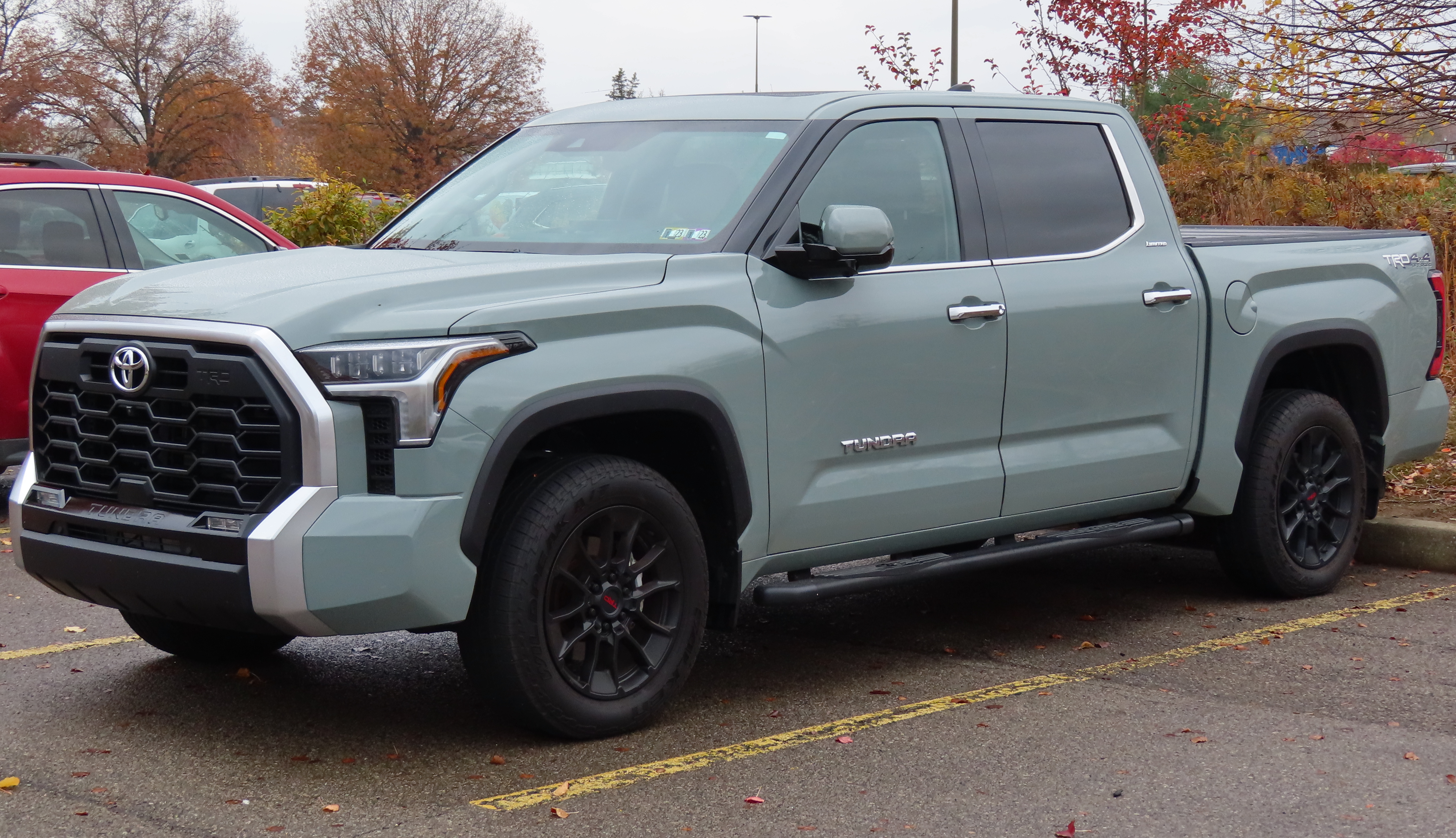
Toyota Tundra
"...know. But not having a hybrid, for example, well, Tundra offers a hybrid, which is not really efficiency m..."
The Toyota Tundra is a large pickup truck. The podcast mentions it because it offers a hybrid version, which can help with fuel economy. They’re bringing it up in the context of efficiency options.
The Toyota Tundra is a full-size pickup truck, and it’s discussed here partly because of its hybrid offering. The podcast notes that the Tundra does provide a hybrid option, contrasting it with the idea that some competitors may not. That makes the Tundra relevant in conversations about efficiency and powertrain choices.
F-150 power boost hybrid
"there's an F-150 power boost hybrid, which actually I used to own, and we've tested many of them, including it's we actually named it our 2026 truck of the year, because it was we got tremendous efficiency with it on our on our testing."
The Ford F-150 PowerBoost hybrid is a hybrid version of the F-150 pickup. They’re saying it can be very efficient in real testing, including when towing.
The Ford F-150 PowerBoost hybrid is Ford’s hybrid version of its best-selling full-size pickup. The hosts say they previously owned one and tested many, highlighting strong real-world efficiency results from their towing-focused evaluation.
power export feature
"And it has a seven point two kilowatt power export feature, like you mentioned. And GM did not speak of anything about higher energy export features."
This is a feature that lets the truck act like a generator. It can plug into things outside the truck to power tools or appliances.
A power export feature lets a truck send electricity out to run tools, jobsite equipment, or appliances. On modern trucks this is usually done via an onboard inverter and dedicated outlets.
seven point two kilowatt
"And it has a seven point two kilowatt power export feature, like you mentioned. And GM did not speak of anything about higher energy export features."
That number (7.2 kilowatts) tells you how strong the truck’s built-in power output is. Bigger number usually means it can run more stuff at the same time.
Seven-point-two kilowatts is the electrical power rating of the truck’s export system, indicating how much load it can run at once. Higher kilowatt numbers generally mean you can run more demanding tools or multiple devices simultaneously.
400 watt outlets
"So I'm assuming they're going to have the 400 watt outlets that they've had for years and years and years, which is good."
These are the built-in plug outlets on the truck, and 400 watts is how much power they can supply. It helps you figure out what you can safely run from them.
Four-hundred-watt outlets refer to the power capability of the truck’s standard accessory outlets. This matters because it limits what you can run—like chargers, small tools, or certain appliances—without overloading the system.
V eights
"If you think about it, two V eights, four cylinder and a diesel straight six. Yeah. I guess we should stop complaining."
“V8” means the engine has eight cylinders arranged in a V shape. In trucks, that usually translates to strong pulling power.
“V eights” refers to V8 engines, which are internal-combustion engines with eight cylinders arranged in a V shape. In trucks, V8s are often chosen for strong low-end torque and towing capability.
four cylinder
"If you think about it, two V eights, four cylinder and a diesel straight six. Yeah. I guess we should stop complaining."
A “four-cylinder” engine has four cylinders. It’s often the more fuel-efficient choice compared with bigger engines.
“Four cylinder” describes an engine with four cylinders, typically tuned for better fuel economy and lower cost than larger engines. In a truck lineup, it usually represents the more efficient option.

Challenger Hellcat
"...s five, 392, 6.4 liter Apache engine and six TRX, Hellcat, Hellcat and the Rumblebee Hellcat."
The Challenger is a performance car designed to be fast and exciting to drive. The podcast talks about very strong engine versions and performance trims. It’s basically mentioning the Challenger’s high-power options.
The Dodge Challenger is a performance-focused muscle car, and the podcast references high-output versions like the 5.7L/6.4L and the TRX/Hellcat family of performance trims. It’s brought up to highlight the range of powerful engines and how different variants are positioned. That makes it relevant in a discussion about what performance means across the lineup.
leaf springs
"These are still using leaf springs on the rear. [1633.8s] So there's no radical updates there."
Leaf springs are a type of suspension made from stacked metal strips. They’re often used on the rear of trucks because they can handle hauling and towing, but they may not ride as smoothly as newer suspension designs.
Leaf springs are a traditional suspension setup that uses stacked metal strips to support the truck’s weight and control ride motion. On pickups, they’re commonly used on the rear because they’re durable and handle heavy loads well, but they can feel less refined than modern multi-link suspensions.
V8 engines
"their new V8 engines that are related to that Corvette engine, they're going to be produced at three different factories, Flint engine operations, Tonawanda propulsion factory, and also St. Catharines propulsion plants."
A V8 is an engine with eight cylinders arranged in a V shape. More cylinders usually means smoother power and strong pulling power. The hosts say these new Silverado V8s are related to the Corvette’s engine.
A V8 engine is an internal-combustion engine with eight cylinders arranged in a “V” shape. In trucks, V8s are often chosen for strong low-end torque and towing capability. Here, the hosts are specifically talking about the new Silverado’s V8s being related to Chevrolet’s Corvette engine.
LT trim
"Also they did something interesting, dude. They removed the LT trim."
“LT” is a name Chevy uses for a certain version of a truck—basically a specific package of features and price. If it’s removed, that means you can’t buy that exact “middle” version anymore. Here, they’re saying Chevy dropped the LT option.
“LT” is a trim level designation used by Chevrolet to indicate a specific equipment and pricing tier within a model lineup. Removing the LT trim means fewer distinct configuration steps for buyers and a simplified lineup. In this segment, the hosts say Chevy removed the LT trim from the Silverado’s lineup.
LTZ trim
"And also I believe the LTZ trim is gone, which was kind of mid premium."
“LTZ” is a higher equipment version of a Chevy truck compared to lower trims. The hosts say Chevy removed the LTZ option too, meaning fewer trim choices. That can make the lineup easier to shop, but it also changes how features are packaged.
“LTZ” is another Chevrolet trim level, typically positioned above the base/mid trims and associated with more standard equipment. The hosts say the LTZ trim is also gone, which suggests Chevy is consolidating the Silverado’s lineup. This matters because trim naming affects how buyers compare options and pricing.

Toyota Land Cruiser
"...recedented because what's, what's the trim of our Land Cruiser? Land Cruiser."
The Toyota Land Cruiser is a tough SUV designed for off-road driving. The podcast talks about the Land Cruiser’s trim, meaning the specific version and equipment level. Different trims can change what features you get.
The Toyota Land Cruiser is a rugged, off-road-capable SUV known for durability and serious trail capability. In the podcast, it’s referenced by trim, with the conversation focusing on what the Land Cruiser actually is in terms of its configuration. That kind of detail matters because trims can change features and intended use.
portal axles
"Or squared. [1764.6s] Or squared. [1765.5s] Oh, Silverado squared, but then we have to have portal axles or something like that."
Portal axles are a truck/SUV axle design that lifts the wheels higher off the ground. The goal is more clearance for off-roading obstacles.
Portal axles are an off-road axle design where the wheel hub sits higher than the axle centerline. That increases ground clearance without requiring taller tires, which is why they’re often associated with serious rock-crawling setups.
four wheel drive selection
"Looks like they've updated the design for both the trailer brake controller and for your four wheel drive selection."
Four-wheel-drive selection is how you choose the truck’s drive mode for different traction conditions. It’s what switches between using two wheels or four wheels—and sometimes a low-range mode for tougher terrain.
Four-wheel-drive selection refers to the truck’s transfer-case modes that choose how power is sent to the front and rear axles. The host later lists common modes like 2H/4H/4L and “auto,” which change traction behavior for different surfaces.
trail brake controller
"Looks like they've updated the design for both the trailer brake controller and for your four wheel drive selection."
A trailer brake controller is what lets your truck control the brakes on a trailer. It helps the trailer slow down smoothly instead of pushing or pulling when you brake.
A trailer brake controller is the module that lets the truck driver control the braking force of a trailer’s electric brakes. It typically provides a manual or proportional setting so the trailer brakes work in sync with the truck.
four auto, two high, four high, four low
"So instead of your four wheel drive, you know, your four auto, two high, four high, four low switches being on the left side of the steering wheel, they're now in the center right below your climate controls."
These are different 4WD settings. Two high is for everyday driving, four high is for slippery roads, and four low is for slow, tough off-road work. “Auto” usually means the truck decides when it needs extra traction.
These are common four-wheel-drive transfer-case modes: “2H” is two-wheel drive for normal conditions, “4H” is four-wheel drive for better traction, and “4L” is low-range for slow, high-grip situations like steep grades or rough trails. “Auto” typically lets the system decide when to engage the front axle based on traction.
magnetic wireless chargers
"And then at the bottom of the center console, looks like you've got two magnetic wireless chargers for your phone, which is great."
Magnetic wireless chargers have magnets that help keep your phone lined up on the charging spot. That makes it more likely to charge reliably without fiddling with placement.
Magnetic wireless chargers use magnets to align and hold a phone in the correct position for inductive charging. This improves charging consistency compared with older “drop it on the pad” wireless chargers.
Qi wireless charger
"So it's like the next iteration of the Qi wireless charger, but the problem with the"
Qi is the common wireless-charging standard used by many phones. It means you can charge your phone without plugging in a cable, as long as your phone supports Qi.
Qi is the most common standard for wireless charging in consumer electronics. When the host calls it the “next iteration of the Qi wireless charger,” they’re referring to an updated, phone-friendly wireless charging implementation.
MagSafe magnetic
"But now if it's MagSafe magnetic, boom, it's just done. You don't have to buy any crazy accessories for that."
MagSafe uses magnets to hold your phone in place. The idea is that the phone snaps on securely instead of sliding or wobbling while you drive.
MagSafe is a magnetic phone-mounting/charging standard where magnets align and hold the phone in place. In this context, the host is contrasting it with a phone holder that can move around, implying a more secure, hands-off setup.

Gmc Canyon
"...he screen, there is a light bulb icon. And on the GMC Canyon and on the Chevy Colorado, what that light bulb i..."
The GMC Canyon Crew Cab is a mid-size pickup truck with four doors for easier rear-seat access. The podcast is talking about a feature shown on the screen, including an icon you can see while driving. It’s about how the truck’s display works.
The GMC Canyon Crew Cab is a mid-size pickup truck configuration that prioritizes passenger space with a four-door layout. The podcast mentions it in relation to a dashboard or screen feature, specifically pointing out an icon and how it appears on the Canyon. That makes it relevant because infotainment and driver-assist displays are key parts of modern truck usability.
cost-cutting
"Making a headlight switch like that is a form of cost-cutting. Yeah, it's definitely cutting costs because if you can remove a knob or a switch..."
Cost-cutting here means the truck is designed to use fewer physical buttons. If the function is handled through the screen instead, the manufacturer can save money on parts and assembly.
Cost-cutting in vehicle design often means reducing the number of physical parts—like knobs and switches—by moving functions into software and the infotainment screen. The host argues that removing a physical headlight switch reduces manufacturing complexity and parts count.
digital switch
"Also you basically program that switch into the screen. It's a digital switch."
Instead of a real button or knob, the truck uses the screen to control things. You tap an on-screen control, and the truck acts like you flipped a switch.
A digital switch is a control that’s implemented in software/UI rather than as a physical knob or rocker. Here, the truck’s headlight control is accessed through the infotainment screen, so the “switch” is effectively a touchscreen command.
window control switches
"But remember when Volkswagen turned four window control switches into two and they thought [1976.0s] that was going to save money or something?"
These are the buttons used to control the power windows. The host is saying some manufacturers tried combining or reducing the switches, and people complained and wanted the traditional layout back.
Window control switches are the physical buttons/controls used to operate power windows. The host is referencing a design change where Volkswagen reduced the number of switches, and how customers pushed back to bring more back.
Volkswagen
"But remember when Volkswagen turned four window control switches into two and they thought [1976.0s] that was going to save money or something?"
Volkswagen is the car brand being talked about. The host says they changed the window button layout, and customers didn’t like it—so the design direction was challenged.
Volkswagen is the automaker referenced here for a user-interface change: reducing four window control switches down to two. The host uses it as an example of how customers can push back when controls are altered to save cost.
headlight switch
"And if your headlight switch is integrated into that screen, then that's a pretty important [2034.2s] function of your vehicle that could be outside of your reach if that screen is having some [2039.8s] kind of issue."
The headlight switch is what you use to turn your headlights on and off. The host is warning that if it’s built into the infotainment or driver screen, a screen problem could also affect your headlights.
A headlight switch controls the vehicle’s exterior lighting, such as turning headlights on/off and sometimes selecting modes. If that switch is integrated into a screen, a screen failure could prevent normal headlight operation.

2023 Colorado Trail Boss
"I had a glitch on my original 2023, one of the first ones. [2051.2s] My Colorado Trail Boss, where my gauge cluster went dark. [2054.4s] And that includes speedometer, tachometer, all your gauges."
This is a Chevrolet mid-size truck called the Colorado, in the Trail Boss trim. The host says their 2023 model had a problem where the dashboard gauges shut off, so they couldn’t see speed or engine revs.
The Chevrolet Colorado is a mid-size pickup, and the Trail Boss is an off-road–oriented trim. In this segment, the host describes a 2023 Colorado Trail Boss where the gauge cluster went dark, including the speedometer and tachometer.
gauge cluster
"My Colorado Trail Boss, where my gauge cluster went dark. [2054.4s] And that includes speedometer, tachometer, all your gauges."
The gauge cluster is the dashboard screen(s) that show things like your speed and engine RPM. If it glitches and turns off, you can’t easily tell how fast you’re going or how hard the engine is working.
A gauge cluster is the driver’s instrument panel—typically the speedometer, tachometer, and other warning/vehicle-status displays. When it “goes dark” due to a glitch, the driver can lose critical information like speed and engine RPM.
passenger screen
"So it looks like on some of the high end versions of this truck, they're going to offer a passenger screen like what's been available from Solantis and then Ram trucks, which is interesting."
A passenger screen is a display mounted in the front of the cabin for the front passenger. It’s meant to let the passenger watch or control things without using the driver’s screen.
A passenger screen is an in-cabin display aimed at the front passenger, often used for media, navigation, or vehicle settings. It’s different from the main infotainment screen because it’s positioned and designed for the person riding shotgun.
Ram trucks
"they're going to offer a passenger screen like what's been available from Solantis and then Ram trucks, which is interesting."
Ram is a truck brand. Here, they’re saying Ram trucks have already had a passenger screen feature like the one being discussed.
Ram is the truck brand within Stellantis, and the speaker is referencing Ram trucks that have offered a passenger screen feature. In this context, Ram is being used as an example of a competitor already doing the same kind of tech.
two-tone
"I mean, the two-tone, yeah, the two-tone in, uh, it looks like, like there's stitching like on the side of the center console on the door, um, it's see, it, it doesn't feel like cause some of the current Silverados..."
“Two-tone” means the interior uses two different colors. It’s a styling choice that can make the cabin look nicer and more interesting.
“Two-tone” in an interior context means using two different colors or color families in the cabin—often split between upper/lower surfaces, panels, or trim. Automakers use it to make the interior look more upscale and visually break up large areas of plastic or fabric.
seat cushioning
"And like, like our Duramax, just a lot of gray plastics. When I can't wait to see if maybe they've made some adjustments to their seat cushioning. Oh, that'd be nice."
Seat cushioning is the padding inside the seat. It affects how comfortable the seat feels, especially on longer drives.
Seat cushioning refers to the foam and support layers inside the seat that determine how firm or soft it feels and how well it supports your body. In trucks, cushion design is a big part of “seat comfort,” especially for long drives and for people with larger body sizes.
seat comfort
"Was seat comfort considered? The answer was yes from the designer. They said they made some of the front cushions."
Seat comfort is how good the seat feels to sit in. It includes support and padding, and the host says the designers actually worked on it.
“Seat comfort” is the overall feel of the seat during use—how supportive it is, how much it cushions impacts, and whether it reduces fatigue over time. The host notes it was a specific item considered in the design process, including changes to the front cushions.
Request an Explanation
Heard something you'd like explained? We'll add it to this episode.
Sign in to request explanations for terms you heard.
Want to learn more?
Browse our glossary for plain-English explanations of automotive terms, jargon, and concepts.
Help improve this episode
See something that's not quite right? Our annotations are AI-generated and can sometimes miss the mark. Click the flag icon on any annotation to suggest a correction.