
Car Pro Radio Show April 11 26 Hour 2
About this episode
Jerry Reynolds and Todd Chambliss field calls on the worst cars they’ve owned, then pivot to practical buying advice. Listeners share Chevettes, Vegas, Pintos, and Corvairs gone wrong, while others discuss smart upgrades like Ford’s Explorer for a college grad and whether to buy extended warranties. A major highlight is Jerry’s review of the 2026 Subaru TrailSeeker EV—quiet, roomy, 280-mile range, and priced close to a similarly equipped Outback. The show also touches on headlight glare trends and dealership service wins.
Car Pro Radio Show April 11 26 Hour 2
Hosted by Simplecast, an AdsWizz company. See pcm.adswizz.com for information about our collection and use of personal data for advertising.
matte paint finish
"Don't know the difference between matte paint finish and satin, or what that clunking sound from your dryer is."
Matte paint looks flat, not shiny. Because of that, you usually can’t use the same car wax or polish you’d use on a shiny paint job.
Matte paint finish is a low-gloss coating that doesn’t reflect light the same way as gloss paint. It typically needs different cleaning and polishing methods because traditional waxes and polishes can create shine or damage the surface.
satin
"Don't know the difference between matte paint finish and satin, or what that clunking sound from your dryer is."
Satin is a paint finish that’s not fully shiny and not fully flat. It usually looks a little more “easy to live with” than matte.
Satin is a paint finish that sits between gloss and matte—lower shine than gloss, but not as flat as true matte. It’s often more forgiving than matte when it comes to minor cleaning and appearance changes.

Ford Maverick
"Well at that point I was driving a 74 Ford Maverick before that"
The Ford Maverick is a compact Ford from the 1970s. The speaker is using it as background—what they drove before they ended up with the Chevette.
The Ford Maverick is a compact car that Ford produced in the 1970s. Here, the speaker contrasts it with the Chevette, saying they were driving a 1974 Maverick before the Chevette.

Ford Granada
"Oh yes the Granada. Yes and the Torino. Remember the Torino."
The Ford Granada is an older Ford mid-size car. It’s mentioned here as one of the cars that were popular when the speaker started in the business.
The Ford Granada was a mid-size car sold in the 1970s and early 1980s, positioned above the compact models. The speaker includes it in a list of popular cars from their dealership days.

Ford Torino
"Yes and the Torino. Oh. Remember the Torino. I do remember the Torino."
The Ford Torino is an older Ford car that many people remember from the muscle-car era. In this segment, it’s brought up as a car from the speaker’s past.
The Ford Torino is a classic Ford model from the late 1960s into the 1970s, best known for its sporty variants. Here it’s referenced as part of the speaker’s early “car business” lineup and as a nostalgic model from that era.
racing stripes
"[257.3s] Got racing stripes on the side and different colored hood and the vent up there. [261.5s] Yeah that's good stuff."
Racing stripes are decorative stripes applied to a vehicle’s body, often associated with motorsport styling. They can visually emphasize speed and performance even when they’re purely cosmetic. In this segment, they’re part of the “good looking” look the speakers are praising.
wood grain down the sides
"[267.8s] Squire with wood grain down the sides. [270.7s] Why would you do that."
“Wood grain down the sides” refers to faux wood trim used on some classic American cars and wagons. It was a popular styling feature that aimed to give the vehicle a more upscale, traditional look. In the transcript, it’s used to describe the Country Squire-style appearance.
fake wood stuff
"[275.7s] We had that fake wood stuff on the the Buick estate I believe that we talked about in the [279.7s] other show that we had."
“Fake wood stuff” is the speaker’s description of faux wood-grain exterior trim, commonly seen on older station wagons. It’s purely cosmetic, but it was used to create a premium, classic vibe. The mention ties into the earlier discussion of the Country Squire’s wood-grain styling.
better interest rate
"[387.3s] There's more money for because he's got because he's a college grad that'll also [395.0s] give him a better interest rate."
A better interest rate means lower financing cost over the life of the loan. In this segment, the host ties the improved rate to the buyer being a college graduate, implying eligibility for a special financing program.

Highlanders
"[412.0s] The Highlanders always great. [415.0s] He wants it decked out but not the top of the line"
The Toyota Highlander is being mentioned as a consistently strong choice among SUVs in the same size category. The host frames it as “always great,” suggesting it’s a reliable, sensible alternative when shopping this segment.

Subaru Trail Seeker
"Well sitting in the garage of the retail my ride dot com studios would be the latest car that Jerry is driving this week to review. It is the twenty twenty six Subaru Trail Seeker."
They’re talking about a new Subaru called the Trail Seeker (2026). The big point here is that it’s fun to drive and it’s built to handle rougher roads too.
The Subaru Trail Seeker is a 2026 Subaru model being reviewed on Car Pro Radio. In this segment, the host focuses on why it’s considered a “game changer,” especially around how it drives and its off-road-friendly packaging.
Subaru's eyesight safety system
"I recommend Subaru's for the eyesight safety system which you get in this all electric Subaru. It's about the size of the outback. It's similar in size and shape to the outback."
EyeSight is Subaru’s safety technology that uses cameras to help the car watch what’s happening ahead. It can assist with things like avoiding crashes and helping with driving on the highway.
Subaru’s EyeSight is an advanced driver-assistance system (ADAS) that uses cameras to monitor the road and help with functions like collision avoidance and adaptive cruise-style driving. The host highlights it as a selling point, especially on this all-electric Subaru.
setting up higher
"But for most people as we age you know setting up higher is actually easier to get in and out of than setting low because you you kind of have to climb out and then you sort of fall in if a car's sitting low to the ground."
They’re talking about how high the car sits. If it sits higher, it can be easier to climb in and out, and you usually get better sightlines down the road.
The discussion is about ride height—raising the vehicle so it’s easier to get in and out. A higher stance also changes how you see the road, since the driver sits farther above the ground.
visibility
"The other beautiful thing is the visibility that you get when a car sets up like this. You can see further down the road. This car's got glass all the way around it."
Visibility is how clearly you can see while driving. They’re saying this setup makes it easier to see farther down the road.
Visibility refers to how well the driver can see the road and surroundings. Higher ride height and large glass areas can improve forward and peripheral sightlines, which the speakers call “exceptional.”
280 miles of range
"The visibility is exceptional 280 miles of range and it's really doing it. But the best thing is we finally have an EV that has price parity with a gas vehicle."
Range is how far the electric car can go before it needs a charge. 280 miles means you can drive a decent distance before stopping for electricity.
“Range” is how far an EV can drive on a full charge under typical conditions. 280 miles is a key spec because it affects whether the vehicle works for daily driving and longer trips without frequent charging.
sticker
"This nicely equipped Subaru is forty one grand on the sticker. Man. And that's before any discounts any incentives anything like that."
“Sticker” price is the official listed price on the car. They’re saying that number is before any deals or incentives.
“Sticker” refers to the vehicle’s MSRP (manufacturer’s suggested retail price) shown on the window label. The speakers note the sticker price is $41k before discounts, incentives, or other price reductions.
quiet
"But I cannot over describe what a pleasurable driving vehicle this is. And quiet too. It is amazingly quiet. I don't know what they did."
They’re saying the car is unusually quiet. Since it’s electric, it doesn’t make the same engine sounds as a gas car, so the cabin feels calmer.
EVs are often described as “quiet” because they don’t have the same engine noise as gas cars at low speeds. The speakers emphasize how silent the vehicle feels, which improves comfort and perceived refinement.
electric cars
"This is a problem that electric cars have is because there's no engine noise to drown out. Road noise and the other outside elements electric cars people think they're loud inside."
Electric cars don’t have an engine running, so they don’t make the usual engine noise. Because of that, you may hear more road noise and outside sounds than you would in a gas car.
The speaker is discussing a common EV ownership experience: without an internal combustion engine, there’s no engine sound to mask other noises. That can make road noise and outside sounds more noticeable inside the cabin.
engine noise to drown out
"This is a problem that electric cars have is because there's no engine noise to drown out. Road noise and the other outside elements electric cars people think they're loud inside."
“Drown out” refers to how the sound of a gasoline engine can mask other cabin noises. With EVs, that masking effect is reduced, so engineers often focus on insulation, tire noise reduction, and aerodynamic refinement.
road noise
"Road noise and the other outside elements electric cars people think they're loud inside. This one is whisper quiet."
Road noise is the sound transmitted from tires and the road surface into the cabin. EVs often highlight road noise more because they lack engine vibration and exhaust noise, so tire choice and sound insulation matter.

Ford Bronco Sport
"This this vehicle the Broncos sport is taking the place of the escape which I always loved. But fuel economy is good. Reliability seems to be real good on the later model ones."
The Ford Bronco Sport is a smaller Ford SUV/crossover that people often consider instead of the Escape. The speaker says it’s generally reliable and gets good gas mileage, but it’s not the same as the bigger Bronco.
The Ford Bronco Sport is Ford’s smaller, crossover-style Bronco meant to replace the Ford Escape for some buyers. In this segment, the host focuses on its improved reliability on later model years and strong fuel economy compared with what people might expect from the larger Bronco name.

Ford Escape
"This this vehicle the Broncos sport is taking the place of the escape which I always loved."
The Ford Escape is another popular Ford SUV. The host is basically saying some people who liked the Escape are now choosing the Bronco Sport instead.
The Ford Escape is a compact SUV that the speaker says the Bronco Sport is replacing for their customers. This comparison matters because it frames the Bronco Sport as a practical alternative in the same buyer segment.

Bronco
"so what are you driving today I'm driving the bronco [1221.4s] not the sport I'm driving the bronco the regular bronco but what color of the letters on the back"
The Bronco is Ford’s bigger, more rugged SUV. Here they’re talking about the regular Bronco versus the smaller Bronco Sport.
The Ford Bronco is the larger, more off-road-focused SUV in the Bronco family. In this segment, they’re distinguishing it from the Bronco Sport and even joking about branding details like the color of the letters.
concept car
"because the bronco is one of the most clicked items has to do with the [1260.5s] bronco it's not directly the Hyundai apparently at a car show in New York unveiled a concept [1268.1s] where they are looking to clone the bronco there's a picture right here"
A concept car is basically a “preview” vehicle shown at events. It’s used to show what a company might build next, and in this case it looks like it’s copying the Bronco’s style.
A concept car is a show vehicle built to preview design ideas, styling, and sometimes future technology. Here, the hosts mention a Hyundai concept that appears to mimic the Ford Bronco’s look.
Hyundai
"it's not directly the Hyundai apparently at a car show in New York unveiled a concept [1268.1s] where they are looking to clone the bronco there's a picture right here"
Hyundai is the car company being talked about here. They showed a concept vehicle that looks a lot like the Bronco, which is why people are noticing it.
Hyundai is the automaker mentioned as unveiling a concept at a New York car show that resembles the Ford Bronco. The discussion frames it as Hyundai potentially “cloning” the Bronco design language.
Kia
"subscribers to the newsletter next week are going to be able to see a new pickup coming to America [1307.4s] from Kia Kia doing a pickup Kia pickup and it's a full framed pickup"
Kia is the brand that’s being discussed as launching a new pickup truck. They’re trying to figure out how big it will be and what kind of truck it will compete with.
Kia is mentioned as bringing a new pickup to America. The hosts speculate about its size and platform type, comparing it to well-known full-size and midsize trucks.
headlight glare
"well it is survey from AAA featured in this week's newsletter concerning headlight glare apparently you know with the LED lights and the fact that headlight glare it's been a problem for a while driving at night"
Headlight glare is when headlights are too bright or aimed wrong and bother other drivers. It can make it harder to see at night and can increase the risk of crashes.
Headlight glare is when oncoming or surrounding drivers are blinded or distracted by excessive light intensity or poor aiming. It’s especially relevant with modern LED headlights because brightness and beam patterns can be more noticeable if alignment isn’t correct.
AAA
"well it is survey from AAA featured in this week's newsletter concerning headlight glare apparently you know with the LED lights"
AAA is a well-known organization that helps drivers and publishes safety information. In this segment, they’re reporting survey results about how people feel about headlight glare.
AAA is an automotive and travel organization that publishes surveys and safety-related reports. Here, AAA’s newsletter survey is used to discuss trends in headlight glare and how drivers perceive changes over time.
LED lights
"apparently you know with the LED lights and the fact that headlight glare it's been a problem for a while driving at night"
LED headlights are a type of headlight that uses small electronic lights. They can be really bright, and if they’re aimed wrong they can bother other drivers.
LED headlights use light-emitting diodes, which can produce very bright output and sharp beam cutoffs when properly designed. However, glare can increase if the beam pattern is not aligned correctly or if the vehicle’s height/aim changes over time.

Ford Pinto
"...you guys talking about the Pentos and the Granadas my first car in in 1986 was a 79 Ford Pinto yellow with a four-speed the four-cylinder..."
A Ford Pinto is a small older Ford from the late 1970s. The speaker is saying theirs had a small engine and a manual transmission, and it was cheap to drive day to day. It’s basically a story about how affordable it felt to own.
The Ford Pinto was a compact car from the late 1970s. In the transcript, the speaker highlights its small four-cylinder and a four-speed manual, plus how inexpensive it felt to fuel. It’s a good example of how older cars were often judged by running costs and simplicity.
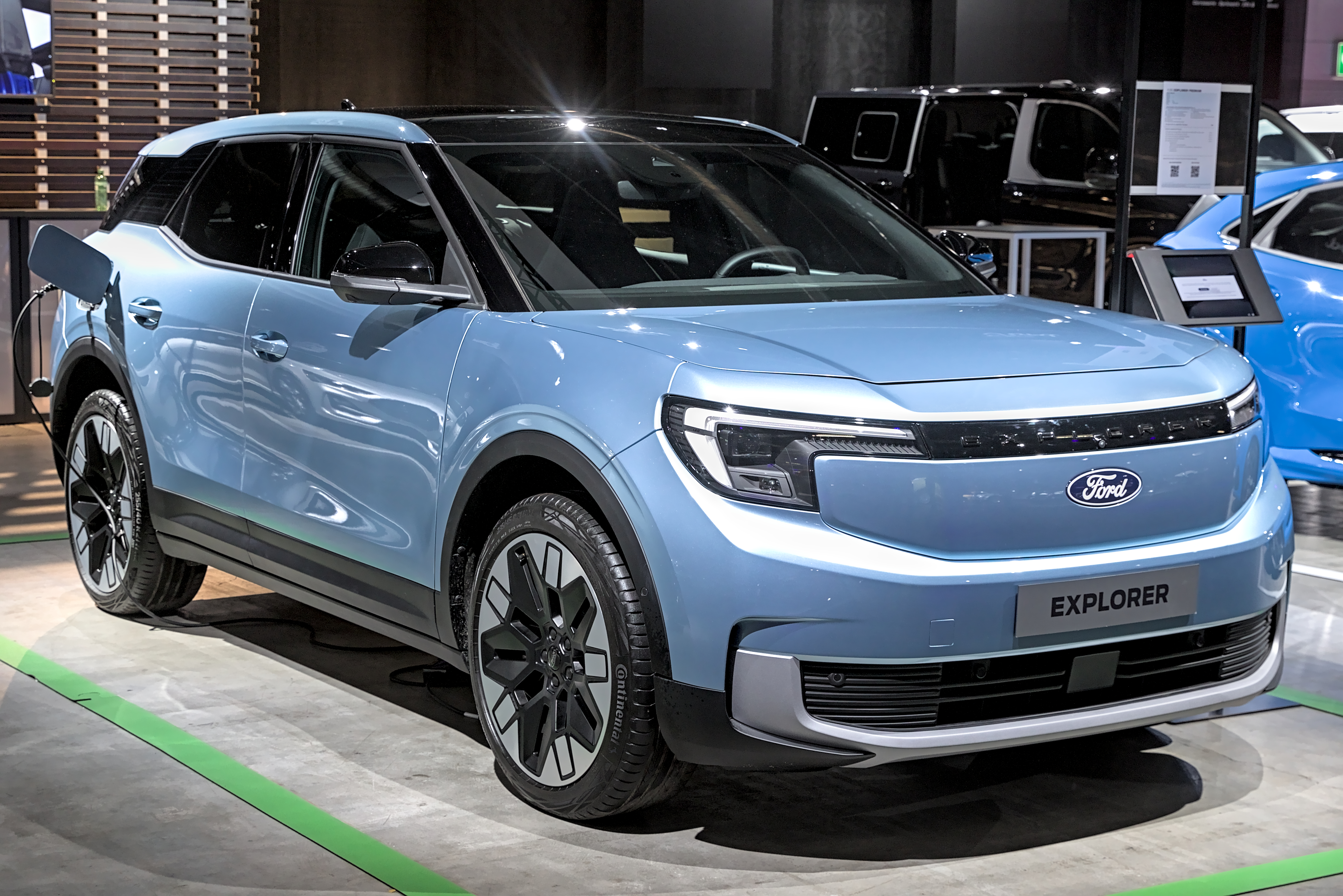
Ford Explorer
"...I've got my wife drives a 2015 Ford Explorer we've got about 110,000 miles on it probably one of the best cars I've ever owned..."
The Ford Explorer is Ford’s midsize SUV, and the 2015 model year is part of the generation that many owners remember for being more “car-like” than earlier body-on-frame designs. In the transcript, it’s described as an XLT with about 110,000 miles and no mechanical issues so far. That frames the discussion around long-term ownership and maintenance.
flat-towing
"...rear wheels are down but I looked at flat-towing it but it was you know you just leave the transmission a neutral there was too many too many variables flat-towing it yeah you can you can run into issues if you don't do things just right..."
Flat-towing is when you tow a car with its wheels still on the road. Some cars need special settings so the transmission and drivetrain aren’t harmed while being pulled.
Flat-towing means towing a vehicle with all four wheels on the ground. Many vehicles require specific procedures (like putting the transmission in neutral and sometimes using a tow mode) because towing can damage drivetrain components if the car isn’t set up correctly.
Request an Explanation
Heard something you'd like explained? We'll add it to this episode.
Sign in to request explanations for terms you heard.
Want to learn more?
Browse our glossary for plain-English explanations of automotive terms, jargon, and concepts.
Help improve this episode
See something that's not quite right? Our annotations are AI-generated and can sometimes miss the mark. Click the flag icon on any annotation to suggest a correction.