
Car Pro Radio Show April 18 26 Hour 3
About this episode
Jerry Reynolds and Todd Chambliss run a fast, call-heavy hour focused on practical buying advice and real-world tech concerns. They discuss a scary Dallas Tesla incident at a train crossing and argue autonomous driving isn’t foolproof. Listeners get guidance on choosing a Ford Maverick (Lariat vs Lobo, especially the hybrid’s mpg), picking an SUV that’s easier to enter/exit (Lexus RX vs Ford Explorer vs minivan logic), and whether to worry about GM’s 6.2L LSA engine issues in older Tahoes. Jerry also reviews a 2026 Wrangler Moab and weighs Kia’s EV pickup plan.
Car Pro Radio Show April 18 26 Hour 3
Hosted by Simplecast, an AdsWizz company. See pcm.adswizz.com for information about our collection and use of personal data for advertising.
smart car buying decision
"That's my only motivation is I want to help you make a good smart car buying decision. And if I can help you along that way with advice."
They’re talking about buying a car in a thoughtful way, not just picking one you like. It usually means doing research so you don’t end up with a bad deal or the wrong car for you.
The phrase “smart car buying decision” points to making a purchase based on informed criteria rather than impulse. In automotive contexts, this usually means comparing total cost, reliability, and suitability to your needs.
DallasExpress.com
"At DallasExpress.com. That's a fairly new website that is I really enjoy it because there's no subscription. There's no pop ups that come up."
They mention DallasExpress.com as a website that shares their writing. The host says it doesn’t require a paid subscription and doesn’t have annoying pop-up ads.
DallasExpress.com is described as a news site where the host’s car-related content is republished. The discussion highlights it as a source without subscriptions or intrusive ads.
Car Pro hotline
"So if I can help you we've got this entire hour to talk to each other at 800-926-7777. That's thechase.com car pro hotline 800-926-7777."
They give you a phone number to call and ask questions about buying a car. Think of it like getting help from the show’s experts.
The hosts direct listeners to a phone hotline so they can ask questions about car buying. It’s essentially a live Q&A channel tied to the show’s advice-focused format.
self-driving
"And you don't have self-driving either. I don't have self-driving. It's me. I'm myself doing the driving."
“Self-driving” can mean different levels of help from the car. Even when a car can do some driving tasks, you usually still have to watch what’s happening and be ready to take control.
“Self-driving” is often used loosely to describe a range of driver-assistance capabilities, from basic lane/traffic help to systems that can steer and accelerate under certain conditions. In practice, most consumer systems still require the driver to monitor the road and be ready to take over immediately.
train stop / train crossing safety scenario
"He was coming up to a train stop. The train was going down the tracks. The train was already on the tracks in front of him. Oh yeah. The arms are down. The red lights are flashing."
Train crossings are dangerous because the car has to stop for the train every time. If a car’s automated features don’t react correctly to the red lights/closed arms, it can cause a crash.
Train crossings are high-risk environments for any automated driving system because the car must correctly interpret signals, track geometry, and unpredictable train timing. A system that misjudges the situation—or the driver-assist logic that decides whether to stop—can lead to severe damage or worse.
autonomous driving
"It's like yeah but they're not foolproof. And that's the problem with it. We are not to autonomous driving yet."
Autonomous driving means the car tries to drive itself using sensors and computers. The key point is that it’s not perfect—sometimes it can make mistakes or get confused, so you still have to be ready to take over.
“Autonomous driving” refers to vehicles that can steer, accelerate, and brake with automation rather than relying entirely on the driver. Even when systems are advanced, they can still fail in edge cases, which is why many setups are best thought of as driver-assist rather than fully foolproof self-driving.
cruise control stick
"Okay. I had the cruise control stick on one and hitting the brake didn't help."
That “stick” is the lever you use to turn cruise control on and set your speed. If pressing the brake didn’t immediately fix things, it can feel scary because you expect the car to back off right away.
The “cruise control stick” is the steering-column control used to set and adjust cruise control speed. When the speaker says hitting the brake didn’t help, they’re describing how cruise control behavior can be confusing or delayed depending on the vehicle’s logic and the situation.
push button starts
"Luckily I had the foresight to just and at that time it was before push button starts but I just turned the key off and put it neutral."
Some cars start with a button instead of turning a key. The speaker is saying their car was older enough that they could just turn the key off.
Push-button start is an ignition system where you start the engine with a button instead of a traditional key turn. The speaker mentions it as a timeline detail, implying their car used a conventional key at the time.
turned the key off and put it neutral
"but I just turned the key off and put it neutral. And got it off to the side. Cranked it back up."
If something isn’t working right, turning the car off and putting it in neutral can help you stop the car from pulling forward. It’s a way to get the vehicle under control so you can get to the side of the road.
Turning the key off stops engine operation, and shifting to neutral reduces drivetrain load while you move the car to safety. In a runaway-speed scenario, these actions are a practical way to regain control when automated systems (like cruise control) misbehave.
steering wheel come off
"I had a steering wheel come off in my hand going down the road. That's crazy. They used to take the factory steering wheels off and put these wood steering wheels on."
A steering wheel coming off is a serious safety failure, typically related to the steering wheel being improperly mounted or a failed steering column/retention mechanism. The speaker’s description highlights how dangerous it can be at highway speeds.
wood steering wheels
"They used to take the factory steering wheels off and put these wood steering wheels on. Yes. Wood and chrome."
Wood steering wheels are a style upgrade people add to their cars. If they’re installed by swapping parts, they have to be mounted correctly or they can become loose.
Wood steering wheels are an aftermarket or custom upgrade that changes the feel and appearance of the steering wheel. The speaker connects them to an era when people swapped out factory wheels, which can introduce fitment and retention risks if the install isn’t done correctly.
align it right where you could actually control the groove
"[378.5s] Were you able to put it back on and align it right where you could actually control the groove? [383.0s] Luckily I was coming up on a left hand curve in the road and I hit the brakes and just"
They’re describing a situation where the van starts following a “track” or “groove” in the road. Once you get the vehicle positioned correctly, it becomes easier to steer and control where it goes.
This sounds like a discussion about correcting a vehicle’s path after it gets into an unintended “groove” (often from road crown, lane markings, or prior tire tracks). The idea is that once the vehicle is aligned/positioned correctly, steering control improves and the driver can manage the lane/trajectory again.

Ford Lobo
"...do you know the difference between a Lariat and a Lobo? And number one, is it a good truck and can you ..."
“Lobo” refers to a specific trim level of the Ford F-150 pickup. A trim level is basically the package of features and equipment the truck comes with. People compare it to other trims like “Lariat” to see what they get for the money.
“Lobo” is commonly used as shorthand for the Ford F-150 Lobo, which is a trim name associated with the F-150 lineup. In the context of “difference between a Lariat and a Lobo,” the discussion is typically about how different trim levels change features, equipment, and sometimes appearance or capability. It’s brought up because buyers want to know which trim best matches their budget and desired options.

Ford Maverick
"And number one, is it a good truck and can you give me any alternatives? ... Everybody loves that field economy, especially right now with $4 gas and Dallas, $6 in other parts of the country. That thing will get a true 40 miles to the gallon. ... So personally, I'd go with the Maverick over anything else out there"
The Ford Maverick is a smaller pickup truck that’s usually cheaper and more fuel-efficient than bigger trucks. Here they’re talking about the hybrid version, which can stretch gas a lot when fuel prices are high.
The Ford Maverick is a compact pickup known for being relatively affordable and efficient compared with traditional trucks. In this segment, the hosts focus on the Maverick’s hybrid version and its real-world fuel economy, especially in high gas-price conditions.
hybrid
"Particularly those people who get the hybrid. Everybody loves that field economy, especially right now with $4 gas and Dallas, $6 in other parts of the country."
A hybrid uses a gas engine plus an electric motor. The electric help can make the truck use less gas, especially in everyday driving.
A hybrid powertrain uses both an internal-combustion engine and an electric motor to improve efficiency. In pickups like the Maverick, the hybrid setup is often the key reason buyers see dramatically better fuel economy than non-hybrid trucks.
fuel economy
"Everybody loves that field economy, especially right now with $4 gas and Dallas, $6 in other parts of the country. That thing will get a true 40 miles to the gallon."
Fuel economy is how far you can drive on a gallon of gas. Higher fuel economy usually means you spend less money at the pump.
Fuel economy is how efficiently a vehicle uses fuel, commonly measured as miles per gallon (MPG). The hosts are using fuel economy as the main buying argument, comparing what different trucks can realistically achieve when gas prices are high.

Hyundai Santa Cruz
"The only thing out there that's even close to being comparable is the Hyundai Santa Cruz and it's substantially more money than the Maverick. ... It's an upscale, nice, almost luxury interior that you get in the Santa Cruz."
The Hyundai Santa Cruz is another small truck-like option. The hosts say it feels nicer inside, but it costs more and doesn’t have as many discounts.
The Hyundai Santa Cruz is a compact pickup/crossover-style truck alternative mentioned as being comparable to the Maverick’s efficiency. The hosts note it’s “substantially more money” and that it has fewer incentives, even though it offers a more upscale interior.
incentives
"But it's probably seven, eight grand more money and doesn't have much in the way or incentives on it."
Incentives are discounts or special offers that can lower the price of a car. The host is saying some models don’t have as many deals, so they end up costing more.
Incentives are manufacturer or dealer promotions that reduce the effective price of a vehicle (e.g., rebates, special financing, or lease deals). The hosts bring up incentives to explain why two similarly equipped vehicles can end up costing very different amounts after discounts.
cars.com
"[580.6s] Well, the results of a cars.com recent study came into play with one of the items in our [586.9s] newsletter today in that study."
Cars.com is a website where people shop for cars and read automotive news. Here, they’re talking about their awards for which new cars offer the best value.
Cars.com is an automotive marketplace and media site that publishes research and awards. In this segment, they’re referencing their “best value new car” awards and how shoppers prioritize cost, maintenance, and long-term value.
best value
"[589.2s] They found that shoppers out there, three quarters of those in the market for a car [594.9s] indicated they're spending less money focusing on necessities and trying to get the most [599.9s] value from every penny spent on a big purchase like a car, including how long it take, you [605.1s] know, what you need to maintain that car over the long haul."
“Best value” means the car that gives you the most for your money overall. It’s not only about the price—you also think about maintenance and how long the car will last.
“Best value” in car shopping usually means maximizing total cost of ownership and long-term satisfaction. That can include how much you spend up front, how long the vehicle lasts, and what it costs to maintain over time.
total cost of ownership
"[599.9s] value from every penny spent on a big purchase like a car, including how long it take, you [605.1s] know, what you need to maintain that car over the long haul."
Total cost of ownership is the real cost of having a car. It includes the price you pay, plus ongoing expenses like maintenance over the years.
Total cost of ownership (TCO) is the broader financial picture of owning a car, including purchase price plus ongoing costs like maintenance. This segment frames TCO as part of “value,” emphasizing how long the car will last and what it will cost to keep it running.
vehicle class comparison (subcompact SUV vs midsize/compact)
"[616.8s] You can do all kinds of the different divisions as far as subcompact SUV, midsize compact car [624.5s] and the list goes on and on and on. [636.3s] And it could be a good tool for you if you're trying to figure out between I could do maybe [641.0s] a midsize or maybe a compact SUV and you can look at those different ones and kind of [646.1s] see where you are."
Car classes group vehicles by size and type, like smaller SUVs or bigger SUVs. Comparing within classes makes it easier to pick the right one for your needs without getting lost.
Comparing vehicles by class (subcompact SUV, compact car, midsize SUV, etc.) helps shoppers narrow choices to vehicles with similar size and intended use. This segment suggests using the awards list as a tool to decide between categories like compact vs midsize SUV.

GMC Acadia
"I drove a GMC Acadia and I also like the Lexus and it used to be an RX330, but I don't know what that is, but I like the Ford Explorer and I just wanted to get some guidance."
The GMC Acadia is a family-sized SUV. People often compare it to trucks because it can be easier to climb into and out of.
The GMC Acadia is a midsize three-row SUV known for being easier to get in and out of than many trucks. In this conversation, it’s mentioned as a comparison point for comfort and accessibility.
entry height
"Well, I, when you say you, I'm assuming that when you say you have trouble getting in and out, it's because of height, entry height, right?"
Entry height is how tall the car is to get into. If the seat is high, it can be harder to step in and out—especially if you have trouble with strength or balance.
Entry height refers to how high the seat and floor are relative to the ground, which affects how difficult it is to climb into or out of a vehicle. For drivers with mobility limitations, entry height can matter as much as seat comfort or drivetrain.
assist
"Well, I have a muscular disease. So it's, for me, I kind of bail out of a truck and I hold on to the assist, but it's getting"
“Assist” here means some kind of help feature to make getting in and out safer. It could be a handle or step that you can hold onto for stability.
In this context, “assist” likely refers to an assist feature—such as a handle, step, or power running board—that helps a person stabilize while entering or exiting. These features can be crucial for accessibility, especially when a driver “bails out” of a high vehicle.
20 or 22 inch wheels
"And they pick up set up so high nowadays, especially when they got 20 or 22 inch wheels. But I'm going to tell you, Steve, that truck's worth a lot of money right now."
Bigger wheels often mean the tire sidewall is shorter. That usually makes the ride less cushy and can make the tires easier to damage on rough roads.
Larger wheels (like 20- or 22-inch) usually come with shorter sidewall tires. That can make the ride feel harsher and can increase the chance of damage from potholes or curbs.
sliding door
"So, and I was going to lead, if that were the case, I was going to lead you down the road of a minivan, because they, if you eventually are going to need a lift, they're perfect for that and SUVs are not. It's all because of the sliding door."
A sliding door opens sideways, so it doesn’t need as much space to swing open. That can make it easier to load someone in or out, especially with accessibility equipment.
Sliding doors are common on minivans because they make it easier to get in and out, especially in tight parking spaces. They’re also often easier for accessibility setups like lifts or wheelchair access compared with traditional swing-out doors.

Lexus RX 350
"Okay. So, and I was going to lead, if that were the case, I was going to lead you down the road of a minivan, because they, if you eventually are going to need a lift, they're perfect for that and SUVs are not. The Lexus is now the RX 350. I think it's probably the best SUV that's ever been made."
The Lexus RX 350 is a popular Lexus SUV. The hosts are basically saying it’s one of the best options if you want a comfortable, practical SUV.
The Lexus RX 350 is a mainstream luxury midsize SUV in the RX lineup. In this discussion, it’s being positioned as a top choice among SUVs, with attention to practical features like seating.
third row seat
"Now the RX still, like the 330, the 350 or the 450 does not have a third row seat. And the other ones that you mentioned to me did have a third row seat. So is that important?"
A third row seat is the extra seating behind the main seats. It’s useful only if you regularly need to carry more people, because it can take up space.
A third row seat lets an SUV carry more passengers, but it often reduces cargo space and can make the interior packaging tighter. Whether it matters depends on how often you actually need extra seating.
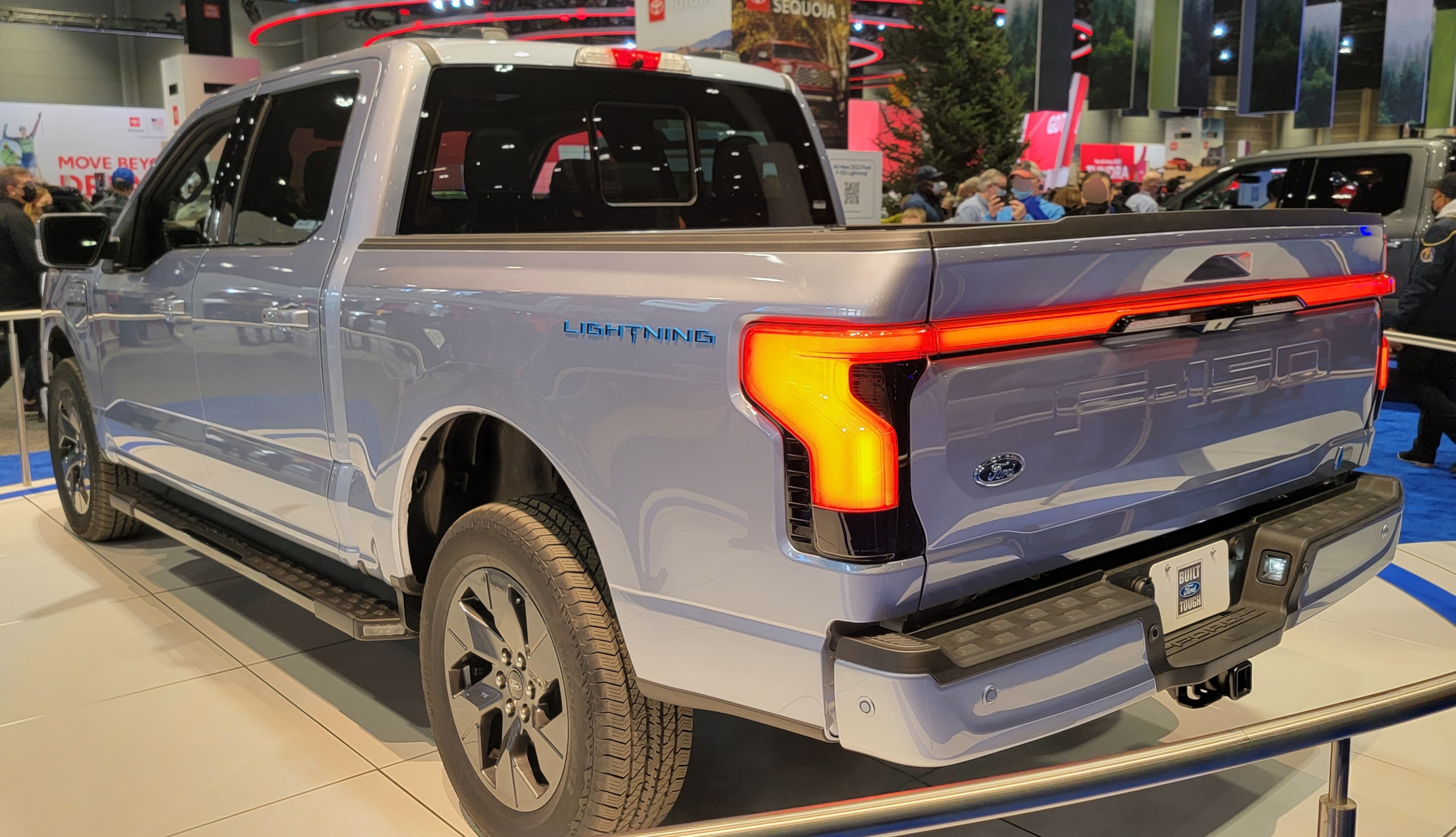
Ford F-150 Platinum
"...than his 20, 24 F 150 platinum, which is worth a fortune."
This is a top trim of Ford’s F-150 pickup truck. It’s a big truck, so getting in and out can be tougher than with a smaller SUV—especially if you want easier parking and easier entry/exit.
The Ford F-150 Platinum is a high-trim version of Ford’s best-selling full-size pickup. It’s typically equipped with more comfort and convenience features, but as a larger vehicle it can be harder for some drivers to get in and out of compared with an SUV.
Lexus RX
"Steve, I, I, I mean, the Lexus RX is just outstanding and it's going to have about the height, the ride height of that Ford Edge that you mentioned earlier."
The Lexus RX is a comfortable, easy-to-live-with SUV. The host is saying it should feel similar in size and height to the Ford Edge, which can make it easier to park and enter/exit.
The Lexus RX is a midsize luxury SUV known for a comfortable ride and easy daily usability. In this segment, the host recommends it because its ride height and overall size are similar to the Ford Edge, which helps address concerns about getting in and out.

Ford Edge
"...it's going to have about the height, the ride height of that Ford Edge that you mentioned earlier."
The Ford Edge is a mid-size SUV. They’re using it as a measuring stick for how tall it sits and how big it feels, so the listener can choose something similar but easier to live with.
The Ford Edge is a midsize crossover SUV. Here it’s used as a reference point for “ride height” and dimensions, because the Lexus RX is being compared to it for size/comfort fit.
certified used
"Now you could go with a new one or you could go with a certified used one."
A certified used car is a used vehicle that a dealer checks and fixes up to meet certain rules. It usually includes extra protection, like a longer warranty, compared with buying a regular used car.
“Certified used” (often called CPO—Certified Pre-Owned) is a program where a dealer inspects and reconditions a used car to meet specific standards. It typically comes with added coverage like an extended warranty and sometimes extra benefits compared with a regular used purchase.
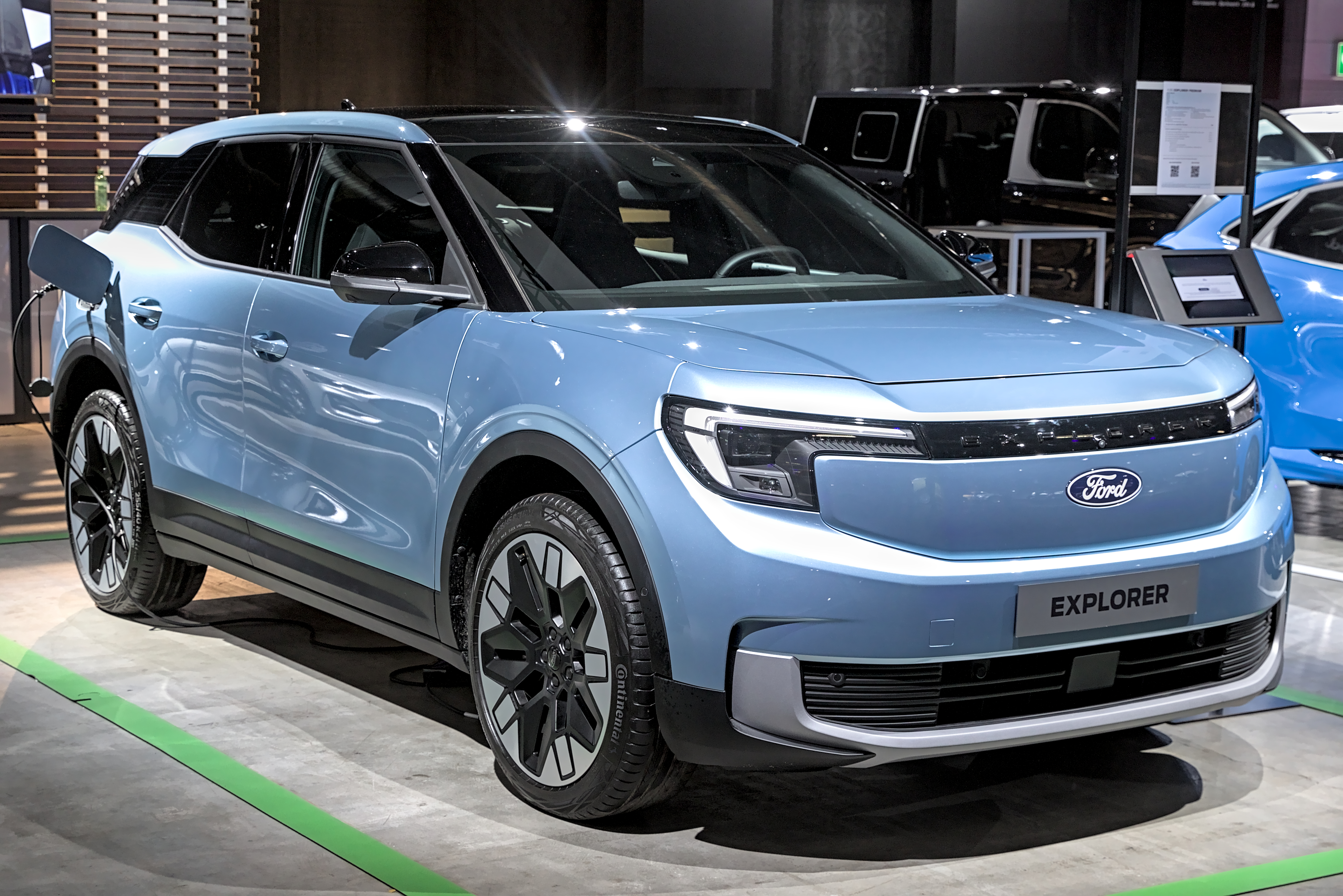
Ford Explorer
"If you go on to something a little bigger that does have a third row seat, then I would recommend the Explorer."
The Ford Explorer is an SUV that can come with a third row of seats. They’re suggesting it if you need more room for passengers than a smaller SUV.
The Ford Explorer is a midsize SUV that’s commonly offered with a third-row seat depending on trim and configuration. In this segment, it’s recommended as the next step if the buyer wants more space and the ability to carry additional passengers.
Lexus RX 450
"A nicely equipped Explorer is going to be about 15 grand under the price of a Lexus RX 450. If you want to take that into consideration and the third row seat in the Explorer does fold flat into the floor."
The Lexus RX 450 is being used as a pricing comparison point against a “nicely equipped” Explorer. The RX 450 is part of Lexus’s RX lineup, and the comparison highlights how incentives and equipment can narrow the price gap between brands.
Kia
"Todd Shambles here with the CarPro Jerry Reynolds, where I think you have some interesting observations about the news about Kia saying that they're going to bring a pickup to the US."
Kia is a car company from South Korea. They’re talking about bringing a pickup truck to the U.S., and the idea is that Kia could make it look good, include lots of features, and price it competitively.
Kia is a major South Korean automaker that’s expanding its lineup in the U.S. beyond cars and SUVs. In this segment, the hosts discuss Kia’s plan to bring a pickup to the U.S., and how that could follow Kia’s recent strategy of strong styling, features, and pricing.
pickup to the US
"Todd Shambles here with the CarPro Jerry Reynolds, where I think you have some interesting observations about the news about Kia saying that they're going to bring a pickup to the US. How do you feel about that?"
They’re talking about Kia entering the U.S. pickup-truck market. Trucks are a different kind of vehicle than cars or SUVs, so Kia would need to meet what truck buyers expect.
Bringing a pickup to the U.S. is a major product expansion because trucks have different customer expectations than cars and SUVs. The hosts connect it to Kia’s existing approach—strong design, features, and pricing—to compete in a segment dominated by established brands.
10 years, 100,000 mile warranty
"Put a 10 years, 100,000 mile warranty on it. They're going to kill it with that. Sure."
A “10 years, 100,000 mile” warranty means the company will cover certain problems for a long time. It helps you feel safer buying the vehicle, especially if it’s a new type of truck or powertrain.
A long warranty like “10 years, 100,000 mile” is meant to reduce buyer risk and signal confidence in durability. For EVs and new models, it can be especially important because many buyers worry about battery and powertrain longevity.
electric
"Then I looked closer and it's going to be electric. Oh, yeah, that's too bad. The prototype, I'm sure this is an AI recreation,"
They’re saying the pickup will be electric, meaning it runs on a battery instead of gasoline. That can be great, but it also depends a lot on whether you can charge it conveniently.
The hosts say the pickup is going to be electric, which changes the ownership experience compared with a gas truck. Electric vehicles rely on battery capacity, charging access, and efficiency rather than fuel economy and refueling stops.
EV
"Yeah, but it looks pretty cool, but to know it's an EV, that's kind of a disappointment."
An EV is a car that runs on electricity stored in a battery. Instead of using gasoline like most cars, it uses an electric motor to move the car. Some people prefer EVs, while others want gas or hybrid choices because of things like charging and range.
EV stands for electric vehicle, meaning the car is powered primarily by an electric motor and a battery rather than a gasoline engine. People often debate EVs versus gas or hybrid options because it affects range, charging convenience, and driving feel.
charging infrastructure
"they should look at offering it as a gasoline or a gas hybrid or an electric and let people choose. Yeah, that would be the best way."
Charging infrastructure refers to the availability and convenience of places to recharge an EV. When it’s limited or inconvenient, it can make EV ownership less practical for some drivers, even if the vehicle itself is appealing.

Chevrolet Tahoe
"I have a 1999 Chevy Tahoe four door with a 5.7 liter engine. I bought it new in 1998 for 28,000. Wow. I'm not going to get rid of it."
This is a 1999 Chevrolet Tahoe, a full-size SUV. The caller is saying they still plan to keep their current Tahoe, but they’re thinking about buying a newer one.
A 1999 Chevrolet Tahoe is a late-90s full-size SUV from Chevrolet. In this call, the owner mentions it has a 5.7-liter engine and that they plan to keep it while considering buying a newer Tahoe.
LSA
"However, I'm going to buy a new Tahoe, but I'm scared of the LSA. I mean, the L 87 6.2 engine because General Motors had a big, bad bang with that engine."
LSA is the label for a particular GM 6.2-liter V8 engine. The caller is worried there were engine problems and wants to know if GM fixed them in later years.
LSA is the name used for a specific General Motors V8 engine family/variant associated with the 6.2-liter displacement in newer trucks and SUVs. The caller is concerned about whether GM addressed known engine issues across certain model years.
6.2 liter engine
"However, I'm going to buy a new Tahoe, but I'm scared of the LSA. I mean, the L 87 6.2 engine because General Motors had a big, bad bang with that engine. I want to know, did they repair?"
The 6.2-liter engine is a big V8 engine size used in some GM SUVs. The caller is basically asking: did GM fix the engine problems in newer years?
A 6.2-liter V8 is a common GM displacement used in full-size SUVs and trucks. In this segment, the host and caller connect it to a past GM “engine problem” and discuss whether later model years corrected the issue.
model year changes to fix an engine problem
"I want to know, did they repair? I mean, did they fix engine problem for the model years of 21 to 24... No, they didn't. Now, the new ones, the 25s and 26s, they made some changes in the problem is gone."
This segment discusses how automakers sometimes revise an engine or its supporting systems after earlier model years develop a reputation for problems. The caller is trying to identify which model years are safer based on whether GM made changes and whether the issue “is gone” in later years.
recall/testing results and warranty coverage
"And so they have been pretty accurate with the testing that they do to tell people, OK, yeah, we think yours could give this problem... So I wouldn't rule it out if you're going to go from a 2021 to a 2024... it'll be under warranty."
Sometimes a car problem is found through testing, and the company may update or repair affected cars. Before you buy, it helps to check whether that specific fix was already done and whether your warranty would cover it.
The hosts are talking about how manufacturers and regulators test vehicles, identify likely problem cases, and then notify owners. They also emphasize checking whether the specific vehicle has already had the relevant test/repair performed and whether the fix is covered under warranty.
Jasper engine
"...and it had that engine in it, could I get a Jasper engine six point two L eighty five"
Jasper sells rebuilt engines. Instead of buying a brand-new engine, you can sometimes install a Jasper remanufactured engine as a replacement if the original one has issues.
Jasper is a company that sells remanufactured engines, typically rebuilt to like-new specifications with warranties. The question here is whether a Jasper 6.2L engine could be used as a replacement solution if the original engine has a known problem.
leftover 2025 vs new 2026
"So that's going to be either a leftover twenty twenty five or a new twenty twenty six. And those haven't given any trouble."
A “leftover” is a car that’s already on the lot from last model year. A “new” one is the current model year—often with the newest features, but sometimes with less room to negotiate.
The host is discussing the difference between buying a “leftover” model year (remaining inventory from the prior year) versus a brand-new current model year. Leftovers can sometimes be negotiated more aggressively, while new models may have the latest updates but fewer deal opportunities.

Jeep Wrangler
"And this week, the twenty twenty six Wrangler Moab three ninety two. You've been riding around in you in that today still. Yes. And how is that to ride around? It's a beast."
This is a Jeep Wrangler Moab 392, which is a special Wrangler with a big V8 engine. It’s meant to be more off-road capable and it sounds really aggressive, and there’s a button that can make the exhaust quieter.
This refers to the Jeep Wrangler Moab 392, a special edition Wrangler built around the 6.4L V8 “392” engine. The “Moab” package is aimed at off-road capability and styling, and the hosts highlight its strong power and exhaust character, plus a button to change exhaust loudness.
exhaust sound
"It's just it's in the sound. Oh, my God. I love a good exhaust sound and this thing is just unbelievable."
“Exhaust sound” is the noise and tone your car makes from the tailpipe. Some cars are tuned to sound especially exciting, and this one is described as sounding unbelievable.
Exhaust sound is a big part of how a performance car feels, because it’s shaped by the engine’s firing pulses and the exhaust system design. In this segment, the host emphasizes the Wrangler Moab 392’s exhaust note as a standout feature.
button to push that you can make it quieter
"And it's got a button to push that you can make it quieter if you want to."
That button likely controls how loud the exhaust is. It can open or close something in the exhaust so it’s louder when you want it and quieter when you don’t.
A “button to push” that makes the exhaust quieter usually indicates an exhaust sound control system, such as valves in the exhaust that open for louder flow or close to reduce noise. This lets drivers tailor the sound to situations like neighborhood driving or highway cruising.
power-operated convertible-style top
"Okay. And you just hit a button and it opens itself all the way up. And it's just like being in a convertible."
This is a roof that opens and closes automatically. Instead of taking parts off by hand, you press a button and the roof moves for you.
A power-operated convertible-style top uses motors and linkages to open and close the roof without manual removal. The host contrasts this convenience with more involved roof-panel systems, emphasizing how quickly you can go from closed to open.
removable roof panels (manual roof removal)
"You have to take off. You don't align them just right. It could take you a little bit of time to get that back on because it's it's a little cumbersome sometimes. And if you take the entire top off of a Wrangler, it's a two person job and you're probably 30 to 45 minutes."
Instead of a roof that moves with a button, some vehicles use roof panels you take off yourself. Putting them back on can take time and may be easier with two people.
Some off-road SUVs use removable roof panels rather than a fully power-operated mechanism. Manual removal/reinstallation can be slower and may require careful alignment, and the host notes it can be a two-person job taking roughly 30–45 minutes.

Ford Bronco
"Then you can hit it and it's sort of belies the way we have to operate the Bronco because you have these panels. You have to take off."
The Ford Bronco is also built for open-air driving, but its roof setup can be more work. You may need to take panels off and put them back on carefully, which can take longer than a button-operated roof.
The Ford Bronco is another off-road SUV famous for its removable roof and doors, but the process can be more hands-on depending on the configuration. Here, the host explains that the Bronco’s roof panels take time to remove and reinstall correctly.
start stop system
"This is absolutely great. And you know the best part. What's that? It does not have the start stop system. That is awesome."
Start-stop is a feature that turns the engine off when you’re stopped (like at a light) and turns it back on when you go again. Some people love the fuel savings, but others find it annoying because the engine restarts every time you stop.
A start-stop system automatically shuts the engine off when the car is stopped and restarts it when you press the accelerator or release the brake. It’s designed to reduce fuel use and emissions in traffic, but some drivers dislike the extra engine restarts and perceived wear.

Kia Telluride
"I'm kind of debating between a brand new spanking telluride or a Tahoe. They're both beautiful looking vehicles. I know one is significantly more expensive than the other."
The Kia Telluride is a family SUV with three rows of seats. Here, the caller is deciding between the Telluride and a Tahoe and wants help choosing based on what matters most to them.
The Kia Telluride is a midsize three-row SUV known for comfort and value. In this segment, the caller is comparing it against a Chevrolet Tahoe, likely weighing price, features, and day-to-day usability.
crossover SUV
"You know, you're talking about a crossover SUV and a crossover SUV is a car. I mean, it's a car with utility body on it."
A crossover SUV is basically a car platform with an SUV body. It’s often easier to drive and more efficient than a truck-based SUV, and many are front-wheel drive.
A crossover SUV blends car-like unibody construction with SUV styling and higher ride height. Compared with body-on-frame trucks, crossovers usually package better for everyday driving and fuel economy, and they’re commonly front-wheel drive.
utility body on it
"I mean, it's a car with utility body on it. So you're getting the front wheel drive."
They’re saying the SUV look is put on a car-style structure. That’s important because it changes how the vehicle drives and how it’s built compared to truck-based SUVs.
“Utility body” here is describing the SUV body style mounted on a car-like structure, which is typical of crossovers. The key takeaway is construction: crossovers are usually unibody, which affects ride comfort, handling, and how power is packaged.
front wheel drive
"So you're getting the front wheel drive. You're getting the car chassis versus the Tahoe, which is a big honking truck chassis..."
Front-wheel drive means the front wheels do the work of moving the car. It’s common in many crossovers because it can be simpler and more efficient for everyday driving.
Front-wheel drive (FWD) sends engine power to the front wheels, which can improve packaging and often helps fuel economy. In crossovers, FWD is common because it pairs well with unibody construction and transverse engine layouts.
truck chassis
"...versus the Tahoe, which is a big honking truck chassis and rear wheel drive or four wheel drive if you prefer."
A truck chassis means the SUV is built on a real frame, like a pickup truck. That usually makes it tougher for heavy use and towing, and it often comes with rear-wheel drive or four-wheel drive.
A “truck chassis” implies body-on-frame construction, where the vehicle’s frame carries the load and the body is mounted on top. This typically goes with rear-wheel drive or four-wheel drive and is favored for towing capacity and durability under heavy use.
four wheel drive
"...truck chassis and rear wheel drive or four wheel drive if you prefer. But primarily the rear wheels are where the action is."
Four-wheel drive powers all four wheels, which can help you get traction when roads are slippery or rough. It’s often chosen for weather or off-road capability.
Four-wheel drive (4WD) powers both the front and rear axles, improving traction on snow, mud, or uneven terrain. The transcript frames it as an option on the Tahoe, aligning with its truck-based design.
rear wheel drive
"...truck chassis and rear wheel drive or four wheel drive if you prefer. But primarily the rear wheels are where the action is."
Rear-wheel drive means the back wheels move the vehicle. It’s common on truck-based SUVs and can feel different than front-wheel drive, especially in how it handles power and traction.
Rear-wheel drive (RWD) sends power to the rear wheels, which can help with weight distribution and traction characteristics. In truck-based SUVs like the Tahoe, RWD is a common baseline, with four-wheel drive available for more demanding conditions.
check engine light
"But next week, I've got the annual car MD report that shows you the greatest causes of your check engine light coming on and. What it costs to fix those."
The check engine light is a warning that the car’s computer found a problem. It usually means you should scan the car for codes so you know what’s wrong and what it might cost to fix.
The check engine light (often called the “CEL”) is triggered when the vehicle’s onboard computer detects a fault in emissions systems or engine-related sensors/controls. The light doesn’t always mean the engine is about to fail, but it does indicate there’s a diagnostic trouble code stored that should be checked.
car MD report
"But next week, I've got the annual car MD report that shows you the greatest causes of your check engine light coming on and. What it costs to fix those."
The “CarMD report” is a data-driven breakdown of common check-engine-light causes and typical repair costs, based on diagnostic scan results. It’s often used as a quick way to understand what problems are most frequently behind the light and what owners typically pay to fix them.
subscription fatigue
"I've got a new phrase that I coined. [2078.2s] Can you say it on the year? [2079.3s] I can. [2082.1s] Subscription fatigue."
Subscription fatigue is when you get tired of paying monthly for lots of different services. It’s common now because many things that used to be included are offered as ongoing payments.
“Subscription fatigue” is the feeling that too many services are moving to recurring monthly payments. In car ownership, it can show up with infotainment subscriptions, connected services, and even driver-assist features that require an ongoing fee.
insurance claims
"And my favorite coming up. [2097.9s] The list of the insurance companies that pay their claims the best. [2106.0s] So no matter what you're paying per month, this is really something to consider because if you're paying the least amount and they don't cover the claims. [2115.6s] Are you really doing yourself any good? [2117.4s] Exactly."
Insurance claims are the requests you make to get paid after an accident or damage. The important part is whether the insurance company actually pays out what you’re owed, not just how cheap the monthly cost is.
“Pay their claims the best” refers to how reliably an insurer actually pays out after a covered loss. For drivers, the key isn’t just the monthly premium—it’s whether the insurer will approve repairs and reimburse you when you file.
insurance premiums
"Yeah. [2123.1s] I mean, every one of their ads, they tell you about how much they save you on your insurance premiums. [2130.4s] Well, you should."
Your insurance premium is the amount you pay each month (or term) for coverage. A cheaper premium isn’t always better if the company doesn’t pay claims the way you expect.
“Insurance premiums” are the recurring payments you make to keep your policy active. The hosts are contrasting premium price with claim coverage quality—because a low premium can be a bad deal if the insurer denies or underpays claims.
Request an Explanation
Heard something you'd like explained? We'll add it to this episode.
Sign in to request explanations for terms you heard.
Want to learn more?
Browse our glossary for plain-English explanations of automotive terms, jargon, and concepts.
Help improve this episode
See something that's not quite right? Our annotations are AI-generated and can sometimes miss the mark. Click the flag icon on any annotation to suggest a correction.