
Car Pro Radio Show May 2 26 Hour 2
About this episode
Ford’s employee-pricing push gets a close look, including how rebates can move a Bronco well below sticker and why consignment may beat a quick trade-in for a low-mileage Lincoln. The conversation also covers Toyota goodwill on missed recalls, what it takes to import a Hilux, and why a diesel would be essential for a U.S. truck version. Later, the hosts steer a high-mileage driver toward a RAV4 hybrid and share a listener’s successful Tacoma purchase story.
Car Pro Radio Show May 2 26 Hour 2
Hosted by Simplecast, an AdsWizz company. See pcm.adswizz.com for information about our collection and use of personal data for advertising.
employee pricing is back
"We're here this entire hour talking cars, talking about the big announcement from Ford yesterday of employee pricing is back and that just came out of nowhere."
“Employee pricing” means a special discount that’s usually available through a car company’s employees. If it’s “back,” it means the discount program has restarted, so some buyers may be able to pay less than usual.
“Employee pricing” refers to discounted pricing programs that are typically offered through an automaker to its employees (and sometimes eligible family members). When the hosts say it’s “back,” they mean the discount program has resumed, which can lower transaction prices for qualifying buyers.
Ford
"That's a huge increase. I mean, when you start talking increases at the automaker level, they start talking about half of 1% is a great job. They went up 14.5% the last time they did it. They're going to do that again. And so the other automakers are scurry and Toyota is the smart one."
Ford is a car company. In this segment, they’re talking about how Ford’s sales deals can move sales numbers.
Ford is the automaker being discussed in the context of sales incentives. The hosts are comparing how Ford’s pricing strategy affected sales versus other brands.
Toyota
"And so the other automakers are scurry and Toyota is the smart one. They didn't end their incentives on April the 30th. They ran through this weekend and through Monday night with their April incentives."
Toyota is another car company they’re comparing against Ford. They’re saying Toyota kept its discounts going longer, which gives shoppers more time to benefit.
Toyota is mentioned as the automaker that kept incentives running longer than competitors. The discussion frames Toyota as being more strategic with timing of promotions.
incentives
"They didn't end their incentives on April the 30th. They ran through this weekend and through Monday night with their April incentives. So they got time to come up with a plan, but everybody else that ended their incentives on April 30th, they were all ready to make their announcements on Friday morning, yesterday morning and guess what?"
Incentives are discounts or deal offers from the car maker that lower what you pay. They’re talking about when those deals end and how that forces other brands to respond.
Incentives are manufacturer-backed promotions that reduce the effective cost of buying or leasing a vehicle, such as cash rebates or special financing offers. The hosts discuss how the timing of incentives (ending on a certain date vs running longer) affects what competitors need to do next.
rebates
"...probably wasn't going to be enough to offset what Ford's currently doing, which is employee pricing, plus rebates on everything. And it's just amazing."
Rebates are cash discounts that reduce the price you pay for a car. They’re saying Ford is stacking rebates on top of other discounts to make the deal more attractive.
Rebates are direct cash discounts offered by the manufacturer (or sometimes the dealer) to lower the purchase price of a vehicle. In the segment, rebates are grouped with employee pricing as part of Ford’s strategy to stimulate sales.
lease
"...which is what's the one thing you wish you'd have done differently when you bought your last car? Maybe you bought it and you wanted to lease it. You should have leased it. That's what Todd did."
Leasing means you rent the car for a few years and then give it back (unless you choose to buy it later). They’re asking listeners whether they wish they’d leased instead of bought.
A lease is a contract where you pay to use a vehicle for a set period, typically with mileage limits, and you return it at the end unless you buy it. The hosts discuss regret about whether they should have leased or bought their last car.
option
"Maybe, you know, you got an option that you paid extra for that you're not using or maybe you wish that you had spent a little more money and got a certain option."
In car buying, an option is a factory-installed feature or package you can add to a vehicle, usually for an extra cost. The hosts mention paying extra for an option you’re not using, which is a common source of buyer regret.

Buick Roadmaster
"...0-926-7777, 800-926-7777, and speaking of the old roadmaster, you're with me today, Todd Jambus."
The Buick Roadmaster is an older, full-size car model from Buick. The podcast mentions the “old Roadmaster,” meaning it’s talking about the classic version. It’s remembered for being big and comfortable.
The Buick Roadmaster is a classic full-size Buick model known for its traditional American styling and roomy, comfortable character. The podcast references the “old Roadmaster,” which suggests it’s being discussed as a nostalgic or historical vehicle rather than a current purchase. That kind of mention often comes up when hosts talk about how older cars shaped brand identity and design.

Ford Mustang
"It says, thanks to renewed employee pricing, a Ford Mustang now costs as much as a Miata. So think about that for a second."
The Ford Mustang is a well-known Ford sports car. They mention it because a headline claims employee discounts can bring its price down to the level of a Miata.
The Ford Mustang is Ford’s iconic sports coupe/convertible model line. In this segment, it’s mentioned in a headline comparing the Mustang’s cost after employee pricing to the price of a Mazda Miata.
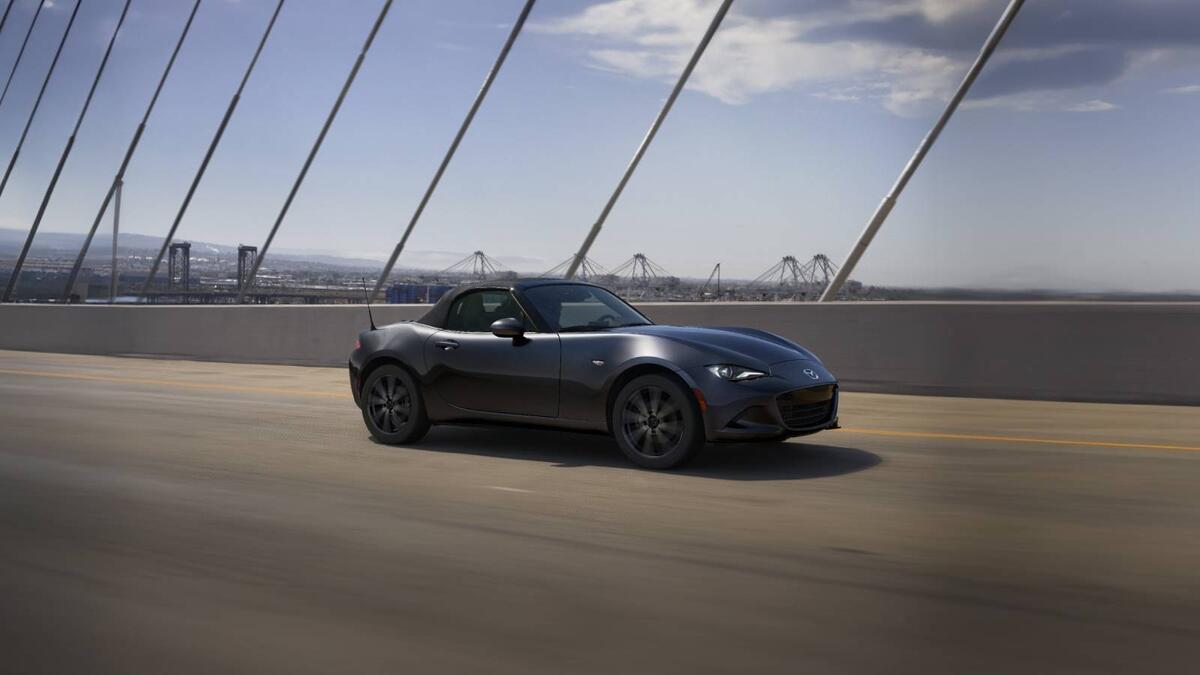
Mazda MX-5 / Miata
"...ee pricing, a Ford Mustang now costs as much as a Miata. So think about that for a second."
The Mazda MX-5 Miata is a small two-seat roadster designed for easy, fun driving. In the podcast, it’s mentioned because the Mustang’s discounted price can be similar. That comparison helps people decide what they get for the money.
The Mazda MX-5 Miata is a lightweight, driver-focused roadster famous for its simple, balanced handling and relatively affordable ownership. The podcast references it as a price benchmark—saying a Mustang can cost about the same with renewed employee pricing. That’s why it comes up: it highlights how pricing can shift the “best buy” for people shopping for a fun car.

Ford Bronco
"And here's an example on a popular vehicle, the 2025 Ford Bronco Outer Banks edition. That's one of the upper trim levels... Bear in mind, that's a Texas rebate."
This is a specific version of the Ford Bronco SUV. “Outer Banks” is a nicer trim level, and the hosts are using it to show how discounts and rebates can lower what you pay.
The Ford Bronco is Ford’s modern SUV built around off-road capability, and the “Outer Banks” is a higher trim level. In this segment, they’re using the 2025 Bronco Outer Banks as an example to show how renewed Ford employee pricing and rebates can change the final price.
2.3-liter EcoBoost
"So this has got, it's nicely equipped, leather seats. It's got the 2.3-liter EcoBoost. It's got 10-speed automatic..."
EcoBoost is Ford’s turbocharged engine family, and “2.3-liter” describes the engine’s displacement. A 2.3L EcoBoost is a common powerplant in Ford crossovers and SUVs, combining turbocharging with gasoline efficiency.
10-speed automatic
"It's got the 2.3-liter EcoBoost. It's got 10-speed automatic, 18-inch wheels, a painted hardtop, which is a nice feature."
This means the Bronco uses an automatic transmission with 10 different gear settings. The car shifts for you, and the extra gears can help it feel smoother and more efficient.
A “10-speed automatic” is a transmission that automatically shifts through 10 gear ratios. More gears can help keep the engine in a better efficiency or power range depending on driving conditions.
painted hardtop
"It's got 10-speed automatic, 18-inch wheels, a painted hardtop, which is a nice feature. That's almost $2,700."
A painted hardtop is the solid, body-colored roof section on a vehicle designed to be removable or configurable. On the Bronco, this kind of roof setup is part of the model’s modular design and can affect weather protection and style.
MSRP
"This is a vehicle that not long ago was bringing MSRP, and now it's $6,600 off MSRP. Bear in mind, that's a Texas rebate."
MSRP is the sticker list price the manufacturer sets for the car. They’re saying the final price is now several thousand dollars below that list price.
MSRP (Manufacturer’s Suggested Retail Price) is the standard list price a car is marketed at before discounts. The hosts compare the discounted “out-the-door” style pricing to MSRP to show how much cheaper the deal is.
carpro.com
"So you're going to have to talk to one of our four dealers at our website, carpro.com, to find out for sure what your deal is. ... If you go to carpro.com at the top of the page, click on sell a car."
CarPro.com is the website the host tells you to use. They say you can enter your car to get bids and options for selling it.
CarPro.com is the website the host directs listeners to for dealer connections and selling options. In this segment, it’s used to route the caller to dealers and to a “sell a car” flow that includes bids and pickup.

Lincoln Mkc
"My wife has a 2017 Lincoln MKC. It's very low mileage, fresh paint, an immaculate vehicle, and she's looking for something similar, and I was looking for your recommendations on that."
The Lincoln MKC is a small luxury SUV. The caller is asking what to do with their 2017 MKC—whether to sell it directly or use a dealer-style trade-in.
The Lincoln MKC is a compact luxury SUV made by Lincoln (Ford’s luxury brand). In this segment, the host is advising on what to do with a 2017 MKC that has very low mileage and looks well-kept.
sell it outright
"And also, would we be better off selling it outright or using it as a trade-in? I'd sell it outright, and when you say low miles, how many does it have?"
Selling outright means you sell your car directly instead of using it as a trade-in. You may get more money because you’re not letting the dealer set the value.
Selling a car outright means you sell it directly (to a buyer or through a service) rather than using it as part of a dealer purchase. In many cases, outright sales can net more money because you’re not relying on a dealer’s trade-in pricing.
trade-in
"And also, would we be better off selling it outright or using it as a trade-in? I'd sell it outright, and when you say low miles, how many does it have?"
A trade-in is when you hand your current car to the dealer and it counts toward the purchase price of another car. Dealers often pay less than you could get by selling it yourself.
A trade-in is when you give your current vehicle to the dealer as part of the payment for a new (or different) vehicle. The dealer then applies a trade-in value to reduce the price you pay, but the offer can be lower than a private sale.
retailmyride.com
"That's a car that is perfect for my consignment partner, which is retailmyride.com. If you go to carpro.com at the top of the page, click on sell a car."
RetailMyRide.com is mentioned as a partner that can help sell the car through consignment. Consignment can sometimes bring in more money than a straight dealer trade.
RetailMyRide.com is referenced as the caller’s consignment partner. The implication is that the site helps list and sell the vehicle for the owner, potentially improving the final sale price versus a quick dealer transaction.
consignment
"When you get there, there's one spot where you can get a bid on your car, and they'll come pick it up and write you a check, then there's the consignment side. I think you could probably pick up several thousand dollars extra by going with the consignment."
Consignment means you let a shop/partner help sell your car for you. The host thinks this approach can earn more money than selling through a dealer trade.
Consignment is a selling arrangement where the owner places the car with a seller/partner to market it, and the owner receives the proceeds after fees. The host suggests consignment can yield “several thousand dollars extra” compared with other selling routes.

Lincoln Aviator
"...look at the Corsair, which is there, and then look at the Aviator. Both those are super nice."
The Lincoln Aviator is a bigger Lincoln luxury SUV. The host is saying it could be a good replacement choice.
The Lincoln Aviator is a larger luxury SUV from Lincoln. The host places it alongside the Corsair as another Lincoln replacement option.

Lincoln Corsair
"...If you want to stick with Lincoln, stay with, look at the Corsair, which is there, and then look at the Aviator. Both those are super nice."
The Lincoln Corsair is a Lincoln luxury SUV. The host is recommending it as one possible replacement vehicle.
The Lincoln Corsair is a compact luxury SUV from Lincoln (Ford’s luxury brand). In the segment, it’s suggested as a replacement option if the caller wants to stay with Lincoln.

Lexus RX350
"...You might even look also at the Lexus RX350 and see what y'all think about that."
The Lexus RX 350 is a luxury SUV from Lexus. The host suggests it as another option to compare.
The Lexus RX 350 is a popular midsize luxury SUV from Lexus. In this segment, it’s offered as an additional alternative to consider for a similar size and luxury level.

Lincoln MKZ
"...You've got an MKZ and asking for a replacement. In my mind, I was thinking MKX, which is exactly why I hate alphabets as far as car names."
The Lincoln MKZ is a Lincoln luxury sedan. The host is talking about the caller’s MKZ and suggesting replacement SUVs instead.
The Lincoln MKZ is a Lincoln midsize luxury sedan. The caller is described as having an MKZ and asking for a replacement, and the host discusses confusion between MKZ and MKX.

Lincoln MKX
"...In my mind, I was thinking MKX, which is exactly why I hate alphabets as far as car names. So I give you a couple SUV suggestions."
The Lincoln MKX is a Lincoln luxury SUV. The host mixed up the name and then started recommending SUVs.
The Lincoln MKX is a Lincoln midsize luxury SUV. The host says they initially thought the caller had an MKX (instead of an MKZ), which is why they suggested SUV replacements.

Lexus ES
"...I would say about that same size, look at the Lexus ES and look at the Genesis G70."
The Lexus ES is a Lexus luxury sedan. The host is suggesting it as a similar-size alternative.
The Lexus ES is Lexus’s midsize luxury sedan line. The host recommends it as a replacement in the same general size class as the caller’s vehicle.

Genesis G70
"...look at the Lexus ES and look at the Genesis G70. Both those cars are nice luxury cars..."
The Genesis G70 is a luxury car from Genesis. The host says it’s worth looking at and mentions they reviewed it recently.
The Genesis G70 is a compact luxury sedan from Genesis (Hyundai’s luxury brand). The host references a recent review in their free newsletter and frames it as a strong option for the caller.

Hyundai Genesis
"...t same size, look at the Lexus ES and look at the Genesis G70. Both those cars are nice luxury cars. They'..."
The “Genesis” name is used for Hyundai’s luxury cars. The podcast compares Genesis models to other luxury sedans of similar size. The point is to help people see how Genesis fits into the luxury market.
In the podcast context, “Hyundai Genesis” refers to Genesis-branded luxury cars associated with Hyundai’s luxury lineup, including models like the G70 mentioned nearby. The discussion frames Genesis as offering luxury options in a similar size class to other mainstream luxury sedans. It comes up because shoppers compare value, features, and size when choosing a luxury car.
vehicle theft operation
"...the number one clicked item had to do with folks who are operating this multi car 15 count sophisticated vehicle theft operation..."
They’re describing a coordinated group stealing cars. The point is that they had tools that made it easier to steal cars quickly.
The segment describes an organized vehicle theft operation targeting specific areas. It emphasizes that the thieves used specialized equipment rather than simple break-in methods.
hot wiring
"...They were able to do this without hot wiring it to break the window. They had the sophisticated piece of gear that allowed them to make a brand new fob on the spot..."
Hot wiring means starting a car without the key by bypassing the ignition. The host says these thieves didn’t need to do that.
Hot wiring is bypassing a vehicle’s ignition system to start the engine without the key. The host says the thieves could steal cars without hot wiring, implying they used other methods.
fob
"...They had the sophisticated piece of gear that allowed them to make a brand new fob on the spot within a minute and drive away."
A fob is the keyless remote you use to unlock and start many newer cars. The host is saying the thieves could make a new one quickly so they could steal the car.
A fob (key fob) is the small electronic device used for keyless entry and starting on many modern cars. The host says the thieves could create a new fob on the spot, enabling the car to be driven away.
recall
"She drives a Toyota SUV. Yeah, it was involved in a recall and she told me that the recall expired about a year ago. At the time that she got the recall notice, she wasn't have any paint problems, so she didn't do anything."
A recall is when the manufacturer says there’s a problem with certain cars and offers a fix. Sometimes you have to get it done within a certain time, and what they’ll pay for can depend on the car’s history.
A recall is when a carmaker asks owners to bring a vehicle in to fix a safety or compliance problem. Recalls often have a time window for free repairs, and coverage can depend on whether the car was purchased new and whether the remedy was already performed.
dealer
"Then when she reacted, she reacted late and she went to a dealer and they said that they couldn't do anything for her. I was wondering and that I think expired about a year ago, paint job."
A dealer is the local shop that sells and services the car. For recalls, they can only do certain things, and if the recall period has passed they may say there’s nothing they can do.
A dealer is the authorized retailer/service center that handles customer interactions and repairs. In recall cases, dealers may only be able to do what they’re authorized to do, and they may tell customers they missed the recall “window of opportunity” if the free remedy period has passed.
window of opportunity
"They had to tell her what they're trained to tell her, which is, I'm sorry, you missed the window of opportunity for the recall. But if she goes direct to the factory and if she bought it new, so find that out first."
This means there’s a deadline for when the recall fix is covered. If you’re past that deadline, the dealer may not be able to help for free, but the manufacturer might still consider it.
“Window of opportunity” refers to the time period during which a recall remedy is available under the program’s terms. If that time has passed, the dealer may decline further free work, though the factory may still offer goodwill help in some cases.
factory
"But if she goes direct to the factory and if she bought it new, so find that out first. If she bought it new, there's a chance that they will help."
Here, “factory” means contacting Toyota directly, not the local dealership. Toyota may be able to offer help even if the dealer says the recall period has passed.
In this context, “factory” means contacting the vehicle manufacturer directly (Toyota) rather than going through a dealer. The hosts suggest the factory may have more discretion to offer partial assistance or goodwill when a recall is no longer covered.
courtesies
"They may not do the entire job, but they may offer to split it with her. For instance, I've seen that happen. But they typically will only extend courtesies like that to people if they bought their car new."
“Courtesies” means extra help the company might offer out of goodwill. It’s often not the full free recall repair, but something like a partial discount or shared cost.
“Courtesies” refers to goodwill assistance offered by the manufacturer, such as partial coverage or other non-mandatory help. The hosts note this is typically more likely when the car was purchased new, even if the full recall remedy isn’t available.

Toyota Hilux
"I really love Toyota's great vehicles, and I love diesel. Yeah. But I wondered how if there's any way to get one of those Toyota Hilux over here in the States?"
The Toyota Hilux is a pickup truck sold in many countries. The problem is that the U.S. has stricter rules for pollution and crash safety, so some Hilux versions can’t be legally brought in.
The Toyota Hilux is a globally sold pickup truck. In this segment, the host explains that importing a Hilux into the U.S. is difficult because it may not meet U.S. emissions and crash-test requirements.
crash test
"because they won't pass our emissions. They won't pass our crash test."
Crash tests are safety tests that check how well a vehicle protects people in an accident. If a vehicle can’t pass those tests, it usually can’t be sold legally.
Crash tests are standardized safety evaluations used to verify a vehicle meets regulatory requirements. The host claims the imported Toyota Hilux wouldn’t pass U.S. crash-test criteria, preventing it from being approved for sale.
emissions
"Well, I don't know of a way, buddy, because they won't pass our emissions. They won't pass our crash test."
Emissions are the harmful stuff a vehicle puts into the air. If a truck doesn’t meet the U.S. emissions rules, it can’t be sold or used legally here.
Emissions are the pollutants a vehicle produces, regulated by government standards. The host is saying that certain non-U.S. vehicles (like some Hilux variants) may not meet U.S. emissions rules, which blocks importation.
import a vehicle from there and then adapt it
"And trying to import a vehicle from there and then adapt it to where it can be driven in the US, you're going to spend three times the cost of the car to do that."
Sometimes people try to bring a car in from another country and change it so it meets U.S. rules. The host says it’s usually so costly that it often isn’t worth it.
This refers to the process of bringing a non-U.S. vehicle into the U.S. and modifying it so it complies with U.S. regulations. The host argues that the required changes are expensive enough that the total cost can end up being several times the vehicle’s original price.
diesels
"They don't like diesels at all. And I don't know why."
Diesels are a type of engine that runs differently than gasoline engines. The host is saying Toyota doesn’t seem interested in offering diesel models in the U.S.
Diesels are engines that use compression ignition rather than spark ignition, typically known for fuel efficiency and strong low-end torque. The host says Toyota doesn’t like diesels, implying that U.S. market demand and corporate strategy affect whether diesel models are offered.
three quarter ton truck
"And, and they were, they were talking about at that time, bringing a three quarter ton truck to the United States. And I said, well, if you're going to do that, you got to have a diesel end of discussion."
“Three quarter ton” is a way to group pickups by how much weight they’re built to carry. It usually means a bigger, more work-focused truck than smaller half-ton pickups.
A “three quarter ton” truck is a heavy-duty pickup class defined by its payload/capacity category (commonly around 1,500–1,700 pounds). It’s often associated with larger engines and drivetrain components meant for towing and work use.
April 2026 sales
"Oh, I got going coming up next week. We got the April 2026 sales"
“April 2026 sales” is just the sales results for that month. People look at it to see what cars sold well and what the market is doing.
This refers to the monthly vehicle sales results being discussed in the newsletter. Sales numbers are used to gauge market demand, brand momentum, and how incentives or model changes are affecting buying.
tire repair kits
"exactly my vice column are tire repair kits a real replacement for a spare. Oh, okay. I get that question from time to time and then my closing message"
A tire repair kit is a small tool you keep in the car to help you deal with a flat. It usually seals the puncture temporarily, but it may not work for every kind of tire damage.
Tire repair kits are portable products (often sealant plus an inflator) intended to temporarily fix certain types of punctures. They’re sometimes used instead of a full-size spare, but their effectiveness depends on the tire damage and vehicle design.
spare
"lawsuits and all the exactly my vice column are tire repair kits a real replacement for a spare. Oh, okay. I get that question from time to time and then my closing message"
A spare is what you use when you get a flat tire. The question here is whether a tire repair kit can replace the need to carry a spare.
A spare is the backup tire (or tire kit) used if your primary tire is damaged. The host is discussing whether a tire repair kit can function as a true replacement for carrying a spare.

Lexus LS460
"Let's talk to Bill in Houston, Texas. Hello, Bill. Welcome. Hello. How you doing, sir? Okay. Good. I've got a car that I need to replace. It's 10 years old. It's a Lexus LS460."
The Lexus LS460 is a big, luxury sedan. The person asking about it wants another Lexus that feels similar—comfortable and loaded with features.
The Lexus LS460 is a full-size luxury sedan from Lexus. It’s known for a smooth ride and a well-equipped interior, which is why the caller is trying to find a similar replacement.

Lexus LS500
"Okay. Have you looked at the LS500? I have, but they're hard to get. Yeah. It's a low-volume car for Lexus, and I think it's probably because today they're up over 100,000."
The Lexus LS500 is the newer version of the LS line that replaced the LS460. The caller says it’s difficult to get because Lexus doesn’t make as many of them.
The Lexus LS500 is the newer LS-generation model Lexus replaced the LS460 with. The caller notes it’s hard to find, describing it as a low-volume Lexus model.

Mercedes S-Class
"I also like, I've got a review up on this car that I really enjoyed was the Mercedes S-Class. That's been a great car for a lot of years."
The Mercedes-Benz S-Class is a top-of-the-line luxury car. It’s meant to feel very comfortable and “high-tech,” and it’s often used as a standard when comparing other luxury sedans.
The Mercedes-Benz S-Class is the brand’s flagship luxury sedan, known for high-end comfort, advanced electronics, and a quiet, refined ride. In this segment, it’s used as a benchmark for size and overall luxury compared to other big sedans.

Genesis G90
"but the Genesis G90. That's their biggest car. It's got the most luxurious interior of just about any car I've ever seen. It's got a massive backseat. It's got a huge trunk, and it is a pure joy to drive."
The Genesis G90 is Genesis’s biggest luxury car. The hosts are saying it has a very fancy interior, lots of room in the back, and a warranty that’s meant to reduce hassle.
The Genesis G90 is Genesis’s largest luxury sedan, aimed at competing with the Mercedes S-Class and Lexus LS. In this segment, it’s praised for its very luxurious cabin, large rear seat space, and trunk volume, plus a strong warranty and dealer support experience.
10-year 100,000-mile warranty
"And guess what? It's going to be about 20 grand less than that Lexus, and you get a 10-year 100,000-mile warranty, and you're never going to take it in for service because they'll come pick it up and drop off a loaner for you."
This means the car is covered for a long time—about 10 years and up to 100,000 miles. If something covered breaks, the warranty helps pay for repairs so you’re not stuck with the cost.
A “10-year 100,000-mile warranty” is a long coverage period that protects the car for either 10 years or up to 100,000 miles (whichever comes first, depending on the warranty terms). In practice, it’s meant to lower the financial risk of repairs during early ownership.
loaner
"...you're never going to take it in for service because they'll come pick it up and drop off a loaner for you."
A loaner is a temporary car the dealership gives you while your car is in the shop. It helps you keep driving without waiting around.
A “loaner” is a temporary replacement vehicle provided while your car is being serviced or repaired. The point here is convenience: you don’t have to be without transportation during warranty work.
feature overload
"which is exactly one of the reasons that yesterday in the free newsletter, I had an article titled, feature overload when your car is smarter than you are."
Feature overload means the car has so many features and settings that it can feel confusing or intimidating at first. The hosts suggest getting help from the dealer so you can learn what everything does.
“Feature overload” describes the feeling that a modern car’s many screens, settings, and driver-assist features are so numerous that they can overwhelm the driver at first. The hosts connect it to the idea that you may need dealer guidance to learn everything.
mileage
"It's a great car up to a certain mileage. And I'd say, as with most German cars, it's good to 100,000, and it'll be good after that. You will have some issues,"
“Mileage” just means how many miles the car has been driven. The host is basically saying that up to a certain point the car tends to be trouble-free, and after that you may start seeing problems.
In used-car talk, “mileage” is shorthand for how much distance a car has been driven, which often correlates with wear items and the likelihood of repairs. The host is framing expectations around a threshold (around 100,000 miles) where issues may start to appear.

Lexus LS
"It's going to ride and drive different than your Lexus, and it's going to be pretty drastic. So if you get serious about one of those... It's sportier. It's stiffer. It's nice. I prefer the drive of the Mercedes to the Lexus LS, but some people don't."
Lexus LS is a high-end luxury sedan from Lexus. The host is comparing how it feels to drive versus a Mercedes-Benz S-Class—saying the Mercedes is more firm and sporty.
The Lexus LS is Lexus’s flagship luxury sedan, positioned as a smooth, comfortable alternative to other big German luxury sedans. Here, the host contrasts its ride and driving feel with the Mercedes-Benz S-Class, implying the S-Class is more “sporty” and “stiff.”
test drive
"But you need to take a good long test drive. It's sportier. It's stiffer. It's nice. I prefer the drive of the Mercedes to the Lexus LS, but some people don't."
A test drive is when you actually drive the car before buying it. The host says you should do a longer one so you can really feel the differences between cars like the Mercedes and Lexus.
A “test drive” is a structured driving session where you evaluate how a car feels in real conditions—ride quality, steering response, braking, and visibility. The host emphasizes taking a “good long test drive” because the Mercedes-Benz S-Class and Lexus LS can feel meaningfully different.
fake bear attacks on luxury vehicles
"The one that I think probably makes me laugh out of the hardest is the three guys who thought it would be a great idea to go and stage fake bear attacks on luxury vehicles and then record it and then send that in for a claim and expect to get money back."
The hosts talk about people staging fake “bear attacks” on expensive cars and trying to claim money from insurance. The story ends with them getting caught quickly and facing jail time.
This segment describes a prank/fraud scheme where people staged bear attacks on luxury cars and attempted to submit insurance claims. It’s discussed as a cautionary story about getting caught and facing legal consequences.

Toyota RAV4
"So my son has a 2016 RAV4 with 152,000 miles on it and we're thinking of selling Matt, trading it in to try to get at least the max dollars for it..."
A Toyota RAV4 is a compact SUV. Here they’re talking about a 2016 one with high mileage and whether it’s time to replace it.
The Toyota RAV4 is Toyota’s compact SUV, and the caller’s son has a 2016 model. The discussion focuses on mileage and whether it makes sense to sell it and move to a newer SUV.
hybrid
"but he's looking at the hybrid... then he's looking to get a RAV4 and get the hybrid... the RAV4 fuel economy... upper thirties miles per gallon..."
A hybrid uses both a gas engine and an electric motor. The electric part helps it use less fuel, which is great for long daily driving.
A hybrid powertrain combines an internal-combustion engine with an electric motor and battery. In practice, hybrids often improve fuel economy—especially for commuting—because the electric system can assist and recapture energy.

Honda Crv
"The Honda CR-V is close to that. I just think, I still think the RAV4 is going to go at least 50,000 more miles..."
The Honda CR-V is another popular compact SUV. They’re saying it’s a close match, but they still think the Toyota RAV4 is the better pick here.
The Honda CR-V is being used as a close alternative to the Toyota RAV4. The host’s point is that while the CR-V is comparable, they still prefer the RAV4 for this buyer’s needs.
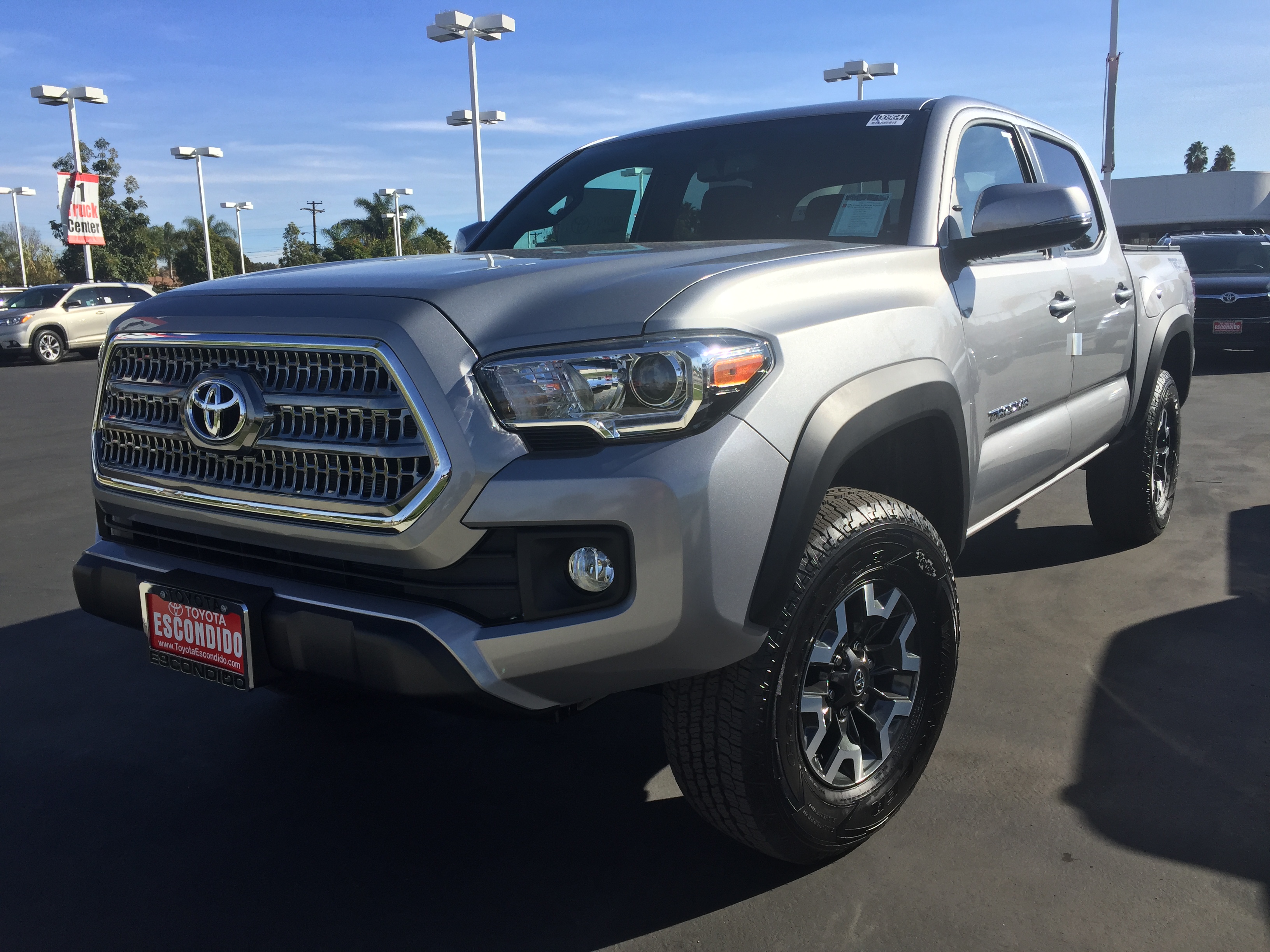
Toyota Tacoma
"The message says, we went through your website to buy a Toyota Tacoma Limited from Cape Toyota, Long Beach, California, contacted by Evan there, worked hard to get us exactly what we wanted."
A Toyota Tacoma is a pickup truck. “Limited” means a nicer, more optioned version of that truck. The listeners wanted that exact version, not just any Tacoma.
The Toyota Tacoma is a midsize pickup truck, and “Limited” is a higher trim level that typically adds more features than the base models. In this story, the buyers specifically wanted the Tacoma Limited configuration and had to work through dealers to get it.
free oil changes
"...offered us eight years of free oil changes after the Toyota care expires. That's just crazy good. Eight years? Eight years."
“Free oil changes” is a dealer or manufacturer offer that covers the cost of periodic engine oil service for a specified duration. It’s relevant because oil changes are a key part of routine maintenance and can reduce ownership costs.
Request an Explanation
Heard something you'd like explained? We'll add it to this episode.
Sign in to request explanations for terms you heard.
Want to learn more?
Browse our glossary for plain-English explanations of automotive terms, jargon, and concepts.
Help improve this episode
See something that's not quite right? Our annotations are AI-generated and can sometimes miss the mark. Click the flag icon on any annotation to suggest a correction.