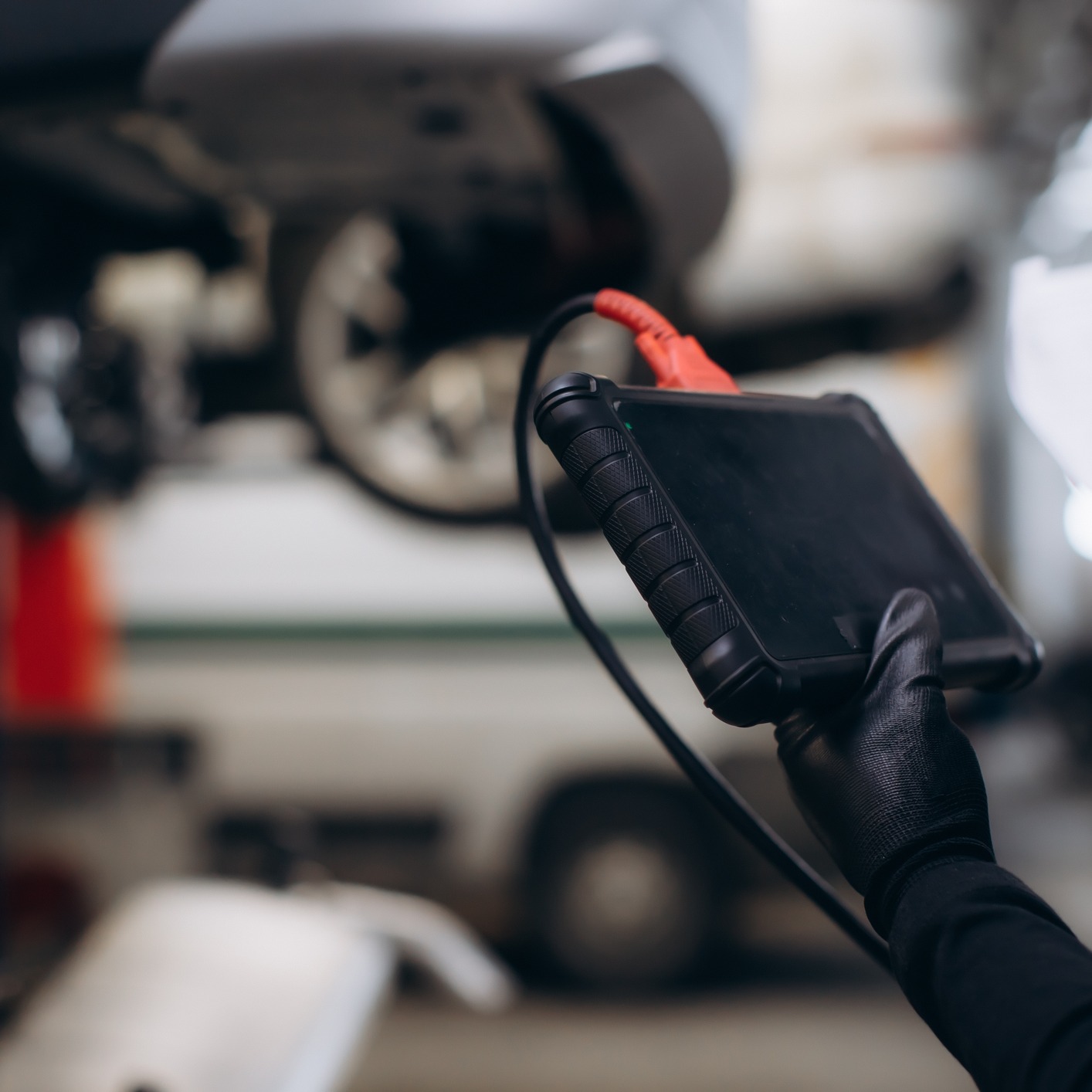
Car scans and codes, cooling your car, tires in the rain and more!
About this episode
Listeners call in about pothole damage, a battery that died suddenly, and tires that fail from dry rot or age. The tech explains how freeze-thaw creates potholes, why excess battery drain points to an electrical issue, and how to read tire date codes. The show also covers cabin filter replacement, sticking to a 5,000-mile oil interval to prevent sludge, and common transmission service methods. For infrequently driven cars, it recommends warming up to burn off moisture, plus yearly wiper blade checks.

2019 Nissan Altima
"thank you the two-year-old battery on my 2019 Nissan Altima abruptly died yesterday [235.0s] triple a came out said it was a defective battery"
This is a Nissan Altima from 2019. The host is talking about a battery that died very quickly, and they’re suggesting the car’s charging system and any “battery drain” while parked should be checked.
A 2019 Nissan Altima is a mainstream midsize sedan whose reliability issues here are specifically electrical. In this segment, the focus is on a battery that died after only about two years, which points to either a charging problem or an electrical drain rather than “normal wear.”
charging system
"I would probably have an electrical systems test done check the charging system including the alternator [265.7s] check for any kind of drain from the system when the car is off"
The charging system is what recharges your battery when the car is running. If it’s not charging properly, a battery can fail much sooner than expected.
The charging system is the set of components that keeps the battery charged while the engine is running. It typically includes the alternator and related wiring, and if it’s not working correctly the battery can die early even if it’s new.
alternator
"check the charging system including the alternator [265.7s] check for any kind of drain from the system when the car is off"
The alternator is the part that makes electricity while the engine is running. If it doesn’t charge the battery correctly, the battery can go dead quickly.
An alternator is the engine-driven generator that powers the car’s electrical system and recharges the battery. If the alternator output is low or unstable, the battery may not recover after starting and can fail prematurely.
drain
"check for any kind of drain from the system when the car is off when you shut [269.5s] your vehicle off after a few minutes"
Battery drain means something in the car keeps using electricity after you turn it off. If that “something” pulls too much power, the battery can die even if it’s new.
A battery drain is an electrical load that continues to draw power after the car is shut off. If the drain is excessive, it slowly depletes the battery while parked, even if the alternator charges it during driving.
draw test
"so I think it's fair to say would probably you know if you don't not [293.2s] notice anything else have something to do a draw test make sure there's not [296.5s] something going on that you're not aware of all right"
A draw test checks how much electricity your car is still using when it’s turned off. If it’s using too much, that can explain why a battery dies early.
A draw test measures how much current the car is pulling from the battery while it’s off. It helps identify abnormal parasitic draw from modules, accessories, or wiring that can cause a battery to die quickly.
gas to hybrid to electric
"we get especially over the last couple years as manufacturers go from [305.6s] gas to hybrid to electric listen I want to know electric vehicles"
The host is talking about how car powertrains are changing over time: gas cars, then hybrids, and now fully electric cars. That matters because the parts that can fail—and how you test them—are different.
This describes the industry shift from internal-combustion vehicles (gas) to hybrid powertrains and then to fully electric vehicles. The key point is that each step changes what components do the work—especially the battery, motors, and electronics—so diagnostics and failure modes can differ.
hybrid batteries
"we haven't had to replace one of those we've replaced the hybrid [326.3s] batteries but we haven't done a full EV battery yet"
Hybrid batteries are the batteries in a hybrid car that help the gas engine and run the car’s electric parts. The host says they’ve had to replace hybrid batteries, but not yet full EV batteries.
Hybrid batteries are the high-voltage battery packs used in hybrid vehicles to assist the engine and power electric components. In this segment, the shop has replaced hybrid batteries before, but hasn’t yet replaced a full EV battery, implying different service experience levels.
EV battery
"we haven't done a full EV battery yet you know they're still too [329.9s] new I imagine when they get into that 10 15 year age range we might start seeing"
An EV battery is the big battery in an all-electric car that powers the motor. The host is saying they haven’t had to replace many yet because the cars are still newer, but it should happen more as they get older.
An EV battery is the large high-voltage battery pack in a fully electric vehicle that stores energy for the electric motor(s). The host notes these are still relatively new in the field, so they haven’t seen many replacements yet, but expect more as cars age.
10 15 year age range
"I imagine when they get into that 10 15 year age range we might start seeing"
The host is basically saying that battery problems usually show up more after cars have been on the road for about 10 to 15 years. That’s when more replacements and repairs become likely.
The “10–15 year age range” is a practical timeframe for when battery replacement and long-term electrical service become more common as EV and hybrid packs age. It’s not a technical spec, but it frames when owners should expect more wear-out-related repairs.
carburetors
"they have the testing have evolved with cars you know going from carburetors to fuel injection electronic ignition hybrids EV"
A carburetor is an older way of mixing fuel and air for the engine. Newer cars usually use fuel injection because it can control the mixture more accurately.
Carburetors are a fuel-delivery system that mixes gasoline with air before it goes into the engine. They were common on older cars, but most modern vehicles use fuel injection instead because it meters fuel more precisely.
fuel injection
"they have the testing have evolved with cars you know going from carburetors to fuel injection electronic ignition hybrids EV"
Fuel injection is how most modern cars deliver gas to the engine using electronic controls. It helps the car get the right amount of fuel for different driving conditions.
Fuel injection is a system that delivers gasoline to the engine using electronically controlled injectors. Compared with carburetors, it can adjust fuel delivery based on sensor data for better drivability and efficiency.
electronic ignition
"they have the testing have evolved with cars you know going from carburetors to fuel injection electronic ignition hybrids EV"
Electronic ignition is the system that controls when the spark plugs spark. It’s more precise than older ignition systems and helps the engine run better.
Electronic ignition uses sensors and an electronic control unit to time when the spark plugs fire. This improves consistency and allows the engine computer to optimize ignition timing for performance and emissions.
EV
"fuel injection electronic ignition hybrids EV so as as technology changes in the vehicles the testing and the training that we take involves with that"
EV means electric vehicle. Instead of a gas engine doing most of the work, it runs mainly on an electric motor powered by a battery.
EV stands for electric vehicle, meaning the vehicle is powered primarily by an electric motor drawing energy from a battery. EVs introduce high-voltage components and different diagnostic procedures compared with gas cars.
hybrids
"fuel injection electronic ignition hybrids EV so as as technology changes in the vehicles the testing and the training that we take involves with that"
A hybrid uses both a gas engine and an electric motor. The car manages both together, so it needs different diagnostics than a purely gas car.
A hybrid vehicle combines an internal-combustion engine with an electric motor and battery. The control systems coordinate both power sources to improve efficiency and reduce emissions, which changes what technicians need to test and diagnose.
master technician
"do you still kind of keep up on everything I mean you still make it a point to keep your your level of master technician up there I'm actually I think I'm due"
A master technician is a top-level mechanic certification. It usually means the person has proven they can diagnose and fix complicated issues, and they may need to retest over time.
A master technician is a highly skilled certification level in automotive service, typically requiring demonstrated diagnostic and repair competence. In many shops, it’s tied to periodic testing or continuing education to keep up with new vehicle systems.
dry rotting
"we inspect the tires you notice that tire compound starts to dry out of structures and cracking in there and the crackings deep enough to create a failure so if we see anything like that we're gonna say hey based on the age of the tires there is tread but there's some what we call dry rotting and the cracking in the tire we want to replace those before we have a failure"
Tires can age even if they still have tread. The rubber can get hard and crack from heat and time, and that can eventually cause a tire to fail.
Dry rotting is the rubber aging process where the tire compound breaks down over time. Even if tread depth looks okay, the sidewalls and tread can crack, which can lead to a sudden failure like a blowout or flat tire.
tire compound
"we inspect the tires you notice that tire compound starts to dry out of structures and cracking in there and the crackings deep enough to create a failure"
A tire is made from rubber, and that rubber has a specific recipe. With age and heat, that rubber can get stiff and crack even if the tread still looks okay.
The tire compound is the specific rubber formulation used in the tire. Over years—especially with heat and exposure—it can harden and degrade, leading to cracking even when the tire still has usable tread.
flat tire
"we want to replace those before we have a failure and you end up with a flat tire"
A flat tire is when the tire goes low on air. If the rubber is cracking from age, it can fail and cause the tire to go flat.
A flat tire is when a tire loses air pressure enough that it can no longer support the vehicle properly. In the context of aging tires, cracking/dry rotting can contribute to sudden air loss or structural failure.
tread depth
"they do check the tread depth which is like this is the obvious answer but they do say you know this this tire is discolored or they'll say there's"
Tread depth is how much pattern is left on the tire. More tread helps the tire grip and push water out, especially on wet roads.
Tread depth is the measurement of how much rubber is left on the tire’s grooves. It matters because deeper tread helps channel water away; when tread is worn down, wet-traction and braking performance drop.
date code
"some cracking in there and there's a date code when that tire was manufactured it'll be a the week in the year and then the last two years it was made"
Tires have a stamped number on the sidewall that shows when they were made. It usually includes the week and year, so you can tell if the tire is getting old.
A tire date code is molded into the sidewall and tells you when the tire was manufactured. It’s typically shown as a week-of-the-year number and a year, so you can estimate tire age and whether the tire is getting old even if tread still looks okay.
visual inspection
"you do a little a little assessing a quick visual inspection and you know give people advice"
A visual inspection is just looking closely at the car parts to spot obvious problems. It’s often the first step before deciding whether something needs replacement or a closer check.
A visual inspection is a quick, hands-on check for obvious issues—like cracking, uneven wear, or other damage—without specialized tools. The host uses it as a first step to assess tire condition and decide what advice to give a driver.
OEM
"is there a big difference between OEM parts and non OEM parts what do you recommend tell our listeners what those what's that mean OEM the original equipment manufacturer"
OEM means the part was made for the car brand to match the car’s original specs. Sometimes OEM is the safest choice, but some aftermarket parts are just as good.
OEM stands for original equipment manufacturer—meaning parts made to the vehicle maker’s specifications for that exact model. In practice, OEM parts can be preferable when fitment, durability, or compatibility matters, but the host notes aftermarket parts can sometimes match or exceed OEM depending on the component.
cabin filter
"all right listener wants to know is there a timeframe when to change a cabin filter actually it's two part question and he wants to know can they also be vacuumed there's a maintenance schedule we will inspect them when we do service"
A cabin filter is a small filter inside your car that cleans the air coming into the cabin. When it gets dirty, it can’t filter as well anymore. How often you replace it depends on things like dust and nearby trees.
A cabin filter is the filter that cleans the air entering the passenger compartment through the HVAC system. Over time it traps dust, pollen, and other particulates, and once it’s loaded it can reduce airflow and let more debris through. Replacement intervals depend on local conditions like dust, trees, and driving environment.
pleating material
"vacuum or shake it amount it gets a lot of the loose stuff but I do believe the the stuff that gets caught up in the the pleating material it's kind of like your furnace filter at home"
Cabin filters use pleated media—folded layers that create more surface area to trap particles. The hosts’ point is that while vacuuming or shaking can remove loose debris, particles embedded in the pleats may not come out, which is why replacement is often the better option. This is especially true once the filter is loaded and airflow is affected.
aftermarket
"I've used both I've used what quote OEM and aftermarket what about cabin filters there's so many on the market I've used both I've used what quote OEM and aftermarket"
Aftermarket parts are made by companies besides the original automaker. They’re sold as alternatives to the factory part. With filters, some aftermarket ones work great and some don’t, so quality can vary.
Aftermarket parts are made by companies other than the vehicle’s original manufacturer. For items like cabin filters, aftermarket options can vary widely in materials and filtration performance, which is why the hosts say you may get what you pay for. The segment frames aftermarket vs OEM as a quality-and-value comparison, not just a price difference.
fitment
"usually with like the cabin filters it's a lot about fitment a lot of times in [796.5s] aftermarket or you know they try to find two or three make them into one part"
Fitment just means whether a part actually fits your car the way it’s supposed to. With aftermarket parts, the shape or mounting can be slightly off, which can cause leaks or poor performance.
Fitment is how well an aftermarket part physically matches the vehicle it’s meant for—things like size, shape, and mounting points. If the fitment is off, the part may not seal correctly or may interfere with other components.
oil filter
"so we get the appropriate number the appropriate part [811.9s] like it's an oil filter same thing you know that the quality might be a dollar [816.0s] or two more for the better filter but your engine greatly appreciates it"
The oil filter cleans the oil as it circulates through the engine. Better filters can trap more dirt, which helps the engine stay protected.
An oil filter removes contaminants from engine oil so the oil can lubricate and protect engine parts. A higher-quality filter can capture more particles and help keep oil cleaner for longer.
good quality oil
"your engine greatly appreciates it [821.4s] along with the quality oil you don't want you know this it's funny how we get [825.1s] kind of hung up on trying to you know pricing out an oil change"
Engine oil does more than keep things from rubbing—it also helps keep the engine cool and clean. Using the right, high-quality oil helps prevent buildup that can damage the engine.
Engine oil isn’t just a lubricant—it also carries heat away, helps prevent wear, and suspends contaminants. Using oil that meets the right specs (and pairing it with a good filter) reduces the risk of sludge and oil-flow problems.
sludge
"I always wonder about the the dirt the carbon the things that creates sludge [874.3s] because to be honest some of the biggest things that we see now or mechanical"
Sludge is gunky buildup inside the engine that forms when oil gets dirty or breaks down. It can clog oil passages and lead to faster wear.
Sludge is thick, tar-like buildup formed when oil breaks down and mixes with dirt and combustion byproducts. It can restrict oil flow and increase wear, especially in tight passages and high-stress components.
camshafts
"some of the biggest things that we see now or mechanical [877.5s] repairs related to oil oil related issues camshafts sludging up you know"
Camshafts are part of the engine that control when the valves open and close. They need good oil to stay lubricated and avoid wearing out too quickly.
Camshafts control valve timing by opening and closing engine valves via lobes and followers. Oil quality matters because camshaft surfaces and timing components rely on consistent lubrication to avoid accelerated wear.
turbos
"camshafts sludging up you know [884.9s] turbos have the you know that with the lighter weight oils the supports that [888.2s] the oil needs to flow through are very small"
A turbocharger boosts the engine by using exhaust gases to spin a turbine. It depends on clean oil flowing correctly, so dirty oil can cause problems.
Turbos (turbochargers) use exhaust energy to spin a compressor that forces more air into the engine. They’re sensitive to oil quality and oil flow because the turbo bearings and oil passages must stay clean and properly lubricated.
lighter weight oils
"turbos have the you know that with the lighter weight oils the supports that [888.2s] the oil needs to flow through are very small and that starts to get gummed up"
“Lighter weight” oil is thinner and flows more easily. The worry is that if the oil gets dirty or forms sludge, it can still clog small oil passages and cause trouble.
“Lighter weight” refers to lower-viscosity engine oils that flow more easily. The concern raised here is that if oil passages are small and the oil gets contaminated or sludged, flow can be restricted and cause turbo or lubrication issues.
5,000 mile interval
"we stand behind the 5,000 mile interval and the vehicles that may be tended not be maintained like they they should they go those longer oil change intervals"
This is how often you’re supposed to change your engine oil. If it’s set to every 5,000 miles, going much longer can let the oil get worn out and stop protecting the engine as well.
An oil-change interval is the scheduled mileage between oil services. A “5,000 mile interval” means the engine oil is expected to be replaced about every 5,000 miles to keep lubrication and engine cleanliness from degrading.
longer oil change intervals
"they should they go those longer oil change intervals whether it's intentional or unintentional over the years we've seen where that damage can become very costly"
If you wait longer than recommended to change the oil, the oil gets dirty and less effective. That can cause extra engine wear and, in bad cases, an engine breakdown.
Longer oil change intervals mean delaying oil replacement beyond the recommended schedule. Over time, used oil loses its ability to lubricate and carry away contaminants, which can accelerate engine wear and lead to expensive failures.
engine failed
"folks had a vehicle that they bought that they never changed oil and it goes around 26 27,000 miles when the engine failed"
“Engine failed” means the engine stopped working properly, sometimes permanently. In the example they gave, it happened after the oil wasn’t changed for a very long time, so the engine didn’t get the protection it needed.
“Engine failed” refers to a catastrophic loss of engine function, often caused by severe internal wear or lubrication breakdown. In this story, the failure is linked to not changing oil for roughly 26,000–27,000 miles, which can starve critical parts of proper lubrication.
maintaining the vehicle is required to keep that warranty intact
"maintaining the vehicle is required to keep that warranty intact so unfortunately he thought that she didn't she thought that he did and no one did"
Warranties often only pay if you take care of the car the way the manufacturer says. If you skip required maintenance—like oil changes—they may refuse to cover the repair.
Many warranties require “maintenance” to be performed on schedule to remain valid. If the owner doesn’t follow the required service intervals (like oil changes), the manufacturer may deny coverage because the failure could be considered preventable neglect.
oil left
"what is that if there's any oil left what does it look like after all this time if we'll see we'll see it"
They’re basically asking what the oil looks like after it’s been left too long. If it’s been neglected for a huge number of miles, it can be so worn out and dirty that it no longer protects the engine.
“Oil left” is a colloquial way of asking what condition the engine oil is in after extreme neglect. When oil is overdue by tens of thousands of miles, it can become extremely degraded and contaminated, losing its protective properties.
oil flushing vs loosening buildup
"the scary part is how [1026.1s] do you combat that you know we you know I'm not a big proponent of like putting [1029.3s] some chemicals to clean it because you're gonna loosen up a lot of stuff and [1031.9s] plug up morphine so we just try"
If an engine has a lot of gunk, using strong cleaners can sometimes break that gunk loose all at once. That can clog the oil system, so the safer approach is often to change the oil more frequently instead of dumping in chemicals.
The host discusses a common risk when trying to “clean” a sludge-filled engine: aggressive chemical cleaners or sudden flushing can loosen deposits that then clog oil passages. The segment argues for a gentler approach—frequent oil changes—rather than adding chemicals that could cause more problems.
synthetic oil
"we're gonna use a [1036.8s] high quality synthetic oil we're gonna have you come back every thousand miles"
Synthetic oil is a higher-tech type of engine oil. It tends to last longer and hold up better, which can help if your oil has been getting dirty or breaking down.
Synthetic oil is a manufactured engine oil designed to resist breakdown better than conventional oils. In this segment, it’s suggested as a way to help clean up and stabilize an engine that has sludge concerns.
every thousand miles
"we're gonna use a [1036.8s] high quality synthetic oil we're gonna have you come back every thousand miles [1039.6s] to the next perceivable time you know maybe we're gonna change it"
They’re talking about changing the oil very often—about every 1,000 miles. The idea is that frequent fresh oil helps pull out dirt and sludge over time.
“Every thousand miles” refers to an unusually frequent oil-change interval used as a strategy to gradually remove contaminants. In this context, it’s presented as a way to reduce sludge slowly without relying on harsh additives.
ASC certified technician
"welcome back to our car care show Danny all here along with ASC certified [1089.0s] technician Nick Stalfel from Lloyd's on the motor."
This means the technician has been certified through an automotive training program. It’s a way of saying they’re qualified to work on cars.
“ASC certified technician” refers to a technician credential associated with automotive service training and certification. It’s used here to signal that the guest has formal qualifications for diagnosing and repairing vehicles.
Lloyd's
"technician Nick Stalfel from Lloyd's on the motor. Nick I forgot to ask you for [1093.6s] those that need the help from Lloyd's how do we find you guys"
Lloyd’s is the automotive shop the technician works with. They’re the place you can call or visit for help with car-care questions.
Lloyd’s is the shop/network the technician is associated with in this segment. The hosts provide phone and location details so listeners can contact them for car-care questions.
982 Grand Avenue
"if you're in St. Paul ever and this warm [1109.6s] weekend or next week we're at 982 Grand Avenue stop and say hi if you need more [1115.1s] information you can check our website which is Lloydsautomotive.net very good"
That’s the street address where the shop/show team will be. It’s for people who want to stop in and say hi.
982 Grand Avenue is the specific address where the show’s team says they’ll be stopping by. It’s included as a real-world location for listeners who want to meet the technician.
transmission fluid
"Tim calling in from Andover I believe this morning Tim thanks for waiting what is your question for Nick? Question is I bought a used car and I don't have any maintenance on it but transmission fluid can you tell by looking at it if there's a need to change it?"
Transmission fluid is the fluid that keeps your car’s gearbox working smoothly. If it looks dark/discolored or smells burnt, it can be a sign the transmission has been running too hot or isn’t healthy, and it may need service.
Transmission fluid is the lubricant and hydraulic fluid used by an automatic or manual transmission to reduce wear and help shift gears smoothly. Its color and smell can indicate overheating or internal wear, which is why a mechanic may recommend service if it’s discolored or smells burnt.
flushes
"most commonly now is what we see is a drain infill system they used to be like we talked in the past used to have flushes and even some cases there were some transmissions can remove the pan replace the filter"
A flush is a more aggressive fluid change where the system is cleaned out more forcefully than a simple drain-and-fill. Some transmissions don’t like that approach, so many shops use drain-and-fill more often now.
In transmission service, a “flush” refers to pushing fluid through the system to remove old fluid more aggressively than a drain-and-fill. Some shops and technicians prefer drain-and-fill for many modern transmissions because flushes can be harsher on certain worn units.
remove the pan replace the filter
"and even some cases there were some transmissions can remove the pan replace the filter a lot of that's changed so the most common service is a drain infill"
On some transmissions, the shop can take off the bottom pan to reach the filter. Then they replace the filter (and usually the gasket) so the transmission fluid can flow through a clean filter again.
Some transmission services involve dropping the transmission pan to access internal components, then replacing the filter and often the pan gasket. This can be more involved than a simple fluid drain-and-fill, but it allows the filter to be renewed.
flat spot
"Nick from a listener who said can tires thump while in motion if they have a flat spot after sitting for a while haven't thought about that in years. Does that still happen?"
A flat spot is when a tire sits in one position long enough that part of the tread gets a little deformed. When you drive again, it can feel like a thump or vibration until the tire warms up and the shape returns.
A flat spot is when a tire develops a temporary “dented” contact patch after sitting, causing vibration or thumping when you start driving. It’s more noticeable on stiffer tires or after longer parking, and it can also happen after a skid or slide that scuffs the tread.
tailpipe
"you know when you see a car freshly started you'll see how there's a big steam cloud come out the tailpipe and after once it's fully warmed up that's gone"
The tailpipe is where the car’s exhaust comes out at the back. On a cold start, the exhaust can look like steam because moisture is coming out—after the car warms up, it usually goes away.
The tailpipe is the exhaust outlet at the back of the car. When a cold engine starts, water vapor in the exhaust can condense and then burn off as the exhaust heats up, which is why you may see steam early on.
brake rotors
"and same with the brakes you want to get on the highway and heat those up keep those brake rotors good and clean"
Brake rotors are the round metal parts the brake pads squeeze against. Warming them up helps keep moisture from sitting on them and causing rust.
Brake rotors are the metal discs the brake pads clamp onto to slow the car down. Getting them up to temperature helps dry off moisture and can reduce surface rust so they stay smooth and clean.
tire alignment
"doing a tire alignment what are your thoughts texture wants to know you know it's good maintenance we will recommend for replacing tires and they are worn abnormally"
Tire alignment is setting the wheels so they’re pointed the right way. If it’s off, your tires can wear unevenly, even if they’re brand new.
Tire alignment is adjusting the suspension angles so the tires point in the correct direction and track properly. If alignment is off, tires can wear unevenly or “abnormally,” which can make new tires wear out too quickly.
abnormally
"we will recommend for replacing tires and they are worn abnormally we want to get a figure out why because the last thing you want to do is install brand new tires and have them come prematurely worn"
Here, “abnormally” means the tires are wearing in a weird or uneven way. That usually suggests there’s an underlying problem, not just normal driving wear.
In this context, “abnormally” refers to unusual tire wear patterns that don’t match normal tread wear. That’s a clue something may be wrong—like alignment, suspension components, or tire balance—so you don’t just replace tires and ignore the cause.
alignment repair
"you don't want to waste your money to have something prematurely wear out and [1424.9s] still have to perform whatever alignment repair that was needed so if the tires"
Wheel alignment is how your wheels are aimed. If it’s wrong, your tires can wear unevenly and you may need new tires sooner. Fixing alignment helps tires last longer and keeps the car driving straight.
“Alignment repair” refers to correcting a car’s wheel alignment settings—like toe and camber—so the tires wear evenly and the car tracks straight. If alignment is off, tires can wear abnormally, which can force you to replace tires sooner.
alignment specifications
"well those situations are make us think maybe we [1444.7s] should measure the alignment specifications see what see what they're [1447.6s] at to maybe make those adjustments so it's not a have to do a thing but it's"
Alignment specifications are the exact numbers a shop tries to set your wheels to. Checking them tells you if your car’s wheels are aimed correctly or if they need adjustment to protect your tires.
“Alignment specifications” are the target measurements a shop checks against when setting wheel alignment. Measuring them helps determine whether the car needs adjustment to prevent uneven tire wear and handling issues.
wiper blades
"as you know Nick we talk about changing wiper blades but a listener [1459.9s] wants to know how personally how often do you change your wiper blades I think"
Wiper blades are the rubber parts that clear your windshield. If they get old, they can start streaking and you won’t see as well in rain or snow.
Wiper blades are the rubber blades that sweep water and snow off your windshield. When they age, they can streak or smear, reducing visibility—especially at night in rain or snow.
clear windshield
"if it's raining or snowing and that you know having a clear windshield is [1493.7s] priceless you know you can't dispense those extra few dollars to get a set of [1497.1s] wiper blades every year maybe every"
A clear windshield means you can see the road clearly through the glass. In rain or snow, worn wipers can blur your view, so replacing them helps you stay safer.
A “clear windshield” is about maintaining visibility for safe driving, particularly in rain or snow. Worn wiper blades can reduce clarity, which makes it harder to see hazards and road conditions.
stable
"should you use stable tell us what that is and should you use it ... it kind of keeps the fuel from breaking down ... it definitely makes a lot easier to start them up"
“Stable” is a product you add to gas when you’re storing a vehicle for months. It helps keep the gas from going bad, so the engine is easier to start again in the spring.
“Stable” here refers to a fuel stabilizer additive used when storing a vehicle. It helps slow down fuel oxidation and breakdown during long storage, making the fuel easier to restart when you bring the vehicle back into use.
Request an Explanation
Heard something you'd like explained? We'll add it to this episode.
Sign in to request explanations for terms you heard.
Want to learn more?
Browse our glossary for plain-English explanations of automotive terms, jargon, and concepts.
Help improve this episode
See something that's not quite right? Our annotations are AI-generated and can sometimes miss the mark. Click the flag icon on any annotation to suggest a correction.