The Ford Capri is a sports-style car with a sharp, wedge-like shape. It was designed to look bold and stand out. The podcast mentions it because its styling fits the same kind of dramatic look as other cars from that period.
A race engine is an engine built or tuned primarily for track use, often prioritizing high power, aggressive response, and operating in a narrower high-RPM range. These engines may feel less relaxed at low speeds compared with road-focused powertrains.
Aerodynamics is how the car cuts through air. At higher speeds, air resistance gets stronger, so it can limit acceleration unless the car is shaped well.
Stepper motors are small electric motors that move in tiny, precise steps. That precision helps the car control certain parts accurately, instead of just turning in a rough way.
Yokohama makes tires. The idea here is that after the tires get properly warmed up and cooled down a few times, they can grip better—especially in wet conditions.
Traction control helps stop the wheels from spinning when you accelerate on slippery ground. It can reduce power and keep the car from losing grip, and you can usually turn it off for more direct driving.
The throttle is what you press to make the engine produce more power. When you “get on the throttle,” you’re asking for more acceleration, which can be harder to manage on slippery roads like in the rain.
Track days are when people bring their cars to a race track to drive them hard in a controlled setting. It often means extra preparation and parts because the car is used more aggressively than on the road.
A bill of parts is basically a shopping list of everything you need to build or fix a car. Saying it’s enormous means the total cost of all those parts adds up to a lot.
Damping is how the shocks control the car’s movement over bumps and during cornering. It helps the tires stay planted so the car feels more stable and easier to drive.
Here, electronics means the car’s computer-controlled safety and driving aids. They help the car respond more smoothly and keep traction so it’s less stressful to drive.
VHPK is a special name for a high-performance version of the Elise. The “PK” part is named after a person the hosts mention, and it’s related to an earlier performance naming scheme.
VHPD is an earlier performance-version name. The hosts say VHPK is built as a “play on” that original naming idea, meaning it’s part of the same high-performance family.
Philip Kadori is the person behind the “PK” name in VHPK. The hosts also link him to another famous performance build, the Tuck Hill 911K, known for extremely high engine revs.
Here, “patron” doesn’t mean a car customer—it’s like an arts supporter. The hosts are saying Kadori acts like someone who backs special, custom projects.
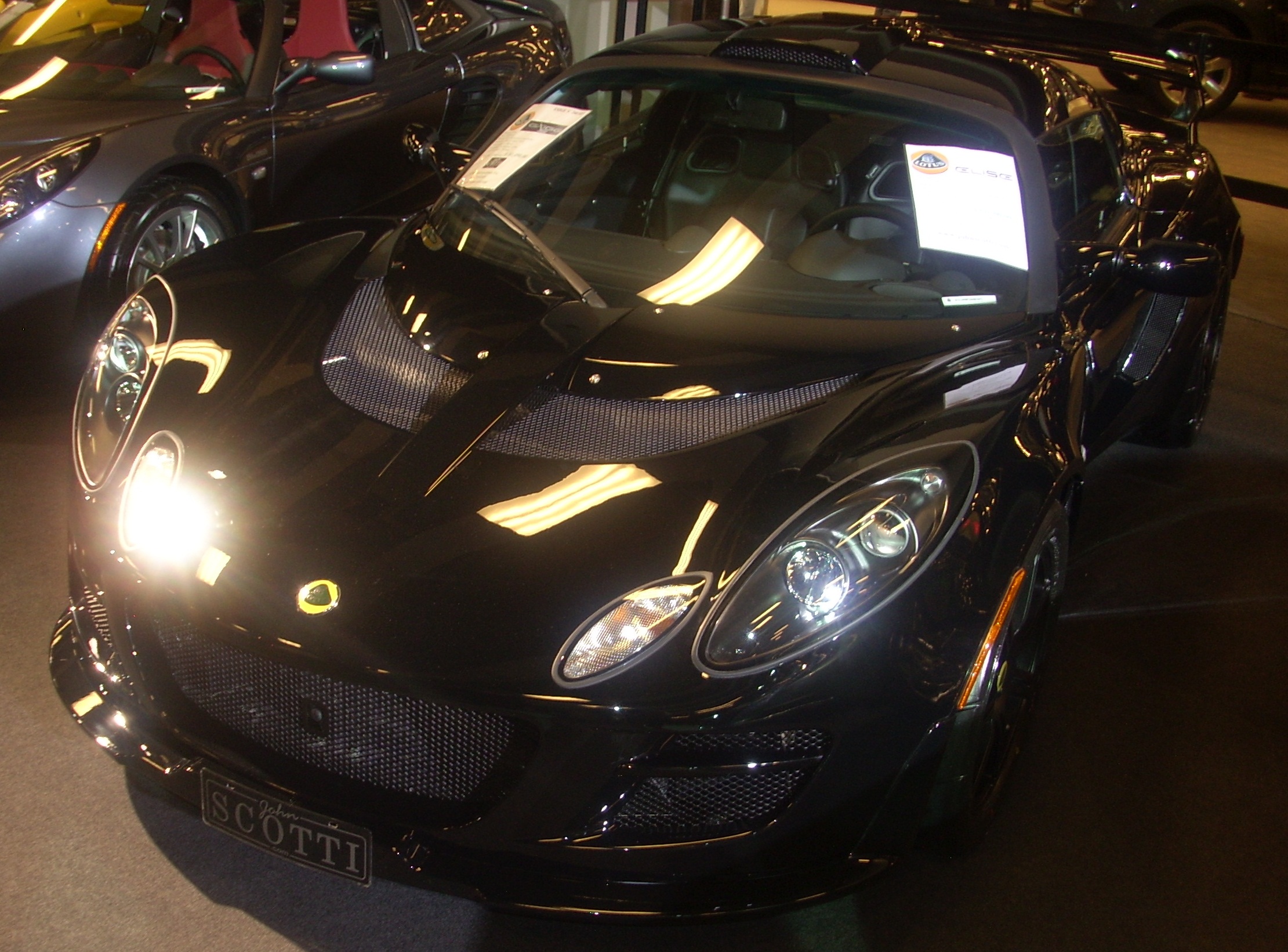
The Lotus Elise is a small, light sports car built to feel sharp and agile. Here, they’re talking about a modified Elise that moves the driver to the center to change how it drives and how the car is built.
The Lotus Sport 420 Final Edition is a limited-run special version of a Lotus sports car. It’s made to be a more powerful and more focused take on the Elise/Exige-style platform. The “Final Edition” part means it was built as a last of that specific setup.
The Exige is Lotus’s more track-oriented car. “S1” means the early version, and the hosts are saying the earlier Elise concept was closely related to that Exige era.
A central driving position means the driver is seated closer to the middle of the car. The idea is to help the car feel more balanced and to package the car differently for performance.
The K-Series engine is the original engine family Lotus used in the Elise. Keeping it means the car stays light and revs the way it was designed to, instead of feeling like a different setup.
An engine swap means putting a different engine into a car than it originally came with. It can change how the car feels and handles, not just how fast it is.
“Built from the crank up” means the engine was rebuilt thoroughly from the inside out, not just a quick fix. That usually results in a stronger, more purpose-built engine.
Term
revs to nine
They mean the engine can spin up to very high engine speeds (around 9,000 rpm). Engines like this are designed to rev freely, which helps make power when you drive hard.
Carbon brakes are high-performance brakes made with special carbon material. They’re designed to stop really well and keep working even when you’re braking hard repeatedly.
Wheel diameter is the size of the wheel rim. If you change it, it can change the car’s look and how the tires behave, so they’re saying they kept the original-style proportions.
The wheel and tire package is the full set of wheels and tires on the car. It affects grip, steering feel, and the car’s overall look, not just one part by itself.
They’re talking about the inside of the car, especially how it feels to get into the seat. It’s more about the layout and ergonomics than just how it looks.
These are special brake materials that are built to handle heat better. That can help the brakes keep working strongly when you’re driving fast or braking repeatedly.
Concept
lightest spec the factory did
That phrase means the factory’s lightest version of the car. Usually it’s the one with the most weight-saving parts and fewer extras.
This means the carbon material is sourced from the same kind of suppliers that make parts for Formula 1. The idea is that the carbon is high quality and made to tight performance standards.
“Carbon-bodied” means parts of the car are made from carbon fiber. It’s strong but much lighter than many traditional materials, which helps the car feel more agile.
Term
Honda spot
“Honda spot” likely means the car has a Honda engine swapped into it. People do this to change how the car feels and performs, especially for track driving.
“Track work” means the car is set up to be driven hard on a race circuit. It’s usually prepared for heat, repeated braking, and sustained cornering—not just normal commuting.
Maranello is the famous Italian town where Ferrari is based. Going there is a big deal for Ferrari fans because it’s where the brand’s heart and factory culture live.
A “manual shift” here refers to using a manual-style gear selection interface while the actual gearbox is still a DCT. The important nuance is that the driver’s input is handled electronically rather than through a traditional mechanical linkage.
Term
by wire
“By wire” means the car uses electronics to control things instead of physical cables. Your inputs are sent as signals to the drivetrain.
An “open gate” is the classic manual gear lever layout you can see, with the shifter moving between gear positions. It’s used to give a traditional feel.
A “stall” is when the engine shuts off. It usually happens in a manual car if you let the clutch out too fast or the engine is running too slowly for the gear you’re in.
In this context, “sensors” are electronic detectors that watch what the driver is doing and what the car is doing. They help the car control the gearbox and clutch behavior correctly.
“Auto” means the car is doing the gear changes for you. Even if the shifter is in a certain position, the car may still choose the actual gear it needs.
Term
shift in third
Third gear is one of the gears in the gearbox. They’re saying the car may not let you switch modes freely while you’re already in a specific gear.
Term
buzz the engine
“Buzz the engine” is a colloquial way to describe revving the engine quickly (often to a higher RPM) without fully engaging the intended gear change. The speaker’s point is that the car prevents that kind of aggressive rev behavior when transitioning from automatic to manual mode.
Shift paddles are the little levers on the steering wheel that let you change gears yourself. They’re saying you can disable them, which changes how the car shifts.
Term
dual perch
“Dual perch” is a way of controlling gears where the car uses electronics to do the shifting. You still get a more “hands-on” feel than a fully automatic, because your input is tied to what the car does.
“Simulated shifts” are when the car tries to make gear changes feel like a manual, using computer cues. It’s meant to help you feel more involved even if the car is doing the shifting.
Brand
Hyundai 5N
Hyundai’s “5N” is part of Hyundai’s performance branding. Here it’s mentioned as an example of a car that gives you gear-change prompts to feel more connected.
The Ferrari Mondial T is a Ferrari with a V8. Here, they’re talking about a special kind of gearbox where you don’t use a normal clutch pedal to shift, so it feels like the clutch is “invisible.”
A clutchless manual is a car where you still “shift like a manual,” but the clutch work is handled automatically. You don’t have to press a clutch pedal the way you would in a normal manual car.
The Lamborghini LP 400 is a classic early Lamborghini supercar from the 1970s. The hosts mention it as one of the key cars in their fantasy list for this “70s supercar” theme.
The Ferrari 512 BB is a famous 1970s Ferrari supercar with a powerful V12 engine. In this segment, it’s highlighted as a standout “icon” from that era.
The Maserati Bora is a rare Italian supercar from the 1970s. It’s special because it was built in small numbers and has a mid-engine design that helps it feel very “supercar-like.”
The Volkswagen Bora is a Volkswagen car model that’s meant to be a bit more sporty than a basic family car. In the podcast, it’s mentioned because the name and shape can remind people of supercar styling. It’s not the same as a supercar, but it can look like it from a distance.
The BMW M1 is a classic 1970s BMW supercar with a strong racing background. It’s remembered for being unusual and for having a complicated, interesting history tied to Italy.
This is the early Porsche 911 Turbo era (the 930 generation). It’s a big deal because it was among the first turbocharged 911s, so it helped define how turbo power entered the 911 world.
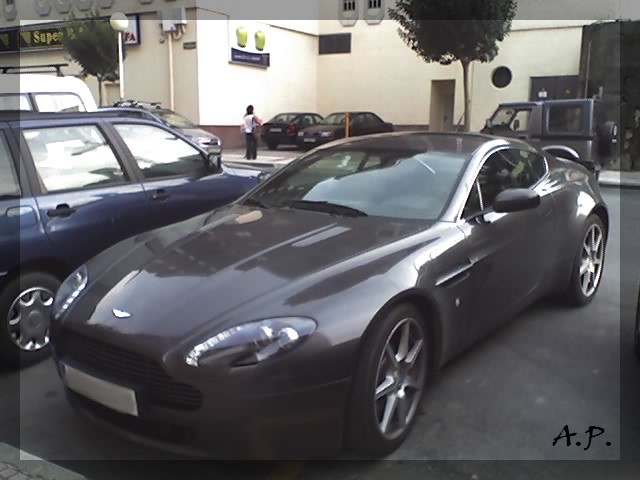
The Aston Martin V8 Vantage is a classic Aston supercar with a V8 engine. The interesting part here is that it started as an early development prototype, so it’s tied to Aston’s early engineering story.
A development prototype is basically an early test version of a car. Engineers build it to check that the design works before they make the final production cars.
A V12 is an engine with 12 cylinders arranged in a V shape. It’s a classic supercar engine layout that tends to feel smooth and sounds/feels special at higher revs.
Short overhangs mean the body doesn’t extend far beyond the wheels at the front and rear. This usually improves proportions and can help packaging and handling feel by keeping weight and mass closer to the wheelbase.
Term
glass panel in the back
They’re talking about a glass section at the back of the car—like a distinctive rear window. They’re comparing the look to another car’s design to explain the styling trend.
A hydraulic system uses fluid under pressure to move things. It can push or pull parts with a lot of force, so adjustments like seats can feel smooth and powerful.
The pedal box is the part of the car that the pedals are mounted to. In this setup, instead of moving the seat like normal, the pedal mounting area moves to match your position.
Headlamp raising means the headlights move up or down instead of staying in one place. That can look cool and help the car’s shape, but it also adds moving parts that can fail.
TVR is a British sports-car brand. People sometimes associate it with cars that are exciting and a bit daring—sometimes with more risk because the engineering is unconventional.
Term
instant brake response
“Instant brake response” means the brakes start working very quickly when you press the pedal. That makes the car feel more predictable and easier to control.
“Balloony” tires have thicker, taller rubber on the side. That helps the ride feel softer and more comfortable over bumps, though it can make the steering feel a bit less immediate.
GT means “grand touring.” It’s a type of car meant for comfortable long drives at speed, with a smoother, more relaxed feel than a track-focused sports car.
A “four cam engine” means the engine has four camshafts that control the valves. More camshafts can help the engine manage airflow better, especially when you rev it.
Rims are the wheel parts the tire sits on. “14 inch” means the wheel diameter is relatively small, which can change how the car rides and how the brakes and tires fit together.
Term
brakes behind them
They mean the brake parts are mounted inside the wheel, not out in front. That’s normal on most cars, and it affects how the wheel and brake are laid out.
Racing homologation is when a racing series’ rules require a manufacturer to build enough road cars to qualify for racing. Those rules can heavily influence how the car is designed.
The Audi R8 is a high-performance sports car with the engine placed in the middle. It’s designed to drive like a real supercar while still being a proper car you can use normally. The podcast mentions it because it was built as a serious, well-thought-out supercar.
The Audi R8 is a well-known Audi supercar with the engine placed near the middle. The hosts are comparing it to the M1 to say the M1 looks just as well executed.
“Safety stripes” are decorative stripes Porsche offered from the factory. They’re meant to make the car easier to see and to give it a classic, period look—especially on some 1970s 911s.
The Porsche 911 is Porsche’s iconic sports car that’s been around for decades. Even when the technology changes, the way you sit in it and where things are inside tends to feel familiar—so it still “feels like a 911.”
Term
70s bomb 911
“70s bomb 911” is a nickname fans use for a 1970s-looking 911. It’s basically describing the car’s period style rather than a specific official model name.
A turbocharged engine uses a device that squeezes extra air into the engine. More air means more power, but it can also change when the power shows up as you accelerate.
LIVE
James.
Well, he walks seven foot James.
I mean, every time he writes how high he is,
he's getting another three, yeah, three inches.
Yeah, he's going the opposite way.
He's getting, you know, spare inches.
He's not getting one.
Sounds wrong.
Quick John, move on, move on.
Hello and welcome back to the Evo podcast.
This is episode 54.
We've had a bit of a break because it got too hot, basically.
We were half the men we were,
and there wasn't much of us to start with.
I'm joined this episode with John Barker in a creaky chair,
which he's just discovered.
It's still, don't move.
That is just John creaking, it's not the chair.
All right, I think we'll did them up.
And Dickie Meadon, welcome both of you.
How are you?
Hello, Stu.
Good.
Are you all in one piece now?
Are you out of view, come out of the NHS system?
I have come out of the NHS system, yes.
Well, the private NHS funded system.
With less bits than you went in with?
Yes, with one less bit.
Wait, lost program?
Yeah, no, I'm good.
Is it a WISAC package?
Yeah, probably a bit more expensive than a WISAC package,
but no, I'm good.
Good, good, good to have you back.
So this episode, we're talking about supercar eras
and the 70s, but before we get onto a collection of some rather.
Awesome cars.
Very awesome cars.
Wedge-shaped cars, very psychedelic-covered cars as well.
The Capri's Countache, as well.
Chris and Dick, what else have you been up to
other than squeezing yourself into the 70s wedges?
Well, I had to go in the latest
and certainly the greatest aerial atom.
Great.
Absolutely, I mean, the headline is 525 horsepower.
They've broken into the Honda engine for the first time,
and jeez, their company, their service company,
whose name escapes me at the moment,
they've properly had a go at it and 525 horsepower,
but it feels really good in terms of drivability.
So there's no, you know, it's a race engine,
young componentry, but it drives really, really well.
And you think that's just going to be nuts,
you know, because it's 400s plenty.
Yeah.
And then this, with 525, it's quite insane
in that it accelerates fabulously,
and then you get to three figures
when usually aerodynamics start to slow this thing down,
because it's just basically there's scaffolding.
Does it look like a bit of a stock car hot rod thing?
Does it have big wings and sort of?
So how different is it from the thing we had
at track car of the year, the year or so ago?
Well, they say.
More power, obviously.
More power, but everything that needed work
has had work, so bigger brakes.
Because that had carbon brakes, didn't it?
I'm not sure they've done carbon brakes.
Would it have a set of box and only dampers
and all sorts of trick stuff?
This has got everything carbon atom makes is on it.
Yeah.
This is the 4RR, by the way, isn't it?
Yes.
Was it 4RR or 4RR?
RRR.
RRR.
It's the pirate version.
RRR.
RRR.
Feet stroke already.
Yeah, I think the name is the trick there,
because I said it should be the Somerset Hadron Collider,
because it's the fastest atom ever.
And it is, it is sensationally quick, very drivable.
Run it round the circuit at Pembroke,
which I've not been to in about 30 odd years.
And it was just, you know, when you get in the car
and you're the first, just the first few meters,
it feels right.
Yeah.
So they've had their tame race driver, Phil Keane,
who they've been using for quite a few years,
has been through the car.
So it's got only in dampers,
but with, it will be a remote adjustment.
Yeah.
Stepper motors, so there's a little choose,
poking out of those now.
All the carbon can get the set of sequential box
and this absolute monster of an engine.
And it is just so quick.
So I went round Pembroke a few times.
Absolutely sensational there.
And then we wanted to drive you on the road as well.
They flipped it slightly.
They say all of their cars are road cars
that also great on the track.
This is a track car that's also great on the road.
And you think, really?
But it rained, because it was wet.
Oh yeah, it's torrential rain, didn't it?
Yeah, yeah.
So I soaked in the car.
But apparently at those tires, the Yokohamas,
once they've been heat cycled on a dry track,
they're brilliant in the wet.
And it was amazing,
because you've got the traction control,
you can wind it off.
And obviously on the track, it sort of denuded,
the speed is slightly denuded
because there's no reference point.
Well, you're just on it, aren't you?
Although there's no build up to it,
is there a nuance to it?
But that Trey Orkey road with the trees and the rain,
you get on the throttle and the traction was amazing.
And again, it feels really good, really drivable.
So yeah, that blew my mind
that it would actually work that well
on the road as well, in the rain.
So yeah, it's an amazing thing,
an amazing price, quarter of a million quid.
And which is, but it's, you know, as they say,
it's put us back up with the Supercomic,
as we go to track days and the Supercomic.
And the bill of parts for something like that
is pretty enormous, isn't it?
So it's a lot of money,
but it's a lot of money to build it in the first place.
Yeah, and you're going to talk about a car in a moment,
which has another big bill of parts.
I'll see you all.
But yeah, they say, the Atom guys say,
whenever you have a track event
and you've got super cars, we will bring our car along
and, you know, naught to 105.1 seconds.
Yeah, it's wild, isn't it?
I think maybe because we've driven Atoms
since the very beginning, you come to them,
whatever the new one is,
you come to it with a little bit of baggage from,
they could be pretty edgy, tricky things to drive.
And then weirdly, the wilder they've got,
the easier they've got to drive,
so you've got, oh, I can relax and...
It is.
And everything they've done,
like they've really got the heads around the chassis
and the damping and probably a little bit of aero
and then all the electronics that help them
and the gearbox is brilliant, isn't it?
And yeah, they're quietly doing amazing things up now.
I don't know how many cars they do,
they say how many cars they're building.
25.
25 old though.
25 of that, yeah, yeah.
Well, I think they do about 100 cars a year anyway.
Yeah, that's nice though, isn't it?
They're just kind of at a point where they're comfortable.
Yeah, and it is, there's nothing else
that I've driven that's quite like it.
No, no, they've carved out their own niche
like K-Trim had now, or K-Trim did.
Then they've sort of taken up the mantle really from K-Trim
because K-Trim is sort of stuck in between being a,
not that aerial, not a proper car company,
but you know what I mean?
They're trying, K-Trim are trying to do...
It's a slightly bigger volume.
Yeah, at a range of cars and...
That's when you go down that,
well, we need a range of cars,
that's the distraction, isn't it, from the core product.
And that's where Aero, actually,
our core product is at and based and we've built it off that.
And they're all the same, it's just different paces.
Yeah, but they're symptomatic of the wider car industry,
though, isn't it?
It seems easier to make the absolute extreme crazy versions
that seem to sidestep all the problems and challenges
that more mainstream cars seem to have to adhere to.
Yeah.
So we're kind of at this weird tipping point, aren't we,
but we're beyond that now.
So come on, of course, you're top Trump over...
Wow. JB's.
I don't think it's possible.
Well, it's a different taste.
So it's a analog release.
So analog for a number of years have been making
Elise's lighter and quicker and more potent,
but this car is the VHPK.
So it's a play on the VHPD original.
Case series.
So very high performance derivative,
whatever the initial stood for.
And the VHPK, the PK bit,
is the initials of a guy called Philip Kadori,
who, if you're familiar with the Tuck Hill 911K,
so the 11,000 RPM thing, that was him as well.
He's got his family,
who've got a sensational collection of cars
have done for sort of generations,
but he's, I love it.
He's more like a patron of...
Like artists have patrons that commission
them to do special works.
That seems to be the thing he's doing at the moment.
There's a few other thing,
cars that he's working on with other people,
but this Elise has been in the works for three years, I think.
So it's...
Stefan at Analog is a really cool guy.
Like he's smart and he understands the base car really well.
So it's sort of taken everything that Analog had done
and then thinking about what Lotus have done
so there was a Lotus Sport Elise,
which was the four-runner of the S1 Exige,
which was a one-mate race series,
and that had a central driving position.
So they've taken that idea and that knowledge
and they've reworked it,
so the mountings of the seats are better
and they're more structural within the chassis,
but the fundamentals are a single seat,
central driving position Elise
that's lighter than anything they've done
and more powerful than anything they've done
and they've just absolutely gone to town on it.
So...
What's the horsepower?
It's 250-ish.
Half, I know.
But they wanted to stick with K-Series
so they didn't want to do an engine swap
because they wanted to stay true to what the Elise is
and I know you can drop a Honda into an Elise,
but it turns it into something very different.
So it's a hard way to make a fast car master, I think,
but it's a fully, fully built from the crank up K-Series engine.
Really nice revs to nine, I think,
so plenty of carbon brakes that they've had made,
especially for the car to save way tiny.
They're little diddy little things
because I haven't gone up on the wheel diameter either,
so it looks, if you love Elise's,
it's like the perfect pumped original.
So the stance of it looks just right.
The wheel and tyre package is great.
The carbon brakes are really great.
The interior, obviously, is brilliant,
but it's so weird to get in the car
and I don't know what it, I thought,
it's like I'm gonna get on a horse
and get on it the wrong way around the seat
because you sort of step in and you're like,
well, because there's so much space
either side of the seat.
Is it like stepping into a dinghy or something?
Yes, because there's the sill, obviously,
but then there's that much space to either side of the seat.
So then, and I didn't, it was all pristine
and we were in a dusty car park,
so I'm just like leaving all these white footprints
all over it.
But once you, it's weird, once you drop in,
it's so natural, you don't,
what size do you don't know to see?
It's on the left,
because that's the most direct side to the gearbox
is you know, on that side.
So I was expecting with a single seat,
I was expecting it to be like a race car
on the right hand side,
but actually you don't think about it.
And Stefan was saying the same as I did,
it's like you go to all this huge amount of effort
to put the seat in the middle
and then as soon as you're in,
it's the last time you think about it,
but because it's such a natural thing
and the car's nice and small anyway.
So,
Was it way?
Sub 600 kilos.
That's like, yeah, yeah, okay.
So that's about 670 the, the item.
And the, I think the lightest release they've seen
is 725 or something was a very early car.
With the metal matrix brakes?
Yes, yeah, so that the lightest spec the factory did.
And I obviously knew what analog did
because we've driven their cars before,
but you think you're messing with something that's,
it's like putting some eyebrows on the main release.
It's sort of, gee, what's the,
are you actually going to add to it?
Or are you going to take stuff away?
But I think that's,
they're so tuned into what the original car is about
that they've, they've added lots of stuff.
You know, tick box, so beautiful carbon,
lightweight carbon bodywork
and not all carbon is the same.
So they go to a F1 carbon supplier.
So it's lovely quality, but very light.
And yeah, it just makes this amazing little
buzzy full of energy car
that you really feel how light and free and,
but it's got some snap as well.
When you floor it, it's got some real go
and every gear's got another bit of punch,
but you're still not doing
ridiculous.
You're not doing city speed.
City speed and taking up all the road.
It will quite quickly get out to three figure speeds.
But yeah, you're in a,
well, you're in a S1 release.
So it was threads down the road, like nothing,
like nothing else.
So yeah, I love it.
Absolutely love it.
S1 release seems to have a bit of a resurgence of one
that are done into an evening tractor.
And I will drop your note, Steve,
honest, I keep forgetting.
But he turned up and had a lovely carbon-bodied S1.
It had had a Honda spot,
but it's designed more for track work.
And Dan, the guy built it, it was sort of,
well, there isn't a car out there that I want.
So you end up going down that route of building your own
and what you end up with.
It's just this amazing sort of someone's idea,
but it's been engineered to a standard
that the factory could never do,
but they've just become those sweet spot cars.
I think if it's more of a track car,
I get why you'd want a bit more,
probably slightly cheaper performance
than sticking with a K series.
And I guess with a setup, you could mitigate the change
in balance and feel.
So I'm sure, yeah, they're just-
But it's a canvas, isn't it, at least?
It always was, very early days of EVO,
wasn't it?
We did a test with all of the tuned cars.
Or BBR did the turbo car, didn't they?
Long, long time ago.
And how much was this sweet little thing?
Many hundreds of thousands, not a few.
I think it's more than the atom,
but similar ballpark.
So actually, my thing this month is cheaper than both of yours.
And I had to go to Maranello to go and see it.
Which was the 12, I'm not gonna say in Italian
because I can't, the 12-cylinder manual.
Maranello, which is 190,000 euro option.
What?
So it's the 8-speed DCT with a manual shift,
but there's no mechanical connection
between the shift in the car and the gearbox.
It's all by wire and switches.
You've only got six, understand,
we've six gears in manual.
But selects your box with six gears.
Yeah, so when you're in auto, you've got all eight,
but when you're in manual, you've just got six.
Which six?
The first six.
And we did all that.
It just said, yeah, Jeff Brander, reverse.
Yeah, so you've got the first six, just the first six gears.
All done, yeah, beautiful, engineered.
So for an open gate.
Same, a lot of it is modeled on 599,
which was the last V12 with a manual.
Which hardly anyone's ever driven.
There's only four of them.
So they've engineered in that sort of resistance
that you'd expect.
The clutch pedal has got that,
it's sort of 50% travel before it engages,
try and make it as close as possible.
Do you have to manage the clutch though?
Yes, so you can stall it,
you can drive down the road, money hopping.
If you can't drive a manual,
which I imagine quite a few 12-cell injury owners
have never driven a manual.
That is peculiarly reverse engineering.
There's making it stallable and all of that.
Yeah, so the intro is 1499 units,
only on the coupe at the moment,
but it seems to be a lot of,
even though it's not a mechanical piece of engineering,
there's a lot of electronics have gone into it.
And the mechanism is beautifully engineered,
as you'd expect from Ferrari,
of how they've done it and how it sits in the cockpit
and the open gate and the gear lever
with all the sensors in it.
But the weird thing,
you can be driving an auto with the shift lever in third.
So it doesn't do that all pro drive rally gearbox
where it changes gear?
No.
It's not doing it all correctly on third.
So if you're in auto, it will just drive like an auto.
But if you say you've left the shift in third
and you want to go to manual,
it won't let you buzz the engine and stuff like that.
So you had to shift from auto to manual at 180
and then it's in third.
Yeah, if you just floor it and you're in second,
then you're on auto stride or wherever.
Does it actually go to seventh and eighth?
No, if you were to manual, it will just stay in sixth.
No paddles, remove the paddles as well.
So when you're in auto, it's fully auto.
It's fully auto.
Oh, blimey.
So that's an interesting proposition.
So we'll drive that later in the year,
but I just thought that was a...
It's kind of a don't knock until you've tried it, isn't it?
Yeah.
I mean, instinctively, it feels all kinds of wrong.
But you can hear them tow.
There's no automated here and tow,
but there is in...
Some manuals.
Some manuals.
So you've got to do all of that yourself.
But the actual shift is all electronic.
So imagine, the thing is you're not getting
the benefit of a manual,
because you get the benefits of a manual with dual perch
and that you've got that solid connection
between the throttle and the back wheels, haven't you?
Because that's how it is.
I don't know. It's weird, isn't it?
As you say, don't knock it to you, but it's weird.
But you're trying to get your head around
what's it going to feel like?
Yeah.
How we only sat in it stationary in a design studio
and you make engine noises and do them when you...
I think knowing how the simulated shifts in the...
Hyundai, I don't know, 5N, that's...
They're just prompts, aren't they?
They're like a thing that makes you feel more connected
to the car.
So actually, you know, what's it saying about
if it looks like a duck and acts like a duck?
Then it's a duck.
It's a duck.
I wonder if the action of the pedal and the shift,
the fact that you're not actually physically connected
to the gearbox, actually, it should make a difference.
Shouldn't it?
But what your senses will pick up on engine revs,
I need to change gear, muscle memory of left leg and...
And also, I think I mentioned in the earlier podcast,
the guys at Hyundai said that even professional drivers
get better lap times in that.
I think probably that with the sound of the shifts.
I think you find a rhythm and everything's connected
to everything else, isn't it?
Your timing and braking and downshifts.
So yeah.
Yeah.
So that was one month.
Way to try it.
So yeah, we'll try it later.
And yeah, but as you say, until you try it,
you don't really have to...
They've had quite a month, though, haven't they?
What were the loot show?
And then here we go.
We're gonna mess with the manual as well.
But I see...
Yeah, I think it's...
God, they're getting a lot of hate, aren't they?
They are.
They're interested in what they do next, which I think.
I don't know what...
Oh, I think they were farthing.
Or something like that.
What you suggested after you...
I did.
Yeah.
Take the hybrid off of Speciale and...
That's the race car.
And then sanitize the race car a little bit.
That will be awesome.
Yeah.
That'll be really awesome.
Yeah.
That will be where they say,
you want one of those where you need to buy a loot show
before you can have one.
But that would be awesome.
Although they're still saying you don't need to buy.
But presumably now,
then they could put a manual in anything, can't they?
If you've done the software and pioneered the...
Yeah.
You could put it in anything.
Yeah, they've done all the work, haven't they now?
So manual, pure assembly.
Well, I hope it's good.
Like, it's easy to...
Normally, I'm massively cynical and, well,
knock anything out of principle.
But I think those automated...
It's fun to drive.
It's fun to drive, isn't it?
You can be a real purist and, I guess,
the ultimate gauge of whether people like it or not
isn't how many get bought,
but what they're worth when they're sold
and someone buys it again.
But...
Exactly.
I think those shifts have come on a long way
since the sport of Matic in the 911
and out for seller speed.
Yeah, there was a Saab that I drove
which had no clutch pedal but had a manual lever.
But we had it out.
One of Adam's Alfa company cars was one of those, wasn't it?
Yeah.
Well, that first Ferrari I ever drove was a Mondial T
with a clutchless manual, which was really weird.
I found to time my gear shifts,
I found myself pushing an invisible clutch pedal
to time the shift.
Yeah.
Oh, we will see.
End of the year we should drive that.
Talking of shifts that are going to...
Well, I think a few of the cars we're going to talk about,
I wish it did have just a fake manual
because it probably would have been a lot better to drive.
Yeah, so Supercar Eris,
which we started with the origins of Supercars
a couple of months back.
Yeah.
But this was focused on the 70s.
So, Dickie, you're instrumental in sourcing the cars for these.
Do you want to give us a rundown of what we had and why?
Yeah, it was a proper schoolboy post-car fantasy list, really.
So, obviously, we had a really early Kuntas, LP 400.
And if you've got a Lamborghini there, you need a Ferrari there.
So, we had a 512 BB, which is beautiful.
We had quirky Italian Supercar in the shape of a Maserati Bora,
which I don't think any of us had really been near,
but we'd all read lots about.
We had a BMW M1, which has got a very interesting history
and lots of Italian connections.
Yeah.
We had a 75 930 911.
So, the very first turbo, first year turbo in a crazy 1970s spec.
And we had an Aston Martin V8 Vantage,
which actually was one of the very first cars Aston built.
So, it spent the early part of its life as a development prototype.
So, yeah, we had some amazing cars,
but amazing cars with amazing history as well.
So, in a brilliant sort of skittles,
a ray of colours purple and yellow and bright blue
and some salmon, weird, orange, pink and white.
It was great, great, great, great cars.
What a bunch.
So, why those cars?
I think of Ferrari and Lambo are kind of obvious.
But why did we go down the Vantage and Bora?
And there's lots of, there'd be some cars, people saying,
why didn't you have X and Y?
Why these ones in particular?
I think we wanted to, obviously,
there's absolute must-haves, aren't there?
So, everyone thinks for Lambo as the ultimate 70s car.
And then I think the others fill in.
I think everyone was kind of getting the hang of what a supercar could be,
so we really wanted to show the spread of what was out there.
And really, although the previous issue for the 60s and before
was the sort of origins, these cars are the origins
of the cars we're driving today, really.
I think all the manufacturers have kind of gone,
all the big ones have gone down the path
that started with these, really,
every car after that was an evolution.
So I think we just wanted to set out the supercar stall, really, with these.
Yeah, the V12 and the Lambo lasted all the way up to the Mothialargo.
It just got bigger and bigger.
And you can sense it's the same engine,
because it has the same sort of character to it, which I wasn't expecting.
Well, there's some quite weird, well, not weird pair, quite unusual pairings.
I was going to cover off the Ferrari and Lambo later,
but the you've got two V8, two sixes in the cars,
I mean, two V8s and 22 12s.
But you couldn't, you know, the I don't know, where should we start?
The Aston and the.
Yeah, because they're the two opposite ends, aren't they?
You've got a big front engine V8 and the the Bora is always that small,
sort of tiny.
This is kind of an engine and we had to put some body round.
What's a curious time in Maserati always has a curious every every year
of Maserati's curious, isn't it?
But that car with the Citroen tie up.
I mean, you'd wrote you wrote this story, didn't you, John?
So you did the research on it.
But I think we were all quite fascinated by the car, because we'd all read
various things about the quirks of its breaks or the the handling trains.
Or but none of us had really spent any time near it.
So no, and it I mean, I always admired it.
The Tony who bought the car along.
I haven't had it long and he hates the hubcaps.
But for me, the hubcaps.
Those big chrome sort of things, won't they?
Yeah, that sort of added to the sort of sense that it was going to be more GT.
And that's how it turned out to be.
But a lovely piece of design, very compact.
Yeah, sure.
Design, lovely, short overhangs, isn't it?
And there's no there's no wastage or every sort of bit.
It's just really there's lots of interesting bits.
Something is like the glass panel in the back, which is a bit
like an asparta or something.
So I suppose that was the vogue, wasn't it?
But then it's got a bare stainless steel roof panel.
And then it's got these amazing sort of seven seas high end
designer furniture, kind of lounge, a seat, big, puffy things,
which you adjust them through the hydraulic system that.
Yeah, that's it.
It didn't quite escape Citroen's attention.
It was so weird.
So they have, you know, to actually put in a high pressure
hydraulic system just to operate things like
well, we knew the brakes would come onto the brakes in a second.
But the seat movement, so the the pedal box moves rather than the seat.
Yeah.
But then the rake of the seat, you can adjust, can't it?
It wasn't like it slid the seat back and forwards.
It just sort of tilted it a bit.
And then brought everything else towards you.
Yeah.
And then it also does the headlamps as well, the headlamp raising.
It seems very risky, almost TVR risky, doesn't it?
But the brakes was probably the thing that I was most wary of.
Yeah.
Well, everyone said it because it is like a switch button,
you know, in the rather than a big pedal.
But I thought they were brilliant.
They were really good.
You just have to be sensitive and squeeze into it.
But you've got instant brake response, which you don't tend to get in the others.
And once you've done it twice, you've got the measure of it.
And you don't have to think about it again.
But I didn't think I thought, oh, if they're that sensitive, if you're healing.
No.
Or you're going to start nodding away.
No, you can heal and tell it.
And it was a bit of a revelation that.
Yeah.
And it's sort of really quite an American style V8 in the back as well.
It's quite lazy.
I think this was a 4.7.
I don't know whether the later with the 4.9 was a bit a bit more fierce.
I don't know.
I'd have to have to try and find one and drive it to compare.
But yeah, it was more wooferly than I.
Yeah.
And that sort of suited the character to come out almost, didn't it?
It just sort of drifted along.
Really supple.
I mean, they all had, they all had pretty big balloony kind of sidewall tires,
didn't they, which in the cars were fundamentally quite soft.
But I think that the Maserati is the most GT, most refined.
Even over the Aston.
Well, the Aston, the Aston, you would think is, you know, because it's full four seater.
Yeah.
And it's like I've got a sofa in the back, which makes it unusual in this company.
And it looks much taller and heavier.
Quite stately, aren't they?
Yeah.
But I like they're so exciting to drive.
That engine, four cam engine is if it if it was in one of the Italian cars,
you would absolutely not question it.
Yeah, you could think it should have been the other way round.
Yeah.
I mean, the Maser would be much the more exciting car with the Aston Martin engine.
It just has a real, like brilliant throttle response.
And it doesn't scream ultimate to high revs,
but it feels really revving free and cammy.
And then it's quite a big capacity of 5.3 litres.
But yeah, it doesn't go.
And it was the only one there with power steering.
Yeah.
So immediately you approach it and think when it's the be the biggest,
heaviest, sort of most ponderous, most cumbersome thing.
And actually, it feels the smallest, lightest, most wieldy,
because it actually turns with some energy.
Yeah.
And you can you can apply more lock and correct.
And you just have much more control in the in the car.
So I think that was the Maserati and the Aston's
were the two surprises, more surprising for it,
because you could transpose your predictions.
Yeah, that's so.
So they were they were interesting cars, definitely.
And I think we do forget.
I was sort of expecting the heavy steering.
And it does it does restrict your across.
Yeah, for the for the most of the cars there.
Most of them you sort of you tuck it into a corner,
then you hold on and, you know, make gently on the throttle
and then you're out and off you go again.
Was in the Aston, you have more options.
Yeah. But yeah, it was the and the brakes as well.
I don't think we pushed them on the brakes at all.
No, but you can look at the size of the wheels.
I think they're 14 inch rims.
Mine are 14 inch.
And they've got the brakes behind them,
the little discs behind.
So it's not going to end that well.
It's all going to end very quickly, is it?
No, it's going to be a slow slow accident.
I mean, everything is yeah, everything is everything's so
immediate now, isn't it?
You can steer and work if work to the limit of grip
or the where the electronics come in.
And you can always correct and react.
And you can always find the limit of the braking with these.
It's just this sort of soft, slightly, slightly pillowy sort
of lean into everything, squeeze into the brake and squeeze
into the throttle and you can't smash the gears through.
So everything has a.
It's got rhythm, hasn't it?
Yeah, slower, slightly slower cadence.
But actually it totally changes your approach somehow.
And you get to savor.
You have much longer, therefore, to savor the really good bits.
And you tend to slot at all the gear and then just squeeze
and like this big piece of elastic.
They're all you're not just banging up and down gears
and standing on its nose and cutting through the corners.
And the whole thing is just this lovely, lovely flow and some
flow better than others to get on to the next couple.
The the one that did have those options more than the others
was to be able to do it.
But then it was the last car of the yeah, the most modern car
there, isn't it?
And have quite a interesting gestation period and birth
period that M1 it was.
Well, yeah, it would have been built by Lamborghini
if they hadn't gone bankrupt.
That was which is a theme that occurred at Lamborghini.
And then what it might have led to.
I mean, it was built with racing in mind.
But then they took so long to do it because of all the other
problems that the regs had changed.
So it was an obsolete car before it came out.
So you and yet you see it and as a it's every bit as
perfectly done as Audi did the R8.
I think from a manufacturer that had never done a mid-engine
car before and you think, geez, if they you imagine 40, 50
years of progression and development in that car, it
would be absolutely what it would have always fascinated
with every time I've driven an M1 of what it would have had it
turned out the same.
Have Lamborghini actually done the car?
I think it would have done.
I think their contribution was already in the car.
Yeah, quite a lot of it was baked in.
Wasn't it?
Yeah, it was just a fact that they couldn't then be the
supplier of the sort of the bear chassis, if you like, and
then send it over to Germany to be, you know, get the engine
and the rest of the mechanicals on it.
So it would have been, you know, it says it could have been
the start of an evolution.
But in the end, it's the only mid-engine car they've done.
Yeah.
Unless you count the IA.
Yeah.
I think it stacks up like you think with a with a
couldn't touch there, like nothing else would catch your
eye. But every time I saw the M1, I've always loved the shape
of it, but it's really, it's so crisp and clean and
confident and it.
And Richard's car in white.
Yeah, look, the stunning.
We won't mention what happened to the road car.
It's still.
Still in the incapacity.
Still doing a Dickey and having some innards worked on.
So some remedial work, but it was a wonderful car.
Another Giorgio design.
Yeah.
Very clean.
And then counter that with a with a by the German one there,
the Porsche, this.
So this will have to put some pictures of it up on the on the
screen for you to fully appreciate it.
But it's it's in, I think it was originally.
Sold in Hong Kong, I think was the original order, I believe.
I'm not sure I might be wrong on that, but it's in salmon.
So like this weird orange and pink metallic color with a pure
white leather interior.
Yeah, as white as this table.
And then it's got these safety stripes as Porsche called them
then, which was a factory option for it started with this very
70s bomb 911 and then the stripes carried on up the up the bonnet.
So it's it's quite the quite the spec and the the carpet on the
interior is like teddy bear.
Yeah, it's teddy bear, teddy bear carpet.
So yeah, it's it's also that 70s spec and Steven.
I was in the owner was very kind to he didn't come with it.
He just sent the car up and trusted us with it, which was amazing.
But it was it's we've spent time with a number of the other cars there.
But it's so weird when you've got a 911 in a test because although
they've changed a lot in the last 50 years, you get get in the
walk into it, the door get in everything's roughly where you remembered it.
And then it does 911 things.
It's it's I think you made the point in your notes that
it probably isn't a supercar.
It's almost it's still so rooted in 911.
Yeah, and the performance is fantastic.
That turbo engine for think they to have built the potential into it
to be a supercar with with going to a turbocharged engine.
But it's very that the early ones are still quite light
and that they're sort of much more rooted in what 2.7 RS or a three
liter RS felt like.
Yeah.
But then you've got this long force ratios in the four speed gearbox
and this sort of takes a while.
Slightly lazy delivery.
But then it it just kind of takes hold of the car
and just keeps shoving it down the road.
Yeah. Yeah.
So it's a totally different totally different delivery to all the other cars
there and because it's more compact and a bit more
conventional in in how you're located in the car and you're not struggling
for head room or and we all know the feel of a 911.
Yeah, I think if you haven't ever driven a 911, then it would feel as weird
as as many of the others did.
But once you understand how it it's quite soft like like the others.
I don't understand the reputation that it got.
No, the idea of driving any of these
properly quickly in the wet would terrify me.
Yeah.
You know, just because grip and the masses and all the rest of it.
The 911 is no worse than any of the others.
There I don't think.
No, I don't I don't think so.
I mean, I know we are coming at it with the benefit of.
Plenty of understanding what a turbocharged engine feels like.
And you can kind of imagine trying to work out what this 911 is.
And then, well, the engine's a bit but it's a bit old,
but it's not the widowmaker thing is just weird.
You'd have to be into throttle for quite a while before you got the boost anyway.
I think, you know, exactly like you can imagine a tightening,
you know, a downhill tightening corner and then suddenly it goes the other way
or something where you've gone in two hot one way and two hot the other.
It's more likely to fire you off.
Any other car would be just as you'd crash just differently.
I think it would end up doing different different points of the corner.
Probably the least. Yeah.
But it's such a even then it was such an odd ball car.
The fact they persisted with it and managed to squish it into into a car
that feels more conventional but still retains a lot of the fundamental.
Yeah. Do you think you just touched on it, John?
Do you think it would?
It was never considered a supercar.
It was a sports car that had been given a boost to make it and pet it.
Does that change how you drive it or approach it?
Because you've got that familiar familiarity of driving,
whether it was Carrera's or 27 RS's.
And you just know it's a 911 with more performance rather than
getting into the into the Lambo or Ferrari or any sort of what you are.
Traditional supercars, you approach them differently.
Well, you do.
I mean, they're getting on to the last two, the proper supercars.
12 cylinder engines in the middle.
They are their events when you walk up to them, you know,
you know, it's it's going to be an experience, you know, even before you've got to the car.
Yeah, they're more like high fashion, aren't they?
Yeah, they're they're they're totally impractical in a lot of senses,
but they're so outlandish.
That's that's what they do.
And Porsche's.
I mean, if Porsche decided to make a road version of a 917,
yeah, then then it would be representing Porsche in a different way.
And Porsche would probably be a very different company now, or potentially not.
Or I don't know, but that's the level the others were at.
And the Porsche is a bit of an interloper.
Yeah.
But that's what it was in the.
But it's a different way of giving a cat, isn't it?
It's always Porsche always seem to do things slightly differently.
But yeah, the two real stellar cars in the test
with the Ferrari and the Lamborghini, I think, from every bit of them is.
Yeah. And they wake up call every morning,
when they take a little bit of warming up to get going.
So they need a couple of expressos to get.
I love the ritual of that.
Yeah, I love the just the and the it's a bit of reverence, isn't it?
Like you get in it, you know, on the throttle and then get it going.
And then you just have to wait and allow it to to warm up
and respect the car.
And I think I'm not saying I would want to have to do that every morning.
Yeah. And the convenience of modern cars is is great.
But I did love that.
Yeah, yeah.
Yeah, the sort of limbering up.
And then when you start to drive it, you're very gentle
and you're just in your bedding yourself in the car.
And then the car kind of warms up and you feel it start to work.
And then your pace naturally increases.
It's a very different way of driving.
And the two cars you would think was this, you know, which which is your favourite.
And but they are completely different cars to drive and to be in the the Coontash.
I mean, I'm not a big fella and you're not big.
Even you are five foot four, aren't you?
Yeah. And four foot nine, according to Wikipedia, I think.
You've been editing your own.
So people think I'm taller than they're expecting.
But you get in the Coontash and I think James.
Well, he walks seven foot James.
I mean, every time he writes how high he is, he's getting another three.
He has three inches.
And he's going the opposite way.
He's getting your spare inches.
He's not getting one.
Sounds wrong. Quick job.
Move on.
So James, because it's a white leather interior to go with the white highlights
on the outside and the seats are like somebody's taken a scoop of vanilla tub.
It is like the interior was solid, isn't it?
Yeah, they've just scooped the seat out.
Yeah. And the dashboard's all square.
But you're sitting there and everything's coming at you.
That the A-post comes up because it, you know, it's got tumble.
And there's a design to say.
So the A-post comes up there and meets you at the top of the screen
and your brush.
And then the door comes down here, doesn't it?
And then the bulkheads here.
And you've got a tiny strip of a window to open to get fresh air in.
And the dashboard is it's like a series of boxes with a sort of quite
an interesting sort of.
It is quite blue Peter.
I was going to say they've made it out of call plate packets and design.
But all these little dials sit there and you can't read any of them when you're on the move.
So there you.
So it's like a modern day car with a screen.
Yeah. Yeah.
So you've got that experience.
And of course, it's, you know, it's you have to work at the gearshift.
It's pretty hefty, isn't it?
It's not undrivably heavy as you might believe.
Did it drive as your as you say, oh, that's going to be big, heavy, cumbersome?
Because it's not.
It's not a big car.
That's the thing.
The Countess's reputation is much bigger than the physical kind, particularly the
P 400, the early car without any of the add-ons.
It is quite a quite a delicate little car.
And it's on I think 70 section tires on 14 inch rims.
So the ride's good and you can feel it's it's not that heavy either.
It's really mechanical, though, isn't it?
I think you hear the engine more this horrible name drop knows it, but compared
to a mirror because the mirror engines spun around and you've got all the
gearbox gubbins in there as well.
It there's a lot of thrashing around.
Whereas this you just get this pure, yeah, really gritty, complete.
Like you can imagine valves and gears and all sorts of expensive things whizzing
around at high speed.
But it's it's quite it's quite angry or it's grumpy most of the time.
And then it just gets angry.
But when it's when it's going right up there properly, there's one.
It's funny, a lot of these cars, they sort of have.
It's like one day it's going like an absolute train.
And then the next day it's just a bit kind of just not not quite running right.
But there was one drive back to our hotel.
I think John was in the BB.
I was in the Lambo and it was just the light was fading over the moors.
And the air was quite cool and the Lambo, everything, all the carbs were in the sink.
Everything it was so felt so.
But like not fast in a modern way, but every gear and every throttling were like,
whoa, this is this is magic.
And then you you get a really nice, sweet upshift and it would or the revs
would drop just right and or you nail a downshift.
And it was just such a such a mechanical operating a machine kind of perfect moment
with the car as well.
I couldn't see anything because the headlights are like two candles.
And it was probably misting up or something and my head's over here.
But could you imagine the sound hearing that across the moors?
That would have been fantastic.
And that was the thing that we we all sort of concluded about the the conetash
is that it's it's a car for other people.
It's more of a spectator sport than a than a driver's tool, I think.
And you can have those moments, but most of the time you're just entertaining others.
You turn up.
I'm looking at the car we need to put a cover.
Yeah, we put it.
It's upside down, but I'm still I'm still like, look at the Lambo.
It looks amazing.
I know I'd rather be actually jumping in the Ferrari and driving in.
So what made the Ferrari so special then?
What's? Oh, lots of things.
First of all, it's a car that you can get into and get some stuff in as well.
Yeah, it's got a reasonable size boot.
The the doors don't open funny.
So he's and he sat really old.
You sound as old as the car, but it just it just I don't know.
It just it just functions really nice.
It's really elegant.
It's very I think my head with with Ferrari.
My head is when I feel romantic about Ferrari and the magic of the company.
I think about probably those sorts of days when Enzo was still around
and Pininfarina were designing the cars and the race team was gold
and the and the road cars were quirky and, you know, probably
slightly shonky in some respects, but the mechanical package of that car
combined with the the way it's designed.
I've just always been mesmerized by it's always been overlooked as well.
Hasn't it the 512? Well, it had a reputation as well.
A little bit like the 9-11 turbo in that it was reckon to be a bit bit of a handful.
But that was that was a lovely lovely lovely car.
And that that car has history, a bit like the Aston has history.
That was the car that did 180 miles an hour on the M1.
Oh, the owner of Mandry Park? Yes. Yes, me.
Chris May, Chris May. Yes. Yeah.
So that was that car.
But it does it is quite a different car to the Lamborghini,
which, as you say, is quite an aggressive, quite a mechanical thing.
The engine in that you put your foot down, it goes in and in it
with a lot of character still because it's a flat 12.
I think I said in the piece, it sounds more like two flat sixes than two.
It's a fascinating thing.
It's really, really talky and smooth and and it doesn't have.
It sounds great when you all the time, it sounds great, actually,
but it's in the background, not all around you.
Like it seems to be in the Lamborghini.
And then when you work it harder, everything is is sort of proportionate.
It's got a really lovely gear shift.
The interior is beautiful.
It's really airy and comfortable.
I don't know. So we should thank Graham Robertson for the Lambo near Clifford.
Thank you for the for loading us the the BB.
But I during the test, I couldn't get my head around the fact
that you could have the Kuntash or you could have the BB
and 600 grand in a in a pile or or probably most of the other cars.
It seems such an overlooked.
Yeah, it's still it is undervalued because it is a proper usable car.
You drive up in it and you go anywhere, anywhere and everywhere in that car.
It would be the perfect more of the date, more of it, not a daily,
but more kind of than the Aston, which you look at the Aston.
You think, well, that's the one you would drive every day with the armchairs
and certainly they're on a absolutely on a par.
You could get more you luggage and stuff in the in the Aston
and you could take another friend with you if you wanted to.
So it there are levels to all of this.
But yeah, I think is a what presents as a quite highly strung exotic thing.
Yeah, it's exotic, but it's but it's actually quite mellow as well.
Yeah, and fantastic ride call.
It's like a magic carpet ride.
So do you think that was the first year and maybe the last year
where the supercars were usable like that?
Well, Harry would decline that sort of framing because he's used his test
roster. Yeah, I think I think it's interesting.
Yeah, I think it's interesting that the what we touched on earlier
that where where all the manufacturers here started with these cars,
they've kind of followed that trajectory.
Yeah, with with those cars, they haven't kind of flipped the block
from from doing something hardcore to something mellow.
They've they've kind of carried on like that.
So right in a future podcast, it was like I've seen can't we?
So the 70s has been and gone in on sale terms and the 80s is just just to come out.
Yeah. Yeah.
So we've, yeah, there's a Lamborghini and a more contache
and a Testerosa amongst others in that test.
But yeah, it's quite interesting that the characters of those cars
remains broadly, yeah, broadly similar.
But yeah, I think of all the cars in the 70s test.
I would love the the BB.
I think it's a Ferrari and I think Ferrari.
Sit above every even though I'm not particularly not a Ferrari fanboy,
but I sort of see them as being the top top tier
and the and the design of the thing and the unusual powertrain
and the way it drives and the period design of the interior.
And I think it's it's the perfect package, really, of those cars.
John, would you agree? Or was there?
Yeah, I mean, the M1 is a wonderful thing.
And that straight six right from the start loads and loads of character.
Yeah. Yeah. So you're not you're not actually missing that much.
And it is a wieldy car.
But it's quite the driving position is quite cramped in the M1.
Those headroom is low and it's quite Italian.
Thank you for that, Lamborghini.
Yeah, it is.
You wouldn't want to be anywhere near six foot or to order to get in it comfortably.
But yeah, back to the 911.
You can get the experience now in the 911 in lots of different ways.
These cars are definitely more in period.
So and they are more.
They're more polarised, aren't they?
I think their characters are very this the essence, isn't it?
Of what they've become, I think in and with the M1,
we can only imagine what that would have become.
It's probably the the biggest shame of the yes, that period
that the car never had a chance to evolve.
And yeah, and the Aston is probably the biggest surprise.
So wieldy, so drivable.
So we'd have four of them then.
Yeah. Yeah, that's it.
Usually kind of woodling it down to six to six.
Yeah, we're down to the final six final six.
But they had the effect they had on other people.
So where we were parked and we used a certain location as our base
and everyone was coming in and just going.
We must be quiet when you see.
Oh, yeah, see these put up even last year doing the other eras.
Tessie was coming back and sort of the the affection for the cars.
That was a different bunch of cars.
It was hot hatches and saloons and sports cuts,
but still was that nostalgic thing of either I remember that
or I had one of those and stuff.
But I think still for them to still have that power
and that effect on people that they had
such a long time ago is testament to what they are.
Isn't it? And I think even more so today, where there's.
The super cars, hypercar.
Well, you see less of them and you see them in controlled environments.
It's good with this weekend when this episode goes out
and we all see every permutation of a super car and a hyper car
from the in the car park going on.
I think you run blind, but get a bit blind to them, don't you?
But I don't think every morning when we came out to see these cars.
You still got that little vis-a-vis excitement and it's all what
were you going to drive today then, John?
You know, clutching the key that you actually want.
But yeah, they they you I think you're always
you're always the school kid when when you're around them.
It's just the fact that you're old enough to drive them.
No, I was a school kid back in those days.
So yeah, good way to start. Hard act to follow.
Yeah, well, we can see the 80s we've already done.
90s is in production and we've got 2000s and 20s and 20s.
The 90s were about to shoot.
Yeah. So yeah, so the next next one is the 80s, which was got
as Dhees just said, representatives from Ferrari, Lamborghini and Porsche,
but and also Aston Martin.
But also Lotus.
We've swapped out the BMW, the Maserati for a Lotus and the Tommaso Pantera.
Yes, that's that's another one.
So we're picking up in another podcast.
I just want to say thanks to the owners of the cars, those that mentioned the cars.
Yeah, so Eric and Reese Clark with Aston Martin, Neil Clifford with a Ferrari,
Graham Robertson with the Lamborghini.
Stephen Ozen with Porsche, Tony.
Tony Lees.
Yeah, with the Maserati and Richard.
Can't remember.
He was our hero, though, was I in Parkinson's?
Yes.
What do you think?
Richard Parkinson.
There we go.
Yes, our hero for same the day when our first M1 had a little bit of a
malfunction.
A little bit of use of moment.
Yes.
Yeah.
Yeah, a little bit of news.
Go and have some.
So that was quite funny, actually.
So they're not not the malfunction with the car, but the fact that
it's all in one piece, apart from some of its internal organs.
There's 20, there's 20-ish M1s.
I think people think 20 M1s in the UK, 10 of which are always off the road at any given time.
We had one of them, which was
serviceable.
So we then had, and this was the first night of the test that we lost the M1.
So it's like, shit, what do we do now?
So iPhone.
What's that message to receive?
Do you know anyone with an M1?
Well, I phoned, so we should also thank Barney Pouse, because I phoned him, because I know he
has one or has access to one, but that was one of the ones that's having work done.
He then said, oh, there's this bloke on a forum who I've seen, he's got one,
but it was on Pistenhez.
I'm not a Pistenhez member, so I was looking, couldn't get him.
So then I came down the next morning, said to John.
Richard somebody.
Yeah, it's Richard somebody with a, oh, well there's a Richard someone that's got lots of old M5s.
Yeah.
Might be him.
Like this, Richard.
It wasn't him.
Oh, but I know who it is.
I knew it was.
That's Richard Buxer, isn't it?
Yeah, Richard Buxer, yeah.
Top guy.
So then he said, no, it's Richard who's actually in Harrogate.
Yeah, so North Yorkshire.
So it was like all the planets, everything gone wrong, and then everything had then gone right in the space of 12 hours, basically.
Yeah.
Well, thank you all very much for coming to our rescue.
But also we should thank Martin Harrison from BMW GB, whose M1 we had to send back on a truck.
It will be back soon.
But it will be back soon.
Yes, it's a small operation it requires.
But yes, thank you everyone for supporting these tests without your support.
We can't pull this car.
Yeah, I hope you enjoy them as much as we are, because it's proving to be very special,
once in a lifetime opportunity, I think, to get all these cars.
Well, I think on that note, we will bring this episode to an end.
Next episode, we'll be talking about the 80s.
We're going to try and get Harry on that one.
Yeah, because he is a...no, he's not a...great.
Sorry, Harry.
I asked him before this episode goes out.
So thank you very much, Dickie.
Thanks, Joe.
Enjoy your off-the-driver cyber tire, I think, the size you need.
Better get a move on.
Have you got some copy to write?
I'm writing furiously of...
Our production editors are just out of sight, waiting for some words.
I'm off to Goodwood.
If you're around, I will stop me and say hello, ask me what we're up to.
I might know.
But yeah, John will be there as well.
Just a couple of days here.
So other than that, thank you very much.
We will see you next time.
See you all again soon.
you
About this episode
The evo podcast digs into two extremes: a new 525hp Ariel Atom RRR that’s been reworked for sharper drivability, plus Analog’s centre-seat Lotus Elise VHPK, a K-series-powered tribute built around a single, central driving position. The Atom discussion focuses on how it stays usable even in torrential wet weather, while the Elise chat highlights the odd-but-natural ingress, sub-600kg weight, carbon brakes, and the challenge of making big performance without engine swaps. Then the hosts pivot to 1970s supercar culture and what made those icons endure 50 years on.
In this episode of the evo podcast, Stuart Gallagher, John Barker and Richard Meaden go back to the 1970s with a recap of our supercars eras test. This week we also discuss our findings from time with Ariel's fastest-ever Atom, our drive in Analogue's single-seat Lotus Elise, and the intriguing new Ferrari 12 Cilindri Manuale.