Changing and Filling Fluids
They’re talking about keeping car fluids fresh. The main example is transmission fluid, and they also mention getting an oil change.
oil change
An oil change swaps dirty engine oil for clean oil. Clean oil helps the engine run smoothly and reduces wear over time.
transmission fluid
Transmission fluid is the “oil” that keeps your transmission working smoothly. If it gets old, the car may shift harder, feel jerky, or take longer to go into gear.
hesitation or slipping or delayed engagement (signs of fluid issues)
If your car hesitates, slips, or feels like it takes a moment to “catch” when shifting, it can be a sign something in the drivetrain isn’t working right. Old or low fluid is one possible cause.
fluid becoming discolored dirty / used up (fluid life cycle)
The “life cycle” of a fluid refers to how long it can perform its job before it degrades. Discoloration, dirt, and odors are common signs that a fluid has accumulated contaminants and lost effectiveness, which can affect lubrication and hydraulic performance.
fill plug
Some cars don’t have a dipstick. Instead, they use a plug where you add fluid, and the correct level may depend on the car’s setup.
mileage interval or time interval for fluid service
Car maintenance schedules are often based on how many miles you drive and/or how many months or years have passed. Even if you don’t drive much, fluids can still wear out over time.
brake fluid
Brake fluid is what makes your brakes work when you press the pedal. Over time it can pick up water, which can make braking less effective.
power steering fluid
Power steering fluid helps make steering easier. If it’s not in good shape, steering can feel harder than it should.
100,000-mile fluid service expectations (age + mileage)
The hosts are basically saying that many cars need certain fluids changed somewhere around the 100,000-mile mark, but it depends on the car. If your vehicle is getting older and you haven’t changed a fluid, it may be time to consider it.
spark plugs
Spark plugs are small parts that help your engine start and run smoothly. If they get worn out, the engine can start to run rough or misfire, so mechanics check them at regular service intervals.
maintenance interval
A maintenance interval is the planned schedule for things like oil, fluids, and inspections. Following it helps prevent small issues from turning into expensive repairs.
warranty purposes
Warranty purposes means you keep records of what work was done and when, so the manufacturer can honor coverage if there’s a problem. It often matters that maintenance was done on schedule.
deferred maintenance
Deferred maintenance is when a mechanic says, “This isn’t urgent today, but you should plan for it soon.” They keep an eye on it so it doesn’t become a bigger problem later.
transmission filter
A transmission filter is like a screen that catches dirt in the transmission fluid. When you change the fluid, replacing the filter (when applicable) can help keep the transmission cleaner and shifting smoother.
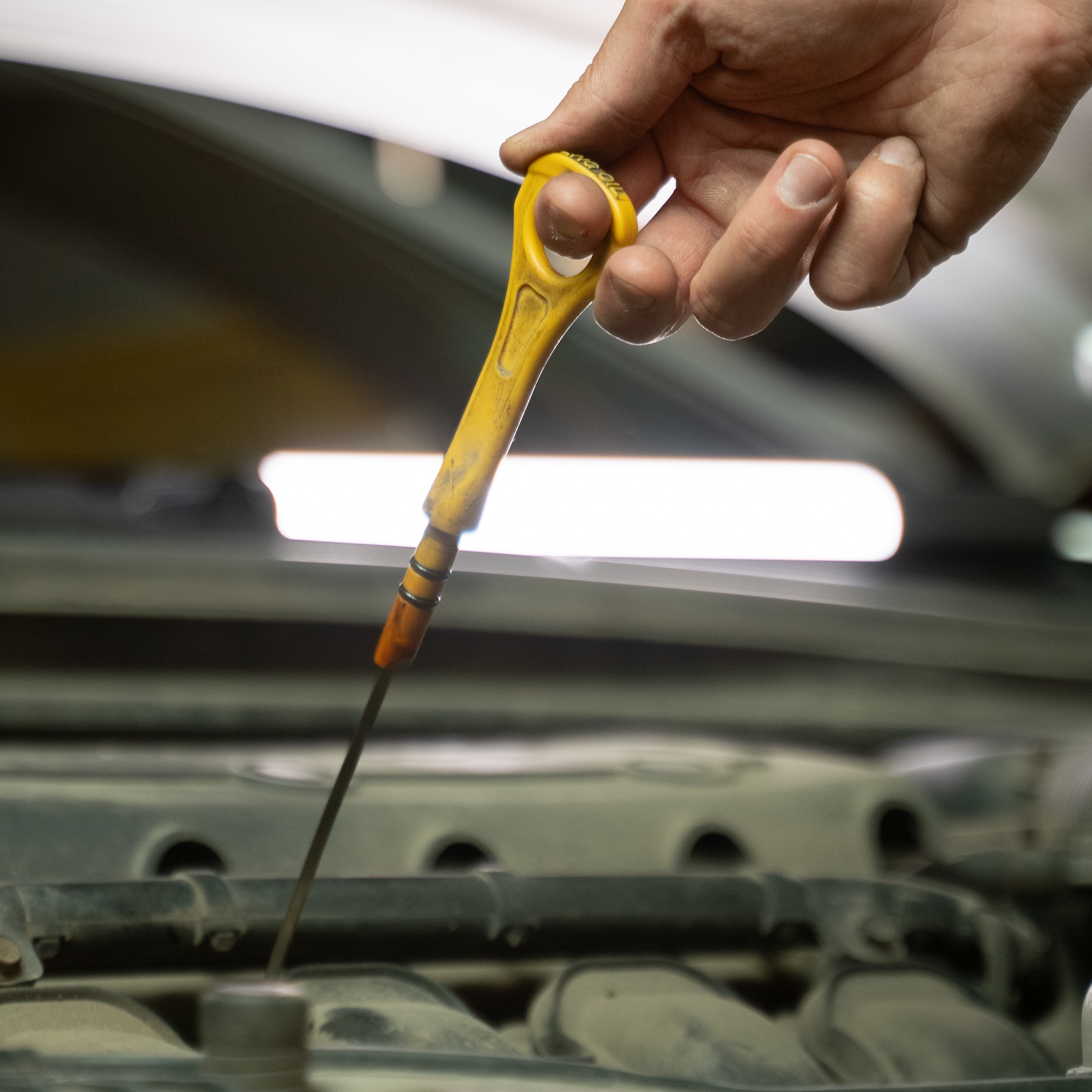
dipstick
A dipstick is a stick you pull out to see how much fluid is in the car. The reading can be wrong if the engine isn’t warm or if the car isn’t sitting level. That’s why you should follow the manual for exactly how to check it.
drain infill
A drain-and-fill (often shortened to “drain infill”) replaces transmission fluid by draining the pan area and refilling with the correct amount. It typically exchanges only a portion of the total fluid, but it’s the most common service method for many vehicles. It’s different from full flushes that circulate fluid through the system.
CVT
A CVT is a type of automatic transmission that doesn’t use fixed gears like a traditional automatic. Instead, it uses a belt system to change the ratio smoothly. Most of the time, maintenance is mainly about using the right fluid and changing it on schedule.
wheel bearings packed
Wheel bearings help the wheels spin smoothly. On some older cars, the bearings are greased by hand (“packed” with grease). On many newer cars, the bearings are sealed, so you usually replace them instead of repacking them.
ASC certified technician
“ASC certified” means the technician has training and credentials in automotive service. It’s a way of saying you’re talking to someone who’s qualified to help with car maintenance questions.
Lloyd's automotive
Lloyd’s Automotive is the local shop the technician works for. The show is telling listeners where to call or go if they have questions about car maintenance.
repack wheel bearings
Repacking is basically refreshing the grease inside the wheel bearing. On some older cars, you can open them up and put in new grease, but on many newer cars the bearings are sealed and you replace the whole unit instead.
preload
Preload is how tightly a bearing is adjusted. If it’s set wrong, the bearing can wear out quickly or start making noise. That’s why correct adjustment matters when servicing bearings.

Ford Fusion
They’re talking about a 2017 Ford Fusion V6 with 120,000 miles. After the turbo failed once, it now has a loud knocking sound, so the engine may have another problem that needs checking before spending money on a replacement engine.
turbo
A turbo is a device that uses exhaust gases to spin a compressor and push extra air into the engine. If the turbo breaks, it can sometimes cause oil problems, and that can lead to other engine issues too.
loud knock
A knock is a harsh, metallic sound from the engine. It usually means something inside isn’t happy—like worn parts or abnormal combustion. Because it can be expensive, it’s best to figure out where the sound is coming from before driving or replacing parts.
oil flow issues
Oil flow issues mean the engine isn’t getting enough clean oil to the parts that need it. When that happens, parts can wear faster and start making bad noises. It’s important to find the blockage or cause before continuing repairs.
used engine risk
A used engine might look fine from the outside, but you can’t really know how healthy it is internally. The host suggests diagnosing your current engine first so you don’t replace it with another problem.
Variable speed
Some cars have cooling fans that don’t just turn on/off—they can speed up or slow down. The car does this automatically to keep the engine and other systems at the right temperature.
air conditioning
Using the A/C makes the car work harder and creates extra heat. Because of that, the cooling fan may turn on more often, especially when it’s humid.
bleed the brakes
Bleeding the brakes means pushing out air bubbles from the brake fluid lines. Air makes the brake pedal feel spongy, so bleeding helps the brakes work the way they should.

2011 RX 350 Lexus
A Lexus RX 350 is the specific car being worked on. Brake bleeding is the process of removing air from the brake lines so the pedal feels firm and braking is consistent. Newer cars can require slightly different steps, so it’s smart to follow the right instructions for that exact vehicle.
bleeder valve
The bleeder valve is a little screw on the brake hardware that you open to let fluid (and air) come out. It’s how you “purge” the brake lines during bleeding.
bleeding order (furthest wheel toward the master cylinder)
When you bleed brakes, you usually start at the wheel farthest from the master cylinder. That helps the air get pushed out of the lines in the right direction so the whole system ends up bled properly.
follow the vehicle-specific brake bleeding procedure (manual/research)
The speaker emphasizes that while there’s a general brake bleeding technique, newer vehicles may have variations due to ABS/traction control hardware. Using the owner’s manual or service information for the exact make/model helps ensure the procedure matches that vehicle’s brake system design.
ABS
ABS is the system that helps prevent the wheels from locking up when you brake hard. Since it has extra parts in the brake system, bleeding brakes on an ABS-equipped car may need the correct steps so air doesn’t remain trapped.

2016 Audi a four
They’re talking about a 2016 Audi A4. The listener asks if doing service once a year is okay when the car only drives about 3,500 miles per year.
twice a year inspection
They suggest checking the car about two times a year. The idea is to spot early problems—like something that got bent, loosened, or worn out—before it turns into a breakdown. It’s a simple way to lower the chance of being stranded.

Ford Taurus
They’re talking about a 2015 Ford Taurus and using it as an example. The car has a sensor that measures how much air is coming into the engine, and replacing it can fix certain drivability or check-engine issues.
mass airflow sensor
The mass airflow sensor tells the engine computer how much air is getting into the engine. If it’s wrong or failing, the car may feel sluggish, idle oddly, or throw a check-engine light. It’s usually mounted in the air intake tube.
air intake
The air intake is the route air takes from the air filter into the engine. Some sensors are installed in that tube so the car can measure the air correctly. Knowing this makes it easier to find the part they’re talking about.
timing belt
The timing belt keeps the engine’s moving parts timed correctly. If it breaks, the engine can be badly damaged. That’s why the car maker sets a specific mileage or time to replace it.
water pump
The water pump moves coolant so the engine doesn’t overheat. It’s often replaced around the same time as the timing belt because it’s hard to reach later without doing similar work again. That’s why the maintenance schedule may recommend doing both together.
follow the manufacturer's maintenance schedule
The hosts emphasize that service intervals (like timing belt and water pump replacement) are set by the manufacturer based on engineering targets and expected component life. Following the schedule helps reduce the risk of failures that can be expensive or cause breakdowns. It’s also a way to align maintenance with how long the vehicle and specific components are designed to last.
interference engine
Some engines are built so the valves and pistons can get very close. If the timing belt breaks, the engine timing goes wrong and the pistons can smash into the valves. That kind of damage is usually expensive to fix.
service interval / follow the interval
A service interval is the maintenance schedule the manufacturer recommends. Parts can wear out or age even if nothing seems wrong. Sticking to the schedule helps prevent major, costly breakdowns.
timing chain
A timing chain performs the same job as a timing belt—keeping crank and cam timing synchronized—but it’s made of metal and typically lasts longer. Many manufacturers market timing chains as “lifetime,” meaning they’re expected to last under normal conditions, but they can still stretch or wear over time. Oil changes and correct oil viscosity are important to timing-chain longevity.

Buick Enclave
This was a 2010 Buick Enclave SUV. After hitting a rough spot, it showed warning lights related to traction and stability. When they turned the car off and restarted it, the lights went away, which often points to a temporary problem.
traction control
Traction control helps prevent the wheels from spinning when you’re accelerating on slippery or uneven surfaces. If the system senses a problem, it can light up a warning. Sometimes bumps or sensor glitches can cause the warning to appear.
stable track warning lights
This sounds like the car’s stability system, which helps keep you from sliding or losing control. A warning light usually means the system isn’t working normally. If it goes away after restarting, it may have been a temporary glitch.
sensors
Sensors are the car’s “information sources” that tell the computer what’s happening. If a sensor reading looks incorrect, the car may react by turning on warning lights or changing how it drives until things look normal again.
computer system didn't like what it saw so as a default it kind of shut everything off
If the car’s computer thinks something isn’t right, it may reduce power or disable certain systems to keep things safe. After you turn the car off and back on, it re-checks everything and may return to normal if the problem was temporary.
self test
When you start the car, it often does a quick check to make sure the sensors and computer are working right. If everything looks good, the car will run normally; if not, it may change how it drives or turn on warning lights.

Chevrolet Equinox
The Chevrolet Equinox is a compact SUV. In the 2022 model, it can have a push-button start, and the listener is asking what the correct routine is for shutting it off.
push button starts
Instead of turning a key, you press a button to start the car. The car usually needs to detect your key fob, and it may have specific steps for turning the car off safely.
radiator
Your radiator is like a heat “cooler” for the engine. It uses coolant and airflow to pull heat away—if it gets clogged with leaves or debris, the engine can run hotter than it should.
pressure washer
A pressure washer blasts water too hard. Around the front of the car it can bend delicate parts or push water into spots that shouldn’t get hit, which can cause problems later.
garden hose
A garden hose is gentler than a pressure washer. It’s usually enough to rinse off leaves and dirt so air can flow through the radiator again.
cooling fan
The cooling fan is what helps move air through the radiator when you’re not driving fast. If leaves and junk pile up in front of it, the fan can’t cool the engine as well.
condenser
The condenser is part of your air conditioning system. It also lives up front where it can get clogged with leaves, and when it’s blocked, the A/C (and engine cooling) doesn’t work as well.