“Rotary” means the engine spins internally instead of using pistons that move up and down. People often associate it with a unique feel—especially how it revs and makes power.
The Toyota Corolla is a common, everyday car made for commuting and reliability. It’s usually not built for extreme performance, so it can be compared against cars that are much more aggressive. That’s why it’s mentioned as the “opposite” in the conversation.
The Datsun 1600 is an old Japanese car that did really well in rally racing. The hosts are saying many people in Britain didn’t see it much back then, so they’re surprised by how good it was.
Leaf-sprung suspension uses a stack of metal strips to help the wheels move and absorb bumps. The host is using it to contrast older, simpler suspension with a more advanced rally setup.
Independent rear suspension lets each rear wheel react to bumps separately. That usually helps the tires stay on the road better when the surface is rough or uneven.
Long travel suspension means the suspension can move farther up and down. That helps a rally car handle big bumps and rough roads while keeping the tires in contact.
The Datsun 240Z is an older sports car that became well-known among car enthusiasts. People often modify them because parts can be swapped and upgraded. The episode talks about using a 240Z gearbox with other engines or builds.
Homologation means a racing series officially approves certain parts or cars for competition. The host is saying some parts were approved for the 1600, so teams could legally use them in that class.
A V8 is an engine with eight cylinders arranged in a V shape. The host is using it to illustrate that the rules allowed even big engine swaps for a while.
The East African Safari rally is a famous old rally race known for being long and tough. The host is saying Nissan/Datsun won with the 1600 there, which helped justify later rule changes.
Monte Carlo is where a very famous rally takes place. The host is saying Nissan/Datsun brought the Datsun 1600 there too, which mattered for the rules.
Racing “groups” are rule categories that say what kinds of cars and modifications are allowed. The host is saying the Escort fit into Group 4, and those categories affected what teams could do.
“Group 2” was a type of racing class with rules that required certain production parts to be approved. It’s basically how the sport ensured the race cars were based on real cars you could buy.
Homologation is official approval for race rules. It means the racing series says certain parts and setups are allowed because they match what’s (or was) produced for the road.
R160 is a specific kind of rear differential used by Nissan. It’s important because the differential is what lets the wheels turn at different speeds, and the “R160” version has a particular size/strength.
R180 is a different Nissan rear differential type. People choose it when they want a stronger rear end than the smaller R160 for harder driving or racing.
R200 is a bigger Nissan rear differential. It’s popular for swaps because it’s typically stronger and better suited to higher loads than smaller diff versions.
Ramp angles are part of how a limited-slip diff decides when to lock up. By changing them, you can tune how the car grips and how the power gets shared.
Close ratio means the gears are spaced closer together. That helps the engine stay in the right rev range so you don’t have to wait as long between shifts.
South Australia is where the host raced. They’re explaining that the local roads were fast enough that they had to pick gearing for top speed, not just acceleration.
“Rotaries” are cars with a rotary engine. The engine spins instead of using pistons, and that affects how it feels and how you have to care for it.
Concept
barriers to entry cost wise
“Barriers to entry cost wise” describes how expensive it is to start competing at a given level. In motorsport, that cost barrier often comes from needing a properly prepared car, spare parts, logistics, and entry fees just to be competitive.
Term
Clubman spec
“Clubman spec” means a rally build that’s meant to be more budget-friendly than the highest-level competition cars. The goal is to be capable and reliable without spending like a factory team.
Concept
gaining and retaining sponsorship
They’re talking about getting sponsors and then keeping them. In racing, sponsors often pay for the car and the team to keep going.
Pedder’s suspension is a company that supplies suspension parts for cars. In rallying, suspension setup is crucial for handling over rough roads, and Ed says Pedder’s was part of his winning setup.
The Mitsubishi Galant VR-4 is a turbocharged, all-wheel-drive performance sedan that became a rally weapon. Ed Ordynski describes taking a first Galant VR-4 to the opening World Rally Championship round in Australia, highlighting the car’s competitive pedigree.
The World Rally Championship is the biggest rally racing series in the world. It’s the kind of event where teams compete internationally, and Ed Ordynski is describing entering it with his car.
Perth is the city in Australia where the WRC round in this story took place. Rally events often use specific cities as hubs for stages and logistics, and Perth is named as the location of that first WRC round.
A “private team” is a rally team that isn’t the official factory team. They can still get help or parts support, but they’re not the main manufacturer team running the car.
A “production category” means the rules keep the cars closer to what you could buy, rather than fully race-only builds. It’s one reason the competition is grouped the way it is.
“Group A” is a category/ruleset for rally cars based on production vehicles. It determines what kinds of cars can compete and how the event is organized.
A “no motorsports policy” means the company had a rule against racing involvement. In the story, that rule initially stopped Mitsubishi from backing motorsport, even though the rally results were strong.
“Class below” means you’re racing in a smaller or lower category than the top cars in the event. Ed’s point is that even if you’re in a lower category, beating the top factory team gets you noticed.
Commonwealth Bank is a bank mentioned here as part of the financing side of the story. It helps explain how corporate money and fleet deals were involved.
Topic
Magnawagons
“Magnawagons” sounds like a specific event or program tied to Magna 40. In this part of the conversation, it’s about corporate/fleet involvement, not car mechanics.
“Evo 8” is a Mitsubishi Lancer Evolution. It’s a fast, rally-style car that uses all-wheel drive and a turbo engine, and it’s popular with car people.
Topic
Magna 40
“Magna 40” sounds like an automotive event or gathering. In this part of the episode, it’s where they met and talked about the guest’s car history.
Topic
Ground Australia trial
“Ground Australia trial” sounds like a specific driving challenge or event. Here it’s mentioned to explain that the guest drove around Australia for about 19 days.
Mitsubishi is the car company Ed worked with. He describes how they used him not only as a rally driver, but also for corporate events and behind-the-scenes engineering work.
Suspension tuning means adjusting the car’s suspension so it handles better. In rally, the road conditions change a lot, so getting the setup right can make a big difference.
Holden is another car brand Ed compares Mitsubishi to. He’s saying that even race drivers tied to big car companies had corporate obligations, and that manufacturer connections can help careers last longer.
Left foot braking is when the driver uses the left foot to brake while the right foot stays on the gas. Racers use it to make the car’s behavior smoother and more controlled while turning.
Kitepo Forest is where the video happened. It’s in South Australia, and in rallying the exact location matters because the road surface changes how the car slides and grips.
It means using your left foot to press the brake pedal while your right foot can stay on the gas. Rally drivers use it to help the car stay settled and respond smoothly when turning.
They’re talking about a car factory that used to be run under Chrysler, and then later changed hands. The point is that the workplace and how people worked together changed a lot.
The Holden Commodore is a popular Australian car model. Here, they’re talking about race-prepped versions of it that were built from regular car bodies and modified for rally competition.
This means the race car started with the same basic body shape as a normal car. Then they modified it for racing, including preparing it for safety parts and other race equipment.
A roll cage is a strong metal frame inside the car that’s there to protect you in a crash, especially if the car rolls. Here, they’re saying the regular car body was prepared ahead of time so the cage could be installed properly.
A VIN number is like a car’s unique ID code. It’s used to identify the exact vehicle for paperwork and registration—even if it’s been modified for racing.
Rally Art is Mitsubishi’s rally team/effort—basically the part of the company that supports rally racing. Here, it matters because it provided drivers and mechanics to help cars do well.
“Privateers” are smaller racing teams that aren’t the main factory team. The idea here is that Mitsubishi started supporting those independent teams more directly so they could compete better.
The Mitsubishi Lancer Evolution is a fast Mitsubishi car that was built to compete in rally racing. Here, it’s brought up because it did really well in the event with help from the rally team.
George Shepard is the team manager in this story. He’s described as the person who planned the rally strategy and told the driver how to approach different stages.
A gearbox is the part that changes gears so the engine can keep pulling well as the car speeds up or slows down. If it breaks in a rally, the car can’t keep going properly.
The “VR4 evolution” is the later, improved version of the VR4. The guest says it got upgrades like better suspension parts, stronger wheel hubs, and bigger brakes, making it more capable for rallying.
“On the boost” means the turbo is working and the engine is making extra power. The guest is saying the gearing was set up so the car stays in that strong-power zone for longer.
A turbo restrictor is a restriction placed on the turbo system by the race rules to limit how much boost/power the car can make. The guest is saying rally rules were different, so the cars weren’t as restricted.
The inlet diameter is basically the “size of the opening” feeding the turbo. Smaller inlet/restrictor sizes mean less air can get in, so the turbo can’t make as much boost and power.
A multi-link rear suspension uses multiple arms to control how the rear wheels move. He’s saying that in his experience, the parts and alignment could limit how freely the suspension moved, which then affected steering and stability.
Bump steer is when hitting a bump makes the car’s wheels steer a little on their own. That can make the car feel unstable because the wheels aren’t pointing where you intended.
Toe angle is how much the wheels are turned inward or outward relative to the car. If it changes as the suspension moves, the car can steer unexpectedly over bumps.
He’s talking about a rear-steering feature. When it’s connected, the rear wheels help the car stay aligned; when it’s disconnected, the car behaves more like a conventional setup.
This means the rear wheels help steer the car automatically. He says it helps the car follow existing grooves (“ruts”) and changes how easily it will slide when you put power down.
Concept
go sideways under power
This is when the car starts sliding sideways while you’re accelerating. He’s saying the rear-steering system makes that harder to do, so the car stays more planted.
Group N is a rally category for cars that are closer to what you could buy, with fewer changes allowed. WRC is the top-level world rally series, so winning there is a big deal.
Ruts are grooves in the road surface created by repeated tire tracks. In rallying, ruts can guide the car’s path but also destabilize it—especially if the rear tires climb out of the groove, which can trigger oversteer and sideways rotation.
Term
bull bearing gravel
It’s a type of loose gravel made of small stones. Because the stones move around under the tires, the car can slide more easily, so driving technique matters a lot.
Pace notes are the rally co-driver’s instructions about what’s coming up on the road. They’re used so the driver knows the turns and hazards ahead of time.
“Recky” means reconnaissance—going over the route before the rally. It helps the team write the pace notes and plan how to drive the stage.
Term
offset grille openings
Offset grille openings mean the front air inlets are not the same on both sides. That can help the car get the right airflow for cooling, especially in hot weather.
The Nissan GT-R is a fast sports car made by Nissan. It’s designed to perform very strongly, especially in acceleration and overall driving feel. The podcast is referencing GT-R history and performance details like horsepower.
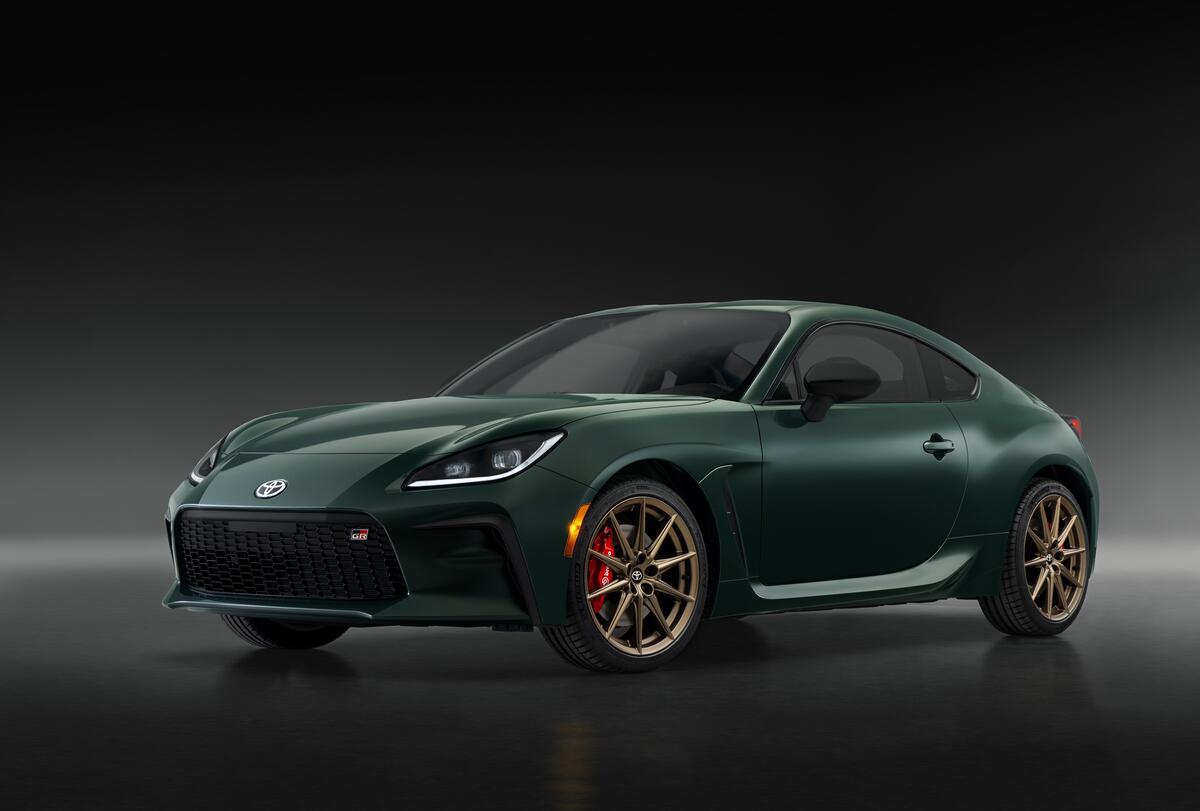
The Toyota GR 86 is a small sports car meant to be fun to drive. It’s built to feel responsive in corners and on the road, not just to be fast in a straight line. That’s why it shows up in discussions about handling.
“Magna” is a Mitsubishi car model made in Australia. The guest is saying which version he’d pick, and he also explains he helped choose the parts for a special Rallyart Magna.
“Raleart” is a performance brand name associated with Mitsubishi’s rally heritage. In this discussion, it’s the badge on a special Magna, and the guest is talking about how that badge and the car concept came together.
“HSV” is a brand that makes performance versions of Australian Holdens. The guest is comparing how the Ralliart Magna was positioned against that style of performance car.
He’s talking about how limited-edition cars can require ordering parts in bulk. If you only build a small number of cars, you may end up with extra parts left over.
Car
VRX limited edition
This is a special, limited version of a Mitsubishi model. The hosts are talking about how only a few were made and how this particular one has a documented history because it was used in ads.
In cars, "provenance" just means the car’s documented background—like who had it and what it was used for. It matters because it can make the car more interesting and more valuable to collectors.
In suspension talk, "compliant" means it can flex over bumps instead of feeling rigid. The host’s point is that a good car can be sporty without being harsh.
LIVE
This is a professional radio, gentlemen.
And it's front wheel drive.
Sorry, have you got anyone you want to thank?
Just myself.
And now we do the after hours.
General, what would you go for?
They see us in there.
Because it's not a super car.
It's not.
Automotive perfection comes in the form of two letters A and U.
Long live my LTD.
So rotary, crazy powerful, complete opposite to your Corolla.
But in terms of like, you know, handling and whatnot as well as well.
Mid range in between those, you've got really into your Datsun 1600s.
I did.
And why a Datsun 1600?
And, and obviously you've got such an affinity for your own two.
But as a race car, like they're a very successful car.
Yeah.
In terms of in terms of all of many forms of motorsport, especially rallying.
People still rallying now.
That is very much that is very true.
You know, people talk about escorts and stuff from that era.
But I think the real unsung hero is that is the 1600.
And from a lot of people, they remember that more fondly.
Yeah.
And, and there's that interesting thing with the escort because globally they were a much more successful car in motorsport than the Datsun 1600.
But that's because rallying was very Euro and British centric in that era.
And we didn't have media coverage and magazines from anywhere except there for the English speaking world.
So all of our knowledge of the sport was even out here was kind of dominated by escorts.
But the British didn't actually see the cars from Japan and other parts of Asia that we had competing here.
So they're surprised when they see a Datsun 1600 nowadays, what an incredible car it was for back then.
I mean, I mean, you compare apples for apples, right?
Like the escort live or axle, you know, very quite agricultural leaf sprung in the rear.
You know, the 1600, you know, independent rear, quite cool sprung, much more technologically advanced vehicle.
Very long travel suspension, which in Australian conditions for rallying is fantastic.
And again, a bit like we mentioned right at the front of the show, great interchangeability with the other models in the range.
So you could bolt a 240Z gearbox on or a 240K anything else series motor four or six is completely interchangeable.
So to have heavy duty items, you'd use the water pumps, fuel pumps, you know, the gearbox, the diff shorten the prop shaft, the axles, you know, we're all bigger on the 600 models, but straight bolt ins.
So for a rally car build, you would just go to the records.
You'd find a 240Z there and you'd be like, all right, taking the shots, taking this, taking that.
Correct.
And so the rally rules allowed you to do that sort of stuff like interchange parts from in that era they did.
Some of those parts were homologated for the 1600.
So, you know, in Australia, we went through some a lot of changes of regulations.
I won't get us bogged down on that.
But when I was running my Datsun 1600, yes, you could put a rotary in it if you wanted to or a V8, you know, you could do whatever you liked just for a short period till it got out of control.
So that was allowed.
However, Nissan did win like the East African Safari rally with Datsun 1600s and they took some to Monte Carlo and so they homologated.
It was called, you know, there were groups 123 and four and Escorts were a group four car, the most mods allowed.
Yeah.
And they built some group two Datsuns in that era.
And it was an old cheapo homologation because they just homologated a lot of those parts that came off other models and things.
Yeah.
Well, they already produced them, right?
So they were like, well, let's just put it in this small chassis and yeah, obviously.
The Datsun Diff is called an R160, which I think is the size of the crown wheel or something.
The R180 out of the Z or the 248 bolt or even the R200, you know, people use those nowadays.
So everything, the R180 is straight for the 160.
And you could buy the Nissan Motorsport Limited slip for it.
You could change the ramp angles in the diff easy.
You know, you could build a beautiful car.
I had a, I just used a 240K gearbox in mind, Hollinger engineering in those days.
You know, the gearbox manufacturer is still around.
Yeah.
They produced a gear kit for the 240K box where you changed first, second and third gear.
So really long first gear and close ratio, second, third brought them up to the one to one fourth.
And then you still had your overdrive fifth and in South Australia where I was mainly competing.
We had a lot of high speed roads.
So although there was a Nissan homologated one to one fifth gear gearbox from the 260Z, I think,
or two based on that box, you didn't have enough top speed for SA.
So the K gearbox worked really well.
So cool.
So cool to just build these cars out of other parts and share and then go and rally them.
Yeah.
I mean, in my case, most, a lot of it was done with Mick Wooding, the guy mentioned earlier.
But, you know, he had his own workshop and it was, you know, we would do it.
It's really good.
Just having the resource.
Yeah, exactly.
Right.
But there are plenty of people, you know, winning rallies and cars they built at home.
Yeah.
That's amazing.
It's a different time, isn't it?
It really is.
It's just, it's so different now.
It's just like, it's how it might, I mean, look, obviously it comes down to a lot to driver ability to,
but it's like putting someone in a, let's just go K10, K10, for example, versus a, you know,
an Evo 9 MR rally car.
It's like driver skill only comes into so much where money, how much money you're paying
for the actual vehicle is also making a massive difference to the, to the, how you compete.
Yeah.
In the, in the rally world, right?
100%.
And I think Neil Bates and myself and Possenborn, we were probably the last three factory drivers
in Australia winning championships that got there without parental money.
Yeah.
I think, you know, there'd be some, some guys would be cringing, oh, I worked hard.
Yes.
You've worked hard, et cetera.
But somebody underwrote or looked after you or had you in the family business or whereas
we genuinely were on our own income from nowhere because, and you literally, it doesn't matter
how hard you work as a teacher, it's the same as that other one down the corner door who's
come and lost.
Yeah.
So the, you know, I think now it's near impossible for a young person, you know, to try and break
into motorsport without parental support.
And there are a lot of families providing that support, which is a wonderful thing to see.
And there are a lot of people from families that can afford to buy them a really good
car, you know, pretty early on and give them those opportunities.
And there is enough of them that they are genuinely talented drivers.
Yeah, absolutely.
You can't take anything away from that.
No.
It's just, you can't do it on a working class pay, you know, you can rally as an amateur,
but the barrier to entry is so much higher than let's say in your day.
But it's, yeah, it's, it's, it's a really different world.
You're fronted up dressed as we are now.
You know, you didn't even have to have a crash helmet if you didn't want to.
I had, you know, whereas you've probably got $20,000 worth of safety.
Yeah, absolutely.
As well as your restraints and yeah.
Yeah.
So did you find like obviously 1600 you got a bit of success in that car?
I did.
Yeah.
And now it holds a very steep place in your heart.
And it was, I'd spent so much money on the rotaries because I was still largely self funded.
Yeah.
I had some good sponsors, but you know, it was an expensive car to run.
And I, I, Kath and I went over to the UK and lived for eight months.
I was thinking maybe there's a chance to break into the sport in England, but their barriers
to entry cost wise were way worse than here.
Oh, right.
So we had a good time over there, learned a lot, but there was no way without being able
to stump up the money for a good spec escort or something that you were going to be any
good.
And I thought, I'll come back and build a car that's kind of like Clubman spec plus
and something that I can build relatively affordably and not have to buy a lot of new
parts for say two or three seasons where I really focus on the craft of going rallying,
even if the car's not super competitive, just really become, it was the first time
I'd really thought about this to be a champion in motorsport and this applies probably to
anything you're in.
You know, the fundamental thing is you got to be a fast driver in a fast car, but there's
these six or eight, maybe 10 things that you have to be a master of as well that makes
you a champion because ultimately you get to a level of competition where everybody's
a fast driver in a fast car.
So you're separated by the other things you do like gaining and retaining sponsorship
or working with the engineers and you know, all of that kind of stuff.
And I kind of thought about that and I thought, I'll try and really get across everything
else so that if I can get into a fast car, I've got all the other boxes ticked.
But the Datsun was surprisingly competitive.
I did much better in that than in the rotary because you could just drive it flat out everywhere.
And you know, it was, I picked up better sponsors with everything, you know, because I was working
for the first time I was working on other things, not on the car.
And yeah, it was a very good car for me.
And how long do you run that for?
Three years.
Three years, okay.
And that's when you started to see some success.
And that was when the next step was to a brand new Subaru.
Yeah, okay.
So already you saw the fruits of that.
And I built up kind of sponsorship relationships with Bridgestone, Heller and Pedder's suspension.
And then when I went into the Subaru, they were all on board fully.
It was a brand new car.
Yeah.
Close relationship with the factory, televised events.
Yeah.
Give their sticker in the car.
Yeah.
And I had, you know, Bridgestone, Heller, I think they were on my cars.
Well, certainly I used to still bring that sponsorship onto them, you know, in the rally art era.
And Pedder's, you know, we won the national championship in a VR4 in full Pedder's colours
and everything.
So I was Pedder's first national rally champion, but they've had some other things.
And that was in the VR4.
So yeah, okay, cool.
Oh, wow.
So something, so you went, you went Corolla?
Rotary Mazda, Datsun, Subaru.
Subaru.
And then Mitsubishi was professional career for me, you know, the whole way.
So, and yeah, look, it was wonderful.
I still pinched myself that that happened, you know, and it's a snowballing thing.
You know, you get a foot in the door with some sponsors and with Subaru.
And then a look at some listeners will certainly know this, that, you know, we took our first Galant VR4,
which Pedder's helped me buy Kevin Pedder in South Australia.
And we took it to the first World Rally Championship round in Australia in Perth.
So as a private team, but we did have help from Mitsubishi and rally art, but privately entered.
And we beat the, we were in this group and production category.
There's two levels like nowadays as WRC one for the big guns and WRC two for the next level.
And we were in group end to group A so that second tier, but more cars in that than in the outright category.
And we beat the world champions, the current world champions by 20 minutes, which is huge.
Enough time to have a bit of a cappuccino.
Mitsubishi entered two VR4s in the group A category and we split them and we're ahead of one of their cars in the production version.
So your career kind of, there's no turning back.
Yeah, yeah.
Factory team saying who's this ahead of us over the podium.
Yeah.
The next like league down essentially.
That would have been a bit of a kick in the guts of them.
So your life, my life changed from that event on, you know, because it was, yeah, it was a big event for a big turning point.
And that's how it became contracted.
You know, when I spoke at Magna 40 about Mitsubishi being there looking after, you know, they had a no motorsports policy, but they were looking after rally art who were attending the event.
And suddenly, well, for a while there, we were in front of both of their cars.
They were, you know, they were going, is this, so if you can beat the factory team in their own sort of car and your own class below, you know, you're going to make, your name is going to be conversation at least, right?
So then then Mitsubishi approach you on go, hey, you know, what's the conversation or what's like the, what's the talk like from going from that category to the next.
It's a lengthy description, but in essence, it was from a guy called Charles Isles who is head of marketing and communications and Mitsubishi being at the rally coming up and saying, you know, that's a fantastic performance.
And come in and see us, but we've got a no motorsports policy. I don't, we can't put money because Mitsubishi being bought had bought Chrysler and Chrysler in Mitsubishi's eyes had squandered a lot of money on the charges in motorsport and not kept proper recording and expenses, etc.
And so they were being blocked out of it.
They were under instructions, no more motorsport activity. He said, that's not on, but there might be some other ways we can help. And that leaves me to kind of what I said at Magna 40 that Charles opened the door.
I did the launch of VR4 in Australia. So there was Australian models were coming. So this was before them being launched here. And that was paid opportunities for work and ultimately a contract with Mitsubishi motors for all of that work I did on Magnus and so on, which gave me a really good income and the freedom to go and do rallies.
And then rally up and a guy called Les Walkden in Tasmania, who was the kind of the rally up for domestic rallying. Ultimately, you know, they provided the cars and the mechanics and the crews and all of that stuff. And I was taken care of by Mitsubishi motors.
And it's been one event really. Yeah. Yeah. Yeah. And an interesting throwback to school teaching. Charles asked that manager, I had taught his daughters at primary school.
Teaching paid off. And they were delightful kids. So, you know, it was terrific.
Do you have met them in like a parent-teacher interview as on point?
I'm a guy in the fleet department called John Plummer who's passed away, but it's fleet. When we had Australian manufacturing, it's the fleet department that did a lot of the corporate events because they're trying to sell to the big fleet companies.
Tells Commonwealth Bank finance.
Yeah, fly by a million a million Magnawagons.
So you can really stuff in there and you've got it.
So you want the fleet department on site because they're chipping in, you know, and then John Plummer reported to a guy called Rex Kealy, who was one of the directors of Mitsubishi.
So he ultimately signed off on effectively motorsports participation, but my role in motorsports.
I was only Mitsubishi Motors Australia's only ever signed up driver for anything.
Yeah.
So Rex Kealy was important and Rex got the Gilbert's Motor Museum in Strathalben going on with the Strathalben tourism nowadays.
So I still see Rex regularly.
All the time. Yeah.
Yeah.
That's actually really cool.
Yeah.
See, it's funny how like it really is a small world when you think about it in terms of other people you meet and stuff.
Now I've got to ask you, did his kids still call you Mr. Odinsky?
Mr. Oh.
Mr. Oh.
Yeah.
Yeah.
Yeah.
Really, it's primary school and so they were pretty young, but you know, they knew I was rallying and kind of stuff here.
You don't be the coolest teacher straight out.
Straight out.
Yeah.
Oh.
When I first started teaching, I was at a school called Fullham Gardens and I got posted to Elizabeth Field Primary School, Elizabeth North and Suburbs.
Kind of certainly back then a quite a rough area, a lot of discipline problems.
And I would be, I would have to sometimes take my rally car, which was the KU-10 to school because I was going to go and drive right across the city to work on it at night.
And you know, you wondered how the kids would be, but I would ask the kind of the worst group of year sevens who were likely to, you know, strip it or something.
You know, would you look after it for me?
Like I would trust you guys like lunch recess.
You know, you're in charge of my car and they were great.
They never had any trouble.
Don't touch Mr. Oh's car.
Yeah.
Basha.
Couple of thugs waiting out in front of the car.
Obviously your document of history with Evo's is, yeah, it's incredible history.
I mean, Scott owned an Evo 8 on this podcast and he loved it.
Yep.
So you probably would have felt a bit like Mr. Oh didn't scare at one point.
You're like, oh, look at me go.
Oh, weird.
So you obviously erased the Evo's all the way up and, you know, but your relationship with Mitsubishi, like for what you did for, you know, obviously,
we met you at Magna 40.
For what you, like the stuff that you did and we were having a chat last night, you know, a little bit about this, but, you know, it was the little things like, like, you know, some people would call them, you know, the stuff you got to do to get paid.
But in terms of what you did, there were so many other different things and people you've come across.
Like you've met all different celebrities.
You've met, you've done, taught driving to people.
You've, you've, you drove around Australia in 19 days or something.
In the Commodore and Ground Australia trial.
Yeah.
Yeah.
And like, you know, you were with Peter Brock.
Like, you know, you know, and it's just these are the, these are the people that you've, you've met, which is absolutely, you know, blows, blows, you know, I think blows with our minds doing stuff like that.
Like coming to, obviously coming to Magna 40 and you were saying yesterday how, how, you know, you weren't feeling like a horse is going to be like, and you really felt at home doing it.
Did it bring you back to kind of, you know, working for Mitsubishi with, with like the help developing suspension tuning and things like that?
I thought it was wonderful because for, you know, I think for the first time I've worked with Magna was recognized.
Yeah.
And bear in mind all drivers, you know, it doesn't matter if you racing supercars with Holden, those drivers still had to do the sort of corporate events that I did with Mitsubishi.
The, they would actually rather, a lot of those drivers would rather have been contracted to Holden than to Holden racing team.
Oh, really?
You know, it's that work with the manufacturer that gives you longevity and a career that's so long till I was 50 because you've got a relationship with the manufacturer.
If you were just employed by the racing team, you could be swapped out for a younger guy or anything, you know, I think it was a big advantage to have that situation.
But Mitsubishi didn't do with a motorsport like Subaru really link it to their marketing and product stuff because of that split between rally out and Mitsubishi motors.
But that didn't mean that I didn't do at least as much work as the guys in Holden did the General Motors Holden as opposed to driving the racing cars.
So we're still very similar, but I had, I was paid to drive the rally cars and I was paid to do the corporate work.
So our, our income was the same as super car drivers, but there was Mitsubishi wanted me to do as much of that behind the scenes work with Magna as I had the time to do, you know, so the opportunities were, were fantastic and they were very long term, you know, so
I first I did it purely because it was part and parcel of being able to drive the rally cars, but after a while, you know, you're working with the engineers and, and you get to know the film company guys and all of the associated agencies and the, you know, there's a factory and you can go and talk to the workers and
I had free run of the factory. I didn't have to do anything with security. I could just walk in and say hi and wave and walk through and it was, it was wonderful.
And about, you know, I'm known for my, the rallies, not for that in the outside world and Magna 40 was the first time I've ever spoken publicly, you know, about my work because all those, those videos that Andrew, I think, got out of the archives.
You know, I wouldn't have thought they still existed, but they were, you know, the audience for those was in house Mitsubishi and corporate launches and so on. So they weren't, they were never public.
And it was like a body of work and who would have thought, you know, all those years later that so many people would turn up and young people would turn up and have appreciation for something that I did 30 years ago.
As a part of my life and never had recognition for it. Never thought I would have recognition and it was, it was the same as the other Mitsubishi people there. You know, you, it felt very, very special.
Yeah.
That, that it's looked back on like that. Yeah. Yeah. What else can I say? You know, it was, yeah.
Speaking with Andrew last night and David can attest this, this was quite funny. So that video of you sliding that, that magnet, you were left foot breaking, doing all those different techniques to, you know, to get, to get the magnet to rotate and in the, you know, where was that?
That was in Kitepo Forest in South Australia.
Okay. Yeah.
So you've told us, you've told us the story last time. I'll get you to it because it's actually, it's actually quite funny. But that video only got released because like Andrew, I believe, got access to all this.
Through Mitsubishi.
Mitsubishi. Yeah. You know, archival footage.
Yeah.
So he was putting in tapes. He was explaining to us last night and, and, and watching it. And he was watching like an introductory video about a, about the T.
T. R. T. R. Yeah. Yeah. And basically kind of dozed off because like, at the end of it, it just went blank. And it was like, apparently there was like a six minute like gap.
And then he kind of, it was dozing off and he woke up and then he didn't realize it was still playing. And he'd seen this video before.
And, but he stopped it because like, obviously it went to black and he's like, I was nothing left in this tape.
At the end of the tape was that footage of him sliding this magnet around.
Oh, that's where it was.
And he found it by mistake.
I'm pretty sure it was never used for anything.
I think it was probably, you know, kept out of any promo things because they, you know, they didn't want the car being quite so.
Used in that manner.
Yeah. Yeah. Yeah. For sure.
I don't recall seeing it at anything.
So was that the first time you'd seen that footage since?
I think so. Yes.
Yeah. Oh my goodness.
Yeah. And, and, and I think I said this at Magna 40.
So forgive me for repeating it, but, you know, it was such a tiny window to get that shot because my life was a blur of things I was going to all the time with events in Asia and races and all sorts of stuff.
And the Kojo Productions who produced all of those Magna videos just ran me up and said to you in South Australia tomorrow morning, we forgot to shoot some gravel coverage for the TR launch.
You know, could you just whiz up to Kaipo?
We'll have a helicopter three cameraman and just get some footage on the dirt.
I said, can't have not have gravel footage. And I whiz up the forest was close to home and, you know, met the crew.
They were ready to go at like 9 30 in the morning.
And I said, what do you want me to do? Just drive along the gravel road?
Or do you want, you know, a bit of a song?
Yeah. And he said, I don't know, just do both.
Can you do one round of one and one round of the other?
And that's what we did.
And I was back home by, you know, 11 o'clock in the morning.
Because you run those cars so often, you know, doing stuff.
And it wasn't, I think, you know, when that went viral, people were posting, you know, oh, they would have had three cars and taken a week to film out and all that.
It wasn't, it was just, you know, a couple of takes and it was, I mean, I look at it and think it looks nice.
You know, when you, when you Google your name, the first photo that comes up is the VR, VRVS Commodore.
The first video that comes up is that red magna being split around.
Yeah, because it's, I guess it's gone so many views on Facebook that it's, yeah, that's like the first recommend.
It's incredible. It's very special.
Yeah. And I had, you know, other Australian rally champions ring me and go, what is that?
You know, like, was that a special four wheel drive or something?
And I'd go, no, it was kind of, I was in them day in, day out and you just had the finesse for the left foot braking.
Yeah, yeah, yeah.
Yeah.
I got to ask you, it must have been such a good times in Australian motoring history then.
Like, you know, David and I were talking and you bumped into some of the people that would work there and they would always say, they were great years, David.
They were great years, you know, of working for Mitsubishi on the assembly line or in the design department.
You know, was it exciting seeing the cars like being developed and hidden from the public and seeing them kind of come from nowhere to a fully functioning car and being part of that?
Did you feel like you achieved something?
You feel like when you saw one in the road, you're like, I didn't put in that, you know, or was it just kind of like, oh, it's part of the job?
I never just part of the job, far more as you described for sure because you knew the people and it was their livelihood.
And it was such a transformation from the Chrysler factory to Mitsubishi ownership because Mitsubishi brought in all of those people working in teams and changing their duties, rotating, you know, doing other things.
So you had people wearing uniforms and being identified by the team of employees and it made it like family.
So very special to see those products.
And you know, our digress from Mitsubishi, Holden, when we did the round Australia trial, which was a full on rally, you know, it was 19,000km, which 4,200km was competitive stages.
Two car team with Peter Brock, good budget, etc.
But we went to the Elizabeth factory in South Australia, Brock and I, after hours, to meet the people who had been chosen to build the Commodores that we were getting for the round Australia so that we met the workers who actually,
And we followed our cars, you know, along the line, with Ross Duncan's car, the third car in the team, a test car.
And I think there were about eight because 1995 was the first year of V8 Ubercars and they were still built from production body shells and Holden and Ford.
That's the beauty of local manufacturing.
They put special body shells down the production line with a lot of the things that you didn't require for a race car, not attached to it.
And then some of the things you do.
So our round Australia cars, the, for example, the, in a VRVS Commodore, the whole front dash tow board assembly drops in from the top through the windscreen aperture.
It's glued.
Yeah.
So they were all pre-drilled for all the holes for the roll cages, the dash and everything.
Yeah.
And it was, it was fantastic to see.
And those workers were so proud.
And Peter Brock there as well, of course, you know, but you just, you just stood there going, well, he said he did the same in 79 for the VB Commodores.
They were built at the plant and he went and saw the cars being built.
So Holden was so across that sort of thing as indeed was Mitsubishi with me.
You know, they always involved me in things in the canteen and worker stuff, et cetera.
They make you feel part of the whole manufacturing operation.
So, so a car like that, that Commodore in particular, would it have a, a VIN number or was it just a straight?
Yeah, I'm sure it would have.
Okay.
Yeah.
I guess it would.
Yeah.
Yeah.
It would have to, if I think to get its, because it had to be driven on the street.
Okay.
The liaison stages.
Yeah.
What was that?
What was that event like?
It was.
It wasn't gruelling.
Yeah.
You had to be fit for it because you, you know, the basic format was you drove a typical stage might start at six in the morning.
You might start the day and you'd go all day, all night to six p.m. the following day with a three hour rest break.
And then you'd get the next night off.
Yeah.
So it was endurance plus, you know, they're called a marathon event.
And yeah, you've got to be very fit.
You're going speeds through the outback, you know, it started in Brisbane.
First leg was Brisbane to Melbourne with a three hour rest break or forestry stages all down the East coast.
The team was incredibly well organized.
And then you went, uh, Melbourne to Adelaide.
Uh, then Adelaide and so had the night off in Adelaide and you'd Adelaide to Alice spring.
So up through the Flinders ranges that they were really rugged stages.
Yeah.
You know, we won a stage, I think with an average speed of about 40 kilometers an hour.
I was stopped and looked how to get across creek blossoms.
I was on a tour drive.
Yeah.
And there were evos and yeah, I think.
Um, so yeah, it looked tough, but an absolute blur for me.
You know, that year I, that event was three weeks of your life, but they had a test car built the year before.
And so the build up to the event with Holden was enormous.
I had dispensation from Mitsubishi, but you know, I did.
Um, I think there were 10 or 12 rounds of the national rally championship.
I did.
I went up to rallies in Indonesia, Malaysia, Thailand, did world championship rally in New Zealand.
World championship rally Perth.
The sand down 500, the Bathurst 1000 Eastern Creek 12 hour with Volvo all in the one season.
And corporate events that go with that, you know, away from home eight months of the year.
And I actually got to the end of to answer your question.
You know, grueling event, huge build up.
You finished on the final day and you went to a prize group giving and it was an enormous function on the Gold Coast.
And they had film of all the, you know, winners of all the red X trials, um, finishing and going over the podium and and announcing them.
And then it got to Ross Reynolds, my co-driver and I, and you felt an incredible part of history.
Yeah.
But the next morning I went to New Zealand for a rally.
You know, you just, it's done and gone and you're off.
So the next thing, you know, you don't have time to really soak it all up.
Yeah.
Years after you think, well, did I really do that?
You know, and you soak it in and like, actually, yeah, I guess being in the hot seat, you are just, you're focused on getting to the next area, the next stop.
Yeah.
You just like, yeah, I think actually experiencing it was probably a very minor part of your own experience, right?
Yeah.
As you said, it's probably a blur.
It's a blur.
Yeah.
You know, I think, well, you know, all those night, nighttime and blinding dust from cars and wind and it was another big turning point for me with Mitsubishi.
But the Mitsubishi Rally Art, Mitsubishi gave me permission to drive for Holden in that event.
I had to get, because I was already contracted, but they had no intention of going in it.
And then Mitsubishi Japan changed their minds and wanted Rally Art drivers in it.
Contacted me.
Oh, really?
I was assigned to Holden.
So that was quite difficult.
Chances are no to Mitsubishi.
Yes.
For that event.
Yeah, yeah.
And they decided to then put their money into funding privateers properly and helping them to do well.
And Rally Art Australia Mechanics assisted those guys.
And, you know, the two of the, sorry, Lancer Evolution and Galant VR4 support with support from Rally Art and with some of my Rally Art mechanics helping was second and third in the event.
That would have been cool to say.
You know, also coming up.
Yeah.
Yeah.
So I kind of had mixed feelings about that too.
You know, I was nice to win at them Holden, of course.
And my teammates, you know, were really fantastic.
Holden had a super team.
Peter Brock and Ross Duncan, who's arguably Australia's most decorated Australian rally driver.
And yeah, to, but George Shepard, the team manager who masterminded 79, he, he did say to me before the event started, he was hoping I, one of the strengths for me and the team, because he was a guy who always told you where you stood was to follow a strategy, you know, of what was wanted to look after the car being where to go hard from what they'd learned in 1979.
And he was very specific.
He wanted me to go fast down the East Coast.
But try and be, he said, you know, he could be in the top three by Melbourne.
We're in a really good place to push hard through the up through the Flinders range.
And we were third in Melbourne.
One of the Evo's broke up gearbox in the Flinders ranges.
You know, it was, it was kind of like George's little plan of what we could do.
I mean, try and be in the lead by broom, because that's a long run from Perth to broom, not stop.
And then it's immediately followed by, you know, up through the Kimberley and give river, give river road, which I think is a, you know, tourist off road.
He sort of was rough road anyway, flat out, you know, through there, you can really stretch the legs of the Commodore and, and try to get to Darwin with some minutes in hand.
Yeah.
And we won the event by, you know, 10 minutes or something.
Oh, wow.
It's close for that sort of distance.
I had a question going back with the Mitsubishi's.
You were doing really, really well with the Glance, the VR4s.
Yes.
And then you moved into the Evo.
I was wondering what was it like changing from the Glance into the Evo?
Was it a massive difference?
Did you notice that the evos were just above and beyond or was it kind of fairly similar in driving experience?
It was pretty similar.
Obviously, Evo one was faster because in the cars we rallied, which were those RS model VR4s that were homologated for motorsport use.
So they began as like a 220 horsepower one, the first one in 1988, 89.
And then they went to maybe a 240.
And then there was kind of what's commonly referred to as a VR4 evolution.
And that was the one with those vents in the bonnet, the last of them.
And that was really up specced, you know, and had stronger suspension arms and better hubs, bigger brakes.
I think they might have been five studs like a Lancer evolution or whatever.
Or maybe they were all four studs still, but bigger PCD or something.
So bigger hubs, bigger brakes.
So that last VR4 was getting to be quite a good spec car and you had mechanical limited slip diffs homologated.
And the gearboxes were always strong, but you had better ratios for being on the boost for longer.
And that complete mechanical why that one's referred to as VR4 evolution is that that whole mechanical pack was shoehorned into the Lancer.
So the Lancer Evo one was a VR4 evolution under the skin.
So the mechanical pack was absolutely totally as interchangeable as it can be.
So it felt very similar, but they were fast because of course they were nimble and, you know, size is everything for rallying as in smaller is better.
And super quick and you didn't have turbo restrictors, you know, like circuit racing and rallying.
They're always controlling the top speeds by, you know, the, I think the inlet diameter on the turbos, maybe 50 or 55 million.
They had a 34 or 32 mil restrictor by the mid 90s, but back then it was just open go.
So those VR4s and the, I know I went through a speed gun in a tarmac rally round of the championship in Tassie, you know, 230 kilometers an hour in an Evo one.
And I did a top speed run for Mitsubishi to get it to the rev limiter in fifth gear and it did almost 250 kilometers an hour.
That's when you start wound right up and, you know, but, you know, I had to start controlling those speeds because it's too fast on forestry roads.
I don't have that potential.
Evo two was a wonderful car too.
That had, you know, Evo one had some geometry problems.
It's are you familiar with Evo one little bit with the Evo ones, but I kind of know a little bit more from about Evo two onwards.
So they had this multi link rear end in them, which was not as good as the VR4.
So it had less travel than VR4.
But the big issue was those multi links when you have to use the standard joints, the, they bound up, you know, they had, they couldn't use the whole travel properly unless they were absolutely aligned perfectly.
And there was a lot of bump steer, you know, change of toe angle through the travel.
So you had some instability and they really went to town on the Evo two and fixed all that steering from the rear problem that the Evo one had.
Wow.
So it would have been just completely different for you than jumping into one of those.
It was, it was different in that the mechanical package I was very familiar with.
So it kind of felt the same in the steering, the gear change and the performance.
But the VR4 had forward steering, which I always had connected.
Oh, yeah.
You are allowed to disconnect it.
Yeah.
But because I developed this kind of smooth and straight driving style to get speed on to straights, you know, when that self steers at the rear, it actually keeps the car in the ruts really well and doesn't allow, you know, it, well, it allows it to go sideways under power.
But it takes, it's a lot harder to get it go sideways under power.
And we backed back heavily throughout the VR4's life because even Rally Up was saying no, all our other drivers take the steering rack out of the back.
But, you know, like I won the Group N category at the WRC with it against VR4s from all over the world, you know, three years in a row.
So why would you change a good thing?
And I still was open minded and would try it.
But, you know, it makes sense because you're on that bull bearing gravel and it becomes the roads become like a two wheel track with the passage of the cars and the back wants to ride up out of the ruts.
And then you're in the marbles and you go really sideways.
But the forward steering really kept it in the ruts.
Much better.
And that worked on wherever you went.
So I missed that in the EVO-1, but mechanically, exactly the same setup, followed exactly the same principles.
Everything was interchangeable.
But EVO-2 was quite fixed all the problems of EVO-1, made it much more like a VR4 in terms of its stability.
EVO-3 was a backwards step from a rally point of view, better as a road car, but it had a smaller turbo for better response and things like that.
But it also copped a turbo restrictor as well.
So it felt well down on power and torque compared to what we had been running.
Is that because of just the regulations?
Because of the regulations to pull the speed of the cars back.
So there was a great performance drop off between EVO-2 and EVO-3, which I feel like saying, therefore, EVO-2 was much better car, but that was brought about by regulations, not by the cars themselves.
EVO-4, you don't see many of those rallied because it weighed so much more and didn't have the performance.
And, you know, we chose to bypass EVO-4 because we could never get.
I had one as a brand new car for Recky for reconnaissance for making the pace notes, but it was fully spec out, but we could never get it to be quicker than the EVO-3.
And then EVO-5 was a massive work over of EVO-4.
EVO-6 was the best of anything probably ever.
You know, it's highly regarded as a roadie and a rally car.
A lot of the hot weather testing for that car was done here in Australia, even for the roadies.
So I did driving for that.
You know, that's why they've got all those offset grille openings.
You know, the front's not symmetrical on an EVO-6.
And that was all brought about through.
That car was really built with motorsport in mind.
Yeah, question.
Any other questions before I ask one final question before we get to before?
Would you like to be in pin for a quiz?
It's up to you.
I can leave it.
I can leave it in your cable hands.
If you'd want to join us for a quiz, if not, don't stress.
I'll stay, but I'm always in awe of how you guys even know the answer.
I'm writing to see you all like looking it up on long.
How do you know these obscure things?
I can see Jim there with his phone.
I'm definitely up for a quiz, but did you have anything else to ask before we go to that?
I'm just mucking around, by the way, Jim.
I wanted to say, obviously, like we spoke last time about a few other stories that I'd love to talk about on the show.
Like your history with GTRs and GT2s, horses and stuff like that.
I'm conscious of time and it's a bit of a story.
So I'd love to get you on another point to talk about your career and doing other things as well.
But I understand it, you know, because I'm a big fan of your show.
It doesn't want to get bogged down on motorsport either.
Yeah, I understand.
But I did obviously everything I did with somehow related to motorsport,
but there's a lot of road cars and things in there that we haven't touched upon that might be of interest, might not.
But anyway, those ones, I know you get to drive some incredible stuff with a career like I've had.
You drive cars that people generally don't get to have a go in and don't get to drive them as they were intended.
Absolutely.
Like I found out last night, this magazine I bought years ago, they were testing, you know, three different six cylinder configurations.
That's what it was named as.
But it was an F6, a GT2 Porsche, a twin turbo, you know, flat six rear drive and an R35 GDR.
And this guy did the words he did.
He drove it.
Oh, get out.
Really?
And I had no idea.
And he's got the thing.
I've got the magazine.
You've got the magazine.
I'm going to bring it.
I'm going to bring it to Adelaide and I want to know about it, but I want to get you to sign it.
But basically, you know, I saw the, I checked, I worked today on my break and had a look and you just see him with his helmet on,
beating them around track.
And the story behind it is a cracker.
Well, we'll keep that one for another day before we get to the quiz.
What's next for Edward Dinsky?
I'm definitely in life after motorsport.
And I have been since I was 50 and 70 now, but I think, you know, you, you, I had a long career, but you sacrifice a lot of other things,
you know, for that 20, I would say I was 24 seven a student of the sport.
And, you know, for Kathy and I, I don't know when I would have stopped, you know, it was kind of good that Mitsubishi pulled out in that respect,
because, you know, age wise, it would have to have stopped for me at some point.
The sport had been good enough for me to retire then and for Kathy to retire and have a life away from motorsport.
And it's not that I don't want to be involved.
I mean, I've done lots of things behind the scenes.
And, you know, I did a review of the national officiating program recently for motorsport Australia.
So you do some stuff behind, but, you know, the active participation.
No, I, you know, things crop up, but I, I love doing other things, you know, like all those things you don't get to do and you don't have to live life to a calendar schedule and all that kind of stuff.
But it was one, I look back at it wonderfully, but I also know that to do it at the level I did, you had to be involved in it day in, day out to be at the top of your game.
And that's what drove you to do it.
It doesn't drive me to do it at an amateur, you know, what about time level?
Sure. Yeah, fair enough.
I think you've experienced the top echelon of it.
So it's kind of feels maybe a bit redundant to come back in.
I mean, you might even want to dabble in it, but then again, you're like, oh, I've gone and done it.
I'm going to enjoy other aspects of life that maybe I haven't had time to.
It's not so much that it's that the performance in the rally is the result of weeks of work by everybody in getting set and ticking all the boxes to do the best you can.
It's a real team.
And I actually loved that process.
Right.
The delivering the rally was actually the straightforward part.
Yeah.
That standing alone, you can't do it at that level without all that other stuff.
But without that stuff, it doesn't have as much as pure.
You know, when you've lived your life like that, it's a powerful way to be hanging out with a bunch of guys like you.
Yeah.
Imagine if we were all working in the same rally team and just building our car for the next few weeks.
Honestly, it sounds like a dream.
You wouldn't run then just like at 60 years of age, start doing your own in the shed again.
You know, it's not the same thing.
Maybe this 318 IS is a.
Well, look, I'd love to get you on again.
Love to in the future.
Like, I know you are a busy man and you and your lovely wife of, you know, living a really good life.
And, you know, you've taught us about some of the cars you've had your mini deluxe and your 1600s.
And, and, you know, you've also had some great road cars, which we touched on last night of like, you know, GR86 and stuff like that.
So I'd love to next time next time we catch up if you're if you're so, you know, so inclined.
I'd love to talk about the cars that you've had personally and, and, and, you know, what cars you really loved and what cars would you set up?
Probably wouldn't have done that.
And nice to get your opinion on that.
So I'd love to do that for our next one.
If you're so keen to come back on and talk with us again.
I'll catch up with you guys.
And, you know, full marks to you all for what you do with the podcast.
Appreciate it.
Yeah.
No.
And I love it even when you're talking about late model cars or, you know, advising the people who get questions answered and so on.
I go along thinking, yes, you know, because I listen to a few other podcasts from with motoring journals and things who are doing it full time.
Seriously, is that what you think people should be, you know, like, whereas I think because you guys are so realistically connected with the cars, you, you tell it like it is.
Yeah, I think it's very impressive.
We sort of do it.
I think when you do it as not a full time job, you maybe get a different perspective on it too.
Like it's like a, like it's something in the background, but it's like it makes you sort of enjoy it in a different way, I guess.
I don't know how to really.
I think the BS radar.
I think the BS radar is completely off the limits with us because we will be honest about it.
Yeah.
And I think that, you know, we've all.
No one's paying our bills.
No, it's not.
Yeah.
I think you're paying for this.
Yeah.
You know, it's, it's.
Yeah.
If you're out there, if you're listening.
If you want to live as a car, we're here.
So, you know, it's, yeah, I think that's, I think that's the beauty about this show.
And, and, and as, as you, as I mentioned, like, I love the guys I work with, you know, on the go, it's, you know, best bunch of people in the world.
It's very obvious.
And you get that across to the listener, you know, what kind of makes it so enjoyable.
Yeah.
I appreciate it.
I appreciate you listening to the show.
It's great.
It's a great product.
If you can call it that.
I feel like I'm being mean to it to call it a product.
You know, it's just great.
No.
Well, it's the offering.
It's been, it's been an honor to have you on, mate.
Look, I won't waste any more time.
Just to ask a really mundane question of it.
I'm sure you've answered this question before, but I just haven't heard your answer.
If you could pick a Magna in any spec, what would it be?
Well, for me, I'd go for the VRX limited edition because I had that.
You know, that I built, so to speak.
Yeah.
I genuinely, you know, well, I kind of curated those parts that were on it for the Raleart Magna.
So that was kind of my role in Raleart Magna was getting the concept over the line of Raleart Magna.
Originally, Mitsubishi wanted to do a Raleart car and they finally had the freedom to do a Raleart car
because they purchased the rights to the name Raleart in Australia of a guy called Doug Stewart who ran Raleart Australia.
So they could do what they like, but Bob Riley from Mitsubishi Raleart and for myself,
we really lobbied to not like devalue the name Raleart by not making something that had significant, you know,
proper parts on it.
And so, so they went for it, you know, which was really good.
It was always envisaged certainly by me that it would have been built on a, you know, on a VRX or top of the range platform,
whereas they kind of went for a be a bit HSV competitor with this kind of the bright interior, you know,
and we also kind of a VRX platform would have been pretty good.
So when they had, you know, they had to order so many parts to make it viable,
they knew they would always have some leftover parts.
And so we used those on the VRX limited edition.
And, you know, it's kind of, it's kind of nice that the whole thing in the TV commercial they made with having my name on it,
you know, I think it was a lovely, you know, fit to have to look back on and go, yeah,
I actually, it wasn't just me doing the ad, you know, I was involved in that car going to market for sure.
Did you ever have one to drive?
Sorry, I missed that, David.
I think you need one of those cars.
Yeah, yeah.
I nearly had a drive in one of my trippers, Councillor Queensland, but somebody who didn't make it to Magna 40 has one,
and he's pretty certain, and I think he's right, it's the one that was used in the TV commercial.
Oh, wow.
So I'm actually driving an EVO rally car in the commercial.
Oh, yeah.
The one that's on the truck for delivery.
Yeah, it gets back to the truck.
I think they only made three VRX limited, I think what he told me was they made only three VRX limited editions without a sunroof,
and his is a non-sunroof one, and he bought it from a Mitsubishi dealership in Queensland,
and they said it was owned by Mitsubishi Motors Australia, and he checked with Mitsubishi Motors, maybe with Adam Davis, I think,
and they only sent one red one to Queensland, so it almost has to be one that was in the TV commercial.
And he got all the ads and the newspaper ads and everything were in with the car when he bought it, so obviously the original purchaser knew what it was.
Yeah, that had all the provenance. Jim, don't make Jim very happy, he's got a TW VRX.
Okay, so really that beautiful suspension, you know, because the Coney suspension is very compliant and beautiful ride,
like a proper competition car, you know, Mitsubishi would have put some, you know, super stiff, make the car feel as stiff as possible,
because people think it's sporty, but we're saying no, a proper car has got to have supple compliant suspension.
Yeah, it's got to have some give too. Yeah, all of that, the wheels, the tyres, you know, we had to go to Pirelli,
and they had to submit tyres for Mitsubishi testing and, you know, for impact into curbs and owner use,
and that's, again, all that stuff that you miss in Australian manufacturing.
I think in your last, one of your recent programmes, you're talking about why, you know, why don't we have more models from Japan.
And some of that is because there's a lot of tests that go on for those cars for country conditions and dust proofing,
and having to be able to do a 45 impact into a curb and not bust everything, you know, all those sorts of things that we had to do as a manufacturer here,
that maybe those cars would have to be tested or manufactured, things they have to be, you know.
So all of that was done even for the VRX limited edition.
Wow.
You've kind of just spoiled one of my quiz questions about the limited edition.
Oh, that's fine.
That's fine.
Honestly, what I'll do for that, but I could have got a question.
You've got to get the whole question right, because there's a few parts to it, but we'll get to it in a second.
Look, we'll get to the quiz, you ready?
Ready to go.
Let's get into it.
All righty then.
So question, so you're very familiar with the quiz, Ed?
I am.
So the quiz is 10 questions plus and minus questions.
What was the first place, obviously so no one can see.
So in case Alam says shenanigans after hearing it.
What was the first place in the world to mandate the compulsory wearing of seatbelts?
David.
David.
It was Australia, I think.
I think it was Victoria.
Absolutely.
That is correct.
Victoria was the first place in the world to mandate to mandate wearing seatbelts.
David Prince, you get the point.
Question number two, which was the first Mitsubishi Evo to feature active your control?
Scott.
Ed.
Scott.
Scott.
Scott just B.
Scottie.
Five.
Incorrect.
Ed.
Six.
Six.
No, incorrect.
Active your control.
Seven.
Seven, no.
Really?
Yeah.
I researched it and apparently it's not, we'll see what Jim's.
Eight.
It wasn't eight.
I want to double check it now.
I feel like I've got the team down.
Active your control.
No, that's, yep.
It's AYC.
Yeah, AYC, yeah.
So it wasn't any of those.
David Prince and we've still got Chad to answer.
Oh, well, I'm guessing four.
It is four.
So the one that wasn't like the most is the first one to feature active your control.
Isn't that interesting because obviously even on the rally Evo, all those rally Evo's,
it was disconnected.
Oh, really?
Yeah.
Oh, so it's just not used at what sort?
It does stuff the drivers got no control over.
Yeah.
So you got surprised.
Okay.
Interesting.
Yeah.
Yeah.
The one that was not used in the rally world.
Well, it works really well, you know, with sticky road tires, track days, you know, all
of that sort of stuff.
Yeah.
But on the gravel, 15 inch wheels, skinny tires, blah, blah, blah, you know, it would have
to be so recalibrated.
No, you better just not to have it.
Yeah.
Of course.
Yeah.
Just don't talk it.
Yeah.
Evo 4.
Evo 4.
No wonder you didn't like it.
Oh, come on.
Question number 3.
Toyota this week have announced the Hilux will offer what upgrade to counter the range of
super duty.
They will offer it as an upgrade.
What are they?
Jim?
Jim.
Is it a GVM upgrade?
It is a GVM upgrade.
Well done, Jim.
Factory GVM upgrade, which is something I haven't heard besides, yeah.
Isn't that just a tundra?
Yeah.
Wasn't that the same though with the 7T series?
So we've upgraded that, I think.
Yeah.
So yeah.
Oh, really?
I believe you are absolutely correct, Jim.
Yeah.
That is absolutely correct.
Question number 4.
The Victorian government has announced a big spend on new speed camera technology.
How much roughly have they spent?
I'll give you closest to Chad.
Chad got in there first.
150 million.
150 million?
That doesn't sound too far off what Victoria would spend, so 150 million.
Scotty?
I'll think of more like 8.2.
8.2, so Scotty?
Well, I'm thinking it's over 100 million, so I'll go 130 million.
130 million.
So we've got David and Jim to answer.
I'll go 50.
50 million, says David.
I'll say 115.
115, the answer is 28.3 million dollars.
Bit off.
So I think the closest to that would be Scotty.
Scotty gets the chocolates there.
Bonus question.
What does the new speed cameras actually detect besides speed, obviously?
Chad?
I'll give you a point for each because there's a few things that does Chad.
Is it mobile phone use?
Mobile phone use is one point, yeah.
Well, it says multiple.
There's multiple.
There's more.
Can I answer again?
You can.
Seat belts.
And seat belts.
Well done.
They're the two answers.
Well done, Chad.
So it'll detect speed, obviously.
Distracted drivers.
We're using phones and the seat belt usage.
Fair.
They're like an all-in-one camera.
Sounds good.
Yeah.
I thought we had it already.
They're separate ones.
They're separate ones.
These ones, they can just place in random locations so they can just put them there now.
They're like mobile ones, which is great.
Great.
Question number five is the question that we got asked.
That was answered.
The limited edition Magna VRX featured what high performance upgrade inspired by the sporty
Magna rally out now?
You have touched on this.
I was going to give a point for each, but you've touched on the Pirelli tires.
They're the P6000 tires.
You've touched on that.
Ed?
Well, I think it was the Anchi wheels.
Correct.
The Pirelli tires.
That's two point.
What else would that have had?
The Coney shocker.
The shocker was as three points.
Three points.
It didn't have the limited slip differential.
It did not.
Does it have the Coney Pirelli tires asked for?
Yeah.
I was thinking about what did I say on the ad.
What did I expect them to install on this car?
No, I'm kind of stuck on those things now.
What else do I end up with?
Jim?
I was up three points.
You got three points?
Yeah, absolutely.
Do you want to have one more guess?
Jim?
I probably dug myself a hole too late.
I'm going to say, is it the rear spoiler?
No, because that was offered.
They called them high performance upgrades,
but it's in the actual brochure,
which I've read from the back as a picture of you on the brochure.
I really should know this.
They classified the performance upgrades as this,
but they also put them in with,
I'll give you guys a hint,
the interior and body like I had.
They were talking interior parts, not performance.
They said the high performance upgrades,
which you mentioned of the wheels and tires,
but they've also mentioned these other parts were high performance,
but they were really just aesthetically upgrade, aesthetic upgrades.
So what other aesthetic upgrades did it have?
Chad?
Momo steering wheel?
It was, well, I'll give you a point Chad.
I'll tell you why,
because it was the unique black leather wrapped steering wheel
that they offered.
What else did they offer on it?
David.
Did it have the different instrumentation?
No, that was standard BRX.
Was it the naughty wheel?
I don't know if it was the naughty wheel.
It just said the black leather wrapped steering wheel.
It also did say, so to add to what you said earlier,
it said factory options were, factory fit was a sunroof,
but some cars must have come with them.
So that must have been like a special.
Oh, that was a performance.
Yeah.
At the lead.
At the lead.
Yeah, yeah, yeah.
But without the sunroof.
So I'll buzz you guys out.
What it offered that was unique to the limited edition,
besides the stuff we've mentioned,
were body coloured headlight and fog lab bezels,
like the insides were body coloured to match.
So you got red inserts.
Yeah.
Or that C4.
Yep.
Yeah.
Correct.
It's getting a run.
Correct.
Absolutely.
Unique upper and lower grilles,
that only came on that specific limited edition.
Black leather wrapped steering wheel and the sunroof.
Besides the P6000 tyres from Pirelli,
the Coney suspension, the 17-inch N-Key wheels.
And yeah.
So it was a pretty nice going over.
Great spec.
I think it's the pick of the litter.
Yeah.
It's a great spec.
Question number six.
We were mentioning Porsche GT2s yesterday
and we mentioned them earlier today.
In which Porsche 911 model did the first GT2 appear?
So which generation?
Chad.
Chad.
993.
993 is absolutely spot on Chad.
Well done.
You're on fire, mate.
Question number seven.
What car ad featured the song Amazing by Alex Lloyd?
David.
David.
The Ford Territory.
The Ford Territory is absolutely correct.
Yeah.
The Ford Territory.
Great song.
So now the last one are some brochure questions.
So the last three.
I'll quickly get through them.
And I call a friend.
Yeah.
Tell us that.
For the friend.
It will...
Andrew.
Andrew.
Right off.
We should call him again.
The blank, blank DL and blank, blank GL
combined comfort, economy and safety.
For 1983.
Ed.
Ed.
It's a Subaru of some sort.
Isn't.
No.
It isn't.
Blank.
Subaru Leoni, I thought.
Yeah.
They have very similar codes.
Present a new elegant blank exterior.
Just look at the new grille, the impressive hood design, etc.
But there are new exterior features that are tokens of a new year.
They reflect all the improvements and refinements made to your blank even better and safer
and even greater value for money.
The new blank saloon comes with the well-tried B21A carburetor.
David.
Volvo.
Hmm.
Two.
Two.
82.
So 240.
240 is correct.
Well done.
Volvo 240.
Well done, David Prince.
Score check.
Ed Odinsky three.
Scotty and Jim one.
David on three as well.
And currently leading on five is Chad.
So yeah.
Five.
Yeah.
Five.
Still anybody's.
Still anybody's games.
Next one.
Blank.
Blank's luxury sports sedan.
Here it is.
Your blank escape machine for all 2.6 liters of it.
The blank blank blank is the sportiest sedan.
Blank sits low and mean on new 15 inch alloy cast wheels with BR60H low profile steel belted
radials.
Improved aerodynamics make blank even more exciting than ever.
Rush fitting.
Warts halogen headlamps.
Gee.
That was a feature.
Black windows.
Window surrounds.
And bold bumpers roll over bonnet and raked laminated windscreen all in hands blank streamline
form.
Power performance.
Blank's power comes from the legendary Astrone 2.6 bar and shaft.
David.
It's fishy.
Sigma.
Yes.
I'll give you .5 and add the other half to it because it's a specific model.
With the alloy wheels.
It's either the Peter wear it edition or the turbo.
So I've got to choose one of those.
Have a nice.
Or it might be wrong.
You could be wrong.
Yeah.
It means to be she's sigma turbo.
Sigma GSR.
Sigma GSR is corrected.
So probably for both of you because that was you know you got the Sigma and you got the
Astrone as well.
I had the 2 plus 6 Astrone.
It's a long revenge engine.
And it was real dry.
Did you ever drive one of those?
When they were newer or anything?
No, so no I didn't.
I didn't. My dad had a Sigma for a while. I'm trying to think when. But no, nothing like
that. I didn't ever drive a Sigma GSR or a sports one or a Peter Warrant or a Turbo.
I drove a Cordia Turbo once.
They were quite a talk-steering thing, weren't they? Like back in the day?
Yeah, it was manageable. okay. They weren't that powerful.
Yeah. I went to high school with a guy that had one. He thought he had the coolest car.
I thought it was cool. So yeah. Blanks out back. Oh, goodness me. I've just given it away.
So this is the third one. So Blanks is Australia's most popular all-terrain luxury recreational
vehicle. So if you, Scott.
Is a Subaru outman.
Yeah, it's a Subaru outman. I drove it away. That's my own mistake. That's the unprofessionalism
that is me.
You can have half a point for Subaru.
Oh, Subaru. I just wrecked it. But anyway, that is the car. That is the car quiz. That's all 10.
Let's get the scores. Jim won. Scotty 2 by me giving it away pretty much.
It was a good clue.
Yeah, it was a very good clue. And David Prince on 3.5 and tonight's been on 5. It's
charred well, don't you?
Well done, buddy.
So yeah, good quiz.
That was fun. Thanks for joining us for the quiz, Ed.
Yeah, thanks for having me.
It's useless information that's just stored up there. Taking up space for other information
potentially.
I know that we're all different iterations of those Porsches and so on, but I would have no chance of
working out the different models even though I've driven quite a few of them.
It sort of all looked the same. Just saying.
Jim would agree with you. Whenever Jim and I catch up, it's the most nerdiest, obscure car talk ever.
Isn't it, Jim? We just talked about the most random...
You know, the Mazda 2 that comes in that color in the Genki spec with...
We're sick people.
But it's a passion and it's good to share this with people that love that same thing.
Look, I want to call it there as a podcast. It has been probably our longest podcast ever.
Ed Odinsky, what a pleasure. You're an absolute gentleman and just for some context,
I was doing research and learning about Ed the Man himself.
I was found a couple of Facebook posts by people that competed against you.
And a lot of the comments were like, he's impossible to dislike even though I tried
because he was so good. But he's such a gentleman that, you know...
One of the nicest guys, I think a guy called you the gentle assassin because you were such a nice,
gently spoken man, but you were so good on a rally stage.
And it's an honor and a privilege to have you come all the way here.
Thank you again, mate. I know it's out of your way.
And I know I speak off behalf of me, but also from you guys as well.
It's such a privilege and an honor to have you here and your breath of knowledge.
So thank you, mate. Much appreciated.
I appreciate it very much.
You know, it's been terrific.
From the moment we all met at Magna 40, I thought, well, you know,
I mean, you said, oh, would you think about coming on the show?
And I think I just said, well, tell me where and when.
And so thank you for having me. Thank you for making me so well.
Oh, thanks for making the trip.
Thanks for making the trip, mate.
Cheers.
Thank you very much.
As I mentioned to you, like you say, we're going to come over for Beta Birdwood and we
should definitely catch up.
And I have to come back on to report on my BMW.
Absolutely.
My updates, at least I hope it.
Not even for the updates.
Yeah, absolutely.
Yeah, you are more than welcome any type.
The, you know, the invaders, it's all an open invite on this show.
Let's do some plugs.
You get to hear the plugs in real time, Ed.
David's words of wisdom.
Oh, I've got a cracker.
Why else are we here if not to live with unreasonable passion for things?
Oh, that's that's set up for tonight's episode, really, doesn't it?
Jim Barlow.
Jim's car taking.
If you want your car exercise, let's put it that way to do 40 or 50,000 kilometers a year.
Hit up our boy, Jim.
Yeah, he'll keep a good run for you.
I'm actually on that.
Since I've been driving my Cordeiro more, the auto power up and down window function
has woken up again.
So I'm telling you, there's something in cars that need to be used.
It wakes them up.
It wakes them up.
I agree.
That's a car talk talk tip, Jim.
Absolutely.
Car talk talk tip, yeah.
Scotty's snitches or Scotty's golf tip of the week?
Which one are we doing today?
What do you do golf tip of the week?
I reckon.
Do you play golf?
Any chance?
No, I don't.
Okay.
Well, hopefully you've learned something from these.
Find out.
Hopefully you're learning.
Don't always think that you need to go out and buy new golf clubs.
It's probably you.
Okay.
The chef never blames us at all.
The chef never blames the ladies, correct.
Chad's delivering things, delivering Magna, Putchforks and things now.
So yeah.
Hopefully it's fast shipping.
Yeah, fast shipping.
Godspeed.
So once those parts come in, we'll pull the box out and we'll do it again.
And get it on the road.
I can't wait to see you drive that again.
Well, it'll end up a bit of a bit.
Yeah.
That's for sure.
100%.
That's really exciting.
Good.
Anything you want to plug?
I've got nothing ready to plug.
Yeah.
No, sorry.
I can't think of anything I can plug.
Super cheap.
Super cheap.
I thought you were going to say.
I think I plugged the BMW.
Where else do you have a camera?
Now Parker.
Yeah.
No, it's, it's, yeah, you've, you've, you've done a lot of plugging.
It's great.
Like it's our Facebook page.
Just can't talk to you.
RQ major.
If you miss any of our previous episodes, they're all up on iTunes, Spotify or wherever
you get your podcasting out.
So don't forget to subscribe, write in a view to us there.
Check out Merch.
Go to the link is now shown.
It's below this podcast.
Or if you go to printlocker.com, you can type in the car, car talk store.
And you'll find us there.
You find all the Magna 40 merch from Magna 40.
You'll also find some of our other designs and stuff on there as well.
So you can support the show there.
We've got hoodies shirts and all sorts of different car related paraphernalia.
Find it on there.
Also, we are also on YouTube.
So we got some, we're uploading all of our current episodes to YouTube.
So you'll, you'll be able to hear them from there if, if, you know, Spotify is not available
in your region.
Gentlemen, honor as always.
Again, big thank you to you Ed for coming on and I'll see you guys next time.
Take it easy.
In case you don't.
About this episode
Rotary power gets contrasted with everyday driving, then Ed Ordynski argues the Datsun 1600 deserves more credit as an “unsung hero.” The talk zooms into rally build logic—homologation, long-travel suspension, differential and gearbox choices—and why results hinge on funding, factory support, and relentless prep work. Ordynski’s career arc moves from self-funded rotary efforts to Subaru-backed success, plus manufacturer-linked roles, rally logistics, and the real-world mechanics of VR4/Evo evolution and gravel handling.
This is the second part of our chat with Rally Legend Ed Ordynski! Matty, Scotty, David, Chad and Jim discuss with Ed more about his career and the cars he has driven/owned, his history with the companies he worked for, Magna 40 and what is next for the retired Rally Driving Legend! He also joins the guys in the car quiz at the end of the show!
Don't forget to subscribe, rate and review!
Please follow this show on Spotify. It really helps!
Support us and become a Patreon! https://www.patreon.com/cartorquepodcast
Check out our merch here!
https://cartorquepodcast.secure-decoration.com/
Check us out on YouTube: https://www.youtube.com/channel/UCybzrcsj4nhADsyfYKtXPzwhttps://