Chat with Rally Legend Ed Ordynski Part 2
About this episode
Rotary power gets contrasted with everyday driving, then Ed Ordynski argues the Datsun 1600 deserves more credit as an “unsung hero.” The talk zooms into rally build logic—homologation, long-travel suspension, differential and gearbox choices—and why results hinge on funding, factory support, and relentless prep work. Ordynski’s career arc moves from self-funded rotary efforts to Subaru-backed success, plus manufacturer-linked roles, rally logistics, and the real-world mechanics of VR4/Evo evolution and gravel handling.
This is the second part of our chat with Rally Legend Ed Ordynski! Matty, Scotty, David, Chad and Jim discuss with Ed more about his career and the cars he has driven/owned, his history with the companies he worked for, Magna 40 and what is next for the retired Rally Driving Legend! He also joins the guys in the car quiz at the end of the show!
Don't forget to subscribe, rate and review!
Please follow this show on Spotify. It really helps!
Support us and become a Patreon! https://www.patreon.com/cartorquepodcast
Check out our merch here!
https://cartorquepodcast.secure-decoration.com/
Check us out on YouTube: https://www.youtube.com/channel/UCybzrcsj4nhADsyfYKtXPzwhttps://
carloop.com.au
David and Eds Podcast Autoretro
https://open.spotify.com/show/5aOi9R8WfqOccEfnm2vslQ
#Carupdates
#2026
#japan
#Japanesecars
#toyota
#subaru
#mazda
#suzuki
#nissan
#datsun
#bmw
#edordynski
#rally
#corolla
#1600
#rx2
#freecar
#carquiz
#magna40
#mitsubishi
#mitsubishievo
#lancer
rotary
"So rotary, crazy powerful, complete opposite to your Corolla. But in terms of like, you know, handling and whatnot as well as well."
“Rotary” means the engine spins internally instead of using pistons that move up and down. People often associate it with a unique feel—especially how it revs and makes power.
“Rotary” refers to a Wankel rotary engine, which uses a spinning rotor instead of the reciprocating pistons found in most engines. That design can give a very different power delivery and high-rev character—part of why the speaker frames it as “crazy powerful.”

Toyota Corolla
"...rotary, crazy powerful, complete opposite to your Corolla. But in terms of like, you know, handling and wha..."
The Toyota Corolla is a common, everyday car made for commuting and reliability. It’s usually not built for extreme performance, so it can be compared against cars that are much more aggressive. That’s why it’s mentioned as the “opposite” in the conversation.
The Toyota Corolla is a compact, high-volume passenger car known for being practical and easy to live with. It often comes up in discussions as a baseline “everyday” car, which makes it a useful contrast point when someone talks about a very different kind of performance or handling. In this episode, it’s referenced as the opposite of a much more extreme setup.

Datsun 1600
"So all of our knowledge of the sport was even out here was kind of dominated by escorts. But the British didn't actually see the cars from Japan and other parts of Asia that we had competing here. So they're surprised when they see a Datsun 1600 nowadays, what an incredible car it was for back then."
The Datsun 1600 is an old Japanese car that did really well in rally racing. The hosts are saying many people in Britain didn’t see it much back then, so they’re surprised by how good it was.
The Datsun 1600 is a classic rally-era Japanese sedan that became famous for punching above its weight in events like the East African Safari and Monte Carlo. In this segment, it’s contrasted with the Ford Escort to explain why the 1600’s motorsport success wasn’t as widely known in the UK/Europe-centric media bubble.
leaf sprung
"Like the escort live or axle, you know, very quite agricultural leaf sprung in the rear. You know, the 1600, you know, independent rear, quite cool sprung, much more technologically advanced vehicle."
Leaf-sprung suspension uses a stack of metal strips to help the wheels move and absorb bumps. The host is using it to contrast older, simpler suspension with a more advanced rally setup.
“Leaf sprung” refers to a suspension design that uses stacked metal strips (leaf springs) to support the vehicle and control wheel movement. In rally context, it can feel more basic or agricultural compared with more modern suspension setups that better manage wheel travel and grip.
independent rear
"You know, the 1600, you know, independent rear, quite cool sprung, much more technologically advanced vehicle. Very long travel suspension, which in Australian conditions for rallying is fantastic."
Independent rear suspension lets each rear wheel react to bumps separately. That usually helps the tires stay on the road better when the surface is rough or uneven.
“Independent rear” means the rear wheels can move somewhat independently of each other rather than being tied together by a single rigid axle. That typically helps the tires maintain contact over uneven surfaces—important for rally stages with changing traction.
long travel suspension
"Very long travel suspension, which in Australian conditions for rallying is fantastic. And again, a bit like we mentioned right at the front of the show, great interchangeability with the other models in the range."
Long travel suspension means the suspension can move farther up and down. That helps a rally car handle big bumps and rough roads while keeping the tires in contact.
Long travel suspension is suspension geometry tuned to allow more vertical wheel movement. For rallying, that extra travel helps the car absorb big bumps and keep tires working over rough roads without bottoming out as easily.

Datsun 240Z
"...he other models in the range. So you could bolt a 240Z gearbox on or a 240K anything else series motor f..."
The Datsun 240Z is an older sports car that became well-known among car enthusiasts. People often modify them because parts can be swapped and upgraded. The episode talks about using a 240Z gearbox with other engines or builds.
The Datsun 240Z is a legendary early Z-car from the 1960s/early 1970s era, known for its performance potential and classic design. It’s especially significant because it became a popular foundation for upgrades and swaps. The podcast mentions fitting a 240Z gearbox onto other setups, pointing to how modular and enthusiast-friendly these cars were.
homologated
"Correct. And so the rally rules allowed you to do that sort of stuff like interchange parts from in that era they did. Some of those parts were homologated for the 1600."
Homologation means a racing series officially approves certain parts or cars for competition. The host is saying some parts were approved for the 1600, so teams could legally use them in that class.
Homologation is the process of certifying a car or component so it’s eligible under a specific racing category’s rules. In rally, “homologated parts” are typically production-based items that teams are allowed to use or modify within the regulations.
V8
"But when I was running my Datsun 1600, yes, you could put a rotary in it if you wanted to or a V8, you know, you could do whatever you liked just for a short period till it got out of control."
A V8 is an engine with eight cylinders arranged in a V shape. The host is using it to illustrate that the rules allowed even big engine swaps for a while.
A V8 is an engine configuration with eight cylinders arranged in a “V” shape. In this segment, it’s used as an example of the kinds of engine swaps that were briefly allowed in the Datsun 1600 under rally regulations.
East African Safari rally
"However, Nissan did win like the East African Safari rally with Datsun 1600s and they took some to Monte Carlo and so they homologated."
The East African Safari rally is a famous old rally race known for being long and tough. The host is saying Nissan/Datsun won with the 1600 there, which helped justify later rule changes.
The East African Safari rally is a historic long-distance rally event in East Africa. The host uses it to support the claim that Nissan/Datsun achieved major success with the Datsun 1600, which then influenced later homologation decisions.
Monte Carlo
"However, Nissan did win like the East African Safari rally with Datsun 1600s and they took some to Monte Carlo and so they homologated."
Monte Carlo is where a very famous rally takes place. The host is saying Nissan/Datsun brought the Datsun 1600 there too, which mattered for the rules.
Monte Carlo is referenced as the location of the famous rally event that teams travel to for high-profile competition. In this segment, it’s part of the story of Nissan/Datsun bringing Datsun 1600s to major events, helping drive homologation.
groups 123 and four
"It was called, you know, there were groups 123 and four and Escorts were a group four car, the most mods allowed."
Racing “groups” are rule categories that say what kinds of cars and modifications are allowed. The host is saying the Escort fit into Group 4, and those categories affected what teams could do.
“Groups 1, 2, 3 and 4” refers to FIA-style rally/car classification categories that determined what modifications were allowed. The host notes that Escorts were a Group 4 car and that these group rules shaped how teams could build and homologate cars.
group two
"And they built some group two Datsuns in that era. And it was an old cheapo homologation because they just homologated a lot of those parts that came off other models and things."
“Group 2” was a type of racing class with rules that required certain production parts to be approved. It’s basically how the sport ensured the race cars were based on real cars you could buy.
“Group 2” refers to a FIA racing category for production-based cars, where manufacturers had to homologate (officially approve) specific parts and configurations. That’s why the host calls it “homologation” and discusses using parts from other models.
homologation
"And it was an old cheapo homologation because they just homologated a lot of those parts that came off other models and things. Yeah."
Homologation is official approval for race rules. It means the racing series says certain parts and setups are allowed because they match what’s (or was) produced for the road.
Homologation is the process of getting specific car parts, dimensions, or configurations officially approved for a racing category. In this era, teams could use existing parts from other models as long as they were homologated for the class.
R160
"The Datsun Diff is called an R160, which I think is the size of the crown wheel or something. And the R180 out of the Z or the 248 bolt or even the R200, you know, people use those nowadays."
R160 is a specific kind of rear differential used by Nissan. It’s important because the differential is what lets the wheels turn at different speeds, and the “R160” version has a particular size/strength.
“R160” is a Nissan differential (rear axle) housing designation used on certain models. The host is linking it to the crown wheel size, which matters because it affects strength and how the diff can be built for rally use.
R180
"The R180 out of the Z or the 248 bolt or even the R200, you know, people use those nowadays. So everything, the R180 is straight for the 160."
R180 is a different Nissan rear differential type. People choose it when they want a stronger rear end than the smaller R160 for harder driving or racing.
“R180” is another Nissan differential family designation, commonly associated with stronger rear-axle setups than the smaller R160. The host contrasts it with the R160 and notes how people swap between these diff sizes for modern rally builds.
R200
"The R180 out of the Z or the 248 bolt or even the R200, you know, people use those nowadays. So everything, the R180 is straight for the 160."
R200 is a bigger Nissan rear differential. It’s popular for swaps because it’s typically stronger and better suited to higher loads than smaller diff versions.
“R200” refers to a larger Nissan differential designation that’s widely used in swaps because it can handle more torque and is easier to support with aftermarket parts. The host groups it with the R180 as options people use for modern builds.
limited slip
"And you could buy the Nissan Motorsport Limited slip for it. You could change the ramp angles in the diff easy."
A limited-slip differential helps prevent one wheel from spinning uselessly. It improves traction by sharing drive more evenly between the wheels.
A limited-slip differential (often shortened to “limited slip”) reduces wheelspin by limiting how much the driven wheels can differ in speed. The host mentions buying a Nissan Motorsport limited slip for the diff, which is a common rally upgrade for traction.
ramp angles
"You could change the ramp angles in the diff easy. You could build a beautiful car."
Ramp angles are part of how a limited-slip diff decides when to lock up. By changing them, you can tune how the car grips and how the power gets shared.
In a limited-slip differential, “ramp angles” describe the geometry that controls how the diff locks under acceleration and deceleration. Changing ramp angles is a tuning method to adjust traction and how the car behaves when power is applied.
Hollinger engineering
"I had a, I just used a 240K gearbox in mind, Hollinger engineering in those days. You know, the gearbox manufacturer is still around."
Hollinger Engineering is a company that makes race-focused gearboxes. The host is saying they used a Hollinger gearbox setup for rallying.
Hollinger Engineering is a gearbox specialist known for building racing transmissions and gearsets. In this segment, it’s referenced as the manufacturer behind the rally gearbox concept the host used.
close ratio
"So really long first gear and close ratio, second, third brought them up to the one to one fourth. And then you still had your overdrive fifth"
Close ratio means the gears are spaced closer together. That helps the engine stay in the right rev range so you don’t have to wait as long between shifts.
A “close ratio” gearbox has smaller gaps between adjacent gear ratios, keeping the engine closer to its power band during acceleration. The host pairs this with a “really long first gear” and then close second/third to bring the car up toward a 1:1 fourth.
overdrive fifth
"And then you still had your overdrive fifth and in South Australia where I was mainly competing. We had a lot of high speed roads."
Overdrive is a gear that lets the car cruise with lower engine revs. That can make the car feel calmer and can help with speed on long stretches.
“Overdrive” means a higher gear where the engine turns slower than vehicle speed (ratio less than 1:1), improving cruising efficiency. The host notes that even with rally-focused gearing, fifth remained an overdrive gear for road use.
South Australia
"And then you still had your overdrive fifth and in South Australia where I was mainly competing. We had a lot of high speed roads."
South Australia is where the host raced. They’re explaining that the local roads were fast enough that they had to pick gearing for top speed, not just acceleration.
South Australia is referenced as the rally region where the host competed, shaping the gearing choices. Because the roads had high-speed sections, they needed ratios that could reach sufficient top speed.
rotaries
"And it was, I'd spent so much money on the rotaries because I was still largely self funded."
“Rotaries” are cars with a rotary engine. The engine spins instead of using pistons, and that affects how it feels and how you have to care for it.
“Rotaries” refers to rotary engines, most famously Mazda’s Wankel design. Instead of pistons moving up and down, a rotor spins to create combustion, which changes how the engine makes power and how it’s maintained.
barriers to entry cost wise
"I was thinking maybe there's a chance to break into the sport in England, but their barriers to entry cost wise were way worse than here."
“Barriers to entry cost wise” describes how expensive it is to start competing at a given level. In motorsport, that cost barrier often comes from needing a properly prepared car, spare parts, logistics, and entry fees just to be competitive.
Clubman spec
"And I thought, I'll come back and build a car that's kind of like Clubman spec plus and something that I can build relatively affordably..."
“Clubman spec” means a rally build that’s meant to be more budget-friendly than the highest-level competition cars. The goal is to be capable and reliable without spending like a factory team.
“Clubman spec” is a rally-prep rule set/classing idea where the car is built to a budget-friendly specification rather than full-on top-tier works rally spec. It typically emphasizes keeping costs down while still making the car durable and competent for stages.
gaining and retaining sponsorship
"So you're separated by the other things you do like gaining and retaining sponsorship or working with the engineers..."
They’re talking about getting sponsors and then keeping them. In racing, sponsors often pay for the car and the team to keep going.
This refers to the business side of motorsport: securing sponsors (gaining) and keeping them over time (retaining). At higher competition levels, sponsorship can determine whether you can afford a competitive car program, testing, and engineering support.
Bridgestone
"I built up kind of sponsorship relationships with Bridgestone, Heller and Pedder's suspension."
Bridgestone makes tires. In rally racing, tires matter a lot for traction, so having Bridgestone as a sponsor is a big deal.
Bridgestone is a major tire manufacturer, and in rallying tire choice and development can directly affect grip and consistency. Ed credits Bridgestone as one of the sponsors he built relationships with during this period.
Pedder's suspension
"I built up kind of sponsorship relationships with Bridgestone, Heller and Pedder's suspension."
Pedder’s suspension is a company that supplies suspension parts for cars. In rallying, suspension setup is crucial for handling over rough roads, and Ed says Pedder’s was part of his winning setup.
Pedder’s suspension refers to a suspension supplier/brand that provides rally-specific hardware like springs, dampers, and setup support. Ed later ties Pedder’s directly to his championship win “in full Pedder’s colours,” implying a close technical and branding partnership.
national championship
"And Pedder's, you know, we won the national championship in a VR4 in full Pedder's colours"
A national championship is the biggest rally/series competition in a country. Winning it means you did best across multiple races, not just one event.
A “national championship” is a top-level motorsport series run within a country, typically with multiple rounds and points. Winning one is a major career milestone because it proves you can perform consistently across different events and conditions.

Galant VR4
"we took our first Galant VR4, which Pedder's helped me buy Kevin Pedder in South Australia. And we took it to the first World Rally Championship round in Australia in Perth."
The Mitsubishi Galant VR-4 is a turbocharged, all-wheel-drive performance sedan that became a rally weapon. Ed Ordynski describes taking a first Galant VR-4 to the opening World Rally Championship round in Australia, highlighting the car’s competitive pedigree.
World Rally Championship
"which Pedder's helped me buy Kevin Pedder in South Australia. And we took it to the first World Rally Championship round in Australia in Perth. So as a private team, but we did have help from Mitsubishi and rally art, but privately entered."
The World Rally Championship is the biggest rally racing series in the world. It’s the kind of event where teams compete internationally, and Ed Ordynski is describing entering it with his car.
The World Rally Championship (WRC) is the top-level international rally series run under FIA rules. In the segment, it frames the level of competition Ed Ordynski’s private team entered with the Galant VR-4 in Australia.
Perth
"And we took it to the first World Rally Championship round in Australia in Perth. So as a private team, but we did have help from Mitsubishi and rally art, but privately entered."
Perth is the city in Australia where the WRC round in this story took place. Rally events often use specific cities as hubs for stages and logistics, and Perth is named as the location of that first WRC round.
private team
"So as a private team, but we did have help from Mitsubishi and rally art, but privately entered. And we beat the, we were in this group and production category."
A “private team” is a rally team that isn’t the official factory team. They can still get help or parts support, but they’re not the main manufacturer team running the car.
A “private team” in rallying means an entry that isn’t the main factory-backed squad. The segment contrasts that with getting support from Mitsubishi and “rally art,” while still being privately entered.
production category
"And we beat the, we were in this group and production category. There's two levels like nowadays as WRC one for the big guns and WRC two for the next level."
A “production category” means the rules keep the cars closer to what you could buy, rather than fully race-only builds. It’s one reason the competition is grouped the way it is.
A “production category” in rallying is a class where cars must be closer to their showroom/production configuration than the most unrestricted “outright” entries. Ed Ordynski says his team was in a group and production category, which helps explain why they were competing against specific types of cars.
WRC two
"There's two levels like nowadays as WRC one for the big guns and WRC two for the next level. And we were in group end to group A so that second tier, but more cars in that than in the outright category."
WRC2 is the level below WRC1 in the World Rally Championship. It’s still serious rally racing, just not the very top class.
“WRC two” is the second tier within the modern World Rally Championship format. The speaker uses it to explain how his team’s historical category compares to today’s WRC1 vs WRC2 split.
WRC one
"There's two levels like nowadays as WRC one for the big guns and WRC two for the next level. And we were in group end to group A so that second tier, but more cars in that than in the outright category."
WRC1 is the top class in the World Rally Championship. The speaker is saying it’s the highest level, with WRC2 being the step below.
“WRC one” refers to the top tier of the modern World Rally Championship structure. In this segment, the host explains that WRC1 is for the “big guns,” while WRC2 is the next level down.
group A
"There's two levels like nowadays as WRC one for the big guns and WRC two for the next level. And we were in group end to group A so that second tier, but more cars in that than in the outright category."
“Group A” is a category/ruleset for rally cars based on production vehicles. It determines what kinds of cars can compete and how the event is organized.
“Group A” is a historic rally homologation class that required cars to be based on production models. Ed Ordynski places his team in Group A (the second tier in his explanation), which affects what cars are eligible and how competition is structured.
no motorsports policy
"when I spoke at Magna 40 about Mitsubishi being there looking after, you know, they had a no motorsports policy, but they were looking after rally art who were attending the event."
A “no motorsports policy” means the company had a rule against racing involvement. In the story, that rule initially stopped Mitsubishi from backing motorsport, even though the rally results were strong.
A “no motorsports policy” is an internal corporate rule that restricts or prohibits a company from funding, promoting, or participating in racing activities. Here, Mitsubishi is described as having such a policy, which initially blocked motorsport involvement despite rally success.
factory team
"They were, you know, they were going, is this, so if you can beat the factory team in their own sort of car and your own class below, you know, you're going to make, your name is going to be conversation at least, right?"
A “factory team” is the manufacturer’s own racing team. Ed is saying the big bragging point was beating the official team using their own kind of car.
A “factory team” is the official works team backed directly by a car manufacturer, typically using manufacturer-supported cars, parts, and engineering. Ed describes the goal of beating the factory team in their own car and class to get recognition.
class below
"if you can beat the factory team in their own sort of car and your own class below, you know, you're going to make, your name is going to be conversation at least, right?"
“Class below” means you’re racing in a smaller or lower category than the top cars in the event. Ed’s point is that even if you’re in a lower category, beating the top factory team gets you noticed.
“Class below” refers to competing in a lower competition category within the same event, usually based on car specifications or rules. Ed uses it to explain how beating a higher-level factory team while racing in a lower class could still earn major attention.
Commonwealth Bank
"I'm a guy in the fleet department called John Plummer who's passed away, but it's fleet. When we had Australian manufacturing, it's the fleet department that did a lot of the corporate events because they're trying to sell to the big fleet companies. Tells Commonwealth Bank finance."
Commonwealth Bank is a bank mentioned here as part of the financing side of the story. It helps explain how corporate money and fleet deals were involved.
Commonwealth Bank is mentioned as a finance partner in the context of corporate/fleet arrangements. This is relevant to understanding how motorsport-related activities were supported through business channels rather than purely racing funding.
Magnawagons
"Tells Commonwealth Bank finance. Yeah, fly by a million a million Magnawagons."
“Magnawagons” sounds like a specific event or program tied to Magna 40. In this part of the conversation, it’s about corporate/fleet involvement, not car mechanics.
“Magnawagons” appears to be a reference to a specific event or program connected to Magna 40, likely involving corporate or fleet-related participation. It’s mentioned in the context of financing and corporate logistics rather than a technical car topic.

Evo 8
"[1116.5s] I mean, Scott owned an Evo 8 on this podcast and he loved it. [1120.8s] Yep."
“Evo 8” is a Mitsubishi Lancer Evolution. It’s a fast, rally-style car that uses all-wheel drive and a turbo engine, and it’s popular with car people.
“Evo 8” refers to the Mitsubishi Lancer Evolution VIII, a rally-bred performance sedan known for its all-wheel-drive traction and turbocharged engine. In enthusiast circles, the Evo 8 is often remembered as a peak-era rally car that’s still very mod-friendly today.
Magna 40
"[1139.6s] we met you at Magna 40. [1141.5s] For what you, like the stuff that you did and we were having a chat last night, you know, a little bit about this, but, you know, it was the little things like, like, you know, some people would call them, you know, the stuff you got to do to get paid."
“Magna 40” sounds like an automotive event or gathering. In this part of the episode, it’s where they met and talked about the guest’s car history.
“Magna 40” is being referenced as an event where the guest showed up and spoke—likely tied to Australian automotive history and culture. In this segment, it’s the setting for the conversation about the guest’s background and connections.
Ground Australia trial
"[1171.1s] In the Commodore and Ground Australia trial. [1173.5s] Yeah. [1174.1s] Yeah."
“Ground Australia trial” sounds like a specific driving challenge or event. Here it’s mentioned to explain that the guest drove around Australia for about 19 days.
“Ground Australia trial” is mentioned as the context for a 19-day drive across Australia. It functions as a named challenge/series rather than a technical automotive term, and it helps explain why the guest’s driving experience is so distinctive.
Mitsubishi
"[1195.36s] Did it bring you back to kind of, you know, working for Mitsubishi with, with like the help developing suspension tuning and things like that? [1202.3s] I thought it was wonderful because for, you know, I think for the first time I've worked with Magna was recognized. [1210.0s] Yeah."
Mitsubishi is the car company Ed worked with. He describes how they used him not only as a rally driver, but also for corporate events and behind-the-scenes engineering work.
Mitsubishi is discussed as the manufacturer that employed Ed Ordynski to both drive rally cars and do corporate/marketing-adjacent work. The episode also contrasts how Mitsubishi handled motorsport internally versus how Subaru linked rally to marketing and product.
suspension tuning
"[1195.36s] Did it bring you back to kind of, you know, working for Mitsubishi with, with like the help developing suspension tuning and things like that? [1202.3s] I thought it was wonderful because for, you know, I think for the first time I've worked with Magna was recognized."
Suspension tuning means adjusting the car’s suspension so it handles better. In rally, the road conditions change a lot, so getting the setup right can make a big difference.
Suspension tuning is the process of adjusting a car’s suspension setup—things like spring/damper behavior and geometry—to improve grip, ride control, and handling balance. In rally contexts, it’s especially important because surfaces and traction change constantly.
Holden
"[1210.1s] And bear in mind all drivers, you know, it doesn't matter if you racing supercars with Holden, those drivers still had to do the sort of corporate events that I did with Mitsubishi. [1220.2s] The, they would actually rather, a lot of those drivers would rather have been contracted to Holden than to Holden racing team."
Holden is another car brand Ed compares Mitsubishi to. He’s saying that even race drivers tied to big car companies had corporate obligations, and that manufacturer connections can help careers last longer.
Holden is mentioned as another Australian manufacturer brand whose drivers had to attend corporate events, even when racing. Ed uses Holden as a comparison point for how manufacturer relationships can provide longer career stability than being only on a racing team.
Subaru
"[1246.0s] But Mitsubishi didn't do with a motorsport like Subaru really link it to their marketing and product stuff because of that split between rally out and Mitsubishi motors. [1256.8s] But that didn't mean that I didn't do at least as much work as the guys in Holden did the General Motors Holden as opposed to driving the racing cars."
Subaru is mentioned as a comparison. Ed is saying Subaru tied rally racing more closely to marketing and product work than Mitsubishi did.
Subaru is used as a contrast case: Ed says Subaru linked motorsport (rally) more directly to marketing and product efforts. The point is about how manufacturers integrate racing into their broader business strategy.
left foot breaking
"[1377.7s] Speaking with Andrew last night and David can attest this, this was quite funny. So that video of you sliding that, that magnet, you were left foot breaking, doing all those different techniques to, you know, to get, to get the magnet to rotate and in the, in the, where was that? [1392.9s] That was in Kitepo Forest in South Australia."
Left foot braking is when the driver uses the left foot to brake while the right foot stays on the gas. Racers use it to make the car’s behavior smoother and more controlled while turning.
Left foot braking is a driving technique where the driver uses the left foot to brake while the right foot manages the throttle. It’s commonly used in motorsport to help maintain smoother balance and reduce time between throttle and brake inputs during cornering.
Kitepo Forest
"[1377.7s] Speaking with Andrew last night and David can attest this, this was quite funny. So that video of you sliding that, that magnet, you were left foot breaking, doing all those different techniques to, you know, to get, to get the magnet to rotate and in the, in the, where was that? [1392.9s] That was in Kitepo Forest in South Australia. [1396.0s] Okay. Yeah."
Kitepo Forest is where the video happened. It’s in South Australia, and in rallying the exact location matters because the road surface changes how the car slides and grips.
Kitepo Forest is the location in South Australia where Ed Ordynski says the referenced sliding video took place. For rally fans, specific forests and stages matter because surface type and layout strongly influence how a car behaves.
left foot braking
"And I'd go, no, it was kind of, I was in them day in, day out and you just had the finesse for the left foot braking."
It means using your left foot to press the brake pedal while your right foot can stay on the gas. Rally drivers use it to help the car stay settled and respond smoothly when turning.
Left foot braking is a driving technique where the driver uses the left foot to brake while the right foot stays on the throttle. In rally-style driving, it can help keep the car balanced and allow smoother control through corners and transitions.
Chrysler factory
"I never just part of the job, far more as you described for sure because you knew the people and it was their livelihood. And it was such a transformation from the Chrysler factory to Mitsubishi ownership because Mitsubishi brought in all of those people working in teams..."
They’re talking about a car factory that used to be run under Chrysler, and then later changed hands. The point is that the workplace and how people worked together changed a lot.
“Chrysler factory” refers to an industrial site/workforce originally tied to Chrysler, before the ownership/operations shifted. The speaker is emphasizing the transition period and how the factory culture and teams changed under new ownership.

Commodores
"after hours, to meet the people who had been chosen to build the Commodores that we were getting for the round Australia so that we met the workers who actually, And we followed our cars, you know, along the line"
The Holden Commodore is a popular Australian car model. Here, they’re talking about race-prepped versions of it that were built from regular car bodies and modified for rally competition.
The Holden Commodore is an Australian-built model line that became a rally and touring-car staple in the 1990s. In this segment, Ed Ordynski is talking about the specific Commodores used for the Round Australia trial, built from production body shells and adapted for racing.
built from production body shells
"I think there were about eight because 1995 was the first year of V8 Ubercars and they were still built from production body shells and Holden and Ford."
This means the race car started with the same basic body shape as a normal car. Then they modified it for racing, including preparing it for safety parts and other race equipment.
“Built from production body shells” describes race cars that start with the same basic outer shell as a road car, then receive racing-specific modifications. This matters because it affects how the factory prepares the shell (like pre-drilling for safety hardware) and how closely the race car resembles the production model.
roll cages
"So they were all pre-drilled for all the holes for the roll cages, the dash and everything."
A roll cage is a strong metal frame inside the car that’s there to protect you in a crash, especially if the car rolls. Here, they’re saying the regular car body was prepared ahead of time so the cage could be installed properly.
A roll cage is a reinforced metal safety structure inside a race car that helps protect occupants during rollovers or severe impacts. In this segment, the production shells were pre-drilled so the roll cage could be fitted with the correct mounting points.
VIN number
"So, so a car like that, that Commodore in particular, would it have a, a VIN number or was it just a straight? Yeah, I'm sure it would have."
A VIN number is like a car’s unique ID code. It’s used to identify the exact vehicle for paperwork and registration—even if it’s been modified for racing.
A VIN (Vehicle Identification Number) is a unique code assigned to a vehicle for identification and registration. Ed Ordynski is asking whether the race-prepped Commodore would still have a VIN, which matters for legality, tracking, and ownership records.
Rally Art
"But the Mitsubishi Rally Art, Mitsubishi gave me permission to drive for Holden in that event. ... And then Mitsubishi Japan changed their minds and wanted Rally Art drivers in it."
Rally Art is Mitsubishi’s rally team/effort—basically the part of the company that supports rally racing. Here, it matters because it provided drivers and mechanics to help cars do well.
Rally Art is Mitsubishi’s rally-focused brand/program associated with motorsport support, driver involvement, and team operations. In this segment, it’s central to the story because Rally Art drivers and mechanics are what enabled certain cars to compete effectively.
privateers
"And they decided to then put their money into funding privateers properly and helping them to do well. And Rally Art Australia Mechanics assisted those guys."
“Privateers” are smaller racing teams that aren’t the main factory team. The idea here is that Mitsubishi started supporting those independent teams more directly so they could compete better.
In motorsport, “privateers” are teams or entrants that compete without being fully backed by a manufacturer factory team. This segment says Mitsubishi decided to put more money into funding privateers properly, which is a strategy to strengthen results by supporting independent teams.
Mitsubishi Lancer Evolution
"And, you know, the two of the, sorry, Lancer Evolution and Galant VR4 support with support from Rally Art and with some of my Rally Art mechanics helping was second and third in the event."
The Mitsubishi Lancer Evolution is a fast Mitsubishi car that was built to compete in rally racing. Here, it’s brought up because it did really well in the event with help from the rally team.
The Mitsubishi Lancer Evolution is a rally-bred performance sedan known for its turbocharged all-wheel-drive setup and strong motorsport pedigree. In this segment, it’s mentioned as one of the cars that placed highly in the event, highlighting how Rally Art support translated into results.
Ross Duncan
"Holden had a super team. Peter Brock and Ross Duncan, who's arguably Australia's most decorated Australian rally driver."
Ross Duncan is a well-known Australian rally driver. The host is pointing out that he was one of the most successful rally drivers in Australia.
Ross Duncan is an Australian rally driver described here as “arguably Australia’s most decorated” rally competitor. The mention is used to emphasize how strong Holden’s rally team lineup was.
Peter Brock
"Holden had a super team. Peter Brock and Ross Duncan, who's arguably Australia's most decorated Australian rally driver."
Peter Brock was a famous Australian race driver. He’s closely linked with Holden’s racing history and helped make the brand a big name in motorsport.
Peter Brock was a legendary Australian motorsport figure, strongly associated with Holden’s racing efforts. He’s especially famous for touring-car success and for helping build Holden’s performance reputation in Australia.
George Shepard
"And yeah, to, but George Shepard, the team manager who masterminded 79, he, he did say to me before the event started, he was hoping I, one of the strengths for me and the team, because he was a guy who always told you where you stood"
George Shepard is the team manager in this story. He’s described as the person who planned the rally strategy and told the driver how to approach different stages.
George Shepard is referenced as the team manager who “masterminded” a 79 strategy. The key point is that he’s portrayed as a rally strategist—setting expectations and planning how the driver should manage pace, positioning, and risk.
gearbox
"One of the Evo's broke up gearbox in the Flinders ranges. You know, it was, it was kind of like George's little plan of what we could do."
A gearbox is the part that changes gears so the engine can keep pulling well as the car speeds up or slows down. If it breaks in a rally, the car can’t keep going properly.
A gearbox is the transmission’s gear set that lets the engine operate in its best power/torque range while the car changes speed. In rallying, gearbox failures can end a car’s chances quickly, especially over long, rough stages.
Evo's
"I had a question going back with the Mitsubishi's. You were doing really, really well with the Glance, the VR4s."
“Evo’s” refers to Mitsubishi Lancer Evolution cars. They’re performance rally cars, and the speaker is saying they were doing well against those cars.
“Evo’s” is shorthand for Mitsubishi Lancer Evolution models, which are rally-bred performance cars known for all-wheel drive and turbocharged engines. Here, the speaker compares their progress against the “Mitsubishi’s” and specifically calls out the VR-4s.

Tesla Rs Model
"... because in the cars we rallied, which were those RS model VR4s that were homologated for motorsport use. So..."
VR4 evolution
"And then there was kind of what's commonly referred to as a VR4 evolution. And that was the one with those vents in the bonnet, the last of them."
The “VR4 evolution” is the later, improved version of the VR4. The guest says it got upgrades like better suspension parts, stronger wheel hubs, and bigger brakes, making it more capable for rallying.
“VR4 evolution” is the later, more highly specified VR4 variant Ed Ordynski describes. He points out distinctive hardware changes like vents in the bonnet and upgrades such as stronger suspension arms, better hubs, and bigger brakes, culminating in a more race-ready package.
on the boost
"And the gearboxes were always strong, but you had better ratios for being on the boost for longer."
“On the boost” means the turbo is working and the engine is making extra power. The guest is saying the gearing was set up so the car stays in that strong-power zone for longer.
“On the boost” means the turbocharger is actively producing boost pressure, which is when the engine makes its strongest torque. Ed Ordynski says the cars had better gear ratios so the engine could stay on boost longer during rally stages.
turbo restrictors
"And super quick and you didn't have turbo restrictors, you know, like circuit racing and rallying."
A turbo restrictor is a restriction placed on the turbo system by the race rules to limit how much boost/power the car can make. The guest is saying rally rules were different, so the cars weren’t as restricted.
Turbo restrictors are rule-mandated limits on turbocharger airflow to cap power output. Ed Ordynski contrasts rallying with circuit racing by saying rallying didn’t have the same turbo restrictors, which allowed the VR4s to make more power and run faster.
inlet diameter
"They're always controlling the top speeds by, you know, the, I think the inlet diameter on the turbos, maybe 50 or 55 million."
The inlet diameter is basically the “size of the opening” feeding the turbo. Smaller inlet/restrictor sizes mean less air can get in, so the turbo can’t make as much boost and power.
In turbocharger rules, the inlet diameter refers to the size of the opening/flow path that limits how much air the turbo can ingest. Ed Ordynski mentions inlet diameter values (like 50 or 55 mm) and later smaller restrictor sizes, explaining how regulations controlled top speed and power by limiting airflow.
Tassie
"So those VR4s and the, I know I went through a speed gun in a tarmac rally round of the championship in Tassie, you know, 230 kilometers an hour in an Evo one."
“Tassie” means Tasmania in Australia. The guest mentions it to describe where they measured a high speed in an Evo one rally.
“Tassie” is the Australian nickname for Tasmania, referenced here as the location of a tarmac rally stage in the championship. The guest uses it to give a real-world example of speed achieved in an Evo one.
rev limiter
"And I did a top speed run for Mitsubishi to get it to the rev limiter in fifth gear and it did almost 250 kilometers an hour."
The rev limiter is an engine safety cutoff that stops the RPM from going too high. It’s like a built-in limit so the engine doesn’t over-rev.
A rev limiter is an engine control feature that prevents the engine from spinning faster than a safe maximum RPM. Ordynski mentions reaching the rev limiter in fifth gear during a top-speed run, which indicates the engine was pushing to its upper RPM limit.
multi link rear end
"So they had this multi link rear end in them... But the big issue was those multi links when you have to use the standard joints... they bound up..."
A multi-link rear suspension uses multiple arms to control how the rear wheels move. He’s saying that in his experience, the parts and alignment could limit how freely the suspension moved, which then affected steering and stability.
A multi-link rear end is a suspension design that uses several control arms to manage wheel alignment through bumps and suspension travel. Ordynski says the Evo’s multi-link setup relied on standard joints and could bind up, limiting usable travel and contributing to handling issues like bump steer and toe change.
bump steer
"And there was a lot of bump steer, you know, change of toe angle through the travel. So you had some instability..."
Bump steer is when hitting a bump makes the car’s wheels steer a little on their own. That can make the car feel unstable because the wheels aren’t pointing where you intended.
Bump steer is when the steering angle changes as the suspension moves over bumps, because the suspension geometry causes the wheels to toe in or out unintentionally. Ordynski ties it to “change of toe angle through the travel,” which can create instability and unpredictable handling.
toe angle
"And there was a lot of bump steer, you know, change of toe angle through the travel."
Toe angle is how much the wheels are turned inward or outward relative to the car. If it changes as the suspension moves, the car can steer unexpectedly over bumps.
Toe angle describes whether the wheels point slightly toward each other (toe-in) or away from each other (toe-out). Ordynski notes that toe angle changes through suspension travel, which is a key contributor to bump steer and instability.
forward steering
"But the VR4 had forward steering, which I always had connected... You are allowed to disconnect it."
He’s talking about a rear-steering feature. When it’s connected, the rear wheels help the car stay aligned; when it’s disconnected, the car behaves more like a conventional setup.
In this context, “forward steering” refers to a rear-steering system behavior where the rear wheels steer in a way that helps the car track straight. Ordynski says it was “connected” and that he could also “disconnect it,” implying the system could be enabled/disabled.
self steers at the rear
"But because I developed this kind of smooth and straight driving style... when that self steers at the rear, it actually keeps the car in the ruts really well..."
This means the rear wheels help steer the car automatically. He says it helps the car follow existing grooves (“ruts”) and changes how easily it will slide when you put power down.
“Self steers at the rear” describes a rear-wheel steering effect that automatically changes rear wheel direction based on vehicle dynamics. Ordynski credits it with keeping the car in ruts and managing how the car behaves when accelerating.
go sideways under power
"...it actually keeps the car in the ruts really well and doesn't allow, you know, it, well, it allows it to go sideways under power... But it takes, it's a lot harder to get it go sideways under power."
This is when the car starts sliding sideways while you’re accelerating. He’s saying the rear-steering system makes that harder to do, so the car stays more planted.
“Go sideways under power” refers to the car’s tendency to rotate and slide laterally while accelerating, driven by traction limits and vehicle balance. Ordynski contrasts the VR4’s rear-steering behavior with how it affects the ease of inducing that slide.
Group N category at the WRC
"And we backed back heavily throughout the VR4's life because even Rally Up was saying no, all our other drivers take the steering rack out of the back... I won the Group N category at the WRC with it..."
Group N is a rally category for cars that are closer to what you could buy, with fewer changes allowed. WRC is the top-level world rally series, so winning there is a big deal.
“Group N” is a rally class concept focused on production-based cars with limited modifications, and “WRC” is the World Rally Championship. Mentioning a Group N win frames why Ordynski cared about stability and suspension geometry in real competition conditions.
ruts
"But, you know, it makes sense because you're on that bull bearing gravel and it becomes the roads become like a two wheel track with the passage of the cars and the back wants to ride up out of the ruts."
Ruts are grooves in the road surface created by repeated tire tracks. In rallying, ruts can guide the car’s path but also destabilize it—especially if the rear tires climb out of the groove, which can trigger oversteer and sideways rotation.
bull bearing gravel
"But, you know, it makes sense because you're on that bull bearing gravel and it becomes the roads become like a two wheel track with the passage of the cars and the back wants to ride up out of the ruts."
It’s a type of loose gravel made of small stones. Because the stones move around under the tires, the car can slide more easily, so driving technique matters a lot.
“Bull bearing gravel” refers to loose, small, hard stones that behave almost like ball bearings under the tires. On rally surfaces like this, the car can lose grip quickly and the driver often needs to manage traction and steering inputs to stay in control.
marbles
"And then you're in the marbles and you go really sideways."
“Marbles” are loose rocks that build up on the track. They make the surface slippery, so the tires can lose grip and the car can slide.
In rally terms, “marbles” are loose gravel stones that collect on the racing line as tires break up the surface. They reduce traction dramatically, so the car can suddenly go sideways unless the driver keeps the car pointed where it needs to be.
pace notes
"I had one as a brand new car for Recky for reconnaissance for making the pace notes, but it was fully spec out, but we could never get it to be quicker than the EVO-3."
Pace notes are the rally co-driver’s instructions about what’s coming up on the road. They’re used so the driver knows the turns and hazards ahead of time.
“Pace notes” are the co-driver’s written/recorded instructions that describe upcoming corners, braking points, and hazards. They’re created during reconnaissance runs so the driver can anticipate the stage and maintain speed safely.
Recky
"I had one as a brand new car for Recky for reconnaissance for making the pace notes, but it was fully spec out, but we could never get it to be quicker than the EVO-3."
“Recky” means reconnaissance—going over the route before the rally. It helps the team write the pace notes and plan how to drive the stage.
“Recky” is rally shorthand for reconnaissance—practice runs to study the route before the event. Teams use it to build pace notes and plan how the car should be driven on each surface and corner.
offset grille openings
"You know, that's why they've got all those offset grille openings. You know, the front's not symmetrical on an EVO-6."
Offset grille openings mean the front air inlets are not the same on both sides. That can help the car get the right airflow for cooling, especially in hot weather.
“Offset grille openings” means the air-intake openings in the front fascia aren’t perfectly symmetrical. On performance cars, this often relates to directing airflow for cooling (radiators/intercooler) and packaging constraints, which can be especially important in hot-weather testing.

Nissan Gtrs
"...to talk about on the show. Like your history with GTRs and GT2s, horses and stuff like that. I'm conscio..."
The Nissan GT-R is a fast sports car made by Nissan. It’s designed to perform very strongly, especially in acceleration and overall driving feel. The podcast is referencing GT-R history and performance details like horsepower.
The Nissan GT-R is a high-performance sports car known for combining strong acceleration with advanced engineering. It’s often discussed in terms of its racing and performance heritage, including how it relates to earlier GT-R and GT2-style history. In this episode, the host references their history with GT-Rs and GT2s and ties it to horsepower talk.
twin turbo
"But it was an F6, a GT2 Porsche, a twin turbo, you know, flat six rear drive and an R35 GDR."
A twin-turbo setup uses two turbochargers. That helps the engine make more power by pushing extra air into the cylinders.
“Twin turbo” means the engine uses two turbochargers to force more air into the cylinders. Using two turbos can improve boost response and power compared with a single turbo, depending on the design.
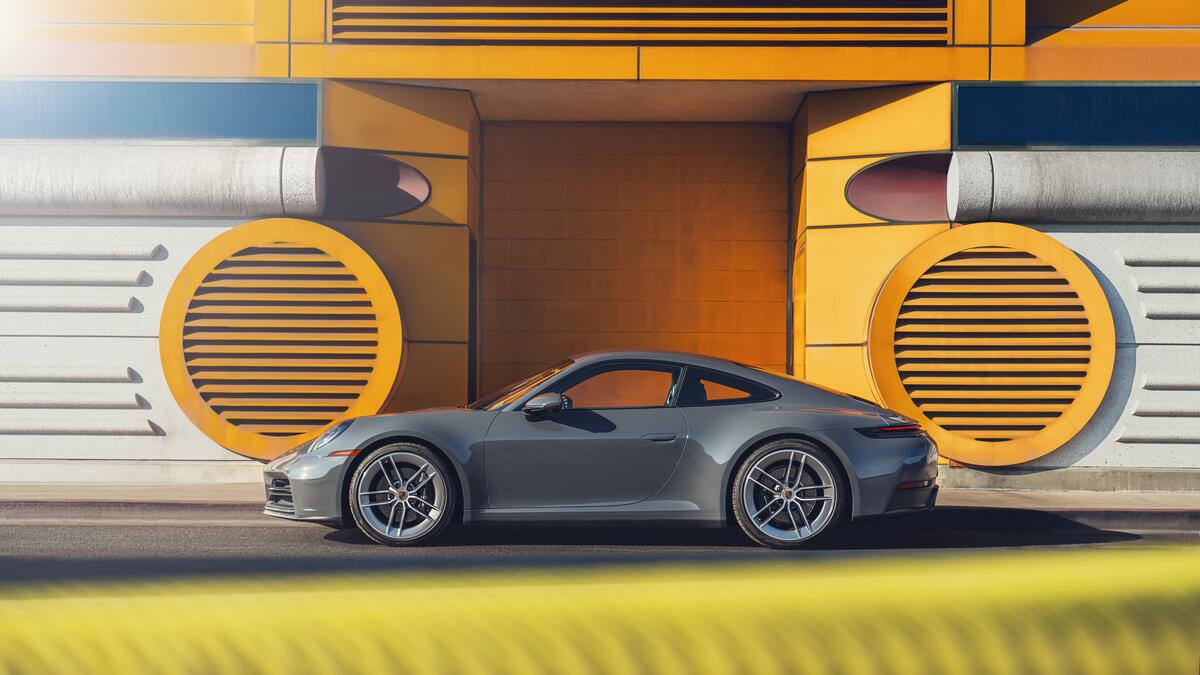
Porsche GT2
"But it was an F6, a GT2 Porsche, a twin turbo, you know, flat six rear drive and an R35 GDR."
The Porsche GT2 is a very serious, track-oriented 911. Here it’s brought up as one of the cars/engine setups the magazine compared.
The Porsche GT2 is a high-performance 911 variant known for being turbocharged and track-focused. In this segment, it’s mentioned as one of the “six cylinder configurations” the magazine tested, highlighting different drivetrain/engine layouts Porsche offered in that comparison.
flat six
"But it was an F6, a GT2 Porsche, a twin turbo, you know, flat six rear drive and an R35 GDR."
A flat-six engine has six cylinders arranged in two flat sides. It’s a distinctive engine shape that can help the car feel balanced.
A “flat six” is an engine layout where six cylinders sit horizontally in two banks, like a boxer. This layout is common in Porsche’s 911 family and helps with balance and low center-of-gravity packaging.
rear drive
"But it was an F6, a GT2 Porsche, a twin turbo, you know, flat six rear drive and an R35 GDR."
Rear-wheel drive means the engine sends power to the back wheels. It changes how the car grips and handles when you accelerate.
“Rear drive” here refers to rear-wheel drive, where power is sent to the rear axle. That layout affects traction and handling characteristics, especially under acceleration and corner exit.
life after motorsport
"What's next for Edward Dinsky? I'm definitely in life after motorsport."
This is about what happens when someone stops racing. It’s the idea of moving on to a new life and routine after motorsport.
“Life after motorsport” is a career-transition concept—how a driver or team member plans for the period once racing ends. It often involves shifting identity, routines, and income away from competition.
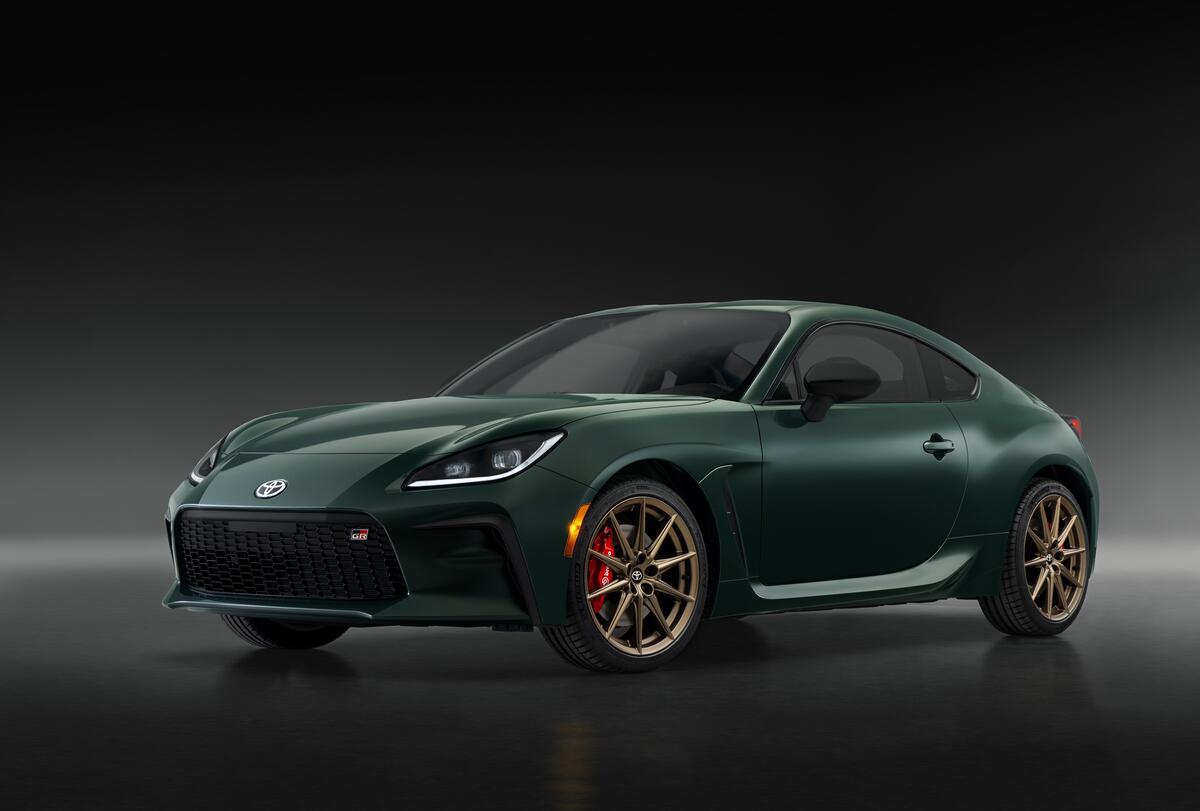
Toyota Gr86
"...which we touched on last night of like, you know, GR86 and stuff like that. So I'd love to next time nex..."
The Toyota GR 86 is a small sports car meant to be fun to drive. It’s built to feel responsive in corners and on the road, not just to be fast in a straight line. That’s why it shows up in discussions about handling.
The Toyota GR 86 is a sports coupe focused on driver feel, lightweight balance, and engaging handling rather than raw power. It’s frequently discussed because it’s designed to be an affordable entry into “real” sports-car dynamics. In the podcast, it’s brought up as part of the GR86/handling conversation.

Magna
"If you could pick a Magna in any spec, what would it be? ... Well, for me, I'd go for the VRX limited edition because I had that."
“Magna” is a Mitsubishi car model made in Australia. The guest is saying which version he’d pick, and he also explains he helped choose the parts for a special Rallyart Magna.
“Magna” here refers to the Mitsubishi Magna, an Australian-built performance sedan line. In this segment, Ed Ordynski is talking about choosing a specific Magna spec/edition and how he curated parts for the Rallyart-branded version.
Raleart
"I kind of curated those parts that were on it for the Raleart Magna. ... getting the concept over the line of Raleart Magna."
“Raleart” is a performance brand name associated with Mitsubishi’s rally heritage. In this discussion, it’s the badge on a special Magna, and the guest is talking about how that badge and the car concept came together.
“Raleart” (Ralliart) is Mitsubishi’s motorsport-derived performance brand name that has been used on special road cars. Here, Ed Ordynski explains his role in getting the Ralliart Magna concept “over the line,” and how Mitsubishi’s rights to the name in Australia enabled the project.
HSV competitor
"whereas they kind of went for a be a bit HSV competitor with this kind of the bright interior..."
“HSV” is a brand that makes performance versions of Australian Holdens. The guest is comparing how the Ralliart Magna was positioned against that style of performance car.
“HSV” refers to Holden Special Vehicles, a performance brand known for high-spec Australian muscle/sport sedans. Ed Ordynski contrasts the Ralliart Magna’s direction—bright interior and spec choices—with the kind of approach that would directly compete with HSV models.
leftover parts
"when they had, you know, they had to order so many parts to make it viable, they knew they would always have some leftover parts."
He’s talking about how limited-edition cars can require ordering parts in bulk. If you only build a small number of cars, you may end up with extra parts left over.
“Leftover parts” here is about manufacturing economics: ordering a minimum quantity of components to make the limited project viable, then having extra inventory. Ed Ordynski says the plan assumed there would be surplus parts after building the required number of cars.
VRX limited edition
"And so we used those on the VRX limited edition. ... I think they only made three VRX limited, I think what he told me was they made only three VRX limited editions without a sunroof, and his is a non-sunroof one"
This is a special, limited version of a Mitsubishi model. The hosts are talking about how only a few were made and how this particular one has a documented history because it was used in ads.
The "VRX limited edition" refers to a special trim/edition of a Mitsubishi model that the hosts connect to a TV commercial and a small production run. In this segment, the VRX is discussed as having specific equipment differences (notably a sunroof vs non-sunroof) and a provenance trail tied to Mitsubishi Australia.
provenance
"And he got all the ads and the newspaper ads and everything were in with the car when he bought it, so obviously the original purchaser knew what it was. ... Yeah, that had all the provenance."
In cars, "provenance" just means the car’s documented background—like who had it and what it was used for. It matters because it can make the car more interesting and more valuable to collectors.
In car collecting, "provenance" means the documented history of a vehicle—who owned it, where it came from, and what it was used for. Here, the hosts emphasize that the ads and newspaper ads were included with the car purchase, tying it to the TV campaign.
compliant
"Okay, so really that beautiful suspension, you know, because the Coney suspension is very compliant and beautiful ride, ... we're saying no, a proper car has got to have supple compliant suspension."
In suspension talk, "compliant" means it can flex over bumps instead of feeling rigid. The host’s point is that a good car can be sporty without being harsh.
"Compliant" describes suspension behavior that can move easily over bumps while still controlling the car. The host argues that a competition-capable setup should be supple and allow some give, rather than being made artificially stiff just to feel "sporty."
Request an Explanation
Heard something you'd like explained? We'll add it to this episode.
Sign in to request explanations for terms you heard.
Want to learn more?
Browse our glossary for plain-English explanations of automotive terms, jargon, and concepts.
Help improve this episode
See something that's not quite right? Our annotations are AI-generated and can sometimes miss the mark. Click the flag icon on any annotation to suggest a correction.