
Jared Glover, VP of Jim Glover dealerships in Oklahoma, shares insider insights on Chevrolet's inventory strategy and market positioning. Chevrolet maintains a lean inventory with an 85-day supply, rewarding dealers for quick vehicle turnover, contrasting with higher supplies at Ford and Jeep. Jared discusses pricing strategies, customer retention through fair pricing during the pandemic, and the importance of entry-level models like the Trax and Trailblazer. He also touches on challenges with trim availability, recalls, and dealer transparency efforts to improve customer trust. The episode highlights how Chevrolet's approach benefits both dealers and customers amid shifting market dynamics.
Today on CarEdge Live, Ray and Zach are joined by Jared Glover from Jim Glover Chevrolet. Tune in to learn more! Hosted by Simplecast, an AdsWizz company. See https://pcm.adswizz.com
for information about our collection and use of personal data for
advertising.
"...Chevy store, and then the CTGR store up in a suburb called Owasso just north of Tulsa... we've got a Chevy dealer on the show today... What the heck do we want to learn about what's going on with Chevrolet?"
Chevrolet is a big car company that makes many types of vehicles like trucks and cars. People often talk about how well Chevrolet is selling its cars and how many cars it has ready to sell.
Chevrolet is a major American automotive brand under General Motors known for producing a wide range of vehicles including trucks, SUVs, and passenger cars. It plays a significant role in the U.S. auto industry and is often discussed in terms of sales performance and inventory management.
"First things first, general motors in Chevy in general, we want to spend some time there..."
General Motors is a big company that owns Chevrolet and other car brands. It makes and sells lots of different cars and trucks.
General Motors (GM) is one of the largest automotive manufacturers in the world and the parent company of Chevrolet. GM oversees multiple brands and is responsible for manufacturing, marketing, and sales strategies across its portfolio.
"GM bets leaner inventories will help as industry braces for a sales slowdown... Jared is the leaner inventory working the way Chevrolet was hoping it would."
Leaner inventories mean car dealers keep fewer cars in their lots. This helps them save money and sell cars faster without having too many sitting around.
Leaner inventories refer to a strategy where dealerships and manufacturers keep fewer vehicles in stock to reduce holding costs and avoid excess supply. This approach aims to improve profitability by matching supply more closely with demand, especially during market slowdowns.
"We got the latest market days supply information from Cox Automotive... Chevrolet with a below industry average market days supply."
Market days supply tells us how many days it would take to sell all the cars a dealer has if they keep selling at the same speed. Fewer days means they have fewer cars sitting around, which is usually good.
Market days supply is a metric that indicates how many days it would take to sell the current inventory of vehicles at the current sales pace. A lower number suggests a leaner inventory and potentially stronger demand, while a higher number indicates more supply relative to sales.
"We got the latest market days supply information from Cox Automotive... February, new vehicle inventory, stable headlines, uneven reality."
Cox Automotive is a company that helps car dealers and manufacturers by giving them important information about how many cars are available and how the market is doing.
Cox Automotive is a leading automotive services company that provides data, software, and marketing services to the car industry. Their market days supply data is widely used to analyze vehicle inventory levels and market trends.
"You know, which is kind of the scenario with Stellantis. But what Chevrolet seems to have done a really good job of is they kind of stayed the course through the pandemic..."
Stellantis is a big car company that owns many brands like Jeep and Dodge. It was created when two big car companies joined together.
Stellantis is a multinational automotive manufacturing corporation formed by the merger of Fiat Chrysler Automobiles and PSA Group. It owns brands like Jeep, Ram, Dodge, and Chrysler, and is a major player in the global auto industry.
"So, you know, the tracks has been a home run, the trailblazer. I mean, that thing's been around for a number of years now and it's still incredibly popular."
The Chevrolet Trailblazer is a small SUV that many people like because it is affordable and useful for everyday driving. It has been around for a while and is still a popular choice.
The Chevrolet Trailblazer is a subcompact SUV produced by Chevrolet. It has been popular for several years and is known for its affordability and versatility in the entry-level SUV segment.
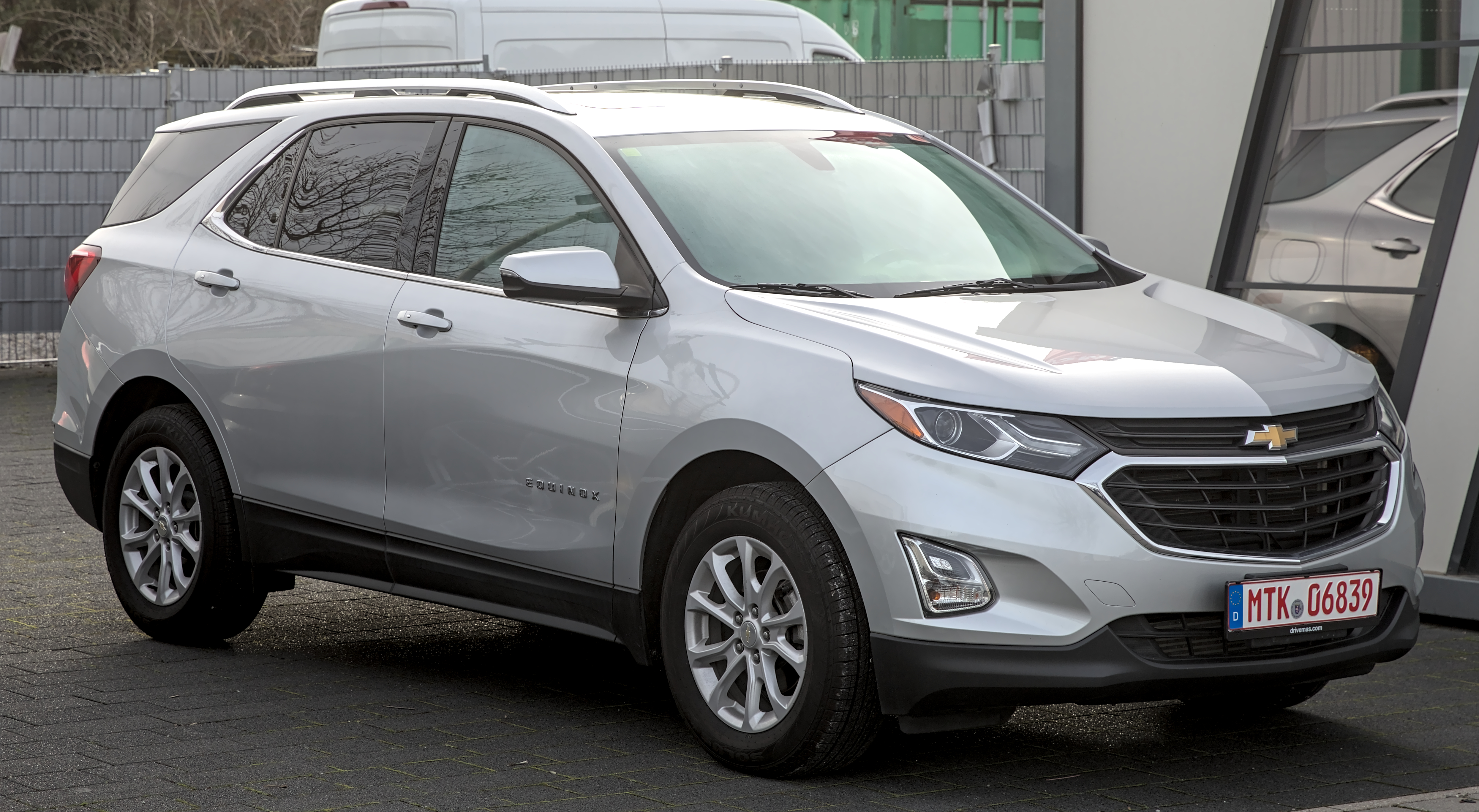
"We just got a new Equinox and they brought it to market at a price point that is really, really competitive in that segment."
The Chevrolet Equinox is a small SUV that Chevrolet sells. They recently made a new version that is priced to be affordable and compete well with other similar SUVs.
The Chevrolet Equinox is a compact SUV that Chevrolet recently updated with a new generation. It is positioned competitively in its segment with pricing that appeals to many buyers looking for a practical and affordable SUV.
"Can you explain to our audience what throughput is, please? Sure. So basically, in a nutshell, it's how quickly does a vehicle sell once it's on the ground."
Throughput means how fast a car sells at a dealership after it arrives. The faster cars sell, the more new cars the dealer can get.
Throughput in automotive sales refers to how quickly a vehicle sells once it arrives at a dealership. It is a key metric for dealers to manage inventory and receive new allocations from manufacturers.
"...t's on the ground. So they actually will show us by model. I'm sure there's a breakdown by trim."
The Tesla Model Y is a small electric SUV made by Tesla. It uses electricity to drive and has many high-tech features.
The Tesla Model Y is a compact all-electric SUV that combines performance, range, and advanced technology. It is a popular model in Tesla's lineup and often analyzed by trim and features.
"because of the low market day supply, they're going to price things higher"
Market day supply means how many days it would take to sell all the cars a dealer has if no new cars come in. If there are fewer cars, prices might be higher.
Market day supply refers to the number of days it would take to sell all the current inventory of vehicles at the current sales pace. A low market day supply indicates limited inventory, which can affect pricing and availability.
"there's going to be some dealers that are protecting their profit margin. And, you know, because of the low market day supply,"
Profit margin is the extra money a dealer makes when they sell a car after paying for it.
Profit margin is the difference between the cost to acquire or produce a vehicle and the price at which it is sold. Dealers aim to maximize profit margin to increase earnings.
"they're going to price things higher and say, hey, if I'm only getting so many of them, I need them to make more gross profit per. And then, but the flip side is, okay, well, what if we could be the front runner and put our best foot forward from a price standpoint and sell things faster,"
Dealers can choose to sell cars for more money each or sell more cars by pricing them lower, depending on their plan.
Dealer pricing strategies refer to how car dealerships decide to price their inventory, either by maximizing profit per vehicle or by pricing competitively to increase sales volume and turnover.
"and you're creating more customers for your parts and service departments every month?"
Car dealers also fix cars and sell parts, which helps them make money after selling the car.
Parts and service departments at dealerships provide maintenance, repairs, and replacement parts for vehicles, often generating ongoing revenue beyond the initial vehicle sale.
"we were the dealer that didn't sell things over MSRP. Maybe that was smart, maybe it wasn't. We believed it was the right thing to do long term."
MSRP is the price the car company thinks the car should cost. Sometimes dealers sell cars for more or less than this price.
MSRP stands for Manufacturer's Suggested Retail Price, which is the price a car manufacturer recommends dealers sell a vehicle for. Dealers may sell above or below this price depending on market conditions.
"He has since moved to Houston. Business took him to Houston and he came back up and was trading off a Challenger Hellcat for a new Grand Wagoneer today."
The Dodge Challenger Hellcat is a very fast and powerful car that looks like a classic muscle car. Many people like it because it can go really fast.
The Dodge Challenger Hellcat is a high-performance muscle car known for its supercharged V8 engine and aggressive styling. It is popular among enthusiasts for its power and straight-line speed.
"and was trading off a Challenger Hellcat for a new Grand Wagoneer today. So we certainly see that and I think it pays off in the long term."
The Jeep Grand Wagoneer is a big, fancy SUV that can go off-road but also has a lot of nice features inside. It's one of Jeep's top models.
The Jeep Grand Wagoneer is a luxury SUV that combines off-road capability with upscale features and spacious interiors. It represents Jeep's flagship model in the full-size SUV segment.
"Not even to mention the Wagoneer S, which is through the roof, or the Mustang Mach-E, which is the 2024s. We still have dealers selling them with $10,000 discounts."
The Mustang Mach-E is a fully electric SUV made by Ford. It doesn't use gas and is part of Ford's effort to make electric cars that are fun and practical.
The Ford Mustang Mach-E is an all-electric SUV introduced by Ford as a modern interpretation of the Mustang brand. The 2024 model year continues to offer electric performance and technology, competing in the growing electric vehicle market.
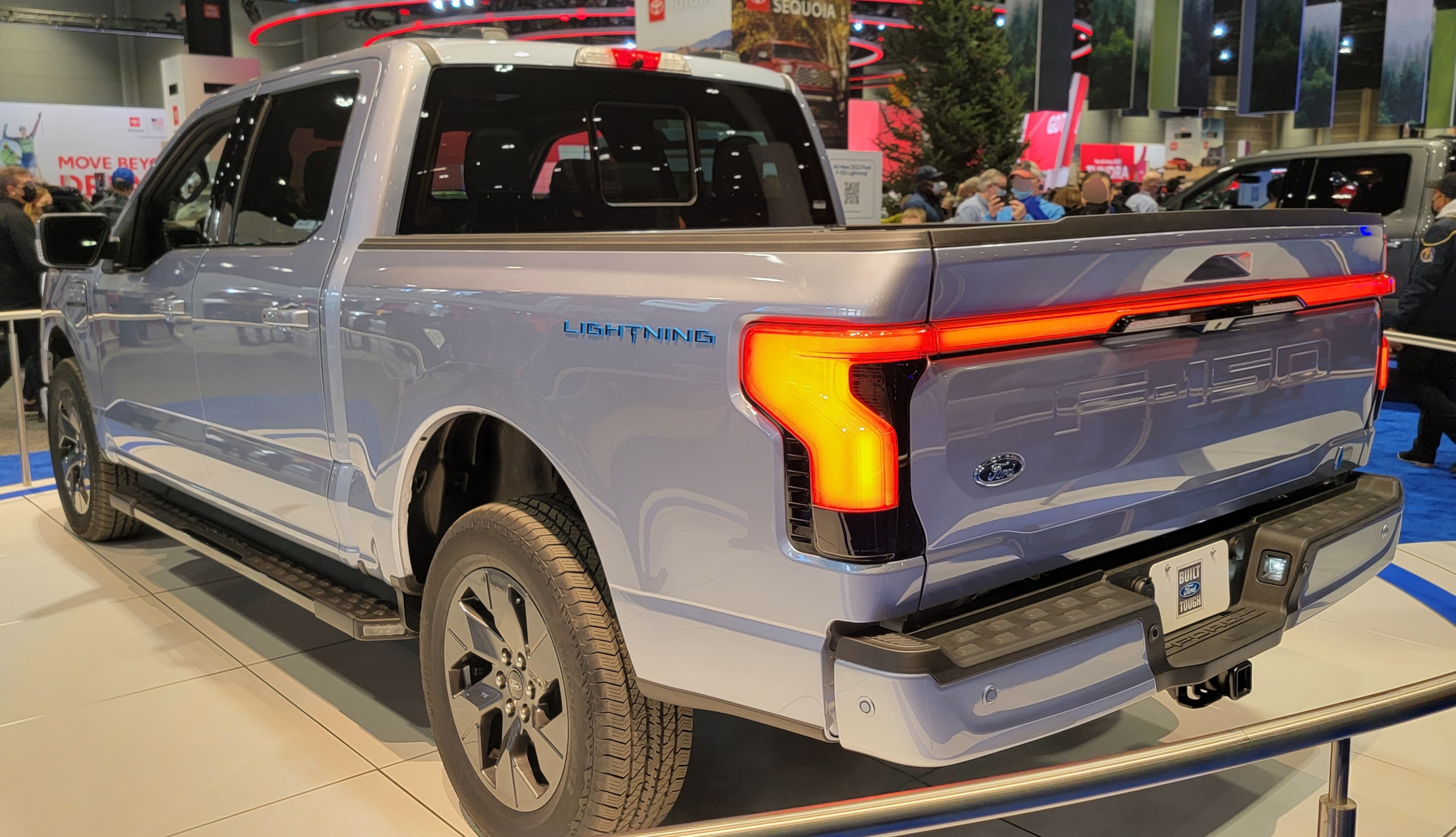
"which is the 2024s. We still have dealers selling them with $10,000 discounts. Or to mention the 28,000 left over 2025 F-150s that are still sitting out there, you run and own multiple brand stores. How does this change the dynamic for your operators, for your general managers, for your sales"
The Ford F-150 is a large truck made by Ford that people use for work and everyday driving. It's very popular because it can carry heavy loads and drive well in many conditions.
The Ford F-150 is a full-size pickup truck known for its strong performance, versatility, and popularity in the North American market. The 2024 and 2025 models are notable for significant dealer discounts and leftover inventory, making them attractive options for buyers seeking value in a best-selling truck.
"...r sitting in my truck talking specifically about Grand Cherokee because I had a limited Grand Cherokee L hit the..."
The Jeep Grand Cherokee is a medium-sized SUV made by Jeep that can drive well both on roads and rough terrain. The Limited Grand Cherokee L is a version with extra seats for more passengers.
The Jeep Grand Cherokee is a midsize SUV recognized for its off-road capability combined with comfortable on-road driving. The Limited Grand Cherokee L variant adds a third row of seating, making it a versatile option for families needing extra space.
"And the point of view was, well, the transaction price is X when you compare it to these other vehicles in the segment. But what I was concerned about is that the transaction price might be in the low fifties because dealers are taking $13,000 off with incentives in the whole nine yards."
Transaction price is the real amount of money someone pays to buy a car, which might be less than the sticker price because of deals or discounts.
Transaction price refers to the actual price paid by the customer for a vehicle, which can be different from the MSRP due to incentives, discounts, or dealer negotiations.
"But what I was concerned about is that the transaction price might be in the low fifties because dealers are taking $13,000 off with incentives in the whole nine yards. And the low fifties is where that segment needs to transact."
Dealer incentives are special discounts or deals that car companies give to dealers to help sell cars. These can make the car cheaper for buyers.
Dealer incentives are discounts or financial benefits offered by manufacturers to dealers to encourage sales. These incentives can reduce the transaction price for customers but may not always be advertised openly.
"...e has gone through several price adjustments. The Wrangler and the Gladiators have dropped dramatically. I'..."
The Jeep Wrangler is a small SUV made by Jeep that is very good at driving off-road. It has a tough look and is popular for outdoor activities.
The Jeep Wrangler is an iconic off-road SUV known for its rugged design and strong off-road capabilities. Recent price drops have made it more accessible, reflecting adjustments in the market for this popular model.
"...ike $123,000 MSRP. And it is as nice as a loaded Escalade. So it's up there with loaded Escalade pricing. ..."
The Cadillac Escalade is a big, fancy SUV made by Cadillac. It has a lot of luxury features and costs a lot of money.
The Cadillac Escalade is a full-size luxury SUV known for its upscale interior, powerful performance, and high price point. It is often discussed in the context of premium SUV pricing and features.
Term
Z71
"We can't keep a Z71 in stock. The high countries are incredibly popular. But then Premier is one of those trims that always seems to age on us a little bit."
Z71 is a special package for Chevrolet trucks and SUVs that makes them better for driving off-road. It adds things like stronger suspension and protection under the vehicle.
Z71 is a Chevrolet off-road package available on trucks and SUVs like the Tahoe. It includes features such as upgraded suspension, skid plates, and unique styling to improve off-road performance.
"The high countries are incredibly popular. But then Premier is one of those trims that always seems to age on us a little bit."
Trim means the different versions of a car that have different features and prices. Some trims have more luxury or better equipment than others.
A trim level refers to a version of a car model that comes with a specific set of features and options. Different trims often vary in luxury, performance, and price.
"I think that's where, you know, if I could fix anything about Chevrolet, it would be the constraint side of things because I don't understand why they can't build Z71s as often as they build Premier's."
Inventory constraint means the dealer doesn't have enough of a certain car because the factory isn't making enough or parts are hard to get. This makes it harder to buy that car.
Inventory constraint refers to a situation where a dealership cannot stock enough of a particular vehicle or trim due to production limits or supply chain issues, affecting availability for customers.
"You know, I'm sure it's a lot deeper than that because they've got supplier contracts with wheels and the front bumpers are different."
Supplier contracts are deals between car companies and the companies that make parts. These deals decide how many parts are made and can affect how many cars get built.
Supplier contracts are agreements between automakers and parts suppliers that dictate the quantity and type of components provided, which can impact production decisions and vehicle availability.
"That's a good question. So that's a new, kind of a new entrant into the biggest segment in the game, that compact and mid-sized SUV. I like it."
Compact and mid-sized SUVs are medium-sized cars that are bigger than small cars but not too big. Many people buy these kinds of cars because they are practical and comfortable.
The compact and mid-sized SUV segment refers to a popular category of sport utility vehicles that are larger than small cars but smaller than full-sized SUVs. This segment is highly competitive with many models from various manufacturers.
"But I think the Cherokee, the powertrain's awesome. The new hybrid system is awesome. The style is good. We got our first one a few weeks ago, and I got a chance to go drive it."
A hybrid system means the car uses both gas and electricity to run. This helps save fuel and is better for the environment.
A hybrid system in vehicles combines an internal combustion engine with an electric motor to improve fuel efficiency and reduce emissions. It allows the car to use electric power at low speeds and gasoline power when more performance is needed.
"But I think in the lease markets, the Cherokee will be a good play. So hopefully that's a good step in the right direction for the Jeep brand."
Lease markets are places where many people rent cars for a few years instead of buying them. This can make it cheaper to drive a new car.
Lease markets refer to regions or customer segments where vehicle leasing is popular. Leasing allows customers to use a vehicle for a set period with lower monthly payments compared to buying.
"So dealer add-ons, being transparent there, dock fees that aren't through the roof, not charging extra above on state registration fees and things like that."
Dock fees are extra charges the car dealer adds to cover getting the car ready for you, like cleaning and checking it before you drive it home.
Dock fees, also known as dealer preparation fees, are charges dealerships add to cover the cost of preparing a new vehicle for sale, including cleaning and inspection.
Select text to request an explanation
It's noon here in Ventner City, New Jersey, and our nation's capital Washington, DC.
This is Car Edge Live for another Friday the 13th, two months in a row with your host
today, me, Ray here in my condo in Ventner City, and well, Zach, you have an apartment.
That's right, an apartment in Washington, DC.
How are you today, handsome?
You're looking particularly fetching with that hat and the microphone over your ear.
What a start to today's show, folks.
Wow, happy Friday.
I'm doing fantastic, Dad.
I'm especially happy because today is one of those days where we get lucky and we actually
get a real expert to join us on the show.
Today's show, we've got a guest, everybody, Jared Glover from Jim Glover down in Oklahoma.
Jared, guys, thanks for taking the time to be with us.
Glad to be here.
I hope to have you.
Quick introduction for Jared.
So for those of you in our community who haven't met Jared yet, Jared,
you're vice president over at Jim Glover.
Share with us a little bit about the dealership, what y'all are up to,
and then let's jump into today's story.
We're going to talk about Chevy.
We have some really interesting data to break down.
What a second for you to give an intro to our community.
Sure. So I'm a second generation.
My dad started 30 years ago, 40 years ago, and my sister and I are,
we're all three of us are partners now.
So my sister and I run the stores and two stores in Tulsa,
Chevy store, and then the CTGR store up in a suburb called Owasso just north of Tulsa.
All right. So you've been in the business your whole life.
It sounds like, and dad, I'm having flashbacks to some of the people you worked for.
A lot of kids seem to make their way through the doors and end up working at the dealership.
Jared, we're glad you're here with us.
I'm going to kick things off with some data, and then I'll let my dad ask you a question or two.
First things first, general motors in Chevy in general, we want to spend some time there.
It was just a couple of weeks ago, pops.
Do you remember we were talking about this article in automotive news?
GM bets leaner inventories will help as industry braces for a sales slowdown.
Well, you know what data we got just yesterday?
Everyone in the car edge community knows we love this.
We got the latest market days supply information from Cox Automotive.
February, new vehicle inventory, stable headlines, uneven reality.
I want to come all the way down to this chart, Jared, and pops.
And what I see here is Chevrolet with a below industry average market days supply.
So pops, with this as the data, with this as the foundation for the conversation,
we've got a Chevy dealer on the show today.
What the heck do we want to learn about what's going on with Chevrolet?
Jared is the leaner inventory working the way Chevrolet was hoping it would.
And I believe the way they're hoping it would is to, well, increase your profits as a dealership
because that's one of the main responsibilities of a manufacturer.
And is it impacting sales?
Are you finding some sales are off because there's just not enough inventory?
Or what is the lay of the land there?
You know, I think their position actually was by design.
And I think it's, as a dealer, we're thankful for it because the other side of the day supply
conversation is our holding cost of sitting on 120 day supply of inventory.
You know, which is kind of the scenario with Stellantis.
But what Chevrolet seems to have done a really good job of is they kind of stayed the course
through the pandemic, whereas a lot of the manufacturers, you know,
they couldn't produce vehicles for some time.
And then when they could again, prices started going up and Chevy really tried
to kind of hold the line and be consistent, especially with their entry level SUVs
and some of their mid-sized stuff.
So, you know, the tracks has been a home run, the trailblazer.
I mean, that thing's been around for a number of years now and it's still incredibly popular.
We just got a new Equinox and they brought it to market at a price point that is really,
really competitive in that segment.
I just think they've done probably the best job coming back out of the pandemic of holding
their prices where they need to be.
And what's interesting, we're not back to where we were, say 2019, you know,
pre-pandemic, volume-wise.
We're gaining share on that.
We're getting closer, I guess, back to where we were.
But what has been nice is because of how they're operating their allocation processes,
dealers are rewarded for throughput.
And as long as you are pricing the cars aggressively and you're building market share,
then they backfill you and you can earn extra inventory.
Can you explain to our audience what throughput is, please?
Sure. So basically, in a nutshell, it's how quickly does a vehicle sell once it's on the ground.
So they actually will show us by model.
I'm sure there's a breakdown by trim.
They allocate a lot of their stuff by trim level.
But just to keep it simple by model, if I get 10 of, you know, let's,
tracks is probably a great example.
If we earn 10 tracks and we sell those 10 tracks in two weeks,
then come the next allocation cycle, we're going to get 10 more tracks.
As opposed to the dealer that gets 10 and only sells five,
they're only going to get five more to get back to the day supply they need.
So let's talk about this for a moment,
especially in juxtapose it with the other domestic brands that show up on this chart.
So again, our community, everyone, you know, that's a part of CarEdge,
we all know market days supply because it's what we preach.
If there's a higher market day supply of inventory, there's more desperation,
quite frankly. And I look at this chart and Lincoln is not even on the chart.
You know, it's like, I got to scroll up so we can see that they have a 156 day supply
or Jeep, 151 day supply or Chrysler, literally not even on the chart.
That's how high up it would go.
And then you come over to the left a little bit, Ford has a 121 day supply
and obviously Chevrolet that we're talking about 85 day supply.
And you're saying, Jared, you get rewarded for turning that inventory over.
How does this change the dynamic for your customers?
For customers who might be looking for whether it be a particular trim
or cross shopping Chevrolet versus a Ford or a Stalantis product,
like the market dynamics must be different across the various brands because of the supply situation.
Yeah, I think so. So like in the Chevrolet world, at least,
I think there's going to be some dealers that are protecting their profit margin.
And, you know, because of the low market day supply, they're going to price things higher
and say, hey, if I'm only getting so many of them, I need them to make more gross profit per.
And then, but the flip side is, okay, well, what if we could be the front runner
and put our best foot forward from a price standpoint and sell things faster,
earn things faster and ultimately build volume because of our turn.
So I think there's two trains of thought.
Neither one of them are necessarily wrong.
It's just a business model, I guess, that you either choose to run with or not.
I have a question for you.
I mean, you just said that some dealers are obviously less aggressive than other dealers
because of the tight market day supply.
And I'm getting the sense that you guys are approaching it through a, let's make it up in
volume. Have you seen that to be, I don't know, more successful over the long term
because you're not limiting your growth on a monthly basis and you're creating
more customers for your parts and service departments every month?
Do you find that to be a more successful approach than the dealer that just,
I got to make max dollars on every unit I sell?
Yeah, I do. So that was dad's entire business model, his whole career.
And he came up through Midwest City and had the number one dodge store in the region back then.
And then when we first moved to Tulsa, I was six years old and he built a dodge store and broke an
arrow. And same thing there. And it was always volume minded. And the thought process is absolutely,
you put more units in operation, you earn more customers that come back for service,
and then the use car side of it, the more new cars you sell, you get more opportunities that
trade ends and you can support your use car department. There's a lot that goes into making
the volume concept. Really, it's ingrained in me at this point that even through the pandemic,
we were the dealer that didn't sell things over MSRP. Maybe that was smart, maybe it wasn't.
We believed it was the right thing to do long term. And I think on the other side of it,
it's carrying us forward now. Can I ask one more question, Zach?
I just have a sense and you have to correct me if I'm wrong. But I have a sense because of the
way that you operate and the way that you operated during the pandemic, where you wouldn't sell
things over MSRP, that you probably have a higher percentage of customer retention than say some
of the dealers out there that were taking advantage of customers when there was a severe shortage
of automobiles. Have you seen that to be the case? Yeah, we're in the store. I see people
that we've done business with for years. There was a gentleman actually here at the Dodge store
this morning. He has since moved to Houston. Business took him to Houston and he came back up
and was trading off a Challenger Hellcat for a new Grand Wagoneer today.
So we certainly see that and I think it pays off in the long term. And our exact measure of that,
I should know that number. I don't. But at least we feel that that certainly supports us in the
long run. I want to just pivot back to you quickly here because for those in our community that
don't know this, Jim Glover, the group that you operate, you do own multiple stores and
four multiple brands, can you share any insights? Obviously, on one end of the spectrum, we have
Chevrolet here, which again, we look at the market day supply. As far as domestics go,
they are managing their inventory with their dealer partners the best. And it's not even close.
Chevrolet with an 85-day supply, Ford is the next closest domestic with a 121-day supply.
And we're not even talking about some of the albatrosses over in Ford or Stalanta. Stalandy
actually just mentioned one with the Grand Wagoneer. Day supply Grand Wagoneer's nationwide is
through the roof. Not even to mention the Wagoneer S, which is through the roof, or the Mustang Mach-E,
which is the 2024s. We still have dealers selling them with $10,000 discounts. Or to mention the
28,000 left over 2025 F-150s that are still sitting out there, you run and own multiple brand stores.
How does this change the dynamic for your operators, for your general managers, for your sales
managers? And I'm asking this question through the lens of the car edge community. Obviously,
we want our customers at car edge to have the best possible experience. We want them to have
good expectations going into it. So are the expectations at a Chevy dealer, especially if
I'm looking for a very specific trim, are they different than if I'm that customer looking at
that Grand Wagoneer? What's that reality like for you, Jared? So I can kind of talk about that from
two positions. Let's talk Grand Wagoneer first. So Stalantis went through a period where they had
an interesting leadership model when they first merged.
That's the best way I can say it. But they handled the pandemic differently. They came out of the
pandemic. MSRP started rising. And I actually spoke with them. I'm on the dealer council. And then
regional manager, there was quite a bit of movement over the last few years. But I remember
sitting in my truck talking specifically about Grand Cherokee because I had a limited Grand
Cherokee L hit the lot in 2023 at like $65,000 MSRP. And we were sitting there talking and the
point of view was, well, the transaction price is X when you compare it to these other vehicles in
the segment. But what I was concerned about is that the transaction price might be in the low
fifties because dealers are taking $13,000 off with incentives in the whole nine yards.
And the low fifties is where that segment needs to transact. But we were competing with models
that were transacting at MSRP. And I think where they went wrong is they were losing customers
at the top of the funnel because they would see a $65,000 MSRP and not even make it to the dealer
level to see what they could really buy a car for. And since then, everything has changed.
I mean, the Grand Cherokee has gone through several price adjustments. The Wrangler and the
Gladiators have dropped dramatically. I'm talking thousands of dollars. Trucks in 2024 had a price
change again in 2025. Things, and obviously, it's a dealer's opinion, but things are kind
of where they need to be now across the board. The Grand Wagoneer, the day supply is high on the
25s because it was kind of a weird roller coaster where the last 24s were priced high,
the 25s got a price concession, and then now the 26s are hitting a lot. And we're going to kind of
rebuild momentum with that model. We've had great success with the 2026, the quality's better,
and the pricing is where it needs to be now. I mean, my wife drives a then Grand Wagoneer
Series III Obsidian. So last year's fully loaded model. And her last Series III Obsidian was like
$123,000 MSRP. And it is as nice as a loaded Escalade. So it's up there with loaded Escalade
pricing. But what they've done this year, they simplified the trim levels. They came forth with
a Summit Reserve now is what they call it. So they're aligning it with the Grand Cherokee
trims, which is a lot less confusing even for us. It's good that they're doing that.
And that car fully loaded today with the rear video screens and everything is like 107 grand.
So they took a huge swing in the right direction and put it really in line with Denali Navigator
Escalade. Even we talk about Tahoe, high country Tahoe's are $100,000 now. So I think that just
that segment has just gotten more expensive in the last few years.
Yeah, those are some big, big numbers, my friend. But I hear you on them being where they need to
be now. A $20,000 price concession is certainly an indication from the manufacturer that they
took it in the wrong direction or at least too far in one direction. Pops, I saw you wanted to jump
in there. Well, there were two things that occurred to me. One is how much do you wish that your
manufacturers actually paid attention to what it is that you dealers suggest to them? Since you're
the ones on the front line trying to sell this stuff that they're jamming down your throats.
And the other question that I had, you can take it in whatever order you want. At a Chevy store,
you sell entry-level vehicles. The Trax is a perfect example of that. And then you just mentioned,
we have $100,000 high-country dahos. That's quite the swing from $20,000 to $100,000.
Which market segment are you seeing that's showing the growth or the stability to continue
finding enough customers? So I'll answer your first question first. So I'm on a regional
dealer council. I'm not on national. So I don't know how those conversations actually go in Detroit.
But I do feel that our regional leadership, they do a wonderful job of taking feedback
and running it up to Detroit. And I think a lot of what has changed for Stellantis in the last
six months to a year is result of direct dealer feedback. And so I'm optimistic that we're headed
in the right direction. We have managed our inventory differently. I'm not sitting on a
151-day supply of Jeeps. I'm long in certain models. We support our courtesy loaner vehicles
for our service department with Grand Cherokee. So I'm typically heavy in Grand Cherokee, just 30
of them are busy with customers and I'm for service. So we do some of that on purpose. But
this store is probably sitting 90 to 100 days. It's not where I want it to be. But it's better
than the average. Your other question was Chevrolet. And I think what I would love to see Jeep do,
you know, if you go back to 2021, we had the Dodge Journey to sell. We had Grand Caravan had just
gone away. Now, these were transacting in the low 20s. The Jeep Renegade, the previous generation
Cherokee, I mean, we would stock Cherokee for like 26, 7 MSRP and that car would transact at 20 grand.
And what we have now that the Compass is back where it needs to be. Compass is a great car and
it transacts in the mid to upper 20s. But I think what Chevrolet has continued to do, you know,
at one point in time, we used to be one of the nation's top Sonic dealers. The Chevrolet Sonic,
when I back when I was selling cars, so think 2012, 2013, when the Sonic first came out,
we were one of the nation's top Sonic dealers, but you could buy a Sonic for 15, 8. And that just,
that's what the Sonic came to market at. Chevrolet, you know, I don't think it was feasible to continue
building the Sonic and the crews and even the Malibu, but they've at least not walked away from
that entry level customer with tracks and trailblazer. And I think what they what's going to pay off in
the long term is it's like, you know, if you get somebody into your product and they have a good
experience and they like it and they become a Chevy owner, then you just as their as their life
changes, you know, let's say, you know, they get married, they start a family, whatever the case may
be. Now, maybe it's time for a traverse or hey, maybe now I get to buy my truck because I'm established
in my job. And I think if they've had a good experience and attracts the first truck, they're
going to shop the Silverado. And that's what Chevrolet has done a really good job of supporting.
So I may, oh, go ahead, Bob.
Well, I was just going to follow it up with it. It sounds like to me that Chevrolet has taken the
position that we want to start you off in your first car when this is the most that you can
actually afford to purchase. And as your life gets better, as things move forward in your
career and you're earning more and you're getting married and you're having children,
that there's a next step up in a Chevrolet for you because we helped you get into your entry
level vehicle. And I think a lot of the manufacturers kind of sort of forgot that.
I think exactly. That's probably a good way to put it. And, you know, Jeep has done it with Compass
but only recently, you know, Compass kind of got up there too. And but there's been a price walk
back down with Compass where, you know, we can order a Compass now again for, you know, $31,000,
I think, and they're usually incentivized so you can transact in the upper 20s. So
that's a great entry level car. You know, I wish we could rewind, you know, things are just more
expensive. I think you can across the board, every industry we were seeing that, you know,
I wish we could rewind and get back to $20,000 for an entry level car. I just don't know if
that's if that's realist at this point, you know. I want to open it up to our community. So if you
have questions for Jared, again, he owns and operates multiple dealerships in Oklahoma. So
ask some questions in the chat. I'll pull those up. I've got one more for you, Jared, before we
move on here. I've got another story I'd like your take on. One is around trim level. I know
in advance of today's show, you mentioned to me there are some trim levels that you are
barely able to keep in stock and there are others where you have some aging inventory.
If folks are interested in learning more about your dealership, obviously they can just Google
search Jim Glover and find some of these vehicles. I have a link in the description,
carriage.com slash Glover will take you there as well. But Jared, talk to you about the vehicles
that you have an oversupply of inventory. They are aging, the ones where maybe you are more
willing to make a deal and the others that are just hard to come by. Share some of those insights
at your dealership. Yeah, so I look specifically at Tahoe. I was having a conversation with our
Chevrolet general manager yesterday, actually, and we can't keep a Z71 in stock. The high
countries are incredibly popular. But then Premier is one of those trims that always seems to age
on us a little bit. And I think it's kind of just in the middle of the price walk. If somebody is
paying Premier money, they are going to try to find a high country. I think that's kind of where
it's landing. So if you're in the market for Tahoe and looking for a good deal per se, Premier
are probably a good place to start. Whereas if you want a Z71 and you have found a Z71 that's in
stock somewhere, it's going to be a little harder to negotiate. If you can buy it and that's what
you want, you need to take advantage of that because they're hard to come by. And I think that's
where, you know, if I could fix anything about Chevrolet, it would be the constraint side of
things because I don't understand why they can't build Z71s as often as they build Premier's.
You know, I'm sure it's a lot deeper than that because they've got supplier contracts with wheels
and the front bumpers are different. And I'm sure it's part of the plan. I would just love to see
a pivot where it's like, okay, you know, Z71 continues to sell at 35% of the market yet we're
only allocating it at 15% and find some more alignment than that because it would make it easier
for a dealer to stock the appropriate inventory that customers actually want.
What a crazy concept. Love getting insights from you, Jared. We've got a couple of questions
from the community. Mind if I pull some of those up? Sure. All right. Mr. C. Northeast,
are there any ongoing Chevy engine issues affecting new sales? We've got quite a few
people in the comments mentioning this. What are your experiences there?
Yeah, so the 6-2 recall, I mean, it's no secret. It wasn't fun. We have processed through it
fairly well. Haven't seen a ton of complete engine. I mean, a lot of them passed the inspection.
Haven't seen a ton of complete engine replacements. And then the things that are coming to us now
are already fixed and repaired. And so we, I want to say, rewind about a year is when we're
actually processing the recall through our actual inventory. And then the 6-2s that came there after
had already had, well, whatever repair they made was already good to go.
Yeah, just so the new ones are getting no longer have a stop sale or anything like that on them.
Correct.
Awesome. And we've got another question here from Daniel. Seeing the brand new Jeep Cherokee,
it looks great. And if you've been getting them, do you think they will be a good competitor
to the Honda CR-V and the Toyota RAV4?
That's a good question. So that's a new, kind of a new entrant into the biggest segment in the
game, that compact and mid-sized SUV. I like it. Again, I'm biased, but I think that is kind of the
first completely new SUV we've gotten from Jeep in a while. There was so much time, energy, and
effort put into the EV push. And then when everything changed with the tax credit,
to your point about Wagoneer-S previously. But I think the Cherokee, the powertrain's awesome.
The new hybrid system is awesome. The style is good. We got our first one a few weeks ago,
and I got a chance to go drive it. I like it. Your time will tell on how it stacks up with
RAV4. RAV4 and CR-V have owned that segment for a long time. So it's a lofty goal for Jeep to go
after. But I think they brought a pretty good entrant to the market to try at least. And then
it's going to be up to incentives and dealers. And one thing in Oklahoma, it doesn't really
we don't have a lot of lease interest in Oklahoma because everything's so spread out.
I mean, people in this state, we drive 100 miles a day, especially if you have young athletes and
you're going to sports and all that. So leasing doesn't always work. But I think in the lease
markets, the Cherokee will be a good play. So hopefully that's a good step in the right direction
for the Jeep brand. I've got one more here from the community, which is Rick saying,
dealers love recalls. Jared, my dad says this all the time. Is that the truth? Do you love recalls?
It's not. Service managers love recalls. Yeah. So it's something else to manage. The bad thing
about recalls on your inventory is it takes the focus of your technicians away from customers'
vehicles because they have to process through inventory vehicles. So that's a balancing act.
It's a bit of a nightmare for the parts department. I mean, there's an existing recall on RAM that we've
been dealing with since mid-February. We finally have the parts needed to complete them and our
position is we're completing them as they sell. So that way we don't use parts on a truck that
doesn't sell and we can always fix the truck that does sell. So yes, the service department gets paid
to complete recalls. So in one aspect, it's good for the service department, but it also puts
extra work in front of technicians that I would personally prefer them focusing on customers'
cars. As a dealer, what's your thoughts on the manufacturer's pivots away from EVs and back
towards ice vehicles and hybrids? At least in this part of the country, I think it was needed.
There's a little bit of a square peg round hole situation in Oklahoma where just there wasn't
a lot of demand for electric vehicles. I think there's still a future there. I mean, there's
no denying that the powertrain, I mean, they're unbelievably powerful. They're faster. There's
no denying that that's going to be at least a portion of our future in automotive. I just
don't think it needed to be forced. It just needs to happen naturally. And if the market wants it
and customers want it, then I think manufacturers need to follow that instead of being forced to
do it. And I hope they get leaned back into autonomy. I think there's more of a desire for
autonomous driving and some of the things that they had to take focus away from five or six
years ago because there was such a hard push for getting prepared for electric vehicles
that they're a little behind the eight ball of the traditional manufacturers for autonomy.
Because we were getting close. You think supercruise has been around for a long time and
we've had Jeep's version of it, Active Drive Assist. We've had it for four or five years now,
but complete autonomy and some of the things we're seeing from like,
there I say, Cybertruck. But some of that stuff's cool. And I hope that the next couple of years
we see a lot of that come into the domestic manufacturer product.
One of the last things I'd love to get your take on, Jared, you know, we're really passionate here
at CarEdge about dealer transparency. So finding dealers who are transparent both in terms of
sharing insights from their business as well as how they treat customers. So dealer add-ons,
being transparent there, dock fees that aren't through the roof, not charging extra above on
state registration fees and things like that. You've obviously been a huge proponent of that
transparency as well. Talk a little bit about the work that you're doing outside of your dealership
to try and bring transparency to the auto industry. And quite frankly, it's one of the biggest pieces
of fabric or thread that ties you, me and my dad all together is this passion around bringing
auto into the 21st century to be more transparent, share a little bit about the work that you're
doing there. I think it'll build a lot of trust with our community. Yeah. So I just believe that
if you're shopping for a vehicle, it should be no different than shopping for anything else. And
you should be able to find the car you want at a price that you're willing to pay and actually
go buy the car for that price. And that doesn't take the competition out of it between dealers.
You know, we still are going to put our best foot forward and offer the best pricing possible.
But I think what really needs to change is the games that are being played. And at least,
I would just hope that customers are at least aware of it and know that they do have options.
You know, I think there's a large number of dealers in this country that do operate with
high integrity and they want to do things the right way and they want to put their best foot
forward. And I think that's exactly what you're building with your car edge dealer network.
And then I think there's a small subset of dealers that are on the other end of the spectrum.
But unfortunately, they give all of us a black eye and the experiences that customers have with
that, it almost goes back to what I would assume, you know, I wasn't around in the car business
in the 80s, but you know, there's movies about it. And you know, it's like we're kind of,
there's a section of the industry that's falling back into that and it just doesn't have to be
that way. And it's a multitude of things, you know, it's the mandatory, you know,
addendums or protection packages and you find a car with a super aggressive price and you go to
buy it and you're like, yeah, you can't buy that without paying this $3,000 ad. And that shouldn't
that that shouldn't have to be that way. And it doesn't have to be that way. So I would,
I just hope that that that you guys through your efforts and customers can do a little
research and realize that if they find themselves sitting in a dealership and they sit down and
negotiate and next thing I know the price has swung five or six grand because of the things they
don't qualify for, it doesn't have to be that way. There's dealers out there that are on the
opposite end of that spectrum. And you may have overlooked them when you were shopping because
their price might have seemed too high, but it's honest. So if you can. Yeah, I'm good. I was just
going to end if I may, and this is the transparency even here at Car Edge. So here's Jim Glover,
Chevrolet. And this is one of the things we actually learned by working with Jared here,
83.7 out of 100. Why isn't it even higher? Well, here's the deal folks. While there's no add-ons,
the Dock fee is right in line with what we have in the state of Oklahoma. The issue with our system
that we learned through this, and we can go and actually do some of the quotes here, is that we,
because it doesn't say Dock fee right here, are misclassifying in our own system, Dock fee to
be not as high quality of data as Dock fees. We're learning just as well when we work with
dealer partners like Jim Glover's of the world to understand, okay, does that actually mean the
Dock fee? If it does, let's update our score. Because what's been great about shopping through
the AI at Jim Glover and other dealerships is we do get that data, Jared. We do figure out
who adds add-ons and they do not. And I'm really grateful that you're on with us here.
And this says zero. That's one of the best things that could possibly happen. We don't want to be
bringing on partners or people that, you know, the add-ons are 100%. The Dock fee is through the
roof. So it's even great learnings for us to further refine and build out our systems to
help our community have a better experience. Well, and I think something ought to that,
that, you know, this is, this is kind of new for all of us. And, you know, what things say on our,
on our worksheet or our quote, I have the ability to, to update that. So if that needs to say
something different, but just tech eons default as fees, and that's where they, that's where they,
they go into our only other fee is a lean entry fee for the state of Oklahoma. If a customer
finances the car, it's $10. So that's why that, that, that, that space says fees, because multiple
fees could fall into that. We just only have two. And then we have an optional, we call it the Glover
guarantee. And it's a, like a multi-protection package for door dings and windshield repair
and things like that. It's percent, it's presented at time of sale, but it's entirely optional. So
if the customer says, no, I don't want that, it comes right back off the car. You know, it's,
it's not a hard ad. We've done, you know, we're not sitting down saying, well, we've done window
tent and door edge guards and that's $29.95. You know, that's, that's not, that's not how we operate.
It's a, I see value in the Glover guarantee. I've had a lot of people that, you know, a guy
yesterday actually lost his keys and he came up to the sales tower and got his keys replaced for
free. And that's a $500 pop if you've got to replace your keys. And so I see value in what we
offer, but it is entirely optional the way we do it. I like hearing that. It's the way it should be.
And, and I remember, you know, when I was running dealerships and, and I would talk to customers
and I used to remind customers that there's two things that are important. A, you have the ultimate
power and it's a two letter word N-O. You can just say no. And either the customer, either the,
the dealership acquiesces or you leave. And, and then the, the other is do you want to reward a
dealer who has misled you in order to get you into the dealership? So essentially they lied to you
or do you want to reward the dealer that actually was upfront with you and told you the truth? You
might not have liked the truth initially, but you found out it was the truth. So at that point,
as a customer, you have a decision to make, a moral decision to make. Reward the honest dealer
or reward the dishonest dealer. And my hope always was and always will be that ultimately the
customer will reward the honest dealer. You know, Ray, unfortunately buying a car is not fast. I
mean, it does take time. I mean, I actually drew a parallel to buying a house and you don't realize
that when you're house shopping, you have a lot of nuggets of time invested in that process, right?
You've got to go get approved and know how, know what your budget is. And then you start shopping,
you look at the house as you like, you make an offer, you get approved and, and then you're
finally at the closing table. And then closing doesn't take that long, right? Whereas buying a
car, it all kind of happens in the same day, the process. So it, it does take some time to buy a
car. Now, technology allows us to do a ton of that upfront and remotely now, which is amazing.
Five years ago, that didn't exist. We weren't prepared for it. But because of the time investment,
I think what happens is maybe the customer does go to the dealer that had the lower lowest price
and, and things change and they get frustrated. But then they sit here and they're like, well,
they're right back at the price where the other guy up the road was at. And he was probably being
honest, but we're here. We're almost done. Let's just buy it anyways. And I think unfortunately that,
that happens probably more often than we realize. And they leave and they're frustrated and they
might be peeling that dealer sticker off the back of the car when they get home.
But they bought the car, which reinforces the, the bad behavior that's happening in this industry.
Which is exactly why we do what we're doing here at CarEdge. Love, love, love having you on, Jared.
Appreciate your insights into the business. Again, we have a link in the top of the description
down below, CarEdge.com slash Glover. Give that a click to learn more about what Jared and his
team over at Jim Glover are doing. Jared, you're welcome back anytime. The more insights you can
share about your market, your slice of the auto industry, we appreciate. And in the future,
we got to get some of those stories from you about various dealer councils and regulatory
things that you're a part of. I know there's a lot of work that you're doing to try and make
things more transparent for the auto industry. So if you're up for it, we'd love to have you
back on the program in the future. Yeah, absolutely. Thanks, guys. Thank you, Jared.
See, yeah. That's nice, man. That's really nice. It's really nice when we get to talk to people
who are actively in the business. They just give us a different perspective. You and I
talk about the news all the time. We talk about what we're seeing, Mac, or we talk about even
what we see in our work at CarEdge. But to have a real live breathing dealer operator,
that's really nice. Yes, no, absolutely. It seems like a very... What's the word I'm looking for?
Upfront kind of guy. Yeah, definitely. Yeah, I've been in conversations with Jared. I know he
does work on the regulatory side as well to try and bring more transparency in his local markets
around pricing and things like that. And they've taken some actions in Oklahoma to try and actually
make it so that you can't bait and switch on pricing in the state of Oklahoma. What a crazy
concept. But it takes people like us and him and others waking up every day and beating that drum
for transparency. Let's end the show here, dad. Chevrolet, out of the domestic manufacturers,
is doing the best in terms of serving their dealer partners. As consumers,
it means you might have a little less leverage on that Chevy insert vehicle as compared to that
Jeep insert model. That is like the big takeaway from today's show, is Chevrolet actually has done
a great job relative to their peers. And you know what? More power to them. That being said,
be informed before you contact the dealer. Absolutely. They seem to be buying into the
Toyota version of things, of on-time delivery of vehicles to dealers, so that the dealers don't
have the huge carrying costs of having inventory sitting on the ground. Yeah, absolutely. All
right, folks. Again, today's show is brought to you by CarEdge.com. Me, my dad and our incredible
team for the past six years have been working to serve you. Click the link in the top of the
description, CarEdge.com slash Glover to learn a little bit more about Jared, his dealerships,
and how we can help purchase a vehicle. There, dad, enjoy the upcoming weekend,
and I'll see you back here on Monday for more CarEdge Live. Oh, also, I'm excited to see you
tomorrow. Yeah, I'll see you tomorrow. I'll pick you up at the train station at 12.17,
and then we're off to lunch with the family. Cannot wait. Everyone have a great weekend.
We're back here on Monday. See you, pops. Yeah, see you. Thanks, everybody.
If you liked the show, please take a moment to rate, review, and subscribe. It really does help
the show to grow. Thank you for listening.
Request an explanation for:
10 cars
Scroll for more
10 cars featured
Request an Explanation
Heard something you'd like explained? We'll add it to this episode.
Sign in to request explanations for terms you heard.
Want to learn more?
Browse our glossary for plain-English explanations of automotive terms, jargon, and concepts.
See something that's not quite right? Our annotations are AI-generated and can sometimes miss the mark.
Click the flag icon on any annotation to suggest a correction.