
CHINA: EV Prices Rise As Cheap BEVs Fade, Chinese Brands Cautious In Canada and NIO Gen 5 Swap Stations | 15 May 2026
About this episode
EV prices in China are climbing as cheaper models lose share, with the market shift pulling low-cost cars out of the mix. Hosts connect the trend to rising battery and chip costs, including “Battery grade lithium carbonate has climbed 170% in under a year.” Canada’s new import quota and permit timing are also making Chinese brands more cautious. NEO’s Gen 5 battery-swap rollout is delayed by a “fundamental redesign,” while Xiaomi readies the YU7 GT with Nürburgring Nordschleife development.
You can read all the latest news on the blog here: https://EVne.ws/blog
Subscribe for free and listen to the podcast on audio platforms:
➤ Apple: https://EVne.ws/apple
➤ YouTube Music: https://EVne.ws/youtubemusic
➤ Spotify: https://EVne.ws/spotify
➤ TuneIn: https://EVne.ws/tunein
➤ iHeart: https://EVne.ws/iheart
CHINESE EV MAKERS START RAISING PRICES https://evne.ws/4eTsusx
CHINESE BRANDS CUT BACK CANADA DEALER PLANS https://evne.ws/3RcYb67
STELLANTIS, DONGFENG BACK WUHAN NEV EXPANSION https://evne.ws/4dcI7Kk
XIAOMI SHOWS YU7 GT AHEAD OF MAY LAUNCH https://evne.ws/4uQPflr
NIO INSTALLS FIRST GEN-5 SWAP STATION https://evne.ws/3RdH302
FIREFLY ADDS SWAP PARKING AHEAD OF NIO UPGRADE https://evne.ws/4uRAv5T
XPENG G6 COVERS 1,000 KM IN UNDER 8.5 HOURS https://evne.ws/4eKw73T
BYD DOLPHIN G PHEV SPOTTED AHEAD OF EUROPE https://evne.ws/4dKGXFZ
CHINESE SUV MAKERS TURN SUSPENSION INTO A WEAPON https://evne.ws/48YpSG2
EREVs
"Within EVs, EREVs are at the top of the price ladder. Their average transaction price is $239,000 RMB. That's almost $33,000. Pure battery electric cars averaged $20,000."
An EREV is mostly an electric car, but it also has a small engine that helps make electricity when the battery runs low. That can reduce “range anxiety” compared with a pure battery-electric car.
EREV stands for “extended-range electric vehicle.” It’s an EV that primarily runs on a battery and electric motor, but uses an engine to generate electricity when the battery is low, extending the driving range without needing frequent charging.
battery electric cars
"Pure battery electric cars averaged $20,000. That's the cheapest powertrain type within China's NEV definition."
A battery-electric car runs only on electricity from its battery. It doesn’t have a gasoline engine to drive the wheels.
“Battery electric” describes cars that use only electricity stored in a battery pack to drive the wheels—there’s no engine for propulsion. In EV market reporting, this category is often contrasted with hybrids and EREVs.
NEV definition
"That's the cheapest powertrain type within China's NEV definition. So as I always say, driving an EV is just cheaper."
NEV is China’s official category for “new energy” vehicles. It’s a label used in reports, and it can include more than one kind of electric car.
NEV is China’s “New Energy Vehicle” classification used for policy and market statistics. It groups multiple electrified powertrain types (including battery-electric and extended-range vehicles), so comparisons depend on how each category is defined.
BYD
"More than 15 major Chinese car makers, BYD, Xiaomi, GAC, VW, Toyota China, and more have all raised prices across their EV models and trims lately. The move marks a break from years and years of price war discounting."
BYD is a big Chinese company that makes EVs and batteries. Here it’s mentioned because it increased the price of one of its options.
BYD is a major Chinese EV and battery manufacturer, known for scaling battery production and offering a wide range of electrified models. In this segment, BYD is cited as raising prices, including an ADAS-related option.
ADAS option
"BYD lifted the price of their ADAS option, God's IB, by just over a thousand pounds,"
ADAS are driver-assist features that help with things like staying in the lane or maintaining distance from the car ahead. An “ADAS option” means you may have to pay extra to get those features.
ADAS stands for Advanced Driver-Assistance Systems—features like adaptive cruise control, lane keeping, and collision warning that help the driver. An “ADAS option” being repriced implies these systems are sold as a selectable package rather than standard equipment.

Xiaomi SU7
"...lat rise of £440, about $600, across all of their Su7s. The Su7 launched the new one in March this year."
The Xiaomi SU7 is an all-electric car made by Xiaomi. It’s a sedan, meaning it’s designed more like a traditional passenger car with a trunk. The podcast mentions it because it recently launched and its pricing is being discussed.
The Xiaomi SU7 is an electric sedan from Xiaomi, a company best known for consumer electronics. It’s significant in EV news because it shows how major tech brands are entering the car market with a new EV offering. The podcast context about a price change and a recent launch highlights how quickly the SU7 is being positioned and updated in the market.

Volkswagen ID cars
"Volkswagen raising prices of their ID cars between £400 and £700, that's up to about $1,000 USD because costs are rising and margins are thinning."
Volkswagen’s ID cars are their electric models. The hosts say Volkswagen is increasing prices because it’s getting more expensive to build EVs and making less profit per car.
Volkswagen’s ID lineup is its family of electric vehicles built on the ID platform. The segment highlights that Volkswagen is raising prices on ID models as costs rise and profit margins shrink.
battery grade lithium carbonate
"Battery grade lithium carbonate has climbed 170% in under a year. Chip costs have moved the wrong way as well."
Battery-grade lithium carbonate is the lithium chemical that goes into making EV batteries. If its price jumps, EV batteries cost more, which can force car prices up too.
Battery-grade lithium carbonate is a refined lithium chemical used to make lithium-ion battery materials. When its price spikes (as described here with a 170% jump), it directly raises EV battery costs and pressures automakers’ pricing and margins.
automotive grade chips
"which has tightened supply of automotive grade chips. Prices for those chips have risen by 180% in the last three months."
Automotive-grade chips are computer chips made to survive in cars reliably. The hosts say AI demand is stealing chip supply from cars, so car-chip prices rise and availability gets worse.
Automotive-grade chips are semiconductor components qualified to handle the harsher temperature, vibration, and reliability requirements of cars. The segment explains that AI-driven demand pulled chip production toward server/AI uses, tightening supply for automotive-grade parts and driving up prices.
supply chain nightmare
"Prices for those chips have risen by 180% in the last three months. It's a supply chain nightmare, and there's no room to absorb the hit."
A supply chain nightmare means it’s hard for companies to get the parts they need, and those parts cost more. The hosts are saying EV makers can’t just “eat” the extra costs because the shortages are too severe.
A supply chain nightmare describes a situation where multiple parts of the production system are constrained at once—like batteries and chips—so manufacturers can’t get components or can’t get them at reasonable prices. In this segment, it’s used to explain why automakers can’t easily absorb the cost increases.
China Passenger Car Association
"The China Passenger Car Association said the domestic auto industry's profit margin is 3.2%. Yes, it is still brutal."
The China Passenger Car Association is a group that monitors China’s car industry. The hosts quote it to show that car makers’ profit margins are very low right now.
The China Passenger Car Association is an industry group that tracks and reports on China’s passenger-vehicle market conditions. Here, it’s cited for the claim that domestic auto industry profit margins are about 3.2%, emphasizing how tight profitability is.
DSMA
"The DSMA, an advisory firm that brokers talks between Chinese brands and Canadian dealers, says those three groups have shifted to a more conservative approach..."
DSMA is a company that helps Chinese EV brands talk to Canadian car dealers. Think of it like a matchmaking or consulting group for getting cars sold in Canada.
DSMA is described as an advisory firm that brokers discussions between Chinese EV brands and Canadian dealers. In this context, it’s acting as a middleman to help brands navigate local distribution and retail partnerships.
import quota
"The reset follows the import quota in Canada introduced in January as part of the new China trade deal, scrapping the 100% tariff or surtax. But now a cap on volume of 49,000 vehicles made in China in one year."
An import quota is a rule that caps how many cars can come into a country. Here, Canada sets a maximum number of China-made vehicles allowed per year.
An import quota is a government limit on how many vehicles can be imported (or, in this case, how many vehicles produced in China can enter the country) within a set time period. The segment explains Canada’s quota as part of a trade deal reset, including a specific annual cap.
first come first serve basis
"And the permits go on a first come first serve basis, and they're doing it in two chunks, the first six months and the second six months."
This means the permits are handed out based on who applies first. If you’re prepared early, you’re more likely to get the paperwork approved.
“First come, first serve” describes how permits are allocated: whichever applicants apply earlier get the available slots. That matters because it can create timing advantages for brands that are ready to scale quickly.
Stellantis
"Stellantis and Dongfeng have agreed a $1.18 billion deal to expand production of Peugeot and Jeep in China. They have a plant in Wuhan."
Stellantis is a big car company. Here, they’re teaming up to invest in a factory in China so more cars can be built for sale inside China.
Stellantis is a major automaker group that, in this segment, is partnering to expand EV-related production in China. The discussion frames Stellantis as contributing capital and working with a local partner to increase output for the domestic Chinese market.
Dongfeng
"Stellantis and Dongfeng have agreed a $1.18 billion deal to expand production of Peugeot and Jeep in China... Dongfeng providing most of the capital."
Dongfeng is the China-based company in this partnership. In this deal, they’re putting in most of the money to expand production.
Dongfeng is the Chinese partner in the investment deal described. The segment says Dongfeng provides most of the capital and that the expanded plant will support Peugeot and Jeep production for China’s domestic market.
Jeep
"Stellantis and Dongfeng have agreed a $1.18 billion deal to expand production of Peugeot and Jeep in China."
Jeep is a car brand. The discussion says Jeep production in China will be expanded so more vehicles can be sold inside China.
Jeep is the other brand included in the China production expansion deal. The segment indicates the expanded plant will focus on supplying the domestic Chinese market.
Peugeot
"Stellantis and Dongfeng have agreed a $1.18 billion deal to expand production of Peugeot and Jeep in China."
Peugeot is a car brand. The hosts say Peugeot production in China is being expanded to serve customers in China.
Peugeot is the car brand named as part of the production expansion in China. The segment ties Peugeot’s local manufacturing to the domestic Chinese market, implying increased supply for that region.

Xiaomi YU7 GT
"Now Xiaomi are getting ready for the YU7 GT. The YU7 is their big seller. The GT version is going to be launching at the end of May according to the CEO Lei Jun."
The Xiaomi YU7 GT is Xiaomi’s “sporty” SUV version. The big idea here is that it’s meant to feel fast and capable for everyday driving over long distances, not built only for track days.
The Xiaomi YU7 GT is Xiaomi’s performance-oriented SUV variant, positioned as long-distance, high-performance rather than a dedicated track car. In this segment, the hosts describe its GT branding, interior/exterior styling, and how Xiaomi is using Nürburgring Nordschleife testing to tune the chassis.

Tesla Model Y performance
"It benchmarked the car against the Tesla Model Y performance and the Porsche Cayenne Turbo GT."
They’re comparing the Xiaomi YU7 GT to a faster version of the Tesla Model Y. That comparison is meant to show what kind of performance Xiaomi is aiming for.
The Tesla Model Y performance is used here as a benchmark for the Xiaomi YU7 GT’s performance goals. Benchmarking against a known fast variant helps set expectations for acceleration, grip, and overall “performance SUV” feel.

Porsche Cayenne Turbo GT
"It benchmarked the car against the Tesla Model Y performance and the Porsche Cayenne Turbo GT."
They also compare the Xiaomi YU7 GT to the Porsche Cayenne Turbo GT. That Porsche is a high-performance SUV, so it’s a serious yardstick for what Xiaomi wants to achieve.
The Porsche Cayenne Turbo GT is referenced as another benchmark point for the Xiaomi YU7 GT. The Cayenne Turbo GT is known for bringing high-performance tuning to an SUV package, so it’s a tough comparison for any “performance SUV” claim.
Nürburgring Nordschleife
"It carried out development and calibration at the Nürburgring Nordschleife. Inside, the track red cabin uses black and red color schemes, red contrast stitching running across the door panels and seat belts."
Nürburgring Nordschleife is a famous German race track. Car companies use it to test and fine-tune how a car handles, because it’s challenging and reveals problems quickly.
The Nürburgring Nordschleife is the long, high-variation “North Loop” track at Germany’s Nürburgring. It’s widely used by automakers for development and calibration because it stresses cars with lots of corners, elevation changes, and speed changes—useful for tuning chassis behavior.
development and calibration
"It carried out development and calibration at the Nürburgring Nordschleife. Inside, the track red cabin uses black and red color schemes, red contrast stitching running across the door panels and seat belts."
“Development and calibration” refers to the process of tuning a vehicle’s systems—like steering feel, suspension response, and power delivery—so they behave consistently across real-world conditions. Using a track like the Nordschleife helps engineers adjust settings based on measured behavior and driver feedback.
carbon fiber Alcantara sport seats
"Xiaomi also fits low to carbon fiber Alcantara sport seats and a carbon fiber steering wheel."
These are sporty seats that use Alcantara (a soft, grippy fabric) and carbon fiber parts. The goal is usually a lighter feel and a more performance-oriented interior.
“Carbon fiber Alcantara sport seats” indicates seats that combine carbon-fiber structure with Alcantara upholstery. Alcantara is a suede-like synthetic material often used for grip and a premium, sporty look, while carbon fiber can help keep seat weight down.
carbon fiber steering wheel
"Xiaomi also fits low to carbon fiber Alcantara sport seats and a carbon fiber steering wheel."
A carbon fiber steering wheel is made from a lightweight, stiff material. It can make the steering feel more direct and responsive.
A carbon fiber steering wheel uses carbon-fiber composite material to reduce weight and increase stiffness compared with many conventional steering wheels. That can improve steering “feel” and responsiveness, especially in performance-oriented trims.
battery swapping
"Now let's talk battery swapping. NEO has installed its first fifth gen battery swap station in Kunshan."
Battery swapping means you don’t wait for charging—you exchange the battery at a station for a full one. It’s like a quick “battery refill” for EVs.
Battery swapping is a system where an EV’s depleted battery is exchanged for a charged one at a station, instead of charging at home or using a fast charger. The goal is to reduce downtime and standardize how batteries are serviced across many vehicles.
fifth gen battery swap station
"NEO has installed its first fifth gen battery swap station in Kunshan. The post pointed to changes in the exterior shell panels and suggested a larger swap bay than the fourth gen model."
“Fifth gen” here refers to NEO’s next-generation battery-swap station hardware and software design. The excerpt mentions exterior shell panel changes and a larger swap bay, which implies the station is being redesigned to fit more vehicles and improve throughput.
NEO
"NEO has installed its first fifth gen battery swap station in Kunshan. ... William Lee said a fundamental redesign is what has caused the delay."
NEO is the organization behind the battery-swapping stations discussed here. They’re building a newer station version and testing it before it’s officially launched.
NEO is referenced as the company installing and developing battery-swap infrastructure, including its “fifth gen” swap stations. In this segment, NEO’s station redesign and testing timeline are presented as the reason for delays.
debugging mode
"The site now sits in debugging mode and internal staff testing mode. Not an official launch."
Debugging mode means the system is being tested and checked by engineers, not used normally by customers yet. It’s a sign the station isn’t fully ready for the public.
“Debugging mode” indicates the station is running with diagnostic/engineering controls rather than being fully ready for public service. That aligns with the host’s note that it’s not an official launch and is in internal testing.
swap bay
"The post pointed to changes in the exterior shell panels and suggested a larger swap bay than the fourth gen model. If so, that is part of the reason for the delay."
A swap bay is the specific area at the station where the car lines up for the battery exchange. Making it larger can help the station fit more car sizes.
A swap bay is the dedicated station compartment where the EV is positioned and the battery exchange mechanism operates. A “larger swap bay” typically means the station can accommodate different vehicle dimensions or wheelbase/fitment requirements more easily.
kilowatt hours
"The smallest battery pack is 42.1 kilowatt hours. [723.4s] NEO also make 150 kilowatt hour pack. [726.2s] That marks a clear break from the fourth gen system"
Kilowatt-hours (kWh) tell you how much energy is stored in the battery. More kWh usually means the car can go farther before needing another battery.
Kilowatt-hours (kWh) measure the energy capacity of an EV battery pack. A larger kWh number generally means more stored energy for driving, and this segment contrasts pack sizes like 42.1 kWh and 150 kWh.
Gen 4
"That marks a clear break from the fourth gen system [726.2s] which has been out a couple of years now. [730.4s] Gen 4 can hold 23 batteries, a three minute swap time,"
Gen 4 is the older version of the battery-swap system. It can swap batteries quickly, but it may not work with every battery size the brands offer.
Gen 4 refers to the fourth generation of NEO’s battery-swapping station system. The segment says Gen 4 can hold multiple battery packs and has a stated swap time, but it can’t support every battery size across sub-brands.
battery swap parking assist
"Also a battery swap parking assist function preparing Firefly models for NEO's fifth gen swapping. [757.1s] The process is simple. [758.6s] The driver places a swap order for a battery,"
This is a feature that helps you park the car in the right spot at a battery-swap station. It uses guidance to make the swap process easier and more accurate.
Battery swap parking assist is software that helps the driver position the car correctly in the station bay for a swap. In this segment it’s described as semi-autonomous assisted parking, reducing the chance of misalignment.
semi-autonomous assisted parking procedure
"That will start a semi-autonomous assisted parking procedure. [769.3s] Firefly also offers manual attendance at every station. [772.4s] That matters because Firefly has so far been outside of NEO's battery swapping network."
This is a parking help feature where the car does part of the steering or positioning. The idea is to get the car lined up correctly for the battery swap.
A semi-autonomous assisted parking procedure uses the car’s sensors and software to help guide the vehicle into a parking position, while the driver still oversees the process. In battery-swap stations, this helps ensure the car is aligned for the swap mechanism.
over-the-air updates
"Also this over-the-air updates increases the motor power from 105 to 120 kilowatts in the Firefly. [789.5s] Let's take a break."
Over-the-air updates are software updates that download to the car over the internet. In this case, the update changes the car’s performance by increasing motor output.
Over-the-air (OTA) updates are software updates delivered to the vehicle wirelessly, without a dealership visit. Here, the update is said to increase motor power on the Firefly from 105 to 120 kilowatts.

X9 Xpong
"Let's take a break. We'll come back to X-Pong and BYD and more. Stick around."
The podcast mentions an “X9,” but it doesn’t say what company makes it or what type of EV it is. It sounds like it’s just one of the cars being talked about in the episode. If you share more of the transcript around it, I can explain it more clearly.
The “X9” in the podcast appears to be referenced as a model name in the broader EV discussion, but the transcript doesn’t provide enough detail to identify the exact vehicle or manufacturer. It’s likely being mentioned as part of a lineup or comparison in the segment break. Without more context, the safest takeaway is that it’s one of the EVs being discussed alongside other named models.
800 volt architecture
"So that allows a driver swap and then the car got back on the circuit. That points to the main advantage of the X-Pung's 800 volt architecture rapid charging. You know what the 18 minutes on the Korean cars, on the Onyx and the EV6s and stuff."
This means the EV uses a higher-voltage electrical system. Higher voltage can help the car charge faster at the right kind of fast charger.
“800 volt architecture” refers to an EV’s higher-voltage electrical system. Higher voltage can enable faster charging because it allows the car to draw more power efficiently (especially with compatible high-power chargers).
X-Pung G6
"So that allows a driver swap and then the car got back on the circuit. That points to the main advantage of the X-Pung's 800 volt architecture rapid charging. You know what the 18 minutes on the Korean cars, on the Onyx and the EV6s and stuff. That's quick but an X-Pung G6 12 minute charge which is what it will do in optimum conditions"
The X-Pung G6 is an EV the hosts say can charge fast. They credit that speed to its high-voltage charging system, which helps it pull more power at the charger.
The X-Pung G6 is discussed as an EV that charges very quickly in real-world conditions. The hosts tie its fast charging to an 800-volt electrical architecture, which helps reduce charging time compared with lower-voltage EVs.
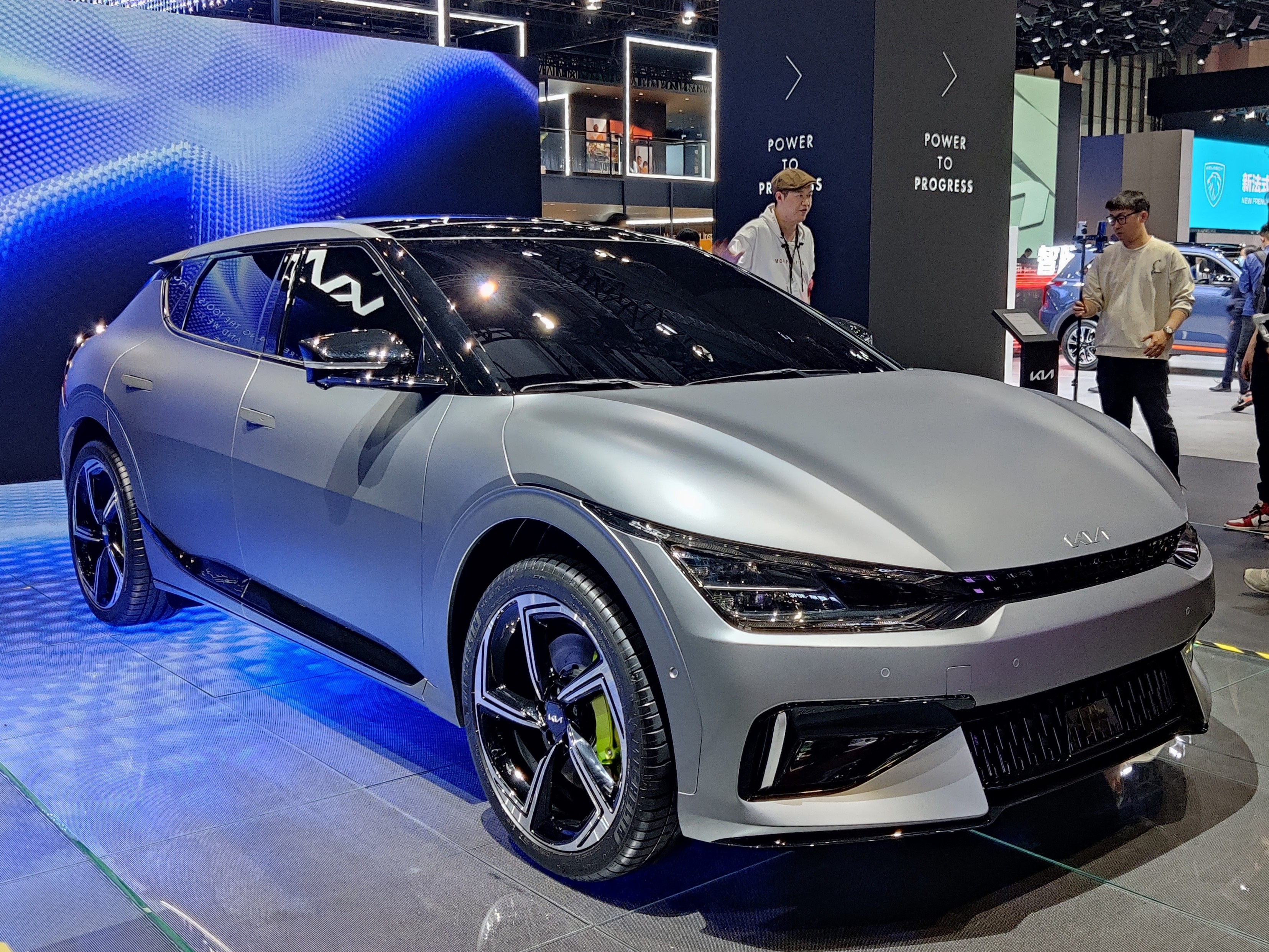
Kia EV6
"...8 minutes on the Korean cars, on the Onyx and the EV6s and stuff. That's quick but an X-Pung G6 12 minut..."
The Kia EV6 is an all-electric car made by Kia. It’s built to drive like a normal crossover, but it runs on electricity instead of gasoline. It’s mentioned because it’s one of the more well-known electric Kia models.
The Kia EV6 is a battery-electric crossover designed for everyday driving with fast charging and modern tech. It often comes up in EV news because it represents how mainstream automakers are building competitive electric vehicles, not just niche models. In a segment focused on Korean EVs, the EV6 is a quick reference point for performance, charging, and overall market impact.

BYD Dolphin G
"Let's get on to a really interesting car actually and this is the BYD Dolphin G. Now it's an overseas car as well as a Chinese car I believe. The Dolphin G is a plug-in hybrid but it's in a very small segment vehicle"
The BYD Dolphin G is a small plug-in hybrid that BYD plans to sell in Europe. It’s expected to pair a small gas engine with a battery pack so you can drive electrically sometimes and still have gas backup.
The BYD Dolphin G is positioned as a small plug-in hybrid aimed at Europe. The hosts say it will use the same powertrain approach as the BYD Atto 2 DMI, combining a 1.5-liter engine with an LFP battery pack.
plug-in hybrid
"The Dolphin G is a plug-in hybrid but it's in a very small segment vehicle and now spy shots from Chinese social media show the car being tested."
A plug-in hybrid is a car you can charge at home or at a charger. It uses both electricity and a gas engine, so you can drive on electric for some trips and switch to gas when needed.
A plug-in hybrid (PHEV) is a hybrid car that can be charged from an external power source. It typically combines an electric drive system with a conventional engine, letting short trips be done on electricity while longer trips can rely on the engine.

BYD Atto 2
"So Dolphin G is going to have the powertrain from the Atto 2. So the Atto 2 DMI is a 1.5 litre engine and an LFP battery pack."
The BYD Atto 2 is mentioned because the Dolphin G is expected to use a similar powertrain. They say it combines a small gas engine with a battery pack.
The BYD Atto 2 is referenced as the donor platform for the Dolphin G’s powertrain. The hosts specifically mention the Atto 2 DMI setup, which pairs a small 1.5-liter engine with an LFP battery pack.
LFP battery pack
"So the Atto 2 DMI is a 1.5 litre engine and an LFP battery pack."
An LFP battery pack is a type of lithium battery. It’s generally valued for being stable and lasting a long time through many charge cycles.
An LFP battery pack uses lithium iron phosphate chemistry. LFP cells are known for good thermal stability and long cycle life, which is why they’re common in many EVs and plug-in hybrids.
electric range
"BYD says 90 kilometres of electric range and a thousand kilometres of total range... looks interesting 90 kilometres of electric range that's interesting what 50 555 miles of electric range..."
Electric range is the distance the EV can drive on battery power alone. It’s the main number people look at to see if they’ll need to charge often.
Electric range is how far a vehicle can travel using only its electric power before the battery is depleted (or before it needs to switch modes). In EV marketing, it’s the key number for whether the car fits daily driving without charging.
total range
"BYD says 90 kilometres of electric range and a thousand kilometres of total range."
Total range is the overall distance the car claims it can go before you run out of energy. It may include more than just the battery-only driving number.
Total range is the combined distance the vehicle claims it can travel across its different energy sources or operating modes. For plug-in hybrids, it typically combines electric driving plus fuel-based driving; for some EVs it may include additional assumptions beyond pure battery use.
single-wheel lift
"one of the party tricks is to lift one of the wheels clear of the ground so you can swap a tire without even using a jack... BYD has pushed the idea the furthest... a single wheel lift so maybe for recovery if you're in some deep mud..."
Single-wheel lift means the car can raise one wheel so it’s not touching the ground. That can make tasks like changing a tire easier because you don’t necessarily need to jack the whole car up.
Single-wheel lift is a suspension capability where the car can raise one wheel off the ground. The goal is convenience and traction management—e.g., enabling a tire swap without a jack, and potentially allowing limited driving or recovery scenarios.
ultra suspension
"it debuted the denser b8 flash charge edition with the Dysus or Dysus P ultra suspension so a single wheel lift..."
Ultra suspension is BYD’s advanced suspension setup. In this context, it’s meant to let the car lift a wheel and handle tire-change/recovery situations.
Ultra suspension here refers to BYD’s advanced suspension system designed to enable the single-wheel lift and related emergency behaviors. It’s not just about ride comfort—its purpose is to control wheel contact and body height precisely.
three-wheel driving mode
"it'll just lift a wheel and a three-wheel driving mode BYD... entire replacement mode says that it'll ridden move the need for a jack..."
Three-wheel driving mode is when the car tries to keep moving using only three wheels. It’s meant for emergencies, such as after a flat, so you can get to safety or a better spot.
Three-wheel driving mode is when the vehicle intentionally drives with only three wheels on the ground. This is a specialized traction and stability strategy intended for emergency mobility—like moving the car after a tire failure—while managing wheel speed and vehicle balance.
nine tons of lifting force
"a media demonstration recorded a tire swap in one minute 56 seconds generating up to nine tons of lifting force BYD also staged a trap"
“Nine tons of lifting force” is how strong the lifting action is. They’re using it to show the system can raise the car/wheel with enough power to do a tire swap.
“Nine tons of lifting force” is a measure of how much upward force the system can generate during the wheel-lift/tire-swap operation. It’s used to communicate that the suspension hardware is powerful enough to raise the vehicle safely and quickly.
fully active hydraulic suspension system
"lee orto joining the race with the l9 livus using an 800 volt fully active hydraulic suspension system to react within milliseconds controlling all four corners independently not using an anti roll bar the l9 livus offers a single wheel lift facility tire replacement"
A fully active hydraulic suspension is a suspension setup that can actively control what each wheel is doing. Instead of just absorbing bumps, it can adjust quickly to help the car stay stable when driving over rough ground or obstacles.
A fully active hydraulic suspension system uses computer-controlled hydraulic actuators to adjust suspension behavior at all four wheels. Because it can react quickly and independently per corner, it’s used to improve stability and traction during demanding maneuvers like off-road recovery and wheel-lift situations.
anti roll bar
"controlling all four corners independently not using an anti roll bar the l9 livus offers a single wheel lift facility tire replacement"
An anti-roll bar is a part that helps keep the car from leaning too much when turning. If a car doesn’t use one, it usually depends on its suspension controls to keep the body level.
An anti-roll bar (sway bar) connects the left and right sides of a vehicle’s suspension to reduce body roll during cornering. The segment notes a vehicle that doesn’t use an anti-roll bar, implying it relies on its active suspension system to manage roll and stability instead.

Yangwang U7
"...and iso use a fully active hydraulic system BYD's yangwang u7 uses the electromagnetic desus z system which dri..."
The Yangwang U7 is an electric car made by BYD’s higher-end brand. It uses an advanced suspension system that actively controls how the wheels move, which is meant to improve how smooth and stable the car feels. The podcast brings it up because its suspension technology is a major feature.
The Yangwang U7 is an electric vehicle from BYD’s premium brand, known for its advanced chassis control. The podcast specifically points to its “fully active hydraulic system” and contrasts it with an electromagnetic suspension approach, highlighting how the U7 aims to improve ride and handling. It’s discussed because its suspension technology is a key differentiator in the EV performance conversation.
Request an Explanation
Heard something you'd like explained? We'll add it to this episode.
Sign in to request explanations for terms you heard.
Want to learn more?
Browse our glossary for plain-English explanations of automotive terms, jargon, and concepts.
Help improve this episode
See something that's not quite right? Our annotations are AI-generated and can sometimes miss the mark. Click the flag icon on any annotation to suggest a correction.
1 community members have helped improve this episode.