
CHINA: Huawei Megawatt Charging, Chinese Brands Hit Highs Overseas and BYD Sealion 08 Flagship | 30 Apr 2026
About this episode
Huawei’s megawatt charging push anchors a broader look at how Chinese EV players are scaling fast at home and abroad. The episode covers Europe’s surging demand for Chinese brands, BYD’s new Sea Lion 08 flagship and Seagull updates, Xiaomi’s Munich R&D move ahead of its European launch, Mazda’s China turnaround with Chang’an, and a new 10,800-car carrier that sets a world record.
You can read all the latest news on the blog here: https://EVne.ws/blog
Subscribe for free and listen to the podcast on audio platforms:
➤ Apple: https://EVne.ws/apple
➤ YouTube Music: https://EVne.ws/youtubemusic
➤ Spotify: https://EVne.ws/spotify
➤ TuneIn: https://EVne.ws/tunein
➤ iHeart: https://EVne.ws/iheart
HUAWEI SHIFTS MEGAWATT CHARGING INTO ROLLOUT https://evne.ws/48yzgQq
CHINESE BRANDS HIT NEW EUROPE SALES HIGH https://evne.ws/41Z08p0
CHINESE CARMAKERS RAMP UP OVERSEAS PRODUCTION https://evne.ws/4cBpsYg
BYD REVEALS SEALION 08 FLAGSHIP SUV https://evne.ws/4vZTFHZ
BYD SEAGULL GETS 505KM RANGE https://evne.ws/49j1wGS
CHERY TAKES TIGGO X UPMARKET https://evne.ws/4t2kYyE
FANG CHENG BAO ADDS SEDANS AND A SUPERCAR https://evne.ws/3QA0oZa
HYUNDAI LAUNCHES IONIQ BRAND IN CHINA https://evne.ws/4t2kGry
MAZDA’S CHINA NEV PUSH GATHERS PACE https://evne.ws/4vQ0X0Y
XIAOMI OPENS MUNICH R&D CENTRE https://evne.ws/4eQcyqK
CHINA DELIVERS RECORD 10,800-CAR CARRIER https://evne.ws/4tN8BIg
megawatt charging
"[60.0s] Welcome back to EV News, China. [61.7s] Today, Huawei's megawatt charging. [64.2s] Chinese brands hit highs overseas, and BYD's Sea Lion 08 flagship, plus stay tuned."
“Megawatt charging” means an EV charger that can put out extremely high power—around 1,000 kilowatts. That’s intended to recharge a battery much faster than typical fast chargers, but the car and charger have to be designed to handle it.
Megawatt charging refers to ultra-high-power EV fast-charging systems that can deliver power on the order of 1 megawatt (about 1,000 kW). The goal is to dramatically cut charging time, but it requires compatible charging hardware, battery thermal management, and vehicle charging electronics.
fast charging
"[83.2s] booming EV industry, and decode how fast moving developments in the East shape the global landscape. [88.0s] Let's get into some more fast charging news. [90.9s] It's like another day, another fast charging story to talk about in China."
Fast charging is how you recharge an EV quickly using high-power chargers. How fast it goes depends on both the charger and the car’s battery conditions.
Fast charging is EV charging at higher power levels than standard home charging, typically using DC fast chargers. Charging speed depends on the charger’s output and the vehicle’s ability to accept that power, which is often limited by battery temperature and state of charge.
kilowatt
"Huawei presented their flagship system a while ago with a peak output of 1,500 kilowatts and 2,400 amps of current."
Kilowatts tell you how much electrical power a charger can deliver. More kW usually means the EV can take energy faster, but the car still has limits.
Kilowatts (kW) measure electrical power—how quickly energy is delivered. In EV charging, higher kW generally means faster charging potential, though actual speed is limited by the car’s battery and charging hardware.
amps
"Huawei presented their flagship system a while ago with a peak output of 1,500 kilowatts and 2,400 amps of current."
Amps measure how much electric flow is moving. Higher amps can help charge faster, but the equipment has to be built to handle the heat and stress.
Amps (A) measure electric current. For EV fast charging, higher current can allow higher power transfer, but it also increases thermal and electrical stress—so systems rely on robust power electronics and cooling.
liquid cooling
"Liquid cooling, of course, runs through the charging guns, the cables, and the power electronics."
Because these chargers are so powerful, they get hot. Liquid cooling helps carry heat away so the charger can keep working safely and consistently.
Liquid cooling uses coolant flowing through the charger and cables to remove heat from high-power components like power electronics and charging guns. At megawatt-class power levels, cooling is critical to prevent overheating and to maintain stable performance.
solar plus storage
"Huawei's pushing solar plus storage, which combines photovoltaic generation, battery storage on site, and the charging hardware."
This means using solar panels to make electricity and using a battery to save some of it. Then the charger can use that stored energy to charge EVs more smoothly.
Solar plus storage combines photovoltaic solar generation with on-site battery storage and charging hardware. The storage can buffer charging demand and smooth power delivery, reducing strain on the electrical grid.
photovoltaic generation
"Huawei's pushing solar plus storage, which combines photovoltaic generation, battery storage on site, and the charging hardware."
This is the solar-panel part—turning sunlight into electricity. On its own it’s variable, so it’s usually paired with a battery to make charging more consistent.
Photovoltaic generation (PV) is electricity produced directly from sunlight using solar panels. In charging infrastructure, PV can reduce reliance on the grid when paired with battery storage.
DC energy storage buffer
"a 215 kilowatt hour DC energy storage buffer. You and I would call that just a battery. It decouples charging demand from direct grid supply."
Think of this as a battery that sits between the grid and the charger. It can provide power to the EV right away, even if the local power supply can’t deliver that peak power instantly.
A DC energy storage buffer is an on-site battery system used to temporarily store and release direct-current energy during charging. It “decouples” the charging session from the grid’s immediate ability to supply power, enabling faster charging even when grid connections are limited.
terminal
"For passenger EVs, they upgraded their terminals to 800 amps for logistics hubs and high throughput corridors."
Here, “terminals” means the charging connection points where EVs plug in. Upgrading them to higher current helps chargers handle more cars and charge faster.
In charging infrastructure, “terminals” refers to charging points or electrical interfaces used to connect EVs to the power system. The segment notes upgrading terminals to higher current to support logistics hubs and high-throughput corridors.
flash charging 2.0
"BYD, of course, have their flash charging 2.0, their blade battery 2.0, which is 10 to 70 in around five minutes."
Flash charging 2.0 is BYD’s name for its fast-charging approach. The goal is to get a lot of energy into the battery quickly, though the exact speed depends on the car and battery state.
“Flash charging 2.0” refers to BYD’s branded fast-charging system. The key point is that it targets very high charging power and short time-to-add-range, with performance depending on battery conditions and charging limits.
state of charge
"it can peak at 1,500 kilowatts if all the planets align, if your state of charge is very low."
State of charge just means how full the battery is right now. EVs can charge fastest when the battery is at certain levels, and very low charge can allow higher peak charging power.
State of charge (SoC) is the battery’s current charge level, usually expressed as a percentage. Charging systems often deliver peak power only within certain SoC ranges, so very low SoC can enable higher initial power draw.
LFP battery
"But still, CATL, on the other hand, responded with their third generation Shenzhen LFP battery,"
LFP is a type of EV battery chemistry. It’s known for being relatively safe and long-lasting, which is why many EV makers use it.
An LFP battery uses lithium iron phosphate chemistry. It’s commonly chosen for EVs because it can offer good safety characteristics and long cycle life, and it’s increasingly used in high-volume models.
grid buffering
"Whereas Huawei have been talking about prioritising multi-vehicle compatibility with grid buffering, with scalable deployment, and those kind of things..."
Grid buffering means the charging system can “store and smooth out” electricity demand. Instead of the grid taking a sudden big hit, the system helps even out the load so fast charging is easier on the network.
Grid buffering refers to using an energy buffer (like batteries and control systems) to smooth out power demand from charging. That helps the electrical grid handle fast-charging spikes without destabilizing voltage or frequency.
BEVs
"Chinese plug-in hybrids sales rose fourfold, and BEVs rose 107%. Basically, in March, they both powertrains sold about 47,000 units of each plug-in hybrid or pure BEV."
BEV means “battery electric vehicle.” It’s a car that only runs on electricity from a battery, so you charge it instead of buying gas.
BEV stands for Battery Electric Vehicle—an EV that runs only on electricity stored in a battery. It has no gasoline engine and relies on charging infrastructure for energy.
plug-in hybrids
"Chinese plug-in hybrids sales rose fourfold, and BEVs rose 107%. Basically, in March, they both powertrains sold about 47,000 units of each plug-in hybrid or pure BEV."
A plug-in hybrid is part-electric and part-gas. You can charge it like an EV, and when the battery runs low it uses gas like a normal car.
Plug-in hybrids (PHEVs) combine an electric motor with a gasoline engine, and they can be charged from an external power source. They typically run short distances on electricity, then switch to the engine when the battery is depleted.

7 Jq7
"The Cherry JQ7 BYD Seal U DMI, BYD Atto 2, BYD Seal 06, some of the best sellers."
Chery JQ7 is a Chery car model mentioned as one of the popular plug-in hybrid options. The point is that Chinese brands have several models selling well at the same time.
Chery JQ7 is a Chery model name mentioned in the list of top-selling plug-in hybrids in Europe. The segment uses it as an example of how Chinese brands are placing multiple models high in sales rankings.

Byd Seal
"The Cherry JQ7 BYD Seal U DMI, BYD Atto 2, BYD Seal 06, some of the best sellers."
BYD Seal U DMI is a BYD SUV that can run on electricity and also uses gas. In this segment, it’s mentioned as one of the popular plug-in hybrid models selling well in Europe.
BYD Seal U DMI is a BYD plug-in hybrid variant of the Seal U SUV. “DMI” indicates the hybrid system configuration, and it’s being cited here as one of the top-selling plug-in hybrids in Europe.

BYD Atto 2
"The Cherry JQ7 BYD Seal U DMI, BYD Atto 2, BYD Seal 06, some of the best sellers."
BYD Atto 2 is a BYD electric car that runs on a battery. The hosts mention it as one of the models doing well in Europe.
BYD Atto 2 is a BYD battery-electric vehicle (BEV) model. It’s listed among the best-selling BYD offerings in Europe in this segment, alongside other plug-in and EV models.
SAIC
"MG led the way in March, but I tell you what, only just. SAIC's MG brand, which is very well here, sold 39,717 units in March."
SAIC is the company that owns the MG car brand. The hosts mention it because MG’s sales numbers in Europe are coming from SAIC’s lineup.
SAIC is the Chinese automaker behind the MG brand, and the segment attributes MG’s European sales to SAIC’s MG operations. It’s mentioned here as a corporate actor tied to export performance.
Cherry
"BYD, almost 38,000. Cherry, 36,500. So it wasn't a slam-dunk win for MG."
“Cherry” likely means Chery, another Chinese car brand. The hosts mention it because it also sold a lot of vehicles in Europe in March.
“Cherry” appears to refer to Chery, a Chinese automaker, in the context of European sales rankings. The segment lists it alongside MG and BYD as another brand selling tens of thousands of vehicles.
tripling overseas production by 2030
"So it wasn't a slam-dunk win for MG. Now, Chinese automakers are tripling overseas production by 2030 to 3.4 million vehicles,"
This means Chinese automakers plan to make about three times as many cars overseas by 2030. The idea is to produce closer to where customers are instead of shipping everything from China.
Tripling overseas production by 2030 describes a manufacturing scale-up strategy—building more cars outside the home market to meet demand and reduce reliance on exports. For EVs, this often ties into faster supply, local compliance, and lower logistics costs.
Alex Partners
"According to Alex Partners, it's Europe and Latin America at the heart of the push... Alex Partners said Chinese brands beat Western rivals on price, product, and intelligent vehicle technology."
Alex Partners is a consulting company that studies industries and markets. The hosts quote it to support their points about EV competition and expansion plans.
Alex Partners is a consulting firm cited for analysis of the EV market and competitive dynamics. In this segment, it’s used as the source for claims about where Chinese brands are expanding and how they compare to Western rivals.
chronic overcapacity
"Domestic price wars, which are mostly under control and chronic overcapacity, which is not under control, have made the Chinese carmakers look overseas."
It means there are too many factories making cars compared to how many people are buying. When that happens for a long time, companies often cut prices to sell more cars.
“Chronic overcapacity” means car factories are producing more vehicles than the market can absorb for long periods. In EVs, it often shows up as sustained price pressure because companies need to keep output high to cover costs.
Chang'an
"Chang'an is looking at Northern Spain Great War Motors. They're going to build either Central or Southern Europe."
Changan is a Chinese car company. Here, they’re mentioned as looking at where to build electric cars in Europe.
Changan (Chang'an) is a Chinese automaker referenced as evaluating European manufacturing locations. The segment uses it to illustrate the broader trend of Chinese EV makers planning production across Europe.

BYD Sea Lion 08
"Let's get back to the cars. BYD has unveiled the Sea Lion 08 at the Beijing Auto Show. That sits at the top of BYD's Ocean series. There's a full-size SUV."
The BYD Sea Lion 08 is a large electric SUV from BYD. The hosts say it’s meant to be a top model in BYD’s lineup and will go on sale later this year.
The BYD Sea Lion 08 is a full-size SUV positioned as a flagship within BYD’s “Ocean” series. The segment frames it as a major upcoming model, with sales expected later in the year.
Beijing Auto Show
"Let's get back to the cars. BYD has unveiled the Sea Lion 08 at the Beijing Auto Show. That sits at the top of BYD's Ocean series."
The Beijing Auto Show is a big car event in China where companies show off new cars. It’s a common place for EV makers to announce new models.
The Beijing Auto Show is a major international auto event where manufacturers unveil new vehicles and technologies. In EV news, it’s often used as a high-visibility platform for brand launches.
Ocean series
"That sits at the top of BYD's Ocean series. There's a full-size SUV."
“Ocean series” is BYD’s way of grouping certain electric cars together as a themed lineup. The hosts are saying the Sea Lion 08 is the top model within that group.
BYD’s “Ocean series” is an internal model family/branding strategy that groups vehicles under a shared design and marketing identity. The segment uses it to explain where the Sea Lion 08 sits in BYD’s lineup.

Mercedes-Benz Mercedesbenz Gls
"It's 5.11 meters long, 2 meters wide, 1.8 meters tall, over 3 meter wheelbase. It's basically almost as long as a Mercedes-Benz GLS, and that's big. Inside, BYD offers up to six-seat configurations."
The Mercedes-Benz GLS is a large luxury SUV with room for multiple passengers, often including three rows of seats. The podcast compares another vehicle’s size to the GLS to show how big it is. Bigger SUVs usually mean more interior space and seating flexibility.
The Mercedes-Benz GLS is a large, full-size luxury SUV known for its spacious interior and three-row seating options. In the podcast, it’s used as a size reference because the BYD model being discussed is described as being nearly as long as the GLS, highlighting how big the new vehicle is. That kind of comparison matters in EV news because size affects packaging, seating capacity, and overall practicality.

Tang Great Tang
"So lots of tech transfer from BYD's Great Tang. That's a crossover. Things like dual-chamber air suspension, rear-wheel steering, blade battery 2.0, all-wheel drive, 0-60 in 5 seconds, and something."
The BYD Great Tang is another BYD EV that the hosts use as a tech reference point. They say the newer car is likely using similar battery technology.
The BYD Great Tang is referenced as the source of technology “transfer” for another BYD vehicle discussed in the segment. The hosts specifically connect it to the same battery type and mention LFP pack usage and large capacity.
dual-chamber air suspension
"Things like dual-chamber air suspension, rear-wheel steering, blade battery 2.0, all-wheel drive, 0-60 in 5 seconds, and something."
Dual-chamber air suspension is a suspension system that uses air springs with extra control chambers. It helps the car stay level and ride smoother, especially over bumps or when carrying passengers.
Dual-chamber air suspension uses two air chambers per corner (or per axle system) to help control ride height and damping more precisely than simpler setups. This can improve comfort and stability, especially when the vehicle is loaded or changing speed.
blade battery 2.0
"Things like dual-chamber air suspension, rear-wheel steering, blade battery 2.0, all-wheel drive, 0-60 in 5 seconds, and something. Probably the same battery, which is an LFP pack in the Great Tang."
BYD’s “blade battery 2.0” is a newer version of its battery design. It’s the type of battery BYD uses in many of its EVs, and it’s known for being safer and efficient.
“Blade battery 2.0” refers to BYD’s second-generation version of its LFP (lithium iron phosphate) battery design. The “blade” format is meant to improve safety and packaging efficiency, and it’s commonly used in BYD EVs.
rear-wheel steering
"Things like dual-chamber air suspension, rear-wheel steering, blade battery 2.0, all-wheel drive, 0-60 in 5 seconds, and something."
Rear-wheel steering means the back wheels can also turn. It can make the car easier to maneuver in tight spaces and feel more stable at speed.
Rear-wheel steering is a system that turns the rear wheels to improve handling. At lower speeds it can tighten turning circles, and at higher speeds it can help stability and reduce lane-change “feel” by aligning the vehicle’s direction of travel.
all-wheel drive
"Things like dual-chamber air suspension, rear-wheel steering, blade battery 2.0, all-wheel drive, 0-60 in 5 seconds, and something."
All-wheel drive means power goes to all four wheels. It can help the car launch better and stick to the road, especially on slippery surfaces.
All-wheel drive (AWD) sends power to both the front and rear axles. In EVs, AWD is often used to improve traction and acceleration by distributing torque to the wheels with the most grip.
LFP pack
"Probably the same battery, which is an LFP pack in the Great Tang. 130 kilowatt-hours, really big battery."
An LFP pack means the battery uses a lithium type called LFP. It’s often chosen because it tends to last a long time and is considered safer than some other battery types.
An LFP pack is a battery pack built with lithium iron phosphate chemistry. LFP cells are typically valued for long cycle life and strong safety characteristics compared with some other lithium chemistries, though they can have different energy density.

Seagull
"BYD also unveiling their updated Seagull. This is at the other end of the scale, keeping its grip on the very entry-level, small city hatchback segment."
The BYD Seagull is BYD’s small, budget-friendly electric hatchback. They’re talking about a refreshed version meant to make it more competitive and boost sales.
The BYD Seagull is a small city hatchback positioned as an entry-level EV in BYD’s lineup. In this segment, the hosts discuss an updated version and how BYD is trying to improve its sales with changes to range and available powertrains.
China cycle of range
"The key change is the high-spec version, which has had a nice 25% boost from 400 to 500 kilometers on the China cycle of range, and a 60 kilowatt or 80 horsepower single motor."
“China cycle of range” is the official test method used in China to estimate how far an EV can go. Different countries use different tests, so the number may not match other range ratings.
The “China cycle” refers to a standardized testing procedure used in China to estimate EV range. Because test cycles differ by country and methodology, a range number from the China cycle may not match what you’d see under other standards.
IB Advanced Driver System
"BYD's added LiDAR to God's IB Advanced Driver System, and the Seagull did sell 34,000 units this month last year, actually, in April."
The “IB Advanced Driver System” is BYD’s driver-assist tech—software and sensors that help with tasks like detecting vehicles and lanes. They’re saying LiDAR was added to make that system smarter.
“IB Advanced Driver System” is BYD’s branded driver-assistance software/hardware package. The segment implies that adding LiDAR is part of upgrading the system’s perception and capabilities for semi-autonomous driving features.
LiDAR
"BYD's added LiDAR to God's IB Advanced Driver System, and the Seagull did sell 34,000 units this month last year, actually, in April."
LiDAR is a sensor that uses lasers to “see” the world around the car. It helps the car understand distances and shapes, which can make driver-assist features work better.
LiDAR (Light Detection and Ranging) is a sensor that uses laser light to map the surrounding environment in 3D. In driver-assistance systems, it can improve object detection and distance measurement, especially in complex traffic scenarios.
NEV
"There's the Zhili Xingwan, the top-selling NEV in China, the ArchFox T1, the Leap Motor A10, all joining the list of rivals at very keen pricing."
NEV is a China term meaning “new energy vehicle.” It generally refers to cars that run on electricity or a plug-in hybrid, not just gasoline.
NEV stands for “New Energy Vehicle,” a China term that broadly covers electrified vehicles such as battery-electric and plug-in hybrids. It’s used in market reporting to group non-traditional powertrains under one category.

A10 Leap Motor A10
"There's the Zhili Xingwan, the top-selling NEV in China, the ArchFox T1, the Leap Motor A10, all joining the list of rivals at very keen pricing."
The Leap Motor A10 is another electric vehicle option in China. It’s mentioned as part of the lineup of competing cars trying to attract buyers.
The Leap Motor A10 is mentioned as one of the EV competitors in China. The context is market positioning—how multiple brands are trying to win customers with strong pricing.
Tego X
"unveiling the Tego X at the top of their Tego lineup... So there's a reshuffle of Cherry's SUV range. The firm launched the midsize Tego 7L... whereas the Tego X is a different beast entirely."
The Chery Tego X is a new big hybrid SUV from Chery. They’re marketing it as their top Tego model, targeting families that want a three-row vehicle.
The Chery Tego X is positioned as a large hybrid flagship in Chery’s Tego lineup, aimed at the three-row SUV market. The segment frames it as a step above the smaller Tego 7L, with a focus on hybrid capability and a premium positioning.

Chery Tiggo 7
"The firm launched the midsize Tego 7L at around 8,000 pounds, 8,500 pounds, $10,000, whereas the Tego X is a different beast entirely."
three-row SUV market
"That is aimed at the three-row SUV market, the sub-$30,000 market..."
A three-row SUV has seats in three rows, so it can carry more people. This segment says the new model is aimed at shoppers who need that kind of family space.
A three-row SUV is designed to seat more passengers by adding a third row of seats, typically targeting families and larger groups. The “market” phrasing here means Chery is aiming the Tego X at buyers who specifically want that extra seating capacity.
pure electric range
"When you look at how much vehicle you get, three-row, large SUV hybrid system, 200 kilometers of pure electric range on the China cycle..."
“Pure electric range” means how far the car can go using only electricity from the battery. For a plug-in hybrid, it tells you how much of your driving you can do without the gas engine.
“Pure electric range” is the distance a hybrid vehicle can travel using only its electric motor and battery, without relying on the engine. In plug-in hybrids, this number is especially important because it indicates how much daily driving can be done electrically.

Ti7 Fang Cheng Bao
"... first 24 hours after launch, 30,000 pre-orders. Fang Cheng Bao is next in the news. This is BYD's Fang Cheng Ba..."
Ti7 is a BYD electric vehicle model that was newly launched. The podcast says it received a large number of pre-orders very quickly, which suggests people are interested in buying it. It’s being mentioned as part of BYD’s latest EV releases.
Ti7 is a BYD model referenced in the context of strong early demand, with the podcast noting 30,000 pre-orders in the first 24 hours after launch. That kind of launch performance is significant in EV business news because it signals market traction and manufacturing scale-up potential. The podcast also places it alongside other BYD-related news, emphasizing BYD’s rapid expansion of its EV lineup.

Formula X
"moving into sedan, but we'll start with the debut, the headline really, which was called Formula X, a two-door convertible supercar."
The Formula X is a new two-door convertible supercar being shown by BYD’s Fang Cheng Bao brand. They’re presenting it as the big headline car, with very dramatic styling.
The BYD Fang Cheng Bao Formula X is described as a two-door convertible supercar and the headline debut at the show. The segment emphasizes its extreme styling and links its design language to the Fang Cheng Bao Super 9 concept.
Fang Cheng Bao Super 9 concept
"That draws its design language from the Fang Cheng Bao Super 9 concept. So think about scissor doors, active aero spoilers..."
The Super 9 is a concept car—basically a design preview. The hosts say the Formula X uses the same design ideas from that concept.
The Fang Cheng Bao Super 9 is referenced as a concept car whose design language carries over to the Formula X. Concept cars often preview future production styling cues, so this is a way of saying the Formula X is built around that visual theme.
scissor doors
"So think about scissor doors, active aero spoilers, hollowed out diffusers behind the rear wheels... the gullwing and scissor door configuration..."
Scissor doors are doors that open upward in a hinged “scissor” motion. They’re common on flashy sports cars because they look cool and can make getting in easier.
Scissor doors are a door design that hinges at the front and swings upward and outward, like a scissor motion. They’re often used on high-end sports cars because they create a dramatic look and can improve access in tight parking spaces.
active aero spoilers
"So think about scissor doors, active aero spoilers, hollowed out diffusers behind the rear wheels..."
Active aero spoilers are aerodynamic elements that move or adjust based on driving conditions to improve downforce and stability. Unlike fixed spoilers, they can deploy or change position to balance performance and efficiency.
hollowed out diffusers
"active aero spoilers, hollowed out diffusers behind the rear wheels, full carbon body..."
A diffuser is a part under the car that helps direct air smoothly as it leaves the vehicle. “Hollowed out” means it’s sculpted with cutouts to change how the air flows.
A diffuser is an aerodynamic panel under the rear of a car that helps manage airflow and can increase downforce. “Hollowed out” diffusers suggest cutouts or sculpting intended to shape airflow more aggressively for performance and styling.
full carbon body
"hollowed out diffusers behind the rear wheels, full carbon body, the gullwing and scissor door configuration..."
“Full carbon body” means the car is made mostly from carbon fiber. Carbon fiber is strong and lightweight, which can help the car feel more responsive.
A “full carbon body” means the vehicle’s structure and/or outer panels are made largely from carbon fiber composites. Carbon fiber is used to reduce weight and improve stiffness, which can help performance and handling.
gullwing
"full carbon body, the gullwing and scissor door configuration, because a plain hinge would never do..."
Gullwing doors open upward like a bird’s wings. They’re a dramatic design feature you often see on special sports cars.
Gullwing doors are hinged at the roofline and open upward, resembling a bird’s wings. They’re a distinctive sports-car/halo-car feature and usually require careful packaging for hinges, structure, and safety.
battle cockpit
"because a plain hinge would never do when you are making something a little bit bonkers, and inside they call it the battle cockpit."
“Battle cockpit” is a name for a driver-focused interior. It implies the cabin is set up to feel more like a performance/race car than a normal car.
“Battle cockpit” is a marketing term for a driver-focused interior that emphasizes a racing-style layout and controls. It suggests the cabin is designed to feel more like a performance cockpit than a typical road-car interior.
retractable steering wheel
"Fang Cheng Bao keeps mechanical buttons with a retractable steering wheel, they say, and a four-point racing harness."
A retractable steering wheel can slide or move away to make it easier to get in and out of the car. It’s a convenience and comfort feature, especially in low, sporty cars.
A retractable steering wheel moves in and out (often for easier entry/exit or to improve driver ergonomics). In performance-focused EV concepts, it’s commonly paired with a driver-focused cockpit layout.
four-point racing harness
"Fang Cheng Bao keeps mechanical buttons with a retractable steering wheel, they say, and a four-point racing harness. It will enter production in 2027."
A four-point racing harness is a multi-strap seat belt that holds you more firmly than a normal seatbelt. It’s meant for performance driving where you need extra support.
A four-point racing harness uses multiple straps to secure the driver at the shoulders and hips (instead of a single seatbelt). It’s designed to better restrain the body during hard cornering or track-style driving.

Hyundai Ioniq
"...Beijing Hyundai using the auto show to launch the Ioniq brand in China, and the new Ioniq V being shown ..."
Hyundai Ioniq is Hyundai’s line of electric vehicles. In the podcast, it’s mentioned because Hyundai is bringing the Ioniq brand to China and showing a new Ioniq model. It’s essentially a way to organize and market their EVs under one name.
The Hyundai Ioniq is Hyundai’s EV-focused brand line, and it’s significant because it’s part of Hyundai’s strategy to offer multiple electrified models under a dedicated name. The podcast references Hyundai launching the Ioniq brand in China and showing the Ioniq V, which ties directly to how Hyundai is expanding its EV lineup and market presence. It’s discussed as a business and product move rather than just a single vehicle.
EREV powertrains
"This new range will support both pure electric and EREV powertrains, that is extended range electric vehicle, E-R-E-V."
EREV means the car is still driven by an electric motor, but it can go farther when the battery runs low. It typically uses a backup system to generate electricity so you don’t have to stop as often.
EREV stands for “extended-range electric vehicle.” It’s an EV architecture where the wheels are driven by electric motors, while a separate system (often a generator) extends driving range when the battery is low—without being a traditional hybrid that directly powers the wheels.
Qualcomm
"Integrating momenta for autonomous driving. Qualcomm for flagship cockpit chips. CATL for the batteries."
Qualcomm is a tech company that makes chips. In cars, those chips help run the big screens and the smart driving features.
Qualcomm is mentioned as the supplier of “flagship cockpit chips,” meaning advanced computer hardware used for the vehicle’s infotainment and driver-assistance systems. In EVs, these chips often handle real-time graphics, connectivity, and sensor processing.
CATL
"Qualcomm for flagship cockpit chips. CATL for the batteries. Baidu and their Wenxing model."
CATL is a company that makes EV batteries. The battery is one of the biggest factors in how far the car can go and how well it holds up over time.
CATL (Contemporary Amperex Technology) is cited as the battery supplier. For EV buyers, the battery maker matters because it influences cell chemistry, energy density, thermal management, and long-term degradation behavior.
Baidu
"CATL for the batteries. Baidu and their Wenxing model."
Baidu is a major Chinese tech company. In cars, it can provide software and AI features that help with things like navigation and smart driving.
Baidu is mentioned as part of the vehicle’s tech stack, linked here to “their Wenxing model.” Baidu is known for software and AI services, and in automotive contexts it often contributes to navigation, cloud services, and/or autonomous-driving-related platforms.
pre-approved for financing
"It helps schedule a test drive, get pre-approved for financing, and estimate trading value."
Pre-approved financing is when a lender checks you first and gives you a loan offer before you choose the exact car. That can make buying faster because you’re not starting from scratch at the dealership.
“Pre-approved financing” means a lender evaluates your credit and conditions up front, then offers you a financing approval before you pick the exact car. It can speed up the purchase process because the buyer’s loan terms are largely settled earlier.
estimate trading value
"It helps schedule a test drive, get pre-approved for financing, and estimate trading value."
Trading value is the price the dealer (or lender) expects to give you for your current car if you trade it in. Estimating it early helps you figure out what you’ll likely pay for the next vehicle.
“Trading value” refers to what your current vehicle is worth as a trade-in toward your next purchase. Estimating it up front helps buyers understand their likely out-of-pocket cost and compare offers more easily.
Capital One
"Advanced, intuitive, and deployed. That's how they stack. That's technology at Capital One."
Capital One is a company that provides financial services like loans. In this segment, they’re described as using AI tools to help people shop for cars and line up financing.
Capital One is a financial services company that, in this segment, is described as using AI to support car shopping. The mention is about how fintech firms are moving into the automotive purchase workflow (scheduling, financing, trade-in estimates).
multi-agentic AI
"Capital One's tech team isn't just talking about multi-agentic AI. They already deployed one."
Multi-agentic AI means the AI is made of several smaller problem-solvers working together. Instead of doing everything in one step, it can handle different parts of car shopping more reliably.
Multi-agentic AI is an AI approach where multiple “agents” (specialized sub-systems) work together to complete a task. In car shopping, that can mean coordinating steps like understanding your preferences, checking live data, and recommending options.
Chat Concierge
"It's called Chat Concierge, and it's simplifying car shopping, using self-reflection and layered reasoning with live API checks."
Chat Concierge is an AI chat assistant designed to help you shop for a car. It’s meant to guide you through steps like booking a test drive and getting estimates for financing and trade-in value.
Chat Concierge is the name of Capital One’s deployed AI assistant for simplifying car shopping. The segment describes it as using reasoning plus live API checks to help with tasks like scheduling test drives and estimating trade-in value.
layered reasoning
"It's called Chat Concierge, and it's simplifying car shopping, using self-reflection and layered reasoning with live API checks."
Layered reasoning means the AI thinks through a task in stages instead of guessing all at once. That can make recommendations and estimates more accurate.
Layered reasoning is a method where the AI breaks a problem into stages (layers) and solves it step-by-step. In this context, it helps the assistant interpret your needs, then verify details using live information.
live API checks
"It's called Chat Concierge, and it's simplifying car shopping, using self-reflection and layered reasoning with live API checks."
Live API checks mean the AI looks up current information from other systems while you’re chatting. That helps it avoid using outdated details when it makes recommendations.
“Live API checks” means the AI queries external software interfaces (APIs) in real time to confirm up-to-date information. For car shopping, that can help verify availability, pricing, or eligibility rather than relying only on what the user typed.
Mazda CX-6E
"Nakajima spoke while standing between the CX-6E and the MX-5 Roadster. Its early EV effort in China was the CX-30 EV."
The Mazda CX-6E is one of Mazda’s newer electric SUV models for China. The hosts are saying Mazda is using a partner’s EV technology to get it to market faster.
The Mazda CX-6E is an EV model Mazda is positioning for China’s market. In this segment, it’s described as part of Mazda’s EV turnaround strategy and is built on a shared platform developed with Chang’an.
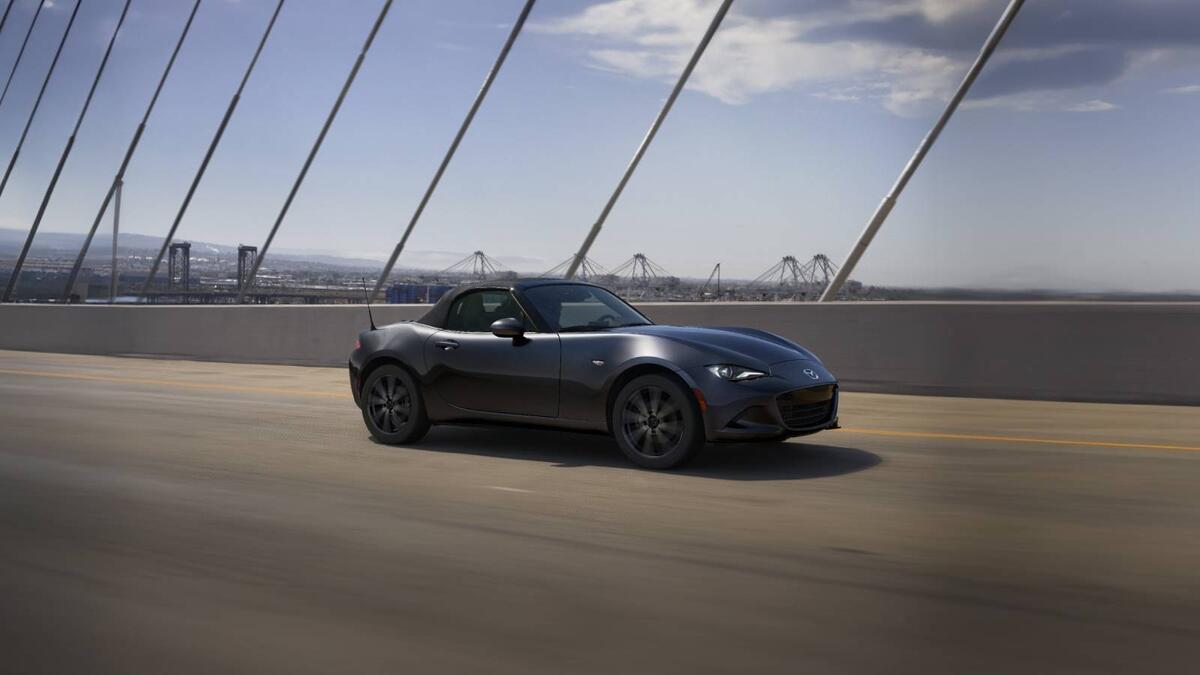
Mazda MX-5 Roadster
"Nakajima spoke while standing between the CX-6E and the MX-5 Roadster. Its early EV effort in China was the CX-30 EV."
The Mazda MX-5 Roadster is Mazda’s popular small two-seat roadster. Here it’s mentioned because the speaker is talking about how Mazda is changing for EVs while keeping its identity.
The Mazda MX-5 Roadster (often called the Miata in some markets) is Mazda’s well-known lightweight roadster. In the segment, it’s mentioned as a reference point while the executive discusses Mazda’s shift toward EVs.
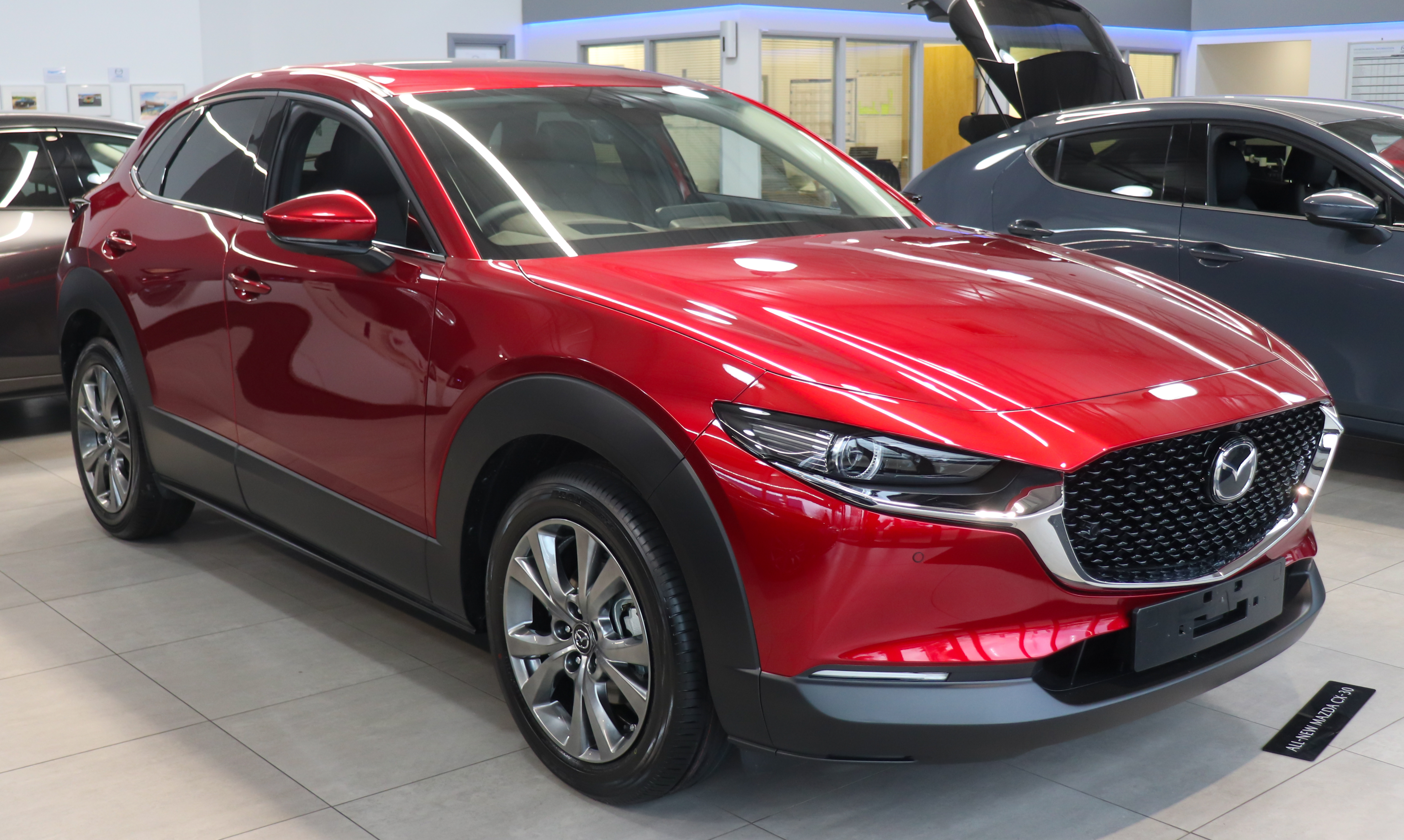
Mazda Cx30
"Its early EV effort in China was the CX-30 EV. That was a BEV conversion. Let's call it a compliance car and be kind at that."
The Mazda CX-30 EV was Mazda’s first attempt at an electric vehicle in China. The hosts say it didn’t do well because it wasn’t a fully purpose-built EV.
The Mazda CX-30 EV is described as Mazda’s early EV effort in China. The segment says it was essentially a “BEV conversion” and that it sold poorly, leading customers to dismiss it.
BEV conversion
"That was a BEV conversion. Let's call it a compliance car and be kind at that. It sold 500 units in two years, so Chinese customers dismissed it."
A BEV conversion is when a car that wasn’t originally designed as electric gets modified to be fully electric. It can work, but it may not be as good as a car designed from the start for batteries.
A BEV conversion means taking an existing vehicle design (often originally built for gasoline) and adapting it to run as a battery-electric vehicle. Conversions can be cheaper and faster to launch, but they may compromise packaging, efficiency, and driving feel versus a purpose-built EV.
compliance car
"Let's call it a compliance car and be kind at that. It sold 500 units in two years, so Chinese customers dismissed it."
A “compliance car” is basically an EV that’s built to satisfy rules or requirements, not because it’s meant to be a big hit. The speaker is implying it wasn’t very competitive with what buyers wanted.
A “compliance car” is a vehicle launched mainly to meet regulatory or quota requirements rather than to be a fully competitive product. In this segment, the host uses it to criticize Mazda’s early EV approach in China.
EPA platform
"The two firms used Chang'an's EPA platform, and Chang'an developed the 6E, otherwise known as the EZ6, and the CX-6E, otherwise known as the EZ60."
An “EPA platform” refers to a standardized vehicle architecture used to build multiple EV models efficiently. In this context, Chang’an’s EPA platform is the underlying EV “base” Mazda used for its China lineup, enabling faster development and shared components.

6e
"and Chang'an developed the 6E, otherwise known as the EZ6, and the CX-6E, otherwise known as the EZ60."
Chang’an’s “6E” (EZ6) is a named EV platform or system used to build electric vehicles. The hosts are saying Mazda’s EVs in China are based on this shared technology.
The segment says Chang’an developed the “6E,” also referred to as the EZ6, as part of the platform strategy used for Mazda’s EVs. It’s presented as a named EV development program/architecture that underpins the resulting vehicles.
pure BEV
"Both come in pure BEV and EREV forms, and they're also entering international markets too."
“Pure BEV” means the car is fully electric and uses only battery power to drive. There’s no gas engine used to move the car.
“Pure BEV” means a vehicle that runs only on electricity from a battery, with no gasoline engine for propulsion. The segment contrasts this with EREV, implying different powertrain options for the same model line.
mid-size SUV
"It's a mid-size SUV. Both come in pure BEV and EREV forms, and they're also entering international markets too."
A mid-size SUV is a family-sized SUV that’s not as big as the largest SUVs. It’s meant to give you a sense of how roomy and practical the vehicle is.
A mid-size SUV is a vehicle class typically larger than a compact SUV but smaller than a full-size SUV. The segment uses this to describe the CX-6E/EZ60’s market positioning and size category.
Xiaomi
"Now, Xiaomi is looking overseas... Xiaomi has opened its European R&D center. They opened it in Munich in Germany, ahead of their European market entry next year."
Xiaomi is best known for phones and other tech, but it’s also trying to make cars. Here, they’re setting up a research center in Europe so they can better adapt their EVs for European customers.
Xiaomi is a consumer electronics brand that has also built an automotive business and is now planning an overseas push. In this segment, the hosts discuss Xiaomi’s European R&D center and its upcoming market entry, which are key steps for scaling EV production and software development outside China.
European R&D center
"Xiaomi has opened its European R&D center. They opened it in Munich in Germany, ahead of their European market entry next year."
An R&D center is where a company does engineering work to improve products. Having one in Europe helps the car maker adjust the cars for European rules and customer needs.
R&D (research and development) centers are where companies design and test new products, including vehicle software, battery/charging integration, and hardware validation. Opening a European R&D center typically helps a brand localize features, meet regulations, and speed up iteration for that region.
European market entry
"They opened it in Munich in Germany, ahead of their European market entry next year... Germany will become the first market in Europe for Xiaomi cars."
Market entry means launching sales in a new country or region. The hosts are saying Xiaomi is preparing for Europe before it starts selling there.
“Market entry” refers to when a brand starts selling and supporting vehicles in a new region. The segment frames Xiaomi’s Munich R&D center as preparation for its first European sales.
fettled and fine-tuned
"but all of them obviously say, but this is a Chinese car, so it hasn't been fettled and fine-tuned for Western markets and translations and things like that."
“Fettled and fine-tuned” is an automotive/engineering phrase meaning to adjust a product for specific conditions—here, adapting software, user interfaces, and system behavior for Western markets. The host implies Xiaomi cars may need additional localization beyond their original Chinese setup.
vehicle dynamics
"Xiaomi Cast is a base for design, for high-performance vehicles, for things like dynamics. The site has 50 staff so far, stocked with engineers from people who know what they're doing."
Vehicle dynamics is how a car “acts” on the road. It covers how it grips, turns, stays stable, and responds when you brake or accelerate.
Vehicle dynamics is the study of how a car behaves and responds—things like handling, stability, traction, and how the car moves during braking, cornering, and acceleration. It’s often used in EV and performance development to tune suspension, tires, steering feel, and control systems.
Rudolph Dietrich
"stocked with engineers from people who know what they're doing. BMW, Porsche, Lamborghini, Mercedes-Benz, Rudolph Dietrich leads the center as the general manager."
Rudolph Dietrich is the person the hosts say is running the Munich center. They mention his background to show the team has experienced leadership.
Rudolph Dietrich is named as the general manager leading the Munich center. The segment uses his background to establish credibility by tying his experience to major European automakers and racing projects.
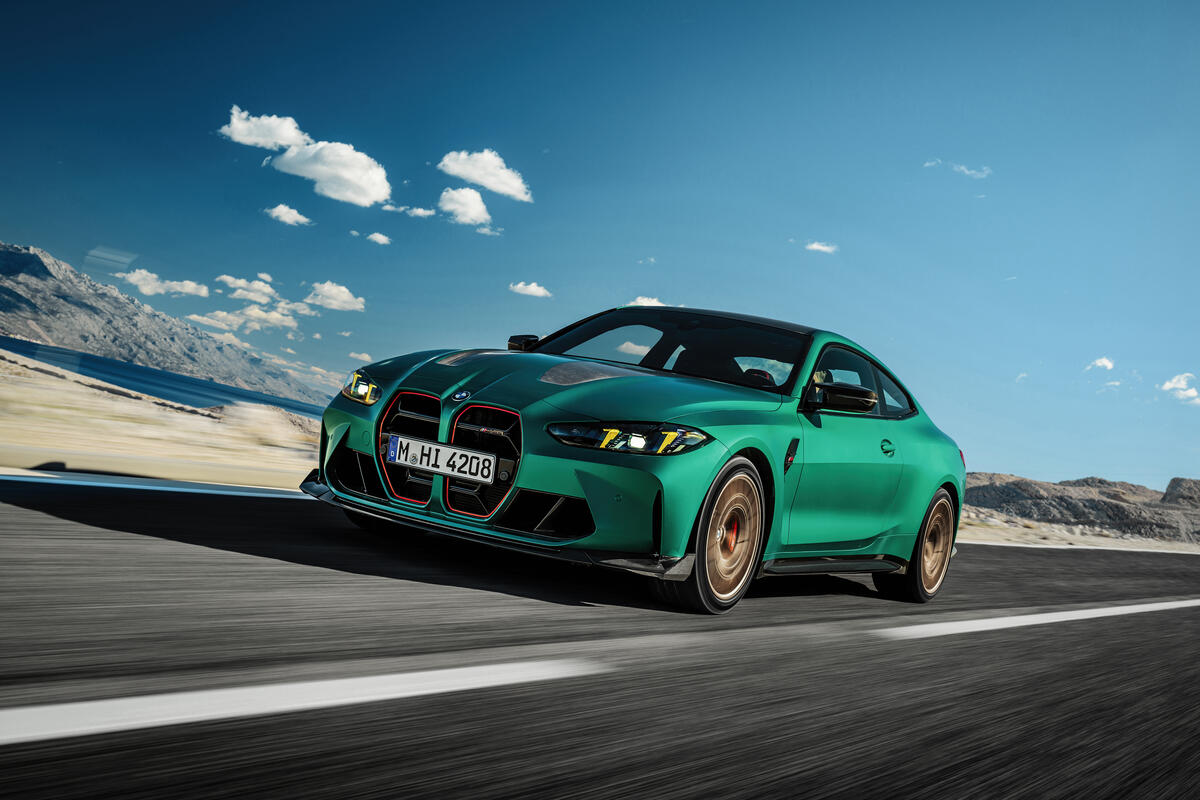
BMW M4 GT3
"BMW, Porsche, Lamborghini, Mercedes-Benz, Rudolph Dietrich leads the center as the general manager. His CV includes the BMW M4 GT3 race car project."
The BMW M4 GT3 is a BMW race car used in GT3 racing. If someone worked on that project, it usually means they’ve done serious performance and handling engineering for track use.
The BMW M4 GT3 is a race car built for GT3-class endurance and sprint racing. Mentioning it in a CEO’s CV signals experience with high-performance engineering, track testing, and race-focused vehicle setup.
Klaus Dieter-Grull
"Rudolph Dietrich leads the center as the general manager. His CV includes the BMW M4 GT3 race car project. Klaus Dieter-Grull runs vehicle dynamics."
Klaus Dieter-Grull is described as leading the vehicle dynamics work. That means he’s focused on making the car handle and respond well.
Klaus Dieter-Grull is identified as running vehicle dynamics for the center. This highlights that the team includes specialists focused on how the car handles and behaves.

Bmw 3Series
"On his CV, the BMW 3-series, 4-series, Z4, X5, X6 and X7."
BMW’s 3 Series is one of BMW’s most popular car models. Here it’s mentioned to show the designer has worked on well-known BMW models.
The BMW 3 Series is a long-running compact executive sedan/compact car line from BMW. In the transcript it’s mentioned as part of a list of models the person has worked on, which helps listeners understand the design/engineering pedigree involved.

BMW 4-series
"On his CV, the BMW 3-series, 4-series, Z4, X5, X6 and X7."
The BMW 4 Series is BMW’s line of sporty compact cars, like coupes and convertibles. It’s mentioned here as part of a resume of major BMW models.
The BMW 4 Series is BMW’s compact luxury coupe/gran coupe/convertible lineup. The episode lists it alongside other BMW models to indicate the person’s experience across multiple BMW product lines.

BMW X5
"On his CV, the BMW 3-series, 4-series, Z4, X5, X6 and X7."
The BMW X5 is a luxury SUV from BMW. It’s mentioned here as part of a resume of well-known BMW models.
The BMW X5 is BMW’s midsize luxury SUV. Mentioning it alongside other BMW models signals the person’s experience across different vehicle types, including mainstream luxury SUVs.
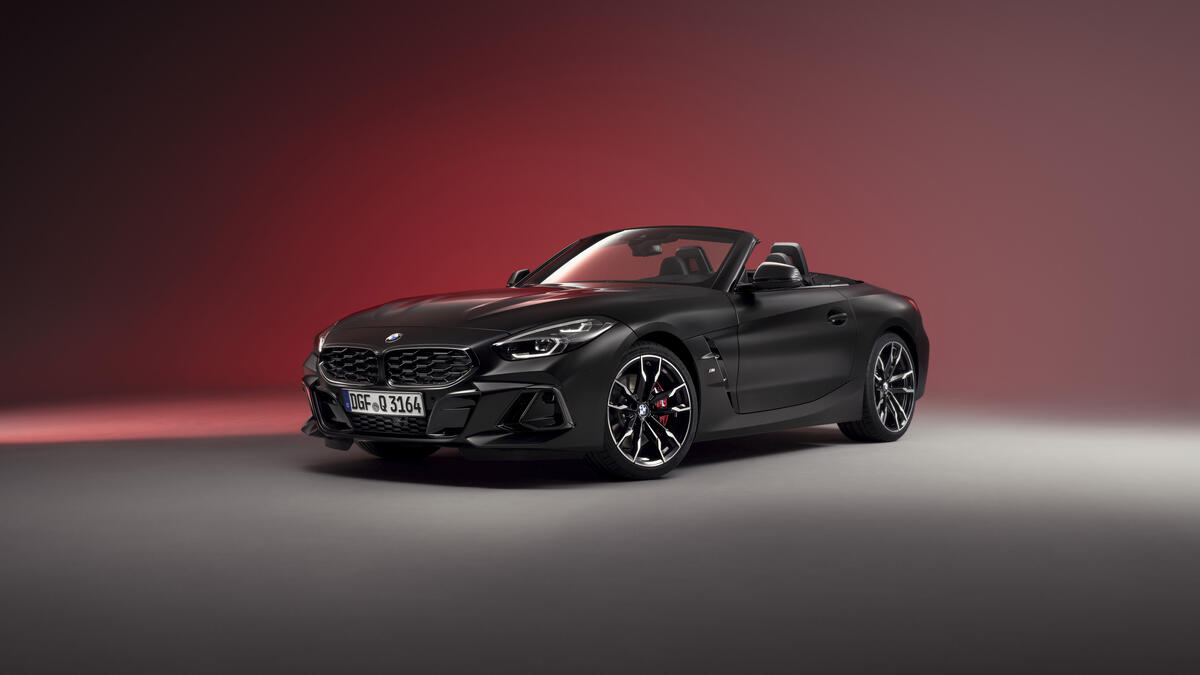
BMW Z4
"On his CV, the BMW 3-series, 4-series, Z4, X5, X6 and X7."
The BMW Z4 is BMW’s sporty two-seat roadster. In this segment it’s just part of the list of cars the person has worked on.
The BMW Z4 is BMW’s roadster/sports car model. It’s included in the transcript’s CV-style list to show the designer has worked on BMW’s sports-car segment as well as SUVs and sedans.

BMW X7
"On his CV, the BMW 3-series, 4-series, Z4, X5, X6 and X7."
The BMW X7 is BMW’s big, luxury SUV. It’s mentioned here as part of a list of cars the designer has worked on.
The BMW X7 is BMW’s large luxury SUV. The transcript groups it with other BMW models to show the person has worked on major vehicles across BMW’s size and segment range.

BMW X6
"On his CV, the BMW 3-series, 4-series, Z4, X5, X6 and X7."
The BMW X6 is a BMW SUV with a more sloped, coupe-like shape. Here it’s mentioned as another model on the person’s CV.
The BMW X6 is BMW’s coupe-style midsize luxury SUV. It’s included in the transcript’s list of models to highlight the breadth of the designer’s work across BMW’s lineup.
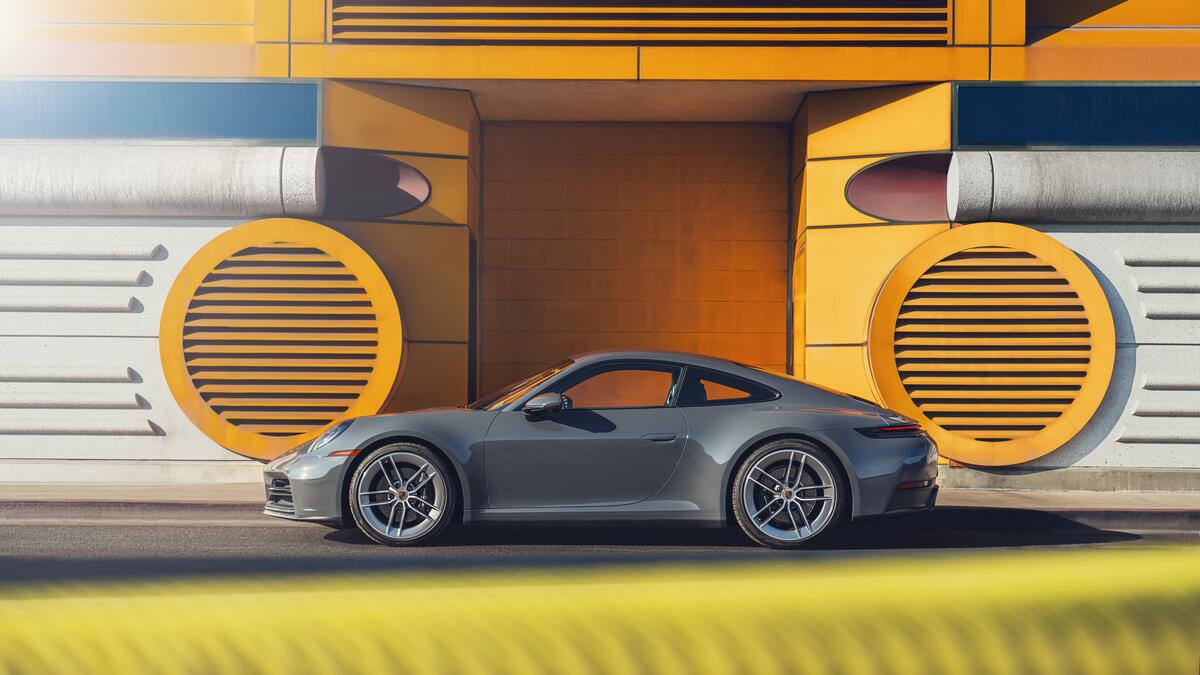
Porsche 992
"He did the Porsche 992 GT3 RS and the Lamborghini Temerario. Dussan Saratch joined the whole vehicle,"
The Porsche 911 GT3 RS is a very track-oriented version of the 911. The “992” part tells you it’s the newest 911 generation at the time, and it’s mentioned here to show the designer worked on a top-level performance car.
The Porsche 911 GT3 RS (992 generation) is a track-focused, high-downforce variant of the 911. In the transcript, it’s referenced as a notable project on the designer’s CV, indicating experience with extreme-performance aero and bodywork.

Lamborghini Temerario
"He did the Porsche 992 GT3 RS and the Lamborghini Temerario. Dussan Saratch joined the whole vehicle,"
The Lamborghini Temerario is a Lamborghini supercar. It’s mentioned here to show the designer has experience with top-tier, high-end car projects.
The Lamborghini Temerario is a modern Lamborghini model mentioned as part of the designer’s portfolio. The transcript uses it to emphasize that the person has worked on high-profile supercar design work, not just mainstream vehicles.

Rolls-Royce
"for whole vehicle work, was on the Rolls-Royce team, Color Man, before."
Rolls-Royce is a luxury car brand. Here it’s mentioned to show the person worked on very high-end cars before.
Rolls-Royce is the luxury car brand referenced as the person previously worked on. The transcript doesn’t specify a particular model, but it signals experience in ultra-luxury vehicle design and engineering.
Mercedes-Benz Vision GT
"Jean-Arthur Madeleine serves as the design head and worked on the Mercedes-Benz Vision GT and Hubert Hügel joined for hardware at work"
The Mercedes-Benz Vision GT is a concept car Mercedes showed to preview ideas for future design. It’s mentioned here to show the designer has worked on forward-looking projects.
The Mercedes-Benz Vision GT is a concept car referenced as part of the design head’s background. Concept cars like this are often used to preview future design language and technology directions.
car carrier
"And finally, China has delivered the world's largest car carrier. [1102.8s] Everything is bigger in China, including how big the car carriers are. [1106.2s] The state-owned Guangzhou Shipyard International built it"
A car carrier is a specialized ship designed to transport multiple vehicles at once, typically on stacked decks. The segment highlights a record-sized carrier and notes it can carry EVs and hydrogen-powered vehicles, showing how logistics are scaling for new powertrains.
Guangzhou Shipyard International
"Everything is bigger in China, including how big the car carriers are. [1102.8s] The state-owned Guangzhou Shipyard International built it and handed over to South Korea's HMM in Guangzhou."
Guangzhou Shipyard International is the company that built the huge car-transport ship. It’s mentioned because it shows China can scale the shipping needed for EVs going abroad.
Guangzhou Shipyard International is the shipyard named as building the record-setting car carrier. The mention matters because it ties China’s industrial capacity to EV logistics—getting vehicles to overseas markets efficiently.
HMM
"The state-owned Guangzhou Shipyard International built it and handed over to South Korea's HMM in Guangzhou. [1109.4s] Inside, it has 14 vehicle decks to carry EVs, hydrogen EVs,"
HMM is the shipping company that took delivery of the new car carrier. The episode is connecting that logistics capability to how EVs get shipped overseas.
HMM is the shipping company mentioned as receiving the new car carrier after it was built in Guangzhou. In the context of EVs, this points to the role of established carriers in moving vehicles internationally.
vehicle decks
"Inside, it has 14 vehicle decks to carry EVs, hydrogen EVs, and heavy-duty trucks. [1116.4s] The new ship overtakes the previous record holder,"
Vehicle decks are the floors inside a car ship where cars are parked during transport. More decks means the ship can carry more vehicles at the same time.
Vehicle decks are the stacked levels inside a car carrier where vehicles are loaded and secured. More decks generally means more cars can be shipped per voyage, which matters as EV and hydrogen-vehicle volumes grow.
vehicle carriers
"BYD also operates two more vehicle carriers [1127.5s] that carry 9,200 at the BYD Changsha. [1131.8s] Yeah, Changsha and the BYD Xian."
Vehicle carriers are specialized ships designed to transport cars in bulk. The episode uses them to illustrate how much shipping capacity a manufacturer has, which signals intent to move vehicles around the world at scale.
test drive
"It helps schedule a test drive, get pre-approved for financing, [1178.6s] and estimate trading value."
A test drive is when you actually drive the car before buying it. The app described here helps set up that appointment.
A test drive is a scheduled real-world driving session so a buyer can evaluate a car’s fit, comfort, and drivability. In the segment, the AI assistant is described as helping automate scheduling as part of the shopping flow.
Request an Explanation
Heard something you'd like explained? We'll add it to this episode.
Sign in to request explanations for terms you heard.
Want to learn more?
Browse our glossary for plain-English explanations of automotive terms, jargon, and concepts.
Help improve this episode
See something that's not quite right? Our annotations are AI-generated and can sometimes miss the mark. Click the flag icon on any annotation to suggest a correction.
3 community members have helped improve this episode.