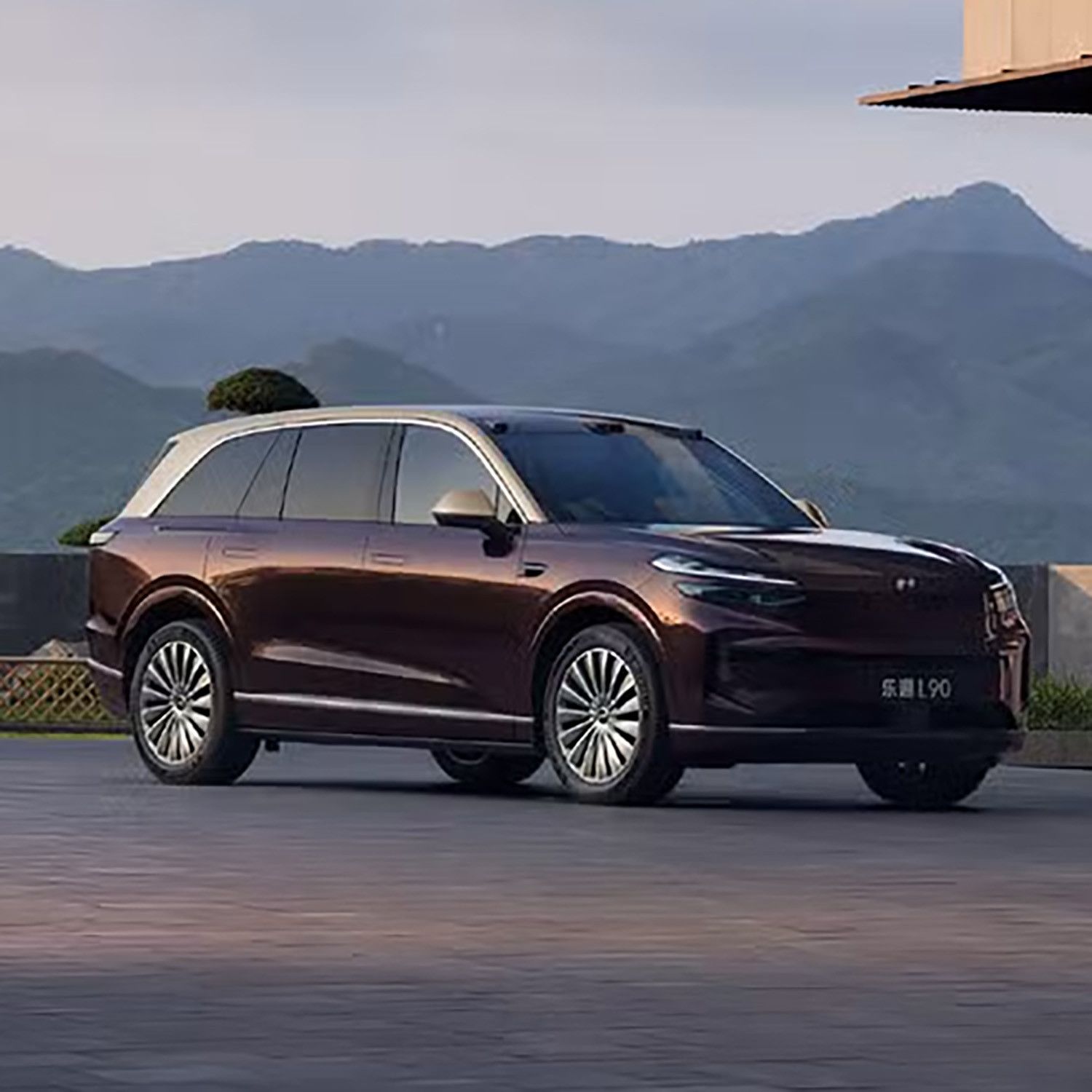
CHINA: ONVO L90 Fights Back, Xiaomi YU7 Fades and BYD 16 Million Milestone | 20 Apr 2026
About this episode
Capital One’s “Chat Concierge” is highlighted as real, deployed multi-agent AI for car shopping—helping buyers pick vehicles, schedule test drives, get financing pre-approval, and estimate trade-in value via live API checks. China auto news then focuses on Envo’s 2026 L90 comeback in the three-row SUV battleground, with hardware upgrades (LiDAR and Neo 2.0 software) and a 1,250-mile ADAS endurance proof—while early buyers face no retrofits. Neo’s ES8 hits 100k third-gen sales. Xiaomi’s YU7 demand cools after peak hype. BYD celebrates 16 million EVs, leans on overseas growth, launches Yuanpro DMI in Mexico, expands in Europe via ACEA bid, and pushes LiDAR and supercharging partnerships. CATL teases its next tech roadmap.
You can read all the latest news on the blog here: https://EVne.ws/blog
Subscribe for free and listen to the podcast on audio platforms:
➤ Apple: https://EVne.ws/apple
➤ YouTube Music: https://EVne.ws/youtubemusic
➤ Spotify: https://EVne.ws/spotify
➤ TuneIn: https://EVne.ws/tunein
➤ iHeart: https://EVne.ws/iheart
2026 ONVO L90 ADDS LIDAR AND SHENJI https://evne.ws/4tmmT2b
THIRD-GEN NIO ES8 HITS 100,000 https://evne.ws/4cnrJGt
XIAOMI DELIVERIES HOLD, BUT YU7 MOMENTUM FADES https://evne.ws/41Jk3Is
BYD HITS 16 MILLION NEVS https://evne.ws/41LKkG1
BYD LAUNCHES YUAN PRO DM-I IN MEXICO https://evne.ws/4tFuER7
BYD SEEKS ACEA MEMBERSHIP https://evne.ws/48eH7lT
HESAI SHIFTS LIDAR FIGHT TO PERCEPTION https://evne.ws/3OC6jMt
AITO JOINS BMW-MERCEDES CHARGING VENTURE https://evne.ws/4tXJ4eL
JETTA X PREVIEWS CHINA ELECTRIFICATION SHIFT https://evne.ws/4cmqFCI
CATL SETS APRIL 21 TECH LAUNCH https://evne.ws/4vGbUCf
multi-agentic AI
"Capital One's tech team isn't just talking about multi-agentic AI. [5.2s] They are already deployed one."
It means the AI isn’t one simple chatbot. Instead, it uses multiple parts working together to help with a task—here, helping you shop for a car.
“Multi-agentic AI” refers to AI systems made up of multiple cooperating “agents” that can plan, reason, and take actions toward a goal. In this context, it’s being used to support car-shopping tasks rather than just answering questions.
Capital One
"Capital One's tech team isn't just talking about multi-agentic AI. [6.7s] It's called Chat Concierge, and it's simplifying car shopping."
Capital One is using its own technology team to deploy an AI product called “Chat Concierge” aimed at simplifying car shopping. The segment highlights how financial services companies are moving into the car-buying workflow (like financing and trade-in estimates).
Chat Concierge
"It's called Chat Concierge, and it's simplifying car shopping. [10.5s] Using self-reflection and layered reasoning with live API checks, it doesn't just help buyers find a car they love."
Chat Concierge is like an AI helper for buying a car. It can help you pick a car, set up a test drive, and even start financing and trade-in estimates.
“Chat Concierge” is an AI assistant designed to streamline car shopping by combining reasoning with live API checks. It’s used for practical steps like scheduling test drives, getting pre-approved for financing, and estimating trade-in value.
live API checks
"Using self-reflection and layered reasoning with live API checks, it doesn't just help [15.5s] buyers find a car they love."
It means the AI looks up current information from other systems while it’s helping you. So it’s not guessing based only on what it already knows.
“Live API checks” means the AI consults real-time data through application programming interfaces (APIs) while it’s answering or taking actions. For car shopping, that can translate into up-to-date inventory, pricing, eligibility, or financing/trade-in information.
pre-approved for financing
"It helps schedule a test drive, get pre-approved for financing, and estimate trading value."
Pre-approved financing means a lender checks you ahead of time and tells you what kind of loan you could get. It helps you know your budget before you choose the car.
“Pre-approved for financing” is an early step where a lender evaluates your credit and conditions you for a loan before you pick the exact vehicle. In car shopping, it can speed up the purchase process and clarify your budget.
technology roadmap
"Later in the show, I'll tell you why CATL is going on the offensive with their latest technology roadmap."
A “technology roadmap” is a planned sequence of future technology developments—what will be improved, when, and how it will be implemented. In the battery industry, it often indicates upcoming changes in cell design, manufacturing processes, and performance targets.
2026 Envo L90
"We'll start with the 2026 Envo L90 goes on sale tomorrow. That's just 264 days after the original debut."
The Envo L90 is a new electric SUV that’s coming in 2026. The hosts are talking about how it launched fast, sold well for a bit, and then faced tougher competition from other SUVs.
The Envo L90 is an upcoming 2026 electric SUV positioned as a large, three-row, six-seat family vehicle. In this segment, the hosts focus on how quickly it moved from debut to sales momentum—and then how rival models pulled demand away.

Nio ES8
"... as rival models surged into the market. The Neo ES8 launched as well, both caught into demand for the..."
The Nio ES8 is an electric SUV, meaning it runs on electricity instead of gasoline. It’s made for everyday driving with room for passengers and cargo. It comes up in EV discussions because it’s one of Nio’s main models and its sales can show how well Nio is doing.
The Nio ES8 is a full-size electric SUV built by Nio, known for targeting families and buyers who want a comfortable, feature-rich EV package. It’s often discussed in EV news because Nio’s lineup and sales momentum can reflect how quickly new EV brands are gaining traction in competitive markets. In the podcast context, it’s mentioned alongside the idea of rival models arriving and demand shifting as new vehicles launch.
Neo
"It also moves into the Neo model of 2.0 ecosystem. So Neo's data shows navigates on pilot, NOP plus usage, on World Model 2 vehicles, climbing 11% month on month in March last month, which gives Envo a simple sales pitch."
Neo is referenced here as the platform/ecosystem behind Envo’s software and data, including its “World Model” approach for navigation and driver-assistance. The segment implies Neo’s internal tech and usage data are part of Envo’s sales argument for the L90 refresh.
World Model 2.0
"So Neo's data shows navigates on pilot, NOP plus usage, on World Model 2 vehicles, climbing 11% month on month in March last month..."
World Model 2.0 is the car’s software “mental map” of what’s happening around it. The idea is that the car can plan and drive more confidently because it understands the road better.
“World Model 2.0” refers to a vehicle software concept where the car builds an internal, continuously updated understanding of the environment (the “world”) to support navigation and driver-assistance. In this segment, it’s tied to improved usage metrics and an endurance test meant to validate real-world urban and highway capability.
navigates on pilot
"So Neo's data shows navigates on pilot, NOP plus usage, on World Model 2 vehicles, climbing 11% month on month in March last month..."
“Navigates on pilot” means the car can use its navigation route while also handling some driving tasks. The hosts are using it as evidence that people are actually using the tech.
“Navigates on pilot” is a marketing term for an advanced driver-assistance feature that combines navigation with automated driving functions. The segment uses it to argue that software engagement is rising on World Model 2.0-equipped vehicles.
pure electric all ADAS endurance challenge
"It just ran a 1,250 mile pure electric all ADAS endurance challenge. So they were allowed to stop."
This is a long test where the EV runs for a huge distance to show it can keep working reliably. They’re also checking that the car’s driver-assist features (ADAS) perform well over time.
An “endurance challenge” is a long-duration, high-mileage test meant to prove durability and consistent performance. Here, it’s specifically “pure electric” and focused on ADAS (advanced driver-assistance systems), using the results as evidence that the software stack can handle both urban and highway conditions.
battery swaps
"They stopped for a driver swap and battery swaps. The test serves as live proof of concept for the urban and highway capability of Neo's World Model 2.0."
Battery swapping means you replace the car’s battery with a fully charged one instead of waiting for charging. In this test, they used swaps to keep the EV running for a very long distance.
Battery swapping is a service model where a depleted EV battery is exchanged for a charged one at a station, reducing charging time. The endurance test described here includes battery swaps, suggesting the company is validating operational practicality for long-distance EV use.
NOA Navigate
"Envo has offered them a five-year NOA Navigate on autopilot credit, but it's ruled out any kind of hardware retrofitting."
NOA Navigate is a feature that helps the car drive more automatically while you’re following a route. The catch here is that if your car doesn’t have the right parts, the company won’t be able to add the full capability later.
NOA Navigate refers to a navigation-based driver-assistance function that can guide the car along a route with automated lane/route handling. In this segment, it’s offered as a credit for early adopters, but the upgrade is constrained by the need for specific hardware.
hardware retrofitting
"Envo has offered them a five-year NOA Navigate on autopilot credit, but it's ruled out any kind of hardware retrofitting. The firm says the upgrade can't be done through a chip swap."
Hardware retrofitting is when you try to add missing car parts after purchase. Here, Envo is saying you can’t just update the software—you’d need new physical components, which they won’t do as an upgrade.
Hardware retrofitting means adding or replacing physical components (like sensors, modules, or wiring) after the car has already been sold. The segment highlights that Envo’s NOA-related upgrade cannot be achieved just by software changes.
chip swap
"The firm says the upgrade can't be done through a chip swap. It says the earlier model would need things like new wiring harnesses, new sensors, new modules."
A chip swap would mean changing one computer part to unlock a new feature. Envo is saying it doesn’t work like that—so the car needs more than just a simple replacement.
A chip swap is the idea that you can upgrade an advanced driver-assistance system by replacing a single computer chip. The transcript says Envo’s upgrade isn’t possible that way, implying the capability depends on a broader set of hardware components.
wiring harnesses
"It says the earlier model would need things like new wiring harnesses, new sensors, new modules. Replace all that, and you might as well just build a new one from scratch."
Wiring harnesses are the car’s electrical “cables and connectors” that let different parts talk to each other. If the new system needs different connections, you may have to replace a lot of wiring, not just update software.
Wiring harnesses are bundles of wires that connect sensors, control modules, and the vehicle’s electronics. The segment uses them to explain why a hardware upgrade can’t be done cheaply—if the harnesses don’t match the new system, you need major rework.
sensors
"It says the earlier model would need things like new wiring harnesses, new sensors, new modules. Replace all that, and you might as well just build a new one from scratch."
Sensors are the car’s “eyes and ears” for detecting lanes, vehicles, and obstacles. If the sensors aren’t the right ones, the advanced driving feature can’t work properly, even if you update software.
Sensors are the perception hardware (e.g., cameras/radar/ultrasonic units depending on the system) that feed data to driver-assistance computers. The transcript implies the earlier Envo model lacks the sensor set required for the newer NOA capability.
modules
"It says the earlier model would need things like new wiring harnesses, new sensors, new modules. Replace all that, and you might as well just build a new one from scratch."
Modules are specialized computers inside the car that run different tasks. If the car’s existing modules aren’t compatible with the new feature, you can’t just turn it on—you may need new hardware.
Modules are dedicated electronic control units that handle specific functions (like perception processing, vehicle control, or communication). The segment suggests the earlier hardware platform needs new modules to support the upgraded driver-assistance feature.
product cycle frustration after a new generation launches
"And a lot of buyers are very frustrated when they get their dream car, and then a day later, the company releases the new one. So L90 from Envo is on sale tomorrow."
This is the problem where you buy a car, and then the company releases a newer version very soon after. It can feel unfair because your car may be “old” almost immediately, even if it’s still new to you.
The transcript describes a common EV/tech-car issue: buyers purchase a “current” model, then a new generation arrives almost immediately. This creates frustration because features, value, or specs may improve in the newer version right after delivery.
Neo ES8
"The third generation ES8 from Neo, which is what I just alluded to, by the way, just hit 100,000 sales of third-gen ES8. It got its 90,000th delivery on the 3rd of April..."
The Neo ES8 is a big electric SUV with three rows of seats. This episode segment is about how Neo improved the newer version and how that helped sales and the company’s finances.
The Neo ES8 is a large, three-row electric SUV, and the segment focuses on its sales momentum and product cycle. The host discusses the shift from second generation to third generation, emphasizing that the third-gen ES8 is cheaper, bigger, and has driven Neo’s financial recovery.
Neo ES9
"Neo relies on the continued strength of ES8 and the forthcoming ES9 as well. But, like I say, the impressive stuff around China speed is sometimes a reason for pushback from existing buyers."
The Neo ES9 is a future electric vehicle Neo plans to sell. The point here is that Neo expects the ES9 to help keep sales and growth going.
The Neo ES9 is discussed as an upcoming model that Neo is counting on for future volume. The host frames it as part of Neo’s strategy to maintain momentum after current demand levels.

Xiaomi YU7
"Xiaomi Auto are continuing to deliver good numbers of the YU7, and Xiaomi delivered over 20,000 units in March last month in line pretty much with February. The total suggests a steady output, and a shift in their mix as the YU7 just comes off a little bit of the boil."
The Xiaomi YU7 is Xiaomi’s electric vehicle being tracked for how many cars it’s delivering. The podcast is saying its sales momentum has changed, even though production is still fairly steady.
The Xiaomi YU7 is described with delivery performance and how its sales momentum has shifted. The host notes that YU7 output is steady but that it’s “no longer doing it,” implying demand has cooled versus earlier expectations.

Xiaomi SU7
"The Su7, that's the new sedan, recorded more than 7,000 deliveries in nine days after its launch on the 23rd of March. That gave Xiaomi a fresh source of volume in March."
The Xiaomi SU7 is Xiaomi’s new sedan. The podcast is emphasizing that it sold a lot very quickly after launch, which helped Xiaomi’s overall numbers.
The Xiaomi SU7 is called “the new sedan” and is highlighted for a surge in deliveries shortly after launch. The host uses SU7’s early sales to explain why Xiaomi had fresh volume in March.
firm orders vs. hand raises
"The YU7 launched on the 18th of June last year at 253,000 RMB. It generated 200,000 orders, not interested sort of hand raises, but 200,000 firm orders. I think it was in something like the first three minutes..."
Not all customer interest turns into real purchases. The podcast is saying they’re talking about serious, committed orders—not just people saying they’re interested.
The host distinguishes “firm orders” from casual interest (“hand raises”), emphasizing that only committed orders matter for forecasting production and revenue. This is especially important in EV launches where marketing can inflate early attention.
delivery wait times
"It generated 200,000 orders, not interested sort of hand raises, but 200,000 firm orders... Early demand stretched the delivery wait times to up to 56 weeks at one point for some trims."
When a lot of people order a new EV at once, the factory can’t always deliver immediately. That’s why wait times can become very long, depending on trim and production capacity.
The segment discusses how early demand can stretch delivery wait times dramatically, even to “up to 56 weeks” for certain trims. This is a key business signal: strong orders can create capacity bottlenecks and customer frustration.
backlog
"Total YU7 vehicles, over 200,000 units in February, suggesting Xiaomi had worked through a lot of the backlog."
A backlog is a pile of orders waiting to be built and delivered. If a company clears that backlog, more cars can reach customers sooner, and waiting gets shorter.
A backlog is the set of orders that haven’t been fulfilled yet. When deliveries rise while wait times fall, it often indicates the manufacturer is working through earlier demand that accumulated before production ramped up.
Goldman Sachs
"Goldman Sachs data from early March estimated Xiaomi's weekly orders at roughly 4,000 units across all models, implying a monthly YU7 total below 20,000."
Goldman Sachs is a big financial firm that does market research. In this segment, they’re used as a source to estimate how many cars Xiaomi might be selling each week.
Goldman Sachs is a major investment bank whose research estimates can influence how markets interpret EV demand. Here, the hosts cite Goldman Sachs data to infer weekly orders and project a lower monthly total for the Xiaomi YU7.
dealer network
"It said Xiaomi had not yet built a mature dealer network or a conventional sales infrastructure, somewhat implying, I guess, that a lot of that early heat was all down to the kind of fever pitch around the brand"
A dealer network is the traditional web of dealerships that sells and services cars, handles test drives, and supports customers after purchase. The hosts suggest Xiaomi didn’t have a mature dealer network early on, which can limit sales reach compared with brands that rely on conventional retail infrastructure.
16 millionth EV milestone
"They rolled its 16 millionth EV off the production line three days ago... BYD reached 16 million EVs four months after hitting 15 million EVs."
They’re celebrating a huge production number: BYD’s 16 millionth electric vehicle. It matters because it suggests the company can build EVs at large scale, not just in small quantities.
The “16 millionth EV” milestone is a production-volume benchmark that signals how far BYD has scaled EV manufacturing. It’s also used as a marketing and credibility marker, implying the company has moved beyond early-stage growth into mass production.
second-generation Denzer D9
"Last Friday, 17th of April, the car was the world's first second-generation Denzer D9. And that matters less than a milestone."
“Second-generation” means this is a newer, updated version of the Denzer D9. Usually that kind of change brings improvements—like better efficiency or charging—compared with the earlier model.
“Second-generation” indicates a redesign or major update over the prior Denzer D9, typically involving improvements to efficiency, software, and/or battery and charging performance. The segment frames it as a notable “first” at the same time as BYD’s milestone, suggesting the update is part of a broader product push.

D9 Denzer
"..., the car was the world's first second-generation Denzer D9. And that matters less than a milestone."
The D9 is a vehicle model, and the podcast is specifically calling out that this is a second-generation version. “Second-generation” usually means it’s an updated version of the earlier model. The episode mentions it because that update is a key milestone.
The D9 referenced in the podcast is described as the world’s first second-generation Denzer D9, and the “second-generation” point is the milestone being highlighted. That typically matters because a next-generation model can bring updated engineering, software, and overall refinement compared with the original. It’s discussed as a notable step forward in the vehicle’s development rather than just as another new release.
pre-sales
"The second-generation Denzer D9 opened for pre-sales on the 29th of March. You can either get a plug-in hybrid or a pure electric."
Pre-sales mean you can place an order before the car is actually delivered. Companies do this to measure demand and start selling early.
Pre-sales are when a manufacturer opens orders before the vehicle is fully delivered, often to gauge demand and secure early customers. The segment uses the March 29 pre-sales start date to show how quickly the second-generation Denzer D9 is being rolled out.
plug-in hybrid
"You can either get a plug-in hybrid or a pure electric. Six different configurations."
A plug-in hybrid is a car that can run on electricity, but it also has a gas engine as backup. You can charge it by plugging it in, and that changes how you plan your trips.
A plug-in hybrid (PHEV) uses both an electric motor and a conventional engine, and it can be charged from an external power source. The segment notes the Denzer D9 can be ordered either as a plug-in hybrid or as a pure electric model, which affects range and charging strategy.
DiPilot 5 Intelligent Drive Resistance System
"BYD packed it with its Dipilot 5 Intelligent Drive Resistance System and its second-generation Blade Battery."
DiPilot 5 is BYD’s set of advanced driving features. The host is saying it’s part of what makes the car feel more “intelligent,” but the exact details are tied to BYD’s own system naming.
DiPilot 5 is BYD’s driver-assistance/software platform, and the segment describes it as an “Intelligent Drive Resistance System.” That wording suggests a focus on how the vehicle manages driving behavior and energy use through control systems, though the exact meaning depends on BYD’s specific feature definitions.
Blade Battery
"BYD packed it with its Dipilot 5 Intelligent Drive Resistance System and its second-generation Blade Battery. That's the one with ultra-fast charging capability."
BYD’s Blade Battery is the company’s battery design. In this segment, they’re saying it supports very fast charging, so the car can refill energy quicker than some other EVs.
BYD’s Blade Battery is a battery design intended to improve safety and packaging efficiency compared with some older lithium-ion layouts. Here it’s specifically tied to “ultra-fast charging capability,” meaning the car is marketed as able to charge quickly at compatible stations.
ultra-fast charging capability
"That's the one with ultra-fast charging capability. The production marker comes at an awkward moment at home, though."
Ultra-fast charging means the car can charge quickly. But how fast it actually goes depends on the charger and the battery’s condition at the time you plug in.
“Ultra-fast charging capability” refers to the ability to accept high charging power, reducing time spent at charging stations. In practice, the real-world speed depends on the car’s battery management, the charger’s output, and whether the battery is preconditioned for fast charging.
year-on-year sales decline
"In China, BYD sold roughly 300,000 vehicles in March, and that was down 24% year-on-year."
“Down 24% year-on-year” means sales were 24% lower than the same time last year. It’s a way to see whether demand is improving or slipping, not just what happens seasonally.
A “down 24% year-on-year” figure compares this month’s sales to the same month in the prior year, helping isolate trends from seasonal effects. The segment pairs the big production milestone with weaker March sales, highlighting the difference between manufacturing scale and near-term market demand.
BYD
"Overseas, the picture is different for BYD. March, international passenger vehicle and pickup sales approaching 120,000,"
BYD is a big Chinese company that makes EVs and batteries. The hosts are saying BYD’s sales outside China are growing fast and helping the whole market compete globally.
BYD is a major Chinese EV and battery manufacturer, and the hosts use its sales performance to illustrate how overseas expansion is changing the competitive landscape. In this segment, BYD’s international growth is framed as a “driver” not only for BYD but also for competitors.

BYD Shark 6
"That was a Shark 6 premium, in case you're wondering."
BYD’s “Shark 6” is the specific model they say helped BYD hit a big sales milestone in Australia. The hosts are basically using it as an example of which BYD car is selling well overseas.
BYD Shark 6 is a BYD-branded premium vehicle mentioned as the model that reached BYD’s 100,000th delivery in Australia. In this context, it’s used to illustrate BYD’s rapid market penetration outside China.
supercharging
"Very high-performance LiDAR coming out of China and some supercharging."
“Supercharging” refers to fast-charging infrastructure and/or fast-charging capability for EVs, typically using high-power DC charging. The term matters because charging speed and network availability strongly affect real-world EV usability and adoption.
estimate trading value
"It helps schedule a test drive, get pre-approved for financing, and estimate trading value."
Estimating trade-in value is figuring out what your current car might be worth if you trade it in. Getting a good estimate helps you understand the real cost of the new EV sooner.
Estimating trade-in value is the process of forecasting how much a dealer or platform will offer for your current vehicle. For EV shoppers, accurate trade-in estimates can materially affect the effective price and monthly payment, influencing conversion rates.
BYD Yuanpro DMI
"Our second BYD story today. BYD's launched the Yuanpro DMI. That's their plug-in hybrid in Mexico."
BYD Yuanpro DMI is a plug-in hybrid SUV BYD is selling in Mexico. It’s meant to feel like an EV when you drive, but still go farther without relying only on charging.
BYD Yuanpro DMI is a plug-in hybrid SUV launched in Mexico as part of BYD’s push into the country’s premium compact SUV market. The episode says it uses BYD’s DMI Super Hybrid platform and is positioned to offer EV-like driving feel with more range and low fuel consumption.
DMI Super Hybrid platform
"The Yuanpro DMI sits on BYD's DMI Super Hybrid platform. BYD says it combines all the best of EV driving characteristics"
DMI Super Hybrid platform is BYD’s design for how its plug-in hybrid system works. The goal is to make the car drive more like an EV, while still using fuel when needed.
DMI Super Hybrid platform is BYD’s hybrid system architecture that’s designed to blend EV driving characteristics with hybrid range. In this episode, it’s specifically tied to the Yuanpro DMI’s promise of more range and low fuel use.
NEDC standards
"with more range and low fuel consumption under NEDC standards. They say combined range of 1,045 kilometers."
NEDC standards are a lab test method used to estimate things like range and fuel economy. Your real-world results can be different, so it’s good to treat these numbers as estimates.
NEDC (New European Driving Cycle) is a standardized test procedure used to estimate vehicle range and fuel/energy consumption. The episode notes the Yuanpro DMI’s low fuel consumption and range “under NEDC standards,” which matters because real-world results can differ depending on conditions and the testing method.
ACEA
"BYD has actually applied for membership to the European Automobile Manufacturers Association, or ACEA. If you hear me talk about it on the main EV News Daily podcast."
ACEA (the European Automobile Manufacturers Association) is an industry group that represents automakers in discussions with European institutions. If BYD joins, it would be the first Chinese automaker in the organization, giving it more direct influence in policy and industry conversations.
membership in an industry association
"If you give a market like Mexico more range, more choice, and a wider net... BYD has actually applied for membership to the European Automobile Manufacturers Association, or ACEA."
Joining an industry group isn’t just a badge—it can help a company influence rules and build connections. For BYD, it’s a way to get closer to European decision-makers as it grows in Europe.
Industry association membership can matter because it shapes how manufacturers coordinate positions on regulation, standards, and lobbying. For a company expanding internationally, joining a major European group can be a strategic move to build relationships and credibility with local stakeholders.
European Automobile Manufacturers Association
"BYD has actually applied for membership to the European Automobile Manufacturers Association, or ACEA. If you hear me talk about it on the main EV News Daily podcast."
This is the full name of ACEA, a major European auto industry group. It’s the organization that helps automakers communicate with EU policymakers.
The European Automobile Manufacturers Association is ACEA’s full name and represents automakers across Europe. The segment emphasizes that ACEA is the channel through which the industry engages with EU institutions.
Volkswagen
"The move puts BYD closer to the firms it fights with, like Volkswagen and Stellantis."
Volkswagen is one of Europe’s biggest car companies. The segment uses it as an example of the kind of established automakers BYD is trying to get closer to.
Volkswagen is referenced as one of the European firms BYD would be “closer to” by joining ACEA. The point is competitive positioning: BYD wants a seat at the same table as established European automakers.
Stellantis
"like Volkswagen and Stellantis. BYD says as the largest seller of electric vehicles"
Stellantis is a large European car group. The hosts mention it to show BYD wants to be part of the same industry conversations as the big European players.
Stellantis is mentioned alongside Volkswagen as a major European automaker BYD would be aligning with through ACEA membership. This highlights how BYD is moving from outsider to participant in European industry discussions.

BYD Dolphin Hatchback
"BYD says as the largest seller of electric vehicles and maker of cars like the Dolphin Hatchback, doing very well in places like Germany,"
The BYD Dolphin is one of BYD’s popular electric cars. The hosts mention it to show BYD isn’t just arriving in Europe—it already sells there.
The BYD Dolphin Hatchback is one of BYD’s well-known electric models, often cited as a volume seller in Europe. In this segment, it’s used to support the claim that BYD is already doing well in markets like Germany.
manufacturing plant in Hungary
"also building out its first manufacturing plant in Hungary,"
Building a manufacturing plant in Hungary signals BYD’s strategy to localize production for European demand. Local manufacturing can reduce logistics costs, improve supply-chain responsiveness, and support compliance with regional trade and regulatory requirements.
EU tariffs
"A local output in Hungary will help BYD avoid EU tariffs, and of course, entering a whole new political environment in Hungary as well after their sweeping election changes over the last couple of weeks."
Tariffs are extra taxes on imported goods. If a company makes cars inside Europe (like in Hungary), it can sometimes avoid or reduce those extra taxes when selling into the EU.
EU tariffs are import taxes the European Union can apply to vehicles or components coming from outside the EU. BYD building cars in Hungary is discussed as a way to reduce exposure to those tariffs by shifting production closer to the EU market.
LiDAR
"Now, let's talk a little bit about LiDAR, which has come down in price so much, that is, well, almost a standard on many very affordable cars in China now."
LiDAR is a sensor that shoots out laser pulses and measures how far away things are. It helps the car “see” the world in 3D, and the episode says it’s getting cheaper and more common on EVs.
LiDAR (Light Detection and Ranging) uses laser pulses to measure distances and build a detailed 3D map of the road environment. The hosts note LiDAR has dropped in price and is becoming common on affordable cars in China, and they discuss how the market is shifting from spec-sheet metrics toward what the sensors actually do.
HESI Technology
"A tech day by HESI Technology last week used the opportunity to unveil two new LiDAR products."
HESI Technology is a company making LiDAR sensors. They held an event to show off new versions of their products, which matters because LiDAR is becoming more common in EVs.
HESI Technology is presented as the company behind a “tech day” where it unveiled two new LiDAR products. The segment uses this as an example of how LiDAR suppliers are iterating quickly as demand grows.
Picasso SPAD system on a chip
"The Picasso SPAD system on a chip and the ETX platform. So what's it all about?"
This is a specific kind of LiDAR sensor design. It uses tiny light detectors (SPADs) built into a chip to help the LiDAR measure distances more effectively.
The “Picasso SPAD system on a chip” refers to a LiDAR sensor architecture built around SPADs (single-photon avalanche diodes) integrated on a chip. The segment frames it as a newer approach compared with older LiDAR designs, aimed at improving real-world sensing rather than just headline specs.
ETX platform
"The Picasso SPAD system on a chip and the ETX platform. So what's it all about?"
ETX is another LiDAR product platform mentioned in the segment. Think of it as a packaged system approach to building LiDAR sensors for vehicles.
The ETX platform is mentioned as one of two new LiDAR offerings unveiled by HESI Technology. In the context of the episode, it represents the broader hardware/software platform approach suppliers are taking as LiDAR becomes more mainstream.
line count
"and so in LiDAR, that is line count, which is, it's a number, it's a bit like processor speed, if you like, and they say that's less important than what sensors actually do."
Line count is a number LiDAR companies use to describe how many laser lines the sensor can scan. The episode says buyers are starting to care less about that one number and more about how well the system works on the road.
In LiDAR marketing, “line count” is a spec that describes how many laser scan lines the unit can produce. The hosts argue the market is moving away from this single number (analogous to “processor speed”) toward performance that reflects what the sensors can actually do in real driving.
Level 3 autonomous policies
"LiDAR penetration in China's EV markets now over 11%. At the same time, wider Level 3 autonomous policies have raised the bar."
Level 3 is a step toward self-driving where the car can do most of the driving in certain situations. The episode suggests that as rules allow more Level 3 use, the sensors have to be better and more dependable.
Level 3 refers to a higher automation tier where the vehicle can handle most driving tasks under certain conditions, but the driver must be ready to take over. The segment says broader Level 3 policies raise the bar for sensors like LiDAR, because systems must be reliable enough to meet regulatory and safety expectations.
point clouds
"Conventional systems capture three spatial dimensions... they produce monochrome point clouds... their new chip combines color sensing... outputs native 60 point clouds."
A point cloud is basically a 3D “dot map” of what the LiDAR sees. More information per dot (like color) can help the car tell different objects apart.
A point cloud is the set of distance measurements that LiDAR turns into a 3D representation of the scene. The transcript contrasts monochrome point clouds (geometry only) with “full-color” point clouds that also include RGB information.
time of flight ranging
"To answer that, their new chip combines color sensing and time of flight ranging at chip level and outputs native 60 point clouds."
Time-of-flight is how the sensor measures distance using timing—send a pulse, measure the return time, and calculate how far away the object is. It’s one of the core ways LiDAR figures out depth.
Time-of-flight (ToF) ranging measures distance by timing how long a light pulse takes to travel to an object and back. Combining ToF with other sensing (like color) can improve both depth accuracy and object classification.
spec sheet battle vs real-world perception
"Although they said that we should no longer be judging the LiDAR race in terms of a pure spec sheet battle, they were very keen to then announce their spec sheet battle as the winner."
This is the argument about whether you should judge sensors by numbers on paper or by how well they actually work in driving. The company says specs don’t tell the whole story, but then still uses specs to prove its advantage.
The segment highlights a common debate in sensor tech: whether performance should be judged by headline specs (like lines, density, and range) or by real-world perception outcomes. The hosts note the company both criticizes spec-sheet-only comparisons and then uses spec-sheet numbers to argue it’s the winner.
detection range
"Hesai said that the ETX technology reaches a maximum detection range of 600 meters and that it can detect objects with 10% reflectivity at 400 meters."
Detection range is the maximum distance where the sensor can still “see” objects clearly. It matters a lot because some objects (like dark surfaces) reflect less light, making them harder to detect.
Detection range is how far the LiDAR can reliably detect objects under specified conditions. The segment cites maximum range and performance on low-reflectivity targets (objects that don’t bounce much light back), which is critical for real-world perception.
reflectivity
"...detect objects with 10% reflectivity at 400 meters."
Reflectivity is how “bright” an object looks to the laser—how much of the light bounces back. Dark or matte objects reflect less, so the sensor has to work harder to detect them.
Reflectivity describes how much light an object reflects back to the sensor. Low-reflectivity targets are harder for LiDAR to detect, so performance claims at low reflectivity are often used to indicate robustness in real-world conditions.
Mass production deliveries
"The next test will come off of the stage and spec sheet and onto the road. Mass production deliveries, second half of this year, they say, and broad deployment across multiple flagship models in 2027."
This is basically the point where something goes from testing to being built in large numbers. It’s the difference between a concept and something you can realistically get soon.
“Mass production deliveries” refers to when a vehicle or technology moves from prototypes and limited runs into full-scale manufacturing. The timing matters because it indicates when consumers can actually buy and use the system.
BMW Mercedes
"Now, Aito is joining BMW Mercedes and their supercharging venture. Aito has joined Ionchi Energy, the premium supercharging joint venture set up in China by BMW Mercedes-Benz announcing the move last week on April 17th."
BMW and Mercedes-Benz are partnering here for charging. The point is to make it easier for their customers to access fast chargers with similar benefits.
The transcript refers to a supercharging venture involving BMW and Mercedes-Benz. This matters because it signals collaboration between major luxury brands to standardize or share charging access and service levels.
Ionchi Energy
"Aito has joined Ionchi Energy, the premium supercharging joint venture set up in China by BMW Mercedes-Benz announcing the move last week on April 17th. Ionchi Energy was founded in 2024 as a 50-50 partnership between the two German companies."
Ionchi Energy is a charging network company in China. It’s a joint project between major German automakers, and it’s expanding by adding Aito so more drivers can use the same charging setup.
Ionchi Energy is described as a premium supercharging joint venture in China. It’s set up as a 50-50 partnership between BMW and Mercedes-Benz, and after Aito joined, the ownership becomes split into thirds.
liquid-cooled chargers
"it deploys high-powered liquid-cooled chargers at sites in urban business districts and along major transport corridors."
Some chargers use liquid cooling to keep everything from overheating when they’re delivering lots of power. That helps the charger stay reliable and fast for more vehicles.
Liquid-cooled charging equipment uses a coolant loop to manage heat during high-power charging. Cooling helps maintain performance and protects components under heavy use, especially at fast-charging sites.

Porsche charging stations
"unless you are part of a brand, perhaps, like the Porsche charging stations, which are exclusive to them in parts of Europe, where your car registration plate will raise the barrier upon entry."
They’re describing a Porsche-only charging setup in some European areas. Your car can be recognized automatically (via your plate), and that unlocks access so Porsche drivers can pull in.
The segment describes Porsche’s charging network approach as brand-exclusive in parts of Europe. It includes an access mechanism tied to the car’s registration plate, which can automatically raise a barrier when the system recognizes Porsche Club membership.

Volkswagen Jetta
"Volkswagen's Jetta brand has previewed its Jetta X concept, a sign of a wider shift towards electrification... Teaser images point to being an SUV, or at least a crossover shape as well... and they'll disclose the powertrain details."
Volkswagen is showing a “concept” version of a new Jetta model called the Jetta X. A concept car is basically a preview of what a future production car could look like and how it might drive.
Volkswagen’s Jetta X concept is a preview of a future electrified Jetta-branded model. The hosts suggest it will likely be an SUV/crossover and that Volkswagen will reveal powertrain details soon.
BEV
"...electrified options like BEV and plug-in hybrid, or EREV, are most likely."
BEV means the car runs only on electricity from a battery. You have to charge it, usually at home or at public chargers.
BEV stands for Battery Electric Vehicle, meaning the car is powered only by electricity stored in a battery. There’s no gasoline engine, so charging infrastructure and charging speed become central to ownership.
EREV
"...electrified options like BEV and plug-in hybrid, or EREV, are most likely."
EREV vehicles are mostly electric to drive, but they have a backup system that helps keep going when the battery gets low. It’s not the same as a normal hybrid because the wheels are still driven electrically.
EREV stands for Extended-Range Electric Vehicle. It’s primarily driven by an electric drivetrain, but it uses a generator (often from a small engine) to extend range when the battery runs low.
CATL
"And finally, CATL will host a launch event tomorrow evening time... It's billed the show as its most tech intensive launch today... CATL highlighting their sodium ion technology."
CATL is one of the biggest EV battery companies in the world. In this segment, they’re talking about new battery tech that aims to charge faster and work better even in very cold weather.
CATL (Contemporary Amperex Technology) is a major Chinese battery manufacturer and a key player in EV supply chains. The segment highlights CATL’s event and its battery technologies, including claims about range, fast charging, and cold-weather performance.
Kirin battery
"CATL has listed their achievements in the build-up to this event, the Kirin battery, a thousand kilometers of range when installed."
CATL is talking about a battery they call the “Kirin battery.” The idea is that it’s designed to help EVs go farther on a charge.
The “Kirin battery” is CATL’s branded battery platform mentioned in the segment. The hosts associate it with very long real-world driving range when installed, positioning it as a flagship technology for EVs.
Shenzhen battery
"...the Kirin battery... The Shenzhen battery, adding 400 kilometers of range in 10 minutes."
CATL also mentions a “Shenzhen battery,” which they’re claiming can add a lot of driving range quickly. It’s basically a battery/charging-focused technology pitch.
The “Shenzhen battery” is another CATL-branded battery technology referenced here, tied to rapid charging claims. The segment frames it as adding a large amount of range in a very short time.
sodium ion technology
"CATL highlighting their sodium ion technology. The company said it maintains 90% capacity at minus 40 degrees Celsius."
Sodium-ion batteries are an alternative to lithium-ion batteries. The big selling point mentioned here is that they’re supposed to keep working well even when it’s extremely cold.
Sodium-ion technology uses sodium-based battery chemistry instead of the more common lithium-ion. The segment emphasizes CATL’s claim that it retains high capacity even at very low temperatures.
minus 40 degrees Celsius cold-weather capacity
"The company said it maintains 90% capacity at minus 40 degrees Celsius. That is extreme cold weather."
In very cold weather, EV batteries often don’t work as well. This claim is about how much battery power you still have when it’s as cold as -40°C.
Cold-weather capacity retention is how much usable battery energy remains when temperatures drop. EV batteries can lose performance in the cold due to slower electrochemical reactions and increased internal resistance, so maintaining capacity at -40°C is a major engineering goal.
1,500 kilowatt flash charging technology
"...their 1,500 kilowatt or 1.5 megawatt flash charging technology."
Flash charging is the idea of charging an EV super fast. The hosts mention an extremely high charging power number to show how aggressive the target is.
“Flash charging” refers to extremely rapid EV charging intended to add substantial energy in a very short time. The segment cites a very high power level (1,500 kW / 1.5 MW), which is meant to highlight charging speed as a competitive differentiator.
chemistries
"So we'll see if they come with something that responds to BYD's pure speed achievements or some other chemistries and technologies as well. I'll let you know on tomorrow's EV News China."
Battery “chemistry” is basically the type of materials inside the battery. Changing it can affect how far the car can go, how quickly it charges, and how long the battery lasts.
In EV batteries, “chemistry” refers to the materials used in the cell (for example, different lithium-ion formulations). Different chemistries can trade off energy density, charging speed, lifespan, and cost, so new chemistry announcements are often a big deal for EV buyers and manufacturers.
Request an Explanation
Heard something you'd like explained? We'll add it to this episode.
Sign in to request explanations for terms you heard.
Want to learn more?
Browse our glossary for plain-English explanations of automotive terms, jargon, and concepts.
Help improve this episode
See something that's not quite right? Our annotations are AI-generated and can sometimes miss the mark. Click the flag icon on any annotation to suggest a correction.