The Hyundai Genesis is a luxury car line, meaning it’s meant to feel more upscale than a basic budget car. In the podcast, it’s brought up to explain where it sits compared to the idea of an “economy” car. The focus is on what type of car it is, not a specific repair detail.
The Dodge Durango is a midsize SUV known for being a popular family hauler. Here, the episode focuses on recurring electrical and infotainment problems (like radio/phone behavior) that lead to frustration and talk of Lemon Law.
Lemon Law is a law that can force the company to take the car back (or replace it) if it keeps having the same problem and the dealer can’t fix it. They mention it because the car has repeated issues.
Uconnect is the car’s main screen and phone/voice system. The episode is saying the Durango’s Uconnect has repeated issues that make it basically not work.
Term
OE
OE means the factory-installed part from the car maker. They’re basically saying they wish the original system worked better so they wouldn’t have to replace it.
An aftermarket head unit is a different brand of car screen/radio that you install instead of the factory one. The host is saying people do this when the original system is frustrating.
The Nissan Rogue is a common family car. In this conversation, they’re talking about problems where it doesn’t run smoothly, especially when it’s idling or when you turn on the AC.
This is a small engine with only three cylinders, and it uses a turbo to help it make power. The host is saying that this setup can feel rough or stutter, especially at idle.
Rough idle is when the engine shakes or sounds uneven while the car is sitting still. In this episode, they’re dealing with that kind of behavior and the dealer can’t find a clear fix.
A transmission replacement is when the whole gearbox is replaced. The episode suggests that some cars are getting this done even though the problem is described more like rough running and idle behavior.
Idle flare means the engine revs up more than it should while you’re stopped. They’re noticing it especially when turning on the AC.
Term
crank variance
Crank variance is about how smoothly the engine’s rotation is happening. The host is saying a three-cylinder engine can be harder to make perfectly smooth, which might explain the rough idle they’re seeing.
The Toyota Corolla is a popular compact car. They bring it up to compare how other companies can make a small turbo engine feel better (or at least not be as talked about for roughness).
The Buick Encore is a small SUV. The host mentions it to illustrate how dealerships sometimes give brand-new techs jobs that are more complicated than they’re ready for.
Isolating a noise means figuring out exactly where the sound is coming from. The host says that if you don’t know how to narrow it down, you can end up taking apart too much and wasting a lot of time.
Term
tape on over the paint
Taping over paint is sometimes used to test where a rattle or wind noise might be coming from. The host is saying it’s a sign of a sloppy diagnostic process that can create more problems than it solves.
Hourly pay means the mechanic is paid for the time they’re at work. The host says this can be better for learning because you’re not pressured to rush every job just to hit pay targets.
An upsell is when the shop suggests extra repairs or services that weren’t the original plan. The host is saying it could make the job feel harder or more stressful.
Term
warranty alignment
An alignment is when the shop adjusts the wheels so the car drives straight. “Warranty alignment” means the work is being handled under the car’s warranty.
A brake flush replaces old brake fluid. Brake fluid helps your brakes work properly, and flushing it can help prevent problems from old or contaminated fluid.
A tie rod is part of the steering system that helps control where the front wheels point. If it’s worn out, steering can feel loose or tires can wear unevenly.
Flat rate means mechanics get paid a fixed amount for each repair, not for the time they spend. That can affect how shops assign work and how fast techs are expected to finish jobs.
The check engine light is a warning that something in the engine or emissions system needs attention. If it’s under warranty, the shop may be able to fix it without you paying—though other problems can show up too.
The BYD Seal is an electric car. The podcast is talking about problems like leaks and worn parts that can happen on any car, including things around the wheels and brakes. They’re basically listing the types of issues they check for.
PM inspection means preventive maintenance. It’s a routine check meant to find issues early, like worn brakes, low fluids, or warning lights, before the vehicle fails.
Term
drive well
“Drive well” means checking how the car feels when you drive it—like whether it accelerates smoothly and doesn’t act weird. Fleet inspections include this kind of quick drivability check.
Brake chambers are components in air-brake systems on many trucks. The host is describing a quick way to check whether something inside the air-brake hardware is broken.
A tanker truck is basically a truck with a big sealed tank on it to carry liquid. Instead of hauling a box or container, it hauls the liquid inside the tank.
The Renault Wind is a small car with a unique design. The podcast is describing a repair situation where a part was hard to access and required manual work to get it moving. It’s mentioned because the speaker is explaining how annoying that job was.
The fuel system is everything that gets fuel from the tank to the engine. It includes parts like the pump, lines, and injectors that help the engine use the right amount of fuel.
Fuel contamination means someone put the wrong liquid into the fuel system. Once it gets into the tank and lines, it can mess up the engine, so the repair may involve replacing multiple parts and thoroughly flushing the system.
Fuel injectors are the parts that spray fuel into the engine. If the fuel is contaminated, the injectors (and the lines to them) can get clogged or damaged, so they may have to be replaced.
Fuel “metal lines” are rigid tubes that carry fuel between components like the tank, pump, and injectors. In contamination cases, metal lines can retain residue, so shops may replace them to ensure the system is fully cleaned.
Rubber fuel lines are the flexible hoses that carry fuel. If the fuel gets contaminated, those hoses can hold onto the contamination, so they may need to be replaced.
The fuel pump is what sends fuel from the tank toward the engine. If the fuel gets contaminated, the pump can be affected too, so it may need replacement.
A distribution valve is a part that helps control where fuel goes. In a truck with two tanks, it can help make sure both tanks feed the engine in a balanced way.
The SCR system is how many diesel trucks clean up exhaust gases. It uses a chemical additive to help turn the most harmful emissions into less harmful ones.
A DPF is a filter on a diesel that catches soot from the exhaust. It periodically burns that soot off so the filter doesn’t clog.
Term
EDR delete
An “EDR delete” is when someone removes or disables an emissions control part on a diesel truck. People do it for performance or sound, but it can also make the truck less compliant with emissions rules.
Black smoke usually means the diesel isn’t burning its fuel cleanly. It can happen when the truck is tuned or modified to run too rich, and it’s a common reason for being pulled over.
“Stacks” are tall exhaust pipes added to a diesel truck. They can make the truck louder and can be part of modified setups people use to look and sound more aggressive.
A lift raises the truck higher off the ground. People do it for bigger tires or more clearance, but it can also mess up how the truck looks and handles if the rest isn’t set up right.
The Jeep Wrangler is an SUV built for off-road driving. People often change the tires to better handle dirt, mud, or rough roads. In the podcast, they’re talking about the type of tires they use on their Wrangler.
Rear-wheel drive means the back wheels move the car. Some AWD systems can behave like rear-wheel drive most of the time and only change when traction is lost.
Front-wheel drive means the front wheels do the work of moving the car. Some AWD cars start like this and only add rear-wheel power if the front wheels start slipping.
The Chevrolet Spin is a family-style vehicle meant to carry people and handle daily driving. The podcast is talking about a problem where the parts inside the drivetrain move, but the wheels still don’t get power. That usually means something in the power-transfer system isn’t engaging correctly.
A coupler is a connector inside the drivetrain that helps send power to the other axle. If it breaks, the car can feel like it has AWD but it won’t really send power where it should.
A differential is a part that lets the wheels on an axle turn at slightly different speeds. That matters for turning, and it’s also part of how power gets distributed in AWD.
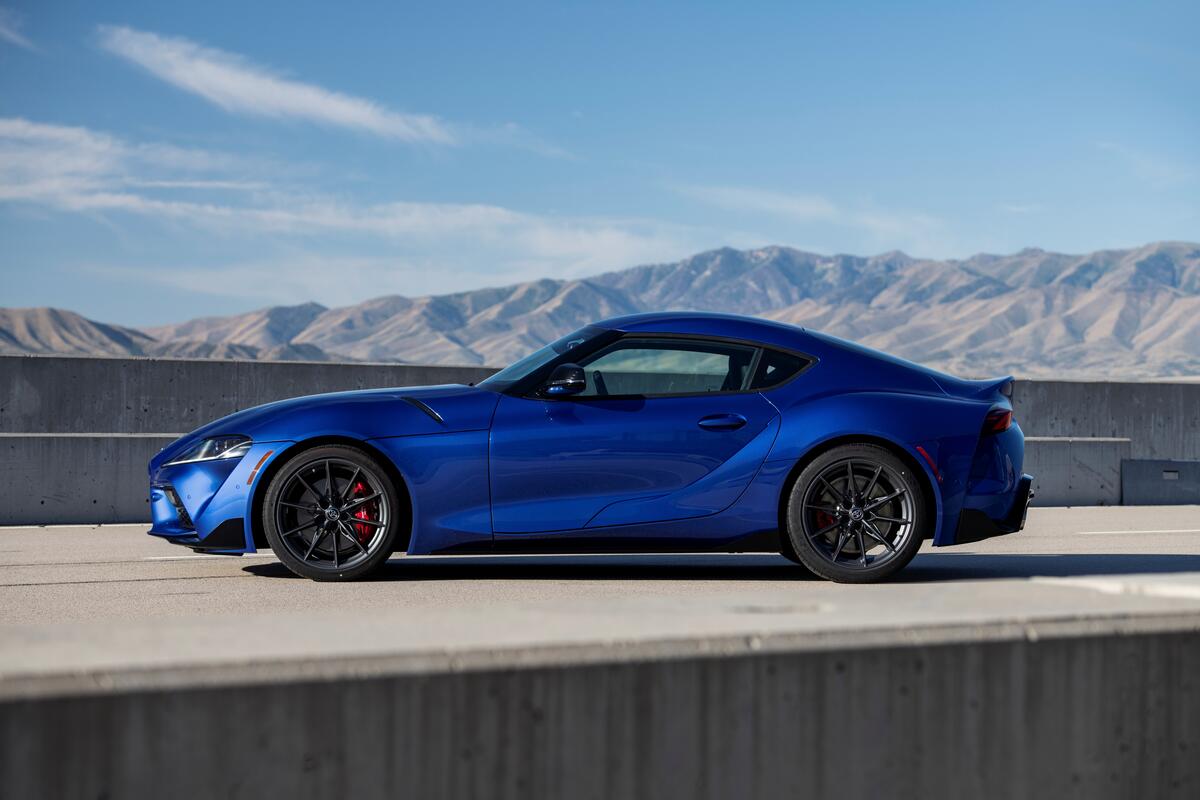
The Toyota Supra is a sports car designed to be fast and fun to drive. People who like cars often talk about it because it has a strong performance reputation. In the podcast, it’s mentioned as one of the cars the speaker has owned.
Active Fuel Management is a system that turns off some cylinders when you don’t need full power. If it malfunctions, it can cause engine problems and may need repairs.
A camshaft controls valve timing inside the engine. A “stage two” cam is a more performance-oriented version that can change how the engine feels and makes power.
An 8-speed transmission is an automatic gearbox with eight different gear ratios. It helps the engine stay in the right range, but sometimes you can feel odd shifting when it’s cold or not perfectly smooth.
AFM is another fuel-saving system that can shut off some cylinders when you don’t need full power. The host thinks that removing it could help prevent certain transmission problems.
On an automatic transmission, there’s a part that can slip to smooth out power delivery. “Lockup” is when it tightens up to reduce that slipping, and the host says frequent switching can feel jerky.
Timing chains keep the engine’s moving parts working in sync. The host is saying that on some turbo engines, the chain can wear out sooner than you’d expect.
A turbocharger boosts engine power by using exhaust gases to cram more air into the engine. The host’s concern is that when turbos fail, the repair can be very costly.
Manifolds are parts that route exhaust gases to the turbo. The host is saying they can crack or fail, and if they go bad along with the turbo, the job gets expensive.
The host describes owning a 2013 Ford Fusion with a naturally aspirated four-cylinder, then later passing it along and seeing it reach about 130,000 miles with relatively few issues. It’s used to argue that non-turbo (or less complex) setups can be easier to live with over time.
Naturally aspirated means the engine doesn’t use a turbo or supercharger to force air in. The host is basically saying it can be a simpler, less failure-prone setup.
Car
Freightliner C2
A Freightliner C2 is a commercial truck that fleets use for lots of driving. The example here mentions it has a Cummins engine and air brakes—both are common in heavy-duty vehicles.
“Fleet life” just means how long a company keeps its vehicles in regular service. Here, they’re talking about school buses and how they get retired after a certain number of years.
A mini split is an air conditioner/heater system without ducts. It’s often used in camper conversions because it’s easier to install than a whole duct system.
“Schoolies” are school buses that people convert into campers. In this segment, they mention adding things like air conditioning for comfortable travel.
“Certified” means the mechanic has completed training and passed tests to prove they can do certain kinds of repairs. In this segment, it’s discussed alongside ASE certification.
Term
ASCs
“ASCs” here is being used in the same conversation as ASE, which is a mechanic certification. The point is whether shops and employers recognize that credential.
Some trucks use air instead of brake fluid. A compressor makes compressed air, and that air pressure helps squeeze the brakes at the wheels.
Company
Thomas built boss
This sounds like a bus-related training/parts provider. The point in the conversation is that technicians get extra education from manufacturers and specialists, not just from the shop.
Term
Scanner Dan
Scanner Dan is a person who teaches car diagnostics, often using scan tools. The host is suggesting shops use that kind of video training during work hours.
Term
Moto htst
This seems like another training channel the speaker is talking about. They’re using it as an example of videos technicians can watch during a scheduled training time.
Term
engine diag
“Engine diag” means figuring out what’s wrong with an engine using tools and tests. The speaker is saying some techs focus on that but may miss other practical skills.
A MIG welder is a tool for joining metal parts with a wire and shielding gas. The host is saying technicians should learn hands-on repair skills, not just engine diagnosis.
A stud is like a threaded bolt that’s used to hold engine parts together. If it breaks off inside the engine, it can be tricky to remove without ruining the surrounding metal.
The cylinder head is the top part of the engine where the combustion happens. It’s important and has precision surfaces, so repairs there need to be done carefully.
Fuel trims are the car’s way of fine-tuning how much gas it’s injecting. If the engine computer keeps adjusting them, it can be a clue that something isn’t right.
U-bolts are heavy-duty clamps that hold parts together. In this context, they’re used to secure suspension components and need to be tightened correctly.
Term
camel pack springs
Camel pack springs are a type of truck suspension spring made from multiple metal leaves. They’re heavy, so the job often needs special lifting tools.
A torque multiplier is a mechanical tool that helps you tighten bolts to a very high spec. It makes the job easier while still getting the correct tightness.
The Chevrolet Volt is a hybrid car you can plug in. It uses electricity for some driving, and it can also use gasoline when needed. Even though it’s hybrid, it still has a normal 12-volt system for things like lights, which is what the podcast is talking about.
Mack Trucks is a company that makes heavy-duty trucks. The host is talking about how their tail-light wiring is set up and why that design can make repairs more confusing.
A wiring harness is the car’s wire bundle that connects all the electrical parts. If it gets damaged or the connections are bad, lights and other systems can act up.
Term
fifth wheel plate
A fifth-wheel plate is the mounting area on a semi-truck where the trailer connects. The host mentions it because the frame/ground location matters when troubleshooting electrical issues.
LIVE
He went back there, he opened up the valves, and that trailer was still half loaded with I don't even know what. But guess who was the lucky one who got to crawl into both tanks of that trailer and rinse that out. That was the worst. Maggots and everything. I. I puked in there. I told him.
I was like, I don't know, like, if our training is good enough, but, like, that needs to go somewhere. That was terrible. And I'm going home now. I'm done.
Welcome back, ladies and gentlemen, to another exciting episode of the Jade Mechanic podcast. So we're kind of sitting here discussing coffee this morning, and I'm with a friend of mine who's just over the border in Rochester, New York, Christopher Clingerman. Christopher, how are you this morning, brother?
I'm doing all right, sir. How about yourself?
Very good. And we're just discussing, because he might get a Dunkin order while we're sitting here recording. You might hear the door come in, and his wife might bring him some Dunkin coffee. And I got. Asking him, I said, like, you know, because being a Canadian, you know, we pretty much get weaned on Tim Hortons coffee when we're about three and a half, and then, you know, you drink it your whole life. And I was asking him, have you got it there? And he said, yes, so. And then he proceeded to say, now don't throw things at him, that he actually prefers the Tim Hortons coffee to the Duncan's coffee. I can.
I can agree. At least he's not drinking Starbucks. So. Yeah. Christopher, tell me a little bit about Rochester this morning. What is it like?
It's. It's not too bad out. It's been a little. The weather's been, like, really like, just back and forth. I mean, I think it was Monday or Tuesday there last week. I think I was. I was leaving work and T shirt and pants. And then, you know, Wednesday morning I'm going in wearing a hoodie and a, you know, a winter jacket just because we're, like, down in the 20s and the 30s, and it'll be like that for the whole day.
So, yeah, we. We had a little. Little bit of snow. A little bit of snow was coming down last night. I don't think any of it stuck this morning. So hopefully we're. We're out. We're out of that.
I'm. I'm over at this point. I already got my. My winter ride in this year, so I'm. I'm happy with it.
Now, when you say winter ride, you mean like snowmobile?
Yes, sir.
Okay. Do you ever run up to, around Tug Hill?
No, I, I've went up there before with some friends of mine. We went trail riding. But I actually go out to my parents house. They've got about 47 acres and we write, we ride out there. We don't got anything new. I mean, I'm riding around on, you know, a 74 Ski Doo 440 fan cold. And we're just, we're just going out there and beating the snot out of her in the snow.
Yeah, my, my friend Tommy Markham, Markham Automotive, he's up on Tug Hill. Just raves about, you know, I guess the snowmobiling up there, which, you know, I'm one of them Canadians that doesn't own one and has forever. Because right down around where I am in Kingston, there's so much lake effect. We don't get a lot of like accumulation that lasts. We get snow, but it's kind of the same. Right. As soon as it's hitting the ground, it's, it's turned into really hard ice pack or it's melting and there's group trails. But it's really expensive to ride up here.
Insurance on a sled is a lot of money up here because you have to, you're not allowed on the trail without insurance. It just gets to be a lot of money. And I know so many people around me locally that, that have machines and they end up driving to like Labrador up into Quebec or over across the border and Tug Hill and stuff like that where they can get consistent good snow because it just doesn't last here. So the last thing I want to buy is anything that I can't use. I'd rather, you know, have twice the boat, no snowmobile than have a snowmobile I can't use, so. Right.
Yeah, no, I mean definitely there in the Tug, like the Tug Hill area or like, just like the Adirondack State park area. They, they definitely get a lot more snow than, than like we, than we do or I mean just even towards like the, like the Finger Lakes region. That's actually where I grew up. So where we're like right in between Rochester and Syracuse there, it's where my folks live.
Yeah.
And how, literally how the. Usually the storms come up, they'll come up like Lake Erie there and they'll slam buffalo and we'll, we'll catch, we'll catch a bit of it and then it'll go up into Lake Ontario and then it'll come right back down into like the Oswego area and just, just get pounded. It's, it's really weird. So the last, definitely the last, I could say probably like 12 years hasn't really been like as good as snowfall is, you know, like when my parents were growing up or even when I was, you know, just a real young kid. So.
Yeah. And then I want to take a fishing trip sometime and do the Finger Lakes because I've heard about them for, for years like that. Some of the Finger Lakes have got some really good largemouth bass right in them. Like good size for being a northern section and you know, spots around Syracuse and some of those lakes and stuff. I've, I've known some of the guys that come up from the Elite series. They've caught nine pound largemouth out of those lakes. Like that's absolutely ridiculous for a northern lake to have a large mouth that big in it. Right.
Like we don't have that where I am, so.
Absolutely, absolutely. Like, you know, I, I mean I grew, I grew up on actually the, the Seneca River. It connects Cayuga Lake to Seneca Lake. So I had you know, total 24 access to go fishing, kayaking right there. And the, you could pull, you could pull anything out of there you want. Like you know, bluegills, sunfish to you know, car crappies. Yeah. Bullhead.
Well, you name it. And I mean not all of them are like perfect record holding fish. But like just you, you're not going to go out there and not catch something. Yeah. If you do, you're, you're doing something terribly wrong. Yeah.
It's a, it's a beautiful part of the state. I always enjoy driving through. You know, whether it's to go to Syracuse or like in 5 weeks time of driving down to Pennsylvania and I'll drive through that stretch and it's just beautiful. So kind of tell me a little bit about what you do in, in Rochester where you work and kind of how you got into that.
So I actually just about, about two years ago I made a slight transition from used to work on tractor trailers over the road tractor trailers. Now I'm actually working on school buses. I did just do a recent change to a different company still doing the same thing. They're just more, a lot bigger of a company union. So just a lot better benefits and a lot better pay.
Yeah.
Overall my career I've been more, more of a fleet mechanic than, than anything when I've had, when I've had the chance I've had. I have worked two jobs and I've worked a couple part time jobs at dealerships just being a loop tech and whatnot. Yeah, just, just to help out and I had good relationships with the service managers there. So. But I mean that's, that's pretty much me. I, I graduated, graduated high school. I didn't go, I didn't go to a two year college or anything like that. I did boces while I was in high school for, for my junior and senior year.
Yeah.
And right out, right out of the gate I graduated. I was actually already working part time at a fleet shop. Big look, a local outfit. And I just went full time and the wheels haven't stopped since then.
When you were at the dealer, what brand?
I've worked, I've worked for a gm, I've worked for a Chevy dealer and then I've also worked for a Hyundai as well.
Oh, I've not done a GM dealer yet. I haven't done a Ford dealer yet either. But I did a stint at Hyundai and that was, yeah, that was kind of right before the whole engine thing started happening. Like they really just season up. I did one of the first ones that we'd ever seen back before there was a recall or they were really rampant and I just remember that they, they all leaked a lot of oil and they were, you know, the customers were a different kind of breed to get used to I guess you could say because you know the 10 year warranty, that wasn't really 10 years. Right. It was lots of red tape in there and it was interesting to get to know them and see that compared to the Chrysler dealer because you know, it was a different thing, different type of certainly different type of car. Not all terrible, you know, like they weren't, it's just, it was a very, I'll say that about Hyundai and Kia.
They're very smart in the sense that they don't stray too far their lane. You know what I mean? Like Genesis is as far out of the, I'll say the econobox idea that they get from. You know what I mean? They don't say oh let's try a truck or you know, like they just stick to what's, you know, easy for them to market and sell. So. Right.
No for sure. And I mean I know, I know a lot of people, a lot of people will probably not like this but to me, to me they're, they're pretty, they're, they're just pract, they're not practical. They're what they do, what, what goes wrong with them. It's you know, it's very, it's very predictable. Like, you know, I don't like Chrysler products. Like right now I know they're, they're just having some really terrible electrical issues. I, I had a former co worker, he bought his wife, I think a 24, 25 Durango. Yeah.
And just non stop issues with just the radio. Yes, yeah, yeah. And, and the dealer wants to say it's like it's their phone. It's like no, it's, it's not my phone. Like. And I think, I think before I left like he's talking about going like full blown like Lemon Law and like going after them and having them buy the car back and it's like, that's crazy.
My good friend Dan, he's been on twice now. He's got a Durango from that vintage about. I want to say Dan's might be a 23 or 22. It's been like, it's been in the shop more times for uconnect problems than any other. Anything else. That's it, that's just non stop, does not work. And, and you know, I don't think he's, he was, he's too far gone now for Lemon law. But I mean it's just frustrating, right? We, we had that, the little clip that's gone viral.
Fluffy and I talking about how, you know, people think that's the greatest thing in the, in the feature to buy a car based on. But there's. So I just look at it now and it scares me. I get into like any of The Chryslers like 18 and up and the bigger screens and the, and I'm just like, I don't want that man, because I don't even want to think about replacing it now. You know, the aftermarket comes through is always what they do and you know, go on to TEMU and buy yourself a head unit for a couple hundred bucks and you know, like what plugs right in and great. But it just scares me, right. Like I just, I wish the OE would get it right. So.
No, no, I, I totally get that. I mean we're not having so much issues with that. With actually my wife's car, she's got, she's got a Nissan Rogue. Oh, she's got one. She's got a 24 rogue with one of those new three cylinder 1.5 turbos.
Do you find it rides rough? Like it runs really rough? Rough idle?
Yes. And it like, it almost like stutters. We've, we've been going back and forth to the dealer with it late lately and like I'm talking to him and talking to the service manager and it's like I get it, like you can't find anything but you can't sit here and tell me I'm the only one. Like I listen, I listen to people talking about this all the time. I'm, I read up on a couple of Facebook groups I'm in and I actually ended up reaching out to a good friend of mine that's a service manager at another Nissan dealer out in actually the Auburn area. And you know he did, he did look up on what, you know, whatever it's called Nissan World there and you know he's actually found a couple of people that have had the same issues and like they've gone in and replaced a couple of random things that have allegedly fixed it. But there's also been full blown transmission replacements already.
And yeah, we have I think three or four on a lot right now and all of them have a, especially when you first start up cold, eh. And they're just a really rough idle or you engage the ac, the idle flares a lot, drops right down and you know, you phone up the dealer and the dealer says pretty much as long as it doesn't stall out, we don't do anything with it.
And I'm like yeah. And that's, that's where we're at. And my wife's just like pissed about it. Like now we've just accepted it. She's like, when this thing just dies, like I'm, I'm just calling the toe and it's going to go right there. And I was like that's, that's all that we can do at this point actually.
Go answer. Fluffy was saying he's done quite a few of the engines now that 153at his dealer down in Texas because they're blowing up, you know, or, or whatever they do to constitute I guess a replacement. You get a complete lawn block I guess. But he said the same thing when I had them on. They were, they just run rough, really rough. It's kind of expected, right? A three cylinder is going to be, you think about the crank variance there, that's a lot hard to balance out, right? Like it really is.
So yeah, yeah, like it's, to me just, it just doesn't make, it almost doesn't make sense. Like who, who else did a, I think it was to Toyota. The, they did a three, they did a three, three, three cylinder turbo Corolla there and like that's pushing out like 300 horse. It's insane. Yeah, I just, you know, I've never driven one nor have even gotten to like really look at it, but I would be really interested just to see. It's like, how does this thing ride?
How.
How does this all like, balance out and like run as smooth like, as it does? Because I haven't heard really anything about them. I think here and there. I think I've heard one story a couple years ago, one like caught fire, allegedly. And I don't know if there was anything aftermarket done to it or not, but there was a whole lawsuit for that, I believe, with the owner. And it was just, it was a mess.
Now, is there something that made you choose fleet versus kind of the, the part time gig, you know, as at the dealerships, or was it just a situation of the right job came along?
It was more just like, that was, I think, just like the first opportunity that I got. I mean, I actually got that job. Like I said, I was still in high school. I started working there part time. My boces teacher, Friday, just before the weekend we were leaving, he's like, hey, you know, there's an open house at, at this company. Like, I'm going, if any of you guys go, I'm gonna give you some sort of like, extra credit for it and whatnot. I was just like, all right, bet, like, I'll go. So ended up going there the following week, got to meet the owner and a couple other, the, the head honchos there.
And they, they seemed pretty impressed. And you know, I went in for an interview, we discussed things. And then next thing you know, I, that was, I started working very cool. I was doing, oh, 20, 20 hours a week. Just after school. Like, you know, I go there, work a couple hours from like 3, 3 to 7, 3 to 8 after school. And then I think I was working Sundays. I'd go work all day on Sunday from like 8 to 6 or something, you know, whatever.
And then after I graduated, I think like two weeks after that, I was like, yeah, I'm ready to go full time. And they're like, all right, well we got a spot on second shift available for you. You'll work two to midnight. You good with that? And we'll give you a bump in pay to. I think I was making like 13 bucks an hour at that time. And I was like, yeah, sure. And then the rest has been history. I, I've, I think actually the GM dealer that I did work at, I actually had left that shop to go there because, you know, I was like, oh, you know, the dealer.
I can get all these certifications and all the training and whatnot. And granted, yeah, I was steering away from heavy duty back down to light duty. But I figured the experience that I would get there and like, all that would be more worth it in the long run for me. And I just, to me, I don't really care what I work on. I just enjoy wrenching. That's, that's just my passion. I don't really got anything else for me. And I was there probably about a year and the, the political drama and you know, the, the.
All the promises, they, promises that they made just ended up turning up empty handed. And it's just, to me, it's like, why, why? I'm not going to sit here and just keep changing oil or, you know, I'm going to keep taking on these crappy warranty jobs. That one, I don't even know what I'm doing half the time because I mean, I was two, two years, three years into being Attack and like I, I was still just learning the basics, you know, just, you know, doing brakes and tires and stuff like that. Like, you want me to pull a heater core out of this Buick encore in an hour? Like, what? No, that's.
And that's what's so crazy, right? Like, we keep. It's the same old song. Like, I've talked to so many guys and I've worked with so many guys and I've watched it firsthand. You know, when they're good at the quick lube side of stuff, the dealer never wants to move them up. They want to keep them there because they need an effective person there. But then the next day it could be like you've done nothing but oil changes and somebody hands you something and goes, here's a wind noise at like 65 miles an hour. Go figure it out. And it's like if you've never been shown how to really start to isolate where a noise is in a car, you can spend so much wasted time tearing the car apart, you know, putting tape on over the paint which then lifts the.
You know, like you just make a mess and you know, why are they giving it to you? Because it's such a crap job that nobody else is going to do it and everybody else has said, I'm not doing it and it has to get done. So, you know, and then you're in that role doing it. We know what these, sometimes the mentorship looks like in a dealership. Did you have at least any kind of Mentorship there, or was it just throw you to the wall and say
it was kind of just like thrown to the wolves? I mean, the one. The one guy that I work. I worked with there, I worked alongside, he was just in the next bay to me. He guided me on a lot of stuff. But, you know, like, so between him and like, a couple of the guys there, like, they were. They were a good group, right? But they just. A lot of Just bickering and whatnot between them and then just the corporate side of it coming down and, like, you know, they would get mad. And then I think, like, the biggest thing for me there that bothered me was like, I was still hourly and doing all this work and like, sometimes there'd be a slow day and I'm not doing a whole lot, but, like, I'm still getting sitting there getting paid.
And then, you know, I would ask like, hey, like, what do you want me going, doing? I don't want to just stand here or send me home. Like, I. I got better stuff I can go and do at home. Like, no, no, no, we need you here. You know, we're. We're gonna get a rush. We've got 20 appointments, five show up. That's like, what are we doing?
And I always. Because I knew what that felt like, right? When I. You could just sense it and feel it in the dealership because, like, when I was at Kreiser, there was a point there where I was hourly. And, you know, some days when there was no work coming in, you just knew, like, don't even talk to them. You know what I mean? Like, if you're doing something and then, heaven forbid, like, you ever did an upsell, because then it was. All the comments came out, right? And it wasn't like you were in charge of what necessarily got dispatched to you. You were supposed to get a straight time, you know, hourly tech, whatever you want to call it, you were supposed to get crap. You know, you were like, crap work.
You're supposed to. That's how you're supposed to learn. But, man, if you got something that at least, you know, everybody would be like, well, that would have been a good ticket. And I'm just like, you can't. You can't win for loose.
Yeah, like, I can't. I can't help it that, you know, Mrs. Jones here decided to, you know, be like, oh, yeah, you know, do the coolant flush, the brake flush, and, you know, do a, you know, warranty alignment or whatever on it. Like, you know, she's 30,000 miles and says it's Poland. Like, and that paid, I think they paid, that paid like 1.2 or something along with the rest of it. And it's like, oh well, I'm not making, you know, 40 hours this week. It's like, well, I don't know what to tell you, dude. Like, you know, that's, that's not.
Yeah, like, well, and that's it. You, you get handed, you know, it would happen to me, I would get handed something like an oil change and a warranty check engine light and you would do the oil change and you'd rack the car and you'd start and it'd be, oh, it needs brakes. Sell the brake job. You know, it needed a tie rod. Chrysler's caravans used to always need at least one, most of the time, two. You know, you turn what was supposed to be a warranty ticket into a decent ticket and then all the comments would start coming out, right? And I was just like, what do I do here? And so what do you think? Should they take that job and give it to a flat rate tech? And then you don't even learn how to do it.
How are you supposed to, you know, you're at hourly for a reason. They're, they're putting you there till. Especially if you've never been to a flat rate shop. Like, how are you supposed to get comfortable with, you know, turning hours and making hours so that you can just make a living and just let alone just get a general idea of, of the product, you know, so no, I, I think that yeah, you should be able to take, take on that ticket. Whether you sell, you know, whatever it is, you get the hours for it. It shouldn't be going to any, anybody else. And then if you're still, still do, proceeding to do that and like you're actually starting to like turn, you know, 40 hours a week or more, then yeah, then that's the con. That's the time to go have the conversation with your tech.
Like, hey, you know, you're, you're actually, you're doing really good. You're starting to turn hours and like you're, I don't think you need to be hourly anymore. Like, you know, we'll give you a little pay, pay bump. Like you're doing well, you're learning, you know that that's an achievement.
Yeah, 100% because, and I'm not for the dealerships that, because I've talked to some people and they're like, well, they put in a fast lane and all of a sudden now they want, you know, the low skill guys hanging brakes and they want the low skill guys doing all the flushes. I'm not for that because I believe that, like all you really do then is take a bunch of people in the back with all your certifications that you need and you cut their, you know, payoff because they can't get gravy. And it just absolutely kills the culture in the shop. But I mean, like, if. If I diagnosed a car, they never took it from me and gave it to somebody else because they were flat rate ever. Like that was just a situation of it just didn't happen. And a lot of it, I saw it firsthand. Like, you'd see the.
I don't know how it was for you, but you would see the work orders piled in the, in the, in the queue or in the office, and it'd be like, I don't want that. I don't want that. I don't. That they'd rather sit on their toolbox. Listen, I understand. I've done that too. And then all of a sudden you pull the ticket, you know, 20,000 miles, check engine light. And you're like, hey, this thing's got smoked brakes.
You know, the rotors are rotted or rotors are shot. And then all of a sudden, you know, it just keeps going on and on and on. And I was thankful that when I was hourly, they just gave me, you know, a lot of the jobs that were. Looked like electrical and drivability, but allowed me to do the oil change and allowed me to do the inspection while I was doing them. Because that's how I learned to, you know, take a crap ticket into a good ticket. That's how I learned to evaluate a car, all that kind of important stuff. You know, I was thankful. I just wish the grumbling hadn't have been there, right.
To do it.
I think that's, that's definitely like the big, the big thing. Like, you know, and it's nothing against the guys that are flat rate and they've been there like, no, it's not. I'm not sitting here saying that you guys should, you know, you guys shouldn't get the flushes. You should be sitting there doing engine diag. Long blocks, you know, all the warranty work. No, I'm not saying that's the case. You know, we're having a, we're having a slow, like a slow week or it's just like heavy, you know, say a heavy customer Pay week or whatever. That doesn't mean that it should just all go to the new guy or the hourly guys to try and get them to that point.
No, you should be, you know, you should be feeding your good, your good text that, you know that, you know that take care, that take care of you guys and they know what they're doing it. It should all as best as possible try to get distributed out evenly. It's not always going to work out like that. It's just depends on who's going to walk through that door.
Yeah. Now, so when you went to the fleet shop, what did they have you doing right off top?
I was just doing, doing a lot of PM so you know, doing, doing oil changes and just inspections of you know, doing a PM inspection over the vehicle. So going through, checking, checking lights, you know, checking, you know, some drive well some drivability. I with being heavy duty. I don't, I didn't have a CEO yet so I'm not able to go out on you know, roads with them but you know, beep off through the yard and whatnot. You hear this clunking noise, you know, think remind yourself about when you get it in, you know. So you're going through, doing all that checking fluids, checking, checking pretty much everything like engine belts, you know, any sort of fluid leaks, you know, u joints, brakes, wheel seals, you name it, you know, or cab fairings like starting to fall off, like whatever. So that's pretty much the, the nitty gritty of it all where that's you're gonna go find all that and then that's what's going to open up your doors to, you know, getting into that. It just depends on what you bring in that day.
Yeah, we, I, I remember still like we'd start out, you know, greasing the truck and you know, I still remember being on a creeper. We didn't have a pit the first shop that I was at and you know, rolling along on a creeper and banging on the brake chambers to see if there was a broken coil inside. Right. And checking the brake stroke and like all that kind of stuff like you said, looking for wheel seals and looking for checking tire pressures and all the lights and all that kind of stuff. Like I learned very quickly how to like start to troubleshoot basic electrical systems by looking at just doing light repairs. You know what I mean? It's like oh, the whole, the whole fairing is not lit up well, that's not one bulb and right that's, that's. And you just not like it's. And people are like, you know, well, that seems pretty straightforward.
But. Yeah, but think about now. We've seen the GM trucks come in and they're missing a ground to one bank. And it's got four coils that don't run. You can approach that. The same method that you approach, you know, lights on one fairing that don't light up. It's. It's a.
Yeah. What is it? It's a basic circuit. Thank God I got exposed to that kind of stuff. Like, I mean, I was so fortunate that my. My first boss just let me look at that kind of stuff because it built my foundation. You know, I hated grease and trucks, especially in the winter time. That was terrible. You know, I don't know how many times I got electrocuted from.
You reach over and you grab the old corded trouble light and your elbow hits the puddle and the cord has been. The light cord's been driven over and all of a sudden, like the shock goes up your arm and you punch something, you know, inadvertently. And it's just like. Yeah, snow dripping on you. It was good times. The summertime was cool. I liked. Because we work.
We do a lot more work outside in the summer and that was a lot nicer because you could be out in the sun, you know, it was warm out. Yeah. The winter time, especially if they're just
like coming right in off the road, like, oh, you know, just got done doing a delivery. The, the first comp. The fir. That first company I was telling you about, they were. We. We had three separate divisions within the company. So we had a mil collar division. There was another one that hauled freight and then there was another one that hauled like gas, diesel oil, jet fuel, stuff like that.
But we were. They were very heavy. Milk, milk and milk products. Hauler. So cream, all that. Some of the places weren't too bad where they had to go. But then there was some. But the straight trucks.
So, you know, just a truck with a tanker on the back. It's not a trailer or anything. They're going through the worst of it. Oh, oh, yeah. You gotta go over to the pump house, you know, through three, you know, patty fields and then you come back and the whole thing's just caked. You don't know if it's mud or kausha. And you're probably better off just thinking there's nothing worse.
Yeah, there's nothing worse than. Than stale rotted milk mixing with manure. There's no other worse stench. We had. We had livestock haulers where I worked later on in my career. And it was the worst. It was terrible. I'd rather work on garbage trucks than work on PA Were even worse than cattle, but cattle were almost as bad.
But pig trucks were worse. Like, it was just gross. I don't know how many trucks I've been underneath. And the pigs were still in there.
Just up there squealing away like, don't know what's going on. They're just losing their minds.
Yeah. And, you know, I'm a dumb. Like, I didn't grow up on a farm. I worked on a ton of farms. But I'm thinking, oh, that might be cute. You know, put my. No, they don't want anything to do. They don't want to be petted.
They're like, you said, they're freaking out, you know, or cattle were a little more. Yeah, pigs were the worst. Pigs just. They just stink. It's a different type of.
Probably the worst thing that I ever experienced there at that shop. We. For whatever reason, there was a trailer that it went. It got sat on the yard. I think the load got, like, rejected because. For whatever reason, because they gotta, like, take a sample, test it, whatnot. They're checking for, like, the enzymes or something like that. I.
I believe got rejected. So they brought it back and. Well, they forgot about it. They forgot about it for a week. It sat in the yard. Mind you, this was the middle of July. Then it got, you know, of course they told the driver, oh, yeah, go hook up to, you know, whatever trailer that is out there. You know, you're gonna go to such and such and then drop.
Bring it back here. It's gonna go out to, you know, the plant. Like, okay, they hook up to it. And he was. He was smart enough. He was. He had been around the block a few times, and he's like, this thing's loaded. Why.
Why does it. And he went. He went back there, he opened up the valves, and that trailer was still half loaded with I don't even know what. But guess who was the lucky one who got to crawl into both. Both back both tanks of that trailer and rinse that out. That. That was the worst. Maggots.
Yeah.
And everything. I. I puked in there. I. I told him flat. I was like, I don't know, like, if our cleaning is good enough, but, like, that needs to go somewhere. That was terrible. And I'm going home now.
I'm done. Gonna go home and scrub myself.
Going home. My clothes. Yeah, I've never eaten yogurt again. Yeah, it was. Oh yeah. I didn't have to get down in the tanks, but like it was, it was bad enough. Yeah, you know, I had that and I had a heating oil fleet that was pretty cool because it was mostly just taken essentially like way back then. You know, oil for a furnace is very close to diesel.
So you just smelled like, you know, diesel all the time. But we had these big long reels on the back of the truck that would run the hose out. And I can remember they would come in and they had this goofy electric motor and this chain up to the big sprocket and they would always be in the worst possible place and then kick the chain off and you know, and then they had to, they would come in and they were just livid because they had to wind the chain in by hand to get this, you know, sometimes like you know, 100ft of holes, this big friggin hose in.
Yeah.
And they'd come in just angry as. And you would take off the chain. You'd knock a link out, right? Put because. Shorten the chain because of the stretch, put it back on, send them down their way. And it was like you're just sitting here looking at this and then it's like there's such a better way to do this. Like why are we not running a belt? Why are we running a chain? I'm talking it was just like a bicycle chain, right? It's just. And so many things I learned like there's such a better way to do this. But again, it's all just price right.
Well, we can put a chain drive on it for next to nothing. If we put belts on it, it costs more and the pulleys. And I was just like, I'm so done with this. So done. That's why when, when I got the job to switch to automotive, I was like, yeah, get me out of here, you know, get me off the side of the road and out of the, you know, manure trucks and everything else. What, what was kind of, what was the first really cool job that you got to do working the truck shop?
Probably we're gonna go, we're gonna go forward a couple, couple years. I, I ended up actually working at Mac, Volvo dealer up here up here in Rochester. And I actually ended up going through, I replaced, I replaced the entire, the entire fuel system on this Volvo Day cab. I think, I think It's a D D13. Yeah. Because I. Yeah, yeah, they Volvos have the D13s. Detroit's are the DD13s, I believe.
Guy, you know, guy made a mistake, put 30 gallons of death in this thing and ran it. And you know, they got it towed in, you know, oh, don't know what's going on and check the tank and it's like, yep, well there's, that's not supposed to be there. And you know, we re. We. We reached out to Volvo themselves and was like this truck's. It's been ran like, you know, they, we've. We've started up just to get it into the shop. Like runs like crap.
You know, we can drain the tank. But like what about everything else? Because this, this was all they, they wanted to try and get it under warranty. But since, well it's user error, it's not, it's not going to get covered. And corporate's like, yep. You got to go through and replace like every metal line on it, any rubber line or anything. You have to just flush out, you know, with water or you know, diesel fuel or whatever just to get it out of there. So, you know, the fuel pump had to get replaced, injectors had to get replaced. All the lines for the injectors as well had to get replaced.
I think a couple like a distribution valve for, for both fuel tanks that like, so they can evenly like pull from each other. That had to get replaced. That was, that was pretty cool. That was a couple probably like two, two days, two, three days maybe just, just going through like just cleaning a lot of it and then dropping the tank off to wheeling it outside.
Yeah.
You know, getting all the fuel out and then just rinsing it. Because once you put. That's, that's the thing with death. Like all you got to do to dilute it is just pour water on it. Like it doesn't, it doesn't matter hot or cold, it's just like coolant nowadays. Like you know, back in the day, you know, dumping, you know, you spill cooler or whatever you. There was a whole like whole big thing like now. Yeah, it's still not great.
But you can just dilute it with mixing it with water and eventually it won't be that harmful.
Yeah, yeah, it's. And I remember, I remember when I first saw the first hydraulic system on and I can't even remember what it was and Iran vegetable oil instead of. Or like plant based vegetable oil instead of a 32 hydraulic oil. And I'm like, why did they do that? And they're like, oh, there's a mandate that says, you know, when they're up here at a farm or something, they have to run an oil that if it should hit the ground right from the hydraulic side of things. I'm not talking the engine oil, guys, I'm talking the hydraulic system, you know, skid steers and that kind of stuff. It wasn't going to be, you know, death to the soil, you know what I mean? Like by dropping AW32 on it. It was just regular old vegetable oil. And yeah, you didn't want to spill a bunch of it.
But if it did go on the ground, it didn't hurt anything. It's just, it's peanut oils, canola, like, it's, you know, it's good stuff. But that was the first thing freaked me out when I first saw it. And I was like, oh, wow, that's pretty cool. So, you know, deaf is. Deaf is just disgusting, stupid stuff. I mean, it's just, I've had them where they're, you know, they've been contaminated and it's just, it's just a mess, man. You know, and then again, same thing.
Like, I always saw it happen on older trucks that were way. And then it's like, you know, they didn't replace the injectors. Then the thing would come in and you do one injector and you'd ship it and it'd be back next month and another injector and another and so on and so on.
Tips are just like blown right off and they're just like, I don't get why. It's like, well, you should have done a six pack and just done them all. But, you know, either you're just being cheap or the warranty company is like, well, you know, if it's only so, you know, injector 5, that's, you know, not at full capacity working here. We're just going to do that one, you know, regardless if it's, you know, ran the 30 gallons of death through it and spitting and sputtering something fierce.
Yeah. And we know eventually it's gonna, it's going to go to the other. You know, you just know that it will. It's just, it's just a matter of time. But fleet managers are funny, funny people to deal with. I get what they're, what they're going through, but they are, they are some of the, I don't want to say obstacles, but there's some of the challenges for sure of fixing some of this stuff, right. Is fleet managers. What do you see any of the deleted stuff?
I really have, I haven't really seen anything deleted. I think, I don't really think Any. Yeah, anywhere I work they. They all had just, you know, newer equipment. I mean when I first started, I first started back in 2016 so you know, missed the def. And everything was already out for. You know. I think that, that the only thing that I believe has changed, really changed since then is they, they've combined the DPF and the SCR system into the one.
They call it the one box now. Now it's just one big unit that has both, both systems in it. Instead of you got one here and then you got another one there. Why it's got to be some sort of cost effective thing.
Yeah.
You know, or what. Whatever have you be. Other than that I, I really haven't been around like any older, older equipment or even deleted equipment besides, you know, just some buddies of mine that like, you know they got diesel trucks, they went through, did the EDR delete and all that and you know, all that stuff.
Yeah, yeah. And New York takes it pretty serious, right. Like I was talking to a guy, he's in Montana yesterday. And you know, it isn't such a big deal. Like the government never even checks, right. Like you're not supposed to but if the truck rolls in it's oh well, you know, whereas I think New York. I've heard lots of guys say that it's, it's a, it's a much stricter state about it, you know. And I cannot understand why, you know, New York's always been on, on board with the emissions testing and all that kind of stuff.
They're not going to allow you to just.
Yeah.
Turn a bl.
They're definitely a lot harder about, about that here. There was, I don't know if it's been implemented yet or. I know they were talking about going and actually doing smog testing on like light duty, you know, well, heavy duty pickup trucks because, because of all this like, you know, kid, you know, people are doing this and it's a lot of it's like, and this isn't to you know, like bash anybody out there, but you got, you got the people that just, they just want to blow, blow black smoke and you know, just think it's cool and it's like, yeah, I'm all for it. Like, you know, balls to the wall, let that thing eat. I'm all for it. But when you start acting like an idiot out on the roadway and attracting yourself to it, that's, that's when it's going to start having a negative impact on everybody else. And then this is what it's coming About. So now everyone gets affected by it.
And, and I saw a lot of those trucks, you know, come in when I used to work there. And same thing, guys were putting stacks on Cummins trucks and yanking off this and yanking off that. And the reality was you'd get pulled over for blowing black or just being, you know, really loud. They always found, we always found other safety violations wrong with the truck at the same time. Like, and it wasn't just a little bit bad, it was like really bad. Like bald tires, ball joints fallen. And I don't mean loose ball joint, I mean like really loose steering brakes, you know, were shot. Like, because, let's be real, you know, the young kids that were doing it, it's like, can I look cool at the, at the, at the corn roast, you know, with the stacks at the side of my truck, or do I stop effectively? I want to look cool, you know, and it's like, you know, listen to my turbo blow off and it's like, but I can't stop, you know, or the tires are balder.
We used to see it too. And it's like they'd have a lift in it and they'd be running around on these little like stock tires and rims. And you're like, what happened? Oh, I, you know, I curved a rim and I can't get another one. And so I'm running back these and you're like, you look so 6 inch
lift with like 8 18s on there. It's like,
With no hitch. Like, that was just the coolest thing in the world to me. Tow mirrors with no hitch. I'm like, what. Are the tow mirrors and have like a jet ski on a trailer on the back. I'm like, you guys are just so special. It's not even, you know, it's like
for me, it's like, you know, do, do what you want. Like, do what you want. Your truck. Like, don't get me wrong, there, there's stuff that I, I want to do in mine. I got a 2020 Silverado. Love it. Yeah, you know, I went and put some beefier tires on it. I got some 275, 7 75R 18, you know, Goodyear Wrangler MTs on there.
I, and I, I live up in the city. Am I going, you know, am I going off road and whatnot all the time or anything like that? Absolute. Absolutely not. But, you know, I'll, I'll tell you what, when we were getting that snow up here, I was not the one doing 20 miles an hour. Down the road I was doing the speed limit and it didn't phase me. And you know, some people will be like, oh well you're the reason that this is going to cause an accident because you're, you're, you got no idea what you're, you're, you're going to lose control. And it's like, no, it's, it's not that I don't know what I'm doing or I just want to be an ass on the road. Yes.
I, I know what my truck's capable of and I'm still not gonna be an idiot about it. Like, you know the people that are weaving in and out of traffic on the highways and then you know, banking the, you know, the off ramp corner at 60 miles an hour with a foot of snow on the ground. Yeah. No, that's the idiot. And I watch, watch it firsthand.
Yeah. In their bald tires.
Yeah.
With their bald tires and they're, you know, all wheel drive. You know, I don't rogue, just wind up because it's not four wheel drive. But they're driving. I got four wheel drive. No, actually you don't have four wheel drive and you have bald tires.
That is probably the biggest thing that I like that just eats me about people. It's like, I don't understand. I have all wheel drive and I don't know what happened. It's like. Okay, but you, you do know that it's not all wheel drive all the time? What, what do you mean? No, so it's either, that's right. It's either going to be front wheel drive or I believe, I think Subaru is like either. And correct me if I'm wrong, I think Subaru is either they, they remain in front wheel drive or it's actually rear wheel until it starts detecting the wheel slippage and then it'll actually like come in and out.
They, they have by far have the best all wheel drive system in the sense that it's probably, it's in four wheel essentially, it's in all wheel all the time. Right. And then it's like it's. Whereas if you look at like, well just. I'm not trying to pick on Nissan, but if you look at how they'll. And a Hyundai, same thing, they're built with the idea of like it's a front wheel drive car and then we run a tiny little drive shaft to the back, you know, and, and we have this coupler on the front on that diff which most of the time is not working. So like even though the drive shaft spin around, you're not driving the wheels because the electronic magnet in the coupler has failed. Like, but people are just like, do, do, do do.
You know I'm driving a four wheel drive. No, you're not. You're driving now front wheel drive car that's got some extra weight in the back which is I guess is good. I remember my brother, God bless him, he bought a, he bought a Ranger in 2011 and he bought it in two wheel drive and I was like, he brought it home to me and he was so happy. It was the first new truck he'd ever bought. And I'm like, oh God, can we take this back? And he's like, what are you talking about? I'm like, you're never going to be able to go anywhere in the winter time in this thing. Like it's gonna be. No, it'll be fine.
And I'm like, okay. And like we would load that thing with patio stones and it hot matter. It was terrible. It was the worst thing I've ever driven in the snow. The only thing worse than that was my again, I'm, I'm really old. My dad's, my uncles, my grandfathers all had square body shafts, all two wheel drive. They didn't buy four wheel and you know, but back then you just throw chains on the back or snow tires and you got around and they were terrible in the snow. They were awful, you know, because again you just.
I drove one and in college I was driving an 80 short box shaft truck, two wheel drive. I was in Ottawa in the wintertime snow, no weight in the back because the box was so rotten the tailgate wouldn't hang on so you couldn't put weight back there. And it's amazing I didn't die or end up on the roof because like I was stupid. I drove like an idiot. Like I just. And you know if you were stuck, you just gave it more throttle and eventually got it. You just rocked it out and you throw some U joints in it next week because you tore them up. It was, that was the worst it ever drove.
But his Ranger was worse than that because it had no problem.
What was it? The two, the little two four four cylinder I think that they put in them.
Okay, he had the 4 liter 6 but it had both caster plugged and we were waiting for the cats to eventually hollow and they did, but it was, it was just gutless. It was terrible, you know. And then again it rotted like everything does. You see rust where you are right.
Like, you know, it's so, it's so bad. It's. But I will say like it's funny. My, my first. I've had. I've had more two wheel drive pickups than I have than I have had four wheel. This is, this, this is only my second second truck with four wheel drive in it or no third because I've
had,
I've had two. I've had two Fords. I had a, I had a Dodge 1500 and I've had two Chevys. Now my first truck, that was a 90, 94 Ford Obs with the 300 straight six in it. Sink.
Okay.
Yeah. Three, you know, single cab, want long bed. That I believe that actually had a, it wasn't a posy rear end. That was like a limited slip. That was a limited slip rear end in it. And like that. The thing ain't going fast, but it'll pull whatever you wanted to. And like it was funny like you're saying the, the P.
The patio stones, those big, big square gray stones. I, they actually did the same exact thing. I had like two, two layers. I just go from the, the center of the wheel well to the other one be right above the axle. I, I think I had some cheap Walmart Dextero tires on that thing. And dude, that was a tank. I loved it. Like as long as you didn't stop, it was great.
I, I almost bought. It was a 78 Ford with an automatic and an inline 300. And I almost bought it when I was in high school. And my father, who at the time had never owned a Ford and was never going to own a Ford was like, you're not bringing that home. And I was like, yes, dad. And that's how I wound up with the square body. But like that engine was. I remember the first guy ever hired me, we worked in a truck shop and he had one with like 400,000 kilometers on it.
It was like a 78, 79. All the emission stuff years ago had been taken off and plugged up. Like the EGR and all that jazz and that thing. Like I think it got one oil change a year maybe and he just would pour and it just ran and ran and ran and ran. It had four wheel drive. It had a plow on it for plowing the lot for the truck lot. Like it was, it was the most durable truck I'd ever seen. I mean ugly, ugly.
But like you couldn't. They need to build trucks like that again. Your, your Silverado,
you know the five, three in it
well, that's.
Yeah. Better than that six. That six two liter. I mean I still, I still gotta run into, you know, with the, the active fuel management management, the lifters failing and whatnot. And like I bought it actually my, my wife bought it for me for my birthday. We got it used there. So there. It's got a good warranty on it when it, when it definitely goes out.
Like I'll. I'll just run as long as I can. And when like that does fail, I, I'm gonna find. I'm gonna find a shop that will just go through and do, you know, the DOD on it. And you know, while we're at it, we're, we're gonna throw a stage two cam in that thing. Just, you know, let her purr a little bit. You know, after that just, just keep running it.
So how's the transmission?
It's been. It's pretty good. I know. I guess there, that's. That one's got the 8, 8 speed in it. I don't have the 10 speed, so I know there's a lot. I, I don't know if there's more issues with the eights or the tens. I, I think they're both kind of their own worst enemy.
I, I wish it would go. Just go back to like the old six, the six speeds that they used to run. But no, like, I re. I really like it. You definitely can feel that. That like shudder in it sometimes. But it's. To me, it's only when it's just first trying to warm up.
After, after that it's. It's fine.
Yeah. Yeah. They're not. It's, it's. It all depends. It's like everything. Right. It's how uber tuned in do you want to get to it? You know what I mean? Like, it's, you know, I, I notice a little bit difference now in the way my, my Jeep shifts versus when I bought it four years ago.
Right. I'm an absolutely panicking about it. No, I got the stuff to service it. Right. And that's just going to be the way it is. You know, I'm not going to, I'm not going to start. Oh, I better go and get that thing overhauled now or, you know, rip it out and get another one. I'm not, I'm not, I'm not of that means yet that I think it's necessarily the smartest way to spend my money.
But you know, the. I do have a friend that he went through and just deleted his DOD and his Silverado and he says honestly, like that fixes half the shutter in his transmission because it's not hot time. Yeah. He says it's not constantly going in and out of lockup when it's going from eight down to four and all that jazz. So I think that, you know, if they, if GM did one of the two things, either, you know, go back to a more durable transmission and kept AFM or deleted afm, I think they, they would fix, you know, a big problem with their trucks. It's just choosing one. But then again, everybody's crazy with fuel mileage now, right? Like it's, you know, everybody wants these unrealistic mileage numbers out of trucks and it's just not going to happen. Not within the sacrifice of longevity.
When we, when we were looking around, looking at trucks, like we, we were thinking about going new and then you know, just the price, the price of being a whole different story is just outrageous. But like these sales guys, they're all, they're all like, oh, well, why don't you check out, you know, the 27 Turbo? It's like, no, like I'm not, I'm not buying a truck for fuel mileage. Like, and I mean, I'll be honest. Like, am I, am I using my truck like as a truck? No, like I do, I do a whole lot of commuting with it. Like, I just personally like, like trucks more. I mean when I grew, when I was growing up, yeah, I grew up in the country, like I didn't want a car, you know, and I did, I did use my truck then. That's just, that's what I'm more comfortable with. But yeah, I'm not, I'm not buying a four cylinder turbo full, you know, full size half ton pickup for per fuel mileage.
Well, it can, you know, oh, it tows more, it has more towing capacity than the V8s do. It's like, yeah, how, how long, I want to know how long is it going to be able to do that? Because if, if it's anything like your other four cylinder stuff, the timing chains are going to wipe out in it at like 80, maybe even 70, 70, 000 miles depending on who, who's taking care of it.
So. Yeah, and that, and that's what scares me with this modern V6 stuff or even this four cylinder running one turbo, two turbos, you know, compounds, you're. A turbo on a big truck is expensive enough to change, right? Like if you go and put a turbo on a Detroit or Cummins or anything like that. It's, it's a fair chunk of change you go and stick to in a Ford truck, you know, where the manifolds are breaking at the same time. And like all that jazz you're, you're into, you're into a hefty bill. And it's, I still remember my, you know, one of my friends at promotive like they were talking about how they did manifolds and turbos and then chains in their Ford truck within a two year span and I'm like, yep. Like it's just like, you know. So this whole idea for me of when my brother or anybody in the family comes and says well what about binance? I'm like, stay away from anything that is gas with a turbo.
From the standpoint of longevity, they're great, they get good mileage but you, at some point you will replace the turbo in it because it will, it'll seize up or get loud or leak oil or something. Right? It's just one of those things. And then. Do you want to be faced with that Bill? No, I don't. Well then buy the, buy the harder on fuel, more anemic version and in, in six or seven years, you know, you might do a set of manifolds but you're not buying turbos for it. And that's what I tell everybody. And they're just like, oh, that makes sense.
Another like another thing talking about like the twin turbo stuff there Ford before they discontinued it, they don't, they don't make them anymore. The Ford Fusions, you know, they, they had, they had the EcoBoost ones in it. I can't. I think the Fusion Sport that was, I think that actually had the 27 Twin Turbo V6 in it if I'm correct. And then I know if you go down, you go down not to like a titanium or Even just an SC. The EcoBoost one there, I think that was a, a 2 liter turboed one. Like yeah, they were all great but they were having all those same issues too. I had, I had a 23rd, I had a 2013 that was, that was my first car I ever actually went and bought, had a loan for and everything that had.
And that was, that was when they just changed like the body style on them. They had that like Aston Martin look to it that had a two, that had the two five four cylinder and it naturally aspirated. I bought that car with like 30, 36, 35, 000 miles on it and I drove it for a couple years and then a girlfriend I had at the time I ended up giving it to her because I went and bought a truck. Then she drove it for another couple years, and then she traded it in on something. I can't even remember. I. When we. When she traded it in, that thing had, like 130,000 miles on it.
And I had a val. I did a valve cover on it. I replaced that. Other than that, it was just oil changes, tires, brakes, the occasional, I think, one or two wheel bearings. Just general maintenance control that. I mean, and I. I did a lot of highway driving with that, too. I was going back and forth from my hometown, Seneca Falls, there.
That's actually where I grew up, to Buffalo and whatnot. And like, it. It got. It got pretty good mileage. I was almost getting 30 miles to the gallon in it, and it just. It just ran. Never had any issues with it.
Yeah. Yeah. I. I wish we'd build cars, you know, more like that instead of this, you know, trying to. I don't want to say they're doing the horsepower race, but, I mean, it's still something that they. They want to be able to publish. And now it's the fuel mileage race, and it's just like, I don't. I would.
I would trade off the power for. For fuel mileage if it meant that the engine would last longer. And I think most people are in the same boat. They would like gas. Right now. We're. We're at over $6 a gallon here, and we're on Ontario, Kent. Like, so it's.
It's ridiculous, right? So now, because again, there's lots of things going on before. Before we turned it on, Christopher and I were talking about politics, and, you know, we kind of said we don't do that here. But it's the. The mandates of. What they're trying to do here is they're trying to get more people to buy EB and hybrid. And, you know, if the fuel prices keep going up the way they are in Canada, parts of Canada, it'll definitely. More people will be. Will be thinking about it, and then, I don't know, they're gonna get a rude awakening then when they start to see the cost of fixing them.
So that's.
That's as far as I want to go on. That's the whole, like, EV thing where the full ev we're not ready for, like, you know, they're. They're really pushing hard on that, especially now with, like, school buses. You know, there's a lot of districts here. Yeah, a lot of districts here, like, trying or getting them and whatnot. And it's like I, I do see, see the practical of them, but at the same time it's, it's not like they don't, oh, you know, 300, you know, 300, 350 miles to a charge. Like that's not, it's not even true. It's not a true mileage.
Like as soon as you start implementing any sort of heat AC or just crappy weather conditions like it's, it's gonna go down. If anything, I, I think we should be more looking into like just hybrid. You get, you get the best of both worlds, I think. I don't think that's tapped out yet. I think they could definitely push, push that a lot.
Not even close. Hybrid is so much more. I don't want to say. Well, I'll say it's more, more, more reliable in the sense that like there's a lot of Priuses still driving around, right? That, that are not probably in hybrid mode. Hardly any point in their life anymore, right? There's. So there's something that's locking it out. Something that's, you know, and the customer's still driving a car, you know what I mean? Until they're limping along till they get another car. When you have an EV and it decides all of a sudden there's an inverter fault or whatever like that, you're done, you're forced to fix the car.
You don't have a second way to, to use that car. And, and that for me is just, that's not progress. That's a step backwards. But you know, you try to get people to, that are really into the idea, I want a Tesla or I want an ev. I think a lot of people that want to buy an EV really want a Tesla, but they can't afford a Tesla. But they want to be cool.
Yeah, yeah.
They want to be accepted. I'm going to go figure. And all of a sudden it's like, you know, they want to be seen. And I don't think it's a plus at the bus garage. Kind of getting back to that. Are you, do you have some hybrids in your family?
Us? Yeah. We're where. For the company that I work for. We're pri. We're probably privately owned. We, we, we're. We bid on contracts with like all the districts like around here to, you know, you know, pick up routes and everything like that. So all of, all of our, all of our buses that we've got, we've got, a majority of them are full size conventional Buses and all they have in them is a 6, 7 Cummins.
That's all it is. And then.
Yeah, so that's like the. Or the Thomases is that what kind
of the two ours are I believe believe they're Thomas built. They're. They're freight. They're Freightliner C2s. So actually, actually they're not, they're not top the Thomas built ones. Those are our Minis. So like the short buses, the like the like the Ford E450s or like the Chevy 354000 500s. Those are going to be Thomas Bell.
But these Freightliner C2s that we got, they're safe, right? Safe, light something like that. That's, that's their, that's their brand for it. But they are all they, all they have is just a 67 Cummins in them and then just air brakes. They I think really they're pretty similar just to the same ones that are going into like your Ram 23,000,500s. Besides a couple, a couple of little things there off the top of my head. I don't know. Yeah, I don't. Yeah.
Especially with like that's majority of our fleet. It's pretty pretty common of like what goes on with them and honestly they're pretty solid. It's a lot, a lot of the issues that we have is just the, the body side like not even, not even like Freightliner itself or Cummins itself. It's more of like the body side of like who make, who makes that? We're having electrical, we have a lot of electrical problems or they just, they're just even basics of like just just riding out up here and then we just gotta do some body work on them.
Yeah. Yeah. Because New York State. Man, you guys love your salt. Sounds awesome. It's just crazy. Eh.
What's that?
How long does it last out there? Like how long are you seeing some of your. Your fleet last? How long you've seen someone within.
With school buses here we can only keep them keep them in in fleet for like 10 years. And so I think like the first five or six years like they can their full use. Like our. Yeah full use. They can, they can be used at any time. After after that point there comes a time like you could still keep them in your sleep but like they're really only supposed to be like spares. Like you're not running them constantly all the time like every day and then they just, they. Then they'll start phasing out once they get to that 910 year mark.
Something. It's something somewhere around that. And then, then they just. We sell them. They go to auction or whatnot.
Yeah, somebody buys it, makes it into a motorhome or you know, parks it on the back lot somewhere.
Like it's. I. I've actually wanted to do that some with like the comp. The last school bus company I was with, we had some pretty, pretty big like mini buses that like you could do like us as, as the people call them, they call them school schoolies and they'll, they'll con. They'll convert them into like a camper or something. And it's, it's pretty impressive what people are doing. Like they're having full blown like AC systems in there and everything with like a little mini split. It's.
It's nuts. And it's like, you know, that would be pretty cool to do actually.
I would love one because when I retire then I could just make like a little studio on the back, right. And I could just check. I keep saying I'm gonna put a trailer hatch on the back, stick a bass bone in there, a little studio inside. And I'm just gonna go completely take The Jade Mechanic podcast would be. You know what I mean? And it's just, that's. Sell the house, you know, head to Florida. Like I was just saying yesterday I'd head to Florida or Texas, you know, come up here come fall and then work my way back up, you know, maybe go to Alaska. Like just, just something like that.
Just get a schoolie, park in like the Walmartians there in the Walmart parking lot and you know, like do something like at Bucky's. I would love to see a BUC EE's. Like we.
So we don't have. Me and my wife, we actually. Her family lives out in Las Vegas. Well, Las Vegas, Henderson. So it's like okay, 20, like 20, 15 minutes out of Vegas there. We drove from Rochester to, to there and then back and we only came across one Buc Ees when we, we were coming back home through Kentucky and it's like, yeah, no, we're, we're stopping there. Like she, she was like, what, what is a Buc ee's? I was like, it is a over glorified gas station. Like it is a Walmart in this place.
And we gotta go check it out. And it was awesome. Loved it.
Yeah. Best beef jerky around apparently. They say it is just pretty good.
We got some food there. We each got like a, like a little burger or something. Oh my God, that was so good. And we, we bought so much crap in there. We spent like, we spent like $320 in a Buc EE's but like we had all sorts, all sorts of stuff. And it was like we just did this at a gas station. I was like, yeah, yeah, we did.
So what's, what do you really love about the bus garage other than like you said, it's kind of like you get to know that one product really well. Like is it the, the atmosphere? Is it laid back?
Is it where I'm at now? It definitely. I mean I, I'm literally just brand new there that we're come. Next week's gonna be my third week there. Yeah. So it's.
Wow.
It's definitely a lot, a lot more I feel laid back compared. Compared to like a dealer, a dealership life or just even like a heavy, heavy duty fleet shop. And even, I mean, and I can't even say like that's like all heavy duty fleet shops are like crazy. I've been, I've been to a few that you know, were just as late, like, you know, just as laid back. As long as you were getting your work done. Like they, you know, it didn't, it didn't matter to them. But like being just with like the same product, like, you know, you're not trying to remember like all these different things with like different, you know, makes and models and like maybe that doesn't, you know, some people are going to look that, look at that as like, oh, that's just. You're, you know, you're not like a, like a full blown mechanic.
Like, you know, I, I've got 20 years of knowing and I know everything and it's like, well, you know, not for nothing, like you're never gonna know it. I'm never gonna know it. Even, even with I'm working with the same product. Like I'm just not. Everything is constantly changing. So for me it's just, just staying with that same product and just like getting it, nailing it down to this, you know, nailing it down, knowing it, you know, best as I can and least they're like, they're very heavy on getting, getting you trained and certified. Like I know, I know you've, you've heard and talked about before. You guys don't have ASCs up there, correct?
Well, no, there used to be, like I said there was. I remember the last time I saw an ASE sign in a Canadian shop was at a Canadian Tire, which is the largest, like I don't know if it'd be like, Canadian Tire, be equivalent to like, Pep Boys or something like that. But it's the biggest franchise for auto repair in Canada. And I haven't seen that sign inside of there in probably 10 years because I think it's like they just realize, you know, Canadians don't even recognize what ASC is. And they would back then. They would. If you worked there, you already had to have your trade license, your certification that we have to have in Canada, but then they would. Would sign you up if you wanted to do ases and you get it.
And it was like, I don't think a lot of the guys bothered because outside of that chain, that franchise, it wasn't recognized if you'd already passed. They say up here, if you. If you get your 310s, like I have in Ontario, that's. You're already at whatever ASC level Master. I don't know what I think it's like anything else. I think certification is. Is a good thing. I think that the industry probably needs more of it from a standpoint of trying to bring in at least a basic level of competency that shows that you've had a basic level of training and understanding and exposure to the hows and whys of, you know, how this stuff is done.
I don't want to say that, like, if you don't have an ASE or you don't have a cert, you're not qualified. Because I've met lots of guys that didn't have it, and they could get jobs done. Now I say they could get jobs done, right? They couldn't get all the jobs done, you know, But I would argue that I don't know of too many technicians now with how everything's becoming so specialized that they can. Anyway, like, I've been very frank that, like, I suck at air conditioning, terrible at it. It's. It holds zero interest to me, and I don't care if I work on it. You know what I mean? Like, it just. It's not something.
So, like, the standpoint that I have passed it as a master technician is crazy to me because, like, can I diagnose it? Yeah. But I'm slow as hell, you know what I mean? Like, I have to go back to literally, like, the fundamentals of how does this work again, Right? Like, pressure and temperature and all that jazz. So have I been re certed since I took my trade exam 20 years ago? Nope. You know, that's the other thing I think that's got to change is I think like, and people rip on ASE all the time, you know, and ase and I think that research is an important thing to do. I think that like, and not just in the sense that you pass, you take the test again. But I believe that like there's should be more training that goes into before you can even take the test. You know, what about you? Like, do you guys, is there anything where you're offered for work like that you have to do or so mandatory,
like ASC wise going there. They, they, they really, they mandatory that you have your heavy duty air, air brake. Ase. I believe that, I believe that's what it's called. And it's just, it's just because like the company is very big on safety. Like, and they just want, they one like, they just want to make sure like you know what you're working on. I mean I've, I've never gotten any of my ASCs, I don't think, I think maybe at one point I had an AC one at one place but like for me that was, that was an easy one and you know. Yeah, but like after that like a lot of places have like told me like, oh yeah, you know, you can go do it, we'll offer it, blah, blah, blah, but they just don't promote it.
And it's like, okay, well what kind of incentive do I got? You know, you know, you get, you get some. We, we'll talk about that. It's like, okay, but here like they, they actually want you to get it. You know, even with it being like a mandatory thing, getting to have it, they're automatically going to give you a $0.25 bump, you know, and then there's seven other ones that you can get. You don't have to, but if you want to, you're more than willing to go and get them. They will pay for all your testing and each one that you get, it's another 25 cents. So overall it'll be another like 2, 2 something dollars an hour raise for you. And then you gotta re, you gotta redo it.
Every year they'll pay for you to redo it. They, they, they watch it. They. Yeah, they, they definitely promote us to like go and do all that and then along with like just all sorts of other training with like Cummins and then you know, like you were saying like Thomas built boss or anything like that, just so we've got better, better, you know, general knowledge of what's going.
Mm. I, I think that's gotta be adopted across the industry if we really Want to see ASC come back for where it becomes, you know, kind of a part of the regular conversation. You know, you're gonna have to give them a bump for everyone. I think they have. If you really want to incentivize them to have them, you're gonna have to just pay them more because, like, for me, it's a, it's a simple. Wait a minute. So for everyone I get. I get a 25 cents, 50 cents, a dollar doesn't matter every hour.
Like that just seems so, so simple a decision to me. Yeah, let's knock that out in a couple weekends. And, and how else are you going to get a five or six dollars an hour raise? Not right. So let's, let's do it. But it's these. It's these. I don't know. I don't know.
How do I say that? Brian, my good brother Brian Pollack always talks about. It's that second 40 hours a week that you put in. Right. That really determines your trajectory in this, in this industry. And I've kind of had a change of heart in the last little while because early on I was such a standout that it's like, if you want to do that, that's fine. But I was never faulting people that didn't want to do it because maybe you just want to come home and completely unplug, not think about it, you know, do whatever it is you had to do, family wise, hobby wise. And I didn't judge. Now I realize that, like, if you want to get top pay, you have to have some kind of routine, just like going to the gym, that you're learning all the time.
Because I know, like, I can't keep up with Brian, what Brian already knows and what Brian is still learning every week because the guy never turns it off. It is always. There's always something educational in Brian's reading list that has to do with becoming a better technician. And I think it's like his success is a testament to that. Right. That method. And I think that, like, we all. I want technicians to make really good money and I want them to be really well paid.
That's what I'm here for. But man, there's a lot of us that are skating by now, and it's become more obvious every week. Sometimes at least with every month with what you see some of them not fixing or not being able to fix that, you realize a lot have skated through. And. And I think that that might be. Is why I'm starting to dial back my, my opinion on it and maybe reopen the conversation that mandatory training.
No, no, for sure. And like another thing like with the company I'm at now, they, they actually do do that for us. There's a, it's guarantee. I mean it, I mean this is something that me and my manager talked about. Like they, they want us to do some sort of training at least like 20 hours of training or something like that in a year. Like is that a lot?
No.
But I'll tell you what, that's probably like the first place that has said anything like that. And you're actually doing it on the job. You're not doing, you're not doing it when you're home. You can, you know, if you really, if you really want to. But you know, they do try to cut out, you know, a couple hours a week for you know, who, whoever what, you know, we try to divvy it up between. Because I think there's seven of us in my shop and you know, to get some sort of training in and then you know, if you're really into something right now and like you don't, you didn't want to stop, like he, he will let you just go and keep, keep doing it for like you know, a couple, you know, another hour or whatever, whatever like training course that you're on. And I think that's where like you know, shops or dealerships, like you need to cut out that time for your text if you do want to make it seem more like an incentive for them to go and do it. Like you don't just have to do it at home.
Like you should be trying to give offer that time. I know it's not always practical or possible, but you should at least try. I've never heard anybody else do that. Besides, you're just doing it on your own time.
Yeah. And I love the idea that some shops are like, okay, so every. And I've heard them say some shops like, well every Friday, you know, we shut down at noon and we train. If we're open on Fridays, that's the other thing.
Right.
You could go that argument. And it's like what I would love to see is not necessarily the four day work week, but I'd like to see the four and a half day where it's like Friday at lunch you pull the pin. Just like the body shops used to be 20 years ago. And you pull the pin and you say that's it all. Everything that can roll out for the week is rolled out. You know, the table, table, the paperwork, the Whole thing. Collect your bills, and then that afternoon you spend training, go over maybe the cars that, like, kicked somebody's butt that week, or the bus that kicked somebody's tail, this case study that you built, or this thing that, hey, look at this. This.
I found this spot in this harness on the. On this bus. We're gonna see this again. If we just shared that every week, you know, bought pizza and sat down and did it for a weekend right before Friday. Now I understand it's hard sometimes to focus on Friday afternoon when you're just thinking about the weekend. Like, all the work's done and, you know, like. But make it like a few hours. Everybody turns their phone off.
You know, you sit there and you could do it where a different tech tables that every week and shows something. Or I don't care what it is. If it's watching Scanner Dan or if it's watching, you know, Moto htst does their lunch and learns, right? If you take all those videos, they're all over YouTube and you say, okay, this week we're watching this one and this one and this one. And then pause the damn thing and ask. Anybody got questions on that? Like, Brian's one of the best at that. If you ever get a chance to sit in one of Brian's class, because Brian's one of the best instructors I've seen. And he's like, okay, so before we go to the next slide, do you understand that? Do you have any questions? And that's so powerful because everybody then feels like. It's like, yeah, I'm going to put my hand up.
Can you cover this again? And he will like, that's where a lot of this stuff. If we're not under the hood touching it, that's a whole other thing, right? Do you want to bring a car in when you do these training event, these. These luncheon labs or whatever you want to call them, or do you want to just have a slide? If you're just doing slides or a video monitor, you have to stop and say, okay, do you get it? Before you go on to the next thing. And it shouldn't be a race and it shouldn't be like, we have to get through this. It can be okay. Like, you can start to see the people's attendant, you know, attentions wean off. Okay, good. That's where we stop for the week.
Thanks for coming out, you know, great week, everybody. That kind of thing. I would love to see that become the culture that's in shops, because I think it would fix so many of the issues.
I totally agree. I. I think. What's that a rant there? No, no, you're sorry. I totally agree with it. Like just it make it, make it something for like the guys to just enjoy. Like. Yeah, like you were saying, you know, Friday afternoon.
Yeah. A lot of guys are thinking about the weekend. Like yeah, I just wanna, you know, five o' clock to hit and punch out, go home and you know, go out with, go out in the, out in the town with the boys or whatever have you be. But you know, taking half a day to, to do that and go over something I think would be really beneficial especially for like the new guys that are coming in me, you know, that's, that's where like you know they can do. Get more of their feet wet with it besides just being out in the shop and having that real world experience. And don't get me wrong, that's all that I've ever done is real world experience. You know, I didn't go, I didn't go to college and like I've worked with guys that went to trade schools and whatnot. And let me tell you, a lot of them, yeah, they, they are really smart.
They get the engine diag style side of things. They can kill it. But you know, for me I, I don't think they do a lot of like, you know, of the basics. Like, you know, they, they come from these schools like oh, I can rebuild engines and everything. It's like yeah, I rebuilt two engines when I was in boces too, you know. So yeah, I have the capabilities of doing that. Have I ever, have I done it since? No, haven't done it at all.
And, and here's, and here's the other thing that like I, I see other things and they talk about it all the time. Not to cut you off is like it's one thing to have the technical. And the guy says I can rebuild an engine. Well, what about if you got a sudden a broken bolt? Like we could do an afternoon where it's like, okay everybody here's a MIG welder. Right now we're gonna learn how to at least get this broken stud out of this cylinder head, right? What's the. Because. And I, I was one of those where it was like, I don't need to learn how to weld. My dad.
And again, my dad was a body guy. So I'd grown up welding and watching and all that kind of stuff. But there was like a 10 year span there when I worked at the dealer where I, we, we didn't have a welder in the dealership. We didn't use it. Now when they're going through the trade school up here, they're pretty much taking welding out where when I went through, it was a, it was a class you took every week, so many hours now it's just, it's a. I think they show them a video and maybe they go into a lab one day and they learn how to make and that's it. We, if you don't want to teach your guys in the, in the shop, you know, fuel trims and oxygen sensor versus wideband and so on and so forth, hell, man, teach them how to weld two piece of pipe together. You know, there's so much we can still be teaching our young people how to do that.
The, the education system's not that, you know, we, we all in this industry complain about it, but so many of us need to step up and actually say, okay, my guys are weak at this. I'm going to teach them how to do it. You know, that's. Brian shared with me that it's like going forward he probably won't send as many of his guys to the napa courses and the in the world pack and all this. There's nothing wrong with them. But he's like, man, he's like, we're having so much more effective learning when it's done by me in the shop. You know what I mean? That it's just, it's easier to do it that way now. Again, as we all know, sometimes it's like this car didn't get done, so we have to get it done.
But I think at some point if we're going to seriously take this industry to the next place, we have to just go, you know what? It doesn't matter that it was supposed to get done yesterday at five and it's now Friday morning and you know, it's one o'. Clock. It doesn't matter. Call the customer, tell them it's not going to be done this week. We still have to train. And I think that it's just like anything else. Once we start putting the reps in on it, we're going to get a whole lot better. You know, what's, what's some of the tough lessons you had to learn, like you said in the shop by yourself, what's some of the tough ones that you had to learn?
Oh, man, where, where, where do I, where do I even begin? I, I mean, honestly, I'm not a very, I'm not a heavy diet Guy like I, that. That's probably, that's probably one of my, my weakest thing. And that's not because I don't have the will or the want to learn that. A lot of shops that I've been at, they have their diaguy and that's it. So when you do throw me a problem.
Yeah.
And you know. Yeah. I can really, I can fumble my way through it. But it's, it's definitely like. It's not. I can't guarantee it is going to fix it because I'm. I'm not sure. I don't, I just don't have the knowledge of it and like how a lot of that stuff works.
So I mean I can't even. Honestly, I don't even feel like I can really like answer that. Besides probably, probably one time like doing a set of camel pack springs on a straight job that I, I went into that I was like, oh, I can do that. You know, let's just take the two U bolts off and you know, drag it out. Put the new one on then. No, no, you gotta get a cherry picker in there to pick those things up. That's a 10, 10 pack camel pack. And that's, that's, that's a, that's a lot of weight there.
Yeah.
And just to go, go into doing that, going in and doing that like, you know, I thought I was like oh yeah, I'll get it done and you know, two hours or something. No, that thing kicked my ass all day long. For whatever reason. I can't even remember. I was still just so fresh into this. And somehow some way I think I actually. Because with torquing those down, you actually got to use a torque multiplier because it's some sort of absurd, absurd amount like I. I can't even remember.
I think I actually ended up. I don't know if it was truly my fault, but I actually did end up breaking one of those U bolts over. Torquing it somehow, some way that it was either I broke it or I took the threads right out right off it somehow, some way. And like why? How did it happen? No idea. But I mean a lot of things that I've done just even, just even basic, basic wire like 12 volt lighting, just doing tail lights and stuff. A lot of the. A lovely design that Mac, that Mack trucks does with their tail lights on the back of their trucks. All they have tailored to cover the actual tail, the tail lights, the backs of them where your plugs go in.
It's just These little flimsy rubber plastic cover like things. And you know, the wiring, your wiring harness goes in there. And you know when somebody goes in there before you, oh, screw the loom, it doesn't need that. And it starts eating everything up. I didn't know the basics of actually like the color coded wires. Like, you know, the green, you know, green. Green is left turn, yellows right turn. I believe I might have it screwed up, but like, you know, yeah, yellow
is left because I have to remember that yellow's left because it's got an l in the word, right? Green, right. Like, yeah, it, it didn't make sense to me until I had to like pound that crap into my head. And lighting everything, everybody thinks lighting's real simple. And then you go back to some of this stuff and it's like, well, where exactly is it ground? Well, the whole damn thing is supposed to be grounded, but now you got pins that are worn out in the bushings. And all of a sudden, and it's like just depending on the bump that the truck hits or the bot, all of a sudden the lights are flickering and lights flickering. You're grabbing harnesses and tearing it open looking for, you know, green. It's not that it's a worn fifth wheel plate or, you know, like it's, it's crazy wonky like that. And it was just.
Thank God somebody taught me way back when to like always back up and slow down and, and think about like if I jam a booster cable from the frame up to the fifth wheel and everything works right. What am I looking at? Well, I'm looking at a ground problem. And it was just like. And if I did that and it didn't fix it, what am I then? Well, then I'm going somewhere else. It was just little things like that that somebody taught me. If nobody had taught it to me, I'd have been, I wouldn't be where I was, you know. Now, were they necessarily real gentle with me when they taught it? No, because it was just implied that I should have learned that in school. But you know how it is in school.
Like you're sit there, you stare at Ohm's law and you would stare at what we used to call a breadboard, you know, all this little circuit board with a bunch of resistors on it. I, I was terrible at it. I hated it. It was all math to me. It just sucked. But then somebody came along and showed me how to like make a circuit work. And all of a sudden I was like, I was off and running you kind of mentioned something how you talked about you're not really good at it. But what I see myself now running into is more and more is people can get through diags but they're following the flowchart.
Right. And there's nothing wrong with that. And then there's other people. When you get a certain level, it's like scanner Danner tells all the time. You don't need the flowchart anymore if you have the understanding of how the circuit would work. I, I need to reiterate that if you follow the flowchart, I don't, I don't have hate on you for that. Right. I think that some of us need to go back a little bit more and look at the flowchart because we make assumptions and we miss the little things.
Like Brian says, read rtfm, read the flip and manual. You know, that's sometimes the, the notes in the manual are right in the damn.
I totally agree. Like, you know, for, for me, yeah. It's not even so much that like I can't, I can't do it or like where I really struggle with it. It's is just the wording and how, how it works and trying to understand, trying to understand that. You know I've like, like the can't like the can system high, high and low speed high five vol reference. You know, I, I know a little bit about it. I, I all, I know for sure it's all tied in with so much crap and you don't, you don't know where to start with a lot of it. And like I, I, I had something, I believe it was like a fuel pump module on one of, one of our buses actually ended up going out Chevy 3500 with a 6 liter in it and yeah like that like it would crank just no star.
It was complaining about the 5.5 volt 5 volt reference on circuit three, you know, and just going, going through and just chasing where it's going, what connects to what. And that, that's for me that's just where I struggle with it because I don't have, I don't have that experience or you had brought, you had brought up earlier. You know, we were talking about you know like what I was doing. Like, like the fairing, the fairings coming off. And you brought up like the whole whole lighting. Oh there's no lights on this fairing. And then you brought up that's similar to like oh this whole like odd bank on whatever the engine, it's not firing at all. I actually had the ex that exact problem on one of our buses and come following the flowchart going through.
Okay, well, do you have good plugs? Yeah, I know I got good plugs because I've already put a set in it. That was the first thing, you know, my manager told me to do, you know, throw a set of plugs in. It's, you know, misfiring or whatever. And that was. He said he read the codes and I guess that was my first mistake. I didn't even plug in and read it, see what was going on and come to find out, yeah, it's a whole odd bank down. It's like, plugs ain't gonna do that, you know. So going through testing coil packs, testing the injectors, and just.
I was like, okay, well, where's this going to go from here? Oh, it's going up to your fuse block there. And it's like, you know, let me go. Let me go do some research on the Internet.
What.
What have people found? What is. See if I could try and find something common. Come to find out where, can't remember what harness that actually goes into the bottom of that fuse block. There's two. There's two pins there. You take that fuse block out and you'll test. You're going to test resistance on both sides of that. And if you're getting a lot of wonky readings, you actually need a fuse block for that.
And so that was.
Yeah, well, somebody in some. It just popped up yesterday. Somebody was talking about they had, you know, a truck that. That's misfiring, Chevy Silverado. And you know, somebody said, yeah, it's gonna. You're gonna have a fuse box, fuse block problem there. And it's same thing they're saying, well, you know, well, when I unplug it and it's loaded, it's all good. Sure it is.
Yeah. But it's one of those where it's weird thing. Brian Pollock, I still remember he told me, you know, he's had a bunch of those trucks come in now and they're running, you know, one bank ain't fired. And he's like, it's. It's so simple when you think about it. His method. This is why he's a genius. He's like, I just take it and I put a wire to ground on the battery.
And then I take a back probe and I stick it in any other coil. It doesn't matter which coil, I stick it into that ground wire. And he says, the engine starts immediately firing those four cylinders again. He's like, my diag's done, right? He's like, it's done. It's a ground. Now, which ground is it? You know, but, you know, the rest of us, we would make that so complicated, and we'd be like, unplugging and. And, you know, light bulb and all that kind of stuff. It's all a good way to do it.
But his level is, like, his understanding of how to make it work is the next level up. Like, I've never seen anybody in all the people I've run into, like, a lot of people can teach it, but Brian just, like, he just has this way of knowing how to. To make it work. That's. I've never seen anybody with it since ever. It's incredible. Like, and because they don't teach you that at school, they're so scared that when they're teaching the electrical that you might pin the wrong wire. And I get it, you know, but it's like you could even say the power probe, like, just back probe, you know, the power probe has got such a negative connotation because you can do the wrong thing, you know, but if you 100% know that this is the ground pin, and I have a ground wire here from the battery, and I plug that in and I'm done.
That's such a eureka moment for me, that. That point on the diag where I now know what I need to do to restore this to make it work. Have I found the broke break in the harness? No, not yet. But it's the same as, you know, and this is how we get to that next level of where we don't need the flowchart, we just need the understanding. But I don't hate on the guys that use a flowchart, man. I don't hate on it. It's just we can always rewrite them
a little bit, you know, just have it be. Try to figure out better understanding or better wording for some people. Like, you know, that's just. That's just a struggle for me. Like, you know, there's. There's technical terms that are coming out of the book, and then there's shop terms, you know, and trying, I feel for me, trying to mesh both of those together. Yeah, I can struggle with that. And, you know, maybe that's where I just need to get a little bit more experience with, like, electrical work, you know, or heavy or doing some more diag work, and just getting to understand the fundamentals of, like, what this is doing, how that works.
Then, yeah, I'm sure I could be a whole lot better at it, but you know, it's. Everybody learns so, so differently. Like you can ex it. I had, I had a kid, you know, working with me. He was, he was. Greens could be coming into this and you know, just didn't have. Didn't have basic knowledge of like how, how air brakes work. Air brakes are pretty, pretty simple.
I mean you got, you got your main valve, you know, and then you got some re. You got some relay valves. That's like it's, it's not a whole, it's not a whole lot to it. Especially on like a trailer. Not even like on a track. On a tractor. On a tractor side where you got protection valves and one way check valves and stuff like that because you got to worry about back feeding and losing all, all pressure. But yeah, you know, just.
He.
My. My supervisor ended up having me actually work with him after he had been through. Been with a couple of the other guys in the shop and they just, he just wasn't getting it. And you know, it's the shop that I was at, it was, it was a little rough. A little rough. I, I will say I was definitely. Probably one of the more, more just chilled relaxed ones. Like, you know, you can just come talk to me.
Like definitely. If you ask me a stupid, like I, I don't, I don't say this like, you know, stupid question because there is no stupid questions in my mind. The one that's not asked is the dumb one. Like I might make you, I might make you work for it. Think about it a little bit or you know, eventually I'm going to point it out to you, but I try to make that into like some sort of a learning moment that like, oh, it just clicks and you know, working with this kid for a couple weeks then he f. He finally just got it.
He.
He understood like why, you know, why this, why is this valve or what's freezing up in here that like now I'm only getting one side chambers working. This one's not like they're doing absolutely nothing or why are the, the airbags not dumping when the parking brake, when the trailer breaks getting set? You know, he, whatever I had to do just to talk to him about that just clicked with them, you know.
Yeah, I sucked. I sucked at air systems on trailers and trucks when I, when I was going back and forth between automotive and heavy truck because nobody ever taught it to me. You know what I mean? Like I never. So it was like could I go out and do a brake Chamber? Yep, for sure. All kinds of them. Could I find the air leak? Yeah, of course. But like, if, if it was like they, I remember they sent me at one time, I caught hell for this. They sent me at one time to like, look at a truck that the lift axle wouldn't come up on.
And the guy at the parts counter sends me with the, he says it's going to be this valve. And he sends me it with the valve on the road, on the service call, and I go screw the valve in trucks doing exactly the same thing, right? And, and I'm flipping mad now because it's been like, it's an hour. It's, it's not, it's not snowing, but it's not warm. You know what I mean? And I've been out there, I'm underneath this stinky truck. It's not a propane filling place, and I'm. And I change this valve out and it doesn't fix it. And I, I, you know, so he's watching me put us my tools away, and he's like, what are you doing? I'm like, I'm going back to the shop. He's like, what do you mean you're going back to the shop? I'm going back to the shop.
Well, what about my truck? I said, I don't know. Call the number. I said, like, I'm not, I don't know what to do after this point. I said, like, I'm, I'm an automotive guy and you got me out here, like, putting a, you know, a QR valve in for this. This. That didn't work. Well, don't you know what to do? I'm like, no, I don't have a clue, man. And, and he kind of looked at me and he just started laughing.
And the next day my boss was like, you can't tell him that. And I'm like, I've been telling you guys for six months that I need training on air systems. And you keep saying you're gonna do it and you're gonna do it and you never do it. I said, this is what happened. I said, like, I took the valve that was supposed to be put in and it ended up coming to the shop the next day. And then they had their guy. And it was like a really weird valve that, like, shouldn't have been able to do what it was causing the symptom that it was. But it did because again, it was a trailer.
It was modified, right? And everybody was just shaking their head, but I caught hell for that. And I remember the driver going, what do I do now? I'm like, call, you know, we'll either tow you off of here or bring it there. Like, so much of it at the end of it was so stupid because, like, was the mach. Was the truck unable to roll? No, it wasn't, but it's like, you know, he couldn't get it. So how did you get the lift axle up, Jeff? Well, I mean, we put a jack underneath it, we jacked it up, we changed, you know, like, you know, well, I can't. I'm supposed to be carrying. I understand, I get it, I understand. But like, I, I can't fix it here.
It's just a situation. It could have been a bad valve. It wasn't, but it could have been. What would I have done then? You know, it's difference of understanding the fundamentals and going, okay, right, versus I didn't know the fundamentals. And, you know, you can say all you want. The comments are going to blow up with, you should have done this and you should have known that. Listen, dude, I was a automotive tech dispatch for an air problem on a trailer that was around you because.
Oh, air, you mean 8ac? No. Oh, no, not that. No, you don't have, you don't have the clue.
No. Yeah, yeah, because where was their, where was their tractor trailer technician? Well, he was working on a light duty ambulance that I should have been working on. That was the reality of what it was. Right. Like they were. Because again, they were playing games with the dispatch in the shop. And. And that happens.
You know, I like the idea what you did for that young man that you worked with, because I think that that's. You've heard it probably, Christopher, you talk about, like, in this industry, sometimes we eat our own, you know, and we eat our young and there's gatekeeping and all that kind of stuff. And you know, to compare it to the dealership, like, there was a lot of gatekeeping going on and there was a lot of like, you know, guys that wouldn't help each other. And I always had a problem with that. I understood why it happened, but I had a problem with it. And he's talking about how there's no stupid question. There isn't. The only stupid question or the one that frustrated me was like when they had to ask it several times, that frustrated me.
Because then I'm like, okay, is there, Is it how I'm delivering you the answer that you're not getting or are you just not paying attention? A lot of it is Just not paying attention. Right. Sometimes it's a delivery, but a lot of time they just weren't paying attention. So you know. Did you run into that like in the, in the truck shop? You said it was a little, Were they that way with you that they
didn't want to do stuff? Some guys were, you know, I, I feel like I experienced more of that actually. Like the last shop that I was at, I mean I did, I did get, get to do quite a bit there. I feel that definitely opened up a lot of door, like not doors, opportunities for me to like try and like figure things out. Like you know, I did a couple of transmissions there. Just simple like you know, just pulling one out, putting a new one in, going through and doing the programming for it and then you know, taking it for the road test, making sure she's shifting right or doing a set of, set of cams on a good old 36 Pentastar engine and a grand caravan because the lifters are trash and you know it sounds like a bomb going off in there. Freaking, you know, getting to do that and just some more extensive jobs, you know, doing some steering, doing some steering racks, you know and so on and so forth like that. But like I, yeah we at that, but at that bus garage we had, we had a lot more light duty, light duty stuff there. So we only had five or six like full size buses and we'd even run them that they were mostly just used for training and, and in that shop we had, yeah we had like six bays and two and they were all drive on lifts.
Two of those lifts could actually pull a full size bus on and go up in the air with it. My, I was on the other side of the shop. My, my lift could only pick up like sink like six single wheel mini buses and then the care and then the caravans. So that's pretty much what I got more well acclimated there with. And you know I, I had, I had a co worker there. Like yeah, he, he would teach me stuff. He, he would sit there and like say like oh you know I'm, I'm not a, I'm not like a good teacher. Like I don't want to be a teacher and like he, he would.
It just kind of depended on like the day where if he's gonna like be willing to work with me and like, you know, show me like show me the ropes or like, you know, just kind of guide me through like what I'm doing here or be like nah, just like, you know, go figure it out. And, like, you know, like, nah. Like, I'm not, like, holding your hand. It's like, I'm not even asking you to hold my hand here. I'm just asking some general questions. Like, you know, am I going about this, right? Like, hey, like, I gotta check engine light on this thing, you know, and it keeps coming back for it. Like, look up in the. In the history.
This bus has been up here, like, three times now for thermostat rationality codes. And it's like, okay, yeah, first, you know, first time, you know, check the coolant level, and it's a little low. Top it off, let it burp off, whatever. Second time, it's coming back. All right. Yeah, you know, I'm gonna. I'm gonna throw a thermostat in it. You know, it's like, you know, see what go.
What happens from there comes back again. It's still got that code. It's like, where. Where else can I go with this? What have. What have you noticed? You've been here for 11 years now, so, like, you. You know. You know what's going on. Like, get.
Just. Even. Just give me a bone. You know, we're. We're. Point me towards it. And, yeah, like I said, some days, like. Yeah, like, he.
He'd be for it. And then other days, it's just like, you know, not even the same situation. Something totally different. It's like, nah, just figure it out. It's like, okay. So, yeah, I would spend my time trying to do some, you know, research online, like, you know, looking up videos on. Or, you know, just some. Pete, like, whatever.
Yeah, yeah. How to, like, to go about. Like, I did. I did a water pump on one of those. I think I did, like, one or two. And I. I didn't know. So, yeah, I watched up.
I looked up a video, watched. I don't know his name, the guy from trq. I love watching his stuff. Yeah, like, they're great. Very thorough. And, like, you know, like, I don't know. To me, it just. It just makes sense.
And, you know, I ended up watching. Watching him on how he went about doing it. And, yeah, it took me a little longer but got it done. And, you know, it's just coming, and then it's just coming back with, like, the snide comments. Oh, look at that. You can't figure stuff out.
And it's like.
It's not that I can't or, like, I don't want to, but it's like, you know, something that keeps coming back. And, like, you Know, I've done this, this, and this. Just because, you know, some basic knowledge, like, all right, you know, yeah, thermostat sticking a little bit. It's got an air bubble in it or something, whatever. And this is not figuring out. It's like, yeah, so I'm gonna go ask my, you know, senior tax or whatever.
What.
What have you done? You know, is there something I'm not doing right? You know, and you're just kind of telling me to go pound salt. It's like, why? What? Why do you want to keep that?
We go, yeah. And what you're touching on there is something that I'm seeing more and more week by week, which is you didn't do anything wrong in the sense that probably like the, you know, engine too cold, too long. P0128, right? Pentastar problem, Dodge problem. Really, period. But three, six, really bad. You didn't do anything wrong in the diagonal out of that. It's the part that you put in because you call up the part store and they go, give me a thermostat housing for this. And one guy, I was just watching his video, and he's like, this morning, Ben from three T's, he was talking about he's been putting in dorman and having great luck.
Well, yet other people, if you talk on the Internet like, oh, don't ever put a dorman thermostat in. It won't fix it. And then everybody says a motor rad. I'll tell you right now, I put a motor rad in my Jeep for the P0128 and it's fixed it. But then other people were like, oh, you can only put the dealer one in. Here's what I know. There's more of us now getting tripped up on our diag by the quality apart than we are on necessary, our diag being wrong. And that's the biggest problem we're facing right now in this industry.
So second to probably the fact that we're not doing enough training is that there's nothing worse than feeling like you diagnosed it 1,110%. And your execution fails because of the part you put in. You know, I keep telling everybody, don't. Don't immediately jump to the conclusion anymore that you were wrong, because a lot of us, I think, are genuinely really smart. It's go have that conversation with who picked the part out. You know, your guy that wasn't. Didn't want to help you. The way to help somebody with that is to take the theory in operation and put it in front of you and go.
This is the threshold as you know, it has to warm up to this temperature in this amount of time. And you know, a lot of that stuff still is really hard to find in the service information. But Brian, his ears are going to be burning by the time this is done. But Brian is so good at is he's so good at finding that information. And why is he so good on it? Because he spends so much time looking for it. He has unlocked the riddle in a lot of these old stuff on where you actually find that information. And you know, again, what's it mean? It means a lot of us have got to slow down now and spend more time actually RTFM and before we're going to get to the solution on this because it's, it's not going to get any easier. And, and you know Christopher, your guy that didn't want to help you that day, what, what was that about? Because like I've never, I understand it why from a flat rate standpoint why they don't.
But you guys weren't flat rate. Why wouldn't he just help you
without getting like super, super deep with it? Like it just. Yeah, I mean it is just.
He's just a jaded old.
Not, not even, just not even that. Like he's only, he only has like 10 like 10 years on me just very. It just one day, one day it could be good, one day it could be bad. Like and you know, sometimes it could be weeks. Like and I'm not, I'm not sitting here just trying to like bash him either. But it could, it could be just become like really frustrating to like work with and you know, with, with only within that shop it was only four of us and okay, you know the other, the other two guys, they were more at the heavier, heavier side of things. They didn't really work on a lot of like the, the caravans and whatnot that we had and you know, just even my service manager prior to him being that he was a technician on the floor until the, the, the other one retired and then unfortunately had passed. Passed away and he took, he ended up taking on his role.
So I still like, I, I don't even understand it. I don't know if it was like he just wants to like keep that information to like himself that like he's just unique. I don't like an ego thing. I have no idea. For me it's like I just, I want everybody to do well. Like I don't, I don't want to see you know, one guy struggle on this and, like, just not be able to get past that. Like, if, you know, like, with the one kid that I worked with, it took a couple other guys till he got to me. And then eventually he figured out how air brake systems work.
And just like that. And the air suspension, like, what. What did I do? Differently worded it showed it a little more patient with them. I don't know.
And it might have just been a time thing. Might not have they were doing anything wrong. You know, it just takes time sometimes. Like, you know, I. I talk about fuel trims all the time. Like, I. I worked on cars for 30 years, and, you know, it wasn't like I understood it at the level that I did right from jump. You know, it was little things.
And then all of a sudden it was like, is there a light bulb moment? No, there wasn't. But there was a couple times where. And I'd watch videos and people had talked to me and showed me, but there was just. At some point, at one point, it just seemed like all of a sudden I just knew it. I understood what was really going on. And then it. You know, and then the beauty of that is, it's. It's when we truly understand something, you can reduce it to a very simple thing.
And then all of a sudden, it becomes very easy to teach it to other people. Going back to the air system, I find the biggest thing in the shop is that when you're in class, it's set up on a bench, and there's gauges and there's fittings, and people are showing you on the gauge, see, there's nothing there. When you go out in the shop, how many times do people actually have different fittings and the gauges and all the adapter setups? You can't. So they're like, oh, that valve doesn't work. Why doesn't it work? Well, it's dumping too much pressure. Well, how do you know that? Most of the time they know it because it just sounds different or feels different, the amount of air that's coming. But the reality is we're taught in this classroom to look at a gauge, and yet we don't. So that's why when I'm trying to teach people now I'm grabbing a scan tool and I'm putting the data right in front of them.
That's the only way for me, because that's what my brain is keyed in to look for. That's, again, don't trust the data that they'll say, but like, if you can't trust it or you don't look for it, you have nothing else except a hard lesson that gave you some experience. And I want the young people to learn it without having to make some of the mistakes that I had to make or the misdiags, if you want to call them that. That's what we're all trying to avoid here. And you know, people that are listening and talking about their technicians, oh, they misdiagnosed this and they misdiagnosed that. Okay. And that sucks. But was there a lesson taught after they misdiagnosed it? Yeah.
Well, then let's look at the positive side, you know?
Yeah, I, I wouldn't take that as, as a loss. I would take that, take that, take that as a win. Whether, you know, like, yeah, you might have misdiagnosed something and it, it could have been this instead of that. And it's like, okay, you know, now, you know that for the future. Like, yeah, may have figured it out the hard way. Or like now, now it's a comeback. Customer's back again, you know, a week later. And, you know, you got your boss harping on you or whatever about it.
And, you know, maybe just that week, like, it just makes sense. And then you, you figured it out and boom, like, yeah, it still came back. Like, yeah, you're not happy about it. Everybody, all of us want to fix it, do it once and be done.
Yeah.
But sometimes that's, that's just not, that's not how it happens. And like you said with like, the quality of parts, like, oh, I'll, I'll tell you this. With over there, the last bus garage, I was at these, this simplest thing, calipers, brake calipers. We were getting, getting rebuilt ones. You know, pull it in, do, do a pmi. You're looking it over and ah, you know, you look up, you know, caliper seals blown out. It's pissing brake fluid everywhere. So it's like, okay, you know, and for us, we're gonna, we're gonna go through.
We're going to change them in pairs. That's just, that's just something that we did, you know, pull it off, put the new one on, bleed the brakes, you know, check your level, make sure it's all good. You got pedal. Now go, go do a road test real quick, come back and for me, I always like to verify my work and just like go back underneath and look at it. I can't tell you how many times I would pick it back up and go, look at it blown out seal again.
Yeah.
And it's fresh right out of the box. It's like, what's going on again? What's that?
Are we talking about a caravan again, Christopher?
Yeah. Oh, yeah, caravans. The. The Chevy buses that we got. Like, I've seen. I've seen it on a couple different things and it's like, you know, and like you're saying the qu. Like it's not ne. Not.
It's not all of it just misdiagnosis on our part or anything, but the quality of parts today, it's just gone downhill. And I feel like that's a lot of things. Unfortunately, since, like Covid. A lot of things have just gone downhill since then.
Yeah. Well, if you. If you watch. And Sherwood from royalties is. Had a couple, you know, good videos where he's talked about this, and it's going to get worse, unfortunately, because they're not. They. The genie's out of the bottle. They don't have to go back now and bring their standards up, you know, and everybody says, well, they need to go back to what it was before.
What was that really? You know what I mean? Like, and. And will I ever go back to what it was before? Probably not. You know, it's. I found that like that same thing with. With calipers. We had to stop using, you know, a certain part store because we couldn't buy calipers from them. It didn't matter. That product line.
And they would say, oh, yeah, you know, the caravan ones were pulling them all back. Like, we're gonna have to use something else. It wasn't just the caravan ones. It was the. The express vans on the back and the Ford trucks on the back end. Like, because let's be real, it's not a brand thing. It's a. That's a continental caliper.
Right. Or it's an a. It's whoever is rebuilding them and putting them in the box is getting the machining wrong or the polymer wrong or some something's wrong. And it's just a situation of like, you can go buy it from three different suppliers. If they're all putting the same part in different boxes, you're going to have the same damn problem.
Yeah.
You know, and that the thermostat thing was like. I can't explain why the motor rad that I put in my, you know, Pentastar fixed it when everybody online says that it shouldn't fix it, but it did. It didn't come back on. It doesn't run hot. It doesn't you know, so I don't know. I think there's, there's. We have to hold them a lot more accountable when they know there's a run. They need to be pulling all of them back.
Not just like certain suppliers. They need to pull them all. And then what does that do for the cost? Right, Christopher? Like, all of a sudden, then we're paying 300 for a thermostat because it's gone through a level of quality control that maybe we're not used to paying for. Right? And then you get everybody where it's already a hard enough conversation to say, I'm not paying 300 for a thermostat because I can buy it on rock auto for 80 bucks.
You know, you can go. Go for it.
I, I just had that conversation with somebody in a tick tock thread right before we got on here, where it's like, you know, people selling the same damn part, you know, and that's why you guys, you want profit. That's why you don't want customer supplied parts. Yeah, of course we want profit. Like, there's no other flipping reason to do this than for profit. I ain't doing this for fun. I'm not doing it for practice. I'm not doing it because of the challenge. I'm not doing it because I like the physical exertion where I'm doing it to get paid and there should be profit.
But, like, I'm not allowing you to bring in a part that I know nothing about and putting it on the car and then watching you destroy my reputation when the part fails and you assume that it must have been the way I put it on. All you guys were so mad because you didn't get the markup. You just slapped it on there. It's a breakout. Putting it on the same way, you know, exactly. Like, yeah, or I got it on the bait and I tear it apart and the wrong breaks, you know, the last.
I had a customer come. Come in. This is I. Where was I? I. I was. I was working part time at. I don't know if you have a Monroe. Monroe mufflers.
Monroe muffler up there.
It used to be around.
Yeah. I had a customer come in one time and she was, she was saying she, she could rock her car, like, back and forth. Like, go from drive to like, reverse. And she would hear this like, like clunking noise. And it's like, okay, well. And you know, she's telling the ser. The ser. The service writer or whoever that was there, like, what kind of work's been done on it.
She's like, oh, well, my boyfriend, you know, he just did. Did, you know, front and rear brakes on. He put calipers on and all that. And, you know. But like, ever. Like, ever since then, now I just. Now I keep hearing this clunking noise. It's like, okay, so, yeah, I mean, I.
First thing, I just. I rolled it in the shop. I heard the noise. I was like, okay. So I put it up in the air. I'm looking around, like, I'm shaking. Like, grabbing the caliper, seeing if, like, one of the brackets is loose or something. I don't see anything.
It's like, no, I mean, the pistons are coming out. She's. She's stopping, like, yeah. What. What's going on? So we. We messed around with this thing for an hour. We're out in the parking lot, just going back and forth, back and forth. Have a guy sitting there watching it.
He's like, you're not gonna believe this. And I was like, what? He's like, pull it back in. Go pull it back. Put it back in. Throw it up in the air. He didn't put the shims.
Yeah.
In the hanger. So I took it apart and I'm like, well, yeah, no wonder. And like, so we go and tell the customers, like, okay, well, like, we're gonna have to get, like, get you, like, new. New pads. Because the shims or the, you know. Yeah. Shims are not there. Like.
Like, it looks like they were never even put on. She's like, what, like, is. She got. Like, are you. Are you saying my. My boyfriend doesn't know what he's doing or. Yeah, like. And then he.
He came in. It was a whole. Whole thing. It's like, dude, just like, this is what it came in here for. Why didn't you put it in? Well, they didn't fit. It's like, well, then take that back to the parts store. And of course, it was some, like, dirt. Dural ass.
The cheapest, like, Duralast brake pads you can get at AutoZone. I. I don't know what to tell you, dude. Like, maybe they put the wrong stuff in the box or, like, don't go with the cheapest stuff. Like, that does happen, but.
Oh, no, no.
Oh, I'm. I'm scamming them. I took them out of there and all this stuff, it was. It was insane.
I. I don't get much. Well, it's not that I don't get much enjoyment, but there's few things I Enjoy more than, than telling the, the, the wife or girlfriend that, yes, your partner, you know, wasted a bunch of your time and a bunch of your money by you now again. And it's not fair because she probably is. Oh my God, like it's gonna cost this much. And they're just ripping me off. And he's like, hey, I took shop in high school, I can do this. And, and we ended up this wonderful situation.
And then. And you know, so they're the people that get online. So every time somebody sees me and they're like, wow, you're really going hard on that comment or on your thread. And it's like, yeah, because that's what I see. That's the reality of what I think. They're going to be the ones next week in there that did something like that and didn't either burp the air out after they put the thermostat in or, or, you know, didn't put the shims on with the new brakes. They're going to be somebody like that. And when they're sitting there telling me I shouldn't allow, you know, I should allow customer supplied parts.
No, moron, I shouldn't. Because this is what happens. I realize it's not a customer supplied parts, but you would bring me a box of pads that was so cheap that they didn't send new shims and then I gotta make the shims fit. My guy in the wash bay this week, right, he's over there with a brand new set of pads, grinding the paint off the ears of the caliper of the pads to get them to fit in the saddle. And I tried to tell him like, you should never have to grind the pads. You should have to. You got rust. But he argued with me and I'm like, okay, it's your, it's your car, man.
Like, you know, you want the pads to float in the saddle, go grind the paint off. It don't matter to me. It's like you've got the cheapest serif set of pads you can find at Canadian Tire. This is what's going to happen. There's no new shims in the box. Like, you know, you're putting new pads on the old rotor. I get it. It's all you, boo.
Like, you do you as my brother Lucas, you do. You boo boo. Like it's.
Yeah, some like, don't get me wrong, I'm, I'm all for trying. Trying to like save a buck, you know, nobody. Everything's just expensive. You want to try and like Save where you can. But like to me, maintenance on your car, that's just, that's not one of the things you want to cheap out on. Like. Yeah, you know, am I saying like, you know, prime example, like tire, like tires. Like do you need to spend the money on like Michelins or something? Absolutely not.
If you want to, you can. It's totally up to you. But I, I got some, I don't even, I don't even know what they are. Some off, off brand something on, on my wife's car. They are spinning image of like an all season tire that Michelin offers. And let me tell you, great, awesome. Love it. And it was half the price.
Yeah. You know, I used to say it and I haven't really deviated too much. They're round, black and made of rubber, man. And they hold air sometimes and that's, you know, it's whatever you want to pay for. I don't believe most people now, most cars are really going to benefit from a thousand dollar set of Michelins when, you know, up here you can buy a $600 set of interiors. And I mean we put them on where I work a lot and we don't have them coming back. People coming in going, these things are, you know, shaking or these things are wear. Now do they, do they last quite as long in terms of tread and wear? No, they're probably a softer compound and they do wear off a little faster but like they're wearing off at about the time that the customer's getting rid of the car anyway.
So I mean like, what's the sense in having. Nothing makes me laugh more than you walk around the junkyard and you see something there parked with like really expensive full tread tires on it and you're like, you just don't get it. You just wasted that money. But I mean it isn't. I can only counsel so much and people just don't want to listen. I believe that that's like, and I get it. They're what touches the tire to the road, right. Is the tire.
But you know, we get so many nails up here and we have so many people now that are like doing the tire, the winter tire thing where they're stripping them off the rims and it's just not. Nothing is stupider than buying really expensive rubber and then tearing it off the rim again twice a year to go and put on your snow. That's just dumb to me. And you've probably been through that too, right? Like, it just don't make no sense.
Yeah, yeah. Like between that and then just here, here lately in Rochester, the, the, the high, the expressways up here. Oh man, they have, they have taken a beating this year. And I doing, when I was working for the other, the other bus garage, I was a, I had a part time job being a New York State help operator, which was a roadside, like a highway emergency roadside service that was a free service provided by the state. Your tax dollars paid for it.
Cool.
And how, like, and we would go out, help people like, you know, they get a flat tire, if they have a flat tire, if they have a spare, we could put it on for them. Just, we would do it in during prime time hours, you know, the rush hour, morning and afternoon.
Yeah.
I can't tell you how many, probably my last next three or four months doing that, how many flat tires that we were having or. Yeah, probably more like two months now that the snow is finally let off because of how the bad the potholes here are. And it would be just in the same spot over and over and over again, like, and people would be getting pissed and it's like, I, I, I don't know what to tell you. Like, There is the 1,800number you can call for potholes. You can take it up with the state to try and like, you know, pay for like the damages and whatnot. Like that is all there. How that all works, I have no idea. I'm, I'm just here to try and help you as best I can.
If you have a spare tire, I can gladly put it on for you and get you back on your way, you know. Why aren't you out there fixing them? Because that's not what I do, ma'. Am. That's, that's not what I do. That, that's the, that's actually the, the residency that comes out here in Phil's Level.
There's, there's a pothole six miles from me right now that is so infamous in my local area that it now has its own Facebook page. And it's taken out like a victim. Every night at rush hour, somebody's going, they're pulled up in front of the same gas station with like, you know, a bent rim and a flat tire. And it's like, why are they not fixing this yet? And it's like, probably because if we fix it now and then we get another dump and another freeze, all that fill that's going in there is going to crack. Well, and I, listen, I understand, but I think it's pretty monumental that its own pothole has its Own Facebook page now. It's pretty freaking cool, so. Oh, yeah, for the people. But you just have to laugh.
I mean, without getting political guys, sometimes
how we vote well and like, for, for me at least, like being out there and like seeing this, like there, there would be nights, like, like there was one day on my way home, I was, I was clocked out, returning the truck back, back to our, our staging area and parking it for the night. And there's like four. It's like seven o'. Clock. There's like four or five sets of tail lights sit. Just spaced out, sitting on the shoulder. It's like, what is going on here? Every single one of them had a flat tire wiped. Actually, one of them only.
Well, three. Yeah, three out of the four had two had two flat tires each on the same side. And like a couple of them I go up to, they'd be like, you know. Yeah, I just, I just had new tires put on because I hit one freaking the other day. Blah, blah, blah, blah, blah. It's like, okay, so not for nothing, like, you know, they're here, you know, the road's terrible and like, yeah, I know. You gotta be on like Facebook or something. You see everybody blowing it up.
Like, yeah, go a different way. Is it gonna take you. Is it going to take you a little longer to get home? Yeah, but at least you're not gonna have to go buy a whole nother rim and tire or two and then pay for a tow. Like, it's just, it's common sense. Like, my sister asked me about it if they had fixed it yet, and I was like, no, I would tell you, take, take the long way to go to Costco. Like, don't, don't go down the expressway. It's not worth it.
You know what they say, Christopher? Common sense is not so common. So.
Yeah, no, it's really not.
Anyway, dude, I will let you go. I want to thank you for being on with our, with our, you know, with our analogies about potholes. And, you know, I hope that everybody that's listening, you know, try to steer around them, you know, pay attention to Facebook. By all means. You know, keep doing the political stuff on Facebook that you're doing. I love that. But, you know, when you hear people talking about potholes, pay attention. Take a different way home.
Get in the other flipping lane. That's the other thing too, right? Like, yeah, you know, there might be some. There might be a reason that more people are in the left hand lane than in the slow lane. And I get it. If you're in the left hand lane, people want you to maybe drive a little bit faster and maybe they tailgate you. But hey, I'd rather be tailgated and not get a pothole destroying my rim, you know. But that's just me. It's like brother Lucas says you do you, boo boo.
So pretty much, amen, man. I totally agree.
All the best to you, man, in this new job. I think that's awesome that you're there. You know, I'm gonna try. When I'm coming through back from Pennsylvania, if I have time, I'm gonna try and stop, you know, in, in around Rochester or something like that. There's another guy. His episode will be coming out here in a week or two. He's. I want to say he's up near Adams and he's.
We're. We're talking about getting together and having a pint before I cross over and go home. So if, if we can at all squeeze in, man, I'll drop by and see what you're doing. So. But if we can't, you know, we always say on here, like, thank you for being on and hopefully, you know, we'll have you on again and we can see where all the job is doing and, you know, the, the, the, the. The things you're running into. And, you know, by all means, if you get stuck on something, reach out to me and, you know, I, I'm. I'm pretty connected now with some of the smartest people in the world, and we can probably get you some guidance if you're stuck on something, if you just need to vent.
That's the other thing, guys, you know, if you just need to vent, by all means, reach out to me and, and you know, share what's going on. Because, you know, going forward, we want to have, you know, a lot more people with a lot more positive experience from this industry and, and, you know, mental health is a real thing, and if you just need to vent, my, you know, I can't, my door is always open. But in an analogy of like, you can always reach out to me here and tell me what's going on and what you need to unload with, and I'll do my best to get back to you as soon as I can and at least hear what you have to say, you know, I can't, I can't. I can only do so much. But I would rather that you unload on me than unload sometimes on your co workers or, you know, your wife, your kids or whatever. Come share it with me. I can probably tell you that I've been there and give you a way to get through it. So Christopher, thank you, man.
This was a lot of fun. So.
Oh, thank you. No, thank you sir, for having me on here. Like I said, I've, you know, just been. Just been one of your listeners and like, you know, like you inspired me with like doing the change along with help along with my wife helped me along with that and I can't thank you enough. And it was awesome experience being able to come on here and chit chat with you and you know, be able to pick your, pick your brain on a few things here and you know, glad we were able to settle with, you know, Timmy hose is the way to go instead of that Starbucks crap. For sure.
Duncan's is probably number two. If I can't. And do you have Stewart's?
Not. Not here. That's more the southern. Southern tier. Southern tier. And like, like southeast of our. Out east and southern tier of New York, you'll start getting into Stewart's. We, we have more, we have more of a burn dairies here.
Okay. Burnt. They got good sandwiches too at Birds Dairy.
Burnberry's got some pretty good, pretty fire deli sandwiches there. That's right.
So that's, that's your, that's your education for this week, people. If you're coming through Rochester, grab, grab a sandwich of burn Dairy in Watertown. They got Stewart. So maybe when I'm coming through at some point, Chris, I'll grab you a coffee from Stewart's because our buddy Tommy that we mentioned at the beginning on Tug Hill, I think he leaves the shop like three times a day to go get Stewart's coffee. He's like a, he's completely addicted. And I've had it. It's. It's really good at all the stewards, gas stations.
It's great coffee. So everybody, as always, I love you. Thanks for listening. Try to be 1% better tomorrow than you were today. Take care of your baymates, be nice to one another. You know, thank you as always to my family at Promotive and my family at TechMetric and our new partners here with LaunchTech USA. We, we love all you and we appreciate what you do for us. And you know, everybody just keeps, just keep plugging along, man.
It'll get better for you. You know, everybody. When you think you're in a spot where, you know, it seems hard and it seems like you can't, you know, this might not be the industry for you, you're probably where you need to be in terms of you're in the right industry. It's like Christopher's shared with me. It just sometimes makes a slight change to where you work or how you approach the job, and all of a sudden, you'll find that passion for it again. So everybody just stay passionate about what we're doing. We're doing amazing things, and you know I love you all, so all the best to you. Thank you for listening.
We'll see you again next week. Hey, if you could do me a favor real quick and, like, comment on and share this episode, I'd really appreciate it. And please, most importantly, set the podcast to automatically download every Tuesday morning. As always, I'd like to thank our amazing guests for their perspectives and expertise, and I hope that you'll please join us again next week on this journey of change. Thank you to my partners in the ASA group and to the Changing the Industry podcast. Remember what I always say, in this industry, you get what you pay for. Here's hoping everyone finds their missing 10 millimeter, and we'll see you all again next time.
About this episode
Winter riding and fleet maintenance set the stage, then the conversation pivots to why dealership work can feel different from fleet PM inspections. They compare recurring drivability and infotainment complaints—like rough idle/idle flare on a 2024 Rogue and repeated Uconnect trouble—to how pay structure and training shape diagnostics. The hosts also trade real fleet stories: a fuel-system contamination repair on a Volvo, diesel aftertreatment enforcement, and practical electrical troubleshooting. Certification, paid training, and verification after repairs come up throughout.
Launch your tool game to the next level with Launch Tech USA! HERE
In this episode, Jeff talks with Christopher Clingerman, a fleet mechanic out of Rochester, New York. Christopher shares how he went from working on tractor trailers to maintaining school buses, and what surprised him most about the switch from dealership life to fleet work. They get into the day-to-day challenges techs deal with, from bad parts and misdiagnosed vehicles to the importance of training and having a shop culture that actually supports its people.
Timestamps: 00:00 Working at Hyundai dealership
11:46 Frustrations with car dealership service
26:28 Routine vehicle inspections
37:40 Using vegetable oil in hydraulics
42:50 Modified trucks and safety issues
56:41 Concerns with turbocharged engines
01:09:59 Laid back work environment
01:19:22 Training opportunities during work hours
01:25:33 Changes in welding education
01:37:39 Brian's electrical skills explained
01:46:34 Working on vehicle repairs
01:57:40 Using real tools to teach skills
02:10:56 Comparing tire brands and costs
02:18:54 Open door for venting support
Follow/Subscribe to the show on social media! TikTok - https://www.tiktok.com/@jeffcompton7 YouTube - https://www.youtube.com/@TheJadedMechanic Facebook - https://www.facebook.com/profile.php?id=100091347564232