Christopher Clingerman Compares Fleet Life to the Dealership
About this episode
Winter riding and fleet maintenance set the stage, then the conversation pivots to why dealership work can feel different from fleet PM inspections. They compare recurring drivability and infotainment complaints—like rough idle/idle flare on a 2024 Rogue and repeated Uconnect trouble—to how pay structure and training shape diagnostics. The hosts also trade real fleet stories: a fuel-system contamination repair on a Volvo, diesel aftertreatment enforcement, and practical electrical troubleshooting. Certification, paid training, and verification after repairs come up throughout.
Like the show? Show your support by using our sponsors.
Promotive can help you find your dream job. Touch HERE to see open jobs.
Need to update your shop systems and software? Try Tekmetric HERE
Launch your tool game to the next level with Launch Tech USA! HERE
In this episode, Jeff talks with Christopher Clingerman, a fleet mechanic out of Rochester, New York. Christopher shares how he went from working on tractor trailers to maintaining school buses, and what surprised him most about the switch from dealership life to fleet work. They get into the day-to-day challenges techs deal with, from bad parts and misdiagnosed vehicles to the importance of training and having a shop culture that actually supports its people.
Timestamps:
00:00 Working at Hyundai dealership
11:46 Frustrations with car dealership service
26:28 Routine vehicle inspections
37:40 Using vegetable oil in hydraulics
42:50 Modified trucks and safety issues
56:41 Concerns with turbocharged engines
01:09:59 Laid back work environment
01:19:22 Training opportunities during work hours
01:25:33 Changes in welding education
01:37:39 Brian's electrical skills explained
01:46:34 Working on vehicle repairs
01:57:40 Using real tools to teach skills
02:10:56 Comparing tire brands and costs
02:18:54 Open door for venting support
Follow/Subscribe to the show on social media!
TikTok - https://www.tiktok.com/@jeffcompton7
YouTube - https://www.youtube.com/@TheJadedMechanic
Facebook - https://www.facebook.com/profile.php?id=100091347564232

Hyundai Genesis
"...ay too far their lane. You know what I mean? Like Genesis is as far out of the, I'll say the econobox idea ..."
The Hyundai Genesis is a luxury car line, meaning it’s meant to feel more upscale than a basic budget car. In the podcast, it’s brought up to explain where it sits compared to the idea of an “economy” car. The focus is on what type of car it is, not a specific repair detail.
The Hyundai Genesis is a luxury car line that’s positioned as an alternative to the “economy” idea of basic transportation. In the podcast, it’s mentioned in a way that contrasts it with the idea of a cheap, basic car, suggesting the discussion is about how the brand fits into the market. It may come up when people talk about what kind of buyers Genesis is aimed at.

Dodge Durango
"I don't like Chrysler products. Like right now I know they're, they're just having some really terrible electrical issues. I, I had a former co worker, he bought his wife, I think a 24, 25 Durango. Yeah."
The Dodge Durango is a midsize SUV known for being a popular family hauler. Here, the episode focuses on recurring electrical and infotainment problems (like radio/phone behavior) that lead to frustration and talk of Lemon Law.
Lemon Law
"And I think, I think before I left like he's talking about going like full blown like Lemon Law and like going after them and having them buy the car back and it's like, that's crazy."
Lemon Law is a law that can force the company to take the car back (or replace it) if it keeps having the same problem and the dealer can’t fix it. They mention it because the car has repeated issues.
Lemon Law is a consumer protection rule that can require a manufacturer to buy back or replace a vehicle if it repeatedly has the same defect and can’t be fixed within a defined time or number of repair attempts. In the episode, it’s brought up in the context of ongoing problems with a Dodge Durango.
Uconnect problems
"My good friend Dan, he's been on twice now. He's got a Durango from that vintage about. I want to say Dan's might be a 23 or 22. It's been like, it's been in the shop more times for uconnect problems than any other. Anything else. That's it, that's just non stop, does not work."
Uconnect is the car’s main screen and phone/voice system. The episode is saying the Durango’s Uconnect has repeated issues that make it basically not work.
Uconnect is Chrysler/Stellantis’ infotainment and connectivity system (the touchscreen and phone/voice integration). When people report “Uconnect problems,” it usually means the system is glitchy or fails to connect reliably, which can affect radio, calls, and other vehicle functions.
OE
"But it just scares me, right. Like I just, I wish the OE would get it right. So."
OE means the factory-installed part from the car maker. They’re basically saying they wish the original system worked better so they wouldn’t have to replace it.
OE (original equipment) refers to the parts installed by the vehicle manufacturer. In this episode, the host contrasts OE infotainment reliability with the idea of replacing it using aftermarket solutions.
aftermarket head unit
"But there's. So I just look at it now and it scares me. I get into like any of The Chryslers like 18 and up and the bigger screens and the, and I'm just like, I don't want that man, because I don't even want to think about replacing it now. You know, the aftermarket comes through is always what they do and you know, go on to TEMU and buy yourself a head unit for a couple hundred bucks and you know, like what plugs right in and great."
An aftermarket head unit is a different brand of car screen/radio that you install instead of the factory one. The host is saying people do this when the original system is frustrating.
An aftermarket head unit is a non-factory replacement for the vehicle’s infotainment screen/audio system. The host mentions that some people replace the factory system with an aftermarket unit to avoid the original equipment (OE) infotainment issues.

Nissan Rogue
"No, no, I, I totally get that. I mean we're not having so much issues with that. With actually my wife's car, she's got, she's got a Nissan Rogue. Oh, she's got one. She's got a 24 rogue with one of those new three cylinder 1.5 turbos."
The Nissan Rogue is a common family car. In this conversation, they’re talking about problems where it doesn’t run smoothly, especially when it’s idling or when you turn on the AC.
The Nissan Rogue is a mainstream compact crossover that’s often used as a daily driver, so drivability issues stand out quickly. In this episode, the host’s wife’s Rogue is specifically discussed for rough running and idle behavior tied to its newer powertrain.
three cylinder 1.5 turbos
"She's got a 24 rogue with one of those new three cylinder 1.5 turbos. Do you find it rides rough? Like it runs really rough? Rough idle?"
This is a small engine with only three cylinders, and it uses a turbo to help it make power. The host is saying that this setup can feel rough or stutter, especially at idle.
A three-cylinder engine uses three combustion cylinders instead of the more common four or six. Adding a turbocharger (the “turbo” part) helps make power from a smaller engine, but it can also make smoothness and idle quality more sensitive to balance and engine control.
rough idle
"Yes. And it like, it almost like stutters. We've, we've been going back and forth to the dealer with it late lately and like I'm talking to him and talking to the service manager and it's like I get it, like you can't find anything but you can't sit here and tell me I'm the only one."
Rough idle is when the engine shakes or sounds uneven while the car is sitting still. In this episode, they’re dealing with that kind of behavior and the dealer can’t find a clear fix.
Rough idle means the engine doesn’t run smoothly when the car is stopped and idling. It can be caused by issues like misfires, imbalance from the engine’s design, or problems in the engine’s control system.
transmission replacements
"And you know he did, he did look up on what, you know, whatever it's called Nissan World there and you know he's actually found a couple of people that have had the same issues and like they've gone in and replaced a couple of random things that have allegedly fixed it. But there's also been full blown transmission replacements already."
A transmission replacement is when the whole gearbox is replaced. The episode suggests that some cars are getting this done even though the problem is described more like rough running and idle behavior.
A transmission replacement means the entire transmission assembly is swapped out rather than repairing a smaller component. When dealers start doing transmission replacements for drivability complaints, it often indicates the underlying cause is hard to diagnose or may be tied to software/engine-transmission interactions.
idle flares
"And they're just a really rough idle or you engage the ac, the idle flares a lot, drops right down and you know, you phone up the dealer and the dealer says pretty much as long as it doesn't stall out, we don't do anything with it."
Idle flare means the engine revs up more than it should while you’re stopped. They’re noticing it especially when turning on the AC.
Idle flare is when the engine speed rises higher than expected while the car is idling, often in response to extra load. In this episode, it’s described happening when the AC is engaged, which points to how the engine control system compensates for accessory load.
crank variance
"They were, they just run rough, really rough. It's kind of expected, right? A three cylinder is going to be, you think about the crank variance there, that's a lot hard to balance out, right?"
Crank variance is about how smoothly the engine’s rotation is happening. The host is saying a three-cylinder engine can be harder to make perfectly smooth, which might explain the rough idle they’re seeing.
Crank variance refers to how uneven the engine’s rotational motion can be, which affects vibration and smoothness. With a three-cylinder engine, the firing intervals and balance can make it harder to achieve the same smooth idle feel as more cylinders, especially if the engine calibration doesn’t compensate well.

Toyota Corolla
"Like who, who else did a, I think it was to Toyota. The, they did a three, they did a three, three cylinder turbo Corolla there and like that's pushing out like 300 horse."
The Toyota Corolla is a popular compact car. They bring it up to compare how other companies can make a small turbo engine feel better (or at least not be as talked about for roughness).
The Toyota Corolla is a compact car used as a benchmark in the episode for how other manufacturers approach small turbo engines. The host references a three-cylinder turbo Corolla making very high power, as a contrast to the rough-running experience discussed with the Nissan Rogue.
heater core
"Like, you want me to pull a heater core out of this Buick encore in an hour? Like, what? No, that's."
The heater core is what makes the car’s cabin heat work. If it fails, the repair can be time-consuming because it’s usually tucked behind other parts.
A heater core is the small heat exchanger that warms the cabin by transferring engine heat to the air passing through the HVAC system. Replacing it can be labor-intensive because it often requires significant disassembly of interior components.

Buick Encore
"Like, you want me to pull a heater core out of this Buick encore in an hour? Like, what? No, that's."
The Buick Encore is a small SUV. The host mentions it to illustrate how dealerships sometimes give brand-new techs jobs that are more complicated than they’re ready for.
The Buick Encore is a compact SUV from Buick. In the episode, it’s used as an example of a dealership task that’s too advanced for a newer technician—specifically pulling a heater core in about an hour.
isolate where a noise is in a car
"…somebody hands you something and goes, here's a wind noise at like 65 miles an hour. Go figure it out. And it's like if you've never been shown how to really start to isolate where a noise is in a car…"
Isolating a noise means figuring out exactly where the sound is coming from. The host says that if you don’t know how to narrow it down, you can end up taking apart too much and wasting a lot of time.
To “isolate where a noise is” means using diagnostic steps to pinpoint the source location and cause (for example, whether it’s coming from suspension, brakes, or drivetrain). The host argues that without training in this process, technicians can waste time disassembling parts and making a mess instead of narrowing the problem down.
tape on over the paint
"…you can spend so much wasted time tearing the car apart, you know, putting tape on over the paint which then lifts the."
Taping over paint is sometimes used to test where a rattle or wind noise might be coming from. The host is saying it’s a sign of a sloppy diagnostic process that can create more problems than it solves.
Using tape over paint is a field improvisation sometimes used during noise or rattle diagnostics to mark boundaries, test airflow paths, or temporarily secure trim. The host criticizes it as part of a “messy” diagnostic approach when the technician hasn’t been taught a more systematic method.
hourly tech
"You were supposed to get a straight time, you know, hourly tech, whatever you want to call it, you were supposed to get crap. You know, you were like, crap work."
Hourly pay means the mechanic is paid for the time they’re at work. The host says this can be better for learning because you’re not pressured to rush every job just to hit pay targets.
An hourly tech is paid based on time worked, which can make it easier for newer technicians to learn because they’re not as tightly tied to completing jobs quickly for pay. The host contrasts hourly pay with flat rate to explain why training and job assignment can feel different in dealerships.
upsell
"…heaven forbid, like, you ever did an upsell, because then it was. All the comments came out, right?"
An upsell is when the shop suggests extra repairs or services that weren’t the original plan. The host is saying it could make the job feel harder or more stressful.
An upsell is when a shop recommends additional work beyond what the customer initially came in for. The host says that in their experience, doing an upsell could trigger negative reactions in a dealership environment, affecting how techs felt about their role.
warranty alignment
"…do the coolant flush, the brake flush, and, you know, do a, you know, warranty alignment or whatever on it."
An alignment is when the shop adjusts the wheels so the car drives straight. “Warranty alignment” means the work is being handled under the car’s warranty.
A warranty alignment is an alignment adjustment performed under a vehicle’s warranty coverage. Alignments are typically about correcting steering geometry (like toe/camber/caster) so the car tracks straight and tires wear evenly.
coolant flush
"Mrs. Jones here decided to, you know, be like, oh, yeah, you know, do the coolant flush, the brake flush, and, you know, do a, you know, warranty alignment or whatever on it."
A coolant flush replaces the car’s cooling fluid. The idea is to keep the engine from overheating and to remove old, dirty coolant.
A coolant flush is a service where old engine coolant is drained and replaced, often with the goal of removing contaminants and restoring proper cooling performance. The host mentions it as an example of dealership upsells that can affect technician workload and pay.
brake flush
"…do the coolant flush, the brake flush, and, you know, do a, you know, warranty alignment or whatever on it."
A brake flush replaces old brake fluid. Brake fluid helps your brakes work properly, and flushing it can help prevent problems from old or contaminated fluid.
A brake flush is a brake-fluid service intended to remove old fluid and moisture from the hydraulic system. The host groups it with other dealership add-ons to illustrate how “simple” maintenance can become a larger paid job.
tie rod
"…it needs brakes. Sell the brake job. You know, it needed a tie rod."
A tie rod is part of the steering system that helps control where the front wheels point. If it’s worn out, steering can feel loose or tires can wear unevenly.
A tie rod is a steering linkage component that helps connect the steering wheel’s input to the front wheels’ direction. Worn tie rods can cause wandering, looseness, or uneven tire wear, and they’re a common “found during inspection” repair.
flat rate
"Should they take that job and give it to a flat rate tech? And then you don't even learn how to do it."
Flat rate means mechanics get paid a fixed amount for each repair, not for the time they spend. That can affect how shops assign work and how fast techs are expected to finish jobs.
Flat rate is a pay system where technicians are paid a set amount per job based on a labor-time guide, rather than by the hour they physically work. The host argues that flat-rate can change what work gets prioritized and how quickly techs are expected to “turn hours.”
warranty check engine light
"And then all of a sudden you pull the ticket, you know, 20,000 miles, check engine light. And you're like, hey, this thing's got smoked brakes."
The check engine light is a warning that something in the engine or emissions system needs attention. If it’s under warranty, the shop may be able to fix it without you paying—though other problems can show up too.
A “check engine light” is the dashboard warning that the car’s engine management system has detected a fault. In a dealership context, a “warranty check engine light” means the diagnostic and repair may be covered under the vehicle’s warranty, but it can also uncover additional issues.

Byd Seal
"...of fluid leaks, you know, u joints, brakes, wheel seals, you name it, you know, or cab fairings like star..."
The BYD Seal is an electric car. The podcast is talking about problems like leaks and worn parts that can happen on any car, including things around the wheels and brakes. They’re basically listing the types of issues they check for.
The BYD Seal is an electric sedan, and the podcast context suggests it’s being discussed in relation to leak and wear concerns like wheel seals, u-joints, brakes, and other underbody items. Even on EVs, mechanical wear items and fluid leaks can still happen, so it’s relevant to real-world maintenance and inspection. The mention implies the speaker is listing what they look for during diagnosis or repair work.
PM inspection
"I was just doing, doing a lot of PM so you know, doing, doing oil changes and just inspections of you know, doing a PM inspection over the vehicle."
PM inspection means preventive maintenance. It’s a routine check meant to find issues early, like worn brakes, low fluids, or warning lights, before the vehicle fails.
PM inspection refers to preventive maintenance—scheduled checks and service meant to catch problems before they break. In fleet work, PM inspections often include fluid checks, brake and tire inspection, and verifying warning lights and basic drivability concerns.
drive well
"…checking lights, you know, checking, you know, some drive well some drivability."
“Drive well” means checking how the car feels when you drive it—like whether it accelerates smoothly and doesn’t act weird. Fleet inspections include this kind of quick drivability check.
“Drive well” is shorthand for evaluating drivability—how smoothly the vehicle accelerates, brakes, and behaves under load. In fleet PM inspections, techs often check for drivability issues during a yard test or short road evaluation.
brake chambers
"We didn't have a pit the first shop that I was at and you know, rolling along on a creeper and banging on the brake chambers to see if there was a broken coil inside."
Brake chambers are components in air-brake systems on many trucks. The host is describing a quick way to check whether something inside the air-brake hardware is broken.
Brake chambers are part of air-brake systems used on many heavy-duty trucks. The host describes “banging on the brake chambers” to check for internal damage, which is a troubleshooting step specific to pneumatic (air) braking hardware.
wheel seals
"…checking the brake stroke and like all that kind of stuff like you said, looking for wheel seals and looking for checking tire pressures and all the lights and all that kind of stuff."
Wheel seals are meant to keep the important grease inside the wheel area. If they leak, the wheel parts can wear out faster.
Wheel seals help keep lubricant in and contaminants out of wheel-end components. When wheel seals leak, they can lead to bearing wear and other driveline problems, so fleet techs often check them during inspections.
tire pressures
"…looking for wheel seals and looking for checking tire pressures and all the lights and all that kind of stuff."
Tire pressure is how much air is in the tires. Checking it helps the tires wear evenly and keeps the vehicle safer to drive.
Tire pressure is the inflation level of a tire, which strongly affects ride quality, braking grip, and tire wear. Fleet inspections routinely check it because under- or over-inflation can quickly become a safety and cost issue.
tanker
"So, you know, just a truck with a tanker on the back. It's not a trailer or anything. They're going through the worst of it."
A tanker truck is basically a truck with a big sealed tank on it to carry liquid. Instead of hauling a box or container, it hauls the liquid inside the tank.
A tanker is a truck with a sealed tank mounted on the vehicle to carry liquids (like milk, fuel, or chemicals). In this segment, the host is describing a truck configuration where the liquid is contained in a tank rather than in a typical trailer.

Renault Wind
"...e in and they were just livid because they had to wind the chain in by hand to get this, you know, somet..."
The Renault Wind is a small car with a unique design. The podcast is describing a repair situation where a part was hard to access and required manual work to get it moving. It’s mentioned because the speaker is explaining how annoying that job was.
The Renault Wind is a small, compact car known for its distinctive design and (in many versions) a retractable roof concept. The podcast context mentions a technician being “livid” because they had to wind a chain by hand to get to something, which points to a manual or access-related repair procedure. That kind of comment usually comes up when discussing how certain components are difficult to reach or service.
fuel system
"I ended up actually working at Mac, Volvo dealer up here in Rochester. And I actually ended up going through, I replaced the entire, the entire fuel system on this Volvo Day cab."
The fuel system is everything that gets fuel from the tank to the engine. It includes parts like the pump, lines, and injectors that help the engine use the right amount of fuel.
A fuel system is the set of components that stores fuel, delivers it under pressure, and meters it to the engine (typically via lines, a pump, and injectors). Replacing an entire fuel system on a truck usually means addressing contamination or failure across multiple parts, not just one component.
fuel contamination (wrong liquid in diesel system)
"Guy made a mistake, put 30 gallons of death in this thing and ran it... Like, yep, well there's, that's not supposed to be there... So, you know, the fuel pump had to get replaced, injectors had to get replaced."
Fuel contamination means someone put the wrong liquid into the fuel system. Once it gets into the tank and lines, it can mess up the engine, so the repair may involve replacing multiple parts and thoroughly flushing the system.
Fuel contamination here means the truck’s diesel system was filled with the wrong liquid (“death,” i.e., a non-fuel fluid), causing the engine to run poorly and requiring extensive cleaning and parts replacement. The key idea is that contamination can spread through the tank, lines, pump, and injectors, so partial fixes often aren’t enough.
fuel injectors
"And corporate's like, yep. You got to go through and replace like every metal line on it, any rubber line or anything. You have to just flush out, you know, with water or you know, diesel fuel or whatever... So, you know, the fuel pump had to get replaced, injectors had to get replaced."
Fuel injectors are the parts that spray fuel into the engine. If the fuel is contaminated, the injectors (and the lines to them) can get clogged or damaged, so they may have to be replaced.
Fuel injectors are the electronically or mechanically controlled valves that spray fuel into the engine’s intake ports or combustion chambers in precise amounts. If contaminated fuel gets into the injector system, injectors and the lines feeding them often need replacement or thorough flushing to prevent repeat contamination and poor running.
metal line
"And corporate's like, yep. You got to go through and replace like every metal line on it, any rubber line or anything."
Fuel “metal lines” are rigid tubes that carry fuel between components like the tank, pump, and injectors. In contamination cases, metal lines can retain residue, so shops may replace them to ensure the system is fully cleaned.
rubber line
"And corporate's like, yep. You got to go through and replace like every metal line on it, any rubber line or anything."
Rubber fuel lines are the flexible hoses that carry fuel. If the fuel gets contaminated, those hoses can hold onto the contamination, so they may need to be replaced.
Rubber fuel lines are flexible hoses used in parts of the fuel system. They can absorb or hold onto contaminants, so when the wrong fluid is introduced, replacing rubber hoses is often recommended rather than only flushing.
fuel pump
"So, you know, the fuel pump had to get replaced, injectors had to get replaced. All the lines for the injectors as well had to be replaced."
The fuel pump is what sends fuel from the tank toward the engine. If the fuel gets contaminated, the pump can be affected too, so it may need replacement.
A fuel pump moves fuel from the tank to the engine and helps maintain the pressure needed for proper injection. When the wrong liquid is put into a diesel system, the pump can be contaminated or damaged, so replacing it is often part of a full “decontamination” repair.
distribution valve
"I think a couple like a distribution valve for, for both fuel tanks that like, so they can evenly like pull from each other. That had to get replaced."
A distribution valve is a part that helps control where fuel goes. In a truck with two tanks, it can help make sure both tanks feed the engine in a balanced way.
A distribution valve is a component that routes fuel between multiple tanks or circuits so the system can draw from them in a controlled way. The host mentions replacing a distribution valve for both fuel tanks to ensure even fuel pickup.
AW32 hydraulic oil
"…they have to run an oil that if it should hit the ground right from the hydraulic side of things… Like by dropping AW32 on it. It was just regular old vegetable oil."
AW32 is a specific type of thick oil used in hydraulic systems. The idea is that if it leaks, a plant-based alternative is less harmful to the ground.
AW32 is a viscosity grade of hydraulic oil (the “32” refers to how thick it is at operating conditions). The host contrasts it with plant-based hydraulic fluids, explaining that using vegetable oil is intended to reduce harm if it spills.
SCR system
"…they've combined the DPF and the SCR system into the one. They call it the one box now…"
The SCR system is how many diesel trucks clean up exhaust gases. It uses a chemical additive to help turn the most harmful emissions into less harmful ones.
SCR stands for Selective Catalytic Reduction. It reduces harmful nitrogen oxides (NOx) in diesel exhaust by using a chemical (commonly diesel exhaust fluid/urea) injected into the exhaust stream.
DPF
"…the only thing that I believe has changed… is they, they've combined the DPF and the SCR system into the one."
A DPF is a filter on a diesel that catches soot from the exhaust. It periodically burns that soot off so the filter doesn’t clog.
DPF stands for Diesel Particulate Filter. It traps soot (particulate matter) from diesel exhaust so it can be cleaned off later through regeneration.
EDR delete
"…deleted equipment besides… some buddies of mine that like… they went through, did the EDR delete and all that and you know, all that stuff."
An “EDR delete” is when someone removes or disables an emissions control part on a diesel truck. People do it for performance or sound, but it can also make the truck less compliant with emissions rules.
An EDR delete refers to removing or disabling an emissions-related device/system on a diesel (in this context, tied to “deleted equipment” and emissions compliance). It’s often done via aftermarket modifications, which can increase emissions and may violate local laws.
black smoke
"…you'd get pulled over for blowing black or just being, you know, really loud."
Black smoke usually means the diesel isn’t burning its fuel cleanly. It can happen when the truck is tuned or modified to run too rich, and it’s a common reason for being pulled over.
Black smoke is a sign of incomplete combustion in a diesel engine, often caused by excessive fueling, worn components, or bypassed emissions equipment. It’s also what enforcement officers look for when targeting “rolling coal” style behavior.
stacks
"…guys were putting stacks on Cummins trucks and yanking off this and yanking off that."
“Stacks” are tall exhaust pipes added to a diesel truck. They can make the truck louder and can be part of modified setups people use to look and sound more aggressive.
In diesel truck culture, “stacks” are vertical exhaust stacks added to route exhaust upward, often to increase visibility/sound and sometimes to support airflow changes from modifications. They’re commonly associated with loud, smoky “show” setups.
lift
"…they'd have a lift in it and they'd be running around on these little like stock tires and rims…"
A lift raises the truck higher off the ground. People do it for bigger tires or more clearance, but it can also mess up how the truck looks and handles if the rest isn’t set up right.
A lift is suspension modification that raises a truck’s ride height, usually to fit larger tires or improve ground clearance. The host connects it to mismatched setups (like small tires after a lift) and the resulting handling/fitment problems.

Jeep Wrangler
"... it. I got some 275, 7 75R 18, you know, Goodyear Wrangler MTs on there. I, and I, I live up in the city. Am..."
The Jeep Wrangler is an SUV built for off-road driving. People often change the tires to better handle dirt, mud, or rough roads. In the podcast, they’re talking about the type of tires they use on their Wrangler.
The Jeep Wrangler is a rugged, off-road-focused SUV known for its removable doors and roof and its ability to handle rough terrain. It often comes up in discussions about tire choices and real-world driving, especially when people talk about using all-terrain or mud-terrain tires like the Wrangler MTs. The podcast context suggests the speaker is describing their setup for city living with an off-road tire.
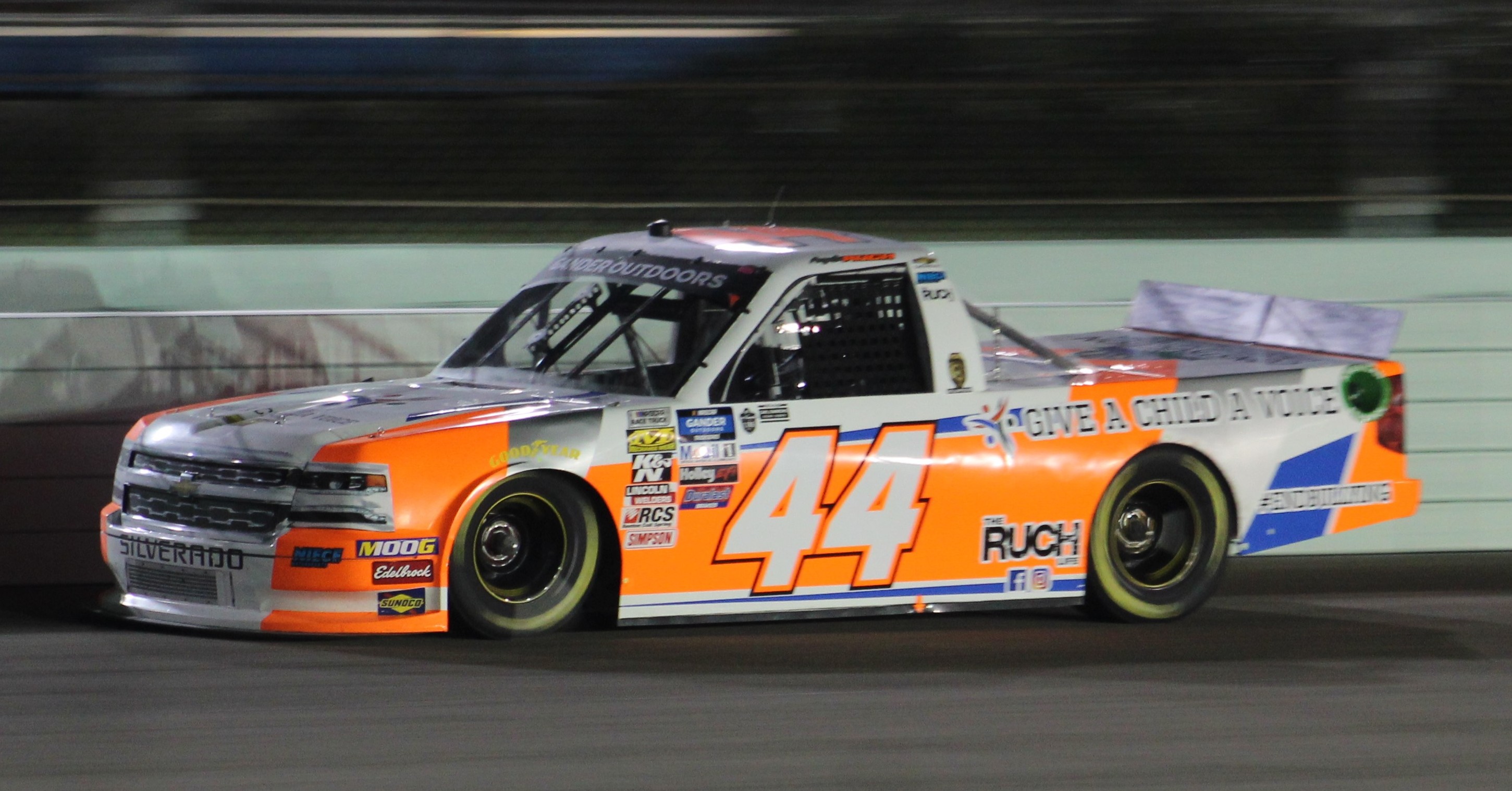
Chevrolet Silverado
"…I got a 2020 Silverado. Love it. Yeah, you know, I went and put some beefier tires on it."
The Chevrolet Silverado is a popular full-size pickup. Here, the host talks about his own Silverado and how he upgraded the tires for winter driving.
The Chevrolet Silverado is a full-size pickup known for being a common platform for off-road and snow/utility setups. In this episode, it’s the host’s personal truck that he modifies with larger tires.
bald tires
"Yeah. In their bald tires… With their bald tires and they're, you know, all wheel drive."
Bald tires are tires with almost no tread left. They don’t grip the road well, so braking and turning become much less safe.
Bald tires have little to no tread left, which dramatically reduces grip—especially in snow or rain. The host argues that bald tires are a major safety issue regardless of whether the truck has all-wheel drive.
all wheel drive
"…With their bald tires and they're, you know, all wheel drive."
All-wheel drive helps the car put power to more than two wheels for better traction. But if the tires are worn out, even AWD can’t make it safe.
All-wheel drive (AWD) sends power to multiple wheels to improve traction, but it doesn’t replace tire grip. The host’s point is that AWD can’t overcome the lack of traction from bald tires.
wheel slippage
"Subaru is either they, they remain in front wheel drive or it's actually rear wheel until it starts detecting the wheel slippage and then it'll actually like come in and out."
Wheel slippage is when a tire starts spinning because it doesn’t have enough grip. Cars can detect that and adjust power to help you keep moving.
Wheel slippage is when a tire loses grip and spins faster than the vehicle is actually moving. Many AWD systems monitor for this and then transfer torque to the axle that has traction.
rear wheel drive
"or it's actually rear wheel until it starts detecting the wheel slippage and then it'll actually like come in and out."
Rear-wheel drive means the back wheels move the car. Some AWD systems can behave like rear-wheel drive most of the time and only change when traction is lost.
Rear-wheel drive (RWD) sends power to the rear wheels. Some AWD systems can be configured to run primarily as RWD until traction control logic decides the rear axle needs help or the front axle needs torque.
front wheel drive
"It's either going to be front wheel drive or I believe, I think Subaru is like either."
Front-wheel drive means the front wheels do the work of moving the car. Some AWD cars start like this and only add rear-wheel power if the front wheels start slipping.
Front-wheel drive (FWD) sends engine power to the front wheels. In on-demand AWD setups, the car may start in FWD and only engage the rear axle when slip is detected.

Chevrolet Spin
"... not working. So like even though the drive shaft spin around, you're not driving the wheels because the..."
The Chevrolet Spin is a family-style vehicle meant to carry people and handle daily driving. The podcast is talking about a problem where the parts inside the drivetrain move, but the wheels still don’t get power. That usually means something in the power-transfer system isn’t engaging correctly.
The Chevrolet Spin is a compact multi-purpose vehicle (MPV) designed for passenger space and practical everyday use. The podcast context describes a situation where the drive shaft spins but the wheels aren’t driving, which points to a drivetrain engagement or power-transfer problem. It’s being referenced as the vehicle showing a specific symptom during diagnosis.
coupler
"we run a tiny little drive shaft to the back, you know, and, and we have this coupler on the front on that diff which most of the time is not working."
A coupler is a connector inside the drivetrain that helps send power to the other axle. If it breaks, the car can feel like it has AWD but it won’t really send power where it should.
In many part-time/on-demand AWD systems, a coupler is the device that links the drivetrain to send torque to the additional axle. If the coupler fails, the car may spin components but not actually transfer drive to the wheels that need it.
differential
"we have this coupler on the front on that diff which most of the time is not working."
A differential is a part that lets the wheels on an axle turn at slightly different speeds. That matters for turning, and it’s also part of how power gets distributed in AWD.
A differential is a gearbox that allows wheels on the same axle to rotate at different speeds, especially while turning. In AWD discussions, people often refer to the front/rear differential and how torque is routed through it.

Ford Ranger
"I remember my brother, God bless him, he bought a, he bought a Ranger in 2011 and he bought it in two wheel drive..."
The Ford Ranger is a pickup truck. Here they’re talking about how whether it’s two-wheel drive or four-wheel drive changes how well it handles snow.
The Ford Ranger is a compact pickup known for being practical and widely used, including in harsh winter conditions. In this segment, the hosts discuss how choosing two-wheel drive versus four-wheel drive affects real-world snow traction.
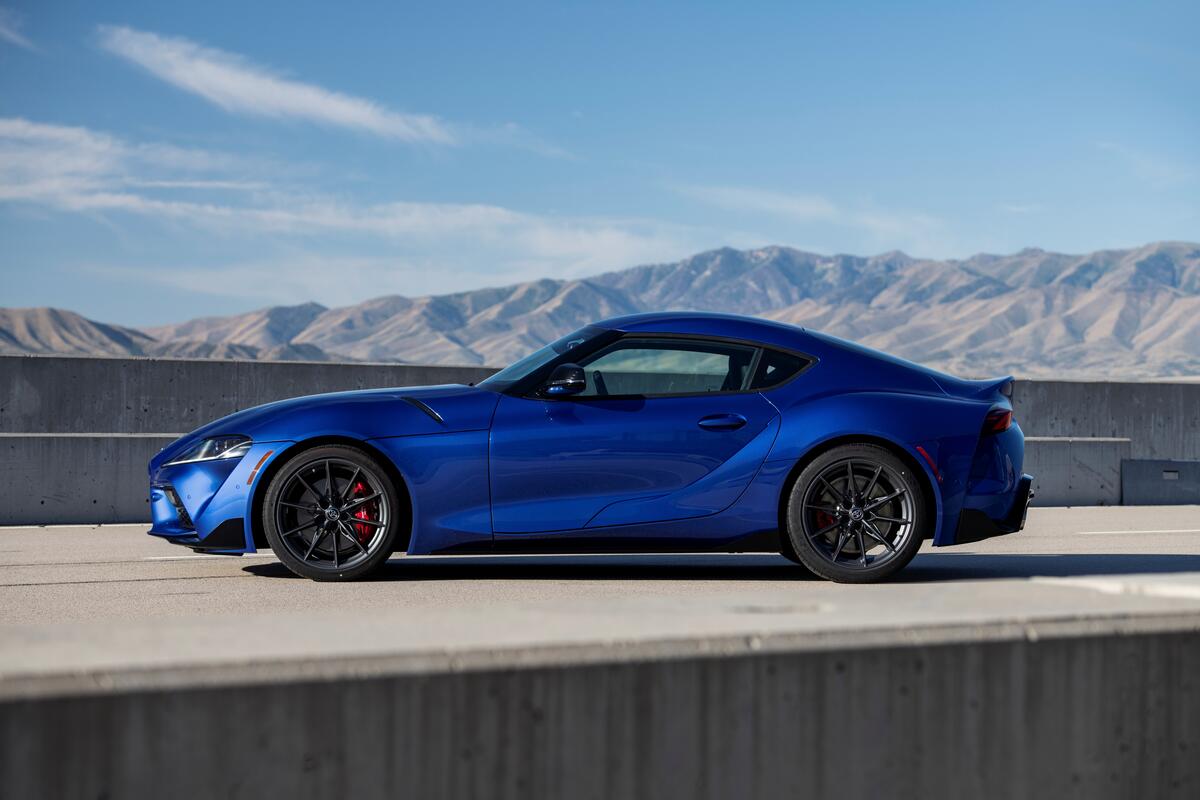
Toyota A90
"had, I've had two. I've had two Fords. I had a, I had a Dodge 1500 and I've had two Chevys. Now my first truck, that was a 90, 94 Ford Obs with the 300 straight six in it. Sink. Okay."
The Toyota Supra is a sports car designed to be fast and fun to drive. People who like cars often talk about it because it has a strong performance reputation. In the podcast, it’s mentioned as one of the cars the speaker has owned.
The Toyota Supra is a sports car known for strong performance and an enthusiast following. The podcast mention is brief and appears to be part of a personal history of different cars owned, which is often how the Supra gets discussed—more as a notable ownership experience than a technical deep dive. Its significance is that it’s a recognizable performance model people remember.
limited slip rear end
"That I believe that actually had a, it wasn't a posy rear end. That was like a limited slip. That was a limited slip rear end in it."
A limited-slip rear end helps prevent one wheel from spinning uselessly. It can make a truck get moving better when traction is uneven.
A limited-slip differential (often described as a limited-slip rear end) reduces wheel spin by limiting how much the slipping wheel can spin compared to the wheel with traction. This helps a truck pull more effectively when one side loses grip.
active fuel management
"I still gotta run into, you know, with the, the active fuel management management, the lifters failing and whatnot."
Active Fuel Management is a system that turns off some cylinders when you don’t need full power. If it malfunctions, it can cause engine problems and may need repairs.
Active Fuel Management (AFM) is a fuel-saving system that shuts down some cylinders under light load so the engine uses fewer cylinders. When AFM components wear or fail, it can lead to drivability issues and may require engine work.
stage two cam
"we're gonna throw a stage two cam in that thing. Just, you know, let her purr a little bit."
A camshaft controls valve timing inside the engine. A “stage two” cam is a more performance-oriented version that can change how the engine feels and makes power.
A “stage two cam” refers to an aftermarket camshaft with more aggressive lift/duration than stock, usually paired with other supporting modifications. It’s part of performance tuning to change how the engine breathes and how it makes power.
8-speed
"That one's got the 8, 8 speed in it. ... I really like it. You definitely can feel that. That like shudder in it sometimes."
An 8-speed transmission is an automatic gearbox with eight different gear ratios. It helps the engine stay in the right range, but sometimes you can feel odd shifting when it’s cold or not perfectly smooth.
An 8-speed automatic transmission uses eight gear ratios to keep the engine in a more efficient operating range. More gears can improve drivability and fuel economy, but they can also introduce shift feel issues depending on calibration and wear.
shudder
"You definitely can feel that. That like shudder in it sometimes. But it's... only when it's just first trying to warm up."
Shudder is when the car vibrates or feels like it’s jerking. Here they say it happens mostly when the vehicle is first warming up.
Shudder is a vibration or jerking sensation during acceleration or engagement, often tied to torque converter behavior, clutch packs, or engine/transmission calibration. In this segment, it’s described as most noticeable during warm-up.
AFM
"...if GM did one of the two things, either, you know, go back to a more durable transmission and kept AFM or deleted afm, I think they, they would fix, you know, a big problem with their trucks."
AFM is another fuel-saving system that can shut off some cylinders when you don’t need full power. The host thinks that removing it could help prevent certain transmission problems.
AFM is GM’s Active Fuel Management, a cylinder-deactivation system designed to boost fuel economy by shutting off cylinders under light load. The host suggests that either using a more durable transmission or deleting AFM could address a recurring drivability/robustness issue in GM trucks.
lockup
"...He says it's not constantly going in and out of lockup when it's going from eight down to four and all that jazz."
On an automatic transmission, there’s a part that can slip to smooth out power delivery. “Lockup” is when it tightens up to reduce that slipping, and the host says frequent switching can feel jerky.
“Lockup” refers to a torque converter clutch in an automatic transmission that locks the converter to reduce slip and improve efficiency. The host claims the transmission shudders when it repeatedly goes in and out of lockup during certain gear changes.
timing chains
"...if it's anything like your other four cylinder stuff, the timing chains are going to wipe out in it at like 80, maybe even 70, 70, 000 miles depending on who, who's taking care of it."
Timing chains keep the engine’s moving parts working in sync. The host is saying that on some turbo engines, the chain can wear out sooner than you’d expect.
A timing chain synchronizes the crankshaft and camshaft(s) so the engine’s valves open at the correct times. The host warns that on some modern small-displacement turbo engines, timing chains can wear/stretch and fail around roughly 70,000–80,000 miles depending on maintenance.
turbocharger
"...you're. A turbo on a big truck is expensive enough to change, right? Like if you go and put a turbo on a Detroit or Cummins or anything like that..."
A turbocharger boosts engine power by using exhaust gases to cram more air into the engine. The host’s concern is that when turbos fail, the repair can be very costly.
A turbocharger uses exhaust energy to spin a turbine that forces more air into the engine, improving power and efficiency. The host argues that replacing a turbo on a big truck is expensive, and that turbo failures (seizing, loud operation, or oil leaks) can create a large repair bill.
manifolds
"...where the manifolds are breaking at the same time. And like all that jazz you're, you're into, you're into a hefty bill."
Manifolds are parts that route exhaust gases to the turbo. The host is saying they can crack or fail, and if they go bad along with the turbo, the job gets expensive.
In this context, “manifolds” are the exhaust manifolds (and related runners) that route exhaust gases to the turbo. The host claims that on some turbo setups, manifolds and turbos can fail around the same time, compounding the repair cost.

Ford Fusion
"...I had a 23rd, I had a 2013 that was, that was my first car... had that like Aston Martin look to it that had a two, that had the two five four cylinder and it naturally aspirated."
The host describes owning a 2013 Ford Fusion with a naturally aspirated four-cylinder, then later passing it along and seeing it reach about 130,000 miles with relatively few issues. It’s used to argue that non-turbo (or less complex) setups can be easier to live with over time.
naturally aspirated
"...it had a two, that had the two five four cylinder and it naturally aspirated."
Naturally aspirated means the engine doesn’t use a turbo or supercharger to force air in. The host is basically saying it can be a simpler, less failure-prone setup.
Naturally aspirated engines make air intake pressure using atmospheric pressure, rather than a turbocharger or supercharger. The host contrasts this with turbocharged engines, implying the simpler airflow setup can reduce certain failure risks and repair costs.

Freightliner C2
"But these Freightliner C2s that we got, they're safe, right? Safe, light something like that. That's, that's their, that's their brand for it. But they are all they, all they have is just a 67 Cummins in them and then just air brakes."
A Freightliner C2 is a commercial truck that fleets use for lots of driving. The example here mentions it has a Cummins engine and air brakes—both are common in heavy-duty vehicles.
Freightliner C2 is a heavy-duty truck platform used in fleet applications like school buses and other commercial work. In this segment, the host describes it as being powered by a Cummins diesel and equipped with air brakes, which are common choices for durability and serviceability in commercial duty cycles.
air brakes
"But they are all they, all they have is just a 67 Cummins in them and then just air brakes."
Air brakes are brakes that use compressed air to help the vehicle stop. They’re common on big trucks and buses because they work well under heavy use.
Air brakes are a braking system that uses compressed air to apply force to the brake pads/shoes. They’re widely used on heavy vehicles because the system can generate strong, consistent braking and is designed to handle frequent stops and long-duty operation.
Cummins
"But they are all they, all they have is just a 67 Cummins in them and then just air brakes."
Cummins is a company that makes diesel engines. In trucks and buses, a Cummins engine is often chosen because it’s built for heavy use.
Cummins is an engine manufacturer best known in North America for diesel powertrains used in trucks and buses. When a fleet specifies a “Cummins” in a vehicle, it usually means they’re choosing a diesel engine platform designed for high mileage and long service intervals compared with many lighter-duty engines.
fleet life
"With school buses here we can only keep them keep them in in fleet for like 10 years. And so I think like the first five or six years like they can their full use."
“Fleet life” just means how long a company keeps its vehicles in regular service. Here, they’re talking about school buses and how they get retired after a certain number of years.
“Fleet life” refers to how long vehicles are kept in service before being retired, sold, or reassigned. In this segment, the host explains that school buses are typically kept for a set number of years, then shifted to spare use before being phased out.
phasing out
"After after that point there comes a time like you could still keep them in your sleep but like they're really only supposed to be like spares. Like you're not running them constantly all the time like every day and then they just, they. Then they'll start phasing out once they get to that 910 year mark."
“Phasing out” means the fleet starts retiring vehicles instead of using them every day. Eventually they’re sold, often to someone who repurposes them.
“Phasing out” means gradually removing vehicles from active duty as they reach the end of their useful service period. The host describes a transition from full-time use to spare status, then selling them off (often through auction) once they’re no longer intended for constant daily operation.
auction
"And then, then they just. We sell them. They go to auction or whatnot."
An auction is where vehicles get sold to buyers who bid on them. Fleet vehicles often end up at auction when the company retires them.
In fleet contexts, “auction” is a common end-of-life channel where retired vehicles are sold to the highest bidder. The host notes that once buses are sold, buyers may convert them into other uses like motorhomes.
mini split
"Like they're having full blown like AC systems in there and everything with like a little mini split."
A mini split is an air conditioner/heater system without ducts. It’s often used in camper conversions because it’s easier to install than a whole duct system.
A mini split is a ductless air-conditioning and heating system that uses an outdoor unit connected to one or more indoor air-handling units. It’s popular for conversions because it can be installed without running full ductwork through the vehicle.
schoolies
"we had some pretty, pretty big like mini buses that like you could do like us as, as the people call them, they call them school schoolies and they'll, they'll con. They'll convert them into like a camper or something."
“Schoolies” are school buses that people convert into campers. In this segment, they mention adding things like air conditioning for comfortable travel.
“Schoolies” is a slang term for converted school buses—typically turned into camper vans or motorhomes. The host describes people doing major interior upgrades, including installing modern climate systems like AC units.
ASE
"they're very heavy on getting, getting you trained and certified. Like I know, I know you've, you've heard and talked about before. You guys don't have ASCs up there, correct?"
ASE is a certification program for auto mechanics. It’s meant to show a technician has proven knowledge and training in specific repair areas.
ASE stands for the National Institute for Automotive Service Excellence, which offers standardized technician certifications in areas like engine repair, brakes, and electrical systems. The host discusses how ASE recognition varies by region and how certification can be used as a baseline for training and competence.
certified
"they're very heavy on getting, getting you trained and certified. Like I know, I know you've, you've heard and talked about before."
“Certified” means the mechanic has completed training and passed tests to prove they can do certain kinds of repairs. In this segment, it’s discussed alongside ASE certification.
“Certified” here refers to formal technician credentialing rather than just experience. The host ties it to training programs and standardized testing (in the ASE discussion) that aim to verify competence across repair tasks.
ASCs
"they're very heavy on getting, getting you trained and certified. Like I know, I know you've, you've heard and talked about before. You guys don't have ASCs up there, correct?"
“ASCs” here is being used in the same conversation as ASE, which is a mechanic certification. The point is whether shops and employers recognize that credential.
“ASCs” in this context appears to be the host’s way of referring to ASE-style certification/credentialing. The surrounding discussion is explicitly about ASE signs, ASE recognition, and technician certification levels.
heavy duty air brake
"like ASC wise going there. They, they, they really, they mandatory that you have your heavy duty air, air brake. Ase. I believe that, I believe that's what it's called. And it's just, it's just because like the company is very big on safety."
Some trucks use air instead of brake fluid. A compressor makes compressed air, and that air pressure helps squeeze the brakes at the wheels.
“Heavy-duty air brake” refers to a truck-style braking system that uses compressed air to apply the brakes. Instead of hydraulic fluid like many passenger cars, air pressure is routed through valves to control brake force at the wheels.
Thomas built boss
"and then along with like just all sorts of other training with like Cummins and then you know, like you were saying like Thomas built boss or anything like that, just so we've got better, better, you know, general knowledge of what's going."
This sounds like a bus-related training/parts provider. The point in the conversation is that technicians get extra education from manufacturers and specialists, not just from the shop.
“Thomas Built” is associated with school bus manufacturing, and “Boss” is commonly used in the bus/coach parts and service world (often referring to a specific training/parts ecosystem). In the segment, the speaker groups it with Cummins as another source of technician training.
Scanner Dan
"Or I don't care what it is. If it's watching Scanner Dan or if it's watching, you know, Moto htst does their lunch and learns, right?"
Scanner Dan is a person who teaches car diagnostics, often using scan tools. The host is suggesting shops use that kind of video training during work hours.
Scanner Dan is a well-known automotive diagnostic educator/content creator associated with scan-tool-based troubleshooting. The speaker references his “lunch and learns” style videos as training material technicians can use.
Moto htst
"If it's watching Scanner Dan or if it's watching, you know, Moto htst does their lunch and learns, right?"
This seems like another training channel the speaker is talking about. They’re using it as an example of videos technicians can watch during a scheduled training time.
“Moto htst” appears to be a mis-transcription of a specific automotive training channel or brand. The speaker groups it with other “lunch and learns” content as video-based technician education.
engine diag
"They get the engine diag style side of things. They can kill it. But you know, for me I, I don't think they do a lot of like, you know, of the basics."
“Engine diag” means figuring out what’s wrong with an engine using tools and tests. The speaker is saying some techs focus on that but may miss other practical skills.
“Engine diag” is shorthand for engine diagnostics—using scan tools, sensors, and test procedures to find why an engine is running poorly or setting trouble codes. The speaker contrasts this with teaching broader “basics” like hands-on mechanical repair skills.
MIG welder
"Well, what about if you got a sudden a broken bolt? Like we could do an afternoon where it's like, okay everybody here's a MIG welder. Right now we're gonna learn how to at least get this broken stud out of this cylinder head, right?"
A MIG welder is a tool for joining metal parts with a wire and shielding gas. The host is saying technicians should learn hands-on repair skills, not just engine diagnosis.
A MIG welder (Metal Inert Gas) is a welding process that uses a continuously fed wire electrode and shielding gas to create welds. The speaker uses it as an example of practical shop skills technicians should learn, like removing a broken stud and repairing metal components.
broken stud
"okay everybody here's a MIG welder. Right now we're gonna learn how to at least get this broken stud out of this cylinder head, right?"
A stud is like a threaded bolt that’s used to hold engine parts together. If it breaks off inside the engine, it can be tricky to remove without ruining the surrounding metal.
A “stud” is a threaded fastener used in engines to secure parts, and a “broken stud” means it has snapped off in the component. Extracting a broken stud from an engine part (like a cylinder head) is a common, high-skill repair because it requires careful removal without damaging the threads or sealing surfaces.
cylinder head
"get this broken stud out of this cylinder head, right?"
The cylinder head is the top part of the engine where the combustion happens. It’s important and has precision surfaces, so repairs there need to be done carefully.
The cylinder head is the engine component that sits atop the cylinders and houses critical parts like valves and the combustion chamber. It’s also a common place for threaded fasteners (studs) that can break, making repairs more delicate because sealing surfaces must be preserved.
oxygen sensor
"if you don't want to teach your guys in the, in the shop, you know, fuel trims and oxygen sensor versus wideband and so on and so forth, hell, man, teach them how to weld two piece of pipe together."
An oxygen sensor checks what’s coming out of the exhaust. The engine uses that info to adjust the fuel mixture so the car runs correctly.
An oxygen sensor (often called an O2 sensor) measures oxygen content in the exhaust so the engine can adjust air-fuel mixture. The speaker contrasts it with a “wideband” sensor, implying different sensor types and diagnostic usefulness.
fuel trims
"if you don't want to teach your guys in the, in the shop, you know, fuel trims and oxygen sensor versus wideband and so on and so forth, hell, man, teach them how to weld two piece of pipe together."
Fuel trims are the car’s way of fine-tuning how much gas it’s injecting. If the engine computer keeps adjusting them, it can be a clue that something isn’t right.
Fuel trims are the engine computer’s adjustments to how much fuel it injects compared to a baseline. Technicians use them to diagnose issues like vacuum leaks, sensor problems, or exhaust/airflow problems because the computer is “correcting” for what it senses.
wideband
"if you don't want to teach your guys in the, in the shop, you know, fuel trims and oxygen sensor versus wideband and so on and so forth, hell, man, teach them how to weld two piece of pipe together."
A wideband sensor gives a more detailed readout of the air-fuel mixture. That helps a mechanic pinpoint mixture problems instead of guessing.
A wideband oxygen sensor (wideband AFR sensing) provides more detailed air-fuel ratio information than many narrowband sensors. That extra resolution helps technicians diagnose drivability and mixture problems more precisely.
U bolts
"let's just take the two U bolts off and you know, drag it out. Put the new one on then."
U-bolts are heavy-duty clamps that hold parts together. In this context, they’re used to secure suspension components and need to be tightened correctly.
U-bolts are threaded fasteners shaped like a “U” that clamp components together, commonly used on suspension and axle-related setups. The host describes removing and reinstalling U-bolts as part of a spring-related job, emphasizing their weight and the high torque required.
camel pack springs
"doing a set of camel pack springs on a straight job ... let's just take the two U bolts off ..."
Camel pack springs are a type of truck suspension spring made from multiple metal leaves. They’re heavy, so the job often needs special lifting tools.
“Camel pack springs” refers to a multi-leaf spring arrangement used on some trucks, where the spring pack shape resembles a camel’s hump. It’s a suspension component that can be heavy and awkward to handle, often requiring lifting equipment.
torque multiplier
"With torquing those down, you actually got to use a torque multiplier because it's some sort of absurd amount like I."
A torque multiplier is a mechanical tool that helps you tighten bolts to a very high spec. It makes the job easier while still getting the correct tightness.
A torque multiplier is a tool that increases the effective torque applied by a smaller input force, letting you tighten very high-torque fasteners more easily and accurately. The host mentions needing one when torquing U-bolts, implying the spec is high enough that normal leverage is difficult.

Chevrolet Volt
"...ne just even, just even basic, basic wire like 12 volt lighting, just doing tail lights and stuff. A lot..."
The Chevrolet Volt is a hybrid car you can plug in. It uses electricity for some driving, and it can also use gasoline when needed. Even though it’s hybrid, it still has a normal 12-volt system for things like lights, which is what the podcast is talking about.
The Chevrolet Volt is a plug-in hybrid that can run on electricity for shorter trips and then switch to a gasoline engine for extended driving. The podcast context references basic 12-volt lighting work like tail lights, which is relevant because hybrids still use a conventional 12V electrical system for many accessories. It’s discussed as a practical example of troubleshooting everyday electrical components.
Mack trucks
"A lovely design that Mac, that Mack trucks does with their tail lights on the back of their trucks."
Mack Trucks is a company that makes heavy-duty trucks. The host is talking about how their tail-light wiring is set up and why that design can make repairs more confusing.
Mack Trucks is a heavy-truck brand known for specific lighting and wiring layouts on its vehicles. The host points out Mack’s tail-light design and the rubber/plastic covers over the wiring connections, which can affect how wiring is accessed and protected.
wiring harness
"And you know, the wiring, your wiring harness goes in there. And you know when somebody goes in there before you, oh, screw the loom, it doesn't need that."
A wiring harness is the car’s wire bundle that connects all the electrical parts. If it gets damaged or the connections are bad, lights and other systems can act up.
A wiring harness is the bundled set of wires and connectors that routes electrical power and signals through the vehicle. The host discusses how the harness is protected (or not) by covers and how damage or poor connections can lead to lighting faults like flickering.
fifth wheel plate
"it's not that it's a worn fifth wheel plate or, you know, like it's, it's crazy wonky like that."
A fifth-wheel plate is the mounting area on a semi-truck where the trailer connects. The host mentions it because the frame/ground location matters when troubleshooting electrical issues.
A fifth-wheel plate is part of a truck’s coupling system used to connect a tractor to a semi-trailer. The host references it while describing how to test electrical grounding by running a booster cable to the frame area near the fifth-wheel setup.
Request an Explanation
Heard something you'd like explained? We'll add it to this episode.
Sign in to request explanations for terms you heard.
Want to learn more?
Browse our glossary for plain-English explanations of automotive terms, jargon, and concepts.
Help improve this episode
See something that's not quite right? Our annotations are AI-generated and can sometimes miss the mark. Click the flag icon on any annotation to suggest a correction.