Stewart Howden hosts a lively discussion with guests Alwin Springer and Keith Martin, diving into the world of classic cars amidst a snowy backdrop. Alwin shares his journey from Germany to North America, detailing his extensive experience in motorsports and his connections with Porsche and Penske Racing. The conversation touches on the evolution of racing strategies, the importance of teamwork, and the significance of simulators in modern racing. Keith Martin provides insights into the current state of the classic car market, emphasizing the vitality of the hobby and the impact of younger enthusiasts. The episode is rich with stories, industry insights, and personal anecdotes.
CAM Show #228 01-28-26 Stewart welcomes Alwin Springer, Automotive Consultant, Racecar Driver and "Porsche Guru" as they review his career including moving from #Germany to #Toronto to #Daytona to #California. also his working for #VasekPolak, the #Czech-American car dealer, race car driver and race team owner as well as @PenskeRacing. Plus Keith Martin of SportsCarMarket bringing his blog to life discussing offering his #Jaguar on #BringAtrailer #auction at #NoReserve. @F1 @BMW @VW #BobbyRahal @IMSA @Daytona #HolbertRacing @Porsche #PorscheRennsport #LagunaSeca #GrandPrixOfLongBeach #RoadAmericaCanAm
GET OUR FREE APP: https://ClassicAutoMall.appimize.app When it opens click on the ORANGE button to install on your phone or computer for DIRECT ACCESS to our VIDEO and AUDIO shows and our website.
CONTENT NOTE: Contests, Prizes, Offers, Vehicles & other items may no longer be available or offered after each show's original broadcast or posting date.
Recorded in our Showcase Studio just inside the entrance of the Classic Auto Mall in Morgantown, PA, Host Stewart Howden, Classic Auto Mall President and Classic Car Specialist Steve Saffier talk about this unique and amazing place often with amazing guests.
YES...Classic Auto Mall is a REAL former shopping mall that covers almost EIGHT football fields with an average of nearly ONE THOUSAND classic vehicles under one, climate controlled roof and they're all FOR SALE!
Be sure to LIKE and SUBSCRIBE to be informed of new episodes and SEE them on the Classic Auto Mall YouTube Channel. We also invite you to VISIT US IN PERSON at Classic Auto Mall, one hour west of Philadelphia at PA Turnpike Exit #298, VISIT us online at ClassicAutoMall.com or talk to real, live people about visiting, buying or selling your classic on consignment at 888-227-0914.
"...I'm gonna guess a Porsche number anyway. Oh. 968. Alright."
The Porsche 968 is a sporty car made by Porsche in the early 1990s. It is appreciated for its good handling and comes in both a hardtop and a convertible version.
The Porsche 968 is a sports car produced by Porsche from 1992 to 1995. It is known for its balanced handling and was available in coupe and convertible body styles.
The Porsche 928 is a fancy sports car made by Porsche that was built from the late 1970s to the mid-1990s. It stands out because it has its engine in the front instead of the back, which is different from most other Porsches. People talk about it because it mixes speed with a comfortable ride.
The Porsche 928 is a luxury sports car that was produced by Porsche from 1978 to 1995. It is notable for its unique front-engine layout and was designed to combine the performance of a sports car with the comfort of a grand tourer. The 928 is often discussed for its innovative design and as a departure from Porsche's traditional rear-engine models.
Car
Volkswagen 550 Spyder
"...but a car was a normal..."
The Volkswagen 550 Spyder is a classic sports car from the 1950s. It's known for being very light and fast, and it has a famous history in racing and pop culture.
The Volkswagen 550 Spyder is a lightweight sports car produced in the 1950s, known for its racing pedigree and distinctive design. It was originally developed by Porsche and is often associated with the legendary actor James Dean, who famously drove one before his tragic accident.
"...I went for, it's a 906 from Canada to Daytona and we raced there. And then people from California came and said, listen, what do you mean?"
The Porsche 906 is a race car made by Porsche in the 1960s. It's known for being very light and fast, and it was used in many racing competitions.
The Porsche 906 is a lightweight sports car that was produced in the mid-1960s, known for its success in racing, particularly in endurance events. It featured a mid-engine layout and was designed to be both fast and agile on the track.
"...Got my Volkswagen and a Beetle and put my toolbox in, put my suitcase in it. I know exactly $870 and off we went to California."
The Volkswagen Beetle is a small car that looks very different from most cars today. It has a round shape and was popular for many years, especially in the 1960s and 70s.
The Volkswagen Beetle is a compact car that was produced by Volkswagen from the late 1930s until 2003. It is known for its distinctive rounded shape and rear-engine layout, making it an iconic vehicle in automotive history.
"... And I learned physically for four months here at 917 and the engine transmission chassis, everything ..."
The Porsche 917 is a famous race car from the late 1960s and early 1970s that is known for being super fast and winning many races. It has a unique design and a powerful engine, which helped it become a big deal in the racing world. People talk about it because it changed the way race cars were made.
The Porsche 917 is a legendary race car that gained fame in the late 1960s and early 1970s, known for its incredible speed and success in endurance racing, particularly at the 24 Hours of Le Mans. Its innovative design and powerful flat-12 engine set new standards in motorsport, making it a significant part of automotive history. The 917 is often discussed for its impact on racing technology and its iconic status.
"...that again, later foundation for the relationship with Penske Racing. And you've been involved with Porsche and Penske for a long, long time..."
Penske Racing is a well-known racing team in the United States, famous for competing in different types of car races. They have worked with many car brands, including Porsche, to achieve success on the racetrack.
Penske Racing is a prominent American professional motorsports organization founded by Roger Penske. It is known for its success in various racing series, including IndyCar and NASCAR, and has a long history of partnerships with manufacturers like Porsche.
"The 963, what I did, I, the main manager from the race team and not the race team from Porsche..."
The Porsche 963 is a type of race car built for endurance racing. It's part of a series of cars that compete in long-distance races, where speed and reliability are crucial.
The Porsche 963 is a race car designed for endurance racing, specifically in the LMP (Le Mans Prototype) category. It represents Porsche's commitment to high-performance motorsport and showcases advanced engineering and design.
"...he did LMP one. And he said, okay, look, can you help me?"
LMP means Le Mans Prototype, which is a type of race car built for long-distance races. These cars are designed to be very fast and efficient over many hours of racing.
LMP stands for Le Mans Prototype, a category of racing cars designed specifically for endurance racing events like the 24 Hours of Le Mans. These cars are known for their high speeds and advanced aerodynamics.
"...Formula One, BMW, but United States and the people."
BMW is a well-known car brand from Germany that makes luxury cars and sports cars. They are famous for their performance and quality.
BMW, or Bayerische Motoren Werke, is a German automotive brand known for its luxury vehicles and high-performance sports cars. The brand has a rich history in motorsport and engineering excellence.
"...particularly maybe more in Formula One, a lot of strategy. I mean, the tires and the whole thing..."
Formula One is a top-level car racing series where teams compete in fast cars on different tracks. It's famous for its exciting races and the technology used in the cars.
Formula One is a premier international auto racing sport known for its high-speed cars and advanced technology. It involves a series of races known as Grands Prix, held on various circuits around the world, and emphasizes strategy, teamwork, and engineering excellence.
"...I mean, the tires and the whole thing and, you know, just planning it all out..."
Tires are the rubber parts of a car that touch the road. In racing, teams choose special tires to help their cars go faster and handle better depending on the track conditions.
Tires are critical components of a car that affect grip, handling, and overall performance on the track. In racing, different types of tires are used based on weather conditions and race strategy, impacting speed and control.
The Porsche 935 is a race car that was built from the Porsche 911. It was popular in the 1970s and known for winning many races.
The Porsche 935 is a racing car based on the Porsche 911, developed in the 1970s. It gained fame for its success in various racing series, particularly in the IMSA and Group 5 categories.
"...that's when you look at today's 962 in a museum or on an exhibition."
The Porsche 962 is a famous race car from the 1980s that competed in long-distance races. It's recognized for its unique shape and many victories in racing events.
The Porsche 962 is a sports prototype race car that was developed for endurance racing in the 1980s. It is known for its aerodynamic design and success in events like the 24 Hours of Le Mans.
"So what I, what I went and I got with Al is the thing is, let's say an example turbocharger. So we were kind of the development team."
A turbocharger is a part that helps an engine produce more power by pushing extra air into it. This allows the engine to burn more fuel and run faster.
A turbocharger is a device that forces more air into the engine's combustion chamber, allowing for more fuel to be burned and thus increasing power output. It's commonly used in performance and racing applications to enhance engine efficiency and performance.
"how many turbochargers do you go to a Garrett area search and say we buy?"
Garrett is a company that makes turbochargers, which are parts that help engines run better and faster. They are popular among car enthusiasts and in racing.
Garrett is a well-known manufacturer of turbochargers and related components. They are recognized for their innovative designs and performance-oriented products used in both aftermarket and OEM applications.
"...because it looked like it was a completely car made only for Le Mans. Because when you, when you, I don't know if you..."
Le Mans is a famous car race that lasts for 24 hours. It's held in France and is known for being very challenging for the cars and drivers.
Le Mans refers to the 24 Hours of Le Mans, a prestigious endurance race held annually in France. It is known for testing the durability and performance of racing cars over a full day of continuous racing.
The 1911 ST is a car from the year 1911, which is very old and part of automotive history. Cars from this time are rare and special because they were some of the first cars ever made.
The 1911 ST is a notable vehicle, likely referring to a specific model from that era, which is significant in automotive history. Cars from this time are often considered classics and represent early automotive engineering.
"On one side and on the other side, I have a Genesis G80. You're, you're a practical man too, right?"
The Genesis G80 is a fancy car that is comfortable and has a lot of cool features. It's made by Genesis, which is a luxury brand from Hyundai.
The Genesis G80 is a luxury sedan that offers a blend of performance, comfort, and advanced technology. It is known for its elegant design and high-quality interior materials, making it a strong competitor in the luxury car market.
"How about the 1970 Chevrolet Nova SS tribute? Yes."
The Chevrolet Nova SS is a sportier version of the Nova, which is a classic American car. The 'SS' means it has better performance features.
The Chevrolet Nova SS is a performance-oriented version of the Nova, known for its sporty features and powerful engine options. The 'SS' stands for 'Super Sport', indicating a higher level of performance and styling.
A 383 stroker is a type of engine that has been modified to make it bigger and more powerful. It helps the car go faster and perform better.
A 383 stroker refers to a modified engine that has been increased in displacement to 383 cubic inches, typically by using a longer stroke crankshaft. This modification enhances power and torque, making it a popular choice for performance builds.
Aluminum heads are parts of the engine that help it run better. They are lighter than other materials and help keep the engine cool.
Aluminum heads are cylinder heads made from aluminum instead of cast iron. They are lighter and provide better heat dissipation, which can improve engine performance and efficiency.
"Holley Sniper EFI, which are so cool. They just bolt and go, right?"
Holley Sniper EFI is a system that helps cars use fuel more efficiently. It's a modern replacement for older fuel systems that used carburetors.
Holley Sniper EFI is an aftermarket electronic fuel injection system designed for performance vehicles. It simplifies the process of upgrading from a carburetor to EFI, providing better fuel efficiency and performance.
"Oh yeah. But they've got a computer and stuff. So, Tremec five-speed manual."
A Tremec five-speed manual is a type of transmission that lets you change gears manually. It's often used in sports cars for better control.
The Tremec five-speed manual transmission is known for its durability and performance in high-powered vehicles. It's a popular choice for enthusiasts looking to enhance their driving experience.
A Moser nine-inch 370 posi axle is a strong part of a car's drivetrain that helps it move. It's designed for high-performance cars that need extra strength.
The Moser nine-inch 370 posi axle is a high-performance rear axle assembly known for its strength and reliability. It's commonly used in racing and modified vehicles to handle increased power and torque.
"How about the 1937 Hudson custom series 77 country club touring sedan? Beauty."
The Hudson Custom Series 77 is an old car made in 1937. It's known for its special look and was a favorite among people back then because it was comfortable and performed well.
The Hudson Custom Series 77 is a classic car from 1937 known for its unique styling and engineering. It features a distinctive design and was popular during its time for its performance and comfort.
Car
Rauch Lang C55
"Next is the 1921 Rauch Lang C55 double control coach. Now, guess what this car is from 1921? Why it's an electric car."
The Rauch Lang C55 is an electric car made in 1921. It's interesting because many people think electric cars are a new invention, but they actually existed over a century ago.
The Rauch Lang C55 is a historical electric car from 1921, showcasing early advancements in electric vehicle technology. It is notable for being one of the few electric cars produced during that era, which is often overlooked in automotive history.
"How about another new arrival, the 1969 Volkswagen Type 2 bus."
The Volkswagen Type 2 bus is a famous old van known for its boxy shape and roomy interior. Many people used it for family trips and camping because it can fit a lot of people and gear.
The Volkswagen Type 2 bus, also known as the VW Bus or Kombi, is a classic vehicle that became iconic for its distinctive shape and versatility. Produced from the late 1940s through the 1980s, it was popular among families and travelers for its spacious interior and unique design.
A flat four engine is a type of engine where the cylinders are laid out flat instead of standing up. This helps the car handle better on the road.
A flat four engine, also known as a boxer engine, has four cylinders arranged horizontally. This design helps lower the center of gravity of the vehicle, improving handling and stability.
"...my dad's girlfriend's daughters had a Volkswagen bus and we drove from Salisbury to Ocean City, Maryland."
The Volkswagen Bus is a famous van that many people love for its unique look and roomy space. It's often used for road trips and camping.
The Volkswagen Bus, also known as the Type 2, is a classic vehicle known for its distinctive shape and versatility. It has been popular for its spacious interior and has a strong following among enthusiasts.
"350 cubic inch crate V8. Well, we saw the restomods at Barrett Jackson Corvettes..."
A crate V8 is a ready-to-install engine that you can buy to put in a car. It's often used to replace old engines or to upgrade performance.
A crate V8 refers to a complete V8 engine that is sold as a package, ready to be installed in a vehicle. These engines are often used in restorations and custom builds for their reliability and performance.
"...8. Well, we saw the restomods at Barrett Jackson Corvettes coming out of the woodwork and bringing crazy mo..."
The Chevrolet Corvette is a well-known sports car from America that has been around since the early 1950s. It's famous for being fast and having a cool design, making it a favorite among car lovers. People often talk about it because it has a long history and has changed a lot over the years.
The Chevrolet Corvette is an iconic American sports car that has been in production since 1953. Known for its powerful performance and distinctive styling, the Corvette has become a symbol of American automotive engineering and culture. It is frequently discussed in automotive circles for its racing heritage and ongoing evolution through various generations.
"And especially with a four speed manual transmission. And that just is, as we say all the time, it's begging for a fifth gear."
A four-speed manual transmission is a type of gearbox that lets you change gears manually. Some people wish it had a fifth gear for better performance on highways.
A four-speed manual transmission allows the driver to manually select gears, providing a more engaging driving experience. However, some drivers feel that it lacks the versatility of a five-speed transmission, especially for highway driving.
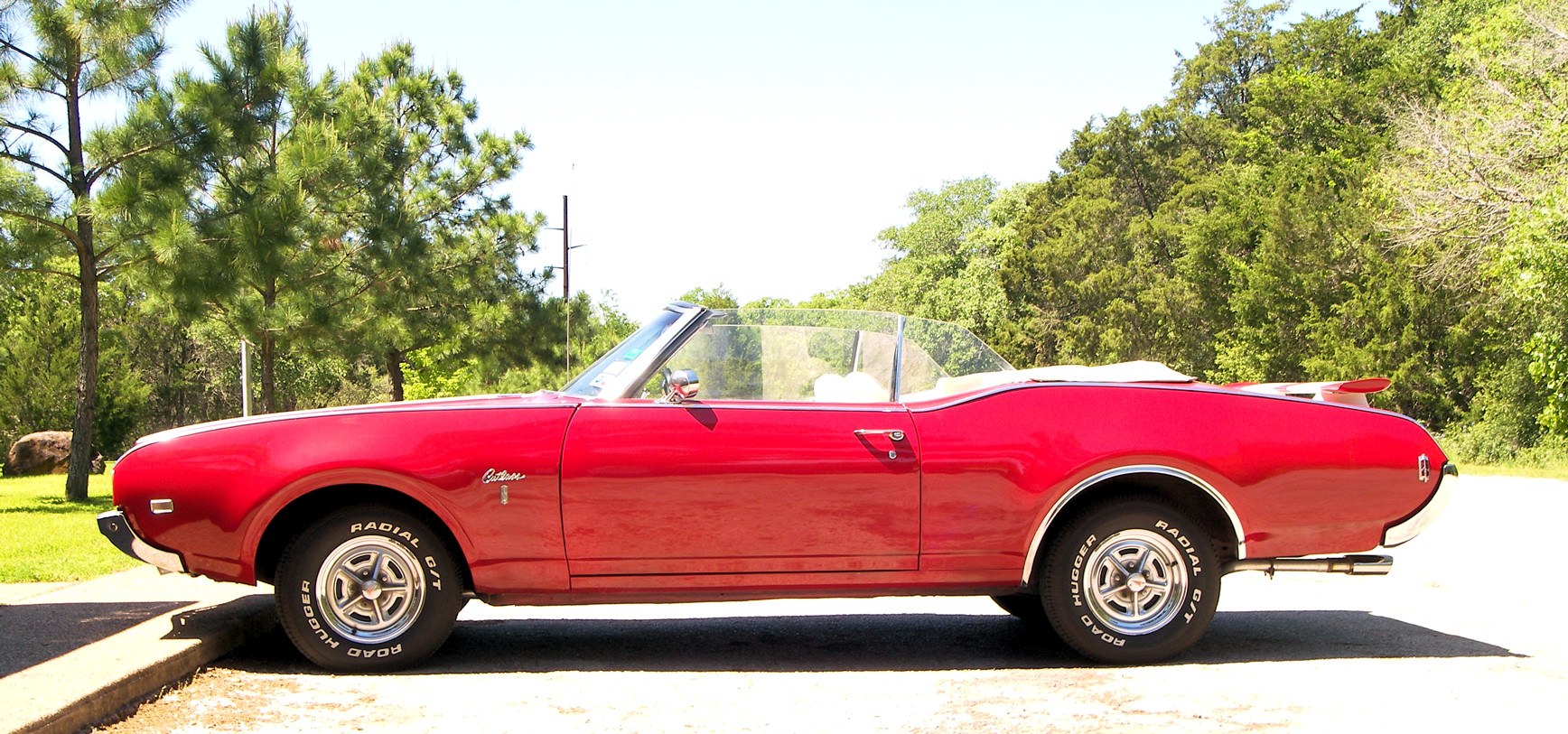
"And last but not least, the 1971 Oldsmobile Cutlass Supreme Convertible. I think we've got this one sold or, I think it's going overseas."
The 1971 Oldsmobile Cutlass Supreme Convertible is a classic car that many people enjoy for its stylish design and the fun of driving with the top down.
The 1971 Oldsmobile Cutlass Supreme Convertible is a classic American muscle car known for its style and performance. Convertibles are particularly sought after for their open-air driving experience.
"Me, it is. But it just, it, well, also the big surprise for me is I've had a fair number of E-types and this is not a sports car."
The Jaguar E-Type is a classic sports car that was made from the early 1960s to the mid-1970s. It's famous for its beautiful design and fast performance, making it a favorite among car collectors. People often talk about it because it's considered one of the best-looking cars ever.
The Jaguar E-Type, produced from 1961 to 1975, is often regarded as one of the most beautiful cars ever made, combining stunning design with impressive performance. It played a significant role in establishing Jaguar's reputation in the sports car market and is celebrated for its elegance and engineering. The E-Type is frequently discussed for its classic status and influence on automotive design.
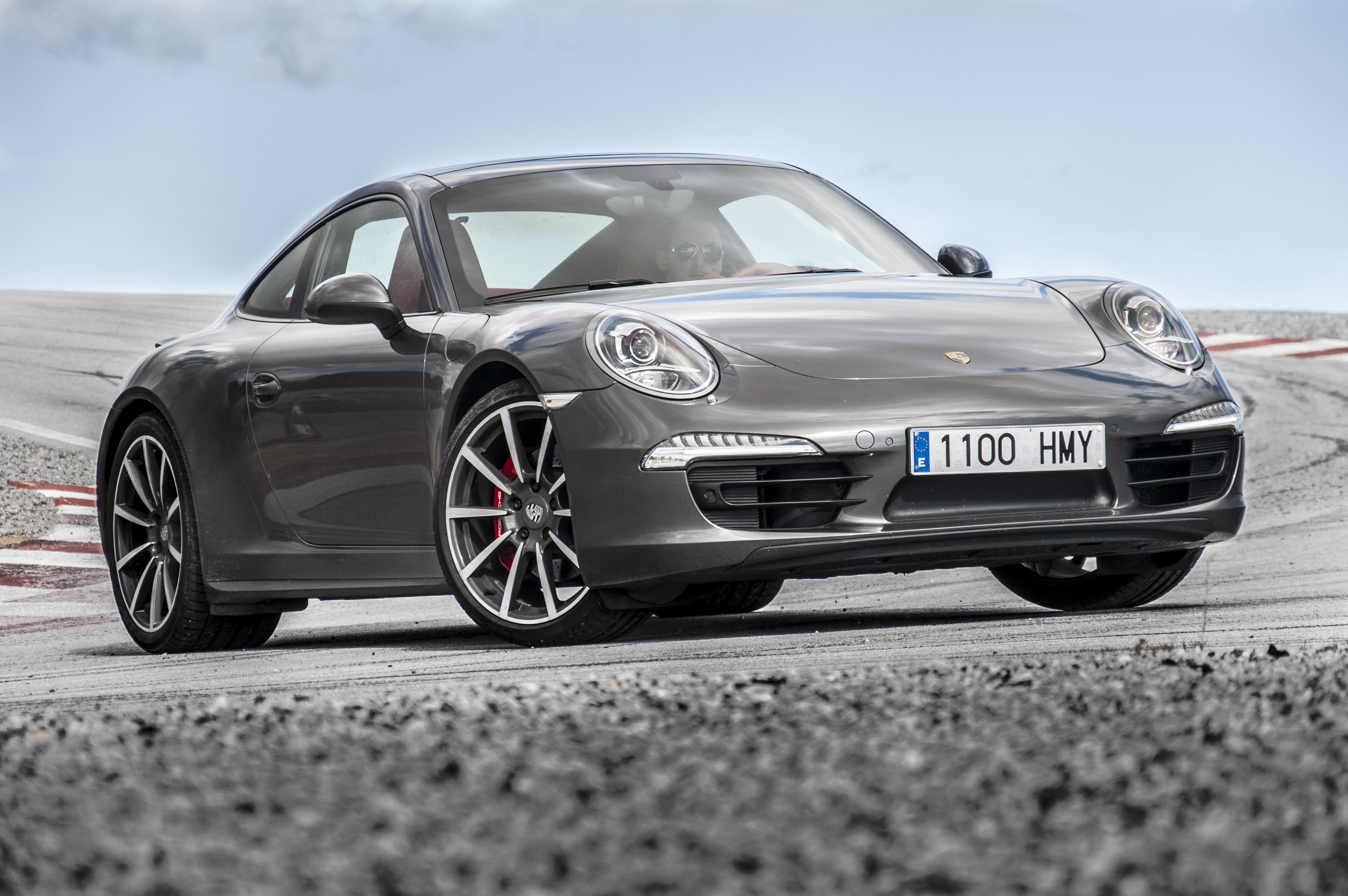
"So what will you replace it with? I bought a 911 C4S. There you go."
The Porsche 911 is a famous sports car that has been around since the 1960s. It's known for its unique shape and powerful performance, making it a favorite among car enthusiasts. People talk about it a lot because it has a rich history and has improved with each new version.
The Porsche 911 is a legendary sports car that has been in production since 1964, known for its distinctive design and rear-engine layout. It has a reputation for exceptional performance, handling, and engineering excellence, making it one of the most celebrated sports cars in automotive history. The 911 is often discussed for its iconic status and continuous evolution over the decades.
"...e on a late model, like a 2002 Corvette or a 2005 Mustang, it looks like a new car, but it really, it's 20..."
The Ford Mustang is a classic American car that first came out in the 1960s. It's known for being fast and having a sporty look, which makes it very popular. People often talk about it because it's a big part of car culture in the U.S.
The Ford Mustang is an iconic American muscle car that debuted in 1964 and has become a symbol of American automotive culture. Known for its powerful engines and sporty design, the Mustang has undergone numerous changes while maintaining its classic appeal. It is often discussed for its influence on the automotive market and its status as a performance vehicle.
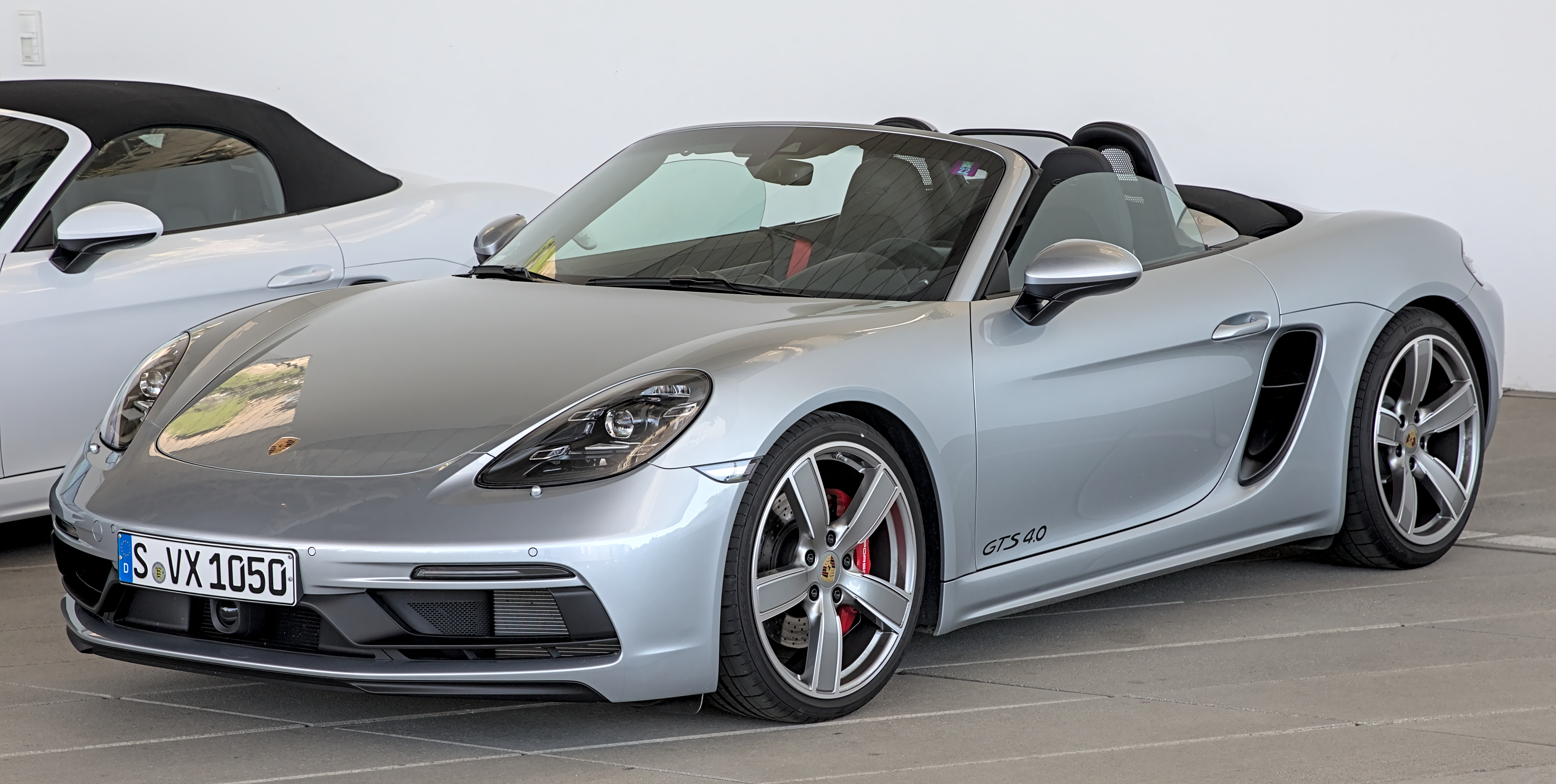
"...years overlooked that and said, oh, it's got the Boxster headlights and all that. And it's got this and g..."
The Porsche Boxster is a sporty convertible car that started being made in the late 1990s. It's designed to be fun to drive while also being more affordable than some other Porsches. People like to talk about it because it combines good performance with the joy of open-top driving.
The Porsche Boxster is a mid-engine roadster that was introduced in 1996, designed to offer a more affordable entry into the Porsche brand while still delivering sporty performance. It is known for its agile handling and convertible design, making it a popular choice among driving enthusiasts. The Boxster is often discussed for its balance of performance and everyday usability.
Select text to request an explanation
This is the Classic Automall Show.
Broadcast from the studios inside the Classic Automall in Morgantown, Pennsylvania, just
one hour west of Philadelphia at Pennsylvania Turnpike Exit 298, featuring nearly 1,000
classic vintage and barred-fine vehicles for sale under one climate-controlled roof.
Now, here's your host, Classic Automall president and the man with all the toys,
Stuart Howden.
And here we are, show number 228, and of course we are buried in snow.
Love it.
The piles in our parking lot are gonna, they're not gonna melt till July.
I wanna make a little fort in them like we used to.
Like a little tunnel.
I have not been plowed out at home yet.
Okay, we've heard that enough of that this morning.
Wow, wow, wow, I know.
Glad you made it.
Glad you made it in.
And so it's too bad that our inventory doesn't have a Porsche reference today,
considering our guess.
But anyway, I'll let Steve go first this week.
How many cars in inventory, Steve?
Right this moment.
I'm gonna guess a Porsche number anyway.
Oh.
968.
Alright.
I'm gonna play your game.
969.
How about 950?
Neither one of you went.
You both went over.
I almost did 928.
Yeah.
Well, we went down in inventory a little bit because of the snow, and sales because of
the snow a little bit.
Sure.
We got 11 or 12 inches of snow here.
So most we've had in a number of years.
And now it's not supposed to get above 28 for the next 80 years or something like that.
Do you long for Tennessee?
Well, Southern California a couple of weeks ago where I was.
I'll take that back no matter what.
So anyway, let's get to our guest joining us this morning from the south.
I imagine from Southern California, Mr. Alan Springer.
And Alan is a Porsche guru, consultant now, semi-retired.
Also, the Godfather and the OG, I've heard them refer to you as.
Good morning, Alan.
Yeah, good morning to it.
It's very, very nice to hear you guys speaking.
And I feel sorry for you about the snow because I was in Miami and we just were really, really
lucky to come home on Monday.
And we went over Chicago, but Chicago was okay.
It was fine.
So we just draped it on the side line, but made it home nice.
But you know, that's one of the reasons when I heard you speaking about the snow and the
cold.
And I was in Toronto, you know, that in the beginning of my American or North American
journey and after two winter times, I had enough.
Yeah.
I said, that's it.
That's it.
Life is too short.
It's a long time.
It's a long time ago.
So I'm glad that I'm here.
Yeah, you went to Southern California and you were born in Germany though, right?
I'm born in Germany.
I was in Essen.
In Essen.
Oh, okay.
Yeah.
It's, you know, we had a John Rinshaw and it's, but it's in a heavy industrial town.
Sure.
At the time.
Not now anymore.
Not now anymore.
And did you?
No, coal mines are gone.
The coal mines are gone.
Did you drive the Autobahn much?
Do you get back there often?
Yeah, it used to be two, three times a year, but now it's one time a year.
It's usually around November, December.
And I go home.
Right.
And like I said, 60 years in motorsports.
Can you believe that you've been doing this that long?
Not really, because I tell you, it just started, you know, like when I came to Canada, because
in Germany, I had nothing to do with racing.
Right.
Absolute zero.
But, you know, like in racing, and I don't know if you guy have experienced, but it is
every day.
There is something new, you know, so the time flies by, you have a job, you have an order,
you know, it's always busy.
And so for me, the years, I don't want to say they have flown by, but at the same time,
it was never boring.
Right, right.
Well, exciting.
Why that feeling?
Exciting.
Yeah, exciting.
I mean, that's my day.
Every day I walk into a thousand cars in a building.
I mean, if you don't like that, I don't know what's wrong with you.
Yeah, maybe when I'm back next year or two years from now, I'll call you up and then
want to see that.
Absolutely.
That's a lot.
Love to give you the, love to give you the nickel tour.
I read that you, I don't know if it was your quote or somebody quoted about you said you
were an engineer by trade and a manager by necessity.
Yeah, that is correct.
I mean, my background is, in Germany, we have a journeymanship apprenticeship.
So you have to go three years, learn, and then you have to make a practical exam and
of course, theoretically, and then after three or three and a half years, you can mechanism
and then you are an auto electrician or an auto mechanic or an electrician or, you know,
like a plumber or what, but I found that system very, very rewarding because you have the
basic knowledge when you start out into the, into the business world.
And I was lucky enough that I learned two trades and, you know, like that's what set
the basis for my later life.
Sure.
And you went to Toronto and that was kind of the stepping stone to come to Southern California
eventually, right?
Yeah, that is correct.
You know, I see when I had my second, my second apprenticeship was auto mechanic and I wanted
to become an engineer, but for engineer, we didn't have money or I didn't have the money
to do that.
So I decided a master degree, the time would be perfect and we had that option, but I had
to be four years as an apprentice, as a journeyman.
And that's when I said, you know what, I go to Canada or not, not to Canada, I go to the
United States because I always wanted, I was always fascinated with the United States
and I just want to see the country right about a lot.
Then the Vietnam war started in 65.
You could smell it, you know, it was coming.
And that's when I decided not the right thing.
So because my dad is missing in the world war and I'm the only son, so I didn't have
to go to the army in Germany.
And I said, I don't want to go.
Yeah.
And then somebody came from Toronto and he said, listen, guys like you, you want to come
to Toronto is very close to the United States.
And that's how it went.
I actually accidentally went to Toronto.
I never immigrated, you know, I just wanted to stay there for a couple of years and then
come back again.
That was my plan.
Yeah.
It should have been.
It didn't work out.
It's an exchange.
And you went to, in California, you went to work with Vashik Palak, right?
I mean, how did that happen?
How in the world did that happen?
Okay.
Let's go.
So first of all, how much time do we have?
We got all the time you want there.
Okay.
Because it keeps going and going and going.
Okay.
So how did that happen?
I was already involved.
And in 66, two things happened.
I arrived in October of 65 in Toronto.
So in January 66, first of all, I met my future wife.
That went very fast.
Sure.
And then I worked for Volkswagen Canada and a guy there had an eye, a spider.
Oh.
You know, a 550.
Yeah.
Yeah.
But at that time, the cars were not like today and everybody goes, whoa, but a car was a normal
race car.
And he, he raced it on the weekend and asked me if I can help him.
So that's how I got involved in racing.
Right.
So and then me, myself, I said, okay, perfect occupation, big cause or opportunity, because
I see Canada, the United States, he told me that we go to Watkins Glen and then.
And so I said, it's exactly what I wanted to do.
See the country.
And at the same time, interesting occupation.
Sure.
So that's how I got involved in racing.
And then in 69, like I said, I just had enough from the winter time.
And I, but my wife, you know, like told me she doesn't want to go to Germany.
So there was like other, we were not married.
My future wife, your land, that's her name.
And it's, it just worked on a very, very hard on me because I was torn in between.
And at the same time, the winter time, what I didn't like, so what am I going to do?
And then I went for, it's a 906 from Canada to Daytona and we raced there.
And then people from California came and said, listen, what do you mean?
You want to go to Germany?
People like you, we need there.
Right.
We need here.
And that's, I came home.
I told my, I told your land.
I said, listen, I'm going to leave for California.
She said, when?
I said, as soon as possible.
So a week just, you know, told the tweet at that time, it was very easy.
Got my Volkswagen and a Beetle and put my toolbox in, put my suitcase in it.
I know exactly $870 and off we went to California.
Wow.
So that's, yeah, that was the beginning of 1969.
And didn't they end up sending you back to Germany for like four months to do some
apprenticeship over at Porsche?
Yeah.
It was in 1970.
In 1970, because Mr. Pollock at that time, you know, decided that we should go Can-Am racing.
Right.
And he sent me to Germany.
I went to Sufenhausen at that time.
There was no visor.
And I learned physically for four months here at 917 and the engine transmission chassis,
everything else.
And actually that laid the foundation for my connections in Germany with Porsche.
Right.
Because all the guys I met at that time who were mechanics, who were engineers, but they
all moved up in the company over the years.
Right.
And you always see them, you always connect them.
And I never really lost connection because, you know, I learned from them a lot.
So it was a very nice or it's still a very, very nice place of friends.
Was the 917 a difficult car to work on or was it fairly simple?
For me, you know, don't forget, you know, like a mechanic.
And then you tell him, okay, now he has a 12 cylinder overhauled, you know, it was mind
boggling, but at the same token, you know, like it's, it was not a difficult engine,
but it was a lot of bolts, nuts and stuff.
Yeah.
It's, it's, it's, it was a big engine.
If you ever saw a 917 engine in, in, in reality, then you know what I'm talking about.
It's a lot.
It's also a car difficult to work.
No, but you know, like, don't forget, you know, I didn't really have that much racing
experience.
Right.
So, so, but I figured it too.
And then we, I came back and fixed the old Zifford car, you know, like Polark had bought
it.
And then we went to Canem racing in 71 with Milt Minto.
And Milt Minto was a natural talent, I tell you that he was, he was here from Canada,
from California.
Right.
And it didn't matter what, what car it was, he just drove as fast as you can think it
was smooth.
And that, it was a pleasure.
It was just the two of us, two of us in going with the Canem.
So we had a flatbed where the race car was growing.
And I was driving it, Milt drove the camper.
And on the camper, we had body work and tires and that.
So there was a tour of us and we really did the whole Canem and we saw Polark would come
on the weekends, like Friday, would help us a little bit over the weekend and then we'd
leave again.
Wow.
But it was super years.
And I think in the second year or the first year, we finished in third place or second
place.
It was very, at that time, for me, very rewarding.
And in 1982, 1972, the Penske team came to Canem with the 917 and then later on 917 Turbo.
And of course, they were on a different planet, but, but I have to say they always, the team
and Audra and Mark were very, very friendly.
They did not say, you know, what do you want or on the contrary, if they could help me,
they would do it.
And that again, later foundation for the relationship with Penske Racing.
And you've been involved with Porsche and Penske for a long, long time.
You're involved in the new program now, right?
The 963.
The 963, what I did, I, the main manager from the race team and not the race team from Porsche
Racing in VISA, right, came to me and he said, you know, he did LMP one.
And he said, okay, look, can you help me?
Because the United States, I was everywhere in the world with Formula One, BMW, but United
States and the people.
So come on, help me a little bit, support me.
Sure.
And that's what I did.
Sure.
And that's what I did for the last three years.
And can you believe that three in a row, they won it, right?
Improbable, impossible to you, or does that make sense because of how good they are?
No, no.
I, I tell you, just, just really, really honestly, the Penske organization and the Penske team,
especially the one right now in the sports car racing, and it's Jonathan Deweygood and
Trevor Davis, they are, they're, they're built a team around them where they think,
you know, that BS is not asked for, you know, performances and it is delivered.
So it is definitely a team effort.
And on top of it, you have to give the same.
Roger Penske is there at most of the races.
And that's, that's a sign that he, he's very much interested.
And of course, it gives also a little bit a kick, you know, for everybody who's working
there.
Oh, sure.
Credit and kudos for the three wins to the drivers.
I mean, and I say team, because you cannot just pick one guy.
One guy is irrelevant.
Right.
It is the team almost what wins and that is everybody that's from the tire cleaner over
the, the, the, the, of course, the drivers, the drivers almost get the highlight.
And yes, for a moment, they, they deserve it.
But the rest of the team without them, the best driver is not good enough.
Sure.
So it's always, it's a nice, it's a combination.
And that is for me very important because I don't know if you had a chance to see or
read my book because in my book, you know, when I talk, I always talk about us.
Right.
Not, not I.
Never I and me, you know what I mean?
It's us.
Right.
We did it.
I love that.
That's, that's an important, that's very important to me.
Very important in any business, I think.
Anything that you're in and then you do, it's important.
And I love that someone said about Pinsky's wins and said, it's a, it's not a streak,
it's a standard.
I love that.
I think that that's, that's, I mean, that's the strife for it and show
that's everybody else.
But in the final moments, it is the second year note that Philippe Nazra, you know, against
the Cadillac, what was one and a half seconds, two seconds advantage and their thought for
the last half hour, an hour.
And that is, it's remarkable the nerves in both cars, you know, like that's, and the
drivers that I have to give them credit because it takes a lot of energy and it takes a lot
of knowledge like anything else.
But drivers in their field, mechanics in that field, and what is very important,
strategy in the other field.
So there's a lot of things.
And again, I come back to one thing, team, teamwork.
Well, you see that, you see the strategy in, in all forms of motorsports and particularly
maybe more in Formula one, a lot of strategy.
I mean, the tires and the whole thing and, you know, just planning it all out because
you can get left kind of holding the bag and not be where you need to be at the year, at
the wrong place at the wrong time.
Yeah.
Unfortunately, you know, that's what racing, that's what racing is all about.
Has been, but you know, like in the, in the, in the beginning strategy, we didn't do
anything.
We just race and go for it.
Right.
But in today's world, if you are not clever on, on, on strategy, you either miss
super situations or think, or, or you get them and then you finish the race and yes,
we did it.
It's not a good feeling.
Right.
What are your thoughts on simulators?
Do you, do you, there are obviously an important tool nowadays.
They are very important.
They are very important because the simulators, have you seen one of the new simulators?
I can't even imagine.
I'm not, I'm not talking about the self driving simulators.
I'm talking about the professional ones.
It is amazing what these things can do and how close the driver gets to driving the real
race car.
Right.
And they, of course, like anything else, like computer and electronics, they get better,
better, better.
And yes, to answer your question, I think a simulator is very important.
Sure.
Sure.
And you were just down in, in Florida, you'd mentioned before we went on and you had a,
a nice little award given to you at the RRDC.
I imagine that was awfully a proud moment for you.
Having Bobby Rahall give you the Phil Hill Award at the Road Racing Drivers Club.
I mean, just amazing, really, really amazing and, and hats off to you for that award.
You know, that was more than, than special to me.
I'm honored.
And I tell you why.
Because, you know, like the Road Racing Drivers Club is the oldest drivers or the, the, the
lead place for drivers in the United States.
You know, it's, and, and, and I knew about them and the club because you cannot just join.
They have to invite you.
Right.
And I think about seven or eight years ago, they invited me as an honorary member because
I'm not a driver.
See, that's the thing.
So I cannot say I'm a Road Racing Driver.
I did everything else in racing, but driving.
So, and that was, that was already then I was very happy about and to be nominated for
the Phil Hill Prize because that is their biggest award where they give in, in Daytona
doing our Denoso meeting.
And I'm, I was blown away when Bobby called me and said, you know, we nominated you.
I was, I think in, yeah, I was in Germany.
Right.
He called me in Germany in November.
And yes, to answer your question, to get that reward meant a lot to me.
And when I got the microphone for the first moment, I honestly, I stumbled.
I was so, I was so touched, you know, I guess it was something I couldn't get my real
thought what I had in my brain, you know, what I wanted to say.
Only half came out.
And then I said, always Lee Duffy.
And then we started to go at moving and it was good.
Well, yeah, I mean, very rewarding.
Well, that happens to me often as well, too.
I mean, you're in, you know, Heady Company.
I mean, you know, the, the, the winners of that award anywhere from Bobby Ray Hall,
who you met, Jack Roush, David Hobbs, Chip Ganassi, Scott Pruitt, Hurley Haywood,
Peter Brock, Rick Mears, Bob Bondram, Pinsky.
I mean, the list of, it's a who's who of racing and it had to be a great honor.
I would imagine the trophy is so cool.
I mean, that is, you know what?
You want to hold on one second?
Yeah, hold on.
I'm, yeah, absolutely.
Hold on, hold on.
Hope he's not connected with a cord.
See, I don't have cordless headphones like that.
Yeah, exactly.
That's cordless headphones.
That's advantage.
That's very, very high tech.
Probably careful.
No, no, no, let's see here and see how we're going to do that.
Oh, am I going to present that to you?
Hold on, I have to.
Oh, my word.
Hold on, hold on.
Oh, there it is.
That is so cool.
No, up.
Yeah, there it is.
There it is.
So, no.
How did you get it home?
Did you put it in your suitcase?
No, no, no.
That's pretty heavy.
And see, it's mirror related.
Have you ever did that with mirrors?
Oh, yeah.
It's the other way, but no, it's really, really see the shark nose.
Yeah.
The whole thing, you know.
Wow.
And it is.
That's got to have a prominent spot in your house, I would imagine.
Oh, yeah.
Oh, yeah, it will.
So, let me tell you, we got off the front presentation.
Right.
And, you know, I had to hook through my hand and I was sitting on Bobby's table
and we know each other for a long time.
So, I said, Bobby, how am I going to get it home?
He said, that's difficult on an airplane.
You know, how?
I said, it's no problem.
I send it to you and by the time I got home, he had sent it.
So, it was very, very nice on top of everything super.
Yeah.
Yeah.
Bobby Rayhall is a first-class guy.
I mean, you talk about Pinsky and his organizational skills and his dealerships and teams.
I mean, Bobby Rayhall is cut from the same cloth.
I got to imagine.
That is absolutely correct.
You know, like, and unfortunately, you know, his venue was with BMW.
You know, it didn't turn out really the way, like, I'm sure,
but Bobby had thought of or had expected.
But, you know, like, it's a European team is running now in America.
So, let's see how that's going to turn out.
Bobby, it's when we had a chance, I was sitting here with Mr. Dewey.
I'm here in my living room right now where I am with Mr. Dewey.
I was supporting him when I came from Weiser, from Porsche.
And we were talking about it and he asked me.
He said, you know, what teams are in the United States for LMP2?
You know, when we started here.
And I said, there are two teams is Rayhall Racing and Pinsky.
All right.
And then he got both addresses, got both phone numbers for me.
And then he met with, I think, with Mr. Pinsky and that sealed the deal.
So, I don't think that he ever talked to Bobby.
Right.
But Bobby was definitely for me on that on the list.
Sure.
Only two people.
And you met a lot of people with your company.
Your shirt, I had mentioned earlier, I want that shirt.
Your company Andile, which was a amalgamation of three names that were
founders of the company, I guess.
And, you know, it was such a well-known company.
I knew about that before I knew about a lot of things.
That your company was somehow you were out there in the spotlight,
more so than a lot of other companies that did what you did,
whether racing parts or consumer OEM parts.
We did.
And, you know, like we had a perfect combination between Arnold Wagner,
between Dieter Insenofo and myself.
Because Arnold did the office and the parts department.
Dieter was very, very good on the street cars.
And I learned the street cars a little bit.
But then my expertise became racing.
And in the beginning Dieter would help me.
But then Andile grow so big that he had to take care on the street side
and I did the racing side.
And it was a good, good, good combination.
I tell you that.
And we were very successful.
And to, yeah, let me just say, you know, how did we get the name Andile?
See, in the, when the 935 started, that's how we start.
ISR, 935, 962s.
And on the cars, we always asked the people,
he said, put our name on the road.
I asked them to put the name on the car in the front and on the sides.
And what do we get you in return?
We come to the racetracks full of charge and help you make sure that the cars are running.
And that's what Dieter and Arnold did in the beginning.
How smart was that?
And that went on, yeah, that went on through the 962s, 935s.
That's when you look at today's 962 in a museum or on an exhibition.
It always has still the names on it.
Sure, it absolutely does.
That was, that was excellent.
And you worked, you guys worked with everybody.
Bob Akin, AJ Foyd, Dyson, Al Hovert, who always comes up.
It was funny, you know, he was from around where we are right here in Pennsylvania.
And when we talk about racing, not just Porsche racing, but racing in general,
Al Hovert's name invariably always comes up.
He must have had such an impact on racing and all the different factions of that.
Yeah, Al Hovert was, had a big, big impact on myself because when we met,
he, you know, like he was just normal race car driver.
He wasn't really a Porsche's manager in the United States.
First time I met him at the racetracks and then later on when we built our 935L,
we're later on at that Longhek 935.
Al, I invited Al if he would drive with us in Riverside in 1981.
And then that's in 1982.
And that is how we really got to know each other.
And I tell you, Al, special person, but the two of us, I would say for my personality,
I'm here on the left side and not on the left side physically.
Oh, on that side.
Al was on the other side.
And yet, you know, like we looked at each other and that was like we had a friendship
already going for 20 years.
And it developed really, really successfully on the business side.
And we became close, close friends on the private side with the families.
And his, the success that we had together.
Again, there was the team with Derek Bell, with Al Ansa, with Al.
We were pretty dominant at that time in the IMSA days.
But it was very important to me.
And that's, I told it to Al because he gave me the complete engine program for the program.
He said, you know, you do what you have to do.
We can just talk about it.
But I trust you totally get moving what you think is necessary.
What a great relationship, right?
Yeah, oh, yeah.
But what I told him then is, look Al,
we have to, we have customers.
And the customers need the same equipment what we need, what we get.
And but yeah, but I explained that to the customers because, you know,
like Bruce Levin and Rob Dyson and the guys, you know,
they didn't know what they wanted.
So you couldn't bullshit them.
So what I, what I went and I got with Al is the thing is, let's say an example turbocharger.
So we were kind of the development team.
So but, you know, like we want to have a different turbocharger for the 9.62,
always 9.62 related.
So, but how many turbochargers do you go to a Garrett area search and say we buy?
So 10, 2, 3, it's development.
Okay.
So that makes no sense to buy 10 or 20 for to supply all the teams.
And then that thing doesn't work out.
So what are you going to do or camshaft is the same thing.
So and that is something what I definitely had an agreement with our week.
We get it, we test it, we try it on the race track and maybe drive one race.
But by the second place, we offered it already to the customers and said,
do you want to buy it?
It's the same.
It's up to you here.
That's what we have.
And that is why the relationship from Ender and the customers,
9.62 customers are still going on strong today.
Sure.
It is honesty and integrity.
And that is what I am, what I like to do.
Well, that's, that's a great way to do any kind of business.
And also you had an interesting customer.
Another one of your customers was Preston Hinn.
I imagine there's a few stories about him that are floating around.
Oh yeah.
Preston Hinn was the on top part from L-Holmwood.
But Preston Hinn had the Southern Florida market under control with his swap shop.
Yeah.
And he was a little bit crazy, but you know, he spent the money.
He did the things and we had some, and again, he supplied or surrounded himself with very
capable people.
Sure.
And like John Shapiro, I mean, a lot of good people.
And that's, that's why they were capable of also winning races.
And they went to Le Mans, they went to Europe.
So Preston Hinn, yes, a very interesting guy.
Yeah.
Well said.
So the new 9.35s are new, I say, 2019 when they built the Moby Dick.
By the way, the name Moby Dick, where did that come from?
Who came up with that?
That I believe either Preston, when Norbert Singer, you know,
from Weisser, built the 9.35 Moby Dick car, because it looked like it was a completely
car made only for Le Mans.
Because when you, when you, I don't know if you, if I say the car was there and that,
so did you see it?
Do you have an idea how it looked like?
You know, it looked like a long heck from a 9.35.
Sure.
And some, and somebody in Germany came up with the name Moby Dick.
And it stuck.
And that, and it stuck.
And I got to, I got to say that the liveries on the 9.35s, maybe you're the greatest liveries
ever.
I mean, interscopes liveries and brumos and, and, you know, the days of, they just had some
of the coolest looking, they were the coolest looking race cars, I think, that ever existed.
And even I know they weren't purpose built, but they were, they were certainly cool looking.
Yeah, no, no doubt about it.
No doubt about it.
And that's, that was the beginning, you know, like in the later on and today.
But see, the cars were still painted.
Right.
They were not, no fully, not what we have today, you know, like it's so,
they tried really hard and the painters tried really hard to make it nice.
That's, and I agree with you, always a good looking car.
Sure, sure.
Well, we could probably do this all day, but I know you've got things to do.
And we really appreciate you getting up early and coming on the show with us.
I, I've got always one last question I like to ask people.
And that's what, what's in your garage?
What's in my garage?
It's interesting combination.
I have a, I have a 1911 ST.
Special car.
Yes.
Very special car.
On one side and on the other side, I have a Genesis GAD.
You're, you're a practical man too, right?
But I'm telling you, I'm very, very satisfied with both cars, obviously.
I would imagine so.
I would imagine so.
Well, we certainly enjoyed this, Alan.
And so thankful that you were able to be on the show with us.
And I got plenty of notes.
We can do it again.
If you're ever available, we'd love to have you on again and continue our conversation.
I'll tell you, anytime you want to, because this year, that's for an end,
I cut down the professional attendance of races.
Sure.
Because I'm going to be 83 on the 8th of February.
Congratulations.
Thank you.
So I want to spend time with my wife.
And, and my two kids and my two grandkids sort of family is now this year a little bit
more in the foreground.
And I just going to go to Long Beach.
I'm going to go to Laguna.
I'm going to go to Ellicott Lake because that's my favorite race track.
Absolutely.
Well, there, will there be a Rensport reunion this year?
Or no, it's not the 28.
No, no, no, no, no, no, no, 28.
Money, money, money, money.
I understand.
Absolutely.
That will, that will take some time.
It will come.
But coming back to your offer, if you want to talk again, I mean, I have enough things
to talk about.
And I think it's interesting for a lot of people.
They want to see what the people say and then let me know and I'm available anytime.
Was you?
Yes.
Thank you so much.
Thank you.
Alan Springer.
Thank you too.
And thank you to the guys in the background who I don't see.
They're doing a great job.
They're unsung heroes back here.
Exactly.
See what I said to 14.
I'm with you.
It's a team right here.
It's not just this pretty face.
So, you know, take care Alan.
Have a great day.
Have a good one.
Thank you very much.
Take care.
Bye-bye.
Bye-bye.
Bye-bye.
Whether you want to buy or sell a classic, collectible, or special interest vehicle,
you need to visit the Classic Auto Mall website for more information.
If you're looking to buy, you can easily search our inventory of more than 1,000 vehicles
on the web at ClassicAutomall.com.
And if you'd like to know all the advantages of selling your car through consignment,
the information is available on our website,
or you can talk to a classic car specialist who can answer all your questions.
It's easy, safe, and convenient, plus we sell worldwide.
We're always adding new vehicles to our inventory,
so make sure you subscribe to our YouTube channel,
follow us on social media, and check our website, ClassicAutomall.com.
And we're back with a Classic Auto Mall show from the Classic Auto Mall Studio in
Morgantown, Pennsylvania.
Man, oh man, the story's egg I can tell.
Thick accent, man.
German accent did not go...
It's like moving from the south, you know?
Yeah, it doesn't go away.
Some people don't.
When I moved to LA from the south, my accent did kind of go away a little bit,
and then I would find I would embellish it sometimes just for the effect.
Like I'll have a Jack Daniels in water, and they'd say,
and what water?
What is water?
That one for the lady.
One for the lady.
Better than water.
Water.
Because I can't get away from that.
Yeah, you can't get away from that because of wherever you're from.
That's right.
So speaking of that, I'm trying to find my list.
You know, I need people to keep my list together.
Please do.
I don't know where I...
Well, there's no I in team.
Except in the middle of the A-hole.
Okay, I guess...
We didn't sell cars anywhere.
Oh, no.
Something about the car business that keeps you young,
because everybody we've had on, they never looked their age.
I mean, he's going to be 83 in a couple of weeks, and fantastic.
We're in the right business.
Yeah, exactly.
So cars we sold the past week.
I'm late on the thinking music, but yeah.
Thank you.
Thank you.
Cars we sold this week.
Fountainville, Pennsylvania.
Dural, Florida.
Newport, Pennsylvania.
Dompere, Lachateau, France.
I saw that.
Pittsgrove, New Jersey.
Fort Calhoun, Nebraska.
Windsor Locks, Connecticut.
Levittown, Pennsylvania.
Wellington, Florida.
Plymouth's Meeting, Pennsylvania.
Gibson, Georgia.
White House Station, New Jersey.
And Northwood Stock, New Hampshire.
How about that?
That's a long name, isn't it?
Right.
And it was a little slow week because,
hello, we got a bunch of snow.
Everybody did.
11 inches of snow we got here.
And they have pie...
And then the week before we had five inches.
We've got piles that, like I said,
they'll be here until July.
But remember, there are parts of the world
that didn't get any snow.
And we get people inquire from all over the world,
not just the country.
That's right.
Amazing.
Yeah, well, that's when people say,
oh, I can't sell my convertible.
It's wintertime.
Well, it ain't wintertime in Florida, baby.
That's right.
Always sunny.
It's always sunny in Florida.
But it's funny that that used to be the thing.
We still get that myth about four-wheel drive trucks.
So I can't sell that till the fall.
Right before winter is when you sell a four-wheel drive truck.
That's not the case anymore at all.
B-drive, four-wheel drive stuff every day.
And occasionally we get a truck in with a,
with a, what do you call it, plow.
Like JR acquired the other day if we had any.
It sells right away.
Man, that thing didn't last long at all.
Somebody knew there was snow coming.
Yeah.
I'd like to meet that guy.
It's good to have one of those.
Exactly.
Paid for half of it already.
So new arrivals this week.
How about the 1970 Chevrolet Nova SS tribute?
Yes.
Cranberry red over black.
Got a 383 stroker.
Aluminum heads.
Aluminium, as they're saying, over the pond.
Holley Sniper EFI, which are so cool.
They just bolt and go, right?
Well, it's not quite that easy.
Like me.
I'm very, very simplistic.
They got to be tuned in.
Oh yeah.
But they've got a computer and stuff.
So, Tremac five-speed manual.
Moser nine-inch 370 posi axle.
This is a, this Nova might be splendid, you might say.
It might, it might be splendid.
How about the 1937 Hudson custom series 77 country club touring
sedan?
Beauty.
Man.
Royal maroon over light brown.
Known history from new, a very long-term ownership.
The guy who owned it has owned it for a number, probably 30 something years.
And it's got the inline eight and three-speed manual.
This thing is just stately.
Beautiful car.
Beautiful car.
I looked it up and I don't remember writing it.
So I had to reread.
Right.
And it is a stunning car and it's collector grade.
So you just get into that focus, right?
Where you just write it and then maybe it just.
On to the next one.
Way out of your head.
Beauty.
Next is the 1921 Rauch Lang C55 double control coach.
Now, guess what this car is from 1921?
Why it's an electric car.
That's right.
How cool is that?
People go, well, there was no electric cars back in the 1900s.
Well, yes, there were.
There were quite a few of them back then, especially we were important in,
they used them in big cities.
Right.
Which is what makes sense for an electric car.
As long as you're not far from wherever it is, your.
They probably had a very.
Home base.
Very low range.
Yeah, I have five miles.
But you had to be wealthy to have.
Because you had to have a whole kind of panel that goes to your house that.
Plugged in and looked like it was this weird.
Oh, yeah.
You ever seen those?
No, the old ones.
Yeah, the old skis.
I was there this weird looking panel with all these resistors and.
Things and brass pieces and kind of cool though.
But anyway, this is black over floral print and red.
The interior is quite interesting.
Dramatic.
On this car, rarer than rare.
Early American electric car, 48 volt electrics.
It's just nicely preserved too.
It's just a needle car.
It is really.
It's in our main showroom.
If you get a chance, if you're here,
classic, and if you're not, classicautomall.com is our website.
And we'd love for you to check out all these.
How about another new arrival, the 1969 Volkswagen Type 2 bus.
Savannah beige over brown and beige.
So it's very neutral in color.
Another long term ownership vehicle.
The newer 1600 cc flat four.
Poor speed manual transmission ready to roll solid type 2.
I never, never forget my dad's girlfriend's daughters had a
Volkswagen bus and we drove from Salisbury to Ocean City, Maryland.
And we went across this bridge and it was really windy.
And that thing was like, I thought.
Caught the wind.
Caught the wind.
Like a, like a sail.
Got skinny tires.
Skinny tires and that wind up on that bridge.
It was a little nerve wreck.
Is that the camper that's out right out here?
No, it's no.
Okay.
This is more of just a regular old bus.
Type 2 bus.
Type 2, yeah.
Other new arrivals, the 1965 Chevrolet Corvette Coupe.
Charcoal gray metallic over black restomod.
350 cubic inch crate V8.
Well, we saw the restomods at Barrett Jackson Corvettes
coming out of the woodwork and bringing crazy money.
They do.
They really.
They just, they bring, they do, they defy logic in the amount of
money that they bring for these cars because it's just one of those
things that, that it's hot right now.
People love those.
They like the, the looks of the old car, but the, they like
the modern conveniences and performance and air conditioning
and all that good stuff.
And, you know, we say it all the time.
I wasn't always a big fan of restomods, but I understand them.
And I, and I'm more of a fan of them now because it'd be fun to own one.
Yeah.
67 Corvette that drove like a new car.
Exactly.
You know.
Because 65 Corvettes, the way they drive, they look great.
They didn't drive so great.
People don't, people don't love how they, how they drive.
And especially with a four speed manual transmission.
And that just is, as we say all the time, it's begging for a fifth gear.
Please give me a fifth gear.
And last but not least, the 1971 Oldsmobile Cutlass Supreme Convertible.
I think we've got this one sold or, I think it's going overseas.
Lime over white, survivor cutlass, numbers matching 350 cubic inch,
See something that's not quite right? Our annotations are AI-generated and can sometimes miss the mark.
Click the flag icon on any annotation to suggest a correction.