
Classic Auto Mall - #244 Stewart Howden and Guest Brett Mezrow
About this episode
Broadcast from the studios inside the Classic Automall in Morgantown, Pennsylvania, the conversation blends showroom inventory talk with a deep dive into how high-end car events get built. Stewart Howden and guest Brett Mezrow compare concours-style curation to cars-and-coffee culture, then get practical about traffic control, permits, and safety. They also discuss provenance—“photo albums and receipts”—and share what’s next: an Italian-focused, Koenigsegg-including lineup, plus a charity angle where “100% of net proceeds goes to benefiting them.”
Show #244 airdate 05-20-26 Stewart greets Brett Mezrow, organizer of both the Philadelphia Concours d'Elegance and #MainLineCarsAndCoffee at #ChesterbrookCorporateCenter to discuss both events and his start in the collector car world in #BrynMawr. Stewart and Steve also discuss the upcoming #CAM #Auction June 19th, 2026.
https://www.unionleague.org/golf/liberty-hill https://www.coolcarsforkids.org/ #charity #501C3 SimeoneMuseum.org @Ferrari #Philadelphia #Instagram #Facebook #GTDMustang #Lamborghini @Porsche @BMW #M3 @Volvo #Pre-warCars #Hypercars @McLaren @TagHeuer @TonyGreg #PebbleBeach #Italian #AmeliaIsland @F1 @PhiladelphiaEagles @DickVermeil #Post-covid @Macalan #AlgarFerrari @FerrariOfPhiladelphia
GET OUR FREE APP: https://ClassicAutoMall.appimize.app When it opens click on the ORANGE button to install on your phone or computer for DIRECT ACCESS to our VIDEO and AUDIO shows and our website.
CONTENT NOTE: Contests, Prizes, Offers, Vehicles & other items may no longer be available or offered after each show's original broadcast or posting date.
Recorded in our Showcase Studio just inside the entrance of the Classic Auto Mall in Morgantown, PA, Host Stewart Howden, Classic Auto Mall President and Classic Car Specialist Steve Saffier talk about this unique and amazing place often with amazing guests.
YES...Classic Auto Mall is a REAL former shopping mall that covers almost EIGHT football fields with an average of nearly ONE THOUSAND classic vehicles under one, climate controlled roof and they're all FOR SALE!
Be sure to LIKE and SUBSCRIBE to be informed of new episodes and SEE them on the Classic Auto Mall YouTube Channel. We also invite you to VISIT US IN PERSON at Classic Auto Mall, one hour west of Philadelphia at PA Turnpike Exit #298, VISIT us online at ClassicAutoMall.com or talk to real, live people about visiting, buying or selling your classic on consignment at 610-901-3804.
.

Mclaren Speedtail
"I think what really put us on the map was we had a McLaren Speedtail show up at the first [254.4s] event, which, you know, that was the first one on the East Coast. [257.2s] I mean, Jess came out, 106 in the world, you know, the three-seater."
The McLaren Speedtail is a very rare, high-end McLaren hypercar. The hosts mention it because having one show up at their event made people talk about it and helped the event grow.
The McLaren Speedtail is a modern McLaren hypercar known for its extreme aerodynamic shape and high-speed focus. In this segment, it’s used as a headline car that helped the event gain attention, including the idea that it was an early East Coast appearance.

Mclaren F1
"McLaren's based on, you know, McLaren F1, and I mean, it kind of went viral online."
The McLaren F1 is a famous older McLaren supercar that many enthusiasts consider a benchmark. Here, it’s mentioned to explain where the Speedtail’s inspiration comes from.
The McLaren F1 is a legendary 1990s supercar famous for its central driving position and rear-mounted V12 engine layout. The segment ties the Speedtail’s design lineage to the McLaren F1, framing it as part of McLaren’s “halo” history.

Ferrari F40
"I mean, we had Miros and F40s our first year, and, you know, it just really started picking [277.3s] up, and now we're at a point where we're getting 2,000 to 2,500 vehicles a month."
The Ferrari F40 is a legendary Ferrari from the 1980s that many enthusiasts recognize instantly. It’s mentioned here because it helped make the early events feel special and exciting.
The Ferrari F40 is a classic 1980s Ferrari supercar built around performance and driver engagement, and it’s one of the most iconic “modern classics” from Ferrari. The segment groups it with other rare cars to describe how their early shows featured attention-grabbing supercars.

Ford Gtd Mustang
"Yeah. I saw GTD Mustang at the last one, which was kind of cool. It's fun..."
The Mustang GTD is a special version of the Ford Mustang. It’s meant to be more performance-focused than a standard Mustang. People notice it at events because it’s built for faster, more exciting driving.
The Ford Mustang GTD is a special, track-focused Mustang variant that’s discussed because it blends the Mustang name with higher-performance intent. It stands out in conversations at car events because it’s not just a regular Mustang—it’s a more performance-oriented version. The podcast calls it “kind of cool,” which fits how these limited or special trims tend to draw attention.
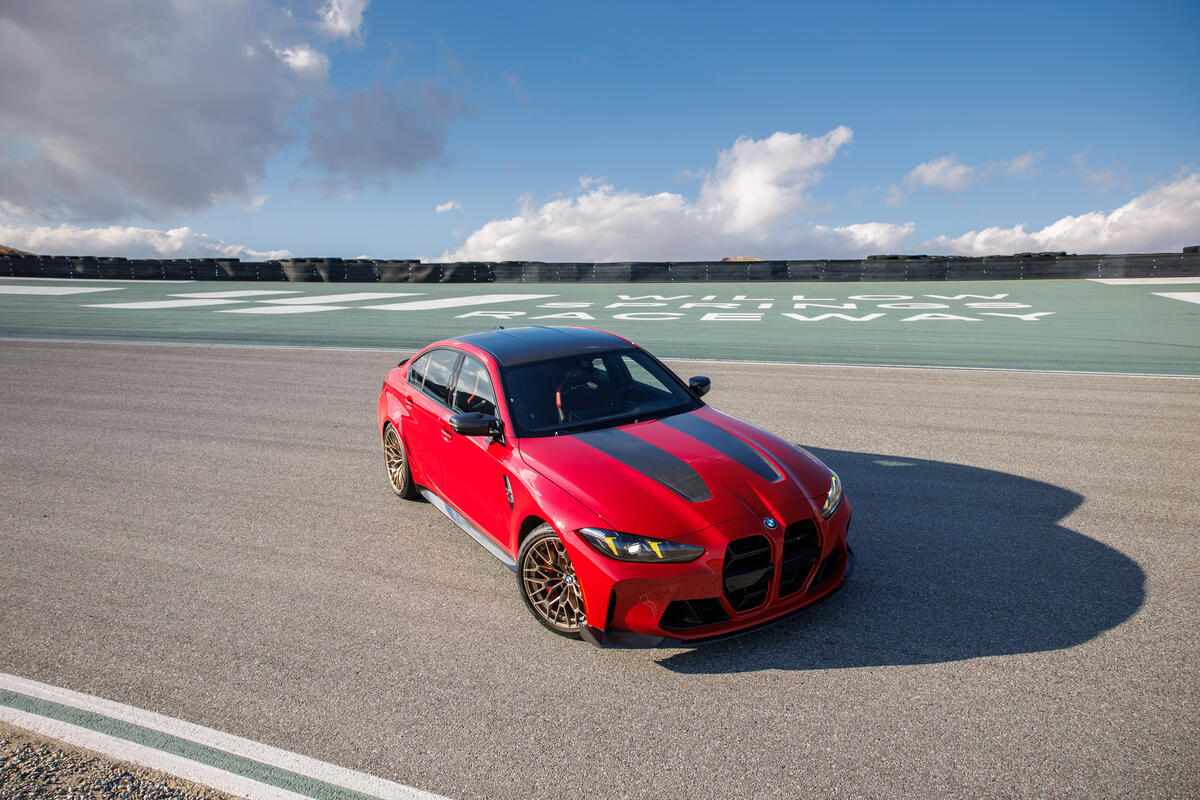
BMW M3
"...oung guys that just bought their first, you know, M3. Yeah."
The BMW M3 is a high-performance version of a BMW sedan. It’s made to feel quicker and handle more aggressively than a regular 3 Series. People talk about it a lot because it’s a popular choice for car enthusiasts.
The BMW M3 is a performance version of the 3 Series, built for drivers who want a more powerful engine and sharper handling than a standard sedan. It’s often discussed because it’s a well-known “entry point” into serious sports-car performance. In a podcast, it may come up when talking about first-time enthusiast cars and what people choose as a step up.
race car collection
"I mean, it's rated that year after year, the best, I mean, race car collection [836.6s] in the world."
A race car collection is a group of important cars that were built or used for racing. Collectors care because the cars have history—who raced them and what they did.
A race car collection is a curated set of competition cars—often prototypes, homologation specials, or historically significant entries—kept together for their motorsport history. These collections are usually valued not just for looks, but for provenance: what the cars raced, when, and why they matter.
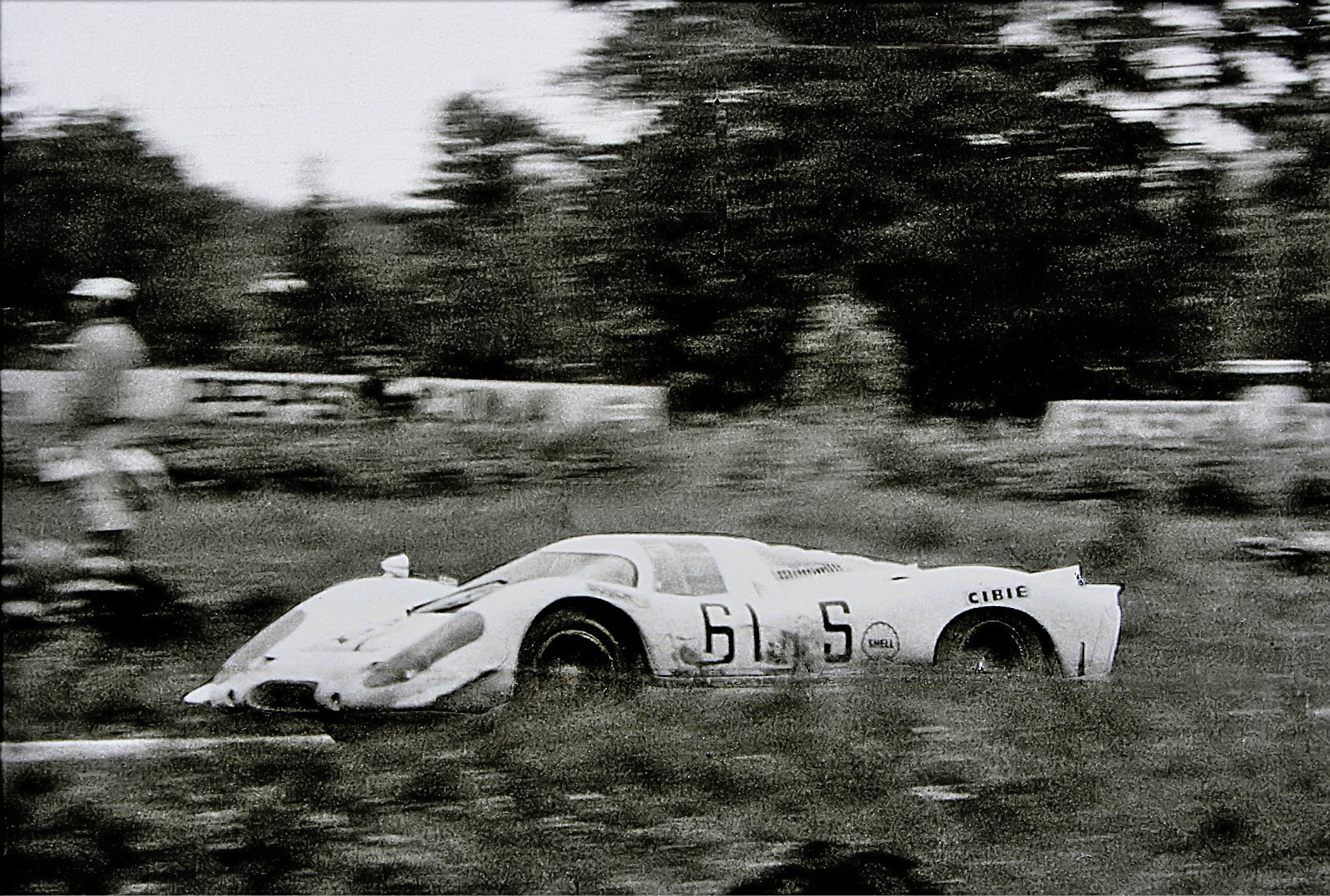
Porsche 917
"I mean, from Porsche 917 to 250 test races. [867.0s] I mean, stuff that you won't see anywhere else."
The Porsche 917 is a famous old race car Porsche built for endurance racing. People love it because it’s one of the most important and successful race cars in Porsche’s history.
The Porsche 917 is a legendary endurance-racing prototype built for the 1960s/70s era, famous for dominating long-distance races. It’s a key part of why Porsche is so storied in motorsport history, and it’s the kind of car collectors chase because of its racing pedigree.

Cobra Daytona
"Exactly. [881.2s] I mean, the Cobra Daytona. [882.3s] Exactly."
The Cobra Daytona is a famous racing version of the Shelby Cobra. It’s known for being built to go fast in endurance races, and it’s a very desirable classic race car.
The Cobra Daytona refers to the Shelby Cobra race car developed for high-speed endurance racing, known for its aerodynamic body and competition success. It’s especially associated with the 1960s sports-car racing era and is a standout “holy grail” collectible for many enthusiasts.
concor
"It's a modern take on a concor. If you can say, you know, modern, but it's a post-war event. So picking up in, you know, the late 50s, 60s and going through modern rather than the traditional concor, which, you know, is focused on pre-war cars"
A “concor” is a fancy car show where cars are displayed and often judged. The hosts are saying their event is a newer version that includes more post-war cars instead of mostly pre-war classics.
“Concor” is shorthand for a concours d’elegance-style car event, where cars are judged and displayed—often with a strong focus on specific eras or themes. Here, the hosts contrast a traditional pre-war concours focus with a newer, post-war approach aimed at broader audiences.
hypercars
"So we're really trying to make it so we bring in the younger audience, the people that are excited about the hypercars. We're going to have Koenigseggs there."
“Hypercars” are the most extreme, high-tech supercars—usually rare and built for maximum performance. The hosts are saying they want to attract younger people who already follow that world.
“Hypercars” are the very top tier of performance cars—typically limited-production, extremely powerful, and technologically advanced. The hosts use the term to explain the event’s strategy: attracting younger fans who are already into the newest, most extreme cars.

Koenigsegg
"We're going to have Koenigseggs there. We're going to have Gany's there and, you know, put them in the same environment where you see a 50 Testarosa where you see, you know, a 250 TDF and, you know, get them excited about those cars as well."
Koenigsegg is a company that makes very high-end super/hypercars. The hosts mention it because they’re trying to bring in younger fans who already follow the modern hypercar scene.
Koenigsegg is a Swedish hypercar brand known for extreme performance and advanced engineering. In this segment, Koenigsegg is mentioned as part of the event lineup to attract a younger audience that’s excited about modern hypercars.

Ferrari 250 TDF
"We're going to have Koenigseggs there. We're going to have Gany's there and, you know, put them in the same environment where you see a 50 Testarosa where you see, you know, a 250 TDF and, you know, get them excited about those cars as well."
The Ferrari 250 TDF is an older Ferrari from the 1960s that was built with racing in mind. The hosts mention it to show that newer supercar fans might not know the older Ferrari models.
The Ferrari 250 TDF is a classic Ferrari race-bred grand tourer from the 1960s, known for its lightweight, track-focused design. In this segment, it’s used as an example of an older Ferrari that many hypercar-focused attendees may not recognize.
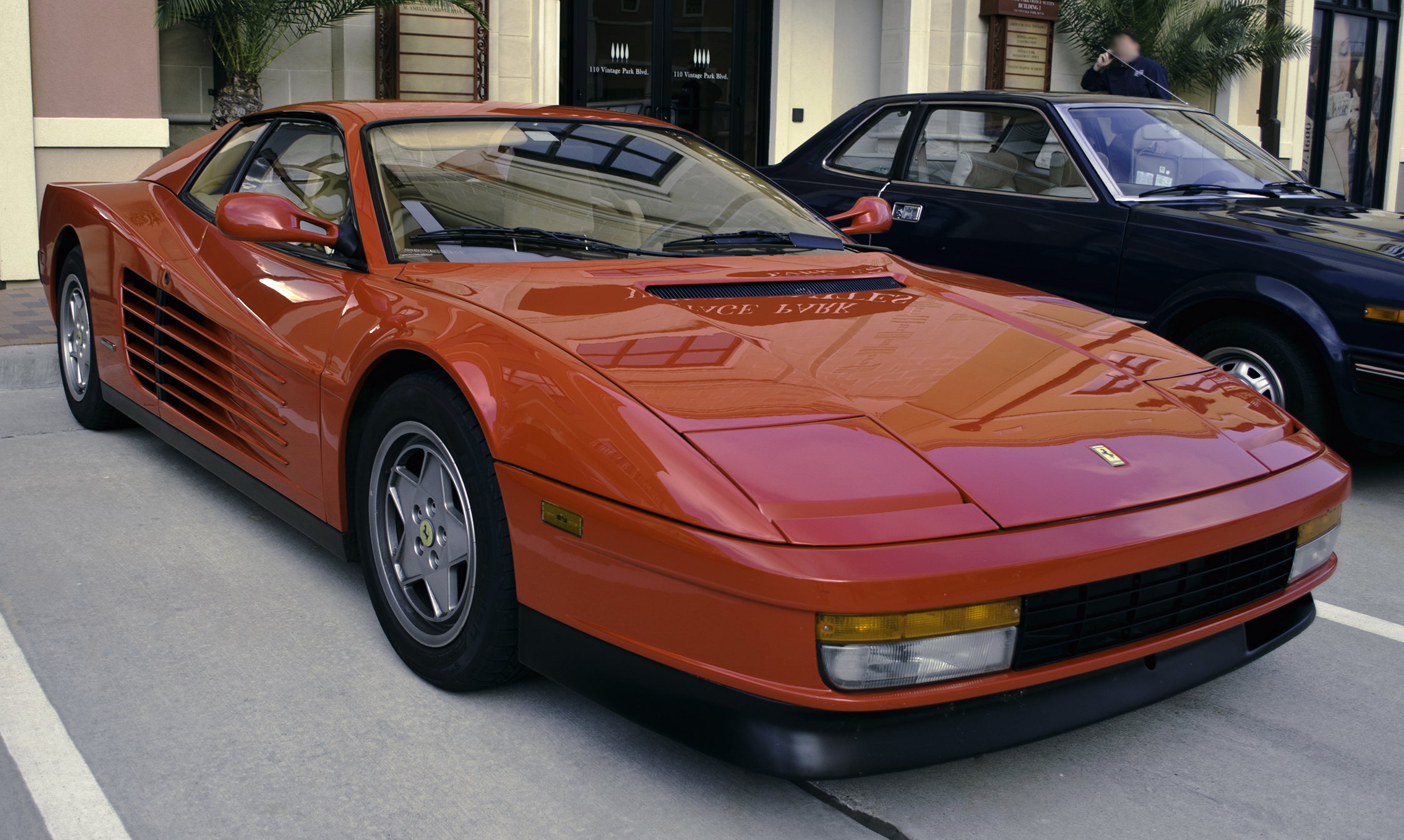
Testarossa Testarosa
"We're going to have Koenigseggs there. We're going to have Gany's there and, you know, put them in the same environment where you see a 50 Testarosa where you see, you know, a 250 TDF and, you know, get them excited about those cars as well."
The Ferrari Testarossa is a famous older Ferrari supercar, especially known for its look and V12 engine. The hosts bring it up to show the event will include well-known classics alongside newer cars.
The Ferrari Testarossa is a late-1980s/early-1990s supercar famous for its distinctive side strakes and V12 sound. Here it’s referenced as part of a lineup meant to connect younger hypercar fans with older Ferrari icons.

Ferrari 750 Monza
"I mean, we have a Monza SP2, then, you know, newer Monza. Yeah, exactly. And we also have a 750 Monza coming from, you know, California. I mean, an amazing car."
The Ferrari 750 Monza is an older Ferrari race car from the 1950s. They’re using it to show that the event will include legendary classics, not just modern supercars.
The Ferrari 750 Monza is a classic 1950s-era Ferrari race car, notable for its early V12 racing heritage. The hosts mention it as an “amazing car” in the same environment as newer exotics, to broaden what younger attendees recognize.

Ferrari SP2
"I mean, we have a Monza SP2, then, you know, newer Monza. Yeah, exactly. And we also have a 750 Monza coming from, you know, California."
The Monza SP2 is a modern Ferrari supercar. The hosts mention it alongside older cars to show the event spans both classic and newer Ferrari history.
“Monza SP2” refers to a modern Ferrari Monza-series supercar, part of Ferrari’s limited-run, coachbuilt-style lineup. In this segment, it’s contrasted with an older Monza and placed alongside other classics to keep the audience engaged across eras.

Lamborghini Miura
"...es. But also, if you're bringing your Lamborghini Miura, you're not having, you know, I'm 22, but you're ..."
The Lamborghini Miura is a famous old supercar made by Lamborghini. It’s known for being rare and visually striking, and it’s considered a classic. People bring it up because it’s the kind of car that turns heads at events.
The Lamborghini Miura is a classic, iconic supercar from the early era of modern Lamborghini design. It’s significant because it helped define what people think of as a dramatic, high-performance Italian grand tourer. It’s the kind of car that stands out at shows, so it often gets mentioned when talking about rare, exciting classics.

Volvo XC60
"...right now, but you know. Absolutely. It's a Volvo XC60. Nothing too crazy. It's a nice SUV, daily driver..."
The Volvo XC60 is a mid-size SUV that’s meant for normal everyday use. It’s comfortable and practical, so it works well as a daily driver. It’s not usually the kind of car people talk about for extreme performance.
The Volvo XC60 is a compact luxury SUV built for everyday driving with a focus on comfort and practicality. It’s often discussed as a “nice daily driver” because it blends family-friendly space with a more upscale interior feel. In a podcast, it may come up when describing dependable, low-drama ownership rather than high-performance thrills.

Cadillac Fleetwood
"...e Island, Florida? Florida. Stanhope, New Jersey, Fleetwood, Pennsylvania, Levittown, Pennsylvania, Blakesley..."
The Cadillac Fleetwood is a large, luxury car. It’s known for comfort and a classic, upscale look. People talk about it because it’s a recognizable name from older American car history.
The Cadillac Fleetwood is a full-size luxury car nameplate known for a traditional, comfortable ride and a more formal style. It’s often discussed in classic-car contexts because it represents a particular era of American luxury. The podcast mention of locations and names suggests it may be tied to a specific car show or collection story.

2021 Dodge Challenger SRT Hellcat Widebody
"The 2021 Dodge Challenger SRT Hellcat Widebody Hard Dopp. Yes. My goodness, that's a lot. Cinnamon stick over black, but cinnamon is not spelled with a C, it's with an S. That's right. You got to be on top of your game if you're going to fool me. 2,775 actual miles, 717 horsepower, 6.2 liter supercharged MEV8. This is one bad mofo."
This is a high-performance Dodge muscle car. It has a supercharged engine, which is why it can make huge power and feel extremely fast.
The 2021 Dodge Challenger SRT Hellcat Widebody is a modern muscle car built around a supercharged V8, tuned for very high straight-line power. In this segment, the hosts highlight its supercharged engine and performance figures, which is the car’s defining enthusiast appeal.
supercharged
"2,775 actual miles, 717 horsepower, 6.2 liter supercharged MEV8. This is one bad mofo. Yeah, this is a great car. Really just unbelievable with the power on these things. And"
A supercharger forces extra air into the engine. That extra air helps the engine make more power.
A supercharger is an engine-driven forced-induction device that compresses incoming air before it enters the cylinders. More compressed air lets the engine burn more fuel, which is a common way to make big horsepower without changing the engine’s basic displacement.
tuned
"Yeah, this is a great car. Really just unbelievable with the power on these things. And tuned and bigger injectors. The guy got a 717 horsepower engine. This isn't quite enough."
“Tuned” means the car’s computer has been adjusted to run the engine in a way that supports the upgrades. It’s often done to get more power or better throttle response.
In performance-car talk, “tuned” usually means the engine’s control settings (like fuel delivery and ignition timing) have been calibrated to match modifications. That’s how cars can make more power than stock, especially when paired with supporting hardware.
injectors
"tuned and bigger injectors. The guy got a 717 horsepower engine. This isn't quite enough. Not enough. I need just a smidge more. I see that. We see that all the time, don't we?"
Fuel injectors are the parts that deliver fuel into the engine. Bigger injectors can supply more fuel when the engine is making more power.
Fuel injectors are the components that spray fuel into the engine in precise amounts and timing. “Bigger injectors” typically provide more fuel capacity so the engine can support higher power levels safely when combined with tuning and forced induction.
1937 Pontiac Starlight Blue and Black Deluxe four-door sedan
"other new arrivals, the 1937 Pontiac, Silver, Streak, Deluxe, four-door sedan, Starlight Blue and Black, seven-year long restoration. Wow, when somebody spends that long of time on a restoration, that they're very particular, that they're probably doing it mostly in their garage or their shop out back, and they're taking their time and doing it right. And it's got a 248 cubic inch L-head"
This is a 1937 Pontiac classic sedan. The big deal is that it’s been restored for years, and it’s being discussed with attention to its original-era details.
The 1937 Pontiac Deluxe four-door sedan is a pre-war classic where the appeal is the period-correct styling and the long restoration effort. Here, the hosts emphasize a seven-year restoration and the car’s original-style engine specification, which are key parts of how vintage Pontiacs are judged.
L-head
"when somebody spends that long of time on a restoration, that they're very particular, that they're probably doing it mostly in their garage or their shop out back, and they're taking their time and doing it right. And it's got a 248 cubic inch L-head"
An L-head is an older engine design where the valves sit in the engine block. It’s a classic setup that helps define how these vintage engines work.
An L-head (also called a flathead) is an engine design where the valves are located in the engine block rather than in the cylinder head. This layout was common in early V8s and straight-sixes, and it strongly influences how the engine breathes and how it feels compared with modern overhead-valve designs.
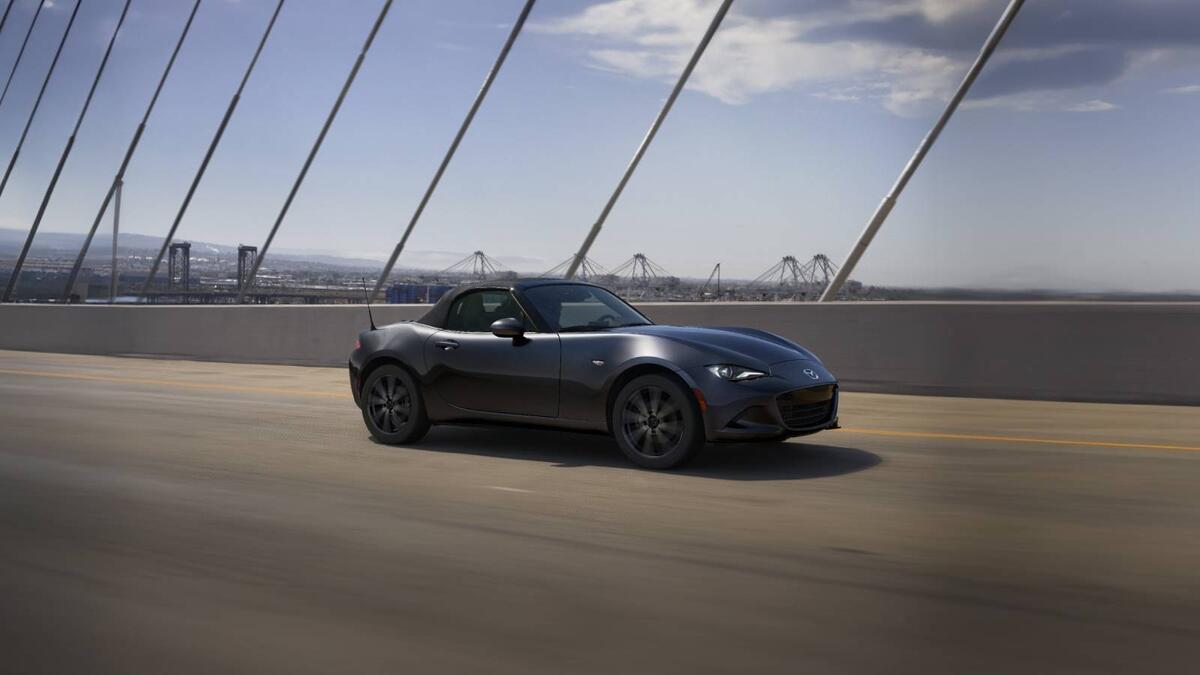
1992 Mazda MX-5
"Other new arrival is the Everyman's 1992 Mazda MX-5. Some burst yellow over medium dark gray... 1.6 liter double overhead cam inline four, nicely preserved."
The Mazda MX-5 (Miata) is a small, light roadster that’s famous for being really fun to drive. This one is a 1992 with a 1.6-liter engine, and the hosts emphasize how much joy it delivers.
The Mazda MX-5 (Miata) is a lightweight, front-engine, rear-drive roadster known for its simple, fun driving feel. In this segment, the hosts call out a 1.6-liter DOHC inline-four and note how it’s more entertaining than many people expect.
double overhead cam
"30,000 actual miles, garage cap... 1.6 liter double overhead cam inline four, nicely preserved."
DOHC means the engine has two camshafts up in the head that control the valves. It helps the engine manage airflow more precisely.
“Double overhead cam” (DOHC) means the engine uses two camshafts located in the cylinder head to control the intake and exhaust valves. That layout can improve valve timing precision and breathing compared with simpler cam designs.

1979 Pontiac Firebird Trans-Am Coupe
"So other new arrivals, the 1979 Pontiac Firebird Trans-Am Coupe. Cameo white over Carmine."
The 1979 Pontiac Firebird Trans-Am is a famous 1970s muscle car. This specific one is described as a high-spec version with a big V8 and a manual gearbox, and the hosts emphasize how complete and documented it is.
The 1979 Pontiac Firebird Trans-Am Coupe is a classic muscle car era icon, especially in Trans-Am trim. This example is highlighted with period-correct details like a 400 cubic inch L-78 V8 and a manual transmission, plus extensive documentation.
L-78 V8
"Survivor WS-6 Trans-Am, 400 cubic inch L-78 V8."
L-78 refers to a specific higher-performance V8 option. It’s the “more serious” factory engine choice, not the basic one.
The L-78 is a specific high-performance Chevrolet small-block V8 option used in some late-1970s muscle cars. It denotes a more aggressive factory performance package than the base engines, which is why it matters to collectors.
numbers matching
"Survivor WS-6 Trans-Am, 400 cubic inch L-78 V8. Numbers matching T10 four-speed manual transmission."
“Numbers matching” means the car still has its original major parts, like the engine and transmission, with the correct factory IDs. Collectors like it because it proves the car hasn’t been heavily swapped.
“Numbers matching” means the major components (commonly the engine and transmission) are the original ones that were installed at the factory and still have the correct identifying numbers. For classic-car buyers, it’s a key authenticity and value factor.
T10 four-speed manual transmission
"Numbers matching T10 four-speed manual transmission."
The T10 is a particular type of four-speed manual transmission. It’s the specific gearbox model the car came with (or is configured with), which matters for authenticity.
The T10 is a specific four-speed manual transmission used in certain GM muscle cars. Mentioning the T10 signals a particular gearbox model that enthusiasts associate with period-correct performance setups.
four-wheel disc brakes
"Got the four-wheel disc brakes, which were always a great option."
Four-wheel disc brakes means every wheel uses disc brakes. That’s usually better for stopping power and consistency than drum brakes.
Four-wheel disc brakes use brake rotors on all four corners instead of drums on some wheels. In muscle-car eras, disc brakes were a desirable upgrade because they generally offer stronger, more consistent stopping performance.

Pontiac Sunfire
"...rrivals, the 1967 Chevrolet Corvette convertible. Sunfire yellow over black and white. Numbers matching 300..."
The Pontiac Sunfire is a smaller car that was made for regular daily driving. In the podcast, it sounds like they’re talking about a specific Sunfire that’s been kept in original condition. “Numbers matching” usually means key parts are the original ones from the car.
The Pontiac Sunfire is a compact car that was sold in various model years, and it’s often remembered for being an affordable, everyday option. In the podcast context, it’s being referenced with specific details like color and “numbers matching,” which points to a collector-focused discussion. That makes it notable as a particular example rather than just a generic commuter car.
window sticker
"Numbers matching 300 horsepower, 327 V8. Window sticker and the tank sticker. Wow, it's amazing that people salvaged that stuff and saved it."
A window sticker is the original paper that shows what the car was built with—its options and specs. Keeping it with the car helps prove the details are correct.
A window sticker is the original factory sales sheet that lists the car’s specifications and options. For classic cars, finding an intact window sticker is a strong authenticity signal and helps verify how the car was built.
tank sticker
"Window sticker and the tank sticker. Wow, it's amazing that people salvaged that stuff and saved it."
A tank sticker is an original label connected to the car’s fuel-tank area that includes build details. It’s valuable because it can help confirm the car’s original specs.
A tank sticker is an original label placed on or near the fuel tank area that records build information. Like the window sticker, it’s valuable because it can corroborate the car’s original configuration.
power glide
"And a power glide, a two-speed power glide, which is interesting."
“Power Glide” is the name of a type of automatic transmission used in some classic GM cars. It’s described here as a two-speed automatic, meaning it has two forward gear steps.
“Power Glide” refers to GM’s automatic transmission family used in many classic cars. The transcript specifies a “two-speed power glide,” meaning it uses two forward gears rather than a multi-gear modern automatic.

1967 Corvette convertible
"So, and this one's got both hard and soft tops, this 67 Corvette convertible and very well-optioned. Great car."
They’re talking about a 1967 Corvette that you can drive with the top down. This one is special because it can use both a hard top and a soft top.
A 1967 Corvette convertible is a classic American sports car with an open-top body style, and it’s especially notable for its iconic mid-century design. The transcript also highlights that this one has both hard and soft tops, which affects how the car can be used year-round and how it’s stored.

1964 Pontiac Tempest Custom Sport
"And last but not least, the 1964 Pontiac Tempest Custom Sport. ... This one's Marimba Red over Marimba. ... PHS documentation, Muncie M24 speed manual. This thing's got to be thrive. Hit it. There it is. Yeah, 12-bolt axle, very subtle muscle car."
They’re showing a 1964 Pontiac Tempest Custom Sport. It’s a classic car, and this one has performance-friendly parts like a manual transmission and a strong rear axle setup.
The 1964 Pontiac Tempest Custom Sport is a mid-size classic that’s known for being a “muscle-era” Pontiac—especially when it’s equipped with performance-focused driveline details. In this segment, the speaker points out specific drivetrain hardware like a Muncie M24 four-speed manual and a 12-bolt axle, which are the kinds of details enthusiasts look for.
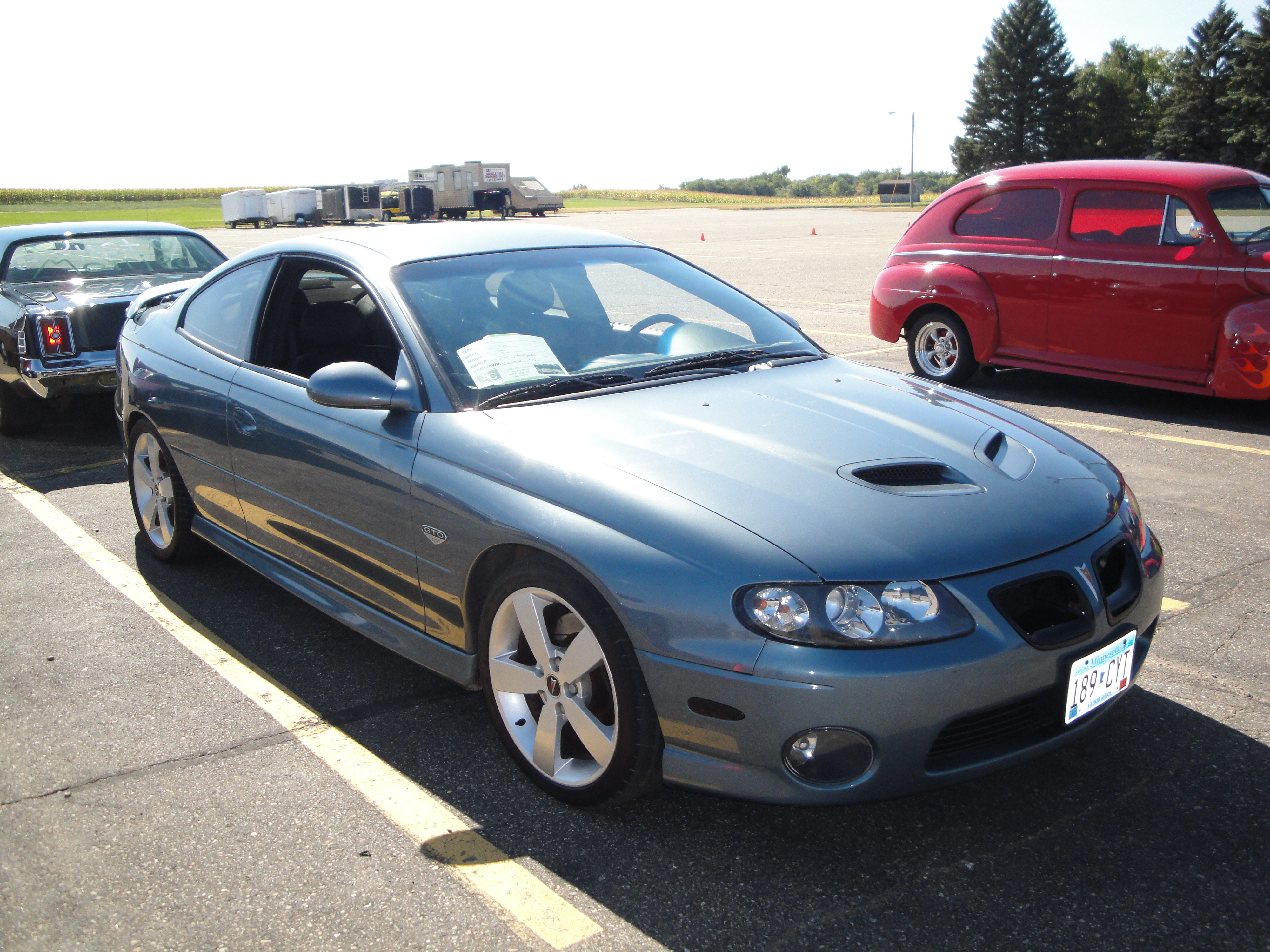
Pontiac Two Pontiac
"...t, the 1964 Pontiac Tempest Custom Sport. We have two Pontiac Tempest. We do. Amazing."
PHS documentation
"PHS documentation, Muncie M24 speed manual. This thing's got to be thrive."
PHS documentation is official paperwork that helps prove how a Pontiac was built from the factory. Collectors like it because it can confirm the car’s original options and specs.
PHS documentation refers to Pontiac Historical Services paperwork that can verify how a Pontiac was originally built. For collectors, it’s used to confirm factory options, engine/transmission details, and authenticity.
Muncie M24 speed manual
"PHS documentation, Muncie M24 speed manual. This thing's got to be thrive. Hit it. There it is."
The Muncie M24 is a particular kind of manual gearbox used in some classic GM performance cars. It’s the “stick shift” setup they’re highlighting as a desirable factory-style component.
The Muncie M24 is a specific four-speed manual transmission used in many GM muscle cars. Enthusiasts care because it’s a known, performance-oriented gearbox, and it’s often part of what makes a car’s drivetrain “correct” or desirable.
12-bolt axle
"Yeah, 12-bolt axle, very subtle muscle car."
A 12-bolt axle is the rear axle setup in the car. People mention it because it’s a sturdier rear-end design that’s common on classic performance cars.
A “12-bolt axle” refers to GM’s 12-bolt rear differential housing, commonly associated with stronger, enthusiast-friendly rear ends in classic cars. In muscle-car context, it’s often mentioned because it can handle more power and is a key part of the car’s drivetrain spec.
Request an Explanation
Heard something you'd like explained? We'll add it to this episode.
Sign in to request explanations for terms you heard.
Want to learn more?
Browse our glossary for plain-English explanations of automotive terms, jargon, and concepts.
Help improve this episode
See something that's not quite right? Our annotations are AI-generated and can sometimes miss the mark. Click the flag icon on any annotation to suggest a correction.
1 community members have helped improve this episode.