
Classic Auto Mall - #245 Stewart Howden and Guests Trey Dusek of Philadelphia Concours d'Elegance and Keith Martin of Sports Car Market
About this episode
Broadcast from the studios inside the Classic Automall in Morgantown, Pennsylvania, the conversation kicks off with consignment results and a look at how the venue supports nearly 1,000 cars under one climate controlled roof. Guests and hosts then zoom into the Philadelphia Concours d'Elegance—its June 6th/7th dates, a move outdoors at Union League National’s Liberty Hill course, and a “rebirth” tied to charity. Along the way, they dig into concours judging, collector-car sourcing, and the emotional pull of period racing history.
Show #245 airdate 05-27-26 Stewart welcomes Trey Dusek of The Philadelphia Concours d'Elegance at the Union League Liberty Hill. Discussed are the 2026 event on June 6 & 7 and following year plans and the true purpose which is o raise money for www.CoolCarsForKids.org . With a show theme of #Italian cars discussion includes marques like Bugati, Lamborghini, Fiat, Ducati and Ferrari including their release of the Luce EV. Keith Martin from Sports Car Market joins to discuss a "secret" Alfa auction in Tennessee.
www.philadelphiaconcours.com RockwoodWealth.com www.coolcarsforkids org www.simeonemuseum.org www.RadnorHunt.org www.Petersen.org www.3dog.org www.thebridgehamptons.com www.LimeRock.com www.audrainautomuseum.org www.leydonrestorations.com www.automobili-pininfarina.com www.mainlinecarsandcoffee http://www.michaelfurman.com https://en.wikipedia.org/wiki/Jony_Ive, Apple, iPhone, LeMans, BruceMeyer, Ferrari 612, CanAm , Ferrari 288 GTO, Testarosa 365 P23, Johnny Ives iPhone apple, Bertoni, Zagato. Ferrari 250 TDF, Best in show, Toyota GRE 6, BMW 435I.
+ Keith Martin
GET OUR FREE APP: https://ClassicAutoMall.appimize.app When it opens click on the ORANGE button to install on your phone or computer for DIRECT ACCESS to our VIDEO and AUDIO shows and our website.
CONTENT NOTE: Contests, Prizes, Offers, Vehicles & other items may no longer be available or offered after each show's original broadcast or posting date.
Recorded in our Showcase Studio just inside the entrance of the Classic Auto Mall in Morgantown, PA, Host Stewart Howden, Classic Auto Mall President and Classic Car Specialist Steve Saffier talk about this unique and amazing place often with amazing guests.
YES...Classic Auto Mall is a REAL former shopping mall that covers almost EIGHT football fields with an average of nearly ONE THOUSAND classic vehicles under one, climate controlled roof and they're all FOR SALE!
Be sure to LIKE and SUBSCRIBE to be informed of new episodes and SEE them on the Classic Auto Mall YouTube Channel. We also invite you to VISIT US IN PERSON at Classic Auto Mall, one hour west of Philadelphia at PA Turnpike Exit #298, VISIT us online at ClassicAutoMall.com or talk to real, live people about visiting, buying or selling your classic on consignment at 610-901-3804.
.

Datsun 240Z
"Okay. 240Z. I didn't even think about 245Z."
The Datsun 240Z is an older sports car from the late 1960s. It’s known for being a fun, stylish car that many enthusiasts still talk about today. The podcast mentions it because it’s part of a discussion about Z-car models.
The Datsun 240Z is a classic Japanese sports car from the late 1960s, known for its long hood, compact size, and strong enthusiast following. It’s often discussed as an iconic “Z-car” that helped popularize affordable sports cars. In the podcast, it’s brought up as a model the host didn’t initially consider (or confused with a similar name).
road course
"And this was before it was a road, you know, it was literal road course through the streets of Bridgehampton"
A road course is a racing route made from roads, not an oval track. It usually has lots of corners, and in the early days here it was run right through the streets.
A road course is a type of racing circuit that uses roads (either purpose-built or adapted from public roads) with lots of turns and varying surfaces. In this segment, the speaker emphasizes that Bridgehampton was once a literal road course through city streets.
Bridgehampton
"of Bridgehampton fell in love with, with road racing... Well, you said your granddad at Bridgehampton before it was an actual road course."
Bridgehampton is a place on Long Island that has a long history with car racing. The hosts are saying that, in the early days, races were run on regular streets—before it became a proper race course.
Bridgehampton refers to the Bridgehampton area on Long Island, which has been associated with historic road racing events. The hosts describe it as a literal road course through the streets before it became a more formal racing venue, tying the location to the origins of their family’s road-racing passion.
Can-Am
"It's, I mean, the whole purpose of can am was there are no rules, right? You know, it's got to have two seats."
Can-Am was a racing series where teams were allowed to build very extreme race cars. The idea was to go as fast as possible, with fewer restrictions than many other series.
Can-Am (short for “Canadian-American Challenge Cup”) was a racing series known for minimal technical rules and very high-performance cars. The host’s point is that the series was designed to let teams build the fastest possible machines rather than follow strict regulations.
asymmetrical
"I think they made it asymmetrical at one point, but it's just go as fast as possible. Um, we, we, you know, we don't push them as hard anymore, but we will get them out, exercise"
“Asymmetrical” means the car wasn’t the same on both sides. That kind of design can change how the car handles or how it fits its components.
In this context, “asymmetrical” refers to an unusual, non-mirrored setup on the car—something that can affect balance, aerodynamics, or packaging. The host mentions it as a Can-Am-era evolution, implying the car’s layout wasn’t always perfectly left-right identical.
3D printing
"I guess there's other outlets for parts these days. [687.4s] I guess 3D printing has some factor in it as well to that, you know, something that's [692.3s] unobtainium that you say, okay, but we can make this little part here with, you know,"
3D printing is a way to make a physical part from a computer file. For old cars, it can be used to recreate small pieces that are otherwise impossible to buy.
3D printing is a manufacturing method that builds a part layer-by-layer from digital designs. In classic-car parts hunting, it can help recreate hard-to-find components when original parts are unavailable.
unobtainium
"something that's [692.3s] unobtainium that you say, okay, but we can make this little part here with, you know,"
“Unobtainium” is a humorous way to say a part is basically impossible to find. It usually means the original part is no longer sold and nobody makes a replacement.
“Unobtainium” is a joking term for parts that are effectively impossible to source. It’s often used in the classic-car world when the original component is discontinued and no aftermarket replacement exists.
magnesium block
"of many years ago, we had an issue with a water pump on, on the [702.3s] said car. [703.0s] And, um, when you have a magnesium block, they don't really last well with water."
A magnesium block refers to an engine component made from magnesium alloy. Magnesium can be more sensitive to corrosion and cooling-system issues than many aluminum setups, so water-pump cooling and sealing become especially important.
water pump
"we had an issue with a water pump on, on the [702.3s] said car. [703.0s] And, um, when you have a magnesium block, they don't really last well with water. [706.4s] So, um, we had to go, you know, overseas, find new aluminum housings for the water pumps."
The water pump moves coolant through the engine to keep it from overheating. If it breaks, the engine can run too hot and cause damage.
A water pump is the component that circulates coolant through an engine’s cooling system. If it fails—especially on an engine with a magnesium block—it can quickly lead to overheating and corrosion-related damage.
aluminum housings
"So, um, we had to go, you know, overseas, find new aluminum housings for the water pumps. [710.9s] And, um, it takes a whole network of people, but when you've been doing it for as long"
Aluminum housings are the casings/structures that support and protect a component—here, the water pump. Switching to aluminum housings is a practical fix to improve durability and compatibility with the cooling system.
Chris Amon
"Um, and you sit in the seat and you're like, this is the same seat Chris Amon sat in and ran it in period."
Chris Amon was a famous race car driver, especially in Formula 1. The point here is that the speaker is sitting in the same seat Chris Amon used, which makes the experience feel more personal and historically connected.
Chris Amon was a Formula 1 driver known for his speed and consistency, and he later became closely associated with Ferrari-era racing. In this segment, the host uses him as a “period-correct” connection to the car’s history—sharing the same seat Chris Amon sat in while driving it.
Formula one
"I mean, Formula one driver, you know, the Tasman series driver, can't him driver, who's, who's a Ferrari extraordinaire."
Formula One is the highest level of open-wheel race car competition. It’s mentioned to explain why Chris Amon’s connection to the car feels so significant.
Formula One (often shortened to F1) is the top tier of open-wheel racing, with teams building highly specialized race cars under strict technical rules. Mentioning it here frames Chris Amon’s racing pedigree and why his seat time in a period car matters to collectors.
Tasman series
"I mean, Formula one driver, you know, the Tasman series driver, can't him driver, who's, who's a Ferrari extraordinaire."
The Tasman Series was a well-known old-school racing series in Australia and New Zealand. The speaker brings it up to show Chris Amon raced at a high level in multiple places.
The Tasman Series was a historic racing championship held in Australia and New Zealand, especially popular in the 1960s. It’s referenced here to highlight Chris Amon’s breadth of top-level racing experience beyond Formula 1.
Ferrari
"I mean, Formula one driver, you know, the Tasman series driver, can't him driver, who's, who's a Ferrari extraordinaire."
Ferrari is a famous Italian car brand that’s also heavily involved in racing. Here it’s used to emphasize that Chris Amon was a top driver in the Ferrari world.
Ferrari is the Italian performance and racing brand most associated with Formula 1 and iconic sports-racing history. In this segment, it’s used to describe Chris Amon’s reputation as a driver connected to Ferrari-era greatness.
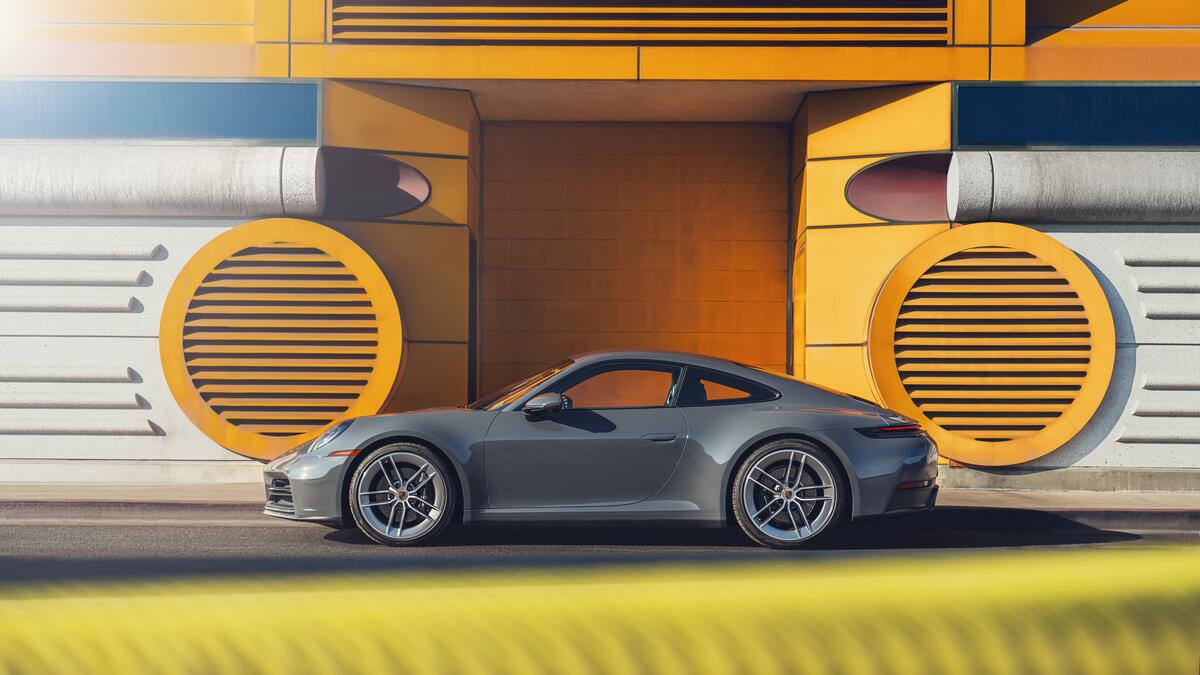
Porsche Carrera T
"Well, because I mean, if you look at some late model stuff that just goes, you know, a Porsche Carrera T, uh, comes to mind, or any of the, the newer Ferraris"
Porsche Carrera T is a special version of the Porsche 911. It’s meant to feel more “driver-focused” by being lighter and more engaging to drive. Because it’s a specific, limited kind of 911, it can become very sought-after.
The Porsche Carrera T is a performance-focused 911 variant from Porsche, built around the idea of shedding weight and sharpening the driving feel. In enthusiast circles, it’s known for being a more driver-oriented take on the standard Carrera, which can make it especially desirable when supply is limited.
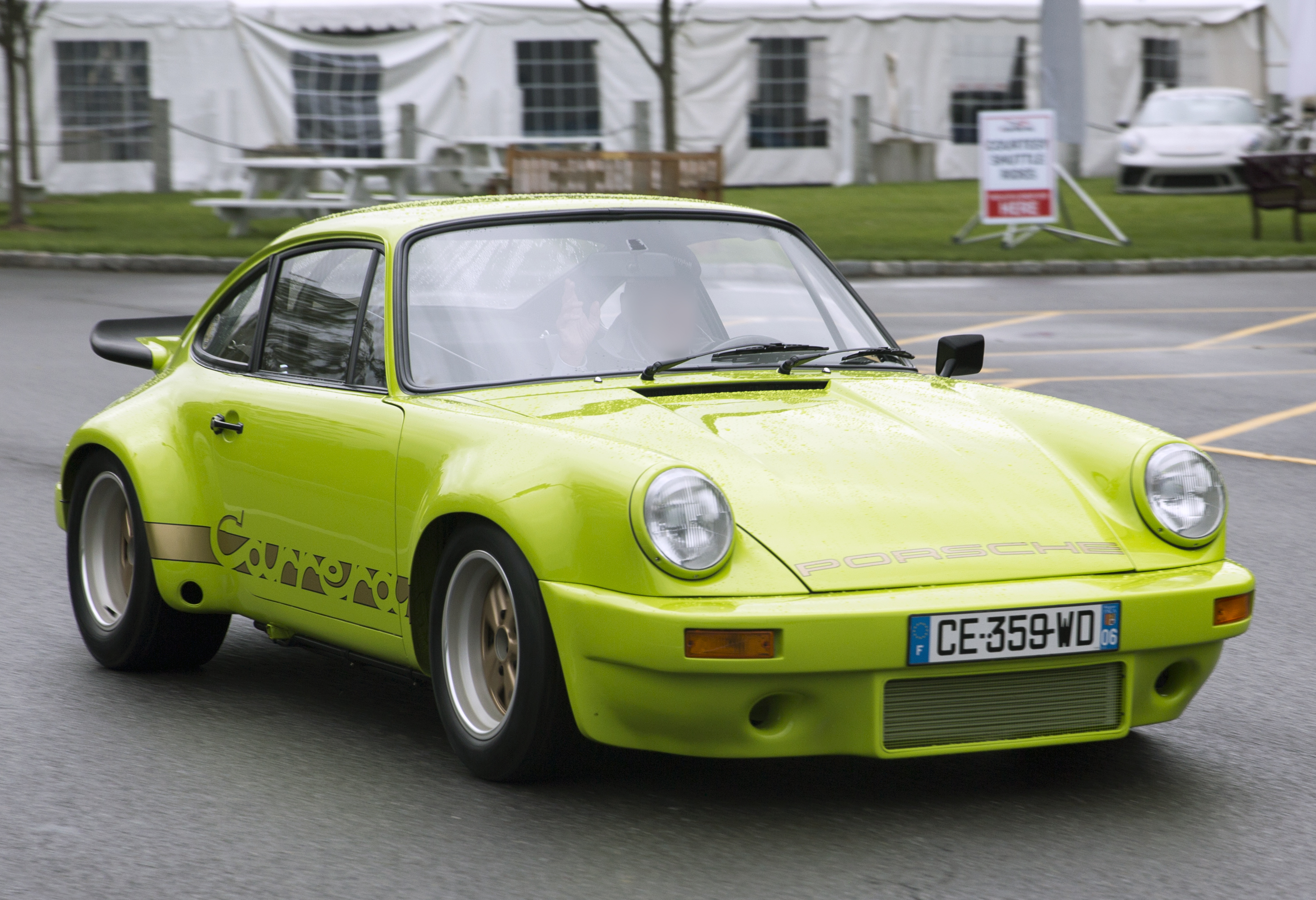
Porsche Carrera
"...some late model stuff that just goes, you know, a Porsche Carrera T, uh, comes to mind, or any of the, the newer Fe..."
The Carrera RS is a special, performance-oriented version of the Porsche 911. It’s designed to be more focused on driving feel and speed than a regular model. The podcast mentions it as an example of a newer performance Porsche.
The Porsche Carrera RS is a performance-focused variant of the 911 line, known for being stripped down and tuned for spirited driving and track use. It’s frequently referenced when people talk about classic Porsche performance and special editions. In the podcast, it’s mentioned as an example of the kind of late-model performance car being considered.

Enzo
"It wasn't even, it wasn't even on the radar of possibility, $18 million for an Enzo. Like, I think we had some visitors over and I was live streaming on my phone while we were walking through the car house."
The Ferrari Enzo is a very famous, rare Ferrari supercar. It’s the kind of car collectors chase, so its price can jump a lot. The point here is that even experts can’t always predict when that kind of value surge will happen.
The Ferrari Enzo is a landmark supercar from Ferrari, famous for its high-performance, limited-production status and strong collector demand. In this segment, the hosts use the Enzo as an example of how certain rare, high-end cars can see dramatic value spikes that are difficult to predict.
pre-sale estimate
"Cause that car, probably the pre-sale estimate on the $11 million Enzo would have been what, 56 Yeah, nothing crazy."
A pre-sale estimate is what an auction expects a car might sell for before the bidding begins. Even if the estimate is high, the actual sale price can end up much higher if lots of buyers want the same car.
A pre-sale estimate is the auction house’s projected value range for a car before bidding starts. It’s used to set expectations, but the final price can still blow past the estimate when collectors aggressively compete for rare cars.
dot com bubble
"They had come into money in the 80s, 90s, early 2000s through the dot com bubble."
The dot-com bubble was a time when lots of money poured into internet companies, and then it crashed. The host is using it as the reason some people suddenly had money to spend on expensive cars.
The dot-com bubble was a late-1990s/early-2000s period of heavy investment in internet-related companies, followed by a major crash. The speaker uses it to explain how wealth and buying power surged for certain generations, which then flowed into high-end collectible cars.

288 GTO
"So, you know, it's really, it's funny, like a 288 GTO almost seems mundane compared to the stuff that comes out nowadays."
The Ferrari 288 GTO is an iconic old Ferrari from the 1980s that’s known for being fast and collectible. The host is saying that even though newer cars are even crazier, the 288 GTO still feels impressive.
The Ferrari 288 GTO is a legendary 1980s grand touring car built around racing-derived homologation. It’s famous for its turbocharged performance and its place as one of the most collectible “serious” Ferraris—so it stands out even when the speaker compares it to newer hypercar-level icons.
Group B rally design
"I'm just, I wish that car had gotten the limits true potential in, in what was it? Group B rally design before, like that would have been unbelievable to see Ferrari doing some rallying in a, in a 288 GTO."
Group B rally design refers to the 1980s FIA Group B rally era, known for extremely aggressive, lightweight, and high-performance cars built for maximum spectacle. The speaker is wishing a Ferrari 288 GTO had been developed with that kind of rally-focused engineering and attitude.
rallies through the woods and dirt trails
"And I think there's, you know, there's like little niche markets of people that do rallies through the woods and dirt trails and stuff."
That’s rallying on rough, unpaved paths through places like woods. The road surface changes a lot, so the car has to be set up for grip and bumps.
This describes off-road rallying, where the course uses natural terrain and unpaved tracks. Compared with tarmac rally stages, off-road events demand different tires, suspension travel, and driving technique because traction and surface consistency change constantly.
rally cars
"It's incredible. And rally cars in and of themselves have become quite collectible."
A rally car is a race car built for rough roads like dirt or gravel. It’s made to handle bumps and slippery surfaces better than a normal street car.
Rally cars are purpose-built (or heavily modified) cars designed for timed stages on loose or uneven surfaces like dirt, gravel, and sometimes snow. They’re set up for traction and control over bumps and changing grip, not smooth pavement cruising.
navigator
"800 horsepower in them. And, you know, I don't, I can't be the, there's no way I could be the navigator."
In a rally, there’s a second person called the navigator. They read instructions about the road ahead so the driver knows what’s coming and can drive faster safely.
In rallying, the navigator (co-driver) reads pace notes and directs the driver through the stage. The navigator’s job is to communicate upcoming turns, hazards, and timing so the driver can go fast while staying on the correct line.
rust
"And I'll go, well, there's some rust around over there. And I wonder what's going on."
Rust is corrosion of metal, and in older vehicles it often shows up around wheel arches, seams, and underbody areas where moisture and road salt collect. It can spread under paint and trim, making repairs more expensive than a simple surface fix.
concor in June
"[1225.8s] I guess theme is the best word I could use for it. [1229.1s] It will be mostly Italian cars, correct? [1232.0s] Correct. [1232.4s] We're focused on Italian, but we don't, we don't discriminate, right?"
They’re talking about an upcoming car show in June. The show’s theme is Italian cars, though they’ll still consider other great cars if they’re nominated.
The hosts are previewing an upcoming concours event in June and discussing how the show field is organized. They mention that the theme is Italian, with mostly Italian cars expected.
pontoon-fendered
"[1261.7s] Simeon Museum is bringing their 250 Testerosa, a pontoon-fendered car. [1268.0s] Coined as, you know, one of the first, if not the first pontoon-fendered car, [1271.0s] the only removable nose Testerosa."
“Pontoon-fendered” describes fenders that stick out in a rounded, bulging way—like little pontoons. It’s a visual clue to special race-car bodywork and how the car was designed around tires and airflow.
“Pontoon-fendered” refers to a bodywork style where the front fenders bulge outward like pontoons. On certain classic race cars, this shape was used to better package tires and airflow while maintaining aerodynamic and cooling needs.
removable nose
"[1268.0s] Coined as, you know, one of the first, if not the first pontoon-fendered car, [1271.0s] the only removable nose Testerosa. [1273.6s] I mean, it is a great, great car."
A “removable nose” means the front part of the car can be taken off. That can make it easier for mechanics to work on the car during service or racing.
A “removable nose” means the front body section can be taken off, typically to simplify access for maintenance, cooling-related work, or race-day service. On rare classic race cars, this kind of design detail can be part of why a specific example is historically notable.

1965-66, 365 P2-3
"Myself personally with my family are bringing our 1965-66, 365 P2-3 Ferrari prototype car that ran Le Mans."
This is a Ferrari race prototype from the mid-1960s that was built to compete at Le Mans. The “365 P2/P3” naming is part of Ferrari’s internal way of labeling prototype race cars as they evolved.
The Ferrari 365 P2 (and related P2/P3 prototypes) is a mid-1960s Le Mans prototype built for Ferrari’s endurance-racing program. It’s notable because it represents Ferrari’s development work in the era of prototype racing, and the speaker ties it directly to Le Mans running.
Le Mans
"Ferrari prototype car that ran Le Mans. Hold on, I got to write all that down. There's a lot of nomenclature there."
Le Mans is one of the most famous endurance races in the world, held in France. If a car “ran Le Mans,” it means it was built to compete at the highest level of long-distance racing.
Le Mans refers to the famous French endurance race (the 24-hour event) that’s a benchmark for prototype and sports-car performance. The host uses it to anchor the Ferrari prototype’s racing credibility and historical significance.
nomenclature
"Hold on, I got to write all that down. There's a lot of nomenclature there. The P3s."
Here, “nomenclature” just means the official naming/labeling system. Ferrari used codes and numbers to distinguish different prototype versions, and that’s what the host is referring to.
In this context, “nomenclature” means the naming system Ferrari used for its prototype race cars—how numbers and letters like P2 and P3 identify specific development stages or variants. The host is warning that the labels can look like random numbers to a casual listener.

Ford GT40
"It was one of the cars represented in that movie racing against those GT40s back in 65 and 66."
The GT40 is a famous Ford race car from the 1960s. It’s known for racing against Ferrari at Le Mans, which is why it comes up in stories like “Ford versus Ferrari.”
The GT40 is a legendary Ford endurance race car that competed head-to-head with Ferrari at Le Mans in the mid-1960s. The host mentions it to place the Ferrari prototype era in the same competitive storyline as “Ford versus Ferrari.”

Ferrari 250
"...e it on the show field. On top of that, we've got Ferrari 250 TDF coming, you know, from, from out in this way...."
The 250 GTO is a very rare Ferrari race car from the 1960s. It’s well known because it’s tied to racing history and is considered one of the most important Ferraris. People bring it up in shows because it’s a major collectible.
The Ferrari 250 GTO is a legendary mid-1960s race car and one of the most celebrated Ferraris ever built. It’s famous for its competition pedigree and for being extremely rare and valuable today. It’s the kind of car that would be highlighted at major shows because of its historical importance and collectability.

Ferrari 250 TDF
"On top of that, we've got Ferrari 250 TDF coming, you know, from, from out in this way. That's the blue and white one, right? That we saw it."
The Ferrari 250 TDF is a classic Ferrari road/race-focused model name tied to the 250-series era, and it’s especially famous among vintage Ferrari racing enthusiasts. The host emphasizes that TDF refers to an original 1950s-era car, and they describe the recognizable blue-and-white livery and stripe.
Best in Show
"We have a contender for last year's Audrain Best in Show showing up. [1352.8s] The 250 Speciale, I'm coming from Leiden Restaurations."
“Best in Show” is the biggest trophy at a car concours. It goes to the car judges think is the most impressive overall.
“Best in Show” is the top award at a concours d’elegance, given to the single most outstanding car in the entire event. It typically reflects a combination of originality, presentation, historical significance, and overall condition.
Audrain
"I was in the top four and I was fortunate enough to work with that car at [1361.9s] Audrain last year."
Audrain refers to a major fancy car show where cars are judged. If the host worked with a car “at Audrain,” that car was in a top-level competition.
Audrain is a well-known concours and collector-car event brand in the U.S., associated with high-end judging and prestigious awards. When someone says they worked with a car “at Audrain,” it usually means the car was part of a major judged show field.
Conqueror
"And 80 to 100 is about the right number for a Conqueror. [1396.8s] Any more than that, you got to have too many judges."
They’re talking about how many cars are a good number for a show. Too many cars makes it harder to judge and organize.
This appears to be a mis-transcription of “connoisseur” or “concourse,” referring to the idea that a show field has an ideal size for judging and logistics. The speaker’s point is that beyond a certain number of cars, you need more judges and it becomes harder to manage.
Spa 1961
"So getting to see these photos from, you know, Spa 1961 or, you know, whatever he's doing throughout the generations is, is really incredible."
“Spa 1961” points to racing at Spa in 1961. It’s used here to describe old photos from that era, when cars and technology looked very different than today.
“Spa 1961” refers to the Belgian Grand Prix era at Spa-Francorchamps, a circuit famous for motorsport history. Mentioning “Spa 1961” in the context of photos suggests the images are from that specific time period of racing and car evolution.
Michael Furman
"and that is our friend, Michael Furman, who his work is off the chart. I mean, it's absolutely. Michael sits on our selection committee"
Michael Furman is a photographer the hosts talk about as a specialist in shooting classic cars. They say he’s great at making the car’s details look amazing in photos, not just from the usual angles.
Michael Furman is described as a photographer whose work focuses on classic cars, especially capturing details that are hard to see in person. The hosts credit him with photographing cars for the concours and emphasize his artistic approach to showing mechanical components and rear-end details.
250 Tr
"...unbelievable. He just shot our, the Simi owns the 250 TR for our event. So, you know, he continues to be a..."
The 250 Testa Rossa is a Ferrari race car from the 1950s. It’s famous because it competed at the highest levels of racing and is now a highly prized collectible. The podcast mentions it because it’s connected to the event lineup.
The Ferrari 250 Testa Rossa is a mid-1950s Ferrari race car celebrated for its racing success and distinctive design. It’s a major showpiece in classic motorsport because of its historical significance and rarity. The podcast references it in the context of an event and ownership/availability for display.
light box
"I mean, he'll set it up on the light box. It will take a copious amount of time to shoot this one car."
A light box is a photography setup that uses diffused light to illuminate a subject evenly. In this segment, the host says Furman sets up the car on a light box, implying controlled lighting to bring out fine details in the final images.
paints with light
"his famous, you know, what he likes to say is that he's not a photographer. He's an artist and he paints with light."
“Paints with light” is a way of saying he uses lighting and the camera creatively. Instead of just taking a normal picture, he makes the car’s shapes and details look artistic.
“Paints with light” is a metaphor for using lighting and camera technique to create an artistic result rather than just a straightforward documentation photo. Here it’s used to describe Furman’s style of photographing classic cars so that mechanical details and shapes stand out visually.
Ferrari electric car
"So we can talk about the yesterday drop of the Ferrari electric car."
They’re talking about a Ferrari that runs on electricity. The point is that Ferrari is usually known for the sound and feel of a gas engine, so an electric Ferrari is a big change.
This segment discusses a Ferrari electric car, which is notable because Ferrari’s brand identity has traditionally been tied to mechanical drama—how the car sounds and feels as you drive. The hosts are reacting to how an EV changes that “Ferrari” experience compared with a traditional internal-combustion setup.
manual trans
"the identity of Ferrari is the sound, the sensation, the mechanical drama, the clicking, you know, the manual trans, the gated shifter."
A manual transmission is when you choose the gears yourself, usually using a clutch pedal and a stick shift. The host is saying that’s part of what makes a Ferrari feel special.
“Manual trans” refers to a manual transmission, where the driver selects gears using a clutch and gear lever. The hosts mention it as part of Ferrari’s traditional “mechanical drama,” meaning the driver’s involvement and the physical feel are central to the experience.
gated shifter
"the identity of Ferrari is the sound, the sensation, the mechanical drama, the clicking, you know, the manual trans, the gated shifter."
A gated shifter is a gear stick that feels like it clicks into specific gear positions. It makes shifting feel more precise and “mechanical.”
A “gated shifter” describes a gear lever mechanism that has defined positions (“gates”) for each gear. It creates a more precise, tactile feel than a looser shifter, reinforcing the driver-focused character the host associates with Ferrari.
Prius
"it does sort of look like a Prius."
They compare the Ferrari EV’s styling to a Prius. The point is that it looks more like a typical efficiency car than a traditional sports car.
“Prius” is being used as a shorthand for a mainstream, efficiency-focused hybrid look. The host says the Ferrari EV “sort of looks like a Prius,” meaning the styling feels more mass-market/utility than classic Ferrari.

Toyota Prius
"...ut there. I mean, it, it does sort of look like a Prius. And it's interesting because the designer is Joh..."
A Prius is a Toyota car that uses both a gas engine and an electric motor. The goal is to use less fuel than a normal gas-only car. People talk about it a lot because it helped make hybrid cars common.
The Toyota Prius is a compact hybrid car known for using an electric motor along with a gasoline engine to improve fuel economy. It often comes up in conversations about early mainstream hybrids and how design and technology evolved around efficiency. In a classic-car or auction setting, it may be mentioned because it’s recognizable and represents a major shift in everyday vehicle powertrains.
Johnny Ives
"And it's interesting because the designer is Johnny Ives who designed the iPhones and a lot of the Apple products."
They mention Johnny Ive, who is famous for designing Apple products. The idea here is that Ferrari brought in a top tech designer to influence how the electric car looks.
Johnny Ive is a designer best known for shaping Apple’s product design language. The hosts connect him to Ferrari’s electric-car design, implying Ferrari is borrowing a tech-style approach to make the EV look and feel different.
iPhones
"the designer is Johnny Ives who designed the iPhones and a lot of the Apple products."
They’re referencing iPhones as an example of the kind of design Johnny Ive is known for. It’s about style and design influence, not car engineering.
The iPhone is used as a reference point for design influence, since the host says Johnny Ive designed iPhones. This is a branding/design comparison rather than a car-specific technical detail.

296 GTB
"Right. You know, the 296 GTB looking like an LM."
The Ferrari 296 GTB is a modern Ferrari with the engine placed behind the driver. Here, they’re saying its shape/design reminds them of older racing cars.
The Ferrari 296 GTB is a modern Ferrari known for its mid-engine layout and hybrid-assisted performance. In this segment, it’s being compared to an LM-style look, highlighting how newer designs sometimes echo classic racing silhouettes.
LM
"Right. You know, the 296 GTB looking like an LM."
“LM” is a reference to Le Mans, a famous endurance race. Saying a car looks like an “LM” usually means it has a classic race-car shape.
“LM” is shorthand for Le Mans, referencing the classic endurance-racing look associated with cars built to compete at the 24 Hours of Le Mans. When someone says a modern car “looks like an LM,” they usually mean it has a similar racing-inspired silhouette and proportions.
12th Cilindry
"Right. Harkening back to the Daytonas of the world with their 12th Cilindry."
This sounds like “12-cylinder,” meaning the engine has twelve cylinders. More cylinders often means a smoother, more complex engine, and it’s a common way people describe performance engines.
“12th Cilindry” appears to be a transcription of “12-cylinder,” referring to an engine with twelve cylinders. In performance-car talk, cylinder count is a quick way to describe engine character—smoothness, complexity, and how the power is made.
Drogo
"And then, speaking of designers, I mean, we just had a car nominated, a 212 inter that was re-bodied by Drogo back in period."
Drogo was an Italian company that built or reshaped the body of classic cars. For collectors, the coachbuilder matters because it can change how “period-correct” and valuable the car is.
Drogo refers to Carrozzeria Drogo, an Italian coachbuilder known for crafting and modifying Ferrari and other Italian cars’ bodies. In concours and classic-car circles, coachbuilders like Drogo are important because their work strongly affects originality, aesthetics, and collector value.
Maranello
"I mean, we're going to be transported to, to Maranello here on a golf course in Philadelphia."
Maranello is the town in Italy where Ferrari is based. When they say it feels like Maranello, they mean it feels like you’re surrounded by Ferrari history and cars.
Maranello is Ferrari’s home base in Italy and the location most associated with the brand’s factory and heritage. The host uses it as a shorthand for being “transported” to Ferrari culture—especially meaningful when discussing a concours-style show field.
Lamborghini
"The things that have come out of there from Lamborghini, Ferrari, Stengilini, Fiat, Ducati, like it just doesn't stop."
Lamborghini is a famous Italian car brand known for high-performance supercars. They’re mentioning it to show how many legendary brands are tied to that kind of car culture.
Lamborghini is an Italian supercar brand mentioned as part of the cluster of famous Italian manufacturers associated with Maranello-area automotive culture. It’s name-dropped to emphasize how dense the region’s performance-car heritage is.
Classic K division
"And I've been fortunate enough to tour the Ferrari factory and their Classic K division and to see the work they do."
Ferrari has a classic-car program that works on older cars. The host is saying they got to see the real restoration/craft work up close.
“Classic K division” refers to Ferrari’s classic-car restoration and customization program (often associated with the “K” moniker) that handles heritage work. The host is highlighting that the factory’s classic division does real, hands-on craftsmanship rather than generic refurbishing.
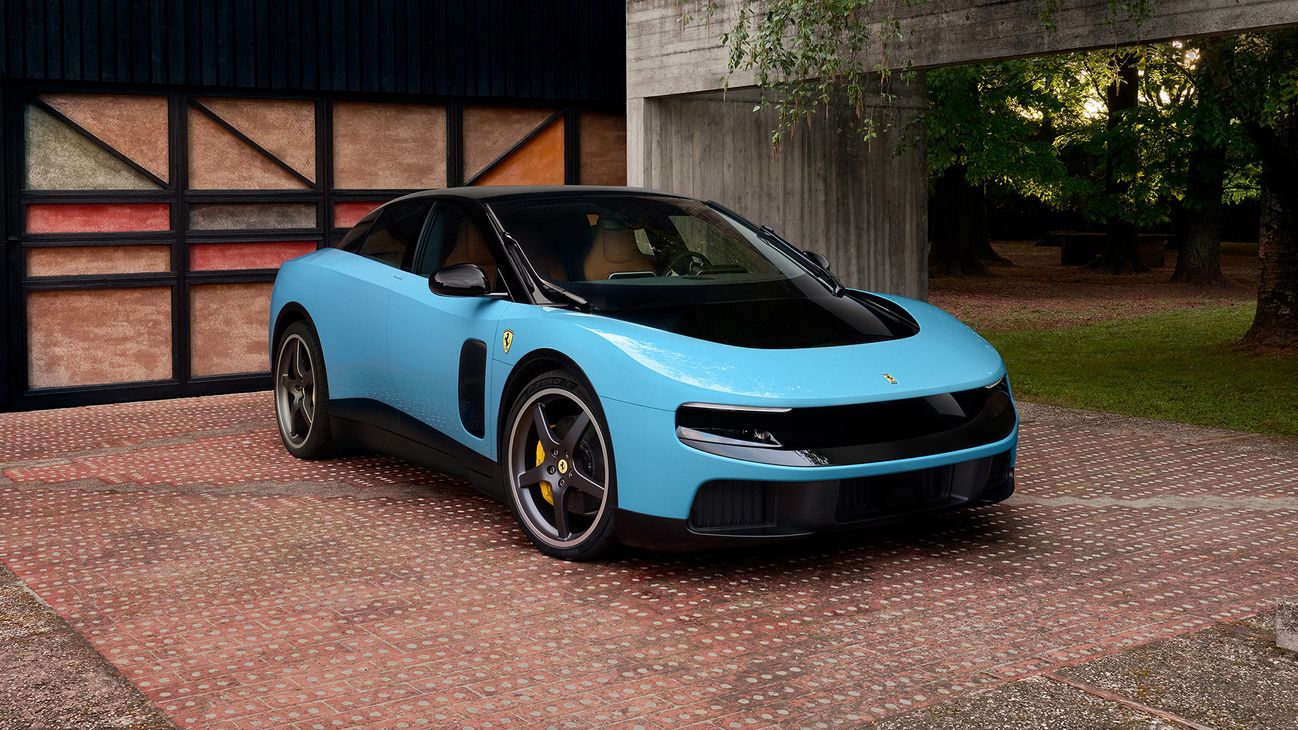
Ferrari Luce
"...ow with their new release of the, of the loose or luce, whatever they want to call it. But as a whole Fe..."
The Ferrari Luce is a Ferrari model that the podcast mentions as a new release. It’s brought up as part of what Ferrari is currently offering. The conversation doesn’t provide details beyond that it’s a new name/model.
The Ferrari Luce (spelled as “Luce” in the podcast) is referenced as a new release, indicating it’s a modern Ferrari model being discussed in the context of current news. In a classic-auto show setting, mentioning it highlights how Ferrari’s lineup continues to evolve alongside historic models. The podcast treats it as part of a broader Ferrari discussion.

G wagon
"Either it's either, you know, it's either a Tesla or a G wagon. There's no in between."
A “G wagon” is a Mercedes-Benz SUV that’s known for being tough and off-road capable. The host is just using it as another example in the electric-vs-anti-electric discussion.
“G wagon” refers to the Mercedes-Benz G-Class, a boxy, off-road-capable luxury SUV. Here it’s mentioned alongside Tesla to illustrate the host’s observation that people seem to fall into distinct camps about electric cars.
electric motor
"It's, and, you know, and I'm okay with hybrids and, and acceleration aids and, you know, have an electric motor on a rear wheel and things like that."
An electric motor is what makes an electric car (or hybrid) move. It uses electricity to create spinning motion that can drive the wheels.
An electric motor is the component that turns electrical energy into motion in an EV or hybrid. The host mentions using an electric motor on the rear wheel as part of a hybrid setup that still preserves some driving character.
hybrid technology
"I have no problem with hybrid technology, with electric battery chargers. I think it's great."
Hybrid technology means the car uses both a gas engine and an electric system. The host is saying hybrids don’t bother them as much as going fully electric.
Hybrid technology combines a combustion engine with an electric system (typically a battery and electric motor) to improve efficiency and enable electric-only operation in some conditions. The host says they have no problem with it, contrasting it with fully electric cars.
electric battery chargers
"I have no problem with hybrid technology, with electric battery chargers. I think it's great."
A battery charger is what you use to refill the electricity stored in an EV’s battery. The host is saying that’s a good thing for the future.
Electric battery chargers are devices that replenish the energy stored in a vehicle’s battery pack. The host frames charging infrastructure as a positive enabler for EVs and electrified racing.
World Endurance Championship
"when you look at what Ferrari's doing in the WEC and the World Endurance Championship with that 499P winning them all for the last three years."
The World Endurance Championship is a racing series for long-distance races. Cars and teams have to last the whole event, not just go fast for a few laps.
The World Endurance Championship (WEC) is a global endurance racing series focused on long races where teams manage fuel, tires, and driver stints. The host connects Ferrari’s electrified direction to WEC results, using the 499P as an example.

Ferrari 499P
"I think it's great for racing world. I mean, when you look at what Ferrari's doing in the WEC and the World Endurance Championship with that 499P winning them all for the last three years."
The Ferrari 499P is a race car Ferrari built for long-distance endurance racing. The host brings it up because it’s been winning a lot recently in the WEC.
The Ferrari 499P is Ferrari’s modern top-level endurance prototype built for the World Endurance Championship (WEC). It’s notable here because the host credits it with Ferrari’s recent success, including winning the last three years.
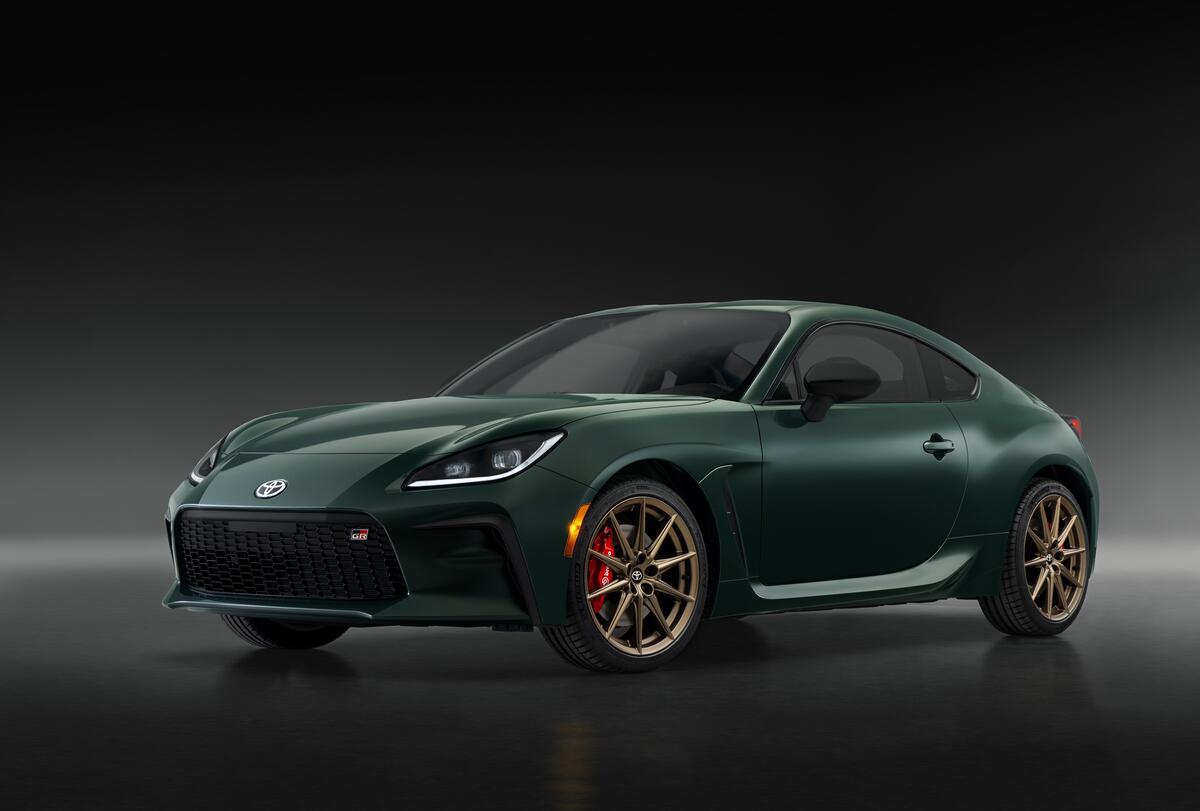
Toyota GR86
"for a while, I had picked up a new Toyota GR86. Oh, that was a cool. And it was a hoot. I got the, [1972.4s] I don't know what they call it, the premium package. It was a manual."
The Toyota GR86 is a fun, sporty Toyota coupe that’s designed to feel lively and easy to drive. In this story, the speaker had one in a manual and added an exhaust to make it sound better.
The Toyota GR86 is a modern, rear-wheel-drive sports coupe built around a lightweight, driver-focused chassis. It’s known for being fun to drive in a “real sports car” way without being exotic, and this speaker specifically mentions it as a manual with a premium package and aftermarket exhaust.
premium package
"[1972.4s] I don't know what they call it, the premium package. It was a manual. beautiful blue. [1976.0s] I'd put a catback exhaust on it."
A “premium package” usually means the car is optioned with extra features that aren’t included on the basic version. Think of it like buying a higher-equipped trim level with more comfort and convenience.
A “premium package” is an equipment bundle Toyota (or any automaker) offers that adds higher-end features beyond the base trim. It can include things like upgraded interior materials, convenience features, and sometimes driver-assist or audio options, depending on the model year.
catback exhaust
"[1976.0s] I'd put a catback exhaust on it. So it was still crucible, but it sounded good when I got on it. [1980.2s] Right. Lowered it a little bit, made it look a little sporty."
A catback exhaust is an upgrade to the part of the exhaust system after the catalytic converter. People do it mainly to change the sound (often deeper or louder) and sometimes to help the car breathe a bit better.
A catback exhaust is an aftermarket exhaust system that replaces everything from the catalytic converter back (pipes, mufflers, and tips). Enthusiasts choose it to change sound and sometimes improve exhaust flow, while keeping the factory catalytic converter in place.
Lowered it a little bit
"[1980.2s] Right. Lowered it a little bit, made it look a little sporty. That was a hell of a car to drive. [1984.2s] I loved it."
“Lowering” a car means reducing its ride height, typically by changing suspension components or using lowering springs/coilovers. It’s often done for appearance and can also affect handling by lowering the center of gravity, though it may reduce ride comfort and increase the chance of scraping.

Cadillac de Ville
"and got rear-ended. Oh my gosh. It was devastating. I loved that car. And then I stepped out of, [1999.1s] you know, college world, stepped into the, into the real world. So you got a Cadillac de Ville?"
The Cadillac de Ville is a large, old-school American luxury car. It’s the kind of car people associate with comfort and a smooth, roomy ride.
The Cadillac de Ville is a classic American full-size luxury sedan known for its big, comfortable ride and traditional “land yacht” styling. In this segment, it’s mentioned as the speaker’s next car after their college-era Toyota GR86.

BMW 4 series
"And we had a four series BMW [2011.4s] sitting in the driveway. So I drive up, I think it's a 435i Gran Coupe BMW. Oh yeah. It does the"
The BMW 4 Series is a BMW luxury car line that’s meant to feel more sporty than a typical family sedan. In this story, it’s the car the speaker uses for short daily driving.
The BMW 4 Series is a compact luxury coupe/gran coupe line known for sporty steering and a more driver-focused feel than many mainstream sedans. Here, the speaker describes having a 4 Series in the driveway and highlights that it’s fun and comfortable for daily commuting.

BMW Series Bmw
"...mute from, from home to office. And we had a four series BMW sitting in the driveway. So I drive up, I think i..."
heated seats
"I still warm my car up and [2028.0s] get the heated seats going and on. My neighbors just go, what is wrong with him?"
Heated seats use built-in electric heating elements to warm the seat cushions and sometimes the backrest. They’re a common comfort feature in cold weather and are often controlled by a multi-level switch or climate system.

AMX Amc Amx
"some of the new arrivals this week, the 1970 AMC AMX. It's got to be the shortest name for a car ever. It is. That's so cool... Matador Redover Black, 48,874 actual miles... But it's got an AACA senior first and a Grand National win... It's got the correct 360 cubic inch 4 barrel V8 and the correct Borg Warner T10 four speed manual transmission."
This is a 1970 AMC AMX, a muscle car from the late 1960s/early 1970s era. The big deal here is that it has a 360 V8 and a 4-speed manual, and it’s also been recognized with top concours-style awards.
The AMC AMX (from 1970) is a classic American muscle car built around a 360 cubic-inch V8 and a manual gearbox, making it a standout alternative to the more famous Chevys and Fords of the era. In this segment, the host highlights that this specific AMX has a correct 360 V8 with a 4-barrel carburetor and a Borg-Warner T10 4-speed manual transmission, plus notable AACA senior judging and a Grand National win.

AMC Matador
"...t's it. That's all you need. That's all you need. Matador Redover Black, 48,874 actual miles. That's our lo..."
The AMC Matador is an older American car from the 1970s. In the podcast, it’s mentioned as a specific example with known color and mileage. People talk about cars like this because the details help collectors judge what they’re buying.
The AMC Matador is a full-size American car from the 1970s, known for its role in the era’s muscle and family-car mix. The podcast references a specific Matador listing with mileage and color details, suggesting it’s being highlighted as a notable example. It’s discussed because certain Matadors are collectible due to condition, originality, and documented mileage.

Buick Grand National
"...wnership. But it's got an AACA senior first and a Grand National win. That's unusual for an AMX. I don't think I'v..."
The Buick Grand National is a performance version of a Buick. It’s known for being fast compared with typical cars of its time. The podcast mentions it because it has a strong track/award reputation.
The Buick Grand National is a performance-focused model from Buick’s lineup, known for strong acceleration and its reputation as a serious muscle car. The podcast mentions it in connection with awards and racing success, which adds to its desirability. It’s brought up because it’s an unusual or notable pairing in the context of another car’s history.
AACA senior first
"But it's got an AACA senior first and a Grand National win. That's unusual for an AMX."
AACA is a classic-car judging organization. “Senior First” means the car won a top-level award for how well it’s preserved and how correct it is for its model.
AACA “Senior First” refers to a top award in the Antique Automobile Club of America’s judging program. It’s typically given to cars that score extremely well in condition and correctness, often at higher judging levels than basic participation awards.
Grand National win
"But it's got an AACA senior first and a Grand National win. That's unusual for an AMX."
A “Grand National” win is a big award for classic cars. It means the car did extremely well in a high-level judging event.
A “Grand National” win is a major concours-style recognition in the classic-car world, typically tied to top overall judging results. In this context, it signals that the 1970 AMC AMX isn’t just rare—it’s been judged as one of the best examples.
360 cubic inch 4 barrel V8
"It's got the correct 360 cubic inch 4 barrel V8 and the correct Borg Warner T10 four speed manual transmission."
“360 cubic inch 4 barrel V8” describes the engine’s displacement and induction setup: a 360 cu in V8 fed by a four-barrel carburetor. The four-barrel carburetor typically supports stronger airflow than a single- or two-barrel setup, which matters for how the car performs and how it’s judged for originality.
Z28 option code
"And then the Z28 option was probably another $200. Which is funny because the Z28 was just an option code. And then all of a sudden it became the name of the car."
The “Z28” name originally meant a specific option package on a Chevrolet, not a separate model. Over time, people started using the Z28 label like it was the car’s main name.
“Z28” started as an option code (for Chevrolet) rather than a standalone model name. The host’s point is that what began as a package/option label later became a brand-like identity for the car line, changing how people talk about it.

Oldsmobile F85
"...o other new arrivals, the 1964 Oldsmobile Cutlass F85 442 hard top, ebony black over saddle, frame off ..."
The Oldsmobile F85 is an older Oldsmobile model from the 1960s. In the podcast, they’re talking about a specific F85/442 hardtop that’s been restored. Collectors care about details like the exact model and restoration quality.
The Oldsmobile F85 is a classic Oldsmobile model associated with the early-to-mid 1960s muscle and personal-car era. In the podcast, it’s mentioned alongside a specific 1964 Cutlass F85 442 hardtop, including paint and restoration details like “frame off.” That kind of detail matters because it signals a high-quality, collector-grade example.

1964 Oldsmobile Cutlass F85 442 hard top
"So other new arrivals, the 1964 Oldsmobile Cutlass F85 442 hard top,"
This is a 1964 Oldsmobile Cutlass with the 442 performance package. The “hard top” part means it’s a fixed-roof style (not a convertible).
The Oldsmobile Cutlass F-85 442 (1964) is a classic performance variant associated with the 442 badge, which historically denoted a higher-output muscle-car package. In this segment it’s mentioned as another “new arrival,” implying it’s part of the same classic-car lineup and likely a notable, enthusiast-targeted example.
12 bolt posi axle
"A rebuilt 330, correct Muncie M20 four speed manual, 12 bolt posi axle, pretty flawless build."
The “12-bolt” is a particular rear-axle design used on many classic GM cars. “Posi” means the rear end helps both wheels grip instead of letting one spin.
A “12-bolt” refers to a GM rear axle assembly with a 12-bolt cover pattern, commonly associated with stronger rear-end setups in classic performance cars. “Posi” is shorthand for a limited-slip differential, which helps both rear wheels share torque for better traction.
Muncie M20 four speed manual
"A rebuilt 330, correct Muncie M20 four speed manual, 12 bolt posi axle, pretty flawless build."
A Muncie M20 is a classic-style manual gearbox made by Muncie for certain GM cars. When someone says it’s “correct,” they mean it’s the right transmission type for that car, not just any replacement.
A Muncie M20 is a specific GM four-speed manual transmission used in many classic muscle cars. “Correct” here means the car’s drivetrain matches the original specification for that model/era, which is a big deal for authenticity.
rebuilt 330
"A rebuilt 330, correct Muncie M20 four speed manual, 12 bolt posi axle, pretty flawless build."
“330” is the engine’s size—330 cubic inches. “Rebuilt” means the engine was taken apart and repaired/renewed so it runs like it should.
“330” refers to a 330 cubic-inch V8 displacement, which is a specific engine size used in certain classic GM applications. Saying it’s “rebuilt” indicates the engine was restored with refreshed internal components rather than left untouched.
221 cubic inch flathead V8
"Beautiful. High end restoration on this car, 221 cubic inch flathead V8, three speed manual transmission."
This is a classic Ford V8 with a “flathead” design, meaning the engine’s valve layout is built into the block. The “221 cubic inch” part tells you which version of that engine it is.
A 221 cubic-inch flathead V8 is a specific classic Ford engine configuration where the valves are located in the engine block (“flathead”). Flatheads are known for their distinctive design and sound, and the displacement helps identify the exact engine variant.

1978 Buick Electra 225 Landau hardtop
"Other new arrivals, the 1978 Buick Electra 225 Landau hardtop. Where do you see these? You just don't see them."
This is a 1978 Buick Electra 225 Landau—an old-school big luxury car. The “Landau hardtop” part describes the body style, and the host is saying it’s hard to find in good condition.
The 1978 Buick Electra 225 Landau hardtop is a late-1970s full-size Buick known for its luxury styling and long-wheelbase “land yacht” character. The host calls out the specific Landau hardtop body style and treats it as a rare, desirable classic to find today.

1977 Buick Le Sabre
"Although I'm looking for a 77 Buick Le Sabre because that's what my parents had and just like it. My mom had a 74 Buick Le Sabre Luxus four door hardtop with a 455..."
The 1977 Buick Le Sabre is a big classic Buick from the 1970s. The host mentions it because it’s the kind of car their family had and they’d like to find one again.
The 1977 Buick Le Sabre is a full-size Buick from the late 1970s that the speaker says they’re looking for because it reminds them of their parents’ cars. It’s mentioned as a personal “want,” not as the main restoration being discussed.
stage one
"My mom had a 74 Buick Le Sabre Luxus four door hardtop with a 455, but you could also get the stage one for having that car."
“Stage One” is a performance option that some Buicks could be built with. It generally means the car was set up to be quicker and more performance-focused than the base version.
“Stage One” refers to a performance package/trim level associated with certain 1970s Buick models, typically tied to stronger engine calibration and supporting hardware. In this context, it’s mentioned as an option that some Le Sabres could be ordered with.

McLaren Sabre
"... neighbor when I was growing up had a 74 Buick Le Sabre Luxus convertible, black with red tier, black top..."
The McLaren Sabre is a high-performance supercar made by McLaren. The podcast brings it up when talking about cars people have owned or seen. It’s mentioned as an example of a standout performance vehicle.
The McLaren Sabre is a modern McLaren supercar referenced in the podcast as part of a broader discussion about notable cars. It’s the kind of vehicle that tends to come up because McLarens are known for advanced engineering and limited production. Here, it’s mentioned as a point of comparison to other cars the host encountered.
turbo hydromatic 400
"So this one is saffron over light buckskin. This has only got the rebuilt 350 cubic inch four barrel V8. Numbers matching turbo hydromatic 400 three speed automatic transmission..."
The Turbo-Hydramatic 400 is a classic GM automatic transmission. “Numbers matching” here means the transmission is the correct original one for that car, not a later swap.
The Turbo-Hydramatic 400 (often shortened to TH400) is a three-speed automatic transmission used widely in GM vehicles. When the host says “numbers matching turbo hydromatic 400,” they mean the transmission is the original-spec unit that came with the car.
numbers matching
"This has only got the rebuilt 350 cubic inch four barrel V8. Numbers matching turbo hydromatic 400 three speed automatic transmission and this smooth cruiser man."
“Numbers matching” means the important parts in the car are the original ones that came with it from the factory. Collectors like it because it usually means the car is more authentic.
“Numbers matching” means key components (like the engine and transmission) retain the original identification numbers from the factory. In classic-car collecting, it’s a major authenticity marker because it suggests the car hasn’t been heavily modified or rebuilt with different parts.
four barrel V8
"This has only got the rebuilt 350 cubic inch four barrel V8. Numbers matching turbo hydromatic 400 three speed automatic transmission..."
A “four-barrel V8” means the V8 has a four-barrel carb setup. That usually lets the engine take in more air, which can help it run stronger than a two-barrel setup.
A “four-barrel V8” refers to a V8 engine equipped with a four-barrel carburetor (or four-barrel intake setup), which typically supports higher airflow than a two-barrel. It’s a common way enthusiasts describe classic engine breathing and performance potential.

Lexus SC430 convertible
"[2521.4s] is the 22,002 Lexus SC430 convertible. Kind of a grand touring car. Black over saddle, [2527.8s] great color on that car. 89,000 actual miles, which is just getting broken in on a Toyota."
The Lexus SC430 is a luxury convertible that uses a V8 engine and an automatic transmission. It also has a retractable hardtop roof, so it can switch between “open-top” and “closed-coupe” driving.
The Lexus SC430 is a grand touring convertible built around a 4.3-liter V8 with a double overhead cam (DOHC) layout, paired to a 5-speed automatic. It’s known for its retractable hardtop, which lets it feel like a coupe when closed and a true convertible when open.
4.3 liter double overhead cam V8
"[2532.6s] That's right. 4.3 liter double overhead cam V8. And it's got the five speed automatic transmission [2537.5s] and it's got some new timing belt, new brakes."
A “double overhead cam” engine uses two camshafts up in the engine head to control the valves. That helps the engine breathe better, and it’s part of why the car can feel smooth and responsive.
“Double overhead cam” (DOHC) means the engine uses two camshafts located in the cylinder head to control the intake and exhaust valves. In a 4.3-liter V8, that setup is aimed at improving valve timing control for smoother operation and responsiveness.
retractable hard top
"[2543.2s] They have a retractable [2547.7s] hard top. And even today, even with so many cars that have that out there, when you do a retractable [2547.7s] hard top in a parking lot at the grocery store, it still kind of attracts a crowd of people."
A retractable hardtop is a convertible roof made of hard material that can open and close. It’s usually quieter and more weather-resistant than a fabric soft-top.
A retractable hardtop is a roof that physically moves and stores like a coupe roof, rather than folding fabric. It’s more complex than a soft-top, but it can reduce wind noise and improve weather protection while still giving convertible-style access.

1974 Jensen Interceptor
"[2566.3s] And last but certainly not least, the 1974 Jensen interceptor three wide over black numbers [2572.0s] matching 440 cubic inch VA. Sounds all big old. It sounds like a two. Wow. It's got the MSD [2580.4s] atomic electronic fuel injection."
The Jensen Interceptor is a classic British car from the 1970s, built to feel like a fast, comfortable long-distance cruiser. This particular 1974 example is powered by a large V8 and has some special equipment that makes it especially interesting to collectors.
The Jensen Interceptor is a classic British grand tourer, and the 1974 version is notable for its big V8-era performance and distinctive styling. In this segment, the host highlights a 440 cubic inch V8 and period-correct upgrades like electronic fuel injection, which help explain why it’s such a standout “numbers-matching” auction arrival.
440 cubic inch V8
"[2572.0s] matching 440 cubic inch VA. Sounds all big old. It sounds like a two. Wow. It's got the MSD [2580.4s] atomic electronic fuel injection."
“Cubic inches” tells you the engine’s size. A 440-cubic-inch V8 is a big engine, and bigger engines usually make strong pulling power.
“Cubic inch” is an engine displacement measurement; 440 cubic inches is a very large V8 size by modern standards. The point of calling it out is that displacement strongly influences how much air/fuel the engine can move, which typically correlates with strong low-end torque in big V8s.
MSD atomic electronic fuel injection
"[2576.0s] Wow. It's got the MSD [2580.4s] atomic electronic fuel injection. No harm, no foul. Right. With doing that."
MSD is a company that makes performance parts for engines. Here, they’re talking about an electronic fuel-injection system, which helps the engine get the right amount of fuel more precisely than older setups.
MSD is a performance-focused brand known for ignition and fuel-injection components. In this context, “MSD atomic electronic fuel injection” refers to an aftermarket-style electronic fuel-injection system intended to improve fuel delivery compared with older carburetion setups.
four wheel power disc brakes
"[2585.0s] Aerocorrect three speed automatic, very rarely seen four wheel power disc brakes, [2588.8s] which is kind of unusual for 1974."
Disc brakes use a spinning metal rotor to slow the car down. “Power” means you don’t have to press as hard on the pedal, and “four wheel” means all wheels get disc brakes.
“Power disc brakes” use a booster (often vacuum-assisted) to reduce pedal effort, while “disc” refers to the brake rotor type. “Four wheel” means all axles use disc brakes, which was less common on some 1970s cars, making this configuration a notable spec.
Aerocorrect three speed automatic
"[2585.0s] Aerocorrect three speed automatic, very rarely seen four wheel power disc brakes, [2588.8s] which is kind of unusual for 1974."
This is the name of the automatic transmission setup in the car. The host is pointing out it’s not just any automatic—it’s a particular three-speed configuration.
“Aerocorrect” here refers to a specific transmission/shift-control setup name associated with the car’s automatic gearbox. The key idea is that the host is describing the exact transmission configuration, not just that it’s an automatic.
faking cars
"Well, do you know, in terms of faking cars, which is a whole different topic, there are people that go down into the ocean to get shipwrecks from the period of the car they're trying to fake."
“Faking cars” means making a car look like a rare or expensive one when it isn’t. People may try to trick buyers, and experts use tests to check whether the car is truly from the time it claims to be.
“Faking cars” refers to creating or altering vehicles to look like a more valuable, rarer, or historically significant model. The episode describes how fraud can be hard to spot because modern testing methods (like steel analysis) can reveal whether the car’s materials truly match the claimed era.
Request an Explanation
Heard something you'd like explained? We'll add it to this episode.
Sign in to request explanations for terms you heard.
Want to learn more?
Browse our glossary for plain-English explanations of automotive terms, jargon, and concepts.
Help improve this episode
See something that's not quite right? Our annotations are AI-generated and can sometimes miss the mark. Click the flag icon on any annotation to suggest a correction.
3 community members have helped improve this episode.