00:00
This is the Classic Automall Show.
00:05
Broadcast from the studios inside the Classic Automall in Morgantown, Pennsylvania, just
00:11
one hour west of Philadelphia at Pennsylvania Turnpike Exit 298, featuring nearly 1,000 classic
00:17
vintage and barn-fine vehicles for sale under one climate-controlled roof.
00:22
Now, here's your host, Classic Automall president and the man with all the toys,
00:30
Oh, welcome, welcome, welcome, show number 205.
00:34
In the books, we didn't do a show last week.
00:37
Because I was gone.
00:39
Visiting the grandchildren.
00:40
Visiting the grandchildren in a pontoon boat in Tavorock Lake, which I almost submerged.
00:44
Hit a rogue wave on the backside of a cabin cruiser doing a big U-turn in front of me,
00:48
and literally a wall of water just came right over the top of the boat.
00:52
And some sun as well.
00:55
Yeah, and some sun.
00:56
I got a little burnt.
00:57
Better boat navigator than I said, well, I'd have never done that.
01:00
You did the Leslie Nielsen and Poseid adventure.
01:03
Oh, my God, it's on the wave coming.
01:06
Well, the problem is that a pontoon boat is basically a mobile home with air changer
01:13
You're supposed to be sitting there with a cooler.
01:18
So, before we get started with our wonderful guest, how many cars in inventory right
01:26
Because we were off a week.
01:27
Of course a reference because all these nines.
01:30
So, you know, the nines.
01:34
930 cars in inventory as we speak.
01:36
And just a quick mention, our YouTube channel is blowing up.
01:41
56,000 and 23 subscribers as of this morning.
01:48
And 2.1 million views.
01:52
We're going to get, I think they're going to send me a check for a quarter.
01:55
It's mailbox money, but not the same as that.
01:57
We're going to monetize that.
01:59
It's like Jerry Seinfeld's royalty checks.
02:02
Only with less zeros and decimal points that are too far left or whatever.
02:06
Let's get on to our guest here, please.
02:09
Joining us via Zoom, somewhere up in Wisconsin, Mr. Eric Buell, a racer, motorcycle manufacturer,
02:16
I saw you may have had some acting and...
02:20
Well, any acting is what is like.
02:23
Any news is good news or something along those lines, right?
02:27
Thanks for joining us this morning and hope you're doing well up there in Wisconsin.
02:30
How's the weather up there?
02:31
It's perfect right now.
02:32
It was crazy hot the other week, but now it's like in the mid-70s and the sun shining
02:37
and we're dying in Canadian smoke, but other than that...
02:41
We got that a couple of years ago and we're not getting it quite this much this year
02:45
for whatever reason, but that's crazy.
02:48
But smoke from those wildfires is just coming right down this way.
02:51
That's pretty nuts, isn't it?
02:52
We're going to Monterey next week and the highs are going to be mid-60s and the lows
02:56
like upper 50s, so that's going to be nice, too.
03:00
I'm ready for some cooler weather.
03:01
You know, if I can't bitch about the weather, then I don't know what else to do.
03:06
You can't bitch about the weather in Monterey.
03:09
And if you do, nobody should listen because nobody wants to...
03:14
It's going to be a lot of fun.
03:15
It's the first time ever going, so it'll be interesting to see.
03:19
It'll be a lot of fun to see.
03:21
So you were born Pittsburgh area, so you're a Pennsylvania guy.
03:24
That's right, even though the other side of Pennsylvania is...
03:28
We feel isolated down here in the southwest corner or southeast corner of Pennsylvania,
03:35
If you talk to people about Pennsylvania or Philadelphia area, they think urban and
03:40
lots of concrete and asphalt, but you can go 10 minutes from downtown Philadelphia
03:45
and you feel like you're in somewhere in the rolling hills of the south.
03:48
It's amazing how the change of geography is up here.
03:53
Just head a little west.
03:54
The mountains are just mountains.
03:55
And they're old, small mountains, but they're beautiful.
03:58
They really, really are.
04:03
And so to get a little history and background of what you've done, you worked for
04:05
Harley-Davidson back in the day, started your own motor...
04:08
I mean, I'm paraphrasing and simplifying it a little bit, and started your own
04:13
motorcycle manufacturing company, highly successful at that, then took back over the
04:18
musician side of it, which I want to talk about as well, too.
04:23
But you went to work for Harley-Davidson right out of college or right before you got out
04:28
Or when did you go there?
04:29
Yeah, right after college.
04:30
And I kind of took the long route through college.
04:33
I dropped out of college in my freshman year to play music for a couple of years.
04:39
And then like all musicians you had at the day job, my day job was a, you know, a
04:43
flat-rate mechanic in motorcycle shops.
04:45
And I got burned out on the whole club scene and trying to get the owner of the club to
04:51
pay you what he owed you and that kind of stuff and also trying to haul the guitar
04:57
player who had OD'd, the back alley.
05:00
And I just, you know, and the guys in motorcycle were just cool.
05:07
And then, you know, being a motorcycle mechanic, I worked for all the brands.
05:09
You're like, this is a horrible design.
05:12
It's impossible to work on.
05:14
Maybe I better go back to engineering school.
05:15
I think I could do better than that.
05:16
Isn't it amazing how poorly engineered motorcycles were up until, you know, it was pretty late
05:23
Of course, I see that the, you know, the AMA started in 1924, which I was surprised
05:29
that it was that early.
05:30
And their 100th anniversary was just a few years ago.
05:34
Yeah, that is very cool.
05:35
And you're a Hall of Fame member of the AMA and inducted in 2002.
05:38
I guess that's all.
05:40
That was only, you know, a few years ago, 22, 22, I don't even, I don't want to do the
05:47
So you're the honored guest this year at the Radner Hunt Concorde Elegance here in Southeast
05:54
And we're delighted to have you.
05:56
I think that's going to be a lot of fun.
05:58
And we get some great motorcycles.
06:00
John Lawless does an amazing job of curating classes of motorcycles that are just you've
06:04
hardly ever even seen.
06:05
Oh, it's going to be fantastic.
06:07
I have, you know, never been there.
06:08
I've heard about it.
06:09
I looked at pictures of it and videos of it and go into the section my first time going
06:13
and it's, you know, it's a huge East Coast event.
06:18
And the featured motorcycle classes this year are Eurosport, Maiden Europe, obviously, Maiden
06:23
America and Paddock to Podium competition bikes.
06:26
So we ought to see, I think John said there's about 40 bikes in the event this year.
06:35
I love all motor vehicles.
06:36
I think that's the way it is.
06:40
It's music and cars and are like you said, motor vehicles of any type for me.
06:45
And of course, you know, going to these concours, you see bikes and cars that you've never
06:51
Like we have a class for Moons, M-O-O-N, this year.
06:55
And I've never even seen one.
06:56
And I've been in this business a long time.
06:59
Even now, if that's being immersed in cars that are all our lives, you still
07:03
And it's so cool to see the engineering and the thoughts and then digging a little of the
07:07
history behind those, you know, marks that you haven't heard of.
07:14
And then, of course, there's the, you know, the old standards like what you were working
07:17
for Harley Davidson.
07:18
I mean, at the time, Harley Davidson was king, right?
07:22
They were, they were, they could do no wrong, right?
07:25
They, you know, they've had rises and falls over their, you know, over their
07:30
You know, they were bankrupt in the early 80s.
07:33
And then roaring success, not so much.
07:36
And again, when it was in the 30s or something, they were huge.
07:40
I mean, every, just about every police department and ambulance and deliveries and
07:45
everything that they were building bikes for.
07:47
So, and of course, you know, it was interesting though, I was reading about your time in
07:51
Harley and it said that because you had a racing kind of background mentality that
07:56
you took those cruisers out and did things with them that people wouldn't normally
08:00
do to test them and to make sure that they, they did what they were supposed to
08:07
I had a lot of fun there.
08:08
We had, we had a 14 channel telemetry stuff that we had inherited from AMF.
08:11
So with this big box that we put on the back of the bike, and then it said 14
08:15
channels back to the, and it came out in a strip chart recorder.
08:18
So you had these big strip charts of, you know, sheets of, on brownish paper
08:24
And you'd be looking at them and measuring them, you know, to see because, you
08:26
know, whether the front end was wobbling and all that.
08:29
And then I started adding more instrumentation to see what the chassis was
08:32
doing while they were wobbling through the major twist and all that stuff.
08:35
It was a lot of fun.
08:36
I learned, I learned a lot.
08:37
And then I would ride them because nobody wanted, they had union riders who
08:40
were good guys, but they were just guys who rode every day and put in the
08:43
miles and really, but they didn't like the high speed stuff too much.
08:47
So I would, since I had just come off a Formula One racing, it was fun
08:50
to throw a, you know, a Harley and will weave down the back straight
08:54
And it would be going like, lock, lock.
08:58
And your first Buell motorcycle that you built was, you were in the R&D
09:04
department, Harley, and left there and built your first bike, which was the
09:07
RD750, the road warrior.
09:10
That's a Yamaha bike that was a cool bike, the RD350, that just got me
09:15
thinking about that.
09:16
I must have had that in my brain.
09:17
So did it go really 178 miles per hour at Talladegar or one of those
09:23
Yeah, we actually ran out of gearing because the guy who
09:27
rode it there, Doug Brony came down to ride it for us and he had a deal
09:31
And the Michelin tires are much smaller in diameter than the
09:34
And I didn't have enough gearing.
09:36
So we wound up, that's, that was, that was Pete coming out at the
09:38
beginning of the straightaway.
09:40
He had to kill her off because he had to roll off as it was just
09:43
sitting on the red line.
09:44
It's just one of those weird stories.
09:45
I didn't have enough.
09:46
I didn't realize they were much smaller diameter than Michelin.
09:49
What, what, what would have been the top speed, you, could you
09:55
He had a lot of horsepower.
09:56
It was much more powerful.
09:57
I had rode TZ750s in Formula One.
10:00
It was much more powerful than a TZ750.
10:05
And of course the...
10:06
There's power back in that day.
10:08
And 3D aerodynamic.
10:10
I mean, what did the Yamaha's and the Hondas have in that
10:12
Well, I don't know what Kenny said.
10:13
But the ones that we had, the normal Piazzubot production
10:17
ones, they were in the high 130s.
10:20
So to have 190 is just absolutely crazy.
10:24
And Formula One, in the motorcycle class of Formula One, was it only a couple of years
10:31
Well, I had just a good question.
10:33
No, it was around for quite a while.
10:36
I mean, back in the day, that's when the BSAs, you know, Dick Man and, you know, all that
10:39
kind of stuff were right in those.
10:40
And then the Yamaha had the little 350s.
10:43
But it was kind of Formula One class.
10:44
And then when Yamaha came out with the TZ700 and then the TZ750, that was actually
10:49
two RD350s basically stuck together in one water cooler.
10:53
And that was a great motorcycle because it was a great evener.
10:57
Well, Kenny's bikes were fast, but Kenny was stupid fast, you know, himself.
11:00
But everyone was kind of on an equal play but playing field.
11:04
It was a five to tier.
11:05
I bought mine one year old for $4,000.
11:07
And then of course...
11:08
I bought 17th for my first Daytona.
11:10
It was running ninth.
11:11
Me and Gary Scott were battling for ninth when it broke about two thirds of the
11:15
way to the very first one.
11:16
But that's my first time on a bike that I paid $4,000 and, you know, I probably
11:21
It was a good time for guys who didn't have much money.
11:24
You could get into it reasonably.
11:25
And you didn't have to have as big of a trailer and, you know, the tires were
11:29
Everything was scaled down from racing cars, right?
11:32
Yeah, I love cars when they start out.
11:33
So I'm so excited about going to Bradford.
11:36
I'm excited about what you guys have at your place, which is crazy because I love
11:41
But I got out of it because I didn't need much money and cars were too expensive.
11:43
Well, it's like people collect motorcycles because they take up less space sometimes,
11:48
They think, oh, I can put 100 motorcycles in this building that I can only put
11:51
So guys have that weird math that's going on in our heads, right?
11:55
Yeah, and the white white, you know, you'll probably notice that it's in you.
11:59
I like that thinking so.
12:00
But I remember the RD350 Yamaha was back in the day when the guys that had those
12:05
were the real guys that really knew what was going on in the motorcycle world.
12:08
You know, for those of us who rode minibike or, you know, read
12:11
minibike magazine, we knew about Jeff Ward and we knew about Bob Hannah from, you
12:16
know, in the early years when he was racing dirt bikes and we didn't
12:21
know about any of this other stuff.
12:22
You guys were so far ahead of the curve of us.
12:25
It was not even funny.
12:27
But I sort of, my first, one of the cars I had, one of the last cars I had
12:32
before I got out of cars is I had a 57-cord bed.
12:34
Oh, that's not true.
12:35
But I put a 426 hand-me-in out of a 60-piece charger.
12:38
And that's no joke.
12:39
I have one photo left with the carburetor stuck through the window.
12:42
Yeah, it wasn't exactly.
12:44
I'm sure it was when I was 17 years old.
12:48
I bet you that was a blast to drive.
12:51
Of course, we didn't know fear back then, but now when I think about it, it's like,
12:55
I got on a dirt bike recently and I thought, this is like a thrill ride that I don't want
13:01
This thing is crazy fast.
13:04
Of course, back in the day, I mean, with the Hondas that they were building, the
13:09
Yamaha's that were building, and the Harleys, what are the XR 1000s, you ended up
13:13
using the engines from those, right?
13:15
Oh, the first and the first Harley-fired wheels.
13:17
My first couple of wheels were Formula One bikes, and then he eliminated that glass.
13:22
So since I had some friends at Harley, and mainly von Bielz allowed me to buy the
13:26
engines, I decided, you know, when I was at Harley, maybe I should build it, show
13:31
them that you could build a sport bike around a Harley engine.
13:33
And then I had raised the TC 750 in my Formula One.
13:36
I also raised the Ducati in Superbike, which was a class below Formula One
13:40
And I love the power band of the Ducati, although the handling was horrible.
13:44
The wheelbase was too long in the front-end cloud and all this stuff.
13:47
The Yamaha had great, but the motor was violent, you know, kind of violent.
13:52
But basically, I thought, you know, that mellow power band in a tight, good handling
13:55
chassis is kind of cool, and I don't have a connection card to you, but I do to Harley.
13:59
Yeah, that radical power band will get you in the corner, right?
14:03
If you try to accelerate too quickly or too early, I guess, in the corner?
14:07
I mean, it's just, you really got to be on your toes to ride something with
14:09
a harsh power band.
14:10
It's totally focused, you know, and if anything goes wrong, your sideways,
14:13
you know, there's a little dampness or any of those things, you know, happen.
14:16
So the Ducati was always very forgiving to ride, and it was the power band.
14:20
It wasn't the handling, right?
14:21
For people just on the street, the handling was good, but when you
14:23
started to race one fast, they were hard to, because they didn't have enough
14:26
weight on the front end and the front ends plowed.
14:28
So you had to climb up on the tank if you really wanted to go fast
14:31
or have to go out of work actually to ride a Ducati, but it never betrayed you.
14:35
I've never fallen off once in the rain, sliding along with my hand on the clutch.
14:41
Get to the stop, stood it up and got back on the track.
14:43
One of the only times I fell.
14:45
So it was never the violent high side.
14:46
Everything was just, you know, that violent high side is hard to watch.
14:49
It's just when you see that on on video and YouTube and in races, it's like
14:55
that's got to be a feeling that nobody wants to experience.
14:58
It's harder to experience than to watch.
15:00
Yeah, I know what's coming.
15:05
Well, it reminds me, you talk about these cars with violent power bands.
15:08
It's like the 930 turbo Porsche when they first came out.
15:12
Those things, when the turbo kicked in, you better
15:14
be hanging on because it was going whatever direction it wanted to go.
15:18
So, you know, motorcycle, I mean, you ended up doing a deal with Harley.
15:22
They sold Buell motorcycles through Harley-Davidson dealerships.
15:26
That must have been, I bet that was, was that tough to get to happen?
15:29
Or did that just happen naturally because you were using their engines and.
15:33
Well, I tried to condense the story as best as I could.
15:35
When I worked at, you know, at Harley to three and a half years, I was there.
15:39
So I came out of college, went to work for Harley and three and a half years
15:42
there, I had five promotions, which was basically because they were kept
15:45
having layoffs and I was the lone one.
15:47
So they moved the whole guy up and I'd give me any more money.
15:52
But when I left, Vaughn Beals, who was the CEO at that time, you know,
15:56
they had done the, he asked me why he said, man, you know, I want you to stay.
16:01
He goes, I go, I guess can't.
16:03
There's just nothing happening in engineering, just, you know,
16:06
and I'm a sport bike guy, you know, I said, I'm not even sure
16:09
about this cruiser business.
16:11
I don't, I don't know if it's going to last, you know, because I, so anyhow.
16:15
So I left, started my business struggle on for 10 years, you know,
16:18
made the first fuels that were all on my own.
16:20
10 years later, I got a call back from the leadership there.
16:24
Actually, it was Jeff Lustein, who had been headed engineering when I worked for him.
16:28
And he said, you know, we're interested in buying your company.
16:33
And he goes, yeah, I need that engineering school back skills back in here.
16:37
You know, I like your drive and that I'm sitting there going,
16:39
man, I don't want to go back to engineering Harleys.
16:42
But then Vaughn Mules called me and I started talking to him and he goes,
16:44
well, here's why I want to buy you.
16:46
He said, you remember, I actually went to meet him.
16:48
Right. We were faced with this.
16:49
He had a big, deep voice.
16:51
Right. He was our house.
16:52
He was a powerhouse leader because he dragged him from bankrupt.
16:55
Right. And he said, so here's how I turned it around.
16:58
He said, I remember you telling me the cruiser business wouldn't work.
17:01
He said, what do you think that I got?
17:02
All right. You got me.
17:05
He said, you know, I worked.
17:06
He said, I went out and talked to customers.
17:08
I went and talked out to people.
17:09
I didn't talk to my dealers.
17:10
I didn't talk to my carnal people.
17:12
He said, I shut down all the things that the engineers wanted to do,
17:15
like the V4 Nova with some new engine project.
17:19
And he said, what my people wanted, what I heard the customers wanted,
17:23
Yeah. They wanted a classic.
17:24
They wanted to remember the old days.
17:26
And they, but they didn't want to work on them.
17:30
So they wanted the bikes full of proof.
17:31
He said, so I bought the soft tail, which he bought from a dealer.
17:34
Soft tail, perfect.
17:35
And I remember I was still in engineering when he bought it.
17:37
And all the engineers hated it because this whole, you know,
17:39
it wasn't cool and new.
17:41
It was a whole thing and nobody wanted to work on it.
17:43
And it was a huge success, of course, because it's what customers were.
17:46
Right. What the engineers wanted, you know, it wasn't because of who knows what
17:49
the dealers want. You know, they were into that.
17:51
I got to make money tomorrow.
17:52
I got to make the payroll.
17:53
They're not looking out of the future.
17:54
He was a future thinker.
17:55
And he said, the reason I saw it, he said, that's cool.
17:58
Right. He said, OK, I get it.
17:59
He said, I started hog because I needed a place to get together.
18:02
And said, it'll work.
18:03
He said, but for the last two years I've been going out to,
18:06
especially last year, I went to all the road races
18:08
and I talked to people there.
18:09
And I realized what you were all about.
18:11
You have a totally different mindset.
18:13
Sure. Those people aren't going to buy Harleys.
18:15
Right. Right. That's not in there.
18:16
It's not in their wheelhouse at all.
18:19
He said, I made the brand means up to a certain group of people.
18:22
And I have a waiting list of customers.
18:24
And he said, that's what I want.
18:25
I've got a Rolex and I don't want to tarnish it because he said,
18:28
this sales boom is going to fade and go down.
18:31
And he said, if I chase that with price or if I try to take
18:35
the brand and me, have it mean something to different customers,
18:37
I'm going to tarnish it.
18:39
And he said, but I got to make the corporation grow.
18:40
So when Harleys start sales draw, I'll just cut production,
18:44
but I won't keep waiting list.
18:46
And he said, but I need a brand that doesn't have to run
18:48
on that cachet, deeper, more affordable, also sporty,
18:52
but also stuff for entry-level riders.
18:54
And I need you to keep the corporation growing
18:57
while this jewel goes through whatever it is.
18:59
But it's always aspirational.
19:01
And I went, I'm in.
19:04
When he retired, everything went to hell.
19:05
But that's another story.
19:06
It just was a slow slide.
19:08
He was a lead leader in that company.
19:09
He was, how did he get together?
19:11
Because he was right about that.
19:12
And we actually started a power train with Porsche
19:15
that wanted to become the V-Rod.
19:16
The reason we built that is he had a market research woman
19:19
named Dan Tyna who went out, who was not an old school.
19:22
She was a really bright woman.
19:24
She went out to validate.
19:25
She said, what Bill needs is a halo product.
19:27
And then young people come and that needs to be
19:29
a high-performance sport bike.
19:31
And I'm like, yes, yes, yes, yes.
19:34
So we went to work with Porsche because Harley
19:36
had worked with them on the Nova.
19:38
And we started a project that was called the Revolution
19:42
And that was a 60-degree wind, water cooled.
19:45
And it was in a tube of chassis with fuel in the frame
19:47
with split radiators just like the EBR in the 90s was later.
19:51
And that was supposed to come out in 98.
19:54
He retired and all of a sudden Harley said,
19:56
well, we ought to have that.
19:57
The mistake was nobody asked for it.
19:59
So they were already into it.
20:00
They had already forgotten.
20:01
You've got to know what your customers were.
20:02
And they didn't want that engine.
20:04
I mean, that doesn't mean they didn't sell them
20:06
because they had a ton of diesel.
20:08
But there was no, you know, we needed it.
20:10
The leadership inside Harley wanted it.
20:12
So it started becoming internal egos rather than driven that.
20:15
And that really is what kind of ran them into the ground.
20:19
The only handle thing is you build, you know, for a customer.
20:22
Yeah, the same thing happened in the automobile industry
20:24
from Ford and Chrysler and General Motors.
20:26
They had the same problem.
20:27
They just somehow figured it out, not too terribly late.
20:30
But it was a shame.
20:31
I remember when Harley was so desirable,
20:33
when you had a really hard time even getting one.
20:36
And, you know, you just, oh, man, if you could get a Harley,
20:40
And then all of a sudden they were just everywhere.
20:42
And then you could get them.
20:43
And then it kind of lost the allure.
20:45
You know, Ferrari almost kind of had that same problem
20:48
of, you know, almost building too many
20:49
or whatever the case may be.
20:51
You know, you've got to be careful
20:52
like that with a brand.
20:53
And I might as well not do that.
20:55
I learned that from him.
20:56
And I'm like, oh, my God, that makes so much sense.
20:59
Build less and it'll be more popular.
21:02
And then branch out and diversify into other areas.
21:05
It's kind of like Porsche.
21:06
You remember you guys at Porsche.
21:07
Porsche is such a cool company.
21:08
I know there's, they definitely have a few struggles now.
21:10
I read somewhere, well, their busless model didn't work.
21:13
They had what I tried to do with EBR
21:15
after Bill was shut down by Harley, started EBR.
21:18
They were actually my business model,
21:19
which is go racing for cashier with somebody else's money.
21:26
Build small volume exotic high performance bikes
21:29
to start like the 930s.
21:33
And do consulting engineering.
21:35
And then Porsche has a big consulting engineering group.
21:37
Because they've got the brain power.
21:38
They have the brain power there.
21:40
And that's the cool thing.
21:41
So when they're needing their own big project to come,
21:43
like when they were doing the V8 all wheel drive,
21:45
you know, like was it Cayenne?
21:48
All of a sudden they took a little less contract.
21:50
And they had a pool of engineers
21:51
to work on this thing and deliver it.
21:53
And then when that's launched, you go, oh,
21:54
what do I do with all of these engineers?
21:58
You don't lose those guys.
21:59
Have them ready when the next project's needed.
22:01
So to me, that was a great business.
22:03
The only thing that happened was consulting with people
22:05
that I was doing consulting for.
22:06
I'm trying to get them screwed up on that.
22:09
Well, I mean, you know, the funny thing
22:10
is Porsche and Mercedes work together on the 500E
22:14
That was, you know, hard to even fathom
22:17
that those two companies would get together
22:19
and do something together.
22:20
But it's like Ford and General Motors
22:21
doing something together.
22:22
It's kind of surprising.
22:23
But it made a lot of sense.
22:25
You know, both had their strong suits
22:27
and it worked pretty well.
22:29
No, it does make a ton of sense.
22:30
You know, if you got, you know, your business with the company
22:32
used to keep your people employed, pay them well,
22:35
and take care of your customers.
22:36
And so, you know, if you had an internal egos
22:39
where the internal engineers go, well, we can do it ourselves.
22:41
And we had a project that harder than we were going to suppose
22:44
And we were going to buy the turbo on the outside
22:46
for the, when the XPs came out.
22:48
After the revolution became the V-Rod,
22:50
we were doing the XPs.
22:51
And as a port, the early ones have a port
22:53
through the frame, which was for a turbo.
22:55
We were buying the turbo and hardly decided
22:57
that we're going to make the turbo themselves.
22:59
Yeah, let's reinvent the wheel.
23:00
And they put a whole block shut down.
23:03
And that again, is internal egos going to stop.
23:06
Didn't Honda have a lot of making you guys happy?
23:09
You were here to make the customers happy.
23:12
Didn't Honda had a turbo at one point in time?
23:14
One of the CBXs, I think, had a turbo.
23:16
Was a turbo impractical for motorcycle use?
23:20
Or would it have worked, do you think?
23:21
Well, what we had was a variable vain turbo, which
23:23
was, you could change the amount of turbo charge.
23:27
It had little vanes that, a ring of vanes
23:29
connected with little links.
23:31
It was done by a company called Era Charger.
23:33
And by moving these vanes, they're all connected together
23:36
with a little rod, you can change how much boost there was.
23:39
And so if you ran a full blown turbo,
23:41
if you ran it without that, it was on ride.
23:44
But with this, what we did, we ran it
23:45
through the engine ECU.
23:47
So in first gear, you'd have 90 horsepower.
23:50
In second gear, you'd have 105.
23:52
In third gear, you'd have 120.
23:54
And it's so on up to 170 horsepower.
23:57
And so it was fun to drive because, you know,
23:59
when you accelerate a vehicle, it goes, run, run, run,
24:04
each one takes a little longer.
24:05
This would go, run, run, run.
24:08
Each gear went about the same speed.
24:09
It was really hard to merge.
24:13
Oh my god, I'm going to run into that truck.
24:14
I thought it was going to be good.
24:16
Isn't that amazing, though?
24:18
So you mentioned the V-Rod.
24:20
In your mind, what was the V-Rod?
24:22
What made the V-Rod work and not work?
24:25
The Harley Purist hated it, right?
24:27
Yeah, it basically was not a bad motorcycle.
24:30
It's very durable, kind of cool.
24:32
But there wasn't a real, you know, real big demand for it.
24:35
And some Harley people hated it.
24:38
And it just broke on rules.
24:41
And by taking it away from us, it really
24:43
hurt what you could have been.
24:47
You know, because that bike would have been very fast,
24:50
It would have come out before the TL-1000 Suzuki
24:53
if people were in the V-Prins or the Honda 1000 C.
24:56
I can't remember what that was called.
25:01
Who raced that Colin Edwards.
25:02
I'm not sure who raced that in, I think so,
25:05
in World Superbike.
25:06
But this would have been out before that.
25:07
And it would have been fast.
25:09
And you probably would have made it a lot lighter too,
25:11
They added, when they were on the engine alone,
25:13
they added 45 pounds to the weight.
25:16
That's a huge amount of weight in a motorcycle, right?
25:19
Just adding fins and stuff, which, you know,
25:21
kind of made it look cool.
25:22
They wanted to make it look like an air-cooled,
25:23
so it has like sort of fake-looking pushrod things
25:25
up the side of it and lots of chrome and stuff.
25:28
You know, which looked kind of Harley-ish.
25:29
But again, it was something that no, a lot of the people
25:31
who own them love them, they'll yell at me and go,
25:33
but the reality of it was Harley spent $135 million on that.
25:38
And the second model cost another $30 million.
25:40
And they had knocked that back.
25:41
Got to make a lot of profit to make that kind of money back,
25:45
They were just kind of tossing money around back then
25:47
because they thought the good times were never going to end.
25:49
And where's Harley today in terms
25:51
of their capabilities and what they're building
25:53
and what they're doing?
25:54
I really don't know.
25:55
I kind of, there were so many things
25:57
that they were doing wrong in my perspective.
25:58
And that's just me.
26:00
You know, I'm a customer.
26:02
I am not a good financial money guy and that stuff.
26:05
But you look at it as an engineer
26:06
and as kind of an overall business
26:08
and what the customers think.
26:09
I mean, one of the things that, going back to what,
26:11
one of the things they started doing with Harley
26:12
when things went bad after that,
26:14
they started getting bikes made in India
26:15
with a Harley brand name.
26:17
It's like, sell here.
26:18
And that was just the total antithesis of what Vaughn wanted.
26:22
Oh, God, that is the last you should be doing.
26:25
They went away from that.
26:26
But I mean, they've just kind of been bouncing around
26:28
and the electric project has not worked for them
26:30
because I don't think that.
26:31
Is it going to work for anybody, do you think?
26:34
The problem with the electric is, in time that they work,
26:38
the problem with the electric is range
26:40
and the weight of the batteries.
26:41
You know, the weight per VTU of energy,
26:43
basically, stored energy is way, way, way high on batteries.
26:47
So basically, you know, a big Harley touring bike
26:50
has about the same CDA as a Tesla Model S.
26:55
I mean, the A is lower, but the CD's
26:56
are always sitting up in a big turbulence around you.
26:59
So basically, you know, if a Tesla needs
27:02
100 kilowatt-hour battery to go 350 miles,
27:05
you know what 100 kilowatt-watt battery weighs?
27:07
And you're going to put that in a motorcycle.
27:09
That's the problem.
27:10
And you know, when they get to a point where you can refuel,
27:13
so the range is going to be hurt, you're never going to get the weight down.
27:16
Unless some new battery technology comes,
27:18
but with the current battery, and it will in time,
27:20
the work we are now is you just basically, you know,
27:23
you're going to get 100 miles of range.
27:26
You're quite quick on the highway.
27:27
Not to re-energize it in 10 minutes.
27:29
Right, unless you could somehow re-energize it
27:31
from friction on running down the highway
27:33
or some weird thing like that.
27:35
I don't remember those electric cars
27:37
they used to have at the fair with the big tower thing
27:41
that it was on the electricity, it just powered it.
27:44
Like Pittsburgh, the old streetcar.
27:45
So all we need is to run those wires along the top of the engine.
27:49
That's all you need.
27:50
And a piece of cake, yeah.
27:51
So we haven't gotten to the most important part
27:55
of this whole conversation is your music career.
27:58
Rock to Americana, the country from a dusty road of life.
28:05
Yeah, I've always loved music.
28:06
And I kind of got back into it, even when fuel was going
28:08
and, you know, we're just playing, having fun and playing rock,
28:11
getting back into it and enjoying it.
28:12
And then I did an album right after Bule,
28:15
which I thought by Harley, which was a hard rock kind of album
28:18
because I was really angry.
28:19
Right, it's that angry rock.
28:21
And very later, I played with these guys in the band
28:23
and I kept going, man, I want to do some Dwight Yocum songs.
28:26
And they go, go away.
28:29
And I love country.
28:31
So I wound up, you know, doing sort of playing
28:33
in more country and I listened to country all the time,
28:35
you know, everything from way back when to, you know,
28:40
And so I started, you know, during COVID,
28:44
I started writing more America and a country kind of stuff.
28:48
Well, that's a body out in Ventura, California,
28:50
that I called the dust settles,
28:52
which was because of the dust settling on the motorcycle.
28:56
And you're walking down the road with a bucket
28:58
and a fuel jacket over my shoulder.
29:00
And your band was the Thunderbolts, right?
29:02
Well, that was the old hard rock band.
29:05
Then did I record, I just called them friends out West.
29:08
But I started calling the albums, just, you know, Eric Buell,
29:10
because I'm playing with different people,
29:12
people who are friends of mine.
29:13
I'd record the album out in Ventura, you know,
29:15
in a studio, a garage studio, a very high end garage studio,
29:19
my buddy Ralph and Ralph Carter,
29:23
who was the bass player before he got his degree
29:26
and he was a bass player for 80 Money.
29:28
And he wrote like songs like Sister's Shake.
29:32
And then Gary Malibur, who was Steve Miller's drummer.
29:36
He's he played drums on it.
29:38
But, you know, we did one.
29:39
We're kind of one track at a time kind of stuff.
29:41
And then Ralph added.
29:43
So it's a very Californian kind of about.
29:44
It's really some really cool stuff, lots of layers.
29:47
And then the most recent one, which is called Ride Free.
29:50
I did with a really good friend of mine
29:52
who's a studio and touring drummer out of Nashville,
29:55
a guy named David Northrop.
29:56
He's on tour right now with Joe Nichols.
29:59
And but he had I kept talking to me.
30:03
And he goes, man, I love your songs, you know.
30:05
Why don't you play with, you know, come down.
30:08
I said, I can't afford to record down in Nashville.
30:11
It's not the old days.
30:12
Two weeks out with my buddy, Ralph, just hanging out there
30:15
and being sure which was fine.
30:18
And he goes, so he calls me up and he goes, hey, I got a break.
30:20
They get, you know, Herb Studios,
30:22
they're going to get a cancellation next week.
30:24
And we can get in the studio for a day, you know,
30:27
I'm like, for a day.
30:28
Yeah, what's that to my wife.
30:30
And I'm like, you know what?
30:31
I'm just going to go down because I love David.
30:33
It'll be fun to hang out with him.
30:34
And be in Nashville.
30:35
And if we get a song done, that'd be fun.
30:36
We've got 10 songs done today.
30:39
I'm like, OK, these cats are in a different world.
30:43
They know how to churn out the tunes, right?
30:45
Oh, God, they're good.
30:46
Yeah, they're good.
30:46
So it's a whole different kind of flavor
30:48
because the album is virtually live.
30:50
You can, I mean, they go back and say,
30:52
oh, I want to throw a fiddle track in.
30:53
Just play it again real quick.
30:55
The guy's playing mandolin, so let me put it.
30:56
I want to do a fiddle track in and or the guitar player,
31:00
you know, quick go.
31:01
Yeah, I missed a note on bar 37.
31:03
Go back and then they go back and go, OK.
31:10
And you know, that was such a treat.
31:11
That was the most fun music day of my life.
31:13
Because I'm in there and my buddy David goes, OK,
31:17
you want to get a bunch of songs done.
31:18
Can't wait. He goes, here's the deal.
31:20
You're going to go in the vocal booth, talk to the guys.
31:22
You're going to give them sheets.
31:23
We have Nashville charts, you know, the song.
31:26
So give them the lyrics sheets
31:28
and you're going to talk about the song.
31:29
Tell the earth why you did the song
31:31
and that stuff and then we'll go in and record it.
31:32
And you're going in the vocal booth
31:34
because you play guitar, OK,
31:35
but we ain't going to get 10 songs in a day
31:37
if you're doing that, too.
31:38
Right, right. That makes sense.
31:39
Yeah, and you wouldn't have thought of it that way.
31:41
I wouldn't imagine if you'd left it.
31:42
First thing is, then I go, and then they start playing.
31:45
I'm like, OK, I'm going to do it.
31:46
Yeah, yeah, yeah, I see what they're doing.
31:49
Just keep them doing their thing.
31:51
You're banned at one time.
31:53
You were going to the Thunderbolts.
31:55
You were going to play on the fabulous Thunderbirds.
31:57
You're going to be the not half bad Thunderbolts.
32:02
So and your friends with Mike Stone of Queen's Rike.
32:05
And he talked to you.
32:07
Talked to you into doing a guitar design as well, right?
32:10
Yeah, they made two of them.
32:12
It was going to be made by Pee-Vee.
32:14
He was all excited because of the Harley linkage.
32:17
You'll partly Pee-Vee said, I don't want to do this anymore.
32:20
Your needs can sell through Harley.
32:24
So there are only two of them made
32:25
and Mike had one and I had one
32:28
and they wound up in a showcase booth
32:30
saying in somewhere.
32:31
Is that a preserver's?
32:33
And you know, that's an interesting thing,
32:34
just where you get the idea of how people are.
32:37
Like, I just never have been a guy who saves things.
32:41
I'm always on the glass and onto the next thing
32:43
and I just always the way I've been.
32:44
And I think about that stuff,
32:46
you know, like the 57 Corvette I left.
32:48
Right, with a hemmy.
32:50
You know, or the 62 Stratocaster
32:53
I traded for a Suzuki X6 Hustler.
32:56
You know, but that's just me, right?
32:59
And then I go, thank God for the people who preserve cars.
33:03
And preserve anything.
33:04
I mean, cars or anything collectible
33:06
that, you know, may have gotten thrown out.
33:07
Baseball cards that were in addicts
33:09
that just got tossed in the dumpster.
33:11
And we can still go and enjoy them now
33:12
because they can get thrown out.
33:13
Yeah, so many cars.
33:16
It's amazing how many cars and motorcycles have survived.
33:19
All the attrition of bad weather and storms
33:22
and hurricanes and fires and floods and all that.
33:25
And yet they're still out there.
33:26
I mean, we're going to Pebble Beach next week
33:28
and we'll see all of these amazing cars
33:30
and vehicles that are just preserved.
33:35
Hopefully we're just stewards of them
33:37
and pass them on to the next person.
33:40
It's kind of funny because I took my son, John, with me.
33:42
We were, we had gone out east to a memorial
33:45
for brother-in-law who had passed away.
33:48
And he and I, we heard him.
33:50
We drove up there and then drove back.
33:51
Couldn't get flights.
33:53
But we went to the Cordalburn-Deuce emergency.
33:56
Isn't that amazing?
33:56
And, you know, Johnny is just never, he was just.
34:00
I ended up getting an engineering degree.
34:01
Like, I mean, we're just looking at these things going,
34:05
Look at the handwork.
34:07
Look at the way they thought of, you know,
34:09
and just getting in the engineer's mind
34:11
or the creator's mind.
34:11
God, oh, my God, that's brilliant.
34:13
Well, because the cars had a little bit more license
34:15
to do stuff and design because it was a bigger medium
34:18
with a motorcycle less is better or more, right?
34:22
Yeah, cars weren't thinking.
34:23
They weren't thinking that way with the cars.
34:25
They wanted beauty and extra space.
34:26
And I remember you could stand in engine compartments
34:28
and work on an engine and have plenty of room
34:30
to kind of stand in there with the engine.
34:33
It's kind of like music.
34:34
You know, it's like the complexity.
34:36
You do the things like Ralph does with, you know,
34:38
27 tracks, the layers are like in Nashville.
34:41
And then that's like, you know,
34:42
a script down basic, you know, flat track motorcycle.
34:45
You know, I love flat trackers.
34:47
God, those those 750s that used to run those Harleys
34:51
And they're bringing huge money at auction these days.
34:54
I mean, crazy huge money.
34:55
Oh, I believe that.
34:57
And I almost don't want actually paid 15 grand for one
35:00
at XR 750 because I always wanted one.
35:03
When Buell was still alive and and anyhow,
35:06
the guy that I never had to bill a sale,
35:08
it was with a guy who was a dealership out of Ohio.
35:10
And he got ill and passed away and nobody knew.
35:12
And I never got the bike.
35:16
But it would have been a steal at 15th grade.
35:18
Well, yeah, he would have been happy to have that today.
35:20
So I'm going to go record down in Texas
35:24
the end of the year here with another friend down there,
35:26
down in San Marcos.
35:27
And that's going to be stripped down, too.
35:31
Texas. I love Red Dyrd.
35:32
Yeah, Red Dyrd is great.
35:33
We're seeing a band tonight
35:35
that I know you probably approve of.
35:37
They're going to be at Sellersville Theater here
35:39
in Pennsylvania asleep at the wheel with Ray Benson.
35:43
I suppose it's still the king.
35:45
I love Bob Wills and the Texas Playboys was so cool.
35:49
That was country music that was so different.
35:51
It was big band country music back in the day.
35:53
Yes. How cool is that?
35:55
Oh, unbelievably cool.
35:57
Well, we are so glad that you were able to join us today, Eric.
36:00
We'd love to have you on the show
36:01
and we can't wait to meet you in person
36:03
at Radnor Hut coming up September the 7th through the 9th.
36:08
Is that right? Fifth through the 7th, excuse me.
36:10
And we'll we'll look forward to seeing you there.
36:13
Yeah, that's going to be an awesome event.
36:14
I really look forward to seeing you.
36:16
And my last question I forgot to ask
36:18
in the more mundane, the better.
36:19
What's your daily driver?
36:20
It's my daily driver, a Buick Tour X.
36:25
I like it. Four man's RS6.
36:32
Now, we had a guest on the was driving one of those
36:36
Donald Osborn was driving the same car
36:38
not on a show a couple of weeks ago.
36:40
So anyway, again, Eric,
36:41
thanks so much for being on the show
36:42
and we'll we'll see you soon in Pennsylvania.
36:45
Thanks for the opportunity.
36:46
Take care. Bye. Bye.
36:50
The classic auto mall is like going to the greatest
36:53
indoor car showroom in the country
36:55
with more than 1000 classic and collectible vehicles
36:59
for sale via consignment in our eight acre
37:01
climate controlled showroom.
37:03
We've got something for everyone.
37:05
We're open to the public most days.
37:07
Plus, you can easily search our inventory online
37:11
at classic auto mall dot com.
37:13
Buying and selling via consignment
37:15
is safe, easy and secure.
37:18
Plus, we advertise, sell and ship worldwide.
37:22
Find your dream classic vehicle
37:25
at classic auto mall dot com.
37:30
This is the classic auto mall show
37:31
from our studio near Philadelphia
37:33
in Morgantown, Pennsylvania.
37:36
Directions hours and more at classic auto mall dot com.
37:46
And we're back with the classic
37:50
auto mall show from the classic
37:51
auto mall studio, Eric Buell.
37:54
And then his own motorcycle.
37:55
That's just the coolest.
37:56
I just wrote this down 190 miles an hour
38:00
I was at 110 on I-94 in Michigan
38:05
I think the fastest I've ever been
38:07
is about 80 on a motorcycle.
38:08
Well, the wind was ripping me off.
38:10
Yeah, you're like hanging on, barely hanging on.
38:12
So, hey, where do we sell cars?
38:14
This past two weeks.
38:16
How about Timonium, Maryland?
38:18
Elkridge, Maryland.
38:19
Perkasee, Pennsylvania.
38:20
Royersford, Pennsylvania.
38:22
Fork River, New Jersey.
38:23
I don't see the clock on.
38:24
Sioux Falls, Dakota.
38:27
Piper'sville, Pennsylvania.
38:28
Fort Lauderdale, Florida.
38:30
Phillipsburg, New Jersey.
38:31
Eagleville, Pennsylvania.
38:32
Jackson, New Jersey.
38:33
Crossville, Tennessee.
38:34
Greenberg, Pennsylvania.
38:35
Aston, Pennsylvania.
38:36
Strasburg, Pennsylvania.
38:38
Chapin, South Carolina.
38:39
Chester Springs, Pennsylvania.
38:40
Dagsboro, Delaware.
38:43
San Pedro, California.
38:44
E-Maw, I don't still don't know how to say that.
38:49
Surprise, surprise.
38:51
Schickshinney, Pennsylvania.
38:52
Monica, Pennsylvania.
38:54
Sinking Spring, Pennsylvania.
38:55
And Cardina, Australia.
38:57
Were you saying Emmaus, Pennsylvania?
39:00
That's Emmaus, Pennsylvania.
39:02
So, oh, we're not leaving.
39:05
Apologies to Emmaus.
39:07
I didn't mean to diss you.
39:08
Emmaus Metropolitan area.
39:13
I just got back from getting burned up on the, oh my God.
39:16
We were down on the lake and Table Rock Lake down in Branson,
39:18
Missouri over the weekend with the grandkids and kids
39:21
and almost submerged the pontoon boat.
39:23
That's what I heard.
39:23
Yeah, it was crazy.
39:25
Oh, well, you know.
39:26
APB out for Stuart Helden.
39:28
Yes, thank God everybody had their life vests on,
39:33
So I would have been the one out the door.
39:35
And of course, I did have the clip on.
39:36
So it would take the, turn the engine off
39:38
as I went flying out into the water or something.
39:41
New arrivals this week, or about two weeks, actually.
39:46
1986 Ford Mustang SVO, silver metallic over charcoal gray
39:50
Very well kept, all stock, repaint in 2023.
39:54
2.3 turbocharged inline four cylinder.
39:56
That was a, people don't realize how important that motor was
39:59
back in the mid 80s.
40:01
Ford Motor Company got 900 horsepower out of a four
40:04
cylinder back in the day in their racing cars
40:06
that they were doing in Imza.
40:08
And so that was an important thing.
40:11
Also new arrival, the 2016 Jeep Wrangler Rubicon Unlimited,
40:15
Raptor Black Kevlar.
40:17
Over black, lots of, lots of add-ons.
40:21
It's one of those show truckies.
40:23
Five speed automatic, true lock Dana 44 axles,
40:25
96,000 actual miles.
40:27
This is a mean machine.
40:30
It's got the angry eyes.
40:31
That Jeep guy's like.
40:33
So other new arrival, the 1965 Factory 5 Shelby Cobra
40:40
Over black, five liter fuel injector V8,
40:42
Tremac five speed, four wheel disc brakes,
40:44
Cobra styling to the get-go.
40:46
Got the Mustang engine.
40:47
And a beautiful paint job on the car.
40:49
Absolutely beautiful.
40:51
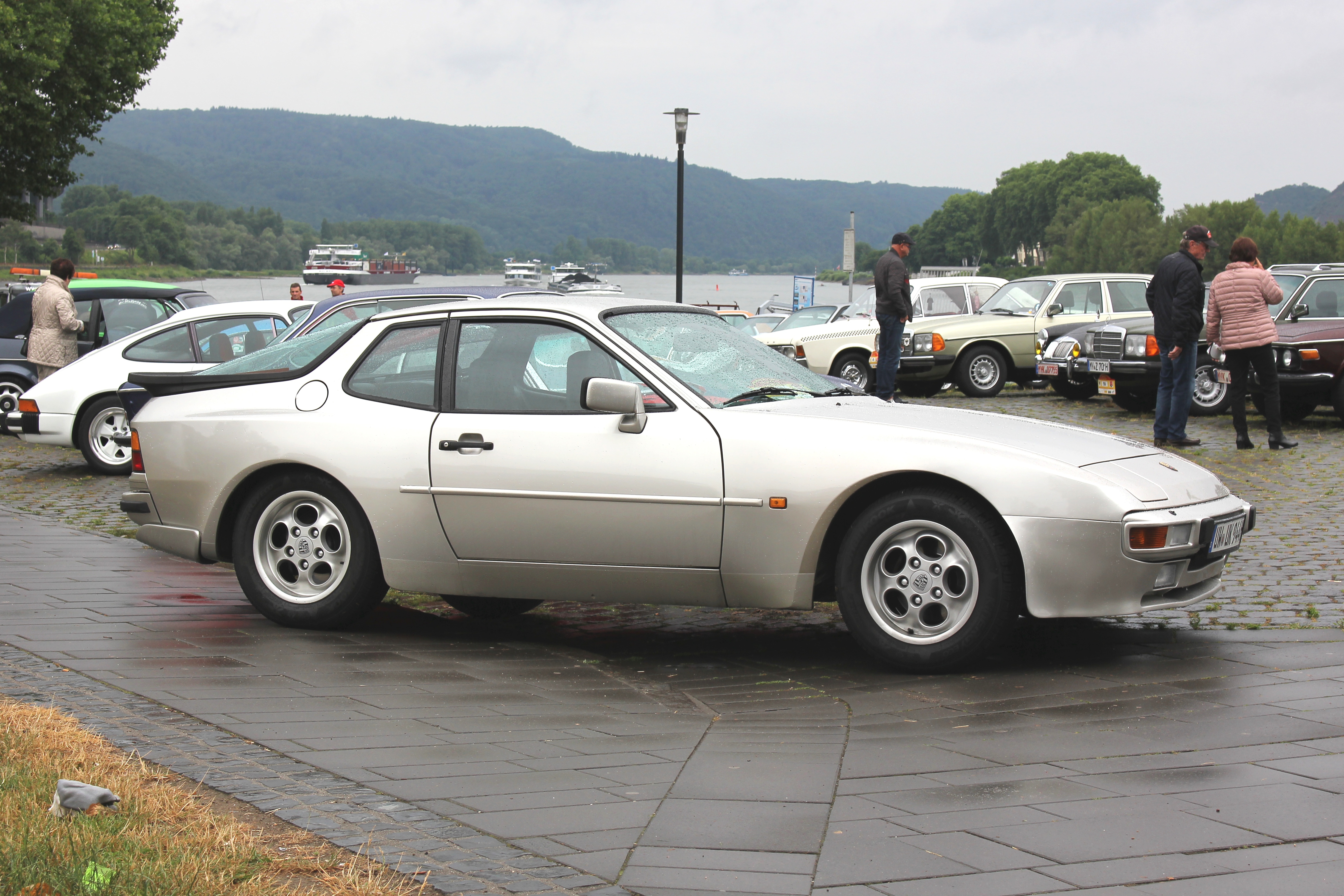
And one of my favorites, 1986 Porsche 944 Turbo,
40:55
Guard's Red, which is a very, or it's Porsche's Red.
40:58
Over black, garage cap, service and repair logbook,
41:00
2.5 liter turbo inline four, five speed manual,
41:04
It's just a cool looking.
41:06
They took the 924 and made it cool.
41:08
It's just timeless design.
41:11
It'll look at 50 years from now.
41:12
And this one is driver quality.
41:13
It's the paints a little, not perfect.
41:16
It's not in perfect cosmetic condition.
41:18
But you could just drive it and have fun with it.
41:21
I mean, and it's a turbo.
41:23
So the value is there because of that.
41:25
So other new arrival, the 1935 Ford Model 48 3
41:29
window Deluxe Coupe, Royal Maroon Metallic
41:32
Overset, it's a beautiful car.
41:33
All steel build, 13,000 miles since the build.
41:37
Chop, shave and customize.
41:38
Got a 454 V8 in it.
41:40
Six speed manual transmission, which is unusual.
41:43
A lot of guys put automatic in these.
41:44
So this is a really well done hot rod, custom,
41:48
whatever you want to call it.
41:50
Turnkey ready to go.
41:53
Also last but not least, the 2017 Camaro 2SS 50th
41:56
anniversary edition convertible.
41:58
Nightfall gray metallic over ebony and gray,
42:00
27,340 actual miles.
42:03
The anniversary model, which is rare,
42:05
fully loaded 6.2 liter LT 1 V8.
42:09
Yeah, only 800 about by 800 were produced.
42:12
Oh, wow, I didn't realize it was that low.
42:14
So next week we've been talking about,
42:17
we're going to Carmel.
42:18
Kathy and I are taking our first trip to Carmel.
42:20
Well, we were going to take you guys,
42:22
but then we found out the rooms were like one million
42:26
Salinas, I'll stay in Salinas.
42:30
Good luck getting in every day for any events.
42:32
They say the traffic is just horrendous.
42:35
But we're really looking forward to it.
42:36
And we'll try to do some video reporting from there.
42:40
We'll see how it works out.
42:41
We watched the Billy Joel documentary.
42:42
Christy Brinkley was man in the camera,
42:44
so I told Kathy, you could be my Christy Brinkley.
42:46
So she didn't think that was very funny,
42:48
but I thought it was hilarious.
42:50
But I think that we're going to try
42:53
to give a perspective of somebody who's never been
42:55
to something that's pretty much the super bowl
42:57
of our industry and hobby.
42:59
Monterey car week as it's become is just,
43:02
it's auctions, it's concours, it shows,
43:04
it's Ferraris, it's Duesenbergs,
43:06
it's cars you never even heard of.
43:08
It's just, it's a melting pot of everything
43:10
going on in the car world.
43:12
And they say you can just watch and go out on
43:14
and highway one that comes into Carmel and Monterey
43:17
and just watch the cars coming in
43:18
as the car showing of itself just driving
43:21
So think of the one you could have saved.
43:26
But you know, it's one of those things
43:27
you got to do once.
43:28
And maybe we'll go back.
43:29
Maybe we'll never go back.
43:30
Maybe this would be our one and done.
43:31
I never plan anything for a trip.
43:33
And literally I have an itinerary that's pages.
43:37
That we're going to do where we're eating dinner,
43:38
where we're eating lunch, where we're eating breakfast.
43:40
What time we got to be there?
43:41
What time we're going to, because if you don't,
43:43
you'll find yourself, remember on New Year's Eve
43:45
when you were chasing the best party
43:47
and all of a sudden you realize it turned midnight,
43:50
It's like, well, that didn't work out.
43:51
Yeah, if it's going to be so jammed,
43:52
you're not going to walk in anywhere.
43:54
So it was some reservation.
43:56
Subway is going to, yeah, Subway.
43:58
Hey, we were at Branson, like I said last weekend.
44:01
And it was no sales tax shopping weekend for back to school.
44:04
And of course, around here in Clothes are,
44:06
there's no sales tax in Pennsylvania on clothes.
44:10
Have you ever shopped here before?
44:11
Who does your shopping?
44:13
But in Missouri, they have sales tax on clothing.
44:17
And they have the sales tax free weekends.
44:19
Long story short, it was really busy.
44:21
You couldn't go to Cracker Barrel or Denny's or Bob
44:25
So but we thought, oh, go to Krispy Kreme Donut.
44:28
There was a line of like 100 people
44:31
inside the Krispy Kreme Donut.
44:32
Because the hot donut sign was on.
44:34
You got to have that.
44:38
They are delicious.
44:40
Do you think they turn that on when they're actually
44:42
Or does it just come off?
44:44
But they give good glaze.
44:46
Which Dunkin Donuts, in my opinion,
44:48
does not give good glaze.
44:50
I think their glaze is marginally good.
44:52
I don't even think they cook them in house.
44:53
Dunkin Donuts could be wrong.
44:55
But they're not our sponsor.
44:56
My first wife was a Dunkin Donut girl.
44:58
And she actually made them there.
45:00
But I don't know about these days.
45:02
I don't know any more.
45:02
So Hollywood Casino, Morgantown, they gave away.
45:05
They had the drawing last weekend.
45:07
They didn't take the car or the credit here.
45:09
They took the $40,000 casino credit.
45:11
But it worked out very well for the casino.
45:13
And they want to have us back.
45:14
Especially because they get the $40,000 back.
45:17
Yeah, because you know if you're doing that.
45:20
So and don't forget, September the 19th, our auction.
45:23
We are getting lots of registered bidders.
45:26
Both online, by telephone, and in person.
45:29
We're moving the cars out to the front of our building under.
45:31
They're going to be on display all 100.
45:33
No reserve, absolute cars.
45:34
Most do not have titles, or keys, or batteries,
45:43
So it is literally bring a trailer.
45:44
It's bring a trailer, baby.
45:47
But we say bring a long thing to carry it.
45:50
Bring a long thing that has wheels underneath it, though.
45:54
Because it's going to be a lot of fun.
45:56
There's no charge to register to bid.
45:58
So most places charge you $25 or $50 or $400 out in Monterey.
46:03
Just to register to bid.
46:04
Plus you pay the commission, which is 10% or 12% out there.
46:07
Our commission is 8% buyer's fee in person.
46:11
10% if it's online or by telephone.
46:13
You can go to our website, classicautomall.com.
46:15
Get all the details on that.
46:16
And we're really looking forward to it.
46:18
We've got some great army trucks.
46:20
We've got some, there'll be some bargains.
46:22
And there'll be some stuff that we'll scratch our head and say,
46:24
boy, that brought more than we thought.
46:26
Some will bring exactly what we thought.
46:28
And some will think, man, that's probably a pretty good deal.
46:30
And to be clear, some actually run and have titles and keys.
46:33
Yeah, keys and batteries.
46:35
And some good ones in there.
46:36
And there are some good ones in there.
46:37
Some really interesting oddball pieces.
46:40
Most people will buy these to use for parts and stuff
46:43
like that, which they have a lot of great parts
46:46
Others will be used in parades.
46:47
And then there are ways you can get bonded and get
46:51
titles and all that.
46:52
We're not involved in that.
46:54
So we're selling them as is, where is.
46:56
With no title if they don't have it,
46:57
on a bill of sale only if they don't have a title.
46:59
If they do have a title, you'll get a title.
47:01
It'll be clearly marked.
47:02
We'll talk about it during the auction.
47:04
We'll make sure that you understand which one doesn't,
47:06
So, but get registered to bid.
47:08
We're going to a complimentary bidder's buffet
47:11
on Friday morning from 9 a.m. to 10 30 a.m.
47:14
And the auction will start at 11 a.m.
47:16
in the center hallway.
47:17
Vehicles will be staged outside.
47:18
They don't run across the block
47:20
because it's hard for some of them to run.
47:23
We've got some army stuff that's huge.
47:26
You'll see, just click on the auction tab up on the top
47:28
and you'll see everything.
47:29
And when we return, we'll talk to our friend,
47:34
Keith Martin from Sportscar Market Magazine.
47:36
We'll be back in a couple of minutes.
47:42
Here's a special offer from Sportscar Market Magazine.
47:45
Get a six month subscription for just $19.95
47:49
by going to sportscarmarket.com slash test drive
47:53
That's sportscarmarket.com slash test drive six.
47:56
If you're a buyer, a seller, or just general classic car
47:59
enthusiast, publisher Keith Martin says,
48:02
We've been around almost 40 years.
48:04
It's the Wall Street Journal of the collector car world.
48:07
Activate your six month trial of Sportscar Market Magazine
48:10
by going to sportscarmarket.com slash test drive six.
48:14
That's sportscarmarket.com slash test drive
48:18
Offers for a limited time.
48:20
Be in the know with Sportscar Market.
48:22
This is the Classic Automall Show.
48:25
If you have questions or comments,
48:26
write podcast at classicautomall.com.
48:30
And we're back with the Classic Automall Show.
48:32
Joining us via Zoom, our buddy out on the left coast,
48:36
Mr. Keith Martin, editor, publisher,
48:38
publisher of Sportscar Market Magazine
48:41
and our favorite magazine in the whole wide world.
48:44
I got my guide to Monterey when I go to Monterey
48:46
next week so I can do everything that you tell me to do.
48:49
Don't you think that's the best guide ever?
48:51
It is absolutely the best guide ever.
48:53
You did a fantastic job on it.
48:55
And it's only gotten better.
48:56
I like the fact that you list them chronologically
48:58
when you're writing about them.
49:00
And then you have the nice chart
49:01
that shows everything on the overlaps and things like that
49:04
so you can plan your day so much better.
49:06
That chart is one of the things
49:08
that I'm proudest of of all my year
49:10
because it took away to make Monterey comprehensible.
49:13
And it's hard to create an understandable chart.
49:17
Those things look like they're easily done
49:19
when you look at the finished product.
49:20
But try to make one.
49:21
They're very difficult to put everything in the right order
49:25
and what goes in a column and what goes in a line
49:27
and yada-yada-yada, right?
49:29
Well, I have a secret for you.
49:30
If you want to always get along with my art department,
49:33
never ask them what they think of making that chart.
49:38
Least favorite thing on their agenda, right?
49:41
Every year I get the list of contents
49:43
and there's no chart on it.
49:45
I said, what happened to the chart?
49:46
Oh, do you want the chart this year?
49:48
Oh, we didn't realize you still wanted the chart.
49:50
No, we've only been doing it for 30 years, guys.
49:53
We changed our mind.
49:54
So we bring your blog to life every week.
49:56
Well, we missed last week because we were out of town.
49:59
But anyway, this week your blog is
50:01
What Cut Off Year on a Collector Car Tour,
50:03
which is really relevant today
50:05
because there's a lot of cars that fit into tours
50:08
that are maybe different than the older cars, right?
50:12
Well, in the past, our tours were cut off at 74.
50:15
And we're looking to do a tour a couple years out from now.
50:17
And we've been thinking about that.
50:18
If it's 74 and back, the good thing about it
50:21
is that the performance envelope of all the cars
50:25
They all have kind of crappy brakes.
50:27
They don't really go that fast.
50:29
They have skinny tires.
50:31
They kind of hold everybody together.
50:33
If you let in cars from the 2000s and later in supercars,
50:38
now you've got a totally different mindset
50:40
and a totally different performance envelope.
50:43
It's one of those things that if you've
50:45
got a car that will go 200 miles an hour and a car that
50:48
will go 80 miles an hour, then that makes it difficult
50:53
to keep everybody together and to give everybody
50:55
an enjoyable experience to the event, right?
50:58
It's no fun to be in an older car
51:00
and having all these fast cars just blowing by you
51:02
like you're standing still.
51:03
It's nerve-wracking.
51:04
I can only imagine being at Le Mans or Daytona
51:06
when you're in the low on the totem pole class
51:09
and the big hypercars are coming past you five times
51:14
That's not comfortable.
51:16
So let me tell you what I'm thinking of, Stuart,
51:18
and tell me your opinion.
51:19
I'm thinking of changing the cutoff date to 92
51:22
because 92 is the year of the NSX and would let
51:25
McLaren F1 in and running the people out in two groups.
51:29
Say we have 50 cars.
51:31
Have the guys that want to run fast and then
51:33
the newer cars go first and then half an hour later
51:36
have the older cars go as a group.
51:38
That's a great idea.
51:39
I think that that gives everybody a fun experience
51:43
because ultimately, if it's not fun,
51:45
if your nerves are shot because you're being passed
51:49
or if you just haven't enjoyed it,
51:51
then you're not coming back.
51:52
The whole reason you're doing it is for enjoyment.
51:54
Not for, there's no job, you're not getting paid
51:58
for it, it's not racing, it's enjoyable.
52:00
And if it's not enjoyable, which it wouldn't be
52:02
when you got all these fast cars going past you,
52:04
then I see your point.
52:05
I think it's a very valid point.
52:08
My rule of thumb is the comfort of the navigator
52:11
determines the pace of the driver.
52:14
If the navigator is uncomfortable in any way,
52:17
then you have to slow down because they have no control
52:20
and you're making the day uncomfortable for them
52:22
and that's not fair.
52:23
And I would venture to guess that if you were a navigator
52:25
for a rally team, then you would be a bundle
52:29
of nerves every day.
52:29
Those guys must take Xanax or something
52:31
before they get out.
52:32
Well, actually it's different.
52:33
What's happening now with technology?
52:35
I know Tim Sutter with Classic Motorsports on his tours,
52:38
they give people a Garmin that's got the route
52:40
pre-programmed into it at the start of the route,
52:43
at the start of the event,
52:45
and then collect them all at the end of the event.
52:46
That's a great idea.
52:48
I mean, how simple.
52:49
Yeah, it really is because nothing worse
52:52
than trying to figure out something, again,
52:54
if it's not fun, what's the enjoyment?
52:56
Yes, you want to make turns
52:57
and yes, you want to go on covered bridges
52:59
and you want to do all that stuff,
53:00
but you certainly don't want to be lost
53:02
and going the wrong direction
53:04
and hold everybody up and everybody's waiting
53:06
for you for lunch and all of that.
53:08
That's very well said.
53:10
And we've all been in all those positions
53:12
and you need a good route book as a point of reference
53:16
with odometer readings in the book and so forth,
53:18
but I have found in a couple of tours
53:19
I've gone on recently where they've had a GPS,
53:23
it's really quite wonderful.
53:24
Right, yeah, you can concentrate on driving
53:27
and enjoying and seeing the scenery.
53:29
I mean, the navigator shouldn't be relegated
53:32
to this the whole time.
53:34
And it's important, as you said,
53:36
it's important to remember this is supposed to be fun.
53:40
So you've done, how many rallies have you all done in the past?
53:45
You've done four or five of them, haven't you?
53:49
And we thought we'd take a break after the last one
53:51
and this is a top secret,
53:53
so if I say it to you, nobody else will hear, right?
53:56
Of course not, it's our little low show,
53:58
nobody's paying attention.
53:59
So my editor in chief, Jeff Sabatini, said to me,
54:03
no more rallies ever, no more rallies ever.
54:06
And I said, okay, okay, he said,
54:07
of course we do have a 40th anniversary coming up in 2028.
54:11
To me, that was like permission.
54:13
It's like when your wife says that's a pretty car,
54:16
that means you can buy it.
54:17
That means you're okay to buy it.
54:18
And it's important for those guys,
54:21
for you not to come in and say iron fist,
54:23
we're gonna do this because we've always done it.
54:25
No, you gotta let your guys ebb and flow
54:27
and feel like they're participating
54:29
and that they have a say in what goes on.
54:32
And then they tell you there's a reason
54:33
they don't wanna do it, there's a good reason
54:34
they don't wanna do it.
54:35
Yeah, I will tell you, doing a five or six day rally
54:38
for a 50 car, which is 100 people,
54:41
the overall cost of that, by the time all the dust settled
54:46
Yeah, unbelievable.
54:47
And it's a lot of work.
54:49
Hotel meals are a hundred bucks a piece.
54:52
When you're banquet rooms, rooms are three to 500
54:55
I mean, it just becomes a lot of work.
54:57
And so we've really, if we do a 2028 SCM 40,
55:01
we've really got our thinking caps on
55:03
on how to reduce the cost, increase the fun factor.
55:06
I'm thinking of doing, adding an extra day as a day off
55:10
where people could either go driving
55:12
where they could do golf, whitewater rafting,
55:14
fly fishing, just something for the fun factor.
55:18
You gotta leave a little time in there
55:20
for something other than just driving.
55:22
If you're just driving for 12 hours a day every day
55:24
and through the rain and the sleet and the snow
55:26
and whatever, at some point in time,
55:27
you're gonna say, I've had about enough of that.
55:30
You said yourself, I'm paying for this?
55:32
Yeah, well, you could also, you know,
55:34
I mean, you could dumb down the menus
55:37
and take them to Applebee's and save you some money there.
55:41
Lunch on your own at McDonald's.
55:44
You know, it's funny that these events,
55:47
I mean, they just keep trying to outdo each other
55:50
and they become more expensive hotels,
55:52
more expensive meals, better wines.
55:55
You know, the whole nine yards before you know it,
55:57
like you said, it's $400,000
55:59
to put on an event like this.
56:01
Well, California Millie is now $15,000 as an entry fee.
56:09
Think about it, if that's 15 grand,
56:11
you haven't shipped your car yet.
56:13
You haven't flown out yet and back.
56:15
So you're talking 20 grand before you even,
56:18
before you turn a wheel.
56:19
And then you got shopping, you know,
56:20
you're gonna do some shopping,
56:22
so there's another one.
56:23
Yeah, and then maybe buy a car.
56:24
Yeah, of course you're gonna buy a car, right?
56:26
I'm really working hard on this concept on 2028
56:30
to try to figure out how to keep the cost down
56:32
and the pleasure up.
56:34
I don't want it to be a Rolex lunch every day.
56:38
Because at the end of the,
56:40
when I used to do the California Millie,
56:41
it was all about the driving.
56:44
And so I'm just trying to find the balance
56:47
where it's affordable, but the fun factor is high.
56:50
Well, and I think if you do that where it's,
56:52
it doesn't have to be,
56:53
nobody eats four, five star meals,
56:56
three meals a day, seven days a week.
56:59
it's not, it's not realistic to have people do that
57:01
even though that's what they end up doing.
57:03
And it's, I think you're way,
57:05
I think it's wasteful.
57:06
I think that you could,
57:07
you could better plan a picnic type lunch
57:09
or something for the participants every a couple of days
57:12
and not make it so over the top every meal
57:14
and not have to outdo each meal.
57:15
Well, what do you think about this?
57:16
Like part of the big expanse is when you do
57:18
a big fancy breakfast every day.
57:21
Because it's $100 bucks a plate.
57:22
And I'm wondering if we just don't tell people
57:23
this is coffee and croissants breakfast
57:25
and get in your car and go.
57:28
And we'll get a good lunch, you know,
57:29
we'll get somewhere and get a good lunch.
57:31
And here, you know, and maybe you do that
57:34
and you give them a little bag of something,
57:36
some granola bars or something
57:38
to kind of tide them over as they go.
57:39
But don't make it such a big deal
57:41
because think about it.
57:42
how many days is your rally five days?
57:44
I have to six days.
57:46
So, I mean, that's six breakfast times $100
57:48
or times, let's say $50 a person, you know,
57:51
and times, I mean, that's a lot of money.
57:54
It's a lot of money and you have to ask yourself
57:56
because it's not going to be a gourmet meal.
57:59
So, what you're paying for is the transportation
58:04
Yeah, I think that you can overthink these things
58:07
and I think that sounds like a much better plan
58:09
and it can save you probably thousands of dollars
58:11
and it won't change anything
58:13
because most people don't even eat breakfast anyway.
58:14
They grab a cup of coffee and go.
58:16
Well, a friend of mine said
58:17
the problem he has with tours
58:18
is he always gains weight on them.
58:20
So, don't bring the baby bird Thunderbird
58:23
because you'll never get an in and out of it, right?
58:25
What do you think of the concept of a day off?
58:27
I think a day off is great
58:28
and I think it shouldn't be at the end.
58:30
I think it should be in the middle.
58:31
I think you should do two days and then a day off
58:33
and then three days or whatever it is.
58:36
So, we've solved all the rally problems in the world.
58:39
You're welcome to all the rally people in the world
58:41
that we've just helped you.
58:42
Just send your money to the stores.
58:44
Yeah, just send it to me
58:45
and I'll send you half.
58:46
So, we'll cover you.
58:48
Keith Martin, everybody from Sports Car Market Magazine.
58:50
Thanks so much for joining us
58:52
and we will catch you two weeks from today
58:54
because we're going to be in Monterey next week.
58:56
So, we'll see you in two weeks.
58:57
All right, take care.
58:59
The Classic Automall Show
59:02
with their host, Stuart Howden,
59:04
executive producer, Steve Sefair.
59:06
Produced and engineered by your truly JR Russ.
59:09
Video editor, Randy Lamby.
59:11
Available on ClassicAutomall.com,
59:13
YouTube or wherever you get your podcasts.
59:17
Music, courtesy of the Pat Travers Band
59:19
for tour dates, contact and stuff,
59:22
visit pattravers.com.
59:24
Produced by Car Smarts Media,
59:25
copyright all rights reserved.
59:28
Learn how thousands of smart homeowners
59:31
are investing about a dollar
59:32
to avoid expensive home repair bills.
59:35
John, a former non-customer said,
59:37
my air conditioner broke and I had to spend $1,900 to fix it.
59:42
Jeff, a customer wrote,
59:43
my air conditioner broke and I got a new one
59:46
at no out of pocket cost.
59:47
Mary, a former non-customer wrote,
59:50
my heating system stopped running.
59:52
I had to spend $3,000 to get a new one.
59:55
Lisa, a customer wrote, my heater stopped working.
59:58
I got it fixed at no out of pocket cost.
00:07
For about $1 a day,
00:08
you can have all the major appliances
00:10
and systems in your home guaranteed fixed or replaced.
00:14
If the lines are busy, please call back.
00:17
Call the home warranty hotline now at 800-814-5615.
00:23
That's 800-814-5615.