Clearing the EV Queue
About this episode
Queue-clearing starts with listener reviews and a behind-the-scenes look at how the host whittles “180 some articles” down to “around 33” sources. EV news then moves through DC fast-charging partnerships, a Lucid Air Pure recall tied to inverter switching-module damage, and preorder/delivery updates for Slate and Rivian. The autonomy thread runs from Waymo’s sensor suite and import workarounds to Tesla’s FSD changes, robo-taxi supervision, and Texas L4 rules—plus BYD’s China-only liability coverage and solid-state battery timeline.
In this episode of Kilowatt, host Bodie clears out a massive news queue before heading into a well-deserved family break. We dive deep into Tesla’s self-certification of Level 4 autonomous vehicles in Texas, its dedicated new Robotaxi hub, and the real data behind its actual fleet size. Meanwhile, BYD announces a groundbreaking policy to accept full crash liability when its "God's Eye" driver-assist system is active, and Waymo officially begins testing its next-gen, purpose-built Ojai robotaxis in the US.
Support the Show Support Kilowatt
Other Podcasts:
News Links:
- InsideEVs: Lucid Is Recalling Its Cheapest EV Because It May Lose Power While Driving
- Electrek: Texas adds another huge solar farm as ERCOT grid demand soars
- CleanTechnica: BYD Takes On Crash Liability When Its Driver-Assist System Is Active!
- Electrek: BYD will pay for crashes on its FSD competitor, something Tesla never has
- Not a Tesla App: Tesla Launches Official Retractable Sunshade for the Model Y
- Teslarati: Tesla teases going Plaid Mode with the Model 3
- Teslarati: Tesla Full Self-Driving expansion in Europe continues with new addition
- Electrek: Tesla’s ‘Full Self-Driving’ fraud lawsuit gets first hearing in China — 10 owners seek $583K
- Electrek: This Tesla owner won $10k in court for Tesla’s FSD lies
- CleanTechnica: Oracle Exec Sues Tesla Over Full Self Driving Promises And Wins $10,600
- InsideEVs: Rivian Says Fight Over Apple CarPlay Is 'Completely Obsolete' Thanks To AI
- The Verge: Rivian’s software chief thinks you don’t need CarPlay or buttons
- Teslarati: Tesla’s Robotaxi dreams just took a massive step toward reality
- Not a Tesla App: Tesla Self-Certifies Level 4 Autonomous Vehicles in Texas
- InsideEVs: Elon Musk Promised 1,000 Texas Robotaxis Last Year. It’s Nowhere Near That
- Electrek: Tesla ‘Robotaxi’ fleet is actually shrinking, not growing, new data shows
- Not a Tesla App: Tesla is Planning a Dedicated Robotaxi Hub in Texas
- Electrek: Rivian R2 matches Tesla Model Y efficiency despite bigger, heavier body
- Not a Tesla App: Tesla Model Y Competitor, the Rivian R2 Launches on June 9th
- InsideEVs: It's Official: Rivian Will Start Delivering R2s In Two Weeks
- Electrek: Rivian R2 officially launches June 9 – order invites, first deliveries, demo drives
- InsideEVs: Orders For Slate’s Sub-$30K Bare-Bones EV Truck Finally Open On June 24—But There’s A Catch
- Electrek: Revel and Voltera are building a big EV charging network for robotaxis
- InsideEVs: Waymo Says Its Next-Gen Ojai Robotaxis Are Ready For Prime Time
- The Verge: Waymo to begin passenger rides in its new Ojai robotaxi
- Electrek: Waymo starts offering rides in new Ojai robotaxi with 6th-gen Driver
- InsideEVs: Tesla Was Supposed To Be Losing Europe. The Data Says Otherwise
- Electrek: One of North America’s largest solar farms just came online in Texas
- Ars Technica Cars: Volvo gets US government approval to bypass Chinese connected-car ban
- InsideEVs: Jeep’s Parent Company Is Considering Building Chinese EVs In North America
- CleanTechnica: XPENG Starts Producing Robotaxis
- Not a Tesla App: Tesla Relaxes Driver Monitoring With FSD v14.3.3
- Electrek: Tesla (TSLA) officially abandons India factory after years of broken promises
*Show Art Created By Gemini and ChatGPT
Hosted by Simplecast, an AdsWizz company. See pcm.adswizz.com for information about our collection and use of personal data for advertising.
DC fast charging
"Volterra and Ravel are partnering up to bring DC fast charging to fleets. And specifically, it's going to be fleets, rideshare drivers and robo taxis."
DC fast charging is a type of EV charging that can add a lot of energy quickly. It’s especially useful for commercial vehicles and robotaxis that need to keep moving.
DC fast charging is a way to charge an EV using direct current at high power, which can refill batteries much faster than standard home or AC charging. In this segment, it’s described as being targeted to fleets and robotaxis, where quick turnaround matters.
Volterra
"Volterra and Ravel are partnering up to bring DC fast charging to fleets. And specifically, it's going to be fleets, rideshare drivers and robo taxis."
Volterra is a company that builds and runs EV fast-charging. Here, they’re teaming up with another charging company to provide charging mainly for commercial drivers and robotaxis, not regular public use.
Volterra is an EV charging company being positioned here as the brand that will continue after a merger. In this segment, it’s partnering with Ravel to focus on DC fast charging for fleets, rideshare drivers, and robotaxis rather than the general public.
Ravel
"Volterra and Ravel are partnering up to bring DC fast charging to fleets. ...Ravel will just kind of disappear into the sunset."
Ravel is another EV-charging company. The hosts explain that it’s being merged into Volterra, so the combined business will operate under the Volterra name.
Ravel is the other charging company in this partnership. The segment says Ravel will effectively be absorbed into the new Volterra-branded company, with its CEO taking over the combined leadership.
fleets
"Volterra and Ravel are partnering up to bring DC fast charging to fleets. And specifically, it's going to be fleets, rideshare drivers and robo taxis."
“Fleets” means many cars used for work by a company, like rideshare or delivery vehicles. Their charging needs are different because the cars are used constantly and need fast, reliable charging.
In EV charging discussions, “fleets” means groups of vehicles operated by a business—like delivery companies, rideshare operators, or other commercial users. The key difference is that charging needs are scheduled around routes and high daily usage, so infrastructure is often designed for that pattern.
robot taxis
"Volterra and Ravel are partnering up to bring DC fast charging to fleets. And specifically, it's going to be fleets, rideshare drivers and robo taxis."
Robotaxis are self-driving cars used like ride-hailing. They need fast charging so they can keep serving passengers.
Robotaxis are autonomous vehicles operated as a ride-hailing service without a human driver. The segment ties DC fast charging availability to robotaxis because these fleets need dependable, high-throughput charging to keep vehicles in service.

Lucid air pure
"Lucid is recalling the Lucid air pure because it might lose power when you're driving it. This affects 2000 through 2039 Lucid Pures built between September 2023 and December 2024."
The Lucid Air Pure is an electric car. This episode says some of them may lose power while driving because of a problem in the car’s electrical system.
Lucid Air Pure is Lucid’s electric sedan, and this segment is about a safety recall affecting specific production units. The host says it may lose power while driving due to a damaged component in the power electronics.
inverter
"And the issue has is because of a damaged inverter. ...There's a switching module in the inverter that can become damaged due to the vibrations created by the motor."
An inverter is a key electrical box in an EV that helps turn battery power into the right kind of power for the motor. If part of it gets damaged, the car can lose power.
An inverter is the power-electronics component that converts DC electricity from the battery into the AC (and controlled power) needed by the electric motor. Here, the host explains that a switching module inside the inverter can be damaged by vibration, potentially leading to loss of power.
switching module
"There's a switching module in the inverter that can become damaged due to the vibrations created by the motor. And when that happens, it can cause the peer to lose power."
The switching module is part of the EV’s inverter that controls how power is delivered to the motor. If it gets damaged, the car may not be able to keep running normally.
A switching module is part of the inverter’s control electronics that rapidly turns power on and off to regulate how much energy goes to the motor. In this recall description, vibration can damage that module, which can then cause the vehicle to lose power.
non refundable deposit
"What's not exciting is they're taking a $300 [543.2s] non refundable deposit if you are wanting to preorder one of these trucks."
A non-refundable deposit is a payment you make to reserve something, and if you change your mind you usually can’t get that money back. They’re explaining how that differs from a refundable deposit.
A non-refundable deposit is money you pay to reserve a vehicle that you generally do not get back if you cancel. In this preorder context, the host contrasts it with a refundable amount that still gets you “in line.”
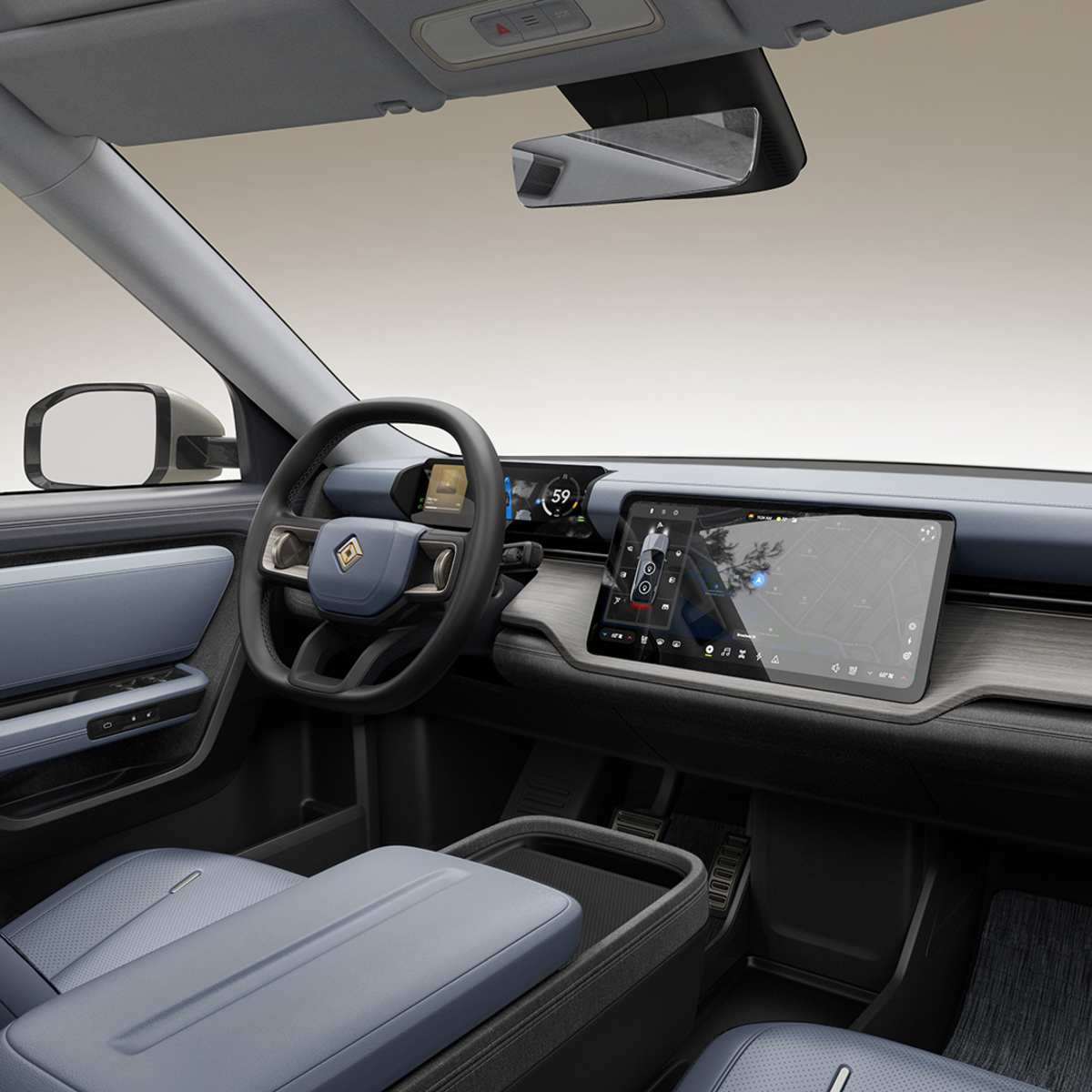
Rivian R2
"Speaking of deliveries, [627.1s] Rivian is set to deliver the Rivian R2 on June 9th. [634.3s] And that is going to be those are going to be like early reservation holders."
The Rivian R2 is an electric SUV from Rivian. Here they’re mainly talking about when it starts being delivered and who gets it first based on early reservations.
The Rivian R2 is Rivian’s smaller, more mass-market electric SUV compared with its larger R1 lineup. In this segment, it’s notable because the host is tying its launch timing (June 9) to reservation holders and early deliveries.
EPA range
"What's not creepy is based on Rivian's EPA range information or data filings. The R2 matches the [680.4s] "
EPA range refers to the estimated distance an EV can travel on a full charge under U.S. Environmental Protection Agency test procedures. It’s commonly used as a standardized way to compare EVs, and the host says the R2 matches Rivian’s EPA range information.
EPA numbers
"you know, those EPA numbers are, you know, not necessarily real life."
“EPA numbers” are official test results used to estimate things like range and efficiency. Real driving can be different because conditions aren’t the same as the test.
“EPA numbers” refers to fuel-economy and range estimates published by the U.S. Environmental Protection Agency. These are measured under standardized test conditions, so they don’t always match what drivers see in everyday situations like weather, speed, and route.
carplay
"Wasim bin Said said that carplay and Android Auto are obsolete because of AI-defined cars."
CarPlay lets you connect your iPhone to your car and use apps like maps and music on the car’s screen. It’s popular because it feels familiar and easy to use.
Apple CarPlay is a smartphone-integration system that mirrors a compatible iPhone’s navigation, music, and certain apps onto the car’s infotainment screen. The host argues it’s not “obsolete,” because many drivers rely on the familiar phone-based app experience.
Android Auto
"Wasim bin Said said that carplay and Android Auto are obsolete because of AI-defined cars."
Android Auto connects your Android phone to your car so you can use maps, music, and other apps on the car screen. It’s useful because it keeps your phone apps in a familiar interface.
Android Auto is Google’s smartphone-integration system for Android phones, bringing navigation, media, and supported apps to the car’s display. The host’s point is that these phone-to-car app ecosystems are still valuable even as automakers push more AI-driven interfaces.
AI-defined cars
"Wasim bin Said said that carplay and Android Auto are obsolete because of AI-defined cars."
This phrase means cars that use AI to handle more of what you normally do through phone apps. The host is debating whether that would actually replace things like CarPlay and Android Auto.
“AI-defined cars” is the idea that artificial intelligence will increasingly define how the vehicle interacts with you—potentially reducing the need for traditional smartphone app mirroring like CarPlay/Android Auto. In practice, it’s a prediction about future in-car software experiences rather than a specific, standardized technology.
Stellantis
"Stellantis is considering building Chinese EVs in North America."
Stellantis is a big car company. In this segment, they’re considering bringing Chinese electric cars to North America, which could change what brands and models you can buy.
Stellantis is a major automaker formed from the merger of Fiat Chrysler and PSA Group. Here, the host discusses Stellantis considering importing or building Chinese EVs for the North American market, which would affect brand strategy and product availability.
Chrysler
"I said I wouldn't be surprised if they brought in something from Leap Motors and rebranded it as a Dodge or Jeep or Chrysler product."
Chrysler is a car brand. In this discussion, it’s mentioned as an example of a name that could be used to sell rebranded EVs.
Chrysler is an American automotive brand under Stellantis. The host mentions it as another example of a brand that could potentially sell rebranded Chinese EVs in North America.
Dodge
"I said I wouldn't be surprised if they brought in something from Leap Motors and rebranded it as a Dodge or Jeep or Chrysler product."
Dodge is a car brand. Here it’s mentioned as an example of a name that could be used to sell a rebranded EV.
Dodge is an American automotive brand under Stellantis. The host uses it as an example of how Chinese EVs could be rebranded for the North American market.
Jeep
"I said I wouldn't be surprised if they brought in something from Leap Motors and rebranded it as a Dodge or Jeep or Chrysler product."
Jeep is a well-known car brand, mostly known for SUVs. The host is using it as an example of a brand name that could be used for rebranded EVs.
Jeep is an American SUV-focused brand under Stellantis. In this segment it’s referenced as a possible rebranding destination for imported Chinese EVs.
Leap Motors
"I said I wouldn't be surprised if they brought in something from Leap Motors and rebranded it as a Dodge or Jeep or Chrysler product."
Leapmotor is a Chinese electric-vehicle brand. The idea mentioned is that a different company could buy their cars and sell them under another brand name.
Leapmotor (often stylized as Leap Motors) is a Chinese EV brand. The host suggests Stellantis could source vehicles from Leapmotor and then rebrand them under a North American label like Dodge, Jeep, or Chrysler.
solid state batteries
"BYD is planning on bringing all solid state batteries to the market in 2027. ... That is to say that it's not a semi-solid state battery. It is a true solid state battery."
Solid-state batteries are a newer type of battery for electric cars. Instead of using a liquid inside the battery, they use a solid material, which could make the battery safer and potentially store more energy.
Solid state batteries use a solid electrolyte instead of the liquid electrolyte found in most today’s lithium-ion packs. That can improve energy density and safety, which is why automakers are racing to commercialize them.
semi-solid state battery
"That is to say that it's not a semi-solid state battery. It is a true solid state battery."
Semi-solid state batteries are a step between regular lithium-ion batteries and fully solid-state batteries. They use a thicker or gel-like material inside, but not the fully solid setup.
A semi-solid state battery is an in-between design that uses a gel-like or partially solid electrolyte rather than a fully solid one. The host contrasts it with “true” solid state batteries, implying different maturity and performance expectations.
Godseye
"BYD's autonomous driving software package is called Godseye, which I have always thought is a weird name... if a driver is using Godseye and gets into an accident, BYD will accept the liability and cover the cost of the accident."
Godseye is the name of BYD’s self-driving software. The idea here is that if you’re using that system and there’s an accident, BYD says it will help cover the cost under certain conditions.
Godseye is the name of BYD’s autonomous driving software package mentioned in this segment. The host ties it to a liability/coverage promise when the system is operating in self-driving mode.
take the responsibility if your car gets into an accident
"BYD also announced that they're going to take the responsibility if your car gets into an accident when it is operating in its self-driving mode. ... BYD will accept the liability and cover the cost of the accident."
This is about who pays after a crash when the car is using its self-driving features. The host is describing BYD’s promise to cover costs, but only if you meet certain requirements (like using the right software version and mode).
This is a software-liability coverage concept: the automaker commits to paying for accidents when the vehicle is operating in a specific autonomous/self-driving mode. It’s essentially a contractual risk-shift tied to the conditions under which the driver-assistance system is engaged.
Navigate on Autopilot
"So this is only available in China. You have to be using Godseye version 5.0, you have to be using Navigate on Autopilot, although it does sound like there's some other features."
Navigate on Autopilot is a driver-assist mode that helps the car drive along a planned route, especially on highways. Here, the host says BYD’s coverage only applies when you’re using that particular mode.
Navigate on Autopilot is an advanced driver-assistance feature that handles certain driving tasks along routes, typically including highway navigation behaviors. In this segment, it’s specifically called out as a requirement for BYD’s accident-liability coverage.
liability
"But if you are using God's mode, Gar Godseye, of Virgin 5.0, and you're driving around and you get in an accident, then that's when BYD takes that liability."
Liability means who is responsible for paying after a crash. In this story, the host says BYD would cover the costs if the accident happens while the car is in the supported driving-assist/autonomy mode.
In insurance/legal terms, “liability” is responsibility for damages after an accident. Here, the host claims BYD takes liability when the autonomy/software mode is being used during an at-fault crash, covering repairs, property damage, and personal injury.
at fault accident
"they'll cover all costs associated with an outfall, an at fault accident. So that includes repairs, property damage, and personal injury."
An at-fault accident is when investigators/insurance decide someone caused the crash. The host is saying the coverage described would apply to that kind of crash scenario.
An “at-fault accident” is a crash where one party is determined to be responsible for causing the collision. The host’s point is that BYD’s coverage (in this described program) applies to costs associated with an at-fault crash while the specified autonomy mode is active.
payout cap
"And it doesn't, like, there's no payout cap. So it's not like they'll cover up to $10,000 or anything like that, but there's no cap."
A payout cap is the highest amount the insurance will pay for a claim. The host is saying this program doesn’t have a maximum limit.
A “payout cap” is a maximum limit on how much an insurer/program will pay out for claims. The host says there’s no payout cap in the described BYD coverage, contrasting it with coverage that might be limited to a fixed dollar amount.
premiums
"it should not affect the premiums for your other commercial insurance that you're actually paying for."
Premiums are what you pay regularly for insurance. The host is saying those other insurance costs shouldn’t go up just because you’re using the driving-assist mode.
“Premiums” are the recurring payments you make to keep an insurance policy active. The host claims using the autonomy feature shouldn’t affect the premiums for other commercial insurance the driver already pays for.

X9 Xpong
"interesting to look at. And again, will Tesla follow suit? Probably not. I have been wrong before. Let's move on to another Chinese EV maker, X-Pang, or X-Pong, I'm going to say X-Pang, but I think it's X-Pong. Anyway, they started mass producing robotaxies in Guangzhou, China,"
“X9” here sounds like an electric vehicle model from a Chinese EV maker. The podcast is using it as an example of what other companies are doing in the EV market. It’s brought up to consider whether Tesla might react to similar ideas.
“X9” in this podcast context appears to refer to a Chinese EV maker’s model being discussed as part of a broader look at alternatives to Tesla. The episode frames it as interesting to consider and asks whether Tesla would “follow suit,” suggesting it’s being used as a reference point for market trends. It’s mentioned alongside another EV maker name, indicating a comparison of approaches within the EV space.
robotaxies
"they started mass producing robotaxies in Guangzhou, China, recently. This is going to be a in-house, completely developed in-house robotaxie with level 4 autonomous driving capability"
A robotaxi is basically a self-driving ride-hailing car. Instead of a human driver, the car is supposed to drive itself for passengers.
A “robotaxi” is a self-driving vehicle used as a ride-hailing service, typically without a human driver in the car. In this segment, the host contrasts early skepticism with the claim that X-Pang/X-Pong is mass producing robotaxis with Level 4 autonomy.
Guangzhou, China
"they started mass producing robotaxies in Guangzhou, China, recently. This is going to be a in-house, completely developed in-house robotaxie"
Guangzhou is a big city in China. The host mentions it because robotaxis are being produced there.
Guangzhou is a major city in southern China and a large manufacturing hub. The host mentions it because X-Pang/X-Pong is said to be mass producing robotaxis there.
level 4 autonomous driving capability
"This is going to be a in-house, completely developed in-house robotaxie with level 4 autonomous driving capability, which is impressive, although I did note that it still has a steering wheel, just in case you were wondering."
Level 4 means the car can do most or all of the driving by itself, but only in certain situations or areas. In those conditions, you don’t have to constantly watch and be ready to take over.
“Level 4” is an SAE autonomy level meaning the car can drive itself in specific conditions without needing a human to take over. It’s more capable than Level 2/3 driver-assist because the system is designed to handle the driving task in its operating zone.

Tesla Model X
"I believe it was their first two models looked very similar to the Model S and Model X, not identical actually. It looked like a Timu Model S and Model X."
The Tesla Model X is Tesla’s electric SUV. The host brings it up because early X-Pang/X-Pong cars were said to resemble it visually.
The Tesla Model X is Tesla’s electric SUV, known for its distinctive design and gullwing-style rear doors. In the segment, it’s referenced alongside the Model S as the look that early X-Pang/X-Pong models were accused of copying.

Tesla Model S
"I believe it was their first two models looked very similar to the Model S and Model X, not identical actually. It looked like a Timu Model S and Model X."
The Tesla Model S is a well-known electric car from Tesla. Here it’s mentioned because the early X-Pang/X-Pong cars were said to look similar to it.
The Tesla Model S is Tesla’s flagship electric sedan and one of the most influential EV designs in the modern era. In this segment it’s used as the styling benchmark that early X-Pang/X-Pong models were said to resemble.
X-Pang
"so much nicer. But X-Pang, they made some smart hires... they are, in terms of the robotaxi stuff, they're moving from the validation phase to the commercialization phase."
X-Pang is an EV company. The host is saying they’ve been testing robotaxis and are now trying to start selling or deploying them in the real world.
X-Pang is an EV brand discussed here in the context of robotaxis. The host says the company is moving from validation (proving the system works) toward commercialization (scaling it into real deployments).
commercialization phase
"they are, in terms of the robotaxi stuff, they're moving from the validation phase to the commercialization phase."
The “commercialization phase” is when a new technology moves from experiments into real customer use. For robotaxis, that means more cars operating and more places offering rides.
“Commercialization phase” is the stage where a technology shifts from testing into scaled, revenue-oriented deployment. For robotaxis, that usually means expanding fleets, operations, and service coverage beyond limited trials.
validation phase
"they are, in terms of the robotaxi stuff, they're moving from the validation phase to the commercialization phase."
The “validation phase” is when a self-driving system is tested to make sure it works well and safely. It’s the step before the company tries to roll it out widely.
“Validation phase” refers to the stage where an autonomous/robotaxi system is tested to prove it works safely and reliably in real conditions. It typically focuses on proving edge cases, performance consistency, and operational readiness before scaling up.
Waymo
"Speaking of robotaxis, Waymo is introducing a new EV to the fleet. It's made by Chinese EV maker Zeekr..."
Waymo is a company that operates self-driving robotaxis. Here, they’re adding a new electric car to their fleet for robotaxi service.
Waymo is an autonomous-vehicle operator that runs robotaxi services. In this segment, the host explains that Waymo is introducing a new EV into its robotaxi fleet, sourced from a Chinese EV maker.
Zeekr
"It's made by Chinese EV maker Zeekr... Before it is shipped, the Ohai is stripped of its Chinese connected software..."
Zeekr is a Chinese electric-car brand. The host says Waymo uses a Zeekr-built car, but they change it a lot before it’s used for robotaxis.
Zeekr is a Chinese EV brand that, in this segment, is the manufacturer of the vehicle Waymo will use in its robotaxi fleet. The host emphasizes that the car is heavily modified before being shipped to the U.S.
connected software vehicles
"I believe that you can't import connected software vehicles or Chinese connected software vehicles into the U.S."
“Connected software vehicles” are cars that rely on internet-connected software features. The host is talking about U.S. rules that limit importing some Chinese cars with that kind of connectivity.
“Connected software vehicles” are cars whose software connectivity (such as telematics and networked features) is a key part of how they operate and communicate. The host is referring to U.S. restrictions on importing certain Chinese connected-software vehicles.
Chinese connected software
"Before it is shipped, the Ohai is stripped of its Chinese connected software, so that helps sidestep the restrictions..."
In this context, “Chinese connected software” means the car’s built-in internet-connected software. The host says Waymo removes it before shipping so the car can meet U.S. import requirements.
“Chinese connected software” here means the car’s built-in connectivity software that originates from the Chinese supply chain. The host says Waymo removes that software before shipping, as a way to sidestep the import restrictions.
tariff
"I would imagine that Waymo still has to pay the tariff on the car, which is at 100%."
A “tariff” is a tax the U.S. charges on imported products. The host says even after modifications, the car still has to be imported and taxed.
A “tariff” is a tax charged on imported goods. The host claims Waymo would still have to pay a tariff on the car itself (stated as 100%) even if the connected-software portion is removed.
Mesa, Arizona
"And then these cars go to the Waymo facility in Mesa, Arizona, and then they're outfitted with all the software and whatever extra hardware they wanted to put in there."
Mesa, Arizona is where the host says Waymo does the work to prepare the robotaxi cars. They add the needed software and extra equipment there before sending the cars out.
Mesa, Arizona is the location of a Waymo facility mentioned in the segment. The host says the robotaxi cars are modified there with the software and additional hardware before being shipped to other cities.
San Francisco
"And then they're shipped to San Francisco, LA, and Phoenix for now."
San Francisco is one of the places the host says Waymo sends these robotaxi cars to. It’s part of where the service is operating.
San Francisco is one of the cities the host says Waymo ships the modified robotaxi vehicles to. It’s mentioned as part of the deployment footprint for the fleet.
Phoenix
"And then they're shipped to San Francisco, LA, and Phoenix for now."
Phoenix is one of the cities the host says Waymo is sending robotaxi cars to. It’s included in the current rollout locations.
Phoenix is named as another city where the host says Waymo ships the modified robotaxi vehicles. It’s part of the current deployment map for the fleet.
LA
"And then they're shipped to San Francisco, LA, and Phoenix for now."
“LA” is short for Los Angeles, and the host says Waymo is sending robotaxi cars there too. It’s one of the early places the fleet is going.
“LA” (Los Angeles) is listed as one of the initial cities receiving Waymo’s modified robotaxi vehicles. The host frames it as part of the early rollout locations.

Tesla Semi
".... I think it was on Friday. And then also I saw a semi truck carrying a bunch of these. And I actually g..."
The Tesla Semi is an all-electric truck designed for hauling cargo. The podcast mentions seeing one being transported, which shows it’s moving through real-world logistics. Semi trucks matter for EVs because they’re used for long-distance work and need dependable energy use.
The Tesla Semi is Tesla’s electric semi-truck aimed at long-haul and heavy-duty freight. The episode references seeing a semi truck carrying multiple units, which highlights the vehicle’s real-world presence and logistics context. Semi trucks are a major topic in EV adoption because they test charging, range, and operating costs at scale.
elevator style doors
"But these Ohai vehicles, they have these elevator style doors. So they open in the middle and to the left and the right to make it easy to get in and get out of."
These are doors designed to make getting in and out easier—like how some elevators open. That matters for a taxi/robotaxi where lots of different people will be riding in and out quickly.
“Elevator-style” doors are a passenger-access design where the door opening is shaped and hinged to swing/slide in a way that makes entry and exit easier. For robotaxis, this kind of door layout can reduce the awkwardness of getting in with luggage or for riders with mobility needs.
embedded Braille
"There's an embedded screen reader for people who are vision impaired. And then it also has embedded Braille. So that's neat."
Embedded Braille means the car includes raised letters you can feel with your fingers. It’s meant to help people who are blind or have low vision use the vehicle’s information and controls.
Embedded Braille is a tactile text system built into the vehicle’s interface so visually impaired riders can read information by touch. In this segment, it’s paired with an embedded screen reader and integrated controls, emphasizing accessibility as part of the robotaxi user experience.
embedded screen reader
"There's an embedded screen reader for people who are vision impaired. And then it also has embedded Braille."
A screen reader is a tool that reads what’s on the screen out loud. Putting one in the vehicle helps riders who can’t see the display still get the information they need.
An embedded screen reader is software that converts on-screen text into spoken audio (or other accessible output). In a vehicle, it helps visually impaired riders understand navigation, vehicle status, or rider prompts without relying on sight.
13 cameras
"It'll have 13 cameras. Each camera is going to be 17 megapixels in size or resolution, which gives it better resolution, better low light sensitivity, better dynamic range."
A multi-camera setup gives an autonomous vehicle overlapping views around the car, which improves perception for lanes, traffic signs, and other road users. Here, the segment also ties camera resolution to better low-light sensitivity and dynamic range, which helps the system interpret scenes more reliably.
dynamic range
"Each camera is going to be 17 megapixels in size or resolution, which gives it better resolution, better low light sensitivity, better dynamic range."
Dynamic range is how well a camera can handle scenes with both bright light and dark shadows. Better dynamic range means the car can still “see” details even when the sun is in the frame or lighting is uneven.
Dynamic range is the ability of an imaging system to capture both very bright and very dark parts of a scene at the same time. For autonomous driving cameras, higher dynamic range helps prevent washed-out highlights (like sun glare) and preserves detail in shadows.
lidars
"And then there's going to be four lidars and six radars. So this car is designed to handle inclement weather like snow."
Lidar is a sensor that shoots laser beams out and measures how long they take to bounce back. That lets the car “see” the world in 3D, which helps it drive safely.
Lidar (a portmanteau of “light” and “radar”) uses laser pulses to measure distances and build a 3D map of the surroundings. In autonomous vehicles, lidar helps detect objects and their shape more precisely than cameras alone, especially in low light or poor visibility.
radars
"And then there's going to be four lidars and six radars. So this car is designed to handle inclement weather like snow."
Radar is another sensor that uses radio waves to detect objects around the car. It’s good at sensing what’s moving nearby, and it still works better than cameras in bad weather.
Radar uses radio waves to detect objects and estimate their distance and relative motion. For self-driving cars, radar is especially useful for tracking vehicles and pedestrians in bad weather (like rain, fog, or snow) because radio waves are less affected than light.
inclement weather
"So this car is designed to handle inclement weather like snow. So it's better handling that it's also cheaper."
Inclement weather just means bad weather—like snow or heavy rain. The point here is that the self-driving system is designed to keep working when visibility is worse.
Inclement weather refers to harsh or unfavorable conditions like snow, heavy rain, or fog that can degrade visibility and sensor performance. Autonomous vehicles often need sensor redundancy and robust perception to keep working when lighting and road conditions change quickly.

Hyundai Ioniq
"...to the old highs, Waymo is also planning on using Ioniq Fives in the future. So we'll keep an eye on that..."
The Hyundai Ioniq is a line of electric cars made by Hyundai. In this episode, it comes up because Waymo plans to use the Ioniq Five for future operations. That’s why it’s being discussed—because it’s expected to be used in large-scale driving.
The Hyundai Ioniq is a family of electric vehicles from Hyundai, commonly associated with efficiency-focused EVs. In the podcast, the Ioniq is mentioned because Waymo is planning to use Ioniq Fives in the future, tying the model to fleet and autonomous-driving discussions. That makes it relevant when talking about EVs being deployed at scale.
retractable solar shade
"Tesla China released a retractable solar shade for the Model Y. So this is to cut [2076.3s] down the radiant heat through the glass."
A retractable solar shade is a sun-blocking panel that you can pull out and slide back in. It helps keep the cabin cooler by blocking some of the sun’s heat through the glass roof.
A retractable solar shade is an interior accessory that slides into place under/near the glass roof to block sunlight. In this case, it’s designed to reduce radiant heat entering the Tesla Model Y through the roof glass.

Tesla Model Y
"Let's see. Tesla China released a retractable solar shade for the Model Y. So this is to cut [2076.3s] down the radiant heat through the glass."
The Tesla Model Y is an electric SUV. This part is about an add-on shade that slides under the roof glass to block some of the heat when the sun is strong.
The Tesla Model Y is an electric crossover whose glass roof can let in a lot of radiant heat. This segment discusses a retractable solar shade accessory made for the Model Y to reduce that heat buildup through the glass.
radiant heat
"So this is to cut [2076.3s] down the radiant heat through the glass."
Radiant heat is the heat you feel from the sun shining on surfaces. The shade helps block that sun heat from getting into the car through the glass roof.
Radiant heat is heat transferred by electromagnetic radiation (like sunlight) rather than by direct contact or moving air. The shade is meant to reduce radiant heat entering the cabin through the glass roof.
wade mode
"A Cybertruck owner activated wade mode and then tried to cross Great Fine Lake in Texas. Now, [2224.5s] if you don't know what wade mode is, it pressurizes the battery pack and raises the height of the [2230.5s] truck so that you can wade across streams and things like that."
Wade mode is a setting that helps an EV handle shallow water crossings. It raises the truck and adjusts how the battery/vehicle behaves so you can drive through water more safely.
Wade mode is a vehicle feature that prepares an EV for driving through water. It typically raises the vehicle’s ride height and changes battery/vehicle behavior to help protect components while crossing shallow streams.

Tesla Cybertruck
"...try. This next one is a little bit of a bummer. A Cybertruck owner activated wade mode and then tried to cross..."
The Tesla Cybertruck is an all-electric pickup truck. It has features intended to help it handle tougher situations, including driving through shallow water. The podcast mentions an owner using a water-related mode and then attempting to cross.
The Tesla Cybertruck is Tesla’s distinctive electric pickup, known for its angular design and off-road-oriented features. The episode references a real-world owner incident involving the truck’s “wade mode,” which is designed to help the vehicle drive through shallow water. That kind of story tends to come up when discussing how EV features behave outside controlled conditions.
battery pack
"it pressurizes the battery pack and raises the height of the [2230.5s] truck so that you can wade across streams and things like that."
The battery pack is the big battery inside the EV that powers the motor. The host says wade mode changes how the battery pack is handled when driving through water.
The battery pack is the large high-voltage battery assembly that stores electricity in an EV. In wade mode, the segment says it pressurizes the battery pack as part of preparing the vehicle for water crossings.
warranty
"it's not going to be covered under warranty is what I should say. [2279.8s] As they're trying to cross [2377.4s] ...crossing a lake actually [2385.1s] violates to what it says in Tesla's warranty."
A warranty is the manufacturer’s coverage for repairs. The host is saying that if you do something the car isn’t approved for—like crossing water beyond the limits—then the warranty probably won’t pay.
A vehicle warranty is the manufacturer’s promise to cover certain repairs under defined conditions. Here, the host argues that attempting a water crossing that violates the vehicle’s stated limits would fall outside warranty coverage, making the owner responsible for repairs.
salvage title
"they now have to eat the repair for the truck, and it will likely have a salvage title when [2411.8s] it's all said and done, so there's no resell value."
A salvage title means the car was so badly damaged that an insurance company considered it a total loss. After that, it’s usually worth much less and harder to sell.
A salvage title is a legal status given to a vehicle that’s been declared a total loss by an insurer due to severe damage. Once a car has a salvage title, it typically can’t be sold like a normal car and its market value drops sharply.
resell value
"it will likely have a salvage title when [2411.8s] it's all said and done, so there's no resell value."
Resell value is how much you can sell the vehicle for later. The host is saying that after a salvage title, the resale price is usually very low.
Resell value is what a vehicle is likely to be worth when you sell it later. The host connects it to the salvage title outcome, arguing that the truck’s future resale value would be effectively wiped out.
Tesla 14.3.3
"Moving on, Tesla 14.3.3 is rolling out a new feature, which is reduced driver monitoring requirements, which just means let's kind of nag you less to pay attention."
“Tesla 14.3.3” is a particular update to Tesla’s driver-assist software. It changes how often the car reminds you to keep your eyes on the road, so it can feel less or more demanding depending on the version.
“Tesla 14.3.3” refers to a specific software release of Tesla’s Full Self-Driving (FSD) system. In this update, Tesla changes how often the car checks that the driver is paying attention, which affects how intrusive the driver-monitoring nagging feels.
driver monitoring
"Tesla 14.3.3 is rolling out a new feature, which is reduced driver monitoring requirements, which just means let's kind of nag you less to pay attention."
Driver monitoring is how the car checks whether you’re paying attention. If it thinks you’re distracted, it will warn you or require you to respond.
Driver monitoring is the system that watches the driver’s attention (often via cameras and sensors) to make sure you’re ready to take over. When driver monitoring requirements are reduced, the car nags less frequently, but it still expects the driver to remain responsible.
full self-driving
"you could argue that this is a good sign that we're getting closer to unsupervised full self-driving or we're getting closer to a catastrophic event or accident when somebody's using full self-driving."
“Full self-driving” is Tesla’s advanced driver-assist system. Even when it’s doing a lot of the driving, the driver is still expected to watch and be ready to take over.
“Full self-driving” (FSD) is Tesla’s driver-assistance software suite marketed as capable of handling more driving tasks, but it still relies on the driver to supervise. The segment discusses how changes in driver monitoring and the legal claims relate to whether FSD is truly ready for unsupervised use.
fraud
"10 Tesla owners in China are suing Tesla over full self-driving, and they are claiming fraud."
Here, “fraud” means the lawsuit claims Tesla allegedly made misleading promises about what the self-driving features would actually deliver. The plaintiffs say they bought the cars based on those claims.
In this context, “fraud” is the legal claim that Tesla allegedly misrepresented what its Full Self-Driving system could do and when it would be available. The lawsuit narrative ties those alleged promises to why buyers purchased the cars.
hardware limitations
"what they were promised, they're saying that Tesla concealed the hardware limitations in order to sell vehicles. And in China, if your company is found guilty of fraud, the consumer gets a refund"
This means the car’s physical equipment (sensors and computer) might not be capable of running the most advanced features. So even if software is advertised, the car may not be able to deliver the promised behavior.
“Hardware limitations” refers to the physical sensors/computing capability in a vehicle that can restrict what software features can actually do. In Tesla’s case, the discussion is about whether the car’s onboard equipment could support the promised FSD behavior.
one-time $9,400 purchase
"it's only available on hardware for vehicles, and at this point in time, you can still make the one-time $9,400 purchase, American dollars. There is some confusion to some folks in China"
Tesla can charge a one-time fee to unlock advanced driving software. Whether you actually get the promised capability can still depend on your car’s equipment and what’s approved where you live.
This refers to Tesla’s paid upgrade model for FSD-related capability, where the customer pays a one-time fee to unlock a software feature. The key point in the episode is that the purchase is tied to specific regulatory availability and vehicle hardware.

Model 3
"Now, back in the US, Ben Gauzer... he bought a Model 3 in 2021, paid $10,000 for full self-driving. It became clear that he was not going to get full unsupervised full self-driving"
The Tesla Model 3 is an electric car. Here it matters because the speaker says someone bought a 2021 Model 3 and paid for Tesla’s full self-driving software, then sued when it didn’t match the promise.
The Tesla Model 3 is an electric sedan that became a major platform for Tesla’s software-driven driver-assistance features. In this segment, it’s the specific car Ben Gauzer bought in 2021 and paid for FSD on, which sets up the lawsuit over promised capability.
Tesla Assisted Driving
"Oh, that other name that I couldn't remember for Tesla, self-driving in China, it's called Tesla Assisted Driving. So yeah, there you go. It's now called the Tesla Assisted Driving instead of Intelligent Assisted Driving."
In China, Tesla uses a different name for its driver-assist software. The idea is that the feature may be similar, but the label changes because of local rules.
“Tesla Assisted Driving” is the name used in China for Tesla’s supervised driver-assistance capability, reflecting how Tesla rebrands features to match local legal/regulatory requirements. The episode highlights that the same underlying capability can have different labels by region.
Estonia
"FSD Supervised has been approved in another European Union country, which is Estonia. I've always wanted to visit Estonia."
Estonia is a country in Europe that, according to the episode, has approved Tesla’s supervised self-driving software. It’s part of the point that these features don’t launch everywhere at once.
Estonia is one of the European countries mentioned as approving Tesla’s FSD Supervised capability. The episode uses it to illustrate that approvals roll out gradually across different countries in Europe.
Lithuania
"the official list where FSD Supervised is approved... is the Netherlands, Lithuania, and Estonia. So there we go for that."
Lithuania is one of the European countries mentioned as having approval for Tesla’s supervised self-driving software. It’s an example of how these features roll out gradually.
Lithuania is named as another European country on the list for FSD Supervised approval. The episode uses these country names to show how Tesla’s supervised autonomy expands region-by-region.
Netherlands
"if you're keeping track, the official list where FSD Supervised is approved in the European Union or in Europe... is the Netherlands, Lithuania, and Estonia."
The Netherlands is mentioned as one of the places where Tesla’s supervised self-driving software is approved. The takeaway is that availability varies by country.
The Netherlands is listed as one of the European countries where FSD Supervised is approved. This supports the episode’s theme that Tesla’s autonomy features depend on local regulatory sign-off.
robo-taxis
"In May of 2025, Elon said that Tesla would have over a thousand robo-taxis within a few months. Now, we're one year later. How many robo-taxis do we have in service?"
Robo-taxis are self-driving cars used like ride-hailing. Even when they’re mostly automated, there may still be a person watching or ready to take over, depending on where they operate.
“Robo-taxis” are ride-hailing vehicles that use automated driving software to operate with little or no human involvement. In practice, many “robo-taxi” fleets still use a human safety driver or remote monitoring depending on local rules and the system’s capabilities.
self-driving rides
"Right now, we have, according to the Texas Department of Motor Vehicles, Tesla is operating 42 cars offering self-driving rides, and Electric is reporting that Tesla is only really operating 20 of those cars that are full unsupervised."
“Self-driving rides” means the car is doing the driving for passengers. Sometimes there’s no one in the driver’s seat, but other times there’s a safety person watching in case the system needs help.
“Self-driving rides” refers to passenger trips where the vehicle’s automation handles driving tasks. The key nuance is supervision level—some rides are fully unsupervised, while others require a safety monitor or a driver to intervene.
full unsupervised
"Electric is reporting that Tesla is only really operating 20 of those cars that are full unsupervised. So I guess the other 22 have a safety monitor in them."
“Full unsupervised” usually means there’s no safety driver sitting in the car. The system is expected to handle the driving on its own, though it may still be limited to certain areas or conditions.
“Full unsupervised” means the automated driving system is operating without a human safety driver in the vehicle. Even then, fleets may still use remote monitoring or follow strict geographic and operational limits set by regulators.
safety monitor
"So I guess the other 22 have a safety monitor in them. Now, you might say, well, what about the Bay area?"
A safety monitor is a person who watches over the automated driving. They’re there in case the car needs help, so the ride isn’t truly fully driverless.
A “safety monitor” is a human oversight role used when a vehicle is not fully driverless. The monitor can intervene or respond to system issues, which is why these rides are not the same as “full unsupervised” operation.
maintenance and dispatch center
"Now, as they build up their fleet, because Tesla is going to need a location that can kind of manage the fleet, so they can get maintenance done in a dispatch center, so the cars just aren't sitting anywhere and everywhere littered amongst the city."
This is a central building that runs the fleet. It helps decide which car is sent where (dispatch) and keeps the cars cleaned and fixed so they’re ready to drive again.
A “maintenance and dispatch center” is an operations hub for a vehicle fleet. It coordinates where cars go (dispatch) and handles upkeep like cleaning and repairs (maintenance), which is especially important for robo-taxi fleets that must stay ready to serve passengers.
Irving, Texas
"So they're building a dedicated maintenance and dispatch center in Irving, Texas, which is, there's a lot of Texas stories going on today in the show."
Irving, Texas is the city where they’re setting up a dedicated operations site. The idea is to keep the self-driving cars organized—stored, cleaned, and serviced—rather than leaving them all over town.
Irving, Texas is where Tesla is described as building a dedicated facility to manage robo-taxi operations. For an automated fleet, such locations typically support dispatch, storage, and maintenance so vehicles aren’t left scattered across the city.
SAE level four autonomy
"I'm reading that out, SAE, [3014.8s] level four or higher, because lots of car companies are using some sort of marketing speak, [3021.0s] like level two plus, that's not a thing."
This is a scale for how much the car can drive itself. “Level 4” means the car can do the driving tasks on its own in certain situations, and it doesn’t rely on you to save the day if something goes wrong.
“SAE level four autonomy” refers to a standardized autonomy rating from the Society of Automotive Engineers (SAE). At L4, the system is designed to handle the entire driving task (including steering, braking, acceleration, and lane changes) within its intended operating conditions, without requiring a human driver to take over.
dynamic driving task
"The Society of [3045.2s] Automotive Engineers International defines level four autonomy as, and I'm reading this [3051.2s] as it's written, entire dynamic driving tasks."
It means all the driving actions the car has to do moment-by-moment. For level 4, the car handles those tasks itself, not just one small part of driving.
A “dynamic driving task” is the full set of real-time actions needed to drive safely as conditions change. In SAE L4, the system performs steering, braking, acceleration, lane changes, signaling, and monitoring of the driving environment.
operational design domain
"And then there's operational [3085.7s] design domain, which is a set of specific conditions under which the system is designed to [3091.7s] operate."
This is basically the car’s “allowed area and conditions.” Level 4 systems are designed to work only in certain places and situations, like specific roads or weather.
“Operational design domain” (ODD) is the specific set of conditions under which an autonomous system is intended to work. That can include factors like which roads, which cities, weather, and speed ranges—so the system isn’t assumed to be safe everywhere at all times.
L4 compliant
"Tesla has officially self, self, I'm going to highlight self, certified their FSD software [3124.7s] on the robo-taxi feet as L4 compliant."
“L4 compliant” means the system is being treated as a Level 4 self-driving system. The key point here is that the host says the robo-taxi setup is considered Level 4, even if a regular driver-assist mode in a consumer Tesla is only Level 2.
“L4 compliant” means the system is certified/declared to meet SAE Level 4 requirements for autonomous operation. In the segment, the host distinguishes that a Tesla vehicle with “full self driving supervised” is still treated as Level 2, while the robo-taxi fleet is described as L4 compliant.
L2
"Now, if you are somebody driving around in a Tesla vehicle [3131.9s] and you have full self driving supervised, you're still technically L2."
“L2” refers to SAE Level 2 driving automation, where the car can assist with parts of driving but still expects a human to supervise and take over when needed. The host uses this to contrast consumer “full self driving supervised” with the claimed L4 robo-taxi operation.
self-certify
"I don't love that companies have the ability to self-certify. I would feel much more comfortable, and I'm not just saying just Tesla, just like all of the companies."
Self-certify means the car maker does the testing itself and then says, “Yep, it meets the rules.” The worry is that it’s not checked by an independent group, so mistakes or bad behavior could slip through.
In automotive regulation, “self-certify” means a manufacturer tests its own vehicle systems and then declares that they meet required rules. The concern is that the company controls the testing process, so there’s less independent verification than if a neutral certifying body ran the tests.
connected cars
"Well, Volvo went another way. They got a waiver on their software to be able to bring it into the US... to obtain a specific authorization for the continued import and sale of connected cars in the US."
Connected cars are cars that can communicate over the internet. That can enable features like remote apps and software updates, and regulators may require proof that the car’s software and data handling are safe.
“Connected cars” are vehicles that use networked software—typically cellular/Wi‑Fi—to send and receive data for functions like navigation, remote services, and over-the-air updates. In this segment, the key point is that U.S. rules can restrict connected-car imports based on software origin, governance, and data security.
Geely
"So if you don't know, Volvo is partially owned by Chinese company Geely, and Volvo had they got permission to sell their connected cars in the US..."
Geely is a Chinese company that owns part of Volvo. Because of that connection, U.S. regulators are paying attention to what software and data Volvo’s connected cars use.
Geely is the Chinese company that partially owns Volvo, which is why U.S. rules about “connected” vehicle software and data security can become politically and regulatory relevant. The host ties Geely’s ownership to why Volvo’s connected-car approval process is being scrutinized.
Department of Commerce
"Under the rule, Volvo car USA will was required to follow a process with the Department of Commerce to obtain a specific authorization for the continued import and sale of connected cars in the US."
The Department of Commerce is a U.S. government agency. In this story, it’s involved in the approval process that determines whether certain connected cars can be sold in the U.S.
The U.S. Department of Commerce is the federal agency referenced as part of the process for authorizing the continued import and sale of connected cars. The host describes a case-by-case authorization process involving discussions with U.S. officials.

Chevrolet C10
"we're going to talk to David and I really think you're going to enjoy that episode. He's going to tell us about his Leap Motor C 10. He purchased that he's living in New Zealand. And yeah, I hope everybody has a great week and I will talk to you soon."
The Chevrolet C10 is a pickup truck model name. In this podcast context, it’s being discussed as an electric vehicle called the “Leap Motor C10,” connected to someone’s ownership story. The main point is that it’s an EV that the guest bought and lives with.
The Chevrolet C10 is a classic pickup platform that’s often used as a base for modern electric conversions. In this episode, it’s mentioned through a guest’s “Leap Motor C10,” which suggests a specific EV-related model name being discussed rather than a traditional gas C10. It’s brought up as part of the conversation about an EV purchase and ownership experience in New Zealand.
Request an Explanation
Heard something you'd like explained? We'll add it to this episode.
Sign in to request explanations for terms you heard.
Want to learn more?
Browse our glossary for plain-English explanations of automotive terms, jargon, and concepts.
Help improve this episode
See something that's not quite right? Our annotations are AI-generated and can sometimes miss the mark. Click the flag icon on any annotation to suggest a correction.