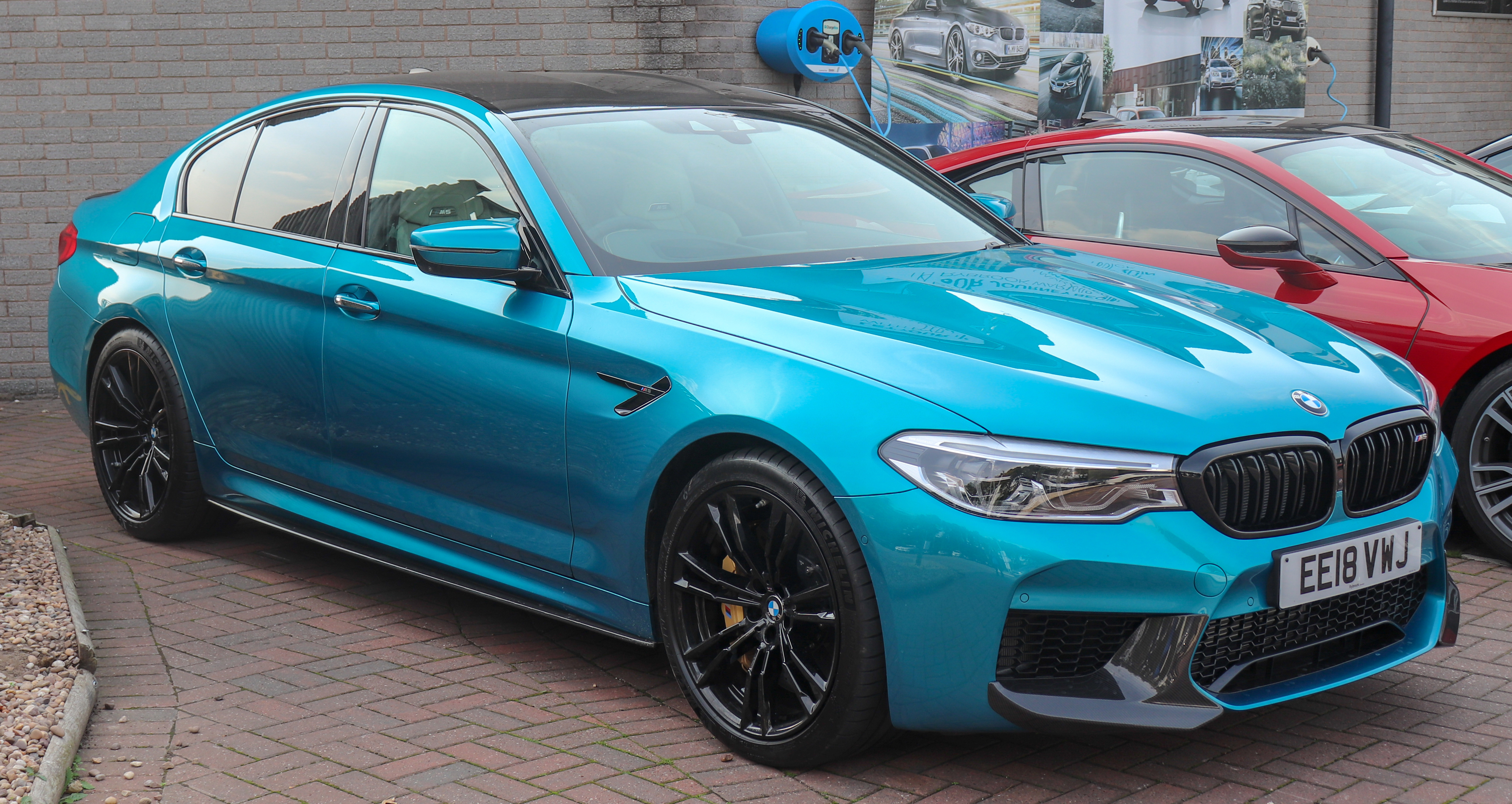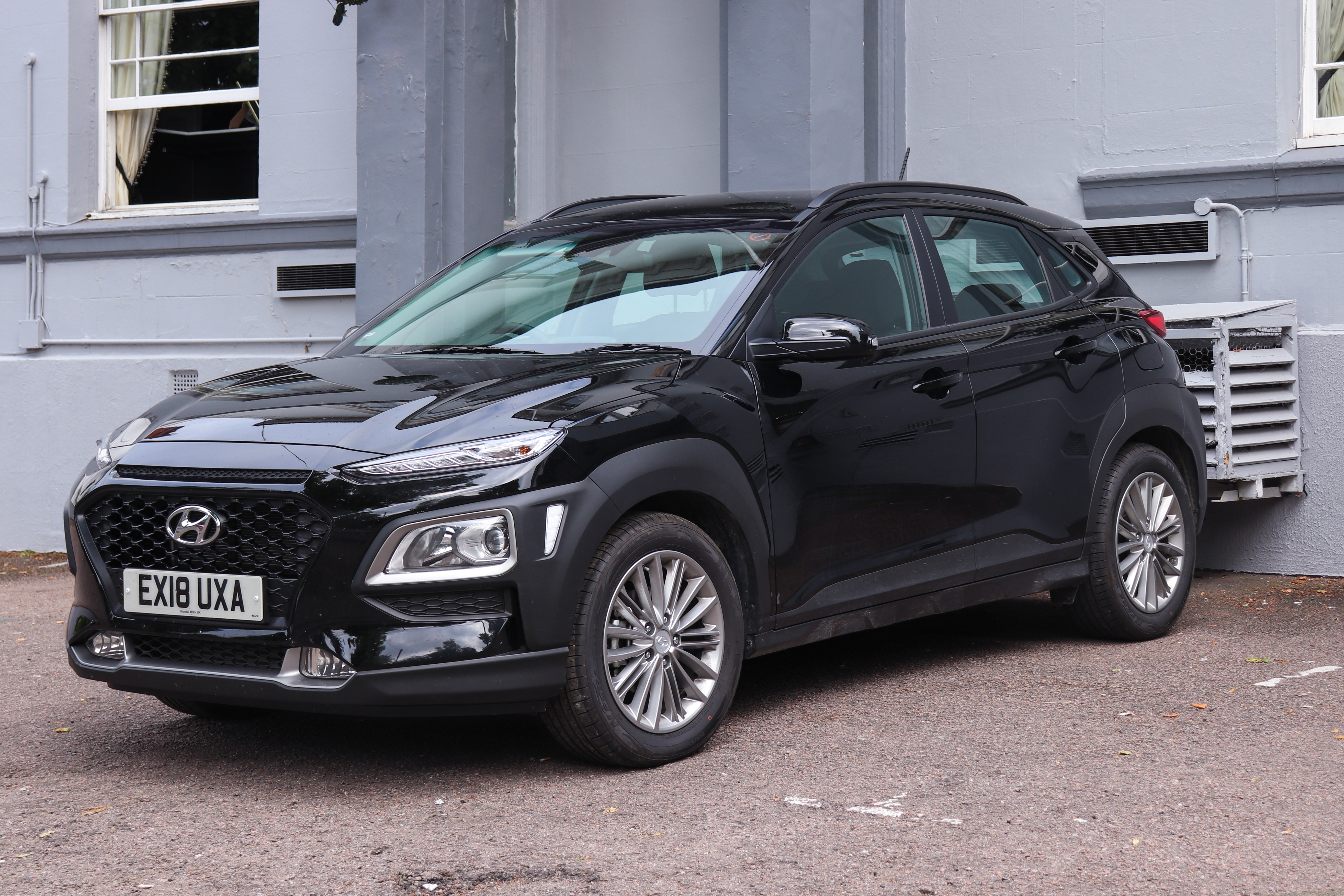
The episode features discussions on various automotive topics, including the BMW M5 Touring's performance and practicality, the Hyundai Kona's affordability and utility, and the Mercedes AMG E53 hybrid's luxury features. The hosts share personal anecdotes about their daily lives, gardening, and the challenges of car payments. They also touch on the state of the automotive market, EV trends, and the importance of responsible spending. The episode is filled with humor and camaraderie, making it an engaging listen for automotive enthusiasts.
This week Nicole has been driving the BMW M5 Touring and the Hyundai Kona Limited. Sam drove the Lexus LX700h and 2026 Ram 2500 Black Express Cummins while Robbie drove the Mercedes-AMG E53 sedan.
Sam drove the Lexus to Indiana to check out the new Entegra Coach Embark EREV motorhome. With federal EV incentives done, Ford and GM found a way to keep the party going a while longer while Hyundai has slashed the price of the 2026 Ioniq 5 by an average $9,155. Meanwhile Dodge is apparently cancelling the Banshee 3-motor version of the Charger Daytona and Nissan has put its US built EVs on hold but will instead build a new Xterra in Mississippi in 2028. Rivian is redesigning the interior door latches for the R2. The Verge has a new podcast with the first episode looking at hover boards. The inventor of the hoverboard has a new idea for a 2-wheeled self-balancing car that steals ideas from the GM EN-V concepts.
Sam has interviews with Micah Tindor from Cox Automotive about the KBB Instant Cash Offer program and used car valuations and Josh Sirefman and Carolina Pluszczynski from Michigan Central.
"Well, I'll start with the one I drove the week that we were off. I had the BMW M5 Touring, which is basically like a little BMW wagon."
The BMW M5 Touring is a sporty wagon that combines the practicality of a station wagon with the performance of a sports car. It's designed for those who want a fun driving experience while still having space for passengers and cargo.
The BMW M5 Touring is a high-performance wagon variant of the M5, known for its blend of practicality and sports car performance. It features a powerful engine and advanced technology for an engaging driving experience.
"So this is a plug-in hybrid. It has 24 miles of all electric range to it."
A plug-in hybrid is a type of car that can use electricity from a wall outlet to run. It can also use gasoline, giving you the option to drive on electricity for short trips and switch to gas for longer ones.
A plug-in hybrid is a vehicle that can be charged from an external power source and can run on both electric power and gasoline. This allows for reduced emissions and improved fuel efficiency compared to traditional vehicles.
"it's powered by a twin turbo V8 with 717 horsepower, 738 pound-feet of torque."
A twin turbo V8 is a powerful engine that has eight cylinders and uses two turbochargers to boost its power. This makes the car faster and helps it use fuel more efficiently.
A twin turbo V8 engine is a type of engine that has eight cylinders arranged in a V configuration and is equipped with two turbochargers. This setup enhances performance by increasing power and efficiency.
"And it weighs almost as much as a Hummer EV. Yeah, and excuse me, it also costs $122,725."
The Hummer EV is a new electric truck from GMC that is designed for off-road driving and has a lot of power. It's part of the Hummer brand, which is known for big, tough vehicles.
The Hummer EV is an all-electric pickup truck produced by GMC, known for its off-road capabilities and high performance. It features advanced technology and a distinctive design, reviving the Hummer brand as a sustainable option.
MSRP is the price that the car maker suggests the dealer should sell the car for. It's like a starting point for how much you might pay for a new car.
MSRP stands for Manufacturer's Suggested Retail Price, which is the price that the manufacturer recommends retailers sell a vehicle for. It serves as a guideline for pricing but can vary based on dealer markups or discounts.
"Do you guys want to take a guess at destination since we're at pricing? 1,300."
Destination charge is the cost to get the car from the factory to the dealership. It's usually added to the price you see when buying a car.
Destination charge refers to the fee that manufacturers charge to transport a vehicle from the factory to the dealership. This fee is typically added to the MSRP and can vary based on the distance and logistics involved in the delivery process.
"So think sporty like I want to go cruising on the highway and have some, when I'm driving around the highway, not so much canyon carving, because it doesn't quite have that kind of handling."
Canyon carving is when you drive on curvy roads, enjoying the way your car handles the turns. It's about having fun with your car's performance on these types of roads.
Canyon carving refers to driving on winding, twisty roads, often in a spirited manner to enjoy the handling and performance of a car. It's a popular term among enthusiasts who enjoy the dynamics of their vehicles in such environments.
"It's for cruising down the Autobahn at 155 miles per hour."
The Autobahn is a type of highway in Germany where there are no speed limits in some areas, allowing cars to go as fast as they can safely. It's well-known for high-speed driving.
The Autobahn is a network of high-speed highways in Germany known for sections that have no speed limits. It's famous for allowing drivers to experience high-speed driving safely.
"It's just the handling front that it's not quite as sharp as you might think and expect from a BMW."
Handling is how a car feels when you turn the steering wheel. If it responds well and feels stable, it has good handling; if it feels wobbly or hard to control, it has poor handling.
Handling refers to how well a vehicle responds to steering inputs and how it behaves during turns and maneuvers. Good handling means the car feels stable and predictable, while poor handling can make it feel loose or unresponsive.
"It has 12.3 inch digital instrument cluster, 14.9 inch infotainment screen. So it has the tech inside."
An infotainment screen is a touchscreen in the car that lets you control things like music, navigation, and phone calls. It's like a mini computer for your car's entertainment and information.
An infotainment screen is a multimedia display in a vehicle that integrates various functions, including navigation, audio, and connectivity features. It allows drivers and passengers to interact with the car's technology easily.
"It has 12.3 inch digital instrument cluster, 14.9 inch infotainment screen. So it has the tech inside."
A digital instrument cluster is a screen that shows important information about the car, like speed and fuel level, instead of using traditional round gauges. It can be customized to show different things based on what you want to see.
A digital instrument cluster replaces traditional analog gauges with a digital display, providing drivers with customizable information and a modern look. It can show various data like speed, fuel level, and navigation directions in a more visually appealing way.
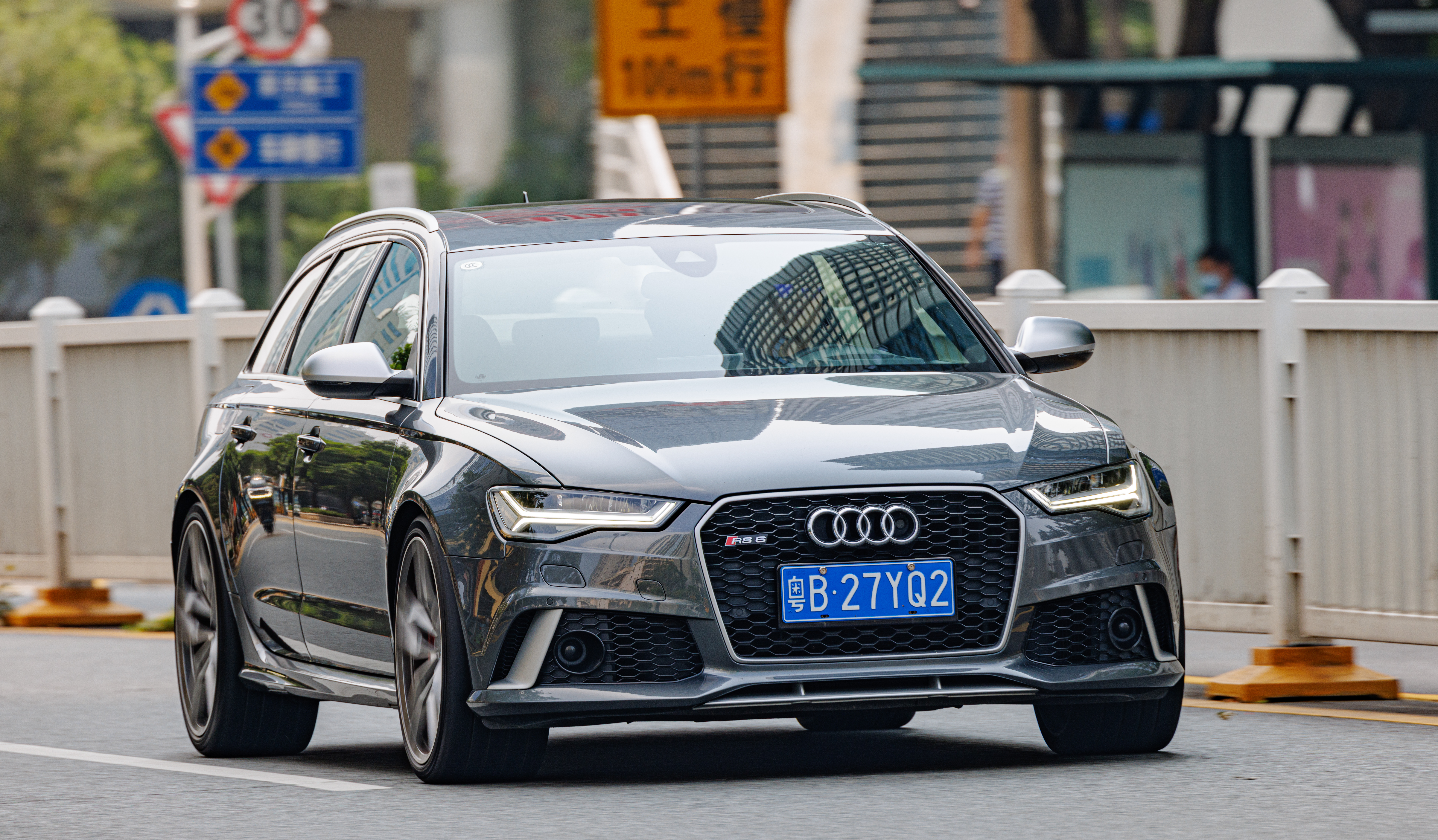
The Audi RS6 is a fast and powerful car that looks like a station wagon. It can carry a lot of stuff while also being fun to drive quickly.
The Audi RS6 is a high-performance version of the Audi A6, known for its powerful engine and sporty handling. It's popular among enthusiasts for its combination of practicality as a wagon and impressive performance capabilities.
"So the base price is 130,700R6. So you're still in the same zone."
The base price is the initial cost of a car before you add any extra features or options. It's the price you see before taxes and fees.
The base price is the starting price of a vehicle before any additional options, taxes, or fees are added. It serves as a reference point for the cost of the car without any upgrades.
"...it is pricey, but if you're in that six-figure range, and you want something that's a performance wagon..."
When someone says 'six-figure range', they mean the price is between $100,000 and $999,999. This usually indicates very expensive cars.
The term 'six-figure range' refers to prices that fall between $100,000 and $999,999. This is often used in the automotive industry to categorize luxury or high-performance vehicles that are significantly more expensive than average cars.
"if you have a car loan that is that much, you are probably going to be underwater for most of the life of that car loan. For like five minutes off the lot, boom, underwater."
If you're underwater on a car loan, it means you owe more money on the loan than what the car is currently worth. This can make it hard to sell or trade in the car without losing money.
Being underwater on a car loan means that the amount owed on the loan is greater than the current value of the vehicle. This can happen when a car depreciates quickly, leaving the owner owing more than the car is worth.
"I had the Hyundai Kona limited all-wheel drive, which I'll tell you when you go from the BMW to the Kona, you're like, whoa, like the power difference is so traumatic."
All-wheel drive means that power goes to all four wheels of the car, which helps it grip the road better, especially in rain or snow.
All-wheel drive (AWD) is a drivetrain configuration that provides power to all four wheels of a vehicle, enhancing traction and stability, especially in adverse weather conditions.
"I had the Hyundai Kona limited all-wheel drive, which I'll tell you when you go from the BMW to the Kona, you're like, whoa, like the power difference is so traumatic."
The Hyundai Kona is a small SUV that is popular for its good looks and usefulness. It comes with different features and can be bought with all-wheel drive for better handling in various conditions.
The Hyundai Kona is a subcompact crossover SUV known for its stylish design and practicality. It offers various trims and options, including all-wheel drive, catering to different customer needs.
"...It has a 1.6 liter four-cylinder turbo 8-speed auto for 190 horsepower with 195 pounds feet of dark. That is not a spirited drive..."
Horsepower tells you how powerful an engine is. More horsepower usually means a car can go faster and accelerate quicker.
Horsepower is a unit of measurement for power, often used to describe the output of engines. It indicates how much work an engine can do over time, affecting a vehicle's acceleration and top speed.
"...It has a 1.6 liter four-cylinder turbo 8-speed auto for 190 horsepower with 195 pounds feet of dark. That is not a spirited drive..."
Torque is a measure of how strong an engine is at moving things. More torque means the car can start moving faster and carry heavier loads more easily.
Pounds-feet of torque is a measurement of rotational force, indicating how much twisting power an engine produces. Higher torque values can improve a vehicle's ability to accelerate and tow heavy loads.
"I don't think there's a lot of sound deadening between the cabin and the engine compartment. One of the things that you, when you get a less expensive car, those little bits and pieces that make your interior sound really quiet, that's where they can save a little bit."
Sound deadening is stuff used in cars to make them quieter inside. It helps block out noise from the engine and the road, making your drive more comfortable.
Sound deadening refers to materials used in a vehicle's construction to reduce noise from the engine and outside environment, enhancing the comfort of the cabin. It helps create a quieter ride by absorbing sound and vibrations.
"...when we were selling back our Jetta TDI back to Volkswagen..."
The Volkswagen Jetta TDI is a version of the Jetta that runs on diesel fuel, which can be more efficient than regular gasoline. It has a turbocharged engine that helps it perform well.
The Volkswagen Jetta TDI is a diesel variant of the Jetta, known for its fuel efficiency and performance. TDI stands for Turbocharged Direct Injection, which enhances fuel economy and power.
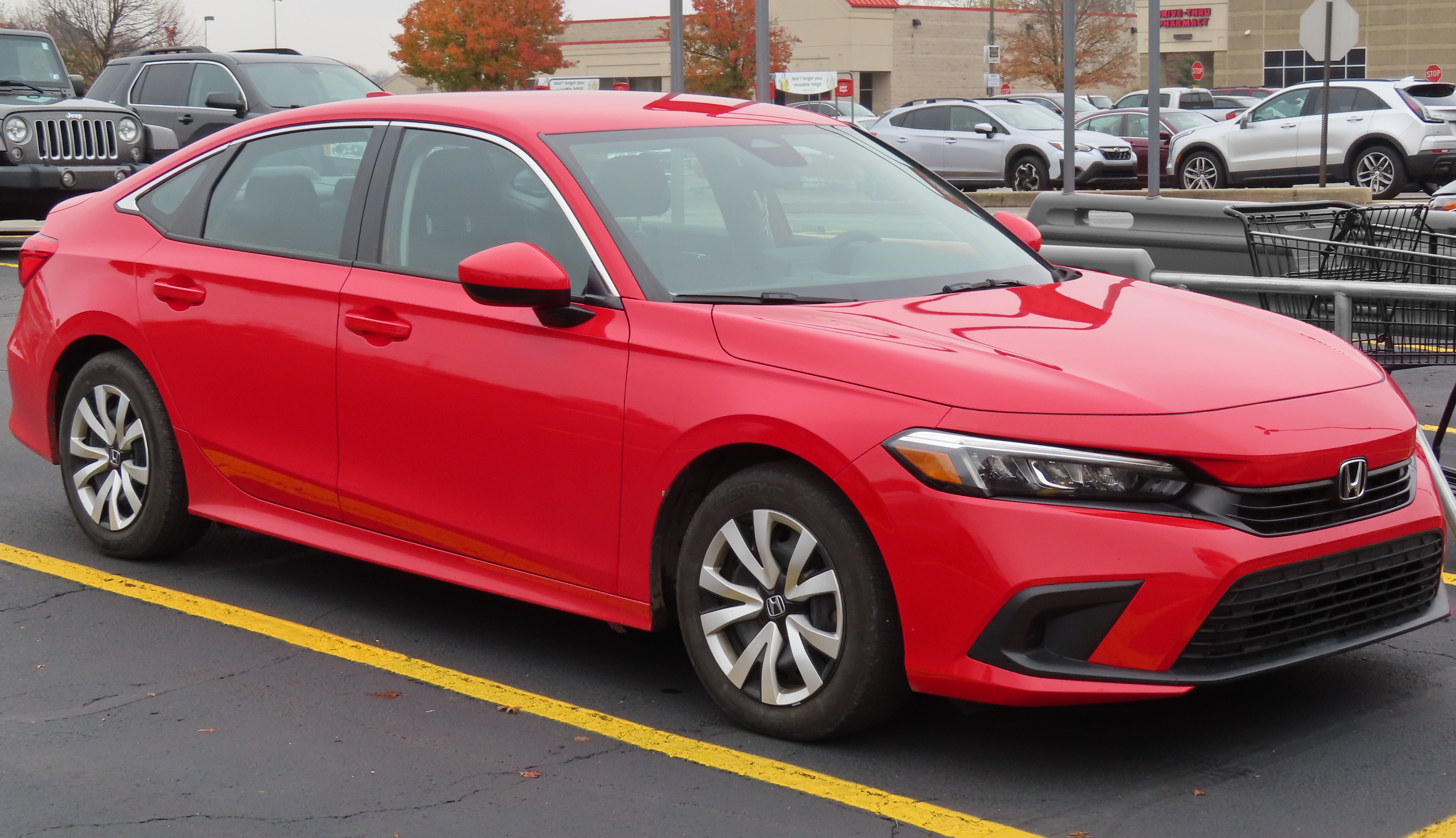
A nine-speed transmission means the car has nine different gears to choose from. This helps the car go faster and use less fuel.
A nine-speed transmission allows for nine different gear ratios, providing better acceleration, fuel efficiency, and smoother shifting compared to transmissions with fewer gears.
Speed shift automatic means the car can change gears really fast, making it feel sportier and more responsive when you drive. It's often found in cars that are built for performance.
Speed shift automatic refers to a type of automatic transmission that is designed to change gears more quickly than traditional automatic transmissions, often enhancing performance and responsiveness. This technology is commonly used in sports cars and performance vehicles to provide a more engaging driving experience.
"It's got rear axle steering. So you're, yeah, you're not, you're, you're not just sort of like, oh, it's kind of cool."
Rear axle steering means the back wheels can turn a little bit to help the car turn better, especially in tight spaces. It makes the car easier to handle at low speeds and more stable at high speeds.
Rear axle steering is a technology that allows the rear wheels of a vehicle to turn slightly in the opposite direction of the front wheels at low speeds, improving maneuverability, and in the same direction at high speeds, enhancing stability. This feature is often found in performance and luxury vehicles to enhance handling characteristics.
"The multi-contour seating package was $3,000. Wow. Was it worth it?"
This is a special seating option in some cars that allows you to adjust the shape of the seats for better comfort. It can even have massage features!
The multi-contour seating package is an optional feature in some luxury vehicles that provides adjustable seat contours and lumbar support, enhancing comfort for the driver and passengers. It often includes features like massage functions and memory settings.
"But like, you know, the AMG edition one, so it was an edition one. So it had like the orange, like, yeah, and the orange, like seats, the orange, the lettering..."
AMG is a special performance division of Mercedes-Benz that makes faster and sportier versions of their cars. An AMG edition usually has better engines and unique designs.
The AMG edition refers to a high-performance variant of Mercedes-Benz vehicles, developed by AMG, the brand's performance division. These editions typically include enhanced engine performance, sportier styling, and upgraded features compared to standard models.
"...Well, yeah, the hyper screen, but it's more the software."
The hyper screen is a big, curved screen in some Mercedes cars that shows information and controls for things like music and navigation all in one place. It looks really cool and is easy to use.
The hyper screen is a large, curved display that spans the entire dashboard of certain Mercedes-Benz models, integrating multiple screens into one seamless interface. It provides a visually striking and user-friendly way to access the vehicle's infotainment features.
"That's interesting is that you're driving in EV mode. You can feel there's like a little, like almost they sit it up so it feels like there's a notch as you're using the accelerator."
EV mode means the car is running on electricity only, not using any gasoline. It's designed to save fuel and reduce pollution.
EV mode refers to the electric vehicle mode in hybrid or electric cars where the vehicle operates solely on electric power, minimizing fuel consumption and emissions. This mode is typically activated under certain conditions to enhance efficiency.
"As a reality for any dealer is, each dealer has a really a niche of what they sell. Certain dealers are phenomenal at selling F-150, certain dealer are phenomenal at selling kias. And we don't expect the dealer to always be able to take the vehicle into inventory profitably."
"They don't get you. I get Ford's Model E team is based in Notaly and Integrated Systems. Like they, they watch everyone else move up and they're like, yeah, I showed a week through a couple of hundred bucks on there and move it up."
Select text to request an explanation
Say what you want about AI, but it's here. And it's helping businesses get more done in a day. Wix's website builder is infused with AI so you can stay ahead. Create a beautiful, functional website just by describing your idea. Track how your site appears in AI search results. Create custom images on demand, or launch an entire campaign in a matter of minutes. Wix gives you AI wherever you need it. Try it now for free at wix.com.
Train for a healthcare career with Carrington College. Gain the skills to start your dream healthcare career, or build on your experience to earn a bachelor's degree. With 26 locations and online programs, Carrington College makes it easy to take the next step. Classes are now enrolling for 2026, so there's no better time to invest in your future. Visit Carrington.edu. Programs vary by location. Visit Carrington.edu slash SEI for information on program outcomes.
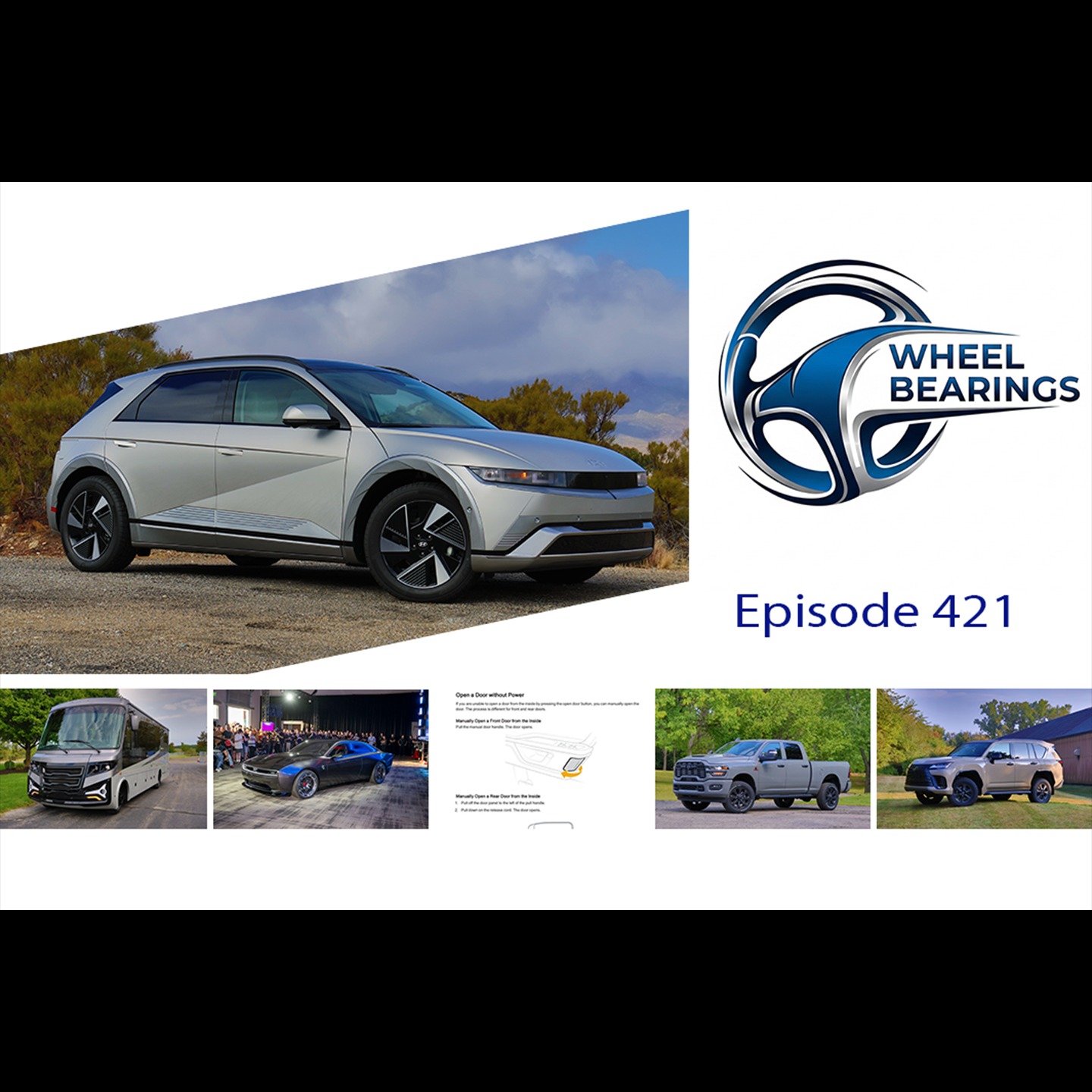
This is episode 421 of Wheel Bearings. I am Sam of Bull Salmon from telemetry. And I am Nicole Wakeland from AutoWeb. And I am Roberto Baldwin from SAE International. And welcome back everybody. Last week was just all interviews. So get the whole crew back. I just slapped in. Okay, well, whatever. I made a really good excuse of why you weren't here.
We had to go and spoil it. Oh, no, no, I had stuff to do. It's just fun. My wife asked me what I was going to do today. And I'm like, well, I have to do the podcast and then I have to map. And she's like, what?
You have to nap on a rough day. I chock for a couple hours. It takes a lot of out of you. I get all tuckered out. I have to do the podcast. Go to an Apple Festival and bake an apple crisp. That's my day.
Oh, we have Apple festivals in my little small town because it was like known for its apples. And that was all sod. It's making sure the whole state is known for its apples. So it's apple time. I'm going to make some apple crisp. What do you do in Sam?
After I assembled the show, I'm probably just going to sit around with the dogs and throw the ball around for patty for an hour or so.
Yeah, that's the life. I finished harvesting all the potatoes yesterday and did a bunch of stuff. So see, we all have just productive enough days today.
I have one tomato, like I picked off my tomato plant. We got the last of the tomatoes.
We harvested the last of the stuff from the garden yesterday. So I have no garden. Our pear trees decided to make more pears.
Like it made a bunch of pears. And then it's like, you know what? Now those are some more pears. What are you doing?
Pears and apples and playing with dogs today. Our previous house, we planted a couple of pop potries in the front yard.
And once those things start to develop fruit after a few years, they produce so much fruit that you can never get it all.
There's always some that lands on the ground that's rotting. And so every spring, there's all these shoots coming up around the base.
Oh, from where they were. So I have to pull all those suckers out or cut them off or whatever. So they don't kill the parent.
Yeah, it's a mess. They taste pop. Have you ever had pop pots?
No, I'm actually googling them right now because I've heard of them, but I don't know what they are. So pop potries.
Do you eat? Are they these tiny fruits? No, it's big. It's the fruit itself is like about the size of a mango. It looks kind of like a mango.
But the flesh is kind of like a custardy flesh. You know, it tastes kind of like banana custard.
I need to try one. It's really tasty, but they're real pain in the neck because they've got like in the middle.
They've got like these four big seeds. So like instead of like one big seed, like an avocado has, you have these four sort of oval, fairly large oval shaped seeds that are kind of across.
So you can't just slice through the middle of the thing. You got to kind of cut around it and then try to scoop these things out.
It's just, it turned out to be way more of a pain in the neck than we anticipated.
After the first couple of years, you know, I harvest a whole bunch of them and then I bag a whole bunch of them and put them up by the curb and say, here, take them.
Take them somebody.
We'd freeze them and use them for various things, but then we just got tired of it and then moved and never touched them again.
The end of the pop potry.
The trees are still there and they're still, they're huge and they've gotten really big, but anyway, anyway, enough about pop us, pop us.
What did you drive Nicole?
Well, I'll start with the one I drove the week that we were off. I had the BMW M5 touring, which is basically like a little BMW wagon.
It's wagon people. There's a, well, it's not little, but it's a wagon. We have a wagon. That's great.
Give us, talking about fruit, forbidden fruit in the US. We never get fun wagons like this.
So this is a plug-in hybrid. It has 24 miles of all electric range to it. It's all-wheel drive, eight speed automatic, and it's powered by a twin turbo V8 with 717 horsepower, 738 pound-feet of torque.
It's got some juice.
And it weighs almost as much as a Hummer EV.
Yeah, and excuse me, it also costs $122,725.
Do you guys want to take a guess at destination since we're at pricing?
1,300.
1195.
Same year, super close, 1175.
Oh, that's a weird number.
I know, that's what came up with when I looked. I'm like, is that when I checked it like three times, it keeps coming up 1175. We're going with that.
So it's, this isn't like, it's an M, you know, so M means sporty in the BMW world and powerful and all that.
But this is still tiny and it's a wagon.
So think sporty like I want to go cruising on the highway and have some, when I'm driving around the highway, not so much canyon carving, because it doesn't quite have that kind of handling.
It can get a little bit squirrely from really twisty roads.
Not, not like compared to not like a lot of other cars, but in like, when you compare it to other BMWs, it's not as finessed, I guess, as other BMWs.
It's a little bit more cruiser than canyon carving.
And I think that's important to know, even though it has all that power, sounds amazing.
It's for cruising down the Autobahn at 155 miles per hour.
Yeah, exactly. It's not for like, canyons in California.
What's the one they always make a strive that one road, which was specific? No.
Well, there's a few.
There's a few.
There's a few.
There's a few.
That's what I'm thinking about. It's not for that.
And so we're just going into straight line.
So it's, but it is really nice drive and it does sound fabulous.
I mean, that engine twin turbo V8.
You know you're driving one.
Sounds fabulous.
It really makes like when you started out, you're like, oh, I miss this in electric vehicles.
It just sounds so good.
So I enjoyed driving this.
I thought it was a lot of fun.
It had plenty of power when you do mash the gas.
It does respond.
It's just the handling front that it's not quite as sharp as you might think and expect from a BMW.
It has 12.3 inch digital instrument cluster, 14.9 inch infotainment screen.
So it has the tech inside.
It's, it's almost a little too much going on inside though.
When you take a look at the interior, there's a lot.
It's a little bit too much like an airplane cockpit.
Like there's too many.
There's a button.
There's a knob.
There's a dial.
There's touchscreen.
This one's red and this is black and like, ah, it's kind of cool.
But it's also a little overwhelming.
You first it down.
You think, okay, hold on.
How do you drive a car again?
It's a little, it could be simplified a little bit.
But my criticism is a very small for just how it is fun.
And it's super versatile.
So behind the rear seats, there's 18 cubic feet.
If you fold them down, it's 58 cubic feet.
And there's even a little pass through so that you could like,
put a set of skis in right through the middle of the back seats and still have two
people sitting in the back seats.
So I like it.
Overall, I like this.
It's a lot of money.
122,725 dollars is a lot of money.
Would I pay that much for this?
I don't, I don't know.
I mean, if you really wanted a wagon, you really, really want a wagon.
I want a wagon.
Okay, do you, would you pay 122,725 dollars for this?
Sam.
If I had the sort of budget to spend on cars that, you know,
allowed me to buy cars with six figure prices.
Yes.
This would definitely be on my consideration list.
Yes.
If you have the budget for six figure cars, but for those of you who are stretching,
who your budget is not really six figure cars and you're trying to think of getting one anyway,
I think you can get other things that will do a lot of what this does for you.
But you're going to lose the prestige of saying you drive a BMW because that's not undeniable.
I mean, that's a performance luxury car.
It's got style.
It's, it sounds amazing.
It is comfortable.
It's not especially like upscale.
It doesn't have that like Uber luxury vibe to it.
But, you know, you have standard leather seats, a panoramic sunroof.
You can get there's an executive package where it's heated and ventilated up front.
He ventilated rear seat or heated rear seat.
Wait, he did ventilated up front.
He did only in the back.
Sorry.
Can't get my words straight.
122 grand.
You should have ventilated rear seats, too.
Right.
So it's, right.
So it's, it's, I like it a lot.
But I'm not sure it would be, if I really wonder wagon, I'm not sure.
I mean, are there any other performance wagons as I'm sitting here?
And how much is that, though?
That's going to be significantly less.
Wait, let me see.
That's a good RS6.
So the Audi RS6.
That's a billion dollars.
That starts, it's a hundred twenty twenty four.
Oh no, that's the city and city and city and city and city.
Avant.
That's the wagon.
It's amazing.
It shows my local dealership that it's one fifty one seven ninety five.
And that might just be this particular.
That's the problem.
That's, it's a lot.
Yeah.
So it's still a lot.
So the base price is 130,700R6.
So you're still in the same zone.
If you want, the performance looks like a car with a wagon.
Does Mercedes still offer an e-Class AMG wagon in the...
53 hybrid wagon?
Well, yes they do, according to Mercedes website.
Because it's the wagon version of the sedan.
Yeah.
And how much is that one go for?
It starts at ninety three nine three fifty.
It's a bargain.
So the Mercedes is a cheap car things you never think you would ever say.
So I truly liked it. It was a fun car. I enjoyed driving it. It is pricey, but if you're in that six-figure range, and you want something that's a performance wagon, we just figured out you're looking at close to six figures no matter what.
If for this or for the Audi, you're looking at in this range, it's going with that $120,000, $3,000. So it's not an inexpensive segment, I guess, is how to say it.
So if you're in that segment, you're looking for it. I loved it. Just be prepared. More, not quite the Canyon Carver for super sporty little sedan feel. This is slay larger. It's a wagon. So it's more about cruising on the highway and being super comfy with all your stuff in your car.
Before we continue, just something popped up in our workshop the other day. You're talking about how many people can afford six-figure cars. In the US now, one in five car buyers have $1,000 a month car payment.
Wow. One in 20% of us? Yes. 20% of people have on...
Well, you look at trucks. People buy big trucks with like 70-year SUVs.
Yeah. Thanks 70-year. 70-year loan.
There was that dealership that was walking around and they were like flexing that everyone on staff's their payment was over $1,000.
I think you want to flex that. That's just idiotic. You should not be spending that much money for a car loan.
That was the feedback they got from Magic. If you didn't end well for that.
Gosh. I feel like it's not that you're buying it to an expensive car. It could save a little morning money for a down payment before you do.
Like $1,000. But anything goes wrong in your life. You're going to be screwed trying to pay for that car.
And most likely, if you have a car loan that is that much, you are probably going to be underwater for most of the life of that car loan.
For like five minutes off the lot, boom, underwater.
So if anything happens to it and it will ever get total, your sunk or if you try to trade it early, again, your sunk.
It's hard to, like, for me to pound a map.
We all like cars, but a $1,000 car. One of the car payment is too much money.
I remember when I lived in an LA, there would be guys in their 20s.
And they would have like new Mercedes, new BMWs, but they were living with their mom.
And they were in like their mid 20s. And I like, well, that's okay.
Gosh. I live with your mom. So you can buy a Mercedes. You're making choices wrong.
Yeah. So we're going back to my mom's house.
Yeah. Just a little, a little more detail here.
You know, this is data from experience.
They, the types of cars with over with payments over $1,000 a month.
54, 53.4% of SUV buyers have $1,000 a month payment.
Oh, yeah.
36.8% of pickup buyers have $1,000 a month payment.
For sedans, it's 3.6%. Many vans, 1.96% and coups, 1.85%.
So stop buying, stop buying SUVs and pick up some buy cars, people.
Yeah. I have a whole story.
So most responsible segment unsurprisingly are new parents who are trying to figure out their budget with or parents with kids.
Or you don't have a huge budget or people buying coups.
Yeah.
Yeah.
Wow.
There's not very many of them to be honest.
And they're all BRGs and.
Yeah.
Riyadas.
All right.
So that is the, that's the BMW.
So that was my thoughts on the BMW.
And then I had something that was very not a BMW this week.
I had the Hyundai Kona limited all-wheel drive, which I'll tell you when you go from the BMW to the Kona,
you're like, whoa, like the power difference is so traumatic.
But it's also, the price is considerably less.
You could buy, so I had the limited.
You could buy four of these if I just roughly like four.
You could have them and you have a sled behind it like like.
Get different colors.
You could like pick an orange one to drive in the fall.
Get a red one for Christmas.
Get like, I don't know, yellow one for summer.
I don't know.
You, it's considerably cheaper.
So SEL convenience limited.
You're going from 24, 550 for the base up to 33, 600 for the limited.
That is the maximum with all-wheel drive 33, 600.
If you got to buy a quote unquote SUV, that's the sort of thing you should be buying.
This is what you should be doing.
This is a reasonable car to buy.
So what do you think the destination is on this one, guys?
It's your turn.
If you get it.
13.
I think I said that last time too.
14.95.
So Robbie wins just barely because it's 13.95.
He wins by, what, five bucks?
So Robbie wins 13.95.
So this is a, they consider this, I guess, a subcompact technically.
It's got 25.5 cubic feet behind the second row.
16.63.7 behind the first row.
So when you think about that, that's actually more than the wagon, the BMW wagon we were talking about.
So this is like a small, small, affordable car that gives you more cargo room.
So you don't need to have the wagon.
Like wagon's a great thing.
You can do it with this and save yourself like chunk of change.
Does not have the power.
It has a 1.6 liter four-cylinder turbo 8-speed auto for 190 horsepower with 195 pounds feet of dark.
That is not a spirited drive.
Let's put it that way.
But see, I'm not anti-low power cars as long as they're not so low that you hit the gas pedal and you think, oh no, my life is wet.
You want to put your leg out of your foot up.
Can you comfortably merge onto a highway?
Exactly. That's what you need.
That's really, really what all of us need.
We need to merge into highway traffic without feeling like the car behind us is going to slam on the horn, rear end us, kill us.
And this has enough power to do that.
It actually is pretty robust when it accelerates.
It is good acceleration.
It's noisy.
Which isn't the transmission of the engine per se.
I don't think there's a lot of sound deadening between the cabin and the engine compartment.
One of the things that you, when you get a less expensive car, those little bits and pieces that make your interior sound really quiet, that's where they can save a little bit.
So it is a little on the noisy side.
But again, only when you're doing that highway merge.
The rest of the time.
It's fine.
It's not disturbing.
You hear it when it accelerates.
It doesn't have the beautiful sound of the BMW.
But it's not horrible.
The only time you really notice it is when you're really heavy on that gas.
Trying to merge into highway traffic.
And just turn it up to stereo.
Let's turn it up to stereo.
Don't worry about it.
So I like this.
And I think it looks good.
It's a good looking car.
I had it.
What did they call this?
It's this bright red.
Oh my.
I just looked at the morning that apparently was.
It's completely out of focus when they took the picture.
So I can't breathe.
I'm looking at the official morning.
The car.
I had it.
I don't understand how PDFs work.
It's it's literally just a piece of plastic with blur all over it.
I just now glanced at it because I read everything down looking it up.
Oh my gosh.
So it's red.
I have no idea.
What is it?
I'll look it up.
You keep talking.
I can't tell.
But it's it's a beautiful car.
It actually looks really good.
And I enjoy driving it.
We drive it over back and forth.
The boss in a couple of times.
The suspension system was even good.
That's the other thing that sometimes when you get a more affordable car.
They can feel a little rough.
And if you hit.
It's one thing if you're on Pebble pavement or say you hit a seam in construction
between two different kinds of pavement.
But sometimes you hit those potholes and they literally jar you from your soul.
This is actually pretty good.
It's it's a nice smooth vehicle.
It's an affordable sub compact SUV.
I call it a crossover.
It's an affordable crossover.
It's great for a couple or for somebody who's single for a family.
It's going to get a little tight in the back seat if your kids get older.
But you can put a couple of car seats back through in the little and it has really good car room.
So overall, I like the Kona.
I liked it since it came out.
I think the Kona is a decent little car.
And I would recommend it to people for but not somebody who has a big family.
Or is like craving huge power because you're not going to get that in this.
But you are going to get affordable and fuel efficient.
And Hyundai is a really good reliable car.
So overall, I like the Kona.
And ultimate red metallic.
Ultimate red metallic.
It's really good looking.
And you probably won't have a thousand dollar a month car payment on the Kona.
I'm just guessing.
I would hope not.
Well, maybe, you know, maybe if you got like a 12 month loan.
12 month loan.
Yeah.
When you think about that though, if you buy something where you're paying a thousand dollars a month, four, five, six, seven years,
you pay that same money on a tiny little affordable thing like this.
You have a sucker paid off from like a year and a half, maybe two years.
It would be your car in no time.
You wouldn't be upside down for very long at all.
Yeah.
You know, the biggest car payment I've ever had was actually when we bought the Civic, you know,
it coincided with when we were selling back our Jedi TDI back to Volkswagen.
And so, you know, we had a little bit of a gap in between when we got the check from Volkswagen.
And when we had to buy the Civic, you know, because we needed a car, we bought the Civic.
It was a few weeks before we got the check from Volkswagen.
And so, as a result, you know, I got a loan.
You know, we just did it.
It was at the time.
It was like a three year, you know, like half percent interest loan.
And, you know, ended up paying that off.
But, you know, that car payment was like 500 and something a month.
I think the most of our paid is like 350.
350.
I feel like.
And that would, but I've never purchased a new car.
I think.
I think.
At least new cars.
But like purchasing a car, I think the, I think, and I think that was the BRZ.
I think the most.
It's, gosh, I feel it was in the 300 somewhere.
It's been a little while.
But I think the most I've had on a car that I've purchased outright in a word that was financed was a $300.
Three something.
I think at one point, which is reasonable, I still remember the dollar amount from my very first car.
Because it was the first monthly payment I ever had to pay every month.
It was $192.91.
And I still remember that.
That's amazing.
Which no one can even conceive of a car payment for $192.91.
Because eight cars are expensive and B, that's people are paying $1,000 for a car loan.
Because they're making foolish choices, people.
Yeah.
My 90 Honda Civic, when I bought that, I bought it used.
152 a month.
I remember that.
152.
Look at that.
And I was a, I was a busser and then I was a waiter.
So, like, my cheques just went to the bank and I never used them because I always had cash because, you know, tips.
And, you know, I lived at home, so I wasn't like, you know, I was, I had like real bills.
Yeah.
I love that car.
That's a great car.
All right.
There you go.
Buy yourself one fancy BMW or four Hyundai Kona's, one for every season.
Take your pick.
These are the cars for a season.
Or, you know, if you have a wife and two teenage kids, one for each, one for each member of the family.
Everybody has a car for the same price.
Yeah.
And there's no arguing.
Everybody has the same car.
Right?
Perfect.
The only, the only potential for arguments is if you got like four different colors.
And then, you know, people were fighting.
I say everybody picks their color.
You pick your color when they buy it.
So, you can't complain.
You know, you always drive the red and mom always drives the white or whatever.
So, I'll, I'll take, I'll take the sultronic orange pearl.
I want the red.
Okay.
What color you get, Robbie?
You want, uh, neoteric yellow or mirage green or cyber gray material.
Oh, I was just looking at the colors.
Mirage green.
Did they have that blue?
Thank.
Ah.
No, then I'll take that orange.
I'll take that orange.
That blue they had on the first gen, Kona was really good.
Yeah.
We had the blue.
We drove like over an hour to get that blue.
Hi.
Here we go.
Here's the colors.
Um, I just get the bright green one or the orange one.
The lime.
I'll get the lime green.
The neoteric yellow.
Yeah.
And that's a cool color, neoteric.
All right.
Okay.
Ever see an idea so clearly in your head but struggled to make it real?
We've all been there.
With Wix, you can build a website for your business just the way you pictured it.
Get the best of both worlds with AI and drag and drop tools all in one place.
Stay in your creative flow and use AI when you want, how you want.
Create a website your way.
Try it out at wix.com.
Does your child read going to school every day?
It's time to try Oregon Charter Academy.
Our online school offers interactive learning and a safe environment with the dynamic and responsive curriculum.
Providing your student with support to thrive will bring you relief knowing you found just what your child needs.
Don't wait and roll today at organcharter.org and see the difference it makes for your child.
Oregon Charter Academy.
What learning should be.
Did you know you can support wheel bearings directly?
Head to patreon.com slash wheel bearings media and you can become a patron today.
Your contributions will help fund the platforms and tools we use to bring the podcast to you.
And exclusives and improvements are already on the way thanks to your generosity.
So if you want to be part of an automotive podcast like no other, head to patreon.com slash wheel bearings media.
We've updated the wheel bearings merch store and now there's a whole bunch of new choices, new colors, new styles.
You can get your wheel bearings merch at shop.wheelbearing.media.
Go check it out.
That's shop.wheelbearing.media.
Okay.
Robbie, where have you been driving?
So I drove the sedan version of the Mercedes AMG E53 hybrid.
It's actually a plug-in hybrid.
Mercedes is called the hybrid, but it's a plug-in hybrid and it's got a little plug-in or anything you plug it in.
And you get a pretty nice 42 miles of range, which is more than enough for your average, you know,
commute according to the department of transportation, which is I think of 36 or 37 last I checked.
And this actually does really well on the twisties.
I took it.
That's what I went and drove it.
I didn't have it for very long.
I had it for like two or three days.
And in those two or three days, I was like, oh, this is the plug-in hybrid you get when you're A, rich, and B.
You like fun.
Most public and plug-in hybrids are, you know, they're SUVs, they're crossovers.
They're, you know, like, well, everything.
Most everything is a SUV or crossover.
So this is the sedan.
So it has a three-liter inline six with a turbo.
It's got 577 horsepower, which is a lot.
553 pounds of torque.
It's AMG.
So it's got like the ride control suspension.
It's got the nine speed.
There's speed shift automatic.
It's got rear axle steering.
It's got all the things.
So you're, yeah, you're not, you're, you're not just sort of like, oh, it's kind of cool.
It's really cool.
It starts at 88,000, but of course, the one I had,
128,164 dollars, which is, I'm sure that's a, that's at least a thousand dollars.
You guys want to check, this is, I'm looking at it.
You want to guess the destination?
1300 dollars.
I was going to say 1695.
It's 1150.
Oh, wow.
I remember the performance cars.
Yeah.
They don't get you.
Like they, they watch everyone else move up and they're like, yeah, I showed a week through a couple of hundred bucks on there and move it up.
But the reality is they, they sort of like, you know, you're buying a really expensive car.
And they're like, yeah, we're just going to, we're going to, what was it?
The multi-contour seating package was $3,000.
Wow.
Was it worth it?
Yeah, I don't, I, I don't know.
I didn't, I don't think so.
I didn't realize that was that much.
But like, you know, the AMG edition one, so it was an edition one.
So it had like the orange, like, yeah, and the orange, like seats, the orange,
the lettering, the orange trim, the orange, or I'm sorry, an orange yellow, the yellow seat belt and then a bunch of other junk, 25,800, $50 for that.
But that's, that's the, yeah, that's the one package.
You don't have to get all that.
You could just get this car and be fine.
It's very comfortable.
It does, it did have the passenger side screen.
I never had a passenger in the car.
So it just sat there with the AMG logo on it the whole time.
I still don't, I think the passenger side screen is something that's going to stick around for too much longer.
Unless we, you know, we get autonomous cars, which is still very, very, very, very, very, very far off from now.
Because I think most people look at it and they're like, oh, cool.
I can watch a video on this.
And then I could, oh, I could just look my phone and I can use like, you know, because they have one at the time.
The last time I used it was in, I don't know, Germany probably.
Well, someone else was driving and I watched something.
There was like one streaming service that was, like, it was kind of a catch off for other streaming services.
Sort of, yeah, it was weird.
Or I can just get my phone.
I can like, oh, I want to watch Netflix.
I want to watch Disney Plus.
Oh, I want to watch, you know, HBO Max.
Now it's whatever it's called.
You know, whatever you already have a thing to, you can just watch on your phone or your iPad.
So yeah, it's, it's, I'm still not 100% sure that's a thing people want because they're telling my show to people.
They're like, oh, that's cool.
And then they picked their phones.
No, it was very nice.
It's very Mercedes.
It's got it.
It had the landscape version of the Mercedes infotainment system.
The hyper screen.
Well, yeah, the hyper screen, but it's more the software.
What do they call it?
One.
Oh, the zero layer.
Zero layer, which I'm a big fan of.
I actually really like zero layer because it's just a giant map.
And then like little widgets for things that you, you want to do.
That's it.
Yeah, it's really easy.
You don't have to do much tapping around.
You can just glance over, see what you need.
Yeah, it's, it's very, it's, I think they did a really good job with that.
They did a really good job with zero layer.
Yeah, it's because mostly you just want to where am I going, when am I doing?
Giant map and then little widgets.
Like, oh, I want to go forward on my music.
Oh, I need to click this on your client.
It's very, yeah, I really enjoy the zero layer.
So you're getting that, which is nice.
And yeah, no, overall, it's, you know, I really good car.
Again, 42 miles of EV electrical lean driving.
That's interesting is that you're driving in EV mode.
You can feel there's like a little, like almost they sit it up so it feels like there's a notch as you're using the accelerator.
And then right when you get, you get to a point.
And if you go past the point, then it's like, well, dude, you're, you're trying to go too fast.
So then it kicks on the, the motor.
So it gives you like this little notch to be like, okay, you can stay in EV mode.
As long as you don't like lose your mind and try to overtake someone else already doing like 90.
Yeah.
Because when you want to do that, all right, here you go.
So yeah, yeah, I had a chance.
I drove it into the city.
And then I drove it on back roads.
And that's really it was, it was, they sort of, they loaned it to me.
So I could go to a tennis game and meet Roger Federer Federer Federer Federer Federer Federer.
So I met him.
He's very nice.
He's a very, and that's just nice to me like you watch him afterwards because some of you people are very nice to you because you're interview them.
But like he was like picking, oh, someone left her sunglasses.
He's like, oh, we ran back, grab a single.
He's like, oh, who's are these?
Just a very delightful person.
I don't know anything about tennis.
I got to watch a tennis match, which was really fun.
Don't know anything about it.
Don't know what was going on.
I understand the scoring because it's not that difficult to sort of wrap your head around.
It wasn't cricket.
So yeah, so anyway, they gave me that.
And then I went and looked at their giant Mercedes van, their vision van.
That is, they don't call it a van.
It's an MPV.
You know, they're pulling the same thing as Kia where they, like, hey, look at this really cool mini van.
Oh, cool.
Don't say mini van for the love of God.
Please don't say any potential.
Please don't say mini van.
Yeah, it's an MPV because America.
And if, you know, if you go to Japan or even, you know, Korea and even some places in Europe, you'll get like,
if you call in like a really nice taxi, it's a mini van.
Yeah.
And when we went out of vacation, we decided instead of taking the train back to the airport,
we decided to go back in style.
So we like rent.
We, you know, we got, we ended up, we wanted a nice car to go back and would like recite mini van.
It's a mini van.
It was wonderful.
Easy to get in.
Easy to get out.
Tons of room.
Yeah.
Mercedes has theirs.
They have their, you know, their new upcoming or their new, their platform.
They're going to be building it on.
This does, you know, this, this vehicle doesn't really replace the mattress because the mattress is sort of like a different beast, to be honest.
The mattress is more of it like a sort of a utility type van.
And it definitely won't do anything to displace the sprinter because that is a cash cow from Mercedes because of all the,
the overlanders and all the RV.
You know, every, you know, this really, the sprinters really been embraced by those, those, those van life people.
Like there's one in my street.
There's, they're, yeah, they're everywhere.
And the Northern California is silly with sprinters that have like things attached to them.
Yeah.
One of my neighbors has a, as an RV that's based on a sprinter, sprinter chassis.
Yeah.
So, yeah, it's that.
But so this is more, they're, you know, they're going for a more upscale luxury vehicle for, for this vehicle.
The, their MPV vision.
Vision is their word for concept.
I've, I once had someone at Mercedes tell me, I'm like, all the concept.
They're like, oh, no, no, it's not a concept.
It's a vision.
I'm like, yeah, but it's a concept.
It's still, I mean, you have a fancy word for it.
It's still a concept.
It's like when, when automakers are like, I just, I don't use the, most of the time I don't
use their, their fancy name for like, you know, for ADAS, whatever they're calling it.
Yeah.
Because it just, it confuses people.
They just want to know, does it have adaptive cruise control?
Yes.
They don't need to know that it's called some weird name.
It has adaptive cruise control because when you give them the weird name, it just confuses them.
That's helpful.
I mean, that, that is exactly the point though.
They, they want consumers to be confused.
They want consumers to think that they have something unique that is different from what
every other automaker is selling.
Yeah.
It's a radar.
Yeah.
It's a radar that says, that's this far away.
All right.
Put the brake on.
Oh, no, put the accelerator on.
No, put the brake.
No, the accelerator.
And then just how well you've, you've tuned all of that.
Yeah.
No, I really, I really like this vehicle.
I didn't know what I was going to get.
I was like, Nicole, it was like, what's it like to be Nicole for once?
And a car just appeared.
I drove it to, it was, it was unfortunate because that weekend I really didn't have time
to drive a car.
So I really didn't get to do as much as I would like to with a vehicle.
But what I did get, I was very, I was very impressed.
And if I were rich, I'd probably get the, I would try out the wagon version of this.
But I'm not rich.
So I have my beer, zine, myonic five.
And there's nothing wrong with that.
Yep.
Nothing wrong with that.
I'm trying to.
My neighbor does Turo.
And he has a bunch of vehicles.
And he just got a Santa Cruz.
So I was like, you're rid of my cars and Turo, his Santa Cruz.
There you go.
Problem solved.
All right.
Anything else on the E53?
It was just gray.
I was kind of disappointed.
Yeah.
Unfortunately, that is all too common with cars from German brands.
Yeah.
Yeah.
The battery capacity was 28.6 kilowatt hours.
It's a pretty big battery.
And yet, it handled really well.
Still, you know, it still felt a little heavy.
But, you know, it's an AMG.
So they're going to, it's like Porsche with the Tykon.
You're going to make, they're going to make sure they're going to sort of,
they're going to do as much chassis and suspension controls possible
to make it feel like those that battery doesn't exist.
I mean, you can only do so much because, you know, physics and whatnot.
But now they did a really, really good job.
I would like to have driven this back to back with that BMW that,
that Nicole God.
So next time Nicole and I should meet in the middle,
which I've been assuming is like Colorado.
Yeah.
I feel like maybe, how would you even drive to Colorado?
How long would that take?
Um, I drove just 24 hours.
Salt Lake City was going all the way straight through.
Yeah.
I feel like Colorado.
Well, maybe Colorado.
I could have made it to Kansas City in 24 hours from to Hatchby.
But we had a snowstorm.
So probably like 20 something hours.
Man, I'm looking.
I feel like that.
What's the mid point?
Oh my gosh.
The approximate mid point between New Hampshire and San Francisco is near the city of Denver, Colorado.
There you go.
Boom.
Oh, we can go see the TFL guy.
Well, they don't really have the boulder.
That's only 40 minutes away.
Yeah.
Wow.
There you go.
So it's 28 hour drive from Nashua to Denver.
Sure.
Let's just play in this robbing.
Hold on.
Hold on.
Denver now.
Maps.
That really is a halfway point between us.
Wow.
Somehow I thought it was closer to me.
I want you to be closer to Colorado, I guess.
Yeah.
17 hours to Denver.
Yeah.
That's good.
But you had to drive through all the mountains.
Yeah, I know.
It's going to be awesome.
Yeah.
I mean, that's driving.
That's the most.
That's it.
I don't think people realize like half a California is just mountains.
There was like, oh, it's like beaches.
No, that's a lot of really beautiful mountains.
Mountains.
The beaches are just along the edge.
Yeah, they're just along the edge.
Yeah.
No, it's a lot of mountains.
A big swath of farmland and then desert.
Yeah.
So like in England and parts of the desert mountains.
That the drive for Nicole would be mind numbingly boring, most of the way.
So boring.
Oh, no, you got to go to Nebraska.
Yeah, right.
I made him.
And I'll take it all back.
Southern Illinois.
Oh, that's the worst drive ever.
I've driven a cross country a couple times.
And I absolutely positively hate Nebraska.
I don't know much.
I don't think I've been anywhere.
I don't remember it.
I've been through it.
So like you can see the one tree the entire time.
It's so flat and boring.
It's them because as you as a human, you have these goals.
So you're like, oh, we're in the next day.
Yeah.
Oh, right.
Right.
The Nebraska just goes on and on and on.
And on.
Do I have to try to do something on this trip?
No, no, that's that's that's west of you.
Okay.
I like Wyoming.
Wyoming.
I get all the cool stuff.
Yeah, everything in Wyoming looks like a cowboy movie.
You could turn north from Denver and drive into Wyoming and then meet there.
I could I drive through Wyoming to get there if I'm taking that.
Well, maybe could we meet in Wyoming?
But Denver is nice.
I mean, what's in that far?
Well, everything on my whole drive is great.
I drove this to Salt Lake City, this route.
Like a year ago for a gig in a van.
It was like a transit van.
And it was beautiful.
It's like it's, you know, it's a good part.
Desert and mountains and it's in Salt Lake, you know, in Utah.
And after that, I get to drive through Wyoming and then down to Denver.
I like it.
I get a great drive.
You get Nebraska.
And no, by the way, I'm not trying to, I don't know much about Nebraska.
Nebraska is probably a wonderful place.
I know people who live there who really liked it.
I'm just saying it's a very boring drive to them.
It's not the best drive.
Yeah.
I'll be driving across Nebraska in December for Operation Frodo.
Oh, that's right.
So we drive.
So that's, when is that the third week in the summer this year?
12th, 13th.
Something like 34th.
Yeah.
So for anybody, Operation Frodo is coming up again.
This is the third year.
The fourth.
The fourth year they've done it where they take rescue dogs.
Dogs that were rescue a couple of dozen beagles from Omaha.
And drive across Nebraska to Denver.
And then from Denver to Salt Lake City.
And then Salt Lake City to Boise and then Boise to Portland.
And they do all this because there's where the dogs are.
There's nobody who wants to adopt it, but where the dogs are going.
There are people who want to adopt them.
So they save dogs yesterday last time they did it.
Last year we had 23 dogs, 23 beagles.
And journalist volunteer and OEMs volunteer support with their vehicles.
And it's pretty cool thing.
It's a cool thing that the people that do it just Nick Miles started it.
Yeah.
And then Paul Eisenstein drove back from he fell in love with one of the dogs.
And drove back from Salt Lake City back to Detroit.
Over two days with Melvin.
And then turned around flew back to Kansas City, I think.
To meet up with one of the people from the rescue organization in Omaha who brought another dog.
Because Melvin was originally slated to go to a family in Portland.
And Paul fell in love with Melvin.
And then Melvin's brother was still back in Omaha.
And so the family in Portland agreed to take Fred who was Melvin's brother.
And so they arranged to drive Fred from Omaha to Kansas City where Paul met up with them.
And then flew from Kansas City to Portland with Fred and brought Fred to that family in Portland.
So warm fuzzy stories every year about people just even dogs because they can.
Yep.
Yeah.
All right.
Let's see.
We'll talk more about Operation Frodo as we get closer to it.
But anything else on the Mercedes?
Or are you done?
Oh, no, I'm done.
Okay.
Now that we've then we've we've we've totally gone off track on what we do on this podcast today.
I'm gone for two weeks and everything gets broken when I get back.
Chaos.
Sorry, everyone.
All right.
Well, I had I also had a couple of vehicles.
I had the Lexus Alex 700 H overtrail, which is, you know, a lot of fans of the Toyota Land Cruiser were not thrilled when Toyota introduced the new Land Cruiser here because there's actually several different variations of Land Cruiser that Toyota builds.
It's different series.
And the vehicle that we get here that's badged is a Land Cruiser and also is the Lexus GX is based on the Land Cruiser 250.
But the top, you know, the really hardcore Land Cruiser is the Land Cruiser 300 series.
And the only variant that we have of that is the Lexus Alex.
So that's this is the really hardcore Land Cruiser.
And, you know, this year or this generation, it's equipped with, you cannot, they all come with the 3.4 liter twin turbo V6 that is also in various other Toyota trucks and SUVs.
And you can get it with as the Alex 600 with just the V6, the twin turbo V6, or you can get it as the Alex 700 H, which adds the hybrid system to it.
And so I had the 700 H.
You know, this is a serious off-road capable vehicle for the most part.
It has three locking differentials, front, center and rear locking differentials.
It's got Toyota, all-terrain tires.
It's got all the goodies.
The only downside to the Alex 700 H from an off-roading perspective is it has the Lexus.
Front end to it, which is, you know, it's got kind of a deep front fascia, you know, it's got the big spindle grill.
So the front approach angles are not ideal, because that grill stretches down quite a ways.
I mean, this is a massive, massive grill on this thing.
The one I had was in this tan color.
It has air-spring suspension on it, so it's got some serious ground clearance capabilities.
I didn't do any off-roading with it while I had it, but I did back in what may when we went to Plano for Toyota Paloza.
I did drive the 700 H on the off-road course they had there at Eagle Crest Raceway.
This is a very, very capable vehicle.
It's a three-row, although the third row is fairly tight.
It's more for younger people, or those that are not especially tall.
And with the hybrid, like in the four-runner and Sequoia and some of the other hybrid SUVs that Toyota has,
the battery takes up, you know, it sits in the rear cargo area, and so it's about four or five inches tall.
So with the third row in place, you don't have a lot of depth behind the third row seat between the third row and the tailgate,
and then with the battery, it also takes up some vertical space as well.
So there's not a whole lot of cargo space if you're using the third row.
If you just fold down the third row, it's a lot better.
You still have a fairly tall deck because it's above the battery, but, you know, there's kind of a shelf there.
And then when you fold down the rear seats, it gives you a flat surface there.
And so, you know, we took it to take just a patty out to make one last time for the season to go do a little paddle boarding.
Oh, last time at the late.
That's the paddle board in there and everything, so that all worked out nicely.
This has the latest generation Toyota Lexus multimedia system, so it's a pretty decent infotainment system.
There's all the luxury goodies in here.
There is also a touch screen in the center console, so you've got the infotainment screen at the top,
and then there's another touch screen below that controls some of the four-wheel drive off-road stuff and some of the climate control stuff.
But there's also lots of buttons, so you've got physical controls for a lot of stuff.
I actually use this thing to drive to Southband Indiana, which is about two hours and 45 minutes away from me.
And then from there back to Alcart, because I visited Thor Industries, which I'll talk more about later.
This is not, despite being a hybrid, it's not a particularly fuel-efficient vehicle.
That's the thing with the big Toyota SUV.
It's a hybrid, and you're like, we saved half the mile per gallon.
It's still a giant car that uses lots of gas.
So this thing only averaged about 17 and a half miles per gallon.
You'll get Robbie.
Robbie's completely done.
Robbie, come back to us.
What was it if it didn't have the hybrid?
I think it's about the same.
So you're losing space for these rear-wheel drive, four-wheel drive hybrid systems that Toyota does for Toyota and Lexus brands.
It's really more about the performance than it is about fuel economy.
You get that long torque.
With just the V6, you get 409 horsepower, 479 foot-pounds of torque.
With the hybrid, you get 457 and 583 foot-pounds of torque.
So it's not particularly fuel-efficient, as I said, because this is a large SUV.
The lot of frontal area, knobby off-road tires.
I also found that after several hours in the driver's seat, seats are not that comfortable.
Oh, interesting.
That's a bummer.
Not the greatest seats in the world.
It's funny, because the Toyota, the Land Cruiser, I drove that thing to LA and back.
It's very comfortable.
So that's just body-type people.
Also, this is the luxury version, so who knows?
There are different seats in this one.
It does have massaging, which helped a little bit.
But it was a little tiresome after a few hours behind the wheel.
Oh, that's nice.
But it's a pleasant enough environment.
It's got some nice wood trim on the center console.
It's got lots of leather.
It's overall comfortable, but the seat's not great.
And it's also expensive.
Let me find where's the word that?
Okay.
So this one came to a grand total of $118,510.
And the only two options on it were the premium paint.
The color, by the way, is called Earth, which is sort of a tan color.
That was $500.
And then 2664, the Mark Levinson premium audio system.
So 118,510 guesses on the destination charge?
It's only $95.
Oh, that's $1195.
And the cold gets it.
It was $1350.
Good job.
It's up by just $55.
Yeah.
So it's actually officially rated at 20 miles per gallon combined, 19 city, 22 highway.
But over the last three-ish years or so that they've been offering this hybrid system in the Tundra,
Sequoia, this thing, the Tacoma.
I have never once gotten one of these to hit the EPA-rated fuel economy.
They're typically about 17-ish to 18 and a half is what I usually get.
And this was mostly highway cruising.
And it got 17 and a half.
So there's that.
But lots of eight-ass features on there.
One feature I really do like that Toyota does on a bunch of their vehicles now is everybody's got the rear cross traffic alert.
So using the rear corner radar sensors to warn you when you're backing out of a parking space and parking a lot if there's anybody coming.
But they, Toyota also has their front cross traffic alert, which is really handy to alert you when there's traffic coming from either side in the front.
And then all the other usual stuff, you know, adaptive cruise control.
It's got their traffic jam assist system, which is a hands-free system that operates up to 20 miles an hour.
So if you're stuck in stopping to go traffic, like when I was in a couple of construction zones, you know, you can take your hands off the wheel for a while until you get to 20 miles an hour.
And then, you know, then you got to put your hands back on the wheel.
But other than that, you know, it's, if you're looking for, you know, something with hardcore off-road capabilities.
As long as it doesn't require a really good approach angle, then, you know, Lexus gets covered with the Alex 700H.
There you go.
I'm looking at the, let's see.
What are you looking at?
2025 Land Rover mild hybrid.
The 90, it gets 19 combined for the defender.
Yeah.
And I started to like 114.
This is the 90.
This is because I don't care about other people.
So I don't care about backdoors.
Backdoors.
Backdoors.
I mean, the dogs, they can get into the back.
Okay.
Or they'll just jump into the, I mean, the little one, like as soon as you put in the back seat, she jumps over the little barrier into the front seat, sits there and looks at you.
And I'm like, that's not where you're supposed to be.
She's like, huh?
This isn't just a game.
It's a once in a generation event.
The Harlem Globetrotters 100 year tour.
Celebrate 100 years of high-flying dunks.
100 years of show-stopping moves.
And 100 years of changing the game.
Bring the whole family and be part of the legacy.
This game is once in a century.
Be there.
At Moda Center on January 24th.
Go to Harlem Globetrotters.com for your tickets to the 100 year tour.
When never thought this would happen, actually happens, serve pros got you.
If disaster threatens to put production weeks behind schedule, serve pros got you.
When you need precise containment to stay in operation through the unexpected, serve pros got you.
When the aftermath of floods, wildfires, hurricanes, and other forces that are out of your control,
have you feeling a loss of control?
Serve pros got you.
Simply put, whenever or wherever you need help in a hurry,
make sure your first call is to the number one name and cleanup and restoration.
Because only serve pro has the scale and expertise to get you back up to speed quicker than you ever thought possible.
So, if fire or water damage ever threatens your home or business,
remember to call on the team that's faster to any size disaster at 1-800-ServePro
or by visiting servepro.com.
Serve pro, like it never even happened.
Looking for something new? Try Fencing.
The Olympic and Paralympic Sport that mixes speed, strategy, and fun.
It's like chess meets cardio.
Quick feet, quick decisions, and a satisfying beef when you score a point.
Kids, teens, and adults can start anytime.
No experience needed, and many clubs have loan or gear.
Coaches teach fundamentals and safety from day one.
Find a beginner class near you at USAFencing.org slash Try Fencing.
That's USAFencing.org slash Try Fencing.
So, the other vehicle I had was the 2026 Ram 2500 Black Express Crew Cab 4x4
with the Cummins diesel engine.
That's a lot.
Oh my goodness.
So, you know, this is, you know, the latest generation of Ram's heavy duty pickup.
And the Black Express is a new trim for Model Year 2026.
This is Midnight, kind of, yeah.
So, it's basically, this is essentially a tradesman,
which is the base work truck version of the Ram 2500,
with black wheels, a body color painted bumper, black grille,
and a few other trim bits.
But for the most part, it's basically the, you know, the work truck,
which means it's got cloth seats.
The front seat is a bench seat.
So, you get six passenger seats.
You know, in the whole size crew cab truck,
the back seat is like limousine levels of space and comfort in terms of leg room.
You know, you can really stretch out back there.
The heavy duties have, even with the crew cab, have a longer bed than the light duty trucks.
So, Ram 1500 or any other light duty full size crew cab.
Typically, it has about a five and a half foot bed.
This is a six foot four inch bed, which turned out to be very useful when I went
to go pick up some bales of straw.
I was able to fit four bales of straw in there with the tailgate closed,
worked perfectly.
You know, because, you know, four bales of straw, what?
100 pounds, 150 pounds, maybe.
You know, which, you know, really took a very slight nibble out of the total payload capacity
of over 3,000 pounds in a truck.
You could have got a bunch of straw and then like a steer.
Yeah, exactly.
Or I could have parked my car, put my Miata in the back.
Yeah, just drop it on there.
So, this one, you know, with the Cummins diesel, you know,
the latest generation of the 6.7 liter Cummins 6 cylinder inline 6 diesel.
It has 430 horsepower and 1,075 foot pounds of torque at 1,800 RPM.
So, you know, if you perhaps, you know, need to move your house off its foundation,
just chain it up to this thing.
You got it covered.
Yeah, I'll do it.
Yeah.
Take that home.
And, you know, this also, you know, has about the frontal area of a typical house.
You know, so, I mean, this is a big parking truck.
And especially because the four wheel drive, the heavy duties have solid front and rear axles.
So, these things, even though this one did not have locking front or rear differentials,
it was part time four wheel drive.
It had two range transfer cases.
It's got four wheel drive high, four wheel drive low.
You definitely don't want to drive on drive pavement and four wheel drive in this thing,
because when you turn, you will hear the tires scrubbing.
But, you know, if you need to, you know, work on a farm or anything like that,
just put it in four wheel drive, you're good to go.
You know, it's got all terrain tires on it.
And, despite the curb weight of this truck being 7,728 pounds,
and like I said, the frontal area, you know, basically the size of a house,
it got better fuel economy than that Lexus hybrid.
It got about 18.5 miles per gallon.
That's a diesel.
Like I said, it gets a little bit of a pass, but I feel like with the diesel it should have been like 22.
Well, at least.
If I've been telling, you know, 20,000 pounds, it probably would have got that.
Yeah.
I mean, that was also on my combined loop, which is a mix of city highway,
urban suburban rural roads.
Party roads.
You know, if it was just driving on the highway, I could, I was definitely seeing over 20,
just driving on the highway to Detroit and back a couple of times.
Yeah.
And being as large a truck as it is, you know, can be challenging sometimes when you're in tight spots.
You know, parking it can be a bit of a pain in the neck,
but it did have the towing package with the digital camera mirror,
which is very handy so you can actually see what's behind you.
And the seats, even though these were cloth-based cloth-batch seats,
actually more comfortable than the ones in the Lexus.
But you got to get rid of work.
You want to be comfy.
Yeah.
And make sure this people are comfortable.
Yeah.
No nonsense comfort.
That's all you need.
That's right.
And it's nothing fancy.
You know, just the only adjustments were front, you know, sliding front and back
and the recline for the seat back.
And that's it.
Everything else was fixed in place.
No massaging, but the seats were comfy.
And even without a load in this thing, you know, with the heavy-duty truck,
it was still road, you know, had pretty good ride quality on the highway
and in the city.
So, you know, aside from its enormous size,
it's actually quite pleasant to drive.
There you go.
Yeah.
So, let's see, for pricing or that tab go.
So, grand total price was $71,175.
Now, for the destination charge, you get to pick.
Do you want the destination charge as it was last week when I looked it up?
Or as it is today?
Oh, no.
Yeah.
That's right.
Let's go with today.
So, 17,000.
No.
1700, how about that?
1800.
No, it's 25.95.
Oh my gosh.
Wow.
So, that would be like, comically high.
Wow.
Well, remember, when we were talking about the expedition a couple of weeks ago,
that Nicole was driving, you know, that one, they had raised the destination charge on that,
because I think on your monoroni it said 21.95.
Yes, thank you.
And it raised it at some point in the last month or two.
They had raised it to 25.95.
And GM had done the same thing when I looked it up.
Stellantis, at the time, was still, you know, this, like, as of a week ago,
Stellantis was still at 21.95.
So, this, just in the last seven days, they've raised it to 25.95.
So, it's now matching everybody else.
So, 2600 bucks for destination.
Woof.
Yeah.
And again, I said, like, we're not raising prices because we're building America,
a terrorist murder.
It doesn't, uh, it's going to be great.
And then you're like, now you are raising prices.
You're just doing a very sneaky, sneaky way.
Yeah, sneaky, sneaky way.
Don't, don't do the sneaky, sneaky way.
So, you know, you can get the black express with the 6.4 liter gas heavy.
And that's only $55,000.
The, uh, the Cummins is a $13,500 option.
Yeah, but you had to wear a Cummins t-shirt if you have that.
Yeah.
And it's quite, it's a very refined engine.
I mean, it's, it doesn't have nearly as much clatter as the old Cummins diesel, you know, 200 years ago.
Uh, so it's, it's quite a pleasant, quite a pleasant truck to drive.
Um, and one thing, you know, kind of surprising, you know, it's $71,000.
It doesn't even have a bed liner in it.
Gosh, duh, duh.
I think that's, I don't even know why bed liners are optional anymore.
I, I know.
Fortunately, the, you know, the only thing I was hauling around was straw.
So it wasn't, wasn't a big deal.
It wasn't actually, you didn't need the liner for that necessarily, but...
And also, I mean, I guess at the really, at the end of the day, like, oh no, I scratched the inside of the bed.
Yeah.
It's just, it's nice because it gives you a little bit of traction when you're in the, when you're in the bed and you're moving things around.
Like I've slipped on enough, inside enough, unwind beds to like be like, man, it'd be nice if there was some traction back.
Well, the other thing is, you know, if, you know, if it's not a Ford, which has an aluminum bed,
you know, the rams and GM and Toyota trucks still have steel beds.
So if you scratch through the paint, you know, then you are more likely to, it is more likely to rust.
So having the bed liner is handy for that, you know, avoiding that.
So no rust, no slipping and falling on whatever random thing you're carrying in the back of the bed.
All right, let's move on.
So the reason why I went to Indiana and, you know, not a place that typically go, except passing through on the way to Chicago,
is a visited Thor Industries, they invited me to come down for their annual open house, which is basically it's a dealer show.
So Thor Industries, if you're not familiar with them, in chances are you probably aren't, is the biggest manufacturer of RVs, I think in the world.
They own, I think something like 15 different brands, you know, they, they start when they started off in 1980, they bought Airstream.
So they own Airstream, and they own Highland and a whole bunch of others.
One of their brands is called Integra Coach.
And so the reason why Thor invited me down was to check out the new Integra Coach in Bark.
So I have never driven an RV before.
In fact, it's been decades since I've been in the motorhome.
You know, the last time I think was when I was in high school, you know, a friend of mine, his family had an old Winnipego.
And so, you know, I think we went somewhere a couple times in that thing.
But, so it's been decades since I've been in an RV.
And I said, never, ever driven one.
And what's special about the embark is it's an extended range EV.
Back about 2020, 2020, yeah, about 2020.
Thor started looking at doing an electric motorhome.
And, you know, they did a bunch of research and stuff.
And ultimately came to the conclusion that for the way people are going to use RVs,
a pure battery electric is probably not the right solution right now.
Because, you know, most they could get, you know, 250, 300 miles out of it.
And then, you know, you got to stop for charge for a couple of hours.
And, you know, RV owners are very, very large RV, by the way.
Yeah. So, what they ended up doing was partnering with a company called Harbinger.
Harbinger first came out of stealth mode in 2022.
At the Detroit Auto Show, they showed off their medium-duty electric chassis
for, you know, for like larger delivery vehicles and things like that.
And they decided to partner up with Harbinger.
And, adapt their electric truck chassis as an e-ref.
So, they added a little 1.4 liter gas engine from a company in Germany called GTEC.
And, 45 kilowatt generator.
And this thing sits way out in the back of the RV.
So, when it's running, you barely even hear it.
And, you know, when I drove it around, I drove it for about a half hour or 40 minutes.
And it was just running on electricity.
And, you know, aside from the usual rattles of a prototype vehicle,
it was really, really quiet.
And this thing was surprisingly pleasant to drive.
You know, like I said, you know, aside from being very large,
you know, this is about a 30-foot motorhome on a 202-inch wheelbase.
It, you know, sleeps for very comfortably.
It's got a big bedroom in the back and then get up front.
There's some chairs that you can convert into like a sofa that you can convert into a bed.
And there's a really nice kitchen and a shower and a shower.
This thing would be a great way to do a road trip.
And actually, we were talking to Thor, you know, perhaps next year,
might end up doing a road trip up to California coast with one of these things.
Oh, cool.
Which would be interesting.
So, it's got 140 kilowatt hour battery.
There's the range extender in the back gives it a total range.
On electricity alone, it'll go about 105 miles.
And then with the range extender, it'll go about 450 miles.
Oh, cool.
You know, what Thor has found is from their research, you know,
most people, most motor homeowners are driving about 400 or 500 miles a day.
So, that's plenty, you know, to get them, you know, to where they're going,
to, you know, stop.
And then you can plug it in.
It's got a CCS port on it right now.
They're looking at converting that to an ax port for the production model,
for the full production models.
There's output power from this thing.
So, you can power all kinds of stuff.
You get several kilowatts of output power.
And then, you know, you can also plug it in, you know, in an RV camp.
You know, use the shore power to plug it in to charge it.
And this thing was really nice to drive.
You said, except for size.
And very quiet, which, you know, I said, you know,
I told them, you know, since I've never driven an RV before, you know,
would be possible to get into another one with a, with an internal combustion engine,
just for comparison.
So, this is what's known as a class A motor home, you know,
so it's a dedicated RV.
So, they pulled out one of their other class A RVs, similar size,
with, that's built on a Ford chassis, a Ford F53 chassis,
which has the 7.3 liter gas V8 in there.
And the gas V8 is mounted up front.
And man, was that sucker loud.
It was not nearly as quick to accelerate as the embark.
And when you're accelerating, oh boy, you know it's accelerating.
It's a party in the engine bay.
You know, after, after spending a few minutes, you know,
about 15, 20 minutes driving that one,
I'm not sure I would want to be driving that thing for several hundred miles
of the stretch across country.
Yeah.
But the, you know, the embark, that one I could definitely see spending time in.
The, right now, you know, they've got the first one built.
They're in the process of assembling the second one.
And the plan is that this is going to, in the first part of 2026,
they're going to have about a dozen of these that they're going to put into a rental fleet,
an RV rental fleet, to gain more customer experience with it,
get feedback before they start volume production later in 2026.
And so they're going to have about a dozen of these in a rental fleet in California,
starting early part of 2026.
And that's where I live.
Yeah.
Maybe we can get you into one too.
There you go.
Driving around.
Yeah.
Sorry.
And the typical price for a Class A motorhome of this size with gas engine,
depending on the options and features you get,
is anywhere from $250 to $400,000.
And this one, the embark is going to be, is going to start about $300,000.
So about $50,000 more.
Wow.
It's a lot.
Yeah.
I mean, the 250 is a lot too.
Yeah.
Yeah.
These things are not cheap.
Right.
Right.
Yeah.
I mean, you can basically live in these things.
On wheels.
Yeah.
It is.
And hence the name motorhome.
Mm-hmm.
Home.
The, with, with the, with these motorhome.
So these things use a lot of gas.
These things get about six, seven miles per gallon.
So if you're driving four or five hundred miles a day in these things,
you're going to be spending a lot of money on gas.
And the, your fuel bills with the e-rev version
are going to be a tiny fraction of what you're going to pay for a gas truck.
No.
And it's going to be a much more pleasant ride.
Yeah.
Yeah.
I mean, if you're already spending 250 years.
Well, you know, the drive really, the drive in the right lane.
And I, I did a bunch of air stream reviews years ago.
Well, I was like, oh, maybe she's going to air stream.
And if you do like this sort of the, the, the price comparison.
Like, air stream versus just staying in a nice hotel.
Like, oh, I could just stay in a nice hotel.
Yeah.
It's cheaper.
Because unless you use the air stream like every single weekend,
it didn't make sense financially.
Yeah.
Yeah.
The, you know, while I was waiting for my turn to go drive the embark,
I wandered around the open house area to check out some of the other stuff
from the various other brands that Thor has.
And I walked into this, this Tiffin Zephyr, which is their top of the line motorhome.
You know, and, you know, this is one of those big luxury coaches.
You know, it's like a big bus.
And you walk in, this thing's got tile floors and, you know, an induction stove
and all kinds of other stuff.
These things started $700,000.
And, you know, when I was looking around online,
you can find a bunch of these things for well over a million dollars.
So, you know, 300 grand for this thing.
Not bad.
That's the Integra coach in Bark coming to a California rental fleet sometime next year
and then available to the general public to buy if you're interested in, you know,
the RV sort of thing.
In the motorhome life.
Yeah.
Motorhome life.
So, as we're recording this, there's now October 5th.
We're five days into the post EV tax credit era.
And if you didn't get your tax credit, if you didn't get your new EV with the tax credit yet,
you're not entirely out of luck yet.
GM and Ford came up with an interesting scheme.
We're calling it that.
Scheme.
Back in late August, early September, you know, the IRS said, you know, they gave some guidance
and said, you know, if you have a firm purchase contract and you make at least the first payment
on an EV before September 30th, you can still claim the tax credit even if you haven't
taken delivery yet.
So, if the vehicle is in transit or something, you're waiting for it, you can still get the tax credit.
So, what Ford and GM did was they went to the dealers that were selling EVs and said,
look, if you have any EVs left in inventory on September 30th,
we will, if you want, if you, it's opt-in for the dealers, if you want,
our financial services arms, so Ford credit and GM financial,
we'll buy those EVs from you.
You keep them on the lot and then you can lease them.
And we, you know, we'll buy them from you and make the down payment on them.
So, then, you know, the leasing company takes the tax credit, which is the way it's always been.
And then they factor that tax credit into the monthly lease payment.
So, if you weren't able to buy one before September 30th, but you still want a Ford or GM EV
while supplies last of those vehicles that were in stock by December 30th,
you can still get, you know, a pretty good lease price on those things.
That's pretty cool.
So, December 31st, but GM says while supplies last.
So, the GM thing I think is better because I feel like there's going to be a couple of Ford dealers
who are just going to hide some EVs in the back.
It's still January 1st.
They're like, oh no, we got that in mind.
Well, like the first payment now we got it selling.
Yeah, well, I think the, you know, with the IRS, you know,
they've got it, they've ultimately got a solemn buy or lease them by December 31st anyway.
Otherwise, you know, they can't, you know, they don't have to pay back the tax credits.
So, I think, you know, I suspect, you know, that they will have gotten rid of most of this stock
by the end of December anyway.
Yeah.
There you go.
But a couple more months if you get one of Ford or a GM EV.
Then, Hyundai, when they announced their Q3 sales or their September sales on October 1st,
they also announced that they were cutting the price on the Ionic 5 for Modular 2026 by more than $9,000.
That's huge.
The average price reduction is $9,155, and the $7,500 cash incentive, okay.
So, you still get the cash.
On October 25, Modular 25.
You still get, they're giving you a $7,500 rebate out of their pocket.
And then, slashing the price on the Modular 26.
So, they now, they asked what the SE is the base model.
That starts at just $35,000 for the 100 range SE.
You kind of knew they were going to do this though.
Not the Hyundai specifically, but you could see the EV shuffle coming.
Yeah.
How do we, how do we take, how do we fix that $7,500?
Everybody just lost.
That's more than that.
Yeah.
They've more than fixed it, but still.
Yeah.
Yeah.
So, we're now getting that $35,000.
Remember when Tesla is going to give us a $35,000 car.
Right.
We're getting that from Hyundai.
And it's an 800 volt view.
Now we're getting it.
So, you're getting a more efficient EV for the 30, you know,
that sort of, I guess you would call it a, that mythic.
Mythical, $3500.
The mythic affordable EV.
Yeah, that's, that's, you know, yeah.
So, even, even the top of the line, Ionic 5 limited, all-wheel drive.
That one dropped from $58,200 to $48,975.
And the, the SEL, the middle-level SEL, that one dropped by $9,800.
It's going to be one to $43,300.
So, I, so we have a rear-wheel drive SEL, and we have that on lease.
And so, when the, the pay, you know, so it's a $50,000 car when we got it,
now, when the lease is up, it's definitely not going to be worth the $35,
I guess, that's, I think, the payoff.
So, that'll be an interesting one, our lease is up on this view,
because at this point, my wife's like, can we just buy this car?
She's like, I'm done with leasing.
She's like, will I like the car?
We can just get this car.
And I'm like, all right, so.
My, my guess is that there will be some opportunity for negotiating that.
Oh, yeah. Buy out price.
Yeah.
Or you can also get one that's like two years older, two years old for like 26, 25.
It was like 24, like I did.
Yeah.
Yeah, 24.
Yeah, it's, it's the, yeah, those ionics in the EV 6s.
I mean, they're great cars.
They're 800-volt charge quicker.
They're more efficient.
They, you know, they, they might look a little wacky to your average person,
but they're just cars, and that's all they really.
Yeah.
And I'm sure that Hyundai is not going to be the last one to slash some prices on some of their EVs.
No, they're a lot of them are going to do the same thing pretty soon.
Oh, yeah.
Yeah.
That would be the guess.
Yeah.
Yeah.
And this is a long-term play, too.
I think the Ford and the GM one is like, hey, for short term, we can do this.
And then Kia's a hold my beer pool.
They just bust through the window like Kool-Aid man.
And they're like, everything's cheaper.
There's like, what?
So if you're, if you're still looking for an EV, you know, after October 1st,
you know, you got, you got a bunch of choices now.
You know, don't forget the Nissan Leaf.
Should be arriving in dealers any day now starting at $29.
That was such a good little car.
Yeah.
It's a good little car.
The little car.
Except for the weird brakes.
It's a good little car.
Yeah.
And only that one mode.
So just don't use e-mode.
Just use, yeah, just don't do that.
Don't use that one.
Just push that button.
Yeah.
Then it's brilliant.
Yeah.
All right.
Speaking of EVs still.
Back in 2022, in August of 2022, Tim Kineskis took the wraps off the Dodge Charger Daytona SRT concept.
So this was the original concept, you know, before we got the production version of the Charger Daytona.
And that concept had a different powertrain than what's currently in the production Charger Daytona.
It was a three motor, you know, 800 plus horsepower powertrain that they called the Banshee power train.
And, you know, Stellantis had been promising that, you know, that was supposed to be coming in 2026.
Apparently, maybe not.
Gone.
Gone.
Gone.
Gone, gone, gone.
Well, that's this ever.
Well, family.
Yeah, the two motor Charger Daytona is not.
not been exactly screaming off the lots this year.
I think through September 30th,
I think they sold about 4,300 of them.
And so the 800 volt architecture,
banshee version, it's apparently dead.
Yeah, I don't think anyone's surprised.
Is anyone surprised?
No.
I had never seen an angrier car launch
in the launch.
It was just him.
It was just like within the few weeks,
it was that event and then the Rivion event
where they showed the R2S and R3, you know.
Where it was like the Rivion event was like joy
and oh, we're gonna have fun and this is great
and we love everything.
And the Dodge event was like cars and America stocks
because we don't have this even.
Rar, Rar, Rar, Rar.
I was like, oh, there's such a contrast.
And when you're looking at, you're like,
well, why would I buy an EV from the angry people?
Yeah.
Yeah.
It seemed like it was very much like
when we have to make this.
Let's do this.
Rar, we're gonna get rid of all these boring EVs.
I'm like, have you driven an EV lately buddy?
I'm like, there's some boring EVs out there
but there's some boring cars too.
Dodge makes some of them.
And so maybe, I don't know, chill.
Oh, stop talking about the hornet that way.
Oh, I was trying not to but so yeah, it was such a,
you know, it's just gonna put a hammy in everything.
It doesn't matter.
Yeah, well, that's apparently what they're gonna do
with the charger.
Just put the hammy back in there.
Do you have a better engine?
Shut up, hammy.
That's the Dodge, that's their whole, everything.
That's their business plan, hammy.
Yep.
Well, we have a better engine,
why don't we call that hammy, shut up, hammy.
We're gonna do it.
We can change this, no, hammy, hammy is the answer.
Hammy, hammy.
That's, you know, I'm surprised they haven't called
the Hurricane 6 cylinder a hammy.
Yeah, they should just call everything a hammy.
Well, they can just keep selling the engines
they've had for a million years,
less efficient, not as powerful.
That's probably cheaper for them to make.
Especially, you know, since the administration said,
yeah, we're not gonna impose any fines for missing
your fuel economy or emissions targets anyway.
So it's not gonna cost you anything.
So you might as well just, you know,
throw everything you got in there.
This goes all in, of course, in three years,
you know, so it's gonna happen after that.
Oh, no, I can't believe it.
But, you know, Stellantis can book the profits
on selling those hammies today.
Hammies, hammy all the things,
any money they can get.
So who's a big fan of electronic door latches on your cars?
Nobody.
Nobody, no human.
I just don't know.
No, okay.
Well, apparently Rivian has finally heard the complaints,
or at least sort of heard the complaints.
I'm actually going to do an event at Rivian's
tech center tomorrow, and I'll ask them more about this.
But they, for the R2, they are redesigning
and they are too supposed to launch sometime next year,
sometime in 2026.
They are going to redesign the door latches
to make it easier.
Because all these electronic door latches,
they have to have a mechanical one
as a backup anyway.
And I don't remember what the ones,
the system they had on the R2 looked like.
But when they redid, when they did the refresh
of the R1 last year,
they changed the way the door latches were set up.
So, on the door panel, on the front door panel,
you got the button on there to release the door.
And then literally two inches in front of that
is just the mechanical latch that you can just pull.
Which I just, I did not understand.
If it's going to be right there,
right next to the electronic one,
why are you wasting the money on the electronic one?
Just have the mechanical one.
Because it works 100% of the time.
It's a weird perception that it's fancy if it's mechanical,
like it's fancy.
It's clever for the sake of being clever.
Right?
Yeah.
We feel this a lot in EVs,
which is like, oh, we're gonna be clever.
I'm like, no, don't.
Just give us a car.
And I think they're getting less of that though.
Like they're slowly, like they're slowly realizing
we don't need to make the EV look like something out
of a spaceship just for the sake of it
unless it works better.
Don't do that.
We things alone make use what works,
not what's just like, oh, we could do this.
Let's see if people hate it.
Unfortunately, no word yet
that they're going to redesign the vent controls
to make those manual as well.
Oh, scene, that's also just doing it
for the sake of doing it.
Yeah.
Cause it's definitely a more expensive system.
And it does nobody likes it.
Nobody likes it.
Nobody.
Somebody, you know, the person who came up with it,
again, clever for the sake of being clever.
That's the, that's, like look at this clever thing
you can do.
You're, you're, you're adding the metaverse to everything.
It's like, it's like, we're going to be in the metaverse
and everyone's like, no, no, no, no, you really want
the metaverse.
Like, no, I don't want to be, I don't want that.
We want doors that I, if there's, if there's an accident,
I, you know, the muscle memory of knowing where my door is
works.
I don't have to take off a plastic latch
and go, okay, there's a latch.
It comes off here.
I do this as I have a concussion
cause I was in a car accident, like what the heck?
When I got the Model X for the review,
they accidentally gave me a pre-production model.
It's a long story.
Anyway, one of the problems was the door wouldn't close.
One of the rear falcon wing doors.
And so I had to rip, I had to pull all these things off
to find the manual release to try to get it to do.
And the whole time I'm doing that, I'm like,
if there's a fire, everyone in the back of the car
is going to die.
And there's an ad has happened in real life.
That has happened on more than one occasion.
It is this ridiculous like thing, right?
Oh, but do you know it's there?
I'm like, you know, sometimes I take people in this car
who have never been in this car.
That's...
And how do you, yeah, not everybody.
The whole lot of everybody before we leave,
if there's an accident, if we drive,
if I actually drive into a real life.
You gotta get the passengers a briefing on
how to get out in case of emergency.
You got a little stress.
You got a laser pointer that you need to pull this thing up.
And then you'll find this one thing.
And you pull on this little cable with a little handle on it.
And then the door should pop open.
Then you'll need to push the door open.
But the biggest thing, aside from not knowing
how the heck to open it is,
even if you do know how to open it,
when you've been in an accident...
Your brain's all scrambled.
You're not thinking.
You're not like, well, let me see.
What did I remember when I read that manual?
How does it, you're just like,
ah, you're being in an accident.
You're not necessarily thinking clearly at that moment, you know?
I was in a Ford Expedition.
I was in a review car,
and someone just ran into me.
It just flew across...
Because it's hard to see.
They just ran into me.
Anyway, I pulled over,
and because I'm in cars all the time,
and because you're, you know, I was just like,
all right, okay, someone ran into me and just pulled over to...
The other people, the people who ran into me,
who they had been cut off apparently,
and so they like, over corrected,
and they lost control when it ran into me,
and they hit another car.
Everyone else was like shaking.
They were like really just like super anxious,
and I'm just like, hey, how's it going?
You guys all right?
Are you good, cool?
I'm like, oh my god, I'm so sorry.
I'm like, it's fine, it's fine.
You know, it's happens.
You know, that's what insurance was for.
They're just vibrating with anxiety and adrenaline,
because that's the normal reaction to even like a spender bender.
Right?
And yeah, and the idea that those people would have like,
hey, if you would like flipped upside down,
you know, and the 12-volt battery had become,
you know, dislodged.
Okay, hold on, let me get the owner to me.
Would calmly remember how to open the doors to the car
with a little manual release?
No, it wouldn't.
It would.
It would, yeah.
If you're the purchasing manager
at a manufacturing plant,
you know having a trusted partner
makes all the difference.
That's why hands down,
you count on Granger for auto reordering.
With on-time restocks,
your team will have the cut-resistant gloves
they need at the start of their shift.
And you can end your day knowing they've got safety,
well in hand.
Call 1800 Granger, click Granger.com or just stop by.
Granger for the ones who get it done.
Time, it's always vanishing.
The commute, the errands, the work functions,
the meetings, selling your car.
Unless you sell your car with Carvano,
get a real offer in minutes, get it picked up from your door,
get paid on the spot,
so fast you'll wonder what the catch is.
There isn't one.
We just respect you and your time.
Oh, you're still here.
Move along now.
Enjoy your day.
Sell your car today.
Carvano.
Pick up these may apply.
If you're the purchasing manager
at a manufacturing plant,
you know having a trusted partner
makes all the difference.
That's why hands down,
you count on Granger for auto reordering.
With on-time restocks,
your team will have the cut-resistant gloves
they need at the start of their shift.
And you can end your day knowing they've got safety,
well in hand.
Call 1-800-GRANGER-CLICK-GRANGER.COM
or just stop by.
Granger for the ones who get it done.
All right, so the Verge launched a new podcast this week
called version history, which I listened to
the first episode this morning while I was walking the dogs.
And the first episode was about hoverboards.
Yeah, so the premise of the podcast is they're taking a look back
at each episode,
they're taking a look back at some old piece of technology.
And so this year happened to mark the 10th anniversary
of when hoverboards first emerged.
Really?
Right before they all started catching on fire and exploding.
So they talked about hoverboards.
And it turns out that those two-wheel hoverboards
were kind of tilt the sides to turn
and go forward and back, stuff like that.
That idea was invented by a guy named Shane Chen.
And he got a patent on it and then
got somebody to manufacture these things.
And they started selling them in 2015.
And within a year, they were all gone.
They had pulled off the market because they had terrible batteries.
So kept exploding when you plugged them in.
Well, Shane Chen is back.
He's got a new patent for a two-wheeled car
that is creatively called the Shane.
And basically, it's a self-balancing car.
Do you either of you remember the GM-NV concept from 2010?
I remember that.
Gosh.
I don't know that I'm looking it up now that you said that.
I don't know.
Look at it.
Yeah, yeah.
It looks like...
And...
So this was a little self-driving transportation.
Oh, it's hard.
It does look a little bit like it.
Yeah.
I see it.
The NV was based on a segue chassis.
And so, you know, to make it go forward and back
to balance the thing, essentially the pod
that carried the people would slide back and forth
on this segue chassis to adjust the weight balance.
And that's what this thing does.
You know, this is basically a larger five-passenger version
of the NV.
It feels like a vomit machine.
Yeah.
Yeah, I sense myself getting sick in that immediately.
Immediately.
Well, it depends about how well it's controlled.
I mean, I've ridden in the NV and, you know, it works fine.
But this...
I don't see this ever taken off.
I don't...
I don't want this.
Talk about making something complicated
for the sake of making it complicated.
Ta-da!
I don't think anybody wants this.
Well, the other two wheels, like really,
like throwing us off, are they messing up?
Well, is that really too much to put two more on there?
Well, the next thing about a two-wheeler, you know,
because when it's electric is...
Yeah, you can...
When you're parking, you know, to parallel park,
you just have one wheel turn one way.
The other one turns the other way.
You turn 90 degrees on the spot,
pull into the parking space,
and then turn back again.
You can do a tank turn.
So it'll pull into its parking space
and plenty of time for you to flip up in the doors
and hurl onto the sidewalk.
Yes, exactly.
It'll do an E-turn.
You know, the Mercedes-Benz, the G-Wagon,
you can do that, but it'll...
Yeah.
I don't...
I don't want this.
I don't want this.
I mean, I would ride in it once just to see.
But it makes me feel...
It hurts my head just thinking about what that would be like to ride in.
Mm-hmm.
No.
Also, the bursting into flame thing
from the hoverboard still has me a little concern.
That's a battery problem, though.
On it.
I know if they conquered all these problems, though.
I mean, you could have got better batteries.
There's just that they were super cheap,
and so they were using super cheap batteries.
Yeah.
This thing ain't gonna be super cheap.
It's not gonna be super cheap.
There's like those super cheap e-bikes
that people were buying for years,
especially like in New York for some reason.
Yeah.
Like people are getting really cheap e-bikes,
and then the batteries were just trash,
and so they were just catch on fire.
Okay.
One last one.
The Nissan Xtera.
Apparently, it's coming back.
Well, I've actually never mind.
I was gonna say something that I shouldn't say.
But it's coming back.
Are we allowed to say anything?
Well, I mean, this is reported by motor trend
in a bunch of other sites.
Okay, I saw something.
There you go.
Yeah, there we go.
I saw the story online.
I saw the story in motor trends.
Yeah.
Actually, it was originally reported by Bloomberg,
and it was Christian Munei, who's the chairman
of Nissan Americas, who told Bloomberg
that they were going to re-launch the Xtera.
All right.
So we can say stuff.
Yeah.
Yeah.
What did I say anything?
That was a busy week for me in Japan.
Like, what?
I still don't know.
I'm still not 100% sure what I can and cannot talk about.
Like, the number of times you do that.
Oh, I'm a really cool thing to add.
Nope.
No, wait.
No, wait.
No, wait.
Anyway.
So the Xtera for those that don't remember
was the four-wheel drive off-road, you know,
the more off-road-oriented SUV that Nissan had
from 2000 to 2015.
I think they had two generations of it.
And then discontinued it in 2015, just in time for, you know,
this segment to really start to take off.
Ticks, boo.
Bad timing.
All the way around.
Yeah.
This is like the Subaru Baja.
Like people are like, boo, baja.
Now they're like, oh.
Like, what can you have at the end?
And, you know, this render that Nissan Motor Trend has, you know,
basically looks like they told ChatGPT
to take a Nissan Rogue and make it off-road-y.
So I don't think this is what it's going to look like.
It's a cool thing.
I think we're allowed to say that.
We've been meaning this render.
We can say we're not, we don't think this is what it looks like.
I think we're allowed to say that.
Yeah.
So anyway, the Xtera is apparently going to be built
at Nissan's Canton Mississippi factory,
where they had previously been planning to build
a couple of new EVs, including a new Nissan Maxima.
That and an Infinity EV have apparently been
put on the shelf for the foreseeable future.
And they're going to build the Xtera instead.
What do you think?
Yeah.
I mean, I liked that the Xtera took up the mantle
that the Pathfinder has sort of like lost.
Mm-hmm.
And I think that, you know, based on the,
everyone wants to go off-road,
but they don't really actually go off-road all the time.
I think this is, if it looks cool, if it's capable,
I think capability is a big thing that maybe, you know,
some automakers have brought back a name,
but didn't really give it the chops that people wanted.
I think we talked about Toyota a little bit ago.
Yeah.
If they can pass through there, we'll see.
Go Nissan, I guess, is what I'm trying to say.
I think that's, I mean, I'd love to see this come back.
I just thought it was kind of cool back when it was out before.
So, like, I hope it's, like you said,
though, I hope it's actually off-road.
It needs that capability, like, there's so many things now.
Yeah.
And that's the problem.
There's a lot more competition now
than it was in 2000 or 2015.
You know, you've got, you know, Wranglers and Broncos
and four runners, and even the Nissan Passport,
or Honda Passport, you know,
is there going to be enough space in the market
for a vehicle like this?
It will have to be really good to snag.
It's going to be really good and really different
and really tug on, you know, it's got to,
they got to try to sort of build up that Bronco hype
in some way.
Yeah, they do.
That's really it.
That's really it.
It's going to just be an also ramp.
They've got to do something big.
Come on, Nissan, nail it.
I would like them to do that.
I would like to see it succeed.
All right.
Well, I'm about to maxima.
It was a four-door sports car.
Remember when that was the, when it came out,
it had the F4 DSE.
CSE on the, like, a little sticker on the window.
My uncle got one.
I remember that.
Yeah.
All right.
Well, that is all of the stories we've got for this week.
I do also have two interviews that I did.
A couple days ago, I talked with Micah Tinder,
who is from Cox Automotive.
And I think earlier the summer when we bought our EV6,
I talked a little bit about the experience I had
with the KBB Instant Cash Offer program.
So I talked with Micah about that and how they come up
with pricing for the, for used vehicles
and how that Instant Cash Offer program works.
So a lot of good information in there for anybody
that is wondering how they come up with used car valuations
and, you know, what, how different dealers come up
with different numbers.
And then I also talked with Josh Serefman,
who is the CEO of Michigan Central,
which is the former Michigan Central Station.
I still need to see that.
I have not seen it.
It's on my list.
And, and Carol, and Carolina Polisinski,
who is the COO of Michigan Central.
So, you know, Michigan Central is the organization
that oversees that entire campus,
not just the train station,
but also the new lab
and some other stuff around there.
He's probably makes train noises.
Yes, he's 12.
He's also making a little hand motion to go with that
just so everyone knows.
So, keep listening for those conversations coming up
right after we say goodbye.
Bye.
Oh, wait.
I want to, I forget to plug my, my new podcast.
Oh.
Oh, talk about it.
So, we got, uh, SAE has a new podcast.
It's, uh, the SAE Automotive Engineering podcast.
It's because it's the Automotive Engineering magazine.
We have a magazine.
Um, and on the podcast,
what we do is instead of trying to, like,
get the three of us who work on this,
on that magazine, plus a guest,
uh, what we do instead is that we each go out
and we find a person to talk to about a certain topic.
I accidentally recreated American, uh,
this American life for, uh, for cars.
Uh, that's it.
Like, I like, I pitch, I wrote it all down
and then I was like, since it out,
and I was like, oh, this is cool.
And then I was sitting there.
And then I was listening to this American life.
I'm like, oh, no.
Obviously, we don't have Ira Glass or, or anything like that.
But it's, yeah, the first one was about the state of EVs.
We talked to a slate and BMW.
Uh, we're doing one a month right now.
Um, and then we'll probably move on more later.
Anyway, SAE.
Yeah, automobiles into the first one.
It was really good.
Uh, cool.
Oh, thanks, Sam.
Yeah.
And then, um, I also, and don't forget,
there's also, uh, the telemetry transportation daily,
two minute, uh, daily hit on some news item of the day.
Those are cool.
I like those little short, uh, podcasts where you're just like,
let's go one on and drive into wherever you go.
I guess.
I don't know.
I just have to find the link here to the, uh, the SAE podcast.
Oh, I'll, I'll send you a link because there's a, there's an issue.
You can just go to Spotify or Apple, uh, Apple podcast and look at the SAE automotive podcast.
I'll send you the, I guess everyone uses Spotify.
Can people, can, and most of our listeners don't,
whether you listen, whether you use in pocket, uh, most of them, uh,
let's see, uh, Apple strangely enough, Apple podcast is number one,
um, overcast and then podcasts are the top three.
I think Apple podcast is down by five or five or six.
Wow.
I'm going to send you a link so you can put it in the show.
Here we go.
So I will, I will include that link in the show notes for today's show.
So make sure that as you, as you hear this, then, you know,
go into whatever podcast player you're listening to and add that to your subscription list,
because it is definitely.
Absolutely.
Yeah.
Uh, the next one is, um, what is it?
Evie manufacturing.
So we're setting that up right now.
Excellent.
Okay.
So now are we goodbye?
Yes.
We can say goodbye now.
Now we're for say goodbye.
Goodbye.
Goodbye, everybody.
Hey, everybody, I am back.
And today I am talking with Micah Tinder, who is a senior director,
strategic planning, uh, at Cox Automotive.
Uh, and I reached out to my friends at Cox recently, um,
earlier this summer, um, hoping to talk to, uh, to Micah, uh,
or somebody on the team there, uh, to learn a little bit more about use car
evaluation and, uh, and what triggered this, um, Michael, uh,
I don't know if Mark or Lisa told you, um, what, uh,
what kicked this whole conversation off, um, was the, um,
KBB, uh, Kelly Bluebook, which is part of Cox Automotive,
uh, has this, uh, instant cash offer thing.
So you can go in, you can get an estimate of your car's value,
or the value of a car that you're considering buying if it's a used car.
Um, and then if you're getting rid of a car,
you can get an instant cash offer from dealer.
So I want to learn more about the whole process of figuring out
the value of used cars and how that instant cash offer program works.
Um, and, uh, so let's, let's start off with the stuff there.
You know, kind of what, uh, what is the scope of what you do at Cox?
I copped out about, I have responsibility for the instant cash offer business
as well as, um, the new effort that we have to ensure that when a consumer
lands on KBB or auto trader and wants to understand the vehicle value,
whether it's a value range or an instant cash offer,
that it all is through one seamless platform with some guidance
in a way that makes sense, right?
We don't want you to have to go to one part of the site to understand
what's roughing my vehicle worth.
If you're very, very early on in your shopping process,
and then have to go to instant cash offer later,
and then I have responsibility for kind of unifying that, um,
across the KBB platform.
So I am delighted to be here and chat with you around all these vehicles
and vehicle valuations.
I've been in the industry about 17 and a half years.
And the vast majority of them have been thinking about how do you appraise a vehicle?
The, the party is a cash offer.
Uh, how do you properly account for everything as a dealer and then how you price it
correctly? Really that, um, that variable ops side has been my focus for a long time.
So love the space.
All right.
Yeah.
I mean, and you mentioned auto trader.
I mean, that was actually what kicked off this whole process, um,
because my wife and I decided to buy an electric vehicle buying a used EV.
And I found the one that we ultimately ended up buying through auto trader.
You know, when we made the decision, you know, let's go ahead and get a get an EV.
You know, the first thing I did was I went to auto trader and looked, you know,
looked up what we were looking for and found one couple of hours away from out of dealer.
Um, that was the, the right vehicle that turned out to be a fantastic price.
Um, and then, you know, once we located that started the process of, you know,
okay, the car we're replacing, you know, how do we, you know, what's,
what's our best solution there?
Um, and so tell me kind of what's the process of doing of, um,
of determining a value of a used car?
The, it really depends, same where you are in the journey of getting rid of your car as a consumer.
Um, and I was like to start there because from a KVB perspective,
what we're really focused on and what we have led the industry in for almost a hundred years
is building confidence with the consumers by providing transparency in the process.
And we've done a lot of research about consumers looking to sell their cars,
whether it's peer-to-peer or to a dealer.
And the average consumer takes 77 days to get to the, from the point that they start looking at a vehicle,
like you and your wife did on auto trader.
And I was about to dispose of their maybe 77 minutes, but.
I figured that you'd probably a little bit of the curve got a little more industry knowledge
than the average person, um, but because of that, we actually have two different
complete sets of offerings at KVB.
One provides consumers a value range with a very light set of engagements,
so that when they're in day one to 15 of their process,
and they want to understand in the back of my mind, roughly what my vehicle worth,
so that as I go out and look at other vehicles,
I know roughly how much I'm going to have to finance.
They don't want to talk to a dealer.
They don't want to cash off or that requires a lot of lift.
And that process is really all about consumer coming in.
Given us their vehicle information, of course,
what we're looking to do is decode that information with a vendor license plate,
so we can understand everything that's on the vehicle.
Because we don't expect everyone out in the market to be able to go through
and pick each of the trim pieces correctly.
We don't make sure they get the proper value for their vehicle.
So they're going to decode the vendor license plate.
We're going to ask them a couple of questions around miles,
anything that can't decode, and then we're going to go by condition tier at that point.
Because we're in the early stage, just need a general range.
We're going to go excellent, very good, good, or poor.
At that point, you get a value range and likely where you sit.
The consumer could run around with that and start to be their shopping process.
And that's the first half the value range.
The second half of what KBV provides consumers is an instant cash offer,
which is at the point you're getting ready to transact like you, your wife worth.
It is going in and doing a granular assessment of your vehicle.
So you get a dollar exact cash offer that we then passed to a network of dealers
who have tragically agreed to our of that price,
unless you misrepresent the damage.
So the customer experience and that flows you go in and to your vendor license plate again.
That then takes you through the same series of steps around what colors your vehicle,
anything that didn't decode, do you have extra keys, do you do any mods.
And then the big difference is we ask you to do a granular damage assessment.
And it's pretty light of the average consumer only takes two minutes in the entire process.
But it has the exploded vehicle view for interior exterior mechanical and little plus and minus sides.
And you just go through a little plus sign anywhere there's damage.
That then gives us the ability to accurately price the vehicle and talk about the details
if you want of how we go about pricing.
It gives the ability to accurately price the vehicle based on the statistical averages in the market
and outliers that you have entered.
We give you a value and then we connect you to up to three dealers in our network
who are interested in that vehicle with that price.
Okay.
And so, yeah, that was kind of the at least the first part of that was the experience I went through.
Once we decided on the car we wanted to purchase before I contacted the dealer
about purchasing that car.
I went to KBB and went through that process, which I've done numerous times over the years
in the past when I want to bought cars in the past.
This is the first time when I've decided to actually sell a car to a dealer as opposed to in the past.
I've usually just sold them private property, private party.
We used to be that we lived at a house that was on a fairly busy street.
I could park the car at the end of the driveway, put it for sale sign in it
and within not too much time I would sell it.
And part of the way that I figured out what price is I'd actually go to KBB
and figure here's what this car should be worth.
And so I've done that in the past for private party sales.
And this is the first time that I've used the instant cash offer part of it.
So I went through that process of valuing the car.
I took a bunch of photos and uploaded them.
And those were evaluating, it came back with a price that seemed very reasonable to me.
And so the first thing I did before I actually did the,
I actually approved the instant cash offer.
I contacted the dealer that we were buying the car from and said,
how much will you give me for a trade in on this?
And they gave me a much lower value than that.
And I think one of the issues here as part of this process is the dealers themselves,
you mentioned that they're contractually obligated if they're participating in the instant cash offer.
This was not the instant cash offer thing with the dealer we were buying from.
It was just a standard up straight up trade.
And when dealers are doing taking cars trade in or buying used cars,
maybe talk a little bit more about that process.
What impacts their decision making in how they value a car?
So we have been looking for the last year and a half at what consumers expect of the process of disposing of their vehicle,
both peer-to-peer, as you mentioned, doing in the past and selling to dealers recently.
And then we've also done a lot of research around what are the normal dealer processes.
And if I put my kind of retail hat back on, go back to the dealership world,
when a vehicle comes into a dealership, what they're going to do is put the VIN into a inventory management tool.
Cox has one called Viado that about 68% of the market uses.
And it's going to do some decodes and it's going to provide you relevant competitive set vehicles.
So vehicles like that, same year make model trend, rough mile band and killer.
And it's going to tell you, depending on where you put your buy number with the consumer, your appraised value,
what your average cost of the market is.
Meaning, let's say I offer you 25,000 for your vehicle, Sam,
it's going to tell me that I am about 2,000 more expenses in average or 1,000 less expenses in average.
And then what I do is a dealer is do retail back, which means I'm going to figure out what I sell the vehicle for.
And there are some tools in that pricing to help me understand what I'm going to sell for it.
Then I'm going to minus off any pack the dealership has.
And a pack is prebuilt profit that a dealer principal adds that automatically comes off the value of the vehicle,
recon costs, any transport costs, anything that's a cost.
And that's going to get me to the max number that I could give you on your trade as a dealer.
At that point, most dealers are going to try you on for a little bit lower number.
Everyone likes to hack, right? Everyone can go cheat. No one's going to give you the top number off the rip.
So most dealers are going to take that retail number, take all the cost off, take their max number,
and then come in with something lower and see if they can get you to bite there.
Try to steal a deal of what dealers call it. And then they'd like to try to work their way up.
What is interesting is the consumer perspective has really changed during COVID and through now,
where it used to be consumers would go to maybe one or two online sites at max.
And then they'd show up a dealer. And a lot of consumers would show up at a dealer never having gone through an online appraisal process.
And the dealer would be the first one to talk about what a vehicle's worth.
Now, the average consumer is 2.6 cash offers by the time they arrive at a dealership.
And if they're millennial or Gen Z, they're a lot closer to 4 to 6 cash offers.
And the consumers now have a set of expectations, right?
You would throw all these different online experiences. You get, you understand your vehicles between 23,000 and 25,000.
Now I, as a consumer, show me up, showing up the dealership, expecting you as the dealer to help me understand why is there a difference?
Where is my car actually in there? We all as consumers want the dealer to kind of partner with us through that process.
So one of the areas that dealers are really trying to work on improving right now is when they reach that appraised amount that can be the max value they're willing to give,
trying to understand how much are you expecting to get? Where do they sit in that range? And where do they need to come in on their initial offer?
Because any time, let's say the dealer's top is 25, I have an offer for 25, and you offer me 23,000.
I'm going to feel like you're within me off. If you don't give me any explanation.
So the dealer's more and more trying to close that gap. And it is a gap in the market.
But the way the dealer can do it on the average is understand what they can sell the vehicle for.
Look for damages to reduce the value of the vehicle based on damages, take all the other amounts off, get their max amount,
and then try to work as low as they can versus that, and then you go chasing them to you.
Okay. Yeah, so the car that we were getting rid of was a Honda Civic.
And the dealer we were buying from was a Hyundai dealer in Ohio.
He offered us a price, a trade in price that was about $5,200 less than what the instant cash was.
Then what the instant cash offer was showing.
And so I said, yeah, never mind. I will dispose of it. I'll get rid of the car somewhere, somewhere else.
So we went and picked up the car we were buying from that dealer.
We bought from that dealer, because it was a good price on that car.
But then, you know, I had my, I got my three offers.
I actually might have even been more than three, because I was getting calls from a bunch of dealers.
Within minutes after I accepted the price that instant cash offer gave me, I started getting calls from dealers.
And so the first one I responded to was a Chrysler Jeep Dodge Ram dealer that is literally about three minutes away from me.
So it was convenient. So I took the car over there.
And they, after taking a look at the car, basically offered me the same amount that the dealer we bought the other car from the Hyundai dealer,
which was about more than $5,000 below the instant cash offer.
And so I said, and also at the same time that I did the instant cash offer, I had also gone on Carvana to see what I could get there.
And I got a, I got a price from there, which was a little bit lower than what the instant cash offer was.
But still pretty reasonable. So I declined that, that offer from the, the Stellantis dealer.
And the next one on the list was actually a Honda dealer, which was the one that we originally bought the car from eight years ago.
And so I called them and said, hey, you know, are you still interested?
And, you know, if so, you know, can I bring the car over for you to take a look at it and said, yeah, okay, I'll be there in 15 minutes.
So I went straight from the Stellantis dealer to the Honda dealer.
They, you know, went through, they did an inspection of the car.
They came back with a price as well that was also a little bit less than what the instant cash offer was.
But it was a lot closer. It was the same price as the, as what Carvana was offering.
And I opted to take that.
But, you know, maybe talk a little bit more about, you know, how that ultimate pricing choice
is, you know, that pricing decision, you know, for the instant cash offer works.
So the way instant cash offer works is a dealer signs on to be a partner with killer Google, instant cash offer.
And they're doing that because they want that trust bridge, right?
You come to KVB, we give you value, you trust KVB, and we bridge that trust and do a dealer as a starting point to remove some of the price negotiation that everyone likes to fight on.
The dealer's responsibility under the contract is when a vehicle arrives, they're responsible to go out and confirm the damages you've entered.
So you went through the experience and probably entered bits of damages here and there, considering the age of the vehicle, maybe a few dense, few paint chips that safe to assume.
The dealer's responsibility thing is to go through and identify as there any damage that you might have missed.
And we asked the dealers to do that for two reasons.
One is the, at times the consumer, again, not as much industry knowledge as you may not know how to correctly assess something.
I may think in my mind that my vehicle was really good for its age, and it may have bits, paint chips, some bowling tires, and some sunburn.
But for its age, it's good to me.
But from a dealer perspective, they have to look at is kind of resell that car.
And is anyone out there in the retail market desire to buy that car?
So one is the dealer is supposed to work with the consumer and ensure that they missed anything that the dealer can identify it.
If the dealer does identify new damage, they don't get to pick what price it is to repair.
They have to go into our system and say, oh, say I missed a bumper repair.
They're going to log it as a bumper repair.
We will reprice the vehicle with the bumper repair so that there's visibility to you.
And to the owner will deliver a side by side that has green lettering that shows the adjustment and the adjusted price.
So we asked the dealer to do it first to ensure that it's accurate.
And then second is because the dealer has to buy the car.
And we have a backstop guarantee on that vehicle is KBB ICO.
We want to ensure that the dealer of our network are willing to honor the price of the vehicle that we set for the correct damage.
So need to adjust the damage they will.
And in order to do that, we need to know what is the dealer confirmed amount that we will send them a check for if they don't want the vehicle to end.
As a reality for any dealer is, each dealer has a really a niche of what they sell.
Certain dealers are phenomenal at selling F-150, certain dealer are phenomenal at selling kias.
And we don't expect the dealer to always be able to take the vehicle into inventory profitably.
But we want to ensure that you get the right number for your vehicle based on the condition.
So what we ask the dealers to do contractually is make adjustments for damage that are accurate.
Whatever that final adjusted value we deliver after they adjust for damages to buy the vehicle that price.
And then if they don't want to backstop it to make sure that you have have the experience of delivering that value.
Now all that said, we do work with over 5,000 dealers across the US.
And as with any dealer, it's employing 10, 15, 20, 30, 40 people on the sales side.
There are times where sales people make mistakes.
Whether accidentally or intentionally where the process might not go exactly as expected.
So we do have a call center for any consumer who has an experience that they don't think matches that brand promise from KBB.
Where they can call in and then we'll help sort through that process with them, the dealer.
It sounds like a very reasonable approach.
Obviously you want to get the consumer the best price they can.
But the dealers are businesses and they've got to make money.
And if they don't think that they can sell particular cars.
You mentioned some dealers might be really good at selling keys.
Others might be really good at selling F-150s.
Stellantis dealer may be a little less confident about selling a Honda Civic.
And so maybe they were, you know, it sounds like there's always going to be some amount of subjective judgment in evaluating the car.
You've set standard prices for various bits of damage, you know, based on your valuation models.
And they have to use those standard prices.
But, you know, whether or not whoever is doing the inspection of the dealers says, yeah, I'm going to let that go.
Or yeah, I'm going to count that paint chip.
So they've got, they, they, there's some flexibility there and how they, how they do that if they decide that they're less confident about selling a particular car.
I think that's a good call out, Sam.
As part of that appraisal process where the dealer goes out and walks the car with you and looks at damage.
There are, there are personality differences and there might be money motivational differences.
I might be super attentive to details and I might nitpick the car.
And I might be accurate. Let's because I'm attentive to detail.
And my brother might not be as attentive to detail.
Might do the exact same thing if the dealership and you could get different values.
In fact, one of the things that we learned when we did the dealer survey of,
what is your appraisal process and does it match consumer expectations?
As if you have four people appraise the same vehicle.
Take a guess at what percent of the time you see the same price.
I would say at best it's probably low single digits percentage.
That's good. Yes.
Because of subjectivity at the human level.
Every person's experience is different.
What they like in a vehicle is different.
What they don't like is different.
Because of that subjectivity.
And no single person of dealership appraised the vehicle the same way.
So one of the things we're working on right now that will release next year is adding AI in the damage detection process.
Where we'll ask you as consumer Sam to go around and take a couple framed in pictures,
meaning well, that little white outline that you overlay on your vehicle.
We'll have AI do the damage detection.
We'll have AI then tell us what's wrong and make the adjustments.
Then you and the dealer both can work with us to make adjustments first of the AI something was wrong.
But one of the things that we're looking to do is from a subjectivity perspective.
We're looking to normalize.
We should reach a point in the industry with data where a vehicle is appraised the same way.
Now dealers still in the end outside the ICO process.
Just general dealer processes are going to put different prices on a vehicle regardless of you get the same appraisal process.
But we're really looking to help dealer standardize the appraisal process to have less human variance and let that variance really be around.
What is supplying demand uniquely for my dealership look like in how much money I put on that car.
I believe man high moctions, which is another part of Cox another Cox business.
You're already using some of that AI I think you at your facilities, your auction facilities.
There's a system where cars drive through and it takes a bunch of photos from various angles and already doing that sort of analysis.
Is that using the same technology or building on that same technology base for what you're talking about here for the instant cash offer.
Yep, that's exactly right Sam.
We call them fixed imaging tunnels at our man high location, about 100 feet long tunnel that you drive through has all kinds of cameras and lights, all kinds of angles.
Obviously with the cell phone with dirt, shadows, instability in my hands.
It's a lot harder.
The team has been working for a while on converting that for technological capability of photos to AI damage capture into the ability to do it on a mobile phone.
We're testing it right now with the intent of deploying that that same technology in a more mobile friendly version here next year.
Yeah, so I mean, ultimately, you know, I ended up selling the car to the Honda dealer that originally bought it from for a price that was not exactly what the original cash offer was.
But it was close enough to it that I was satisfied with it, you know, after they pointed out some some things that I had I had missed, you know, as you said, you know, it's, you know, the owner.
You know, when you're living with something for a number of years, you know, the changes over over time subtly, you know, there's going to be things that the owner is not going to catch that somebody looking at it for the first time is.
Yeah, and also that is arguably a professional is going to flag and you know, these are things that we know we're going to have to fix before we turn around and sell it.
Plus, you know, Honda dealer probably, you know, they could probably get that stuff fixed up and turn that car and sell it to somebody else probably within a week or two after they after they bought it.
So, so yeah, in the end, you know, it was it was a good experience. It was a lot less hassle than trying to sell it private party.
So, you know, you know, I'm glad I went that that that approach.
In the end, what we're trying to do is to have a one stop disposal shop for consumers at KBB consumers already come to us as a trusted source to understand what the equals worth what vehicle they should buy next do that research.
So we want to provide all the options that you need to dispose of most easily right there.
We have a peer to peer site that we've been working on built now for a while with the dealer side.
I'm glad to hear in the end, it worked out that is always our goal is to try to help balance the process, make it as easy as possible for you as a consumer, make it easy as possible for the dealer and try to provide transparency as part of some glad to get worked out for you in the end.
It's a product that I really like to have a ministry a long time, but also hating to buy and sell cars from a dealer.
I really like the transparency, the process brings some glad that it worked out well for you.
And it sounds like, you know, with some of the things that you're working on that it should get even more consistent in the future.
So, you know, I think it's something I would probably recommend to people to look at as an alternative, you know, if they're, you know, if they're buying a car and need to get rid of an existing vehicle and, you know, don't necessarily aren't necessarily happy with what they're being offered on a trade in, you know, this is, I think this is a very reasonable alternative.
I agree. Our goal is to provide the correct value for a vehicle based on your inputs and that give you the dealers to work with.
In the end, it's going to come down to who do you want to work with Sam. Did they treat you correctly? Did they explain the process so that you feel confident in it? And for any of the consumers out there, that's our goal.
And as we move into 26, there's a number of things we're working on, just try to more and more standardized process and make it easier and easier for there to be that trust, that transparency, the confidence.
Because in the end, most people will rate by and sell your car below visiting a dentist, which doesn't sound very exciting.
And we want to do our part, city and as that trust bridge between the consumer and the deal to help make it easier process. And hopefully we see it, not drop above dentists here in the next year or two as we do some.
Sounds great. Well, Micah, thank you so much for your time today. I really appreciate it.
Thank you, Sam. Appreciate you having me on. Appreciate being part of what you're doing here for listeners.
You hear Josh Serpman, CEO, Michigan Central, Carolina Plusinski, CEO of new lab, right?
Michigan Central, Michigan Central also. Okay. And Sean White and Sean, your role is what director strategy? Director strategy. Okay.
So, you know, we're in this room now that has just been the displays in here have just been finished up.
And I think this is probably a good place to start because I think when most people think of Michigan Central, they think of this particular building, the train station.
And the remarkable restoration has been done on this building. But let's step back a little bit.
When you, you know, from your perspective with new lab, or rather as Michigan Central, it's actually a whole complex and campus, right?
Yeah. That's right. I mean, it's really a 30 acre innovation district.
We think of it as both a tech and culture hub because really it's about bringing all of that together.
And across that campus, we're fostering what is really a unique world leading community of entrepreneurs working with businesses, academia, philanthropy, government,
and corporates really like nowhere else focused on the future of mobility, next generation manufacturing, application robotics and AI to any of the number of uses, alternative energies.
So really in the, you know, centered around these beautiful two old historic, incredibly iconic and significant buildings.
The future is being invented in them. This is kind of beautiful.
So the two buildings, this is the train station here with the tower. And then across the street is new lab, which is the former Detroit schoolbook depository.
Right. Right. That's right.
The whole workshop is prior to that. Yeah. And so, um, so what, I guess, you know, those two anchor buildings, what, what would, what would you, if someone walked through a new lab, what would they find in there today? What's in there?
Um, so I think you would see that, that's to me is where the start, we are collocating startups and entrepreneurs and the government and corporates together.
Um, they're building their prototypes, they're, you know, having those collisions and talking about fundraising and, um, really trying to break down the barriers for them to get to scale.
And so that work is all happening in that, in that building. Um, they can go up and they can talk to the state of Michigan. They can have the conversations with other, um, other entrepreneurs to make their products better.
You have companies that are co-ocating with some of the startups and robotics to help them inform their robotics arms so that they work in their plants or if they launch, they can put them in their facilities.
If you actually see the work happening, it's not nirritical.
Yeah, I mean, I've been fortunate enough to go through new labs several times over the last couple of years.
Seasons to open, uh, per various events and met with a bunch of the companies in there. So you got companies like Grounded RV that's building electric, uh,
everything around here. I mean, they, they've expanded to a 12,000 square foot warehouse. We have ours.
Uh, their growth just keeps pushing, pushing more for, to more scale for them.
That's right. That's fantastic. I was actually in, I'll cut in the anal last week for the big RV open house that door industries host there.
Um, and there's various other companies that are also there. You know, it's a, basically, a dealershell for RVs.
I saw Grounded was there. They had one of the RVs there. It's a really interesting idea. But then, you know, you've got other things.
You've got some drone companies in here. You've got companies doing some interesting things with manufacturing.
It's electric. And I think both post is also in here as well. So you get at least two different companies in the EV charging space.
Um, so I guess is there, are there any limitation to what kinds of companies you was allowed to come into new lab?
Uh, what new lab has, uh, has, um, an application process that they go through and they're really focused on hard tech startups.
Um, because we have the resources for the, right, we have the resources to help them.
They'll bring in the resources that I'm able to test in the real world.
Um, but I think mission, what Michigan Central does is they wrap around with the other types of stakeholders that we need in a ecosystem.
So we have university partners. We have, um, uh, corporates that we are starting to to plug in actually Cummings is actually in the building today.
They're one of the first companies that actually have taken space here, um, because they believe a value in a proximity is something that's really important.
Um, I think all of those other pieces coming together is really what makes our ecosystem unique.
But, you know, on your question, it's, there's so many applications of technology towards outconies that aren't even known.
We don't, we're not in the business of saying this company's not what they're doing doesn't apply.
It's more about where they headed with it. What do we think about the potential for them?
And, and I think through that, where we found is that while mobility is the core, we have companies doing all kinds of work that has threads to write the mobility or other spaces where over time.
It's all going to merge together. We even have a company focused on capturing data from plants and how they communicate and to think about the use cases can be applied in a million different ways.
So, you know, we really that the ecosystem is almost naturally growing and building on itself.
Yeah, and mobility really like the core, the key to mobility to make future mobility workable is that ecosystem.
You need all the pieces. It's not just a certain one thing like building an EV, charging you need back in services if you're going to do a robot taxi or automated shuttle services.
There's all kinds of pieces that are part of that puzzle.
The other thing that you need is talent. And so, we spell a lot of energy around thinking about the jobs of the future.
We have a very robust pipeline of STEM programming for kids.
We're kids are learning how to fly drones and getting their pilots license where they're learning how to code here.
A boys and girls club will be opening soon and they're partnering with us on those types of technology.
We do adult education as well because they're this building in East Asian.
Yeah.
And so, you know, you got to have the talent in a lot of our startups than you said at the pipeline to hire folks.
Now, we do fellowships with our university partners to be able to keep the talent in Michigan and to help the startups grow.
So, as much as the work in the buildings, we're standing in the middle of a 3 mile radius where you can test out of line of sight, use of drones in the urban context.
You really can't do anywhere else in the country.
And so, what Carolina was describing about all those pieces, it actually comes together in like real world highlighting and testing and application and accelerator product development.
Yeah, and I think recently wasn't there an announcement from the other apartment.
I'm Tree or M City about setting up a corridor working with the state between Ann Arbor and the Michigan central campus at the right or for some of that out of the line of sight testing.
Yeah, I mean, I really robust realized that you can follow because with drones on a site, you can't fight with for people.
And so, you think about the real lies when you think about the waterfront.
We're situated in a very unique environment that has all of those opportunities to be able to kind of push the boundaries on beyond that site.
The last time I was here at New Lab, month and a half or so ago, for an event, I was talking to one company that was in the drone company.
That was working, they were already testing their drones delivering parts to another another building nearby here.
From they would make manufacturing some parts like here in their space in New Lab, I think, and using the drones to fly those parts back and forth.
Yeah, that was Ariel Lou.
Yes, that's why.
Ariel, they've done about five to 600 flights back and forth. They've gotten begun line of sight waivers.
And so, they're the one that we did a test about a week ago, where we flew to the home heart plava from Michigan, central and actually delivered to the mayor.
So, just to show the real world application of it, right?
And one of the pilots, you have to have a pilot where you launch and a pilot where you land.
When you do be Alice, flying a site, the pilot at the launch was one of the kids that was trained here.
He was 17 and others.
Excuse me, drone pilot license.
So, he was actually applying the drone.
Yeah.
So, how many companies are working out of you lab now at this point?
Within the new lab, community companies, about 180.
Okay.
Overall, when you're factoring all of the entities working mission center, we're getting close to about 250.
Yeah.
So, shifting the focus over to this building to the station.
Yeah.
You know, obviously it's a different kind of environment from what you've got in new lab.
You know, for the companies in here, you've got office space and other facilities available for them.
Yeah. Well, if you think about it, and you've got a lot of time in new lab,
you know how lively the public space is.
And that's a key part of it where we always have been happening, and it's about people meeting each other and mixing.
That holds true at an even greater scale, sheep.
They're inside the ground floor.
Today is an example.
We constantly have things happening.
We're now part of the west side of the ground floor is under construction,
because our hotel, the Nomad Detroit,
mission central is starting to get built down.
So, the environment here will be very lively all this way.
But what we're trying to do is create an ecosystem where people are going back and forth between the two spaces.
So, in addition to the office space,
we have additional membership space, a working space, similar to what you see across the street,
that we're building out now,
where we'll have to continue that expansion of the membership community.
And the goal is really that it's sort of seen west between the two.
And yes, by definition, slightly different streets in this building.
But we want that same entrepreneurial energy and that same mixing of depots
would be happening here as well.
And so now, at this point, here in the station,
you've got the ground floor that is mostly kind of in the bed space.
A lot of luggage.
Well, now we have some of retail.
We'll have more over time, more food and beverage over time.
And then lots of folks in the tower.
The top five floors would be when you were in that.
Those five floors, by the way, never finished, never occupied.
Since 1913, Brian.
And we've got Ford with a couple of its really forward-facing business units.
I get Ford's Model E team is based in Notaly and Integrated Systems.
And we've got Carolina mentioned.
We have our youth floor, the girls' club and our STEM training facility,
all kinds of programs happening.
And over time, we'll be adding others plus the membership.
So it becomes this really active, vibrant mix of activity all the time.
So how's this all funded?
All of the work where the buildings was funded by this extraordinary
and catalytic investment from Ford Motor Company.
Michigan Central itself, we start over time.
We have different ways now that we can try to generate revenue in the goal
is that we become self-sustaining.
We have tons of great partners.
The state of Michigan, the city of Detroit, a number of foundations
have allowed us to scale programming.
We have corporate partners, who is a great partner.
So over time, we keep building that community
that can really help scale this and ensure that we're driving and driving that ecosystem.
So for the companies, the organizations that are part of this community
is 250-ish companies now.
Are they, are they paying rent for the space that they're using or for the facility?
Yeah, people say we've most of it is structured around membership fees.
Okay.
But yeah, I mean, everybody is committed to being here.
And it's obviously, we're building something special that I think people want to be a part of.
And we also have to make it work.
Yeah.
So at the top of this, you mentioned, you know, attack and a cultural hub.
Yeah.
And it's different to the cultural part of it.
What, what else is going on here besides all the tech community that's building stuff?
What else is going on?
Yeah.
You know, it's actually, we, we, we don't think about it as two separate things.
So for example, we have, we have foundation buildings build in our technology programs.
So we've got 23 artists and residents, actually a new lab, who are able to explore their medium,
use the shops and create things and, and really wrestle with technology issues and questions.
And we do a ton in this building, a public program to where we want to bring people in,
want to make it a really dynamic environment.
Always where it's something a little bit unexpected.
It's a little bit different.
And that's because the skin this side sort of we're creating a forward looking environment.
So focused on innovation.
But we love to have all kinds of people here.
And, and, and, and all on this premise that everybody is capable of innovative.
Like innovation isn't just somebody sitting in the zoning software or, you know,
a, a, a, somebody just, you know, building a prototype.
It's, it's the energy and the environment and the interactions that, that really fuel the.
I think the, I would just say the part of the, the vision around this building,
I mean, you know the love for this building being in this, and Detroiter,
was to give the first floor respect to the community
and make them feel well-closing to come, to come into the community.
I mean, for, for a long time, this building separated,
cork town, some Southwest.
And so having activity that's here where the kids can come and just hang out.
And there was chess club on the weekend, the couple of weeks ago,
where kids are learning how to play chess.
There was movies during winter at the station where you could come and hang out
and kids could sit on a rug and watch movies.
We want that energy here and we aren't everyone to feel welcome to come in.
So when there aren't events like today,
there's the Ford Pro Accelerate event that at other times, you know,
is the, the ground floor basically open to the community on most of the time?
Yeah, once the tent's open to the public and, and every day,
and, and we try, we can't always balance everything,
but we try to make sure that this corridor is open to the public every day,
that people can come in and look at some of the spaces.
So, you know, we're still learning how do we balance all things,
but the goal, as Carolina said, is to be a real public asset.
Yeah, I mean, you know, having been through here a few times now, you know,
I highly encourage anyone who's in the area who hasn't just eaten it yet.
Yeah.
Take a walk through and just explore.
That's amazing.
Yeah.
Yeah.
And are you also doing, are there tours available?
Yeah, there are tours.
Yes, I do.
I do.
A private guide to tours.
I think our, our website for that or Detroit history tours website.
We, uh, we cannot, the demand is extraordinary beyond that.
All of our capacity gets filled and we add capacity as we can,
but, uh, we, we, we love for people to be able to do this.
All right.
Well, thank you so much for your time.
Thank you.
Thank you.
Thank you.
Thank you.
Thank you for being with us.
Visitor.
Yeah.
Yeah.
Yeah.
I don't know about you, but when I'm using AI for my business,
I don't need it to tell me what to do.
I know what I want.
I just need help making it happen.
With Wix, I finally have an AI tool that gets things done the way I want.
I just have to describe the type of website I need and it's ready.
I can even ask it to manage my inventory, plan my next marketing campaign,
or help out my customers.
Wix gives me AI wherever I need it.
Try it out at Wix.com.
Does your child dread going to school every day?
It's time to try Oregon Charter Academy.
Our online school offers interactive learning and a safe environment
with a dynamic and responsive curriculum.
Providing your student with support to thrive will bring you relief,
knowing you found just what your child needs.
Don't wait and roll today at organdcharter.org
and see the difference it makes for your child.
Oregon Charter Academy, what learning should be.
Request an explanation for:
32 cars
Scroll for more
32 cars featured
Request an Explanation
Heard something you'd like explained? We'll add it to this episode.
Sign in to request explanations for terms you heard.
Want to learn more?
Browse our glossary for plain-English explanations of automotive terms, jargon, and concepts.
See something that's not quite right? Our annotations are AI-generated and can sometimes miss the mark.
Click the flag icon on any annotation to suggest a correction.