
About this episode
The hosts kick off with the show’s shift to video, then dive into listener mail about BTCC touring-car rules and a hilarious (and NSFW) Silverstone birthday story involving a Saab convertible and a BBC cameraman. The conversation veers through farm machinery “space saver” tires, classic rock/TV nostalgia (Iron Maiden, Jennifer Rush), and a surreal Artemis launch riff. A major segment covers Ronnie Pickering’s fake-death rumor, then the Car and Classic challenge: choosing between a Face Man–themed C4 Corvette and an A-Team van that “comes with a handgun.” They close with a tribute to longtime BBC audio engineer Ian Dealey.
Jonny and Richard notice an unusual bonus item included with a car for sale. Also in this episode, mad barbers, overdue news from the Rock & Roll Hall of Fame, various kinds of Artemis, smuggling with a microlight, a business suggestion for Gordon Murray, Broken Wings, Ronnie Pickering, another pick from Car & Classic, a time travelling Belmont businessman, and this podcast is now also on video.
For early, ad-free episodes and extra content go to patreon.com/smithandsniff
To buy merch and tickets to live shows go to smithandsniff.com
This episode is sponsored by Car & Classic https://candc.li/uc1yqz
To get 10 percent off any order of Duramat garage flooring got to duramat.co.uk and use discount code SSG10
Hosted on Acast. See acast.com/privacy for more information.
touring cars
"...a reaction to something we talked about on, uh, an Otisot couple of weeks ago, I think we were talking about, uh, touring cars and what nineties car we would use if we had to set up a touring car team in the nineties..."
Touring car racing uses cars that are related to normal road cars. The hosts are talking about what 1990s road car would be a good starting point for a racing team.
“Touring cars” refers to race cars based on production models, typically competing in series where the rules keep them relatively close to what you could buy. The hosts are discussing which 1990s car would make sense if they were building a touring car team.
BTCC regulations
"...a Saab 93 hero convertible would not have complied with a multitude of BTC regulations. In fact, I can hardly think of any regulations that it would have complied with..."
They’re talking about the rules for the BTCC, which is a UK touring car racing series. Those rules decide what cars can race and what safety/changes are allowed. So the question is whether the Saab could be entered legally.
The segment discusses whether a Saab would comply with BTCC regulations. BTCC (British Touring Car Championship) rules typically dictate car eligibility, safety requirements, and what modifications are allowed so competition stays fair. This is why the hosts focus on compliance rather than just performance.
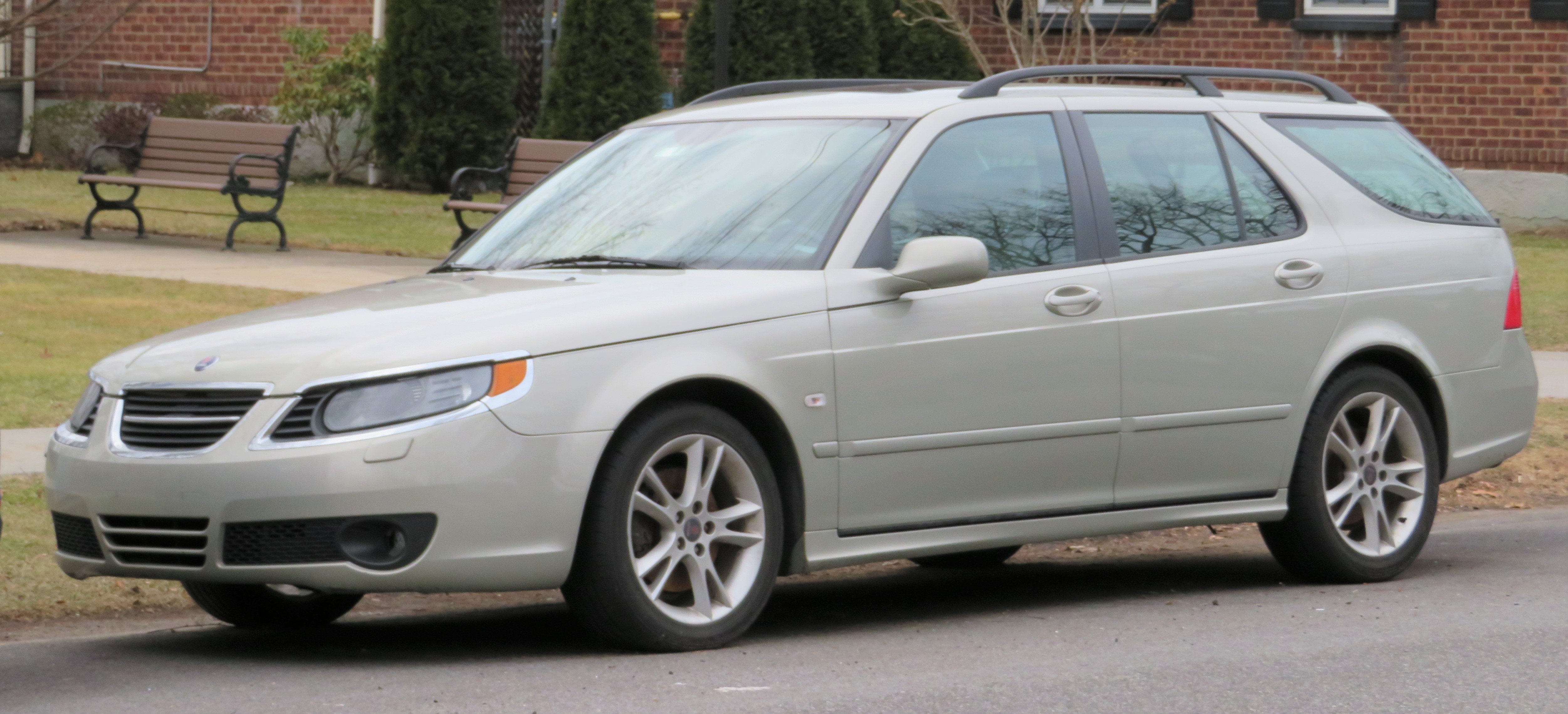
Saab 95
"As an aside, for a few years in the mid nineties, we used a Saab 95 aero as the official car of the BTCC for parade laps, et cetera. Oh, courtesy of Saab GB."
They mention that in the mid-1990s, a Saab 9-5 Aero was used as the official car for parade laps. Parade laps are more about display and ceremony than racing. The “Aero” part usually means it’s the sportier version of that Saab model.
They say that for a few years in the mid-1990s, they used a Saab 9-5 Aero as the official car for BTCC parade laps. The “Aero” trim generally indicates a sportier, higher-performance version within Saab’s lineup, which makes it suitable for show/pace-car duties. Using it for parade laps highlights how manufacturers sometimes provide cars for event branding rather than competition.
Saab GB
"Oh, courtesy of Saab GB. Fantastic. It would have been weird if it was Saab Germany that supplied it, but yeah."
“Saab GB” refers to Saab’s UK organization, which provided the car for BTCC parade laps. Manufacturer national branches often handle logistics like supplying vehicles for events and marketing. The hosts joke about whether the car came from the UK office versus another country’s Saab operation.
left hand drive
"Why is it left hand drive? What's going on?"
“Left-hand drive” means the steering wheel is on the left side of the car. The speaker is asking why that setup matters for the situation they’re discussing.
Left-hand drive means the steering wheel is on the left side of the car. This is typical in the UK and many other countries, and it affects driver position, passenger layout, and how the car feels on track.
Silverstone event
"Our Silverstone event one year happened to coincide with my birthday."
They’re talking about an event at Silverstone, which is a well-known race track in the UK. The speaker is saying their birthday lined up with that track day.
Silverstone is a famous British racing circuit, and the hosts are describing an event there. “A few laps” implies track driving, where heat, visibility, and passenger behavior can become part of the story.
space saver wheels
"a 93 convertible fitted with four space saver wheels. What? A clever bit of pre-planning between Saab and some of the drivers led by John Clelland"
“Space saver wheels” are compact spare wheels/tires designed to be lightweight and take up less room. Because they’re smaller and often have different tire construction and tread, they can change traction and stability—especially noticeable during aggressive driving like drifting.

Saab 93 convertible
"a 93 convertible fitted with four space saver wheels. What? A clever bit of pre-planning between Saab and some of the drivers led by John Clelland"
They’re talking about a Saab 9-3 convertible. It had four spare-style wheels on it, which usually aren’t meant for normal driving, so the car would feel different and be easier to slide.
“Saab 93 convertible” refers to the Saab 9-3 convertible. The key detail is that it was fitted with four “space saver” wheels, which are typically smaller spares used for temporary driving—this can affect grip, steering feel, and drift behavior.
pre-planning between Saab and the drivers
"A clever bit of pre-planning between Saab and some of the drivers led by John Clelland who was always the main mischief maker. Naughty Clelland."
They’re describing that Saab and the drivers planned things ahead of time. The point is that the setup (including the unusual wheels) wasn’t accidental—it was arranged.
The segment highlights coordination between Saab and the drivers, led by John Clelland. This is a “how it was arranged” story element—planning for a specific kind of on-track demonstration or stunt.
four-wheel drifts
"Alan concludes by saying I must admit that the car on those space savers did beautiful four-wheel drifts around brands that day."
A “four-wheel drift” means the car is sliding so that more than just the back end is losing grip. It usually takes the right tires and setup, which is why the space-saver wheels matter.
“Four-wheel drifts” implies the car is sliding with enough rotation and traction loss that all four tires are involved rather than just the rear. That’s a driving technique that depends heavily on tire grip, wheel setup, and how the car is balanced during throttle and steering inputs.
swingy booms
"[561.6s] There's a bit of a praying mantis about them because they've got these swingy booms and [566.7s] big like a tank full of, I don't know, poison in the back or whatever it is."
“Booms” are arms that move—often using hydraulics. If they’re “swingy,” they pivot to reach where they need to go. That movement is important because it determines how the machine works in the field.
“Swingy booms” likely refers to articulated hydraulic arms used to position or operate equipment. In agricultural or specialty vehicles, boom geometry and hydraulics affect how the machine moves, how stable it feels, and how it can reach or spread material. The host’s “praying mantis” comparison suggests these booms pivot in a distinctive way.
portal axle fluid drive
"[572.7s] I like those though because they're like portal axle fluid drive. [577.6s] So you can hear that they kind of slur into gear."
A portal axle is a special axle design that raises the wheels higher off the ground. That helps a vehicle clear ruts, rocks, and uneven terrain. The host is joking about it sounding like it “drives” with fluid, but the main point is the axle design.
“Portal axle” refers to axles where the wheel hubs are offset and geared so the wheels sit higher than the axle centerline. That can increase ground clearance and help off-road vehicles keep driveline angles manageable. The “fluid drive” part sounds like a playful description of how the drivetrain engages, but the key idea is the portal-axle layout.
slur into gear
"[577.6s] So you can hear that they kind of slur into gear. [580.1s] Yeah, they're quite nice the way they slur into gear. [582.2s] You can hear them."
Some vehicles don’t shift with a sharp click—they engage more smoothly. That can make the drivetrain sound like it’s “slurring” into the next gear. It’s a clue about how the transmission or driveline is designed.
“Slur into gear” describes the sound and feel of a drivetrain engagement that isn’t perfectly crisp. On vehicles with certain transmissions or hydraulic/mechanical driveline systems, engagement can be smoother or more damped, producing a “slur” rather than a sharp clunk. The takeaway for listeners is that different drivetrain designs can have noticeably different engagement sounds.
chest freezer
"Out of nowhere, he asks me if I have a chest freezer. And when I said I'd have nowhere to put it,"
A chest freezer is a big freezer you open from the top. People use it to store lots of frozen food, and the joke here is about not having space for it.
A chest freezer is a type of freezer with a lid that opens from the top, typically used for bulk frozen storage. It’s not an automotive term, but it’s mentioned as a “storage” problem that parallels how people think about space in a vehicle or garage.
garage flooring
"Well, did you know that Duramat garage flooring is the simple way to make your garage floor look great? The tiles are incredibly easy to fit yourself..."
Garage flooring is what you put on the floor of your garage. Better flooring can make it easier to clean and helps protect the concrete from stains and damage.
“Garage flooring” refers to the surface covering installed over a garage slab or existing floor. Upgrading it with tiles or coatings can improve appearance, cleanability, and resistance to stains or wear.
Duramat
"Well, did you know that Duramat garage flooring is the simple way to make your garage floor look great? The tiles are incredibly easy to fit yourself..."
Duramat makes garage floor products, like tiles you can install yourself. The point they’re making is that it can make a garage floor look nicer and be customized.
Duramat is a brand of garage flooring tiles/coatings. In the segment, it’s presented as an easy DIY solution to improve the look of a garage floor and add customization like colors and logos.
tiles
"The tiles are incredibly easy to fit yourself, they come in a huge range of colors..."
These are separate floor pieces that you lay down like a puzzle. People like them because they’re usually easier to install than a full coating and you can pick the look.
Garage floor “tiles” are modular panels installed over a prepared surface, often designed for DIY. They’re typically chosen for durability, ease of installation, and the ability to select colors or patterns.

Space Chariots
"...he tender of garden-grown crops, but also keeping chariots and cars clean. And fire extinguisher."
“Space Wagon” sounds like a nickname or a made-up name for a vehicle. In the podcast context, it’s mentioned alongside practical items like cleaning and a fire extinguisher, suggesting it’s being used as a playful reference rather than a specific real-world model.
“Space Wagon” isn’t a specific car model name in the way the others are; it’s more likely a nickname or a themed reference used in the podcast. Given the surrounding context about keeping chariots and cars clean and having a fire extinguisher, it appears to be part of a playful or fictional description rather than a clearly identified production vehicle.
fire extinguisher
"And fire extinguisher. I'd always check the pressure of fire extinguishers or parts. You know the little gauge on the top?"
A fire extinguisher is like a handheld tool for putting out small fires. It has a gauge that shows whether it’s charged and ready to use.
A fire extinguisher is a portable device used to put out small fires before they spread. The “pressure” and the small gauge help confirm it’s ready to work when needed.
chain
"Of course he's shirtless with his combats on. The combats got a shitload of oil on the chain leg. Ironically, not from the chain of his bike, which hasn't been oiled since Tony Blair was in power."
A bicycle chain is what moves the bike when you pedal. If it’s dirty or dry, it can wear out faster and feel rough.
The chain on a bicycle transfers power from the pedals to the rear wheel via the drivetrain. Keeping it clean and properly lubricated reduces wear and helps it run smoothly.
full suspension
"...on the no-name-full suspension mountain bike with a very kind of smeary 12 psi on the back tire..."
“Full suspension” means the bike has shock absorbers in both the front and the back. That helps the tires stay planted when the ground is bumpy.
A full-suspension mountain bike uses suspension both at the front (fork) and the rear (rear shock/linkage). This helps keep the tires in contact with uneven terrain, improving traction and control.
12 psi
"...on the no-name-full suspension mountain bike with a very kind of smeary 12 psi on the back tire..."
“psi” is just a way of measuring how much air pressure is in the tire. The amount of air changes how the tire feels and how well it sticks to the ground.
“psi” is pounds per square inch, a unit used to measure tire pressure. Tire pressure affects how a tire grips the ground and how easily it rolls over bumps—too low can feel squirmy, while too high can reduce traction.
tire pressure
"...with a very kind of smeary 12 psi on the back tire and manages to go out..."
Tire pressure changes how the tire behaves. More air usually makes it feel firmer and faster, while less air can feel grippier and more comfortable but can be less stable.
Tire pressure is a key setup variable that changes ride feel and grip. On bikes, lower pressure can increase contact patch and comfort but may also increase rolling resistance and risk of pinch flats; higher pressure can be faster but less forgiving.
homemade hang glider
"I got here on a combination of trawler boats and also a homemade hang glider. It's taken me weeks."
A hang glider is like a lightweight flying wing you steer by moving your body. If it’s homemade, it may not be built to the same safety standards as commercial ones.
A hang glider is an unpowered aircraft you pilot by leaning and using lift from its wings. Calling it “homemade” implies it was built outside a certified factory, which can significantly affect safety and performance.
micro dose GLP one
"But nooms unlocked a secret to reaching the mountaintop. Go in micro. The Noom GLP one micro dose program starts at $99 and is delivered to your door in seven days."
GLP-1 is a type of medicine that can help you feel less hungry and support weight loss. “Micro dose” usually means starting with a smaller amount first.
GLP-1 is a hormone-based medication class used to help with appetite control and weight loss. “Micro dose” refers to starting at a smaller dose and adjusting over time, typically to improve tolerability while still aiming for weight-loss effects.
Formula One suspension systems
"But imagine if he printed onto rice paper, schematic diagrams of, of Formula One suspension systems or exotic road car exploded diagrams."
Suspension is what helps the tires stay in contact with the road. In Formula One, the suspension is tuned very precisely so the car grips well and handles predictably.
“Suspension systems” are the components that connect a car to its wheels and control ride quality, grip, and how the car responds to bumps and cornering. In Formula One, suspension design is especially critical because small changes can strongly affect tire contact and handling balance.
exploded diagrams
"But imagine if he printed onto rice paper, schematic diagrams of, of Formula One suspension systems or exotic road car exploded diagrams."
An exploded diagram is a picture where the parts are pulled apart so you can see how everything goes together. It’s useful when you’re trying to understand or repair a mechanical system.
Exploded diagrams show how parts fit together by separating components so you can see each piece’s shape and location. They’re commonly used in service manuals and parts catalogs to help with identification and assembly.
rear axle
"So if he gets stopped, he could just go, no, this is a design for a new rear axle."
The rear axle is the part that helps drive the rear wheels. It also helps support the back of the car, so it can affect traction and stability.
A rear axle is the assembly that transmits power to the rear wheels and supports the rear of the vehicle. Depending on the car, it may include components like the differential and axle shafts, and its design affects traction and how the car behaves under acceleration and cornering.
micro light
"I mean, if you were then smuggling your rolls of LSD paper on a micro light very low over the North Sea, you should definitely put it into a ziplock bag or something, because you don't want to get splashed by seawater."
A microlight is a very small airplane. In this conversation it’s just part of a hypothetical scenario, not something related to car parts or driving.
A “microlight” is a small, lightweight aircraft category. The transcript uses it as a scenario for transporting items, but it’s not an automotive term—listeners should treat it as aviation context rather than car technology.

Honda Goldwing
"You know, you know, we've talked about wanked handlebars before on Honda Goldwings, yes, and my continued obsession with wanting a flat six Goldwing engine in a motor car."
Honda’s Gold Wing is a touring motorcycle that’s built for long rides. The hosts are talking about how the handlebars and riding position can feel different depending on how the bike is set up.
The Honda Gold Wing is Honda’s long-running touring motorcycle line known for comfort and big, smooth engines. In this segment, the hosts mention “wanked handlebars” on Gold Wings, which points to how rider ergonomics and control feel can vary by setup.
flat six engine
"We've talked about wanked handlebars before on Honda Goldwings, yes, and my continued obsession with wanting a flat six Goldwing engine in a motor car."
A flat-six engine is a type of engine where the cylinders are laid out flat, like two banks facing opposite directions. People like it because it can run smoothly and sit lower in the vehicle, but putting one into a car takes a lot of design work.
A “flat six” (also called a horizontally opposed six-cylinder) is an engine layout where cylinders sit on opposite sides of the crankshaft. It’s often associated with smoothness and a low center of gravity, which can help handling feel—though packaging it into a car is a major engineering challenge.
Broken Wings
"...there's a website, an actual business in the UK called Broken Wings, who just do salvage Honda Goldwings. ...I'm looking at Broken Wings UK here."
Broken Wings is a UK shop that focuses on damaged Honda Gold Wing bikes. They’re the kind of specialist business you’d look up when searching for salvage bikes.
Broken Wings is described as a UK business that specializes in salvage and repair of Honda Gold Wing motorcycles. The episode uses it as an example of a niche salvage/rebuild operation you can find via targeted searches.
salvage
"...Broken Wings, who just do salvage Honda Goldwings. ...I wonder if there's been any quite, quite modern Honda Goldwings that have been smashed right up."
A “salvage” vehicle is one that was badly damaged and written off, then sold to be fixed or used for parts. If you’re buying one, you want to be sure it was repaired properly and that the title/history is clear.
“Salvage” refers to vehicles that have been declared a total loss by an insurer due to damage, then sold for parts or repair. Salvage bikes can be rebuilt, but the condition and paperwork history matter a lot for safety and value.
MOT failures
"We buy MOT failures, unfinished projects, crash damaged, insurance write-offs,"
An MOT is a UK vehicle safety check done once a year. If it’s an “MOT failure,” the vehicle didn’t pass, so it likely needs repairs before it can be legally driven.
In the UK, an MOT test is the annual roadworthiness inspection for vehicles. “MOT failures” means the vehicle didn’t pass inspection, which can indicate safety or emissions issues and often affects resale value and repair cost.
crash damaged
"We buy MOT failures, unfinished projects, crash damaged, insurance write-offs,"
“Crash damaged” means the vehicle has been in an accident. Sometimes the damage isn’t obvious, so it can cost more to fix than you’d expect.
“Crash damaged” refers to vehicles that have been involved in an accident and may have structural, alignment, or hidden damage. Even if cosmetic repairs look fine, crash history can affect safety, suspension geometry, and long-term reliability.
unfinished projects
"We buy MOT failures, unfinished projects, crash damaged, insurance write-offs,"
“Unfinished projects” are vehicles that have been partially repaired, modified, or restored but not completed. For buyers, this often means missing parts, incomplete wiring/mechanical work, and unknown quality of prior repairs.
insurance write-offs
"We buy MOT failures, unfinished projects, crash damaged, insurance write-offs, high mileage, good condition, bad condition,"
An insurance write-off is when an insurance company decides a vehicle is too badly damaged to fix for a normal repair. Those cars can end up being repaired later or sold off, and they often have paperwork/road-legal status to consider.
An insurance write-off is when an insurer declares a vehicle too damaged (or too expensive to repair) after an accident, theft, or other incident. Depending on the severity, it may be repaired and returned to the road or sold for parts, and it can carry different legal/ownership restrictions.
Wanked Handlebars
"Wanked Handlebars. You did the last bits made. It doesn't, that's not on their bullet pointed list, sadly, but it should be."
“Wanked Handlebars” is a joking/slang way to say the handlebars are messed up or bent. It usually means the bike took a hit or wasn’t fixed properly.
“Wanked Handlebars” is slang used here for handlebars that are bent, damaged, or otherwise messed up—likely from a fall or poor prior repair. It’s not a technical term, but it signals the bike has issues in the cockpit/controls area.
sell my wing
"There's a button that just says, sell my wing. Oh, really? Do people just call them wings then?"
“Sell my wing” is just a joke nickname for the Honda Gold Wing. They’re talking about whether riders actually use “wing” as slang.
“Sell my wing” is a playful shorthand in the transcript for selling a Honda Gold Wing. The hosts are joking about whether riders call the bike “a wing” the way people might refer to other models by nickname.

Imp Hilman Imp
"I've basically got to orchestrate how I could just wake up one day and I've got a flat six Hilman Imp with a Goldwing engine already made."
The Hillman Imp is an old British car. The hosts are talking about putting a different engine into it—basically turning it into a custom project.
The Hillman Imp is a small British car from the late 1960s, known for its compact size and lightweight design. In this segment, it’s mentioned in the context of swapping or combining engines, which is a common way enthusiasts build unusual “Frankenstein” projects.

Citroen Picasso
"Well, Ronnie Pickering, the man, the angry road rage man in the Citroen Picasso, I think it was a burgundy colour."
A Citroën Picasso is a family car/van-style vehicle (an MPV). Here it’s just being referenced as part of the story—what car he was linked to during the incident.
The Citroën Picasso is a compact MPV (multi-purpose vehicle) known for its family-friendly practicality and distinctive Citroën styling. In this segment it’s mentioned as the car associated with Ronnie Pickering’s viral “angry road rage” story.

moped
"Ronnie became a viral sensation after a rant at a moped rider. Or it's his moped driver. You don't drive mopeds."
A moped is like a small scooter with a motor, usually meant for short trips and lower speeds than a motorcycle. The episode is using it to describe who Ronnie Pickering was arguing with.
A moped is a small, low-speed motorized vehicle—typically with a small engine and limited top speed compared with motorcycles. The hosts reference a viral incident involving a moped rider/driver, which is the context for the road-rage story.
eBay'd for charity
"He doesn't have the one that was featured because it got eBay'd for charity, I think. [2697.2s] And I'm annoyed that we didn't buy it."
“eBay’d for charity” means the car was sold through an online auction, and the money was meant for a good cause. If you ever buy something like that, you usually want to be extra careful about checking the car’s condition and documents.
Selling a car “eBay’d for charity” implies the vehicle was auctioned online, with proceeds going to a charitable cause. For buyers, this matters because auction sales can mean less transparency than a dealer listing and may affect how you should approach inspection and paperwork.
Car and Classic
"Car and Classic. [2900.7s] You know that this channel is proudly supported by carandclassic.com, [2906.2s] but..."
“Car and Classic” is the name of the recurring game/segment. Each week, one person chooses a classic car and presents it to the other host.
“Car and Classic” here refers to the recurring segment format where one host selects a car from the Car and Classic platform for the other to react to. It’s essentially a weekly gifting/challenge game built around classic-car picks.
pre-bids
"And starting on the 20th of April, so it's open for pre-bids right now, there is a vehicle which I immediately..."
“Pre-bids” are early bids you can place before the auction officially starts. It’s a way to show you’re interested and potentially get the bidding moving. The speaker is saying the car is already available for early offers.
“Pre-bids” are bids placed before an auction officially begins, often during a listing period when the auction house is collecting interest. This can help set expectations for where the final price might land. The speaker notes the car is open for pre-bids, implying early bidding activity.

Ford Mustang
"Because I saw a couple of Shelby Super Snake Mustang type things and I thought,"
The speaker mentions the “Shelby Super Snake Mustang,” which is a high-performance variant associated with Shelby American. It’s known as a more extreme, power-focused take on the Ford Mustang, often tied to big engine upgrades and aggressive tuning. In the context of the auction, it’s being used as a comparison point for the car they found.
jammed open throttle
"I'd like to see Richard manhandle one of those with a jammed open throttle, but this one appealed to me more."
“Jammed open throttle” means the gas pedal/throttle can’t close, so the engine keeps getting lots of air. That can make the car accelerate when you don’t want it to. It’s basically a worst-case scenario the speaker is joking about.
A “jammed open throttle” means the throttle plate is stuck in the wide-open position, so the engine can’t reduce airflow normally. That can cause unintended acceleration and is a serious safety concern. The speaker’s phrasing suggests they want to see how the car behaves under that extreme, abnormal condition.
pop-up lights
"Obviously, it's got the pop-up lights, but also it has spectacular digital instruments that are incredibly 80s and therefore excellent."
Pop-up lights are headlights that hide in the car’s body and then pop out when you turn them on. They look cool and very “80s,” but they have moving parts that can wear out over time.
Pop-up lights are headlights that retract into the body and then rise when activated. On 1980s cars like the Corvette C4, they’re a styling feature but also affect how the front end looks and how the car ages. They can be a maintenance consideration because the motors and linkages are mechanical moving parts.
digital instruments
"Obviously, it's got the pop-up lights, but also it has spectacular digital instruments that are incredibly 80s and therefore excellent."
Digital instruments are the gauge cluster displays that use electronic screens instead of purely analog dials. In the 1980s, this was a big design and technology statement, and it’s part of why the car feels so “of the era.” Depending on the specific cluster, digital systems can be sensitive to aging electronics.

1984 Corvette C4
"Not that that changes anything. It's still a 1984 Corvette C4. But this particular car has a signed Face Man photo that comes with it."
A 1984 Corvette C4 is a specific generation of the Corvette made by Chevrolet. “C4” is just the code for that generation. People like it because it looks very 1980s and has a classic Corvette vibe.
This is a 1984 Chevrolet Corvette C4, which refers to the fourth-generation Corvette body style. The C4 era is known for its late-’70s/’80s design language and, in many trims, a mix of analog and early digital tech. It’s a popular “80s Corvette” because it’s visually distinctive and easy to recognize.
service history
"It's been in the UK since 2020, so potentially a COVID purchase. And it has extensive amounts of service history, and it's showing at the moment 23,000 miles"
Service history is the paperwork trail of oil changes, repairs, and inspections. When it’s “extensive,” it usually means the previous owner kept up with maintenance, which makes the car less of a mystery.
Service history is the documented record of maintenance and repairs a car has received over its life. A strong service history can reduce uncertainty when buying a used classic because it shows the car was cared for and helps spot patterns of wear or deferred maintenance. It’s especially valuable on older cars where maintenance timing matters.
COVID purchase
"It's been in the UK since 2020, so potentially a COVID purchase. And it has extensive amounts of service history, and it's showing at the moment 23,000 miles"
“COVID purchase” means the car was bought around the pandemic. Some people drove less or stored cars more, so even if the miles are low, you still want to check that maintenance was actually done.
A “COVID purchase” implies the car was acquired during the pandemic period, which can affect how it was used and maintained. Many buyers purchased cars in that era but then drove them less or stored them more, potentially leading to issues related to low-mileage aging (like old fluids or neglected seasonal use). It’s not automatically bad, but it’s a reason to scrutinize maintenance records.
16-inch factory alloys
"But crucially, the coolest 16-inch factory alloys. I mean, 16s are enormous at that moment in time."
Alloys are fancy wheels made from metal instead of plain steel. The “16-inch” part is the wheel diameter, which changes how the car rides and how the tires look.
“Alloys” are wheels made from an alloy metal (usually aluminum) instead of steel. Wheel size like 16-inch affects ride comfort, steering feel, and how the tire sidewall looks and behaves.
kit replica
"Intriguingly, in the back of some of these photos, there's what appears to be a kit replica from Canite Rider."
A “kit replica” is a car that’s made to resemble something famous, using parts from a kit. The big thing to check is how close it is to the original and what it’s actually built on.
A “kit replica” is a vehicle built to look like a famous car using aftermarket parts or a conversion kit. For collectors, the key question is how accurate the replica is and whether it’s built on a real donor car or a more generic base.
Canite Rider
"there's what appears to be a kit replica from Canite Rider. Canite Rider, yes."
“Canite Rider” is the company named as making the replica. When you’re buying something like this, the maker can tell you whether the build quality and details are likely to be good.
Canite Rider is mentioned as the source of a kit replica. In collector-car discussions, the builder matters because it can indicate how the replica was constructed and how accurate the details are.
small block Chevrolet 5.7
"But anyway. It's a small block Chevrolet 5.7, and the auction ends on the 27th of April."
A “small block Chevrolet” is a popular Chevy V8 engine family. “5.7” usually points to the common 350 V8 size, which is known for being easy to find parts for and build.
“Small block Chevrolet” refers to GM’s compact V8 engine family, and “5.7” typically means a 350 cubic-inch (about 5.7L) V8. This engine is a common swap and upgrade platform because parts are widely available and the architecture is well understood.
bare metal restoration
"It's just had a £15,000 bare metal restoration. 55,000 miles."
“Bare metal restoration” means they took the car down to the metal shell before repainting it. That usually indicates more serious prep work, like fixing rust properly.
A “bare metal restoration” means the vehicle was stripped down to bare sheet metal before repairs and refinishing. This is usually a sign of thorough rust repair and paint work, and it’s often more expensive than a typical repaint.
BF Goodrich white letter tyres
"It's got the BF Goodrich white letter tyres on the turbo vac, deep dish rims. Oh my gosh, it looks sensational."
These are tires with white lettering on the side. It’s a style choice that makes the car look more classic and “period-correct.”
“White letter” tires have raised lettering on the sidewall that’s painted white, creating a classic look. BF Goodrich is a well-known tire brand, and this kind of sidewall styling is often chosen for vintage aesthetics and show appeal.
turbo vac
"It's got the BF Goodrich white letter tyres on the turbo vac, deep dish rims. Oh my gosh, it looks sensational."
“Turbo vac” sounds like a name for the wheels or a specific look on the van. In this context, it’s probably not about the engine—it’s more about the styling.
“Turbo vac” here appears to be a wheel/trim nickname used for a specific wheel style on the van. Without more context, it’s likely referring to the wheel design rather than a performance turbo system.
deep dish rims
"It's got the BF Goodrich white letter tyres on the turbo vac, deep dish rims. Oh my gosh, it looks sensational."
Deep dish rims are wheels that look more “inward” or scooped. People like them because they change the car’s look and stance.
Deep dish rims have a wheel design where the center sits farther inward, creating a “concave” look. They’re popular on classic and custom builds because they visually emphasize stance and wheel size.
mem memorabilia, including a handgun
"It comes with memorabilia, including a handgun. Presumably not the real one."
They say the sale includes memorabilia, even a handgun. The important question is whether it’s a real, legal firearm or just a prop tied to the theme.
The hosts mention the sale includes memorabilia, “including a handgun,” which raises the question of whether it’s a prop/replica versus a real firearm. For buyers, this matters for legality, storage, and whether the item is actually functional or just part of the themed presentation.
three spoke wooden chrome stereo
"It's got a three spoke wooden chrome stereo, which actually looks very cool. It's got a memorabilia, includes 18 members photo, signed plaques, California A-team registration show plates, a handgun, spare wheel found in the rear of the vehicle."
They’re describing the car’s old-school music system. It’s probably a vintage-looking stereo with wood and shiny chrome trim, which some people think looks really cool in an older car.
This sounds like a period-correct aftermarket or dealer-installed audio setup with a distinctive “wood + chrome” look. In classic-car listings, the word “stereo” often refers to the dash head unit and speakers, and the description is meant to sell the car’s originality or vibe.
305 cubic inch V8
"And this is, again, this is a five litre, sir, 305 cubic inch V8 with circa 155 to 180 horsepower with the three speed auto. with the three speed auto. Let's just..."
That’s another way of saying engine size. “305 cubic inches” is roughly a 5-liter V8, and it’s a common classic-engine spec people use to compare how strong the car should feel.
“305 cubic inch” is an engine displacement measurement (about 5.0 liters) commonly associated with Chevrolet small-block V8s. It’s often discussed in classic listings because it helps you estimate the era, power output, and how the engine will drive compared with larger or higher-performance V8s.
five litre V8
"And this is, again, this is a five litre, sir, 305 cubic inch V8 with circa 155 to 180 horsepower with the three speed auto. Let's recap that. It's a five litre V8."
They’re talking about a big engine: a V8 that’s about 5 liters. “V8” means eight cylinders, and “five litre” is the engine’s size—bigger engines usually feel strong and smooth, even if they don’t make huge horsepower by today’s standards.
“Five litre V8” describes an engine displacement of about 5.0 liters with eight cylinders. In classic muscle-era cars, this often means a big, torquey engine tuned more for easy cruising than modern high horsepower numbers.
three speed auto
"with the three speed auto. Let's just... Let's recap that. It's a five litre V8. It's... Yes. Are we sure?"
It means the car has an automatic transmission with only three forward gears. That usually makes the car feel easy and smooth, especially at low speeds, but it may not be as quick or efficient as newer transmissions.
A “three-speed auto” is an automatic transmission with three forward gears. Older three-speed automatics are known for smooth, relaxed driving and simple operation, but they can feel less efficient and less responsive than modern multi-gear automatics.
roof spoiler
"It's got the roof spoiler. It's got the spotlights across the top. It's got the bull bar. It's got the flared arches."
A roof spoiler is a small wing-like piece on the back of the roof. It’s mostly there to change the car’s look, and sometimes to help the airflow around the back of the car.
A roof spoiler is an aerodynamic add-on mounted at the rear of the roofline. On classic cars, it’s often both a styling cue and a functional attempt to improve airflow over the rear of the vehicle.
spotlights across the top
"It's got the roof spoiler. It's got the spotlights across the top. It's got the bull bar. It's got the flared arches."
These are extra lights added to help you see farther down the road. They also make the car look more dramatic, especially on older cars.
Spotlights mounted across the top are auxiliary driving lights, typically used for extra visibility. On older “TV-style” or appearance packages, they’re also a big part of the look and can be a clue to the car’s intended theme or era.
bull bar
"It's got the spotlights across the top. It's got the bull bar. It's got the flared arches. Wow."
A bull bar is a protective bar on the front of the car. It’s meant to help protect the bumper and lights if something hits the front.
A bull bar is a heavy-duty front bumper guard designed to protect the front end from impacts with animals or debris. It’s common on off-road-oriented vehicles and also appears on some classic “tough” appearance packages.
flared arches
"It's got the bull bar. It's got the flared arches. Wow."
Flared arches are widened wheel-arch panels that cover more tire. They’re often used to fit wider tires and to give a more aggressive, classic muscle or rally-inspired stance.
wheelbase
"[3313.5s] I like that gray. [3314.4s] This is done right. [3315.2s] The only thing that's slightly puzzling me is that it looks like it's too long a wheelbase,"
Wheelbase is the spacing between the front and rear wheels. If it looks too long, the car can look stretched, and that can also change how it feels on the road.
Wheelbase is the distance between the front and rear axles. When someone says a vehicle looks like it has a “too long a wheelbase,” they’re judging proportions—longer wheelbase usually makes a car look more stretched and can affect how it drives.
rake
"[3327.4s] Yeah, they were quite stocky, yeah. [3329.5s] But it also had a rake on it. [3331.3s] The back was higher than the front in kind of like late 70s, early 80s hot rod stunts."
Rake is how the car sits—whether the front is higher or lower than the back. People use it to make the car look more aggressive or “ready to go,” especially in hot-rod styles.
Rake describes the angle of the car’s stance—whether the front sits lower or higher relative to the rear. A “rake” like the speaker mentions is common in hot-rod and stunt-era styling because it visually emphasizes speed and gives the car a more aggressive posture.
not allowed to sell it for commercial gain
"[3344.4s] going to choose Faceman's VET or are you going to choose A-team van to... [3350.1s] You're not allowed to sell it for commercial gain. [3352.5s] You've got to keep it and enjoy it with the friends and family."
They’re talking about a rule that says you can’t sell the car to make money. Instead, you’re supposed to keep it and enjoy it with friends and family.
This is a rules-based concept about ownership and use: the speaker says you can’t sell the vehicle for profit and must keep it for enjoyment. In car culture, these kinds of restrictions often apply to contests, giveaways, or certain “buying” formats.
A-team Hire
"Well, I mean, there's a photo of what looks like this Corvette and this A-team van together on a website called A-team Hire."
“A-team Hire” sounds like a company that rents the A-Team-style van for people who want to use it for something. It’s a reminder that you can experience the vibe without buying the vehicle.
A-team Hire appears to be a service that rents or arranges access to an A-Team-themed van. For listeners, it’s an example of how pop-culture vehicles can be sourced for events rather than owned long-term.
ex-hire vehicles
"Oh, so they're ex-hire vehicles, right?"
An “ex-hire vehicle” is one that used to be rented out or used by a rental company. Because lots of different people drive it, it may have more wear, so it’s smart to check service history and inspect it closely.
“Ex-hire vehicles” are cars or vans that were previously used as rentals or for hire fleets. These vehicles often rack up lots of miles and see more varied driving styles, so buyers typically pay extra attention to maintenance records, wear items, and any signs of abuse.

Dodge Viper
"... auction. I was going to go for a Dodgeram SRT10 Viper Quad Cab pickup, but because they were the world..."
The Dodge Viper is a sports car built to be very fast and exciting to drive. The podcast brings it up because someone was considering it while looking at vehicles at an auction.
The Dodge Viper is a high-performance sports car famous for its big, powerful engine and raw, track-oriented feel. The podcast mentions it in the context of an auction and compares it to other pickup-style options, which is why it comes up as a desirable alternative for someone shopping for a dramatic vehicle.
driving a massive American pickup in the UK
"I think driving a massive American pickup in the UK, you'd look like a bit of a tit, wouldn't you?"
They’re saying that a big American truck can be awkward in the UK—harder to park and not always a good fit for the roads. They also mention that the look (like chrome) can make it feel dated or silly.
This is about the practical and cultural mismatch of American full-size pickups in the UK—things like parking, road width, and how the vehicle’s size affects daily usability. It also touches on how styling cues (like chrome) can make the car look more “period” or more out of place depending on local tastes.

Chevrolet Impala
"And I think the last of the interesting ones was that Impala SS that you bought for me, and I still haven't received it yet, actually, from current customers."
They’re talking about a Chevrolet Impala in the “SS” performance trim. It’s basically the sportier version of that model.
The Chevrolet Impala SS is a performance trim of the Impala, typically associated with stronger engines and sportier styling than the base models. In enthusiast circles, “SS” is a shorthand for a higher-output configuration.
mismatched listing details (rent vs for sale photos)
"I don't think this is the same Corvette. In fact, I think I might be talking horse arse on this because there's a picture of the engine of the Corvette for rent, and there's a picture of the engine of the Corvette for sale, and they are different."
This segment highlights a verification problem: when a car listing for “rent” and a listing for “for sale” show different engine photos, it suggests the listings may not refer to the same vehicle. For buyers and renters, photo mismatches are a practical warning sign that you should request VIN/registration details, confirm the exact car, and do a pre-agreement check. It’s essentially a “don’t trust the ad—verify the specific car” lesson.
Rush Hour
"I saw a voxel Belmont going by the other morning in Rush Hour, okay?"
They mention “rush hour” to explain the timing—this car was spotted in heavy traffic. It’s just context for the story.
“Rush Hour” is used to set the scene—traffic conditions where you might spot an unusual car. It’s a structural detail that helps listeners understand when and where the car sighting happened.
time travel
"Do you remember a time-travelling businessman? ... Well, I mean, there are various reasons why time travel probably isn't possible, but if you were going to do it, then I'm sure the first thing you'd do is come back and drive at Belmont."
They’re joking about a time traveler coming back to drive an old car. It’s basically a fun way to talk about how some cars look and feel like they belong to a certain decade.
The segment uses “time travel” as a framing device: the idea is that someone from the past would return and immediately drive a specific car. In automotive terms, it’s a playful way to talk about how certain cars (like older saloons) can “feel” tied to a particular era.
Request an Explanation
Heard something you'd like explained? We'll add it to this episode.
Sign in to request explanations for terms you heard.
Want to learn more?
Browse our glossary for plain-English explanations of automotive terms, jargon, and concepts.
Help improve this episode
See something that's not quite right? Our annotations are AI-generated and can sometimes miss the mark. Click the flag icon on any annotation to suggest a correction.