Could Top Gear Even Exist Today? Topic Roulette With The Ballast Boys
About this episode
“Could Top Gear even exist today?” anchors a topic-roulette conversation that jumps from suspension testing at KW’s seven-post rig to track-day fantasies and tire/grip realities. The hosts then pivot into California car culture—emissions rules, Flock cameras, and police stops—before returning to modern media: why Top Gear’s mixed format, funding, and scripting/chemistry are hard to replicate in a fragmented YouTube world. Along the way, they debate manuals vs DCTs, future classics, and the practical misery of project-car life.
The Ballast Boys are Back … again! Who doesn’t love a hang with the boys and quickly becoming regulars on Very Vehicular, Ron Zaras and Vin Anatra are here to play a little Topic Roulette with Scotto. Without giving too much away, the gang dive into the issues facing car culture, reveal some lukewarm takes (his own words!) and as ever, give each other a healthy dose of shit-talk. Enjoy!
Mentioned in this episode
Why British Plugs Are the Best
Partners:
Vyper Industrial
FCP Euro
Heatwave Visual
Wera Tools
KW Suspension
Producer: Nick Rutter @nickrutterarts
Music: SlikSound
Patreon: https://patreon.com/u37266647
https://bio.site/321actionaction
00:00 - Welcome & Introduction
00:37 - Sponsors: Heat Wave Visual & KW Suspensions
02:17 - Return of the Ballast Boys
04:48 - One Car, One Track
15:53 - Is California Car Culture Dying?
29:08 - Perfect Day as a Car Nerd
38:37 - What Car Sold Today is a Future Classic?
53:06 - Sponsor: FCP Euro
55:33 - Good Tires / Crap Car?
01:01:46 - Does the Manual Transmission Still Matter?
01:22:05 - What Car Do You Wish Your Favourite Automaker Made Today?
01:37:01 - Sponsors: Vyper Industrial & Wera Tools
01:38:18 - Flock Cameras Vs Car Culture
01:47:15 - Are Muscle Cars Still Cool
01:57:48 - Silver Cars, Yes or No?
02:05:39 - Could Top Gear Exist Today?
Ford RS 200
"Unfortunately, this applies to cars too, as my buddy Ken Block discovered when he bought his Ford RS 200. To say it politely, the suspension sucked. So we went to KW to fix it..."
The Ford RS 200 is a special rally car from Ford, made to handle rough roads and loose surfaces. Here, they’re saying the suspension on one they bought wasn’t good, so they went looking for a suspension solution.
The Ford RS 200 is a rare, rally-focused Ford built around a mid-engine layout and all-wheel-drive to help it compete on loose surfaces. In this segment, it’s used as an example of a car whose suspension didn’t meet expectations, prompting a suspension-focused fix.
RS200
"Unfortunately, this applies to cars too, as my buddy Ken Block discovered when he bought his Ford RS 200. To say it politely, the suspension sucked. So we went to KW to fix it on their seven post suspension rig. Some say it was misappropriated in the middle of the night from"
The RS200 is a special, older sports car that was built with rally racing in mind. In the podcast, someone bought one and found the suspension didn’t feel right, so they had it adjusted by a suspension specialist. It’s brought up because even famous cars can need work to drive well.
The Ford RS200 is a rare, rally-inspired sports car known for its unusual engineering and motorsport roots. The podcast mentions Ken Block buying one and then going to KW to fix the suspension, implying the car’s ride/handling setup was problematic out of the box. It’s discussed as an example of a legendary car that still needs proper setup to be enjoyable.
KW
"So we went to KW to fix it on their seven post suspension rig. Some say it was misappropriated..."
KW is a company that makes suspension parts for cars. They’re the ones they went to in order to improve the car’s suspension and test it properly.
KW is a suspension-focused company known for aftermarket dampers and coilover systems used for both street and track setups. In this segment, they’re brought in to address the Ford RS 200’s suspension using their specialized testing equipment.
seven post suspension rig
"So we went to KW to fix it on their seven post suspension rig. Some say it was misappropriated in the middle of the night from an F1 team..."
A seven post suspension rig is a machine that holds a car and pushes on it in controlled ways, like different road bumps and forces. It helps engineers test suspension parts without having to rely on random real-world roads.
A seven post suspension rig is a specialized test platform that simulates road and suspension loads by controlling multiple points under the vehicle. It lets a suspension supplier like KW reproduce repeatable “test conditions” so they can develop and validate damping and suspension behavior across different models.
Nurburgring
"Honestly, Nurburgring wouldn't be mine. Really? No, I love it, but it's like, I was there recently and someone was like, you need a thousand laps before you're fast here."
The Nürburgring is a very famous race track in Germany. People use it as a benchmark for how good a car or driver is, because it’s long and challenging.
The Nürburgring is a famous German motorsport venue, best known for the Nordschleife, a long, twisty track with big elevation changes. It’s often treated as a benchmark for lap times and driver skill, so people debate what kind of “experience” it delivers compared to other circuits.
oversteer
"You're not really pushing at the Nurburgring. There's not a lot of like fun oversteer moments and stuff. It's just like high speed and buck clenching."
Oversteer is when the back of the car starts to slide more than the front. It can feel exciting or scary depending on how controlled it is.
Oversteer is when the rear of the car loses grip before the front, causing the car to rotate more than the driver expects. The hosts are contrasting Nürburgring driving—where they feel there are fewer “fun oversteer moments”—with other tracks that might provoke more rotation.
Fuji Speedway
"Yeah. Cause I mean, I haven't driven it in real life, but Fuji Speedway is really, really fun on the sim. You driven it. I just drove Fuji in January."
Fuji Speedway is a well-known race track in Japan. The hosts are saying it has lots of tricky corners where the car can lose grip as you turn in.
Fuji Speedway is a major Japanese circuit known for fast sections and technical corners that can make grip feel inconsistent. In this segment, the hosts discuss how its layout (including decreasing-radius turns and off-camber sections) changes how the car loads the tires through the corner.
off camber
"It's a lot of decreasing radius and like off camber. So a lot of like turns where grip sort of falls away."
Off-camber means the track surface is slanted so the tire isn’t as “square” to the road. That can reduce traction and make the car feel like it’s losing grip.
Off-camber describes a corner where the road surface tilts away from the direction of the car, reducing effective tire contact. It can make grip feel worse and more unpredictable because the tire is working against gravity and the suspension’s ability to keep the tire flat.
decreasing radius
"It's really big, right? It's a lot of decreasing radius and like off camber. So a lot of like turns where grip sort of falls away."
A decreasing-radius turn gets tighter the farther you go into it. That can make the tires lose grip because the car has to turn more as you’re already committed.
A decreasing-radius corner tightens as you go deeper into the turn. That can make grip fall away because the steering angle and lateral load increase later in the corner than you might expect.
cup twos
"Now granted, I drove it in a 992 GT3 touring on cup twos and it was really cold. So the tires like wouldn't heat up."
“Cup 2s” are a performance tire model. If it’s cold, the tires may not warm up enough, so they don’t grip as well.
“Cup 2s” refers to Michelin Pilot Sport Cup 2 tires, a track-oriented street-legal tire line. The key point in this segment is that cold weather can prevent these tires from reaching optimal temperature, which reduces grip.
Laguna Seiga
"I mean that I've driven. Yeah. Laguna Seiga probably top scene. Laguna's up there."
Laguna Seca is a well-known race track in California. It has a famous section called the Corkscrew that makes it feel especially tricky and fun.
Laguna Seca (often misheard as “Laguna Seiga”) is a renowned road course in California, famous for its challenging layout and the iconic Corkscrew corner. The hosts rank it among their favorite tracks to drive.
VIR
"I personally really like VIR. Did you ever got to drive VIR? So mine would be VIR, Laguna and Barber Motorsports Park."
VIR is a race track in Virginia. It’s known for hills and twisty sections, so it feels like you’re really driving—not just going fast in a straight line.
VIR refers to Virginia International Raceway, a road course in Virginia known for elevation changes and a mix of sweeping and technical corners. The episode highlights VIR’s “uphill S’s” and how it feels like a driver’s track.
Barber Motorsports Park
"So mine would be VIR, Laguna and Barber Motorsports Park. Barber is sick. Barber is really."
Barber Motorsports Park is a race track in Alabama. People like it because it has a good mix of fast and twisty corners that make driving interesting.
Barber Motorsports Park is a road course in Alabama known for its modern facilities and a layout that mixes fast sections with technical corners. The hosts call it “sick” and place it near the top of their favorites.
Road America
"And then my other one would be like a F40 LM at Road America. Road America. Road America. Have you driven on America?"
Road America is a major race track in Wisconsin. It’s known for long stretches of fast driving, which makes it feel especially intense in the right car.
Road America is a famous road course in Wisconsin known for long straights and flowing corners. The hosts mention it in the context of a specific race car, emphasizing its “raw straight lines” character.
Ferrari F40
"And then my other one would be like a F40 LM at Road America. Road America. Road America. Have you driven on America?"
The Ferrari F40 LM is a special, more race-oriented version of the famous Ferrari F40. The idea here is that Road America’s long straights would really suit a car like that.
The Ferrari F40 LM is a track-focused variant of the iconic Ferrari F40, built for endurance racing with modifications aimed at durability and speed. The hosts connect it to Road America, implying it would feel “animal” on a circuit with long, fast sections.
Road Atlanta
"Yeah. Road America is fun. I've always wanted to drive road Atlanta."
Road Atlanta is a race track in Georgia. It’s known for being challenging because the track changes elevation a lot, so it’s not just about straight-line speed.
Road Atlanta is a road course in Georgia that’s known for fast elevation changes and a reputation for being demanding on both drivers and cars. The hosts say they’ve always wanted to drive it, signaling it as a bucket-list track.
gearing
"Now imagine like the, because gearing on that car is super long, right? So at Button Willow, you probably only shift once or twice."
Here, “gearing” is how the car’s gears are set up to trade off acceleration versus top speed. If the gearing is “long,” you shift less often because the car can stay in higher gears longer.
In this context, “gearing” means the gear ratios in the transmission/differential that determine how fast the car moves in each gear. Longer gearing can reduce how often you shift, which changes how the car feels on track—more time in fewer gears.
Button Willow
"Now imagine like the, because gearing on that car is super long, right? So at Button Willow, you probably only shift once or twice. Like third and fourth the whole time."
Buttonwillow is a race track in California. They’re using it as an example of a track where the car’s gearing can let you stay in a higher gear most of the time.
Buttonwillow Raceway Park is a road course in California known for long, flowing corners and track layouts that can encourage steady-speed driving. The hosts use it to illustrate how the Corvette’s gearing can mean you only shift a couple times per lap.
Pratt and Miller C7R
"but today right now, VIR C7R. So like just so we're, so the Pratt and Miller C7R full blown race car. Yep."
Pratt & Miller builds the Corvette C7R for racing. They’re describing it as a true race car, meaning it feels focused, intense, and you have to stay on top of what the car is doing.
Pratt & Miller is the racing shop that prepares the Chevrolet Corvette C7R for competition. The hosts describe it as a “full blown race car,” emphasizing how its setup and power delivery make it demanding and engaging to drive for long stretches.
Monza
"Cause like I'd love to drive Monza, but you know, I don't know, maybe in real life, whatever. Yeah. I feel like I got to pick tracks that I have driven."
Monza is a world-famous race track in Italy. They’re saying it would be cool to drive, but the real experience might not match what you imagine.
Monza is the famous Italian circuit associated with high-speed racing and big braking zones. The hosts discuss it as a track they’d like to drive, but they also note that “in real life” track enjoyment can differ from expectations.
Laguna Seca
"It's really cool. Cause like I think I would pick Laguna Seca because I've driven it a bunch and I really love that track. You have a lot of confidence there."
Laguna Seca is a race track in California. They’re saying they know it well, so it feels easier to drive confidently through the corners.
Laguna Seca is a well-known road course (in California) famous for its distinctive cornering character. The hosts say they’ve driven it “a bunch,” and that familiarity gives them confidence—suggesting how driver comfort and track knowledge affect grip and commitment.
grip
"It's just so and corners where you have like the track working for you for grip, like you really super commit"
“Grip” means how well the tires can hold the road. If the track gives you good grip, the car sticks better in the corners and you can drive more confidently.
“Grip” is the tire’s ability to generate traction between the car and the road surface. When they say the track is “working for you for grip,” they mean the layout and surface help the tires hold traction through corners, allowing more confident driving.
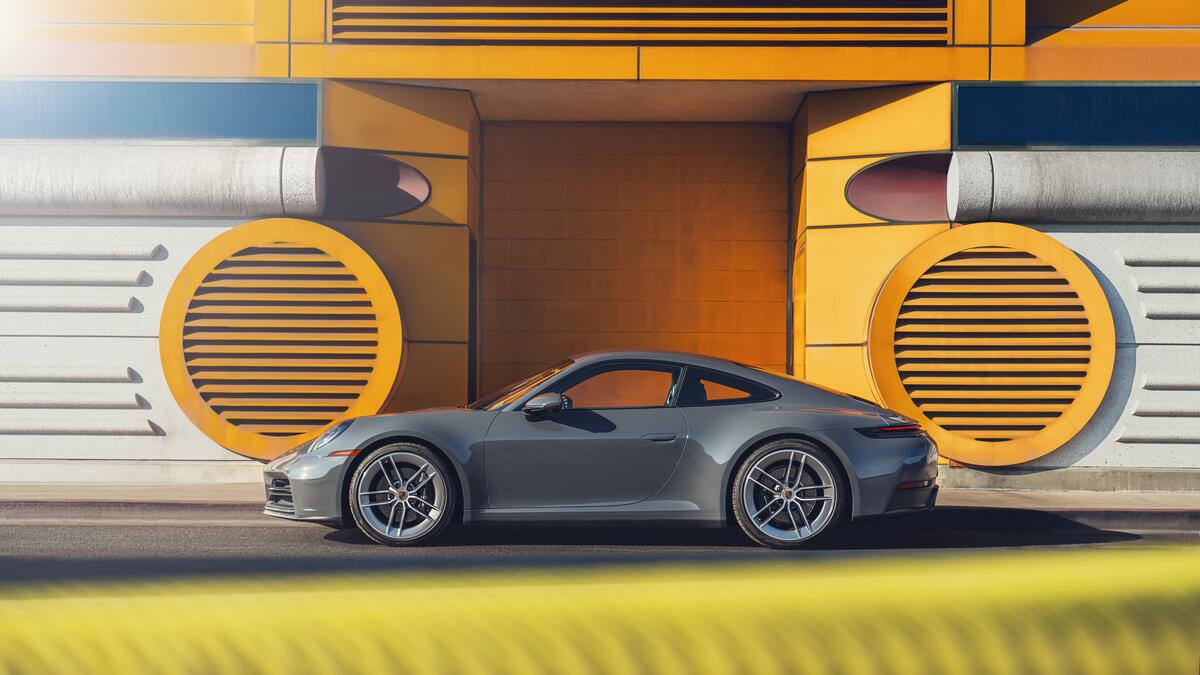
991 GT2 RS
"I feel like I would do that in a modern, like I'd want to do that in a 991 GT2 RS. It's like big downforce, tons of fucking power, three wheel drive, PDK…"
This is a very hardcore Porsche 911 built for track use. It’s known for lots of grip from aerodynamic downforce and huge power, so it’s the kind of car people imagine when they want to go fast on a circuit.
The Porsche 911 GT2 RS (991) is a track-focused 911 variant known for extreme performance and aggressive aerodynamics. In the transcript it’s mentioned as a “big downforce” car with “tons of power,” which matches the GT2 RS’s purpose-built setup for high-speed cornering and straight-line punch.
PDK
"…big downforce, tons of fucking power, three wheel drive, PDK, like just like something you can just smash…"
PDK is Porsche’s automatic gearbox with fast gear changes. It’s designed to shift quickly so the car keeps pulling hard when you’re driving aggressively.
PDK is Porsche’s dual-clutch transmission. It uses two clutches to pre-select the next gear, so shifts can be very fast and keep the engine in the power band during hard driving.
downforce
"…I'd want to do that in a 991 GT2 RS. It's like big downforce, tons of fucking power…"
Downforce is the “suction” effect from the car’s shape and wings that presses the tires onto the road. That extra grip helps the car turn faster and feel more stable at speed.
Downforce is the aerodynamic force that pushes a car’s tires toward the road at speed. More downforce generally improves grip in corners, which is why the host pairs it with “smash” driving and track-day fantasy cars.
Lime Rock go-kart track
"This is Brian's ideal track day is driving the Lime Rock go-kart track. Yes. Mark one rabbit…"
Lime Rock is a well-known racing place. In this episode they’re talking about it as the ideal track-day location—especially for fun, kart-style driving.
Lime Rock is a real motorsport venue in Connecticut, and the transcript specifically calls out a “go-kart track” there as Brian’s ideal track-day setting. The mention is about track character and what kind of driving experience someone wants, not about a specific car spec.
Group S
"…if that's the car you want to drive… What did he say? It was the best car. He drove the best car. He drove the Group S Audi rally car…"
“Group S” is a racing category/ruleset name. It tells you the car was built for a specific kind of competition rather than being a regular road car.
Group S refers to a specific class of sports-prototype-style racing rules used in certain eras of motorsport. In the transcript, “Group S Audi rally car” is used to describe the type of competition car Ken drove, signaling it wasn’t a normal production rally car.
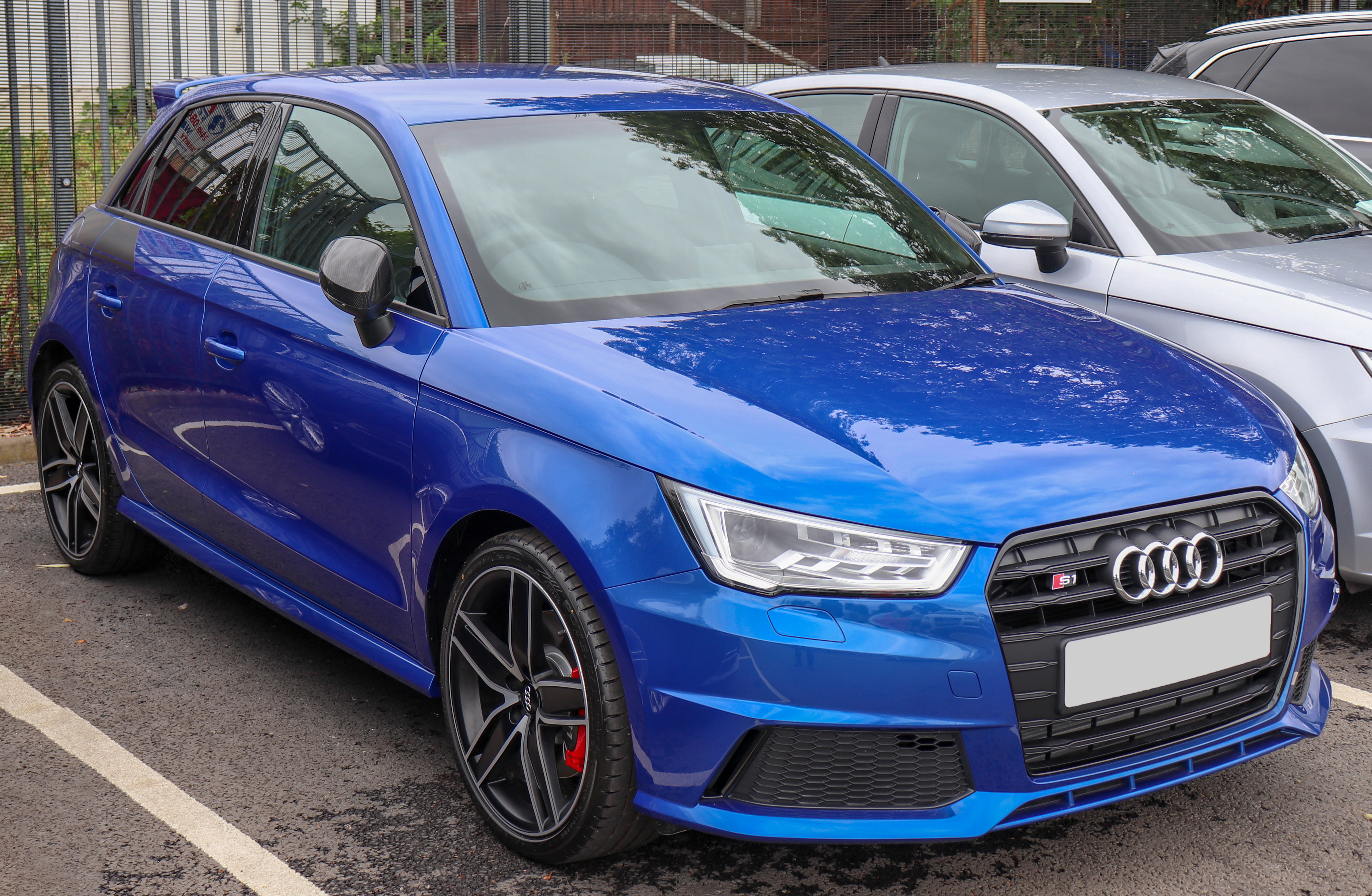
Audi S1 E2 Quattro
"He drove the Group S Audi rally car. Which… He drove the Audi S1 E2 Quattro. He drove like just all the legendary stuff…"
This is a famous Audi rally car that used Audi’s Quattro all-wheel drive. It was built to win in rally racing and is considered a rare, high-performance legend.
The Audi S1 E2 Quattro is a legendary rally car built around Audi’s Quattro all-wheel-drive system. It’s known for extreme performance and for being a purpose-built Group B-era machine, which is why the host calls it “legendary stuff” and highlights how few people have driven it.
Audi Quattro
"...e world have ever driven. He drove the Audi S1 E2 Quattro. He drove like just all the legendary stuff. And ..."
Audi Quattro is about a car having all-wheel drive, meaning power goes to more than just the front or rear wheels. The podcast brings it up because those cars are known for strong grip and rally-style performance. It’s a key part of Audi’s performance history.
The Audi Quattro refers to Audi’s famous all-wheel-drive system and the cars built around it, which helped define rally and performance driving. The podcast mentions driving legendary Quattro-related cars, emphasizing their historical significance and capability. It’s discussed because Quattro is strongly associated with traction and motorsport success.
Nürburgring
"Well, we got to the three of us were at the Historic's at 24 hour Nürburgring and the coolest thing was watching the DTM cars... But like Bathurst was one of the coolest. Like it's one of the only other tracks I've been to that's not the Nurburgring that I'm like this feels special."
The Nürburgring is a legendary race track in Germany. People use it to test and compare how fast and how well cars handle because it’s challenging and has lots of twists and elevation changes.
The Nürburgring is a famous German motorsport venue with multiple layouts, including the Nordschleife (“North Loop”). It’s widely used as a benchmark track for performance cars because it combines long distance, big elevation changes, and lots of corners.
DTM cars
"the coolest thing was watching the DTM cars. I mean, they had the Sonax 190, the A30 M3, Alsonic R32."
DTM is a major German touring-car racing series. When people talk about DTM cars, they mean purpose-built race cars from big manufacturers, and they’re often a highlight at historic racing events.
DTM (Deutsche Tourenwagen Masters) is Germany’s premier touring-car racing series, known for highly developed, manufacturer-backed cars. In historic events, DTM grids are a big draw because they mix recognizable brands with race-specific engineering.
C43 AMGs
"They even had like the little later like the C43 AMGs. Yeah, that was sick."
They’re talking about Mercedes-AMG C43 cars—AMG is Mercedes’ performance brand. The “C43” is a specific performance trim of the C-Class.
“C43 AMGs” refers to Mercedes-AMG C43 models shown in a later-era DTM/historic racing lineup. The C43 is a performance variant of the Mercedes C-Class, and AMG’s involvement is the key “why it matters” detail here.
Nissan R32
"...mean, they had the Sonax 190, the A30 M3, Alsonic R32. They even had like the little later like the C43..."
The Nissan Skyline is a performance car model line. People talk about it because it has a strong racing background and a big enthusiast following. In the podcast, it’s mentioned as part of a discussion about famous race cars.
The Nissan Skyline is a performance car line that’s well known in motorsport and enthusiast circles. The podcast’s mention of specific race cars and numbers alongside Skyline references suggests it’s being used to talk about racing heritage and iconic builds. It comes up because Skyline models are often associated with high-performance tuning and competition history.
on the limit
"It's not about how fast you go as a race car driver. It's about being on the limit and nobody wants to not be on the limit."
“On the limit” means you’re driving as hard as the car can safely handle before it starts to lose grip. The fun (and challenge) is keeping it controlled right at that edge.
“On the limit” describes driving at the edge of grip and control—where the tires are near maximum traction and the car is about to understeer/oversteer or lose composure. It’s a common performance-driving idea: lap time and excitement come from managing that boundary well.
Bathurst
"So anyway, that car, I think it Bathurst. Wow. Because go do sketchy, sketchy... But Bathurst was one of the coolest. Like it's one of the only other tracks I've been to that's not the Nurburgring that I'm like this feels special."
Bathurst refers to Mount Panorama Circuit in Bathurst, Australia, one of the world’s most famous road courses. It’s known for steep elevation changes, tight sections, and the “climb” feel the hosts describe—plus it hosts major endurance races.
six tenths
"I'm also like, I'm I'm fine to like drive it like six tenths. Although I say that and then you go but like Bathurst is just like one, there's only four races there a year."
“Six tenths” is a racing way of saying you’re pushing pretty hard but not at full maximum. Think of it like “about 60% of what the car could do,” not a specific number you can measure on a dashboard.
“Six tenths” is driver shorthand for running at about 60% of maximum potential—often used to describe how aggressively someone is pushing relative to the car’s true limit. It’s not a literal speed; it’s a subjective “how hard am I going” gauge.
runoff
"It probably be more fun and it'd probably be more fun at Laguna where there's actually some decent runoff."
Runoff is the extra space next to the racing surface that helps slow the car down if you miss a corner. If there’s more runoff, it can feel safer to drive closer to the edge.
Runoff is the paved or gravel area beside the track that gives a car extra space to slow down if it goes off-line. More runoff generally reduces consequences and can make drivers more willing to push near the limit.
rally stage
"And then you have a limited window to operate it in every street in New York City is like a rally stage."
In rally racing, a “stage” is a specific stretch of road where drivers race against the clock. The hosts mean city streets can feel like they’re being driven like a timed competition route.
A “rally stage” is a timed section of road used in rally racing, where drivers push hard between specific start/finish points. Calling New York City streets “a rally stage” emphasizes how chaotic and constrained the environment is, making driving feel like high-stakes competition.
flock cameras
"Here emissions wise like and now like with the flock cameras around and all the dumb shit because it's gotten so big, you have all these kids that treat the canyons like it's a track day,"
These are camera systems that can read license plates automatically. Cities use them to enforce traffic rules and catch certain vehicles, so driving behavior can change.
“Flock cameras” are automated license-plate recognition systems used by cities to identify vehicles and enforce rules. They can be used for things like traffic enforcement and identifying vehicles tied to alerts, which changes how people drive in dense areas.
Assetto server
"you have all these kids that treat the canyons like it's a track day, like it's an Assetto server."
They’re comparing real canyon driving to an online racing game. The point is that some people act like public roads are a virtual track.
“Assetto server” is a reference to Assetto Corsa, a popular racing simulator, where online servers host organized driving sessions. The hosts are using it as a comparison to describe how some drivers treat real canyon roads like a game/online race environment.
GTI
"like the one thing that was so obvious to me when we did my like GTI reveal or whatever at in Connecticut was like we did an event in like April on a Wednesday in Bridgeport, Connecticut"
A GTI is a sporty Volkswagen hatchback. People who are into cars sometimes throw events to show off their new GTI or a new car they just got.
The Volkswagen GTI is a hot hatch known for combining everyday practicality with a performance-focused turbocharged engine and sporty handling. In car culture, “GTI reveals” are often enthusiast events where owners show off a new build or purchase to the community.
JDM
"like in California, compared to anywhere else within like a 50 mile square radius, you could have the pinnacle of 2000s JDM. You could have the peak of 70s Porsche racing."
JDM means “Japanese cars for Japan.” Car fans use it to talk about Japanese models and parts that have a certain style and reputation.
JDM stands for Japanese Domestic Market, meaning cars and parts that were originally sold in Japan. In enthusiast circles, “JDM” often implies a specific style and performance reputation, and it’s commonly used to describe imports or builds based on Japanese models.
cars and coffee
"I mean, look at our local cars and coffee. It's nuts. Like all makes and we're talking hyper local, like hyper long beach only"
“Cars and coffee” is a casual car meetup where people gather in the morning to show their cars and hang out. It’s a common way for car fans to meet locally.
“Cars and coffee” refers to informal morning meetups where car owners park together, talk about builds, and show off cars. It’s become a major grassroots social format for enthusiasts in many cities.
Porsche 911
"I'll be honest, like I don't really drive cars that like cops want to pull over. Like unless I'm driving the 911, the Ferrari, I don't drive."
A Porsche 911 is a famous sports car from Porsche. It’s known for its distinctive design and strong performance. Here, the host mentions it to explain that they don’t usually drive cars cops want to stop—except in this case.
The Porsche 911 is known for its rear-mounted air-cooled (in many eras) flat-six engine layout and iconic silhouette, which makes it a frequent target for attention from both enthusiasts and law enforcement. In this segment, it’s used as an example of a car the speaker associates with not being pulled over as much.
G 37
"Yeah. But I'm like a bald white guy in my like, yeah, elder 30s, you know, someone that come on who drives a G 37."
The Infiniti G37 is a performance-oriented Infiniti model. It’s the kind of car that can be sporty, but the speaker is saying they still don’t usually get stopped for violations.
The Infiniti G37 is a rear-wheel-drive (in most trims) sports sedan/coupe that’s known for a strong V6 and a reputation for being a “driver’s” daily. The speaker mentions it as part of their personal profile of what they drive and how often they get pulled over.
roadside sniffer test
"I will say, driving to the gym the other day, there was a roadside sniffer test. Whoa. No way. Yeah. On, like right off a Catella."
A “sniffer test” is a roadside emissions check. Police use a device to detect what’s coming out of your exhaust to see if it looks illegal or out of spec. In the story, it’s set up so drivers feel pressured to stop.
A roadside “sniffer test” is an emissions-related roadside check where officers use a device to detect exhaust fumes (often for illegal or excessive emissions). The speaker describes it as something you may not have to pull over for, but officers are present to pressure drivers into complying.
Corvette
"But like, but I got pulled over there the other day, like right in that same area, I'm driving the Corvette and I have dealer plates."
A Corvette is a well-known American sports car made by Chevrolet. Here it’s the car the speaker is driving during a police stop related to a license plate issue.
The Chevrolet Corvette is a long-running American sports car line known for its performance focus and distinctive styling. In this segment, it’s the car the speaker is driving when they realize the license plate is missing/incorrect and a police officer notices immediately.
dealer plates
"I'm driving the Corvette and I have dealer plates. So I swap them on and off cars. I just forgot to look like, you know, just I forget everything."
Dealer plates are temporary plates that car dealers use on cars they’re moving around. The speaker explains they were using dealer plates but forgot to put the plate on correctly, which is why the officer noticed.
Dealer plates are temporary license plates issued to car dealers for use on vehicles they’re selling, transporting, or moving around. The speaker says they swap plates on and off cars, and the police stop happens because the plate situation is wrong when they’re driving.
clutch in
"So I'm like coming over the hill and I see a cop post it up and I like clutch in and this thing is like sounds like a NASCAR."
On a manual car, “clutch in” means pressing the pedal that lets you change gears. The speaker does it quickly when they realize the police are watching, then turns the car off.
“Clutch in” refers to pressing the clutch pedal on a manual-transmission car to disengage the engine from the drivetrain. In the story, it’s part of the speaker’s immediate reaction when they see a police officer, and the car’s behavior changes as they shut it down.
state ref
"And they tried to state ref me for my 1975 Volkswagen, which was the best argument you ever had."
“State ref” refers to California’s State Referee program, where vehicles are inspected to determine whether modifications meet emissions and safety rules. Enthusiasts often run into this when they have older cars, engine swaps, or non-stock parts. In the transcript, it’s used to explain why California can be a tougher place to keep a modified car legal.
single barrel carburetor
"And I popped the hood and he was like, I was like, it's a single, it's a single barrel carburetor, my friend, not a 1.5 liter."
A carburetor is how an older engine mixes fuel and air. “Single barrel” means it has one main opening for that mixture, which is a simpler design than having multiple openings. The host is pointing out what kind of carburetor is actually on the engine.
A single-barrel carburetor is a carburetor with one throttle bore that meters fuel and air into the engine. It’s a simpler fuel-delivery setup than multi-barrel carburetors, and it can affect how the engine responds and how much tuning effort it needs. The host uses it to correct a misunderstanding about the engine’s size and configuration.
half a cam
"It's a single barrel carburetor, my friend, not a 1.5 liter. It's a half a cam."
A camshaft controls when the engine’s valves open and close. “Half a cam” sounds like the host is saying the engine has a milder cam setup than what the other person assumed. It’s used here to explain why the engine behaves and sounds the way it does.
“Half a cam” is a shorthand the host uses to describe a camshaft upgrade or cam profile that’s not the full, most aggressive version someone might be imagining. Camshafts control valve timing and lift, which strongly influences how an engine sounds and how it makes power across the RPM range. In this context, it’s part of the host’s explanation of the engine’s actual internal setup.
tinted windows
"I mean, I got pulled, I used to get pulled over in New York once a week [1644.5s] in my slam GTI with tinted windows because it was just, or actually it was golf, but like [1649.7s] it was still, I used to get pulled over once a week because they couldn't see through my windows."
Tinted windows are darker window coverings that reduce how much light gets in. The speaker says it made it harder for police to see inside the car, which led to more stops.
Tinted windows are aftermarket or factory-applied window films that reduce visible light entering the cabin. In the segment, the speaker links tint to police being unable to see inside, which increases the chance of being pulled over.
cat back
"Because if you're big, if you're really big into modding, it's, that's where it gets really, really tough. [1667.9s] Because if you're a car enthusiast of like, I really like this type of car and just put like [1672.6s] a cat back on it, whatever, and wheels and tires suspension, you're great."
A “cat-back” exhaust is an upgrade to the exhaust system starting at the catalytic converter and going toward the back of the car. People do it mostly for sound and a little extra breathing.
A “cat-back” exhaust is an aftermarket exhaust system that replaces everything from the catalytic converter rearward. Enthusiasts choose it to change sound and flow characteristics without replacing the catalytic converter itself.
wheels and tires suspension
"Because if you're a car enthusiast of like, I really like this type of car and just put like [1672.6s] a cat back on it, whatever, and wheels and tires suspension, you're great. [1677.5s] Or if you like muscle [1677.5s] cars, because you could literally be running on alcohol with like an 871 coming to the roof and"
People often modify a car with new wheels/tires and suspension changes. That can change how the car sits and handles, and in the story it’s part of what makes enthusiast cars stand out.
“Wheels and tires” and “suspension” are common enthusiast modification categories that change ride height, grip, and handling feel. Lowering and stance changes from suspension work can also affect visibility and how noticeable the car is to law enforcement.
871
"Or if you like muscle [1677.5s] cars, because you could literally be running on alcohol with like an 871 coming to the roof and [1684.4s] there ain't dick all they can do about it."
“871” sounds like a shorthand for some specific engine or performance setup, mentioned alongside alcohol fuel. The transcript doesn’t give enough detail to say exactly what it refers to.
“871” appears to be a mis-transcription or shorthand for an engine or performance setup (possibly a displacement or engine-code reference) in the context of muscle cars running on alcohol fuel. Because the exact reference isn’t clear from the transcript, it’s hard to define precisely.
no AC
"The one time I did it in the Evo sequential, gutted, carbon doors, hot, no AC. Oh my God."
“No AC” means the car doesn’t have working air conditioning. If it’s really hot outside, the cabin can get uncomfortable fast—especially on long drives.
“No AC” means the car has no air conditioning system installed or functioning. On stripped or track-prepped cars, removing AC reduces weight and complexity, but it can make long drives miserable in high heat.
carbon doors
"The one time I did it in the Evo sequential, gutted, carbon doors, hot, no AC. Oh my God."
“Carbon doors” means the doors are made from carbon fiber, which is lighter than regular metal. People use it to make the car feel more performance-focused and to reduce weight.
“Carbon doors” means the door panels are made from carbon fiber composite instead of steel. Carbon fiber can reduce weight and sometimes improve stiffness, which is why it shows up on performance builds and track-oriented cars.
gutted
"The one time I did it in the Evo sequential, gutted, carbon doors, hot, no AC. Oh my God."
“Gutted” here means the car was stripped down—less interior stuff and comfort features. That saves weight, but it can make the car hotter, louder, and less pleasant for commuting.
“Gutted” in this context means the car has been stripped of interior components and sound-deadening/comfort items to save weight. It’s a common track-prep approach, but it also makes the cabin louder and less comfortable—especially in hot weather.
first run jitters
"But I think it's cool to buy a car and drive it really far first because then you get home. [1945.5s] Yeah. Yeah. Yeah. It takes you a little while to like shake it out."
They’re describing that nervous feeling right after you buy something new or finish a project car. You’re not totally sure how it’ll behave yet, so it takes a little driving to feel confident.
“First run jitters” is the uneasy feeling after buying a new car or finishing a project—before you fully trust it and get comfortable with how it behaves. It’s often about sorting out unknowns (setup, fitment, systems) and then gradually “shaking it out” through driving.
road trip
"Like think of how out of the way you have to go to go from San Francisco to LA and get 11 hours. [1972.5s] And we just wrote. That's just the standard. It's got a road trip though."
A road trip is when you drive a long way for fun, usually with stops along the route. In this story, they’re treating the drive as the main part of the experience.
A road trip is a long-distance drive where the journey itself is part of the experience, not just the destination. Here it’s used to describe cruising an Italian 1990s car across a big route for photos and enjoyment.
project car
"But for me, I would say nothing's better than like, whether it's finishing a project car or [2021.8s] just getting a new part on a car, getting it done like around six p.m. and getting out and cruising"
A project car is a car you work on yourself—fixing it up or upgrading it. They’re saying it feels great when you finally finish the work and can enjoy driving it.
A project car is a vehicle you’re actively working on—often improving, repairing, or modifying it—rather than just driving it. The hosts contrast the satisfaction of finishing a project car with the excitement of installing a new part and then going for a cruise.
lowering your car
"Yeah. I was thinking about this just the other day of like, man, I miss like the simplicity of [2104.0s] putting on just lowering your car and just being like, that's sick."
Lowering a car means making it sit closer to the ground. People do it for looks and handling, usually by changing the suspension parts that control how high the car rides.
“Lowering your car” means reducing its ride height so the body sits closer to the ground. Enthusiasts usually do this with suspension changes like lowering springs or coilovers, which can also affect ride comfort and handling.
all night hall
"Another one I also enjoy and this is because it's the masochist in me is I enjoy [2129.0s] an all night hall and the car starts at 430 in the morning."
This sounds like an all-night stretch of working on the car and then starting it in the early morning. It’s the kind of thing people do when they’re getting ready for an event or race day.
“All night hall” appears to refer to an all-night session where the car is prepared and then started at dawn. In car culture, this kind of late-night prep often goes with track or event days, where reliability and timing matter.
dynoed
"The closest I've [2176.9s] gotten to that was when I finally got the EVO done and dynoed. The dyno day took all day as dyno days do."
“Dynoed” means the car was tested on a machine that measures how much power it makes. Tuners use it to see what changes improved the car.
“Dynoed” means the car was run on a dynamometer (dyno) to measure power and torque. Dyno testing is used to verify engine output and to compare tuning changes in a controlled way.
alignment
"It was nighttime. We're in the middle of an industrial [2194.7s] part. The wonkiest alignment on earth. And I remember doing that pole."
Wheel alignment is how straight your wheels are aimed. If it’s wrong, the car can pull, feel weird in turns, and wear tires faster.
“Alignment” refers to wheel alignment settings—how the tires point relative to each other and the road. If alignment is off, the car can feel unstable, wear tires unevenly, and behave unpredictably during acceleration and braking.
pole
"The wonkiest alignment on earth. And I remember doing that pole. It had just done like [2200.2s] 800 some to the wheels and it was cold."
“Pole” sounds like they mean a test run—like the car doing a measured pull on the dyno. It’s how they collect the power/torque numbers.
“Pole” here likely refers to a dyno pull—an acceleration run on the dynamometer used to measure output. Dyno “pulls” are typically repeated to check consistency and to evaluate tuning changes.
to the wheels
"And I remember doing that pole. It had just done like [2200.2s] 800 some to the wheels and it was cold. The tires were cold and I did second to third and it broke"
“To the wheels” means the power measured at the tires. It accounts for losses inside the drivetrain, so it’s usually a more realistic number than engine-only ratings.
“To the wheels” refers to wheel horsepower/torque measured at the drivetrain output, after losses through the transmission and differential. It’s a common dyno metric because it reflects what actually reaches the tires.
EVO
"I was in the RS2. Zach had the 06 and you had the EVO."
“Evo” is short for the Mitsubishi Lancer Evolution. It’s a turbocharged car with all-wheel drive, and it’s popular with enthusiasts because it’s quick and fun to drive hard.
“EVO” refers to the Mitsubishi Lancer Evolution (often just called “Evo”). It’s known for its turbocharged performance and rally-bred all-wheel-drive setup, which is why it shows up constantly in enthusiast “project car” and dyno-day talk.
second gear burnouts
"Like when we did my LSE 36 and we tuned it and then brought it back to the yard and just like ripped second gear burnouts in it."
A burnout is when you spin the tires to make them slip and heat up. Mentioning “second gear” just means they were doing it in a specific gear to get the wheelspin they wanted.
A “burnout” is when the driver spins the driven wheels to heat up the tires and break traction. Doing it in “second gear” is a technique choice that affects how quickly the car builds wheelspin and how controllable it feels.
GT86
"And like we obviously have wax poetic on like the GT86. Oh, I know one."
The Toyota GT86 is a fun, lightweight sports coupe. People talk about it as a future classic because it’s relatively affordable but still feels special to drive.
The Toyota GT86 is a modern “driver’s car” built around a lightweight, balanced chassis and a naturally aspirated boxer engine feel. It’s often brought up in “future classic” debates because it’s affordable compared with many performance icons, yet still has strong enthusiast appeal.
C8 ZR1
"Oh, I know one. But like C8 ZR1 is a fucking historical car. But that's not affordable. Oh, that's the point I think."
“C8 ZR1” is the top, high-performance version of the Chevrolet Corvette for the C8 generation. The point they’re making is that it’s a big deal historically, but it costs too much for most people.
“C8 ZR1” refers to the Chevrolet Corvette ZR1 in the C8 generation. It’s notable as a high-performance, halo Corvette variant, and the hosts are arguing it’s historically important but not affordable right now.
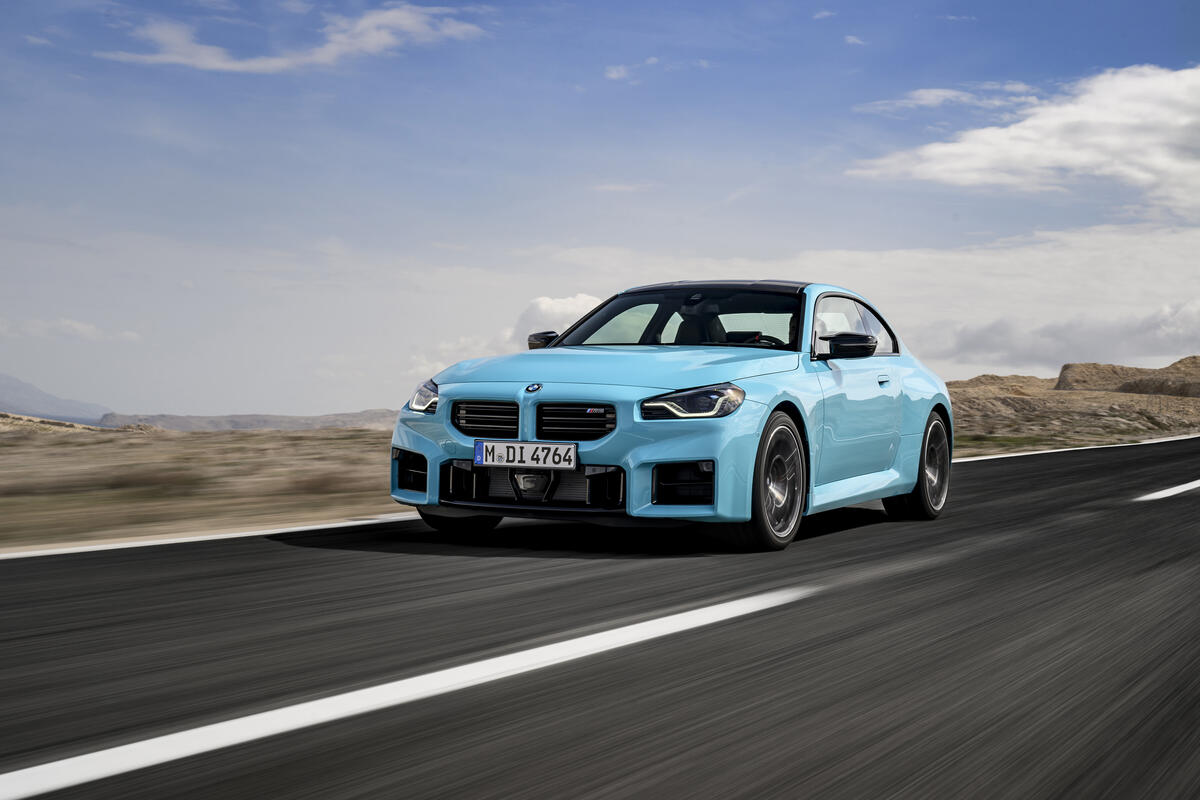
BMW M2
"Like I think cars like the G87 M2 and things like that are just going to like they'll just like be old cars."
The BMW G87 M2 is a newer M2 model from BMW’s performance lineup. The host is basically saying that newer cars may become harder to buy later, even if they’re popular now.
The BMW G87 M2 is the newer-generation M2, and the host is describing it as a car that will likely become “old” and harder to access as time passes. The key idea is how modern performance cars can shift from mainstream to collectible status.
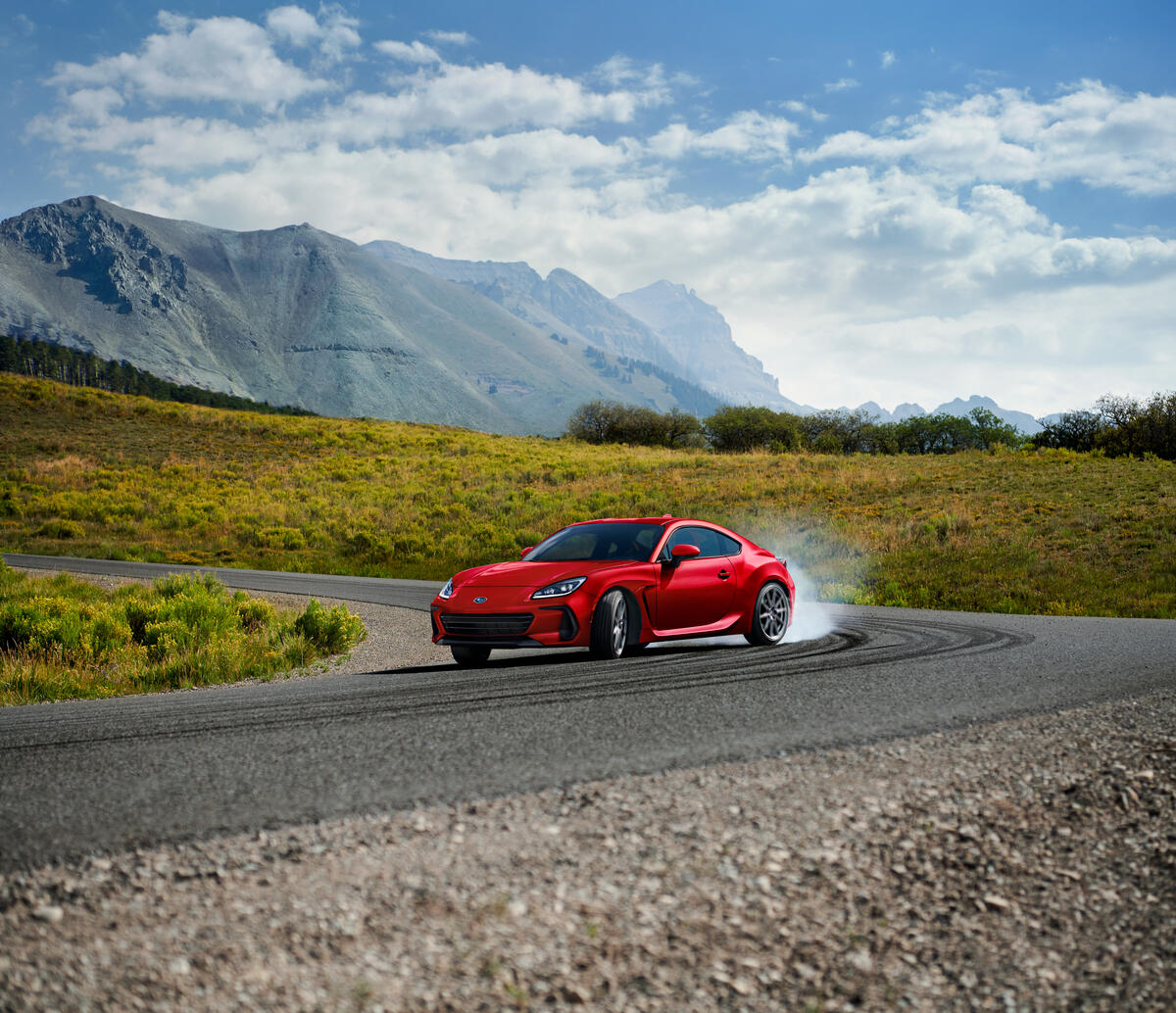
Subaru BRZ
"...s a classic. I don't know. I think the GT86 slash BRZ will be the modern Miata. Yeah. Do you know what ..."
The Subaru BRZ is a small sports car meant to be fun in corners. It’s designed to feel light and responsive rather than just fast in a straight line. The podcast compares it to the Miata because they share a similar “easy to enjoy” sports-car vibe.
The Subaru BRZ is a lightweight sports coupe designed for balanced handling and an engaging driving feel. The podcast pairs it with the GT86 as a “modern Miata” idea, emphasizing the BRZ’s role as an accessible, driver-focused alternative. It’s discussed because it’s known for being fun without requiring extreme power.
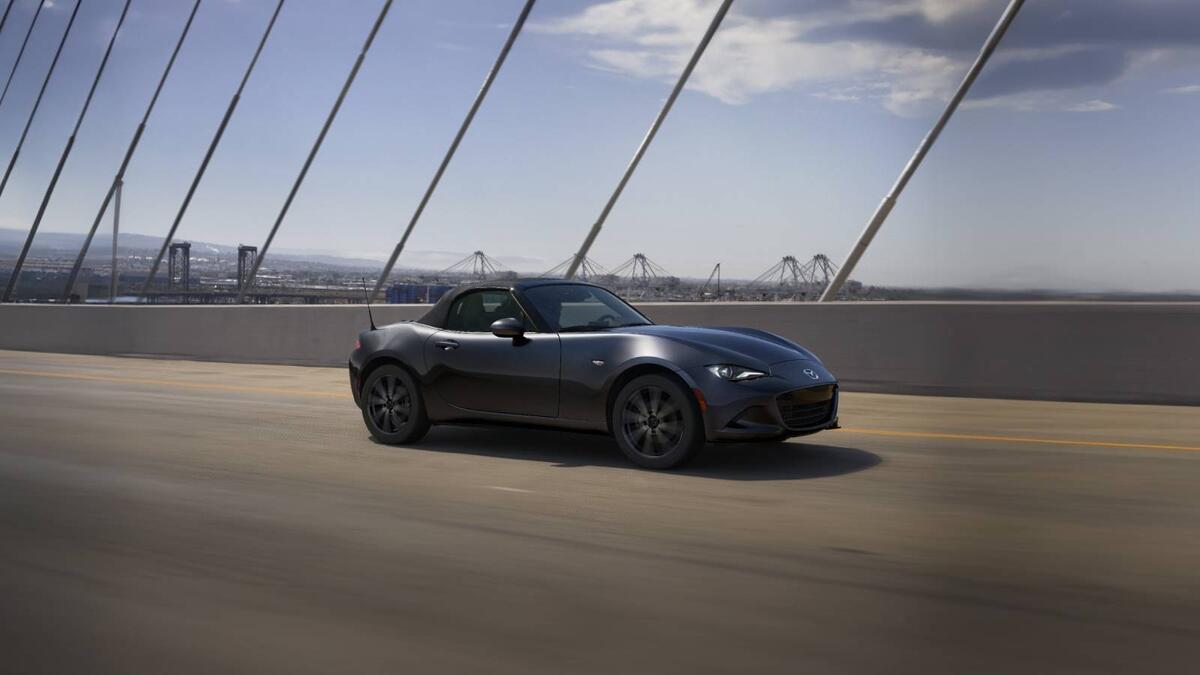
Mazda MX-5 / Miata
"...ow. I think the GT86 slash BRZ will be the modern Miata. Yeah. Do you know what I'm saying? Where you're ..."
The Mazda Miata (MX-5) is a small two-seat sports car. It’s designed to be light and easy to drive, so it feels fun even without huge power. People compare other cars to it because it’s a classic formula for enjoyable driving.
The Mazda MX-5 Miata is a lightweight, affordable roadster built around simple, fun driving rather than raw power. It’s often used as a benchmark for “modern Miata” ideas because it’s easy to enjoy and encourages driver skill. The podcast references it when comparing what a small sports car should feel like.
modern classics
"But like nothing where like I knew when I drove the EVO 8 and the EVO 9 they were going to be modern classics. I knew the Z06 was going to be a modern classic when I drove it."
“Modern classics” means cars from the not-too-distant past that people expect will be remembered and collected later. The host is basically saying it’s harder for today’s cars to become widely owned classics because they cost so much.
“Modern classics” is a fan term for cars from the recent past that are expected to gain long-term cultural value and enthusiast demand. In the segment, the host contrasts older, more attainable performance cars with today’s expensive new ones, implying fewer cars will become widely owned classics.
manual transmission
"there's this world of like all cars used to everyone had a manual transmission car. And then like the automatic came out"
A manual transmission means you shift gears yourself using a clutch pedal. Many enthusiasts like it because it feels more connected to the driving.
A manual transmission requires the driver to use a clutch pedal and shift gears by hand. It’s often associated with more direct driver control and a more engaging feel than an automatic.
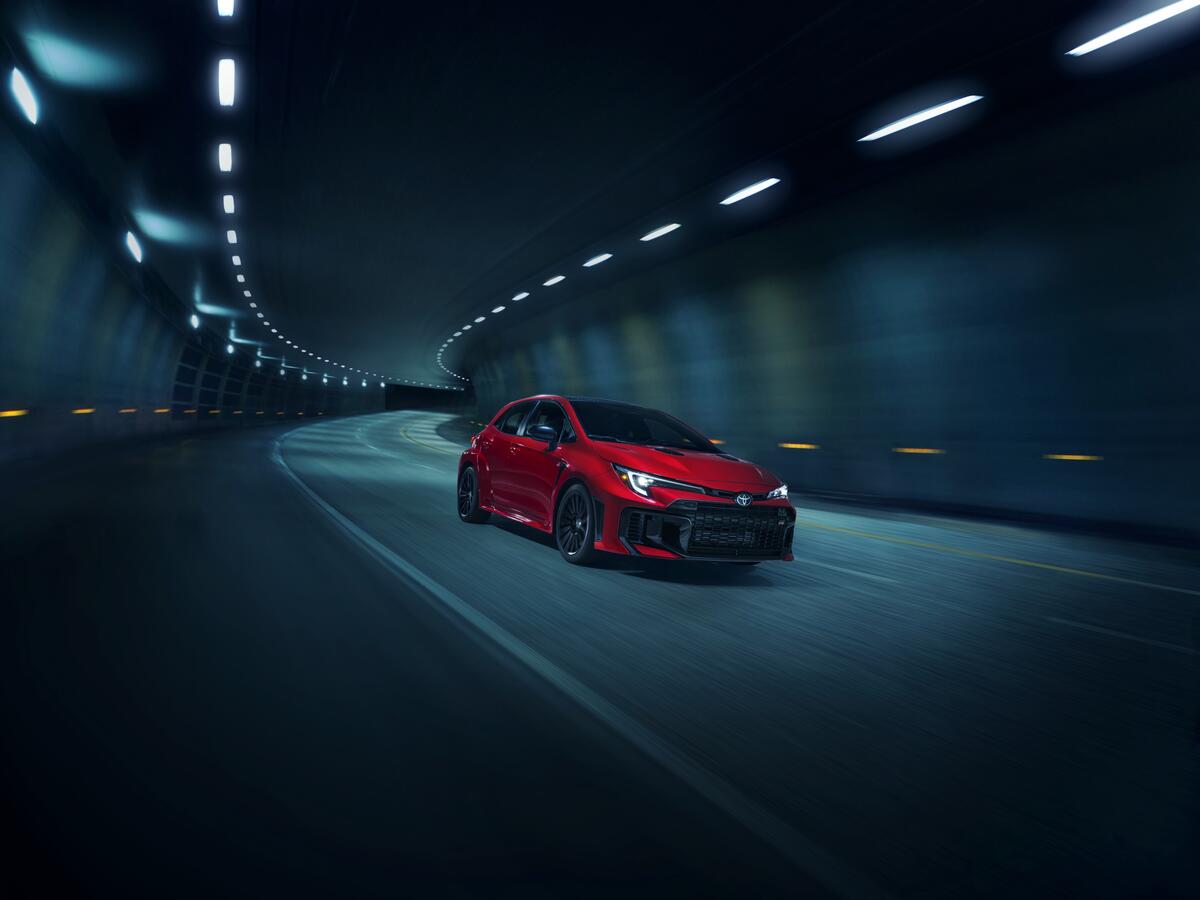
Toyota GR Corolla
"...the ones that come to mind right now, I think the GR Corolla is probably the closest thing I could think of. I..."
The Toyota GR Corolla is a sporty version of the Corolla. It’s made to be more fun to drive while still being usable as a normal car. The podcast mentions it as a close match to what someone wants.
The Toyota GR Corolla is a performance hatchback built for enthusiasts, with a focus on traction and controllable power. The podcast frames it as the closest thing to what they’re looking for, which highlights its role as a practical daily that can still feel sporty. It’s discussed because it offers a balance of usability and performance.
Toyota MR2
".... Yeah. Toyota didn't exist. No, no, they had the MR2 was like the only thing that was yeah. MRS. MRS. ..."
The Toyota MR2 is a small sports car. It’s designed to handle well, and it has a layout that helps it feel balanced. The podcast mentions it because it was one of Toyota’s more sports-focused cars.
The Toyota MR2 is a mid-engine sports car known for its compact size and sporty balance. The podcast mentions it as a standout when discussing Toyota’s lineup, implying it was one of the few true sports options at the time. It’s brought up because it represents a specific era of Toyota’s performance focus.
Toyota Celica
"...I didn't like the MRS and I didn't think. And the Celica. Yeah, you know what I mean? Like everyone was ma..."
The Toyota Celica is a sports car model from Toyota. It’s generally known as a smaller, more performance-oriented car than a typical commuter. The podcast mentions it when comparing which sports Toyotas people liked.
The Toyota Celica is a compact sports coupe that has appeared in many generations, often associated with enthusiast communities. The podcast mentions the Celica alongside other sports Toyotas, suggesting it’s part of the lineup people remember as “real car” options. It’s discussed as a familiar name that comes up when talking about what cars were available and popular.
Challenger Hellcat
"... know why. Celica. Yeah, but do we think that the Hellcat will be a future classic? I think so. I think for..."
The Dodge Challenger is a muscle car built for strong acceleration and a bold look. The podcast is talking about whether a high-performance version (like the Hellcat) might become a classic later. It comes up because people are thinking about which modern cars will be remembered.
The Dodge Challenger is a muscle car known for powerful engines and a long history of performance trims. The podcast discusses whether the Hellcat will be a future classic, which reflects how certain high-performance Challenger versions are gaining collectible status. It’s discussed because it’s a modern muscle car that enthusiasts expect to hold value or cultural importance.
32% APR
"Because I feel like they're affordable if you're ready to get into the most predatory loan. Have you ever heard of 32% APR?"
APR is the interest rate on a car loan. “32% APR” is extremely high, meaning the loan can cost you a lot more money than you’d expect.
APR (annual percentage rate) is the interest rate charged on a loan, expressed as a yearly percentage. A “32% APR” means the cost of borrowing can become so high that the car’s sticker price is less important than the total amount you pay over time.
Ford Edge
"... 100,000, but they're, they're right there on the edge. Because I feel like they're affordable if you're..."
The Ford Edge is a family-sized SUV that’s built for daily driving. The podcast is talking about buying one with around 100,000 miles and whether that’s still a reasonable point. It’s basically a question of value versus risk at higher mileage.
The Ford Edge is a mid-size crossover SUV focused on comfort and everyday practicality. The podcast mentions them being “right there on the edge” around 100,000 miles, which implies they’re considering them as an affordable used option. It’s discussed in the context of whether a higher-mileage crossover is still a sensible buy.
military ID
"Have you ever heard of 32% APR? Yeah, yeah, yeah. And do you have military ID?"
Military ID is used to prove you’re in the military. Some car deals or discounts are only available if you can show that ID.
“Military ID” is referenced here because some dealers offer special pricing or financing programs to active-duty service members and veterans. The hosts are using it to explain how certain buyers can access deals that others can’t.
salvage title
"My drinking game at home is look for clean title ones on Facebook Marketplace. Oh, good luck. They're wasting it on a bed by nine. Literally every single one of salvage title from theft or crashed."
A salvage title means the car was considered a total loss after an accident or theft. It usually makes the car harder to insure and can hurt its value.
A salvage title is issued when a vehicle is declared a total loss by an insurer, usually due to major damage or theft recovery. The hosts connect salvage titles to how many “clean title” listings are actually rare, because salvage cars can be more common after crashes or theft.
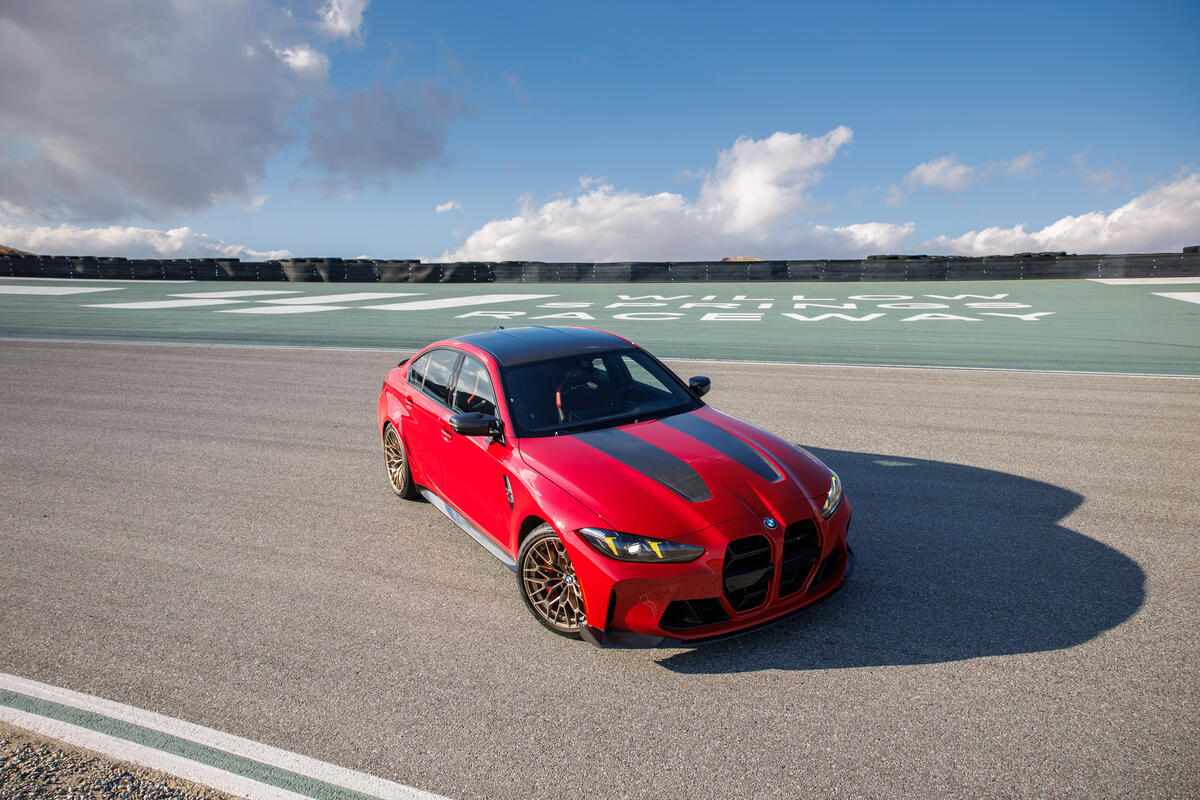
E36 M3
"Like again, the E36 M3 has such a status now with younger kids. And so does all of the Japanese golden era cars."
The BMW E36 M3 is an older BMW M3 from the 1990s. People still want it because it’s considered a real enthusiast car, and it’s become a status symbol with younger fans too.
The BMW E36 M3 is a 1990s-era M3 that became a benchmark for enthusiast credibility, especially for its balance of performance and driver engagement. The hosts note that even younger buyers still chase it, which is why it has strong “status” in modern car culture.
Vortech P1 SE
"Fox body Mustang was the hero. Right. The hero car. Yeah, you got a Vortech P1 SE on a 302 [2812.7s] with a E cam."
A Vortech P1 SE is a supercharger. It helps the engine make more power by pushing extra air into it, kind of like giving the engine a boost.
A “Vortech P1 SE” is a supercharger kit (from Vortech) used to force more air into an engine for higher power. On a Fox body Mustang, it’s a common enthusiast setup because it can add boost without needing a full engine redesign.
302
"Yeah, you got a Vortech P1 SE on a 302 [2812.7s] with a E cam."
“302” is shorthand for a Ford 5.0-liter V8 engine. They’re saying the supercharger was installed on that specific engine.
“302” refers to Ford’s 5.0L V8 displacement (the common “302” engine used in many Fox body Mustangs). In this context, it’s the engine being boosted by the Vortech supercharger.
E cam
"with a E cam. You were picking up dudes left and right. You were fucking you were swimming in them. [2819.6s] Swimming with gold chains."
An “E cam” is a performance camshaft. It changes how the engine’s valves open and close, which can help the engine make more power—especially with other mods.
An “E cam” is shorthand for an aftermarket camshaft profile (the “E” grind) used to change valve timing and improve performance. Camshafts are a major part of how muscle-car builds make power, especially when paired with forced induction.
Acura Integra
"...le thing kills me. Sub 80 K Honda CTR. I like the Integra type S. Okay. But I think it's beautiful. Really?..."
The Acura Integra is a compact car that’s made to drive more like a sports car than a regular commuter. The Type S is a higher-performance version. The podcast brings it up because someone thinks it’s beautiful and likes the way it fits the performance category.
The Acura Integra is a compact performance-oriented car known for its driving feel and enthusiast appeal. The podcast mentions the Integra Type S and compares it to other performance cars, emphasizing how it looks and how people value it. It’s discussed because the Integra Type S is often seen as a modern, refined take on a classic performance formula.
Alfa Romeo Giulia
"...ck's got something. I got one for you. Alfa Romeo Giulia. If they're still running. Right. Like, and I lov..."
The Alfa Romeo Giulia is a luxury sedan that’s made to drive more like a sports car. People talk about it when they’re considering something more exciting than a typical commuter car. The podcast reference is about whether the car is still reliable enough to keep running.
The Alfa Romeo Giulia is a compact luxury sedan known for its driving feel and performance-oriented versions. The podcast mentions it in the context of whether they’re “still running,” which suggests interest in owning one and concerns about ongoing upkeep. It’s discussed because the Giulia is often considered a more enthusiast-driven alternative within the luxury sedan category.
rod knock
"But just recently I heard him come home and it sounded like it either had rod knock or an exhaust leak."
Rod knock is a bad-sounding noise from inside the engine. It usually means something inside the engine is worn out, and it can get expensive fast if you keep driving it.
Rod knock is a serious engine noise caused by excessive clearance or damage in a connecting rod bearing. It often sounds like a deep, metallic knocking and can indicate internal engine wear that may require major repair.
exhaust leak
"it sounded like it either had rod knock or an exhaust leak. It's probably got like 19,000 miles."
An exhaust leak means the exhaust system isn’t sealed. That can make the car louder and can also let fumes escape where they shouldn’t.
An exhaust leak is when exhaust gases escape before they reach the tailpipe, often from a cracked manifold, gasket, or pipe. It can create louder-than-normal noise, fumes, and sometimes a check-engine light, and it’s typically something you want diagnosed.
gen two Raptor
"I got to say, though, if they have loaner cars, it's great because I had a gen two Raptor that was in the shop every other week and the Ford dealership."
The Ford Raptor is a tough off-road truck. “Gen two” just means the second version of that truck, and here they’re talking about how often it was being serviced.
The Ford Raptor is a high-performance off-road pickup built for rough terrain, with the “gen two” referring to the second-generation model. In this segment, it’s mentioned as a vehicle that was frequently in the shop, setting up a comparison about dealership support and loaner cars.
F-150 Raptor
"...e loaner cars, it's great because I had a gen two Raptor that was in the shop every other week and the For..."
The Ford F-150 is a large pickup truck. In the podcast, they’re talking about using one as a loaner and how it worked well for day-to-day needs. It’s mentioned because it can be a more convenient option when a higher-performance truck is unavailable.
The Ford F-150 is a full-size pickup truck that’s widely used for work and everyday driving. The podcast mentions loaner experience and contrasts it with a gen two Raptor being in the shop frequently, implying the F-150 can be a practical alternative when you want something dependable. It’s discussed as a “good enough” vehicle for getting around while other performance trucks are being repaired.
GTR
"I've been dailying the Corvette and the GTR. I mean, the and the 360."
“GTR” usually means the Nissan GT-R, a very fast sports car. They’re saying they’ve been driving it daily, not just using it occasionally.
“GTR” is shorthand for the Nissan GT-R, a performance car famous for its all-wheel-drive traction and fast, repeatable acceleration. The hosts mention it as part of their daily-driving rotation, implying it’s usable enough for everyday life.
Nissan S 15
"You want a Ford 34 GTT. I traded my S 15 for it. Oh, you told me about that."
“S 15” is almost certainly shorthand for the Nissan Silvia S15, a popular Japanese platform for drifting and turbo swaps. The speaker says they traded their S15 for the Ford, framing it as part of their drift-car lineup.
GT 2860s
"No, it's a white R 33 V spec. Yeah. V spec. It's got GT 2860s, Haltech, R 35 coils."
That “GT 2860s” is a turbo upgrade. A turbo helps the engine make more power by forcing extra air in, and different turbo sizes change how the car feels—especially how fast it responds.
“GT 2860s” refers to a turbocharger model/size commonly used in performance builds. A larger or different turbo like this changes how quickly the engine spools (builds boost) and how much boost it can make at higher RPM.
R 35 coils
"It's got GT 2860s, Haltech, R 35 coils. Wow. I got a ride in that thing because..."
Those “coils” are part of the ignition system that create the spark. Swapping to GT-R (R35) coils is a common upgrade to help the engine keep reliable spark when it’s tuned for more boost.
“R 35 coils” likely means ignition coils sourced from a Nissan GT-R (R35). Upgrading coils can help a high-boost, high-demand engine maintain strong spark under harder driving and tuning.
Haltech
"It's got GT 2860s, Haltech, R 35 coils. Wow. I got a ride in that thing..."
Haltech is a performance computer for the engine. It helps the car’s tune control things like fuel and spark so a modified turbo engine can run correctly and make power.
Haltech is an aftermarket engine management brand used to control fuel, ignition timing, and boost more precisely than many factory ECUs. In a modified turbo car, it’s often chosen because it makes tuning safer and more flexible.
tuned
"It needs to be tuned though, because it came from high altitude. So oh, that's right."
Here “tuned” means adjusting the car’s engine computer so it runs right. If the car was used at high altitude, it may need a new tune for your lower-altitude air so it doesn’t run too lean or too rich.
In this context, “tuned” means calibrating the engine management (fuel/ignition/boost) to match the car’s hardware and operating conditions. The speaker notes it needs tuning because it came from high altitude, where air density is lower and the tune must compensate.
right hand drive
"But you're a big no right hand drive guy. No. I gotta say, I don't mind. Every once in a while, Tommy will send me like a link to like a left hand drive car..."
Right-hand drive just means the steering wheel is on the right side of the car. Some countries use this layout more than the US, so it can feel different—especially when you’re explaining it to others.
Right-hand drive (RHD) means the steering wheel is on the right side of the car, which is common in many countries outside the US. It can affect driver comfort and how awkward it feels when talking to people used to left-hand drive.
FCP Euro
"Here we are for another story time interruption brought to you by my good friends at FCP Euro. If you're at all familiar with my builds, you know that I'm not really good at, let's just say this, I'm the king of scope creep."
FCP Euro is a company that sells car parts, especially for European cars. The hosts mention it as a convenient place to buy the parts they need for repairs and upgrades.
FCP Euro is an aftermarket parts retailer that’s especially popular with European-car owners. In this segment, they’re positioned as a place to buy suspension, brake, and steering-related parts for an Audi build and maintenance projects.
Audi Coupe Quattro
"I had an Audi Coupe Quattro that I was going to build into a 500 horsepower driver. It was a pretty simple established recipe to do this."
This is an Audi from the quattro (all-wheel-drive) era. The host is talking about turning one into a very high-power project car, but the plan grew into something even bigger.
The Audi Coupe quattro is a performance-focused Audi from the quattro era, known for its all-wheel-drive traction. In this episode, it’s the base for a “scope creep” build plan that escalated from a high-power street setup to a much more extreme race-car direction.
blown start bearing
"This clunk to Volkswagen and Audi guys is nothing other than a blown start bearing. It happens a lot, especially when driving slammed cars."
This is a mechanical failure in a part related to starting. When it goes bad, it can make a noticeable clunk sound, especially when the car is bouncing or loaded hard.
A “start bearing” (often referring to the starter motor’s bearing area) failing can cause a loud clunk when the car is engaged or loaded. The host says this clunk is common for Volkswagen/Audi owners and is especially likely on slammed cars.
CV joint
"not I, I saw this as an opportunity. Yeah, an opportunity to finally fix that clicking CV joint. Get after the bushings or the brakes that needed an overhaul."
A CV joint (constant-velocity joint) is part of the drivetrain that lets power flow to the wheels while the suspension moves and the axles change angle. The host mentions fixing a “clicking CV joint,” which is a common symptom of wear in these joints.
bushings
"Get after the bushings or the brakes that needed an overhaul. You know, head on over to FCP Euro and just fill the cart with everything I can find underneath suspension brakes and even steering."
Bushings are the soft mounts in the suspension that help parts move smoothly. When they wear out, you can get noises and less precise handling.
Bushings are rubber (or sometimes polyurethane) mounts that isolate vibration and allow controlled movement between suspension components. Worn bushings can contribute to clunks, vague steering feel, and uneven handling.
300 treadwear
"GR 86 on 300 treadwear having fun. Subaru STI on whatever you're having a good time, but having a great car having a shit car on great tires gonna be whack 100%."
Treadwear is a number that gives a rough idea of how long a tire should last. A “300 treadwear” tire usually means it’s not the longest-lasting option, but it can be better for grip and driving feel.
Treadwear is a tire rating (from standardized tests) that’s meant to correlate with how long a tire’s tread compound is expected to last. A “300 treadwear” tire is typically considered more performance-oriented than very long-wearing tires, but it can still be a compromise compared to higher-mileage options.
Toyota Gr86
"100% C. Okay car, okay tires. Yeah. Like you feel like at a certain point it's good enough. GR 86 on 300 treadwear having fun. Yeah. Subaru STI on whatever you're having a good time, but having a great car having a shit car on great tires gonna be whack 100%."
The Toyota GR 86 is a small sports car made to be fun to drive. It’s not just about top speed—it’s about how it feels in corners. People mention it when they’re talking about enjoying track-style driving without needing an extreme car.
The Toyota GR 86 is a modern lightweight sports coupe designed for balanced handling and driver-focused fun. The podcast mentions it in the context of tire treadwear and “having fun,” which highlights its role as an accessible performance car. It’s often discussed as a practical alternative to more expensive or more powerful track-focused cars.
Subaru STI
"GR 86 on 300 treadwear having fun. Yeah. Subaru STI on whatever you're having a good time, but having a great car having a shit car on great tires gonna be whack 100%."
The Subaru STI is a performance Subaru with all-wheel drive. In this discussion, it’s being used to show that a capable car can still be fun, but tire quality still matters a lot.
The Subaru STI is the performance-focused version of Subaru’s Impreza line, known for all-wheel drive and rally-bred traction. Here it’s referenced as an example of a car that can still feel good even when the tires aren’t ideal, highlighting how tire quality changes the “feel” of grip.
Mercedes C63
"Example. Chris Harris driving a Mercedes, I think it was a C63 on Space Savers, which is great. Was like he basically said it was like the 1000 horsepower hack."
The Mercedes C63 is a powerful performance Mercedes. They’re saying that even a car like that can feel totally different depending on the tires—here, “Space Savers,” which are typically spare/temporary tires.
The Mercedes-Benz C63 is a high-performance sedan/coupe known for strong power and a chassis that can feel dramatic when traction is limited. The host mentions Chris Harris driving a C63 on “Space Savers,” using it to illustrate how tire choice can drastically change perceived performance and grip.
Space Savers
"Example. Chris Harris driving a Mercedes, I think it was a C63 on Space Savers, which is great. Was like he basically said it was like the 1000 horsepower hack."
“Space Savers” are small spare tires meant to save trunk space. They’re usually not meant for long-term driving and can feel different from your regular tires.
“Space Savers” are compact spare tires designed to take up less room in the trunk. They’re usually intended for temporary use and can have different grip and handling characteristics than the car’s normal tires.
chassis dynamics
"So like you really get chassis dynamics in a way of like you could be on the limit, but you're not like at 100 plus miles an hour. See,"
Chassis dynamics is a fancy way of saying how the car’s suspension and tires work together when you turn or go fast. Tires change how “controlled” the car feels when you’re pushing it.
Chassis dynamics are how the car’s suspension, steering, and weight transfer work together as you accelerate, brake, and turn. Tire grip strongly affects these dynamics—better tires let you explore handling limits more confidently, while bad tires can make the same car feel unpredictable.
dry rotted blizzaks
"don't. So it had, it had, yeah, I guess it was green. It had like dry rotted blizzaks. Oh, yeah. Dry rotted."
Dry rotted tires are old tires where the rubber has cracked and worn out. That can make them grip poorly and feel sketchy, even if the tire model is normally good in bad weather.
“Dry rotted” tires have rubber that has cracked and degraded from age and heat cycles, which can reduce grip and make the tire behave unpredictably. “Blizzaks” are winter tires, so using them in a degraded state is a recipe for poor traction and odd handling.
cold slicks
"Or just cold slicks. That's extreme. And cold slicks suck. Yes. Absolutely."
Slick tires have almost no tread, so they work best when they’re warm. If they’re cold, they don’t grip as well, and the car can feel unpredictable.
“Slicks” are tires with little to no tread, designed for maximum contact patch on dry pavement. “Cold slicks” means the tires haven’t warmed up, so grip is reduced and the car can feel harder to control.
Yokohama AO 52s
"they were like, they didn't, I had Yokohama AO 52s on it. And they were like, they didn't make tires that good back."
Yokohama A052 is a grippy performance tire. In this discussion, they’re saying that if you put very grippy tires on a car, it can feel less playful than it would on tires that break traction more easily.
Yokohama ADVAN A052 is a performance tire known for track-oriented grip, typically with a softer compound and lower treadwear than long-life street tires. The hosts argue that using tires like this can make a car feel too “tamed,” reducing the fun factor compared with running looser tires.
Toyo R ones
"So I had to swap them off. So I had a set of Toyo, like R ones or whatever, which is like their track. It's like better than the triple eight R or whatever."
Toyo R1R is a tire meant for performance driving. They swapped to it because the old tires were worn out, and the new tires made the car behave differently.
Toyo R1R is a track-focused tire line known for strong dry grip and relatively soft compounds. Here, it’s mentioned as the replacement for dry-rotted tires to show how fresh, grippier rubber changes the car’s feel and sound.
triple eight R
"which is like their track. It's like better than the triple eight R or whatever."
They’re comparing two different performance tire models. The point is that different tires can change how a car feels a lot, even if the car is the same.
“Triple Eight R” appears to refer to a tire model in the same performance/track category as the Toyo R1R. The hosts are comparing which tire is “better” for grip and feel, implying compound and tread differences matter more than the car itself.
five by one 12s
"And I had those sitting on a set of wheels mounted. They were five by one 12s. And I put them on the 200 and I took it for a cruise."
They’re talking about the wheel size they mounted the tires on. Wheel size affects how the tire fits and can change how the car handles.
“Five by one 12s” is almost certainly a wheel size/width-and-offset shorthand (e.g., a 5-inch-wide wheel with a 112mm-related spec), which affects tire fitment and how the tire sits on the car. Wheel sizing can change steering response and how easily the tire breaks traction.
tires ripping out
"was breaking because like every corner I go into like all like the tires ripping out go anywhere, but like all of the like any kind of like flexibility, pushing or whatever, anything, any compliance."
This is basically when the tires lose traction and slide instead of gripping the road. The car then feels unpredictable and worse to drive.
“Tires ripping out” is a descriptive way to say the tires lose grip suddenly, typically during hard cornering or acceleration. When grip is lost, the car can feel unstable and “ruin the car,” because the tires are no longer providing predictable traction and compliance.
center locks
"And this is why center locks are not actually cool, even though I won't get rid of them, even though I could, because center locks are a pain. It's not as easy to just take my wheels off."
Center locks are a special way to attach a wheel using one big center nut instead of several lug nuts. It can look cool and be strong, but you usually need the right tool to remove or install the wheel.
“Center locks” are a wheel-retention system where the wheel is secured by a single central locking nut/fastener instead of multiple lug nuts. They’re common on some performance cars because they can reduce wheel hardware and help with quick wheel changes, but they require a specific tool and correct torque procedure.
torque
"I have to like go find the tool. I have to do this. I have to get like a friend by to torque it."
Torque is the “tightness” you apply when fastening something. With wheels, using the correct torque helps keep the wheel secure without stripping or damaging the parts.
In this context, “torque” means tightening force applied to a fastener (like a wheel nut) measured in units such as newton-meters or foot-pounds. Correct torque matters because under-tightening can loosen the wheel, while over-tightening can damage threads or distort components.
Toyota Supra
"And they put the Supra out with the six speed manual. I haven't driven one of those, have you? It's good. Yeah. Yeah, that's cool."
The Toyota Supra is a performance sports car. Here they’re talking about the version that can be had with a six-speed manual, which is part of why they don’t think manuals are disappearing immediately.
The Toyota Supra is known for its performance-focused design and, in this discussion, specifically for being offered with a six-speed manual. The hosts bring it up as a modern example that manuals aren’t “going extinct” yet.
Ford Mustang
"So I don't think it's going extinct because like those mustangs, which I think they got a little too soft. Like I didn't actually love the manual on the Mustang."
The Ford Mustang is a popular muscle car. In this segment, they’re saying the manual they tried didn’t feel very engaging—more like it was too easy to just shift without much effort.
The Ford Mustang is being used here as a contrast case: the hosts say they didn’t love the manual feel because the clutch and shifting behavior felt too easy. That’s tied to their broader point that a “good manual” should feel engaging rather than letting you just throw it into gears.
rev match
"although like when you're in sport mode, it won't let you like, it has to rev match for you and shit, which is interesting."
Rev matching is the technique of adjusting engine speed to match the transmission’s target gear during downshifts. The host suggests some cars (they mention Porsche in sport mode) will enforce or assist rev matching so the engine speed lines up, which can make the shift feel more controlled but less “raw.”
blip the throttle
"like you would just all you had to do is slightly lean on the shifter and it would blip the throttle."
Blipping the throttle is a quick “tap” of the gas, usually when you’re downshifting. The host is saying one manual felt wrong because the car was doing that for you too easily, instead of you controlling it.
Blipping the throttle is a quick increase in engine speed, typically used during downshifts to help rev match. The host criticizes a Mustang example where the car seems to blip the throttle automatically with only a slight shifter movement, which they feel defeats the point of driving a manual.
manual swap
"but it only is available in the U.S. and an auto and I need to manual swap it. And the manual swap is actually not easy. Like it requires cutting the tunnel out."
A manual swap means changing a car from automatic to manual. It’s a big job because you often have to modify the floor/tunnel area so the manual transmission and shifter can fit.
A manual swap is the conversion of a car originally built with an automatic transmission to a manual transmission setup. The host says it’s not easy because it requires major bodywork—specifically cutting out the tunnel area to fit the manual components—and that the donor/target car they want is an Audi.
Slushbox
"Slushbox comes with all the right, but then you have like, there's a reason it was called a Slushbox."
“Slushbox” is a nickname for an automatic transmission that feels mushy or not very responsive. They’re saying the older automatics in these cars didn’t shift in a way that felt fun or direct.
“Slushbox” is a slang term for an automatic transmission that feels slow, vague, or disconnected compared with a manual gearbox. The host uses it to describe how the older Supra/JZX automatics behave, implying they don’t respond crisply to driver input.
DCTs
"But now it's not that. Now the DCTs and like all the dual clutch things and even like some of the like Toyota automatics, dude, no, the eight HP is, is crazy good."
DCT means dual-clutch transmission. It’s an automatic that can shift quickly because it’s readying the next gear ahead of time, so it feels more responsive than older automatics.
DCT stands for dual-clutch transmission, which uses two clutches to pre-select gears so shifts can be faster and more consistent than many traditional automatics. The host contrasts older “slushbox” automatics with modern dual-clutch behavior, saying the newer systems feel dramatically better.
eight HP
"But now it's not that... the eight HP is, is crazy good. Yeah. But, and by the way, for those who are not that familiar with the eight HP,"
“8HP” is a specific type of automatic transmission made by ZF. It’s known for shifting smoothly and quickly, and the host says it can be controlled in a more “clutch-like” way than older automatics.
“8HP” refers to ZF’s eight-speed automatic transmission family (often written as ZF 8HP). The host praises it as “crazy good” and then explains how ZF can make it behave with a clutch-like feel, including the ability to simulate a manual-style clutch pedal experience.
ZF transmission
"so the eight HP is a ZF transmission that's an eight speed and they have learned to basically create a simulated clutch for it."
ZF is a company that makes transmissions. Here they’re talking about ZF’s eight-speed automatic (8HP) and how it can be tuned to feel more like a manual.
ZF is the transmission supplier behind the 8HP family, which is an eight-speed automatic. In this segment, the host focuses on how ZF’s design can simulate clutch behavior so the car can feel more like a manual while still being an automatic.
simulated clutch
"they have learned to basically create a simulated clutch for it. So you can tune it where you can actually put a clutch pedal in the car that works like on, it's kind of like an on off switch,"
A “simulated clutch” means the car’s automatic transmission can be controlled to act like a manual clutch. Instead of just shifting automatically, it can be made to respond in a more manual-like way.
A “simulated clutch” is software-and-hardware behavior that makes an automatic transmission respond like it has a real clutch pedal. The host describes tuning the system so the driver can command clutch release characteristics, effectively bridging the feel gap between automatics and manuals.
potentiometer
"which literally moves hydraulic that then moves like a potentiometer to like control the clutch release."
A potentiometer is a sensor that turns movement into an electrical signal. In this explanation, it helps the transmission “understand” how much clutch action the driver is asking for.
A potentiometer is an electronic sensor that converts a physical movement into a variable electrical signal. The host uses it to explain how the system can translate clutch-pedal-like input into a controlled clutch-release command for the transmission.
sequential shift
"But you can go to the track, like sequential shift every corner. Yeah. And then you can throw it into automatic and like cruise home"
Sequential shifting means you change gears one step at a time, usually with paddles or a shifter. It’s common in race cars because it feels more direct than a normal automatic.
A sequential shift system lets you move through gears in order (typically up or down one gear at a time) rather than using an H-pattern. The host mentions using it “on the track” and implies it provides more direct, race-style control than a conventional automatic mode.
joystick thing
"If you want a sequential, you're not going to be satisfied doing this. No, with the little joystick thing. Like you want"
They’re talking about a shift control that uses a small lever/controller instead of a normal gear shifter. The point is that it doesn’t feel as satisfying as a proper sequential setup.
The “joystick thing” refers to a non-traditional shift control method used in some performance cars where gear selection is done via a small lever or controller rather than a conventional manual shifter. The host is using it as a critique of how that control feels compared with a true sequential setup.
Ford F100
"...smissions that aren't fun to drive. Like Ashley's F100 was manual. Yeah. It's trash. I'm trying to buy a..."
The Ford F-100 is an older pickup truck. It’s the kind of truck people often modify or keep as a classic. In the podcast, they’re talking about one that didn’t feel good to drive.
The Ford F-100 is a classic pickup truck known for its simple, durable design and strong customization culture. The podcast mentions an F-100 with a manual transmission and calls it “trash,” which suggests the specific truck they’re discussing didn’t drive well or wasn’t set up correctly. It’s brought up as an example of a classic truck that may not meet expectations in daily drivability.
high low rear
"And it's like I want another manual. Actually, [4073.6s] one of the vehicles I'm looking at right now is a manual with a high low rear, [4078.8s] which means that it's a force. It's an eight speed."
It means the truck has two gear ranges: a normal one for everyday driving and a low one for climbing or slow, tough situations. Low range helps the truck move with more pulling power.
“High-low rear” describes a drivetrain with a two-range transfer case (high range for normal driving, low range for crawling/steep grades). It’s common on trucks built for off-road or farm use because low range multiplies torque for slow, controlled movement.
six speed
"like I'm not going to get a manual g 80 because I'm like, [4132.4s] oh, it's six speed. You're like, you know, the auto is better."
“Six speed” means the car has six forward gears. More gears can help the engine run in a better range, depending on driving and transmission type.
“Six speed” means the transmission has six forward gears. Gear count affects how the engine can stay in its power band and how the car feels during acceleration and cruising, especially when comparing manual vs automatic behavior.
single clutch
"And I like single clutch. Like I think I've driven both like mine, like it's kind of annoying [4152.8s] sometimes, but like it's it's like pretty fun."
Single-clutch means there’s only one clutch doing the job of connecting the engine to the transmission. It can be fun and mechanical, but it may not shift as smoothly or as quickly as dual-clutch setups.
“Single clutch” refers to a transmission that uses one clutch to connect the engine to the gearbox. Compared with dual-clutch designs, a single-clutch system typically can’t pre-select the next gear in the same way, which can affect shift smoothness and speed.
gated
"like I love the gated car. I think it's super fun. It's like, you know, if you want it, it's a big expense."
“Gated” is about the feel of a manual shifter. It moves into specific gear positions with a more defined, mechanical “gate” feel.
“Gated” describes a manual shifter with a traditional shift pattern and physical gate feel, where the lever moves through defined positions. Enthusiasts often prefer this over more “floating” or electronically mediated shifter behavior because it gives clearer feedback about what gear you’re selecting.
TCU
"If you do a challenge, TCU in that car, dude, it's awesome. And single clutch again,"
TCU means the car’s transmission computer. It controls when the gearbox shifts and how smoothly it does it, based on how you’re driving.
TCU stands for Transmission Control Unit, the computer that manages an automatic or automated gearbox. In modern dual-clutch and automated-manual systems, the TCU decides shift timing, clutch engagement, and how aggressively it responds to throttle and driving mode.
DSG
"So when I was a journalist was the introduction to the DSG, the DCT, right? Like all that stuff was just coming out."
DSG is a type of automatic transmission that uses two clutches. It can switch gears very quickly because it’s ready with the next gear before you need it.
DSG is Volkswagen Group’s Dual-Shift Gearbox (dual-clutch transmission). It uses two clutches—one for odd gears and one for even—so it can pre-select the next gear and shift quickly with less interruption than a traditional automatic.
SMG
"Yeah. Mercedes, you know, Mercedes had SMG and like everyone was like introducing [4202.3s] these like automated manuals."
SMG is a transmission that’s basically a manual gearbox, but the car does the clutch and shifting for you. Early versions could feel less smooth than newer automatic systems.
SMG is an automated-manual transmission system (often associated with BMW’s “Sequential Manual Gearbox” branding). It uses electronics and actuators to operate a conventional manual gearbox, which can feel clunky compared with later dual-clutch designs.
shift time
"But like who care, you know, like the, the, the shift time thing is like crazy. [4230.0s] Yeah. And I'm like, I'm like, I don't know like if I, if I care that much."
Shift time is how quickly the car changes gears. Faster shift times can make the car feel quicker because there’s less delay between gears.
Shift time is how long the transmission takes to complete a gear change. In automated manuals and dual-clutch systems, manufacturers and reviewers focus on shift time because shorter shifts can improve acceleration and reduce the “gap” where power delivery is interrupted.
paddle shift
"But like in a supercar, like I don't really care. Like I almost rather have paddle shift because it feels appropriate and that's what I mean."
Paddle shift refers to gear changes controlled by paddles behind the steering wheel, typically used with an automatic or dual-clutch transmission. In this discussion, the host prefers paddle shift over other modern systems because it feels more “appropriate” to the car’s character—especially in supercars where manual-like control is part of the experience.
DCT E92
"Yeah. Because like you owned a DCT E92. Yeah. That was like this weird, like almost smooth, but still raw DCT. It's like they wanted to leave a little bit of kick in it."
The BMW E92 is a 3 Series generation. Here they’re talking about an E92 with a dual-clutch automatic, and they’re saying it can feel smoother than a manual but still a bit more “raw” than some other DCTs.
The BMW E92 is the 3 Series coupe generation, and this segment specifically mentions an E92 equipped with a DCT. The hosts describe it as a “weird… smooth, but still raw” dual-clutch feel—suggesting BMW’s calibration left more of the gear-change character than the C8’s DCT.
automated manuals
"What do you think about like the opposite, which is retrofitting like automated manuals into old cars? Not down. Like it's just like silly."
An automated manual is basically a normal manual gearbox, but the car handles the clutch and gear changes for you. It can be a compromise between a true manual and an automatic, and the hosts question whether it’s worth doing in older cars.
Automated manuals are manual-transmission gearboxes where clutch and/or shifting are controlled by actuators instead of a human using a clutch pedal. The hosts debate retrofitting these into older cars, arguing it can be “silly” unless there’s a specific use case (like a hill-climb car needing certain gearing).
Volkswagen Kids
"... people are, I mean, people are putting obviously Volkswagen kids are putting DSGs into like older cars and stuff l..."
The Volkswagen ID. Buzz is an electric van with the look of an older bus. The podcast mentions it while talking about car modifications and how people sometimes change parts on older vehicles. It’s brought up because it’s part of the modern EV lineup people are customizing and comparing.
The Volkswagen ID. Buzz is an electric version of the classic microbus-style vehicle, built around modern EV technology. The podcast mentions people putting DSGs into older cars, which is a reminder that enthusiasts often swap or modify transmissions when building projects. It’s discussed as part of the broader topic of how people tinker with drivetrains and what’s possible.
hot rotting
"Yeah. But yeah, I'm all for hot rotting. Like I think it's cool. That's what you want to do."
“Hot rotting” here is basically talking about hot-rodding—modifying a car to make it more fun or more your style. They’re saying they like the idea of doing swaps and builds instead of keeping everything stock.
The hosts use “hot rotting” as a slangy reference to hot-rodding—modifying cars for a more personal, enthusiast-driven build. In this context, they’re supportive of creative drivetrain swaps and retrofits as part of that culture.
calibration
"like putting an eight HP in a car means you're going to sit there and fuck with calibration for weeks, months, you know, like"
“Calibration” is the car’s computer being adjusted so it knows how to run the new parts correctly. If you swap major components, the computer usually needs re-tuning before the car drives right.
In modern cars, “calibration” means tuning the car’s electronic control software so sensors and actuators work together correctly. After drivetrain swaps (like an 8-speed transmission), calibration is often required to get proper shifting, throttle response, and drivability.
all wheel drive systems
"I've researched eight HP all wheel drive systems for my S eight, because like that's a car that I'm conflicted doing a manual on"
“All wheel drive systems” are the parts that make power go to all four tires instead of just two. If you change the gearbox, the AWD setup may also need to be matched so the car behaves correctly.
“All wheel drive systems” refers to the hardware and control logic that sends power to all four wheels. When paired with a transmission swap (like an 8-speed), the AWD system’s integration can be a major part of whether the conversion is practical or becomes an endless project.
trans swap
"That's good. That's a car that the doing a crazy trans swap in the juice is not worth the squeeze."
A “trans swap” means changing the transmission to a different one. It usually isn’t as simple as bolting it in—you often need extra work so the car drives correctly.
A “trans swap” is replacing a car’s transmission with a different one—often to change driving feel or performance. The hosts imply that doing a transmission swap on this kind of car can balloon into a full project because you may need additional supporting changes beyond just the gearbox.
V10 swap
"Well, you need a V10. Yeah. Yeah. Okay. Yeah. So let's say V10 swap, eight HP, all wheel drive."
A “V10 swap” is when someone replaces the engine with a V10. It’s a big, expensive change, and they’re basically saying you’d need something that extreme to make the whole idea work.
A “V10 swap” means installing a V10 engine into a car that didn’t originally come with one. The hosts are using it as an example of how extreme the modifications would need to be to make the overall setup (8-speed + AWD + manual goals) feel worthwhile.
overheating
"[4510.0s] means like it's got to be comfortable. It needs air conditioning and needs to like [4513.5s] you got to just sit. Yeah. You know, it's got to just idle without overheating. [4517.8s] Like right now I'm in between."
Overheating means the engine gets too hot. In stop-and-go traffic, the car may not get enough cooling, so overheating becomes a real concern.
Overheating is when an engine’s temperature rises beyond its safe operating range, usually due to cooling-system issues or insufficient airflow. The speaker ties it to idling in traffic, where heat build-up can be most noticeable.
air conditioning
"[4506.2s] carring a bit for me because I'm like, man, building a good road going car in California [4510.0s] means like it's got to be comfortable. It needs air conditioning and needs to like [4513.5s] you got to just sit."
Air conditioning is what keeps the car’s cabin cool. The hosts are saying that for their kind of driving, it’s something they need to have working.
Air conditioning (A/C) is the climate system that cools the cabin. In hot-weather driving—like the California context mentioned here—A/C is a major comfort and usability requirement rather than a luxury feature.
parts car
"[4529.0s] another car. Yeah. The other ones already bought and being delivered to somewhere right now. [4532.4s] But that one doesn't count. No. Yeah. It's like basically a parts car. Okay."
A parts car is basically a car you keep mainly to take useful pieces off it. People do this when they need parts for another car and it’s cheaper than buying everything separately.
A parts car is a vehicle bought or kept primarily to harvest usable components—like body panels, interior pieces, or mechanical parts—for another car. It’s especially common when the donor car is cheaper than sourcing individual parts.
synchro's
"Is it still in the garage? No, I moved it outside because the synchro's in the garage now."
Synchros are parts inside a manual gearbox that help gears line up so you can shift without grinding. The host is saying the synchros are currently stored in the garage.
“Synchro’s” refers to the synchronizers inside a manual transmission that match gear speeds so shifting can happen smoothly. In this segment, the speaker says the synchro’s are now in the garage, implying they’re working on or swapping transmission internals.
automatic transmission manual
"Have we even picked anything out of the hat? No, no. We're still in the automatic transmission manual. I'm going to bring it back."
This sounds like the host is talking about mixing automatic and manual parts or plans. The exact meaning isn’t fully clear from the transcript, but it’s about changing the car’s gearbox behavior.
“Automatic transmission manual” is a confusing phrasing, but it likely points to a conversion or swap where an automatic-equipped car is being treated like a manual (or vice versa). Enthusiasts sometimes do these projects to change how the car drives, but the transcript doesn’t clearly specify the exact setup.
crosswind
"So for about a year now, I haven't owned a daily car, like a daily driver. I either drive the Vanagon, the Rabbit, the RS2, which I haven't driven in months. I left it at the farm thinking that that would be a good idea because I would drive it more and then I just don't, which was dumb. So I need to bring that back here. Plus it has no air conditioning."
A crosswind is wind coming from the side. It can make it harder to move or park a vehicle, so the host is accounting for it.
A crosswind is wind blowing perpendicular to the direction of travel, which can make vehicles harder to control—especially when parking, towing, or moving a car in tight spaces. The speaker mentions it while describing how they plan to position something, implying wind affects the maneuver.
Volkswagen Vanagon
"I either drive the Vanagon, the Rabbit, the RS2, which I haven't driven in months."
The Volkswagen Vanagon is a VW van that many people love for road trips. The host is saying they’ve been driving it instead of having one normal daily car.
The Volkswagen Vanagon is a classic VW camper van platform known for its long-distance road-trip appeal and air-cooled/early water-cooled evolution depending on year. In this segment, it’s described as one of the speaker’s current “rotation” vehicles, highlighting how enthusiasts often cycle between cars rather than daily-driving one.
Volkswagen Rabbit
"I either drive the Vanagon, the Rabbit, the RS2, which I haven't driven in months."
The Volkswagen Rabbit is an older VW compact car. The speaker is just listing it as one of the cars they’ve been driving instead of a single daily driver.
The Volkswagen Rabbit is a compact VW model (often associated with the Mk1/Mk2 eras) that became a popular enthusiast base for swaps and modifications. Here it’s mentioned as part of the speaker’s non-daily “car rotation,” reinforcing the theme of multiple stored cars rather than one commuter.
Audi RS2
"I either drive the Vanagon, the Rabbit, the RS2, which I haven't driven in months."
The Audi RS2 is a special, fast Audi wagon from the past. The host is saying they own it but haven’t driven it much lately.
The Audi RS2 is a rare, performance-focused wagon built on the early-1990s Audi 80/90 platform, famous for being a high-output turbocharged RS model before later RS generations. In this segment, it’s part of the speaker’s lineup that gets left at the farm and doesn’t get driven regularly.
Audi S8
"Plus it has no air conditioning. Sick. And then the S8. So that's a rotation of stuff that I've been driving recently."
The host mentions an “S8” as another car they’ve been driving. The transcript doesn’t clearly say which brand it is, so it’s hard to pin down exactly.
“S8” is being used here as a car in the speaker’s rotation, but the transcript doesn’t explicitly connect it to a make/model. Given common enthusiast shorthand, it could refer to an Audi S8 sedan, but the segment doesn’t provide enough context to be certain.
Audi RS4
"...uy, as you know, because I've been searching is a RS4. Yeah. I love it. But then there's a piece of me ..."
The Audi RS4 is a fast, performance-focused version of the Audi A4. It’s designed to feel quick and capable while still being a normal-sized car. The podcast mentions it because someone is actively looking to buy one.
The Audi RS4 is a high-performance version of the Audi A4, built to deliver strong power with a more practical sedan body style. The podcast says they’ve been searching for an RS4 and love it, which fits its reputation as a “do-it-all” performance car. It’s discussed because it’s a popular target for enthusiasts who want everyday usability plus speed.
A8L
"Yeah. I can't because I loved having an A8L. I gotta say the D4 like it's just like it just does regular life."
The Audi A8L is a big, comfortable luxury sedan with extra rear space. They’re saying they liked owning it because it was easy to live with day to day.
“A8L” refers to the Audi A8 L, the long-wheelbase version of Audi’s flagship luxury sedan. The speaker mentions loving having an A8L, highlighting how it fits “regular life” with simple, low-stress ownership.
Toyota Prius
"...I'm not a single car. I almost bought a brand new Prius. And then I was like, I can't do that. If you had..."
The Toyota Prius is a car that uses a gas engine plus an electric motor to save fuel. It’s usually chosen for being efficient and practical for daily driving. The podcast mentions it as a tempting option that didn’t match the person’s goals.
The Toyota Prius is a hybrid hatchback/sedan known for fuel efficiency and everyday practicality. The podcast references almost buying a new Prius, which fits the car’s reputation as a sensible, low-cost-to-run choice. It comes up when people weigh practicality against wanting something more engaging.
forerunner
"I think I would get a new forerunner. Those actually the brand new forerunner is great. Yeah. [4874.4s] I think I'd buy a new forerunner."
The Toyota 4Runner is a tough SUV that’s built for rough roads and everyday driving. They’re saying it’s the kind of vehicle they’d choose if they were shopping under $60,000.
“Forerunner” refers to the Toyota 4Runner, a body-on-frame SUV known for rugged off-road capability and a traditional truck-like feel. The speaker says that under $60k they’d get a new 4Runner and mentions driving a Tacoma with that same engine.
Tacoma
"Yeah. I drove the Tacoma with that motor and it's great. Yeah."
The Toyota Tacoma is a popular midsize truck. They’re saying they tested the engine in a Tacoma and liked how it felt, so they’d consider the 4Runner too.
The Toyota Tacoma is a midsize pickup known for being durable and for offering strong engine options depending on model year. Here, the speaker says they drove a Tacoma with the same engine they’d want in a 4Runner, calling it great.
Gx460
"I like I have the GX the GX 460 and it's great for that. Yeah. It is oil changes and forget. That's it."
The Lexus GX 460 is a rugged SUV that’s meant to be dependable day to day. The host is basically saying it’s low-stress to own—do the normal maintenance and it just keeps working.
The Lexus GX 460 is a body-on-frame midsize SUV built for durability and easy everyday use, with a focus on comfort and reliability rather than hardcore off-road performance. In the segment, it’s described as needing only routine maintenance (“oil changes and forget”) and being dependable for hauling and daily driving.
Porsche Cayenne diesel
"Obviously, Porsche is pretty close because like the Cayenne diesel, absolutely sick, three RS, like nobody's arguing against that."
This is a Porsche Cayenne SUV, but with a diesel engine instead of a gas engine. Diesel engines tend to pull strongly at low speeds and can be more efficient, which is why it gets praise.
The Porsche Cayenne is Porsche’s SUV, and the “diesel” version uses a diesel engine instead of gasoline. Diesel Cayennes were known for strong low-end torque and efficiency, which is why the host calls it “absolutely sick.”
Toyota Corolla
"Because the Corolla, it's cool, but it's too big. They make the Yaris overseas, which is amazing."
The Toyota Corolla is a common compact car. Here, the host is saying it’s cool, but it’s bigger than what they want for the kind of small, sporty Toyota they’re imagining.
The Toyota Corolla is a compact car that’s popular worldwide, but the host is talking about it as a “too big” option for what they want. In this segment, it’s contrasted with smaller Toyota models like the Yaris and with a hypothetical “GT for” style car.
Toyota Yaris GR
"One of the listeners of the show sent me a photo of a Yaris GR parked in Texas outside of Toyota. I've seen that."
This is the Toyota Yaris in its GR performance trim, from Toyota’s Gazoo Racing line. The host is excited about it but says it probably won’t come to the U.S., which is disappointing if you want a small sporty Toyota.
The Toyota Yaris GR refers to the GR performance version (GR is Toyota’s Gazoo Racing line). The host is discussing a Yaris GR sighting and lamenting that it likely won’t be sold in the U.S., which is a big deal because it’s a small, hot-hatch-style car.
Eagle Rock
"Oh, wow. Yeah. Oh, so they have a big center in Eagle Rock, I think it's called. They have a proving grounds there, which is pretty new."
Eagle Rock is where the host says Toyota has a test facility. A proving ground is basically a place where car companies test cars to make sure they work well.
Eagle Rock is referenced as the location of a Toyota center with proving grounds. Proving grounds are dedicated test facilities where automakers evaluate vehicles under controlled conditions before production.
proving grounds
"They have a big center in Eagle Rock, I think it's called. They have a proving grounds there, which is pretty new."
A proving ground is a dedicated testing area for cars. Automakers use it to check how cars behave and how well they hold up.
Proving grounds are specialized test tracks and facilities used by automakers to validate durability, handling, and performance. The host mentions Toyota’s proving grounds to explain where GR development people are working.
GDSTI
"dreamworld. Yeah, I know. I just, it's like, but to ask Audi to build basically a GDSTI [5160.8s] is what I would want."
“GDSTI” is basically a shorthand for a very performance-focused Subaru STI-style car. The speaker is saying they’d want Audi to build something with that kind of spirit and engineering.
“GDSTI” is shorthand fans use for a Subaru WRX STI–style recipe: a turbocharged, all-wheel-drive “hot hatch/sedan” that’s tuned for performance. In this conversation it’s used as a reference point for what kind of platform/engineering the speaker wishes Audi would build.
Audi Rs3S
"is what I would want. Right. Or an Evo. Do you know what I'm saying? But like, I just, I think that's totally fair. I just think that's so outside of the brand for them now. But the RS3's close ish. I guess so. Like if you made the RS3 a little more like athletic. Yeah. But I'll give"
The Audi RS 3 is a high-performance version of a smaller Audi. It’s made to be quick and fun to drive while still being relatively compact. The podcast mentions it as a near match to someone’s preferences.
The Audi RS 3 is a compact performance car built for high power in a smaller, more agile package. The podcast says it’s “close ish” to what they want, which suggests it’s being considered as a more attainable performance option. It comes up because it offers a sporty driving experience without needing a larger car.
VR6
"I wish it would be a low buck rear wheel drive VR6 powered Volkswagen. [5186.5s] Modernized VR6."
VR6 is a special type of Volkswagen engine. It’s designed to be compact, and the speaker is talking about using that engine in a rear-wheel-drive sports car idea.
VR6 is Volkswagen’s engine design that combines a narrow-angle V configuration with a compact layout, allowing it to fit like a smaller engine while still using a V-style cylinder arrangement. In this segment, the speaker wants a “VR6-powered” Volkswagen that’s rear-wheel drive, imagining a modernized version of that classic VW character.
Volkswagen Scirocco
"Modernized VR6. Like, imagine if the Scirocco was a rear wheel drive car. Yeah. Yeah."
The Volkswagen Scirocco is a sporty VW that’s usually set up like a typical front-wheel-drive car. The speaker is imagining a version that drives like a rear-wheel-drive sports car for a more engaging feel.
The Volkswagen Scirocco is a compact, sporty front-engine coupe/hatch that’s known for its styling and “fun” driving character. The speaker imagines it as a rear-wheel-drive car, using the Scirocco as a mental model for what a more “raw” Volkswagen sports car could feel like.
front engine transaxle
"I'd love to see Porsche build another front engine transaxle car, like a new 944. [5254.6s] I think that's cool."
“Front engine transaxle” means the engine is up front, but the gearbox and differential are packaged together in a way that helps the car’s balance. The speaker is pointing to that layout as part of why the 944 feels special.
A front-engine transaxle layout places the engine at the front while using a transaxle (a combined transmission/differential unit) to package the drivetrain closer to the rear. This can improve weight distribution and handling balance compared with simpler front-engine, front-drive packaging.
Porsche 944
"I'd love to see Porsche build another front engine transaxle car, like a new 944. [5254.6s] I think that's cool. But it'll never, yeah, just, no, it'll never happen."
The Porsche 944 is a Porsche from the past known for having the engine in the front but the drivetrain set up in a way that helps the car feel balanced. The speaker is wishing Porsche would make a modern version of that same kind of layout.
The Porsche 944 is a front-engine, transaxle-era Porsche that’s famous for its balanced, “classic” driving feel and for using a transaxle layout (engine up front, gearbox integrated near the rear). The speaker specifically wants Porsche to build another front-engine transaxle car “like a new 944,” as a modern take on that formula.
NA motor
"and put a sick fucking NA motor and something. Like, [5287.6s] "
“NA motor” means the engine breathes naturally, without a turbo. The speaker wants that older-school feel in the kind of BMW they’re imagining.
An “NA motor” means a naturally aspirated engine, which makes power without a turbocharger or supercharger. The speaker is asking for that kind of engine character—typically simpler and often perceived as more linear—paired with a BMW-inspired concept.
ITBs
"Big Screamers. Just big Screamer, like small displacement, lots of cylinders, ITBs, like do something like that in a car like, you know, the M2 or something, make it a little raw, but like, less power, tons of revs."
ITBs means the engine uses separate throttle valves for each cylinder. That can make the engine respond quicker and feel more direct when you press the gas.
ITBs (individual throttle bodies) means each cylinder has its own throttle plate. That setup can improve throttle response and allow more direct control of airflow, which is why enthusiasts associate it with “raw,” high-revving engines.
B58
"I mean, even current, like B58, took the world by storm, you know, like, I just think that they kill it."
BMW’s B58 is an inline-six engine used in a lot of BMW performance cars. It’s turbocharged and modern, and the hosts are basically saying they’d like something that feels more old-school and naturally aspirated.
The BMW B58 is BMW’s modern inline-six turbocharged engine family, known for strong power and smoothness. Here it’s referenced as the current “world-beater” engine that took off, and the hosts contrast it with the idea of a more analog, naturally aspirated approach.
compression
"because like to get that kind of power, you need crazy compression and you need the like catalytic converters have to be whatever, like I don't think in modern emissions era,"
Compression is how tightly the engine squeezes the fuel-air mixture before it ignites. More compression can help make power, but it can complicate emissions and how the car has to be tuned today.
Compression (in this context, compression ratio) is how much the engine squeezes the air-fuel mixture before ignition. Higher compression can improve efficiency and power potential, but it also makes emissions control and fuel requirements more challenging in modern engines.
catalytic converters
"because like to get that kind of power, you need crazy compression and you need the like catalytic converters have to be whatever, like I don't think in modern emissions era,"
Catalytic converters are parts in the exhaust that help clean up the car’s emissions. They’re a big reason modern cars have to be tuned differently than older engines.
Catalytic converters are exhaust components that reduce harmful emissions by converting pollutants into less harmful gases. The hosts mention them as part of why modern engines can’t be as “raw” as older naturally aspirated designs, because emissions hardware changes how engines must be tuned.
Auto Stop Start
"Auto Stop Start was like a feature that they were like, oh, we could game the miles per gallon, because if you're not moving and the car is off, then you're not zeroing and you should move easy."
Auto Stop Start is the feature that shuts the engine off at stoplights and restarts it when you’re ready to go. The idea is better fuel economy, but the host says it can be glitchy and frustrating.
Auto Stop Start (often called stop-start) automatically turns the engine off when the car is stopped and restarts it when you press the accelerator. It’s mainly used to improve fuel economy and emissions by reducing idle time, and the hosts criticize it for being annoying or unreliable in real-world use.
ECU
"And then would just start that would start just doing this really create it would like freak itself out and I would have to pull off, turn the car off and recycle it because the ECU would just bug out and sometimes"
The ECU is the car’s engine computer. It controls how the engine runs, and in this story it seems to act up when the stop-start system doesn’t restart correctly.
ECU (engine control unit) is the car’s computer that manages engine functions like fuel injection, ignition timing, and many emissions-related strategies. The host describes the ECU “bugging out” when the stop-start system fails to restart properly.
Auto Start Stop
"What the heck? Yeah, the second you clutch in. [5437.9s] Yeah, and then when you yeah, and then I would clutch in and then I would stall and I would try [5442.1s] to be restarting as I'm trying to restart the car."
Auto Start Stop is a feature that turns the engine off when you’re stopped and turns it back on when you go. It’s meant to save fuel. Sometimes, especially right after it shuts off, the restart can be glitchy and the car may stall or not restart right away.
Auto Start Stop is a system that shuts the engine off when the car is stopped (like at a light) and restarts it when you’re ready to move. The idea is to reduce fuel use and emissions in traffic. In this segment, it’s causing “hot restart” problems when the driver clutches in and the engine tries to restart.
starter buzz
"And then you then you do the starter buzz. [5448.4s] Yeah, luckily, luckily, you can go in with the you can go into the whatever VDAC or whatever [5454.5s] it's called and and you can delete it."
A “starter buzz” is the sound the starter motor makes when it’s trying to crank the engine but the engine doesn’t catch immediately. It often shows up during restart issues, where the engine isn’t ready to fire (for example, after a stall). In this segment, it’s part of the symptom chain when Auto Start Stop restarts poorly.
VDAC
"Yeah, luckily, luckily, you can go in with the you can go into the whatever VDAC or whatever [5454.5s] it's called and and you can delete it. I just I just the second you said that I just imagine"
VDAC sounds like a computer module or setting in the car that controls certain behaviors. The speaker is saying you can access it and turn off the feature that’s causing trouble. Think of it like changing a setting in the car’s electronics so it behaves differently.
VDAC (as referenced here) appears to be a vehicle control module or diagnostic-access target the speaker uses to remove/disable a behavior related to the restart/stall problem. The key point is that they’re using some kind of software/diagnostic interface to delete or disable a feature. The exact acronym expansion isn’t clear from the transcript, but it’s treated like a configurable system component.
hot start issue
"I just I just the second you said that I just imagine [5459.3s] like you have some like hot start issue and you have Start Stop too. So you pull up to a light [5465.0s] and your car turns off and then it tries to turn itself back on it's like and everybody is around"
A “hot start issue” means the car is harder to start right after it was turned off while the engine is still hot. The heat can make starting less reliable for a while. In traffic, that can be especially annoying because the car turns off and then has to restart immediately.
A “hot start issue” is a problem where an engine is hard to restart after it has been shut off while still warm. Many engines can restart fine when cold, but heat-soak can affect fuel vaporization, starter behavior, or sensor/management logic. Here, the speaker connects it to Start Stop behavior at a traffic light.
bog it down
"But sometimes if you like, [5510.7s] don't step on the gas and the perfect procedure. Yeah, either not bog it down or goose it too [5517.0s] hard. It'll stall."
“Bog it down” means the engine feels like it’s struggling and slowing down instead of accelerating. Here, they’re saying if you press the gas too gently or too abruptly, the car can stall. It’s about how sensitive the car is to throttle inputs.
“Bog it down” is a driving term meaning the engine loses momentum under load, often feeling like it’s struggling to accelerate. In this segment, it’s paired with “goose it too hard,” describing how abrupt throttle inputs can trigger stalling on the discussed V8. It’s essentially describing a throttle-to-engine response problem.
V8
"down. Is that what it does? Yeah, yeah, yeah. So is it the V8? Yeah, yeah. So [5529.7s] it has to cool all the way down and then it starts drives fine."
A V8 is an engine with eight cylinders arranged in a V shape. It’s a common layout in many powerful cars. In this segment, they’re saying the problem they’re describing is coming from the V8 engine.
A V8 is an engine with eight cylinders arranged in a “V” shape. It’s commonly associated with smooth power delivery and strong low-end torque, but it can still have specific quirks depending on the exact engine and tuning. Here, the speaker attributes the stall/restart behavior to the V8 in the Land Rover.
Buick engine
"But I think back to like how [5561.2s] bullshit that V8 is. I mean, you realize it's a Buick engine that was like sold to Rover in a [5567.8s] really bad deal that I think like I think that there's some blackmail that forced Land Rover to"
They’re saying the Land Rover’s V8 is essentially a Buick design. The point is that the engine’s roots aren’t purely Land Rover, and that affects how it feels or behaves. It’s more of an origin story than a detailed technical explanation.
A “Buick engine” here refers to the idea that the Land Rover V8 is based on (or derived from) an engine originally developed by Buick. The speaker is using this to explain why the V8 feels “bullshit” to them—suggesting it’s not a Land Rover-native design. It’s a brand/engine-origin claim rather than a specific, verified technical spec in the transcript.
porous
"that the blocks were getting porous. So you had a brand new block that was getting porous and it was dropping cylinder liners..."
Here “porous” means the engine casting has tiny holes in it. Those holes can let fluids leak through, which can make the engine fail even after repairs.
In an engine context, “porous” refers to casting material that has microscopic voids or permeability, which can allow coolant or oil to seep where it shouldn’t. That can cause overheating, leaks, and premature failure even if you install “new” components.
cylinder liners
"that the blocks were getting porous. So you had a brand new block that was getting porous and it was dropping cylinder liners brand new engine but the casting was so old."
Cylinder liners are like the inner sleeves inside an engine cylinder. They’re the surface the piston runs against, and if they fail, the engine can lose power or even stop working properly.
Cylinder liners are replaceable sleeves inside an engine block that form the inner surface of each cylinder where the piston moves. If liners are dropping or failing, it can mean serious wear or a mismatch between old block casting and newer parts, leading to coolant/oil leaks and loss of compression.
headlights were flickering
"but when you were starting the car that night the headlights were flickering like a 90s rave."
When headlights flicker, it usually means the car’s electrical system isn’t delivering power consistently. It can happen with a weak battery, a failing charging system, or loose wiring.
Headlight flicker is often a symptom of an electrical supply problem—commonly a weak battery, failing alternator, or poor connections/grounding. In this segment, it’s used as an early warning sign right before the car starts, reinforcing the “electrical gremlins” theme.
Land Rover Range Rover
"...pier to drive a Vanagon home tonight. Driving the Range Rover makes every trip into something that could ruin y..."
The Range Rover is a large luxury SUV. It’s meant to be comfortable and capable for trips. People sometimes bring it up when talking about the potential downsides of owning a premium SUV.
The Land Rover Range Rover is a luxury SUV built for comfort, capability, and long-distance driving. The podcast’s comment about driving it “making every trip into something that could ruin you” points to the idea that it can be expensive to own or maintain. It’s discussed because Range Rovers often come up in conversations about ownership risk versus luxury.
black wheels
"Like what if instead though it's like just for like calling people out for like running black wheels as I sit here with a black wheel car behind me."
“Black wheels” means changing your wheel color to black. The discussion is about how enforcement systems could potentially flag cars for not matching what’s on record.
“Black wheels” here is shorthand for wheel color changes that can conflict with how the car is registered or inspected. The speaker’s point is that automated enforcement (via plate-reading cameras) could be used to issue notices if the car doesn’t match expected appearance.
Flock trolling
"Flock trolling would be unreal. You get an official state letter saying that you run black wheels please change the color."
“Flock” is a kind of camera system that reads license plates. Here, “Flock trolling” means using those cameras to call out drivers or get them in trouble for what they’re doing.
“Flock” refers to a network of automated license-plate cameras used for traffic enforcement and data collection. In this context, “Flock trolling” means using that camera system to target or pressure drivers based on what the cameras can read (like plate information).
Gatso
"What was they what were they called Gatsos? What was the what was the name for the camera? Yeah Gatso is a generic speed camera."
“Gatso” is a type of speed camera in the UK. It basically checks how fast you’re going and uses your license plate to issue a ticket.
“Gatso” is a common UK name for a speed camera system. The key idea is that it identifies the license plate and triggers based on speed alone.
average speedcams
"Yeah they've subsequently introduced average speedcams so there are gates every mile or couple miles and it does the time calculation slow down so you can't game it."
“Average speedcams” measure how fast you were on average between two camera points. Since it’s based on time over distance, you can’t just slow down for one camera and then speed back up.
“Average speedcams” are UK-style enforcement cameras placed at intervals so they measure your average speed over a stretch of road. Because they use time between points, you can’t just slow down at one camera to “game it.”
raised lettering plate
"plate. If you google this it's a type of plate with raised lettering which is aesthetic but it [6126.0s] tricks the camera and it can't see it."
Some license plates have letters that stick out. The show says that can make it harder for cameras to read the plate correctly.
A “raised lettering” license plate has characters that protrude above the plate surface. In the episode, it’s described as an aesthetic choice that can also interfere with how cameras read the plate.
hairspray on the on the plate
"[6126.0s] tricks the camera and it can't see it. It's like hairspray on the on the plate in the old days [6130.2s] but from a sort of more general like privacy point of view"
They’re comparing it to an old trick where people put something on a license plate to make it harder for cameras to read. The goal is to interfere with automated plate detection.
The hosts compare the raised-letter plate trick to older methods like putting hairspray on a license plate. The idea is that altering the plate’s surface can confuse camera-based plate reading systems.
cameras in 360
"Cop cars driving [6146.3s] around have like the cameras in 360 they scan all the cars they drive past. And you have had that [6151.9s] here for a while"
They’re talking about police cars with cameras that can see all around the vehicle. The show says this helps them scan other cars as they drive by.
“Cameras in 360” refers to police vehicles using multi-camera systems that can capture a full surrounding view. In the episode, these systems are described as scanning cars as the police drive past.
paper mile
"The last piece of it [6156.8s] is that it's the slippery slope towards paper mile. It's really a backdoor to paper mile. [6161.9s] If California does paper mile it'll be the thing I'm out."
“Paper mile” is the idea of charging drivers based on how many miles they drive instead of using gas taxes. The episode says EVs don’t pay gas tax, so lawmakers might switch to a mileage-based charge.
“Paper mile” is used here as a proposed alternative to fuel-based road funding—essentially shifting costs to a per-mile or paperwork-based system rather than gas taxes. The hosts argue it could be triggered by EVs not paying gas taxes.
gas tax
"I'm not taking defense of paper mile but the reason [6173.0s] for paper mile is because our roads are serviced by gas tax and there's so many EVs that they're [6180.7s] not paying the gas tax."
A gas tax is money collected from gasoline sales to help pay for roads. Since EVs don’t use gas, the episode says they may not pay into that system the same way.
A “gas tax” is a fuel-based tax used to fund road maintenance. The hosts’ argument is that EVs don’t buy as much gasoline, so they contribute less to that funding stream.
registration costs more
"Because like that's the whole the whole reason is like and there's also an argument that EVs [6198.9s] weigh so much that they're actually creating more and that's why like your registration costs more [6203.7s] for your truck than your car because it's all weight based because it's damaged to road."
They’re saying some places charge higher registration fees for heavier vehicles. The episode links that to the idea that heavier cars can damage roads more.
The segment claims registration fees are “weight based,” meaning heavier vehicles can pay more. The hosts connect this to the idea that heavier EVs may cause more road wear.
headlight is not X number of inches off the ground
"Hard to agree because the minute that you get a ticket because [6233.6s] your headlight is not X number of inches off the ground because you've illegally lowered the car [6238.7s] like that's stuff that like cops won't pull you over for but is a crime."
The hosts reference a common vehicle inspection/enforcement issue: headlight aim/height. They argue that automated enforcement could ticket drivers for small measurement differences that police might not otherwise stop for.
AI
"And like that's [6243.8s] the thing I think a lot of us don't realize is there's so many crimes in the book but if AI is [6249.1s] attached to flock and just anything that is yeah imagine you have a decibel reading decibel reading"
In this context, “AI” means computer software that can analyze camera footage and look for rule violations. The episode worries it could make enforcement more automatic and harder to avoid.
“AI” here means artificial intelligence used to interpret camera data and detect violations. The hosts suggest that if AI is attached to plate/camera systems, it could automatically flag more kinds of noncompliance.
decibel reading
"attached to flock and just anything that is yeah imagine you have a decibel reading decibel reading [6255.4s] like easy like I mean anything that they can a sniffer. Yeah."
A decibel reading is a measurement of how loud something is. They’re suggesting future enforcement could use sound sensors too, not just cameras.
A “decibel reading” measures sound level. The hosts use it as an example of how sensors could be combined with AI to detect other types of violations beyond visual ones.
drag strip
"the closest racetrack is three hours away. Yeah. You know there's not a single drag strip. There's not a single racetrack."
A drag strip is a long, straight race track where cars race in a straight line to see who accelerates fastest. It’s usually set up for quick starts and straight runs, not turning.
A drag strip is a purpose-built straight-line racing track where cars compete over a short distance (often a quarter-mile). It’s designed for maximum acceleration and consistent traction rather than cornering.
pit race
"I have a friend who's from Pittsburgh and he pit race just closed and he's been like buying up cars over there"
“Pit race” sounds like a local race track. If it closes, people who like driving fast don’t have an easy place to do it, so they may stop using their track cars.
“Pit race” here refers to a motorsports facility (a track) where people can run cars for racing or track days. The key point is that when a local track closes, enthusiasts lose a nearby place to drive their cars hard.
black boxes
"It's the exact same thing about having accelerometers and black boxes tied to insurance. Yeah. So if you if you accelerate too hard your insurance gets dinged"
A “black box” in a car is a device that records what the car is doing while you drive. It can track things like how hard you accelerate or brake, and that information can affect insurance or other services.
In cars, “black boxes” are data recorders that log driving behavior (like speed, acceleration, braking, and sometimes location). They can be used for insurance pricing, claims investigation, or marketing data—depending on how they’re configured and shared.
accelerometers
"It's the exact same thing about having accelerometers and black boxes tied to insurance. Yeah. So if you if you accelerate too hard your insurance gets dinged"
Accelerometers are sensors that measure how quickly your car speeds up, slows down, or changes direction. If an insurance company uses that data, aggressive driving can make your insurance cost more.
Accelerometers measure acceleration forces in the car, such as how hard you speed up, brake, or corner. When paired with insurance “telematics,” they can translate driving inputs into risk scores that change premiums.
premium
"So if you if you accelerate too hard your insurance gets dinged your premium goes up can you imagine."
Your insurance premium is what you pay to keep your car insured. If your driving is tracked and looks risky, the premium can go up.
An insurance premium is the amount you pay for your auto insurance policy, typically on a monthly or yearly basis. In usage-based insurance, the premium can rise if the recorded driving behavior suggests higher risk.
55 Chevy
"Yeah. Anyway yeah. Flock camera so [6413.2s] Flock them. So yeah it's I don't know like if you guys still follow like [6423.9s] Jalopniks and those. Oh yeah I forgot. Like that's a big conversation right now is just where [6437.8s] our muscle cars still cool. Yeah of course. I don't I don't think they're as culturally [6445.5s] relevant. Yeah. Now like old school muscle cars you're talking about like 70. Yeah I think what [6450.9s] the question refers to is like you know everything from a 55 you know Chevy to like a mid 70s muscle [6458.9s] car."
“55 Chevy” means a 1955 Chevrolet, a famous classic car. The host is using it as an example of the older cars people associate with the muscle-car era.
“55 Chevy” is shorthand for a 1955 Chevrolet, a landmark classic car known for its iconic styling and big-V8 options. The host uses it as a reference point for the broad range of older muscle cars they consider culturally “cool.”
Chevelle
"like because I just [6470.1s] built my dad's Chevelle and I drove it around and like kids don't like go crazy about it."
The Chevrolet Chevelle is a classic American muscle car from Chevrolet. It’s the kind of car people associate with big V8 power and the 60s/70s muscle-car era.
The Chevrolet Chevelle is a classic American muscle car line from Chevrolet, best known for V8 power and 1960s–1970s styling. In this segment, it’s mentioned as a personal build that the host drove, highlighting how older muscle-car culture can be more “dad’s era” than today’s trend.
Chevrolet Nova
"...fornia like 2012 like 13 whatever and you had the Nova everywhere we would go it didn't matter people wo..."
The Chevrolet Nova is an older American performance car. It’s known for being a classic that people modify and drive. The podcast mentions it because it was a familiar car in their area.
The Chevrolet Nova is a classic American muscle car that’s popular for its simple, upgrade-friendly platform. The podcast mentions seeing a Nova “everywhere we would go,” which points to how common and recognizable it was in their local scene. It’s discussed as a background classic that shaped the car culture around them.
muscle car
"is it happening? Is it a muscle car that makes it happen? But I don't think that would happen today. That happened in like 2000. That happened to me today in the GTR."
A muscle car is an American-style performance car known for having a big engine and feeling fast. The hosts are saying that today, newer cars are taking over the “this is the cool performance car” spot that muscle cars used to own.
A muscle car is a performance-focused American car concept built around big engines and strong acceleration, especially popular in the 1960s–1970s. In this segment, the hosts argue that the cultural role once filled by muscle cars is now being taken by cars like the Nissan GT-R.
Chevrolet Camaro
"... like oh it'd be cool and we could be like an old Camaro or Chevelle and I'm like no. Yeah. Like an old 19..."
The Chevrolet Camaro is a sports car from Chevrolet. Older Camaros are popular with car fans because they look and feel like classic muscle cars. The podcast mentions it as a possible older choice.
The Chevrolet Camaro is a performance-focused American coupe with a long history of muscle-car and track-oriented versions. The podcast mentions wanting an old Camaro or Chevelle but rejecting the idea, which shows how strongly the Camaro’s classic styling and heritage resonate with enthusiasts. It’s brought up as a “classic car” option in the conversation.
hot rods
"Prices have gone down. down but I was talking about how like there's certain things I think won't go away. I think traditional hot rods will always be cool because they created hot rodding."
Hot rodding is when people modify older cars to make them faster and cooler. They’re saying that kind of car culture will probably keep going, even if other trends fade.
Hot rodding is the car-culture practice of modifying older cars for better performance and style, often starting with classic American models. The hosts say traditional hot rods will “always be cool,” meaning this DIY/enthusiast tradition is more durable than some specific eras of factory muscle cars.
diesel swap
"[6812.2s] I think Cletus is built was mullet. Maybe no he had like a 67 something with a diesel swap. Yeah"
A “diesel swap” means putting a diesel engine into a car that originally had a different type of engine. It’s more than just swapping parts—you usually have to make the engine and systems work together.
A “diesel swap” is an engine conversion where a diesel engine is installed into a vehicle that didn’t originally come that way. It typically requires matching engine mounts, wiring, fuel system components, and drivetrain compatibility so the car can run reliably.
Dodge Charger
"...I mean Weston has built like he built like an old charger with the RV motor in it that was sick and I think..."
The Dodge Charger is a car built for performance, with a reputation for strong engines. People often customize them heavily. In the podcast, it’s mentioned because someone built a very unusual high-power version.
The Dodge Charger is a performance sedan/coupe-style muscle car known for powerful engines and a strong aftermarket. The podcast references a Charger built with an RV motor, which highlights how Chargers are commonly used as platforms for unusual, high-power projects. It’s discussed as an example of a creative build based on a familiar performance model.
Tesla My Model
"... wouldn't like if someone's like you want to take my Model T for the weekend you'd be like not a stock one l..."
Model T
"T like Hot Rod's cool yeah yeah yeah for sure yeah yeah yeah but like I've driven Model T's in a Model ... if we're going to model if I'm gonna drive a stock Model T I'd rather"
The Ford Model T is one of the first cars that was built in huge numbers. Here, they’re basically saying that driving one is more of a fun, old-school novelty than something you’d buy for modern performance.
The Ford Model T is an early mass-produced car that helped kick off the modern auto industry. In this segment, they’re talking about driving a stock Model T and how the experience feels more like a novelty or hobby than a “muscle car” kind of vibe.
temp meter
"I feel like a project car in LA traffic my temp meter is like getting towards the red so um I mean now I think I lost what I was gonna say"
The temp meter is a gauge that tells you how hot the engine is running. If it moves toward the red zone, that usually means the engine is getting too hot and you should pay attention.
A temp meter (temperature gauge) shows how hot the engine is running. When it “gets towards the red,” it indicates the engine coolant temperature is approaching an overheating range, which can be a sign of cooling-system issues or heavy heat load.
red
"my temp meter is like getting towards the red so um I mean now I think I lost what I was gonna say"
On most car gauges, the “red” area is the danger zone. If the temperature gauge is in or near red for too long, the engine may be overheating.
The “red” zone on a gauge is the warning area that indicates potentially unsafe operating temperatures. In the context of a temperature gauge, it typically means overheating risk if the needle stays there.
GT1
"if you own a CLK whatever GT1 whatever that was like it has to be silver silver"
GT1 is a racing category for high-end “grand touring” cars. They’re using it to talk about the classic race-car look—especially how silver is strongly associated with that style.
GT1 refers to a top-level grand touring race class (GT racing) used in endurance competitions, where cars are built or modified to compete under that rule set. In this segment it’s used as shorthand for an era of race cars where silver paint is treated as the “right” look.
Audi R8
"...u text me the other day because you said I have a r8 for sale and you asked me if I was interested yea..."
The Audi R8 is a high-performance supercar. It’s designed to be very fast and exciting to drive. The podcast mentions it because someone was asking about buying one.
The Audi R8 is a mid-engine supercar known for its performance and distinctive design. The podcast mentions someone texting about an R8 for sale, indicating it’s being considered as a serious purchase or interest point. It’s discussed because the R8 represents a step into true supercar territory.
360
"so when I bought my 360 I had drove up there to go look at the car because I thought it was silver ... and then I got you didn't know it was champagne"
This is the Ferrari 360, a mid-engine Ferrari. They’re telling a story about expecting a silver car but finding it was a different color (champagne), which changed the whole impression.
The Ferrari 360 is a mid-engine Ferrari that’s often discussed in terms of how its styling and color choices affect its “presence.” Here, the hosts describe going to see a car expecting silver, only to discover it was champagne—highlighting how paint can completely change what you think you’re buying.
Haggerty's drivers club
"well yeah so you got there and she was wearing champagne and what happened well he was part of like Haggerty's drivers club so they took pictures inside it"
Hagerty is a classic-car brand that supports car enthusiasts. They’re mentioning it because it was part of how the car was shown off with photos.
Hagerty is an enthusiast-focused classic-car insurance and media brand, and “Haggerty’s drivers club” refers to its community/club activities. The hosts mention it because it influences how the car was photographed and presented (which ties back to the color discussion).
Audi B5 S4
"I like the weird one for me is uh b5s4s are iconic because the race cars were silver"
The Audi S4 is a faster, sportier version of the Audi A4. They’re saying the B5-generation S4 feels iconic in silver because that look matches what you’d see on race cars from that time.
The Audi B5 S4 is a performance-oriented S4 generation from the 1990s/early 2000s era, famous in enthusiast circles for its rally-bred, all-weather reputation. The hosts mention it as “iconic” in silver because race cars from that era were often painted silver.
Porsche 911 GT3 RS
"but then you see a gt3 rs in silver beautiful because it's got fucking vents and it's got a lot of black accents"
The Porsche 911 GT3 RS is the hardcore, track-oriented version of the 911. They’re saying silver looks great on it because the car’s sporty aero details and black accents make the color feel more intentional.
The Porsche 911 GT3 RS is a track-focused 911 variant known for aggressive aero and lightweight, performance-first design. The hosts specifically say a silver GT3 RS looks “beautiful” because it has visible performance details like vents and black accents that keep the color from looking plain.
Kia Forte
"... flat uh pastels were cool and now like every Kia forte is like you know yeah and they just and they do t..."
The Kia Forte is a small, everyday car. The podcast is talking about how many of them look similar and how common they are. It’s mentioned as a normal, practical car people notice frequently.
The Kia Forte is a compact car aimed at being affordable and practical. The podcast mentions that “every Kia Forte” seems to look a certain way now, which points to how common and recognizable it has become. It’s discussed as part of the conversation about what’s popular and what people see on the road.
Nardo gray
"hate nardo gray but it's a really good color I thought you love nardo gray hate nardo no wow but it's it's actually I want to buy a car and one of the colors it comes in is that"
“Nardo gray” is a specific shade of gray used on some high-end cars. The discussion is basically whether that gray looks cool or feels boring because it’s so common.
“Nardo gray” is a popular automotive paint color name (a specific gray shade) that became widely associated with certain Italian supercars. In this segment it’s treated like a polarizing “tasteless” or overly common choice, and the hosts compare it to other grays from different eras.
guillardo
"don't want what car is it a guillardo oh nardo on a guillardo it's kind of nice nardo on a guillardo"
They mean the Lamborghini Gallardo. They’re talking about how a supercar can end up looking a bit boring if it’s painted a very common gray like Nardo gray.
“Guillardo” is the Lamborghini Gallardo (the speaker’s pronunciation), a V10-era Lamborghini that’s known for offering distinctive paint options like “Nardo gray.” The point here is that the color choice can make a supercar feel more generic than special.
cost of paint
"2008 financial crash color change is a documented thing I'll throw the graphic on the screen yeah nice wow it has to do with the cost of paint so paint it's cheaper to paint a car like white black or silver"
They’re saying car paint colors aren’t just style choices—some colors cost more to make. So during economic downturns, companies may steer buyers toward cheaper colors like white, black, and silver.
The hosts connect color trends to manufacturing economics: certain colors (like white, black, and silver) are cheaper to produce than more complex hues. They argue that automakers pushed more cars into those cheaper colors during and after the 2008 financial crash.
turbo
"[7515.2s] reds a Ferrari color Cole Cole had a red 996 turbo and he had a really hard time I wanted it so"
A turbocharger is a device that helps the engine make more power. It uses the car’s exhaust to force extra air into the engine so it can produce stronger acceleration.
A turbocharger uses exhaust gas to spin a turbine, which compresses incoming air before it enters the engine. That lets the engine burn more fuel and air, producing more power than a similar non-turbo setup.
Top Gear
"[7572.6s] my response to it and it's a really good question and the question is is could top gear exist today [7579.9s] and I think when we say exist today I mean like could that show come out today and do what it did"
They’re debating whether Top Gear could still be made today and be as popular as it used to be. They’re talking about what would be different now compared to when it first worked.
They’re discussing whether Top Gear could be made today and still have the same cultural impact. The conversation frames it around how modern TV audiences, media formats, and competition would affect the show’s ability to “do what it did.”
Grand Tour
"[7586.2s] no but and I ask it because one like they're always trying to relaunch that show like it's [7591.3s] always like you know what's the new one they've obviously got grand tour with the guys from"
The Grand Tour is a TV series that followed Top Gear’s original hosts, produced as a modern replacement-style show. In this segment, it’s referenced as part of the broader “relaunch” landscape for car entertainment.
Volkswagen Gti
"...n't speak to but i do know that they did like the gti and the a86 where they like drove that i think th..."
The Volkswagen Golf is a compact car that many people use every day. Some versions are made to be more fun to drive, like the GTI. The podcast brings it up when talking about cars that can be both practical and enjoyable.
The Volkswagen Golf is a compact car line that has many performance and enthusiast variants, including the GTI. The podcast mentions the GTI and an A86 in the context of driving experiences, suggesting they’re talking about how these cars fit into a fun, everyday category. It’s discussed because the Golf platform is often used as a baseline for “practical but sporty” cars.
zero to sixty
"because they form male they formulated so much of what i wanted to make [7980.2s] in content but that's zero to sixty but but i i think i don't know if it could be recreated"
“Zero to sixty” means how fast a car can go from stopped to 60 mph. It’s a common way to compare how quick different cars feel.
“Zero to sixty” is shorthand for 0–60 mph acceleration testing, measuring how quickly a car speeds from a standstill to 60 mph. It’s a simple, repeatable performance metric that many car shows used to make comparisons feel immediate and easy to understand.
YouTube rat race
"youtube rat race is that you got people with small teams yeah making videos not making television"
They’re describing how car videos on YouTube have become a competitive space. Instead of big TV networks, small teams try to stand out by making lots of videos.
The hosts are talking about how automotive creators compete on YouTube by producing frequent content rather than traditional TV-style programming. It’s a discussion about the shift from broadcast television to creator-driven video production in the car world.
Roadkill
"obviously obviously roadkill cletus was just getting started was roadkill on youtube yet or was 13 20 yeah r.i.p yeah was uh was roadkill even on youtube yes yeah you roadkill was already out there we came after roadkill"
They talk about Roadkill as an early automotive video channel/show on YouTube. The point is how early it was and how crowded the automotive YouTube space has become since then.
Roadkill is discussed in the context of early automotive YouTube timing and how it helped establish the genre online. The hosts compare when Roadkill arrived on YouTube versus other creators, emphasizing how the space has since become saturated.
Cletus
"obviously obviously roadkill cletus was just getting started was roadkill on youtube yet or was 13 20"
They mention Cletus as one of the early car creators on YouTube. It’s part of the story about how the automotive video scene grew from a few channels into a much bigger space.
Cletus is mentioned as part of the early wave of automotive YouTube creators. The hosts use it to illustrate how the creator ecosystem started with a small number of channels before becoming much more crowded.
Hyperdrive
"was like hyperdrive is like the most that's the only thing i could think of that had like a real budget that wasn't a reality show wasn't top gear"
They bring up Hyperdrive as an automotive show that had a serious budget. It’s mentioned to show that not many car shows get that kind of funding anymore.
Hyperdrive is referenced as one of the few automotive shows with a “real budget” that isn’t framed as a reality show. The hosts use it to argue that most modern automotive TV-like content doesn’t match the scale of earlier big productions.
slammed cars
"what everyone forgets is how bad our slammed cars rode on crappy lowering springs at the time"
“Slammed” means the car sits really low compared to normal. It often looks cool, but it can ride rough because the suspension doesn’t have as much room to move.
“Slammed” describes cars that are lowered far below stock ride height, usually to look more aggressive. The downside is that the suspension can run out of travel and ride harshly, especially on cheap springs.
lowering springs
"how bad our slammed cars rode on crappy lowering springs at the time that's all my wallet could muster"
Lowering springs are springs that make the car sit lower. They can make the ride feel stiffer and less comfortable, especially if they’re cheap.
Lowering springs are aftermarket coil springs designed to reduce ride height. They can improve stance, but on a budget they often make the ride harsher and can cause geometry and bump-travel issues.
coilovers
"but when i finally did step up and get some proper coilovers i went for kw's and never looked back"
Coilovers are suspension parts that let you control how stiff the ride is and how low the car sits. They’re popular because you can dial them in instead of just lowering the car blindly.
Coilovers combine a spring and shock absorber into one adjustable unit, letting you fine-tune ride height and damping. That adjustability is why enthusiasts often switch from basic lowering springs to coilovers for a better balance of handling and ride quality.
Land River Discovery
"i even have a custom set in my land river discovery and yes that bloody thing does finally run anyway"
The Land Rover Discovery is a rugged SUV that can handle rough roads. The host is saying they also put a custom suspension setup on it.
Land Rover Discovery is a body-on-frame SUV known for off-road capability and family-friendly practicality. The host says they even have a custom KW suspension setup on one, implying they’re using the same suspension brand across very different vehicle types.
Request an Explanation
Heard something you'd like explained? We'll add it to this episode.
Sign in to request explanations for terms you heard.
Want to learn more?
Browse our glossary for plain-English explanations of automotive terms, jargon, and concepts.
Help improve this episode
See something that's not quite right? Our annotations are AI-generated and can sometimes miss the mark. Click the flag icon on any annotation to suggest a correction.