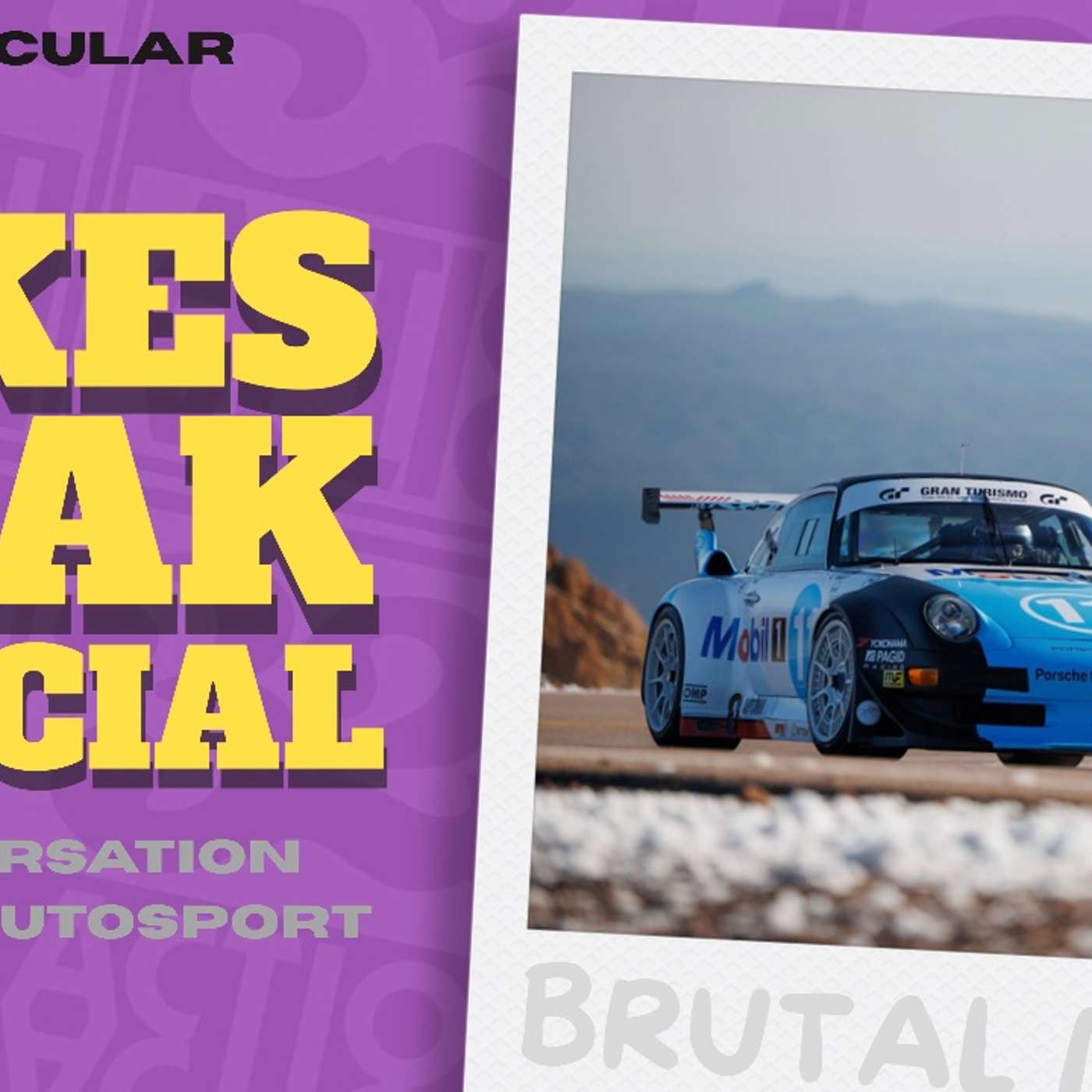
Racing FIVE Cars up America’s Most Brutal Mountain with Betim Berisha and Steven Wetterau
About this episode
Pikes Peak is introduced as the “Brutal Mountain” project’s centerpiece, with the hosts and guests trading stories about why the climb is so unforgiving—and why teams keep coming back. From Freightliner race-truck rides and altitude-sickness realities to chaos-driven “type two” fun, the conversation follows the build-and-crew grind: rushed tech, suspension and tire changes, and the constant threat of mechanical failure. Along the way, they compare Pikes Peak’s one-shot pressure to endurance strategy and celebrate the camaraderie it creates.
Racing FIVE Cars up America’s Most Brutal Mountain with Betim Berisha and Steven Wetterau
This week we’re trying out something brand new: a Very Vehicular Showcase: PIKES PEAK SPECIAL Episode with Betim Berisha (of BBi Autosport) and Steve Wetterau! It’s a bit of an experiment but we wanted to take the time to explore a subject in a more involved way, bringing you closer to the action with more footage and images, and what better to kick off with than the mysticism of the Brutal Mountain itself: Pikes Peak International Hill Climb – the ‘Race to the Clouds! Our guests this week have done battle at the mountain for several years and faced unimaginable challenges, but this year… they’re not going back? Stay tuned as they explain it all. Enjoy!
Footage from:
Toyo Tires
Will Roegge
Brandon Kado
Schaine McDougall
Hoonigan
Mobil 1
Calvin Salacain
Loni Unser
Brian Scotto
Partners:
Vyper Industrial
FCP Euro
Heatwave Visual
Wera Tools
KW Suspension
Producer: Nick Rutter @nickrutterarts
Music: SlikSound
Patreon: https://patreon.com/u37266647
https://bio.site/321actionaction
00:00 - Welcome & Introduction
00:45 - The Allure of the Mountain
03:08 - Why We’re Not Going This Year
04:54 - The Chaos Addiction
09:07 - A Poster, A Legend and a Dream
15:06 - Welcome to the Scrappy Underdogs
16:04 - How Steve Came Onboard
22:31 - Hell and Heaven on Earth: Living Through Pikes
28:38 - The Three-Car Year
29:57 - 2022: The Hoonipig
34:29 - Lia Block Takes the Wheel
35:40 - Sometimes, Your Heart Just Stops: Literally
37:59 - Back from the Brink: Project EVO
41:08 - BBi Team are Tough as Nails
42:51 - 2024: Everything that Can Go Wrong…?
48:32 - Redemption
51:42 - Steve Eyes Up GT4
57:15 - Sometimes, you Gotta Make a Phonecall… to Aston Martin Racing
01:03:26 - Off to the Races, in a Hurry!
01:12:48 - Superstition Versus Confidence
01:14:46 - Windstorm - the Mountain Decides
01:16:16 - An Asterisk Year
01:18:54 - Putting Together a Run
01:29:04 - Team Results And Redemption
01:31:07 - Future Plans
Pike's Peak
"How did like Pike's Peak first like kind of find you? Pike's Peak found me long story short..."
Pikes Peak is a very famous race up a mountain in Colorado. Because the air gets thinner as you climb, it’s a tough test for engines—especially turbo cars.
Pikes Peak is a famous hillclimb in Colorado where cars and drivers race up a steep mountain road. It’s known for extreme altitude changes, which strongly affect engine power and turbo performance.
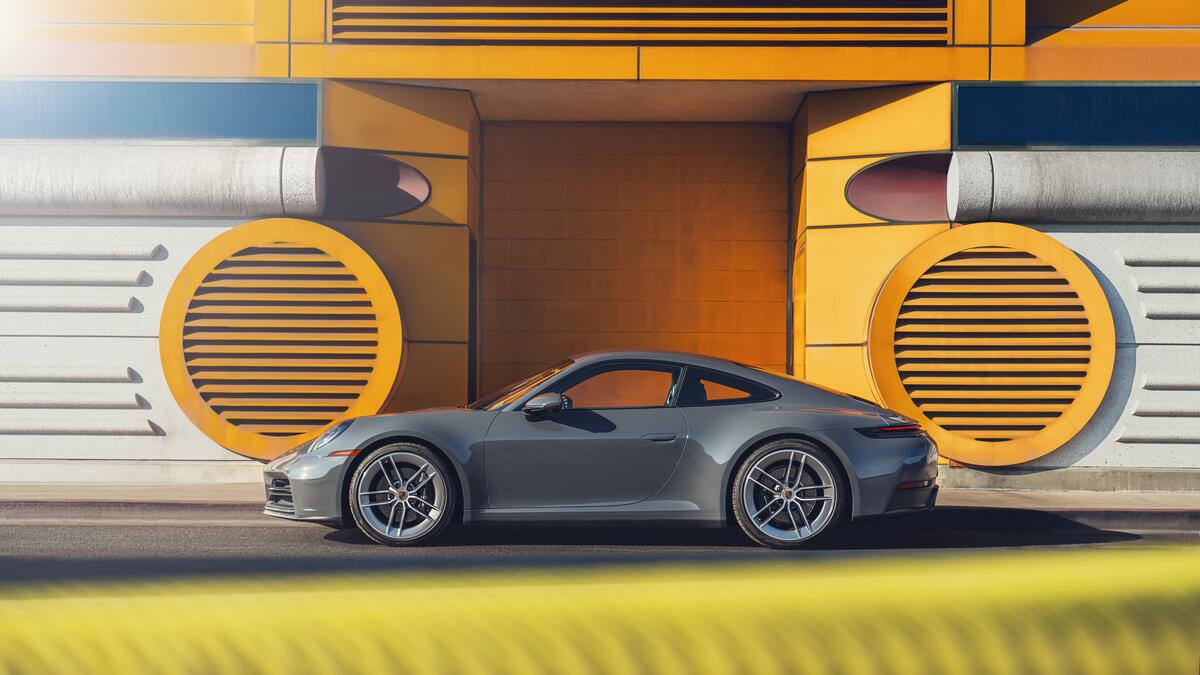
2010 GT 2 RS
"He said, hey, I drove a 2010 GT 2 RS street car, won that class."
This is a Porsche 911 GT2 RS from 2010. It’s a very serious, fast, track-oriented turbo Porsche, and the guest is talking about using it as a starting point for a custom build.
The Porsche 911 GT2 RS (2010) is a track-focused, turbocharged supercar known for extreme straight-line speed and aggressive aerodynamics. In this story, it’s used as the baseline “street car” that Jeff drove to win a class before the host tries to combine that concept with a cup car.
cup car
"And I drove a cup car, won that class. But you know, it'd be really cool if I mixed those two..."
A “cup car” is a track-focused version of a car, usually lighter and set up for racing. Here, they’re trying to combine that track setup with turbo power for a mountain race.
A “cup car” typically refers to a race-prepped Porsche Cup-style spec: stripped-down, track-oriented hardware with suspension and aero tuned for circuit use. In this context, the host is talking about combining the lightweight/agility of a cup car with the turbo power needed for altitude.
turbo
"it'd be really cool if I mixed those two, put the turbo in the cup... for the altitude."
A turbo is a device that helps an engine make more power by forcing extra air into it. At high altitude, it can help the engine keep making power even though the air is thinner.
A turbocharger uses exhaust gas to spin a turbine that forces more air into the engine. That matters at high altitude (like Pike’s Peak) because the thinner air reduces natural engine breathing, so turbo boost can help maintain power.
B8 engine
"we literally just took one of our very standard, we call them the B8 engine... which is 800 horsepower of the ground and kind of retooled it..."
“B8 engine” sounds like the shop’s own name for a particular engine build they already know how to make. They’re saying they modified that proven setup to create a turbo engine for the race car.
“B8 engine” appears to be the shop’s internal name for a specific high-output turbo engine package they build. The host frames it as a baseline they can retool to create a turbo setup capable of very high power and durability.
800 horsepower of the ground
"which is 800 horsepower of the ground and kind of retooled it and put it in the car."
They’re saying the car makes about 800 horsepower in a real, measurable way—power that actually reaches the wheels and the car. It’s not just a theoretical engine spec.
“Of the ground” is a colloquial way to describe measured wheel/vehicle output rather than just theoretical engine numbers. It implies the power is verified in a real-world drivetrain context (not just on paper).
991 Cup car
"Got a 991 Cup car and I was like, we're just going to build everything we learned on Jeff's car, everything we've learned from other people."
A “991 Cup car” is a Porsche 911 race car from the 991 generation. It’s built for racing, not for everyday driving.
A “991 Cup car” refers to a Porsche 911 Cup race car based on the 991-generation 911. These are purpose-built for one-make racing, so they’re typically stripped down, heavily reinforced, and tuned for consistent lap times rather than comfort.
time attack
"We're going to build, I think, our ultimate night 11 to go in time attack one and see what we can do in 2018."
Time attack is racing where the goal is to set the quickest timed run or lap. It’s more about getting the car to work perfectly for speed than racing for hours.
Time attack is a motorsport format where drivers aim for the fastest single lap (or best timed run) on a circuit. Unlike endurance racing, the focus is on maximizing grip and consistency lap after lap, often with very aggressive qualifying-style setups.
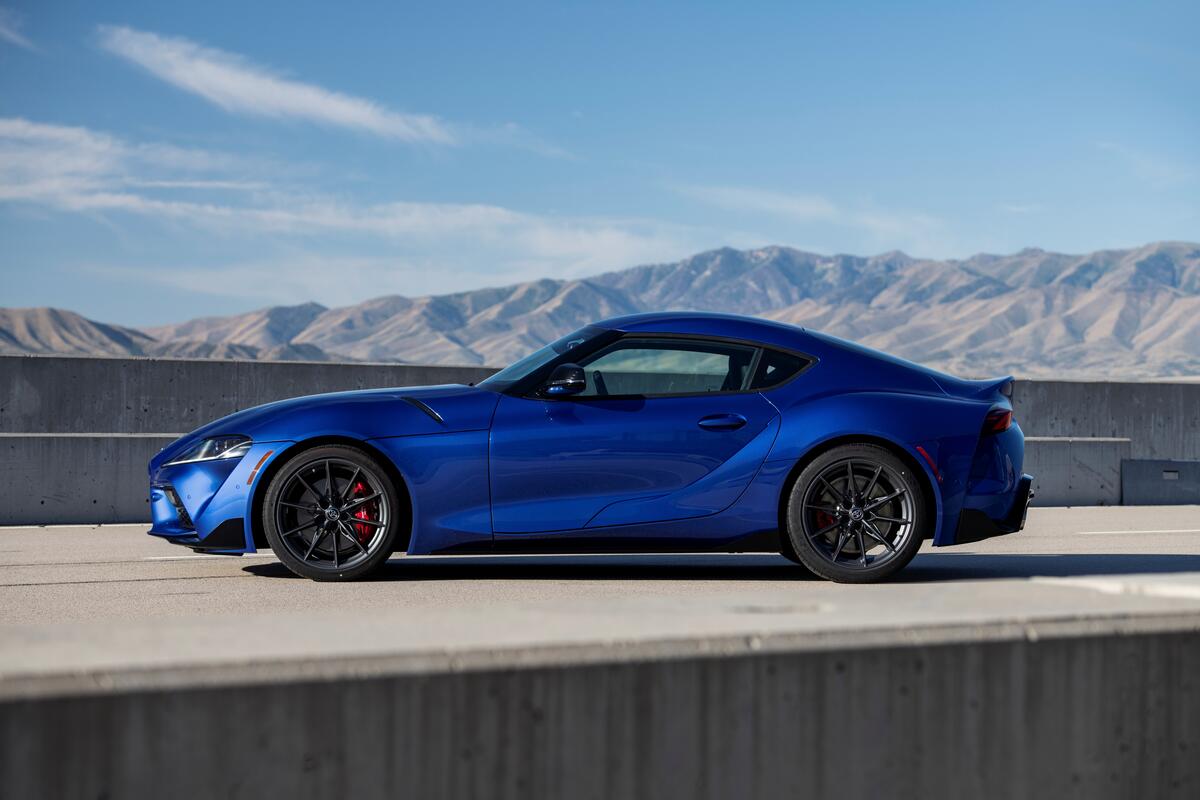
Toyota A90
"Right. But if I remember correctly, it was like a 90 day thrash to get the car done or 60 day, it was something incredibly small."
The Toyota Supra is a sports car made by Toyota. It’s built for performance and is popular with people who like to modify cars. The podcast mentions it being put together in a very short amount of time for a performance-focused project.
The Toyota Supra is a performance sports coupe that’s widely recognized for its strong acceleration and enthusiast appeal. The podcast mentions a very short build timeline—something like 60 to 90 days—suggesting a fast, intensive project to get the car completed and running. That’s significant because it points to the Supra being used as a serious performance build platform, not just a showroom car.
rolling chassis
"I think it was 60 days and it was basically a rolling chassis at the time. No glass, no, nothing in it, no wire harness, nothing."
A “rolling chassis” is basically the car’s skeleton and wheels/suspension, but not the finished, complete car. It can roll around, but it’s missing a lot of the stuff that makes it street/track-ready.
A “rolling chassis” means the car has the basic structure and suspension/drivetrain mounting points, but it’s not fully assembled. It’s typically missing interior/exterior items and often electrical components, so it can move under its own power only in a very incomplete state.
wire harness
"No glass, no, nothing in it, no wire harness, nothing. And so we thrashed on it, barely made it."
A wire harness is the car’s wiring bundle—basically the electrical “plumbing” that connects all the electronics together. If it’s missing, the car can’t run normally because the computers and sensors don’t have connections.
A wire harness is the bundled set of wires and connectors that distributes power and signals to the car’s electrical systems. Without it, many functions (engine management, sensors, gauges, lighting) can’t work because the electronics can’t communicate or receive power.
tech
"I mean, we made it to tech. The engine started like twice and then we went and broke it in after tech at the track, went and did the first day..."
“Tech” is the race’s inspection process. Officials check the car for safety and rule compliance before you’re allowed to race.
“Tech” is short for technical inspection at a race event, where officials check the car for rules compliance and safety. Passing tech is a prerequisite to compete, so “made it to tech” means the team got the car ready enough to be approved.
broke it in
"The engine started like twice and then we went and broke it in after tech at the track, went and did the first day without even an alignment on the car..."
“Break-in” is the early running period for a fresh or rebuilt engine. You drive it gently at first so the moving parts wear in properly and it lasts.
“Broke it in” refers to the controlled initial running period for a newly built or recently serviced engine. The goal is to seat internal components and manage heat/load so the engine settles in reliably before full racing use.
alignment
"Went and did the first day without even an alignment on the car, came back down, did the alignment and started anyways."
Alignment is adjusting the wheels so they’re pointed the right way. If it’s off, the tires scrub and the car won’t handle straight or predictably.
Alignment refers to setting the suspension angles—like camber, toe, and caster—so the tires contact the road correctly. If the car isn’t aligned, it can feel unstable, wear tires quickly, and lose lap time, especially in racing.
adjustable sway bars
"We used to have adjustable sway bars pulled it off, pulled cool suit, everything that we didn't need pulled it out of the car."
Sway bars help keep the car from leaning too much when you turn. If you can adjust them, you can make the car handle more like you want—either tighter or more balanced in corners.
Adjustable sway bars (also called anti-roll bars) help control how much the car leans in corners. By changing their stiffness, teams can tune balance—often reducing roll at the front or rear to improve grip and steering feel.
chassis setup
"I mean, he just turned it up and because finally the car came together. The chassis setup was there."
Chassis setup is how the suspension and handling are tuned. It’s what makes the car feel stable and predictable when you’re pushing hard.
“Chassis setup” is the overall tuning of the car’s suspension and handling characteristics—things like spring/damper settings, sway bar settings, alignment, and how the car transfers weight. When the chassis setup is right, the car can put power down consistently and feel predictable at the limit.
Baja
"Baja, I think I did that in 2006 as a co-driver. Uh, and that, that is along the same lines, but it's different, but it has that same staticky, like things can just go way wrong at any time."
“Baja” here refers to the Baja off-road races (commonly Baja California events), where vehicles tackle rough desert terrain at speed. Like Pikes Peak, it’s associated with unpredictability—small issues can escalate quickly because the surface and conditions are so demanding.
Isle of man
"When like chaos was acceptable, right? Isle of man, Baja, Dakar, um, the Nürburgring 24 hour, um, obviously pikes."
The Isle of Man is a famous motorcycle race on real roads. It’s considered especially dangerous because crashes are hard to avoid and there’s very little margin for mistakes.
The Isle of Man TT is a motorcycle road-racing event held on public roads around the Isle of Man. It’s historically known for extreme danger because the course is tight, fast, and unforgiving—there’s little room for error.
Dakar
"Isle of man, Baja, Dakar, um, the Nürburgring 24 hour, um, obviously pikes. Right. Um, these are these events that like still feel like really dangerous, but"
“Dakar” is the Dakar Rally, a very tough off-road race. It’s famous for long distances, rough terrain, and how easily things can go wrong if you’re not prepared.
“Dakar” refers to the Dakar Rally, a long-distance off-road race known for brutal navigation and harsh terrain. It’s a benchmark event for endurance and risk, where mechanical failures or navigation mistakes can quickly derail an entire run.
Nürburgring 24 hour
"Isle of man, Baja, Dakar, um, the Nürburgring 24 hour, um, obviously pikes. Right. Um, these are these events that like still feel like really dangerous, but"
The Nürburgring 24 Hours is a long endurance race at a famous German track. Because it’s so tough and it lasts a full day, drivers and cars have to handle both speed and long-duration stress.
The Nürburgring 24 Hours is an endurance race held at Germany’s Nürburgring circuit. The Nürburgring is known for demanding layouts and elevation changes, and the 24-hour format adds fatigue and reliability pressure over a full day of racing.
works mad
"We're aiming at works mad because we're spending every penny we have plus, um, it just is one of those things that, and then you get there, you're like, okay, this is going to be worth it."
“Works” means the car team is backed by the manufacturer, not just private owners. “Works mad” is basically saying they’re trying to hit a top, factory-backed standard even if it costs everything.
“Works” refers to a factory-backed racing effort, where the team is supported directly by the manufacturer. “Works mad” here means they’re pushing hard for a factory-level outcome, spending everything to make the car perform at that level.
gearbox
"trying finally get to re regeared the gearbox, changed the entire boost strategy, knocked a bunch of the, tried to simplify the car as much as we could."
The gearbox is what changes how fast the engine spins versus how fast the wheels turn. “Re-gearing” means changing the gear ratios so the car accelerates and pulls better for the track.
A gearbox is the transmission’s gear set that changes engine speed to match wheel speed. In racing, re-gearing the gearbox means altering gear ratios so the car stays in the best power band for acceleration and top speed.
boost strategy
"trying finally get to re regeared the gearbox, changed the entire boost strategy, knocked a bunch of the, tried to simplify the car as much as we could."
On a turbo car, “boost” is extra pressure that helps make more power. The “boost strategy” is the computer’s plan for when and how hard to add that pressure.
Boost strategy is how a turbocharged engine is controlled to manage boost pressure over time and across driving conditions. Changing it can improve power delivery and drivability, but it also increases stress on components if the calibration is wrong.
tick
"I remember him at playable, ripping. And then I heard a, um, a tick and I was like, oh, okay."
A “tick” is a new, noticeable clicking sound from the engine. In racing, that kind of sound usually means something isn’t right and could lead to bigger damage.
A “tick” in an engine context is often an audible warning of abnormal internal operation, such as detonation, valvetrain issues, or a failing component. In racing, a new tick after changes is treated as a serious sign that the engine may be developing damage.
grenade at the engine
"Well, well, we have to practice in the morning and we went up there and grenade at the engine. And that was horrible."
“Grenade” is slang for the engine failing in a big, sudden way. It usually means internal parts break and can fly out, and the car can’t keep running.
“Grenade” is racing slang for catastrophic engine failure, where the engine breaks internally and can scatter parts. When they say it “grenade[d] at the engine,” they mean the engine let go suddenly and violently.
flying engine parts
"Um, and especially when we couldn't fix it, flew engine parts, people, everything you could possibly fly out and there was just no fixing Humpty Dumpty."
This means the engine broke so badly that pieces came apart and could shoot out. It’s a sign of a major failure, not a minor problem.
“Flying engine parts” indicates a severe mechanical failure where rotating or pressurized components break apart. In motorsport, this can happen when an engine is pushed beyond its limits (for example, from boost/heat/pressure or lubrication issues), turning a failure into a safety hazard.
tribute run
"[2077.3s] was you, but somebody said put Leah in the car and do a tribute run up. [2080.8s] Pedal fitting done. [2082.4s] Done."
A “tribute run” is a special, often ceremonial or commemorative driving session where the car is driven up the course as a tribute to someone or something. In mountain-climb contexts, it typically happens alongside official runs and may be less about outright racing and more about honoring the moment.
Harnesses
"[2080.8s] Pedal fitting done. [2082.4s] Done. [2082.8s] Harnesses everything. [2084.0s] Yep."
A harness is a safety belt system used in race cars. It holds the driver in place more firmly than a normal seat belt, especially during crashes or big forces.
In racing, “harnesses” refers to installing and tightening a multi-point safety harness (usually a 4-, 5-, or 6-point setup) to secure the driver in the seat. It’s designed to keep the driver properly positioned during hard cornering, impacts, or rollovers.
go up the mountain
"when I think about BBI and up on the mountain, it's like the grit of getting something done and how that team comes together to make sure that those cars go up the mountain. They're safe. They're going to be fast."
They’re describing a hill-climb style run—driving up a steep mountain course. The big concerns are doing it safely, staying quick, and making sure the car doesn’t break while climbing.
“Go up the mountain” is shorthand for a hill-climb style event where cars must accelerate and maintain control on a steep, twisty course. The discussion emphasizes two key goals for that kind of run: staying safe and keeping the car fast enough to finish strongly without mechanical issues.
hold together
"And if they hold together or not, you know, we'll see, but you know what, most of the time they held together and EVO comes around and the whole team just rallied."
“Hold together” means the car keeps working reliably during the race. They’re basically asking whether it will survive the hard driving without breaking.
“Hold together” is race-team shorthand for mechanical durability—whether the car can survive repeated stress without failing. In motorsport, especially on demanding courses, teams plan for reliability as much as outright speed.
mechanical
"A lot of car crashes, a lot of mechanicals. ... They turned her around because of a mechanical."
A “mechanical” means the car had a problem—something broke or malfunctioned. It’s not a crash; it’s the vehicle itself causing the trouble.
In racing talk, “mechanical” is shorthand for a mechanical problem that forces a car to be slowed, stopped, or turned around—like an engine, cooling, exhaust, or drivetrain issue. It’s contrasted with crashes: “mechanicals” are failures of the car itself rather than driver error or contact.
qualifying time
"So even Lonnie went up, Lonnie's run in 24, her first section time was nine seconds faster than her qualifying time."
Qualifying time is the time you set in the event’s practice/qualifying run. It’s used as a benchmark (and sometimes to set your starting spot) before the main runs.
Qualifying time is the lap/run time set during the event’s qualifying session to establish starting position or benchmark performance. Comparing a first section time to qualifying shows whether the car and driver improved once the tires, conditions, and setup were dialed in.
heating the tires
"Turn it back around, come back down. And we didn't have time. We wanted to keep heating the tires."
Racing tires work best when they’re warm. “Heating the tires” means getting them hot enough to grip the road better, so the car handles predictably.
“Heating the tires” refers to bringing tire temperature up so the rubber grips better and responds more consistently. In racing, drivers often manage tire heat during stops/turnarounds because too-cold tires can reduce traction and increase the chance of sliding or mechanical stress.
EGT bung
"And then she went back up and there was a EGT bung on the exhaust that worked its way loose"
EGT means exhaust gas temperature. An EGT bung is a small fitting on the exhaust where a temperature sensor mounts. If it loosens, hot exhaust can escape and damage nearby wires and parts.
EGT stands for exhaust gas temperature, and an EGT bung is a threaded fitting in the exhaust used to mount an EGT sensor. If that bung works loose, the sensor/connection can leak or fail, and exhaust can escape where it shouldn’t—creating extreme heat near wiring and bodywork.
melted the harness
"and it blew hot exhaust there like a jet stream out, like a six millimeter jet stream out of the top and melted the harness"
A wiring harness is the car’s bundle of wires. If it gets melted by extreme heat, the car can lose electrical functions or even short out.
A “harness” is the wiring bundle that routes electrical power and signals through the car. When exhaust heat escapes—especially as a concentrated jet—it can melt insulation, short circuits, and potentially disable critical systems.
caught the back of the car on fire
"and it blew hot exhaust there like a jet stream out ... and melted the harness and caught the back of the car on fire."
The fire started near the back of the car, probably because hot exhaust damaged something flammable. In racing, fires can spread fast and can be hard to stop quickly.
This describes a fire starting at the rear of the vehicle, likely from melted wiring or nearby materials igniting due to escaped exhaust heat. In motorsport, rear-engine/exhaust-area fires are especially dangerous because they can quickly damage wiring, fuel lines, and cooling components.
park
"what we did understand is that she was on a hill, couldn't put it in park or get it in neutral, whatever, but she was fine."
“Park” is the gear position that locks the car when it’s stopped (usually on automatics). If she couldn’t get it into Park, it suggests the car wasn’t responding normally for shifting.
“Park” is the transmission position used to lock the drivetrain when a vehicle is stopped (common on automatic transmissions). If the driver can’t shift into Park (or neutral), it can indicate a control or mechanical issue that affects how the car can be secured after a problem.
homologated
"Uh, you kind of have to run it as they, as like the AC or the, yeah, you have to run it all homologated. So yeah, it's a whole homologated series."
“Homologated” means the race car has been officially approved to race in that category. It’s like getting permission from the rules so the car has to match the approved setup.
In racing, “homologated” means the car (or a specific configuration) has been officially approved to compete under a rulebook. That approval ensures the car matches the required specifications for that series, so teams can’t just run one-off custom parts without approval.
McLaren
"We got to take a call with McLaren. I'm like, what? So we take a call with McLaren."
McLaren is a British supercar and racing brand that competes in multiple GT and endurance programs. Here, the mention is about taking a call with McLaren while planning which car to run under the GT4/turbo rule set.
Daytona
"And then he's like, Hey man, you want to go to Daytona? Like, cool. We went, we went met with Aston Martin."
“Daytona” is a famous racing area in Florida. In this context, they’re going there to meet and get track time for a race program.
“Daytona” refers to Daytona Beach, Florida, and—by context here—the motorsport venue used for major endurance and sports-car events. It’s a common destination for GT and endurance racing, which is why teams schedule meetings and track time there.
Aston Martin
"We went, we went met with Aston Martin. I think you met with BMW on your own. So he's just trying to figure out and looking at which car has the, the best, um, chances within the rule set and landed on Aston Martin."
Aston Martin makes high-performance cars and also races them. They’re discussing which racing car/manufacturer is likely to do best, and they chose Aston Martin.
Aston Martin is a British performance-car brand with a long history in GT racing. In this segment, the team is evaluating which manufacturer/car has the best chances within the rule set and “landed on Aston Martin.”
BMW
"We went, we went met with Aston Martin. I think you met with BMW on your own. So he's just trying to figure out and looking at which car has the, the best, um, chances within the rule set and landed on Aston Martin."
BMW is a major car company that also competes in racing. Here it’s mentioned as another manufacturer they talked to while choosing what to run.
BMW is a German automaker with major involvement in GT and touring-car racing. The speaker mentions meeting with BMW separately while comparing options for the best car under the GT4/turbo rule set.
Porsche Colorado Springs
"So, and we're teaming up with Porsche Colorado Springs. So this is like a Porsche up to three cars."
That’s a Porsche dealership in Colorado Springs. They’re being mentioned as a partner for the Porsche cars the team is running.
Porsche Colorado Springs is a local Porsche dealership/partner. In this segment, it’s mentioned as the team’s collaboration point for a Porsche-related effort, likely tied to sourcing support or logistics for the cars they run.
teaming up
"So, and we're teaming up with Porsche Colorado Springs. So this is like a Porsche up to three cars."
They’re saying they’re working together with another group. In this case, it’s a Porsche dealership partnering with them for the cars they’re running.
“Teaming up” here refers to a collaboration between the podcast/crew and a Porsche dealership. It’s essentially a partnership arrangement to support the logistics and participation around running Porsche cars.
GT four
"Like, you know, all these cars at the time were all GT four Caymans and, hey, being in a spec class going up first time, you know, up the mountain would be pretty awesome."
GT4 is a type of race category for cars that start as regular production models. Teams modify them for racing, but the rules are meant to keep things more affordable and competitive.
“GT4” is a racing class for production-based sports cars that are modified for competition but with tighter cost and performance limits than higher GT categories. When the host says “GT4 Caymans,” they mean Porsche Cayman race cars prepared to GT4-spec rules.
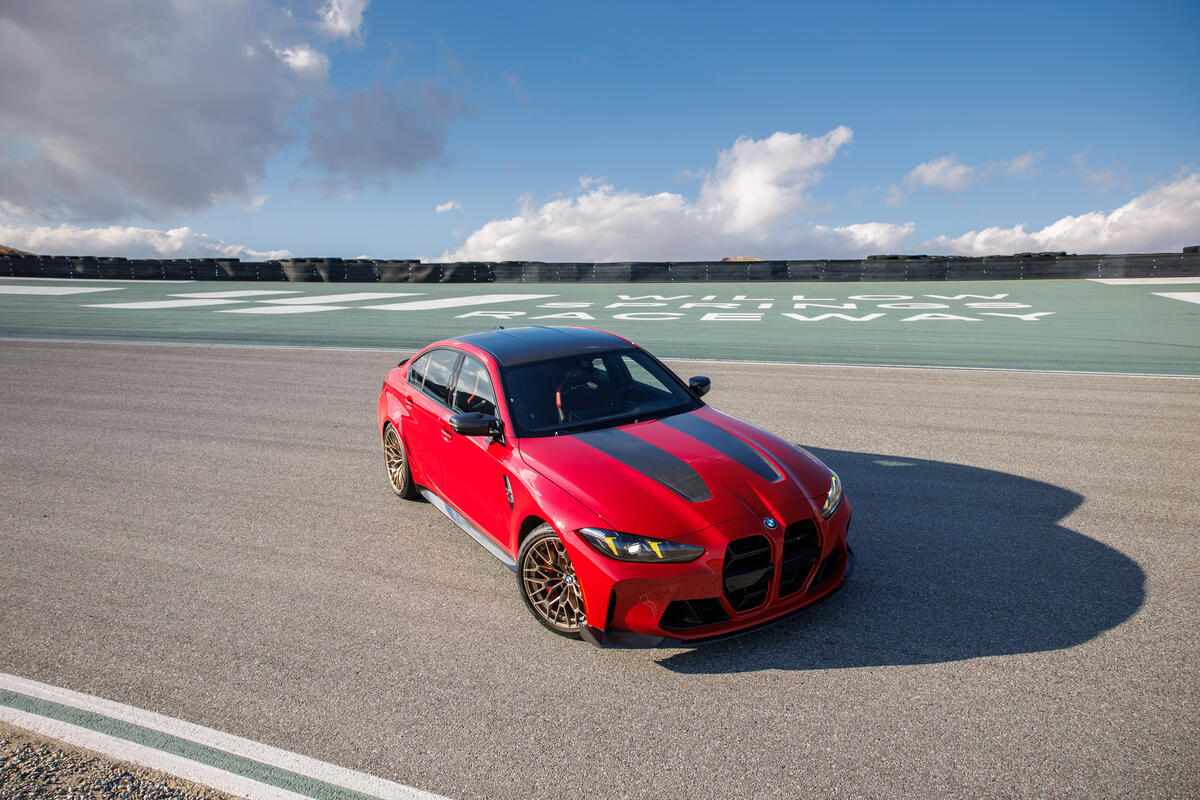
BMW E30 M3
"So first race ever was in an E 30 M three J stock BMW CCA class, uh, at Autoclub Speedway, which is no longer there, but you imagine a 120 mile an hour, you know, E 30 M three going around Autoclub Speedway."
The BMW E30 M3 is an older BMW M3 from the 1980s/early 1990s that’s well-known for being a driver-focused race-ready car. The speaker says it was their first race car.
The BMW E30 M3 is the first-generation M3, famous for its lightweight, high-revving character and strong motorsport heritage. In this segment, it’s referenced as the speaker’s first race car in an SCCA/CCA class at Autoclub Speedway.
Autoclub Speedway
"So first race ever was in an E 30 M three J stock BMW CCA class, uh, at Autoclub Speedway, which is no longer there, but you imagine a 120 mile an hour, you know, E 30 M three going around Autoclub Speedway."
Autoclub Speedway was a race track where cars used to compete. The speaker mentions it when talking about their first race and how fast their BMW M3 was going there.
Autoclub Speedway is a former racing venue in Southern California that hosted motorsport events. The speaker uses it as a reference point for their first race, describing an E30 M3 running around the track at around 120 mph.

BMW E30
"So started out, um, a little bit in carts and then really BMWs. So first race ever was in an E 30 M three J stock BMW CCA class, uh, at Autoclub Speedway, which is no longer there, but you imagine a 120 mile an hour, you know,"
The BMW 3 Series is a compact car made by BMW. The podcast specifically talks about the E30 M3, which is a more performance-oriented version used for racing. It’s mentioned because it was the speaker’s first race car.
The BMW 3 Series is a compact luxury sedan that’s also been a common choice for motorsports and track-focused builds. In the podcast, the E30 M3 is specifically referenced as the car used for the speaker’s first race, placing it in a racing context and showing how the platform can be adapted for competition. That’s why it comes up: it represents an entry point into racing and a well-known performance model in BMW’s lineup.
D mod
"And then, um, ended up building a, what's called a D mod E 46 M three. Um, D mod was like, you could add arrow. You could do some engine stuff. We had to be below a certain, uh, engine displacement for that tall work well."
“D mod” is a racing category with rules about what you’re allowed to change on the car. The speaker says it let them do some upgrades, but they still had to keep the engine size under a set limit.
"D mod" refers to a specific racing class/rule set that limits what modifications you can make. In this segment, the speaker explains that it allowed certain changes (like adding aero and some engine work) but required staying below a displacement limit to qualify.

Porsche Cayman
"Cause like, obviously you were up against the Cayman, which is slightly different vehicle, smaller, lighter weight, obviously not turbo, but those cars have also been running there for years..."
The Porsche Cayman is a mid-engine sports car. Here it’s mentioned as a comparison point to another race car, because it’s lighter and has a different setup than the Aston they were preparing.
The Porsche Cayman is a mid-engine sports car that’s often used as a benchmark in GT racing. In this segment, it’s referenced as a slightly different competitor because it’s smaller and lighter, and the speaker contrasts its setup maturity versus the Aston.
full slick
"So we had to, we had to change the tires out from a full slick to a treaded motor sport tire..."
A full slick tire has no tread grooves, so it can grip the road very well on a dry track. They had to switch away from it because the rules required a treaded spec tire.
A full slick is a tire with no tread pattern, used for maximum grip on dry track. Here, the team had to switch from a full slick to a treaded tire because the event required a spec tire in the class.
spec tire
"...the AO 52 by Oklahoma, cause that's a spec tire in the class."
A spec tire is a specific tire that everyone in the class has to run. That keeps the competition fair, so the team’s setup work matters more than picking a faster tire.
A spec tire is a tire model that competitors are required to use, which helps level the playing field by reducing tire-related performance differences. The speaker says the AO 52 is the spec tire in the class, which is why they had to change away from the slicks.
chassis more compliant
"Then we had to, within the window of what is allowed, we had to make the chassis more compliant, we played with ride heights..."
Making the chassis “more compliant” means tuning the car to ride and react more smoothly over bumps. That can help the tires stay planted and make the driver feel more confident.
“More compliant” means making the car’s suspension/ride behavior absorb bumps and follow the road surface more easily. In racing setup terms, compliance can affect traction and driver confidence, and the team adjusted it within the allowed rules while being closely monitored.
ride heights
"...we played with ride heights, but we had to be, they were watching us so closely."
Ride height is how high the car sits relative to the ground. Adjusting it changes how the suspension works and can affect grip and balance, so teams tune it carefully for track conditions.
Ride height is the distance between the car’s body and the ground, controlled by suspension settings. Changing ride height can alter aerodynamics and suspension geometry, which is why the team experimented with it to find a setup that worked within tight rule limits and kept the driver comfortable.
roll in the back
"...seeing if he's to how, you know, the, do we have too much roll in the back and he'd come back and he's like, yeah, it's too much."
“Roll in the back” is how much the rear of the car leans during cornering. If it leans too much, the car can feel off-balance, so they adjust settings to calm it down.
“Roll in the back” refers to how much the rear of the car leans or rotates when cornering or under load. Too much rear roll can make the car feel unstable or uncomfortable, so the team used small ride-height changes to reduce it and find a compromise.
thermal
"So you drove the car once. Two days of thermal. I mean, it was probably like maybe."
“Thermal” here means heat. They’re talking about letting the car get up to its normal operating temperature so it behaves the way it will during the race.
In motorsport talk, “thermal” usually refers to heat soak and temperature stabilization—getting the car up to operating temperatures so systems behave normally. It matters because components can act differently when they’re cold versus fully heat-soaked.
shake down
"We did a shake down on Pueblo. Yeah. Just kind of something a little bit more in Alto."
A “shake down” is a pre-event test session where the team runs the car briefly to find problems before the main run. It’s meant to catch issues like setup errors, leaks, or unexpected failures under real operating conditions.
altitude test
"We, yeah, because you always want to do an altitude test. And for some reason, you could be perfect here in California and we get the Colorado and weird shit breaks off the trailer."
An “altitude test” means testing the car at high elevation. The air is thinner up there, so the car can feel and perform differently than it does at sea level.
An “altitude test” is a run performed at high elevation to verify the car’s behavior when air density is lower. For naturally aspirated engines especially, thin air reduces power and can change cooling and drivability.
cooling
"And I don't know a lot of weird things to cars. If you're cooling, it's a big one. I know."
“Cooling” is how the car keeps its engine and other parts from overheating. On a mountain climb, it can be harder for the car to shed heat, so cooling becomes critical.
“Cooling” refers to how the car manages heat via the radiator, fans/pumps, and airflow. At altitude and during sustained climbs, cooling can become a major limiting factor because airflow and operating conditions differ from lower elevations.
maximize the performance of that car and you as an individual
"Driving that car up the mountain, regardless of whatever the conditions may be to maximize the performance of that car and you as an individual."
They’re basically saying the goal is to get the most out of the car and the driver. That means driving smart for the conditions and doing the basics well, not just hoping things go your way.
The host is describing a driver-focused approach: adapting to conditions and extracting the best possible performance from both the car and the driver. In racing terms, this is about consistent execution—line choice, braking/acceleration timing, and staying within the car’s grip limits—rather than relying on luck or “superstitions.”
temp in the tires
"And for me... going through the first couple of corners... you want to get the, you know, some temp in the tires, get some pressure built up so then you can really start to accelerate as you get further on up."
Tires work best when they’re warm. Early in the run, drivers try to heat the tires up so they stick better to the road and you can go faster with more confidence.
Tire temperature (“temp in the tires”) is critical because rubber grips best within a certain heat range. Drivers aim to bring tires up to temperature early—often through the first corners—so they can generate more grip and accelerate harder later.
pressure
"you want to get the, you know, some temp in the tires, get some pressure built up so then you can really start to accelerate as you get further on up."
Tire pressure affects contact patch shape and grip, and it changes as tires heat up. In racing, drivers and teams manage pressure so the tire operates in its ideal temperature/pressure window for consistent traction.
hill climb
"And these are diehard pikes peak hill climb guys and, and families that are just coming up forever, just to see what's going on."
A hill climb is a race where cars go up a steep mountain road. The climb makes it tougher because the road is always changing and the air gets thinner higher up.
A hill climb is a motorsport format where cars race uphill on a road course with a significant elevation change. Unlike a closed-circuit track race, the course demands careful traction and power management as conditions change with altitude and grade.
apexes
"talk about all his break points or apexes. It's like, oh yeah, that little tiny pine tree that's in the crack on the left side."
The apex is the closest point to the inside of the turn. Taking it well helps the car turn cleanly and gives you a better exit speed.
An “apex” is the point in a corner where the driver aims to get closest to the inside of the track. Choosing the right apex affects cornering speed, how well the car rotates, and how smoothly you can accelerate out.
break points
"giving me all his pointers and it's, it's amazing to listen to him talk about all his break points or apexes."
A brake point is the spot on the road where you start slowing down for a turn. If you brake too early or too late, the car won’t be positioned right to take the corner smoothly.
“Brake points” (the transcript says “break points”) are the exact spots on the track where a driver starts braking for a corner. Hitting the right brake point helps you arrive at the corner at the intended speed and set up the best line.
roll as much momentum as you can
"you want to roll as much momentum as you can, cause it's still comparatively to other cars. You've got, you know, GT four, it is really a momentum car"
In racing, momentum just means keeping your speed going through the turn. The goal is to slow down smoothly, not waste speed, and then accelerate out efficiently.
“Momentum” in racing is the car’s speed and energy carried through a corner instead of scrubbing it off with heavy braking. When a driver “rolls” momentum, they aim for smooth entries and exits so the car stays fast through the lap, which is especially important in cars that aren’t as powerful or responsive.
heat in the tires
"So until you get some heat in the tires, you really got to play it pretty careful on what's going on and dialing in some ABS settings, TC settings to kind of deal with that a little bit throughout the run."
Tires work best when they’re warm. If they’re cold, they don’t stick to the road as well, so you have to drive more carefully until they get up to temperature.
Tire “heat” refers to bringing the tires up to an operating temperature where the rubber grips better. Until the tires are warm, grip is lower—especially on dusty surfaces—so the driver has to be gentler and more deliberate.
ABS settings
"So until you get some heat in the tires, you really got to play it pretty careful on what's going on and dialing in some ABS settings, TC settings to kind of deal with that a little bit throughout the run."
ABS is a system that helps your brakes keep gripping instead of locking up. “ABS settings” means the car can be tuned to brake more smoothly for the conditions, like dust and low tire grip.
ABS (anti-lock braking system) settings control how the car modulates brake pressure to prevent wheel lockup. On a dusty, dirty track, ABS calibration can help you brake more consistently without losing steering control.
TC settings
"So until you get some heat in the tires, you really got to play it pretty careful on what's going on and dialing in some ABS settings, TC settings to kind of deal with that a little bit throughout the run."
Traction control helps prevent the drive wheels from spinning when the road is slippery. “TC settings” means the car can be tuned to be more or less intervention-heavy depending on how much grip you have.
TC (traction control) settings govern how aggressively the car reduces wheel spin during acceleration. With dusty traction, adjusting TC can help the driver keep the car moving forward while avoiding sudden loss of grip.
torquey
"and then just let that thing eat that very torquey car felt really"
“Torquey” means the car feels like it has strong pulling power. That helps it accelerate out of turns, but on a slippery surface you still have to manage traction.
“Torquey” describes an engine that produces strong torque (twisting force) at accessible engine speeds. More torque can make the car feel eager to accelerate out of corners, but it can also increase wheel spin if traction is limited.
understeer
"solid and as building up pace further and further up understeer, um, you know, came out a little bit more, which was great."
Understeer is when the car doesn’t turn as much as you want. It tends to slide wide toward the outside of the turn because the front tires lose grip first.
Understeer is when a car turns less than the driver intends—typically the front tires lose grip first. The car then pushes toward the outside of the corner instead of rotating into the turn.
oversteer
"Um, the car wanted to oversteer a little bit more, which was kind of fine with some of the tighter corners that you get."
Oversteer is when the car’s back end slips or rotates more than you planned. It usually happens when the rear tires lose grip first.
Oversteer is when the car turns more than the driver expects—usually the rear tires lose grip first. That can make the back end feel like it wants to rotate outward in the corner.
washed out
"Um, the car wanted to oversteer a little bit more, which was kind of fine with some of the tighter corners that you get. And then I get to rookies and just sent it on through there. Like it was nothing and it just felt so, so good. Did you have any moments or was it pretty smooth on up? There was one, I'd have to go back and look at the video, but there was one where I just went a little bit too, maybe a little bit too deep and just with the dust on the track, it just kind of washed out."
“Washed out” means the tires lost grip and the car slid instead of turning the way it should. Dust on the track can make this happen quickly.
“Washed out” describes a loss of traction where the tires slide and the car stops responding normally to steering input. In this context, track dust reduces grip, so the car can’t hold the line.
dust on the track
"There was one, I'd have to go back and look at the video, but there was one where I just went a little bit too, maybe a little bit too deep and just with the dust on the track, it just kind of washed out."
Track dust is dirt/debris on the racing surface. It makes the tires grip less, so the car can suddenly slide or feel unstable.
Track dust is loose debris on the racing line that reduces tire grip and can make the car unpredictable. Drivers often adjust braking/turn-in because dust can cause sudden traction loss.
tires built some temp
"And then between the, the team of taking my feedback of what I was looking for in that car and just corner by corner and just feeling the front of that car and the, the grip just continued to build as the tires built some temp in them."
Tires need heat to work well. When they warm up, they usually grip better, so the car feels more stable and responsive.
Tire temperature (“temp”) affects grip: as tires warm up, their rubber works in its optimal range and can generate more traction. Many race setups aim to bring tires into the right temperature window during practice.
sector
"It was the most amazing feeling. What was your favorite sector during practice? Like, did you, were you prepping for the bottom?"
A sector is just a section of the track that gets timed separately. Drivers use it to figure out which parts of the course they’re doing well in and which need improvement.
A “sector” is a defined portion of a race track used for timing and strategy. Drivers compare sector times to see where they’re gaining or losing speed and adjust their approach accordingly.
the bottom
"Cause I know a lot of people sort of drive the bottom and then try to make a lot especially the turbo cars, try to make some time up top."
“The bottom” means taking the lower/inside line through a turn. It’s often closer to the inside curb, and drivers pick it based on how well the tires grip there.
“The bottom” is racing slang for the lower line through a corner—typically closer to the inside curb/apex. Drivers choose it based on grip and how much speed they can carry without losing traction.
up top
"Cause I know a lot of people sort of drive the bottom and then try to make a lot especially the turbo cars, try to make some time up top. Like what was your strategy before actual race day?"
“Up top” means taking a higher/outside line through the turn. Drivers may do this to get a better angle and traction when they exit.
“Up top” refers to the higher line through a corner—farther toward the outside. It’s often used to set up better exit traction or to avoid the tightest, dustiest, or least-grippy part of the track.
timing
"Um, and I think it was one of our practice days up there where I was fastest overall on the GT four car and not to toot my own horn, but being the rookie up there and senior name at the top of the timing, even though it's just a practice."
In racing, “timing” means the stopwatch system that records how fast each run or lap is. Being “at the top of the timing” means you were quickest based on the official recorded times.
In racing, “timing” refers to the official measurement of lap times or run times used to rank drivers. When someone says they were “at the top of the timing,” they mean they set the fastest recorded time in that session.
Pike peak
"I mean, exhibition, but yeah, you had pike peak open in that because we were together."
Pikes Peak is a very famous mountain road climb in Colorado. It’s hard on cars because the road is steep and conditions change as you go up. The hosts are referencing that event context for their runs.
Pikes Peak is a famous mountain climb in Colorado known for steep grades, fast elevation changes, and demanding traction and cooling conditions. It’s a common venue for “open” practice/exhibition runs where drivers test car setup and driving lines under real climb conditions.
road America
"out of that conversation was a test at road America. Um, they had a driver that wasn't able to make the race and well, go test."
Road America is a famous race track in the U.S. Here, it’s where they went to test before moving on to a bigger race schedule.
Road America is a well-known road racing circuit in the United States, often used for testing and race weekends. In this segment, it’s where the speaker did a test that led to later racing opportunities.
BMW GT four
"So it was in a BMW GT four, um, running, uh, Michelin pilot challenge in Imsa."
This is a BMW race car built to compete in the GT4 class. GT4 cars are based on real production cars, but they’re modified for racing and safety so private teams can compete.
“BMW GT four” refers to a BMW prepared for GT4-spec racing, which is a class built for customer teams rather than top-level factory prototypes. In GT4, cars are based on production models but are modified for racing safety and performance, then raced under series rules.
Michelin pilot challenge
"So it was in a BMW GT four, um, running, uh, Michelin pilot challenge in Imsa."
Michelin Pilot Challenge is a North American sports-car racing series run under IMSA, where teams compete in classes like GT4 and other production-based categories. The “Pilot Challenge” name comes from Michelin’s sponsorship, and it’s known for endurance-style race formats.
IMSA
"So it was in a BMW GT four, um, running, uh, Michelin pilot challenge in Imsa."
IMSA is the organization that runs and governs a lot of sports-car racing in North America. If a race is “in IMSA,” it’s part of their official series and rule set.
IMSA stands for the International Motor Sports Association, the sanctioning body that organizes major sports-car racing in North America. When the transcript says “in IMSA,” it means the event and rules are under IMSA’s series structure.
peregrine racing
"And then that kicked off a full season run in Michelin pilot challenge with a peregrine racing, which is Steve Dynan's race team"
Peregrine Racing is the name of the racing team involved in the series. It’s the group that runs the car and supports the driver during races.
Peregrine Racing is referenced as the speaker’s racing team in the Michelin Pilot Challenge. In motorsport terms, a team name like this typically identifies the organization running the car(s), logistics, and race operations.
endurance racing
"where in endurance racing over two hours or four hours, or we move on to GTD or beyond, um, you've got bigger endurance, you know, more hours to be able to formulate different strategies to work your way back up the ladder"
Endurance racing is when the race lasts a long time, like a few hours. Since it’s not just a quick dash, teams plan stops and driver swaps so the car can keep going strong.
Endurance racing is a format where cars race for a long time (often multiple hours) rather than a short sprint. Because the event lasts so long, teams plan things like stint length, pit stops, and driver changes to manage pace and resources over time.
one shot
"Pikes is so different in a sense where race day comes around and you have one shot to get to the top of that mountain or halfway in our case... where it pikes, it's one shot. And that's it."
“One shot” means you only get one real chance to do it. If you mess up, there usually isn’t a second try to fix it later.
“One shot” describes a format where the competitor has a single attempt to achieve the result, rather than multiple race segments to recover. That structure changes how drivers manage risk, because mistakes can’t be undone later with strategy.
GTD
"where in endurance racing over two hours or four hours, or we move on to GTD or beyond, um, you've got bigger endurance, you know, more hours"
GTD is a category/class in endurance racing. It groups certain race cars together so they compete under similar rules and performance limits.
GTD is a racing class designation used in sports car endurance racing for cars built to a specific set of rules and performance balancing. It helps group similar-spec cars so competition is based more on driver and team execution than on raw differences in car design.
pit stops
"Endurance racing, you've got a so much strategy that goes into when you're doing your pit stops, when you're doing driver changes, how much fuel we're doing"
Pit stops are planned stops during the race where the team services the car. In longer races, when you pit (and what you do there) can make a big difference in how fast you can keep going.
Pit stops are scheduled service stops in the pits where a race team can refuel, change tires, and sometimes make other adjustments. In endurance racing, pit stops are a major part of strategy because they directly affect lap times and how long the car can stay competitive.
driver changes
"Endurance racing, you've got a so much strategy that goes into when you're doing your pit stops, when you're doing driver changes, how much fuel we're doing"
Driver changes mean switching to another driver during a long race. Teams do it to keep the driving sharp and safe, and they plan it around pit stops.
Driver changes are when teams swap to a different driver during a race, which is common in endurance events. The goal is to keep performance high while managing fatigue, and it’s coordinated with pit stops and overall race strategy.
fuel
"when you're doing your pit stops, when you're doing driver changes, how much fuel we're doing, are we doing a shortstop?"
Fuel is the amount of gas the race car has and how the team plans to refill it. In endurance races, when and how much you refuel can change your speed and stop frequency.
In racing strategy, fuel refers to how much energy the car carries and how teams plan refueling to match race pace and stint length. Decisions about fuel load and refueling timing can affect both speed and how often the car needs to stop.
shortstop
"how much fuel we're doing, are we doing a shortstop? We're doing left side tires or only right side tires, whatever it may be."
A shortstop is a quicker pit stop where the team does only what’s needed, not a full service. It’s used to save time and keep the race strategy on track.
A shortstop is a shorter, more limited pit stop than a full service stop, typically used to adjust strategy mid-race. Teams may choose it to save time or to handle a specific need (like a quick tire or fuel adjustment) without doing everything at once.
left side tires
"We're doing left side tires or only right side tires, whatever it may be."
Sometimes teams replace only the tires on one side of the car. If one side is wearing out faster, swapping just those tires can help the car grip better without spending as much time in the pits.
Changing only the left-side tires (instead of all four) is a strategy used when tire wear is uneven, such as on tracks with consistent cornering loads. By replacing just the worn side, teams can reduce pit time while still improving grip where it’s needed most.
Nurburgring
"[5706.6s] I love it. [5707.3s] Um, but it has to be like Nurburgring, which is like real brutal. [5712.7s] Yeah."
The Nürburgring is a legendary race track in Germany. People call it “brutal” because it’s really hard on both cars and drivers—lots of turns and changes in elevation make it a tough test.
The Nürburgring is a famous German racing venue known for punishing track conditions and demanding driving. In particular, its Nordschleife layout is often described as “brutal” because of long lap distances, big elevation changes, and relentless cornering demands.
factory teams
"So you've got top level factory teams that are showing up, trying to set records like a Ford and a crazy spaceship. Um, and then you have guys like yourselves who are privateers, but running on the top level of the performance."
A factory team is a racing team backed by the car company itself. They usually get more support and resources than smaller teams, so they’re often the ones everyone measures against.
Factory teams are manufacturer-backed racing entries, typically with direct engineering support, parts supply, and budget from the automaker. They’re often the benchmark for pace and development, which is why the host contrasts them with privateers.
privateers
"And it's also such a, a wide and diverse group of people in cars. So you've got top level factory teams that are showing up, trying to set records like a Ford and a crazy spaceship. Um, and then you have guys like yourselves who are privateers, but running on the top level of the performance."
A privateer is a racing team that isn’t directly run by a car company. They may still race fast and compete with top teams, but they usually have less manufacturer backing.
A privateer is a racing team that isn’t a manufacturer-backed factory squad. In series like IMSA, privateers can still compete at the front, but they typically run with less direct factory support and fewer resources than the “factory” teams.
five cylinder
"And then the, the, with the five cylinder and the, oh yeah, the guys who came over, yeah, yeah, they came over with that thing with super reds."
A “five cylinder” engine means the car has five cylinders that help generate power. It’s just a specific engine layout, and it can feel smoother than some smaller cylinder counts.
“Five cylinder” refers to an engine with five pistons/cylinders in one engine block. It’s a distinctive configuration (more common in some European performance applications) that affects smoothness, packaging, and how the engine makes power.
mid-engine
"Basically built a mid-engine sort of Audi based on, um, like two photos, so three photos of what was supposed to be the group S car."
“Mid-engine” means the engine is placed closer to the middle of the car instead of the front. That can help the car handle better because the weight is more balanced.
A “mid-engine” layout places the engine near the center of the car, typically behind the front axle and ahead of the rear axle. That helps balance weight front-to-rear and can improve handling and steering response for track-focused cars.
group S car
"Basically built a mid-engine sort of Audi based on, um, like two photos, so three photos of what was supposed to be the group S car. Right. And then the, the, that prototype group, that major group S car."
“Group S” is a racing category with rules that cars have to follow. The speaker is saying the prototype was meant to be built to fit that kind of race class.
“Group S” refers to a specific motorsport homologation/competition category (a ruleset that manufacturers built cars to). When the host says the prototype was “supposed to be the group S car,” they’re describing a car intended to meet that racing class’s requirements.
Request an Explanation
Heard something you'd like explained? We'll add it to this episode.
Sign in to request explanations for terms you heard.
Want to learn more?
Browse our glossary for plain-English explanations of automotive terms, jargon, and concepts.
Help improve this episode
See something that's not quite right? Our annotations are AI-generated and can sometimes miss the mark. Click the flag icon on any annotation to suggest a correction.