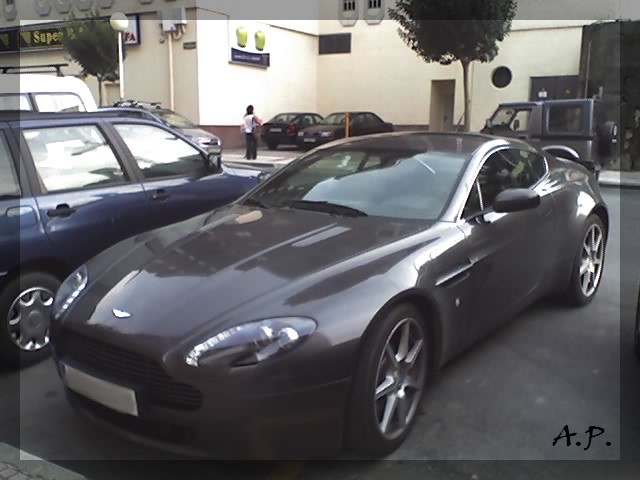
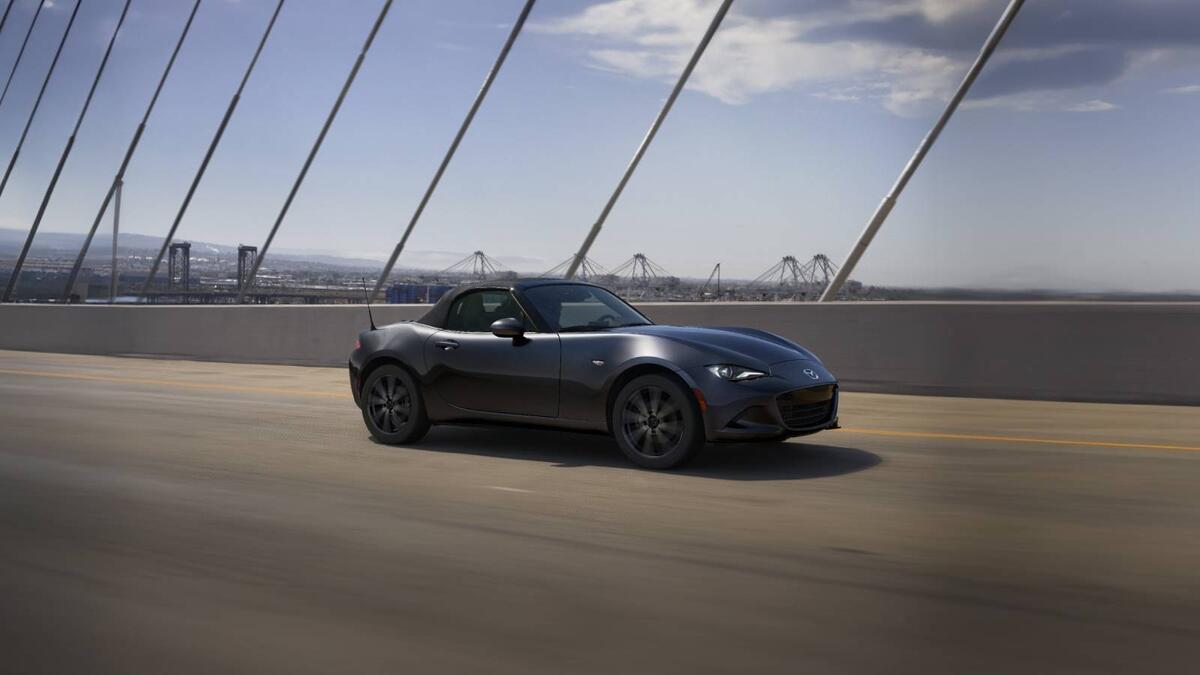
For the final episode of season 3, Very Vehicular is delighted to present none other than TJ Hunt! Rolling up to the studio in a minty white V8 Vantage, with the all-time longest Very Vehicular episode record firmly in his sights, TJ hasn’t come to play, he’s here to win! In a departure from form, Scotto has the mic turned around on him as TJ unleashes his pent-up questions in desperate need of answers. This reverse interview has it all: origin stories, the dawn of YouTube, the art of growing a business (and what happens when you lose one!), love, loss and identity, even movies: it’s practical therapy, people! So unhook your phone (shout out, landline generation), slip out to grab some milk & cigarettes, do whatever you must - this episode is not to be missed! Most of all? As ever, enjoy.
"Unfortunately, this applies to cars too. As my buddy, Ken Block, discovered when he bought his Ford RS 200. To say it politely, the suspension sucked."
"And I remember when I drove it, I think I made the argument that like this is you should buy this instead of a 9-11. I don't know if I still feel that way, but at the time, like, you know, the 9-11 is the gold standard and it sounds really good."
- GT3 Conversions. For When You’ve Run out of Kinks
- Cars as Trading Cards
- Why Builds Beat Driving
- Back When TJ Was Kinda Hating on Hoonigan
- There’s Always a Bigger Fish
- How the Hoonigan Zumiez Deal Happened
- Sponsor: FCP Euro
- How Daily Transmission Happened
- Studying Ken Block’s Playbook
- Formula Drift or NASCAR?
- Getting Back to Just Having Fun in Cars
- Dreams From Magazines to Movies
- Hollywood Gatekeepers and Indie Film
- Trauma, Burnout, and Identity Therapy
- Scaling the Business of TJ Hunt
- Would Hoonigan Survive Today?
- Skills Learned Building Hoonigan
- When I First Met Ken Block, I Wrote This Down
- Sponsors: Vyper Industrial & Wera Tools
- Wheel Pros Renaming - TJ’s Take
- Why YouTube Beat TV
- Just Down the Block from the Berrics
- Is Racing the Next Chapter?
- Competitiveness And Hyperfixation
- Building Hunt & Co and Street Hunter
- Culture Vultures - When Collabs Aren’t the Real Deal
- What’s After YouTube for TJ?
- Would Scotto & TJ… Make a Film Together?
Select text to request an explanation
What's up and welcome back to another episode of Very Vehicular, brought to you by Viper Industrial.
And as always, I'm your host, Brian Scato.
Today, we have TJ Hunt and he came to win.
Yeah, that's right.
We set the record for the longest Very Vehicular podcast ever.
And he kind of turned the table on me and asked me a bunch of hard questions.
We get into the business of this thing that we do.
We also get into a little bit of a therapy session together.
And lastly, we talk about cars.
Yeah, we actually, we did talk about cars as well.
Anyway, like I said, this is going to be a long one.
I'd go grab a snack.
Everybody knows wearing sunglasses at night is for douchebags.
Fortunately, Heatwave Visual also makes apparel.
They've got great designs on everything from hats, hoodies, t-shirts, and even socks.
But what they really kill at is their collabs.
For example, they have an ongoing series with Chevy that includes the heartbeat of America's shirt I'm wearing now,
plus a rad series with Chevy trucks.
They've also worked with my friends at Eisenhower Racing.
And who knows, maybe one day they'll be a scato edition.
And if you want to see that happen, head on over to their Instagram at Heatwave Visual and get to pastoring them.
Thanks.
What's that old saying?
Don't ever meet your heroes.
Unfortunately, this applies to cars too.
As my buddy, Ken Block, discovered when he bought his Ford RS 200.
To say it politely, the suspension sucked.
So we went to KW to fix it on their seven post suspension rig.
Some say it was misappropriated in the middle of the night from an F1 team,
and it once knocked out the power grid of a small village.
But what we do know for certain is that this machine allows KW to create any test conditions needed
to best develop their suspension across the entire product line.
Go check out kwsuspension.com and get yourself a kit developed on this insane seven post technological torture device.
I mean, suspension rig.
All right, TJ, welcome to the show.
Thank you for having me.
Oh man.
First off, this wasn't going to be the first thing, but like, can you talk about what you drove here?
Or are you like giving stuff away?
No, no, no, no, no.
It's a 2013 Vantage V8 4.7 manual.
I love that car.
It's like so slept on.
So I'm like, I just released a video like probably like 36 hours ago.
That is like this big breakdown of this is such a great car.
No one's paying attention to them at all.
And like, I don't blame anybody because that was very much the same way that would look at advantage.
And like, I had this weird assumption.
I feel everyone is like kind of on the same page that they're just unreliable and like not the British.
Yeah, they're British.
So like you just go, mm, like there's a reason why they're like 100.
I mean, I bought the car for 50 grand, which was a steal.
But the original MSRP on my car was 140.
Yeah.
So I'm like, oh, there's got to be something just that's just shit.
Can I say that?
Yeah, you can say whatever.
Okay.
It's just it's shit.
Like there has to be it's not like a 9-11, you know what I'm saying?
And I saw it on Facebook marketplace and I'm like, I'm like addicted to marketplace.
Like it's same here.
Yeah.
So and I just saw it and like I lobed the guy after like three months.
I finally he was asking 65, which was like pretty fair.
And I got him down to 50.
Yeah.
And I've had it for like three weeks.
It's so good.
So I was a journalist when that car first came out.
And I remember when I drove it, I think I made the argument that like this is you should buy this instead of a 9-11.
I don't know if I still feel that way, but at the time, like, you know, the 9-11 is the gold standard
and it sounds really good.
It drives really great.
Like everything about it's great.
And I spent like three weeks with it in San Francisco, like up to Mount Tam, like just doing everything from like sitting in traffic on the Golden Gate to like driving amazing roads to just doing city stuff.
Like it did all of it great.
I don't think in the time that it came out, I would buy it over a 997 because if you like
compare it like that car was 130, 140, my specific one when it came out.
And that was more than a GT3.
So it's like I would absolutely much rather have a GT3 over that car.
But in today's market value, that car being at like a 60 to 65, I'd rather own that than a C2S.
Yeah.
Might not be better than a C2S in certain ways, but it does a lot of things better than a 9-11 C2S, my opinion.
And I also just like it because the 9-11 has kind of become like ubiquitous and like the performance car culture.
It's like it's everywhere and you just don't see that car as much.
It looks really good.
It looks amazing.
Because I was kind of playing the game of like, oh, I wonder what you'll drive here today.
Yeah.
It's like, I don't text guests because I kind of want to be surprised.
They're like, oh, will it be?
And like when I kind of heard the car, but I didn't hear it from that far away.
And I was like, oh, I figured I'd hear you from like half a block away.
Yeah.
And I was like, oh, you got that really nice.
Yeah.
I always like play a game.
I'm like, OK, where am I going?
I play like the odds of like, OK, if I bring this car, am I going to get hassled by CHP or it's like leaving like San Diego is like pretty good.
Yeah.
Of like, if you're not being a shithead.
Yeah.
I always tell people like if you're not, if you're not excessively speeding, if you're not just being an asshole.
Generally, like.
Or if your car is not too loud.
But even that, like if you're trying to be respectable about it, like you're I've been pretty OK.
Yeah.
We just had this conversation in the last pod with me, Vin and Ron that as much as people talk about California being like the worst place to own a car, it's still the best car culture.
And surprisingly, like as long as you're like kind of respectful, like you usually can kind of get away with it.
I mean, I've been pulled over more times than I can count and have been let off and it's been in like anything you could name.
Yeah.
And they're usually like really cool car.
I just didn't know what it was or like the plate looked weird.
Right.
So I wanted to check it like despite anything that the car may or may not have on it.
They're like, yeah, just.
Yeah.
Like you're good.
Have you had cops pull you over and like be straight honest with you that they just pulled you over a look at the car?
Yeah.
Yeah.
Cool.
It's sometimes that sometimes it's like, oh, I've I've seen you on YouTube.
I pulled you over and I could say I pulled you over because of a tent or this or that.
But like, can I get a photo?
Can I take a photo of the car?
Yeah, I have that.
That's yeah.
I filmed it on a vlog one time.
I was in like my Mark 5 super like right when it came out.
And we did the Street Hunter Y body kit on it and like some of my friends like pranked me and like I went to get it in to get painted and they painted it orange and put a fast and furious livery on it.
And I was like, that is so brutal, you guys.
But when I drove that, an officer pulled me over just to see it and was like, this is really cool.
Can I get a photo?
And I was like, yeah, just don't let me go and you can do whatever you want.
The greatest moment for me on that.
It was like 2005.
Ford had just launched the Ford GT.
Yeah.
And I got a press loaner.
They were letting all of the press drive it for one hour.
Something happened.
And the guy who was this dude Octavia, who was running the press cars at the time said to me, he's like, hey, I can't get
there, but like just have the car back by night.
So I'm like a 25 year old kid with a Ford GT, the keys of Ford GT and, you know, 12 hours with it.
I think I ran like four tanks to gaster it.
That's the thing gets like four miles.
Yeah.
But I was on the FDR drive in New York City trying to get out of the city.
It was like the number one thing you have to do is like, OK, I have to get out of New York to go drive.
Yeah, 100 percent.
100 percent.
And like the FDR is bumping to bumper traffic and the cars are rolling.
Cars are like, you know, rolling forward and I'm letting traffic roll out so I can just do like first gear pulls, first gear pulls.
I do it.
I do it once, do it twice.
And then all of a sudden I see the cherries behind me and I'm like, oh, and the cop pulls up next to me.
He's like, is that the Ford GT?
And I was like, yeah, he's like, how do you have that?
I was like, oh, it's a press car.
He's like, hold on a second.
And he like threw it in like New York.
They used to have these cop lights that would like lift up so that you like see.
Yeah, yeah, yeah, yeah.
And he like lifts up the lights and just shuts the road down.
He's like, all right, let him go.
But all right, now you can do it.
Now you can get it.
Now you can get in a second.
See, if you had a camera for YouTube, it was 2005.
I actually did have a camera with us.
But like, I don't know.
We didn't film that because I was like so nervous when the cop first pulled up.
Oh, for sure.
For sure.
So a different thing.
Fun fact, I was in.
I was in one of the original Ford GT commercials.
We what?
Yep.
Yep.
OK, you got to tell me this because you were like 10.
I was seven or 8910 around that.
Oh, I was 10.
Yeah, I was 10.
You're what, early 30s now?
Yeah, I'm 30.
30 31.
OK, 31.
I so I played hockey my whole entire life.
Yeah.
I played for 19 years.
I traveled on the road like with a.
So Southern California has a massive hockey culture, believe it or not,
people don't really realize that they think San Diego or LA, LA.
But I played my whole entire life in.
Well, I know like Mickey's like huge.
Yeah, but he came from Ohio, East, but the hockey culture in San Diego
or in LA is huge.
But I mean, it was the Kings and the.
Yeah, that's more my error.
Yeah, yeah.
But I was the team I was on in the area they were doing.
They were doing a our coach was like,
they're shooting a for GT commercial in San Diego for Phil Mickelson.
And the whole premise of the commercial was what will Phil do next?
And it was and they got Wayne Greksky involved.
So it was Phil Mickelson, Wayne Greksky.
And essentially it was Phil was going was quitting golf
and was going to do his next professional sport.
And he wanted to play hockey.
So he dressed up as a goalie and we went down to the Kroc Center.
I shrink and did a full day of just like our whole team.
They look like four or five of us to go and shoot on Phil Mickelson
and like have like the young kids is like Doston and everything go in the net.
And Wayne was there.
Phil was there.
They had a for GT there.
And then at the end of it, he goes, well, I think I'll just keep,
you know, maybe I won't do hockey, but I'm going to get the new for GT.
And it was really sick commercial.
I still have it somewhere in my archives, but you're going to get that for us.
Yeah, I was. Yeah, that was really cool.
All right. So before we took a little bit of a detour on how rad the Vantage V8 is,
the thing I wanted to actually kind of start on as a topic is,
and I'm sure you think about this, but like you were kind of one of the
pioneers for like what is the modern like vlog build?
Right. Like you were doing it early on when no one was doing it.
And now it's like probably one of the most saturated markets
in YouTube.
Absolutely. So like there's a lot of other people who've done other types of content
when we were at Hoonigan, we kind of did a bit of everything,
but we didn't even start with the build stuff.
But for you, that was like that was the thing that you were doing early on.
And you did sort of that original model of, you know, I'm learning this as I go.
Like I don't know what I'm doing. I'm not a mechanic.
I'm not a specialist. I'm like a young kid who's figuring this out.
Yeah. I'm going to make mistakes along the way.
And that was like a new, entirely new space.
Like no one else was really doing that.
I would say probably the closest was like Mighty Car Mods was doing it.
They were a big inspiration, too.
Yeah. So like, I mean, one, like how, what, like why choose to get into that
and kind of go do that?
But I think to bring it more present day, like what is sort of like,
how do you see everyone else who's doing it now?
Because like I have people who ask me all the time, like, oh,
I want to start a YouTube channel.
I'm like, I don't know if you should.
Right. Like, like you were there early doing one particular model
and you have obviously done very well and perfected it.
Yes. I think there's a couple of ways to attack this situation,
but to kind of tackle what you said last, I don't think you should do it.
I think that a lot of people today do it for every single wrong reason.
I was just talking to someone about this and he's like, I want to I'm starting
this channel, blah, blah, blah, or I want to do this, which like,
I always love like getting into like, not like debates with people,
but just like respectfully shitting on them as quickly as possible because
they're like, they're like, I, you know, I'm trying to do this thing.
I'm trying to do this YouTube thing.
And like, I'll be like, cool, how many, how many videos have you done?
You 90% of the time, the answer is zero.
And I'm like, OK, then why are you even asking me this question?
You haven't even started, but the, or they'll be like, well, I filmed three.
And I'm like, OK, over how long have you posted?
And he's like, mm, like, and I'm not speaking of anyone particular,
but this is just like the general consensus that he'll be like,
I've uploaded three videos in the last three months.
I'm like, cool, still nowhere.
Like you need to upload at least 100 videos minimum that year before you could
even like try to talk and ask a question because like you have no.
You can't answer anything.
I'll ask you.
Like there's no data you have nothing to go off of.
And then secondly, I always ask people, what's your goal?
And like, well, I really like, you know, I loved how you've done this
and like I want to start this thing and I want to be able to buy this thing.
I'm like, cool, you're already starting with an expectation of a result.
And like you've already lost the plot.
Like if you have a an expectation of a result, this is not the game for you.
And when I started, I never had a like when I first started,
there was no expectation of a result.
I just did it because I truly wanted to do it.
And that's usually my premise.
And I'm like, if you could do YouTube.
Just because you gave a fuck about it, period, then you'll be successful.
But if you go into it like, oh, I want to be like X, Y and Z.
Then I'm like, you kind of already lost because everything that you do is not
necessarily like in genuine, but like you're doing it for a reason or purpose
because you you're telling yourself there is a certain payoff or cutoff.
And if you don't see yourself making that between whatever estimated
timeline you've given yourself, you're already lost.
You know what I mean?
Do you or when you first started doing this, and I know you did paintball stuff before,
but when you first do it, started doing the car content.
Why did you want to make it?
Because so at the time, like when I started YouTube, it was like YouTube is
three years old, three or four years old.
Like I remember watching like the modern.
Yeah. Yeah.
Like what YouTube was, I remember watching YouTube when I was like really addicted
to YouTube was like 2007.
I was in seventh grade and I was watching YouTube videos.
And at that point, it was like YouTube was very much like of its original
motto, which was broadcast yourself.
There were no brands.
There were no there were no like Hoonigan's, which we'll get into because I used
to like kind of fucking hate that.
It's like Hoonigan existed.
And I'm like, this is not what YouTube is for.
You guys are a show.
YouTube is for individuals, but like we'll get into that.
We can get into that.
And, you know, throughout high school, I never really watched too much TV, but
I was watching a lot of vlogging.
Like one of my original channels I used to watch was called BF first GF.
It was this guy, Jesse and Gina.
They're like the original OG couple.
You know, like a couple and they vlogged every single day about nothing.
Just like they lived in Philly, they would travel, they would do things.
And then there was like the Casey Neistat era and all that stuff.
But before that, that's the content that I digested.
Rather than watching TV, I was watching their daily uploads and I was like, man,
I fucking know these two individuals.
So I very much became in love with that.
And then when I started to get my, when I was getting closer to getting my license
and I was 16, I've always loved cars since I was younger, lived in San Diego.
So La Jolla, tons of exotic cars back in the day.
It was called symbolic motors.
I'd go there all the time, take photos of exotic cars and just like brochure shop.
And I remember when I got my license, I was like, I couldn't wait.
Like my, I took my driver's test the morning of my birthday, December 29th, 7 a.m.
I study, I was like, I'm not like, I can't wait.
I'm I can't wait to get on the road.
And I just remember being like trying to watch YouTube content about cars.
And it was Mighty Car Mods and it was like that dude in blue or Chris Harris.
I was a drive network.
Yeah.
Yeah.
And it was all reviews.
Yeah.
Like I'm driving this car.
Here's how it is.
Not too much car installs.
There were some DIY forms and stuff like that.
Someone make a video and just blasted it to a thread.
But there was no one that was like, there was no one that was in the world that I
was watching of like vlogging that did car stuff.
So I was like, and I, and because I, as I mentioned, I played hockey my whole entire
life, even to when I still started the YouTube channel was still playing hockey.
And like, there were some seasons right at school on the road where we had like a
school teacher, like we were traveling all the time.
Yeah.
And we were not allowed to, you know, I was
playing AAA and I was like flying the different states playing for different
teams playing AAA.
Like that was like, I was supposed to be a hockey player.
Like that was where that's how I was raised to be.
And we weren't allowed to like really like have fun.
Like once you got to the hotel, no hot tub, no pool, you could go to like the
convention.
No, because it would, it would get you too tired for the next day.
Like just all these like random rules that we had.
By the way, not the tangent, but the last we had LZ on the show and the show
ended with him being like calling a T-dash for the hot tub.
He's like, do you know about the hot tub?
Like I don't know about the hot tub.
I guess I'll have to find out.
So it's LZ's favorite thing is the hot tub because this hot tub is never
working at his house.
So every time he comes over, he's like, can we use the hot tub?
I'm like, yeah, we can use the hot tub, LZ.
But so like more or less, because I watched YouTube, I would like I had this
MacBook that I did all my schoolwork on.
And I would like go on iMovie and go in like the photo room, whatever the photo
booth and I would just like make stupid videos with my teammates.
I forgot about photo booth.
Yeah, like that was what I so I learned how to edit and we would do just like
stupid shit, like just dumb stuff.
So I knew how to edit, but never like did it.
How old were you at this point?
Man, nine, 10, 11, 12, like just like making homemade videos.
Like I have a YouTube channel that no one even knows about that still exists today.
That's from that era.
And it's like videos like how to make a smoke bomb out of ping pong balls and tin foil.
Like it's still there.
It's still there.
It's still there.
And like I just play guitar a lot.
So like there's like videos of me like teaching you how to play like the crazy
train solo, like I had a channel before this channel and I'm like a skateboarding
channel, I had a bunch of stuff that I would just like throw it up.
So when I got my license, I was like, I want to film myself with my car because
this type of content doesn't exist.
Yeah.
And I just truly enjoyed it.
Like I just truly like no intention of anything ever happening.
I just liked filming myself with my car and I was like, it'd be cool to look back
on one day.
And then like, you know, fast forward and like I started to do it more and more and
more and like didn't really have any success or traction, but I started, I
sold my BMW that I had and got a BRZ.
And again, no real intention of YouTube involved in that, but I started to, you
know, I lived on the forums.
I was a forum junkie like, and I was trying to research how to do like the
things I could afford.
And there was write ups and stuff.
I was like, I'll just film it so I could like throw it on the forum.
Yep.
And at this time too, like I didn't have any money.
I worked like as like a part-time salesman at a wrap shop trying to like
commission cars out and I got most of my funding by just going to the casino.
I love Blackjack.
Oh, really?
Big, big, big Blackjack player.
I didn't know that.
I have Blackjack tattooed on my arm.
Like I fucking love the game.
So my dad always played on his own.
Do you count cards Blackjack or is that like?
I can't admit anything on camera.
No, but I use, I use advantages to the game to play it.
But so I asked that because like there are people who like Blackjack are a
different type of person than someone who likes poker.
It's like a very different game.
Like, so I went through a period of time where I dabbled in liking Blackjack.
And then I lost a bunch of money one weekend and I was like, I don't really like Blackjack.
It could definitely happen.
You just have to have the bank role to play out your systems.
But long story short, my dad had a bunch of Blackjack books, like a bunch.
And he played in tournaments and all the stuff.
So like when I was there's a casino where I live called Barona.
It's no alcohol, 18 and up.
So when I was 17, that's when we started like in high school, you could drive, sneak in there.
And I read every book my dad had on how to count, how to understand the game, knowing
every hand, all the situations and stuff, which like you still have a very big
probability to lose.
But I was like, I'm going to sharpen my I'm going to sharpen my scoppers as much as
possible and try to win.
And I'd be like, OK, you know, next week, I'm going to
try to save up for like an exhaust.
All I have to do is win like 400 bucks.
So I'd go in there with like 50 or 75 bucks.
And at the time, the only thing I could forward was like $5 minimum, six
deck, eight deck, continue a shuffle, which like can't really count too much on those.
But I would just gamble my way to get enough money to film the video.
And I did that for like a year almost before I said that videos like started to make
traction and throughout this whole process.
I was, you know, blasting all these videos on forums to try to get extra views
every Facebook group.
And then I was just getting like chewed alive by everybody, like all the old men,
which is probably dudes my age now.
That was just like, you know, just hating on me for doing stuff like this.
And like, whatever, I get it.
How did you deal with that at the time?
Well, before they all just like ended up blocking me on all the pages and all that
stuff. I mean, I was just like, I was like, I got an extra thousand views.
Right. On this.
But I know like you got a lot of critique early on because again, you were one of
the first people to be like, I'm learning as I do this and everybody wants to be like,
you're doing it wrong.
Yeah. I mean, I think that I just didn't know any other way.
Yeah.
So I wasn't like, you know, I didn't come from like this.
I've, you know, been watching like such and such.
Like I didn't have any other information that I had absorbed other than just like.
Magazines.
Yeah.
And stuff like I didn't.
I wasn't in the world.
But like it didn't deter you.
I mean, it definitely like sucked.
I'm just like, I'm just trying to do this.
I just didn't really think I understood most of the critiquing, which is why it
feels like I don't know what I'm doing.
But like.
If you're watching me clearly, you want to try to do this.
So like, I'll show you my trials and tribulations to like give you the encouragement
to try it yourself because I didn't have anything else.
I didn't have like a cool car and like an obnoxious amount of money to just like
have people care.
So I really try to focus on the videos were always, I might get you interested
to click the video because it's an install of something or a topic or something.
But the video was always half of that or maybe like 40% that and then 60% me
vlogging me and whatever friends I was with.
Like that was my like angle was like, well, all I have is me.
And then, you know, fast forward a little bit and I was like, okay, there's
like some traction here and making like 200 bucks a month.
I quickly started to fall more in love with the side of business and the side of
where I thought the industry was going almost more than the content itself.
I still love the content, but I started when people started like emailing me to
like promote some like whatever, I started to realize that there was an angle to this game.
Um, and I remember very early on reaching out, we got to eat websites like FT86
speedfactory.com and like these random BRZ websites.
And I was like, Hey, I have this channel.
I have this thing.
I, if you give me, I remember one of them was like, if you gave me like a thousand
dollars of retail, I didn't even know what cost of price was.
And I was like, if you give me a thousand dollars a month on your website, I will
promote you in every video saying I got your stuff.
And I was like, dude, if I do this, like I could get like four more videos this month.
And I started very, when I started like getting feedback and I'm like 18, like I'm
like a notebook from staples, like writing out these like business plans and like
trying to like strategically like pull random things out of my ass.
I started really falling in love with the business side of it and what it can then,
and then as I started to become a little bit more knowledgeable about that, I like
was a hundred percent convinced that YouTube and Instagram were going to be
the future of the automotive culture and the sense of TV commercials, TV shows,
magazines.
I was like, there's no way.
Yeah.
There's not going to be more of me.
And this is like 2014, 15.
Yeah.
Like, yeah, 14, 13, 15 around there.
Um, and I quickly became much more intrigued with the business than anything else.
Like, obviously I love the cars and that was the passion behind it, but I was like,
I can use this in a way to create something much, much more, not really knowing how far
it would go.
But I just remember like every night, like visualizing and dreaming.
I'm like, I, there's no way I will not be one of the top creators and do like, I,
like everything I have today, I wrote out on my like vision board when I was like 17, 18.
Is that something that like you said is goals for yourself or was it not even goals?
Because a goal to me is something that you don't think can really happen.
Right.
It wasn't, I never, I never not thought this would happen.
Yeah.
Like when I got started, I was like, they're, I, the thought never came through that like,
oh, maybe it can't happen.
Yeah.
It was like, no, it's going to happen.
I just got to keep doing it.
It wasn't even really a goal.
It's interesting because, you know, I'm 15 years older than you.
And I, it's always interesting when I speak to people who are your age or younger in
the YouTube setting, because like there's very little gatekeeping involved in
YouTube and that if you build it, it can happen where for me, when I first got into
the space, like I had to have a magazine hire me to do that because I couldn't really,
there wasn't a platform to do it on your own at the end of the 90s, only 2000s.
So it's like you needed that person to take a chance on you.
Yeah.
You couldn't like just kind of go build it.
So I think it changes that mentality of like, for you, you're like, yeah, I just
as hard as I can work, I could probably get this done because like the pieces are
here to go do it.
I just got to go do it.
Where for me, like at least the first couple of years, like I felt that way once I started
Hoonigan, but I remember like when I was in the magazine business, you're just like,
okay, what's next?
And like, what's the next business?
So like, you know, like, because I wasn't running my own thing.
It's like I was working for someone else because you couldn't really build your own
thing unless you had millions of dollars to like, to go, to go do it.
So I find that very interesting because I remember for me, it was like my 9-11 was
my first goal.
It was like, well, when I was young, because I climbed magazines quickly.
So I was like, I want to be an editor in chief by like before 30.
I hit it by 25.
And then I was an editor in chief of three magazines before 27.
And I was like, oh, I want to own a 9-11 before 30.
And then I did that.
And it was like, and oh, I want to, you know, like, and I
started to like set these like weird like, like goals.
But then I ended up like achieving so much other stuff that like I had never
planned on that like, I kind of threw the goals out.
Cause like the goals weren't that great.
You know, it's like the 9-11 is cool, but like you see it sitting outside dusty right
now.
It's like, it's like what was cooler was the thing that I didn't realize I was
going to build.
What I almost find is usually the goal, right?
Let's use that as a terminology.
That's usually the worst part about it.
In the sense of once you get that thing, it then turns into the dusty 9-11 you
have outside.
And when you look back on it, you're like, what was almost more fun about the
process was dreaming about it and working hard and like being the self-fulfilling
prophecy for yourself that like you can get it and you do.
And then you're like, oh, I'm over it now.
I'll be honest.
I think my favorite part about project cars is like the dreaming up the project.
Like almost like when it's getting close to done, it's like it almost feels over.
And I get for like other people like who really enjoy the driving part.
And I enjoy driving my cars, but it's like, it's not the same thing as like the
process of building it.
Like I like building companies.
I like building content.
Like all of that is more important sometimes than the finish for me.
For sure.
The journey is more important than the destination.
Yeah.
Very like, you know, cliche, but I think like I always get a lot of like, like I
always get a lot of flak because I'll like sell cars when I'm done with them.
And I'm like, well, yeah, I sold it because like it was way more fun to
it's way more fun to be like, oh, I can't like, I'm talking specifically
about like the GT three conversions we do and stuff like that.
Or like the wild stuff and it's because once you build it, it's like
borderline kind of like not as good as you want it to be.
It's like, you know, the slippery slope of overbuilding and then it's a nightmare.
But it's just way more fun to like the chase and the thrill to try to get that
part or that one thing and like try to scrounge it together.
And like the first time you mount it, mount something like cool on the car,
you're like, oh, like it's those moments that are more enjoyable.
And then and then it's just a sitting block of money.
And then you want to build again, but all the money was tied up in that one.
Do you keep track of how many cars you built?
Yeah.
What are you at 50 or 60 that we've done on the channel?
Well, yeah, that's a lot.
Something like that.
Yeah.
And like, and you build some like crazy stuff.
It's not just like, oh, no, no, they're all like, yeah, like proper bills.
Like there's nothing left you could do type.
Yeah.
Type kind of energy.
Does that stay exciting for you?
No, which is why I do the GT3 shit.
And why people are like, you just keep doing the same thing over and over.
And I'm like, because you can't do it, like half the fun is like the high of like,
can I find someone to do what they're not supposed to do and sell me this
old race car body that is supposed to be for the racing teams that I'm going to
like destroy to put on a street car.
People don't understand how hard it is to actually pull that shit off.
I want to get back to the, I want to get back to the, some of the business
conversation, some of the early stuff, but, but let's take a moment on this.
Cause, um, I actually think that there's this really weird thing that's happening
with a bunch of like creators right now.
And not whether it's good or bad, but like everybody is sort of moving
into the GT3 space, right?
Meaning like, I think everyone built crazy cars.
They did all the stuff.
They've been successful.
They've made some money and they sort of realize that like better cars from the
factory are just better cars.
Right.
And it's like, like, you know, Vinny doesn't want to build another, you know,
one J 14, like that's just not where his interest is anymore.
He'd rather just buy another GT3 or do that.
But it's sort of like gets away from like what a lot of us originally built our
audiences around, which was like, I'm going to take this thing and make it into
something super special that like wasn't early there.
Um, how do you balance that for yourself?
Cause like, and you have always had nicer cars.
Like you didn't really start with shit boxes.
Like even your first car was like, yeah, I just try not to care.
I feel like if you're building for the audience, you're screwed.
Yeah.
And like, we all are subject to it.
I'm subject to it.
Sometimes we're like, I'm doing it because I think it's what people want to see.
Yeah.
Um, but like once you've been doing it for 15 years, you're going to earn out of
cars.
Yeah.
You're going to.
Yeah, yeah, yeah.
For sure.
Um, or at least ones that you're like, even just slightly interested in.
Yeah.
Like no offense.
Like, I'd never touch a Volkswagen.
I'll never build it.
I'll never build it.
I just don't see it.
I don't get it.
Like maybe like a newer GTI, like maybe, but like I've done every JDM hero
car you could think of.
I've owned every exotic you can think of.
I don't really care too much for hypercars.
You can't mod them.
It'd be sick to spend 30, $40,000 a month on a lease for a little bit.
But then you'd be like, all right, this is, you know, you get a cool right off.
Like whatever the matter, it's like, okay, what's left?
Yeah.
Right.
Which is like me and Adam spent a lot of time talking about this where it's like,
for Adam, he just, you know, just like what, what weird drift combination of a
car can I throw together?
And then you get into like my standpoint.
It's like, okay, well, I don't like, I, I just buy what I like.
Like what I'm feeling that moment.
I'm like, I won't learn these.
I'm going to try and buy it.
But eventually you kind of run dry.
And that's when I fell into the GT three, like it.
I first did it with the 458.
And at the time there was only two in the world that were converted.
And to give a little bit of backstory because a lot of people don't really
understand it, but the GT three, I don't mean like Porsche GT three or like anything.
It's IMSA racing GT three class.
Exactly.
Where those cars from factory, well from factory, but from like Ferrari racing or
like pro drive or something, they're creating a OEM, let's say carbon Kevlar
wide body and nothing in the chassis is originally the same.
It's just the body from allegation, blah, blah, blah.
And you can technically like, you can't buy them, but you can.
If you bribe someone enough and never reveal your sources.
And a lot of these cars, you know, they're like currently what's in GT three is
just the current lineup.
So like 296 M four, vantage, new NSX, but that's more so like Japanese
not necessarily here, but there's like a, you know, a slew of cars that
currently there's these rare part, not rare, but there's parts being made for it
that you can only purchase if you own a GT three race team.
Yeah.
And then I fell into that, like found a team that had a, cause the 48 had just
came out so they had a crashed 458 with spares.
And I was like, would you sell that to me?
And a little bit of negotiating and then got it converted it.
And I was like, this is the coolest thing in the world.
Like it's everybody wants all these like aero parts and all these things.
This is like the coolest of cool.
I mean, the one thing is I always say this, like once you're in and around real
race cars, you kind of start to realize how dumb tuner stuff is very much because
you're like, Oh, this is on the level.
Right.
Like I remember like, you know, when I was working in the WRC, it's like, you're
sitting here like at, you know, you talk about pro drive or M sport and these companies
and you just look at like what goes into something.
And I remember like explaining this.
And I think nowadays people understand a little more, but they're like, well, I
don't understand why that rally car is so expensive.
It only makes 300 horsepower.
You know, my Evo makes 700 horsepower.
And it's like, yeah, but your Evo can't run at the limit with a big fat power
band for three days straight.
And this thing can.
Right.
And it's like, it's like the amount, like what it's being asked to do is so much
more extreme.
Yeah.
Without failure.
Than what you're doing.
Yeah.
Without like live on red line.
Right.
It's not like you'd spun it once on the dyno and it's good.
It's like, no, this is things going to keep doing.
And that's what it's built to do.
And like, I think you build a different respect for that when you actually get
close to that and you see it or you see how much work someone puts into a piece
that you never even see in the car.
That or if you've ever like, if you ever dive into wheel to wheel in any class,
like whether it's Miata spec, which is gangster and doesn't get the credit it
deserves, but like, look at those cars and a spec Miata cars, like 50 grand.
Yeah.
It's a Miata, but like they're designed to just not stop.
And it's so freaking cool.
Real racing is such a different level above like tuners and even a big just
above like track day stuff.
Yeah.
Not even the same.
Yeah.
And whole different world.
And everything, you know, on new cars today is just like four or five years
ladle technology from IMSA or F1.
Yeah.
So like when I like really wrap my head around that.
Do you like this because it's a lot more of a challenge?
I like it.
It's part of it.
It's like a drug.
Cause like when you talk about this, when you're like, oh, it's these things
and it's really hard to get this and get that, like that's no different than
someone who's like searching for like a really rare JDM piece.
It's just, it's just on a different level.
Yeah.
Well, there's a couple of things I like about it.
Like you can't find it on marketplace.
No, like a thousand percent.
Like one thing that I that like, I don't know, like once you've been doing
this for so long, it's like, what's like your new drug?
Right.
For me, it's like, I'm the only person who's been able to get a G82M4 GT3 on the street.
Good luck.
I'm the only person who has the 48 GT3 EVO who's ever put it on the street.
Yeah.
Yeah.
That's pretty fucking cool.
Yeah.
And go, go do it.
Yeah.
If one, you think you have the contacts to be able to pull it off, try your hand.
Right.
Then they're not supposed to sell them.
So good luck getting it to be sold.
And then it's usually more than the price of the car.
Yeah.
And then they don't fit.
The chassis are different lengths.
So like nothing about it will work.
You have to either change the geometry of suspension or get crafty with bodywork
and then dump another 40 or 50 grand.
Do you feel like you got bored of regular cars and this is like your new?
Yeah, 100 percent, 100 percent.
And like, I just, I just, it's just cool.
And I'm like, OK, how many times can I go buy a car?
Do every bolt on possible?
And that's why I started pulling friends cars.
Yeah.
Am I not enough of me?
Yeah.
Like I really have all that I want.
I don't really want to keep like LZ is a different like he has like 40.
I didn't realize he kept all the stuff.
Yeah, he kept, he keeps it.
And I figured he just slowly, because like, I know people who bought cars from him,
but like the cars that mattered to him, he keeps them all.
Yeah, for sure.
And we always go back and forth.
I'm like, dude, LZ like get a grip, like sell some of your stuff, like reinvest it,
do something.
He's like, no, no, I like it.
No, I'm like, all right, that's cool.
Like I keep I currently have like 25 cars and I have a lot and there's, you know,
a select few a handful that like I'll never sell that I've had forever.
But everything else kind of uses as trading cards.
At a certain point, once you dump half a million to a car, you can just flip it
over for the next thing.
Yeah.
And a lot of times because not that everything is sponsored, but like,
like specifically the GT3 stuff.
And I did my first 458.
I bought that 458 crash in half, rebuilt it for pennies on the dollar and then
got the kit on it and then sold that for a really handsome profit.
So I got to like make content out of it and then flip it and that bought me my
Venor door about the vendor the next day.
Yeah.
Like I just was able to.
So it's like, it's, it's just, I like to be able to treat him as trading cards,
get my experience out of them.
And then if you were to really want to get into the content side of things,
once something's being done, being built, no one wants to watch anymore,
despite everyone being like, you don't drive it.
It's like all posts of you to be driving it and you don't want to see it.
No, we dealt with this as soon again.
We would build stuff and then that would do a certain number of views.
And then you'd finally go do something with it and you'd spend more money on
going and do something because you're like renting out a track, bringing in a
team, like you're doing this whole thing and then we do half the views.
Yeah.
And you start going like, is it worth the expenditure to go actually get all of
that sorted or is it better to just move on to the next project card?
And like, unfortunately, the business side of it and the content side of it is
like, no, just people want new.
They want to say.
And which is valid in like every creator's probably talked about before,
which is why the ones that like end up working out like there, you know,
there's some builds you build and you finish it.
You're like, oh, like it's kind of ass.
Yeah.
And then there's somebody like, it's great.
Like it doesn't, I can take it anywhere.
It just works.
It doesn't do anything weird.
And those ones I keep, but the ones that I'm like, mm, yeah, the thought and the
theory and the journey of it was much more fun than owning it.
If someone's willing to pay X amount for it and it can help fund the next thing
to keep the show going, I'm happily going to take that and take whatever criticism.
But also I try to not factor in what anybody else thinks as well, because no
one on service level, I feel like a YouTube channel just looks like, oh,
it's he's just building shit, but it's like, no, no, you don't understand how
much, how much, how much a month it keeps just for the operation of, I mean, you
come from the hood, you can start, you get it.
I mean, and we're like a very minute scale, but like it's very expensive,
especially if you're trying to like build beyond what you currently have.
Yeah.
I mean, YouTube is just a difficult space and like we can get into the whole
business of this, but it's like, I don't think people understand the amount of
work it takes to make money on YouTube.
Like I think people are like, oh, I uploaded video and then I make tons of money.
And it's like, no, the actual YouTube platform itself like isn't really, I
mean, I remember like people, like we would forget to like get our payments
from YouTube because like the amount of money on YouTube was not what was like
keeping the lights on.
Yeah.
You know what I'm saying?
Like you'd be like, I mean, it wasn't nothing, but when you look at the
amount of money that was invested into an episode, we weren't making anywhere
near that back.
Yeah.
I mean, YouTube is my lowest revenue stream.
Yeah.
By far.
That is for everybody.
By far.
I actually saw something I want to bring this up because I saw this lot.
Yeah.
I guess Donut launched something on 2B the other day.
So they did a hot, their new high low series.
So it launched on 2B instead of YouTube.
Right.
And I was like, oh, that's interesting.
And not that like, I don't really, I've never watched the show before.
So I don't really know anything about the show because as all anyone who works
in content, we don't have time to watch other people's stuff.
You're barely making your own stuff.
But I jumped into the comments because I was like, I want to see what people was.
And it was like huge negativity around like, oh, why are you there?
Like this, this is there.
And we could get into the debate of like, you probably shouldn't bring a show
that was already on YouTube, off YouTube.
Like people don't like that.
But I will argue that like, I understand the model of like, yeah, you got to make
content like you got to make money from it.
So it's like, it's like YouTube is not the best home for every piece of content.
There's some things that work really well on YouTube.
And there are other things that just don't.
Yeah.
Well, I think it's also depending on like what the original like poster or the
channel, like what's their goal?
Yeah.
Like if, if, if your goal is to build a show and do all these things, and if
someone outside hands you a $2 million contract for two years, you're going to
take the deal.
Yeah.
Cause it makes sense.
Yeah.
And like financial security and like all these things.
Well, I think one of the things that like, you know, like sometimes like you read
like other people who are outside of the business is perspective on something
you're like, I never thought about it that way.
And like, I don't know, not that it makes sense, but people are like, I don't
understand why my YouTube, why, why this YouTube channel, or this YouTube company
or YouTube brand is, is not on YouTube.
And it's like, I think that that is such a weird perspective.
Cause like, I never thought of Hoonigan as a YouTube company.
Cause like it was, it was just a piece of our business.
It wasn't like the whole business.
Right.
And I think the same thing for doughnut, like they eventually ended up mostly there.
And there was a lot of business there, but that like wasn't it.
But I think maybe that's because we came from an earlier traditional media era
where like, if you have your most of your business on YouTube, like that's just
like people like you're here, you do YouTube, you don't do elsewhere.
I would agree with that.
That's how you feel about it.
Well, my perspective is I was in like the early stages of YouTube.
Yeah.
Like as a consumer and like a creator.
Yeah.
And YouTube was their motto was broadcast yourself.
It was a platform that was designed for individuals to get a camera and make
homemade videos.
Yeah.
And that's what it was.
This was before Jimmy Fallon and all these, you know, big networks
are getting involved.
So like that was like, that's the platform that I fell in love with.
And like it's free to change and that's fine.
But I remember when like Hoonigan came around and doughnut, it was like,
there's a there's a small side of you that's like, man, like, fuck that.
Let's get into it.
Let's get into it.
How do you, well, it's like, how do you compete with someone that has, yeah,
I'm going to throw Ram numbers on there.
I'm going to, I'm going to tell you like how it felt.
How am I going to compete with someone that has 10 million dollars a year
to spend on an episode that can hire X amount of people that can have Mr.
Ken Block come in and just show his car collection and do all these things.
And then buy all this stuff and then do all this stuff.
And I remember, you know, you know, I'll speak for myself.
It's like, man, how I have, I have 10 grand math.
I have 10 grand of a bank account.
That's crazy for me.
How the fuck am I supposed to?
How am I supposed to compete with that?
Yeah.
And it was frustrating a lot of times.
I get it from your point.
And the funny thing is, is in the end, the model that you had is actually,
I think the only model that works on YouTube, because you're right.
That is what YouTube was built for.
And by the way, you, you talk about automotive, it's like, yeah, it's us.
It's done it.
But if you talk about the greater world of things, it's Buzzfeed.
It's Vox.
It's an awesome, or it's all these other brands.
It's vice that saw YouTube as this opportunity and they've all pretty much
failed or at least failed in what people thought they were going to be.
All right.
So it's like the platform has definitely become this thing that's like, it's
not meant to build a big business on.
It's meant to take one thing, lift it up, and then you can use that to
catapult other things, right?
Like it's a good like trampoline for your other businesses.
This is what you've done.
The whole reason my case in Isatt started is his old vlog, right?
Right.
Just to help with being more whatever it was.
And for us, like Hoonigan was around since 2011.
We for us in the early days, YouTube was a place for some videos and
like the Jim Conner videos.
Yeah.
But for a while it was just Jim Conner.
It was just Jim Conner.
Exactly.
And then it turned into like.
Do you think Jim Conner is the type of content YouTube was built for?
Cause I think like, cause I think it's very much a POV thing.
Where else would that content live?
That's the problem.
Like in the early days.
But even today.
Yeah.
It doesn't really.
I think so.
I feel like that was built for YouTube.
Right.
Like, but that was, I think there was this weird time.
Cause when we were looking at YouTube, we weren't really looking at the single
creator space.
Like we were sitting there looking at, you know, at space.
Well, no, we were looking at like motor trend.
So we're looking at motor trend and their success there.
And we're looking at like roadkill and like the shows they're doing.
Cause they were massive.
I mean, roadkill was really big.
The TV show.
The road, the roadkill show on YouTube.
Oh, I don't even know.
Okay.
So, and again, I think this is like a POV thing.
Right.
So like we're looking at motor trend and what they're doing in that space.
And they were doing car reviews.
They were doing the roadkill show.
And all of that was crushing.
Like roadkill was doing 2000000 views, like an episode.
Right.
And, and it was this like weird in between.
Like it wasn't, it wasn't television level, but like it was like a step
up from vlogging.
Like there was like this middle zone.
Like it wouldn't have, I don't think it would have worked on like a discovery channel.
I know what you're saying.
And it felt more real.
It felt more raw.
Like there was just an element to it of like these feel like two guys, you know,
it's like Finnegan and Freiburger going out and making this content together.
So like we were looking at that stuff going, well, that's like a really cool
use for, for YouTube.
Now realize to rewind back, like, you know, I was at zero to 60 magazine.
Most of the guys from zero to 60 or a bunch of the guys from zero to 60
went to go do drive.
So they went to go do like, you know, a Ferris show, Chris Harris, some cars.
Like they were that early version of like basically the YouTube, I
figure what they, what they call it, where YouTube was giving people money
to go make content.
Right.
So like they got into it and then Turk was had to like the day deal and like we
helped them with, with a bunch of that stuff.
And like that was sort of this weird early transition, I think, where YouTube
went from the like, yes, upload your own home videos to like, let's start
making shows on YouTube.
So like that is always like how we sort of looked at the space.
Well, this is an opportunity to like remove the gatekeeping of television.
I remember when there was a time where YouTube picked like 10 creators and
gave them a show.
Do you remember that?
Yeah.
I remember like, I remember like PewDiePie had one.
I don't remember it very well, but it was like YouTube red.
It was like, right.
Maybe it was right when YouTube red dropped and it was like red episodes
that released like a TV show.
They like tried their hand at it.
It didn't really work.
Yeah.
So I think it's funny because like when we came, when we were like, hey,
we're going to go do this.
And I get it from your point of view is like, we felt like this big company,
the reality to us and the reason we started doing content was because we
were make at this point, we had Jim Kana and Jim Kana like content.
There was a piece of the business.
Yeah.
Right.
It wasn't really the goal, but it was a piece of the business.
And we were making so much of that stuff, but we were like investing in
equipment, investing in, in editors.
So we're sitting there in a building that has all this stuff in it to make
content with.
Just to sell the Hoonigan brand to more people.
Yeah.
Right.
Like that was the business model.
Like the business model was and, you know, I'll,
we talked about this before the cameras turned on, but we did a zoomies deal.
Right.
We're the first automotive brand in zoomies.
They don't think it's going to work.
They give us a 20 door test.
We end up going all stores, which was 600 plus doors in a month, which meant
like we went from moving a little bit of product to like, we had to go get a
loan to be able to print all of the stuff.
Right.
They give you a net 60 or they lower it for you.
I think we were on net 60.
Yeah.
But like, and it was like, it was this like nightmare situation of like, okay,
go, you know, and I was like, okay, let's, let's go figure this out.
And then they're like, okay, what are you going to do to market this and to support this?
Oh, hey, please pardon this little story time interruption brought to you by my
good friends at FCP Euro.
A few weeks back, we kicked off a whole new show called firing order.
And now I'm searching for BMW's late night on marketplace.
Cause I made a big argument that the BMW Z four M coupe should have been one of
the top five drivers cars after 2000.
While it didn't get into the top ranking, it definitely got into my head.
And now I got a little bit of an itch to scratch.
First thing of course you do at this point is you start looking up all the problems.
Sure enough, there's a bunch of garden variety issues, TPS failures, rear
trailing arm bushings, engine mount failures, sticky idle control valves,
problematic clutch delay valves.
But the main event, rod bearing replacement and vanos system rebuilds.
I'm pretty sure vanos is German for V tech.
I got to double check the good news is though, I went over to S C P Euro and not
only do they sell all of the parts I listed above, they even make a full
refresh kit for the vanos.
So those of you who are listening, what am I getting into with this whole vanos
issue, decide whether or not I really want to get myself into a summer fling with
a Z 4M coupe or am I just on a road to heartbreak?
So if you too are thinking about adding a little European flair to your mid
summer night fever dream, head on over to F C P Euro because they're the best at
helping keep European cars on the road by supplying you with all of the parts
you need for those somewhat unreliable, but beautiful vehicles.
Check them out.
F C P Euro.com.
And then they're like, okay, what are you going to do to market this and to
support this?
And they asked you to do the marketing.
Oh, we were like, cause I think part of the deal was like, they didn't know our
audience.
Like there was, we walked in and it was like skate surf.
Like that was their business.
Yeah.
They straight up said to us, we don't understand why we should have you in the
store.
Like, I'll tell you this meeting where we went to, we went, we had the meeting.
They Jim Bob, who was, I don't know if he's still at zoomies, but he was like the
head dude or the head buyer at zoomies at the time.
And he straight said to me, the only reason I'm taking this meeting is cause we
made a lot of money with Ken block and DC shoot company.
He's like, that's the only reason we're taking the meeting.
He's like, I don't understand why an automotive brand should be at zoomies.
And I said, okay, let me make the argument for you real quick.
And I was like, as I was telling him, you know, like there's a major crossover.
I'm like, if you look at our audience, our audience is wearing stuff that you buy
in your store.
Like you're, you're not seeing that there's this like younger group that like
skates, snowboards, rides BMX, like does this, but also is into cars.
And this is sort of the cell for him.
Um, long story short, he's like not buying it.
Like I can see he's kind of looking away.
And then I mentioned something about people getting Hoonigan tattoos.
And he just looked at me and he goes, bullshit.
And like at this point, Instagram was like maybe a year or two old.
And I was like, go on Instagram and just type in hashtag Hoonigan tattoos.
And he does and a ton of tattoos show up.
He just stood up.
There was like a 20 person meeting.
He stands up, walks out and then like, like three other people walk out with them.
I'm just standing there like, okay, one of the buyers comes back in and is like,
all right, we're going to do a 20 day test or like a 20 store test.
We did the test.
We sold through on almost every store.
Did you guys push anywhere for that?
Or did we push?
We pushed for the 20 day test on what?
On YouTube or Instagram?
We were only on Instagram at that point.
Like they're what we didn't have a basis really on YouTube.
I think some stuff went up on YouTube, but like we weren't making
content on YouTube.
It was like, okay, like that went out.
The, we then they went all doors.
So we were at the time, the fastest brand to go all doors.
And it was like, at first it seemed this is awesome, but it was like a blessing
in a cursed situation.
And now it's like, okay, we have to go, go support this.
And like I had come out of the magazine business and I knew that like ad sales
and all the stuff was all bullshit.
Like I wasn't going to go pay somebody to advertise.
And there really was like, it was this weird in between.
Like the blogs were like not really working.
Like YouTube wasn't where it is now.
The magazines were dead.
So it's like, okay, we're going to make our own content.
Like we're going to go and like really ramp that up because we had already
had the success and that's what Jim Connell.
Well, Jim Connell had already existed.
How many?
So at this point we're on Jim Connell seven.
So it's the unicorn and one is like what's hitting market.
But we realized like that's a one time a year event.
Like we have to ramp everything else up.
And that begins sort of like this bigger push.
And at first we do it all with athletes.
So it's like, Ryan, her Chris Forsberg, like, but the problem is, is like
their schedules are there are like, that's their business.
Like, did you guys have funding to pay those people?
No, we do.
We're during that period, everything was like barter trade.
So it was like, you're making this video, like we'll pick up the costs of making
that we'll do this, we'll trade things out, we'll pay for things.
And like, it was like, we have marketing budget that we can go do things together.
And that was like very much like how that operated then.
And then from there, we started building more and more, more and more content
to the point that, and then we were doing a bunch of white label stuff.
So like, I was like directing Volkswagen commercials.
I was directing like Kia stuff.
Like we were like kind of just doing a bunch of other stuff.
Because at that point there wasn't a company in the world that wasn't asking
for Jim Connell look in their videos, like in their commercials.
Like that, like in advertising, everybody.
Did that pay well though?
Yeah, that did well.
But like it was.
How much time did that take?
Enough, enough, enough that we stopped doing it.
Like it was enough that it was pulling me away at a certain point.
And we had, we had had this discussion of like, do we start a whole separate
business to just go chase that?
And like at this point, it was never.
Being a media company was not ever what we thought who it was going to be.
Right? Like that wasn't really the goal.
Because at the beginning, the goal was the Ken Block model, which was like.
I have a question.
Yeah, yeah, go ahead.
So Ken at this point had already done his rally stuff.
Yeah, yeah, yeah.
Do you think that Hoonigan would have worked without Ken's.
Pillar of being a professional driver.
Yeah, because the first year we never talked about Ken.
So the first year we only did, we only did drifting.
And we were.
And what was sales like?
Because DC was still DC was still.
Ken sponsor.
So Ken was a had an apparel partner.
So we couldn't be Ken's apparel partner.
So DC was still there.
Without Ken to dear to with Ken.
Like Ken was there, but like there was this one moment where at the end
of the first year, someone, but we can had won something.
And we posted on Facebook because like Instagram is not there yet.
So we post on, we post on Facebook.
Congratulations to Ken.
And the comment was, was, I don't know why you're talking about that no talent
asclown. He has nothing to do with a brand like Hoonigan.
And I screen grabbed it and I sent it to Ken and I said, I think we win
because the original thing was Ken was like, this brand can't be
an extension of a licensing for me.
He's like, I could just go do my own licensing deal and just call it Ken block.
He's like, it won't grow if it operates out of that.
So year one, we just invested in all of these other like we were like,
we're going to go heavy in drifting.
We had like seven or eight people who were who were like sponsored on the brand.
And then we went into off road.
So we're doing stuff like BJ Baldwin and like the recoil video.
I mean, is the recoil videos bigger than a lot of the Chumka videos.
But do you think that Ken's involvement was a major catalyst for everything?
Hoonigan, I mean, you can't, you can't separate it, but I don't think
there was a huge piece of Hoonigan that was like completely separate from it.
From Ken, do you know what I'm saying?
Like it was too, it was different audiences.
I think it was different audiences for sure.
Yeah.
We, I mean, we, we built out our like in the business side of it.
We built like a, like a breakdown of like what our audience was.
And like a quarter of it was like the Ken loyalists.
Like they are here for Ken and Ken only.
And then there's like the crossover Venn diagram, which is like, I like Ken,
but like I'm actually more here for hurt because like as that, as that audience
started to grow and we started to get into that.
But like in the early days, like we had very broken up.
We had like the drifting audience.
We had the Ken audience.
And like you got to remember in the early days, drifting kids in a certain
era didn't like Ken because Ken was seen as like they were calling him the Drift
King, but he wasn't actually in a rally.
Can I?
Yeah.
And it was like, there was this weird like, like Ken was like not cool to like a
lot of people in drifting.
So it's like, we had to like kind of develop these separate pieces here.
Okay.
So I have a question.
And it might be too personal.
No, no, no.
Do you think if Ken was alive today, Hoonigan would still be successful?
Um, in, in the terms of, I guess everything that Hoonigan is today.
I think that the apparel brand.
Yeah.
We were already on a downward with, there was already a downward moment before
Ken passed.
So I, so you think that if he was here today, he still would have stepped away.
I think that, or if he's like, I want to revive this.
I want to keep his going.
I'm going to make sure, and he would have used his influence and his, yeah, his
power with you to create another big wave.
For me, like, and I mentioned this before, like I was already leaving.
Sure.
So I was leaving before he passed.
Sure.
It was like how, how that would have continued.
I think that it would have been a different version of Hoonigan because Ken's
focus was always the stuff Ken did.
So like Ken was not interested in the daily transmissions of the world.
I have another question.
Like that wasn't the business.
I think what you would have seen was a Hoonigan that maybe focused a lot more
around like him, his daughters, like his son, like as they came up because if it
was up to Ken, he really just wanted to do rally stuff.
Like that was the focus.
Like Jim Conner was the dance he had to do so that somebody would pay him to go rally.
Okay.
That was my question was how much involvement and like straight up, like what was
his role responsibility with Hoonigan as far as the direction and where it was going?
He gave me the most amount of autonomy.
So like for me.
So you put his trust like.
Yeah.
So like a lot of his trust was in you to steer the ship.
Yeah.
So it was two businesses.
So in the early days, like there was two separate businesses.
Ken's team was one business and Hoonigan was another.
Ken's team being his race team.
The race team, which had a budget from Hoonigan pool.
That had its own budget from where?
From his sponsorship dollars.
Separate of Hoonigan.
Separate business.
So in the early days, you have 43 racing, which was like his, which was his business.
Yeah.
That he ran that and I worked on 43 racing and then I worked on Hoonigan and he
consulted on Hoonigan.
That was early days because like for him, what would he consult about?
Like, I mean, he was one, like the guy was like a marketing genius.
So it's like, you go to him and be like, what do you think about this is an idea?
And like, he's an amazing soundboard because he would like, we used to refer to
his bulletproof thing.
It's like, you just shoot holes through the idea.
Like you just, you know, and he's really good at that.
So he's sitting there with all of the experience he had from doing everything.
He did a DC shoes behind, you know, because he was the guy behind the guy for DC,
right?
So it's like everything for Danny Way, Rob Deirdic, all these people.
He was the guy who was then sitting.
I sat in that position as he then became the Rob Deirdic, you know, kind of moment.
So he was this amazing person to have for that.
Right.
Um, which was great.
He had a really, really good eye for apparel stuff.
So in the early days, he was a lot more involved in the apparel business.
As the business grew and he got busier and busier, he had less and less time for that.
And then eventually I had less and less time for that.
Like by the end, I was very disconnected from the apparel business.
Like, and I say the end, I mean, like the last couple of years, because the media business,
like you're always just chasing what the business is and what's making the most money.
I mean, there were times where because Burnyard was doing well, like that's where my focus was.
So like I was always like, whatever the big focus is, like that's where I would go.
That's what I would work on.
Um, the media business was not something that can actually like, that wasn't like
something he saw as a business model.
I was a media guy.
I had come from magazine.
So like for me, I was like, I see this opportunity in YouTube.
I see this growing.
And from his point of view, it was like, okay, cool.
If we can use that to help sell other stuff, let's test it.
Like there's this joke about what happened with the media business.
And it's kind of true is there was a guy who was working, um, who was working for
Hoonigan.
He was, he was the interim CEO because he was part of the other investor in Hoonigan.
So, which was WMG and he was there who's, he was like, basically like my babysitter.
Like he was the guy who was there to make sure that like I didn't buy dumb shit.
Right.
Or like, like forget to pay people.
Right.
Um, he was never in the building.
He'd show up like once every two weeks to come down and have a meeting.
And, uh, he was supposed to become full time CEO.
Like I was kind of excited to finally have like some, like as the business was
becoming more professionalized, I was excited to have like somebody else come in.
Launched very shorter.
He's like, Hey, I got a job.
I'm going to go work at Billabong.
I'm out.
And I was like, okay, well, we're about to like launch this whole media thing.
I'm like, what do you think I should do?
And he's like, I think you should just do it and not tell anyone.
He's like, and in six months from now, if it's making money, he's like, good.
He's like, if it's not making money, this whole thing's probably over anyway.
He's like, so just go.
He's like, no, he's going to take everyone six months to figure out what the hell
you're doing, because it was literally like Ken was super busy running the race team.
And like that was doing well.
And like that piece was a good business.
And Hoonigan was sort of in this like, okay, we're selling apparel, but like,
it's a lot of work to sell the apparel.
Is it worth the effort that's going in?
There needs to be another side of this.
Like this has to grow.
And like we hired an editor.
We had this guy, T, who's actually still there now.
And we went and we launched Daily Transmission.
And like that changed the direction for Hoonigan.
Yeah.
Like, and that was like a skunkworks project.
And I was getting at it initially before we took this massive tangent, which I
enjoy, I enjoy the, the mic being turned on me.
But the was this moment where we're sitting here going, we have a bunch of
equipment that we invested in to go make.
We like, we, when Can-Am launched the X3, we did like the entire program.
We operated as their agency.
We made all of their videos for the launch of it.
We even did their influencer.
They didn't call it that back then, but we did like their influencer marketing
connected them with different people, like gave vehicles to different people.
So we were like living in this year.
Thanks for getting me out by the way.
We didn't know each other back then.
I'm just kidding.
I'm just kidding.
You were probably, yeah.
But like, and there was this cool moment where, but what was realized, what,
what happened was this moment we realized this shit was taking a lot of time.
And yes, there was a good business on it.
But you know, the business of production and agency work, it's like a 20% margin
space.
So like, and all of a sudden, like we're all getting sucked into this, but
trying to sell apparel.
And like the business was not really looking good.
Ken's business was working, but Ken's business was entirely related on Ken.
Like, and it was like, and we were, we, we were at the point now, because
and this is rewind a little bit, but like our relationship with a lot of people,
like for example, BJ Baldwin, um, never was paid directly by Hoonigan.
But like we designed some of his liveries.
We did recoil to recoil three for him.
So like there was this trade out of like, and like,
you're going to give him promotion.
We were basically operating as his marketing arm and his like, you know,
and his content arm as a trade, as a trade of services and in a relationship.
Right.
And that was the model early on, but eventually as we kept growing, we couldn't
scale to do that anymore.
Because now it's like, oh, we got 12 different people.
We got, you know, we got Leah Pruitt and we've got like, you know,
you kind of left your sweet spot.
And now all of a sudden you're like, okay, we're drowning, trying to take
care of these guys and we're not actually making direct money off of this.
Oh, and we're also doing white label work for manufacturers and other partners.
And then it was like, okay, we have, but then like we had these cameras and it
was like this, it was like a literally like just like a down month.
And we said, we're going to make 20 episodes of the show concept that we had.
That was originally an Instagram concept.
And we were like, oh, let's do it on YouTube.
And I think like originally we were like, each one's going to be less than five
minutes.
And then it just, it just exploded into something else.
So like for us, it was not like a complete plan.
It was like YouTube was interesting.
We knew what we wanted to do something there.
We weren't really sure what it was.
And then it was like, okay.
And this was probably the part that you hated was we were like, and if we're
going to do it, like let's hammer it, let's do fucking 14 episodes a week,
which is what we got to at one point.
It was like, there was a, like by like the end of year one, like I think we'd
like we're really in year two, I think we like were uploading 14 episodes a week
across all the channels, which was absolute burnout and totally fucked.
And it was a bad idea.
But in the beginning, we launched on four episodes a week, which meant that like
we went from, I remember the first video, thinking if this hits a 100000
views, that's going to be six out, like it'll be cool.
And it took like a week to get up to a hundred K or two weeks to get to a hundred
K. And it was like, wow, that's really cool.
And then it's like, okay, you're doing 200 K in the first 12 hours.
Right.
And it's like, it was just like sort of exploding.
And then obviously that like changed the whole business.
It changed the people that we were hiring.
It changed what we could do.
100%.
And it like, it actually created a bit of like a power shift in the business
because before that it was like the athletes had all the power.
And now all of a sudden people like hurt have the power.
You know what I'm saying?
Like it really flipped things upside down.
It was fun.
I mean, it was great.
Did that answer your question?
Yeah.
And to rewind back on like the Ken thing, it's like Ken was the super big projects.
Right.
Like that was the stuff that he was really interested in.
He was never watching like the upload of daily transmission before it goes out.
Like that wasn't the world.
I didn't think that.
I mean, I think I asked those questions because Ken is someone who very early on
I identified as someone that had a model that was very successful.
Yeah.
And I always like thinking of it internally to myself, like there's pillars.
There's a bunch of pillars that I want to achieve.
And then you look across a few different people globally who have all these
pillars that have reached, let's say, I don't want to call it some level of,
of success because that's a very subjective term, but he's accomplished a lot
of things that I want to accomplish.
And Ken was one of them.
Uh, Mad Mike was one of them.
Um, and, and Vaughn and they all do their.
Do their things differently.
But one thing that I've identified with all three of those individuals that
opened up the door to a few things that like I've been chasing personally,
um, is some sort of.
Usually you're not taken seriously enough unless you're like a professional
driver in something.
Mm hmm.
You, you can't just be like an online creator of that races in a bunch of different
pro-amor amateur things.
There is some sort of level of you're only taken.
It's almost like a fake.
It's like when, when someone's sponsoring a channel and they're like, Oh,
this person has 5000000 subscribers, but it's a, it's 50,000 views, an episode
versus someone that has like 200,000 subscribers that does 200,000.
It's like they like a lot of like bigger brands or opportunities have to go
through a paywall of a professional driver of some degree.
Um, and that also you can't get an OE deal unless you have a professional
credibility with the current bucket was.
Yeah.
But I think it still is today.
Yeah.
Um, so I just remember like identifying like where do I want to go?
Where do I see my life?
What are the things I want to achieve?
And the three individuals that really did it well, um, was Ken obviously.
And Ken was a far superior of the two as far as like the content side of things
and the brand of whom again and what he's been able to accomplish.
Yeah.
I think the difference between, and I, I worked with Vaughn, I've worked with Mike,
both of those guys are amazing and have built these amazing things around them.
And I also think both of them very much looked at Ken too.
Right.
Like, I mean, I, the first time I ever met Mike was with Ken and Mike was sponsored
by, you know, DC in the early days, you know, through New Zealand.
So like there was a relationship there.
Obviously a big relationship with Ken and Vaughn under monster in the early days.
Um, was that Ken was.
You realize like you were still younger than Ken was when he started racing rally.
So like, he started racing at 35, 36.
So it's like he had spent 35 years, you know, of his life already.
And he had spent, you know, 15, 20 of those building some of the most
successful brands in skateboarding.
So like he was a really accomplished, super smart, genius level marketing guy.
Yeah.
Who then got into the driver's seat and was looking at it.
He looked at his driving, not as a, from a driver's point of view.
He looked at it from a sponsorship point of view.
Like he looked at it the way that he looked at Rob Deirdic or these other guys
and said, like, why aren't you doing this better?
So it's like, I think that that was like a huge difference between him
where everyone else is like, I want to be a race car driver.
Yeah.
How do I make this other thing?
Yeah.
You know, well, I find myself in a very similar situation to Ken and like I've
studied a lot about his life and what he did when he started what he like very much.
I remember very early on, he was a very big role model for me.
He read Agents of Change.
I haven't.
That's a good book.
Okay.
Yeah.
That's the DC storybook.
It tells like sort of how Ken took this sort of like perception as a reality concept
and like shifted the whole skate market.
But I remember, yeah, I just, I just been very fascinated of his story.
Yeah.
And those are Mike and Vaughn themselves have done very impressive things in
slightly different way.
Vaughn rather than creating a Hoonigan, create RTR, which, you know,
the current modern day Shelby is Vaughn and people don't pick that up.
Super successful thing.
Yeah.
I mean, and just if you look at the RTR program and Formula Drift alone,
like I've said this before in a podcast, like it's incredibly wild and so cool.
Yeah.
But I just, I'm just super intrigued of the whole Hoonigan story and the rise
and how it was built and where it was going, what your guys' intentions were,
where were sponsored dollars acquired?
And that's where certain things in my life, I've been like, OK, well, if I want
to get certain sponsored things, I have to go and drive in something professionally.
Right.
You have to make a decision.
Not that you do feel like that's where you go from here.
Kind of.
Yeah.
Which in the last two years, you have that want, though.
Because you're saying it as if it's like no, the route for business.
But like, I think like you have to have the passion to be like, this is what I want to go do.
Well, I think everyone that's in the cars wants to drive professionally for a living.
Yeah.
There's a piece of like there's an absolute major, major side.
And, you know, going into Formula Drift has been like a very big, like on the cuff decision
that we've been dealing with internally or I've been dealing with internally.
But I, you know, last year I did 30 wheel to wheel braces with a with a partner.
And, you know, with with the intention of like, we want to train you here to get you
to GT4 or NASCAR is before Cletus got involved.
But to do that, like they're like, we don't see the money in Formula Drift.
Right.
Like pick your poison.
Like if you want to go race them professionally, where do you want to go?
Would you want to go do NASCAR?
100% Oh, really?
100% 100% because at a certain point, I love doing YouTube at a certain point, like
I'm just saying NASCAR as a discipline versus other stuff out there.
I'll be more to this way.
If you, if someone gives you an option to say, hey, we're going to fund you and train
you to go drive a NASCAR.
Do you want to take it or not?
And I would.
Yeah.
A thousand because at the end of the day, like my YouTube, yeah, I built cars like it's
really about my life.
I feel if I wanted to pivot and do something different today, I could.
Whether or not half would stay or not.
Like I, it's not.
I don't need to keep doing this.
So I do it for fun.
And I always promise myself the day I'll stop is the day I'm like, I'm not having fun anymore.
That's why I love tuning.
Yeah.
I woke up one day and I was like, I'm, this is not fun anymore.
Yeah.
So and currently I'm trying to decide, like, I guess in the world, the drifting and the
competitive drifting and entering Formula D is like, is it going to still be fun when.
That's not a job, but like I still like when I, you know, we do every drift series and
drift comp we can do West of Texas and we're highly competitive.
And when we lose, it's usually to a pro one FD driver in, you know, in the comp that we're
in.
So like we know that we're there.
Yeah.
And I really want to go and do it, but it's, it's half the side is funding and it's, I
do look at it at a business side.
It's like, okay, if I want to go.
It's also really saturated with a similar, exactly.
Like a similar, like I do this and I talk about it on these channels and exactly.
So it's just, it's a much comp.
It's a much more complex question in my opinion of do, well, do you want to do it?
So, well, of course I want to do it.
Everyone wants to do it, but the financial backing to make it happen and I'd be much
more willing to do something if I knew it open a door down the line, which is why I
entered the discussion of like, okay, well, if you wanted to get to GT four racing with
the potential of GT three or go into NASCAR, I was like, I'm a hundred percent here to
entertain this conversation, which is why last year I did yet 30 wheel to wheel races
and didn't film half of them.
Yeah.
I just went.
Was it nice to not film?
Oh, it was awesome.
I know.
It's awesome.
You mentioned before I went rewind a little bit, but you were like, I'd never, you're like,
I would never build a like a Volkswagen.
I bought that Volkswagen probably like how you probably feel about paintballing now,
where like I bought it when I was at Hoonigan because I actually thought like this is a car
that no one, like the Hoonigan audience doesn't care about.
Yeah.
Like they don't care about some old, slow Volkswagen.
I was wrong.
There was actually a bunch of audience that did care about it, but I kind of didn't really
talk about it at all at first because for me, it was more this nostalgia was like,
that was cars for me before cars were a job.
Yeah.
Right.
Like it was before I worked on the magazines.
Like that was just, that was what I did when I was 17.
Yeah.
It was like wrenching on that.
It was simple.
It was this thing that like going back to the nostalgia and even now I try to draw a line
between like how much of the stuff I do with my like Volkswagen's feels like business.
You know, like I was telling you before, like I do this, I do this like small sort of invite
only car vent with Volkswagen stuff, but like I actually really enjoy going like it's one of
the few things where like I'm operating a business, but while I'm there, I'm like,
this is fucking great.
Like I'm not stressed.
Like it's super cool.
And as I'm on this, the other side of like building this thing that I built and like
it's like now it's all about like, I just want to do the stuff I enjoy doing, keep it being fun
and like keep that balance there because like man, I super lost control of balance.
Yeah.
100%.
Yeah.
I mean, it's, and that's like the million dollar question is like, I always tell people I'm like,
just find whatever it is you love in life and find a way to monetize it without expectation
or result.
And you'll be the happiest man alive, but that's so much easier said done.
Do you always think that's true though?
Because like 100%.
I'll die on the hill.
Die on the hill.
Let's go to that hill because my dad said to me when I was younger, you know, the line of like,
you know, if you do what you love, you'll never work a day in your life, right?
That cliche.
And my father was a scientist and he really, you know, he really enjoyed and still enjoys science,
right?
It's like he enjoyed doing what he did.
And then like I made my hobby into my life and the best, like some of the most like,
I had really great times.
I don't want to say I did it, but I kind of question if sometimes if you turn your,
if you do what you love, you actually work every day of your life, right?
And that might be okay because you enjoy the work.
Okay.
But like it definitely makes your balance.
It makes it really hard to have balance in life.
I think there's a couple of things to identify and back up on.
You can't, you, you got to work.
You got to do something unless you want to just chill inside the street.
Whatever floats your boat.
Yeah, but you got to work.
You got to work.
But here's, here's how I look at it.
If you were to go back, if you were to go back 20 years,
was your dream job to be working alongside whoever you would have told yourself Ken would have
been and created a brand and tried to grow it.
And like, was that like, this is the dream?
All bets off, no caveat, no anything.
This is exactly what I want to do.
I did exactly what I wanted to do and I lived the dream.
But would you say that to your, would you?
But back then, I'll be honest.
I had a very different dream from myself back then.
What was it?
Because I was, at that time, no one knew that the print industry was going to fall apart.
Like I went to college and was like, this is this thing I'm going to do.
So, and we didn't know that things like YouTube were going to come out.
But like, if you just say like, hey, you're going to be a storyteller and you want to go
tell these great stories and you can do that.
I think I far exceeded what I ever thought I would do in my life.
So like, how can I have any complaints?
Do you know what I'm saying?
Yeah, but what was your dream?
Like, what was your no-
My dream was to run my own car magazine and I did it by 25.
So like, I guess I didn't dream far enough down the line.
Do you know what I'm saying?
Yeah, I guess I would have challenged you to dream bigger than that.
But like, but back then that, I think like it, and I go back to the gatekeeping element of it,
it was like to become the editor-in-chief of a magazine in that era, it would take people 25
years to get there.
Because there was always that guy above you.
There was always that guy above you.
Like you look at like Jason Camisa, do you know Jason?
He, he does a lot.
He does really great content on Haggerty.
But he's like a journalist.
I don't actually think he ever became an EIC.
Like, I don't think he ever got to the top because like going through that in the traditional
magazines, Motor Triad, Automobile-
But if you're a big fan of magazines, wouldn't your dream be like,
I want to create my own, I don't want to work for somebody else?
Which is what I ended up doing because I built my own mag inside of another publishing company.
Because at that point, if you made a magazine on your own, you couldn't get it into newsstands.
Because it was like, they called it the print mafia for a reason.
Because like, you had to have the ends to publishing companies to get to the newsstand and so on.
So like, you know, so I did do an element of that.
But anyway, to get back to like kind of your point, it's like, yeah, I,
I dream way bigger now at 46 than I did at 26.
What's your dream now?
Um, my big dream now is the direct films, like real movies.
Like I got a chance to play in that world with, you know, with Sun Kang when I did the second
you know, work on Drifter.
But like my real want would be to go do full blown movies, right?
And like, you know, I mean, I think the ultimate dream would be like, what's the next,
what's the next iteration of a, of a Fast and Furious or a born identity, you know,
like born series or something like that.
And like, I would love to make that like that's like, because I really enjoy
storytelling and that mixes all the things I enjoy.
Like I really enjoy cars, but I also just enjoy storytelling.
Like that's the writer part of me.
Right.
And, and the weird thing for me, I'm not sure, like, you know,
this is the most you and I've ever spoken, other than that one dinner we sat next to each other
at Magnaflow or whatever.
Like I never wanted to be on content.
Like that wasn't my goal.
So like I was very happy being the guy behind the guy.
There was an element at Hoonigan where it just made sense for me to step up
and sort of speak as the brand guy, which is sort of that era of like, you know,
like know your brand and like live your brand kind of thing.
But like that wasn't what I want.
I really enjoy directing other people, watching it all come together.
Like my, if you look at everything I did through, you know, through all of my career,
it's like some of the peak moments from your like directing Jim Connoff films
and also directing dumb shit in the parking lot for DT.
Like I just, it didn't matter if it was on a big scale or a large scale.
I enjoyed that.
Yeah.
I like, I don't mind being in front of camera.
I got used to it, but it wasn't, it was never my goal was for myself to be that person.
So, so for me to actually be able to slip back
out of that, not.
So what are you doing today to, to take a step towards that?
Now it's like, I mean, doing things like, I mean, the Hollywood business is again,
a new gatekeeper because it's like trying to do that, but I'm also, I'm going both directions.
So on one side, I'm trying to take all the meetings, right?
So it's like, you take a general, lunch, like that's the Hollywood way in.
But I also realize that like my more sort of, you know, nimble, like the way that, you know,
you look at things as YouTube is like, well, you just build it on your own.
What's I was going to say, why?
At the same time, like I'm in the process right now of like writing a script,
like I've got like this whole thing built out.
It's like very much a series that could, could spin out from there.
And that's like, so I've got this, like, I need to get more second unit directing work
so that more people will be like, yeah, I'm going to give you $25 million to go make this.
But then I'm also building this other thing that's like ready to go when it's there.
But taking separate meetings on that, because the interesting thing is,
and not to move too much into the Hollywood side of it, but like, there's a bunch of new filmmakers
who have built stuff because like they had an audience or they had connection to an audience,
and they were able to sort of circumvent the traditional like model.
So like, that's really interesting to me.
Then you'll probably know way more about this than I do.
The guy who just made the movie obsession.
Yeah, Curry.
Yeah.
Didn't he like start as like,
Yeah, he's a good example of that.
There's the most was iron, iron lung.
There's been a couple horror films that have come out.
There's another one called Backroom.
Like the, this is like a whole and like horror has one thing about horror
that's really interesting is like, it kind of has a built in audience.
Like if you're going to make an independent film,
making something in horror does really well because there's just one,
like there's still a want to see theatrical horror, like the shared experience of like,
getting like scared in a room with other people still works.
It has more film festivals.
Like there's a reason a lot of people go more into the horror space.
But no, that this is the new breaking of the model.
Like what's happening right now with all of those films, Nora last year,
which like, you know, swept in the Oscars and things like that.
Like these are the new films that everyone's looking at and saying,
oh, this is the different model because the model before that was the $200 million film,
which like is not sustainable is like doesn't really work.
And in a weird way, I think that the movie industry could be right now
where YouTube was in like 2012, 2013, where like the independent creator
can go meet, find an audience, connect with that audience, doesn't have to go through
like the traditional model.
But my God is the traditional model holding on as tight as they can and trying not to let that
happen. I think the difference was, was no one expected YouTube to do what YouTube did.
So in a lot of ways, they kind of just let it run.
I mean, you remember back the day when you didn't have copyright music,
you could just put whatever you want on your channel.
Pretty epic.
And that's actually one of the things that changed.
It's funny because I forget about that, but like,
it's one of the things that changed the content style of what we did at Hoonigan,
because hurt you should just make like banger videos.
So it was just like drift videos cut to like trap music.
And it's like, we couldn't do that anymore because the copyright stuff shifted.
So it's like that move to like a vlog format was really the only way you could kind of go
because like making these like music video type drift videos, which like was really big
in the beginning of drifting.
Yeah.
Like you think about how many it was almost like skateboarding,
like every single
Did you ever watch the original Blood Masters video?
Of course.
Yeah.
I mean, but realize in that era Hoonigan was was like,
was friends with all the Blood Master guys.
A lot of those guys, a lot of the cars had Hoonigan stickers.
Yeah.
So like that was early Hoonigan era and like we were tight with, you know,
oh geez, all Andy and, you know, and Matt and all those guys.
Yeah.
Super sick.
Yeah.
I go back and watch that all the time.
It's just so fun.
Yeah.
We were just at E-Town like a couple of weeks ago practicing and we were in the hotel
like we'll throw on the old Blood Masters videos.
So sick to watch.
Yeah.
But to go back to my original statement, I think that if you love what you're doing
more than anything else in the world, you can't fail.
Impossible to fail because you will outwork every single person.
I agree.
There's, I mean, that's, I-
It doesn't sound like you agree.
Um, because I think there's other pieces that come with it.
Like what?
Um, I think there's a lot of people who really, really love something
but they just don't have the skill set to do it.
Like I've watched other people just, or they don't have, like they may love it,
but they don't have the ambition to drive.
Like you were, you appear to be a very driven person.
Like you, before you said you had a vision board when you were 17.
Yeah.
You do realize that's not normal.
What?
Is it not?
I don't know.
I guess I'll backtrack a little bit.
I grew up with a very traumatic childhood.
I, my mom was really sick growing up.
And I had to, my dad would take night shifts while I, so while I was at school,
he could stay home with her and then we would swap.
And she has to be fully taken care of.
Yeah.
And she wasn't always like that when I was like 12 or, I was like 12 or 11.
She had a cardiac arrest.
I found her in the bedroom and just like life changed from that point forward.
But because of that, my mom was the breadwinner in the family.
And because of that, everything changed.
So I grew up throughout very like pivotal years, my childhood, just being very fearful of money.
Right.
That we're not going to be able to afford X, Y and Z this and that.
So like I, I had the, I acknowledged that I had certain traumatic experiences that very much
changed who I was.
It makes you grow up.
And it makes you grow up very quickly, which has its own negatives and cons, but it's also
very strange to a lot of entrepreneurs or people that have a lot of traumatic experiences
as a child, but that's a whole different discussion.
So I, to an unhealthy degree, worked way too much and outworked.
And my thought process was if it was me and you on a treadmill and you and I were both running
to our thing, the only reason I am stopping is because I am going to die of exhaustion.
I will beat you there.
Like that was my mentality from 16 to
23 or 24, which is like in my era of daily vlogging for like three years in a row.
And I was like, I don't care.
I'm going to outwork.
I'm, you know, but I only think that that was possible because there was nothing else I'd
visit.
I was nothing else I would rather be doing any other day, Monday to Sunday, all hours
of the day.
There was nothing else I'd rather have done.
Yeah.
You know, similar for me.
So I, in that feeling that like I just have to work harder, like I had like a really,
like, like I was one of those kids that was like really smart, but never did the work.
Then I went to college and I just had like a really fucking difficult time with it.
And like, you know, I had two parents who were academics.
So like failing out of college was pretty rough.
And like it was definitely one of those things where like my parents were like, well,
you should like, you know, go get your union test and like go become a plumber because
like that's where, you know, like you're obviously not going to enter anything because
you didn't, you know, in the world of academia or whatever.
And by like random chances, I got an opportunity in the magazine business.
And it was like, it was something I wanted to do.
I actually went to school for engineering, but like I had developed this like, like,
man, I fucked up so bad.
And like all my other friends like have their jobs like out of school and like, I'm literally
living, I had to move out of the city.
I was like, I can't afford it.
I'm like living in Long Island in, in a cottage, like we call it the cottage.
It was just like one room house.
It was like a casita.
And like, I have no power because I can't pay my electric bill.
Like I'm just super broke.
And I'm like, you know, what the fuck?
Like how did I like, how did this end up here?
And at the time, now that I'm older and like, I realized like a lot of it was, was like,
I was, I had like undiagnosed ADHD and I didn't really like understand how to deal with my shit.
And, but whatever, once I got that opportunity at the magazines, like I, I had this massive
imposter syndrome.
So I was like, yo, I can't, I can't like, I'm not as good as these other people.
Like I didn't graduate college.
Like I don't have this backing.
I don't have this thing.
So the only thing I have is more hours in the day than you do.
So like I would work a 16 hour day every day.
And unfortunately,
You said earlier you didn't have ambition, but it doesn't sound like that's true.
Oh no, I didn't say I didn't have ambition.
I said, I said, yeah, I said, I think for other people, like I've seen people who didn't have
ambition.
I think it's kind of two and the same though.
For me, once though, like once it got ignited and I was like, I can go do this thing I want to go
do.
And like I started working in culture magazines.
I didn't start in cars, but like it became everything.
And it became like hyper focus and it was like, it was all I could do.
It was all I would talk about.
And I wasn't afraid to work way more than anyone else.
Yeah.
And I wasn't afraid to put myself into like health risk to work that level.
And I want to be clear that's not like this David, like gogging.
Like you need to work motherfucker.
It's like you just love it.
But I will tell you that that actually it's still something to this day that I struggle with.
Because like, and this is going to get this is where it gets really deep.
But like, I built so much of my own identity in my work ethic.
And then the thing I built that when I slowed down, I fucking didn't like myself.
Don't don't don't get me started on some therapy shit.
I'll go down.
I have a hole here.
But you know what I'm saying?
Like, and that is something that because the only first time ever like in my life, like I was always
the kid who was like, the teachers didn't like me because I didn't do my homework, but I would
still do well enough to like do like get a B plus or a minus in the class.
So it was like my dad was always annoyed with me because like I wouldn't do my chores.
Like I was always a problem.
Right.
And then all of a sudden I start doing this one thing really well.
And people are like, you're really good at this.
And it's the first time that anyone ever said like, you're good at this.
And I was like, oh, I need that.
I need that dopamine release.
And then I just fucking did it.
And I did it.
And I did it.
And when I didn't realize until years later is like not everybody else wanted to work a 16 hour
workday.
So I burned out so many people around me.
Like I burned out friendships, relationships.
I burned out people who I worked with.
And I also, I never celebrated success.
Like it was just like, no, this is my, I mean, to your point before, and I think that this is a
little bit of the dangerous side of that is that like my expectation was that we were going to win.
So when we won, why celebrate?
This is what we were supposed to do.
So you don't celebrate when you wake up in the morning.
Maybe you do if you're sick, but like you don't normally celebrate when you wake up.
So for me, it was like, no, this is what we do.
This is what we do.
Like that's what we do.
And I like, I have spent the past two years in therapy trying to rewind that because it built
like a really toxic situation in Hoonigan because everyone else was like, oh, we fucking killed it.
And I'm like, cool.
All right, next.
Like I never took the time to be like, oh, hey, that's great.
Right.
Like I never like was like, oh, that's like, cool.
We did this.
And I think that that can be this dangerous thing of like, yeah, you set that expectation.
But then like all you can do is fail.
Like you can't win.
You can only fail.
And then you are completely living in like a fear economy where like that's what drives you.
And you're smiling because I'm assuming that that's where you live right now.
No, no, I have you separated from that.
I went.
So I've been in therapy for like seven or eight years.
And three years ago, I just got into a point that shot out Sabrina.
Sabrina was like, you got to go here.
You got it.
You got to figure your shit out.
And it was a retreat camp.
And it was based on, you know, individuals with extreme like childhood trauma and shit.
And so I went there for a week and no work, no phone, you don't know anybody.
And it's men's group therapy.
And everyone like was pretty fucked up.
Like all very successful individuals.
Yeah.
But everyone from something like, you know, just just really fucked up shit.
That makes me be like, damn, maybe I shouldn't really belong here.
And long story short, I went through this whole thing and did like 50 hours of crash course therapy.
And I've already been in therapy, but just revisiting and doing not like psychosecotics,
but like doing these exercises that help relive certain moments and take you back and aroma.
Just to people who don't really understand or aren't into this stuff.
Probably sounds like some kooky stuff, but really learned a lot about myself more than
when I thought and just learned a whole set of tools and really understood that my value,
my identity and myself is in my success and who TJ is not who TJ is.
And really allowed me to help, really allowed me to see work life balance and what's healthy,
what's unhealthy, because all of my beginning of my career was wildly unhealthy.
But I'd know when they're to tell me anything different.
I there was nothing to check me and what would I care?
Did you also feel in some ways like that was your only opportunity?
Like, did you feel like if I don't do this, I don't know what else I'm going to do?
It's very interesting.
My only viewpoint was I have this opportunity now and if I don't take it, I'll never know what is.
So why would I not take it?
So I dropped out of school.
I just went for it.
That was me too.
Yeah.
But I also went through like a lot of different shit that like checked me super hard and allowed
me to like reevaluate what's important and also just the value of relationships with those around
you.
It's been a big one for me.
Sabrina, my fiance.
By the way, congratulations.
Thank you.
You guys are engaged with December.
Yeah.
Yeah.
She got diagnosed with brain cancer five years ago.
And that was obviously an extremely difficult time.
But it's also been the greatest thing that's ever happened to us in a very weird way.
We're both followers of Christ and there's a lot of life lessons that have come from the situation.
And it changed her and was really tough.
And I was smiling about the identity because as a female and she's a very beautiful woman,
a lot of her identity was how she looked, what she had, her perception of that.
And I remember in the more beginning years when she got diagnosed, it was a hard thing because
she felt like she lost, was going to lose her identity.
And she's very fortunate that she doesn't have any sort of chemo irradiation that involves
hair loss or anything.
There's also a lot of hormonal changes, a lot of body changes, a lot of shit that can
can just change.
But that really fucked her up.
And us going through that and her going through therapy, the meeting involved in therapy,
I was then positioned with the question of what's my identity?
What if God decides to pull YouTube from me or pull anything from me or someone,
or like what am I left with?
Do I still love who I am today?
And for a long time, I didn't know how to conceptualize that at all.
And I remember my therapist was giving me a question that kind of rocked my world,
but I didn't fully understand it when she first asked me, but she was like,
Scotto, describe yourself.
Who is Scotto?
Nowadays, it's a lot different story.
But nowadays, it's like I'm a dad who used to have a really dope life of doing cool stuff,
but I actually really enjoy being a dad now.
And it's taken me the past year or two to kind of find a piece with that of like,
I find more importance in that.
And that's been the shift for me.
But I think initially, in a lot of ways, my kid, I think, sort of saved me from having a hard attack.
Because I was just on go, go.
And I was really not taking care of myself.
And then, like, you know, Ash and I get married, we have a kid, COVID hits.
And like, I was forced to be home and to be present.
And look, it was scary as hell, because I had a company with all these people
and trying to make sure it doesn't go under and we're just like,
and it actually all worked out fine, but it was scary to go through it, right?
And it was also scary to have a kid when there's this unknown thing that's happening.
And realize both my parents are scientists.
I've grown up around horror because of that.
And like, because, you know, they, my mom works in cancer, my dad works and worked in
blood and stuff like that.
And it's like, you hear all of the worst case scenario.
Oh yeah.
Right.
And like, you know, so even when this was happening, like, it was like,
everything was kind of like really tense.
But I did get this moment to like, stop.
Mm hmm.
And like, have this like, this is so much, this moment with like,
my son and my family just was like so much more important for work.
And, and because like people, and I've never really talked a lot about this,
but like, people ask me, you know, why I left tune again.
It's like, I think everybody wants like a single word answer.
And it's like, yeah, I wasn't having fun anymore.
But it's like, it was also like that, like becoming a dad, like, was like,
okay, I can't do this the way I can.
I used to be able to do it.
And I don't want to do it if I can't do it the way I used to do it.
It was like a big shift.
Yeah.
So I don't know if that answers the question.
It's like, I guess if I was to be like, oh, who, what am I?
It's like, I'm a creative, I'm a dad, like, you know, it's like, I'm like,
though, like a husband, obviously, but like, I'm starting to, I think for the first
time in my life, and it's weird to have that at 46, that I'm starting to feel really
comfortable with like, what I am versus like, what I feel like I need to project.
Yeah.
But like, that has all come in the past two years.
And it took me leaving this thing that was, even though I don't have it tattooed
on me, like felt like it was tattooed on me, you know, and like for you, you built you.
Yeah.
Right.
Like it is you.
It's TJ Hunt.
Like, yes, it's Hunt & Co, but it's TJ Hunt.
I built a thing that was like, then like I gave up.
Like that was like, and I was like, oh, that's not me anymore.
You know, even when you were coming here today and the door was open, I was just like,
I was looking at the 9-11 and I'm thinking like, am I ever going to take the Hoonigan
stickers off that car?
You know, because like in some ways, like that's what that car is.
Like the car is literally called R-D-R-V Hoonigan.
But it's like, still like, even in my, even in times when I was very
annoyed with the company, like it's still a part of me.
So it's like, I see it differently than that.
Yeah.
Well, 90% of people, you technically didn't, 90% of people usually answer the question
describing themselves as like labels that they've given themselves.
Like, I'm a, like if you were to ask me at the time, I think I was probably like, I'm a YouTuber.
I'm a drift.
They like, you'll, you'll describe yourself not with accolades, but usually in an indirect
accolade to some said thing when the healthy way to answer that question is, I'm funny.
I'm loving.
Right.
I, I loved to critically think.
You'll describe your ways and things that like you just as an individual,
you know, like mentally will have rather than I have a YouTube, I'm a YouTuber.
Right.
I race cars, I build cars.
And that was like, and that was the one moment when my therapist kind of stopped me and she's
like, okay.
Yeah.
Like we're, you know, more or less what she was saying is you're identifying yourself.
You're at your, you're, your self identity is the things that you've done, not in who you are.
Yeah.
And I was like, what the fuck?
What do you mean?
So that is who the fuck I am.
What do you mean?
And that was like when I was able to digest that I was like, maybe I am kind of fucked up.
Maybe I do need to kind of figure and yeah, just carrying work home.
That's a, you know, off camera, we're like, I love separating.
I love being able to drive to work.
Yeah.
To get myself ready when the moment I come home, work, like every YouTube, everything's
left at, left at the door.
I don't, there's no car shit anywhere.
There's no, and I love that.
So I could just be me, not TJ.
And then the weird way, if that makes sense.
No, I totally get it.
And I think that that is something that like, I don't, like we live in this like really
interesting moment in content and media where there is this like, you know, whatever you
want to call it, parasocial relationship that like people have with people.
And like, I think that that's like a huge weight that a lot of people don't realize
when they get into it.
Right.
And it's like, and it's one of the reasons why like, I want more to be less in front of camera
and, and just more making stuff.
Because when I dissect what actually makes me happy.
And that's like what I've had to do in like the past couple years is like, I like making stuff.
Like I like making stuff.
I enjoy the process of making stuff.
I like making stuff with people I like.
That's a big one for me.
I like it going out there and I like it being a success.
But you know, I, I'm trying to like kind of get back and focus more on that.
Where I know that for a lot of other people and a lot of conversation I've had with like other
YouTubers or just like known people, it's like you get so into this like you yourself
becomes what you're selling.
Right.
So it's like my views didn't do well.
It's me, especially when it's like your face on the thumbnail.
And it's like it, it starts to become sort of personal for you, you know, and, and I think that
there's a real dangerous like piece of that than like people don't talk about.
You know, and you know, and like you were one of the long, you're one of the longest
lasting people in the space.
Right.
Like you're still doing this.
There's a lot of people who flashed were really big for a year or two.
God, there's some people who were there early on and they didn't make it past sort of the next step.
And there will be new people who come out tomorrow that will, we'll go and do whatever.
As I get older, it's like, I also like there's just like less of a want to do some of that stuff.
But then I don't know.
I also, I also do enjoy some of it.
So like I, I live in this weird, like it's a hard balance.
But I got to, there was definitely a moment where like I didn't want to make my own, I didn't want
to make content with me in it anymore.
And again, and like a lot of people were like, oh, like Scott was the finish line of his cars.
And it's like, I just, it was like too stressful for me to like do a lot of stuff.
Like I didn't want the camera on anymore.
Like I wanted to focus on the other stuff that I was doing.
I wanted to make the content for other people.
Yeah.
Well, I think also too, what a lot of that drives people to come and go is if they
truly have a business structure that works.
They don't think people give credit as much as it's due to the channels that have been there
and have lasted and how their ecosystem actually functions.
And at a certain point, you have to decide how big you want to get.
And there's a sweet spot, which is a very hard thing to learn and to figure out and
to truly understand.
And also too, just working with different brands also.
What do you think your sweet spot is?
I don't think I'm there yet, but as far as like revenue or as far as like...
I think like sort of the balance between it all because like...
I think before it gets too corporate.
For me, looking from the outside, right?
Here's what I see.
Yeah, show me what you see.
Here's what I see.
Let's see it.
Like you built, you built a brand of yourself on YouTube, right?
You built a viewership there.
That's still important, but my guess is that that's no longer the major revenue drivers.
So you've got other companies, you obviously have the merch and obviously that drives all of that.
And you basically have created sort of like a...
It's like the human centipede of businesses where they all fucking feed off each other.
So it's like, you have to do the YouTube part so it can shit in the mouth of the other business
to shit in the mouth of the next business.
And I think that like...
Because this I think is what works really well.
And realize like this is the...
You gonna spit your water out?
I just visualized it like exactly.
I just saw the movie.
We're like all of those pieces.
It's a really good way to put it.
Need each other to work.
No one of them sort of operates on its own.
You couldn't go back to just doing YouTube.
And you could probably just go do one of the others,
but it wouldn't be as successful without the other.
So you've created this like network.
And at a certain point, that network can't get too big because they don't all scale at the same speed.
And I say this because Hoonigang was a very different business than what you, Adam, Kreet...
It was just different.
Like we also...
We had a real merchandise company that was like operating as that business
and was keeping the lights on to begin with.
Content then became a bonus to it.
Ken in the racing program was like a whole other thing that was like completely different numbers.
Like the numbers on that side were like astronomical compared to what we were seeing in like traditional YouTube space.
And then there was just all these other pieces.
And then it was like, there was a bit of like, we could just do whatever we want.
Make RC cars.
Like it just kept kind of like do video games.
Like, you know, that we just kind of kept building off of that brand.
YouTube definitely was the feeder for that though.
But not until seven years in.
Like we'd already built the business for seven years.
You guys kind of did backwards.
We did it.
As opposed to traditional now.
Like now it's like you build on YouTube, you grow that and you go the other way.
And I'm not...
And like I want to rewind a little bit to your...
To the like, if Ken was still here, do you think the business...
Do you think Hoonigang would still be there?
I wonder if...
I think it's more if you're rewind a little bit back more.
And it's like, had we not have sold the company?
Because at a certain point...
Yes.
So at a certain point, once you sell a company, you no longer have control.
Yeah.
And I don't want to get too into some of this stuff, but like it had definitely gotten to a point where both Ken and I felt like we couldn't change certain things.
Yeah.
Right.
And I think the difference...
Well, I think if Ken definitely had way more power and leverage than I did inside the building.
So like, yes, there was.
I think it would have extended the execution, but I don't think it would have like...
We were already...
I mean, to give you an idea, like, Hurt left.
Hurt had already decided to leave before Ken passed away.
Yeah.
So like, it was already fracturing.
But you guys...
But the whole...
It was already fracturing.
But you guys built Hoonigang to sell it?
We built Hoonigang to sell it.
Which is one thing that I really fucking hated seeing.
It was the plan from day one.
Exactly.
And that was when everyone, when it sold, I just remember the internet.
What did you hate seeing?
People being like, Ken doesn't want...
This isn't what Hoonigang is.
And there's always just people making videos that were getting crazy traction.
I'm like, do you guys not realize that was probably most definitely the plan way before without Ken's involvement?
Not only was it the plan, but it took six years longer than we thought it was going to take.
Because YouTube gave us a different trajectory.
Yeah.
Which that completely changes the ecosystem of the whole entire brand if you're building something to sell it.
But that's a different discussion.
So I look at it as like...
There was like these three different chapters.
Chapter one was like Hoonigang, the skateboard brand for Car Guys.
Yeah.
Right?
And that was like 2010 to about 17.
And takeover cars.
So, but there was no...
You guys are big on takeover cars.
But there was no such thing when we started this.
I know, I'm just talking shit.
I fucking hate takeovers.
I'm just talking shit.
But I know what you're saying.
But in the early days, that wasn't true.
Right?
Actually, what was really weird was we were mostly big on trucks.
Yeah.
Which was weird because it wasn't really what we were doing.
Dude, you still see Hoonigang in the back of every fucking car today.
Tacomas, right?
Like crazy, crazy.
Crazy.
Seriously.
It's a movement.
So that was this thing.
That was the first version of it.
And it was like more underground.
You kind of had to know what it was.
Like you may have seen the Jim Conner films.
Like that was the only kind of the big moment.
But otherwise it was like if you know, you know brand, right?
And that was the intention.
The intention was like, how do you build a DC shoes, you know, a world industries?
Like how do you create something like that for that?
The next chapter was YouTube, which was like not come.
We didn't really know that it was going to go that way.
Like I think we all knew to your point, we knew that if we worked at it, it would be successful.
Right.
Right.
And we did that.
We were like, we went in and the minute we went in, we're like, we're running.
Right.
But then there was this third chapter that was never really figured out.
And the third chapter was honestly leaving YouTube in a world where like Ken and I had
aspirations to like do more stuff with streaming and like, because we had done the TV show with
Amazon file, you know, the Amazon Jim Conner files, we wanted to do stuff in theatrical.
Like this was already stuff where it was like, oh, it'd be really cool to do that.
We also wanted to get like way bigger into the event space.
And Jim Conner was a sport that we wanted to elevate like FD.
So like for us, it was always like, what's the next chapter?
What's the next chapter?
What's the next chapter?
So what, I think when you look at Hoonigan from the outside, there's like, there was this peak
moment from, from YouTube and then you used to start to track out and was like, okay, what's the
next thing?
Because I always looked at Hoonigan as like the automotive jackass.
Like it's not here for a long time.
It's here for a good time.
Like that, like that group was going to exist for a certain period of time.
And many people start having kids buying houses, life changes.
And it's like they're not as interested in building a $500 shit car.
And like that's what our audience was built around, you know?
So like that was going to happen.
Like people mature, that shifts, that changes.
So for us, it was all about what was next.
But it was all about like where we were going to go and where the next thing was.
And we were actually excited about the relationship that we initially thought we would have in that
deal because it was going to give us access to like bigger things and go do bigger.
We were in the idea of like, you know, bigger festivals and like it was always like, what's
next, what's next?
Like I was never see-fied with the current.
It's sustainable on how fast you guys were going.
It's not.
And that's the problem is like when you get off of it, you're like, yeah, this was like out of
control.
Like we were just like brick on the fucking paddle, just fucking go.
And at a certain point, it was, I think I get a certain point, like no matter what it was going
to implode.
Yeah.
Like I wouldn't, I would do it the exact same way again, because it was like, there was parts of
it that were really fun.
And I'm the kind of person who always wants a new experience.
Like I always want to go do something new.
So it's like, it was like, like if you look at like another business, I mean, you look at my
CV of what I got to do at Hoonigan, it was a masterclass in everything.
Like I got to be involved in so much different stuff.
Like I understand apparel business in a way that like I never thought I would.
I understand retail.
I understand like obviously content stuff, but like on all different spectrums.
Like I understand how to run a race program.
I understand how to sell sponsorship.
Like I understand live events.
I understand like, I understand how to get insurance for a motorsports event, which is
like not easy.
Like you learn all these things and I'm sure it's the same for you.
That opportunity was what was exciting for me.
God, I'd be so curious to know how much you guys got in sponsor dollars for one Jim
Conner video.
I'll call you later.
On that.
It varied.
It varied, but they were, they would be pretty big.
Yeah.
So, especially towards the end.
Yeah.
Especially like when the Audi deal came on and stuff like that.
Yeah.
Yeah.
It was sick, but and like that was amazing.
Yeah.
Like being able to like close down like a city and just I remember standing in the middle
of fucking the Vegas strip and being like, we shut this down.
I weird random side story.
I met you.
Jim Conner seven right down by our district.
I remember that.
Josh Kalis brought me down.
Yeah.
I remember that.
And I remember standing there.
I was filming something and I think you're in the background on one of my clips and I was
like, that's right.
It's going over there.
And then I met Ken there and spoke like two words over and I was like, holy shit.
And then years later, I did a SEMA meeting great with him with Toyo and I was standing
with Kendrick and it was like this fucking.
That's a cool moment, right?
Yeah.
We talked.
He's like, so what do you, what do you do?
And I'm like, I was like, I, yeah.
I don't know.
The thing everyone has to understand about Ken is he was a driver.
Yeah.
Yeah.
First.
Yeah.
Like he became a car guy.
Yeah.
Because it was adjacent to being a driver.
Yeah.
Like the first, the first thing I ever did with him was Gumball, was Gumball 3000.
And we were like driving and like we had never met each other before and we're like, you
know, we're just in a car for fucking hours at like 130 miles an hour.
And Lucy had fallen asleep in the back seat and it's like just me and him sitting there.
And he's like, can I ask you a question?
It's like, sure.
He's like, how does like a turbo work?
At this point, he was like already on his way to be rookie of the year.
He races a Subaru rally car.
Yeah.
Like he is about to get like a Subaru deal for next year.
And he, and I, but I thought he was joking.
Like I thought he was testing me.
So I was like, because like as a kid who grew up working on cars, like this felt,
but it's like he didn't go the same path as we did.
Like he was always interested in cars, but he was building and like completely changing the
world of action sports.
He didn't have time to do that.
And then he had this opportunity.
He knew rally cars were cool.
He wanted to go be a driver, but like he didn't fully understand how it worked.
He had like a basic comp, you know, idea of it.
Yeah.
And I remember I went home and realize at this point, like no one knows who Ken is.
Like I like at that point, like he hasn't done Jim Connell yet.
He hasn't done stunt junkies.
Like he's not a guy yet.
Right.
He's just kind of doing well in rally America.
Small series.
And I went home and then there was just this thing where like, you know,
you meet somebody and you're like, this guy.
Yeah.
And by the way, I went on that trip to do a story on Rob Deirdre, not on Ken.
And I come home and I fucking opened up my, my, because you know, there's a writer.
I opened up and I was like chapter one, the Ken Block story.
And I wrote the story of like me explaining to him how to use a turbo.
And I was like, I want this written because I think this dude's going to do something.
Yeah.
And I want to be able to go back to this moment 15 years later and remember like kind of like
where this started, you know, and then he ended up becoming like a bona fide car guy.
But like he was always a driver first.
Like he, if it wasn't fun to drive, he wasn't interested in it.
Like he didn't, he didn't care.
Like that was where his focus was.
His focus was his number one focus was being, was being that.
And then his number two focus was like being creative.
Like he really enjoyed being better at that than other people.
Like he really cared about that.
Like he wanted to have a different look, a style.
Like that was just like the super important thing, you know, and, and that, you know,
you go back to like, because honestly, like we could spend an entire podcast talking about
like what would have happened if Ken was still here.
And I think that there was an element of, I think there's people who want to believe like,
you know, if, if Ken didn't pass like everything would still be fine.
Like, I, unfortunately, I don't think that would be the truth.
Like there was already massive fractures.
Like hurt was leaving and I was leaving.
Like that was going to happen.
Right.
So that probably meant everyone else would have left as well.
I think that there would have been a Hoonigan that would have carried on as the
ChemBlock version of Hoonigan.
But I think the YouTube version of Hoonigan.
Oh Hoonigan still exists today.
That you knew.
Yeah, yeah, yeah.
And it's not saying that like it's dead, but I'm saying like that error.
Like, and actually a bunch of the guys are doing stuff with like, so like,
Supe's doing a project with them right now.
Zack's doing a project with them right now.
Like Gary and Micah is still there.
Yeah.
You know, they've asked, they've asked me to do something with them this summer,
which I was like, yeah, I'm down.
Like there's, there's no law.
There's not like, it's not like it was really even bad blood.
Like I'm mature enough to be like businesses or businesses.
And sometimes businesses make bad decisions.
And unfortunately we were attached to that.
And like that happened, right?
And the, at the end of the day, it's like, it is what it is.
I made the decision to sell the company.
Well, I mean, me with partners.
You know, if it was my own company, I probably wouldn't have ever sold it
because I, I enjoyed working at it.
But like, when you build something to sell it, that's the expect,
like everyone works for cheap or free.
Yeah.
Well, yeah.
To a certain point, like I was, was like,
one of the lowest paid people at the company for a long time
because like I was investing in it, you know,
if you're anything like me, whether or not you have a real shop space
or a lift at your disposal, you still end up working on the floor.
So when I saw Viper's new mini creeper, I knew it best suited my idiotic
and often anti ergonomic way of working on cars.
It can be configured both low or slammed.
And while Viper likely designed this for detailers,
it's great for those of us who will assemble a break caliper on a cold,
hard floor instead of at the convenient height of a workbench.
Check out this great mini creeper and many more shop items at ViperIndustrial.com.
That's Viper with a Y.
The adjustable wrench is a shameful little tool, right?
While super convenient, it's definitely a jack of all sizes and a master of none.
You wouldn't catch me dead using an adjustable on camera for fear of comment section scorn.
Thankfully, where are tools created the Joker self setting adjustable wrench,
which as you apply pressure,
tightens down the German engineered jaws to prevent rounding off.
Finally, thanks to the Joker, we can use adjustable wrenches free of shame
in the light of day without the stigma of that oh so convenient,
but not so precise multi tool.
Come out of the shadows and proudly buy a Joker adjustable wrench at wear it tools.com.
It was like I was investing in it, you know,
Warbiter thoughts on wheel pros changing their name to Hoonigan.
Um, I thought it was such a weird move.
Yeah.
I thought it was suicide.
I can't get into all the details as to why it happened because I think I still haven't
an NDA somewhere, but I'll go on the record.
That was a whack move.
I'm holding back questions that you can't answer.
So I'm not even throwing them your way.
Um, this is like I'm on your podcast.
I do.
I just know I like the back and forth.
This is this to me is what I want this show to be, which is like,
I mean, granted, we didn't really talk much about cars,
but I enjoy, I enjoy the back and forth because like that's a conversation.
I find it weird when you just ask people questions.
Yeah.
I mean, I just, I just have, there's just so much interesting stuff to talk about.
And you were such a like key player in so much of automotive culture when it comes to the internet.
Like there's just so much.
Yet you hated us because we came to you too.
Well, I didn't like hate you guys, but I was like, because I, I, I, I didn't hate you guys.
I was just like, fuck, like how like it just sucks to see you guys get this much traction.
Yeah.
And it's so easy to be on our side and be like, well, they have all the money in the world.
So of course they can.
So can I tell you something that's really funny there?
Maybe like we didn't have any money.
We definitely probably had a lot less money than you thought.
I mean, you came to, I mean, comparatively to the number of employees we had.
Okay.
But you guys had a building this like 30,000 square foot and you had your own little like
you had your own little like the next building was 42.
You had your spot.
I mean, I know.
Yeah.
Like that was all, that was all very intentional.
And you had all the help.
You had 40, 40 dudes to help build this thing.
But it was a double edge sword because we could, it was hard for us to scale once we were that.
I mean, for sure.
Nimble is definitely better.
I've said it before, 15 people is the sweet spot.
Yeah.
I mean, my, my perspective has changed much more now than what it was them.
But I remember just being like, me and talking to a couple other guys that were like me.
I'm like, now the fuck do we do?
Like how do we compete with that?
And then, you know, I don't think we ever saw ourselves as competing with you guys.
Like cause I'll tell you this.
No, it's just being salty and whiny on our perspective being like, damn,
like I want to be able to do that.
But I, I, there's no way, there's no way in hell I'm doing that.
There's no way I'm going to ever get there.
And now granted back, I'd go back and I'll be like, trust me, you don't want to be there.
Keep doing you.
Like a lot of my perspective and people has changed in this current day.
But I just remember at the time being like, donut media and hooning in like these guys got
like TV show production stuff.
Like this isn't even YouTube anymore.
This is just like making a TV show and putting them on the internet.
I get it.
I'll tell you it from our perspective because I think it'd be interesting to hear.
One, we had tried to go do a TV show.
Like that was actually the direction we went.
We went, we met with Netflix in the early days of Netflix.
Like we, I mean, I walked into Netflix with Chris Harris and was like,
I want to do a show with this guy.
And they were like, yeah, that's not going to work.
And then he went and did a show with Top Gear.
Like because they just, none of the streamers like understood it.
We went, we pitched discovery.
Like we went to all of them and either they said no or they were like, that's great.
But here's the show we want to do.
Yeah.
Like, so here's the concept.
Like I did a show at Discovery Channel that actually we filmed it right before DT came out.
And then it launched during DT and failed.
Right.
So we did a show and at some point the show runner said to me,
okay, so here's the concept.
You and ACP, I don't know if you know ACP, he's a rally car driver.
He's like, you and ACP, you run a business where like you have to like restore these old cars
to like do cool stunts.
And I'm like, yeah, but that's not the business I run.
And they're like, yeah, but no one knows that.
I'm like, we have like 2000000 followers on Instagram.
Like somebody, you know, like knows it.
And that was, we were a bit smaller.
I'm like, people are kind of aware of what we do.
Like my business partner is Ken Block.
Like this is like, that's my business partner.
Not ACP.
They're like, yeah, no, but for the show, like that's just what it's going to be.
I was like, no, no, it cannot be that.
Like you don't understand.
And we were struggling so much with that that every time we'd go in,
because people wanted to talk to us.
They're like, oh, you guys are the Jim Conner guys.
Oh, like who do you think it's?
Pretty big brand.
Like I see it all on every truck in San Diego.
Like, you know, like people wanted to do something with it.
But then the minute we got in the room, we didn't have control.
So I saw YouTube as a place that gave us control.
Because we had already had success with it with Jim Conner.
So we knew what we could do there.
I mean, first, I'm calling it up in 2008, but we even had success with it before that
because we had done stunt junkies with Discovery Channel.
But then we cut the footage and uploaded it to like a fake account on YouTube.
And it did more views there than it probably ever did on Discovery.
Right.
But so for us, we were looking at Motor Trend as like the, they were like the big guy on the block.
And they were so much bigger than us, dude.
Like they did have those budgets and they had those cameras.
And they had the big building and they had this crazy studio that was air conditioned.
Hoonigan never had air conditioning through all of its days.
And it's like, you know, they seemed like the guys we were going after.
And they were already there and established.
Like for us, like they were there and like we saw them as the people to go take down, right?
To go to them.
And, you know, that was, and I think we saw Donut as a peer, but they didn't make content like us.
Now they, now it's similar.
But at the time they were doing explainer.
So it was like, it was just a different space for us.
And for me, I just loved the like, I just wanted to go make a bunch of different stuff.
And we called, like I referred to daily transmission still this day is like,
it was Jay Leno's cars or Jay Leno, you know, but first like for dirtbags.
Like we'd have you on, we'd have like, like, it was like, we wanted to build the hub for everybody else.
Like that was the way we saw it was like, I want everybody to come on our show and do stuff with us.
And honestly, if I was, if there was anyone styled or like a thing that we were stealing,
like I wasn't looking at other automotive.
I was looking at the Barracks.
Like the Barracks was the model for us.
Interesting.
And remember Old Hunigan, original Hunigan in downtown LA was next to the Barracks.
And I was, and I was friends with those guys.
So like, I would, like that was a world where like I was looking what they were doing
and going, how do we do this in automotive?
Like that was a huge inspiration for me was, was everything there.
Yeah.
That was like a big part of, uh, yeah.
And Steve Barra was like a buddy of mine at that point because like I got to work with
who's obviously friends with Ken, me and him worked on a project and we kind of clicked.
So it was like, they're doing this crazy thing at Barracks.
So for me, my thing was like, how do we get a space?
Right.
The difference was, was I didn't think my own employees were going to be the things doing something in the space.
I thought it was going to be the Chris Forsbergs, the Ryan Turks, the Von Gittins,
I was trying to build a skate park for cars and instead it ended up becoming, you know, our, our cast of.
You got your own characters.
Yeah.
That really drove the show.
That was, I think the part that was the surprise.
Damn.
That's interesting.
So I tell you that because we wanted to go do this for, we wanted to go do it in the real world of Hollywood or whatever.
I'm happy we did it in the end because it would have gone for one season and been canceled,
but YouTube was like, it was like no one else would have us.
So it was like YouTube was like this perfect home for us.
Does that make sense?
Yeah, I know.
Does that change your perspective on it all?
I mean, I mean, yeah.
And I get it.
Like I get it because you're sitting there going, these guys have so much because everyone always feels that way when you see the next person.
Who's bigger and you're like, oh, this is coming in.
They're doing this.
Yeah.
Yeah.
No, it definitely changed my perspective.
I mean, it's really cool to learn about your angle and approach and what was like your inspiration and how you took that and molded that.
I like find that like super interesting and also like understanding like what was the ultimate motive behind it?
Like what was the goal for Hooning in?
Where were you trying to get it to go?
Well, you know, and then what got picked up along the way?
What side projects like burn yard and different things that, you know, have been casted throughout the motion of trying to just sell.
Yeah.
I just find that so interesting.
And at a certain point, like I think there was this like dangerous mix of I don't not until the very end, I was never motivated to sell.
Wasn't I never thought about the selling.
Like I was happy to have a job that let me do this cool shit.
And that's probably one of the reasons why it took so long to sell because like I wasn't focusing on it.
And eventually they brought in people to make us focus.
Yeah.
But it was this dangerous mix of something that wanted to have multiple verticals because that's the right business and a kid who has ADHD that's like,
ooh, new shiny, let's do this.
Let's do this.
So like I was jumping from thing to thing and where normally like somebody would try to stop me from doing that.
They were like, nah, yeah, let's let's let them cook like on all these different things.
So that was the huge opportunity for me.
It burned me out in the end.
And like, and not everything not everything worked.
But we had a lot of things that were like we're really successful, a lot of fun, you know.
And that's also why like we were always constantly doing new shows.
It was always like, oh, we did DT.
Okay, now we're doing this.
Now we're doing this.
Now we're doing this.
Now we're doing this.
And that's because like my brain was still like a magazine guy who was like trying to create new sections, new features.
It wasn't it wasn't always that things weren't working.
Sometimes I was just bored.
And it was like, okay, I want to do something different, which I think was
I think it was stressful for my team some ways.
Because like you could see like when shows worked, they were happy to let them go like I would have done this versus that.
Like for like three seasons and wanted to go do something else, but it was so successful.
And it was so easy to make that like it just kept going, right?
Where for me it was like I always wanted that next thing.
And that's I think back to you like what you were saying when I asked you before,
like do you like making this content at the audience doesn't I don't know if I was always concerned about the audience.
I was like very concerned about like I want to try this and like it'd be cool to try it.
Right. Like that was the part for me like I'm for me formats is like how LZ looks at engines.
Where it's like he's completely motivated by like, like what engine can go do whatever.
And that's like his weird thing that he gets so into.
For me it was like, ooh, can we do a different format?
Like we did this show called scumbag labs, which was like mythbusters for cars, you know.
But you know, we did 24 episodes and then we're on to the next thing.
In hindsight, it built a really fractured audience.
Like it probably wasn't the best thing to do from a business side,
but it also made the company feel bigger in a way because like we took the Venn diagram model.
Right. Where it's like I want a little bit of every audience.
Yeah.
Which we did.
Yeah, for sure.
I mean like the brand's known well because what it means to you,
it means something completely different to someone else.
Valid. 100%.
Like that was and like to the point you made and I said before to the kid who was like,
I don't understand why ChemBlock's a part of this when ChemBlock was.
Everyone kind of has their own.
Everyone had that. It was like the what's the, uh,
their own percent.
The four blind men in the elephant.
Yeah.
Right.
It was like that model of Hoonigan's like we lived, we lived small in a lot of places.
So we were still doing grassroots stuff in different places even though you're like,
they seem really big, but we were like, we tried to be like at a certain level.
And that was when it was best.
It wasn't always that way, but that was, that was fun.
So anyway, thanks for, thanks for having me on the show and bringing me down the memory lane.
Hope we covered all the topics today and really got answered all the questions.
Well, I, we're like two and a half hours in, but I do have a couple of questions.
I have a couple of questions for you and go, go back to the beginning on that.
One, like a couple of things we bounced off of pretty quickly is like
your next, like if your next thing is as a race car driver,
do you think you can maintain the rest of this?
Because like having worked for race car drivers or worked with race car drivers, like especially,
and I don't, and this isn't to take anything out of drifting, but like drifting is a lot less rounds.
A lot less time involved in terms of like, for sure, for it compared to,
especially compared to NASCAR.
I mean NASCAR is like, like I'm curious to see like, I keep, it's a question I have is like,
will Cletus continue to do all things Cletus?
Or was this a, was this the stepping stone to get Cletus to where he needs to be?
I don't know. I mean, I know Garrett, but like, I haven't asked him that question,
but it's an interesting one.
Yeah. I mean, I bet he'll be very successful on it.
I think he's going to be super successful.
The question is, is will he still be able to do all the things that make Cletus,
Cletus to his fans and to his audience today?
I mean, I think it's like making a decision like,
do you want to forget about everything and dive in and be the best person who ever did it?
Like that's a completely different.
That's a completely different like mindset.
I love drifting and we're drifting now more than we ever have.
And in the last like two years, we've built a whole new car,
did a whole new race program around it.
And I've dumped, I mean, $100,000 every year just in doing it.
And the point that we're left on right now is like,
there's nowhere else to go other than FD.
And I don't really know if I want to for a few different reasons, but
I know that I love competing more than anything else.
And that level of, I don't really enjoy grassroots driving that much.
I don't enjoy jam events.
I don't enjoy any of that.
I really just enjoy like being there with the purpose to try to like practice
for the certain reason.
Like I, I rent out Orange Show Speedway two or three times a month and invite out
OD or Dylan Hughes or any other pro driver.
And it's just me and them and all we do is run laps.
And I'm like, Hey, I'll pay for it to show up and run doors with me.
And that's been my focus the last like two years is
to get to the point of where I go to FD.
I don't make a fool of myself, but also just to like, it's fun.
I'm chasing a goal trying to get better.
It's getting into FD.
Like I don't necessarily think it's going to like do anything for my career, let's say,
but it gives me a reason and a why.
And that's like something my business coach has really like really been working
with me on the last however long is there like, we need a goal.
Right.
Right now you're drifting and you're doing all the programs and you're
winning all these things and you're accelerating and all that stuff.
But like, what's the goal?
And I'm like, well, I have friends that really hate FD, but do it.
Like a lot.
So I'm like, well, maybe it's not for me.
And then I go, well, I don't know if people will want to watch if I go and do that
because, you know, drifting videos aren't like the most popular thing ever.
And eventually they help bow it down and look, well, what does TJ want?
And I'm like, well, fuck yeah, I want to drive FD.
But it's going to cost me like, you know, just the budget to do like, if you were to
even go into prospect, this budget, like you could nickel and dime your way and go as cheap
as possible on four rounds of prospect.
But if you went into prospect with a full, like our budget set for prospects, a quarter
million dollars, which there's a lot of guys doing way less than that, but that's like spare,
you know, spare long block.
I mean, spare everything.
So you are 100% all in that there's no issue.
Like you will have, unless you write the car off, you're not done for the weekend.
The only thing that's going to lose you is your skill.
Yeah.
So you get into this weird like, okay, well, that's how you actually, you want to do it.
I'm like, well, I do and I don't.
It's hard to make it work financially.
And at a certain point you just go financials, go out the window and do it because I want to do it.
Let me ask you a question.
Next year, cameras are turned off.
You're on a sabbatical and you're going to get to race.
You're either going to get to go do a season of FD or a season of GT4.
What do you go do?
And like, you don't have to worry about the content side of it.
You don't have to worry about the bills.
Like, you don't have to worry about whether or not you're, it's like a sabbatical.
Yeah.
I think there's two different answers to that.
And I don't know what the answer is.
One, I feel that if I wanted, I would never become the best
wheel to wheel driver.
Right.
Because you didn't start at seven.
Yeah.
I didn't start when I was six.
Yeah.
You're never going to, you can do it and have way more seat time.
Way more fun.
And arguably like when I do it a wheel racing, you leave the day being like,
fuck, I just drove all day.
This was awesome.
Win or lose.
But in drifting, it's like 30 seconds you're out.
Can you still refer to drifting as the most expensive sport by corner?
Yeah.
He's like, if you count the number of corners you drive and what you pay to go there,
it's like the most expensive sport.
100%.
But other than obviously, but getting a podium finish and a comp is way more fulfilling than finishing.
Mid-pack.
Mid-pack or even on the box in my opinion, on a wheel to wheel race.
Because there could be some at the end of the weekend, it's like, yeah, like I was the fastest
pole, I started in the front, I maybe had a little bit of action here or there, or you finished
three through 356 and you're like, I was kind of just by myself,
we're in drifting and sick.
If you, if you finish on the box and pro, you fought and you took punches to the face.
It's just a completely different.
Well, the bracket system of it gives it a different.
Yeah.
And I feel like it be on a more reasonable scale, like on a more like surface level,
it'll be way easier to become the best drifter in the world than it would be to become the best
grip to grip, you know, like F1 driver in the world from this current standpoint.
Yeah.
I think it's a pretty fair argument.
No one would really argue that.
So like if my goal was to like, I'm going to go drive pro and something next year, if my,
if my goal was like, okay, I want to go there and like actually try to finish like top five.
FD would be the answer.
Not saying I think I could go into pro right now with no pro spec experience and do all eight
rounds and not have no data other than what other friends willing to share and driving any of those
layouts that would go and we would do that.
But like a hundred percent, I would bet on that versus going and doing GT4,
which guys that race for 25 years that are just going to mop.
Yeah.
But it is way more fun.
Like I did a bunch of WRL last year.
Why wouldn't you want to do that then?
Because I think you keep getting back to this.
Because I want to win.
Right. Okay. That's at the end of the day.
I spend the amount of money that I do just for my program to win.
Here's a question for you.
Is there anything that you don't want to win at?
No.
Yeah.
So I'm just a very like competitive person, which a lot of people are, which is fine.
But like if I'm,
So will you not do things that you're not good at?
Are you one of those people?
Yeah.
I think a lot of people are that way.
But like that is something that like I've had to get over.
Of like, I'm not good at bowling.
That was good to say bowling.
It was like, I fucking hate bowling.
I went, I'm not good at bowling.
The last time and I was like, my wife and I did like a date night.
This is something that happens when you have kids.
You have to like schedule a date night.
And we went bowling.
My wife's better at me than bowling.
And then at the end I threw like four strikes in a row.
And I was like, you know what?
Kind of like bowling.
And she was mad because she's like, you normally suck at this.
And I was like, man, I realize how motivated I am to do something when I'm good at it.
Yeah.
I hyper fixate on things.
I find something that I love.
I become really good at it and then move on to the next thing.
That's like very much my personality.
You say that, but then at the same time, I'm like,
you have been doing the same thing on YouTube.
True, but I've been able to solve-
I know you've evolved it.
I know you've changed it.
But you've had this world that you have continued to sort of nurture for a long time.
Yeah.
You have a staying power there.
That has kept you interested enough that you've hyper fixated for that long?
I think that the deeper you go, realize you can go.
Like when I first started, I knew I'd get to the top,
but I didn't know really what that meant.
I remember when I was the first person to get the first corporate deal.
I signed with McGuire's in, I don't know, eight or nine years ago, whatever the math is.
And at the time-
Did RJ bring you that deal?
Yeah, because he had the vision to understand that.
Yeah.
Because in some way, RJ is like the OJ.
He's like the OJ influencer in the car space.
That he absolutely is.
Before YouTube, RJ was an influencer,
and that's a whole different discussion.
But I remember when I signed that, I mean,
keep in mind, rewind the clock.
Like the 10 people that are like big and are doing this and everybody knows,
we're all friends.
We're all talking.
We're all like texting or visiting each other and sharing each other's information.
And I remember I went to everyone, I'm like, I just signed a corporate deal
like a year long, not like a, and everyone was like, what the fuck?
Yeah.
And I'm like, yeah, I'm like, it's possible.
I'm like, we're making progress.
Like I knew eventually the day would come, and I would go to SEMA every single year,
like sneak in without any credentials and make fake shit and try to like get sponsors.
And I was like, one day it will turn one day.
People will realize that this is the move.
So like throughout my career, there's been like, I'm like, oh, shit, this is possible.
Like, oh, it can go here.
And especially with Hunt & Co.
Like one of my goals is to make Hunt & Co.
the largest auto brand in the world.
And now that Hoonigan has respectively stepped aside,
it just really like opens up to me, Cletus, LZ and a few others.
And it's really, really fun.
Like it's really like, I'm more in love with Hunt & Co. now in this last like 12 to 24 month period
than I was, you know, fight.
Like I'm loving more of it now, which then Street Hunter, I found a reason to create Street Hunter.
And now Street Hunter, like you were mentioning the human centipede thing, which I loved,
but Street Hunter is its own thing.
Yeah.
Like I don't, I use it and promote it, but like I'm not,
it originally relied on me to pump everything.
Yeah.
Yeah.
But now it's its own subculture.
Yeah.
A lot of people follow it, don't even know who I am, which is like fucking sick.
That's great.
That's the success moment.
That's the, why do you guys do something?
Yeah.
And I wanted to, and then throughout the thing, I'm like,
why am I promoting everyone else's thing if I can make my own?
So that was a whole nother like pick and choose your battle on that.
There's a certain amount of balance you should have.
That's why I created the Wrap Shop.
So I'm like, dude, I'm just outsourcing all this for everyone else.
Everyone's just telling me how great of a promotion this is.
I'm just going to do it myself.
A couple, couple things on there that I find interesting.
One, you know, looking at, first of all, on the hunting coath,
this is a little side question, but I saw recently, like you had this tattoo artist
do some designs for you.
Kneeks, yeah.
Kneeks and what's that I found Kneeks right?
Yeah, yeah, yeah, yeah.
I saw something that he posted about it
and I was like, just reading through some of the stuff and I thought that was cool.
You know, I actually think that tattoo artists are like an untapped
sort of for graphics.
We had a tattoo artist do like a graphic for Helmut for Ken once.
And it was just like it was a completely differing like perspective.
I've had obviously graffiti artists do graphics for us.
Like I've always worked in the in the artist world instead of just like the traditional graphic artists.
We've always had those, but I love doing that because like I come from graffiti.
That was my space when I was younger.
So I was I saw that I was like, oh, that's cool.
And I liked a bunch of his designs.
And I was like, it was cool.
He did this poster was like the before and afters.
And I liked like seeing like his his vamp on it.
But he commented something and I thought I was like, want to ask you this.
So he said something about like he wanted to do this because like he we need to get
the culture of cultures out of motorsports.
So I bring this up because are you familiar with this?
So I'm curious about your take on this because as I told the story earlier in this podcast,
which feels like seven hours ago, was me saying we were the first to do me.
Right.
I'm really stoked to see you at Zoomeys.
I'm really stoked to see Adam at Zoomeys.
I'm really stoked to see I'm even stoked to see Donut at Zoomeys,
even though they were like kind of our competitor.
I'm stoked to see them all there because like we had to like bushwhack in to get there.
Right.
What I'm not stoked to see is all these brands that were already there now doing car stuff.
Right.
Like that's a weird one for me.
DGK crazy.
DGK has a closer acceptance to it because they have K-List and they have done
through they have dabbled in it in the past.
I'll let that one go.
But Hoff and all of these are crazy.
I know these guys, I like their brands, but I can't help but feel like it was so hard
for us to get our foot in that door.
And then we finally do get our foot in that door.
And you know, and the model starts to work and it works for everyone.
And like, you know, it's like we were there and then right after us, like Illis came in
and I remember Mark called me and said, Hey, do you think we should go to Zoomeys?
And I was like, I want you to be at Zoomeys because the more of us that are there,
the better it is.
Like right now, like we don't belong in the store.
So like we're in our own space.
Like it'd be cool to see more and then other brands grew up.
But now it's like you look at what's coming out of it's like now there's all these
brands that were not a part of motorsports were in a different space and now we're making that.
And I am old man on the bleachers.
I've retired my brand.
I'm no longer selling a brand.
I don't really have like, you know, I don't have like something in the fight.
But as someone who was there when I was told, like your brand doesn't belong here
to now see all these other brands doing that thing and like motorsports to be one of the
number one selling items at Zoomeys.
Like how do you feel about that?
I feel you share the same thing as Nikes.
I I I do, but I also can't fault.
So for one, let's back up this all started.
The culture of Vulture, my opinion, started when Drive to Survive took off.
If you rewind the clock, it lines up very, very identically with Drive to Survive.
Yeah, for sure. The popularity of motorsport, the Hollister.
Is it Hollister?
One of like the weird whatever.
Yeah, whatever made like a collab with like McLaren.
And it's like, what the fuck?
Yeah.
Which is great all around for automotive culture.
And then, yeah, then you start seeing skateboard brands just like start making
car stuff, which is like very odd.
And yeah, originally, like me and Nikes had a conversation where like, dude,
these like you go to complex, you know, con and everyone's there like stealing
what we really do at race tracks, building cars, like blood, sweat and tears.
Like what we really love.
Our culture is your costume.
Yes, exactly.
And we're, you know, there's one side of it's like, OK, like we're going to
we're going to blow out the water.
We're going to get in the door.
We're going to show we're that we're going to show
zoomies or whomever and show their audience that like, we're the real shit
and we'll show it through our designs.
And if they ever get to our Instagram, they'll see the actual culture
and you'll win them over game over.
But at the same time, too, they're just trying to adapt to what's selling.
So I can't blame them for that.
And how much of my childhood was based off of looking at all of them,
taking hard inspiration and then recreating my own version of that
because art is just imitation over and over again.
Like we can all acknowledge that.
So like I don't like have this like vengeance, but I am like, damn,
their culture vulturing us.
What an awesome opportunity to go in and sweep.
And then eventually it will be over saturated and burnout
and we'll still live there.
We'll coexist and that's fine.
But yeah, when you go into like not even zoomies, but like tillies and Paxon,
there's like some brands I've never heard before that just have like
random skyline graphics that are like terrible and like incorrect.
And I'm just like, what is going on?
Like why would they not?
I think take an actual brand that actually is real in the space
to that regard of culture.
I think one, you're always going to have that whenever anything trends.
I think the part that bothers me is when I see these co labs happening
between like companies in our space with companies outside of our space
instead of it being like the TRD Huff one is a good one for me.
It's a wild one.
It's a wild one.
And like, I mean, I think you I think like I loved what Keith Huff and
ankle did.
Like I think the brand was super cool.
I mean, they built an entire brand.
It was a skate brand that made a sock with a weed leaf on it that really
exploded them.
But like, like so whatever it is what it is.
But like it's weird to me that that wasn't a relationship done with you
or done with someone else.
And it's like it's like you're it just seems like a really odd co lab space
when there are other brands in automotive that could have done that.
I agree.
And I look at it like this.
I would probably bet with certainty that our social engagement just not even
on my just hunt and co is outperforming and is more active and better than Huff.
I'd probably yeah.
Right.
Yeah.
Pretty safe bet.
I don't know.
I don't skate brands aren't really crushing.
And I'm just assuming and validating that you agree with me.
Yeah.
But I would argue that there's more sales throughout Huff daily from door to
door and online that hunt code is because it's fucking everywhere.
So like when I like look at it, like there's a certain guy that's like,
too, it's like Toyota like wake up.
Like you want to do this.
You're sponsoring these people.
Well, like there's a completely different demographic that you're missing that
they could work with.
Um, but I just think that they just go towards the person who's in charge.
It doesn't really understand the culture.
They're looking at someone with the brand that's in skate shop that hits this age
demographic and preference.
And then they just finally do it.
I don't think it's necessarily about like it being culturally like accurate.
I think it's just them being like, well, the numbers line up.
They're good.
They have enough of a spread globally to where it makes sense.
Screw it.
But yeah, it makes me bang a head on the table when it's like, do you have people?
I'm not going to pick honor myself here, but you have people like LZ.
You got people like Cletus, which Cletus is now like in now it's NASCAR is opening
a lot more doors for more like larger corporate, but it's like who's not,
who's not doing their job or the person who is in that seat is seeing people
like myself and others like a liability because there's no one to reel them in
if something or like, what if you fully induce somebody and then tomorrow I go
get a DUI and kill a cat in the making and they're like, it's all out the window.
Yeah.
So I try to view it heavily on the other side.
But yeah, 100% of the time I'm like, you know, this is a whole
another different side discussion is like, why would an OE not sponsor any
individual YouTuber that's crushing it?
Because every single YouTuber that's crushing it would love an OE partner deal.
You could argue both ways.
Because then, you know, maybe you'd have to commit to just doing that brand
and that build, which like is a fully different another question.
But like, there's just so much opportunity out there that I don't feel the
OEs are the last one to cave.
When was the last time you had an OE meeting?
Never.
Oh, ever.
If you sit in one of them, you'll understand why.
Very old people, I'm assuming.
And it's not just on the age side of it.
It's just like there's a good chance that they don't even know who you are.
A thousand percent.
Because like they're not enthusiasts.
Like there's some guys who are shout outs, a guy's like Tim Kaniscus and
Jim Farley, but you're not meeting with those guys.
You're not meeting with the heads.
You're meeting with a mid-level, lower-level person who like they they're in the
business and they may go work at Colgate next.
Right.
Like they're not like automotive people always.
And sometimes there are and you can see those brands.
And you see this within the other, like, you know, I have a.
Large array of Cortner brands that I work with, whom of all, you know, it's been five
years and growing with every single one.
I don't really hop around too much.
And which is good.
Long term is long term is the relationship.
100 percent.
And you're shocked at how many, you know, this that there's like maybe one car guy
in each brand.
And so I can imagine on the OE side, it's, you know, obviously a
much larger net worth of a company than, you know, the oils and the fuels and the
tires and X, Y and Z.
But yeah, it just blows my mind on there's just such smarter ways.
And I always am wondering why.
And I'm always like, I probably just don't know that they do pick.
They're just like, oh, yeah, that that works.
But there's just so much more.
If I was in that seat, I'd be just choosing a much different selection of people.
Yeah, I think one.
And I think we're getting there, but it's not yet.
I think there's two things.
I think one is we're getting there.
I was there with the fight with Ken Block.
And I mean, there were moments where we'd be having conversations where they're like,
well, we sponsor like, like our drivers need to be champions or winners.
And you're like, yeah, the guy who won the race last week, like no one knows who he is.
Right.
And it's like, so we were in the early conversations of that shift, right?
Of like, there's certain protocols that are written for them where it's like,
the only thing is winning, winning championships is everything.
That's not actually true when it comes to the purpose of advertising.
Advertising is eyeballs.
People don't always buy what wins.
Sometimes people just buy what they know.
Right.
So it's like, that was a big shift.
And I think you're starting, I mean, you're seeing that fight with Cletus in NASCAR.
Like people don't think he deserves to be there.
And then there's other people who are like, well, even if he doesn't deserve to be
here for whatever reason, he's, he's good for the sport.
Right.
And then there's the people who are like, yeah, he damn well does deserve to be
there.
And like you have that group.
Um, you know, a lot of it is like, there's just a traditional model that's
still there and they don't know how to move that out of the way.
I think that I think in five years from now, um, I think it'll be really hard
for race car drivers to find sponsorships.
I think that that's going to flip.
I think it already is.
I think right now if you're a race car driver and you can't also be a content
creator, like you're really struggling.
Like the days of I'm just really, really good at what I do.
If you don't have a console, cause I think at the same time, I could have someone
sitting across from me who is one of the fastest race car drivers in the world,
but never ever wants to talk to camera.
Doesn't even want to do this podcast.
And they're sitting there being like, I don't understand where my world is anymore.
So I think that we're in this in between shift.
And right now the middle is the race car driver who can also make content.
Levan, Gids, right?
Like, like that works well for people.
We may continue to shift and this could be a really bad day for motor sports
where actually they realize, you know what?
We don't actually even need to sponsor racing.
We just need to sponsor people who are going to go do cool stuff with our cars.
Because at the end of the day, Jim Conner was the reason people gave Ken money.
It wasn't to go racing the woods.
It was it was Jim Conner.
No one was watching us race in the woods, especially not here in America.
Right.
Like WRC may be a little bit different, but I mean, my joke.
So a thousand times apologize to everyone on the pop.
But I'll say it to you is that we ran an extremely profitable company at Hoonigan.
Ken decided to spend that all on rally racing, though.
And it's like, there's a reality to that.
Like if we didn't go racing rally, we would have made a lot of money.
We we made these things that made people sponsor him.
But he had that same thing where it's like they they wanted to sponsor us
because of Jim Conner, but the funding was coming from motorsport.
Yeah, choose where to spend it.
Eventually the funding there will be more and more funding for just big,
cool ideas because I do think people realize like that's valuable.
That has work.
So I think that that's that's like one side of it.
I think the other part of it is you've got like
I don't think either of us realize how big the space is.
Like I think that we are so over.
Like today I was like, oh, you know, Jason Camisa and you're like, no,
that is someone who is like ever present in my feed, but they're not in your feed.
Right.
He does big view videos on YouTube.
Like he's what is it?
What does he do?
He does like more explainer stuff and car reviews.
He's like a traditional car journalist that like made the jump over.
He was, you know, I think he worked at Mototrend for a while.
I forget where I think he was at automobile for a while.
I mean, I know him from like when I mean, he's a bit older than me.
But he now has like the most successful show on Haggerty, right?
And does really well.
The other day someone said, hey, you should have Tom refurb on the show.
Do you know who he is?
I never heard of him.
Never heard his name before.
And I'm like, oh, OK.
And then I go look him up.
And the kids got a million plus subscribers.
He's crushing content.
Like you said it before, when this started, we all knew each other.
You want. Well, maybe you and I didn't talk a lot.
I talked with LZ.
You talked to her.
Like we were all interconnected.
Yeah, yeah, yeah, it was like 20 of us who were doing it.
Right. And even if I and it wasn't like if I did see you, we sat down and we're
like, we knew exactly who each other were.
Yeah.
The space is so big now.
It is high.
Like people come out of nowhere.
I mean, I remember like when
like Weston Champlin came out, I was going to say, when Whistlin came out,
like a whistling like like it was like all of a sudden you're like, whoa,
how does this guy have 2000000 followers?
And like you think he's an overnight success, but the reality is like doing it
for a long time is like it is just so saturated.
And and and I'm happy because this is the first question I asked that we never
you never answered, which is as somebody who is one of the pioneers.
In the build side of YouTube, there's a lot of different pieces of YouTube,
but the build side of YouTube, like how do you feel about the current saturation?
Like, do you see it?
Like, are you even aware of like just that there's literally like thousands
and thousands of people uploading build content today?
Right. And it's super.
Yeah.
It like if you just like one type of car, there's a guy who just makes that thing for you.
Does that feel like it's made the space harder for you?
Does it change?
Like you're obviously doing well, but like, do you think about that at all?
Like, yeah, I mean, it's definitely made the space harder.
I mean, just one like thing we recently started doing is like building
a whole entire car in one episode.
And it's like a clear like, I don't want to say like indication of power,
but it's like if you're starting out, it's like good luck.
I mean, but that's also the TV model.
Yeah.
Because like TV shows need a car to be built in one episode.
A thousand percent.
Yeah.
Except we're probably doing more.
I mean, I don't know.
We're doing like, you know, we'll do some of our some of our, I mean,
we've think of made like 10 or 12 of them.
We have like seven right now in the in the queue to still shoot a film
or waiting for parts, but they're like 30 to $40,000 in parts of a car.
And we'll give ourselves five days to shoot it.
And they all.
Is it worth it for you?
Yeah. They accept.
No, no, they crush.
So it makes it's because it used to be like, oh, I could string this out over
three weeks or a month.
I still do do that.
I mean, like my model isn't necessarily, I mean, I think everyone's like,
oh, I want my videos as well as possible.
Yes.
But like.
I don't.
It's always great to get more views.
But.
That's not my largest revenue stream anymore.
I think I've done a really good job of diversifying.
Where and how it comes in and which is important in YouTube.
It helps pull levers, but it doesn't.
Relay.
Like obviously it's the backbone, let's say.
It's also the top of the funnel.
Yeah.
Yeah, for sure.
But I, you know, like Hunt and Co is really my is like my big, big, big focus.
I see a much more larger future with Hunt and Co.
Um, then anything else, maybe street hunter.
I mean, that's a different discussion, but.
I see a much larger future with that for what we're building and where we're
trying to go, but you know, it's on the term of YouTube.
There are some things that all string out that just fit in my schedule.
And then sometimes I'm like, this doesn't fit in the schedule.
We're just going to throw in all in one episode and it's going to be a banger.
And we'll do 10 times the views and it will be great.
Um, and all the partners are happy because they just get more viewership and
there are things and it's this awesome cohesive system.
But like right now my main focus is creating time to race.
And that's where it goes down to.
It's like, well, are you going to do it?
I'm like, well, I'm still like really figuring out the financials because
it's like just figuring out, okay, how much are you?
You're not getting anything back on it.
We're not really getting too much of other funding.
Uh, but at the same time too, like I'm getting bored to a certain degree.
And like I want to look forward to doing that.
And it gives me something to chase.
Is that something to chase?
It's like, what am I doing?
And so that's why I have like the GT three projects.
I, I keep my eyes on that.
I really want to do, you know, have a couple of like background goals of cars
that, you know, we're going to do and I've wanted to do, but.
I want to have something to go after and fail at then to try again and drifting
is something that like I'm most passionate about.
And we have all the resources and tools and the program.
We just have to commit the time to doing it.
And then going there and winning or losing isn't necessarily the.
No, doing it is just like, is the win is just to start.
And also too, like there's a lot to be said at in person activations
that you could probably like really validate through stuff with Hoonigan.
So like that's also like a really big selling point for hunt and co.
Like there's a lot of like, you know, domino actions that can have with
like taking more on the road.
And I will, I will tell you that when I was losing steam and wanting to do the company.
And like things just felt really exhausting doing a burn yard, brought it all back.
Because you're like, you know, there's 6,000 people here in a small ass area.
It feels like a punk rock show and people are alive.
And you're like, this is why we do this.
Like I think that we did like six of them before six or seven of them every
month we do in them at Irwindale right before the pandemic hit.
And like it breathed like a new life into a hundred percent.
I always think like, like if you back to the like, we sell the company,
can pass, I think the biggest thing that shifted to you was COVID
because like we were the momentum was insane.
The momentum was insane.
And then all of a sudden we're like in our house, doing a live stream.
Like it just changed so much.
And I think because we were a bigger company, like we had to pay more attention
to it because there was 40 of us.
It wasn't like, oh, three of us can go to the shop and just film this.
It was like, it was a lot more different.
Like that was, it was the first momentum stopper that we had ever had.
At that point it was just like, boom, boom.
We just kept coming.
And then all of a sudden it was like, whoa, that really felt like things slowed down.
And I don't think we ever really picked up again.
And not that it was COVID, but it was just like we were on fire and then it all just stopped.
I also think too, for a creator standpoint, like it also depends on what you're trying to do.
Like if I think the best everlasting plan and model is to like sell yourself,
not sell the things that you're doing.
Like everyone that always asks, I should do this, this.
How do you think I should do this?
I'm like, listen, the only thing that you have that I don't or any other channel
already doesn't have is you.
Exactly.
And if you can't like build it off of you and you're building it off of like buying
things and, you know, using financials, like you're going to have a harder time later
down the line when you're trying to convert because everyone's going to start a merch
plan.
Everyone's going to start doing all those things and you're going to be able to
actually convert much better if you're at space off of your personality and your
relationship with the audience.
Rather than what you're doing.
So it really depends.
It's 40 times harder today.
I think there's no doubting that, but there's also different avenues.
Like there's just Instagram content creators and Tik Tok and all these things.
But like my mindset isn't even really so much around content making anymore as
it's more like just focusing on racing and driving.
I mean, that's like all.
So that's the big move for you now.
I don't know if it's the big move.
When I say move, I say it's the next chapter.
Maybe.
Right now, I mean, word practicing and I am filming.
Like the whole entire operation and team.
Sounds amazing.
We're not film.
Yeah.
Like, yeah, we're YouTube film stuff by day, but I'm kind of, it's funny when you
reference Ken's is taking all the profits and dumping and erasing.
I mean, the last I checked, I mean, it was a lot, lot of money
that like beyond just buying and building the car in spares and track rentals and
flights and hotels and food and paying and, you know, um, so like, I don't know if
it's the next thing I'm just like, man, I grew up competing in sports.
That was my life.
And now for the first time after 15 years of building this ecosystem, that like
allows me to wake up every day and be like, hmm, what do I want to do today?
I want to not go in and just golf 36 holes, 18, 18 and fly to wherever next weekend and
go and hang out and then come back and do this.
And then I got a grid life and then I got an event and I got a signing.
Then we got to do the zoomies lunch.
We got to do what the fuck I want to do.
Yeah.
Right now I'm just like, I want to go to, I want to just mop the fucking floor and
drifting because I have this a weird mindset where like you can almost buy
skill and motorsport, which like really irritates a lot of people when I say that.
But like to a degree, you can buy, there's a certain level where you can buy
skill and then there's a certain point where it's like, okay, everyone has the
same amount of money to get you that scale.
Then it's more hats off.
That's why I have one so hard.
Exactly.
But like in drifting, I believe there's a level of skill you can buy.
If you can afford the car, like if you have the same person that's been
drifting for 30 days and 30 days, they've been in the same exact car and you give
one guy a pro car, give them 10 minutes to get used to it and then give them a
stop and then give the other guy that's the stock has eaten it and practicing
and you know, so that's where my mindset comes from on that.
And it's like right now we're buying a lot of skill.
I've bought the last like two and a half, three years, really five years.
Like I've been buying track time buying.
Hey, Odie, you want to come meet me down at the track and just run doors with me?
Yeah.
And it's buying our skill points a lot.
It's like a video game.
It's like when Grand Theft Auto was like, don't put it on my money and skill.
I'm having a lot of fun doing it and progressing.
And now I'm like, all right, like it's time to kind of go and show it.
Right.
Like can, can we, we played pretend race team.
We've won all these things that we can do here before just going to pro and, you
know, FD's been knocking on our door like, are you coming or not?
And I'm like, I don't know.
It's going to cost a lot of money and no one's going to help pay for it.
We just got to have to fund it.
So I'm like, just deciding if I'm ready just to like, right off.
So I don't know.
I don't know if it's my next big move.
But it's something that I'm like, this is really exciting and gives me a goal,
which is really fun.
But it looks like you're still having fun.
I love what I do.
Was there ever a point where you didn't?
Yes.
Yeah.
Okay.
So that's good that you're back to where you love doing that.
I mean, that's a window of therapy.
Yeah.
That's what I figured is.
And I was just like, man, like this just isn't fun.
I'm taking work home like mentally rather than like, you know, whether or not
I'm not feeling present.
Not feeling present.
I'm gone all the time.
You're sitting in a room with your other friends and all you're thinking about
is like that upload or this meeting or whatever.
That or like this video didn't do well or I'm trying to plan.
I had a 10 on YouTube.
Yeah.
I want to see how the hunt and co drop did.
And there was a certain level where I had to get myself that it's like.
I'm still loved by my close.
Circle with or without anything.
And that was like a really hard thing for me to grab my get my head around.
Yeah.
If I didn't have people, if I didn't, if I'm not, you know, coming up here to
film this podcast and like five people didn't honk when they saw the
Ascent and waved like I'm still just as valuable with or without that.
Yeah.
And that was a hard thing for me to get my head around.
But you've, you've also built a, you've built a transferable audience.
Right.
Like you built an audience that likes you for what you do.
I know.
And even when you change things, they may not all come.
Yeah.
Because there's some that may be there for a particular thing that you do.
And they're like, Oh, I'm only here for builds.
You're not doing builds anymore.
That's it.
I'm only here for the GT three thing.
Yeah.
But like you'll always keep a certain piece that, that moves with you.
Yeah.
Yeah.
For sure.
And that's, you know, and I just love to help people.
I love like my biggest like mantra that I was trying to like do throughout
this whole entire journey was like, I'm going to get as far as I can to the top.
And I'm going to show you guys every single chess move.
I would do a degree.
I've almost like shared too much transparency within personal life and
things of that nature.
Yeah.
But I've like, I love when I do, when I go to meet and greets, I'm
staying in line for eight hours and every single person comes to me with
like their big end to existential life question.
Right.
Right.
And I love it.
Yeah.
And I'm so quickly able to like strip down all their reasons to be like, here's
the, here's the question.
You're not, you're on it.
You're not, you're not asking correctly.
Here's the answer.
If you don't have the answer, that's when you figure out that come back to me.
I'm so easy to like to strip out all the bullshit.
Like, here's what you need to hear.
I love being able to help everybody.
Yeah.
I think that there's like, you know, a certain valuable piece there.
And I sort of stayed away from that initially.
Like I wanted to just be like, Oh, this is what I do.
I'll stay in this lane.
This is my lane.
Um, it's one of the reasons why I don't really mind that we barely talked about
cars today.
There's an audience that'll enjoy this.
Um, but because my own like mental health and everything, you know, after
Hoonigan after Ken's death and everything became a thing I had to deal with.
Like it wasn't, it wasn't something I couldn't not deal with anymore.
Right.
Um, I've been more open talking about that.
And it's interesting because we can have like a great episode and have
always great comments and whatever.
And like, I always will get feedback and there will be always people who DM me,
who'll be like, you know, this, you shouldn't have picked this car because of
this or, Oh, I totally agree with you here.
I'm like, just superficial stuff.
Anytime that I mentioned something around, um, you know, struggling with ADHD and
how difficult it's been and how being undiagnosed for 40 somewhat years and,
and how it's like a lot different than like what people think it is.
And like, or even what the internet says it is and the ups and downs of it.
That's when I get like the long paragraph text and DMs, like, dude, this meant so
much.
And it's like, I realized that there's a part of the audience that doesn't
suffer from that, doesn't deal with it and probably doesn't want to hear it.
Yeah.
But like, man, that the few that do that perk up, you're like, all right, it's worth
it.
It's like, it's valuable for them to like hear that.
So, so I think sometimes you, while you may feel like you overshare and there's
like this weird world of like parasolstery relationships with people and how
they feel like they know you through that.
Like, I don't know, man.
The few times that like it, it matters to somebody, like, I think it has like a
pretty positive, it has a pretty positive effect.
It definitely outweighs whatever negative and not that there's, it, the only negative
is just like, you know, kind of feeling you don't have any privacy.
Yeah.
You know, it's like a big, like me and Spray, and like aren't doing this big
wedding, we're not doing it.
We're just like me and her courthouse knocking it out.
I just don't want the world.
I like, I've shared, I, there's a certain aspect, so I'm like, I've shared
enough with the world.
I don't, I just want something.
And you need that.
You need like that safe place.
Yeah.
So like, you don't, but I love, you know, sharing, you know, all of like my like
issues and things that I've gotten around or how I improved it to help others.
Like that's like, I love, someone asks me for help.
I'll sit there and talk for an hour.
They have to stop me because I'll just like, what else?
Like, what else you got?
Like, come on, like, let me help you, like break this down.
Like I can help you tackle this.
But, um, yeah.
And, and I think that's the key to creating a successful channel today is like, sell
yourself, not what you can buy.
Yeah.
Otherwise, you know, the next rich guy is going to come in.
And just out by the Hamilton collections coming back or super car or DDE or man,
he Cosh bins going to buy a more expensive Bugatti than you.
And you end up just like getting in this wrap.
It's just, yeah, focus on you.
And those things come in cool, but or focus on the things that are your skill.
Yeah.
Right.
Yeah.
Like for me, it's like, I like telling stories.
Just a better story told is, is what's valuable for me.
Right.
Like that's, that's your skill set versus.
The things you will.
Right.
All right.
So I think we have now hit probably what is the longest pod.
Yeah.
We got the thumbs up.
So you just set the record, record setting.
Nice work.
Congratulations.
I won.
You won, which I know you came here to win.
So you now can go home triumphantly in traffic that you won.
My phone is the one I probably like 80.
Yeah.
I don't, I'm scared to look at it.
Okay.
Um, I want, I'm going to hit you with one last question, but, but, but since you
turned it around on me and you brought a lot of questions to me today, do you have
any final questions that you need answered that I can answer in like under a few
minutes, you got anything?
Otherwise I'll go into my last question.
Yeah.
I do.
How much money are you guys getting for each and Kana?
Just bleep this.
That's what I want to tell you that off camera.
Okay.
I'll tell you that.
That's, that's what I really want to know.
But okay.
Now I'm ready for your question.
Okay.
All right.
So, um, obviously the racing thing is what you want to do next.
Right.
Maybe that's something it right.
Um, I always kind of like to do this one when, when, whenever somebody's on, we have
more of a business conversation, I always like to flip the, the end one of like, okay,
so cool.
So, so if we were to, if you and I were to go do a project together, what would you
want to do?
Like project meeting what?
Whatever.
I want to make my own Jim Kana with you directing it.
There you go.
I've wanted for a long time.
I've thought about pitching it, not with you, but like I've, well, I would, I would
be in something if you didn't ask me.
No, well, this was like years ago, but there's been so many times where I'm like,
I've watched him, Kana, and I've watched other people like try to do it.
And I'm like, I've like, look, I've like literally looked at shutting down certain
streets.
I've looked at buying out like a parking garage for a night.
Can I tell you that I have an entire scout of San Diego that I did, but San
Diego didn't give us the rights to, they, they, they said no, and we went to Australia
instead.
So I've already got a bunch of really good stuff figured out.
So like locations.
Yeah.
Yeah.
Like really cool, unique look, cause like you need a good, a good base of like unique
locations that you just can't find that elsewhere.
And then you need good driving.
How much do you need for budget?
Well, we'll get to that after we get that to be wrapped.
I could, I, I, I like literally went down like, I got people that won't spend some
Chad.
Yeah.
I, and I also have people who will fund something like that.
So we can figure it out.
Let's talk.
I don't know if you're being serious, but I want to tell my dude, I want to do one
of these video.
I might not be as good as Ken did, but.
And that may be, that may be your road into an automaker.
All right.
Well, thank you for having me.
Thank you for coming on.
Thanks for, thanks for the questions.
Thanks for the answers.
This was really enjoyable.
We should definitely try to spend more time hanging out, considering that we now
realize we were only about 30 minutes apart from each other at my other home.
So, yeah.
Big flex.
Big flex.
Farm flex.
My other home.
Flyer farm flex.
Yes.
Absolutely.
Thanks, dude.
Thank you.
Thanks.
The mailbox is full.
Full.
Full.
The mailbox is full.
Full.
Full.
The mailbox is full.
Full.
Full.
Full.
We're not accepting any messages this time.
Goodbye.
Goodbye.
Goodbye.
Of all the sunglass companies out there, you might ask, why heatwave?
Aside from them being friends of mine, they just make great shades.
Awesome styles, cool collabs, smart tech.
They even have extra large sizes for big heads like me.
And for those of you wearing this on the job, they make ANSI Z87 spec safety glasses too.
But what really attracts me to heatwave is that they are physically a part of our culture.
You will find them everywhere, from King of the Hammers to Formula Drift.
You'll see everyone wearing heatwaves at your local track day event.
Damn, you might even turn laps with the co-founder Justin, because they're one of us.
So, one more reason to choose heatwave visual to fix your face.
I'm a tooldork.
My obsession might even dwarf my addiction to cars.
I love collecting unique and specialty tools, which is how I initially fell in love with
wearer.
First off, they just make aesthetically pleasing tools.
They feel good in your hand, they have a great finish, their sizes are universally color-coded,
and they are super strong.
In two decades, I've never broken a tool from wearer.
I wish I could say the same about my other tools.
But the thing I like the most about wearer is that they create clever solutions for your
wrenching woes, because you need over-engineered tools to work on today's over-engineered cars.
So, if you're ready to step up your tool game, whether it's the Zyklop Ratchet or
the Joker Wrenches, find them at wearertools.com.
All anyone wants to talk about nowadays is how great 90s car culture was.
But what everyone forgets is how bad our slammed cars rode on crappy lowering springs.
At the time, that's all my wallet could muster.
But when I finally did step up and get some proper coilovers, I went for KWs and never looked back.
I've been running their stuff for over two decades now.
In everything from my 911 to my RS2, I even have a custom set in my Land Rover Discovery.
And yes, that bloody thing does finally run.
Anyway, because of my long history with them, I am very excited to announce KW as the newest
partner in this whole podcast syndicate thing I'm building.
Anyway, check them out.
kwsupensions.com
Request an explanation for:
12 cars
Scroll for more
12 cars featured
Request an Explanation
Heard something you'd like explained? We'll add it to this episode.
Sign in to request explanations for terms you heard.
Want to learn more?
Browse our glossary for plain-English explanations of automotive terms, jargon, and concepts.
See something that's not quite right? Our annotations are AI-generated and can sometimes miss the mark.
Click the flag icon on any annotation to suggest a correction.