What are the WORST Car Mod Trends? Scotto, Zack and Zac Debate!
About this episode
Zack, Scotto, and Zac run a decade-long “worst car mod trends” debate and land on “stolen Valor tunes” as the top offender—fake-sounding burbles/crackles/bangs that turn into an obnoxious parking-lot nuisance. They also slam rep parts for “robbing from the real people who made things,” squat trucks for visibility and safety issues, and EV swaps for stripping a car of its “soul.” The ranking continues down to Instagram handle stickers, while straight pipes and cat removal get called out for ruining the experience for others.
It’s time for a change up and after exploring several Top 5 lists, we thought it was high time to settle the WORST modding trends of the last decade. Who better to find the definitive ranking than Zack Klapman of The Smoking Tire and returning deviant and partner in mischief Mister Zachary (Zac Mertens). This episode may hold the record for the most censorship beeps ever featured on the show in its entire run to date (and yes.. Producer Nick did cry in legal many times) but to get the full skinny, go check out the Patreon - you never know what you’ll hear over there. For now, time to find out if you are one of the modding elite, or a common style criminal. Only Firing Order has the answers - enjoy!
Mentioned in this episode
Tesla Downgrading Brakes - The Brake Report
The 950 HP Switzer E900 GTR - /TUNED
Partners:
Vyper Industrial
FCP Euro
Heatwave Visual
Wera Tools
KW Suspension
Producer: Nick Rutter @nickrutterarts
Music: SlikSound
Patreon: https://patreon.com/u37266647
https://bio.site/321actionaction
00:00 - Welcome & Introduction
00:30 - Sponsors: Heat Wave Visual & KW Suspensions
02:08 - Meet the Zacs and the Rules
07:12 - Find the Pre-Show on Patreon
09:07 - Zack K’s List
27:47 - Zac M’s List
47:23 - Sponsors: FCP Euro & Wera Tools
49:47 - Scotto’s List
01:08:56 - Blindspots (from Patreon)
01:19:07 - Picking Final Five
01:27:42 - Snack Break by Vyper Industrial
01:29:31 - Ranking the Worst Mods
01:40:36 - The Worst Five!
VLT rating
"Traditionally, sunglasses have an 11% VLT rating, but these are cranked all the way down to 6%. That's limo tint for your eyes."
VLT means “how much light gets through.” Lower numbers are darker, so you see less glare—but you may see worse in low light.
VLT (Visible Light Transmission) rating tells you how much visible light passes through a lens or tint. A lower VLT number means darker tint, which reduces glare but can make driving at night harder.
limo tint
"Traditionally, sunglasses have an 11% VLT rating, but these are cranked all the way down to 6%. That's limo tint for your eyes."
“Limo tint” just means extremely dark tint. It can be against the law and can make it harder to see, especially at night.
“Limo tint” is a slang term for very dark window tint or lens tint. It’s often associated with reduced visibility and can be illegal depending on local regulations.
seven post suspension rig
"So we went to KW to fix it on their seven post suspension rig. Some say it was misappropriated in the middle of the night from an F1 team and it once knocked out the power grid of a small village."
A seven-post suspension rig is a machine that holds a car and shakes it in controlled ways to mimic bumps and road forces. It helps engineers test how the suspension reacts.
A seven-post suspension rig is a test platform that uses multiple hydraulic posts to simulate road inputs while keeping the vehicle stable. It lets engineers evaluate suspension behavior under controlled conditions without needing real-world driving.
KW
"So we went to KW to fix it on their seven post suspension rig. Some say it was misappropriated in the middle of the night from an F1 team..."
KW is a company that makes suspension parts for cars. In this segment, they’re the ones helping develop and test suspension setups.
KW is a suspension-focused brand known for aftermarket shock absorbers and coilover systems. Here, they’re presented as the experts who use their suspension rig to develop and validate products.
Burnout Wars
"Every time at Burnout Wars, my business partner is Zach. It's a popular name in our generation."
“Burnout Wars” appears to be an event the hosts reference while talking about their personal connection to the name Zach. It’s not explained in this excerpt, but it functions as a real-world context marker for the discussion.
worst car mod trends
"What people care about is today's topic, which is for the first time ever, we're not going after the best in class, we're going after the worst in class. This is the top five worst or just the worst five mod trends of the last decade."
They’re not talking about the coolest upgrades. They’re arguing about the most regrettable car modification trends from the last several years.
The hosts frame the episode as a debate about the worst aftermarket modification trends rather than the best ones. They’re focusing on trends from roughly the last decade and ranking the “worst five.”
firing order
"Although it would be funny to have you guys on something like firing order because it would put you in a different place. It'd be funny to have you conduct it because then you can kind of modulate that a little bit."
In an engine, each cylinder has to ignite in a specific sequence. That sequence is called the firing order, and it helps the engine run smoothly.
The firing order is the specific sequence in which an engine’s cylinders ignite. It’s designed to balance smoothness, vibration, and power delivery, and changing it (or using the wrong order) can cause misfires or severe running issues.
don't meet your hero's cars
"But I want to do a firing order with him and Vinny that is the don't meet your hero's cars. Top five cars that are not as heroic."
It’s basically the idea that some cars you think you’ll love can disappoint you when you actually see or drive them. The hosts are using that as the theme for their list.
“Don’t meet your hero’s cars” is a concept where enthusiast “dream” cars are judged after real-world exposure, often revealing flaws or mismatches with the hype. It frames the episode’s debate as subjective disappointment rather than objective performance metrics.
horsepower numbers
"So we set the ground rules, which isn't much because honestly, this is a completely subjective day. There's no horsepower numbers. There's no lap times."
Horsepower is a way to quantify how strong an engine is. The hosts are saying they won’t use those numbers to decide what cars they dislike.
Horsepower is an engineering measure of how much power an engine produces. In car discussions, “horsepower numbers” usually means comparing specs to judge performance, but the hosts say they’re ignoring that for this episode.
lap times
"There's no horsepower numbers. There's no lap times. There is no anything that matters other than what the three of us think about this."
Lap time is how long it takes to drive one full lap on a race track. The hosts are saying this episode isn’t based on track results.
Lap times are how long it takes a car to complete one circuit of a track. They’re a common objective metric for performance, but the hosts explicitly say they’re not using them here.
blown
"...like I'm going to build a blown V8 car that's completely useless with the car. Next to your other V8 blown car."
In this context, “blown” is slang for having a supercharger. A supercharger helps the engine make more power by pushing extra air in.
In performance-car slang, “blown” usually means the engine is supercharged (i.e., it has a blower). It’s a shorthand for forced induction, which changes how the engine makes power and how it needs to be tuned.
fake tow straps
"And then the third one is fake tow straps. Fake tow straps. So tow straps. ... it's completely useless and also a little dangerous."
“Fake tow straps” are fake-looking straps attached to the front of a car for style. The problem is they’re not meant to actually tow or recover the car, and they can be dangerous if relied on.
“Fake tow straps” are decorative straps or strap-like accessories mounted to the front grille area to look like the car has tow recovery gear. They’re considered a bad mod because they’re not actually designed for real towing loads and can be unsafe if someone assumes they’re functional.
tow hook
"Yeah. I actually had a tow hook on my Ferrari that wasn't like a fake one, but clearly the brand moved from like a casted tow hook to later on like a proper forged one, because mine snapped while I was trying to tow my Ferrari with it across four lanes of traffic."
A tow hook is a real metal attachment point on the car that’s meant for towing or recovery. Here, they’re saying their tow hook snapped while towing, which shows why you need the right hardware and safe setup.
A tow hook is a real, load-rated attachment point used for towing or recovery (often screwed or bolted into the car’s front/rear). In this segment, the host describes a tow hook failing while towing a Ferrari across multiple lanes, highlighting the importance of using the correct, properly rated recovery hardware.
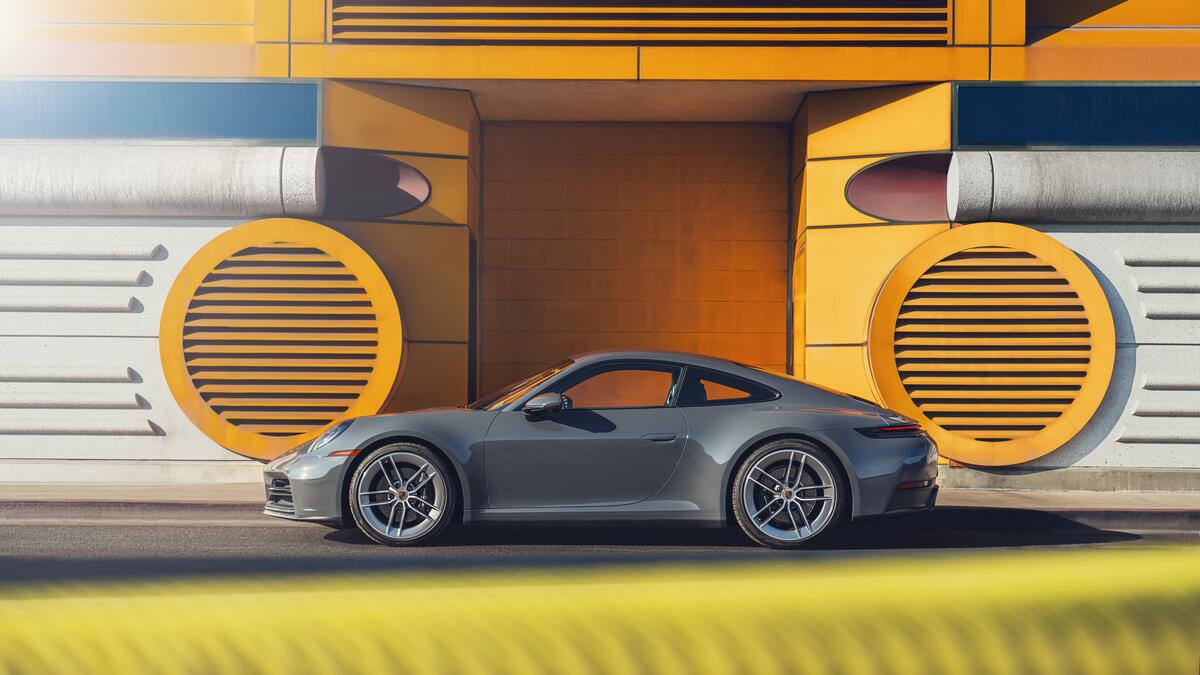
Porsche 911
"The 911 has a real tow hook on it that's connected to the body, but yeah. So that's, that's my list of three."
The Porsche 911 is a famous sports car from Porsche. Here they’re pointing out that the 911 has an actual tow hook attached to the car’s body, not just a cosmetic part.
The Porsche 911 is known for its distinctive rear-engine layout and classic sports-car design. In this segment, they specifically mention the 911 having a real tow hook that’s mounted to the body, which is a detail relevant to how the car is equipped and serviced.
gunshot tune
"Yeah, I want to hear you make the tow truck. Okay, so my problem with the gunshot tune is, is multi-fold. One, it damages your engine if you get too aggressive with the timing and the fuel thing."
A “gunshot tune” is a software change that makes the exhaust pop loudly when you lift off the gas. People do it for the sound, but it can be risky if it’s too aggressive.
A “gunshot tune” is an aftermarket engine calibration that intentionally produces loud backfire-like pops on decel. It’s usually done by changing ignition timing and fuel delivery so unburned fuel ignites in the exhaust, creating the “gunfire” sound.
timing
"Okay, so my problem with the gunshot tune is, is multi-fold. One, it damages your engine if you get too aggressive with the timing and the fuel thing."
“Timing” is about when the engine’s spark happens. If it’s set too aggressively, the engine can run hotter and be more likely to get damaged.
In engine tuning, “timing” refers to when the engine’s ignition spark occurs relative to piston position and crankshaft rotation. Aggressive timing changes can increase heat and stress, which is why the hosts warn it can damage the engine when paired with gunshot-style fueling.
catalytic converters
"You could blow your cats out, which I looked up for a BMW 335i, very popular with the gunshot. It is definitely when you say burble tune."
Catalytic converters are parts in the exhaust that help clean the car’s emissions. If you make the exhaust pop too aggressively, you can overheat or damage them.
Catalytic converters (“cats”) are emissions devices that reduce harmful exhaust gases by converting them into less harmful substances. The hosts warn that aggressive gunshot/burble tunes can overheat or damage the catalytic converters, leading to expensive replacement.

BMW 335i
"You could blow your cats out, which I looked up for a BMW 335i, very popular with the gunshot. It is definitely when you say burble tune."
The BMW 335i is a BMW people commonly modify. In this discussion, it’s mentioned because the catalytic converters can get damaged by aggressive exhaust-popping tunes, which can be very costly to replace.
The BMW 335i is a turbocharged 3 Series variant known for aftermarket tuning popularity. Here it’s used as a specific example of how gunshot/burble-style modifications can be expensive because the catalytic converters (“cats”) can be damaged.
Magnaflow
"So you could cost yourself a ton of money. Is that like buying them from a guy who cut them out of your car? That's Magnaflow prices."
Magnaflow is a company that sells aftermarket exhaust parts. They’re mentioned here to give a real-world example of how expensive replacement catalytic converters can be.
Magnaflow is an aftermarket exhaust brand known for catalytic converters and mufflers. The hosts reference Magnaflow pricing to illustrate how costly replacement catalytic converters can be after damage from aggressive exhaust-pop tunes.
ignition to happen in the exhaust
"And also too, if you're retarding the timing, right, you're trying to cause the ignition to happen in the exhaust, essentially, right?"
Normally fuel burns inside the engine. Here, some of it burns in the exhaust instead, which makes the car sound louder and cracklier.
This describes “afterburning” behavior where unburned (or partially burned) fuel ignites in the exhaust system instead of fully inside the cylinders. That can produce the crackling “gunshot” sound, but it also increases thermal stress on exhaust components.
washing down your cylinders
"essentially, right? Also, you're washing down your cylinders, right? You're just smoking cylinder wall."
If too much fuel gets past the piston rings, it can dilute the oil and reduce lubrication inside the engine. That can lead to extra wear over time.
“Washing down your cylinders” refers to fuel washing past the piston rings and diluting/stripping the oil film on cylinder walls. That can increase wear and contribute to oil contamination because the fuel ends up where it shouldn’t.
smoking cylinder wall
"Also, you're washing down your cylinders, right? You're just smoking cylinder wall. You're also washing down your oil with fuel, which you're going to smoke some bearings."
When the engine isn’t burning and lubricating correctly, you can get smoke coming from the combustion process. Fuel/oil getting where it shouldn’t can cause that.
“Smoking cylinder wall” is a shorthand for oil/fuel-related smoke caused by poor lubrication and combustion byproducts. If fuel dilutes oil or oil control is compromised, you can get smoke and increased deposits from combustion in the cylinder area.
washing down your oil with fuel
"You're also washing down your oil with fuel, which you're going to smoke some bearings. Actually, you know what? Just stay on that little burble."
Fuel can sometimes leak past into the engine oil. When that happens, the oil gets thinner and doesn’t protect the engine parts as well.
This means fuel is getting into the engine oil (fuel dilution), lowering oil viscosity and reducing lubrication quality. Over time, that can accelerate wear—especially on bearings—because the oil can’t protect as effectively.
burble
"Actually, you know what? Just stay on that little burble. They keep doing it and just water it. It'll work itself out."
A “burble” is that mild crackle/pop sound a car makes when you lift off the throttle. It’s usually softer than the loud, violent “gunshot” pops.
A “burble” is the soft, rhythmic popping/crackling sound some engines make on overrun (lift-off) when fuel and air are managed to create that exhaust note. It’s distinct from harsher “gunshot” style pops because it’s usually less aggressive and more controlled.
D cell pop
"Because like my 911 has amazing D cell pop. I love the D cell pop on my 911. Yeah, but also your 911 is, you know, course, a lot of air and fuel."
“D cell pop” appears to be a specific enthusiast term for a particular kind of pop/burble sound. The transcript doesn’t provide enough context to confirm exactly what “D cell” refers to (it may be a mishearing or shorthand), but it’s clearly being used as a descriptor for the 911’s exhaust note.
track mode
"...that guy got pulled over running track mode because it was doing all these big pops."
“Track mode” is a vehicle setting that changes control strategies (throttle response, stability/traction behavior, and sometimes engine/exhaust mapping) to suit track driving. In this segment, it’s linked to the car producing aggressive pops while being driven hard.

Audi Quattro
"...worse for the car. It was cool in the 80s with a Quattro S4 on anti-lag. Sure. But anti-lag is a whole oth..."
The Audi Quattro is associated with Audi cars that use an all-wheel-drive system. In the podcast, they’re talking about an older performance model and how people used tuning to change how the engine responds. That’s why it comes up in performance and tech discussions.
The Audi Quattro refers to Audi’s Quattro system and related performance models, most famously associated with the 1980s era of rally-inspired technology. The podcast context mentions a “Quattro S4” and “anti-lag,” which points to how these cars could be tuned for sharper throttle response. It’s discussed because the Quattro name is strongly tied to traction and performance history.
anti-lag
"It was cool in the 80s with a Quattro S4 on anti-lag. Sure. But anti-lag is a whole other thing... But the anti-lag sound is a whole other thing, which is literally destroying your engine."
Anti-lag is a trick on some turbo cars that keeps the turbo spinning even when you let off the gas. It can make the car sound like it’s “popping” or “shooting,” but it can be very stressful on the engine and turbo. That’s why it’s usually seen in racing, not normal street use.
Anti-lag is a turbocharged-engine strategy that keeps the turbo spinning during throttle lift (or between shifts) by feeding combustion energy to the exhaust. That produces a loud “crackle/pop” sound, but it’s extremely hard on engine components and exhaust hardware. It’s why enthusiasts associate anti-lag with aggressive racing setups rather than everyday driving.
spooled
"...into the turbo so you can keep that bitch spooled."
“Spooled” means the turbo is already spinning fast enough to make boost. If it’s spooled, the car feels more responsive when you hit the throttle. Anti-lag aims to keep it spooled even when you’re not on the gas.
“Spooled” describes how quickly a turbocharger reaches its target speed/boost pressure. Keeping the turbo spooled means minimizing turbo lag so the car responds immediately when you press the gas again. In anti-lag discussions, spooling is the performance goal behind the loud exhaust events.
caliper covers
"Mike, the crux of it is that people are putting on these covers, they're silicone or aluminum, and they're doing it to basically do an impression of a track or performance vehicle, but the brakes underneath aren't changed in any way."
A caliper cover is a decorative piece that goes over your brake caliper. It’s mostly for looks, not for making the brakes stop better.
Caliper covers are aftermarket pieces (often silicone or aluminum) that mount over the brake caliper to change the car’s appearance. They’re mainly cosmetic—your actual brake hardware underneath usually isn’t upgraded.
brake caliper
"So you're saying like, let's say somebody's got like a single or dual piston caliper, and they've got like a six piston cal... Oh man."
The brake caliper is the part that squeezes the brake pads against the spinning brake disc to slow the car down. More piston hardware can change how the braking feels.
A brake caliper is the component that clamps brake pads against the rotor (disc) to create stopping force. The number of pistons (single/dual vs multi-piston) affects how the caliper applies pressure, which can influence braking feel and performance.

Tesla Model 3S
"... got caught. Tesla said that all the performance Model 3s were going to have Rembos, and then they changed ..."
The Tesla Model S is an all-electric car, meaning it runs on electricity instead of gasoline. The podcast is talking about performance versions and how certain parts or options can change over time. That’s something owners and buyers often pay attention to.
The Tesla Model S is an all-electric luxury sedan known for high performance and frequent software and hardware updates over its production life. In the podcast context, it’s mentioned in relation to performance variants and changes to parts like brakes (“Rembos”) and what was planned versus what actually shipped. That kind of discussion is common with the Model S because its configurations can evolve.
Rembos
"Tesla said that all the performance Model 3s were going to have Rembos, and then they changed the supplier for the rear caliper to a company called Mando, and the caliper was small."
“Rembos” is the way the hosts are saying “Brembo,” a famous brake brand. They’re talking about how the car was presented as having Brembo-style brakes.
“Rembos” is a casual reference to Brembo, a well-known brake-brand name associated with performance brakes. The hosts use it to describe how the car’s brake branding/appearance was presented as higher-end hardware.
Mando
"Tesla said that all the performance Model 3s were going to have Rembos, and then they changed the supplier for the rear caliper to a company called Mando, and the caliper was small."
Mando is a company that supplies parts to car makers. Here, the hosts say Tesla used Mando for the rear brake calipers, which affected what was actually on the car.
Mando is an automotive supplier that makes components such as brake calipers. In the segment, the hosts say Tesla switched the rear caliper supplier to Mando, which they argue changed the actual brake hardware while the car’s appearance was kept “performance-looking.”
Caliper Skins
"So a year after that, this company, Caliper Skins... By the way, this episode is brought to you by Caliper Skins. So it became a trend though, like Tesla people started putting on these silicone caliper covers..."
Caliper Skins is a company that makes decorative covers for brake calipers. The hosts bring it up as an example of the trend catching on.
Caliper Skins is an aftermarket brand that sells silicone caliper covers. The hosts mention it as part of how the “fake performance look” trend spread beyond the Tesla example.
Rough Country
"But it's not just... I thought it was just them. There's a company called Rough Country that makes them for trucks. Zach Trucks is how I relate to you. For Jeeps and Broncos..."
Rough Country is an aftermarket parts company, especially for trucks and off-road vehicles. The hosts say they also sell caliper covers that create a performance-style look.
Rough Country is an aftermarket parts company known for truck and off-road upgrades. In this segment, they’re cited as making caliper covers for trucks, showing the same cosmetic “performance look” idea exists outside passenger cars.
track chic
"But what I don't get is that you're taking track, like, [1129.9s] track chic, and then trying to just present a fake version of it."
“Track chic” means making a car look like it belongs on a race track. The hosts are saying it’s often just for looks, not real performance.
“Track chic” refers to a style trend where cars are made to look like they’re track-focused, even if the modifications are mostly cosmetic. The hosts criticize it as “fake” performance styling rather than functional upgrades.
tuning (cosmetic vs functional)
"But in some ways, hasn't, isn't that like what defines 90% of tuning? [1139.2s] That is true. Is like trying to look, and again, I think this is where everything lives on the spectrum,"
They’re arguing about what “tuning” really means. Some people do mods that mainly change the look (like spoilers and body kits) instead of improving how the car drives.
The hosts debate whether “tuning” is inherently about making a car look more performance-oriented, even when the changes don’t improve aerodynamics or handling. They point to spoilers and body kits as examples of mods that may be more visual than effective.
body kits
"Spoilers, body kits, all these things that have like no real arrow to them. [1153.9s] That's true."
A body kit is a set of add-on parts that change the outside look of a car. Sometimes it’s meant to help aerodynamics, but often it’s mainly for style.
A body kit is an aftermarket set of exterior panels—like bumpers, side skirts, and fender extensions—installed to change a car’s appearance. Depending on design, some kits can also affect airflow, but many are primarily cosmetic.
spoilers
"Spoilers, body kits, all these things that have like no real arrow to them. [1153.9s] That's true."
A spoiler is a wing-like piece on the back of a car. It’s supposed to change airflow to help the car stay more planted, but here they’re saying some spoilers are just for looks.
A spoiler is an aerodynamic add-on mounted to the trunk or rear deck to influence airflow and reduce lift. In the segment, spoilers are brought up as part of the “track look” trend that may not provide meaningful real-world performance.

Dodge Charger
"...o them. That's true. I almost included the whole charger vertical arrow wing, but I left it off. I was si..."
The Dodge Charger is a sporty American car that’s built for quick acceleration. People often customize them, including adding performance or styling parts like special wings. It’s a well-known model that shows up a lot in car culture.
The Dodge Charger is a full-size American muscle car that’s known for strong straight-line performance and a long history in motorsports and pop culture. It often comes up in conversations about iconic styling details and enthusiast modifications, like the distinctive rear wing setups mentioned in the podcast context. That makes it a frequent topic when people talk about classic muscle-car aesthetics and performance builds.
Gurney flap
"[1168.5s] Well, it's the Gurney flap. It's the Dan Gurney flap. But like, [1172.7s] how it becomes, like it's become like the trend across every shit box,"
A Gurney flap is a small “little fin” on the back edge of a spoiler/wing. It helps the car generate more grip by changing how air flows over the spoiler.
A Gurney flap is a small, upright tab added to the trailing edge of an aerodynamic surface (like a spoiler or wing) to increase downforce. It’s a simple-looking change that can noticeably affect airflow, which is why it shows up in performance aero designs.
Mopar
"[1172.7s] how it's become like the trend across every shit box, [1178.1s] like Mopar car. It's kind of true."
Mopar is the name people use for Chrysler’s enthusiast/performance world. Here, it’s being used to mean “those Mopar cars” that also get copied with the same aftermarket aero look.
Mopar is the Chrysler/Fiat Chrysler Automobiles performance and parts brand identity (and a shorthand for the company’s enthusiast culture). In this context, the hosts are saying the Gurney-flap/wing style trend spreads across “Mopar” cars and beyond.
bumper covers
"These are also the same people that leave the bumper covers on for the corners. [1187.0s] Oh yeah. That's like almost a trend."
Bumper covers are the outer parts of the bumper you see on the outside of the car. They’re talking about people leaving those stock pieces in place instead of doing a more aggressive setup.
Bumper covers are the outer plastic panels that form the visible bumper shape on many modern cars. The hosts mention leaving them on “for the corners,” implying a trend of keeping stock-looking trim rather than doing a more purposeful aero/track setup.
seat belt
"[1222.9s] I'm going to paint my lip red because it's going to make it look cool. [1225.9s] Like Aston's race team. Yeah. [1227.4s] Yeah. Or like get like red seat belts."
They’re talking about changing the color of seat belts to make the car look more “race-y.” The important part is that the belt still does the same job—color doesn’t make it safer or better.
The segment discusses “red seat belts” as a cosmetic mod that’s meant to make a car look more like a race car. They also point out that the seat belt’s core safety function doesn’t change just because the color does.
Aston
"[1225.9s] Like Aston's race team. Yeah. [1227.4s] Yeah. Or like get like red seat belts."
They’re talking about Aston Martin’s racing team. The point is that race cars often use matching colors (like red belts) as part of the team look.
The speaker references Aston’s race team, using “Aston” as shorthand for Aston Martin’s motorsport presence. In racing, visual cues like colored seat belts are often used to match a team’s livery and branding.
Volkswagen
"[1236.2s] Yeah. Well, that's like a Porsche thing that then Volkswagen did, [1239.8s] which just seemed really cool. [1241.3s] And I'm actually like looking into getting red belts in one of my cars."
The speaker mentions Volkswagen in the context of copying a Porsche-associated visual trend. Here, Volkswagen is used as the car brand that adopted the same “race car” look.
eight piston
"[1259.8s] Very, very true. It's all about that. [1261.4s] Yeah. It's an eight piston. [1262.6s] Yeah. It's definitely an eight piston."
An “eight piston” brake setup means the brake caliper uses eight small pistons to squeeze the brake pads. The idea is that it can clamp the pads more evenly, but the hosts are criticizing people who brag with it just for looks.
“Eight piston” refers to a brake caliper design with eight pistons total (typically multiple pistons on each side of the caliper). More pistons can help distribute clamping force and improve brake feel, but the hosts imply people use brake-size claims as a visual/marketing flex.
rotor
"[1267.9s] I measure it in the metric system. [1270.5s] I measure it from the bottom of the rotor."
The rotor is the round metal disc that spins with the wheel. When you brake, the pads squeeze onto it to slow the car down.
A “rotor” is the spinning metal disc the brake pads clamp onto to slow the car. The speaker says they measure from the bottom of the rotor, which is a way of estimating brake hardware size.
pick up truck bed smokestacks
"The last one is either, I think, I think pick up truck bed smokestacks that are huge. Wait, I thought, wait, you have three... I support the smokestack one now for sure."
These are tall “smokestack” decorations people add to pickup trucks. The point is mostly looks, and the hosts think it’s a silly trend.
“Smokestacks” on a pickup truck bed are aftermarket vertical exhaust-style decorations that mimic classic diesel stacks. They’re often purely visual (or at least not functional like real exhaust stacks), and the hosts are calling them out as an over-the-top, non-functional mod trend.
overrun noise
"Like if the sound originates because someone tuned their car, for power and reliability, and then it just has overrun noise to, you know, cool this and whatever,"
It’s the loud popping/crackling sound some cars make when you let off the gas. Certain exhausts and tunes make it happen more (and louder) on decel.
Overrun noise is the popping, crackling, or other exhaust sounds that happen when you lift off the throttle. Many performance exhaust setups and engine tunes can make this more noticeable by changing fuel and ignition behavior during deceleration.
SEMA
"It was a burn yard at SEMA. And I was like, do not sit and just rev your shit."
SEMA is a big car show/trade event in the U.S. where people bring aftermarket parts and modified cars to show them off.
SEMA (Specialty Equipment Market Association) is a major U.S. trade show focused on aftermarket parts and car customization. At events like SEMA, you often see modified cars being demonstrated, which is why loud or disruptive behavior can be a safety issue.
rev your shit
"And I was like, do not sit and just rev your shit. And then he did this, and it was a child walking by,"
It means revving the engine—spinning it up—especially while you’re just sitting there. At a show, it can be really loud and annoying, and it can even be unsafe.
“Rev your shit” refers to repeatedly raising engine RPM while the car is stationary or not under load. In a crowded event setting, doing this can be disruptive and can also increase the risk of hearing damage or other safety problems.
rev off
"[1424.2s] which is like the rev off. [1426.4s] Yes."
“Rev off” means the engine speed drops quickly, usually when you let off the gas. Some people like it because it can sound dramatic, especially with certain exhaust setups.
“Rev off” refers to cutting the engine’s revs abruptly—typically by lifting off the throttle and letting the engine decelerate quickly. In car culture, it’s often associated with loud, aggressive engine behavior (sometimes from aftermarket exhaust or engine management).
Huntington
"[1446.0s] I don't go to, [1446.3s] I don't go to helicopters and write-offs at Huntington."
“Huntington” sounds like a place where car events or meetups happen. They’re using it to talk about the kind of crowd and behavior they see there.
“Huntington” appears to be a local car-event or meetup location the hosts are referencing. It’s mentioned as part of the conversation about where certain behaviors (like loud starts or showy antics) happen.
cold start
"[1450.8s] Like people cold start their Lambo and. [1453.8s] Yeah, yeah, it's like the DDE guys."
A “cold start” is when you start the car before it’s warmed up. The engine can sound louder or rougher at first, so some people do it on purpose to show off.
A “cold start” is starting an engine when it’s at ambient temperature (not warmed up yet). Some owners intentionally do loud or dramatic cold starts because the engine sound is more noticeable before everything reaches operating temperature.
DDE guys
"[1453.8s] Yeah, yeah, it's like the DDE guys. [1455.7s] Like that's like that side."
“DDE guys” is a reference to a car-content crew called DDE. The hosts are saying that this loud, showy style is something that crew is associated with.
“DDE guys” refers to the DDE (Dirty Deeds) crew, known for posting car content—often featuring loud, attention-getting behavior and event culture. Here, the hosts use them as an example of the trend they’re criticizing.

Audi S8
"I love that I can't really hear my S8 when I'm inside of it. I love that my Vanagon's pretty quiet."
The Audi S8 is a faster, sportier version of Audi’s big luxury sedan. Here they’re basically saying it’s relatively quiet inside compared to their other cars.
The Audi S8 is a high-performance version of the A8 luxury sedan, built to deliver strong power while still being comfortable. In this segment, it’s mentioned as a “quiet” car inside the cabin, contrasting with louder setups.

Volkswagen Vanagon
"I love that my Vanagon's pretty quiet. And then I go drive one of my loud cars..."
The Volkswagen Vanagon is a classic VW van people often use like a camper. They’re mentioning it because it’s quieter than their loud cars.
The Volkswagen Vanagon is a classic air-cooled-era-to-transitional VW camper/van platform known for its long-distance cruising vibe. In this discussion it’s brought up as being “pretty quiet,” again used to contrast against louder modified cars.
switchable valve stuff
"I just built a new system for my K5 that actually has switchable valve stuff. It's still pretty loud to most people, but it's not like open headers anymore, right?"
This is an exhaust setup with valves you can switch on and off. It changes how loud the car sounds—quieter when closed, louder when opened.
“Switchable valve” refers to exhaust valves that can open or close to change exhaust flow and sound. When the valves are closed, the car is quieter; when opened, it lets the exhaust breathe more freely for a louder, more aggressive tone.
open headers
"It's still pretty loud to most people, but it's not like open headers anymore, right? But I can, you know, when I'm driving it a lot of times..."
“Open headers” usually means the exhaust is basically left very exposed, without mufflers to quiet it down. It makes the car much louder than a normal exhaust.
Open headers means running exhaust headers without the rest of the exhaust system (like mufflers/catalysts), which typically produces extremely loud sound. It’s used here as the “worst” baseline for noise compared with a more controlled exhaust.
decel popping
"Like when I, I love decel popping my fucking 9-11, like it's a cool thing, but I do enjoy how it sounds going up through the gears more than I enjoy the pop down, right?"
“Decel popping” is the loud popping or crackling sound a car makes when you let off the gas. It happens because fuel and exhaust gases can ignite in the exhaust when the engine is slowing down.
“Decel popping” is the crackling/bang sound some cars make when you lift off the throttle and the engine is slowing down. It’s usually caused by unburned fuel and/or exhaust gases igniting in the exhaust system, often influenced by aftermarket exhaust, engine tuning, or intake/exhaust changes.
ghost cams
"...but then the big thing that irritates me is ghost cams. Somebody that like, I'll be honest. I didn't know this was a thing..."
“Ghost cams” is slang for camshaft mods that mainly make the engine sound rough and “loud,” but don’t really make the car feel much faster. People call it “ghost” because it’s more show than substance.
“Ghost cams” refers to a camshaft setup that creates an aggressive-sounding idle/lope, but doesn’t necessarily deliver the expected real-world performance. The “ghost” part is that the sound and look are the main effect, while the engine behavior may feel mild or inconsistent. It’s often discussed as a mod trend because it can be more about attention than drivability.

Ford F150
"like a bad motherfucker, but like there was an F-150 in a show that I had in Asheville and I was like, man, that thing's choppy."
The Ford F-150 is a large pickup truck. It’s designed to carry things and handle everyday driving, but it can feel a bit rough or uneven depending on how it’s set up. That’s why people may describe its ride as “choppy.”
The Ford F-150 is a popular full-size pickup truck, widely used for work and everyday driving. In the podcast context, it’s mentioned as being “choppy,” which points to how trucks can feel different than cars depending on suspension and tire setup. It’s a common reference because the F-150 is everywhere and often appears in media and local driving experiences.
choppy
"...and I was like, man, that thing's choppy. And I was like, oh, it's a, it's a coyote."
“Choppy” here means the engine doesn’t idle smoothly. It sounds uneven, like it’s surging or loping at low speed.
In this context, “choppy” describes an uneven, lumpy engine idle—often associated with camshaft timing/valvetrain changes or other combustion/airflow characteristics. Enthusiasts use it to describe how the engine “lope” sounds and feels at low RPM.
Coyote
"...And I was like, oh, it's a, it's a coyote. And then I couldn't find out it's a completely stock coyote."
“Coyote” is a nickname for Ford’s 5.0-liter V8 engine. In this discussion, they’re saying the rough idle sound they heard was coming from that engine, even though it was stock.
“Coyote” is the enthusiast nickname for Ford’s 5.0L V8 (the “Coyote” engine family) used in models like the Mustang and also found in some F-150 applications. The hosts connect the “choppy” idle sound to a Coyote, then note it was completely stock—highlighting how even factory setups can produce an aggressive idle.
install cams
"And you'll hear that on a lot of people, even that like install cams, and it's like, that's how they keep them like idling good and like able to take off."
Installing cams means changing the camshaft to a different design. It can make power in certain parts of the rev range, but it can also make the car idle rough if it’s not matched well.
“Installing cams” refers to swapping the camshaft(s) for different profiles, which changes valve timing and lift. That can improve power in certain RPM ranges, but it often trades off idle quality and drivability if the cam is too aggressive for the rest of the setup.
loppy and lopey idle
"absolutely out of control, like Loppy and Lopey of cam can be."
Some cam setups make the engine idle “choppy” or uneven. It can sound cool to some people, but it can also cause problems when you’re stopped, like with air conditioning.
A loppy/lopey idle is a rough, uneven idle caused by an aggressive cam profile that keeps the engine from producing steady vacuum and torque at low RPM. Enthusiasts sometimes like the sound and feel, but it can also make accessories like air conditioning struggle at idle.
vacuum
"Shouldn't have enough vacuum to have brakes that boosted air conditioning."
Vacuum is suction created by the engine that some systems use to work. If the engine makes too little vacuum, things like power brakes can feel worse and other systems may not work right.
In many cars, vacuum is used to operate accessories like brake boosters and HVAC controls. If an engine doesn’t make enough vacuum—often due to an aggressive cam—it can lead to weak braking assist and other drivability issues.

Volkswagen I
"...telling him once, I was telling him once about a Volkswagen I had. And as normally, once I say Volkswagen,"
The Volkswagen ID. Buzz is an electric van. It’s designed to look like the classic Bus, but it runs on electricity. The podcast is mentioning it as a Volkswagen the speaker owned or talked about.
The Volkswagen ID. Buzz is an all-electric version of the classic Bus concept, combining a retro look with modern electric power. In the podcast context, it’s mentioned as a Volkswagen the speaker had, which fits how the ID. Buzz stands out as a distinctive EV choice compared to more typical electric cars. It’s discussed because it’s a recognizable, family-oriented electric vehicle with a unique design.
cam profile
"Then I told him that the cam profile was so wild that if I turned the air conditioner on, it would immediately stall the car."
The cam profile is the “shape” of the camshaft that controls when the engine’s valves open and close. If it’s very aggressive, the engine can struggle at low RPM—so turning on the A/C can sometimes make it stall.
A cam profile describes the shape of a camshaft’s lobes, which controls valve timing and how long the valves stay open. An aggressive cam profile can make idle and low-RPM operation unstable, so adding an engine load like air conditioning can cause stalling.

Porsche 935
"I know like Le Mans existed now, but when I was a kid, I was around muscle cars, hot rods, and like occasional stock car things or like drag racers. [1806.2s] I never saw a Porsche or whatever 935 like start."
The Porsche 935 is a real Porsche race car. It’s based on the 911, but it’s built for racing and sounds and drives very differently than a normal street 911.
The Porsche 935 is a famous Le Mans–era race car built on the 911 platform, known for its purpose-built turbocharged setup and aggressive track focus. In this segment, it’s mentioned as an example of a “race Porsche” the speaker didn’t grow up seeing, so it didn’t stick in their head.
rev drop
"And on a cold start too, it does like a full like 300, you know, 300 rev drop. Like rubber, rubber."
A rev drop just means the engine RPM falls quickly. After starting—especially when it’s cold—the RPM can drop as the engine settles into its normal running.
A rev drop is a noticeable decrease in engine RPM over a short period. In cold-start situations, RPM can fall as the engine transitions from its initial start-up strategy to a more stable idle.
flywheel
"he ran like a, like either like a super thin or like a special type of metal on the flywheel and a special starter just to give it that race car start... And like a flywheel that's like his thin as Saran wrap."
A flywheel is a spinning weight inside the engine area that helps the engine turn smoothly. If you make it thinner/lighter, the engine can crank differently and the start can sound more aggressive.
A flywheel is a heavy rotating component that stores rotational energy and helps smooth out engine speed. Using a very thin or lightweight flywheel changes the engine’s crank behavior and can make the startup sound sharper and more “race-like.”
starter
"and a special starter just to give it that race car start... that like real race cars have when they start up... a micro starter because it needs the torque to turn it."
The starter is what turns the engine over when you press the button. They’re saying the car used a special, smaller starter to still get enough turning force for the modified engine setup.
The starter is the electric motor that cranks the engine to get it running. The hosts describe using a “special starter” (a micro starter) to provide the torque needed for a modified setup, which also affects the character of the startup sound.

Suzuki Samurai
"You're drawing a fucking X-caliber. Like a samurai story. Yeah, like there's that weird sound"
The Suzuki Samurai is a small SUV that’s known for off-road ability. People sometimes modify them, and that can make the car sound unusual. The podcast is referencing that kind of standout sound.
The Suzuki Samurai is a small, rugged off-road-capable SUV that became popular for its lightweight design and trail potential. The podcast context mentions a “weird sound,” which fits how older, modified, or exhaust-changed Samurais can sound distinctive. It’s discussed because it’s a common base for simple off-road builds and customization.
high compression
"that like real race cars have when they start up... that just like the sound of like really high compression, a micro starter because it needs the torque to turn it."
High compression means the engine squeezes the fuel/air mixture more before it ignites. That can make the engine harder to crank, and it can change how the start sounds.
High compression refers to an engine design where the air-fuel mixture is compressed more before ignition. Higher compression typically makes starting harder and can change the sound and feel of cranking, which is why the hosts link it to the “race car” startup noise.
torque
"a micro starter because it needs the torque to turn it. Like that like combination that like just makes a certain noise that road cars don't make."
Torque is the “turning force.” They’re saying the starter has to provide enough turning force to spin the engine over and get it running.
Torque is the twisting force that makes an engine (or starter) rotate. The hosts connect torque to why a micro starter can still work: it must deliver enough twisting force to spin the engine fast enough to start.
fake ass chop
"But like it's just sweeping or like jumping back and forth, right? Like to give you like some fake ass chop."
“Chop” is the rough, stuttering sound some cars make. “Fake chop” usually means the car is being tuned to imitate that sound rather than doing it naturally.
“Chop” refers to an intentionally uneven exhaust/engine sound, often created by controlling ignition and fuel cut behavior. When someone says “fake ass chop,” they’re criticizing setups that simulate the sound without the underlying driving/engine conditions that would normally produce it.
stolen Valor
"Cause almost everything we've said, it's fucking stolen Valor. Yes, it is. Yes, I had that written. A bunch of them stolen Valor. It's stolen Valor."
They’re using “stolen Valor” to mean “pretending.” The mods are meant to make a car seem like it’s a real race/serious performance build, but it’s not truly doing the real thing.
“Stolen Valor” is a metaphor here: the hosts are arguing that certain mod trends are copying the look/sound of a real race car or serious performance setup without actually having the real capability behind it. In other words, it’s performance cosplay rather than genuine track-oriented engineering.
overhead cam V8
"Like overhead cam V8s with like big ass cam profiles sound really nasty."
“Overhead cam” means the engine’s valve control parts sit on top of the engine, in the cylinder head. A “V8” is an engine with eight cylinders in a V shape, so an “overhead cam V8” is a V8 with that top-mounted valve setup.
An overhead cam (OHC) engine uses camshafts located in the cylinder head to actuate the valves. When someone says “overhead cam V8,” they mean a V8 engine with that OHC valve-train layout, which can affect how the engine sounds and how it revs.
quad valve V8
"So if you're like a quad valve V8 with like some big ass cam profile, it's like it sounds pretty savage"
“Quad valve” means each cylinder has four valves instead of two. In a “quad valve V8,” that same four-valve setup is used on all the cylinders, which can help the engine breathe better.
“Quad valve” typically means a cylinder has four valves—usually two intake and two exhaust. In a “quad valve V8,” that four-valve-per-cylinder layout is applied across the V8’s cylinders, which can support higher airflow and changes in how the engine breathes and sounds.
squat trucks
"Second, squat trucks. Right? Yeah."
“Squat trucks” are trucks where the back end sits lower than the front, usually from suspension changes. It’s often done for looks, but it can make the truck ride worse or handle differently.
“Squat trucks” refers to a stance modification where the rear of a pickup sits noticeably lower than the front. This is usually achieved with suspension changes (like lowering the rear or altering ride height), and it can affect ride quality, tire wear, and drivability.
EV swap
"[1996.2s] Any EV swap of a classic or performance vehicle. [2001.0s] Let's start with that one. [2004.2s] Because any classic or performance vehicle?"
An EV swap means taking a gas car and replacing its engine with an electric motor and battery. It can make the car feel very different from how it was originally built.
An EV swap is converting a non-electric car—often a classic or performance model—to use an electric powertrain instead of its original engine. The hosts are debating it as a mod trend because it can change the car’s original character and driving “feel.”
EV West
"[2028.2s] Is that the guys down in... [2029.3s] Yeah. [2029.7s] What's the name again? [2030.3s] EV West."
EV West is a company that converts cars to electric power. The hosts mention them because they’ve built EV-swapped cars, including a drift-focused BMW E36.
EV West is an electric vehicle conversion company known for EV conversions and swap kits for enthusiast cars. In the segment, they’re referenced as the source behind an EV-swapped Baja bug and an E36 drift car.
zero to 60 times
"zero to 60 times, zero to 100 times, whatever, right? That wears off so quick."
It’s a stopwatch measurement of how fast a car can accelerate from a standstill to 60 mph. Faster times usually mean quicker acceleration, but it’s only one way to judge a car.
“Zero to 60 times” are acceleration measurements: how long a car takes to go from 0 mph to 60 mph. They’re commonly used as a quick benchmark for straight-line speed, but they don’t tell you everything about how the car drives.
nitrous oxide
"It's like nitrous oxide, not in your car, but like taking hits of nitrous oxide out of like a balloon or like, you know, you got 20 seconds of like..."
Nitrous oxide is a gas you can inject into an engine to get a temporary power boost. It helps the engine burn more fuel, so the car accelerates harder for a short time.
Nitrous oxide (often called “nitrous”) is a compressed gas used to temporarily boost engine power. When injected into the intake, it increases the amount of oxygen available for combustion, which can make a car feel dramatically faster for a short period.
Lucid
"But yeah, it's just like, it just wears off and it just, it loses its fun after, like when we had the Lucid guys, like, yeah, we had like six people in the car, big boys, and it was fast as shit."
Lucid is an electric-car brand. The hosts are using a Lucid ride as an example of how very quick acceleration can get boring after you’ve done it a couple times.
Lucid is an EV brand known for fast, high-power electric drivetrains. In the segment, the hosts reference riding in a Lucid vehicle to illustrate how “instant” speed can feel exciting at first but become less interesting after repeated runs.
Ecotech
"[2171.8s] It's like, it's Ecotech. [2173.5s] Ecotech, yeah. [2173.7s] it's like a big Ecotech with a turbo."
“Ecotech” sounds like they mean an Ecotec-style modern engine swap. They’re saying the car isn’t running the original Beetle engine—it’s using a newer engine, and it’s turbocharged.
“Ecotech” appears to be the hosts’ shorthand for an Ecotec-family engine. The key point in the segment is that the Baja Bug is using a modern engine platform (Ecotec) paired with a turbo, rather than a stock air-cooled Beetle engine.
turbo
"[2173.7s] it's like a big Ecotech with a turbo. [2175.4s] So it's a 2.4."
A turbo is a device that uses the engine’s exhaust to push extra air into the engine. More air usually means more power, which can make the car feel much faster.
A turbocharger (often shortened to “turbo”) uses exhaust gas to spin a turbine that forces more air into the engine. That lets a smaller engine make more power, which is why the hosts describe the setup as “terrifying” in the modified Baja Bug.
all electric vehicles
"It like, there's a reason why nobody goes to watch, like, what was the F1 knockoff that they did all electric vehicles?"
They’re discussing fully electric cars—cars that don’t use gasoline and instead run on a battery. The point they’re making is that some people don’t find electric racing as entertaining as traditional racing.
The hosts are talking about battery-electric vehicles (BEVs), which run only on electricity stored in a battery pack. The debate is that, in their view, electric powertrains don’t create the same excitement as traditional performance formats, so events built around them may feel less compelling to spectators.
no one cares racing
"It's called no one cares racing. Yeah, exactly. Nobody wants to go to that, because you, it's not... Formally, formally."
They’re making a joke about an electric racing series, saying people don’t really care about it. It’s their way of criticizing how much attention electric racing gets.
“No one cares racing” is the hosts’ joking reference to a specific electric-racing series. They’re using the phrase to argue that electric racing hasn’t captured mainstream attention the way Formula 1 does.
EV
"[2276.9s] EV was the biggest one. [2278.3s] Everyone jumped in. [2279.8s] Everyone got burned, because all of that stuff sort of,"
EV stands for electric vehicle. It’s a car that runs on electricity from a battery, not gasoline. The hosts are talking about how lots of people jumped on EV-related projects and some of them didn’t work out as expected.
EV means electric vehicle—cars powered primarily by electric motors and a battery pack instead of a gasoline or diesel engine. In motorsport and car culture, EV also became a major “trend” investment area, which the hosts say many people rushed into and later backed away from.
Formula One
"[2284.4s] Audi, who was like, we're never going to make [2286.5s] ice engines again in racing, are like, hey, [2289.9s] Formula One, hey, this and that, like,"
Formula One is the highest level of race car competition in the world. Teams and manufacturers use it as a testing ground for new technology, so when F1 changes direction, it affects what other people build too.
Formula One (F1) is the top tier of international open-wheel racing, with strict technical rules and huge engineering budgets. When the hosts mention F1 in the context of EVs and “going back to it,” they’re referring to how F1’s technology direction influences what manufacturers and teams choose to develop.
ice engines
"[2284.4s] Audi, who was like, we're never going to make [2286.5s] ice engines again in racing, are like, hey,"
ICE engines are regular gas or diesel engines that burn fuel to make power. The hosts are saying some companies thought they’d stop using them in racing, but later reconsidered.
ICE engines means internal combustion engines—engines that burn fuel (like gasoline or diesel) to make power. The hosts contrast ICE with EVs when discussing what manufacturers do in racing and how some companies reconsidered their long-term plans.
straight air mode
"“I just saw a kid rock at the Pentagon giving a briefing on the straight air mode.” “Yeah, that's what I'm saying.”"
“Straight air mode” sounds like a setting on an air-suspension system that changes how the suspension holds the truck’s height. Air suspension uses compressed air to raise or lower the vehicle. This mode is likely meant to keep the truck in a particular lowered stance.
“Straight air mode” refers to a setting on air-suspension systems that controls how the suspension behaves using the air system. In practice, it’s used to manage ride height and stance, often for aggressive lowering or show positioning. The hosts mention it in the context of a “kid rock” briefing, implying it’s a specific air-suspension feature or mode.
lifted trucks
"Like, ridiculously lifted. [2387.2s] Any level lift. [2388.3s] Stretched tires. [2389.9s] Yeah, sluicely stretched shaft, all that stuff."
A lifted truck has been raised up with suspension changes. That usually means bigger tires and a taller look, and it can also affect how the truck rides.
“Lifted” trucks have their suspension raised, which increases ground clearance and lets them fit larger wheels and tires. In the context of these SEMA-style builds, the lift is often extreme, changing the truck’s stance and ride characteristics.
stretched tires
"Any level lift. [2388.3s] Stretched tires. [2389.9s] Yeah, sluicely stretched shaft, all that stuff."
Stretched tires are when the tire is pulled tight over a wider wheel to make the sidewall look smaller. It looks aggressive, but it can be harsher and easier to damage.
Stretched tires are when the tire is mounted with less sidewall “bulge” than normal, typically by fitting a wider wheel than the tire is designed for. This creates a tighter, flatter look on the rim, but it can reduce ride comfort and increase the risk of tire damage if driven hard or on rough roads.
Hawaiian style
"You can be on Hawaiian. [2402.3s] Hawaiian style. [2403.0s] And I didn't want to knock Hawaii with that. [2404.8s] Like, Hawaii has actually."
“Hawaiian style” here means a local truck customization look that people associate with Hawaii. The hosts are basically saying they don’t want to disrespect that culture while talking about their own naming idea.
“Hawaiian style” is a regional customization vibe associated with trucks and SUVs that are often lifted and fitted with larger tires, reflecting local car culture. In this segment, it’s used as a contrast to avoid stereotyping or “knocking” Hawaii while discussing the naming of their truck trend.
sidewall
"[2449.3s] But I just don't like the look, you know, [2450.6s] I like, you go to Sidewall, baby."
The sidewall is the part of the tire that sits between the tread and the wheel. More sidewall usually means the tire is less “stretched” and has more rubber to protect it.
The sidewall is the tire’s outer wall between the tread and the rim. In the context of “super thin, stretched,” emphasizing sidewall usually means preferring a more normal tire shape with more protective rubber.
Request an Explanation
Heard something you'd like explained? We'll add it to this episode.
Sign in to request explanations for terms you heard.
Want to learn more?
Browse our glossary for plain-English explanations of automotive terms, jargon, and concepts.
Help improve this episode
See something that's not quite right? Our annotations are AI-generated and can sometimes miss the mark. Click the flag icon on any annotation to suggest a correction.
1 community members have helped improve this episode.